
























































Visa for Nepali passport holdersPick a country: what you need, documents, and how our visa desk applies for you.
China tour packages
Showing 10 of 10 packages

News & AlertsNORMALNo disruptions reported for China.Checked 15 Nov 2026, 05:55 NPTView details ↓Hide details ↑
Weather by month
Best time for Beijing: October to June — little rain, highs 4–33°C.
- Jan4°-10°dry, best month
- Feb7°-7°dry, best month
- Mar16°0°dry, best month
- Apr23°7°dry, best month
- May29°13°low rain, best month
- Jun33°19°low rain, best month
- Jul33°22°heavy rain
- Aug32°21°medium rain
- Sep28°16°medium rain
- Oct20°6°dry, best month
- Nov12°-1°dry, best month, this month
- Dec5°-8°dry, best month
Best time for Shanghai: December — little rain, highs 12°C.
- Jan10°2°medium rain
- Feb11°3°medium rain
- Mar16°7°medium rain
- Apr21°12°medium rain
- May26°17°medium rain
- Jun29°21°heavy rain
- Jul33°26°medium rain
- Aug33°26°heavy rain
- Sep29°22°heavy rain
- Oct23°16°medium rain
- Nov19°10°medium rain, this month
- Dec12°3°low rain, best month
Best time for Xi'an: November to April — little rain, highs 7–23°C.
- Jan7°-3°dry, best month
- Feb11°0°dry, best month
- Mar18°7°low rain, best month
- Apr23°11°low rain, best month
- May28°16°medium rain
- Jun32°21°medium rain
- Jul34°23°medium rain
- Aug32°23°medium rain
- Sep27°18°medium rain
- Oct20°11°medium rain
- Nov14°5°dry, best month, this month
- Dec8°-2°dry, best month
Best time for Guilin & Yangshuo: September to October, December — little rain, highs 16–33°C.
- Jan14°6°medium rain
- Feb16°7°medium rain
- Mar20°12°heavy rain
- Apr25°16°heavy rain
- May29°20°heavy rain
- Jun31°24°heavy rain
- Jul34°25°heavy rain
- Aug34°25°medium rain
- Sep33°23°low rain, best month
- Oct27°17°low rain, best month
- Nov22°12°medium rain, this month
- Dec16°6°low rain, best month
Best time for Chengdu: October to March — little rain, highs 11–21°C.
- Jan11°2°dry, best month
- Feb13°4°dry, best month
- Mar19°9°low rain, best month
- Apr24°13°medium rain
- May27°17°medium rain
- Jun29°20°medium rain
- Jul31°22°heavy rain
- Aug32°22°heavy rain
- Sep27°19°heavy rain
- Oct21°14°low rain, best month
- Nov17°9°dry, best month, this month
- Dec12°3°dry, best month
Best time for Zhangjiajie: November to February — little rain, highs 10–18°C.
- Jan10°3°low rain, best month
- Feb12°4°low rain, best month
- Mar18°8°medium rain
- Apr24°13°medium rain
- May27°17°heavy rain
- Jun30°21°heavy rain
- Jul33°23°heavy rain
- Aug34°23°medium rain
- Sep30°20°medium rain
- Oct23°14°medium rain
- Nov18°9°low rain, best month, this month
- Dec12°3°dry, best month
Best monthNowdryheavy rainHigh / low °C
Weather: 10-year averages, 2015–2024 (NOAA weather stations). News: GDACS, ReliefWeb, GOV.UK travel advice (OGL v3.0) and local sources.Best Time to Visit China →
What our travellers say
Real reviews from Google, verified by travelers.
4.8★★★★★213 Google reviews


FAQ
Journey Questions
Written and checked by the Gomayu travel desk, KathmanduUpdated November 2026About this guide
Complete guide
Complete China Travel Guide
Written and checked by the Gomayu travel desk, KathmanduUpdated November 2026About this guide
China tour package from Nepal: total cost from Kathmandu
A China trip from Kathmandu has a few main costs: the return flight, the visa or entry costs and the land package (hotels, transfers and tours). Air fares change every few hours and differ a lot between airlines, so we show honest ranges rather than one fixed price. Use these figures to plan your budget. We confirm the exact total for your dates when you ask for a quote.
1. Return flight, Kathmandu to China (economy, per person)
| Option | Airline and route | Flight time | Return fare (NRs) |
|---|---|---|---|
| One stop, full-service | China Southern via Guangzhou, to Shanghai or Chengdu | About 8 hours 30 minutes | About 76,600 to 1,32,800 |
| One stop, full-service | Cathay Pacific via Hong Kong, to Shanghai or Beijing | About 10 hours | About 75,200 to 1,30,300 |
| One stop, full-service | Thai Airways via Bangkok | About 13 hours | About 1,06,500 to 1,73,100 |
| Other routes | Air China, Sichuan Airlines and China Eastern routes via Chengdu or Kunming | Varies | Not listed on Google Flights when we checked; ask us |
Fares checked on Google Flights on 6 November 2026 for travel in late December 2026, February 2027 and mid-April 2027. The Rasuwagadhi road crossing has been closed since the August 2026 flood, so our China trips are planned with flights.
2. Visa and entry costs
| Item | Cost (NRs) | Note |
|---|---|---|
| China government visa fee | No government visa fee is charged | The Chinese Embassy in Nepal charges Nepali citizens no visa fee for regular service until 31 December 2026. |
| Chinese Visa Application Service Centre fee (regular service) | 3,900 | Paid to the visa centre in Kathmandu, VAT included. Express service costs more. |
| Gomayu service charge | 2,825 | 2,500 plus 13% VAT. |
| Total visa cost | 6,725 | The same all-in price as on our China visa page. We confirm the amount when we apply. |
Current rules and documents: China visa from Nepal.
3. Land package (hotels, transfers and tours)
| Trip | From (NRs, per person) |
|---|---|
| 5 days: Shanghai, Beijing, Chengdu or Guilin | 1,04,500 to 1,24,500 |
| 7 days: Beijing and Shanghai | 2,11,000 to 2,45,000 |
| 10 days: Beijing, Xi'an, Guilin and Shanghai | 2,88,500 |
These are our published "from" prices on 6 November 2026, per person, usually for a group of 3 to 7 sharing a room. Prices rise over Chinese New Year and the October Golden Week, when hotels and trains are busiest.
4. Tentative total from Kathmandu (per person)
| Trip | Flight + visa + land package (NRs) |
|---|---|
| 5 days, one city | About 1,87,000 to 2,64,000 |
| 7 days, Beijing and Shanghai | About 2,93,000 to 3,85,000 |
Not included: meals not listed in your package, optional tours, shopping and travel insurance. For daily spending money and a worked example, read our China trip cost from Nepal guide.
China at a glance for Nepali travellers
The key facts for a China trip in one place. Detail on each follows further down this guide.
| Item | For a Nepali traveller |
|---|---|
| Visa | Chinese tourist (L) visa needed before you fly. There is no visa-free entry and no visa on arrival for a Nepali passport. See China visa from Nepal. |
| Arrival card | Arrival details filled in free online before you fly, or at the airport by QR code or paper card |
| Flight from Kathmandu | About 3 hours nonstop to Chengdu. There are also nonstops to Kunming, Guangzhou, Shenzhen, Shanghai and Hangzhou. Beijing needs one connection. |
| Time difference | China is 2 hours 15 minutes ahead of Nepal, with one time zone for the whole country |
| Currency | Chinese yuan (CNY, also called RMB). Most payments are made by Alipay or WeChat Pay. |
| Foreign currency from Nepal | Up to USD 3,000 per trip from a bank, of which up to USD 500 in cash (Nepal Rastra Bank rule, checked October 2026) |
| Plugs and power | 220V. Sockets take two-pin flat, two-pin round and angled three-pin plugs. Nepali two-pin chargers usually fit, three-pin round plugs need an adapter. |
| Language | Mandarin Chinese. English is limited outside hotels, airports and major sites. |
| Best months | Late September to early November and April to May for comfortable sightseeing. November to March is the driest time in most cities but cold in the north. Avoid Golden Week (1 to 7 October) and Chinese New Year. |
| Ideal trip length | 5 days for one city or region, 7 days for Beijing and Shanghai, 10 days for three or four cities |
| Drinking water | Tap water is not safe to drink. Use bottled or boiled water. |
| Nepal embassy | Embassy of Nepal in Beijing, with consulates general in Guangzhou, Chengdu, Lhasa and Hong Kong |
Why China is worth the trip
China gives a Nepali traveller more variety per day than almost any other Asian destination. You land in a civilisation thousands of years old, and by the next morning you can be walking a Ming dynasty wall or crossing a province at 350 km/h. A single week covers ground that Thailand or Dubai simply cannot.
Most Nepali travellers have already done the standard Southeast Asia circuit. China is the step up. The scale is the first thing that hits you. Tiananmen Square is bigger than most Nepali town centres. The Forbidden City has close to a thousand surviving buildings and you can spend half a day inside it without repeating a courtyard. Then you take a train to Shanghai, stand on the Bund at night, and the skyline across the Huangpu River looks like a different century from the one you were standing in that morning.
The practical side matters too. Distances that would take a full day of driving in Nepal take two or three hours on China high speed rail, seated, with your bag beside you. Metro systems in Beijing, Shanghai, Guangzhou and Chengdu are signposted in English and run late. Public toilets, hotel standards and road quality are consistently good, which removes a lot of the low grade stress that tires people out on a holiday.
And it is genuinely different. Nepali travellers who go to Bangkok or Dubai are visiting places built partly for tourists. China is not built for you, and that is the appeal. You eat where local families eat, you queue where they queue, and you come back with a trip that very few people in your circle have done.
How our China tour packages work, from Nepal or abroad
Every China tour package from Nepal that Gomayu arranges is curated for three groups of travellers: Nepali passport holders flying out of Kathmandu, the Nepali diaspora, and non resident Nepalis (NRNs) booking from Australia, the UK, the US, the Gulf and beyond. Many of our travellers start from Kathmandu, and many book from abroad, so each package is designed to work on any passport and from either starting point.
The process is deliberately simple. Pick your dates first, then keep the route realistic rather than squeezing everything into one holiday. From there the package covers the pieces that are annoying to arrange alone: hotels matched to your budget, airport transfers on both ends, day tours with English speaking guides, and step by step help with whatever visa or entry paperwork your passport needs.
Every China package on this page is priced per person as a land package covering what each tour page lists, including high speed rail between cities where the route needs it. Flights from Kathmandu and the Chinese visa are not in the card price. We quote flights from Kathmandu, or from wherever you are joining, our visa desk prepares the visa documents with you, and the cost tables at the top of this guide show how the three add up. The price moves with the number of cities, hotel category, private or group touring, group size and dates, since demand peaks in Golden Week and around Chinese New Year. Our China trip cost guide and Is China expensive? explain daily spending.
Guiding is the part Nepali travellers underestimate. English signage is good at major sites, but understanding what you are looking at inside the Forbidden City, or getting through a Xi'an ticketing system in peak season, is far smoother with a local guide. Our China itineraries front load the guided days in the first city and loosen up later, once you have found your feet.
The same structure works for split families. Parents can fly out of Kathmandu while children join from London, Sydney or Doha, everyone meets at the same hotel on arrival day, and each traveller follows the entry rules of their own passport. If that describes your family, mention it when you enquire and the package is built around both starting points from day one.
Gomayu Holidays is operated by Zeta Tours and Travels Pvt. Ltd. Most of our planning runs on WhatsApp and email, and we also keep a real office in Kathmandu if you would rather sit down with us.
What we will tell you honestly: whether your dates clash with Golden Week, whether your leave allows the cities you want, and whether the visa timeline is realistic. We would rather adjust the plan than send you into a trip that does not work.
Which China tour package suits you
Choose by who is travelling and what you want from the trip rather than by the number of cities. All of these are listed as cards above, with the number of days on each.
- First trip, families and parents: the Beijing & Shanghai Tour (7 days) pairs the capital with China's biggest modern city, linked by high speed rail.
- More leave, more of China: the China Holiday Package (10 days) and the Shanghai, Qingdao & Beijing Tour (7 days).
- Five day breaks: the Beijing City Tour, the Shanghai City Tour and Chengdu & the Giant Pandas Tour. Chengdu also has the shortest nonstop flight from Kathmandu.
- Couples and honeymooners: the Guilin & Yangshuo Tour (5 days), or the Zhangjiajie Tour (5 days) for couples who do not mind stairs.
- Repeat visitors: the Chongqing & the Yangtze Tour (6 days) and the Yunnan: Kunming, Dali & Lijiang Tour (7 days). Kunming also has a nonstop flight from Kathmandu.
Beijing, Shanghai or Chengdu first?
A China trip is normally built as a two or three city route rather than a single base. The usual shape is one historic city, one modern city, and if you have the days, one landscape or wildlife leg. Cities are linked by high speed rail, guided days are mixed with free days, and the ground team handles the parts that need Mandarin.
For a first trip, Beijing and Shanghai together give the clearest picture of the country. Beijing gives you the Great Wall of China, the Forbidden City and Tiananmen Square. Shanghai gives you the Bund, Yu Garden and the modern face of the country. The train between them does the connecting work and doubles as an experience in itself.
Travellers with more time add Xi'an for the Terracotta Warriors, Guilin and Yangshuo for the Li River karst scenery, Chengdu for the panda base, or Zhangjiajie for the sandstone pillars and the glass bridge. Each addition costs you a day of travel time, so the choice is usually about what you most want to see rather than how much you can squeeze in.
Chengdu is the easy alternative from Kathmandu: the shortest nonstop flight, the giant pandas and Sichuan food, as a five day trip from a single base. For a second visit or a slower pace, Yunnan and the Yangtze cruise from Chongqing are the quieter choices. The best cities in China guide compares them in more detail.
How many days you need
Five days suits one city or region, and half of our China packages are built that way: Beijing, Shanghai, Chengdu, Guilin and Yangshuo, or Zhangjiajie, each from one base with no internal flight. Seven days covers two cities linked by high speed rail, most often Beijing and Shanghai, or one region such as Yunnan. Ten days lets you add Xi'an and Guilin, as our China Holiday Package does.
Count usable days rather than calendar days: the first day goes to the flight and arrival, the last to the airport transfer, and any change of city takes half a day even by train.
As a guide to how long each place needs: Beijing needs three days minimum, one of them for the Great Wall. Shanghai works in two, three if you want Suzhou or Hangzhou. Xi'an needs two. Guilin and Yangshuo need three to be worth the flight. Zhangjiajie needs two full park days. Chengdu works in two.
For Nepali families travelling in the Dashain and Tihar break, seven or eight days with two cities works well. Couples with more flexibility often prefer ten days at a slower pace. Our China itinerary guide shows sample routes.
Best time to visit China from Nepal
The most comfortable time to visit China is autumn, roughly late September to early November, followed by spring from April to May. Autumn in Beijing gives dry air, clear skies and comfortable walking weather. A trip booked in these windows gets the best light for photographs and the least weather disruption at outdoor sites. The weather box higher up this page shows rain and temperature month by month for Beijing, Shanghai, Xi'an, Guilin and Yangshuo, Chengdu and Zhangjiajie. Its best months lean towards winter because that is when rain is lowest: winter is dry and quiet, but cold in the north.
China is large enough that season advice changes by region. The north, meaning Beijing and Xi'an, has cold dry winters and hot summers. The east around Shanghai is humid with four clear seasons. The south, including Guilin, Yangshuo and Guangzhou, has mild winters and wet, hot summers. Most Nepali itineraries sit in the north and east, so plan around those first.
Season by season
| Season | Weather in Beijing and Shanghai | Crowds |
|---|---|---|
| Spring, April to June | Mild and mostly dry, blossom at the palaces and parks, occasional dust in Beijing | Moderate |
| Summer, July to August | Hot and humid, afternoon rain in the east and south | Heavy, school holidays |
| Autumn, September to November | Clear, dry, cool mornings, the best walking weather of the year | Heavy in the first week of October, then easier |
| Winter, December to March | Cold and dry in Beijing with occasional snow on the Great Wall, mild in Guangzhou and Guilin | Light apart from the Chinese New Year period |
Winter is underrated if you can handle cold. The Great Wall of China under snow, with almost nobody else on the ramparts, is a stronger memory than the same wall shoulder to shoulder in October. Pack properly and it works.
Holiday windows from Nepal: Dashain, Tihar and New Year
Dashain and Tihar, in October and November, fall in China's best season but right next to Golden Week (see dates to avoid below). In 2027 the main days of Dashain, from Phulpati to Vijaya Dashami (6 to 9 October 2027), overlap the end of Golden Week, so either fly after about 8 October or travel over Tihar in late October or early November instead. Autumn is also China's own peak season, so lock your dates about three months ahead.
The Christmas and English New Year break, from late December to early January, is when many Nepali families travel during school winter holidays and many Nepalis living abroad have time off. In China it is dry winter: Beijing and Xi'an have daytime highs only a few degrees above freezing, Shanghai is cool at around 10 to 12C, and Guilin and Chengdu are mild but often grey. Sites are quiet apart from the 1 January public holiday, but flights from Kathmandu are at their busiest and dearest, so book two to three months ahead.
Nepali New Year in mid-April falls in China's spring, one of its two best seasons: mild in Beijing and Xi'an and green in Guilin and Yangshuo. Finish before the May Day holiday, usually 1 to 5 May, when domestic travel surges again. Our best time to visit China guide goes month by month.
Dates to avoid: Chinese New Year and Golden Week
Two periods are genuinely difficult. Chinese New Year falls between late January and mid February (on 6 February in 2027) and triggers the largest annual movement of people on earth. Trains sell out weeks ahead, many small restaurants and family run shops close for several days, and cities empty while transport hubs jam. Golden Week, the national holiday from 1 to 7 October, is the other one. Every major site runs at capacity and rail seats disappear fast.
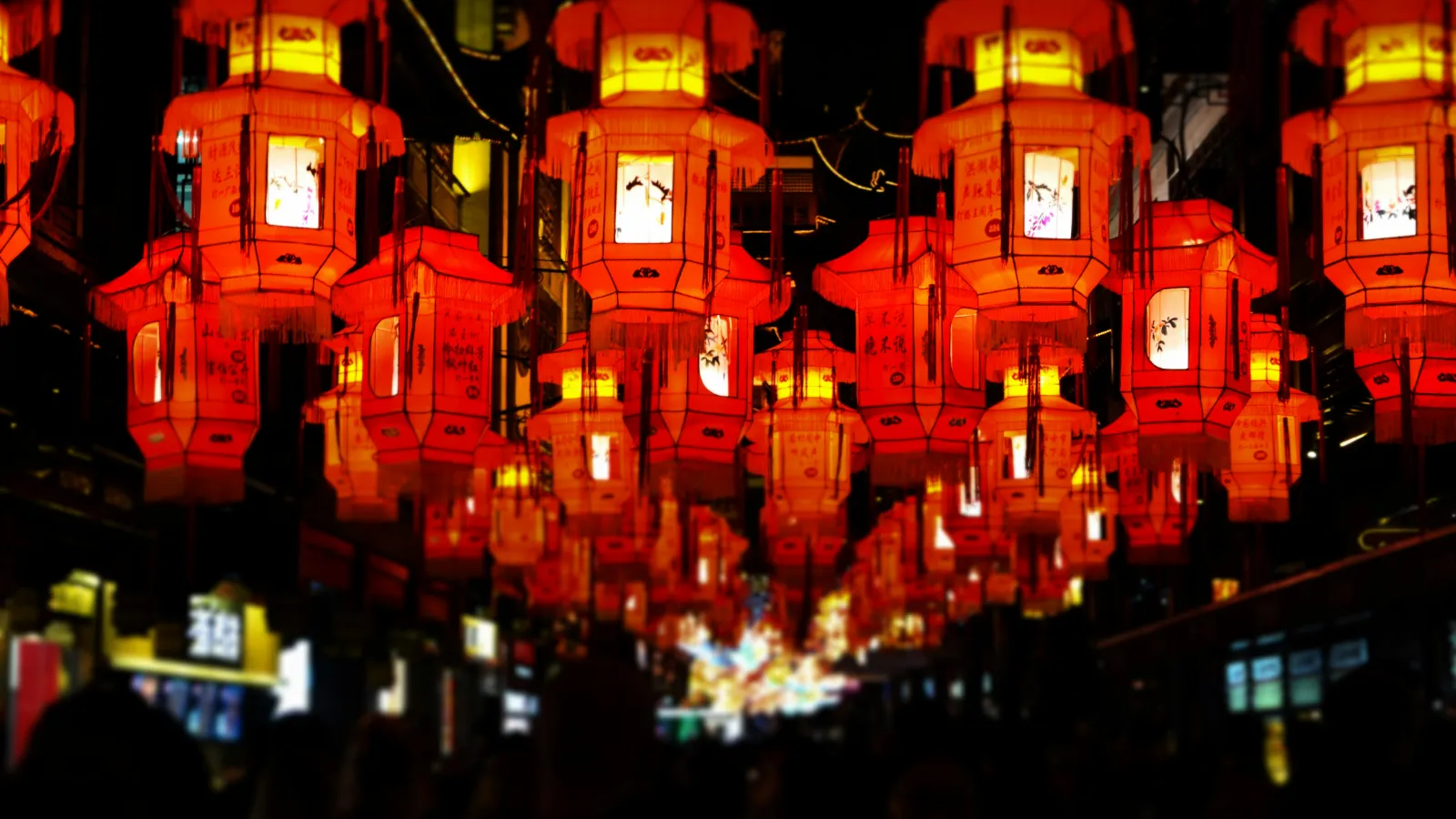
China visa for Nepali passport holders
Nepali passport holders need a Chinese visa before they fly: there is no visa-free entry and no visa on arrival for Nepali citizens visiting mainland China. Holidaymakers apply for the tourist (L) visa, which is a sticker in your passport rather than an e-visa. The application starts online at visaforchina.cn, then your original passport goes to the Chinese Visa Application Service Centre on the 1st floor of Rising Mall, Kamaladi, Kathmandu. Fees, the full document list and how our visa desk helps are on our China visa from Nepal page.
Once your passport is handed in, the visa centre usually takes about 4 working days (3 with the paid express service), but allow time for the document check and the online pre-review, so apply three to four weeks before departure, and two to three months ahead for Dashain and Tihar. A tourist visa commonly allows a stay of up to 30 days per entry, is usually single entry and typically has to be used within about 90 days of issue, so do not apply too early either. Two traps catch people: travel dates on the form that do not match the flight and hotel bookings, and non-refundable bookings made before the visa is approved. Fingerprinting is waived until 31 December 2026 for stays of up to 180 days, which is why Gomayu can submit your passport on your behalf.
Nepal is not among the countries eligible for China's 240-hour visa-free transit, so a connection that means leaving the airport also needs a visa. If you live outside Nepal, apply through the Chinese embassy or visa centre that covers the country where you legally live, usually with proof of residence. The visa rules follow your passport, not where you start.
China's arrival card
Foreign visitors still give arrival details when they enter China, but since 20 November 2025 you can do it online before you fly, on the National Immigration Administration's website, its NIA 12367 app or its WeChat and Alipay mini programs. If you have not, scan the QR code at the airport, use the kiosks or fill in the paper card. It is free, and Chinese embassies have warned about fake websites that charge for it. Fingerprints may also be taken at the border on arrival.
Flights to China from Kathmandu and abroad
From Kathmandu there are nonstop flights to Chengdu Tianfu on Air China and Sichuan Airlines (about 3 hours), to Kunming on China Eastern (about 3 hours 15 minutes) and to Guangzhou on China Southern (about 4 hours 35 minutes), with Nepal Airlines also flying to Guangzhou in some seasons. Himalaya Airlines flies to Shenzhen, to Shanghai Pudong, which it resumed on 28 September 2026, and to Hangzhou, which it launched on 30 September 2026. Beijing has no nonstop from Kathmandu and needs one connection. Schedules change by season, so confirm when you book.
Flight routes and connections
Beijing, Shanghai and Guangzhou are the long haul gateways and take direct arrivals from the Gulf, Southeast Asia, Australia, Japan, Europe and North America. Nepalis living in the Gulf, Australia, the UK or the US can usually fly straight into one of them and meet family arriving from Kathmandu at the first hotel. Chengdu and Kunming are the practical entry points from South Asia, and Chengdu, the shortest hop from Kathmandu, shows up often on our itineraries.
If your starting point has no direct service to the city you want, Beijing and Shanghai are usually reached with one connection, either through a Chinese hub such as Chengdu, Kunming or Guangzhou, or through a regional hub. Connecting inside China is straightforward once your visa is in the passport, since you clear immigration at the first Chinese airport and continue as a domestic passenger. That is also the trap: on a route through Guangzhou, Chengdu or Kunming, you need the visa before you leave Kathmandu.
One practical point. If your route enters through one city and exits from another, Chengdu or Kunming in and Shanghai or Beijing out for example, you avoid backtracking and save a full travel day. Open jaw routing is worth asking about on any China itinerary.
Overland from Nepal: Rasuwagadhi and Tatopani
Nepal's two main road crossings into China, Rasuwagadhi to Kerung and Tatopani to Zhangmu, both lead into Tibet, a long way from Beijing, Shanghai or the south. Rasuwagadhi has been closed since floods on 26 August 2026 washed away bridges on the access road, and no reopening date had been set at the end of October 2026. China also suspended trade through Tatopani at the end of August 2026 because of landslide risk. Our China packages do not include Tibet, so every trip on this page is planned with flights.
Places to visit in China
The places to visit in China that earn their place on a first trip are Beijing, Xi'an, Shanghai, Guilin with Yangshuo, Zhangjiajie and Chengdu, with Qingdao, Chongqing and the Yangtze, and Yunnan for a slower trip or a second visit. A China trip built around two or three of these works far better than one that tries to touch six. Each city below is described by what it actually gives you, so you can choose on interest rather than on a list. Our places to visit in China guide covers more of the country.
Beijing
Beijing is the one city almost nobody should skip. It holds the Great Wall of China, the Forbidden City and Tiananmen Square within reach of a single base, and it is where the history you half remember from school becomes a physical place you are standing in.
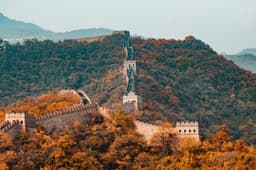
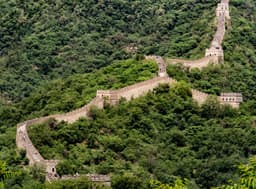
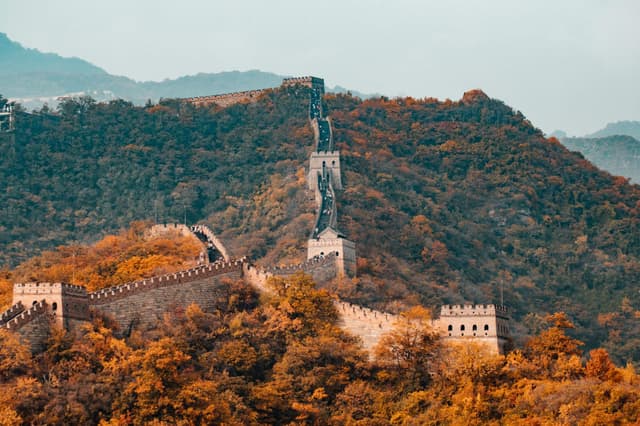
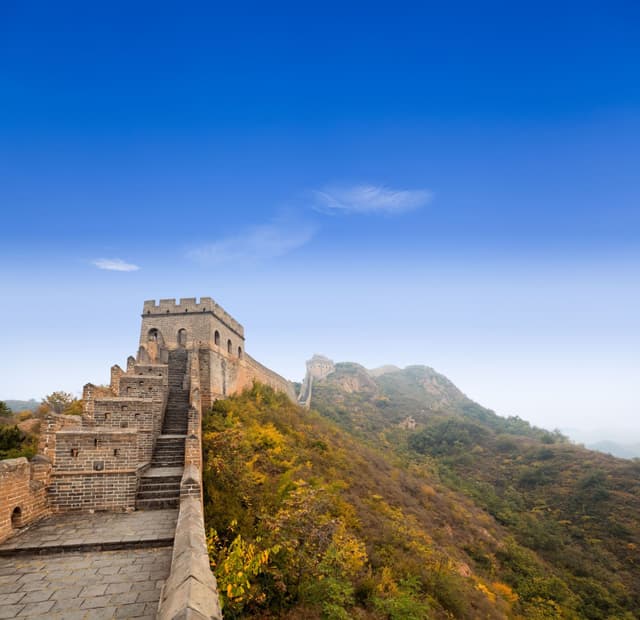
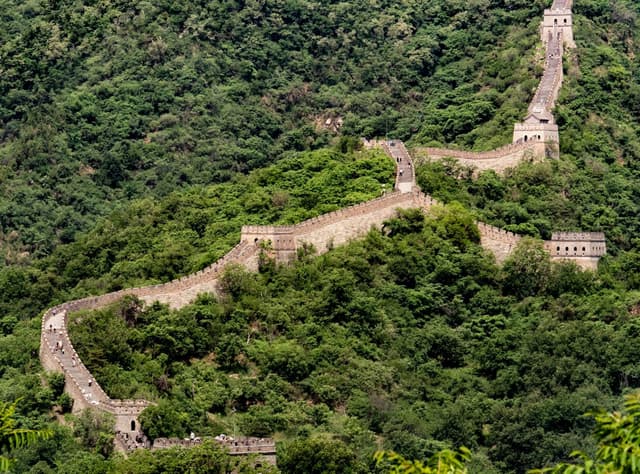
The Great Wall is a half day trip out of the city. Mutianyu is the usual choice for travellers who want restored ramparts, a cable car and manageable crowds. Badaling is the closest and the busiest. Jinshanling is rougher, quieter and better if you actually want to walk a long stretch. Go early. The light is better and the tour buses arrive mid morning. Our Great Wall of China guide compares the sections.
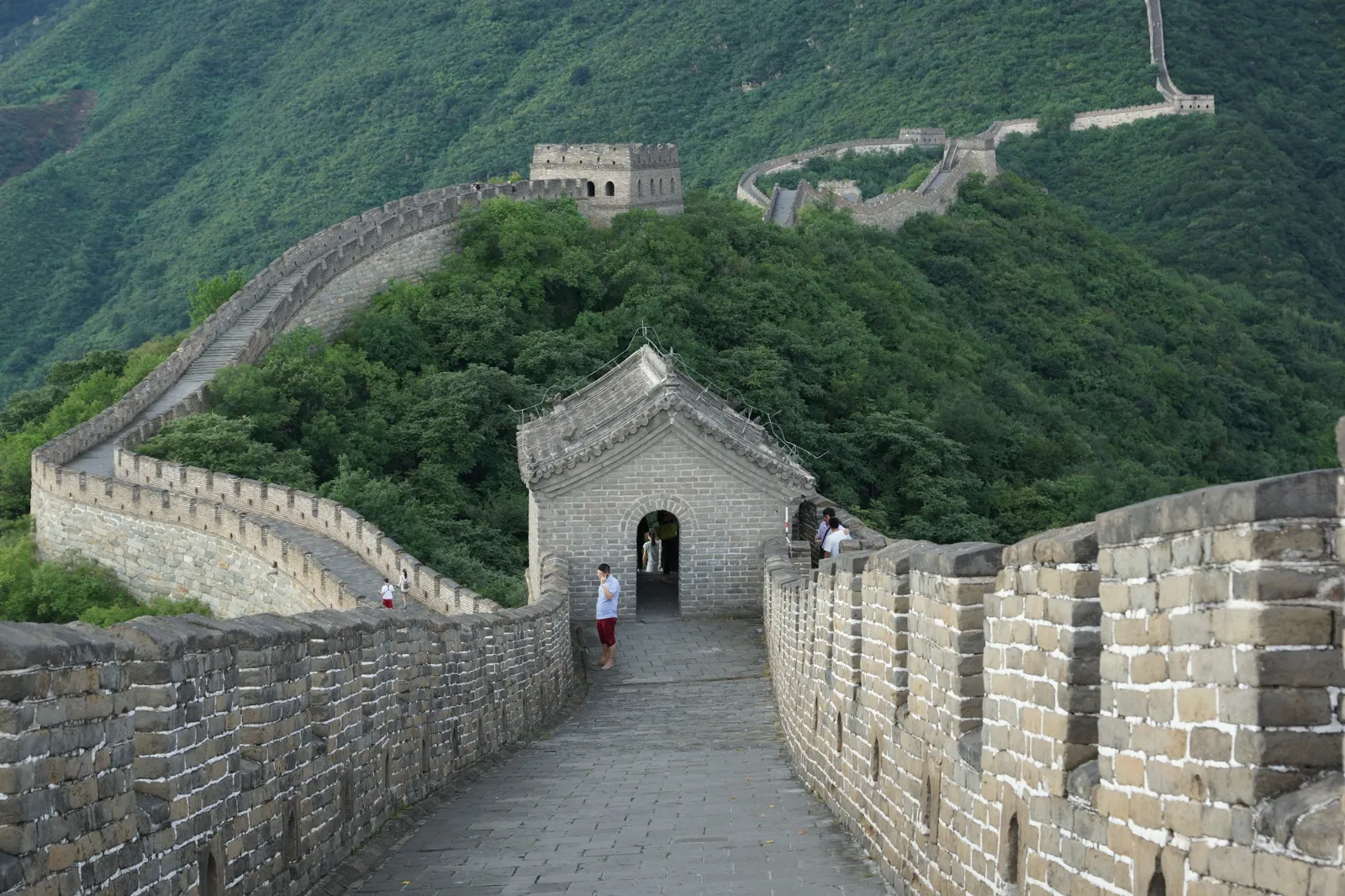
The Forbidden City needs a booked entry slot and at least three hours. Enter from the south at the Meridian Gate and walk north so you finish near Jingshan Park, where the climb up the hill gives you the roofline of the whole palace complex in one frame. Tiananmen Square sits immediately south and requires ID and a security check to enter.
Beyond the headline sites, Beijing is a hutong city. The lanes around Nanluoguxiang and the Drum Tower are where you get courtyard houses, small noodle shops and old men playing chess. Autumn in Beijing, with yellow ginkgo leaves against red temple walls, is the single most photographed season in the country for good reason. See things to do in Beijing for more.
Xi'an
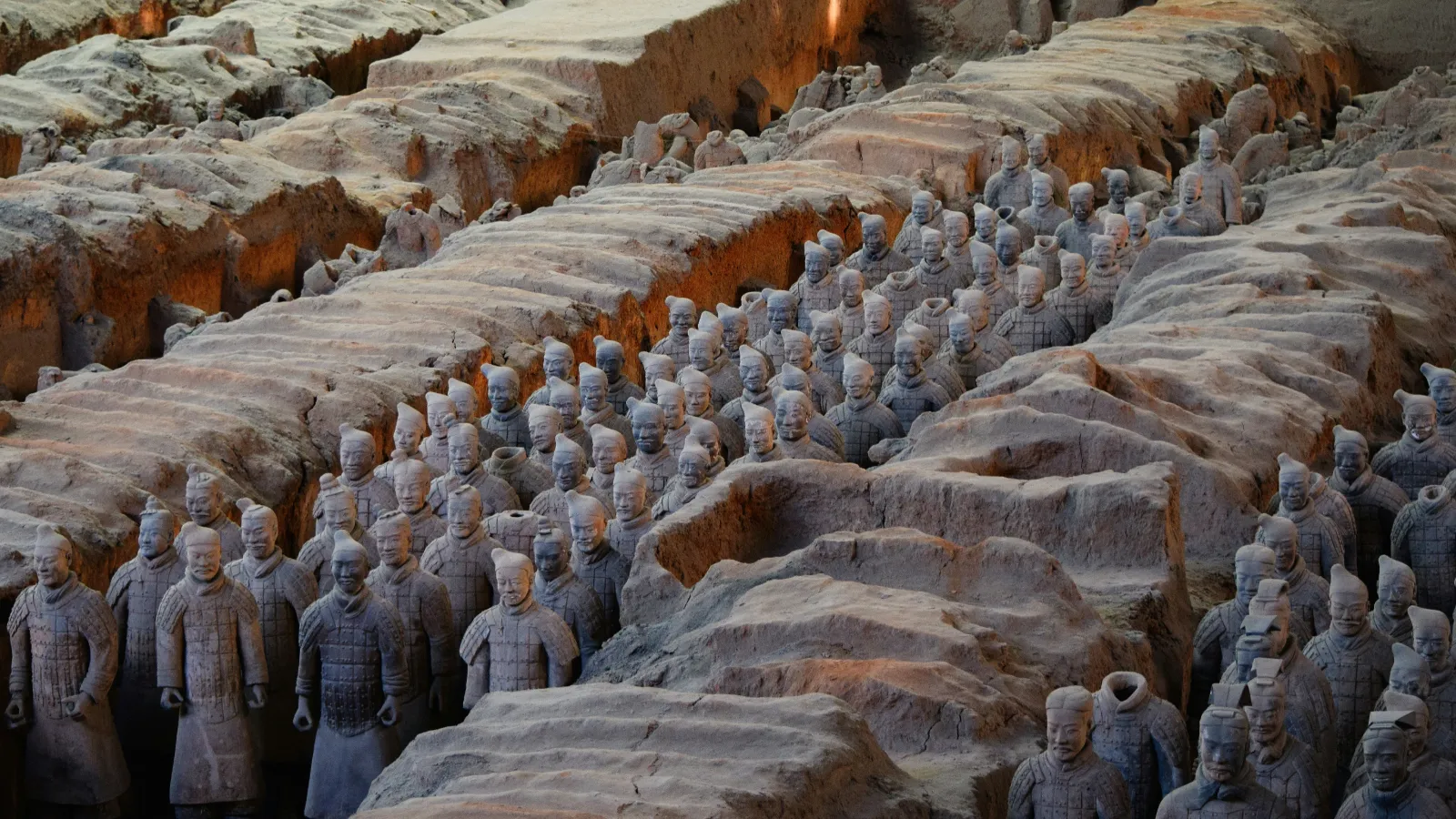
Xi'an is the history stop. The Terracotta Warriors sit outside the city, thousands of individually modelled figures buried with China's first emperor and still being excavated. Seeing Pit One for the first time is the closest thing China offers to a jaw drop moment, and it is worth taking a guide because the pits mean very little without the story.
In the city, the Ming era wall still runs a complete circuit and you can cycle the full loop on top of it. The Xi'an Muslim Quarter is the other reason to come. It is the historic Hui neighbourhood, the food street runs late into the night, and for Nepali Muslim travellers it is the easiest halal eating in China outside the far west. Roujiamo, hand pulled noodles and lamb skewers are the things to order.
Xi'an was the eastern end of the Silk Road, and the Great Mosque, tucked behind the market lanes, is built in Chinese architectural style rather than Arabic. That single building explains more about Chinese cultural absorption than any museum panel.
Shanghai
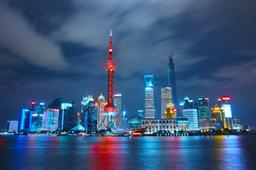
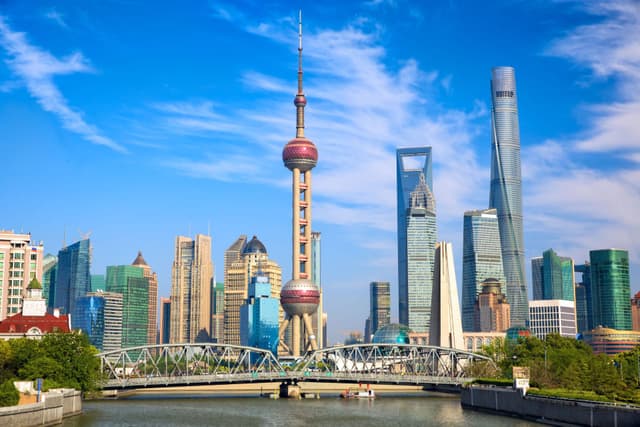
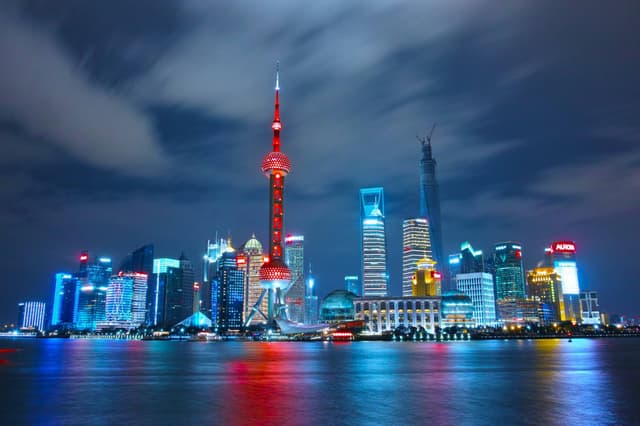
Shanghai is the modern counterweight to Beijing. The Bund is the reason most people come: a curve of 1920s colonial banking houses on one bank, and the Pudong skyline of the Oriental Pearl Tower and Shanghai Tower on the other. Walk it at dusk, when both sides are lit and the river traffic is moving.
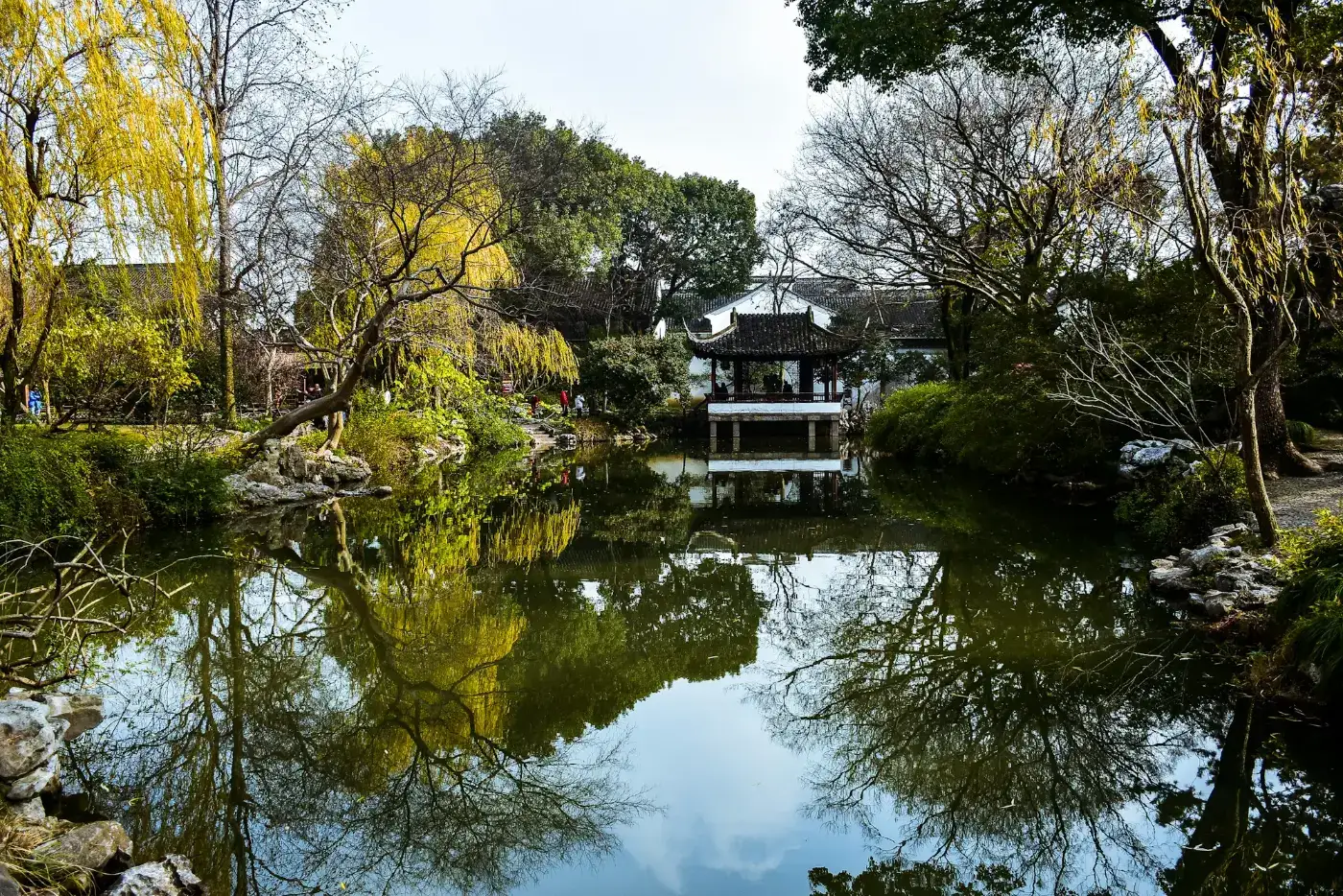
Yu Garden, in the old city, is a Ming dynasty classical garden of rockeries, ponds and pavilions, surrounded by a bazaar that is touristy but enjoyable. Nanjing Road handles shopping. The French Concession handles the afternoon you did not plan, with plane tree lined streets, small cafes and old villas, and it is where Shanghai stops performing and just lives. See things to do in Shanghai for more.
Shanghai also functions as a base. Suzhou and Hangzhou are short high speed rail rides away, for classical gardens and West Lake respectively, and both work as a comfortable day trip without changing hotel.
Qingdao
Qingdao is a seaside city on the Shandong coast, and our Shanghai, Qingdao & Beijing Tour links it by bullet train between the two big cities. Its old quarter of German-era villas and churches dates from its years as a German concession before 1914, and the sea pier and the Tsingtao beer museum fill an easy, unhurried day between two busy ones.
Guilin and Yangshuo
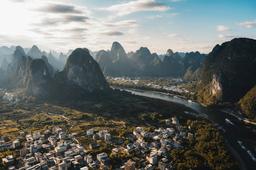
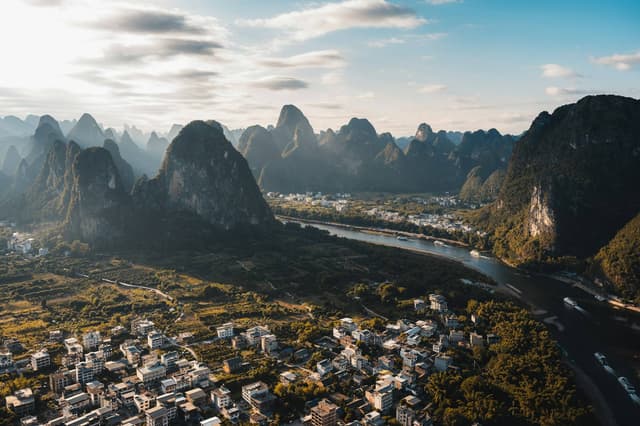
Guilin and Yangshuo are where China gets beautiful in a way photographs undersell. The Li River cruise runs between the two, through limestone karst peaks rising straight out of flat farmland and mist. It is the scenery printed on Chinese banknotes, and it takes several hours by boat.
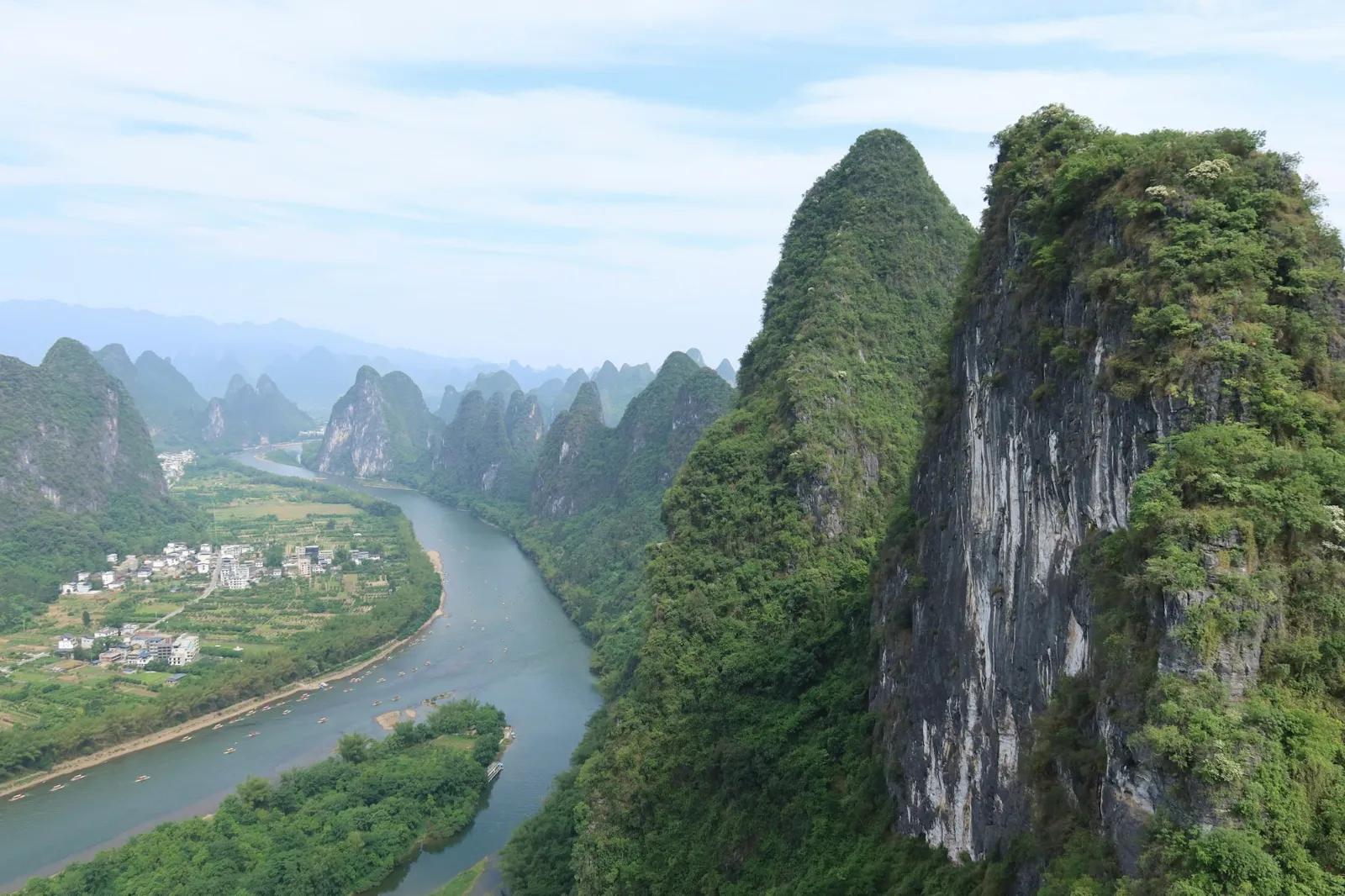
Yangshuo at the far end is the better place to stay. It is small, surrounded by peaks, and built for cycling. Rent a bike, ride out along the Yulong River past rice fields and water buffalo, and take a bamboo raft in the late afternoon. Reed Flute Cave near Guilin is the standard add on, a limestone cave lit in colour.
For Nepali couples and honeymooners this region is the strongest argument in the whole country. It is slow, green, and unlike anything in the itinerary before or after it.
Zhangjiajie
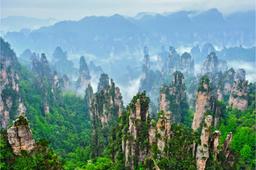
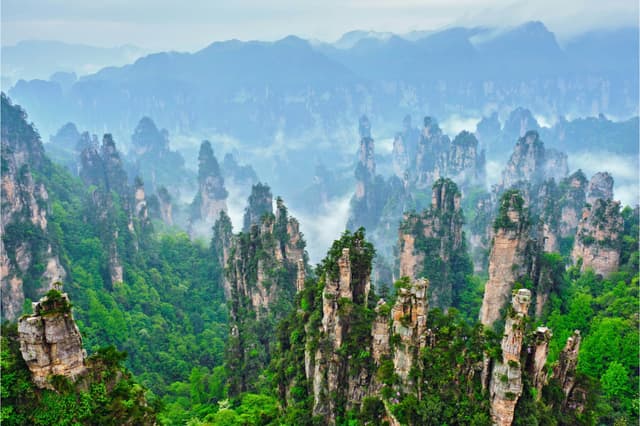
Zhangjiajie in Hunan province is the sandstone pillar landscape that inspired the floating mountains in Avatar. Zhangjiajie National Forest Park is the core: hundreds of quartz sandstone columns, walkways threaded between them, and the Bailong glass elevator running up a cliff face.
The Zhangjiajie Grand Canyon glass bridge is the other draw, a transparent span across the canyon that people either love or refuse to step on. Tianmen Mountain, near the city, has a long cable car, a cliff hanging walkway and the natural arch known as Heaven's Gate above a famous stretch of hairpin road.
Be realistic about effort. Zhangjiajie involves a lot of stairs, walking and queuing for cable cars, and it needs at least two full days to be worth the detour. Families with young children or elderly parents usually get more out of Guilin. Our Zhangjiajie National Forest Park guide has the detail.
Chengdu

Chengdu is the panda city and, for anyone arriving from South Asia, often the easiest entry point into China because the flight is short. The Chengdu Research Base of Giant Panda Breeding is the reason most people stop here. Arrive at opening time, because pandas are active in the cool morning and asleep by midday.
The city itself is more relaxed than Beijing or Shanghai. People's Park has an old teahouse where locals sit for hours over bamboo leaf green tea. Jinli and Kuanzhai Alley handle the evening. Sichuan food is the other headline: numbing peppercorn, chilli oil, and hotpot that Nepali palates usually take to immediately.
Chengdu is also the gateway for the Leshan Giant Buddha and Mount Emei, both of which our Chengdu & the Giant Pandas Tour can include.
Chongqing and the Yangtze
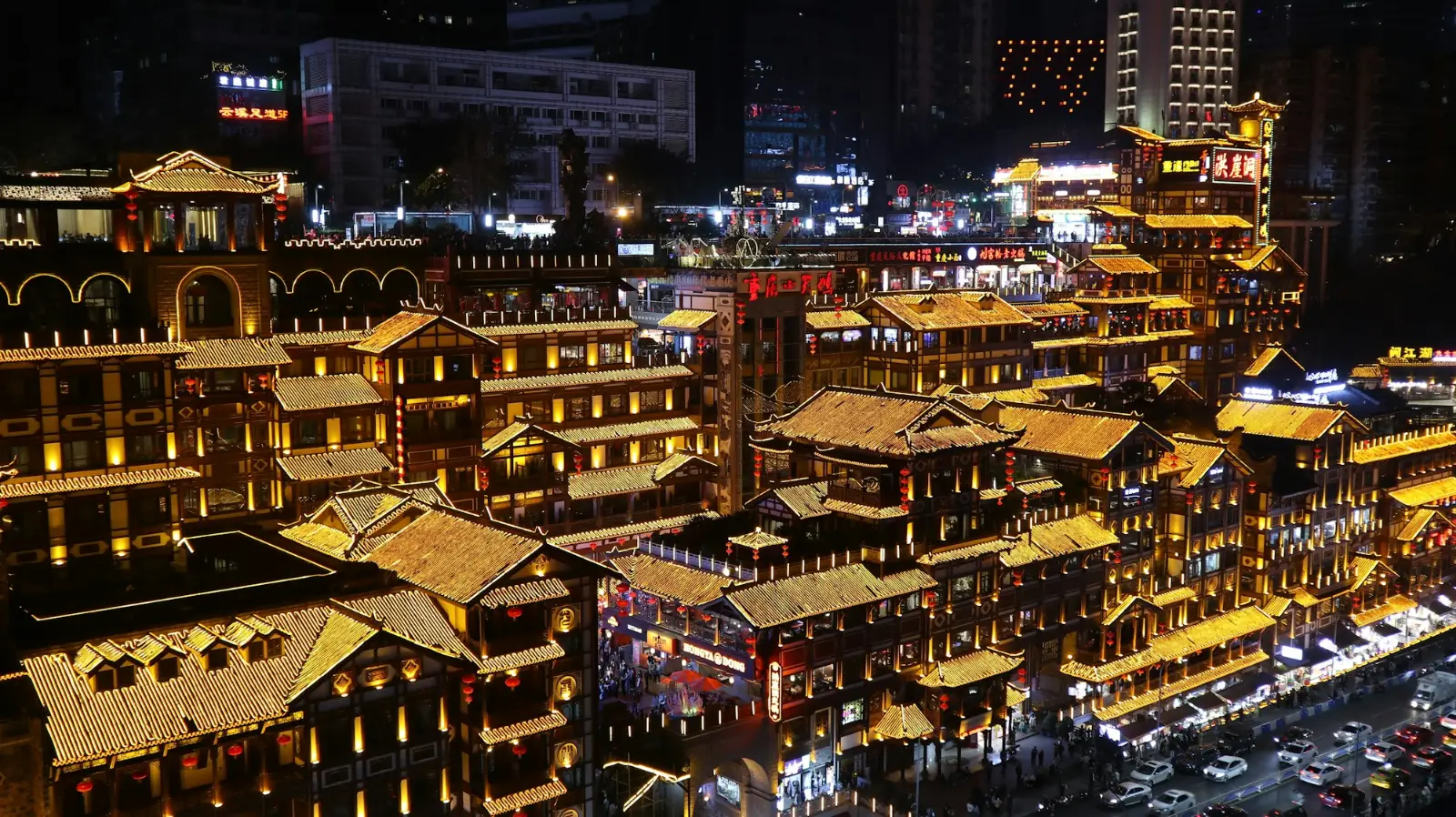
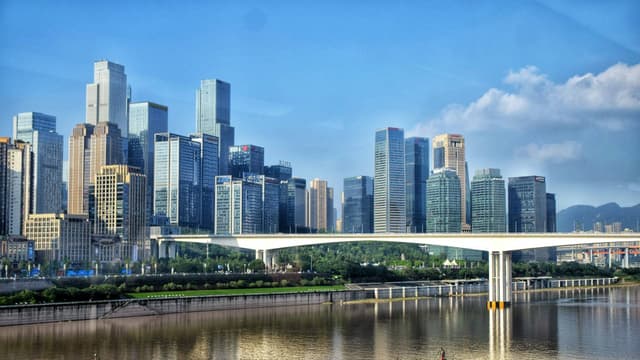
Chongqing is a mountain city built where the Jialing River meets the Yangtze, all bridges, stairways and night lights, and the stilted buildings of Hongyadong glow over the river after dark. It is also the home of red oil hotpot, hotter than Chengdu's. Most visitors use it as the start of a Yangtze cruise. Our Chongqing & the Yangtze Tour adds the Dazu Rock Carvings, a UNESCO-listed site of Buddhist, Taoist and Confucian cliff sculpture, then sails through the Three Gorges over several nights to the Three Gorges Dam, finishing at Yichang. Cruise days are slow and easy, which suits parents, and spring and early autumn are the most comfortable months.
Yunnan: Kunming, Dali and Lijiang
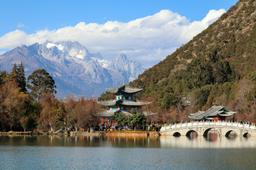
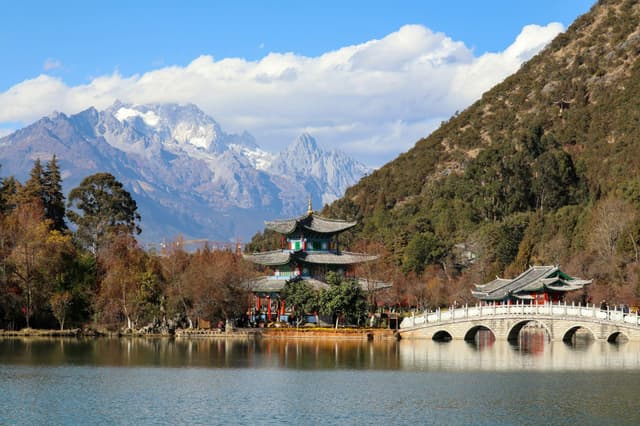
Yunnan, in the south-west, is the other province with a nonstop flight from Kathmandu, landing in Kunming. Our Yunnan tour travels by high speed rail from the Stone Forest of karst limestone pillars near Kunming to Dali, a Bai old town between Erhai Lake and the Cangshan range, and on to Lijiang, whose old town of canals and Naxi wooden houses is UNESCO listed.
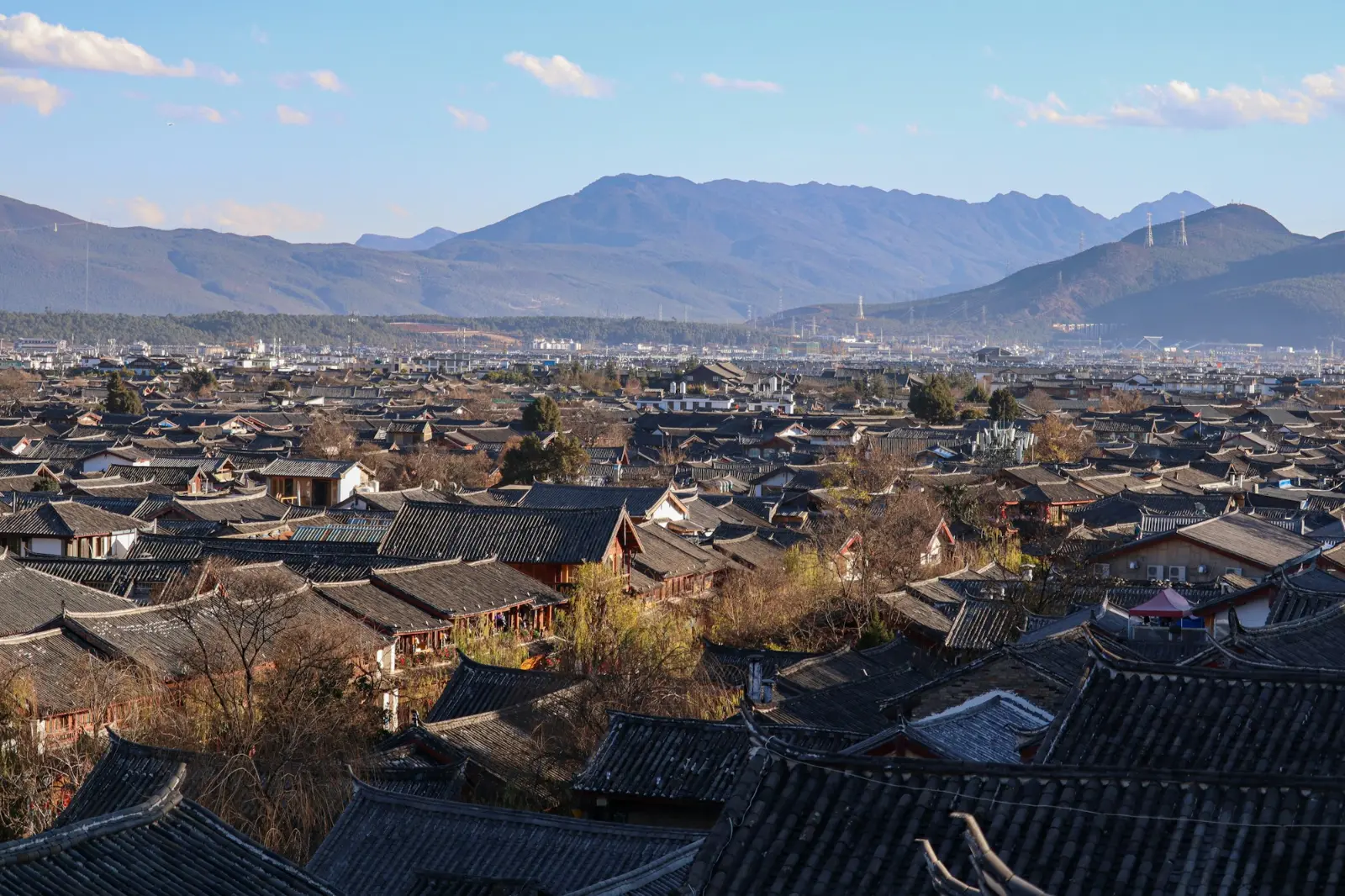
Lijiang sits at about 2,400 metres, which most Nepali travellers will barely notice, but the cable car on Jade Dragon Snow Mountain climbs far higher, so move slowly at the top. Yunnan is also China's pu'er tea country, and its spring and autumn are clear and mild.
Getting around China
China high speed rail is the default way to move between cities in China, metro handles everything inside cities, and domestic flights only make sense over long distances. Trains leave from city centre stations, run to the minute, and remove the airport time that makes short flights slower than they look.
| Mode | Best for | What to know |
|---|---|---|
| High speed rail | City pairs such as Beijing to Xi'an, Beijing to Shanghai, Shanghai to Hangzhou | Book with your passport, which also serves as your ticket at the gate. Arrive 30 to 40 minutes early for security and boarding. |
| Domestic flight | Long hops such as Beijing to Guilin, Shanghai to Zhangjiajie, anything toward the far west | Add airport transfer and check-in time at both ends before deciding it is faster. |
| Metro | All movement inside Beijing, Shanghai, Guangzhou, Xi'an and Chengdu | Signage and announcements are in English. Every station has a bag scan, so allow a couple of minutes. |
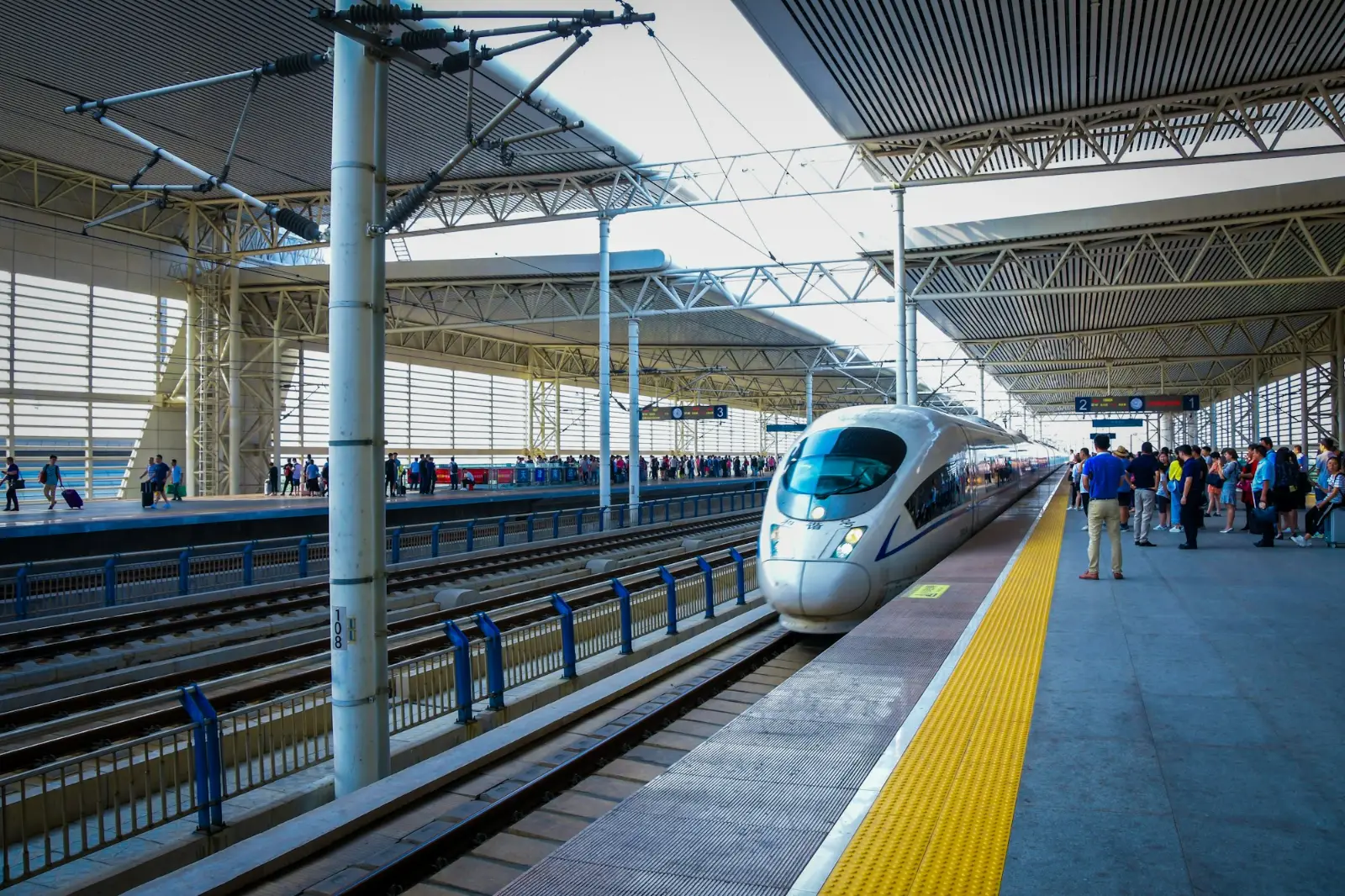
Second class seats on high speed rail are comfortable enough that first class is rarely necessary on a three hour ride. Bring your passport to the station every time, since ID checks happen at entry, at the gate and sometimes on board. Our China high speed rail guide explains booking and routes.
For taxis, use the ride hailing app rather than flagging cars, and have your destination saved in Chinese characters. Drivers in China rarely read the Roman alphabet, and a hotel business card in Chinese has saved more travellers than any phrasebook.
What to eat in China
Nepali travellers usually adapt to Chinese food quickly, because rice, noodles, chilli and slow cooked meat are familiar territory. What surprises people is how much the food changes by region. Sichuan is numbing and hot, Cantonese is mild and steamed, northern food leans on wheat, dumplings and lamb. Our what to eat in China guide lists the dishes to try first.
Vegetarian, halal and no-beef eating
Vegetarian eating is possible but needs clear communication. A dish described as vegetable is often cooked in pork lard or chicken stock, and asking for no meat may not exclude either. The reliable options are Buddhist vegetarian restaurants, which serve fully meat free menus and exist near most major temples, plus tofu dishes, cold vegetable plates and plain noodles ordered explicitly. Carry a translation card that states no meat, no fish, no meat stock in Chinese.
Halal food is easier than most people expect. Look for the Arabic script or the Chinese characters for qingzhen on the sign. Lanzhou beef noodle shops are halal, extremely common in every city, and cheap, though Hindu travellers who avoid beef should note that their noodles are built on beef broth. The Xi'an Muslim Quarter is a full halal food district. Beijing and Shanghai both have established Muslim restaurant clusters.
If you avoid beef, learn the phrase bu yao niu rou, no beef, and show it written in Chinese on your phone. And carry a few packets of Nepali tea or noodles if you are travelling with elderly parents, because on day four of unfamiliar breakfasts that small comfort matters more than it sounds.
Money, insurance and practical basics
Paying in China: Alipay, WeChat Pay and cash
China runs on Alipay and WeChat Pay, and a traveller without one of them will struggle. Both apps now allow foreign visitors to link an international Visa or Mastercard, so set this up before you fly and test it once, because some issuing banks block these payments. Cash in Chinese Yuan is legal tender everywhere, but many small vendors no longer keep change.
Set up before departure, in this order: install Alipay or WeChat, complete identity verification with your passport, link your card, and top up a small balance. Verification sometimes takes a day and is far easier on home wifi than standing at a Beijing metro machine.
The Chinese currency is the Renminbi, quoted as CNY or RMB and called Yuan in conversation. Buy US dollars in Nepal through a bank, within the Nepal Rastra Bank limit of up to USD 3,000 per trip (up to USD 500 of it in cash, the rest on a foreign currency card in your name), change cash at a bank branch in China, and rely on the apps for most spending. Exchange rates between NPR and CNY move, so check the rate on the day rather than working from an old figure. Our guides to how much foreign currency you can take from Nepal and paying in China with Alipay and WeChat Pay go step by step.
Keep some cash anyway. Temple donation boxes, a few rural stalls around Yangshuo, and the occasional stubborn taxi still want notes. Foreign cards work at large hotels and international chains but fail more often than they succeed in small local shops.
Internet: eSIM, VPN and blocked apps
Google, WhatsApp, Facebook, Instagram and YouTube are blocked inside China by the filtering system commonly called the Great Firewall. The usual answer is a travel eSIM or international roaming arranged before you leave home. Doing nothing and hoping to fix it on arrival is how people lose contact with home for two days.
A travel eSIM is the cleaner option for most travellers. Because the data routes through the provider's network outside mainland China, the usual apps generally keep working without any extra software. Buy it before departure, install it while you still have working internet, and confirm your phone supports eSIM before you pay for one.
A local Chinese SIM gives you cheaper data and better local app performance, but it sits behind the same filtering as everyone else, so the blocked apps stay blocked. China permits only government-approved VPNs, so using a personal VPN is technically against Chinese rules. Tourists are rarely, if ever, penalised for it, but it is your decision and your risk, and VPN apps are hard to download once you are inside the country.
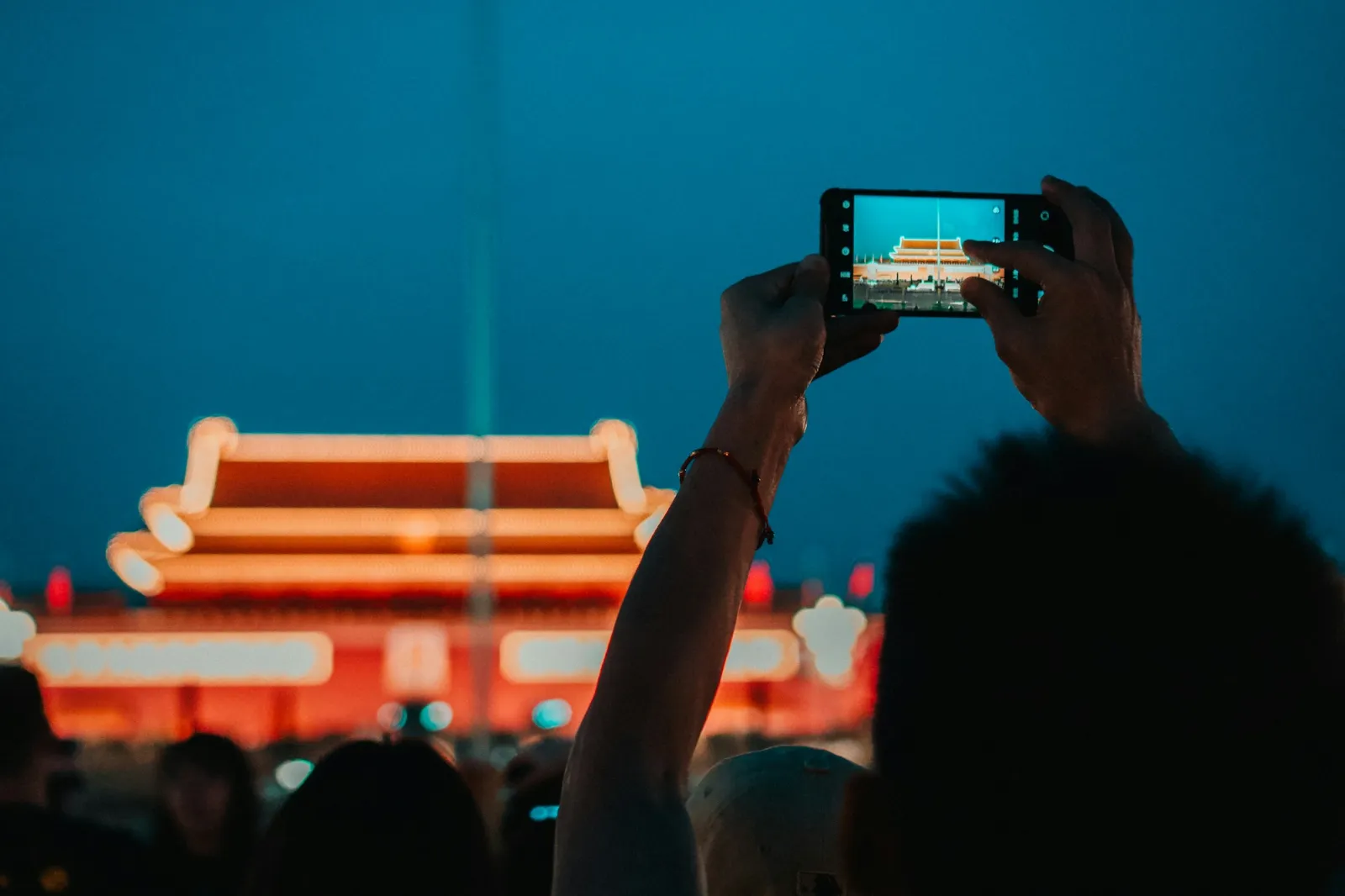
Also install what actually works locally: WeChat for messaging and payment, an offline map, and a translation app with the Chinese language pack downloaded. Hotel wifi is fast and widely available, but it is filtered like everything else. Our guide to which apps work in China has the full list.
Getting by without Mandarin
You can travel China comfortably without Mandarin, but not without preparation. English is limited outside hotels, airports and major tourist sites, and it disappears entirely in small restaurants and taxis. A translation app with the offline Chinese pack downloaded, plus your destinations saved in Chinese characters, solves most of it.
The camera translation feature is the one that earns its keep. Point it at a menu, a station board or a medicine box and you get a usable reading instantly. Learn ni hao for hello, xie xie for thank you, and duo shao qian for how much, and use them, because effort is noticed and repaid.
Keep your hotel name and address in Chinese as a screenshot on your phone and on paper, since a dead battery is the one failure mode that leaves you stranded. On guided days this is a non-issue, which is precisely why most Nepali travellers book the first city guided and go independent afterwards.
Travel insurance
Buy travel insurance before you leave, from an insurer in Nepal or in your country of residence, covering medical treatment and evacuation, and read the exclusions if your trip includes high places such as Jade Dragon Snow Mountain. Hospitals in the big cities are good but foreigners pay in full, often upfront. Gomayu can also arrange travel insurance for you as an add-on; just ask our team. Our travel insurance from Nepal guide explains how to choose and claim.
What to pack
Pack for the season you are actually travelling in, not for a generic idea of China. Beijing in December is genuinely cold and dry. Shanghai in July is heavy and humid. What everyone needs regardless of month: comfortable walking shoes, because a single day at the Great Wall or the Forbidden City involves a lot of ground.
- Universal travel adapter, since Nepali three-pin plugs and many from the Gulf and Europe do not fit Chinese sockets
- Power bank, because navigation, translation and payment all run off your phone
- Photocopy and phone photo of your passport and visa page, stored separately from the passport
- Basic medicine for cold and stomach upset
- Warm layers for the north from November to March, sun protection for the south
Before you fly: a checklist for Nepali travellers
- Two to three months before: fix your dates around Golden Week and Chinese New Year, and check that your passport is valid for at least six months with two blank pages. Our pre-trip checklist lists what to sort two months, one month and one week before.
- At least three to four weeks before: apply for the Chinese visa (about 4 working days at the visa centre, plus the document check and online pre-review), and keep flights and hotels refundable until it is approved.
- The week before: install Alipay or WeChat Pay, verify it with your passport and link your card, buy a travel eSIM, and download a translation app and offline map. Save your hotel addresses in Chinese. Buy US dollars from a bank within the Nepal Rastra Bank limit, buy travel insurance, and check your baggage allowance with our packing and baggage guide.
- Before you land: fill in your arrival details online through the National Immigration Administration, or be ready to do it at the airport.
- Flight day: reach Tribhuvan International Airport about three hours before your flight, closer to four in the Dashain and Tihar rush. Keep power banks in your hand luggage and liquids under 100 ml. Our Kathmandu airport departure guide walks through each step.
- First flight abroad? Read our first-time flight tips, and our China travel tips before you go.
Shopping in China, and Nepal customs on the way home
China is best for tea, silk, everyday clothes and electronics at mall prices. In Shanghai, Nanjing Road and the malls around it cover fashion and brands, and the Yu Garden bazaar is the place for souvenirs. In Beijing, try Wangfujing and the small shops in the hutongs around Nanluoguxiang. Hangzhou's Longjing green tea and Yunnan's pu'er are the classic tea buys, and Suzhou and Hangzhou are known for silk. Prices are fixed in malls and shops. Markets that sell copies of branded goods expect hard bargaining, with opening prices several times what the seller will accept.
Visitors who leave mainland China within 183 days of their latest entry can claim back part of the VAT on goods bought in shops that show the departure tax refund sign, once they spend at least 200 yuan in one shop on the same day. Ask for the refund form at the till with your passport, show the unused goods to customs when you leave, and collect the refund, usually about 9 per cent of the price, at the counter after immigration.
When you land back in Kathmandu, a Nepali man can bring 25 grams and a woman 50 grams of gold jewellery without duty, plus one bottle of liquor of up to 1 litre, and foreign currency above the equivalent of USD 5,000 must be declared. These limits change with Nepal's annual budget (checked October 2026), so confirm them in our Nepal customs allowance guide before you fly home.
Laws and customs that catch travellers out
Chinese social etiquette is less formal than visitors expect, but a few rules are firm. Tipping is not customary and can cause confusion. Queue properly and board only when your turn comes. Keep your voice down inside temples. Photography of military installations, border posts and some government buildings is prohibited, and this is enforced.
Carry your passport at all times. You need it to enter train stations, to check in at hotels, and to buy tickets at several major attractions. Hotels register foreign guests with the police automatically. If you stay in a private residence instead, you are expected to register at the local police station yourself within 24 hours of arrival.
Book ahead for the big sites. The Forbidden City and the Terracotta Warriors run on timed entry slots that regularly sell out in peak season, and turning up at the gate is not a plan. Many museums also require advance reservation using your passport number.
Drug laws are among the strictest in the world. Trafficking can carry the death penalty, and a positive drug test can lead to detention. Religious practice is regulated too: visiting temples, mosques and churches is fine, but foreigners may not preach or hand out religious material.
Smaller things that smooth the trip: accept a business card or a gift with both hands, do not stick chopsticks upright in rice, and expect people to be direct rather than rude. Nepali travellers sometimes read Chinese bluntness as hostility. It is not. Our dos and don'ts in China covers the rest.
Is China safe?
China is one of the safest countries a Nepali traveller can visit. Violent crime against tourists is rare, cities are heavily monitored, and walking at night in Beijing, Shanghai or Chengdu is normal. The realistic risks are pickpocketing in crowded markets, traffic, and overpriced tea house or art gallery scams aimed at foreigners.
The tea house scam is the one to know. Friendly English speaking students or young couples near Wangfujing in Beijing, or the Bund and Nanjing Road in Shanghai, invite you to practise English over tea or to see an art exhibition, and the bill that follows runs to hundreds of dollars. Decline politely, and only drink tea where you chose to go.
On health, air quality in northern cities can be poor in winter, which matters if anyone in your group has asthma. Pharmacies are well stocked but staff rarely speak English, so bring your regular medication in its original packaging along with a copy of the prescription.
The emergency numbers are Police 110, Ambulance 120 and Fire 119. The Embassy of Nepal in Beijing, in the Sanlitun area, is the Nepali mission to contact if you lose your passport or need consular help. For more, read our guide Is it safe to travel to China.
Best China tour packages from Nepal
To summarise, these are the most popular China tour packages from Nepal that we arrange for Nepali travellers and the Nepali diaspora:
- Beijing City Tour (5 days)
- Shanghai City Tour (5 days)
- Chengdu & the Giant Pandas Tour (5 days)
- Guilin & Yangshuo Tour (5 days)
- Zhangjiajie Tour (5 days)
- Chongqing & the Yangtze Tour (6 days)
- Beijing & Shanghai Tour (7 days)
- Shanghai, Qingdao & Beijing Tour (7 days)
- Yunnan: Kunming, Dali & Lijiang Tour (7 days)
- China Holiday Package (10 days)
We plan China trips for every kind of Nepali traveller, from Kathmandu or abroad. Honeymooners choosing between Guilin and Shanghai. Families travelling in the Dashain break. Solo travellers who want Beijing done properly. Groups who want a premium pace and private transport. Message us on WhatsApp with your dates for an instant quote in NPR, and we will map your China trip with you in one sitting.
All destinations
Explore more destinations




Search Tours or Places
Search Tours or Places