




























Visa for Nepali passport holdersPick a country: what you need, documents, and how our visa desk applies for you.
India tour packages
Showing 16 of 16 packages
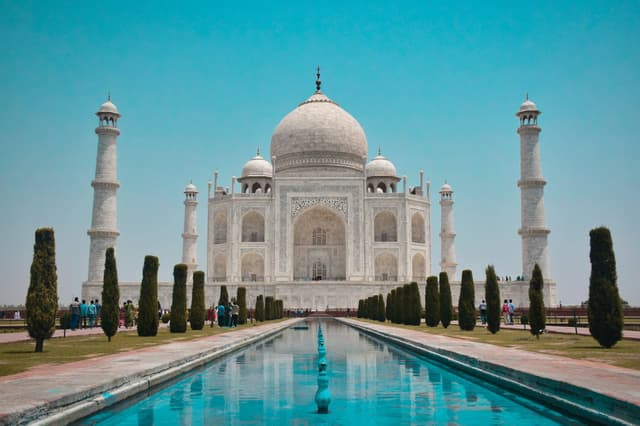
India Golden Triangle Tour – Delhi Agra Jaipur
6 Days · 5 Nights
NRs 37,500/ person
✓ Tour✕ Visa✕ Flights
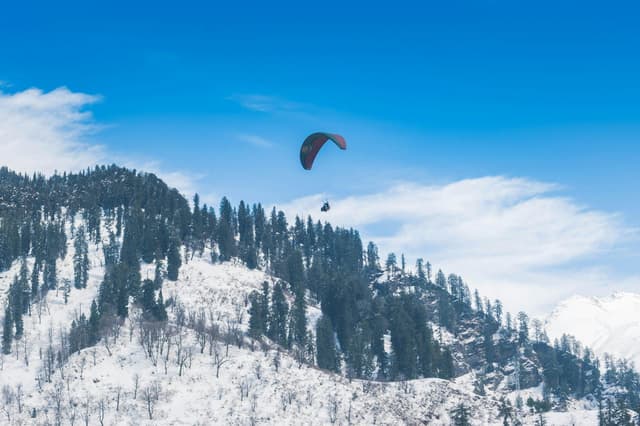
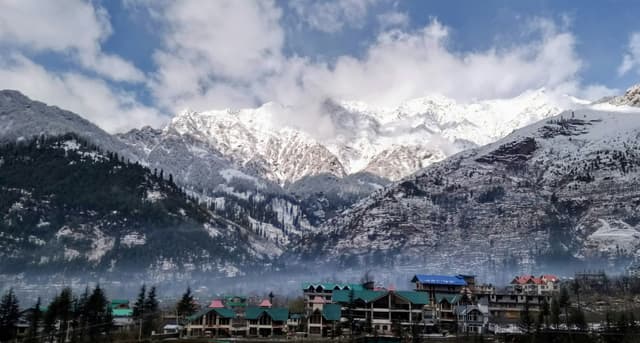
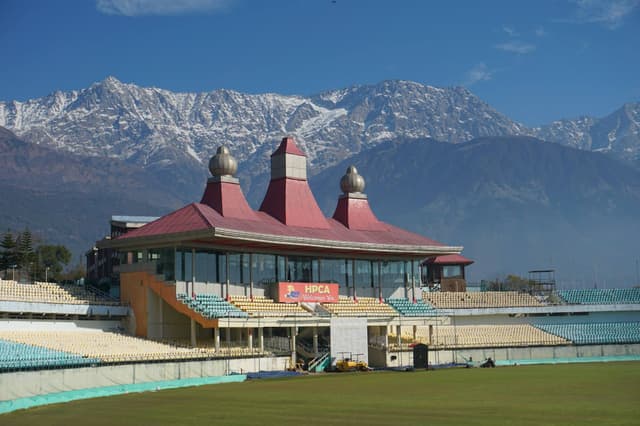
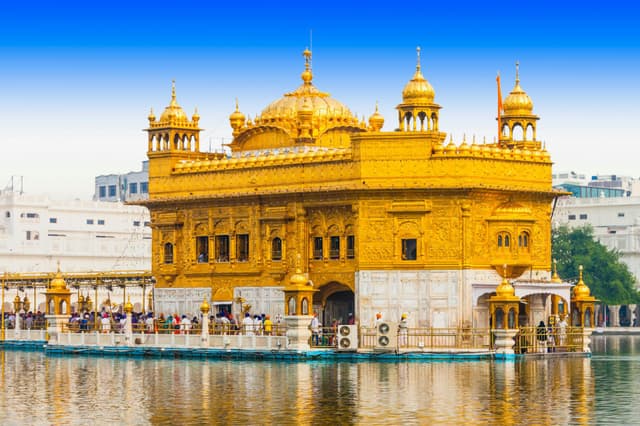
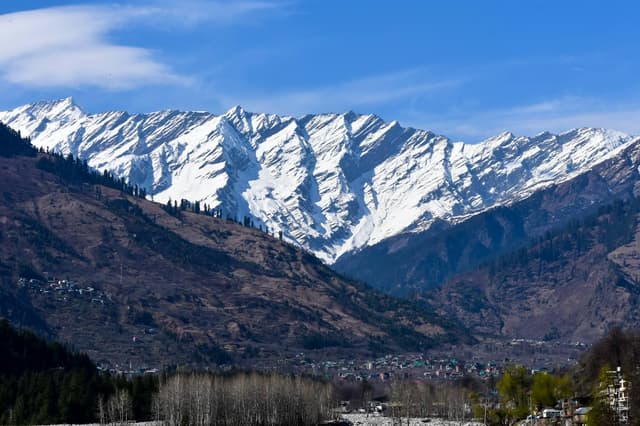
Comprehensive Himachal with Vaishno Devi Tour
11 Days · 10 Nights
NRs 46,500/ person
✓ Tours✕ Flights✕ Visa
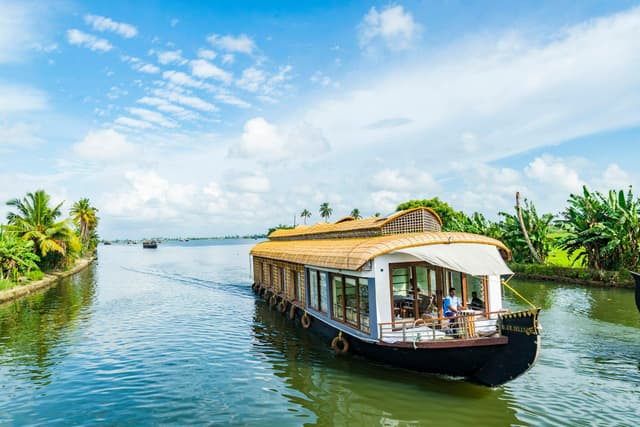
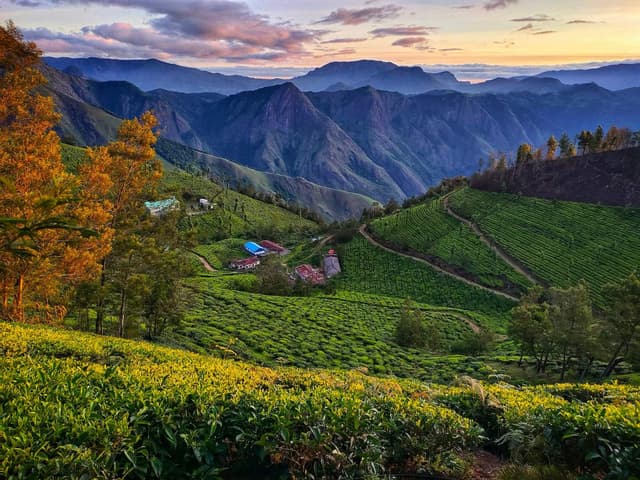
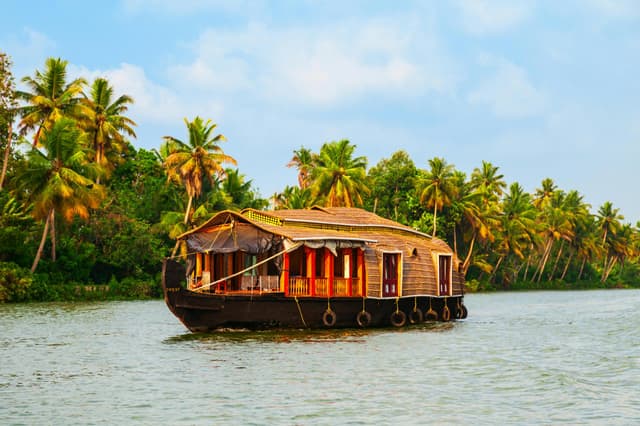
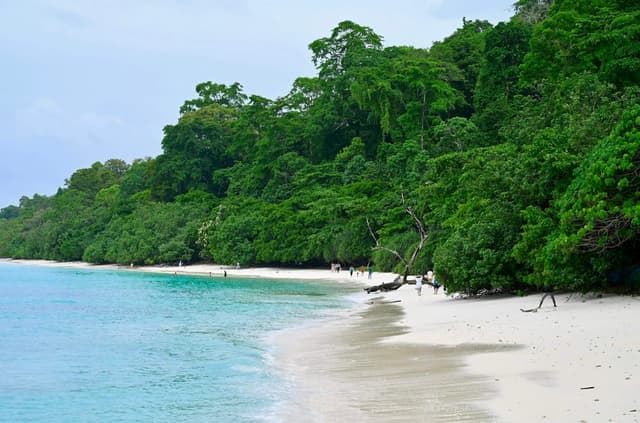
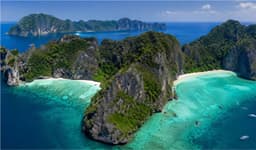
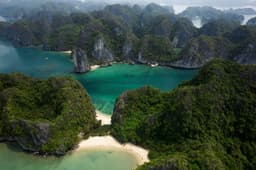
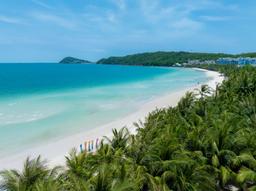
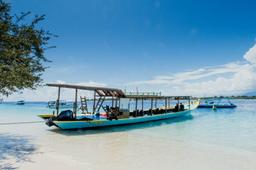
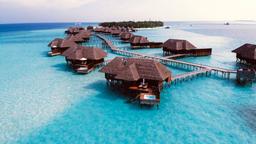
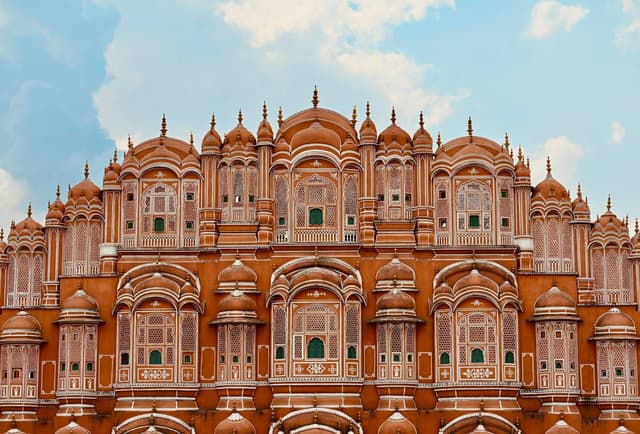
Andaman Islands Highlights - Port Blair, Havelock & Neil Island
6 Days · 5 Nights
NRs 43,500/ person
✓ Tours✕ Flight✕ Visa
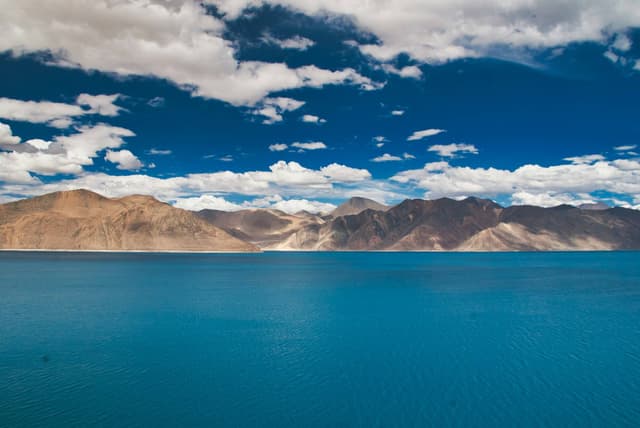
News & AlertsCAUTIONHeavy rain and rough seas in the Andaman Islands until mid-November — until 17 Nov 2026. +1 moreChecked 15 Nov 2026, 05:55 NPTView details ↓Hide details ↑
Travel news
Caution
Heavy rain and rough seas in the Andaman Islands until mid-November
A low-pressure area formed over the southeast Bay of Bengal on 13 November, with squally weather over the Andaman Sea, and fishermen have been told to stay out of the area until 16 November. Ferries between Port Blair, Havelock and Neil may be delayed or cancelled at short notice. We contact every booked traveller before departure.
Port Blair and Andaman Islands · 10 Nov – 17 Nov 2026 · DT Next (IMD forecast)
Caution
Very poor air quality in Delhi; pollution rules in force
Delhi's air quality was "very poor" on 14 November (AQI about 348, after severe readings earlier in the week), and the weather office expects no major improvement until at least 16 November. Sightseeing continues; travellers with breathing problems should carry a mask and medicines and limit time outdoors. We contact every booked traveller before departure.
Delhi · 2 Nov – 24 Nov 2026 · ETV Bharat · Outlook India
Weather by month
Best time for Delhi: October to March — little rain, highs 21–34°C.
- Jan21°8°low rain, best month
- Feb26°11°dry, best month
- Mar31°16°dry, best month
- Apr38°21°dry
- May40°25°low rain
- Jun40°27°low rain
- Jul36°27°heavy rain
- Aug35°27°heavy rain
- Sep35°25°medium rain
- Oct34°20°dry, best month
- Nov29°13°dry, best month, this month
- Dec23°8°dry, best month
Best time for Jaipur: October to March — little rain, highs 23–35°C.
- Jan23°9°dry, best month
- Feb28°13°dry, best month
- Mar33°18°dry, best month
- Apr38°24°dry
- May41°27°dry
- Jun40°28°low rain
- Jul35°26°heavy rain
- Aug33°25°heavy rain
- Sep35°25°medium rain
- Oct35°21°dry, best month
- Nov30°15°dry, best month, this month
- Dec25°10°dry, best month
Best time for Goa: November to May — little rain, highs 32–34°C.
- Jan32°21°dry, best month
- Feb33°21°dry, best month
- Mar33°23°dry, best month
- Apr34°25°dry, best month
- May34°27°low rain, best month
- Jun31°25°heavy rain
- Jul30°25°heavy rain
- Aug30°25°heavy rain
- Sep31°24°heavy rain
- Oct32°24°heavy rain
- Nov33°23°dry, best month, this month
- Dec33°22°dry, best month
Best time for Kochi: December to March — little rain, highs 32–33°C.
- Jan32°24°dry, best month
- Feb33°25°dry, best month
- Mar33°26°low rain, best month
- Apr33°26°medium rain
- May33°26°heavy rain
- Jun31°25°heavy rain
- Jul30°24°heavy rain
- Aug30°25°heavy rain
- Sep31°25°heavy rain
- Oct31°24°heavy rain
- Nov32°24°heavy rain, this month
- Dec32°24°low rain, best month
Best time for Shimla: February, October to December — little rain, highs 16–23°C.
- Jan13°4°medium rain
- Feb16°5°low rain, best month
- Mar19°8°medium rain
- Apr23°13°medium rain
- May26°14°medium rain
- Jun26°17°heavy rain
- Jul24°17°heavy rain
- Aug24°17°heavy rain
- Sep24°15°heavy rain
- Oct23°12°dry, best month
- Nov19°9°dry, best month, this month
- Dec16°6°dry, best month
Best time for Amritsar: September to April — little rain, highs 18–35°C.
- Jan18°5°low rain, best month
- Feb23°8°low rain, best month
- Mar28°12°low rain, best month
- Apr35°17°low rain, best month
- May40°22°dry
- Jun40°25°medium rain
- Jul36°26°heavy rain
- Aug35°26°medium rain
- Sep34°24°low rain, best month
- Oct32°18°dry, best month
- Nov27°11°dry, best month, this month
- Dec21°6°dry, best month
Best monthNowdryheavy rain36°+ very hotHigh / low °C
Weather: 10-year averages, 2015–2024 (NOAA weather stations). News: GDACS, ReliefWeb, GOV.UK travel advice (OGL v3.0) and local sources.Best Time to Visit India →
What our travellers say
Real reviews from Google, verified by travelers.
4.8★★★★★213 Google reviews


FAQ
Journey Questions
Written and checked by the Gomayu travel desk, KathmanduUpdated November 2026About this guide
Complete Guide
India travel guide
Written and checked by the Gomayu travel desk, KathmanduUpdated November 2026About this guide
India tour package from Nepal: total cost from Kathmandu
An India trip from Kathmandu has a few main costs: the journey to India (flight, or bus and train) and the land package (hotels, transfers and tours). Nepali citizens need no visa. Air fares change every few hours and differ a lot between airlines, so we show honest ranges rather than one fixed price. Use these figures to plan your budget. We confirm the exact total for your dates when you ask for a quote.
1. Return flight, Kathmandu to India (economy, per person)
| Option | Airline and route | Flight time | Return fare (NRs) |
|---|---|---|---|
| Nonstop, budget | IndiGo, Kathmandu to Delhi | About 1 hour 50 minutes | About 30,500 to 44,400 |
| Nonstop, full-service | Air India, Kathmandu to Delhi | About 1 hour 50 minutes | About 39,800 to 54,500 |
| Nonstop, Nepal's national airline | Nepal Airlines, Kathmandu to Delhi | About 1 hour 50 minutes | Changes by date; ask us for today's fare |
| By road and train | Bus or car to the border, then Indian Railways | Overnight or longer | Much lower than flying; see our cost guide |
Fares checked on Google Flights on 6 November 2026 for travel in late December 2026, February 2027 and mid-April 2027. Goa and Kochi have no direct flight from Kathmandu; flights connect in Delhi or Bengaluru.
2. Visa and entry costs
| Item | Cost (NRs) | Note |
|---|---|---|
| Visa for Nepali citizens | Not needed | Nepali citizens can enter India by air or land without a visa. Carry your citizenship certificate or passport. |
Current rules and documents: India entry rules for Nepali citizens.
3. Land package (hotels, transfers and tours)
| Trip | From (NRs, per person) |
|---|---|
| 4 days: Goa or Kerala | 28,000 to 31,000 |
| 5 to 6 days: Shimla and Manali, Golden Triangle, Ladakh, Andaman or Do Dham | 30,500 to 54,800 |
| 7 to 8 days: Rajasthan or Taj Mahal with Himachal | 39,500 to 46,000 |
| 10 to 11 days: Himachal with Golden Temple, Vaishno Devi or Char Dham | 44,500 to 81,800 |
These are our published "from" prices on 6 November 2026, per person, usually for a group of 3 to 7 sharing a room. Hill stations and pilgrimages are busiest in summer and over the Dashain and Tihar holidays, when hotels cost more.
4. Tentative total from Kathmandu (per person)
| Trip | Flight + visa + land package (NRs) |
|---|---|
| 6 days, Golden Triangle (Delhi, Agra, Jaipur), flying to Delhi | About 68,000 to 92,000 |
| 6 days, Shimla and Manali, flying to Delhi | About 61,000 to 85,000 |
Not included: meals not listed in your package, optional tours, shopping and travel insurance. For daily spending money and a worked example, read our India trip cost from Nepal guide.
India at a glance for Nepali travellers
The key facts for an India trip in one place. Detail on each follows further down this guide.
| Item | For a Nepali traveller |
|---|---|
| Visa and entry | No visa is needed for Nepali citizens, by air or land, under the 1950 Treaty of Peace and Friendship. Carry a valid Nepali passport or your original citizenship certificate. See India entry rules for Nepali citizens. |
| Arrival card | Foreign passport holders fill in India's online e-Arrival Card within 72 hours before landing. Nepali citizens should confirm with the airline at booking. |
| Flight from Kathmandu | About 1 hour 50 minutes nonstop to Delhi, or overland through a border crossing such as Sunauli or Raxaul |
| Time difference | India is 15 minutes behind Nepal |
| Currency | Indian rupee (INR), pegged to the Nepali rupee at 1 INR = 1.60 NPR |
| Money from Nepal | Carry Indian rupees: ₹200 and ₹500 notes up to ₹25,000 per person (Nepal Rastra Bank, reissued July 2026). The US dollar passport facility does not apply to India. |
| Plugs and power | 230V, the same round-pin sockets as Nepal. Nepali chargers fit without an adapter. |
| Language | Hindi, which most Nepali travellers follow, and English. Regional languages take over in the south. |
| Best months | October to March for Delhi, Agra, Jaipur and most of the plains; Goa November to May; Kerala December to March; the Himalaya in summer, Ladakh about June to September |
| Ideal trip length | 4 to 6 days for one region such as Goa, Kerala, the Golden Triangle or Shimla and Manali; 7 to 11 days for Rajasthan, a longer Himachal trip or the Char Dham Yatra |
| Drinking water | Tap water is not safe to drink. Use sealed bottled water and check the seal. |
| Nepal embassy | Embassy of Nepal, Barakhamba Road, New Delhi |
Why India is worth the trip
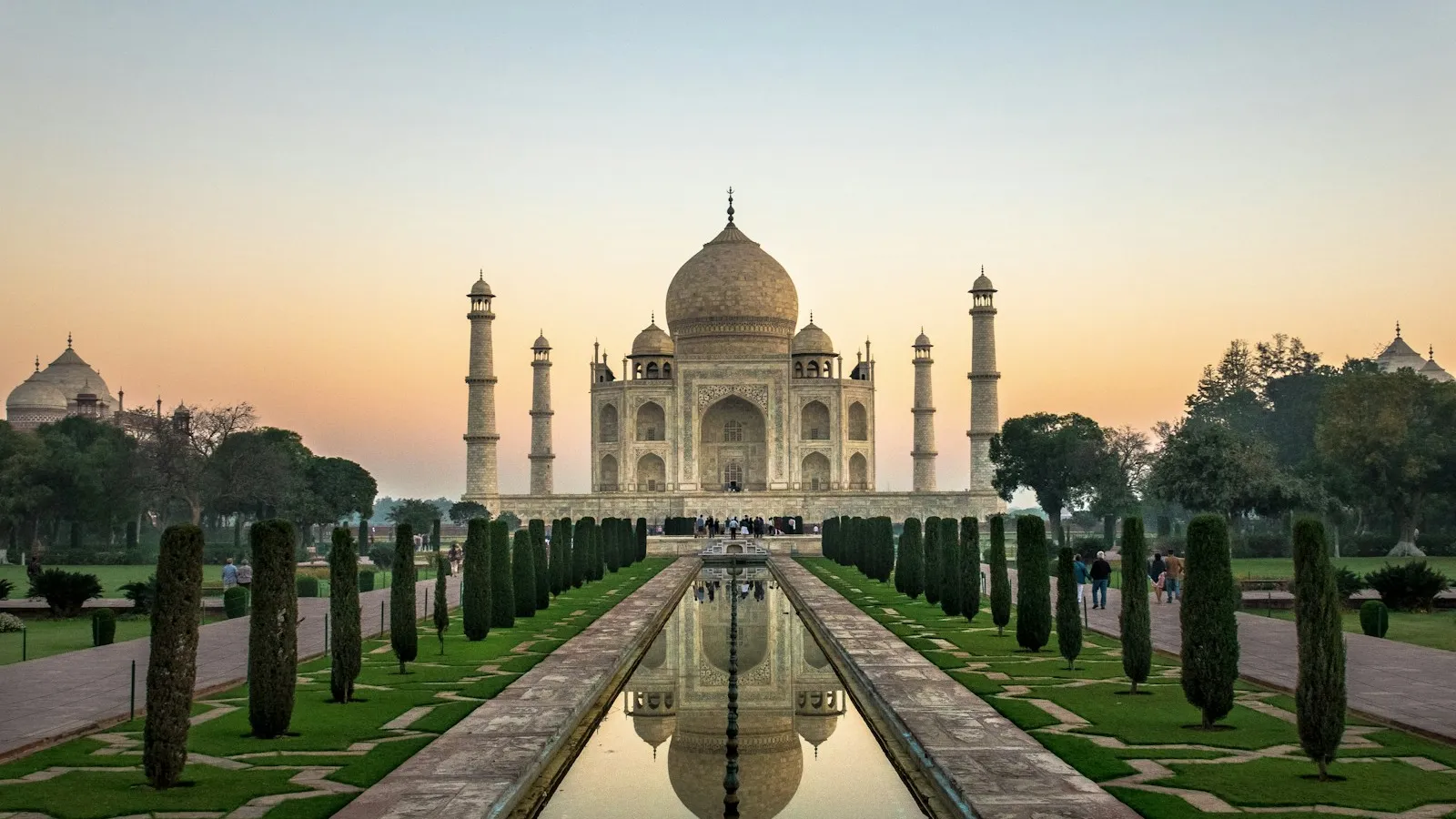
India is the easiest international holiday a Nepali traveller can take: no visa, no embassy appointment and no waiting period, because Nepali citizens move freely under the Indo-Nepal Treaty of Peace and Friendship signed in 1950 (see the entry rules below). That one fact removes the step that slows down every other trip.
The practical gains stack up fast. Hindi sits close enough to Nepali that most travellers follow conversations from the first day, and airports, railway stations and monuments carry English signage. Food needs no adjustment either, because dal, bhat, roti and tarkari appear on almost every menu in the north.
India also gives you range that no other short-haul destination matches. Desert forts in Rajasthan, backwater houseboats in Kerala, Portuguese churches in Goa, high passes in Ladakh and the riverfront ghats of Varanasi in Uttar Pradesh all sit inside one country you can enter with the identity document already in your drawer.
The audiences we book most often want different things from the same country. Honeymooners ask for Udaipur in Rajasthan or Alleppey in Kerala. Families ask for Delhi, Agra and Jaipur with a private driver, because nobody has to negotiate anything. Solo travellers and students like the freedom to change plans mid-trip, since nothing is locked behind a visa validity. Pilgrims come for Varanasi in Uttar Pradesh, Bodh Gaya in Bihar and Amritsar in Punjab.
How our India tour packages work, from Nepal or abroad
Every India tour package from Nepal that Gomayu arranges is curated for three groups of travellers: Nepali passport holders flying out of Kathmandu, the Nepali diaspora, and non resident Nepalis (NRNs) booking from Australia, the UK, the US, the Gulf and beyond. Many of our travellers start from Kathmandu, and many book from abroad, so each package is designed to work on any passport and from either starting point.
The process is deliberately simple. Pick your dates first, then keep the route realistic rather than squeezing everything into one holiday. From there the package covers the pieces that are annoying to arrange alone: hotels matched to your budget, airport transfers on both ends, day tours with English speaking guides, and step by step help with whatever visa or entry paperwork your passport needs.
Every India package on this page is priced per person as a land package: hotels matched to your budget, transfers, and the touring listed on each tour page. The flight from Kathmandu, or the road and rail route from the border, is quoted separately to fit your trip, and Nepali citizens need no visa, so the cost tables at the top of this guide show how the pieces add up. The price moves with how you travel from Nepal, the region, hotel category, a private car or shared touring, group size and season, and Diwali and the Dashain and Tihar break are the busiest weeks. Our India trip cost from Nepal guide and Is India expensive? explain what else changes the total.
The same structure works for split families. Parents can fly out of Kathmandu while children join from London, Sydney or Doha, everyone meets at the same hotel on arrival day, and each traveller follows the entry rules of their own passport. If that describes your family, mention it when you enquire and the package is built around both starting points from day one.
Which India tour package suits you
Choose one region and stay in it. India is too large to cover in a single holiday, and a good India trip commits to one part of the country rather than skimming three. Start with the kind of trip you want:
- First trip, families and seniors: the India Golden Triangle Tour – Delhi Agra Jaipur (6 days).
- Couples and honeymooners: the Kerala Munnar & Alleppey Houseboat Tour (4 days), Kerala Munnar, Thekkady & Alleppey (5 days), the Best of Kerala Tour (6 days), the Jaipur, Jodhpur & Udaipur Tour (7 days) and Andaman Islands Highlights - Port Blair, Havelock & Neil Island (6 days).
- Beach breaks and friend groups: the Goa Tour Package (4 days).
- Cool hills in summer: the Shimla & Manali Tour (6 days), the Delhi-Shimla-Manali-Chandigarh Tour (7 days) and the Magnificent Tour to Himachal (9 days).
- Adventure: the Magical Ladakh Tour (5 days), inside the June to September window.
- Pilgrims and family groups: the Char Dham Yatra Package from Nepal (11 days) and the Do Dham Yatra (5 days), inside the temple season.
You can also browse our packages by trip type: Kerala tour packages, Himachal tour packages, pilgrimage tour packages, honeymoon and couple packages and family tour packages.
First time Nepali travellers usually do best with the Golden Triangle, sometimes extended to Varanasi or Rishikesh. Repeat travellers move outward, to Rajasthan, Kerala or Ladakh. The table below is the shortcut we use when a caller has not decided yet.
| Region | Best for | Best months | How long it feels right |
|---|---|---|---|
| Delhi, Agra and Jaipur (the Golden Triangle) | First timers, families, heritage and monuments | October to March | About 5 to 7 days |
| Rajasthan beyond Jaipur (Udaipur, Jodhpur, Jaisalmer) | Couples, honeymooners, photographers, forts and desert | October to March | About 7 days for Jaipur, Jodhpur and Udaipur; longer with Jaisalmer |
| Indian Himalaya (Himachal, Uttarakhand, Ladakh, Sikkim) | Adventure travellers, young groups, cool weather | April to June and September to October, Ladakh roughly June to September | About 5 to 11 days |
| Kerala | Honeymooners, families, slow travel, backwaters and tea country | December to March | About 4 to 6 days |
| Goa and the Konkan coast | Beach holidays, friend groups, short breaks | November to May, most comfortable November to February | About 4 to 6 days |
| Andaman Islands | Couples, beaches and snorkelling | November to April | About 6 days |
| Pilgrimage circuits (Varanasi, Bodh Gaya, Amritsar, Char Dham) | Pilgrims, family groups, seniors | October to March, Char Dham from late April or May to October or November | About 5 to 11 days depending on circuit |
Golden Triangle, Kerala or Himachal first?
Start with two questions. What months are you free, and how many days do you actually have. Those two answers eliminate most of the map on their own. Kerala and Goa are winter destinations. Ladakh is a summer destination. Rajasthan is unpleasant in May. If your leave falls in June, the Himalaya chooses itself. The best time section below has the detail.
Then think about pace. North India rewards travellers who enjoy monuments, markets and long drives between cities. South India moves slower and suits people who want backwaters, temples and hill stations without a packed schedule. Goa asks almost nothing of you. The Himalaya asks the most, because altitude and road conditions set the timetable rather than your plan.
How many days you need
Most of our India packages run 4 to 7 days, and that is enough for one region done properly. Goa and the shorter Kerala trips take 4 or 5 days; the Golden Triangle, Shimla and Manali, the Best of Kerala and the Andamans take 6; Rajasthan takes 7; and Ladakh takes 5, with the first day kept quiet in Leh for the altitude. Allow 10 or 11 days only for a two-part trip such as Himachal with the Golden Temple or Vaishno Devi, or for the full Char Dham Yatra. Our guide How many days do you need in India? goes further.
Combining regions in one trip
The combinations that work are the ones that share a gateway. Delhi links the Taj Mahal to the Himachal hills, which is why we sell the Taj Mahal with Himachal Tour (8 days), the Himachal with Golden Temple Tour (10 days) and the Comprehensive Himachal with Vaishno Devi Tour (11 days). Travellers who try to link Rajasthan, Kerala and Goa inside ten days spend most of the holiday in transit, so keep the south and the north for separate trips.
Best time to visit India from Nepal
The best time to visit India is October to March, when most of the country is dry and comfortable and the plains cool down. That window covers Rajasthan, the Golden Triangle, Kerala, Goa and the southern temple belt. The Himalayan regions run on the opposite calendar and open up in summer. The weather box higher up this page shows rain and temperature month by month for Delhi, Jaipur, Goa, Kochi, Shimla and Amritsar. Below we cover India's own seasons region by region first, then the holiday windows when most Nepali travellers go. Our best time to visit India guide has more detail.
| Months | North India and Rajasthan | Kerala and Goa | Indian Himalaya |
|---|---|---|---|
| October to November | Excellent. Clear and cool. Diwali crowds and the Dashain and Tihar rush | Good and improving as the rain clears | Good in Himachal and Uttarakhand. Ladakh winding down |
| December to January | Cool days, cold nights, morning fog can delay flights and trains in Delhi | Peak season. Dry and warm | Cold. Many high roads closed. Snow destinations only |
| February to March | Very good. Comfortable before the heat builds. Holi falls in this window | Still good, warming up by late March | Improving. Lower hill stations open, high passes still shut |
| April to June | Hot to very hot on the plains. Avoid midday sightseeing | Hot and humid, pre-monsoon | Prime season. Char Dham opens in late April or May, Ladakh from around June |
| July to September | Monsoon. Humid, green, occasional flooding | Heavy rain. Goa shacks largely closed, Kerala green and quiet | Ladakh window continues. Landslide risk in Himachal and Uttarakhand |
North India, Rajasthan and the Golden Triangle
October to March is the season for Delhi, Agra, Jaipur, Rajasthan and Amritsar. December and January bring cool days, cold nights and morning fog that can delay flights and trains in Delhi, so leave a buffer before an onward connection. North Indian summer from April to June is severe on the plains, and Delhi, Agra and Rajasthan become hard work in the middle of the day. The monsoon covers most of India from roughly June to September.
Goa, Kerala and the south
Goa stays dry from November to May, but November to February is the comfortable stretch: by April and May it is hot and humid. Kerala is driest from December to March. From roughly June to September the monsoon brings heavy rain to the west coast and the south, most of Goa's beach shacks close, and the sea is not safe for swimming, although Kerala is green and quiet then.
The Indian Himalaya and the temple season
Shimla and Manali are busiest from April to June, when the plains are too hot, and the weather box shows Shimla is driest from October to December, when it is cold and sometimes snowy. Ladakh usually opens around June and closes down after September, because high access depends on snow. The monsoon makes hill roads in Himachal and Uttarakhand unreliable from July to September.
The Char Dham circuit in Uttarakhand runs from the opening of the temple doors around Akshaya Tritiya, which falls in late April or May (8 May in 2027), until they close around Diwali and Bhai Dooj in October or November, and nothing runs outside that.
Holiday windows from Nepal: Dashain, Tihar and New Year
Dashain and Tihar, in October and November, fall in the best season for Delhi, Agra, Jaipur, Rajasthan and the Himachal hills, and the Char Dham shrines are still open until Diwali. The catch is that this window collides with India's own Diwali travel, so flights, hotels in Delhi and Jaipur and trains across north India fill early. Book about three months ahead, against six to eight weeks for ordinary dates.
The Christmas and English New Year break, from late December to early January, is when many Nepali families travel during school winter holidays and many Nepalis living abroad have time off. In India it suits Goa and Kerala best, both dry and warm, but Goa's prices peak around New Year. The Golden Triangle is pleasant by day and cold at night, with fog that can delay Delhi flights and trains. Shimla and Manali are cold and can be snowy, which some families want, while Ladakh and the Char Dham are closed. Book two to three months ahead.
Nepali New Year in mid-April is the start of the hill season: Shimla and Manali are at their best, Goa is dry but hot, and the plains are warming fast, so do Delhi and Agra early in the day. The Char Dham temples open around Akshaya Tritiya, which in 2027 falls on 8 May, so they will not yet be open in mid-April 2027.
Festivals worth planning around
Some festivals are worth building a trip around rather than avoiding. Holi in February or March, best seen in Mathura and Vrindavan in Uttar Pradesh or in Jaipur. Diwali in October or November across the north. The Pushkar camel fair in Rajasthan in October or November. Durga Puja in Kolkata in September or October. Onam in Kerala in August or September. These follow the lunar calendar and shift each year, so confirm the dates before you lock in tickets.
India entry rules for Nepali citizens
Nepali citizens need no visa for India. Under the 1950 Treaty of Peace and Friendship there is nothing to apply for and no limit on an ordinary stay, by air or by land. What you need is proof that you are a Nepali citizen. Full details, including documents for children, are on our India entry rules for Nepali citizens page, and our guide Do Nepalis need a passport for India? explains the air and land rules.
By air or by land, carry a valid Nepali passport or your original Nepali citizenship certificate, not a photocopy. A passport is the safest choice for flights, because airlines run their own checks at the counter, and it is also the easiest identity document for hotels, domestic flights and trains inside India. India's own rules also list the voter identity card issued by the Election Commission of Nepal, but do not rely on it alone for a flight. The National Identity Card is not yet accepted by India as a travel document. Under India's rules, children aged 10 to 18 travelling with their parents need a photo identity card from their school principal, or their own passport. No document is required for children under 10, but airlines may ask for proof of age, so carry a birth certificate. Carry extra paperwork if a child travels without both parents. Keep the name on your ticket exactly as it appears on your document.
Three traps catch people. If you fly into India from any country other than Nepal you need your passport, and if you arrive from China, Hong Kong, Macau or Pakistan you also need an Indian visa. If you fly from India onward to Saudi Arabia, Qatar, Kuwait, the UAE, Oman, Bahrain, Iraq, Libya or Lebanon, you need a No Objection Certificate from the Embassy of Nepal in New Delhi. And protected areas such as Nubra and Pangong in Ladakh, and parts of Sikkim, need permits regardless of the treaty (see places to visit below).
If you live outside Nepal and still hold a Nepali passport, you enter India without a visa on that passport. If you now hold a foreign passport, the treaty does not cover you: you need an Indian e-Visa or regular visa, plus the online e-Arrival Card before landing. The e-Visa is accepted at Indian airports, but on the Nepal border only at Raxaul, Rupaidiha and Jogbani, not at Sunauli or Kakarbhitta, so tell us if family members on foreign passports are crossing overland.
Flights and overland routes to India from Kathmandu and abroad
From Kathmandu, Delhi is the main nonstop gateway: Air India, IndiGo and Nepal Airlines fly Kathmandu to Delhi every day, a flight of under two hours. Buddha Air flies nonstop to Varanasi and Kolkata a few times a week, and there are nonstop flights to Mumbai (IndiGo, Nepal Airlines) and Bengaluru (Nepal Airlines). Our Kathmandu to Delhi flights guide has the detail. If you live in the Terai and are heading for Uttar Pradesh or Bihar, the open land border is often quicker door to door.
Flying into India: gateways and connections
Delhi is India's primary international gateway and the airport most trips are built around, because it feeds domestic flights to every major Indian city. Mumbai, Bengaluru, Chennai, Kolkata, Hyderabad and Kochi also take international arrivals, and flying into whichever one sits closest to your region saves you a domestic leg.
Which cities you can reach without a connection depends entirely on where you start. Travellers beginning in the Gulf, Southeast Asia or the UK have non-stop options into a long list of Indian cities. From Australia, Japan and North America almost every routing involves one connection, usually through a Gulf or Asian hub. Frequencies and carriers change with the season, so confirm at the time of booking.
What matters for planning is the shape of the journey. A trip to Rajasthan or Uttarakhand is usually one flight into Delhi and then surface travel. A trip to Kerala, Goa or Tamil Nadu is usually an international arrival plus one domestic flight, so build the connection with enough buffer for the terminal change. If your route is linear, ask about an open jaw booking, flying into one Indian city and out of another, because it saves a full day of backtracking.
Delhi and Mumbai now each have a second airport: Noida International at Jewar, open for domestic flights since June 2026, and Navi Mumbai International, open since December 2025. Flights from Kathmandu still arrive at Delhi's Indira Gandhi and Mumbai's Chhatrapati Shivaji Maharaj airports, so check which airport an onward domestic ticket leaves from, because moving between them is a long road transfer.
Crossing by land if you are travelling from within Nepal
If you are starting your trip inside Nepal, the land route is a genuine alternative to flying. It begins with a bus or private vehicle to a border town, a crossing on foot or by vehicle, and then Indian transport on the other side. It is the standard route for pilgrimage travel to Uttar Pradesh and Bihar, and for families who prefer not to fly.
- Belahiya near Bhairahawa to Sunauli in Uttar Pradesh. The busiest crossing, and the gateway to Gorakhpur, Varanasi and Lucknow.
- Birgunj to Raxaul in Bihar. The main freight crossing and the practical route to Patna and Bodh Gaya.
- Kakarbhitta to Panitanki in West Bengal. Used for Siliguri, Darjeeling, Gangtok and onward to Kolkata.
- Biratnagar to Jogbani in Bihar, useful from the eastern Terai.
- Nepalgunj to Rupaidiha in Uttar Pradesh, for Lucknow and Ayodhya.
- Dhangadhi to Gauriphanta in Uttar Pradesh and Mahendranagar to Banbasa in Uttarakhand, in the far west, which suit travellers heading to Uttarakhand and western Uttar Pradesh.
Border towns get congested, particularly around festivals, and the crossing itself can be slow. Cross in daylight, keep identification in your hand luggage rather than in a bag on the roof, and arrange onward Indian transport before you cross rather than after. A Nepal registered vehicle needs its own paperwork to enter India, so confirm that before driving your own car across.
Who should pick which
Fly if you have limited leave, if you are travelling with elderly parents or small children, if you are on honeymoon, or if your destination is south or west of Delhi. Go by road if you already live in the Terai, if you are travelling as a large family or pilgrimage group, or if your destination is within a few hours of the border. Mixed trips work well too. Many groups cross by land, then take an Indian train or a domestic flight for the long internal leg.
Places to visit in India
The places to visit in India that give the best return on a short holiday are the Golden Triangle, Rajasthan, Kerala, Goa and the Indian Himalaya. Each is a self contained trip. Pick one, add a single side destination if you have spare days, and leave the rest for the next visit. Our best places to visit in India and things to do in India guides go wider.
North India and the Golden Triangle
The Golden Triangle links Delhi, Agra in Uttar Pradesh and Jaipur in Rajasthan, and it is the standard first trip for Nepali travellers. The three cities sit close together by Indian standards, the road between them is good, and the monuments are the ones people actually come to India to see. Our Golden Triangle guide covers the route.
Delhi splits into two halves that feel like different cities. Old Delhi holds the Red Fort, Jama Masjid and the lanes of Chandni Chowk, where the food is the point. New Delhi holds Humayun's Tomb, Qutub Minar, India Gate and Lodhi Garden, and it is far greener and calmer. Both are on the metro, which is the sane way to move around.
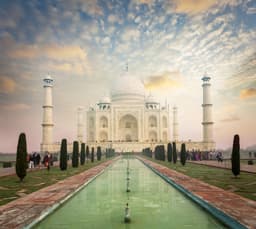
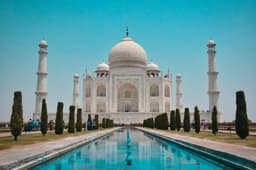
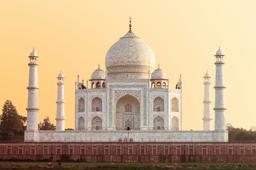
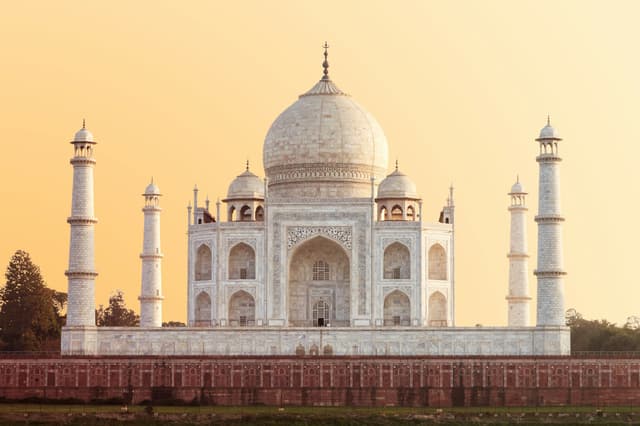
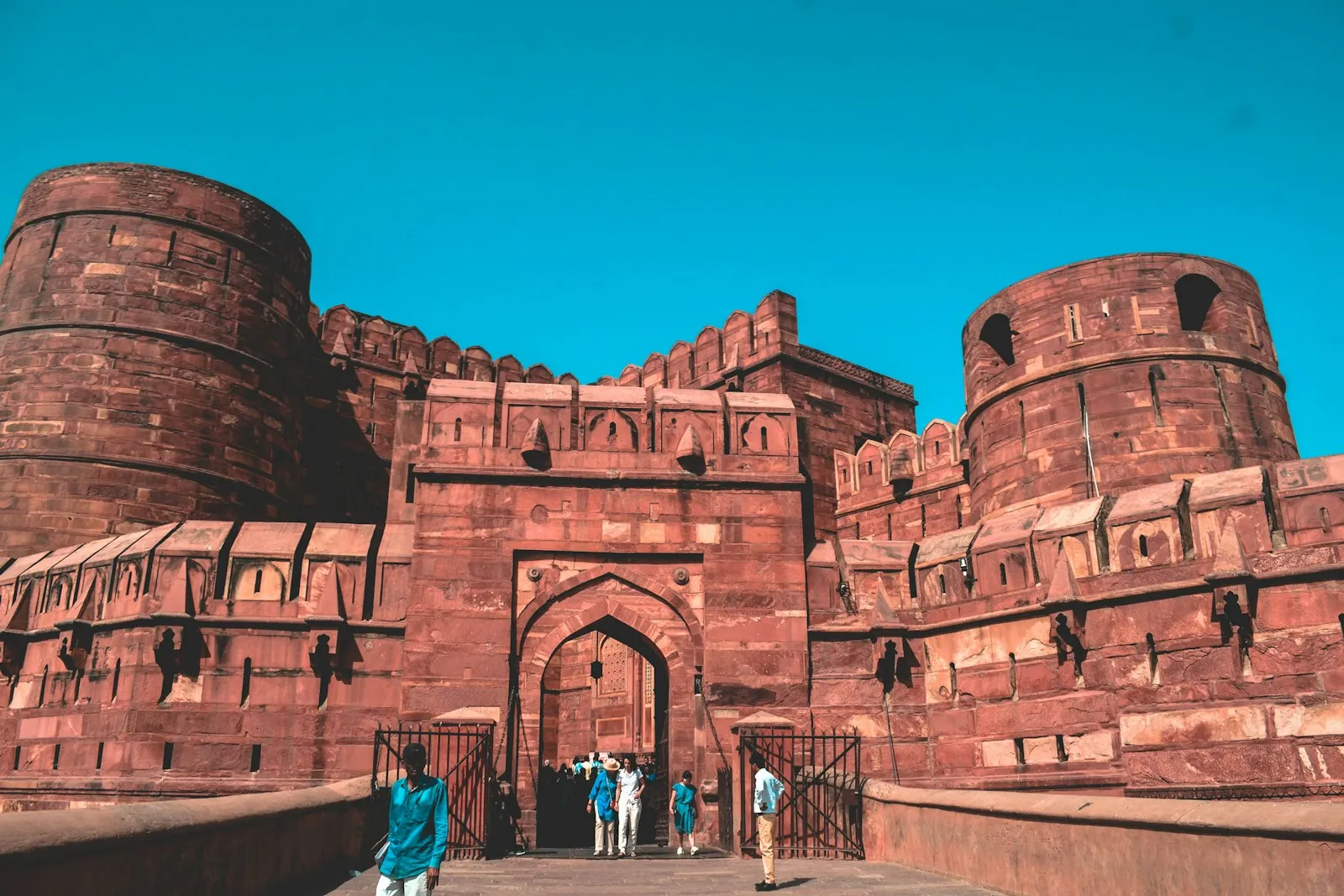
Agra is about the Taj Mahal, which is closed to tourists on Fridays. Plan around that, because people arrive on a Friday every single week and are turned away. Agra Fort is a serious monument in its own right and deserves more than the hour most itineraries give it, and Fatehpur Sikri sits on the road between Agra and Jaipur. See our Taj Mahal and Agra Fort guide for hours and rules.
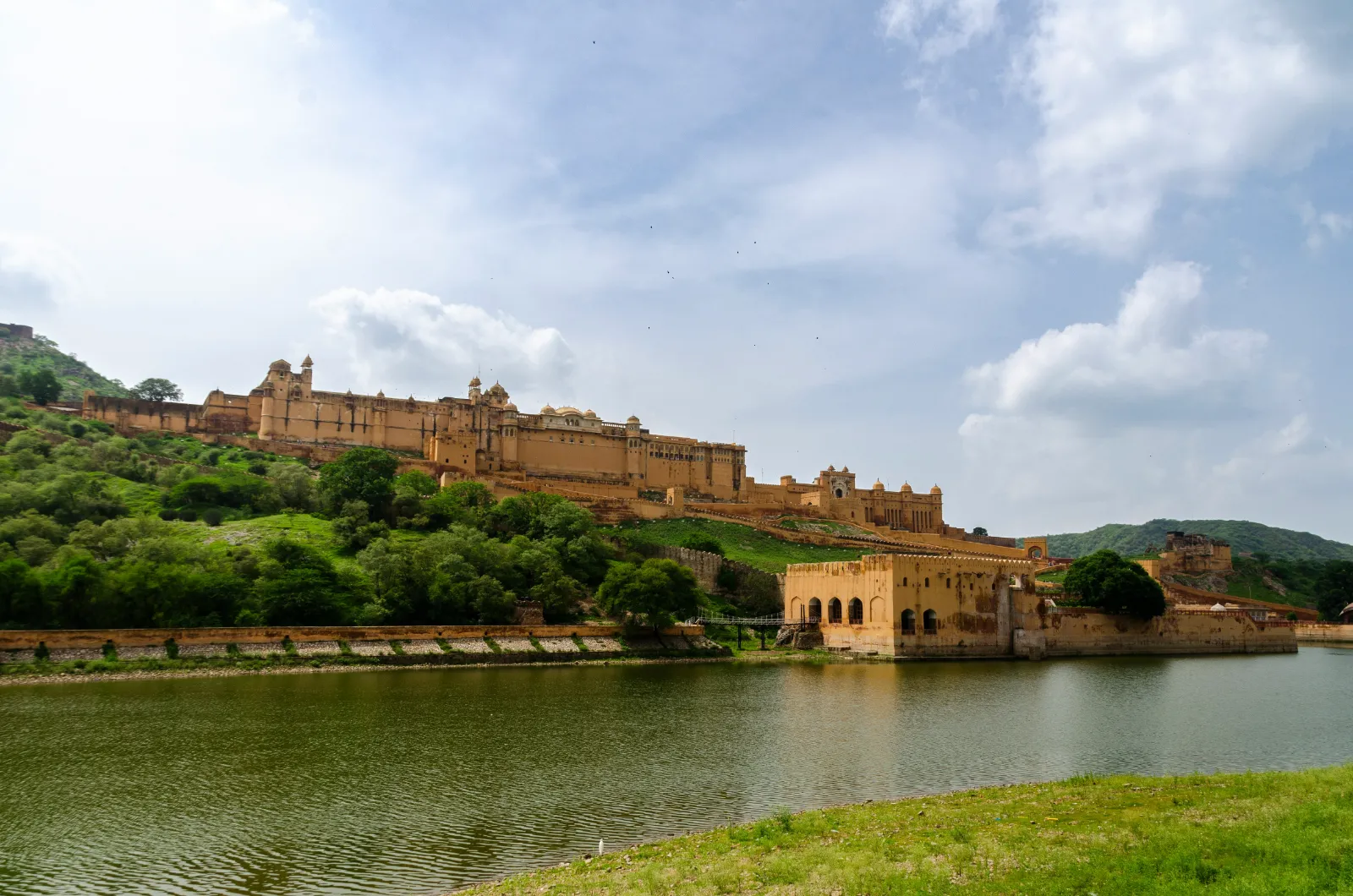
Jaipur gives you Amber Fort above the city, the City Palace, the Jantar Mantar observatory and Hawa Mahal, plus the best shopping of the three cities in Johari Bazaar and Bapu Bazaar. Many travellers add Varanasi in Uttar Pradesh or Rishikesh in Uttarakhand to the end of this trip, both of which connect easily from Delhi.
Rajasthan beyond Jaipur
Rajasthan gets better the further west you go. Udaipur, built around Lake Pichola, is the honeymoon choice, with the City Palace on the water, Jag Mandir out in the lake and small rooftop restaurants facing the sunset. Couples usually give it three nights and wish they had given it four.
Jodhpur is the blue city under Mehrangarh Fort, which is one of the most complete forts in India and has a genuinely good museum inside. Jaisalmer sits out towards the Pakistan border, and its fort is still lived in, with shops, houses and temples inside the walls. The Sam sand dunes outside Jaisalmer are where the camel rides and desert camps happen, and the light in the last hour before sunset is the reason to be there.
Pushkar, with its lake and Brahma temple, is small and walkable, and the camel fair in October or November turns it into something else entirely. For wildlife, Ranthambore near Sawai Madhopur is the tiger reserve most travellers reach from Jaipur, and safari slots are limited, so they need to be booked well ahead. Bikaner and Mount Abu round out a longer Rajasthan trip. Our Rajasthan guide has more.
The Indian Himalaya
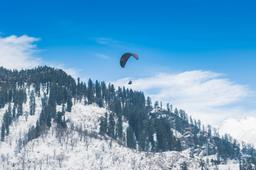
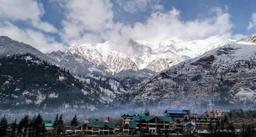
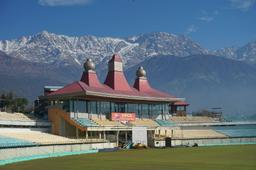
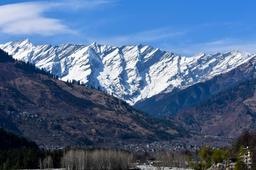
This is the summer half of India. Himachal Pradesh gives you Manali and the Solang and Kullu valleys, Shimla with its colonial hill station core, and Dharamshala with McLeod Ganj above it, which is the seat of the Tibetan government in exile and has a large Tibetan community. Spiti and Kinnaur are for travellers who want the harder, emptier version.
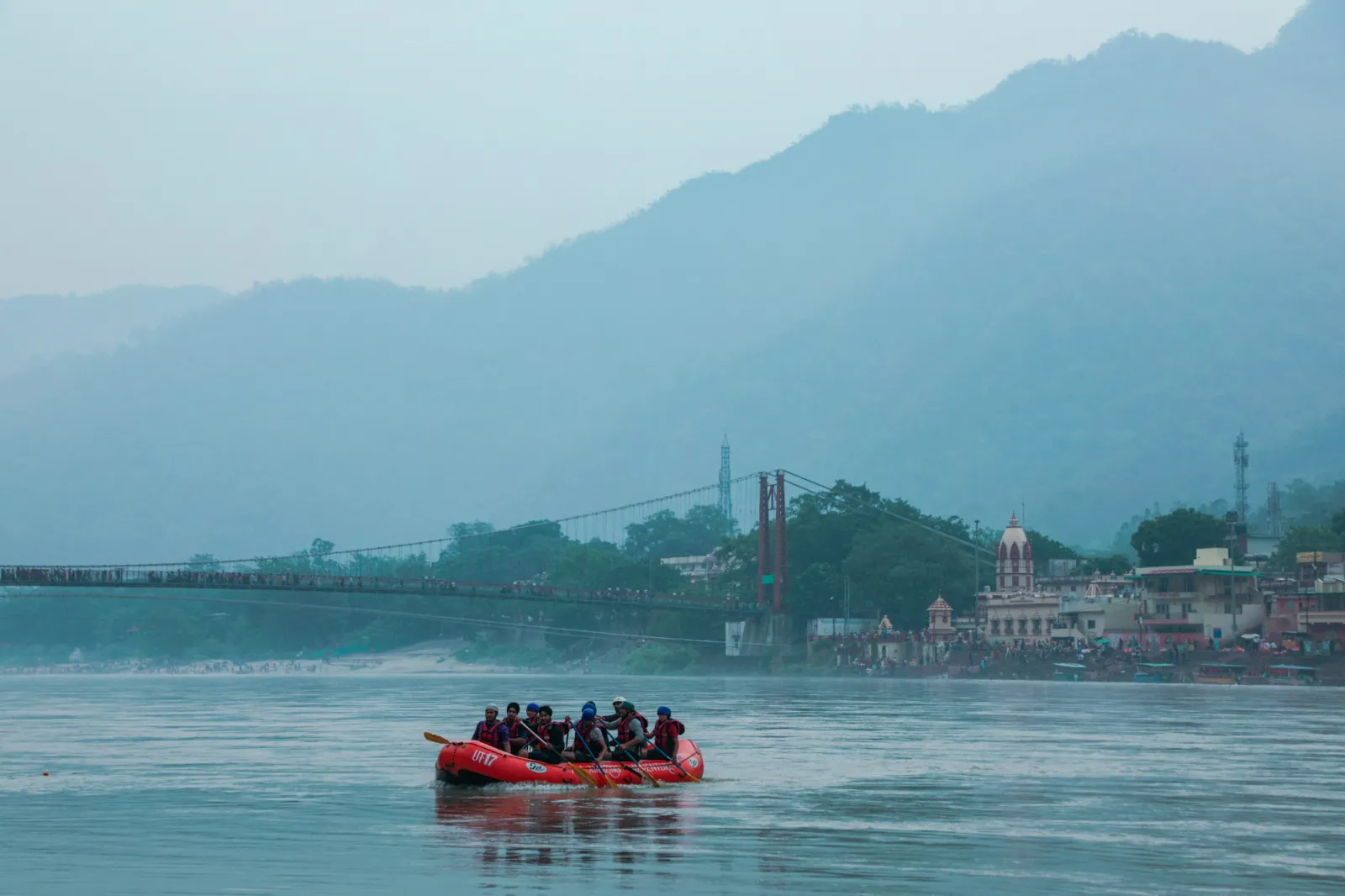
Uttarakhand carries both the adventure and the pilgrimage traffic. Rishikesh has rafting on the Ganga, yoga schools and the Lakshman Jhula area, and it sits close to Haridwar (see our Rishikesh travel guide). Nainital and Mussoorie are the family hill stations. The Valley of Flowers opens in the monsoon months, which is unusual for India.
Ladakh is the big one, reached through Leh, and it is worth being clear about the rules. Nepali citizens are treated as foreign nationals for permit purposes. A Protected Area Permit is required for Nubra Valley, Pangong Tso, Tso Moriri, Hanle and similar restricted areas, applied for through the Leh administration or a registered local operator, and the permit is generally not issued to a single foreign national travelling entirely alone. Foreign nationals also face access limits at some points around Pangong. Sort the permits before you go, not on arrival.
Sikkim and Darjeeling in West Bengal are the eastern option, reached through Bagdogra airport, or overland at the Kakarbhitta crossing if you are travelling from within Nepal. Gangtok, Rumtek monastery and Tsomgo Lake are the usual circuit, and restricted areas in Sikkim also need permits arranged through a registered operator. Our Darjeeling travel guide covers the hill town.
South India
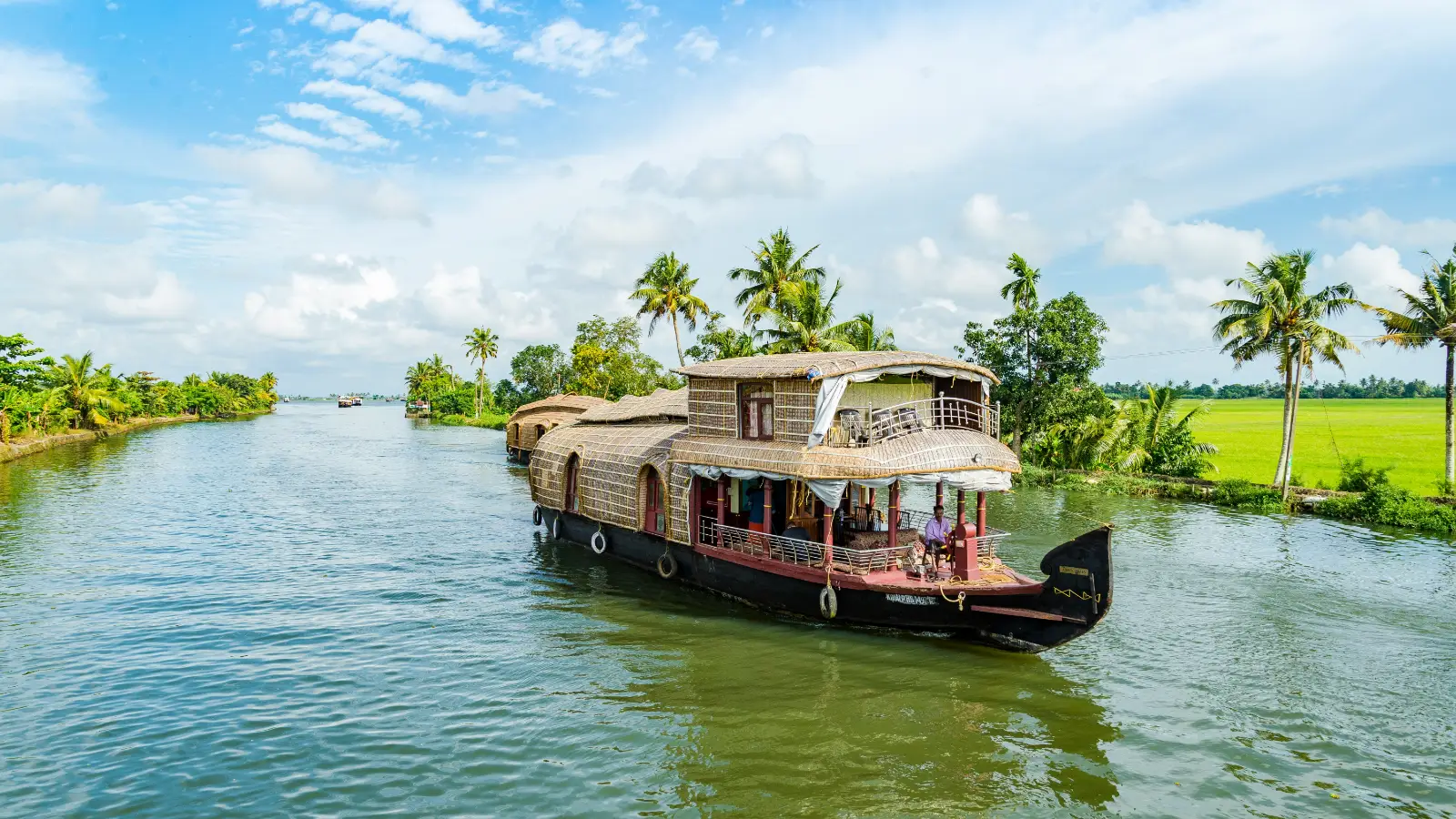
South India is a slower, greener country and a genuinely different holiday. Kerala is the headline. Alleppey and Kumarakom are where the backwater houseboats run, Munnar is tea estate and hill country, Thekkady has the Periyar reserve, and Fort Kochi has the Chinese fishing nets, the Dutch and Portuguese quarter and a real cafe culture. Varkala and Kovalam are the beach ends of a Kerala trip. Our Kerala guide covers each stop.
Tamil Nadu is temple country at a scale that surprises people. The Meenakshi temple at Madurai, the Brihadeeswarar temple at Thanjavur and the shore temples at Mahabalipuram are the anchors, and Ooty and Kodaikanal are the hill stations. Karnataka has Hampi, which is a ruined Vijayanagara capital spread across a boulder landscape, the palace at Mysuru, and coffee country in Coorg.
The one thing to accept about the south is the travel. Reaching it usually means a domestic connection after your international arrival, and moving between Kerala, Tamil Nadu and Karnataka means internal flights or long train journeys. Give the south more days than you think you need, or restrict yourself to one state.
Goa and the west coast
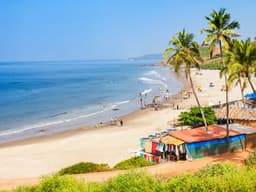
Goa is the least demanding holiday in India and the easiest sell to a group of friends. North Goa around Baga, Calangute, Anjuna and Vagator is the busy half, with the markets, the beach clubs and the nightlife. South Goa around Palolem, Agonda and Colva is quieter, cleaner and better suited to couples and families who want to read a book. Our Goa travel guide and best beaches in Goa help you pick.
There is more to it than the beaches. Old Goa holds the Basilica of Bom Jesus and Se Cathedral, both UNESCO listed. Dudhsagar Falls is at its strongest just after the monsoon. The Portuguese houses of Fontainhas in Panjim are worth a morning. Season matters more here than anywhere else on this list (see the best time section above).
Further up the coast, Gokarna in Karnataka is the quieter alternative for travellers who find Goa too built up, and Mumbai in Maharashtra works as a city stop at either end, with the Gateway of India, Marine Drive, the Elephanta caves and the Colaba and Bandra neighbourhoods.
Getting to Goa. There is no nonstop flight from Kathmandu to Goa, so the route is a flight to Delhi, Mumbai or Bengaluru and a domestic connection. The four day Goa Tour Package suits friends and couples who want a short beach break, and families usually do better in the quieter south. For the Andaman Islands, the other beach option we sell, see our best beaches in India guide.
Pilgrimages in India for Nepali travellers
Pilgrimage is the reason a large share of Nepali travellers come to India, and most of these circuits have rules you need to know before you leave. Registration is mandatory for some, permits apply in restricted areas, and several sites have strict rules about what you may carry inside. None of it is difficult, but none of it can be sorted out on the day.
Char Dham in Uttarakhand and its season window
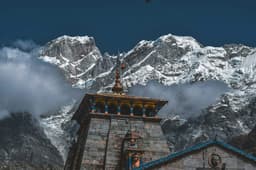
The Char Dham circuit covers Yamunotri, Gangotri, Kedarnath and Badrinath in Uttarakhand. The temples open in sequence from around Akshaya Tritiya, which falls in late April or May (8 May in 2027), and close around Diwali and Bhai Dooj in October or November, and the exact dates are announced each year by the temple committees. Outside that window the shrines are shut and the roads are unsafe.
- Registration is compulsory for every pilgrim. It is done through the Uttarakhand government portal at registrationandtouristcare.uk.gov.in or the Tourist Care Uttarakhand app, and you carry the registration with you. Our Char Dham Yatra guide walks through it.
- The identity document you register with must be the one you carry on the yatra.
- Kedarnath involves a long uphill walk from Gaurikund, with pony and palanquin options and separately booked helicopter services. Helicopter slots are limited and are booked through the official channel.
- These are high altitude shrines. Older travellers and anyone with heart or breathing conditions should get a medical opinion first, and everyone should build in an acclimatisation night rather than pushing straight up.
Varanasi and Kashi Vishwanath
Varanasi in Uttar Pradesh is the most straightforward pilgrimage destination for Nepali travellers. It has its own airport with domestic connections across India, and it is reachable by road through the Belahiya and Sunauli crossing if you are travelling from within Nepal. The Kashi Vishwanath temple now sits inside the redeveloped corridor connecting the temple to the river. Phones, bags and cameras are not permitted inside the main shrine, and lockers are available outside, so travel light on temple mornings. Our Kashi Vishwanath darshan guide has the detail.
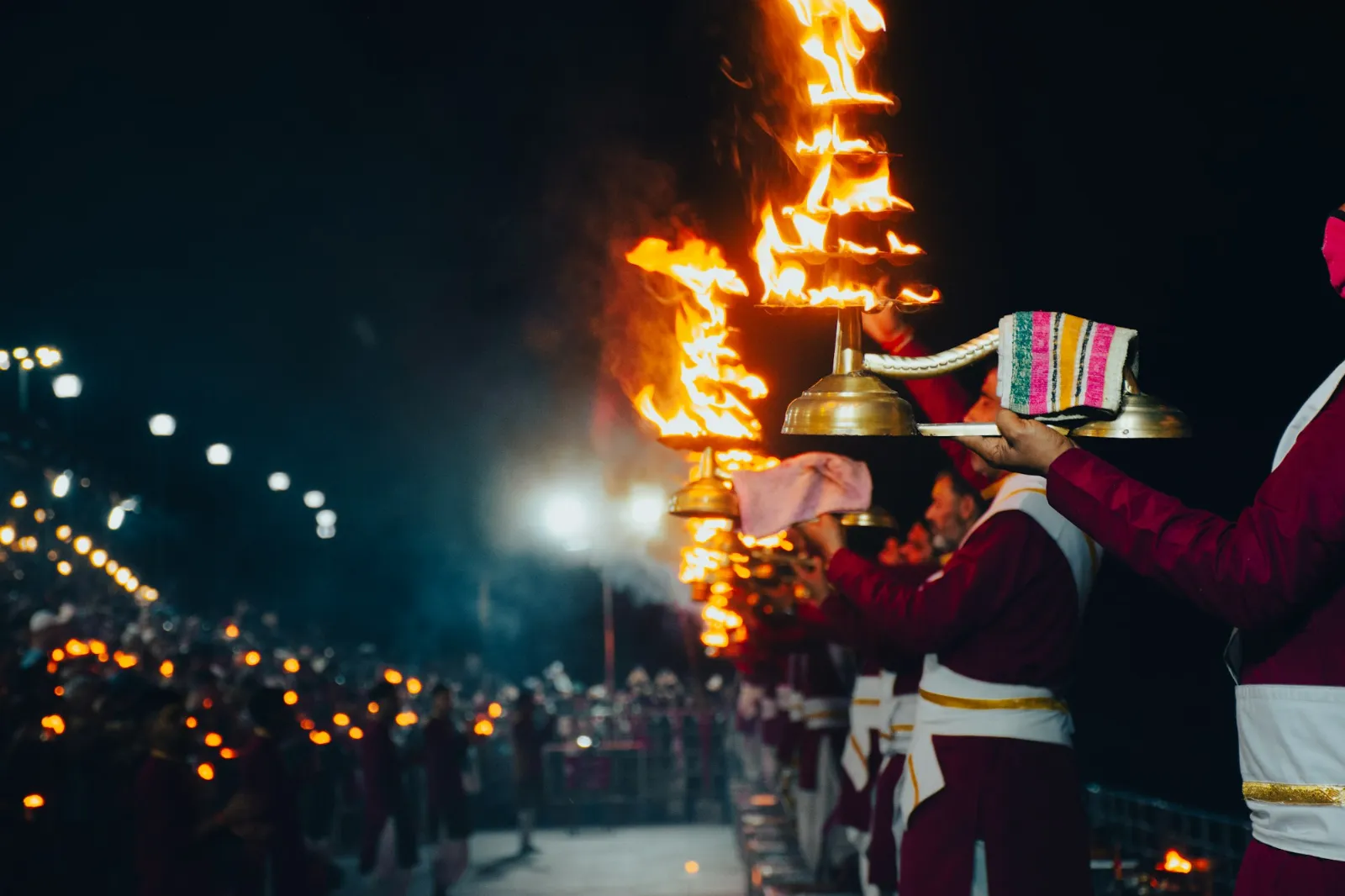
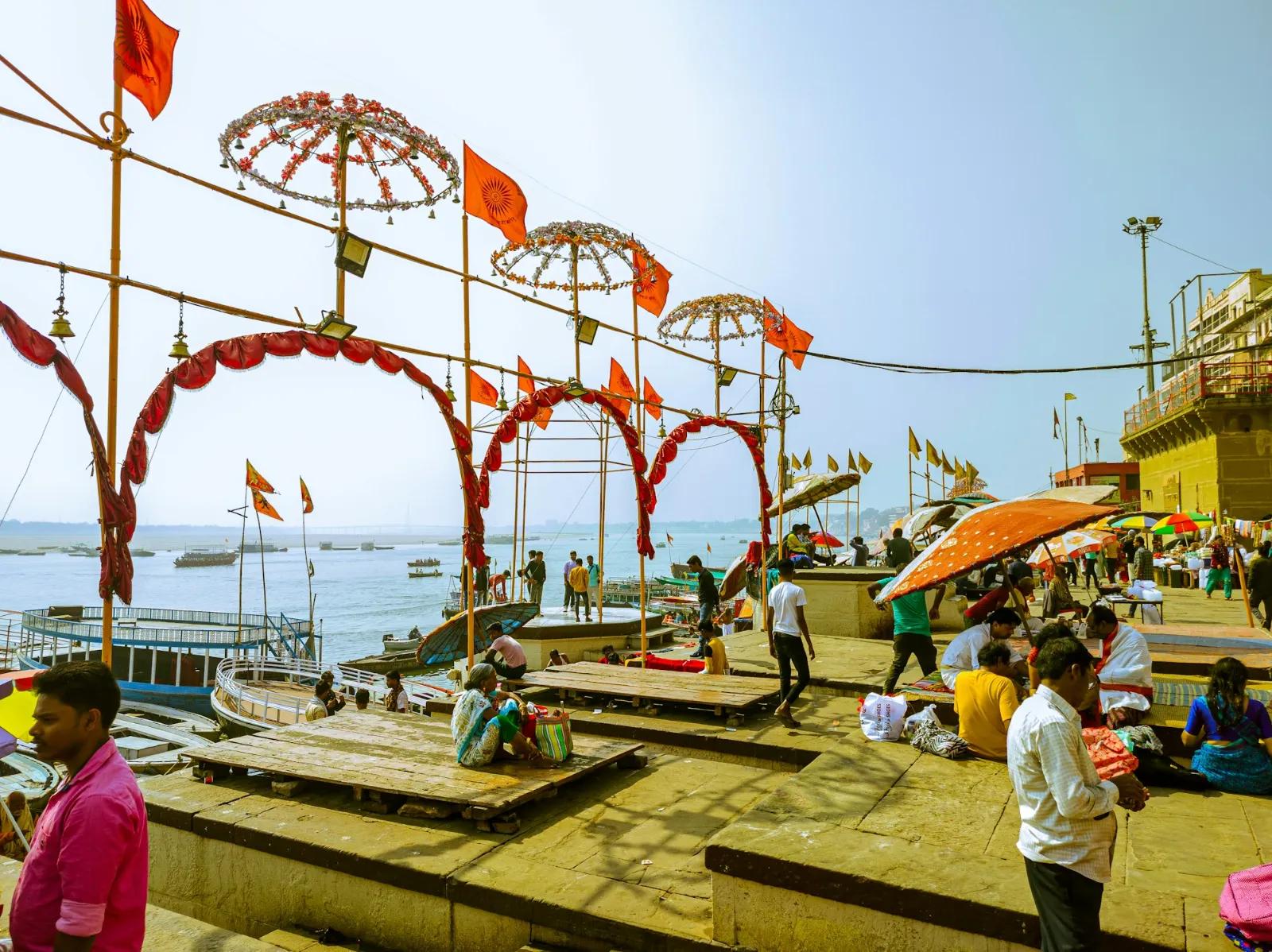
The Ganga Aarti at Dashashwamedh Ghat happens every evening and draws large crowds, and a boat on the river gives you a better view than the bank does. A sunrise boat ride past the ghats is the other thing everyone does and it deserves the reputation. Sarnath, where the Buddha gave his first sermon, is a short trip out of the city. Nepali travellers often also visit the Nepali Temple at Lalita Ghat, a wooden pagoda style temple built under Nepali patronage that looks like it was lifted straight out of Kathmandu. See things to do in Varanasi.
Bodh Gaya
Bodh Gaya in Bihar is where the Buddha attained enlightenment, and the Mahabodhi Temple complex with the Bodhi tree is a UNESCO World Heritage Site. Gaya has its own airport and Patna is the nearest large one, and for anyone travelling from within Nepal it is one of the easiest Indian pilgrimage sites to reach overland, through the Birgunj and Raxaul crossing. The winter months are the season, and international monastery pavilions from Thailand, Bhutan, Japan and Tibet ring the town. Major teaching events are sometimes held in the winter, and dates are announced in advance rather than fixed, so check before planning around one.
Amritsar and the Golden Temple
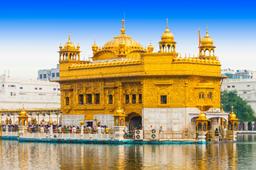
Harmandir Sahib, the Golden Temple, sits in Amritsar in Punjab and is open through the day and much of the night. Cover your head, remove your shoes and wash your feet at the entrance, and leave tobacco and alcohol behind entirely. The community kitchen serves a meal to everyone who sits down, regardless of religion or background, and volunteering in it for an hour is a normal thing for a visitor to do. Jallianwala Bagh is next door, and the flag lowering ceremony at the Wagah border on the Pakistan frontier runs in the late afternoon. October to March is the comfortable season. If you are continuing to Vaishno Devi in Jammu, note that the yatra there requires an RFID yatra card, issued online or at Katra, and the climb must start within hours of it being issued. Our pilgrimage tour packages cover these circuits.
Getting around India
Trains for long distances, domestic flights when the distance is very long, metros inside the big cities, and app cabs or prepaid taxis for everything local. That combination covers almost every trip. Indian transport is dense and reliable once you understand the categories, and the mistake most first time visitors make is not booking the reserved legs early enough.
Indian Railways is booked through IRCTC, either the website or the Rail Connect app. The classes are worth learning because the names tell you nothing on their own.
- 1A is first class air conditioned, with lockable two and four berth cabins.
- 2A is two tier air conditioned, four berths per bay plus two side berths, with curtains.
- 3A is three tier air conditioned, six berths per bay. This is the workhorse for overnight journeys.
- SL is sleeper class, non air conditioned, open windows, and always the busiest.
- CC and EC are seated air conditioned classes on day trains such as Shatabdi and Vande Bharat services.
Reserved tickets open a fixed number of days before departure and popular routes fill on the day they open, so book as early as your dates allow. Waitlisted and RAC tickets may or may not confirm, and you should not build a tight plan around one. Carry the identity document you booked with, because the conductor checks it against the chart. Registration is built around Indian mobile verification, so many Nepali travellers book through us or an agent.
Domestic flights are the practical answer for Delhi to Kerala, Goa or the far south, with IndiGo, Air India, Air India Express and Akasa Air on most routes. Metro systems run in Delhi, Mumbai, Bengaluru, Kolkata, Chennai, Hyderabad, Kochi, Jaipur, Ahmedabad, Lucknow, Nagpur and Pune, and they are the fastest way across a congested city. At airports and major stations, use the prepaid taxi counter, where the fare is fixed at the desk and you hand a slip to the driver. Uber, Ola and Rapido work in most cities and remove the negotiation entirely. Intercity buses, both state run and private sleeper coaches, cover routes where the train does not, and RedBus is the usual booking platform. Our getting around India guide compares the options.
What to eat in India
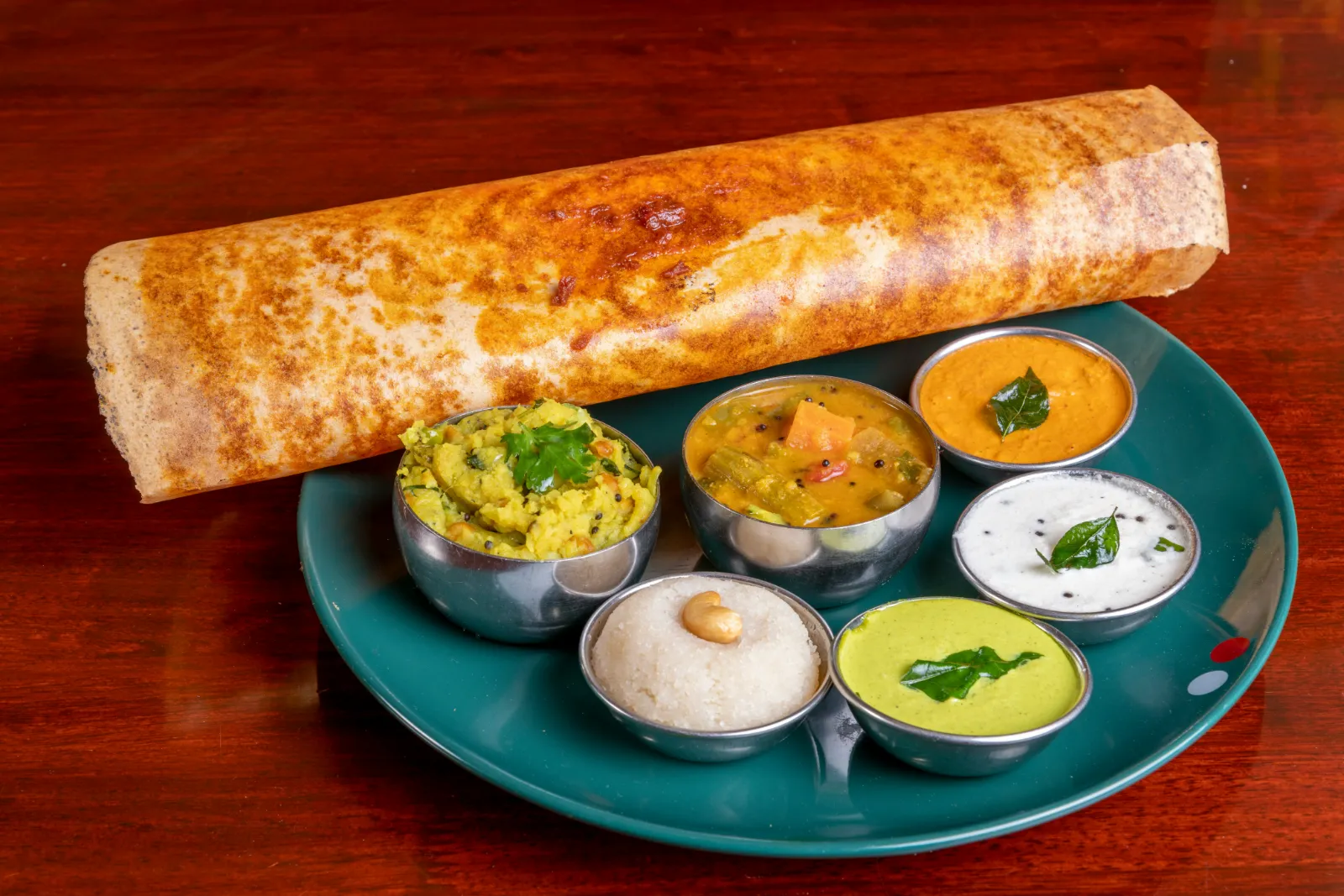
Food is the easiest part of India for a Nepali traveller. Dal, bhat, roti and sabzi are the base across the north, and a thali gives you a full meal without having to decode a menu.
The regional variation is where it gets interesting. Punjab and Delhi give you rich gravies, tandoor breads and paneer. Rajasthan has dal baati churma and a genuinely fiery style of cooking. Lucknow in Uttar Pradesh is kebab and biryani territory. Bengal is fish, mustard and sweets. Kerala runs on coconut, appam, fish moilee and the banana leaf sadya. Tamil Nadu means idli, dosa and filter coffee. Goa has fish curry rice, xacuti and pork sausage that you will not find elsewhere in India. Our what to eat in India guide lists twenty dishes to try.
Vegetarian, Jain, halal and no-beef eating
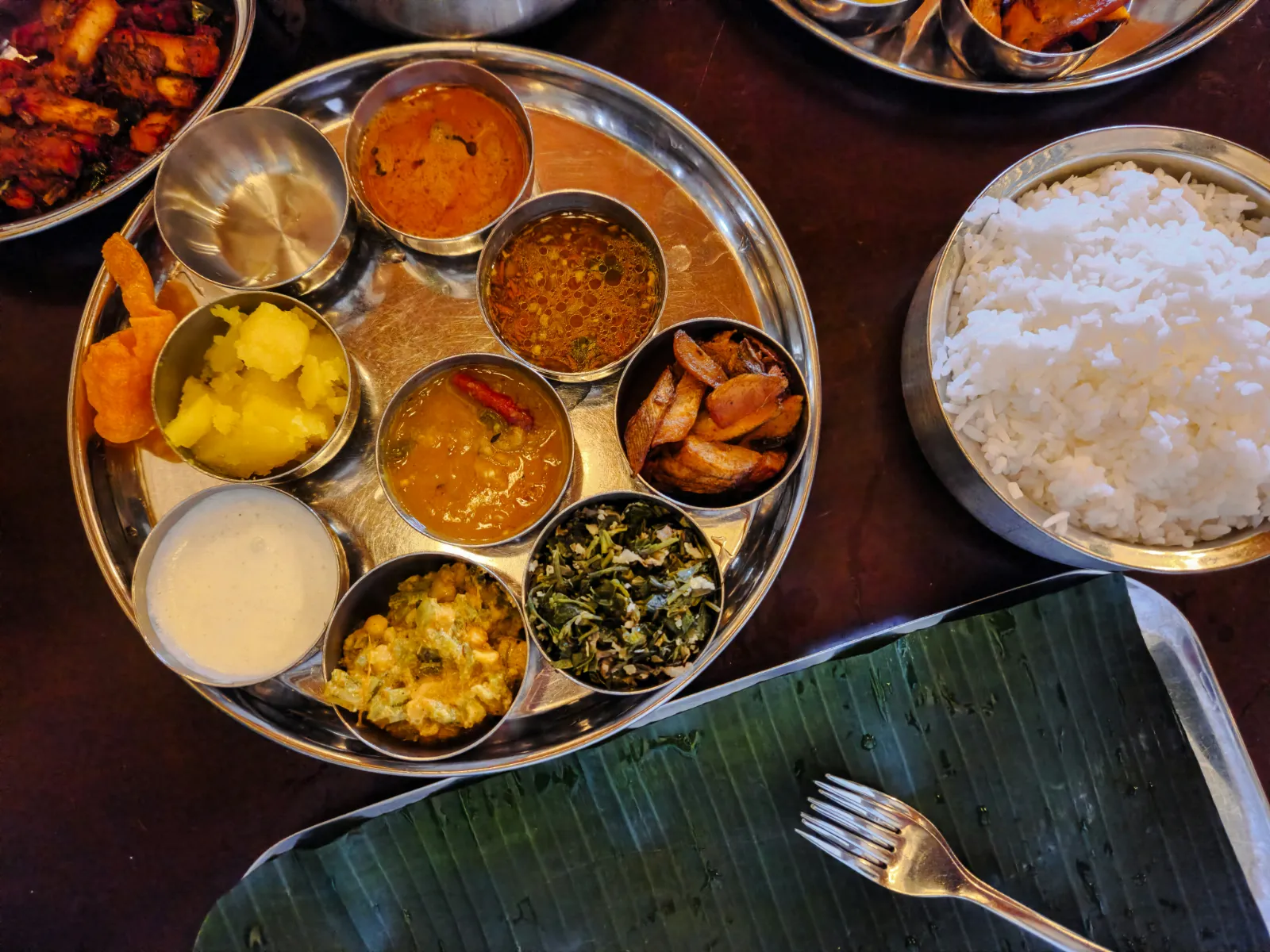
Vegetarian eating is effortless in India, and vegetarian food and restaurants are marked with a green dot. Jain meals without onion, garlic or root vegetables are easy to find in Rajasthan, Gujarat and Delhi, and many hotels will cook them on request. Halal food is easy in Delhi, Lucknow, Hyderabad and Mumbai and harder in small towns. Beef is rarely on menus in the north, but it is served in Kerala and Goa, so ask if you avoid it.
A few practical notes. Spice levels in Andhra, Telangana and Rajasthan run hotter than most Nepali travellers expect, and you can ask for it mild. Momo is a hill and northeast dish in India, so do not expect it in Rajasthan. Drink sealed bottled water and check the seal, skip ice from unknown sources, and eat street food at the busy stalls where the turnover is high. Carry your usual stomach medicine rather than hunting for it mid-trip.
Money, insurance and practical basics
India uses the Indian rupee, and the Nepali rupee is pegged to it at a fixed official rate of 1.60 Nepali rupees to one Indian rupee, so conversion is predictable and does not swing from day to day. Carry a mix of cash and one internationally enabled card. Do not assume your Nepali debit card will work, because many are issued for domestic use only.
From Nepal, carry Indian rupees rather than US dollars: the Nepal Rastra Bank passport facility for US dollars does not apply to trips to India. Indian ₹200 and ₹500 notes, long banned in Nepal, may now be taken into and out of Nepal up to ₹25,000 per person, for Nepali and Indian citizens, under Nepal Rastra Bank guidance reissued in July 2026. Nepali citizens may not take Indian rupees on to a third country. Banks and licensed money changers in Nepal sell Indian rupees.
Ask your bank to confirm two things before you leave. First, that the card is enabled for use in India. Second, that it is enabled for online transactions, which you will need for train and flight bookings. Cards work at hotels, chain restaurants, malls, fuel stations and organised retail. They frequently do not work at small shops, roadside eateries, temples, auto rickshaws or local markets.
On UPI, be realistic. UPI is built on Indian bank accounts, and a visitor cannot simply install a UPI app and start paying. There is a prepaid wallet product for international visitors that is loaded in Indian rupees after a passport based verification and then pays at UPI QR codes, but it is issued only through specific partners and airport counters, and availability varies. Treat it as a possible convenience, not as your payment plan. Nepali wallet apps cannot pay at Indian UPI QR codes yet either: the Fonepay link lets Indian visitors pay in Nepal, but the reverse direction had still not opened as of May 2026.
So plan on cash plus a card. ATMs are everywhere in cities and larger towns, thinner in hill areas and small pilgrimage towns, so withdraw before you head into the mountains. Change money at authorised counters or banks with identification, never with a street changer. Keep small denomination notes for autos, tea, temple offerings and tips, and keep your cash split between two places.
Insurance is not an entry requirement for Nepali citizens, but buy a policy with medical cover, particularly for the Char Dham, Ladakh or any trip with elderly parents, and read the exclusions before you pay. Gomayu can also arrange travel insurance for you as an add-on, and our travel insurance from Nepal guide explains how to choose and claim.
SIM cards, internet and useful apps
Getting an Indian SIM as a Nepali visitor takes more effort than it should. Prepaid connections require full identity verification, and because Nepali citizens arrive without a visa, small resellers often do not know how to process the paperwork and simply refuse. Go to a company owned Airtel, Jio or Vi store, or an airport telecom counter, and carry your passport.
Activation is not instant. Expect a verification step and a wait before the connection goes live, which means the SIM will not help you on the ride from the airport. Plan for that gap.
If your trip is short, an international roaming pack from your home operator, which for travellers based in Nepal means Ncell or Nepal Telecom, is often simpler than the queue at a telecom store. If your phone supports eSIM, a travel data eSIM bought before departure is the cleanest option of all and works the moment you land. Hotel Wi-Fi is standard, and many large railway stations have public Wi-Fi.
Useful apps to install before you travel: IRCTC Rail Connect for trains, Uber, Ola and Rapido for cabs, RedBus for intercity buses, Google Maps with the region downloaded for offline use, Google Translate with Hindi downloaded, Zomato or Swiggy for food delivery, and Tourist Care Uttarakhand if you are doing the Char Dham.
Before you fly: a checklist for Nepali travellers
- Six to eight weeks before (three months for Dashain and Tihar): decide between flying and the road route, fix the region by travel month, and check that your passport is valid or that you have your original citizenship certificate, plus documents for any children. Our pre-trip checklist lists what to sort two months, one month and one week before.
- For pilgrimages and the hills: register for the Char Dham Yatra on the Uttarakhand portal, and give us time to arrange Ladakh or Sikkim permits.
- The week before: get Indian rupees (₹200 and ₹500 notes up to ₹25,000 per person), ask your bank to enable your card for India and for online payments, buy travel insurance, and check the baggage allowance on your ticket with our packing and baggage guide.
- Flight day: reach Tribhuvan International Airport about three hours before your flight, closer to four in the Dashain and Tihar rush. Keep power banks in your hand luggage and liquids under 100 ml. Our Kathmandu airport departure guide walks through each step. Going overland instead? Keep your identity document in your hand luggage and cross in daylight.
- First flight abroad? Read our first-time flight tips before you go.
Shopping in India, and Nepal customs on the way home
Jaipur is the shopping stop of most north India trips: Johari Bazaar for jewellery, and Bapu Bazaar for textiles, block prints and leather slippers. In Delhi, Chandni Chowk in Old Delhi is the wholesale market for clothes, spices and wedding shopping, and Dilli Haat sells crafts from every state. Goa has the Anjuna flea market on Wednesdays, and Kerala is the place for spices and tea. Fixed prices apply in malls and government emporiums, and bargaining is normal in markets. Never buy gems or carpets to resell at home (see the scams section below).
Gold jewellery is sold everywhere in India, but compare it with Kathmandu prices after the making charge and tax, and keep within Nepal's customs allowance. When you return to Nepal, a Nepali man can bring 25 grams and a woman 50 grams of gold jewellery without duty, plus one bottle of liquor of up to 1 litre, and foreign currency above the equivalent of USD 5,000 must be declared. These limits change with Nepal's annual budget (checked October 2026), so confirm them in our Nepal customs allowance guide before you travel home.
Laws and customs that catch travellers out
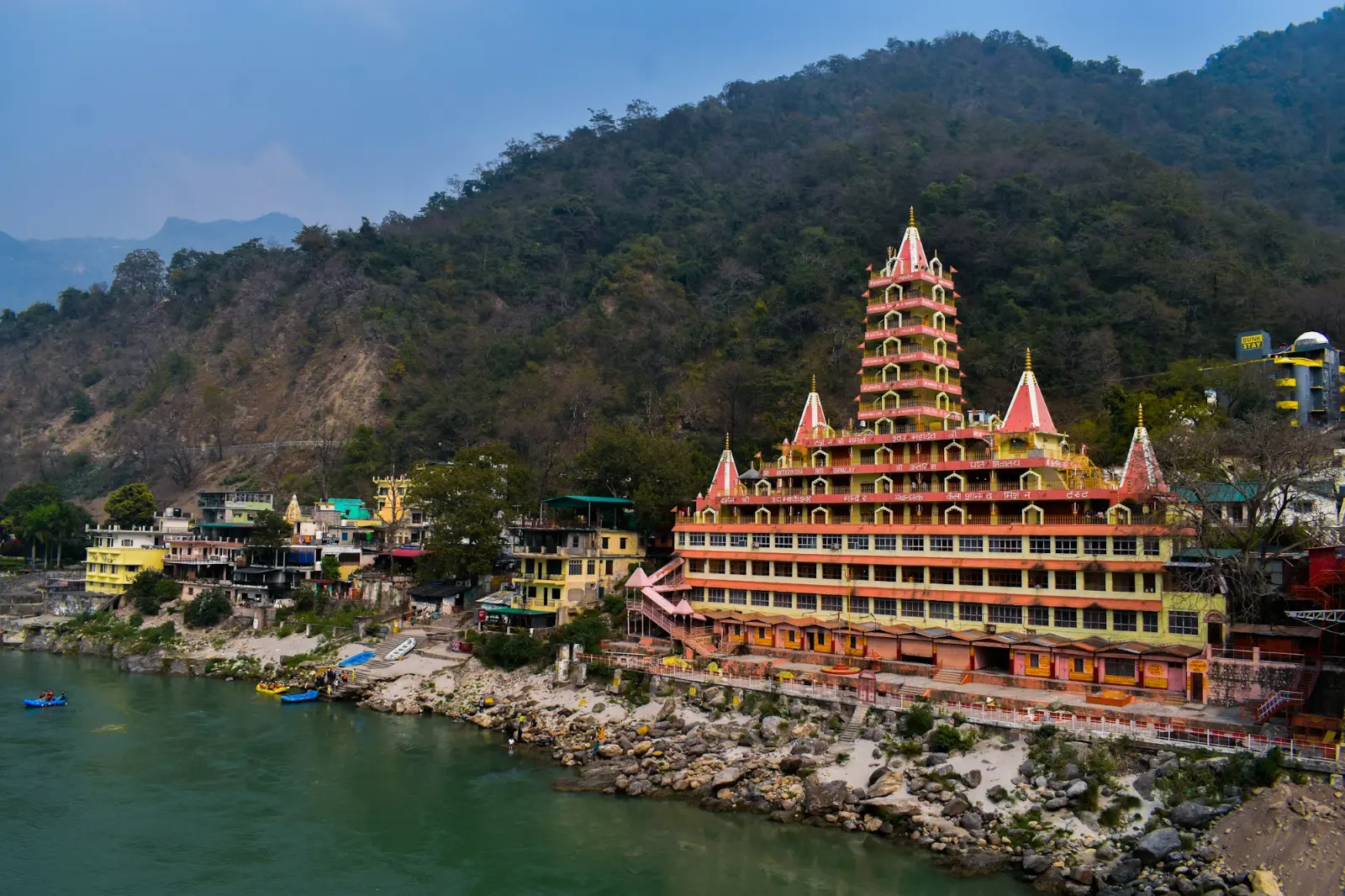
Most of India feels familiar to Nepali travellers: dress modestly at religious sites, take your shoes off where others do, and ask before photographing people or shrines. The points below are the ones that catch visitors out.
Temple rules are enforced. Many temples ban phones, cameras and leather items inside, as at Kashi Vishwanath, and some admit only Hindus to the inner sanctum, so follow the signs and use the lockers. Photography is also banned at airports and in military and border areas.
Bihar has banned alcohol since 2016, and Gujarat is also a dry state. If you are crossing at Raxaul or Jogbani for Patna or Bodh Gaya, do not carry liquor: it is an offence for visitors as well as residents.
Satellite phones such as Thuraya and Iridium cannot be brought into India without permission from the Department of Telecommunications, and foreign visitors have been detained at airports over them as recently as 2026. Drones cannot be flown without registration and permission, and e-cigarettes are banned. Finally, keep your Ladakh or Sikkim permits and your Char Dham registration on you, because checkpoints ask for them.
Scams to watch for in India
The real risk in India is not violence but being separated from your money by someone friendly. Tourist scams are concentrated around railway stations, airports and the approaches to famous monuments, and they follow a small number of scripts. Learn the scripts and they stop working.
- Fake tourist offices. Around New Delhi railway station and the Paharganj area, touts steer visitors into shops calling themselves government or IRCTC tourist offices, then sell overpriced tours. The genuine international tourist bureau is inside New Delhi railway station itself, not in a shop across the road.
- "Your hotel is closed." A driver tells you your hotel has shut down, burned, or that the road is blocked by unrest, then offers an alternative that pays him commission. Call the hotel yourself and insist on being taken to the address you booked.
- Meter refusal. Auto rickshaw drivers claiming the meter is broken. Insist on the meter, or use an app cab or a prepaid counter and skip the conversation.
- Gem and carpet commission traps. A shop offers you stones or carpets to carry home and resell at a profit under some export scheme. It is a scam every time. Never buy anything for resale.
- Station porters and unsolicited helpers. Someone picks up your bag without being asked, then names a figure afterwards. Agree the terms before anyone touches your luggage.
- Airport and station touts. Ignore anyone approaching you outside arrivals. Walk to the official prepaid counter or the app cab pickup zone.
Is India safe?
India is broadly safe for Nepali tourists, and most problems are scams and petty theft rather than violence. Keep valuables close in crowds, at railway stations and at big festivals, and use app cabs or prepaid taxis rather than offers on the street.
For solo female travellers, India is manageable with sensible precautions and a large number of women travel independently every year. Use app cabs where the trip can be shared live with someone at home. Avoid empty train compartments and empty metro coaches late at night, and use the reserved women's coach where one exists, as on the Delhi metro. Arrange arrivals in daylight rather than at three in the morning. Dress moderately at religious sites and in small towns, which reduces unwanted attention more than anything else. Keep your hotel address written down in Hindi or English.
The national emergency number across India is 112, which routes police, fire, ambulance and disaster response. The Indian tourist helpline is 1363. Save both before you travel.
The Embassy of Nepal in New Delhi, on Barakhamba Road, is the Nepali mission to contact if you lose your passport or citizenship certificate or need consular help. For more, read our guide Is India safe.
Best India tour packages from Nepal
To summarise, these are the most popular India tour packages from Nepal that we arrange for Nepali travellers and the Nepali diaspora:
- Goa Tour Package (4 days)
- Kerala Munnar & Alleppey Houseboat Tour (4 days)
- Do Dham Yatra (5 days)
- Kerala Munnar, Thekkady & Alleppey (5 days)
- Magical Ladakh Tour (5 days)
- India Golden Triangle Tour – Delhi Agra Jaipur (6 days)
- Shimla & Manali Tour (6 days)
- Best of Kerala Tour (6 days)
- Andaman Islands Highlights - Port Blair, Havelock & Neil Island (6 days)
- Delhi-Shimla-Manali-Chandigarh Tour (7 days)
- Jaipur, Jodhpur & Udaipur Tour (7 days)
- Taj Mahal with Himachal Tour (8 days)
- Magnificent Tour to Himachal (9 days)
- Himachal with Golden Temple Tour (10 days)
- Char Dham Yatra Package from Nepal (11 days)
- Comprehensive Himachal with Vaishno Devi Tour (11 days)
Gomayu Holidays is operated by Zeta Tours and Travels Pvt. Ltd., a registered Nepali company with an office in Kathmandu. Most of our planning happens over WhatsApp and email, so it makes no difference whether you are booking from Sydney, Doha, Toronto or Nepal itself. We handle the flights or the border route, hotels, transport and the permits and registrations that specific regions need, and we tell you honestly when a plan will not fit the days you have. Send us your dates on WhatsApp and we will come back with a plan you can actually book.
All destinations
Explore more destinations
Posted on Google · Read the review ↗
Search Tours or Places
Search Tours or Places