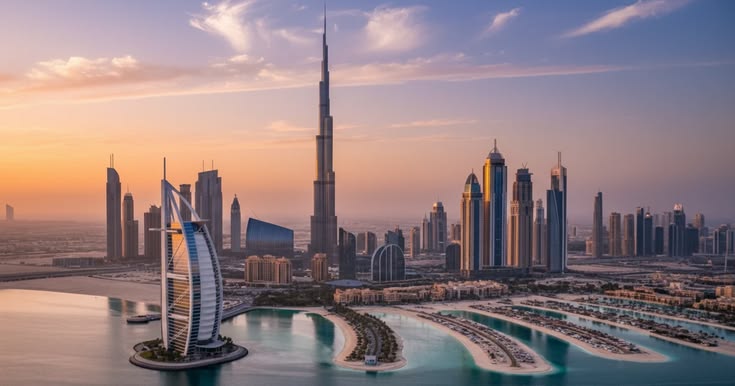
The best area to stay in Dubai depends on the kind of holiday you want. First time visitors usually pick Downtown Dubai for landmarks and walkability, beach lovers choose Dubai Marina, JBR or Palm Jumeirah, and travellers watching their budget do very well in Deira and Bur Dubai, the older heart of the city. Almost every popular neighbourhood sits on or beside the driverless Dubai Metro, so you are rarely far from the airport, the malls or the beach.
This guide breaks Dubai down neighbourhood by neighbourhood, with a quick comparison table, clear transport notes and honest advice for travellers from Nepal and the wider Nepali diaspora planning a first trip to the Emirates. Pick one base that matches your priorities and you will spend far less time stuck in traffic and far more time enjoying the city.
Which area of Dubai is best for first time visitors?
For a first trip, Downtown Dubai is the easiest place to base yourself. It puts you within walking distance of the city's headline sights and is fully served by the Metro.
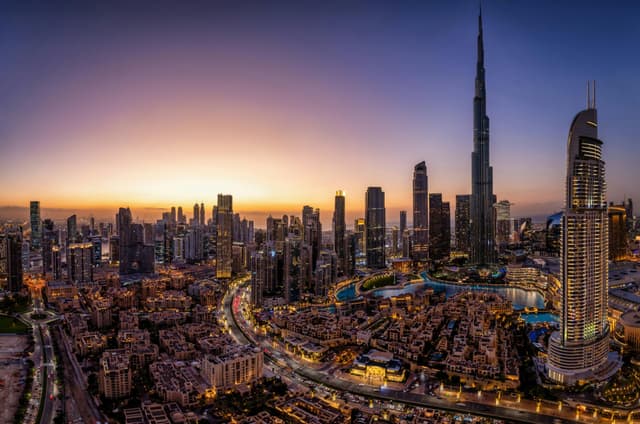
Downtown is home to the Burj Khalifa, the tallest building in the world at 828 metres, and The Dubai Mall, one of the largest shopping and entertainment complexes on earth with well over 1,000 stores, an aquarium and an ice rink. Every evening the Dubai Fountain performs free water and light shows on the lake between the two, usually every 30 minutes from around 6pm. You are also next to Dubai Opera, Souk Al Bahar and the Burj Khalifa or Dubai Mall Metro station, linked to the mall by an air conditioned footbridge.
The trade off is price and crowds: Downtown hotels sit at the higher end and the area is busy year round. If you want the same central location for a little less, Business Bay sits one Metro stop away along the Dubai Water Canal, with newer hotels, canal side walks and a slightly calmer feel.
Where should you stay in Dubai for beaches and nightlife?
If sun, sand and evenings out matter most, base yourself on the coast in Dubai Marina, JBR or Palm Jumeirah.
Dubai Marina and JBR
Dubai Marina is a forest of towers around a man made harbour, with the buzzing Marina Walk promenade lined with cafes and yacht berths. Right beside it, JBR (Jumeirah Beach Residence) has The Walk and The Beach, an open air strip of shops and restaurants opening straight onto a free public beach. The area is linked by the Dubai Tram and two Metro stations (Sobha Realty and DMCC), and it faces Bluewaters Island, home to the giant Ain Dubai observation wheel, which reopened to visitors in December 2024. This is the best all round choice for couples and families who want the beach on their doorstep.
Palm Jumeirah
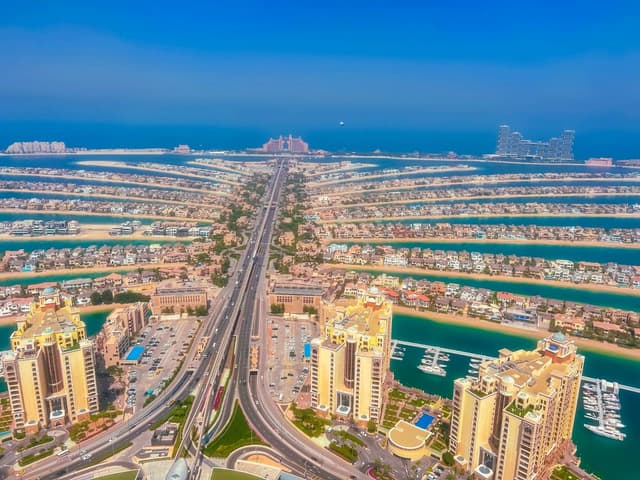
The palm shaped island is the address for resort holidays. It holds Atlantis The Palm and the newer Atlantis The Royal, the Nakheel Mall, The Pointe dining strip and a monorail that connects to the tram network. Expect a relaxed, self contained resort feel and higher prices; you will usually take taxis or the monorail rather than walk between spots.
Jumeirah and Umm Suqeim
For a lower rise, more local beach stay, look at Jumeirah and Umm Suqeim. This stretch gives you postcard views of the sail shaped Burj Al Arab, the lively Kite Beach, family friendly Sunset Beach and the pretty canals and restaurants of Madinat Jumeirah.
Where can you stay in Dubai on a budget?
Dubai has a reputation for luxury, but the old city offers genuinely affordable rooms, cheap food and superb transport links. For value, stay in Deira or Bur Dubai.
Deira
Deira is historic Dubai on the northern side of Dubai Creek. It is famous for the Gold Souk and Spice Souk, the wooden abra water taxis that cross the creek for just AED 1, and the Deira City Centre mall. Two Metro lines meet here at Union station, so you can reach Downtown or the Marina without a car. The Al Rigga area stays lively into the night and is packed with affordable South Asian, Arabic and Filipino restaurants.
Bur Dubai
Across the water, Bur Dubai holds the restored Al Fahidi Historical Neighbourhood, the textile souk and Meena Bazaar, an area with dozens of Nepali and Indian eateries. It is one of the most connected and best value bases in the city, close to the BurJuman mall and the Metro.
Karama and Al Barsha
Karama is a local favourite for inexpensive dining and shopping. Al Barsha, further south, puts you next to the Mall of the Emirates and indoor ski slope Ski Dubai, with a good cluster of mid range and budget hotels beside the Metro.
Which areas suit families, luxury and longer stays?
Different trips call for different bases. Use this quick read to narrow it down:
- Families: JBR and Dubai Marina (safe promenades, beach, tram) or Al Barsha (Mall of the Emirates, indoor attractions).
- Luxury and honeymoon: Palm Jumeirah, Downtown Dubai, DIFC and the Jumeirah beachfront.
- Nightlife: Dubai Marina, Business Bay and Downtown, where most licensed bars and lounges sit inside hotels.
- Longer or self catering stays: apartment heavy districts such as Dubai Marina, Jumeirah Village Circle (JVC) and Business Bay give you kitchens and better weekly rates.
- Shopping and old city culture: Deira and Bur Dubai, within walking distance of the souks and the creek.
Dubai neighbourhoods at a glance
| Area | Vibe | Best for | Nearest Metro | Budget level |
|---|---|---|---|---|
| Downtown Dubai | Iconic, central, busy | First timers, sightseeing | Burj Khalifa / Dubai Mall | High |
| Business Bay | Modern, canal side | Central stay for less | Business Bay | Mid to high |
| Dubai Marina / JBR | Waterfront, lively | Beach plus dining | Sobha Realty / DMCC | Mid to high |
| Palm Jumeirah | Resort island | Luxury, honeymoon | Palm Monorail | High |
| Jumeirah / Umm Suqeim | Low rise, beachy | Relaxed beach days | Onpassive (nearby) | Mid to high |
| Deira | Old city, souks | Budget, culture | Union / Al Ras | Low to mid |
| Bur Dubai | Historic, connected | Value, food | Al Fahidi / BurJuman | Low to mid |
| Al Barsha | Suburban, malls | Families on a budget | Mall of the Emirates | Low to mid |
How do you get around Dubai from each neighbourhood?
Dubai is one of the easiest Gulf cities to explore without a car, thanks to a clean, cheap and driverless Metro. Understanding the network helps you pick the right base.
The Dubai Metro runs two lines, Red and Green, that meet at Union and BurJuman stations. You tap in and out with a rechargeable Nol card (a Silver Nol costs about AED 25 including some credit), and single fares run roughly AED 3 to AED 7.50 depending on how many zones you cross. Along the coast, the Dubai Tram loops through Dubai Marina and JBR and connects to both the Metro and the Palm Monorail. In the old city, the wooden abra boats still cross Dubai Creek for AED 1.
Taxis are metered, air conditioned and reasonable (the daytime starting fare is about AED 12), and ride hailing apps such as Careem, Uber and the RTA's Hala work everywhere. Dubai International Airport (DXB) sits on the Red Line, with stations at Terminals 1 and 3, so many visitors reach their hotel by Metro for a few dirhams. The second airport, Al Maktoum (DWC) in Dubai South, is much further from the centre.
- Staying Downtown or Business Bay: Metro and short taxis reach almost everything; DXB is around 15 to 20 minutes by road.
- Staying in the Marina or JBR: use the tram plus Metro; the airport is roughly 30 to 40 minutes away.
- Staying on Palm Jumeirah: the monorail links to the tram, but taxis are handy for door to door trips.
- Staying in Deira or Bur Dubai: you are closest to the souks and well connected to both Metro lines and the airport.
When is the best time to visit and how many days do you need?
The most comfortable months are November to March, when daytime temperatures sit around 20 to 30 degrees Celsius and beach days are pleasant. From June to August the heat climbs to 40 to 45 degrees, so summer is best for indoor malls, aquariums and water parks, though hotel rates drop sharply. During Ramadan, whose dates shift each year, the city is calmer in daylight and eating in public is done discreetly, but evenings come alive with iftar feasts.
For a first visit, four to five nights is a comfortable length: enough for the Burj Khalifa, a desert safari, a beach day, a shopping day and one of the theme parks or museums. Basing yourself in a single well connected area, rather than moving hotels, saves a surprising amount of time.
Tips for travellers from Nepal and the Nepali diaspora
Dubai is one of the most popular international breaks from Nepal, and for good reason. Direct flights from Kathmandu (KTM) to Dubai (DXB) take about four and a half hours, with several carriers operating the route. The local currency is the UAE dirham (AED), pegged at roughly 3.67 to the US dollar, and cards are accepted almost everywhere.
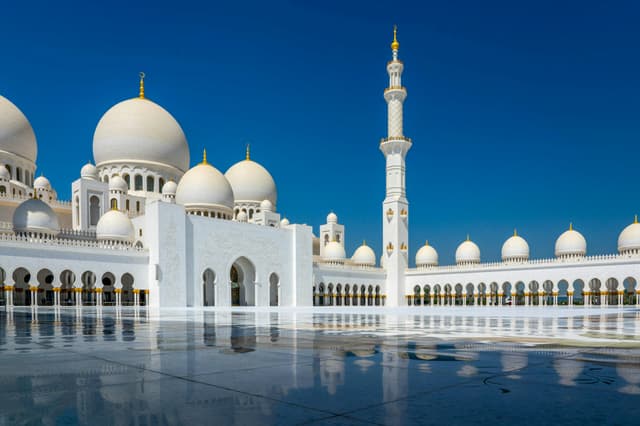
There is a large, well established Nepali community in Dubai, so Nepali and Indian food is easy to find in Bur Dubai, Deira and Karama. Dress is relaxed on the beach and at the pool but modest inside malls and mosques, with shoulders and knees covered. Alcohol is served in licensed hotels and venues. Tap water is safe desalinated water, though most visitors drink bottled. Whether you hold a Nepali passport or travel on another passport as part of the diaspora, only the visa step changes; the city welcomes everyone the same way once you arrive.
If you would rather have the neighbourhood, hotels and airport transfers arranged for you, browse our Dubai holiday packages and choose the base that fits your trip.
What is there to see and do near each base?
Choosing a neighbourhood is easier when you know what sits on its doorstep. Here is how the main bases line up with Dubai's attractions.
Downtown Dubai gives you the Burj Khalifa's At The Top observation decks, The Dubai Mall with its aquarium and waterfall, the Dubai Fountain, Dubai Opera and the walkable Souk Al Bahar. A short taxi ride away, the striking Museum of the Future and the emerald Dubai Garden Glow add to the mix, while the new Dubai Creek Harbour promenade is rising just to the east.
Dubai Marina and JBR pair beach time with Bluewaters Island, Ain Dubai, The Beach mall and a long jogging and cycling track. It is also the launch point for boat tours, yacht cruises and the Marina's floating markets during festivals.
Jumeirah and Umm Suqeim keep you close to Kite Beach, the Burj Al Arab, Madinat Jumeirah's canals and souk, and Wild Wadi Waterpark. Al Barsha is built around the Mall of the Emirates and Ski Dubai, the indoor ski slope with real snow. In the old city, Deira and Bur Dubai put the Gold and Spice Souks, Al Fahidi's wind tower houses, the Dubai Frame in Zabeel Park and the creek's abra crossings within easy reach.
For nightlife and design lovers, DIFC (the financial district) has art galleries and rooftop restaurants, while City Walk and Al Seef offer open air dining strips that are pleasant on cooler evenings.
Should you choose a hotel or a serviced apartment in Dubai?
Both work well, and the right answer depends on your group and length of stay.
A hotel suits short trips and travellers who want daily housekeeping, breakfast, a pool and a concierge. Downtown, the Marina and Palm Jumeirah are especially strong for full service hotels and resorts.
A serviced apartment or aparthotel makes more sense for families, groups and stays of a week or more. You gain a kitchen, a washing machine, more space and better value per night, which helps if you are cooking familiar meals or travelling with children. Look in Dubai Marina, Business Bay and Jumeirah Village Circle (JVC) for the widest choice. Many Nepali families travelling together find an apartment far more comfortable and economical than two hotel rooms.
- Solo or couple, 3 to 4 nights: a central hotel in Downtown or the Marina.
- Family with children: a serviced apartment in the Marina or JVC, or a beach resort on the Palm.
- Group of friends: a shared apartment in Business Bay or the Marina for space and nightlife.
- Honeymoon: a resort on Palm Jumeirah or a beachfront hotel in Jumeirah.
Where should you stay for a short Dubai stopover or layover?
Many travellers pass through Dubai on a long layover between Kathmandu and onward destinations. If you have a night or two, stay near the airport or on the Red Line so you can pack in the highlights.
Deira and Bur Dubai are closest to Dubai International Airport and let you see the souks and the creek with minimal transfer time. If your priority is the Burj Khalifa and the fountain, Downtown is only 15 to 20 minutes from DXB by road and directly on the Metro. For a stopover built around the beach, the Marina works but sits further from the airport. Travellers with only a few hours between flights can leave luggage at the airport and take the Metro straight to Downtown and back.
Money, SIM cards and practical basics for your stay
A few practical notes make any Dubai base run smoothly:
| Item | What to know |
|---|---|
| Currency | UAE dirham (AED), pegged near 3.67 to the US dollar; cards accepted almost everywhere. |
| Transport card | Buy a Silver Nol card (about AED 25 with credit) for Metro, tram and buses. |
| SIM and data | Tourist SIMs from du and Etisalat (e& ) are sold at the airport; eSIMs are a convenient alternative. |
| Tipping | Not compulsory; rounding up or 10 to 15 percent in restaurants is appreciated. |
| Tax refund | Tourists can reclaim most of the 5 percent VAT on eligible purchases at departure via the Planet system. |
| Weekend | The UAE weekend is Saturday and Sunday, with a half day Friday; malls stay open late. |
Wherever you stay, download a maps app and the Metro map, carry a refillable water bottle for the heat, and keep a light layer for the fierce indoor air conditioning.
Which Dubai areas are best for a luxury holiday?
If a splurge is the plan, four addresses stand out. Palm Jumeirah is the classic choice, with Atlantis The Royal, One&Only and a string of five star resorts on private beaches. Downtown Dubai delivers glamour with Burj Khalifa views, the Address hotels and fine dining around the fountain. DIFC blends business polish with the city's best contemporary restaurants and art galleries. Along the coast, the Jumeirah beachfront holds landmark properties near the Burj Al Arab and Madinat Jumeirah.
For couples in particular, a beachfront resort on the Palm or in Jumeirah gives you sunset views, spas and infinity pools, while Downtown suits those who want the skyline and the buzz of the city at their door.
Which areas work best for families with children?
Families do best where the beach, safe walkways and attractions sit close together. JBR and Dubai Marina lead the list: a free, gently shelving public beach, a traffic free promenade, splash parks and dozens of casual restaurants, all linked by the tram. Al Barsha is a practical, good value base beside the Mall of the Emirates, Ski Dubai and family clinics. Palm Jumeirah resorts often include Aquaventure Waterpark and the Lost Chambers Aquarium access, which keeps children busy for a full day.
Wherever you base, Dubai is very family friendly: strollers roll easily through malls and Metro stations, baby changing facilities are common, and the city feels safe to walk at night. Summer visitors should lean on indoor attractions such as aquariums, KidZania, water parks and the many malls to escape the midday heat.
How should you finally choose your Dubai base?
Work backwards from what you most want out of the trip. If your dream is the skyline, the Burj Khalifa and easy sightseeing, stay Downtown. If it is sand, sea and evening strolls, stay in Dubai Marina or JBR. If you want a resort cocoon, choose Palm Jumeirah. If value, food and old world character matter most, base yourself in Deira or Bur Dubai. Families balancing beach and budget are happiest in the Marina or near the Mall of the Emirates.
Because the Metro, tram and taxis knit the city together so well, no single choice locks you out of the rest of Dubai. Pick the neighbourhood that matches your mornings, and the rest of the city is only a short ride away. For many travellers from Nepal and the diaspora, spending a little more to stay central pays off in shorter transfers and more time enjoying the sights.
How is Dubai laid out, and why does it matter?
Dubai stretches in a long ribbon along the Gulf coast, roughly from the historic creek in the north east to the beach districts and Palm Jumeirah in the south west. Sheikh Zayed Road, the main artery, links them, and the Metro Red Line shadows it for most of its length. Knowing this shape helps you avoid a common mistake: booking a cheap room far from your priorities and then losing hours in transfers.
As a rule of thumb, the further south west you go towards the Marina and the Palm, the newer, glossier and more beach focused the city becomes; the further north east towards Deira, the older, cheaper and more traditional it feels. Downtown sits roughly in the middle, which is part of why it is such a convenient first time base.
How can you get the best value from your Dubai stay?
A few habits stretch your budget without sacrificing the experience:
- Travel in the shoulder months of April, May, September and October for lower rates and still bearable weather, especially in the mornings and evenings.
- Book an area on the Metro so you do not depend on taxis for every outing; the savings add up over a week.
- Mix free and paid sights: the Dubai Fountain, JBR beach, the souks, the creek abras and Al Fahidi cost little or nothing, balancing pricier tickets like the Burj Khalifa.
- Consider a serviced apartment for groups and families to cut both accommodation and food costs.
- Eat where locals eat in Karama, Deira and Bur Dubai, where a filling meal costs a fraction of the mall food courts.
With a well chosen base and a Nol card in your pocket, Dubai is far more affordable and easy to navigate than its glittering reputation suggests, which is exactly why it remains one of the most rewarding first international trips for travellers from Nepal.
Frequently asked questions about where to stay in Dubai
Which is the best area to stay in Dubai for first time tourists?
Downtown Dubai is the top pick for first timers because it puts the Burj Khalifa, The Dubai Mall and the Dubai Fountain within walking distance and sits on the Metro. Business Bay next door offers the same central location for slightly less.
Is it better to stay in Downtown Dubai or Dubai Marina?
Choose Downtown for landmarks, malls and a first time sightseeing trip, and Dubai Marina or JBR if you want the beach, waterfront dining and a livelier evening scene. Both are well connected by Metro and tram.
Where is the cheapest area to stay in Dubai?
Deira and Bur Dubai, the old city on either side of Dubai Creek, offer the best value rooms, cheap local food and excellent Metro links. Karama and Al Barsha are also budget friendly.
Which area in Dubai has the best beaches?
JBR and Dubai Marina have a lively free public beach, Palm Jumeirah has resort beaches, and Jumeirah and Umm Suqeim (Kite Beach, Sunset Beach) offer relaxed sands with Burj Al Arab views.
Is the Dubai Metro enough to get around without a car?
For most visitors, yes. The Red and Green lines, the Dubai Tram and the Palm Monorail cover the main tourist areas, and taxis or ride hailing apps fill any gaps cheaply.
How many days do you need in Dubai?
Four to five nights suits a first visit, covering the main sights, a desert safari, a beach day and a theme park or museum without feeling rushed.
Is Deira a safe and good area for tourists?
Yes. Deira is safe, well policed and full of character, with the souks, the creek and plenty of affordable hotels and restaurants. Like any busy market district, keep an eye on your belongings in crowds.
What is the best time of year to visit Dubai?
November to March offers warm, pleasant weather ideal for beaches and outdoor sightseeing. Summer is very hot but cheaper, and better suited to indoor malls, aquariums and water parks.
Is Palm Jumeirah worth staying on?
Palm Jumeirah is worth it if you want a resort focused holiday with private beaches, big hotels such as Atlantis The Palm and Atlantis The Royal, and a relaxed island atmosphere. If you prefer to be in the thick of the city and rely on the Metro, a mainland base like Downtown or the Marina is more practical, since the Palm is served mainly by its monorail and taxis.
Where should families with young children stay in Dubai?
Dubai Marina and JBR are ideal for families, with a safe free beach, a car free promenade, splash areas and casual dining all linked by the tram. Al Barsha near the Mall of the Emirates and the Palm Jumeirah resorts with water parks are strong alternatives.