






















































Visa for Nepali passport holdersPick a country: what you need, documents, and how our visa desk applies for you.
Indonesia (Bali) tour packages
Showing 10 of 10 packages



News & AlertsCAUTIONFuel rationing at Bali petrol stations extended to 23 October — until 24 Oct 2026.Checked 21 Oct 2026, 05:56 NPTView details ↓Hide details ↑
Travel news
Caution
Fuel rationing at Bali petrol stations extended to 23 October
Bali's odd-even number-plate scheme for buying fuel runs until 23 October while extra supply arrives; the province says petrol-station queues are back to normal. Tours and transfers run, but some road journeys may take longer.
Bali · 11 Oct – 24 Oct 2026 · Suara (19 Oct) · Kompas TV
Weather by month
Best time for Bali (south coast): April to October — little rain, highs 29–31°C.
- Jan31°25°heavy rain
- Feb31°25°heavy rain
- Mar31°25°medium rain
- Apr31°25°low rain, best month
- May31°25°dry, best month
- Jun30°25°low rain, best month
- Jul29°24°dry, best month
- Aug29°24°dry, best month
- Sep30°24°dry, best month
- Oct31°25°low rain, best month, this month
- Nov32°25°medium rain
- Dec31°25°heavy rain
Best time for Nusa Penida: April to October — little rain, highs 29–31°C.
- Jan31°25°heavy rain
- Feb31°25°heavy rain
- Mar31°25°medium rain
- Apr31°25°low rain, best month
- May31°25°dry, best month
- Jun30°25°low rain, best month
- Jul29°24°dry, best month
- Aug29°24°dry, best month
- Sep30°24°dry, best month
- Oct31°25°low rain, best month, this month
- Nov32°25°medium rain
- Dec31°25°heavy rain
Best time for Gili Islands: May to October — little rain, highs 30–33°C.
- Jan32°24°heavy rain
- Feb32°23°heavy rain
- Mar32°23°heavy rain
- Apr32°23°medium rain
- May32°22°dry, best month
- Jun31°22°dry, best month
- Jul30°21°dry, best month
- Aug31°21°dry, best month
- Sep32°22°dry, best month
- Oct33°23°dry, best month, this month
- Nov33°24°heavy rain
- Dec32°24°heavy rain
Best monthNowdryheavy rainHigh / low °C
Weather: 10-year averages, 2015–2024 (NOAA weather stations). News: GDACS, ReliefWeb, GOV.UK travel advice (OGL v3.0) and local sources.Best Time to Visit Bali →
FAQ
Journey Questions
Written and checked by the Gomayu travel desk, KathmanduUpdated October 2026About this guide
Complete guide
Complete Bali Travel Guide
Written and checked by the Gomayu travel desk, KathmanduUpdated October 2026About this guide
Why Bali is worth the trip
Bali fits volcano ridges, surf beaches, working Hindu temples and some of Asia's best value villas onto an island you can drive across in a few hours. That density is the real argument for going. A Bali tour package from Nepal, or from wherever you currently live and work, gives you rice terraces before lunch and a clifftop sunset the same evening, with no long internal transfers eating the days.
The second argument is familiarity. Bali is Hindu in a country that is overwhelmingly Muslim, and its temples, offerings and festival calendar look recognisable to anyone raised around Nepali temple life, even though the practice differs in real ways. Walking into Tirta Empul and seeing people queue for holy water is not a museum experience. It is a Tuesday.
Then there is value. Bali built its tourism economy over decades, so the supply of good hotels, drivers, guides and restaurants runs deep. A private villa with a pool and a cook is an ordinary booking here, not a splurge saved for one night. Service standards are high and staff deal with guests from every part of the world.
It is also a forgiving first international beach trip. English is widely spoken in tourist areas, signage is clear, and hospitals in Denpasar and Kuta handle foreign patients routinely. Food is safe if you stick to busy kitchens and bottled water. For a family taking small children abroad for the first time, or a couple who want beach and culture in the same week, that matters more than any single sight.
The one thing Bali is not is empty. The popular spots are crowded and the traffic is slow. Plan around that and the island delivers.
How a Bali tour package from Nepal works
Every Bali tour package from Nepal that Gomayu arranges is curated for three groups of travellers: Nepali passport holders flying out of Kathmandu, the Nepali diaspora, and non resident Nepalis (NRNs) booking from Australia, the UK, the US, the Gulf and beyond. Many of our travellers start from Kathmandu, and many book from abroad, so each package is designed to work on any passport and from either starting point.
The process is deliberately simple. Pick your dates first, then keep the route realistic rather than squeezing everything into one holiday. From there the package covers the pieces that are annoying to arrange alone: hotels matched to your budget, airport transfers on both ends, day tours with English speaking guides, and step by step help with whatever visa or entry paperwork your passport needs.
The same structure works for split families. Parents can fly out of Kathmandu while children join from London, Sydney or Doha, everyone meets at the same hotel on arrival day, and each traveller follows the entry rules of their own passport. If that describes your family, mention it when you enquire and the package is built around both starting points from day one.
This page brings together every Bali tour package from Nepal that we run: holiday and highlights tours, two honeymoon packages, a family tour, Nusa Penida and Gili Islands trips, a Balinese Hindu pilgrimage tour, an Ubud wellness retreat and a Bali, Singapore and Malaysia combination. Honeymooners can go straight to the Bali Honeymoon Package; everyone else can compare the package cards at the top of this page.
Planning a Bali trip from Nepal: what Nepali travellers ask
Nepali travellers planning Bali usually ask what the price covers, which package suits their group, how to combine countries, and who to contact if something goes wrong. Short answers are here; visa, flight and season detail follow further down this guide.
What the package price covers
Every Bali package on this page is priced per person as a land package: hotels or villas, airport transfers, and the tours and transport listed on the tour page. Flights from Kathmandu and the Indonesian e-visa are not in the card price; we quote flights separately, and the per-person price falls as your group grows. Each traveller also pays the Bali Tourist Levy online. The live prices are in the first question of the FAQ and on each package card.
Which Bali package suits you
- Honeymoon and couples: the Bali Honeymoon Package or the Bali Romantic Honeymoon Getaway.
- First visit: the Bali Holiday Package or the Bali Highlights Tour.
- Families with children: the Bali Family Adventure Tour, with a calm-water base in Nusa Dua or Sanur.
- Hindu travellers and pilgrims: the Bali Hindu Pilgrimage Tour, built around Bali's main temples.
- Parents and senior travellers: one or two bases, Nusa Dua or Sanur for easy swimming, and the Ubud Wellness and Yoga Retreat for a slower pace.
- Friends and groups: the Bali and Nusa Penida Tour or the Bali and Gili Islands Tour; the per-person price drops for larger groups.
Combining Bali with Singapore and Malaysia
Kathmandu to Bali flights often connect in Singapore or Kuala Lumpur, so the Bali, Singapore and Malaysia Tour (10 days) fits the route. Each country has its own entry rules for a Nepali passport, and our visa desk handles each application.
Nepal Embassy for Indonesia
Nepal has no embassy in Indonesia. The Embassy of Nepal in Kuala Lumpur, Malaysia, is accredited to Indonesia and assists Nepali citizens there, for example if a passport is lost. Save its contact details, keep a copy of your passport on your phone, and keep our WhatsApp number, +977 9709047652, saved.
Do Nepali passport holders need a visa for Bali?
Yes. Nepali passport holders need a visa for Bali, and it must be obtained online before departure. The Bali visa for Nepali citizens is an Indonesian visit e-visa, Index C1, applied for at the official government portal evisa.imigrasi.go.id. Nepal is not on Indonesia's visa on arrival list, so travelling without an approved e-visa means being refused boarding or refused entry.
Bali visa for Nepali citizens: why visa on arrival does not apply
Indonesia grants visa on arrival, and its electronic version the e-VOA, to citizens of a fixed list of countries. Nepal is not on that list. India, China, the UAE, Qatar, Australia, Japan, the United States and Canada are all on it, which is why so much online advice written for those markets calls the visa easy, and why that advice keeps getting copied onto pages aimed at Nepali readers. It is wrong. Check the nationality a visa article was written for, not just the destination.
You may also see the term B211A. That is the old name, used before Indonesia renamed its visa categories in 2024. The tourist and family visit category is now Index C1. Multiple entry and investment categories exist, but they are not what a holiday traveller applies for.
The Index C1 visit e-visa, step by step
The Index C1 visit e-visa is applied for online through Indonesia's official e-visa system, and the approved visa arrives as a PDF by email. Nepali passport holders can apply for it themselves: Indonesian immigration states that no Indonesian sponsor is needed for this visa, except for stateless travellers, holders of non-national travel documents and a short list of nationalities that does not include Nepal. (Checked October 2026.) Gomayu's visa desk prepares and files the application with you, so you do not have to work out the portal on your own. Processing typically runs to around five working days once the file is complete, so apply well ahead and never buy non refundable tickets on the assumption of same week approval.
What you normally need:
- Passport bio page scan, valid at least six months beyond your arrival date, with a blank page
- Recent passport style colour photograph on a plain background
- Confirmed return or onward air ticket
- Confirmed accommodation for the length of stay
- An email address you can access, for account verification and delivery of the visa
- Proof of sufficient funds, usually recent bank statements
- An international Visa, MasterCard or JCB card for the online payment
The Index C1 visit visa is issued for a stay of up to 60 days. It can be extended from inside Indonesia up to 180 days in total, but Indonesian immigration says an extension needs an Indonesian sponsor (guarantor), and since May 2025 each extension also needs a photo and interview at an immigration office. If you already know you want more than 60 days, tell us before you apply. It does not permit paid work of any kind.
The Bali Tourist Levy you must pay before arrival
Separately from the visa, every foreign tourist entering Bali must pay the Bali Tourist Levy. This is a Bali provincial requirement rather than a national Indonesian one, and it is paid through the official portal lovebali.baliprov.go.id or the Love Bali app. Pay before you fly and you clear the airport faster.
The points people get wrong: children and infants are not exempt, and every traveller needs their own QR voucher, even a family booked on one reservation. The levy is paid once per visit to Bali. Only the .go.id domain is official, and lookalike .com and .org sites exist that overcharge. Save the QR code offline, because officers run spot checks at the airport and at some attractions.
Passport validity and onward ticket checks
The Bali visa for Nepali citizens is only half of what gets checked at the gate. Airline staff and Indonesian immigration both verify passport validity of at least six months from arrival, a confirmed onward or return ticket, and an address in Bali. Airlines do deny boarding at the departure airport when one of these is missing, because the airline carries the cost of flying you back. Complete the All Indonesia arrival card online within the three days before you land (it replaced the old electronic customs declaration), and keep the visa PDF, the arrival card and levy QR codes and the hotel confirmation in one folder on your phone.
When is the best time to visit Bali?
The best time to visit Bali is the dry season, roughly April to October, when rain is brief, seas are calmer and volcano treks and island boats run reliably. May, June and September are the sweet spot: dry weather without the July and August crowds. The rainy season, November to March, is still travellable, but it needs a different plan.
Dry season and rainy season
Bali sits close to the equator, so temperature barely moves across the year. What changes is rain and sea state. Dry season days are hot with clear mornings. The rainy season brings heavy afternoon downpours that usually pass within an hour or two, along with higher humidity and rougher crossings to Nusa Penida, which are cancelled more often. Nobody should tell you Bali weather does not matter. It does, mostly for boats, treks and clifftop views.
Peak, shoulder and quiet months
| Month | Weather | Crowds | Good for |
|---|---|---|---|
| January | Wettest month, humid | Low after New Year | Villas, spa days, Ubud |
| February | Wet, humid | Low | Quiet stays, green terraces |
| March | Rain easing | Low, plus the Nyepi shutdown | Ogoh-Ogoh parades, culture |
| April | Dry season begins | Moderate | Beaches, first good boat days |
| May | Dry, clear | Moderate | Everything, best all round month |
| June | Dry, clear | Rising | Treks, islands, honeymoons |
| July | Dry, cooler nights | Peak | Book months ahead |
| August | Dry, windy | Peak | Surf and kitesurf |
| September | Dry, clear, calm sea | Moderate | Diving, Nusa Penida, honeymoons |
| October | First showers return | Moderate | Good value, still swimmable |
| November | Rain returns | Low | Waterfalls, rice fields at their greenest |
| December | Wet | Peak at Christmas and New Year | Festive resort stays |
Anyone timing a break around Dashain (11 to 25 October 2026) and Tihar (7 to 11 November 2026) lands at the tail of the dry season and the start of the rains, which is a sound window for a Bali holiday from Nepal: crowds thin out after August and the sea is usually still calm through October. Book around three months ahead for that period, because seats out of South Asia fill early around the festivals.
Festival dates that change your trip
Two Balinese festivals affect planning directly. Nyepi, the day of silence and the Balinese Hindu new year, falls on 8 March 2027. For 24 hours the whole island stops: Ngurah Rai airport closes, no flights land or depart, roads sit empty and guests stay inside their hotel grounds. The Ogoh-Ogoh parades the night before are worth seeing. Galungan and Kuningan follow a 210 day cycle, so they shift every year. In 2027 Galungan falls on 13 January and 11 August, with Kuningan on 23 January and 21 August. Expect tall bamboo penjor poles lining every road and some businesses closed.
How to get to Bali from Nepal
There is no nonstop flight from Kathmandu to Bali, so the trip from Nepal connects once, most often in Kuala Lumpur, Singapore or Bangkok. Malaysia Airlines and Batik Air Malaysia via Kuala Lumpur, Singapore Airlines via Singapore and Thai Airways via Bangkok all link Kathmandu with Denpasar (DPS). The Kathmandu to Kuala Lumpur leg alone takes about 4 hours 40 minutes, and flying time on the quickest one-stop routes is roughly eight hours before the layover, so plan for a long travel day. Connecting in Bangkok on one ticket with bags checked through needs no Thai visa for up to 12 hours; a self-transfer or a longer layover there needs a Thai transit visa on a Nepali passport.
Bali has one international airport, Ngurah Rai International Airport at Denpasar, code DPS, and almost every visitor arrives by air. From most origins outside Southeast Asia and Australia there is no non stop service, so the trip means one or two connections through an Asian hub. Total door to door time depends far more on layover length than on flying time.
Denpasar DPS as the single gateway
Every scheduled international flight to Bali lands at Denpasar airport DPS, in the south of the island close to Kuta. There is no second international entry point and no domestic routing that saves a holiday traveller time. Ferries and fast boats arrive from Java and Lombok, but those serve people already inside Indonesia.
Common routing shapes and connecting hubs
Bali is reached through a small set of hubs, and which one suits you is mostly a question of where you start.
- Kathmandu. One stop through Singapore, Kuala Lumpur, Bangkok or Hong Kong is the natural shape. Singapore Airlines, Malaysia Airlines and Thai Airways all connect onward to Denpasar.
- Sydney and other Australian cities. Non stop services to Denpasar run daily and the flight is short.
- Tokyo. Non stop options exist, along with one stop routings through Singapore or Kuala Lumpur.
- Dubai and Doha. One stop through the Gulf carrier's own hub, or a connection through Singapore or Kuala Lumpur.
- North America and Europe. Two stops is normal, usually a Gulf or East Asian hub followed by a Southeast Asian one.
One correction worth making, because older guides get it backwards: routing a South Asian departure westward through Doha or Dubai is a large backtrack. It occasionally prices well, but it is not the short way and it adds hours.
One stop versus two stop
A single connection through Singapore, Kuala Lumpur or Bangkok is usually worth paying for. Two stop itineraries with long overnight layovers look cheap and then cost you most of a day at each end, with more baggage risk. Where two stops cannot be avoided, choose the version with one comfortable layover instead of two tight ones. Anyone planning Bali from Nepal should also sanity check the connection time rather than trusting the legal minimum, which assumes nothing goes wrong.
Arrival at Ngurah Rai and the airport transfer
At Ngurah Rai you clear immigration with the e-visa, present the Bali Tourist Levy and All Indonesia arrival card QR codes, and collect bags. Ride hailing pickups are restricted at the airport, so a pre booked hotel or agency transfer is the calm option after a long flight. Driving time to Kuta and Seminyak is short. Ubud and Uluwatu take considerably longer once traffic is factored in.
Where to stay in Bali: which area suits you?
Where to stay in Bali matters more than in most destinations, because traffic makes the island feel far bigger than the map suggests. Pick the wrong base and you spend the holiday in a car. Most first visits work best split between one inland base, usually Ubud, and one coastal base chosen to match how you travel.
Ubud
Ubud is the cultural and green heart of the island, inland and roughly ninety minutes from the airport. Rice terraces, the Sacred Monkey Forest, art markets, yoga studios, waterfalls and jungle valley villas. Cooler and more humid than the coast, with no beach. It suits couples, culture minded travellers and anyone who came for the temple side of Bali. The centre is congested; villas a few kilometres out are much quieter.
Seminyak
Seminyak is the polished beach base: boutiques, beach clubs, strong restaurants, sunset bars and a long stretch of sand. It is the standard honeymoon choice for people who want walkable dining and a smart hotel or villa without the backpacker energy of Kuta. Swimming is possible, though the currents are real. Check the flags.
Canggu
Canggu is younger, scruffier and more creative: surf breaks, cafes, co-working spaces and sunset beach bars at Batu Bolong and Echo Beach. It suits solo travellers, surfers and couples in their twenties and thirties. Traffic on the narrow lanes is genuinely bad, and ride hailing pickups are blocked in parts of it.
Kuta and Legian
Kuta and Legian are the original tourist strip: a long beach, beginner surf schools, the Beachwalk mall, cheap eating and loud nightlife. They sit closest to the airport, which makes them useful for a first or last night. Legian is a calmer version of Kuta a short walk north. Families often find Kuta too rowdy after dark.
Nusa Dua
Nusa Dua is the gated resort enclave in the southeast: large international hotels, manicured grounds, reef protected water and the safest swimming on the island. Best for families with small children, older parents and anyone who wants to stay put. The trade off is that it feels sealed off from ordinary Balinese life, and you need a car for everything.
Uluwatu and the Bukit
Uluwatu and the wider Bukit peninsula deliver the dramatic version of Bali: limestone cliffs, infinity pools, excellent surf, hidden coves such as Padang Padang and Bingin, plus Uluwatu Temple and the evening Kecak dance. Beaches involve steps, sometimes a lot of them, and the spots are far apart. A strong choice for part of a honeymoon.
Sanur
Sanur is the quiet east coast option: a flat beachfront promenade, calm shallow water, sunrise instead of sunset, and an older, more relaxed crowd. It is also the main departure port for fast boats to Nusa Penida, Nusa Lembongan and the Gili islands, which makes it convenient when island days are on the plan.
The north coast
The north around Lovina and Munduk is a different island: black sand beaches, dawn dolphin boats, mountain lakes, coffee plantations and Sekumpul waterfall. It is a long drive from the south and only pays off with two nights or more. Leave it out of a short first trip.
Splitting nights between two or three bases
Two bases is the right answer for most trips: three or four nights in Ubud, then three or four on the coast. Three bases works on longer stays, typically Ubud, a beach area, then Uluwatu or an offshore island. Moving more often than that means packing and sitting in traffic instead of holidaying. Bali packages for Nepali passport holders are usually built this way for exactly that reason.
| Area | Best for | Vibe | Suggested nights |
|---|---|---|---|
| Ubud | Culture, couples, nature | Green and calm, congested centre | 3 to 4 |
| Seminyak | Honeymoons, dining, shopping | Polished, walkable | 2 to 4 |
| Canggu | Surfers, solo travellers, younger couples | Casual and creative, heavy traffic | 2 to 3 |
| Kuta and Legian | Budget stays, first or last night, learning to surf | Loud, central, busy | 1 to 2 |
| Nusa Dua | Families, calm swimming, resort holidays | Manicured and contained | 3 to 4 |
| Uluwatu and the Bukit | Honeymoons, cliff views, surf | Dramatic, spread out | 2 to 3 |
| Sanur | Older travellers, island boat departures | Quiet, flat, early nights | 2 to 3 |
| North coast | Repeat visitors, mountains and waterfalls | Rural and remote | 2 |
What are the main things to see and do in Bali?
The core of a first Bali trip is four things: temples, rice terraces, a volcano and the beach. Around those sit waterfalls, the Kecak dance at Uluwatu, spa treatments, surf lessons and beach clubs. Almost all of it clusters around Ubud inland and the southern coast, which is why those two areas anchor nearly every list of places to visit in Bali.
The classic places to visit in Bali
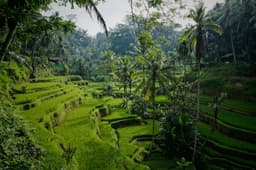
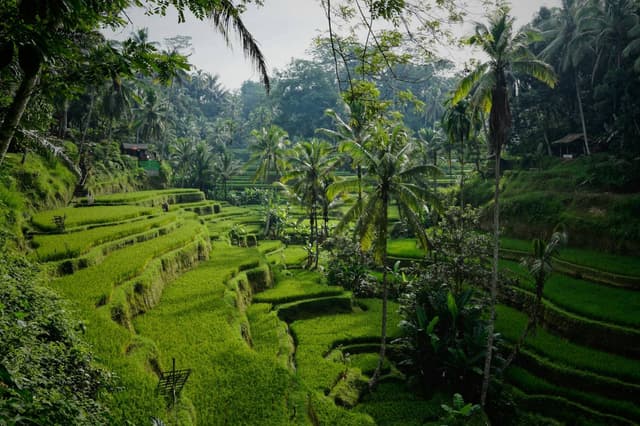
- Tegallalang rice terraces, the tiered valley north of Ubud. Go early, before the buses and the swing queues.
- Mount Batur sunrise trek, a pre dawn start and roughly two hours up an active volcano for sunrise over the caldera and Lake Batur. Moderate fitness is enough; the hard part is the bedtime.
- Tanah Lot, the sea temple on its own rock offshore, at its best an hour before sunset with the tide up.
- Uluwatu Temple and the Kecak dance, a cliff temple at sunset followed by the chanted fire dance in an open amphitheatre above the ocean.
- Tirta Empul, the holy spring temple where Balinese Hindus perform melukat purification under the water spouts.
- Sacred Monkey Forest in Ubud, a forest temple complex full of macaques. Wear nothing loose.
- Waterfalls, from the easy Tegenungan near Ubud to the long stair descent at Sekumpul in the north.
Beyond the checklist, the best days in Bali tend to be unstructured: a cooking class, a Balinese massage, an afternoon at a beach club, a surf lesson at Kuta or Batu Bolong, a coffee plantation tasting, or the Jatiluwih terraces for the scale of Tegallalang without the crowd. Water sports run out of Tanjung Benoa, with parasailing, banana boats and jet skis. Snorkelling and diving are far better off Nusa Penida, Amed and Menjangan than off the main southern beaches.
One planning note. Ubud and Uluwatu sit at opposite ends of the island. Trying to combine a rice terrace morning with an Uluwatu sunset puts four to five hours of driving into a single day. Group your sights by area instead, and you get a longer holiday out of the same number of nights.
Which day trips and nearby islands are worth it?
Three offshore trips justify the effort: Nusa Penida for cliff scenery, Nusa Lembongan for a slower beach day, and the Gili islands for clear water and no cars. On the mainland, east Bali around Besakih and the Sidemen valley is the best full day inland. All of them start from the south or east coast.
Nusa Penida and Kelingking
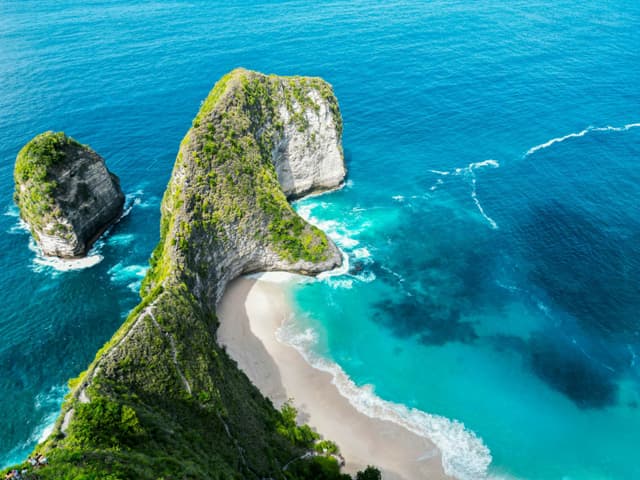
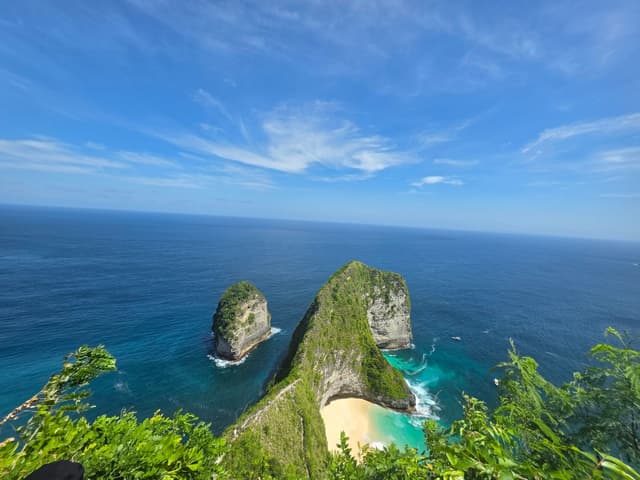
Nusa Penida is the dramatic one. Kelingking Beach, the dinosaur shaped headland with a near vertical staircase down to the sand, is the photograph everyone comes for. The descent is steep, unshaded and not for everyone, and the viewpoint on its own justifies the trip. Broken Beach, Angel's Billabong and Crystal Bay fill out the west coast day. Roads on Penida are rough and journeys slow, so a day trip realistically covers one side of the island. Two nights there is a much better experience. Manta ray snorkelling off Manta Point is the highlight when the sea is calm.
Nusa Lembongan
Nusa Lembongan is smaller, gentler and far easier to move around. Mushroom Bay and Dream Beach, the yellow bridge across to Nusa Ceningan, mangrove paddling and easy snorkelling straight off the shore. It rewards a relaxed day or an overnight rather than a sightseeing sprint, and it works well for families who would find Penida's roads punishing.
The Gili islands
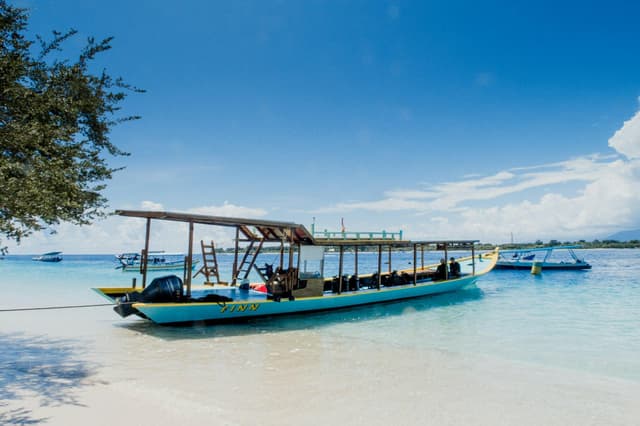
The Gili islands, Trawangan, Meno and Air, lie off Lombok and take a longer fast boat. There are no motor vehicles at all, just bicycles and horse carts. Gili Trawangan is the social one, Gili Air the balanced one, Gili Meno the quiet honeymoon one. Turtles are common on the house reefs. Because of the crossing time, the Gilis are an extension of two nights or more, never a day trip.
East Bali and Besakih
East Bali is the cultural day out: Besakih, the mother temple on the slopes of Gunung Agung, the water palace at Tirta Gangga, the Lempuyang gates and the terraced Sidemen valley. It is a long day in the car with far fewer crowds outside the main temple, and it is the strongest contrast to the beach south.
How the fast boat crossings work
Fast boats to Nusa Penida, Nusa Lembongan and the Gilis leave mainly from Sanur, with some services from Padang Bai. Crossings to the Nusa islands are short; the Gilis take considerably longer. Boats beach load, so expect to wade a little and to have bags carried aboard. Seas are roughest in the rainy season and cancellations do happen, which is why you should never schedule a Nusa Penida day for the morning before an international flight.
What should Nepali Hindu travellers know about Balinese temples?
Balinese temples are living places of worship rather than monuments, and the rules are straightforward: wear a sarong and sash, keep out of areas reserved for worshippers, and do not enter while menstruating or with an open wound. The faith looks familiar to Hindus from Nepal, but the practice differs enough to be worth knowing before you arrive.
How Balinese Hinduism differs from Nepali Hinduism
Balinese Hinduism, Agama Hindu Dharma, grew out of Shaiva Hinduism blended with Buddhist elements and a deep layer of ancestor and nature worship. The supreme god is Sang Hyang Widhi Wasa, with Brahma, Vishnu and Shiva understood as his aspects. Temples are open walled courtyards holding tiered meru shrines rather than enclosed sanctums built around a central murti, and much of daily religion happens outside temples altogether, in the small palm leaf canang sari offerings you see on shopfronts, dashboards and pavements every morning. Cremation ceremonies, ngaben, are public, communal and elaborate. A Bali trip for Nepali travellers is often most interesting at exactly this point: the same gods, a very different grammar.
Temple etiquette and sarong rules
- A sarong and sash are required at every temple. Most sites lend or rent them at the gate, though carrying your own is easier.
- Shoulders and knees covered, for men and women alike.
- Do not walk in front of anyone who is praying, and do not sit or stand on shrine platforms.
- Keep your head lower than a priest's, and never point your feet toward a shrine.
- Menstruating women are asked not to enter temple grounds. This is posted on signs and taken seriously.
- Ask before photographing worshippers or ceremonies, and stay behind the offerings.
The main temples
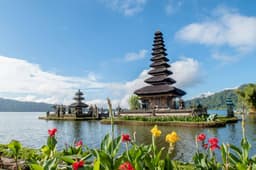
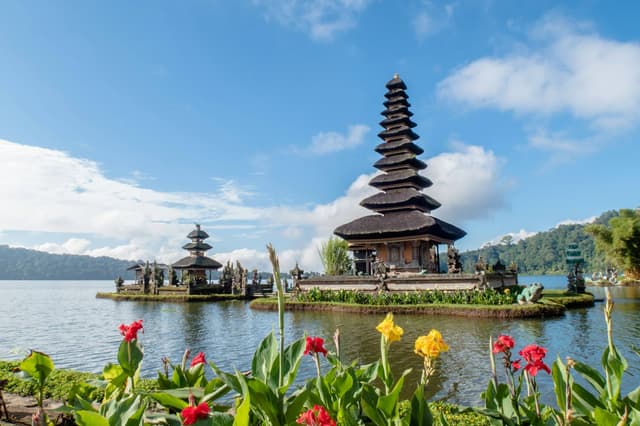
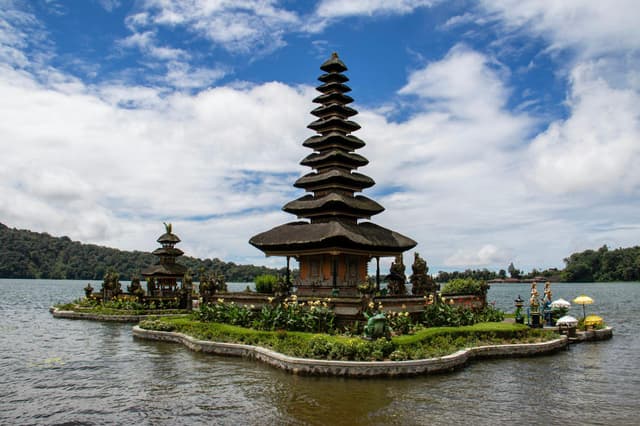
Besakih, on the slopes of Gunung Agung, is the mother temple and the largest complex on the island. Tirta Empul is where melukat purification bathing takes place, and visitors can take part with a guide and the correct dress. Uluwatu and Tanah Lot are the two great sea temples, both built for sunset. Ulun Danu Beratan sits on a mountain lake in the highlands. At Besakih and Lempuyang, use an official guide and be firm with the unofficial ones who approach in the car park.
Nyepi, the day of silence
Nyepi is the Balinese Hindu new year and has no equivalent in the Nepali calendar. For 24 hours the island observes total silence: no lights, no fires, no travel, no work, no entertainment. The airport shuts completely. Hotels run with curtains drawn and guests stay on the property. Village wardens, the pecalang, patrol the streets. The night before brings the Ogoh-Ogoh parades, with huge demon effigies carried through the villages and then burned. Arriving or departing on Nyepi is not possible, so build the trip around the date.
Galungan
Galungan marks the victory of dharma over adharma, the days when ancestral spirits are believed to return to visit their families. Every household raises a penjor, a tall curved bamboo pole decorated with palm leaf and offerings, along the roadside. Kuningan, ten days later, closes the period. Temples are crowded and beautiful, families are occupied, and some businesses shut. Travelling during Galungan is a privilege rather than a problem, as long as you expect it.
What is the food like, and can you find vegetarian and halal options?
Balinese food is aromatic rather than fiery, built on shallots, garlic, chilli, turmeric, ginger, lemongrass and shrimp paste. Vegetarian food is easy to find, particularly in Ubud, where the wellness scene supports dozens of dedicated vegetarian and vegan kitchens. Halal food is available too, though it takes more looking in Hindu majority Bali than elsewhere in Indonesia.
Dishes worth trying: nasi goreng and mie goreng, the fried rice and noodles that anchor every menu; sate lilit, minced fish or chicken satay pressed onto lemongrass sticks; bebek betutu, slow cooked spiced duck; gado gado, vegetables under peanut sauce; nasi campur, a plate of rice with several small dishes around it; and grilled seafood on the sand at Jimbaran. Babi guling, the famous suckling pig, is pork, so anyone avoiding pork should learn the name.
Vegetarian. Warungs across the island serve tempeh, tofu, urap vegetables, sayur and vegetable nasi campur. The thing to ask about is terasi, the shrimp paste hidden in many sambals and sauces that otherwise look vegetarian, and fish sauce in soups. The useful phrases are tanpa terasi and tanpa ikan. Strictly satvik or Jain eating is harder, and Indian restaurants in Seminyak, Kuta and Ubud are the reliable fallback, with several serving full vegetarian thalis.
Halal. Halal certified restaurants concentrate around Denpasar, Kuta and Nusa Dua, and most large resorts can arrange halal meals given notice. Indonesian chains and Javanese run warungs are usually halal. Ask rather than assume in Balinese kitchens, where pork is common and often cooked in the same space.
Drink bottled or filtered water only, including for brushing teeth if your stomach is sensitive. Ice in established restaurants and cafes is produced commercially and is fine. Street food is good, but choose the stalls with a queue.
How do you get around Bali?
Most visitors get around Bali with a private car and driver hired by the day, which is the standard arrangement and the least stressful one. Grab and Gojek work well for short hops but are blocked by local driver associations in several tourist areas. Scooters are everywhere, and they are also the single biggest source of tourist injury on the island.
Grab and Gojek. Both apps are legal and cheap, and both are refused in specific zones where local drivers enforce their own monopoly, including parts of Ubud, Canggu, Uluwatu, Sanur and the area around Tanah Lot, plus the airport, which runs its own taxi system. Signs banning online taxis are common and the enforcement is real. In those areas, use a local taxi, a hotel car or your own driver. Bluebird is the metered taxi brand people trust.
Scooters. Renting a scooter legally requires a valid motorcycle licence from your home country plus an International Driving Permit carrying the motorcycle category. Police do check foreign riders, helmets are compulsory, and most travel insurance policies will refuse a claim if you were riding without the right licence. Balinese traffic is fast, dense and unforgiving. If you have never ridden a scooter, this is not the place to learn.
Travel times. Distances are short and journeys are slow. The airport to Seminyak is quick. The airport to Ubud or Uluwatu takes far longer than the map suggests, and Ubud to Canggu can run well over an hour. Build two long transfers into a week, not five. Google Maps consistently underestimates Bali traffic, especially in the late afternoon.
Money, SIM cards and staying connected
Bali runs on the Indonesian rupiah, IDR, and increasingly on QRIS, the national QR payment standard now accepted almost everywhere including small warungs. Cards work in hotels, malls and larger restaurants. Cash still matters for markets, temple donations, parking and small kitchens. Pick up a local SIM or eSIM at the airport, or arrange the eSIM before landing.
Currency. Nepali rupees are not a convertible currency and Bali money changers will not accept them, so carry US dollars to convert or rely on cards and ATMs. Buy the dollars in Nepal through a bank or licensed money changer, within the per-trip limit set by Nepal Rastra Bank. Change money only at licensed counters with a clear rate board, never at a booth advertising a rate well above the market or promising no commission, because short counting is the oldest scam on the island. Check the day's IDR to NPR rate on XE or Google before you exchange, so you know what you are being offered.
QRIS and wallets. Foreign visitors can use QRIS by installing a local wallet such as GoPay or DANA and linking an international card. Cross border QRIS straight from a home banking app currently works for a short list of countries only, so a local wallet is the practical route for most travellers.
Connectivity. Telkomsel has the strongest coverage island wide. An eSIM bought before departure saves queueing at arrivals. Hotel and cafe Wi-Fi is generally good, and WhatsApp is how drivers, guides and hotels will contact you.
Is Bali safe, and what scams should you watch for?
Bali is a safe destination with low violent crime, and the genuine risks are mundane: scooter crashes, rip currents, opportunistic theft and a few well practised money scams. Families and first time travellers do fine here. Almost every serious incident involving a tourist traces back to a rented scooter or to swimming outside the flags.
- Scooters. The most common cause of tourist hospital admissions in Bali. Helmet every time, no flip flops, no riding after drinking, and read the insurance exclusion for unlicensed riding before you agree to anything.
- The sea. Kuta, Legian, Canggu, Echo Beach and Dreamland all have strong rip currents. Swim between the red and yellow flags where lifeguards patrol; a single red flag means stay out. Nusa Dua and Sanur are the calm water choices for weak swimmers and young children.
- Monkeys. The macaques at Uluwatu Temple and the Ubud Monkey Forest take sunglasses, phones, hats and bags with real skill. Wear nothing loose, hold your phone, do not feed them and do not make eye contact. A bite needs medical attention the same day.
- Scams. Money changer short counting, card skimming at standalone ATMs, drivers refusing the meter and quoting several times the fare, unofficial guides at temple gates, and rental damage claims for scratches that were already there. Photograph any rented vehicle from all sides before you ride away.
Keep your passport in the hotel safe and the e-visa and levy voucher on your phone. Follow local laws and temple dress codes. Travel insurance covering medical evacuation is worth carrying, because complicated cases are moved to Singapore rather than treated locally.
Planning a Bali honeymoon package from Nepal
A Bali honeymoon package from Nepal, or from any city a couple is currently based in, usually splits the trip between a jungle villa in Ubud and a coastal or clifftop stay in Seminyak, Uluwatu or Nusa Dua. That structure gives you the two sides of Bali, green and blue, without packing every second morning. Private pool villas are the reason the island became a honeymoon destination at all.
What couples actually mention afterwards, roughly in order:
- A private pool villa with a walled garden, so the room itself becomes the destination on slow days
- A floating breakfast, which is the photograph, and worth doing on one morning
- Sunset seafood on the sand at Jimbaran, or a clifftop dinner above Uluwatu
- A couples spa afternoon, since Balinese massage is genuinely good and available everywhere
- One shared adventure: the Mount Batur sunrise, a Nusa Penida boat day, or a cooking class
- A private photoshoot, which most resorts can arrange, at the gates, the terraces or the beach
Timing helps a great deal. May, June and September give reliable sunsets without peak crowds, and honeymoon villas sell out earliest for July, August and the Christmas and New Year weeks. A quiet Ubud valley villa beats a busy central address for the first few days, so ask specifically how far the property sits from the main road.
Two practical points that get missed. If either passport still carries a maiden name, keep the visa, the ticket and the passport identical, because immigration matches documents literally and will not interpret. And tell the hotel it is a honeymoon at the time of booking rather than on arrival, since decorations and room upgrades are arranged in advance, not at the desk.
Our two dedicated honeymoon packages are the Bali Honeymoon Package (6 days) and the Bali Romantic Honeymoon Getaway (5 days). Send us your dates and we will match the villas and the pace to them.
How many days do you need, and how to plan yours
Four nights, the length of our 5-day Bali packages, covers the essentials from one or two well chosen bases; five to seven nights lets you split the stay without rushing, and eight to ten nights is where the island starts to feel relaxed. Traffic, not distance, is what eats into short trips. The right length comes down to how many bases you want and whether an offshore island is on the plan.
- 5 nights. One inland base and one beach base. The core temples, terraces and a sunset. No offshore island.
- 7 nights. The same two bases with breathing room, plus one full day trip such as Nusa Penida or east Bali.
- 10 nights. Three bases, an overnight on Nusa Lembongan or Nusa Penida, and real rest days.
- 12 nights or more. Add the Gili islands, or the north coast around Munduk and Lovina.
The two things that need lead time are the visa, which takes working days to process and cannot be rushed, and the hotels, which sell out first for July, August and the Christmas and New Year period. Around three months ahead is a comfortable starting point, and further out for peak dates.
Gomayu Holidays, operated by Zeta Tours & Travels Pvt. Ltd. from our Kathmandu office, plans a Bali tour package from Nepal or from wherever you are currently living, for Nepali passport holders in Nepal, Australia, Japan, the Gulf and North America. Send your dates and the shape of the trip you want on WhatsApp or by email, and you will get a written plan back with the visa steps and the Bali Tourist Levy set out clearly. Ask us whatever you need to before you commit to anything.
Best Bali tour packages from Nepal
To summarise, these are the most popular Bali tour packages from Nepal that we arrange for Nepali travellers and the Nepali diaspora:
- Bali Holiday Package (5 days)
- Bali Honeymoon Package (6 days)
- Bali Highlights Tour (7 days)
- Bali Romantic Honeymoon Getaway (5 days)
- Bali & Nusa Penida Tour (5 days)
- Bali, Singapore & Malaysia Tour (10 days)
- Bali Hindu Pilgrimage Tour (7 days)
- Bali Family Adventure Tour (6 days)
- Ubud Wellness & Yoga Retreat (5 days)
- Bali & Gili Islands Tour (7 days)
All destinations
Explore more destinations




Search Tours or Places
Search Tours or Places