Singapore and Malaysia together make an easy first trip abroad for a Nepali traveller. English is spoken everywhere, the food is familiar enough, and the distances are short. What is not easy is the paperwork, because these are two separate countries with two separate systems, and the mistakes people make are almost always made before they leave Kathmandu.
The paperwork: one visa, two arrival cards
This trips you up if you treat the two countries as one destination.
Singapore requires no visa for a Nepali passport holder. You get up to thirty days on a social visit pass, provided your passport has more than six months left and you can show a confirmed onward ticket, proof of funds and your hotel booking. Immigration does ask.
Malaysia does require a visa, and there is no visa on arrival. Apply for the single entry eVISA on the official immigration portal, malaysiavisa.imi.gov.my, or through the authorised centre in Kathmandu. See our Malaysia visa page for today's all-in price, and allow two to seven working days to be approved. Apply at least two weeks ahead. Note the words single entry: this itinerary crosses into Malaysia exactly once and flies home from Kuala Lumpur, so one visa covers it. Change the plan to return to Singapore at the end and you need a second Malaysian visa.
Then there are two arrival cards, both compulsory, both free, both with a three day window.
- Singapore Arrival Card, filed at eservices.ica.gov.sg within three days before you land.
- Malaysia Digital Arrival Card, filed at imigresen-online.imi.gov.my within three days before you cross the border. There is no land border exemption for a Nepali passport, so this must be done before the coach leaves Singapore.
Both attract scam sites that charge thirty dollars or so for a free government form. Singapore Immigration has issued public warnings about them. The rule is simple: the real Singapore site always ends in ica.gov.sg, and the real Malaysian one in imi.gov.my. Anything asking for a card payment is not the government.
One practical note about the land crossing. Nepali passports are often pulled aside for extra questioning at Malaysian land entry. Nothing sinister, but it goes faster if you carry printed copies of your hotel vouchers, your eVISA approval and your flight ticket out of Kuala Lumpur.
The border day, and why we do not promise four hours
Day three is a coach ride, not a scenic drive. Everyone gets off with all their luggage at Woodlands for the Singapore exit, gets back on, crosses the causeway, gets off again at Johor Bahru for Malaysian entry, and only then settles in for the run north. Driving time alone is four to five hours. Realistically the day takes five to six hours door to door, and seven or eight on a festival weekend or a Friday. Eat before you board and keep your documents in a bag you can carry, not in the hold.
Batu Caves: the dress code is not a suggestion
This is where unprepared groups get turned back. Shoulders and knees must be covered, for men and women alike, and it is checked at the foot of the staircase. Sarongs hire for around fifteen ringgit on site, but it is easier to wear long trousers that morning.
The statue of Lord Murugan at the entrance is 42.7 metres, and the climb to the Temple Cave is 272 steps in tropical humidity with no lift. Worth being honest with yourself if you are travelling with older parents, because there is no way up other than the stairs. The macaques along the staircase will take food, bright drink bottles and anything left in an open bag, so keep snacks out of sight.
One date to watch. Thaipusam brings well over a million pilgrims to Batu Caves and makes sightseeing there effectively impossible. It falls in late January or early February, on a date set by the lunar calendar, so check it against your travel dates rather than assuming.
Genting and Langkawi: two cable cars, both with caveats
At Genting the ride most visitors take is the Awana SkyWay gondola, which runs from Awana up through the rainforest via the Chin Swee temple to the summit. The older Genting Skyway line still exists and generally runs when the Awana one is down. The two take turns for annual maintenance, usually a week each, so a cable car is nearly always running but not always the one you read about.
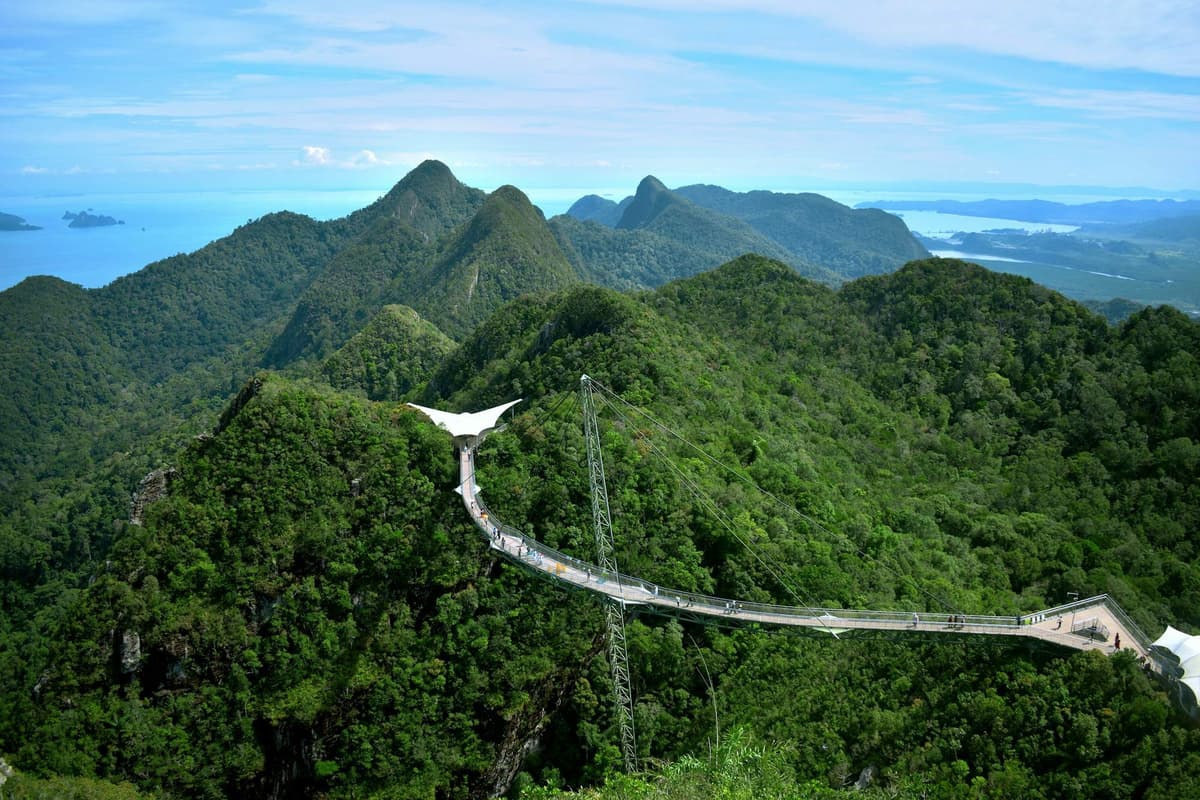
Langkawi is the one to plan around. The SkyCab climbs to a top station at 708 metres, and the curved Sky Bridge is 125 metres long, hung from a single pylon over the ravine. It is the best thing on the island. It also closes completely for annual maintenance, usually a fortnight in the middle of the year, and it shuts on the day in high wind. We check the operator calendar for your dates before we confirm, and if it falls in a closure we say so rather than letting you find out at the gate.
Langkawi is still a duty free island and you can buy freely, with no minimum stay rule any more. Two limits do apply: how much alcohol you may carry from the island to mainland Malaysia, and, more to the point, Nepal customs allowance when you land back in Kathmandu. That is the one people forget.
Singapore rules worth taking seriously
Do not bring a vape into Singapore. This is the single most common way visitors get into trouble. From 1 May 2026 the substance used in the pods was reclassified as a controlled drug, the maximum user fine rose to ten thousand Singapore dollars, and foreigners caught with a device have it seized and are fined on the spot, with entry bans for repeat offenders. Leave it in Kathmandu.
Chewing gum cannot be imported. Littering, jaywalking and smoking outside marked areas all carry real fines rather than warnings. Vandalism carries caning.
On drugs, Singapore applies the death penalty for trafficking above threshold amounts, and it also prosecutes for consumption that happened outside the country on the basis of a urine test at the border. Malaysia removed the mandatory death penalty in 2023, but trafficking still carries a possible death sentence or thirty to forty years plus whipping. Neither country is a place to take a chance.
Money, water and plugs
Two currencies, and they are not interchangeable: Singapore dollars in Singapore, Malaysian ringgit in Malaysia. Carry US dollars from Kathmandu and change on arrival, since money changers in the city beat the airport rate comfortably. Cards work almost everywhere, but keep ringgit cash for stalls at Batu Caves, Langkawi taxis and street food.
Tap water is drinkable in Singapore but not in Malaysia, where hotels and locals use bottled or filtered water. Both countries run 240 volts on the British three pin plug, so one adapter covers the whole trip.
Dengue is endemic in both countries and chikungunya has been rising in Singapore. Both mosquitoes bite in the daytime, which catches people out, so use repellent during the day and not only at night. Any fever within two weeks of getting home is worth showing a doctor with the travel history mentioned.
When to go
The live listing says February to April. February and March are excellent. April is not, because Langkawi sits on the west coast where the dry season runs November to March and the wet season starts in April with thunderstorms that cancel boats and close the cable car. So the honest window for this specific routing is November to March. Avoid August to October altogether: it is Langkawi's wettest stretch and it overlaps the regional haze season.
Who this trip suits
Families and first time travellers who want two countries without a punishing pace, and who like the idea of finishing on a beach rather than in a city. It involves one long coach day and two short flights. If the 272 steps at Batu Caves or the border day are a concern for anyone in your group, tell us when you enquire and we will adjust the day rather than leave someone waiting in the car park.
This trip is part of our Singapore tour package from Nepal collection.
Plan your Singapore trip from Nepal
Before you book, Nepali and NRN travellers should review the Singapore visa for Nepali citizens. For planning, read the best places to visit in Singapore and the best places to visit in Malaysia. Compare every itinerary on our Singapore tour packages for Nepali travellers page, or see official visitor information from Visit Singapore.