
Manang Tour
6Days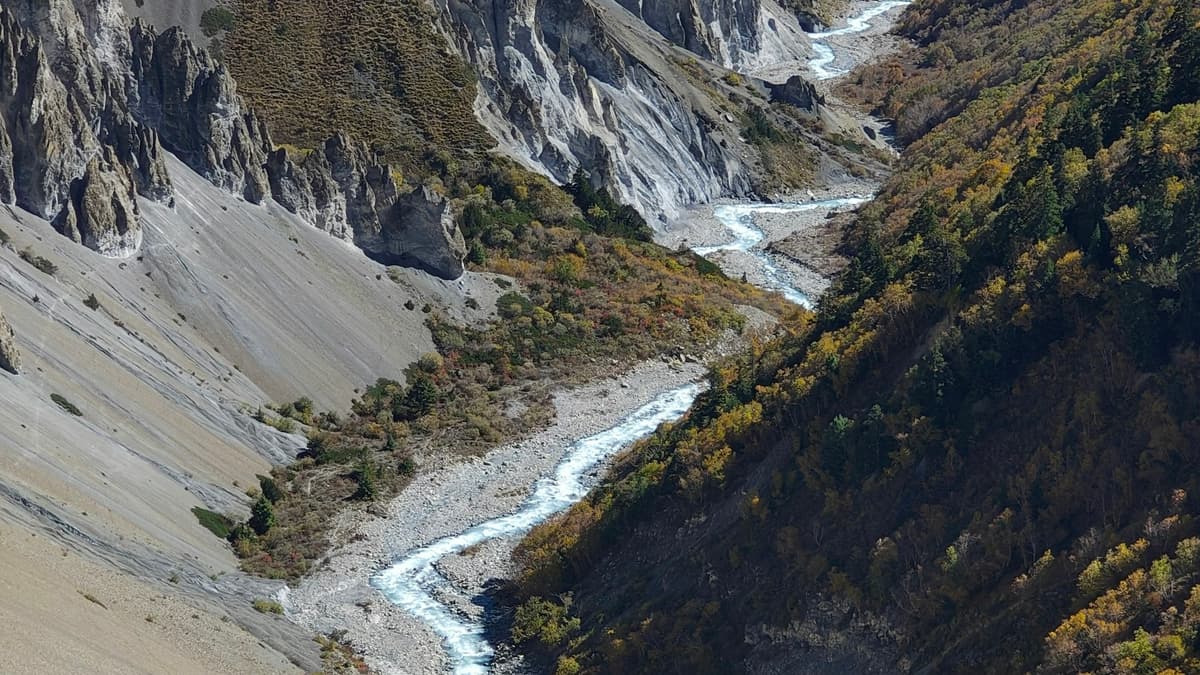
| Group size | Price / person |
|---|---|
| 2 pax | NRs 74,000 /person |
| 3 pax | NRs 57,000 /person |
| 4 pax | NRs 53,000 /person |
| 5 pax | NRs 47,000 /person |
| 6+ pax | NRs 43,000 /person |
- Prices vary with your travel dates, season and group size.
Manang Tour
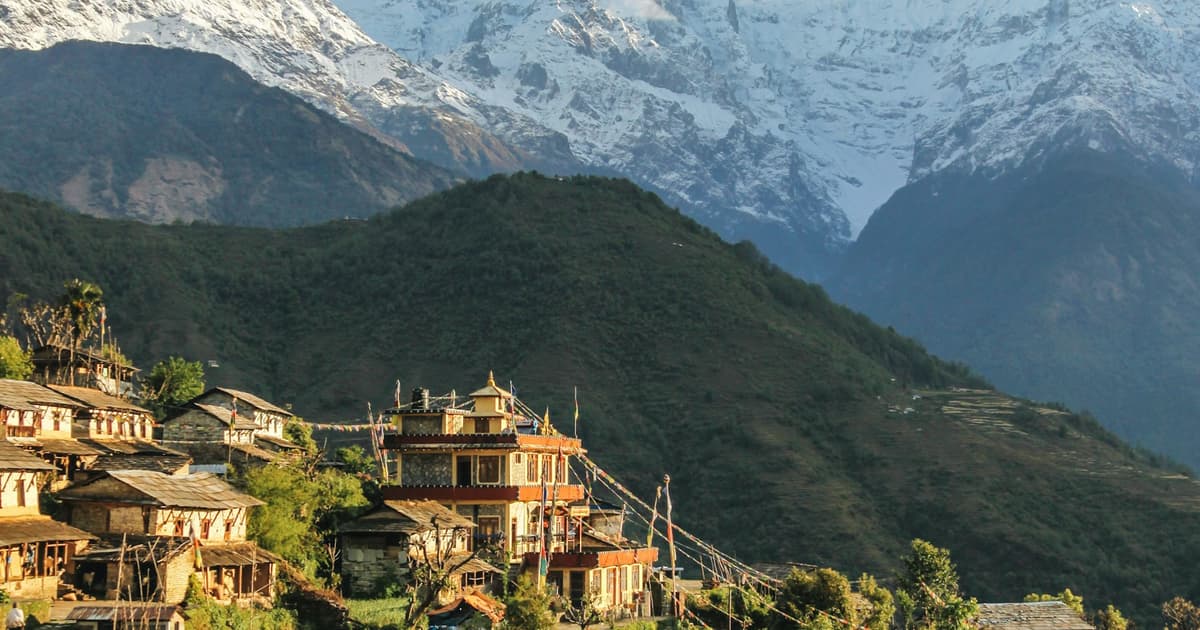
The Manang tour package drives you deep into the Annapurnas' hidden high valley - a string of stone villages under a wall of snow peaks, reached up the Marsyangdi river through pine forest and apple country. Once the preserve of Annapurna Circuit trekkers, the jeep road now brings you to Manang village comfortably by private 4WD.
This is a road tour with proper acclimatization, not a trek: a night in the hill town of Bandipur, then nights at Chame and Upper Pisang as you climb, and a night in Manang to breathe the thin air and walk to Gangapurna Lake, before an easy return down the Marsyangdi valley through Besisahar. It brings families and older travellers into serious high-mountain country, staying in a comfortable hotel in the city and the best local lodges the valley offers.
Trip highlights
Day-by-day itinerary
Everything below is fully customizable. Add nights, swap activities, or change hotels.
Day1 Kathmandu to Bandipur
- Drive from Kathmandu to the hilltop Newari town of Bandipur, with its car-free bazaar, carved wooden houses and mountain views. Check in and enjoy the evening in the old town.
Day2 Bandipur to Chame
- Drive by private 4WD up the Marsyangdi valley to Chame (~2,670 m), the district headquarters of Manang, as the landscape climbs from farmland into the high mountains.
Day3 Chame to Upper Pisang
- Continue up the valley by 4WD toward Manang via Upper Pisang, a Tibetan-style village beneath Annapurna II, and overnight there to acclimatize gently to the altitude.
Day4 Upper Pisang to Manang - exploration
- Short drive to Manang village (~3,540 m) and spend the day exploring - Gangapurna Lake and its glacier viewpoint, the old stone village and nearby monasteries - a valuable acclimatization day.
- Activities: Gangapurna Lake, Manang village
Day5 Back to Besisahar
- Long, scenic drive back down the Marsyangdi valley by 4WD to Besisahar, the trailhead town at the foot of the Annapurnas.
Day6 Back to Kathmandu
- After breakfast, drive from Besisahar back to Kathmandu along the Prithvi Highway with a lunch stop en route. Drop-off in Kathmandu, where the tour ends.
Package pricing
The more travellers in your group, the lower the price per person.
| Group size | Price / person |
|---|---|
| 2 pax | NRs 74,000 /person |
| 3 pax | NRs 57,000 /person |
| 4 pax | NRs 53,000 /person |
| 5 pax | NRs 47,000 /person |
| 6+ pax | NRs 43,000 /person |
- Prices vary with your travel dates, season and group size.
Prices are per person · see what’s included.
What's included
| Items | This package |
|---|---|
| 3/4-star hotel & village lodges | Included |
| Private 4WD transport | Included |
| Meals in the itinerary | Included |
| Acclimatization day in Manang | Included |
| ACAP & entry fees | Included |
| Full-trip guide | Not included |
| Nar-Phu permit | Not included |
| Pokhara/Hongde flights | Not included |
| Travel & personal expenses | Not included |
Anything not listed here is not included.
Things to carry
- Warm layers and a windproof jacket — Manang is cold, and nights are freezing
- Comfortable walking shoes for the rest-day walks
- Sunscreen, sunglasses, a sun hat, lip balm and moisturiser for the strong sun and dry air
- Any personal medication and basic altitude awareness (Manang ≈ 3,500 m)
- A reusable water bottle
- A power bank — charging is limited in remote lodges
- A light daypack, your citizenship or ID, and cash (few ATMs beyond Besisahar)
What our travellers say
Real reviews from Google, verified by travelers.
“It was our best decision to choose Gomayu. We had a wonderful experience with GOMAYU during our Thailand trip. Hotels, Location and itinerary all were well planned and was according to our expectations. Response and communication was very good in Thailand as well. You made our trip very smooth, hassle free and stress free from begning to the end of our trip. This trip was memorable, as me and my husband got to celebrate our 20th wedding Anniversary together in the beautiful place of Thailand and credit goes to GOMAYU for all the arrangements . We are very much satisfied with your service and hope to have other trips with you soon. I would happily Recommend GOMAYU to my friends and family for their excellent service and professional support.”

“Me and my family had a great 10 days trip to Vietnam and Bangkok. All thanks to the wonderful service of Gomayu. Thank you so much for making our trip so easy, fun and stress free.”

“We had an unforgettable 5D4N trip to Bali with Gomayu Holidays! From the very beginning, the communication was smooth, clear, and professional. Everything was perfectly organized; airport pickup, hotel check-ins, and daily tours were always on time, with no stress at all. Our stay was split between a beautiful private pool villa in Seminyak and a comfortable room at Grand Mega Resort, both of which exceeded expectations. The itinerary was well-balanced with adventure, culture, and relaxation. We really enjoyed the watersports (banana boat, jet ski, parasailing), the stunning Uluwatu Temple with Kecak dance, and the romantic candlelight dinner at Jimbaran Beach. The Bali swing and tandem ATV ride were absolute highlights and so much fun! Visiting Lempuyang Temple (Gate of Heaven) was magical and very well arranged despite the crowds. We had some spare time to visit the malls and try local food as well. Special thanks to the guide and driver, who was friendly, helpful, super-flexible and always made sure we were comfortable. We didn’t have to worry about anything as everything was well-organized. Highly recommended for anyone planning a hassle-free and memorable Bali trip. Thank you, Gomayu Holidays, for making our holiday truly special!”

“We had a wonderful experience with Gomayau as our travel partner, with everything being well-organized and thoughtfully planned from start to finish, making the entire trip smooth and enjoyable; the overall coordination was excellent, with timely arrangements and great attention to detail, and the team’s consistent support throughout the journey made a real difference, while communication remained easy and reliable, giving us confidence and peace of mind; we truly appreciated the professionalism and dedication in handling logistics and day-to-day planning, which allowed us to fully relax and enjoy the trip, and overall, it was a great experience that we will remember for future travels and would highly recommend to anyone looking for a hassle-free and well-managed trip.”

“Thank you so much Gomayu Holidays. We had an amazing trip. we are extremely satisfied with their service. The itinerary was wonderfully planned and perfectly organized.Highly recommend planning your next vacation with Gomayu Holidays they are truly EXCELLENT. Special heartfelt thank you to Krishtina and Elho from Gomayu Holidays!”

Good to know
Complete travel guide
What is the Manang tour package, and why do Nepali travellers love it?
The Manang tour package is a 6-day, 5-night private jeep (4WD) road tour from Kathmandu that takes you deep into the high Manang valley, all the way to Manang village at around 3,540 m, without a single day of trekking. This is a Manang tour by road, built for Nepali families, couples, groups and older travellers who want to see the same big Himalayan scenery that the famous Annapurna Circuit trek is known for, but from the comfortable seat of a Scorpio-type 4WD. You drive up the Marsyangdi valley, stay in real mountain towns and lodges along the way, and come back down through Besisahar. No long walking days, no porters, no weeks on the trail.
For most Nepalis, Manang has always felt like a place you had to earn on foot over ten or more days. The Manang tour from Kathmandu changes that. It packs the Newari hill town of Bandipur, the pine forests and apple country around Chame, the Tibetan-style village of Upper Pisang beneath Annapurna II, and the old stone village of Manang with its Gangapurna Lake into six honest days. It is a road journey, not a trek, and Gomayu has written this guide to tell you exactly what that means, what to expect, and how to travel it well.
To be clear about the route: this tour spends five nights, in Bandipur, Chame, Upper Pisang, Manang and Besisahar, in that order, with one night in Manang village and a return straight down the valley to Kathmandu.
Is the Manang tour a trek or a jeep road tour?
The Manang tour is a jeep road tour, not a trek. You travel the whole route by private 4WD up the Marsyangdi valley and back, sleeping in hotels and lodges each night. There is no multi-day walking, no camping and no need for trekking fitness. This is the single most important thing to understand about the Manang tour package, because Manang sits in the same valley as the Annapurna Circuit trek, and people often assume the two are the same experience. They are not.
The Annapurna Circuit is a classic long-distance trek that takes roughly two weeks and crosses the high Thorong La pass on foot. The Manang tour by jeep uses the rough mountain road that now reaches up the valley, so you can drive to places that trekkers spend days walking to. You still get out of the vehicle to explore villages, walk to viewpoints like Gangapurna Lake, and stroll the old stone lanes of Manang, but the distance between towns is covered by road.
This makes the Manang tour a very different kind of trip. It suits people who cannot spare two weeks, who do not want to walk six or seven hours a day, or who are travelling with parents, children or a mixed-ability group. You still gain real altitude and see real Himalayan giants; you simply do it on wheels instead of boots. Being honest about this matters, because Manang's road is genuinely rough in places, and a jeep tour has its own character that is worth going in prepared for.
What is the full route of the Manang tour from Kathmandu?
The Manang tour from Kathmandu follows the Marsyangdi valley up to Manang village and back, over 6 days and 5 nights, with overnights in Bandipur, Chame, Upper Pisang, Manang and Besisahar. Rather than reading it as a rigid dated schedule, it helps to picture the journey in three movements: the approach through the hills, the climb up the valley, and the high days around Manang before the drive home.
The approach begins in Kathmandu and heads west toward the hilltop town of Bandipur, a beautiful and gentle first stop that eases you out of the city. From Bandipur the road turns north into the mountains, joining the Marsyangdi valley and climbing to Chame, the district headquarters of Manang, and then on to the Tibetan-style village of Upper Pisang. The high days are spent reaching Manang village itself, exploring Gangapurna Lake and the old settlement, before the long, scenic drive back down to Besisahar and finally along the Prithvi Highway to Kathmandu.
The overnight sequence is fixed and deliberate. You sleep one night each in Bandipur, Chame, Upper Pisang, Manang and Besisahar. There is only one night in Manang village, not two, and the return is straight down the valley through Besisahar to Kathmandu, with no Pokhara leg on this tour. Below, the guide walks through each part of the route so you know what waits at every stage.
Kathmandu to Bandipur: the gentle start
The first leg of the Manang tour runs from Kathmandu to Bandipur, a car-free Newari bazaar town perched on a ridge above the Prithvi Highway. You drive west out of the valley and then climb up to the ridge, arriving in a town that feels like a step back in time. Bandipur's main street is closed to traffic, lined with restored Newari houses, temples and small cafes, and on a clear day it opens onto a wide view of the Himalaya to the north.
Bandipur is the perfect first night because it breaks the journey pleasantly and starts you off at a comfortable elevation before the real climb begins the next day. You have time to walk the old bazaar in the evening, watch the sunset from the ridge, and rest in a proper 3 or 4-star town hotel. For families and older travellers especially, this soft opening makes the whole trip feel unhurried instead of a race into the mountains.
Up the Marsyangdi valley: Chame and Upper Pisang
From Bandipur the Manang tour turns north and climbs the Marsyangdi valley, first to Chame and then to Upper Pisang. This is where the landscape changes fast. The road passes Besisahar, the gateway town at the mouth of the valley, and then begins the roughest and most dramatic driving of the whole trip. Waterfalls drop beside the track, the river roars below, and pine forests replace the terraced hills.
Chame, at about 2,670 m, is the district headquarters of Manang and your second night. It is a working mountain town with lodges, small shops and hot springs nearby, sitting under high forested ridges. The cool, thin air here is your first real taste of altitude, and staying the night lets your body begin to adjust gently.
The next stretch climbs to Upper Pisang, a Tibetan-style village at around 3,300 m sitting beneath the huge wall of Annapurna II. Upper Pisang is one of the visual highlights of the Manang tour: stone-and-timber houses stacked on the hillside, prayer flags snapping in the wind, a small gompa above the village, and a front-row view of snow peaks. Spending the night here is also a deliberate acclimatization step, giving your body a night at moderate altitude before Manang.
Manang village and Gangapurna Lake: the high point
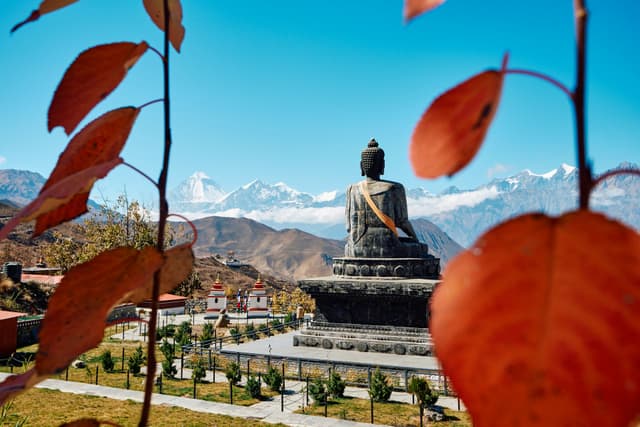
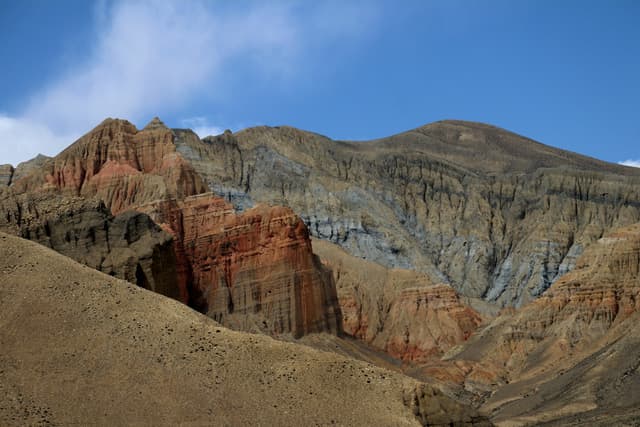
The heart of the Manang tour is Manang village itself, at about 3,540 m, reached from Upper Pisang. This old stone village is one of the most atmospheric settlements in the Nepali Himalaya, a tight cluster of flat-roofed houses, narrow lanes and mani walls, surrounded by some of the highest mountains in the country. From here you explore Gangapurna Lake, a milky turquoise glacial lake fed by the Gangapurna glacier, with a viewpoint above it that looks straight onto the ice and the peaks.
Your day around Manang is spent on foot at a relaxed pace: walking down to Gangapurna Lake and up to the viewpoint, wandering the old village, and visiting the nearby monasteries that have looked over this valley for centuries. This day matters for two reasons. It is the scenic climax of the trip, and it is also the most important acclimatization day, giving your body time to rest at altitude before the long descent begins.
You stay one night in Manang village. Everything the tour is built around, the lake, the glacier, the old stone streets and the monasteries, fits into your time here without needing a second night, because the acclimatization has already been staged carefully across Upper Pisang and Manang.
The drive home: Besisahar and back to Kathmandu
The Manang tour returns by driving back down the Marsyangdi valley from Manang to Besisahar, and then along the Prithvi Highway to Kathmandu. The descent day is long but genuinely scenic, retracing the valley you climbed and watching the landscape soften from high mountain to green hill country. You spend your final night in Besisahar, a comfortable lodge town at the foot of the valley, which breaks the journey so the last day is an easy highway drive rather than an exhausting marathon.
There is no Pokhara leg on this tour. The return runs directly down the valley and back to Kathmandu. From Besisahar the final day follows the Prithvi Highway east, the same road that connects most of central Nepal, arriving back in the capital where the tour ends.
How high does the Manang tour go, and how does acclimatization work?
The Manang tour reaches a maximum sleeping altitude of about 3,540 m at Manang village, and it manages altitude by gaining height gradually and staging two nights at moderate elevation, in Chame and Upper Pisang, before you sleep in Manang. This gentle, staged climb is why the tour is comfortable for ordinary travellers and not just experienced trekkers, but altitude is real and worth respecting honestly.
Here is how the elevation builds across the route, night by night:
- Bandipur (~1,030 m): A comfortable ridge town and a gentle start before the climb.
- Chame (~2,670 m): Your first real altitude and first mountain night.
- Upper Pisang (~3,300 m): A deliberate staged night before Manang.
- Manang (~3,540 m): The highest night, with an important rest-and-explore day.
- Besisahar (~760 m): Back down to thick, warm air for an easy final night.
Because you climb over several days rather than rushing straight up, most people adjust well. Even so, altitude affects everyone differently, and it is not tied to fitness or age. Mild effects such as a light headache, some breathlessness on short walks, or broken sleep on the first high night are common and usually pass. The best defences are simple: drink plenty of water, walk slowly around the villages, avoid alcohol on the high nights, and tell your guide honestly if you feel unwell. Our guide and driver keep the pace easy on purpose, and because this is a road tour, descending quickly to lower, thicker air is always possible if anyone needs it. That built-in escape route is one of the quiet advantages of doing Manang by jeep rather than on a long trek.
When is the best time to visit Manang from Nepal?
The best time to visit Manang from Nepal is autumn, from late September to November, and spring, from March to May, when the skies are clearest, the roads are at their most reliable, and the mountain views are sharpest. These two windows give you the best combination of stable weather and open, dry roads for a jeep tour up the Marsyangdi valley.
Autumn is the single most popular season, and it lines up with the Nepali festival calendar. Many families travel right after Dashain and around Tihar, when the air is washed clean by the end of the monsoon and the peaks stand out crisp against blue sky. Because this is peak season for the whole country, we strongly recommend booking your Manang tour roughly three months ahead, especially if you want to travel in the Dashain and Tihar holiday window, when vehicles, guides and good lodges fill up fast.
Here is a simple month-by-month view to plan around:
| Season | Months | What to expect on the Manang tour |
|---|---|---|
| Autumn (best) | Late Sept – Nov | Clear skies, sharp mountain views, stable roads, peak season, book ~3 months ahead |
| Winter | Dec – Feb | Very clear but cold; high villages icy, occasional snow can affect the road; fewer crowds |
| Spring (best) | Mar – May | Warm days, blooming rhododendron lower down, good views, second peak season |
| Monsoon | Jun – early Sept | Rain, cloud, landslide and rough-road risk; not recommended for this jeep tour |
Winter trips are possible and beautiful, with the clearest air of the year, but the high villages get genuinely cold at night and the occasional snowfall can affect the upper road, so travel then only if you are prepared for the chill. The monsoon months are the one time we do not recommend the Manang tour, because rain, cloud and the risk of landslides on an already rough mountain road take away both the views and the reliability the trip depends on.
Who is the Manang tour package best suited for?
The Manang tour package is best suited for Nepali families, couples, small groups and older travellers who want a real high-Himalayan experience without the physical demands of a long trek. Because the whole route is covered by private 4WD, it opens Manang up to people who could never realistically walk the Annapurna Circuit, while still delivering the mountains, the culture and the altitude.
It is a strong choice for the following travellers in particular:
- Families with parents or children: The staged, comfortable pace and the ride-don't-walk format make Manang reachable for mixed ages who would struggle with a trek.
- Older travellers: Those who dreamed of seeing Manang years ago but no longer want long walking days can now do it from a vehicle, at an easy pace with rest built in.
- Couples and honeymooners: The mix of romantic hill-town evenings in Bandipur and dramatic mountain scenery around Manang makes a memorable short escape.
- Groups of friends and colleagues: A private jeep tour is easy to organise for a small group who want a shared adventure over a single week.
- Time-limited travellers: Anyone who wants the Manang and Annapurna scenery but only has about a week to spare.
Honestly, the tour is less suited to travellers whose main goal is long-distance trekking or crossing the Thorong La pass on foot; that is the Annapurna Circuit, a different trip. It is also worth knowing that the road itself is rough in the upper valley, so travellers who are very prone to motion sickness should come prepared. For everyone else, the Manang tour is one of the most accessible ways to reach genuine high-mountain Nepal.
How rough is the road on the Manang tour?
The road on the Manang tour is smooth and paved for the early part of the journey but becomes genuinely rough once you climb above Besisahar into the upper Marsyangdi valley, and the section from Besisahar to Chame is the roughest of the whole trip. We tell travellers this plainly, because knowing what to expect is the difference between an enjoyable adventure and an uncomfortable surprise.
The drive from Kathmandu to Bandipur and on toward the mouth of the valley is on regular highway and reasonable roads. Once past Besisahar, however, the route becomes a narrow, unpaved mountain road, with rocky stretches, stream crossings, tight bends and steep drop-offs beside the river. Progress is slow here, and the vehicle bumps and sways, which is exactly why the tour uses a private Scorpio-type 4WD driven by an experienced mountain driver rather than an ordinary car.
A few honest notes to prepare for the road:
- The upper valley sections take longer than the distance suggests; this is normal and part of the mountain experience.
- If you are prone to motion sickness, bring your usual medication and sit toward the front of the vehicle.
- Dust can be a factor on dry days; a light scarf or mask is useful.
- In the rare event of a road blockage from a small landslide or repair work, mountain schedules can shift; our guide manages this on the ground.
None of this should put you off. Thousands of travellers make this drive every season, and the reward, reaching Manang by road in a few days, is worth the bumps. But we would rather you board the jeep expecting a real mountain road than a smooth highway, because the honest expectation is the one that makes the trip enjoyable.
What are the food and accommodation like on the Manang tour?
Accommodation on the Manang tour is a comfortable 3 or 4-star hotel in the town of Bandipur and clean, hygienic standard mountain lodges in Chame, Upper Pisang, Manang and Besisahar, all on a twin-sharing basis with breakfast included. The standard is deliberately honest: a proper town hotel where one exists, and simple but well-kept mountain lodges where you are up in the high valley.
In Bandipur, you stay in a genuine hotel with the comforts you would expect in a hill town, including good rooms and reliable facilities. Higher up the valley, in Chame, Upper Pisang and Manang, the lodges are the kind that serve the whole valley: warm, welcoming and clean, but simple. Rooms are basic and cosy, hot water may be limited or charged extra, heating comes from a communal stove in the dining room, and Wi-Fi and mobile signal can be patchy at altitude. This is the reality of mountain Nepal, and it is part of the experience rather than a shortfall.
Food along the route is hearty mountain fare. You will find plenty of dal bhat, which is the most reliable and satisfying meal at altitude, along with noodles, soups, momo, fried rice, potatoes, eggs, Tibetan bread and tea. Menus get simpler and choices fewer the higher you go, because everything has to be carried up the valley, so we suggest eating what the kitchen does well rather than expecting a city menu. Breakfast is included each morning; other meals are easy to order at the lodges. For anyone with dietary needs, tell us in advance and we will do our best, though options are naturally more limited in the high villages.
What permits do you need for the Manang tour?
The Manang tour requires the ACAP permit, the Annapurna Conservation Area Project entry permit, which covers the entire route up the Marsyangdi valley, and it does not require any restricted-area permit for Manang. This is an important point to get right, because Manang is sometimes confused with restricted regions of Nepal. It is not restricted; it sits inside the open Annapurna Conservation Area, the same protected zone the Annapurna Circuit trek passes through.
The ACAP permit fees, as factual context, are NPR 3,000 for foreign nationals and NPR 1,000 for SAARC nationals, while Nepali citizens pay only a small local fee.
For Nepali travellers, the permit process is straightforward and the local fee is modest. Gomayu handles the paperwork and the ACAP permit arrangements as part of organising your tour, so you do not have to navigate the offices yourself; you simply need to carry a valid ID and provide the details we ask for. Because Manang is an open area, there is no special permission, guide-mandate for restricted zones, or extra restricted-area permit to worry about on this route.
How many days do you need for the Manang tour?
You need 6 days for the Manang tour, and this is the length the whole trip is designed around: a 6-day, 5-night journey from Kathmandu to Manang village and back. This is the sweet spot that lets you gain altitude safely, see the key highlights, and return without rushing, while still fitting inside a single week away from work or family.
Six days works because of how the time is used. Two of those days are the approach and the return drives, which are long but scenic, and the middle days climb steadily up the valley with the staged nights in Chame and Upper Pisang that keep the altitude gain gentle. The day around Manang gives you both the sightseeing you came for and the rest your body needs at 3,540 m. Trimming the trip shorter would mean climbing too fast, which is neither safe nor enjoyable; stretching it longer is unnecessary for a road tour, since the vehicle covers ground that trekkers spend extra days walking.
If you are comparing options, remember that the Annapurna Circuit trek through this same valley takes roughly two weeks on foot. The Manang tour delivers the core of that scenery and altitude in under half the time, precisely because it is a jeep tour. For most Nepali travellers with jobs and families, six days is exactly what makes Manang finally possible.
Could you do it faster? People sometimes ask about squeezing Manang into three or four days. We advise against it. A rushed dash up to 3,540 m and straight back down is uncomfortable at best and risky at worst, because your body has no time to adjust to the thin air. The staged nights in Chame and Upper Pisang are not padding; they are what keeps the trip safe and enjoyable. Six days is the shortest sensible length for a Manang tour by road from Kathmandu, and it is the length we stand behind.
Is the Manang tour worth it?
Yes, the Manang tour is worth it for travellers who want to reach genuine high Himalaya, see Gangapurna Lake and the old stone village of Manang, and experience the Marsyangdi valley without committing to a two-week trek. The value is in the access: for a single week and a road journey, you stand at 3,540 m among some of the highest mountains in Nepal, in a place most people assume is reserved for hardened trekkers.
What makes it worthwhile is the combination you get in six days. You have a soft, cultural start in the car-free Newari town of Bandipur; a dramatic climb through pine forest and Tibetan-style villages; the milky turquoise of Gangapurna Lake below its glacier; and the timeless stone lanes and monasteries of Manang village. Along the way you cross real elevation, breathe thin mountain air, and see the valley change from green hills to high desert-mountain country.
Being honest, the trip asks something of you in return. The upper road is rough, the high lodges are simple, mountain weather can hide the views on a cloudy day, and altitude means taking things slowly. If you go expecting a smooth luxury holiday, the mountain will not match that. But if you go expecting a real Himalayan road adventure with comfortable, well-organised logistics around it, the Manang tour delivers something few short trips in Nepal can: the high mountains, reachable by almost anyone, in about a week.
What should you pack for the Manang tour?
For the Manang tour you should pack warm layers, a good jacket, comfortable walking shoes, sun protection and any personal medicines, because even though this is a jeep tour you will be up at 3,540 m where mountain weather is cold and changeable. You do not need heavy trekking gear or a large pack, but a few sensible items make the difference between comfort and misery in the high valley.
A practical packing list for this road tour:
- Warm clothing: Thermal layers, a fleece or down jacket, a warm hat and gloves for the cold nights and early mornings in Chame, Upper Pisang and Manang.
- Comfortable shoes: Sturdy walking shoes or light trekking shoes for the short walks around the villages, Gangapurna Lake and the viewpoints.
- Sun protection: Sunglasses, sunscreen and lip balm; the mountain sun is strong at altitude even when the air is cold.
- Personal medicines and basics: Your regular medication, motion-sickness tablets for the rough upper road, and simple painkillers for a possible altitude headache.
- A reusable water bottle: To refill along the way and cut down on plastic in the mountains.
- Cash in NPR: Small notes for tea, snacks and extras in the villages, where card payments and ATMs are not reliable.
- A power bank and a light daypack: Charging can be limited or paid at high lodges, and a small pack is handy for the day around Manang.
Keep it simple. Because your luggage travels in the private jeep with you, there is no strict weight limit as there would be on a trek, but a compact, well-chosen bag is easier to live out of over six days than an oversized suitcase.
How do you travel responsibly on the Manang tour?
You travel responsibly on the Manang tour by respecting the fragile mountain environment of the Annapurna Conservation Area, supporting the local villages that host you, and behaving thoughtfully in what is a living cultural landscape, not a theme park. Manang's communities are small and its ecosystem is delicate, and the way you travel makes a real difference to whether tourism helps or harms them.
A few simple practices go a long way:
- Carry your waste out: Rubbish is a growing problem in the high valley. Take your plastic and packaging back down with you rather than leaving it in the mountains.
- Refill, don't buy: Carry a reusable bottle and refill or use purification rather than buying stacks of plastic water bottles at altitude.
- Spend locally: Eat, drink and buy from the village lodges and shops; this income is what keeps these communities alive.
- Respect monasteries and homes: Ask before photographing people, dress modestly at gompas, walk clockwise around mani walls and stupas, and keep noise down in the villages.
- Conserve resources: Water, fuel and electricity are all scarce and carried in at effort. Use them sparingly.
The Annapurna Conservation Area exists precisely to protect this landscape while letting communities benefit from visitors. Travelling gently, and remembering that Manang is home to real families, keeps the valley worth visiting for the Nepalis who will come after you.
Why book the Manang tour with Gomayu?
Book the Manang tour with Gomayu because we are a registered Nepali travel company that plans this route honestly, handles every detail from your private 4WD and experienced mountain driver to the ACAP permit and lodges, and tells you the truth about the road, the altitude and the accommodation before you ever pay. Gomayu is the travel brand of Zeta Tours and Travels Pvt. Ltd., a company registered in Nepal, and we build our trips for Nepali travellers first.
What you get when you book this Manang tour package with us:
- The correct, well-planned route: A genuine 6-day, 5-night road tour with staged nights in Bandipur, Chame, Upper Pisang, Manang and Besisahar, designed for safe, gentle altitude gain.
- A private Scorpio-type 4WD: Your own vehicle and an experienced mountain driver for the whole journey, not a shared bus or an ordinary car unfit for the upper valley.
- Everything arranged: Permits, twin-sharing accommodation with breakfast, and a route that has been thought through, so you can simply enjoy the mountains.
- Honest advice: We tell you about the rough road, the simple high lodges and the realities of altitude in advance, because a well-prepared traveller has a better trip.
- Real people to talk to: A Nepali team you can reach directly to plan around Dashain, Tihar or your own dates.
If the Manang tour sounds like your kind of journey, talk to us. Message the Gomayu team on WhatsApp with your travel dates and group size, and we will walk you through the route, answer every question about the road and the altitude, and put together the trip for you. Reach out on WhatsApp today, and let's plan your Manang tour from Kathmandu.
Price per person
| Group size | Price / person |
|---|---|
| 2 pax | NRs 74,000 /person |
| 3 pax | NRs 57,000 /person |
| 4 pax | NRs 53,000 /person |
| 5 pax | NRs 47,000 /person |
| 6+ pax | NRs 43,000 /person |
Per person · see what’s included
- Prices vary with your travel dates, season and group size.
Manang Tour
Manang Tour
6Days
Manang Tour
The Manang tour package drives you deep into the Annapurnas' hidden high valley - a string of stone villages under a wall of snow peaks, reached up the Marsyangdi river through pine forest and apple country. Once the preserve of Annapurna Circuit trekkers, the jeep road now brings you to Manang village comfortably by private 4WD.
This is a road tour with proper acclimatization, not a trek: a night in the hill town of Bandipur, then nights at Chame and Upper Pisang as you climb, and a night in Manang to breathe the thin air and walk to Gangapurna Lake, before an easy return down the Marsyangdi valley through Besisahar. It brings families and older travellers into serious high-mountain country, staying in a comfortable hotel in the city and the best local lodges the valley offers.
Trip highlights
Day-by-day itinerary
Everything below is fully customizable. Add nights, swap activities, or change hotels.
Day1 Kathmandu to Bandipur
- Drive from Kathmandu to the hilltop Newari town of Bandipur, with its car-free bazaar, carved wooden houses and mountain views. Check in and enjoy the evening in the old town.
Day2 Bandipur to Chame
- Drive by private 4WD up the Marsyangdi valley to Chame (~2,670 m), the district headquarters of Manang, as the landscape climbs from farmland into the high mountains.
Day3 Chame to Upper Pisang
- Continue up the valley by 4WD toward Manang via Upper Pisang, a Tibetan-style village beneath Annapurna II, and overnight there to acclimatize gently to the altitude.
Day4 Upper Pisang to Manang - exploration
- Short drive to Manang village (~3,540 m) and spend the day exploring - Gangapurna Lake and its glacier viewpoint, the old stone village and nearby monasteries - a valuable acclimatization day.
- Activities: Gangapurna Lake, Manang village
Day5 Back to Besisahar
- Long, scenic drive back down the Marsyangdi valley by 4WD to Besisahar, the trailhead town at the foot of the Annapurnas.
Day6 Back to Kathmandu
- After breakfast, drive from Besisahar back to Kathmandu along the Prithvi Highway with a lunch stop en route. Drop-off in Kathmandu, where the tour ends.
Package pricing
The more travellers in your group, the lower the price per person.
| Group size | Price / person |
|---|---|
| 2 pax | NRs 74,000 /person |
| 3 pax | NRs 57,000 /person |
| 4 pax | NRs 53,000 /person |
| 5 pax | NRs 47,000 /person |
| 6+ pax | NRs 43,000 /person |
- Prices vary with your travel dates, season and group size.
Prices are per person · see what’s included.
What's included
| Items | This package |
|---|---|
| 3/4-star hotel & village lodges | Included |
| Private 4WD transport | Included |
| Meals in the itinerary | Included |
| Acclimatization day in Manang | Included |
| ACAP & entry fees | Included |
| Full-trip guide | Not included |
| Nar-Phu permit | Not included |
| Pokhara/Hongde flights | Not included |
| Travel & personal expenses | Not included |
Anything not listed here is not included.
Things to carry
- Warm layers and a windproof jacket — Manang is cold, and nights are freezing
- Comfortable walking shoes for the rest-day walks
- Sunscreen, sunglasses, a sun hat, lip balm and moisturiser for the strong sun and dry air
- Any personal medication and basic altitude awareness (Manang ≈ 3,500 m)
- A reusable water bottle
- A power bank — charging is limited in remote lodges
- A light daypack, your citizenship or ID, and cash (few ATMs beyond Besisahar)
What our travellers say
Real reviews from Google, verified by travelers.
“It was our best decision to choose Gomayu. We had a wonderful experience with GOMAYU during our Thailand trip. Hotels, Location and itinerary all were well planned and was according to our expectations. Response and communication was very good in Thailand as well. You made our trip very smooth, hassle free and stress free from begning to the end of our trip. This trip was memorable, as me and my husband got to celebrate our 20th wedding Anniversary together in the beautiful place of Thailand and credit goes to GOMAYU for all the arrangements . We are very much satisfied with your service and hope to have other trips with you soon. I would happily Recommend GOMAYU to my friends and family for their excellent service and professional support.”
“Me and my family had a great 10 days trip to Vietnam and Bangkok. All thanks to the wonderful service of Gomayu. Thank you so much for making our trip so easy, fun and stress free.”
“We had an unforgettable 5D4N trip to Bali with Gomayu Holidays! From the very beginning, the communication was smooth, clear, and professional. Everything was perfectly organized; airport pickup, hotel check-ins, and daily tours were always on time, with no stress at all. Our stay was split between a beautiful private pool villa in Seminyak and a comfortable room at Grand Mega Resort, both of which exceeded expectations. The itinerary was well-balanced with adventure, culture, and relaxation. We really enjoyed the watersports (banana boat, jet ski, parasailing), the stunning Uluwatu Temple with Kecak dance, and the romantic candlelight dinner at Jimbaran Beach. The Bali swing and tandem ATV ride were absolute highlights and so much fun! Visiting Lempuyang Temple (Gate of Heaven) was magical and very well arranged despite the crowds. We had some spare time to visit the malls and try local food as well. Special thanks to the guide and driver, who was friendly, helpful, super-flexible and always made sure we were comfortable. We didn’t have to worry about anything as everything was well-organized. Highly recommended for anyone planning a hassle-free and memorable Bali trip. Thank you, Gomayu Holidays, for making our holiday truly special!”
“We had a wonderful experience with Gomayau as our travel partner, with everything being well-organized and thoughtfully planned from start to finish, making the entire trip smooth and enjoyable; the overall coordination was excellent, with timely arrangements and great attention to detail, and the team’s consistent support throughout the journey made a real difference, while communication remained easy and reliable, giving us confidence and peace of mind; we truly appreciated the professionalism and dedication in handling logistics and day-to-day planning, which allowed us to fully relax and enjoy the trip, and overall, it was a great experience that we will remember for future travels and would highly recommend to anyone looking for a hassle-free and well-managed trip.”
“Thank you so much Gomayu Holidays. We had an amazing trip. we are extremely satisfied with their service. The itinerary was wonderfully planned and perfectly organized.Highly recommend planning your next vacation with Gomayu Holidays they are truly EXCELLENT. Special heartfelt thank you to Krishtina and Elho from Gomayu Holidays!”
Good to know
Complete travel guide
What is the Manang tour package, and why do Nepali travellers love it?
The Manang tour package is a 6-day, 5-night private jeep (4WD) road tour from Kathmandu that takes you deep into the high Manang valley, all the way to Manang village at around 3,540 m, without a single day of trekking. This is a Manang tour by road, built for Nepali families, couples, groups and older travellers who want to see the same big Himalayan scenery that the famous Annapurna Circuit trek is known for, but from the comfortable seat of a Scorpio-type 4WD. You drive up the Marsyangdi valley, stay in real mountain towns and lodges along the way, and come back down through Besisahar. No long walking days, no porters, no weeks on the trail.
For most Nepalis, Manang has always felt like a place you had to earn on foot over ten or more days. The Manang tour from Kathmandu changes that. It packs the Newari hill town of Bandipur, the pine forests and apple country around Chame, the Tibetan-style village of Upper Pisang beneath Annapurna II, and the old stone village of Manang with its Gangapurna Lake into six honest days. It is a road journey, not a trek, and Gomayu has written this guide to tell you exactly what that means, what to expect, and how to travel it well.
To be clear about the route: this tour spends five nights, in Bandipur, Chame, Upper Pisang, Manang and Besisahar, in that order, with one night in Manang village and a return straight down the valley to Kathmandu.
Is the Manang tour a trek or a jeep road tour?
The Manang tour is a jeep road tour, not a trek. You travel the whole route by private 4WD up the Marsyangdi valley and back, sleeping in hotels and lodges each night. There is no multi-day walking, no camping and no need for trekking fitness. This is the single most important thing to understand about the Manang tour package, because Manang sits in the same valley as the Annapurna Circuit trek, and people often assume the two are the same experience. They are not.
The Annapurna Circuit is a classic long-distance trek that takes roughly two weeks and crosses the high Thorong La pass on foot. The Manang tour by jeep uses the rough mountain road that now reaches up the valley, so you can drive to places that trekkers spend days walking to. You still get out of the vehicle to explore villages, walk to viewpoints like Gangapurna Lake, and stroll the old stone lanes of Manang, but the distance between towns is covered by road.
This makes the Manang tour a very different kind of trip. It suits people who cannot spare two weeks, who do not want to walk six or seven hours a day, or who are travelling with parents, children or a mixed-ability group. You still gain real altitude and see real Himalayan giants; you simply do it on wheels instead of boots. Being honest about this matters, because Manang's road is genuinely rough in places, and a jeep tour has its own character that is worth going in prepared for.
What is the full route of the Manang tour from Kathmandu?
The Manang tour from Kathmandu follows the Marsyangdi valley up to Manang village and back, over 6 days and 5 nights, with overnights in Bandipur, Chame, Upper Pisang, Manang and Besisahar. Rather than reading it as a rigid dated schedule, it helps to picture the journey in three movements: the approach through the hills, the climb up the valley, and the high days around Manang before the drive home.
The approach begins in Kathmandu and heads west toward the hilltop town of Bandipur, a beautiful and gentle first stop that eases you out of the city. From Bandipur the road turns north into the mountains, joining the Marsyangdi valley and climbing to Chame, the district headquarters of Manang, and then on to the Tibetan-style village of Upper Pisang. The high days are spent reaching Manang village itself, exploring Gangapurna Lake and the old settlement, before the long, scenic drive back down to Besisahar and finally along the Prithvi Highway to Kathmandu.
The overnight sequence is fixed and deliberate. You sleep one night each in Bandipur, Chame, Upper Pisang, Manang and Besisahar. There is only one night in Manang village, not two, and the return is straight down the valley through Besisahar to Kathmandu, with no Pokhara leg on this tour. Below, the guide walks through each part of the route so you know what waits at every stage.
Kathmandu to Bandipur: the gentle start
The first leg of the Manang tour runs from Kathmandu to Bandipur, a car-free Newari bazaar town perched on a ridge above the Prithvi Highway. You drive west out of the valley and then climb up to the ridge, arriving in a town that feels like a step back in time. Bandipur's main street is closed to traffic, lined with restored Newari houses, temples and small cafes, and on a clear day it opens onto a wide view of the Himalaya to the north.
Bandipur is the perfect first night because it breaks the journey pleasantly and starts you off at a comfortable elevation before the real climb begins the next day. You have time to walk the old bazaar in the evening, watch the sunset from the ridge, and rest in a proper 3 or 4-star town hotel. For families and older travellers especially, this soft opening makes the whole trip feel unhurried instead of a race into the mountains.
Up the Marsyangdi valley: Chame and Upper Pisang
From Bandipur the Manang tour turns north and climbs the Marsyangdi valley, first to Chame and then to Upper Pisang. This is where the landscape changes fast. The road passes Besisahar, the gateway town at the mouth of the valley, and then begins the roughest and most dramatic driving of the whole trip. Waterfalls drop beside the track, the river roars below, and pine forests replace the terraced hills.
Chame, at about 2,670 m, is the district headquarters of Manang and your second night. It is a working mountain town with lodges, small shops and hot springs nearby, sitting under high forested ridges. The cool, thin air here is your first real taste of altitude, and staying the night lets your body begin to adjust gently.
The next stretch climbs to Upper Pisang, a Tibetan-style village at around 3,300 m sitting beneath the huge wall of Annapurna II. Upper Pisang is one of the visual highlights of the Manang tour: stone-and-timber houses stacked on the hillside, prayer flags snapping in the wind, a small gompa above the village, and a front-row view of snow peaks. Spending the night here is also a deliberate acclimatization step, giving your body a night at moderate altitude before Manang.
Manang village and Gangapurna Lake: the high point
The heart of the Manang tour is Manang village itself, at about 3,540 m, reached from Upper Pisang. This old stone village is one of the most atmospheric settlements in the Nepali Himalaya, a tight cluster of flat-roofed houses, narrow lanes and mani walls, surrounded by some of the highest mountains in the country. From here you explore Gangapurna Lake, a milky turquoise glacial lake fed by the Gangapurna glacier, with a viewpoint above it that looks straight onto the ice and the peaks.
Your day around Manang is spent on foot at a relaxed pace: walking down to Gangapurna Lake and up to the viewpoint, wandering the old village, and visiting the nearby monasteries that have looked over this valley for centuries. This day matters for two reasons. It is the scenic climax of the trip, and it is also the most important acclimatization day, giving your body time to rest at altitude before the long descent begins.
You stay one night in Manang village. Everything the tour is built around, the lake, the glacier, the old stone streets and the monasteries, fits into your time here without needing a second night, because the acclimatization has already been staged carefully across Upper Pisang and Manang.
The drive home: Besisahar and back to Kathmandu
The Manang tour returns by driving back down the Marsyangdi valley from Manang to Besisahar, and then along the Prithvi Highway to Kathmandu. The descent day is long but genuinely scenic, retracing the valley you climbed and watching the landscape soften from high mountain to green hill country. You spend your final night in Besisahar, a comfortable lodge town at the foot of the valley, which breaks the journey so the last day is an easy highway drive rather than an exhausting marathon.
There is no Pokhara leg on this tour. The return runs directly down the valley and back to Kathmandu. From Besisahar the final day follows the Prithvi Highway east, the same road that connects most of central Nepal, arriving back in the capital where the tour ends.
How high does the Manang tour go, and how does acclimatization work?
The Manang tour reaches a maximum sleeping altitude of about 3,540 m at Manang village, and it manages altitude by gaining height gradually and staging two nights at moderate elevation, in Chame and Upper Pisang, before you sleep in Manang. This gentle, staged climb is why the tour is comfortable for ordinary travellers and not just experienced trekkers, but altitude is real and worth respecting honestly.
Here is how the elevation builds across the route, night by night:
- Bandipur (~1,030 m): A comfortable ridge town and a gentle start before the climb.
- Chame (~2,670 m): Your first real altitude and first mountain night.
- Upper Pisang (~3,300 m): A deliberate staged night before Manang.
- Manang (~3,540 m): The highest night, with an important rest-and-explore day.
- Besisahar (~760 m): Back down to thick, warm air for an easy final night.
Because you climb over several days rather than rushing straight up, most people adjust well. Even so, altitude affects everyone differently, and it is not tied to fitness or age. Mild effects such as a light headache, some breathlessness on short walks, or broken sleep on the first high night are common and usually pass. The best defences are simple: drink plenty of water, walk slowly around the villages, avoid alcohol on the high nights, and tell your guide honestly if you feel unwell. Our guide and driver keep the pace easy on purpose, and because this is a road tour, descending quickly to lower, thicker air is always possible if anyone needs it. That built-in escape route is one of the quiet advantages of doing Manang by jeep rather than on a long trek.
When is the best time to visit Manang from Nepal?
The best time to visit Manang from Nepal is autumn, from late September to November, and spring, from March to May, when the skies are clearest, the roads are at their most reliable, and the mountain views are sharpest. These two windows give you the best combination of stable weather and open, dry roads for a jeep tour up the Marsyangdi valley.
Autumn is the single most popular season, and it lines up with the Nepali festival calendar. Many families travel right after Dashain and around Tihar, when the air is washed clean by the end of the monsoon and the peaks stand out crisp against blue sky. Because this is peak season for the whole country, we strongly recommend booking your Manang tour roughly three months ahead, especially if you want to travel in the Dashain and Tihar holiday window, when vehicles, guides and good lodges fill up fast.
Here is a simple month-by-month view to plan around:
| Season | Months | What to expect on the Manang tour |
|---|---|---|
| Autumn (best) | Late Sept – Nov | Clear skies, sharp mountain views, stable roads, peak season, book ~3 months ahead |
| Winter | Dec – Feb | Very clear but cold; high villages icy, occasional snow can affect the road; fewer crowds |
| Spring (best) | Mar – May | Warm days, blooming rhododendron lower down, good views, second peak season |
| Monsoon | Jun – early Sept | Rain, cloud, landslide and rough-road risk; not recommended for this jeep tour |
Winter trips are possible and beautiful, with the clearest air of the year, but the high villages get genuinely cold at night and the occasional snowfall can affect the upper road, so travel then only if you are prepared for the chill. The monsoon months are the one time we do not recommend the Manang tour, because rain, cloud and the risk of landslides on an already rough mountain road take away both the views and the reliability the trip depends on.
Who is the Manang tour package best suited for?
The Manang tour package is best suited for Nepali families, couples, small groups and older travellers who want a real high-Himalayan experience without the physical demands of a long trek. Because the whole route is covered by private 4WD, it opens Manang up to people who could never realistically walk the Annapurna Circuit, while still delivering the mountains, the culture and the altitude.
It is a strong choice for the following travellers in particular:
- Families with parents or children: The staged, comfortable pace and the ride-don't-walk format make Manang reachable for mixed ages who would struggle with a trek.
- Older travellers: Those who dreamed of seeing Manang years ago but no longer want long walking days can now do it from a vehicle, at an easy pace with rest built in.
- Couples and honeymooners: The mix of romantic hill-town evenings in Bandipur and dramatic mountain scenery around Manang makes a memorable short escape.
- Groups of friends and colleagues: A private jeep tour is easy to organise for a small group who want a shared adventure over a single week.
- Time-limited travellers: Anyone who wants the Manang and Annapurna scenery but only has about a week to spare.
Honestly, the tour is less suited to travellers whose main goal is long-distance trekking or crossing the Thorong La pass on foot; that is the Annapurna Circuit, a different trip. It is also worth knowing that the road itself is rough in the upper valley, so travellers who are very prone to motion sickness should come prepared. For everyone else, the Manang tour is one of the most accessible ways to reach genuine high-mountain Nepal.
How rough is the road on the Manang tour?
The road on the Manang tour is smooth and paved for the early part of the journey but becomes genuinely rough once you climb above Besisahar into the upper Marsyangdi valley, and the section from Besisahar to Chame is the roughest of the whole trip. We tell travellers this plainly, because knowing what to expect is the difference between an enjoyable adventure and an uncomfortable surprise.
The drive from Kathmandu to Bandipur and on toward the mouth of the valley is on regular highway and reasonable roads. Once past Besisahar, however, the route becomes a narrow, unpaved mountain road, with rocky stretches, stream crossings, tight bends and steep drop-offs beside the river. Progress is slow here, and the vehicle bumps and sways, which is exactly why the tour uses a private Scorpio-type 4WD driven by an experienced mountain driver rather than an ordinary car.
A few honest notes to prepare for the road:
- The upper valley sections take longer than the distance suggests; this is normal and part of the mountain experience.
- If you are prone to motion sickness, bring your usual medication and sit toward the front of the vehicle.
- Dust can be a factor on dry days; a light scarf or mask is useful.
- In the rare event of a road blockage from a small landslide or repair work, mountain schedules can shift; our guide manages this on the ground.
None of this should put you off. Thousands of travellers make this drive every season, and the reward, reaching Manang by road in a few days, is worth the bumps. But we would rather you board the jeep expecting a real mountain road than a smooth highway, because the honest expectation is the one that makes the trip enjoyable.
What are the food and accommodation like on the Manang tour?
Accommodation on the Manang tour is a comfortable 3 or 4-star hotel in the town of Bandipur and clean, hygienic standard mountain lodges in Chame, Upper Pisang, Manang and Besisahar, all on a twin-sharing basis with breakfast included. The standard is deliberately honest: a proper town hotel where one exists, and simple but well-kept mountain lodges where you are up in the high valley.
In Bandipur, you stay in a genuine hotel with the comforts you would expect in a hill town, including good rooms and reliable facilities. Higher up the valley, in Chame, Upper Pisang and Manang, the lodges are the kind that serve the whole valley: warm, welcoming and clean, but simple. Rooms are basic and cosy, hot water may be limited or charged extra, heating comes from a communal stove in the dining room, and Wi-Fi and mobile signal can be patchy at altitude. This is the reality of mountain Nepal, and it is part of the experience rather than a shortfall.
Food along the route is hearty mountain fare. You will find plenty of dal bhat, which is the most reliable and satisfying meal at altitude, along with noodles, soups, momo, fried rice, potatoes, eggs, Tibetan bread and tea. Menus get simpler and choices fewer the higher you go, because everything has to be carried up the valley, so we suggest eating what the kitchen does well rather than expecting a city menu. Breakfast is included each morning; other meals are easy to order at the lodges. For anyone with dietary needs, tell us in advance and we will do our best, though options are naturally more limited in the high villages.
What permits do you need for the Manang tour?
The Manang tour requires the ACAP permit, the Annapurna Conservation Area Project entry permit, which covers the entire route up the Marsyangdi valley, and it does not require any restricted-area permit for Manang. This is an important point to get right, because Manang is sometimes confused with restricted regions of Nepal. It is not restricted; it sits inside the open Annapurna Conservation Area, the same protected zone the Annapurna Circuit trek passes through.
The ACAP permit fees, as factual context, are NPR 3,000 for foreign nationals and NPR 1,000 for SAARC nationals, while Nepali citizens pay only a small local fee.
For Nepali travellers, the permit process is straightforward and the local fee is modest. Gomayu handles the paperwork and the ACAP permit arrangements as part of organising your tour, so you do not have to navigate the offices yourself; you simply need to carry a valid ID and provide the details we ask for. Because Manang is an open area, there is no special permission, guide-mandate for restricted zones, or extra restricted-area permit to worry about on this route.
How many days do you need for the Manang tour?
You need 6 days for the Manang tour, and this is the length the whole trip is designed around: a 6-day, 5-night journey from Kathmandu to Manang village and back. This is the sweet spot that lets you gain altitude safely, see the key highlights, and return without rushing, while still fitting inside a single week away from work or family.
Six days works because of how the time is used. Two of those days are the approach and the return drives, which are long but scenic, and the middle days climb steadily up the valley with the staged nights in Chame and Upper Pisang that keep the altitude gain gentle. The day around Manang gives you both the sightseeing you came for and the rest your body needs at 3,540 m. Trimming the trip shorter would mean climbing too fast, which is neither safe nor enjoyable; stretching it longer is unnecessary for a road tour, since the vehicle covers ground that trekkers spend extra days walking.
If you are comparing options, remember that the Annapurna Circuit trek through this same valley takes roughly two weeks on foot. The Manang tour delivers the core of that scenery and altitude in under half the time, precisely because it is a jeep tour. For most Nepali travellers with jobs and families, six days is exactly what makes Manang finally possible.
Could you do it faster? People sometimes ask about squeezing Manang into three or four days. We advise against it. A rushed dash up to 3,540 m and straight back down is uncomfortable at best and risky at worst, because your body has no time to adjust to the thin air. The staged nights in Chame and Upper Pisang are not padding; they are what keeps the trip safe and enjoyable. Six days is the shortest sensible length for a Manang tour by road from Kathmandu, and it is the length we stand behind.
Is the Manang tour worth it?
Yes, the Manang tour is worth it for travellers who want to reach genuine high Himalaya, see Gangapurna Lake and the old stone village of Manang, and experience the Marsyangdi valley without committing to a two-week trek. The value is in the access: for a single week and a road journey, you stand at 3,540 m among some of the highest mountains in Nepal, in a place most people assume is reserved for hardened trekkers.
What makes it worthwhile is the combination you get in six days. You have a soft, cultural start in the car-free Newari town of Bandipur; a dramatic climb through pine forest and Tibetan-style villages; the milky turquoise of Gangapurna Lake below its glacier; and the timeless stone lanes and monasteries of Manang village. Along the way you cross real elevation, breathe thin mountain air, and see the valley change from green hills to high desert-mountain country.
Being honest, the trip asks something of you in return. The upper road is rough, the high lodges are simple, mountain weather can hide the views on a cloudy day, and altitude means taking things slowly. If you go expecting a smooth luxury holiday, the mountain will not match that. But if you go expecting a real Himalayan road adventure with comfortable, well-organised logistics around it, the Manang tour delivers something few short trips in Nepal can: the high mountains, reachable by almost anyone, in about a week.
What should you pack for the Manang tour?
For the Manang tour you should pack warm layers, a good jacket, comfortable walking shoes, sun protection and any personal medicines, because even though this is a jeep tour you will be up at 3,540 m where mountain weather is cold and changeable. You do not need heavy trekking gear or a large pack, but a few sensible items make the difference between comfort and misery in the high valley.
A practical packing list for this road tour:
- Warm clothing: Thermal layers, a fleece or down jacket, a warm hat and gloves for the cold nights and early mornings in Chame, Upper Pisang and Manang.
- Comfortable shoes: Sturdy walking shoes or light trekking shoes for the short walks around the villages, Gangapurna Lake and the viewpoints.
- Sun protection: Sunglasses, sunscreen and lip balm; the mountain sun is strong at altitude even when the air is cold.
- Personal medicines and basics: Your regular medication, motion-sickness tablets for the rough upper road, and simple painkillers for a possible altitude headache.
- A reusable water bottle: To refill along the way and cut down on plastic in the mountains.
- Cash in NPR: Small notes for tea, snacks and extras in the villages, where card payments and ATMs are not reliable.
- A power bank and a light daypack: Charging can be limited or paid at high lodges, and a small pack is handy for the day around Manang.
Keep it simple. Because your luggage travels in the private jeep with you, there is no strict weight limit as there would be on a trek, but a compact, well-chosen bag is easier to live out of over six days than an oversized suitcase.
How do you travel responsibly on the Manang tour?
You travel responsibly on the Manang tour by respecting the fragile mountain environment of the Annapurna Conservation Area, supporting the local villages that host you, and behaving thoughtfully in what is a living cultural landscape, not a theme park. Manang's communities are small and its ecosystem is delicate, and the way you travel makes a real difference to whether tourism helps or harms them.
A few simple practices go a long way:
- Carry your waste out: Rubbish is a growing problem in the high valley. Take your plastic and packaging back down with you rather than leaving it in the mountains.
- Refill, don't buy: Carry a reusable bottle and refill or use purification rather than buying stacks of plastic water bottles at altitude.
- Spend locally: Eat, drink and buy from the village lodges and shops; this income is what keeps these communities alive.
- Respect monasteries and homes: Ask before photographing people, dress modestly at gompas, walk clockwise around mani walls and stupas, and keep noise down in the villages.
- Conserve resources: Water, fuel and electricity are all scarce and carried in at effort. Use them sparingly.
The Annapurna Conservation Area exists precisely to protect this landscape while letting communities benefit from visitors. Travelling gently, and remembering that Manang is home to real families, keeps the valley worth visiting for the Nepalis who will come after you.
Why book the Manang tour with Gomayu?
Book the Manang tour with Gomayu because we are a registered Nepali travel company that plans this route honestly, handles every detail from your private 4WD and experienced mountain driver to the ACAP permit and lodges, and tells you the truth about the road, the altitude and the accommodation before you ever pay. Gomayu is the travel brand of Zeta Tours and Travels Pvt. Ltd., a company registered in Nepal, and we build our trips for Nepali travellers first.
What you get when you book this Manang tour package with us:
- The correct, well-planned route: A genuine 6-day, 5-night road tour with staged nights in Bandipur, Chame, Upper Pisang, Manang and Besisahar, designed for safe, gentle altitude gain.
- A private Scorpio-type 4WD: Your own vehicle and an experienced mountain driver for the whole journey, not a shared bus or an ordinary car unfit for the upper valley.
- Everything arranged: Permits, twin-sharing accommodation with breakfast, and a route that has been thought through, so you can simply enjoy the mountains.
- Honest advice: We tell you about the rough road, the simple high lodges and the realities of altitude in advance, because a well-prepared traveller has a better trip.
- Real people to talk to: A Nepali team you can reach directly to plan around Dashain, Tihar or your own dates.
If the Manang tour sounds like your kind of journey, talk to us. Message the Gomayu team on WhatsApp with your travel dates and group size, and we will walk you through the route, answer every question about the road and the altitude, and put together the trip for you. Reach out on WhatsApp today, and let's plan your Manang tour from Kathmandu.
Price per person
| Group size | Price / person |
|---|---|
| 2 pax | NRs 74,000 /person |
| 3 pax | NRs 57,000 /person |
| 4 pax | NRs 53,000 /person |
| 5 pax | NRs 47,000 /person |
| 6+ pax | NRs 43,000 /person |
Per person · see what’s included
- Prices vary with your travel dates, season and group size.