
Upper Mustang Tour
6Days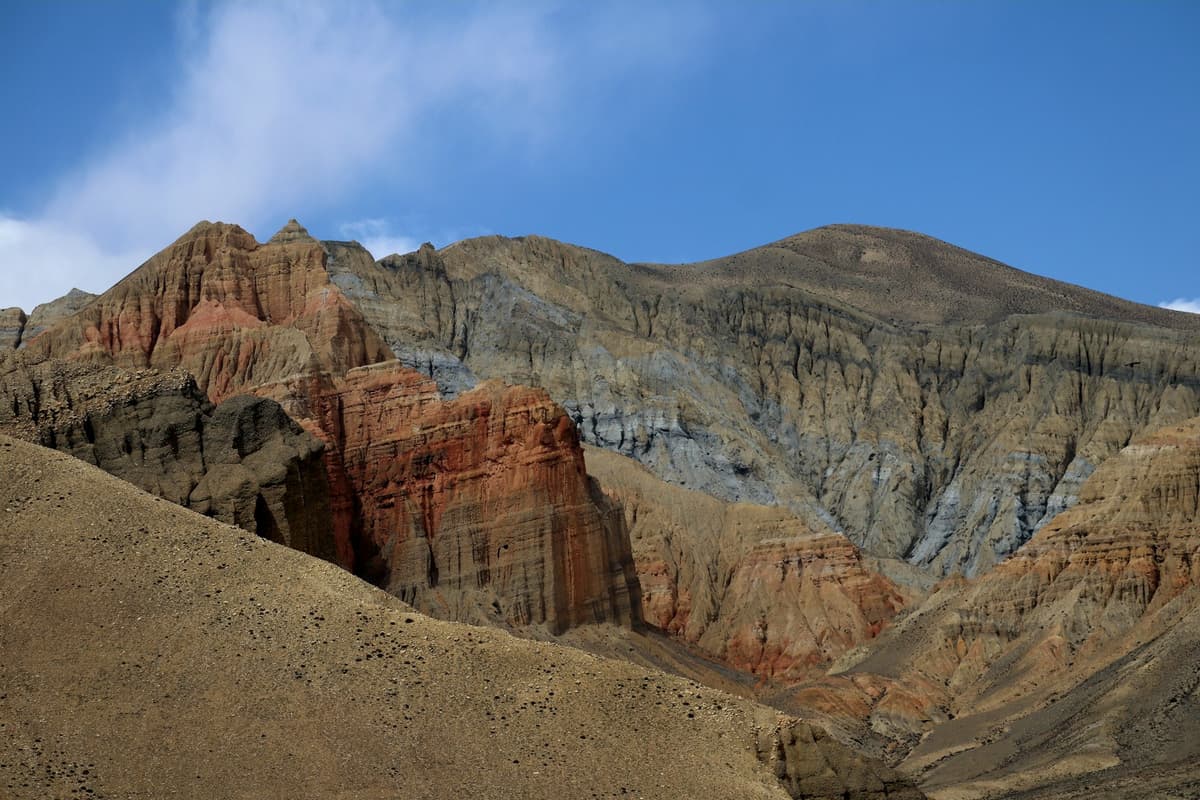
| Group size | Price / person |
|---|---|
| 2 pax | NRs 74,500 /person |
| 3 pax | NRs 57,500 /person |
| 4 pax | NRs 53,500 /person |
| 5 pax | NRs 47,500 /person |
| 6+ pax | NRs 46,500 /person |
- Prices vary with your travel dates, season and group size.
Upper Mustang Tour
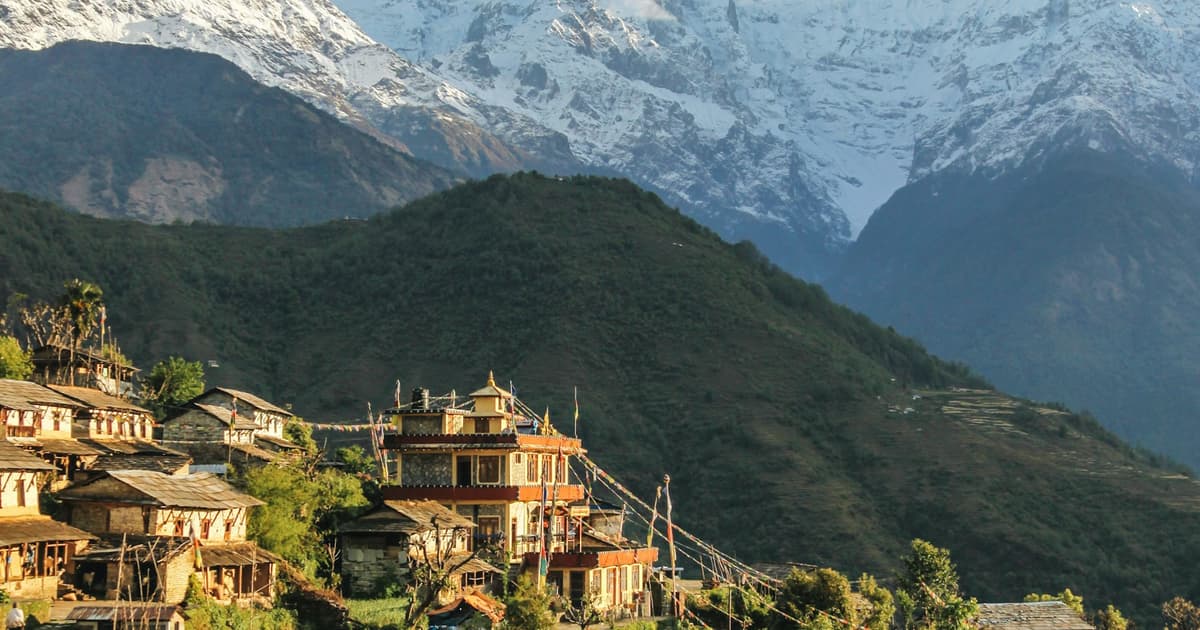
The Upper Mustang tour is the great by-road journey into the old walled Kingdom of Lo - a high desert of ochre cliffs, sky caves and whitewashed monasteries north of Kagbeni, sealed to outsiders until 1992 and still one of the last strongholds of Tibetan Buddhist culture. You drive all the way to Lo Manthang, the medieval capital, by private 4WD.
This is a road journey, not a trek: nights in Pokhara at each end, lodges in Jomsom, and a night in Lo Manthang to explore the Chhoser sky caves and the cliff monasteries. For Nepali citizens there is a real bonus - the costly restricted-area permit applies only to foreign passport holders, so Nepalis travel Upper Mustang permit-free.
Trip highlights
Day-by-day itinerary
Everything below is fully customizable. Add nights, swap activities, or change hotels.
Day1 Kathmandu to Pokhara
- Drive from Kathmandu to Pokhara along the Prithvi Highway (~6-7 hours). Check in and enjoy leisure time exploring lakeside Pokhara.
Day2 Pokhara to Jomsom (Mustang), explore Marpha
- Drive by private 4WD from Pokhara up the Kali Gandaki gorge to Jomsom. On the way, explore Marpha, the whitewashed Thakali apple village.
Day3 Jomsom to Lo Manthang via Muktinath & Kagbeni
- Early morning darshan at the sacred Muktinath Temple, then drive on through Kagbeni and cross into the restricted Upper Mustang region, following the Kali Gandaki north to Lo Manthang, the walled capital of the old Kingdom of Lo.
- Activities: Muktinath, Kagbeni
Day4 Upper Mustang exploration, back to Jomsom›
- Early drive to the Nepal-China border viewpoint at Korala, then explore the multi-storey Chhoser sky caves and the monasteries and royal palace of Lo Manthang. In the afternoon, drive back down to Jomsom.
- Activities: Nepal-China border, Chhoser sky caves
Day5 Back to Pokhara - Dumba Lake, Tatopani & Baglung Kalika
- Drive back down the gorge to Pokhara. On the way, visit the turquoise Dumba Lake, soak at the Tatopani hot springs and stop at the Baglung Kalika temple. Evening free at lakeside.
- Activities: Dumba Lake, Tatopani, Baglung Kalika
Day6 Pokhara to Kathmandu
- After breakfast, drive back to Kathmandu with a lunch stop en route. Drop-off in Kathmandu, where the tour ends.
Package pricing
The more travellers in your group, the lower the price per person.
| Group size | Price / person |
|---|---|
| 2 pax | NRs 74,500 /person |
| 3 pax | NRs 57,500 /person |
| 4 pax | NRs 53,500 /person |
| 5 pax | NRs 47,500 /person |
| 6+ pax | NRs 46,500 /person |
- Prices vary with your travel dates, season and group size.
Prices are per person · see what’s included.
What's included
| Items | This package |
|---|---|
| 3/4-star hotel & village lodges | Included |
| Private 4WD transport | Included |
| Meals in the itinerary | Included |
| ACAP & monument entries | Included |
| Two nights in Lo Manthang | Included |
| Restricted-area permit (non-Nepali citizens) | Not included |
| Full-trip guide | Not included |
| Pokhara-Jomsom flights | Not included |
| Travel & personal expenses | Not included |
Anything not listed here is not included.
Things to carry
- Warm layers and a windproof jacket — Upper Mustang is cold and very windy, and nights are freezing
- Comfortable walking shoes for exploring caves, monasteries and the old city
- Sunscreen, sunglasses, a sun hat, lip balm and moisturiser for the strong sun and dry air
- Any personal medication and basic altitude awareness (Lo Manthang ≈ 3,800 m)
- A reusable water bottle
- A power bank — charging is limited in remote lodges
- A light daypack, your citizenship or ID, and cash (there are no ATMs beyond Jomsom)
What our travellers say
Real reviews from Google, verified by travelers.
“It was our best decision to choose Gomayu. We had a wonderful experience with GOMAYU during our Thailand trip. Hotels, Location and itinerary all were well planned and was according to our expectations. Response and communication was very good in Thailand as well. You made our trip very smooth, hassle free and stress free from begning to the end of our trip. This trip was memorable, as me and my husband got to celebrate our 20th wedding Anniversary together in the beautiful place of Thailand and credit goes to GOMAYU for all the arrangements . We are very much satisfied with your service and hope to have other trips with you soon. I would happily Recommend GOMAYU to my friends and family for their excellent service and professional support.”

“Me and my family had a great 10 days trip to Vietnam and Bangkok. All thanks to the wonderful service of Gomayu. Thank you so much for making our trip so easy, fun and stress free.”

“We had an unforgettable 5D4N trip to Bali with Gomayu Holidays! From the very beginning, the communication was smooth, clear, and professional. Everything was perfectly organized; airport pickup, hotel check-ins, and daily tours were always on time, with no stress at all. Our stay was split between a beautiful private pool villa in Seminyak and a comfortable room at Grand Mega Resort, both of which exceeded expectations. The itinerary was well-balanced with adventure, culture, and relaxation. We really enjoyed the watersports (banana boat, jet ski, parasailing), the stunning Uluwatu Temple with Kecak dance, and the romantic candlelight dinner at Jimbaran Beach. The Bali swing and tandem ATV ride were absolute highlights and so much fun! Visiting Lempuyang Temple (Gate of Heaven) was magical and very well arranged despite the crowds. We had some spare time to visit the malls and try local food as well. Special thanks to the guide and driver, who was friendly, helpful, super-flexible and always made sure we were comfortable. We didn’t have to worry about anything as everything was well-organized. Highly recommended for anyone planning a hassle-free and memorable Bali trip. Thank you, Gomayu Holidays, for making our holiday truly special!”

“We had a wonderful experience with Gomayau as our travel partner, with everything being well-organized and thoughtfully planned from start to finish, making the entire trip smooth and enjoyable; the overall coordination was excellent, with timely arrangements and great attention to detail, and the team’s consistent support throughout the journey made a real difference, while communication remained easy and reliable, giving us confidence and peace of mind; we truly appreciated the professionalism and dedication in handling logistics and day-to-day planning, which allowed us to fully relax and enjoy the trip, and overall, it was a great experience that we will remember for future travels and would highly recommend to anyone looking for a hassle-free and well-managed trip.”

“Thank you so much Gomayu Holidays. We had an amazing trip. we are extremely satisfied with their service. The itinerary was wonderfully planned and perfectly organized.Highly recommend planning your next vacation with Gomayu Holidays they are truly EXCELLENT. Special heartfelt thank you to Krishtina and Elho from Gomayu Holidays!”

Good to know
Complete travel guide
What is the Upper Mustang tour, and why do Nepalis love it?
The Upper Mustang tour is a 6-day, 5-night private jeep (4WD) road journey from Kathmandu to Lo Manthang, the walled capital of the old Kingdom of Lo, and back. It is a comfortable overland trip, not a trek. You ride the whole way in a private Scorpio-type 4WD, sleeping in a city hotel in Pokhara and clean local lodges in Jomsom and Lo Manthang. This Upper Mustang tour is built for Nepali travellers who want to see the trans-Himalayan desert, the sacred Muktinath Temple, and Tibetan-Buddhist Lo Manthang without weeks of walking.
Upper Mustang sits in the rain shadow behind the Annapurna and Dhaulagiri ranges, so the land turns from green gorge into a dry, wind-carved plateau of ochre cliffs, eroded canyons and whitewashed villages. It was closed to outsiders until 1992 and is still a restricted area north of Kagbeni, which is exactly why it has kept its old monasteries, chortens and Tibetan way of life so intact. For a Nepali family, couple or pilgrim group, this is one of the few places inside our own country that feels like crossing into another world while never leaving home.
The big reason this Upper Mustang tour package works so well for us is access. Because you travel by road, elders, children and pilgrims who could never manage a two-week trek can still reach Muktinath and Lo Manthang. And there is a quiet advantage most brochures never mention clearly: Nepali citizens do not need the expensive restricted-area permit that foreigners must buy. More on that below, but it means an Upper Mustang tour from Kathmandu is far more within reach for us than for anyone flying in from abroad.
Think of the trip as three worlds in one loop. First the green middle hills and the lake city of Pokhara; then the deep Kali Gandaki gorge climbing between two eight-thousanders, Annapurna and Dhaulagiri, into the dry Thakali country of Marpha and Jomsom; and finally the true trans-Himalayan desert of Upper Mustang, where the map, the architecture and the faith all turn Tibetan. Few journeys anywhere pack such contrast into a single week of driving, and doing it in your own country, on your own citizenship, is a privilege many Nepalis have not yet realised is available to them.
Is this a trek or a jeep tour? (An honest answer)
This is a jeep tour, full stop. There is no multi-day walking, no tents and no porters. The famous Upper Mustang trek that people read about online is a different product entirely: trekkers walk for many days and overnight in villages such as Ghami and Charang on their way up. This road tour does not stay in Ghami or Charang. It follows the motorable route and reaches Lo Manthang by vehicle, so you spend your energy exploring rather than hiking. If your heart is set on walking the classic trail, tell us and we will plan that separately; but if you want to see Upper Mustang comfortably in under a week, the jeep tour is the right choice.
Upper Mustang by jeep vs the classic trek: which suits you?
The choice between the Upper Mustang jeep tour and the classic trek comes down to time, fitness and the kind of experience you want. The road tour reaches Lo Manthang in a few days by 4WD and asks nothing of your legs beyond short walks around the sights. The trek takes many more days on foot, sleeping in villages such as Kagbeni, Chele, Syangboche, Ghami, Charang and Lo Manthang, and rewards you with slower, more intimate contact with the trail. Neither is "better"; they are different trips for different people.
- Duration: the jeep tour is 6 days and 5 nights; the classic trek is roughly 10 to 14 days.
- Effort: the jeep tour is mostly riding with short walks at the sights, while the trek is full days of walking at altitude.
- Overnight villages: the jeep tour overnights in Pokhara, Jomsom or Marpha and Lo Manthang (one night only); the trek stops at many villages, including Ghami and Charang.
- Best for: the jeep tour suits families, elders, pilgrims and short trips; the trek suits fit walkers who want the full trail.
- Comfort: the jeep tour uses a private 4WD with a city hotel and lodges; the trek is simpler, slower teahouse trekking.
For most Nepali family groups and pilgrim parties, the jeep tour is the practical answer. It brings Muktinath and Lo Manthang within reach of people who simply cannot commit two weeks or walk long days, while still delivering the desert scenery and Tibetan culture that make Upper Mustang unforgettable.
What does the Upper Mustang tour route cover, leg by leg?
The Upper Mustang tour route runs Kathmandu to Pokhara, up the Kali Gandaki gorge to Jomsom and Muktinath, north across Kagbeni into the restricted zone to Lo Manthang, out to the Korala border and Chhoser caves, then back down through Pokhara to Kathmandu over six days. Rather than a dry day-by-day list, here is how the journey unfolds by theme, so you know what to expect on the road.
Kathmandu to Pokhara: easing into the journey
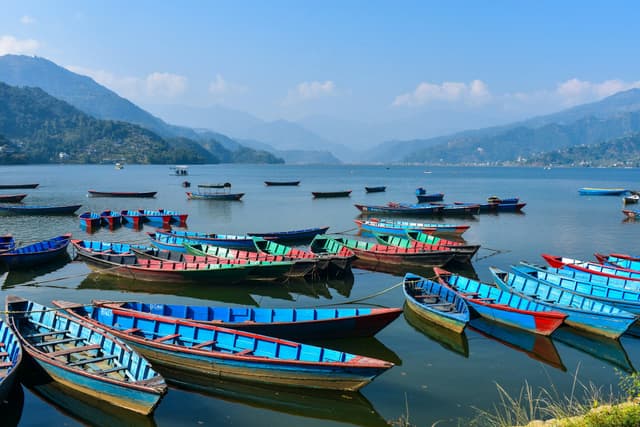
The trip opens with the familiar drive from Kathmandu to Pokhara along the Prithvi Highway, roughly six to seven hours depending on traffic and road works. It is a gentle first day that follows the Trishuli River, passing roadside dal-bhat stops and river-rafting put-ins. You reach Pokhara by evening and stay lakeside near Phewa Tal, where you can eat well, rest and adjust before the real mountain roads begin the next morning. Starting from Pokhara instead of racing straight into the gorge keeps the first day easy for families and elders.
Pokhara to Jomsom and Marpha: into the Kali Gandaki gorge
Day two is the day the landscape changes. From Pokhara the 4WD climbs into the Kali Gandaki, the deep river gorge that runs between Annapurna and Dhaulagiri and is often called the world's deepest gorge. The green terraces fall away and the country grows drier, rockier and windier as you gain height. This stretch is genuinely rough and dusty in places, with unpaved sections and river crossings, which is exactly why a private 4WD and an experienced mountain driver matter.
Along the way you stop at Marpha, the whitewashed Thakali village famous across Nepal for its apples, apple brandy and neat stone-paved lanes. It is one of the prettiest villages in the region and a lovely place to walk, taste fresh apple products and see traditional Thakali architecture. You overnight around Jomsom or Marpha in a comfortable lodge, already up on the windswept Mustang plateau.
The Kali Gandaki is more than just a rough road; it is a living part of Nepali faith. The river is the source of the sacred shaligram (saligram) stones, the black ammonite fossils that Hindus revere as a form of Lord Vishnu, and pilgrims have followed this valley for centuries. As you climb, watch the vegetation thin, the wind pick up in the afternoon (it is famously gusty in the gorge after midday, so mornings are calmer for driving), and the first Buddhist chortens and prayer flags appear, a sign that you are moving from Hindu lowland into Tibetan-influenced highland in a single day.
Muktinath and Kagbeni: darshan and the gateway to Mustang
The third day begins early with darshan at Muktinath Temple, one of the most sacred sites for both Hindus and Buddhists in the entire Himalaya. From Jomsom the road climbs to Muktinath at around 3,800 metres, where pilgrims worship the flame-and-water shrine and bathe under the 108 stone water spouts. Reaching this holy temple by vehicle, without a hard trek, is a major reason Nepali pilgrim groups and elderly parents choose this Upper Mustang tour.
Dropping back down, you pass through Kagbeni, the medieval-looking village of mud-brick houses, a red gompa and green barley fields where the road to Upper Mustang truly begins. Kagbeni is the last village of "Lower" Mustang and the checkpoint where the restricted zone starts. From here north, the character of the trip shifts from pilgrimage to exploration of a walled Tibetan kingdom. Kagbeni also holds a special place for Hindus performing shraddha rites for departed ancestors, so it is a village of quiet spiritual weight as well as striking mud-walled beauty, and a natural pause before the restricted zone.
At the checkpoint here, the difference between Nepali and foreign travellers becomes very concrete: your Nepali citizenship lets you continue north without the restricted-area permit, while foreign members of any group must have theirs in order. It is a good moment to have your citizenship certificate handy, and it is where the practical value of travelling Upper Mustang as a Nepali really shows.
Crossing into Upper Mustang and reaching Lo Manthang
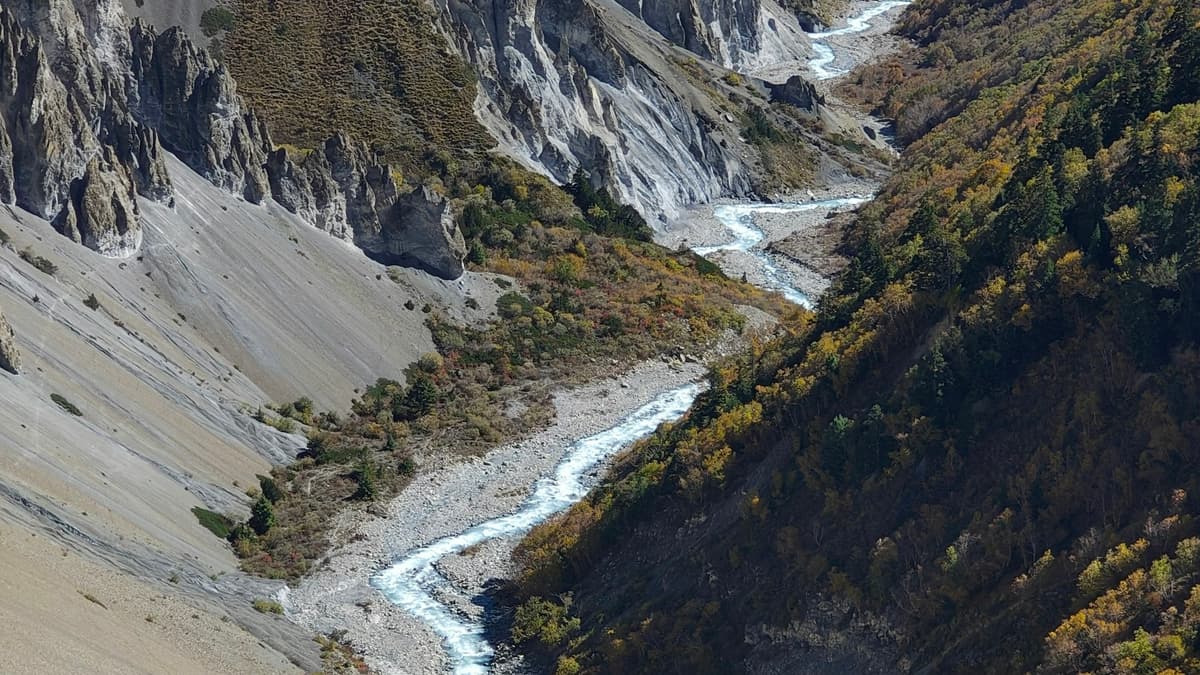
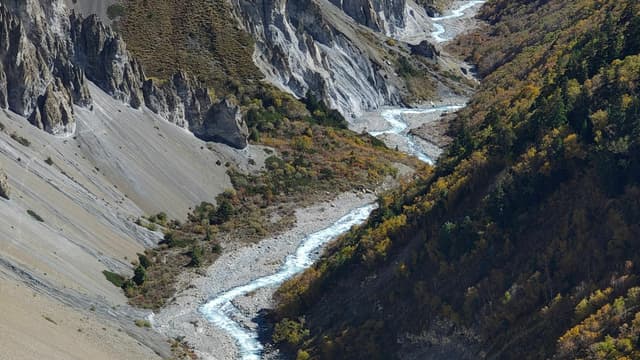
North of Kagbeni you cross into restricted Upper Mustang and drive on to Lo Manthang, spending one night in the walled capital. The road follows the Kali Gandaki and then climbs across dramatic desert passes, past coloured cliffs, hilltop chortens and tiny farming settlements clinging to the arid land. This is the visual heart of the Upper Mustang tour: a raw, wide-open plateau that looks and feels like Tibet, because culturally it is a continuation of it.
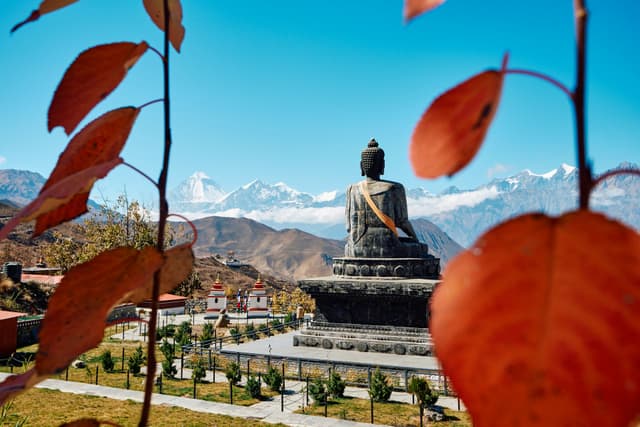
Lo Manthang itself is a compact, still-inhabited walled town, the old seat of the Kingdom of Lo. Behind its mud ramparts sit centuries-old monasteries, a former royal palace and narrow lanes where local Loba people, monks and traders go about daily life much as they have for generations. You arrive in the afternoon, settle into a local lodge, and have time to walk the walls and feel the quiet of a town that outsiders could not even visit until 1992. To be clear, this Upper Mustang tour stays one night in Lo Manthang, not two.
Upper Mustang remained a semi-independent Tibetan Buddhist kingdom for centuries, ruled by the Raja of Lo, and its isolation is exactly what preserved it. When Tibet across the border changed dramatically in the twentieth century, the old monastic art, festivals such as the Tiji spring festival, and everyday Tibetan customs carried on quietly here. Standing inside the walls of Lo Manthang, you are looking at one of the best-preserved pockets of traditional Tibetan culture left anywhere, and it is inside Nepal. For many Nepali visitors, that realisation, that we hold something this rare within our own borders, is the most moving part of the whole trip.
Chhoser sky caves, the Korala border and Lo Manthang's monasteries
The fourth day is your full exploration day around Lo Manthang before the long descent. An early drive takes you up to Korala, the Nepal-China border viewpoint at over 4,600 metres, where you can stand at the frontier and look across into the Tibetan plateau. It is a striking, wind-scoured spot and a rare chance to reach an international border by road inside Nepal.
Back near Lo Manthang you explore the extraordinary Chhoser sky caves, a honeycomb of man-made caves dug into a sheer cliff over multiple storeys, once used as homes, stores and meditation cells and still one of the great mysteries of the region. In and around the walled town you also visit the main monasteries, Jampa (Jhampa), Thubchen and Chodey, with their old murals and giant statues, and see the royal palace. After a full day of caves, gompas and border views, you drive back down to Jomsom for the night, breaking the return journey so it is never rushed.
The return: Dumba Lake, Tatopani and Baglung Kalika
The descent is not just backtracking; it has its own highlights. On day five you drive from Jomsom down to Pokhara, and en route you visit the turquoise Dumba Lake, a serene high glacial lake near Jomsom that is sacred to local Buddhists and stunning against the bare hills. Further down you can soak tired muscles at the natural Tatopani hot springs beside the Kali Gandaki, a welcome reward after days on rough roads. Closer to Pokhara you stop at the hilltop Baglung Kalika temple, an important Shakti shrine, rounding off the pilgrimage side of the trip. You reach Pokhara lakeside by evening for a final comfortable night.
On the sixth and last day you make the familiar six-to-seven-hour drive back from Pokhara to Kathmandu along the Prithvi Highway, arriving with a full memory card and a fair claim to having seen one of the most remarkable corners of Nepal. That completes the 6-day Upper Mustang tour.
Do Nepali citizens need a permit for the Upper Mustang tour?
No. Nepali citizens do not need the Upper Mustang restricted-area permit at all; they travel Upper Mustang permit-free. The special restricted-area permit applies only to foreign passport holders. This is the single biggest cost-and-paperwork advantage Nepali travellers have on this route, and it is completely genuine, so it is worth understanding clearly.
For foreigners, the restricted-area permit for Upper Mustang changed at the end of 2025. The old flat fee of USD 500 for ten days was abolished by a cabinet decision effective 22 December 2025. Under the 2026 rule the permit is charged at USD 50 per person per day. On this particular jeep route a foreign traveller spends only about two days inside the restricted zone (from Kagbeni up to Lo Manthang and back), which works out to roughly USD 100 rather than the old USD 500. Even so, only foreigners pay this; Nepali citizens are exempt.
There is a second, separate permit that everyone should know about: the Annapurna Conservation Area Project (ACAP) entry permit, because the route passes through the conservation area. ACAP is charged at NPR 3,000 for foreign nationals and NPR 1,000 for SAARC nationals, while Nepali citizens pay only a small local entry fee. For our Nepali guests, carrying a valid citizenship certificate (nagarikta) is the key document, and children should carry an ID or birth certificate as applicable.
Permit summary at a glance
- Upper Mustang restricted-area permit: not required for Nepali citizens (fully exempt); foreign nationals pay USD 50 per person per day, about USD 100 for this roughly two-day route.
- ACAP conservation entry permit: a small local entry fee for Nepali citizens; NPR 3,000 for foreign nationals and NPR 1,000 for SAARC nationals.
- Main ID to carry: Nepali citizens carry a citizenship certificate (nagarikta), plus child ID as needed; foreign nationals carry a passport and passport photos.
Because the restricted-permit rules are set by the government and can be revised, we always re-confirm the current requirement before your departure so there are no surprises at the Kagbeni checkpoint. If your group includes a foreign spouse, relative or friend, tell us in advance so we can arrange their permit correctly.
When is the best time to do the Upper Mustang tour?
The best time for the Upper Mustang tour is spring (March to May) and autumn (late September to November), when the skies are clearest and the roads are most reliable. Because Upper Mustang lies in the rain shadow of the Himalaya, it stays relatively dry even during the monsoon, which makes it one of the few Nepal trips you can also consider in the summer months. Each season has a different character, so here is an honest month-by-month view.
| Month(s) | Season | What to expect | Good for |
|---|---|---|---|
| March – April | Spring | Warming days, clear mountain views, apple and wildflower blossom around Marpha; still cold and windy up high | Photography, families, first-timers |
| May | Late spring | Warm and pleasant, long daylight, good visibility before the monsoon builds | Comfortable travel, couples |
| June – August | Monsoon (rain-shadow) | Green lower valleys but dry Upper Mustang; occasional highway landslides on the Pokhara side; dusty gorge roads | Travellers wanting fewer crowds and a dry high desert |
| Late September – October | Autumn (peak) | Crisp, clean air, the clearest Himalayan views of the year, stable roads; coincides with the Dashain–Tihar holiday window | Everyone; the classic peak season |
| November | Late autumn | Cold but bright and stable; thinning crowds; sharp views | Photographers, peaceful trips |
| December – February | Winter | Very cold at Lo Manthang, some snow and possible passes closures; many Loba families migrate down for winter | Hardy travellers only; confirm road status first |
For Nepali families, the autumn window around Dashain and Tihar is the most popular time, which also makes it the busiest for vehicles, drivers and lodges. If you want to travel during the festival break, book early, ideally around three months ahead, so you get the vehicle and rooms you want. Spring is the calmer alternative with equally beautiful skies. Whatever the month, mountain views are always weather-dependent, and clouds can roll in even in peak season, so we plan the itinerary with early starts to catch the clearest morning light.
Who is the Upper Mustang tour best for?
The Upper Mustang tour is best for people who want to experience the high Himalayan desert and its sacred sites without trekking, which makes it ideal for families, elderly parents, pilgrims, couples and diaspora Nepalis on a short visit home. Because everything is done by private 4WD with hotel and lodge nights, it opens up a region that used to be reachable only by long treks.
- Families with children or elders: No walking days means grandparents and kids can reach Muktinath and Lo Manthang comfortably. We can pace the driving days gently and add rest stops.
- Pilgrims: This is one of the best road-based ways to reach Muktinath for darshan, with Baglung Kalika and Dumba Lake adding to the spiritual side of the journey.
- Couples and honeymooners: The dramatic desert scenery, quiet lodges and lakeside Pokhara nights make for a memorable, unusual escape close to home.
- Groups of friends: A private Scorpio-type 4WD suits a small group travelling together, sharing the cost and the adventure.
- Diaspora Nepalis: If you are home for only a week or two, this trip lets you see a genuinely remote part of Nepal in six days, and as a Nepali citizen you skip the foreign permit entirely.
Who should think twice? Anyone with serious heart or breathing conditions should consult a doctor first, since Muktinath and Lo Manthang sit around 3,800 metres and Korala is higher still. And travellers who specifically want to walk the classic trail should book the trek instead of this road tour.
What are the roads really like on the Upper Mustang tour?
The roads on the Upper Mustang tour are a mix of smooth highway and genuinely rough mountain track, and we would rather you know that honestly before you go. The Kathmandu-Pokhara and Pokhara sections are sealed highway, though subject to the usual traffic and monsoon repairs. Once you enter the Kali Gandaki gorge above Pokhara, the road becomes narrow, unpaved and dusty in stretches, with river crossings, blind bends and steep drops. It is a real mountain road, and the going can be slow.
This is precisely why the trip uses a private Scorpio-type 4WD and local drivers who know the gorge. A private vehicle also means you set the pace, stop for photos and rest when you need, and are not squeezed into a shared jeep. Expect dust, so pack a scarf or mask and keep electronics in a bag. During and just after the monsoon, occasional landslides can cause short delays on the highway side; we monitor conditions and adjust timing when needed. The reward for the bumps is scenery you simply cannot see any other way by road.
A word on altitude: because you gain height quickly by vehicle, some people feel mild altitude effects at Muktinath, Lo Manthang and especially Korala, such as light headache or breathlessness. It is usually mild on this itinerary because you do not sleep at extreme elevation, but drink plenty of water, avoid heavy alcohol, walk slowly, and tell your guide at once if you feel unwell. We build the schedule with sensible overnight elevations to keep altitude care manageable.
What is the food and accommodation like?
Accommodation on the Upper Mustang tour is a comfortable 3 or 4-star hotel in Pokhara city and clean, hygienic standard local lodges in Jomsom and Lo Manthang village, all on a twin-sharing basis with breakfast included. In Pokhara you get proper city comforts near the lake. Up in the mountains, lodges are simpler by nature, since Jomsom and Lo Manthang are remote high-altitude villages, but we choose hygienic, well-run places with decent bedding and hot food. Rooms are basic but clean, and that honesty is part of the deal in a region this remote.
The food is a real highlight. This is Thakali country, so you can enjoy the famous Thakali dal-bhat set, buckwheat and barley dishes, and Marpha's apples and apple products. In Pokhara you have the full range of Nepali, Indian and continental options. At altitude, meals are simpler and centred on warm, filling local food, exactly what you want after a day on the road. If anyone in your group has dietary needs, tell us in advance and we will arrange suitable meals where possible.
- Pokhara: 3/4-star city hotel, lakeside, wide food choice.
- Jomsom / Marpha: hygienic standard lodge, Thakali cuisine, apple specialities.
- Lo Manthang: standard village lodge inside or near the walled town, simple but clean, warm local meals.
- Basis: twin-sharing rooms with breakfast; other meals easily arranged en route.
How many days do you actually need for Upper Mustang?
Six days is the right length to see Upper Mustang comfortably by road, and this tour is deliberately built as a 6-day, 5-night trip. That gives you two easy highway days at the start and end, and four days for the real mountain driving, Muktinath darshan, Lo Manthang, the Chhoser caves and the Korala border, plus the scenic return stops. It is enough to feel the region properly without rushing, and short enough to fit into a normal holiday or a diaspora visit home.
Could you do it faster? People sometimes try to squeeze the highlights into fewer days, but that means very long driving stretches on rough roads and little time to actually explore or acclimatise, which is neither comfortable nor safe. Going much slower, on the other hand, moves you toward a full multi-day trek, which is a different trip. For a road-based Upper Mustang tour, six days is the sweet spot: enough time to breathe, worship, wander the walled town and enjoy the descent.
Is the Upper Mustang tour worth it?
Yes, the Upper Mustang tour is worth it for anyone who wants to experience a living Tibetan-Buddhist kingdom and the sacred Muktinath Temple inside Nepal, especially by road rather than on foot. There are few places, anywhere, where you can drive from green hills into a red-rock desert, stand at a Chinese border viewpoint, worship at a temple holy to millions, and sleep inside a centuries-old walled town, all in under a week.
For Nepali travellers the value is even stronger. You reach a genuinely remote, restricted region without the foreigner permit that others must pay, you support Nepali mountain communities directly, and you see a part of your own country that most people only read about. The roads are rough and the lodges are simple up high, but for the vast majority of our guests, the mix of pilgrimage, culture and raw landscape makes it one of the most rewarding trips they take. Set your expectations for adventure, not luxury, above Pokhara, and it delivers in full.
What should you pack for the Upper Mustang tour?
Pack for the Upper Mustang tour as you would for a cold, dry, dusty high-altitude environment with strong sun and big day-to-night temperature swings, even in warmer months. You are not carrying a trekking load, since everything travels in the jeep, but a few things make the difference between comfort and misery on the mountain roads. Layers are the golden rule: mornings and evenings up high are genuinely cold while midday sun can be fierce.
- Warm layers: a down or fleece jacket, thermals, warm hat and gloves for Lo Manthang and Korala, even in autumn.
- Sun protection: strong sunscreen, sunglasses, lip balm and a wide hat; the high-altitude sun is intense and reflects off bare ground.
- Dust protection: a scarf, buff or mask for the dusty gorge sections, and a cover for cameras and phones.
- Documents: citizenship certificate (nagarikta) for Nepali citizens, or passport and photos for any foreign member of your group.
- Health basics: personal medicines, a small first-aid kit, and anything your doctor advises for altitude if you have a relevant condition.
- Comfort items: a reusable water bottle, some cash in small notes for local shops and donations, snacks, and wet wipes for the road.
- Footwear: comfortable walking shoes for the short walks around Muktinath, Marpha, the caves and the walled town.
Keep your day bag light and within reach in the vehicle, with your warm layer, water, sunglasses and camera handy, and leave the rest in your main luggage. Nights are cold up high, so a warm hat to sleep in is a small item that many guests are grateful for.
How do you travel responsibly in Upper Mustang?
Travelling responsibly in Upper Mustang means respecting a fragile desert environment and a deeply religious Tibetan-Buddhist community that has kept its culture alive for centuries. This is a restricted, culturally sensitive region, and small habits make a big difference to whether it stays that way for the next generation of visitors.
- Respect the monasteries: Remove shoes where asked, do not touch or photograph murals and statues where photography is prohibited, and always ask before taking pictures of monks or locals.
- Walk clockwise: Pass chortens, mani walls and prayer wheels on your left (clockwise), following local Buddhist custom.
- Carry out your waste: Water is scarce and there is little rubbish infrastructure, so take your plastics and packaging back down with you and avoid single-use bottles where you can.
- Buy local: Eat in local lodges, buy Marpha apple products and local handicrafts, and let your spending support the villages you pass through.
- Dress modestly: Especially at Muktinath and inside monasteries and the walled town, dress simply and respectfully.
- Follow the permit rules: Even as an exempt Nepali citizen, stay with your group and the agreed route inside the restricted zone.
We brief every group on these basics before entering the restricted area, because being welcome guests is part of what keeps Upper Mustang special.
Why book the Upper Mustang tour with Gomayu?
Book your Upper Mustang tour with Gomayu because we plan it end to end for Nepali travellers: a private 4WD, drivers who know the Kali Gandaki gorge, sensible pacing for families and elders, and honest advice on roads, altitude and permits. We are Zeta Tours and Travels Pvt. Ltd., a registered Nepal-based company with a real Kathmandu office and a team that answers your questions before, during and after the trip. We do not oversell; we tell you plainly what the mountain roads and village lodges are like so your expectations match reality.
What you can count on from us on this Upper Mustang tour package:
- A private Scorpio-type 4WD for the whole journey, not a crowded shared jeep.
- A comfortable 3/4-star hotel in Pokhara and hand-picked hygienic lodges in Jomsom and Lo Manthang, twin-sharing with breakfast.
- A route that reaches Muktinath, Lo Manthang, the Chhoser caves, the Korala border, Dumba Lake, Tatopani and Baglung Kalika in a well-paced six days.
- Clear, current guidance on the Nepali-citizen permit exemption and, if you have foreign guests, correct handling of their restricted-area and ACAP permits.
- Real people you can reach on WhatsApp before you go and while you are on the road.
Ready to plan your Upper Mustang tour from Kathmandu? Message us on WhatsApp and our team will help you pick dates, tailor the pace for your family or group, and answer every question about roads, permits and what to pack, all in plain Nepali. Tap the WhatsApp button to start your Upper Mustang journey with Gomayu today.
Price per person
| Group size | Price / person |
|---|---|
| 2 pax | NRs 74,500 /person |
| 3 pax | NRs 57,500 /person |
| 4 pax | NRs 53,500 /person |
| 5 pax | NRs 47,500 /person |
| 6+ pax | NRs 46,500 /person |
Per person · see what’s included
- Prices vary with your travel dates, season and group size.
Upper Mustang Tour
Upper Mustang Tour
6Days
Upper Mustang Tour
The Upper Mustang tour is the great by-road journey into the old walled Kingdom of Lo - a high desert of ochre cliffs, sky caves and whitewashed monasteries north of Kagbeni, sealed to outsiders until 1992 and still one of the last strongholds of Tibetan Buddhist culture. You drive all the way to Lo Manthang, the medieval capital, by private 4WD.
This is a road journey, not a trek: nights in Pokhara at each end, lodges in Jomsom, and a night in Lo Manthang to explore the Chhoser sky caves and the cliff monasteries. For Nepali citizens there is a real bonus - the costly restricted-area permit applies only to foreign passport holders, so Nepalis travel Upper Mustang permit-free.
Trip highlights
Day-by-day itinerary
Everything below is fully customizable. Add nights, swap activities, or change hotels.
Day1 Kathmandu to Pokhara
- Drive from Kathmandu to Pokhara along the Prithvi Highway (~6-7 hours). Check in and enjoy leisure time exploring lakeside Pokhara.
Day2 Pokhara to Jomsom (Mustang), explore Marpha
- Drive by private 4WD from Pokhara up the Kali Gandaki gorge to Jomsom. On the way, explore Marpha, the whitewashed Thakali apple village.
Day3 Jomsom to Lo Manthang via Muktinath & Kagbeni
- Early morning darshan at the sacred Muktinath Temple, then drive on through Kagbeni and cross into the restricted Upper Mustang region, following the Kali Gandaki north to Lo Manthang, the walled capital of the old Kingdom of Lo.
- Activities: Muktinath, Kagbeni
Day4 Upper Mustang exploration, back to Jomsom›
- Early drive to the Nepal-China border viewpoint at Korala, then explore the multi-storey Chhoser sky caves and the monasteries and royal palace of Lo Manthang. In the afternoon, drive back down to Jomsom.
- Activities: Nepal-China border, Chhoser sky caves
Day5 Back to Pokhara - Dumba Lake, Tatopani & Baglung Kalika
- Drive back down the gorge to Pokhara. On the way, visit the turquoise Dumba Lake, soak at the Tatopani hot springs and stop at the Baglung Kalika temple. Evening free at lakeside.
- Activities: Dumba Lake, Tatopani, Baglung Kalika
Day6 Pokhara to Kathmandu
- After breakfast, drive back to Kathmandu with a lunch stop en route. Drop-off in Kathmandu, where the tour ends.
Package pricing
The more travellers in your group, the lower the price per person.
| Group size | Price / person |
|---|---|
| 2 pax | NRs 74,500 /person |
| 3 pax | NRs 57,500 /person |
| 4 pax | NRs 53,500 /person |
| 5 pax | NRs 47,500 /person |
| 6+ pax | NRs 46,500 /person |
- Prices vary with your travel dates, season and group size.
Prices are per person · see what’s included.
What's included
| Items | This package |
|---|---|
| 3/4-star hotel & village lodges | Included |
| Private 4WD transport | Included |
| Meals in the itinerary | Included |
| ACAP & monument entries | Included |
| Two nights in Lo Manthang | Included |
| Restricted-area permit (non-Nepali citizens) | Not included |
| Full-trip guide | Not included |
| Pokhara-Jomsom flights | Not included |
| Travel & personal expenses | Not included |
Anything not listed here is not included.
Things to carry
- Warm layers and a windproof jacket — Upper Mustang is cold and very windy, and nights are freezing
- Comfortable walking shoes for exploring caves, monasteries and the old city
- Sunscreen, sunglasses, a sun hat, lip balm and moisturiser for the strong sun and dry air
- Any personal medication and basic altitude awareness (Lo Manthang ≈ 3,800 m)
- A reusable water bottle
- A power bank — charging is limited in remote lodges
- A light daypack, your citizenship or ID, and cash (there are no ATMs beyond Jomsom)
What our travellers say
Real reviews from Google, verified by travelers.
“It was our best decision to choose Gomayu. We had a wonderful experience with GOMAYU during our Thailand trip. Hotels, Location and itinerary all were well planned and was according to our expectations. Response and communication was very good in Thailand as well. You made our trip very smooth, hassle free and stress free from begning to the end of our trip. This trip was memorable, as me and my husband got to celebrate our 20th wedding Anniversary together in the beautiful place of Thailand and credit goes to GOMAYU for all the arrangements . We are very much satisfied with your service and hope to have other trips with you soon. I would happily Recommend GOMAYU to my friends and family for their excellent service and professional support.”
“Me and my family had a great 10 days trip to Vietnam and Bangkok. All thanks to the wonderful service of Gomayu. Thank you so much for making our trip so easy, fun and stress free.”
“We had an unforgettable 5D4N trip to Bali with Gomayu Holidays! From the very beginning, the communication was smooth, clear, and professional. Everything was perfectly organized; airport pickup, hotel check-ins, and daily tours were always on time, with no stress at all. Our stay was split between a beautiful private pool villa in Seminyak and a comfortable room at Grand Mega Resort, both of which exceeded expectations. The itinerary was well-balanced with adventure, culture, and relaxation. We really enjoyed the watersports (banana boat, jet ski, parasailing), the stunning Uluwatu Temple with Kecak dance, and the romantic candlelight dinner at Jimbaran Beach. The Bali swing and tandem ATV ride were absolute highlights and so much fun! Visiting Lempuyang Temple (Gate of Heaven) was magical and very well arranged despite the crowds. We had some spare time to visit the malls and try local food as well. Special thanks to the guide and driver, who was friendly, helpful, super-flexible and always made sure we were comfortable. We didn’t have to worry about anything as everything was well-organized. Highly recommended for anyone planning a hassle-free and memorable Bali trip. Thank you, Gomayu Holidays, for making our holiday truly special!”
“We had a wonderful experience with Gomayau as our travel partner, with everything being well-organized and thoughtfully planned from start to finish, making the entire trip smooth and enjoyable; the overall coordination was excellent, with timely arrangements and great attention to detail, and the team’s consistent support throughout the journey made a real difference, while communication remained easy and reliable, giving us confidence and peace of mind; we truly appreciated the professionalism and dedication in handling logistics and day-to-day planning, which allowed us to fully relax and enjoy the trip, and overall, it was a great experience that we will remember for future travels and would highly recommend to anyone looking for a hassle-free and well-managed trip.”
“Thank you so much Gomayu Holidays. We had an amazing trip. we are extremely satisfied with their service. The itinerary was wonderfully planned and perfectly organized.Highly recommend planning your next vacation with Gomayu Holidays they are truly EXCELLENT. Special heartfelt thank you to Krishtina and Elho from Gomayu Holidays!”
Good to know
Complete travel guide
What is the Upper Mustang tour, and why do Nepalis love it?
The Upper Mustang tour is a 6-day, 5-night private jeep (4WD) road journey from Kathmandu to Lo Manthang, the walled capital of the old Kingdom of Lo, and back. It is a comfortable overland trip, not a trek. You ride the whole way in a private Scorpio-type 4WD, sleeping in a city hotel in Pokhara and clean local lodges in Jomsom and Lo Manthang. This Upper Mustang tour is built for Nepali travellers who want to see the trans-Himalayan desert, the sacred Muktinath Temple, and Tibetan-Buddhist Lo Manthang without weeks of walking.
Upper Mustang sits in the rain shadow behind the Annapurna and Dhaulagiri ranges, so the land turns from green gorge into a dry, wind-carved plateau of ochre cliffs, eroded canyons and whitewashed villages. It was closed to outsiders until 1992 and is still a restricted area north of Kagbeni, which is exactly why it has kept its old monasteries, chortens and Tibetan way of life so intact. For a Nepali family, couple or pilgrim group, this is one of the few places inside our own country that feels like crossing into another world while never leaving home.
The big reason this Upper Mustang tour package works so well for us is access. Because you travel by road, elders, children and pilgrims who could never manage a two-week trek can still reach Muktinath and Lo Manthang. And there is a quiet advantage most brochures never mention clearly: Nepali citizens do not need the expensive restricted-area permit that foreigners must buy. More on that below, but it means an Upper Mustang tour from Kathmandu is far more within reach for us than for anyone flying in from abroad.
Think of the trip as three worlds in one loop. First the green middle hills and the lake city of Pokhara; then the deep Kali Gandaki gorge climbing between two eight-thousanders, Annapurna and Dhaulagiri, into the dry Thakali country of Marpha and Jomsom; and finally the true trans-Himalayan desert of Upper Mustang, where the map, the architecture and the faith all turn Tibetan. Few journeys anywhere pack such contrast into a single week of driving, and doing it in your own country, on your own citizenship, is a privilege many Nepalis have not yet realised is available to them.
Is this a trek or a jeep tour? (An honest answer)
This is a jeep tour, full stop. There is no multi-day walking, no tents and no porters. The famous Upper Mustang trek that people read about online is a different product entirely: trekkers walk for many days and overnight in villages such as Ghami and Charang on their way up. This road tour does not stay in Ghami or Charang. It follows the motorable route and reaches Lo Manthang by vehicle, so you spend your energy exploring rather than hiking. If your heart is set on walking the classic trail, tell us and we will plan that separately; but if you want to see Upper Mustang comfortably in under a week, the jeep tour is the right choice.
Upper Mustang by jeep vs the classic trek: which suits you?
The choice between the Upper Mustang jeep tour and the classic trek comes down to time, fitness and the kind of experience you want. The road tour reaches Lo Manthang in a few days by 4WD and asks nothing of your legs beyond short walks around the sights. The trek takes many more days on foot, sleeping in villages such as Kagbeni, Chele, Syangboche, Ghami, Charang and Lo Manthang, and rewards you with slower, more intimate contact with the trail. Neither is "better"; they are different trips for different people.
- Duration: the jeep tour is 6 days and 5 nights; the classic trek is roughly 10 to 14 days.
- Effort: the jeep tour is mostly riding with short walks at the sights, while the trek is full days of walking at altitude.
- Overnight villages: the jeep tour overnights in Pokhara, Jomsom or Marpha and Lo Manthang (one night only); the trek stops at many villages, including Ghami and Charang.
- Best for: the jeep tour suits families, elders, pilgrims and short trips; the trek suits fit walkers who want the full trail.
- Comfort: the jeep tour uses a private 4WD with a city hotel and lodges; the trek is simpler, slower teahouse trekking.
For most Nepali family groups and pilgrim parties, the jeep tour is the practical answer. It brings Muktinath and Lo Manthang within reach of people who simply cannot commit two weeks or walk long days, while still delivering the desert scenery and Tibetan culture that make Upper Mustang unforgettable.
What does the Upper Mustang tour route cover, leg by leg?
The Upper Mustang tour route runs Kathmandu to Pokhara, up the Kali Gandaki gorge to Jomsom and Muktinath, north across Kagbeni into the restricted zone to Lo Manthang, out to the Korala border and Chhoser caves, then back down through Pokhara to Kathmandu over six days. Rather than a dry day-by-day list, here is how the journey unfolds by theme, so you know what to expect on the road.
Kathmandu to Pokhara: easing into the journey
The trip opens with the familiar drive from Kathmandu to Pokhara along the Prithvi Highway, roughly six to seven hours depending on traffic and road works. It is a gentle first day that follows the Trishuli River, passing roadside dal-bhat stops and river-rafting put-ins. You reach Pokhara by evening and stay lakeside near Phewa Tal, where you can eat well, rest and adjust before the real mountain roads begin the next morning. Starting from Pokhara instead of racing straight into the gorge keeps the first day easy for families and elders.
Pokhara to Jomsom and Marpha: into the Kali Gandaki gorge
Day two is the day the landscape changes. From Pokhara the 4WD climbs into the Kali Gandaki, the deep river gorge that runs between Annapurna and Dhaulagiri and is often called the world's deepest gorge. The green terraces fall away and the country grows drier, rockier and windier as you gain height. This stretch is genuinely rough and dusty in places, with unpaved sections and river crossings, which is exactly why a private 4WD and an experienced mountain driver matter.
Along the way you stop at Marpha, the whitewashed Thakali village famous across Nepal for its apples, apple brandy and neat stone-paved lanes. It is one of the prettiest villages in the region and a lovely place to walk, taste fresh apple products and see traditional Thakali architecture. You overnight around Jomsom or Marpha in a comfortable lodge, already up on the windswept Mustang plateau.
The Kali Gandaki is more than just a rough road; it is a living part of Nepali faith. The river is the source of the sacred shaligram (saligram) stones, the black ammonite fossils that Hindus revere as a form of Lord Vishnu, and pilgrims have followed this valley for centuries. As you climb, watch the vegetation thin, the wind pick up in the afternoon (it is famously gusty in the gorge after midday, so mornings are calmer for driving), and the first Buddhist chortens and prayer flags appear, a sign that you are moving from Hindu lowland into Tibetan-influenced highland in a single day.
Muktinath and Kagbeni: darshan and the gateway to Mustang
The third day begins early with darshan at Muktinath Temple, one of the most sacred sites for both Hindus and Buddhists in the entire Himalaya. From Jomsom the road climbs to Muktinath at around 3,800 metres, where pilgrims worship the flame-and-water shrine and bathe under the 108 stone water spouts. Reaching this holy temple by vehicle, without a hard trek, is a major reason Nepali pilgrim groups and elderly parents choose this Upper Mustang tour.
Dropping back down, you pass through Kagbeni, the medieval-looking village of mud-brick houses, a red gompa and green barley fields where the road to Upper Mustang truly begins. Kagbeni is the last village of "Lower" Mustang and the checkpoint where the restricted zone starts. From here north, the character of the trip shifts from pilgrimage to exploration of a walled Tibetan kingdom. Kagbeni also holds a special place for Hindus performing shraddha rites for departed ancestors, so it is a village of quiet spiritual weight as well as striking mud-walled beauty, and a natural pause before the restricted zone.
At the checkpoint here, the difference between Nepali and foreign travellers becomes very concrete: your Nepali citizenship lets you continue north without the restricted-area permit, while foreign members of any group must have theirs in order. It is a good moment to have your citizenship certificate handy, and it is where the practical value of travelling Upper Mustang as a Nepali really shows.
Crossing into Upper Mustang and reaching Lo Manthang
North of Kagbeni you cross into restricted Upper Mustang and drive on to Lo Manthang, spending one night in the walled capital. The road follows the Kali Gandaki and then climbs across dramatic desert passes, past coloured cliffs, hilltop chortens and tiny farming settlements clinging to the arid land. This is the visual heart of the Upper Mustang tour: a raw, wide-open plateau that looks and feels like Tibet, because culturally it is a continuation of it.
Lo Manthang itself is a compact, still-inhabited walled town, the old seat of the Kingdom of Lo. Behind its mud ramparts sit centuries-old monasteries, a former royal palace and narrow lanes where local Loba people, monks and traders go about daily life much as they have for generations. You arrive in the afternoon, settle into a local lodge, and have time to walk the walls and feel the quiet of a town that outsiders could not even visit until 1992. To be clear, this Upper Mustang tour stays one night in Lo Manthang, not two.
Upper Mustang remained a semi-independent Tibetan Buddhist kingdom for centuries, ruled by the Raja of Lo, and its isolation is exactly what preserved it. When Tibet across the border changed dramatically in the twentieth century, the old monastic art, festivals such as the Tiji spring festival, and everyday Tibetan customs carried on quietly here. Standing inside the walls of Lo Manthang, you are looking at one of the best-preserved pockets of traditional Tibetan culture left anywhere, and it is inside Nepal. For many Nepali visitors, that realisation, that we hold something this rare within our own borders, is the most moving part of the whole trip.
Chhoser sky caves, the Korala border and Lo Manthang's monasteries
The fourth day is your full exploration day around Lo Manthang before the long descent. An early drive takes you up to Korala, the Nepal-China border viewpoint at over 4,600 metres, where you can stand at the frontier and look across into the Tibetan plateau. It is a striking, wind-scoured spot and a rare chance to reach an international border by road inside Nepal.
Back near Lo Manthang you explore the extraordinary Chhoser sky caves, a honeycomb of man-made caves dug into a sheer cliff over multiple storeys, once used as homes, stores and meditation cells and still one of the great mysteries of the region. In and around the walled town you also visit the main monasteries, Jampa (Jhampa), Thubchen and Chodey, with their old murals and giant statues, and see the royal palace. After a full day of caves, gompas and border views, you drive back down to Jomsom for the night, breaking the return journey so it is never rushed.
The return: Dumba Lake, Tatopani and Baglung Kalika
The descent is not just backtracking; it has its own highlights. On day five you drive from Jomsom down to Pokhara, and en route you visit the turquoise Dumba Lake, a serene high glacial lake near Jomsom that is sacred to local Buddhists and stunning against the bare hills. Further down you can soak tired muscles at the natural Tatopani hot springs beside the Kali Gandaki, a welcome reward after days on rough roads. Closer to Pokhara you stop at the hilltop Baglung Kalika temple, an important Shakti shrine, rounding off the pilgrimage side of the trip. You reach Pokhara lakeside by evening for a final comfortable night.
On the sixth and last day you make the familiar six-to-seven-hour drive back from Pokhara to Kathmandu along the Prithvi Highway, arriving with a full memory card and a fair claim to having seen one of the most remarkable corners of Nepal. That completes the 6-day Upper Mustang tour.
Do Nepali citizens need a permit for the Upper Mustang tour?
No. Nepali citizens do not need the Upper Mustang restricted-area permit at all; they travel Upper Mustang permit-free. The special restricted-area permit applies only to foreign passport holders. This is the single biggest cost-and-paperwork advantage Nepali travellers have on this route, and it is completely genuine, so it is worth understanding clearly.
For foreigners, the restricted-area permit for Upper Mustang changed at the end of 2025. The old flat fee of USD 500 for ten days was abolished by a cabinet decision effective 22 December 2025. Under the 2026 rule the permit is charged at USD 50 per person per day. On this particular jeep route a foreign traveller spends only about two days inside the restricted zone (from Kagbeni up to Lo Manthang and back), which works out to roughly USD 100 rather than the old USD 500. Even so, only foreigners pay this; Nepali citizens are exempt.
There is a second, separate permit that everyone should know about: the Annapurna Conservation Area Project (ACAP) entry permit, because the route passes through the conservation area. ACAP is charged at NPR 3,000 for foreign nationals and NPR 1,000 for SAARC nationals, while Nepali citizens pay only a small local entry fee. For our Nepali guests, carrying a valid citizenship certificate (nagarikta) is the key document, and children should carry an ID or birth certificate as applicable.
Permit summary at a glance
- Upper Mustang restricted-area permit: not required for Nepali citizens (fully exempt); foreign nationals pay USD 50 per person per day, about USD 100 for this roughly two-day route.
- ACAP conservation entry permit: a small local entry fee for Nepali citizens; NPR 3,000 for foreign nationals and NPR 1,000 for SAARC nationals.
- Main ID to carry: Nepali citizens carry a citizenship certificate (nagarikta), plus child ID as needed; foreign nationals carry a passport and passport photos.
Because the restricted-permit rules are set by the government and can be revised, we always re-confirm the current requirement before your departure so there are no surprises at the Kagbeni checkpoint. If your group includes a foreign spouse, relative or friend, tell us in advance so we can arrange their permit correctly.
When is the best time to do the Upper Mustang tour?
The best time for the Upper Mustang tour is spring (March to May) and autumn (late September to November), when the skies are clearest and the roads are most reliable. Because Upper Mustang lies in the rain shadow of the Himalaya, it stays relatively dry even during the monsoon, which makes it one of the few Nepal trips you can also consider in the summer months. Each season has a different character, so here is an honest month-by-month view.
| Month(s) | Season | What to expect | Good for |
|---|---|---|---|
| March – April | Spring | Warming days, clear mountain views, apple and wildflower blossom around Marpha; still cold and windy up high | Photography, families, first-timers |
| May | Late spring | Warm and pleasant, long daylight, good visibility before the monsoon builds | Comfortable travel, couples |
| June – August | Monsoon (rain-shadow) | Green lower valleys but dry Upper Mustang; occasional highway landslides on the Pokhara side; dusty gorge roads | Travellers wanting fewer crowds and a dry high desert |
| Late September – October | Autumn (peak) | Crisp, clean air, the clearest Himalayan views of the year, stable roads; coincides with the Dashain–Tihar holiday window | Everyone; the classic peak season |
| November | Late autumn | Cold but bright and stable; thinning crowds; sharp views | Photographers, peaceful trips |
| December – February | Winter | Very cold at Lo Manthang, some snow and possible passes closures; many Loba families migrate down for winter | Hardy travellers only; confirm road status first |
For Nepali families, the autumn window around Dashain and Tihar is the most popular time, which also makes it the busiest for vehicles, drivers and lodges. If you want to travel during the festival break, book early, ideally around three months ahead, so you get the vehicle and rooms you want. Spring is the calmer alternative with equally beautiful skies. Whatever the month, mountain views are always weather-dependent, and clouds can roll in even in peak season, so we plan the itinerary with early starts to catch the clearest morning light.
Who is the Upper Mustang tour best for?
The Upper Mustang tour is best for people who want to experience the high Himalayan desert and its sacred sites without trekking, which makes it ideal for families, elderly parents, pilgrims, couples and diaspora Nepalis on a short visit home. Because everything is done by private 4WD with hotel and lodge nights, it opens up a region that used to be reachable only by long treks.
- Families with children or elders: No walking days means grandparents and kids can reach Muktinath and Lo Manthang comfortably. We can pace the driving days gently and add rest stops.
- Pilgrims: This is one of the best road-based ways to reach Muktinath for darshan, with Baglung Kalika and Dumba Lake adding to the spiritual side of the journey.
- Couples and honeymooners: The dramatic desert scenery, quiet lodges and lakeside Pokhara nights make for a memorable, unusual escape close to home.
- Groups of friends: A private Scorpio-type 4WD suits a small group travelling together, sharing the cost and the adventure.
- Diaspora Nepalis: If you are home for only a week or two, this trip lets you see a genuinely remote part of Nepal in six days, and as a Nepali citizen you skip the foreign permit entirely.
Who should think twice? Anyone with serious heart or breathing conditions should consult a doctor first, since Muktinath and Lo Manthang sit around 3,800 metres and Korala is higher still. And travellers who specifically want to walk the classic trail should book the trek instead of this road tour.
What are the roads really like on the Upper Mustang tour?
The roads on the Upper Mustang tour are a mix of smooth highway and genuinely rough mountain track, and we would rather you know that honestly before you go. The Kathmandu-Pokhara and Pokhara sections are sealed highway, though subject to the usual traffic and monsoon repairs. Once you enter the Kali Gandaki gorge above Pokhara, the road becomes narrow, unpaved and dusty in stretches, with river crossings, blind bends and steep drops. It is a real mountain road, and the going can be slow.
This is precisely why the trip uses a private Scorpio-type 4WD and local drivers who know the gorge. A private vehicle also means you set the pace, stop for photos and rest when you need, and are not squeezed into a shared jeep. Expect dust, so pack a scarf or mask and keep electronics in a bag. During and just after the monsoon, occasional landslides can cause short delays on the highway side; we monitor conditions and adjust timing when needed. The reward for the bumps is scenery you simply cannot see any other way by road.
A word on altitude: because you gain height quickly by vehicle, some people feel mild altitude effects at Muktinath, Lo Manthang and especially Korala, such as light headache or breathlessness. It is usually mild on this itinerary because you do not sleep at extreme elevation, but drink plenty of water, avoid heavy alcohol, walk slowly, and tell your guide at once if you feel unwell. We build the schedule with sensible overnight elevations to keep altitude care manageable.
What is the food and accommodation like?
Accommodation on the Upper Mustang tour is a comfortable 3 or 4-star hotel in Pokhara city and clean, hygienic standard local lodges in Jomsom and Lo Manthang village, all on a twin-sharing basis with breakfast included. In Pokhara you get proper city comforts near the lake. Up in the mountains, lodges are simpler by nature, since Jomsom and Lo Manthang are remote high-altitude villages, but we choose hygienic, well-run places with decent bedding and hot food. Rooms are basic but clean, and that honesty is part of the deal in a region this remote.
The food is a real highlight. This is Thakali country, so you can enjoy the famous Thakali dal-bhat set, buckwheat and barley dishes, and Marpha's apples and apple products. In Pokhara you have the full range of Nepali, Indian and continental options. At altitude, meals are simpler and centred on warm, filling local food, exactly what you want after a day on the road. If anyone in your group has dietary needs, tell us in advance and we will arrange suitable meals where possible.
- Pokhara: 3/4-star city hotel, lakeside, wide food choice.
- Jomsom / Marpha: hygienic standard lodge, Thakali cuisine, apple specialities.
- Lo Manthang: standard village lodge inside or near the walled town, simple but clean, warm local meals.
- Basis: twin-sharing rooms with breakfast; other meals easily arranged en route.
How many days do you actually need for Upper Mustang?
Six days is the right length to see Upper Mustang comfortably by road, and this tour is deliberately built as a 6-day, 5-night trip. That gives you two easy highway days at the start and end, and four days for the real mountain driving, Muktinath darshan, Lo Manthang, the Chhoser caves and the Korala border, plus the scenic return stops. It is enough to feel the region properly without rushing, and short enough to fit into a normal holiday or a diaspora visit home.
Could you do it faster? People sometimes try to squeeze the highlights into fewer days, but that means very long driving stretches on rough roads and little time to actually explore or acclimatise, which is neither comfortable nor safe. Going much slower, on the other hand, moves you toward a full multi-day trek, which is a different trip. For a road-based Upper Mustang tour, six days is the sweet spot: enough time to breathe, worship, wander the walled town and enjoy the descent.
Is the Upper Mustang tour worth it?
Yes, the Upper Mustang tour is worth it for anyone who wants to experience a living Tibetan-Buddhist kingdom and the sacred Muktinath Temple inside Nepal, especially by road rather than on foot. There are few places, anywhere, where you can drive from green hills into a red-rock desert, stand at a Chinese border viewpoint, worship at a temple holy to millions, and sleep inside a centuries-old walled town, all in under a week.
For Nepali travellers the value is even stronger. You reach a genuinely remote, restricted region without the foreigner permit that others must pay, you support Nepali mountain communities directly, and you see a part of your own country that most people only read about. The roads are rough and the lodges are simple up high, but for the vast majority of our guests, the mix of pilgrimage, culture and raw landscape makes it one of the most rewarding trips they take. Set your expectations for adventure, not luxury, above Pokhara, and it delivers in full.
What should you pack for the Upper Mustang tour?
Pack for the Upper Mustang tour as you would for a cold, dry, dusty high-altitude environment with strong sun and big day-to-night temperature swings, even in warmer months. You are not carrying a trekking load, since everything travels in the jeep, but a few things make the difference between comfort and misery on the mountain roads. Layers are the golden rule: mornings and evenings up high are genuinely cold while midday sun can be fierce.
- Warm layers: a down or fleece jacket, thermals, warm hat and gloves for Lo Manthang and Korala, even in autumn.
- Sun protection: strong sunscreen, sunglasses, lip balm and a wide hat; the high-altitude sun is intense and reflects off bare ground.
- Dust protection: a scarf, buff or mask for the dusty gorge sections, and a cover for cameras and phones.
- Documents: citizenship certificate (nagarikta) for Nepali citizens, or passport and photos for any foreign member of your group.
- Health basics: personal medicines, a small first-aid kit, and anything your doctor advises for altitude if you have a relevant condition.
- Comfort items: a reusable water bottle, some cash in small notes for local shops and donations, snacks, and wet wipes for the road.
- Footwear: comfortable walking shoes for the short walks around Muktinath, Marpha, the caves and the walled town.
Keep your day bag light and within reach in the vehicle, with your warm layer, water, sunglasses and camera handy, and leave the rest in your main luggage. Nights are cold up high, so a warm hat to sleep in is a small item that many guests are grateful for.
How do you travel responsibly in Upper Mustang?
Travelling responsibly in Upper Mustang means respecting a fragile desert environment and a deeply religious Tibetan-Buddhist community that has kept its culture alive for centuries. This is a restricted, culturally sensitive region, and small habits make a big difference to whether it stays that way for the next generation of visitors.
- Respect the monasteries: Remove shoes where asked, do not touch or photograph murals and statues where photography is prohibited, and always ask before taking pictures of monks or locals.
- Walk clockwise: Pass chortens, mani walls and prayer wheels on your left (clockwise), following local Buddhist custom.
- Carry out your waste: Water is scarce and there is little rubbish infrastructure, so take your plastics and packaging back down with you and avoid single-use bottles where you can.
- Buy local: Eat in local lodges, buy Marpha apple products and local handicrafts, and let your spending support the villages you pass through.
- Dress modestly: Especially at Muktinath and inside monasteries and the walled town, dress simply and respectfully.
- Follow the permit rules: Even as an exempt Nepali citizen, stay with your group and the agreed route inside the restricted zone.
We brief every group on these basics before entering the restricted area, because being welcome guests is part of what keeps Upper Mustang special.
Why book the Upper Mustang tour with Gomayu?
Book your Upper Mustang tour with Gomayu because we plan it end to end for Nepali travellers: a private 4WD, drivers who know the Kali Gandaki gorge, sensible pacing for families and elders, and honest advice on roads, altitude and permits. We are Zeta Tours and Travels Pvt. Ltd., a registered Nepal-based company with a real Kathmandu office and a team that answers your questions before, during and after the trip. We do not oversell; we tell you plainly what the mountain roads and village lodges are like so your expectations match reality.
What you can count on from us on this Upper Mustang tour package:
- A private Scorpio-type 4WD for the whole journey, not a crowded shared jeep.
- A comfortable 3/4-star hotel in Pokhara and hand-picked hygienic lodges in Jomsom and Lo Manthang, twin-sharing with breakfast.
- A route that reaches Muktinath, Lo Manthang, the Chhoser caves, the Korala border, Dumba Lake, Tatopani and Baglung Kalika in a well-paced six days.
- Clear, current guidance on the Nepali-citizen permit exemption and, if you have foreign guests, correct handling of their restricted-area and ACAP permits.
- Real people you can reach on WhatsApp before you go and while you are on the road.
Ready to plan your Upper Mustang tour from Kathmandu? Message us on WhatsApp and our team will help you pick dates, tailor the pace for your family or group, and answer every question about roads, permits and what to pack, all in plain Nepali. Tap the WhatsApp button to start your Upper Mustang journey with Gomayu today.
Price per person
| Group size | Price / person |
|---|---|
| 2 pax | NRs 74,500 /person |
| 3 pax | NRs 57,500 /person |
| 4 pax | NRs 53,500 /person |
| 5 pax | NRs 47,500 /person |
| 6+ pax | NRs 46,500 /person |
Per person · see what’s included
- Prices vary with your travel dates, season and group size.