
Mustang Tour
5Days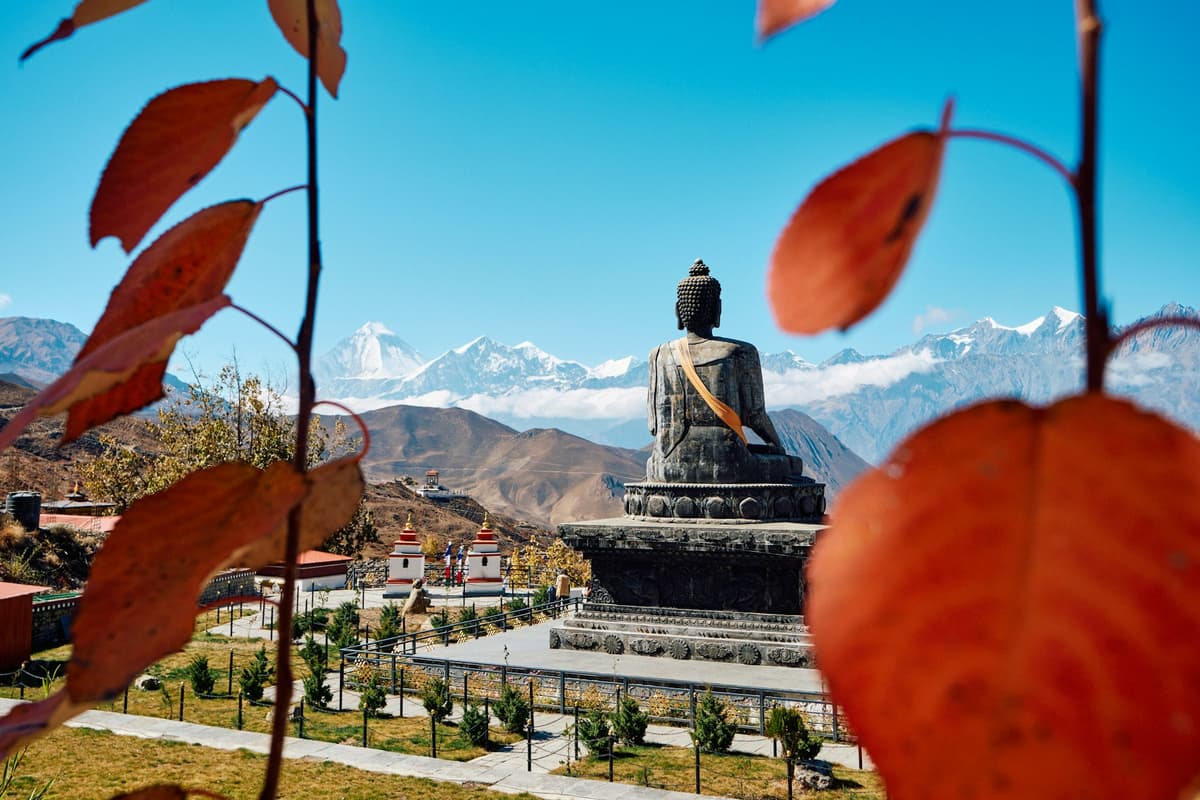
| Group size | Price / person |
|---|---|
| 2 pax | NRs 62,000 /person |
| 3 pax | NRs 47,500 /person |
| 4 pax | NRs 44,500 /person |
| 5 pax | NRs 39,500 /person |
| 6+ pax | NRs 36,000 /person |
- Prices vary with your travel dates, season and group size.
Mustang Tour
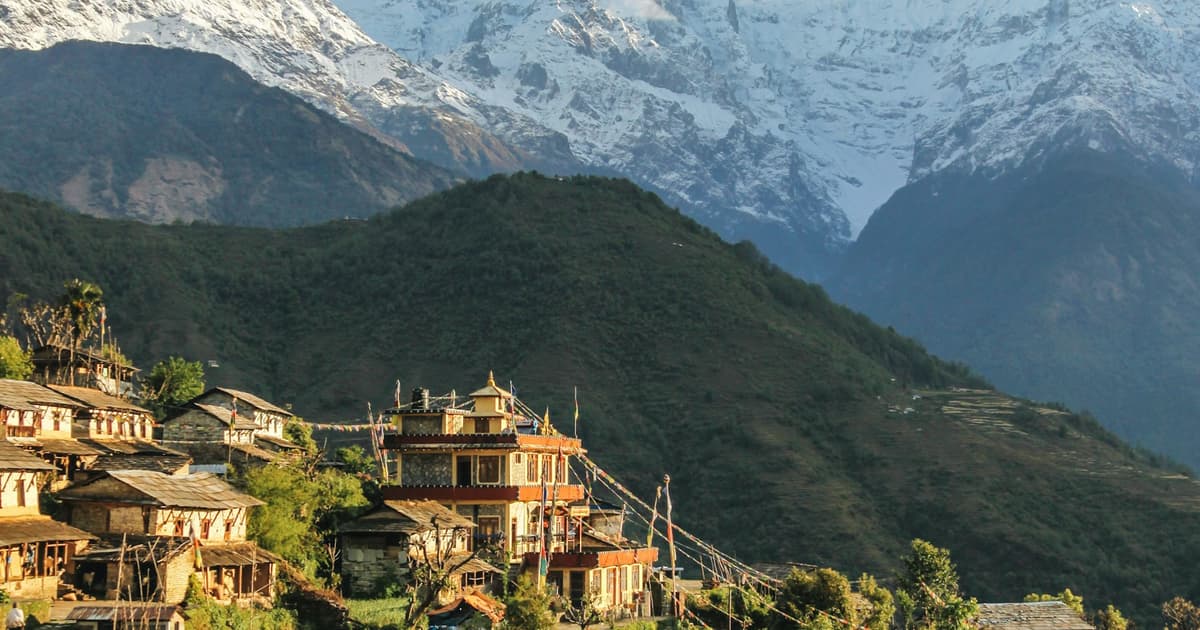
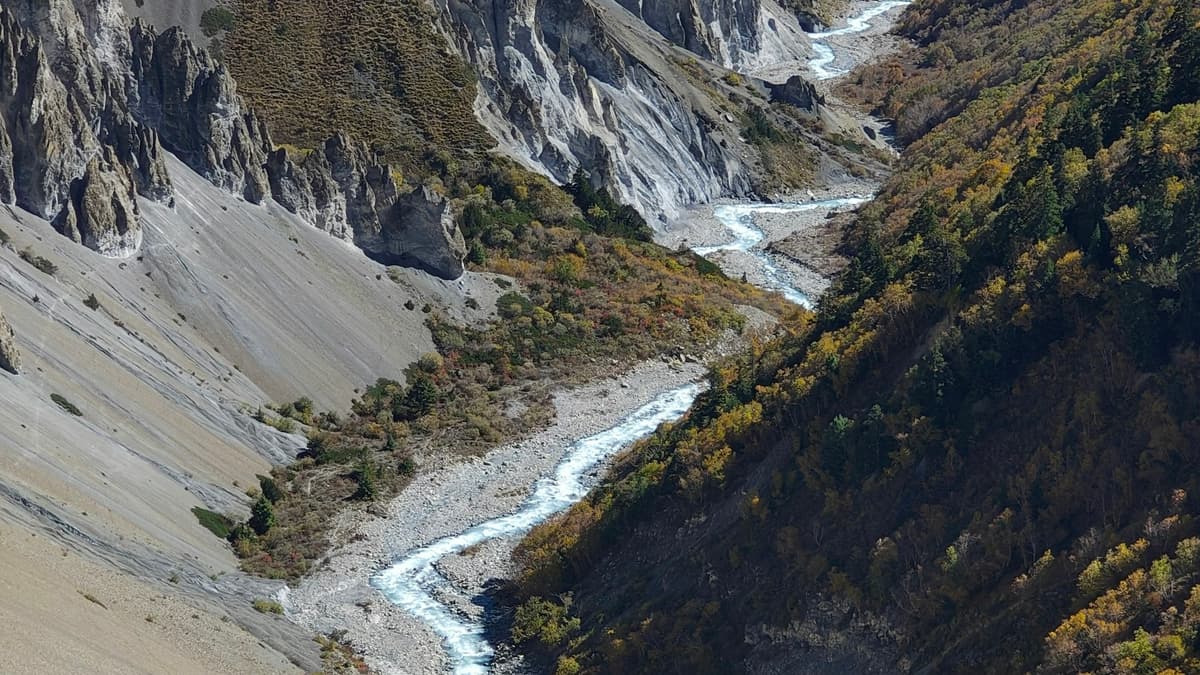
The Mustang tour package is the classic road journey into Nepal's high desert - up the Kali Gandaki, the deepest gorge on earth, wedged between the eight-thousanders Dhaulagiri and Annapurna. You trade Kathmandu's traffic for apple orchards, Thakali kitchens, wind-carved cliffs and the sacred temple of Muktinath at 3,800 m, with a restful night in Pokhara at each end.
This is Lower Mustang - Jomsom, Kagbeni, Marpha and Muktinath - reached entirely by private 4WD, with no trekking and no restricted-area permit. That makes it one of the easiest ways for families, couples and older parents to stand in one of the most dramatic landscapes in the Himalaya, staying in comfortable hotels in Pokhara and the best local lodges up in Mustang.
Trip highlights
Day-by-day itinerary
Everything below is fully customizable. Add nights, swap activities, or change hotels.
Day1 Kathmandu to Pokhara
- Drive from Kathmandu to Pokhara along the Prithvi Highway (~6-7 hours) with a lunch stop. Check in at lakeside and enjoy leisure time exploring Pokhara.
Day2 Pokhara to Jomsom (Mustang), explore Marpha
- Drive by private 4WD from Pokhara up the Kali Gandaki gorge to Jomsom, the gateway to Mustang. On the way, explore Marpha, the whitewashed Thakali village famous for its apple orchards and brandy.
Day3 Roaming Mustang - Muktinath, Kagbeni & Dumba Lake
- Early morning drive to the sacred Muktinath Temple for darshan, one of the holiest sites for Hindus and Buddhists alike. Visit the medieval village of Kagbeni and the turquoise Dumba Lake, then enjoy leisure time back in Jomsom.
- Activities: Muktinath, Kagbeni, Dumba Lake
Day4 Back to Pokhara - Tatopani & Baglung Kalika›
- Drive back down the gorge to Pokhara. Stop to soak at the Tatopani natural hot springs and visit the Baglung Kalika temple on the way. Evening free at lakeside.
- Activities: Tatopani hot spring, Baglung Kalika temple
Day5 Pokhara to Kathmandu
- After breakfast, drive back to Kathmandu with a lunch stop en route. Drop-off in Kathmandu, where the tour ends.
Package pricing
The more travellers in your group, the lower the price per person.
| Group size | Price / person |
|---|---|
| 2 pax | NRs 62,000 /person |
| 3 pax | NRs 47,500 /person |
| 4 pax | NRs 44,500 /person |
| 5 pax | NRs 39,500 /person |
| 6+ pax | NRs 36,000 /person |
- Prices vary with your travel dates, season and group size.
Prices are per person · see what’s included.
What's included
| Items | This package |
|---|---|
| 3/4-star hotel & village lodges | Included |
| Private 4WD transport | Included |
| Meals in the itinerary | Included |
| ACAP permit & entry fees | Included |
| Muktinath & valley sightseeing | Included |
| Full-trip guide | Not included |
| Pokhara-Jomsom flights | Not included |
| Travel & medical insurance | Not included |
| Personal expenses & tips | Not included |
Anything not listed here is not included.
Things to carry
- Warm layers and a windproof jacket — Mustang is cold and windy year-round
- Comfortable walking shoes
- Sunscreen, sunglasses and a sun hat (the high-altitude sun is strong)
- Any personal medication, plus lip balm and moisturiser for the dry air
- A reusable water bottle
- A power bank — charging is limited in remote lodges
- A light daypack, your citizenship or ID, and some cash (few ATMs beyond Pokhara)
What our travellers say
Real reviews from Google, verified by travelers.
“It was our best decision to choose Gomayu. We had a wonderful experience with GOMAYU during our Thailand trip. Hotels, Location and itinerary all were well planned and was according to our expectations. Response and communication was very good in Thailand as well. You made our trip very smooth, hassle free and stress free from begning to the end of our trip. This trip was memorable, as me and my husband got to celebrate our 20th wedding Anniversary together in the beautiful place of Thailand and credit goes to GOMAYU for all the arrangements . We are very much satisfied with your service and hope to have other trips with you soon. I would happily Recommend GOMAYU to my friends and family for their excellent service and professional support.”

“Me and my family had a great 10 days trip to Vietnam and Bangkok. All thanks to the wonderful service of Gomayu. Thank you so much for making our trip so easy, fun and stress free.”

“We had an unforgettable 5D4N trip to Bali with Gomayu Holidays! From the very beginning, the communication was smooth, clear, and professional. Everything was perfectly organized; airport pickup, hotel check-ins, and daily tours were always on time, with no stress at all. Our stay was split between a beautiful private pool villa in Seminyak and a comfortable room at Grand Mega Resort, both of which exceeded expectations. The itinerary was well-balanced with adventure, culture, and relaxation. We really enjoyed the watersports (banana boat, jet ski, parasailing), the stunning Uluwatu Temple with Kecak dance, and the romantic candlelight dinner at Jimbaran Beach. The Bali swing and tandem ATV ride were absolute highlights and so much fun! Visiting Lempuyang Temple (Gate of Heaven) was magical and very well arranged despite the crowds. We had some spare time to visit the malls and try local food as well. Special thanks to the guide and driver, who was friendly, helpful, super-flexible and always made sure we were comfortable. We didn’t have to worry about anything as everything was well-organized. Highly recommended for anyone planning a hassle-free and memorable Bali trip. Thank you, Gomayu Holidays, for making our holiday truly special!”

“We had a wonderful experience with Gomayau as our travel partner, with everything being well-organized and thoughtfully planned from start to finish, making the entire trip smooth and enjoyable; the overall coordination was excellent, with timely arrangements and great attention to detail, and the team’s consistent support throughout the journey made a real difference, while communication remained easy and reliable, giving us confidence and peace of mind; we truly appreciated the professionalism and dedication in handling logistics and day-to-day planning, which allowed us to fully relax and enjoy the trip, and overall, it was a great experience that we will remember for future travels and would highly recommend to anyone looking for a hassle-free and well-managed trip.”

“Thank you so much Gomayu Holidays. We had an amazing trip. we are extremely satisfied with their service. The itinerary was wonderfully planned and perfectly organized.Highly recommend planning your next vacation with Gomayu Holidays they are truly EXCELLENT. Special heartfelt thank you to Krishtina and Elho from Gomayu Holidays!”

Good to know
Complete travel guide
What is the Mustang Tour Package, and which Mustang does it cover?
This Mustang tour package is a 5-day, fully-by-road journey from Kathmandu to Lower Mustang — Jomsom, Kagbeni, Marpha and the sacred temple of Muktinath — with a night in Pokhara on the way up and on the way back. You travel in a private 4WD (Scorpio or similar jeep), you do not trek, and you do not need any restricted-area permit. It is the classic Jomsom Muktinath tour by road that Nepali families, pilgrims and couples have been asking us about for years, packaged so that every driving day, every lodge and every darshan is arranged before you leave home.
The word "Mustang" confuses a lot of people, so let us be clear from the very first paragraph. Mustang district has two very different halves:
- Lower Mustang — the southern half of the district, from the Kali Gandaki gorge villages (Ghasa, Tukuche, Marpha) up through Jomsom to Kagbeni and Muktinath. Open to everyone with a standard Annapurna Conservation Area permit, reachable by jeep, no trekking required. This is what our package covers.
- Upper Mustang — the northern, formerly forbidden kingdom beyond Kagbeni, with Lo Manthang as its walled capital. A restricted area that needs a special permit and a registered guide for foreign visitors, and involves a much longer, rougher and more expensive journey.
If your goal is Muktinath darshan, the Kali Gandaki, apple orchards, Thakali food and Himalayan views without walking for days — you want Lower Mustang, and this is the tour for you. If your goal is Lo Manthang, the sky caves and the Tiji festival, you want an Upper Mustang trip, which we can also help you plan, but it is not this package.
Lower Mustang vs Upper Mustang: what is the real difference?
The real difference is access, cost, time and comfort. Lower Mustang is open, road-connected, and can be done comfortably in five days from Kathmandu with children or grandparents in the vehicle. Upper Mustang sits beyond the restricted-area checkpoint at Kagbeni, requires special permits (for foreign nationals a costly restricted-area permit plus a licensed guide), and typically needs eight to twelve days because the road north of Kagbeni is far rougher and the altitude keeps climbing.
Here is how the two compare on the things that matter when you are choosing a trip:
| Feature | Lower Mustang (this package) | Upper Mustang |
|---|---|---|
| Main places | Jomsom, Kagbeni, Marpha, Muktinath, Kali Gandaki gorge | Lo Manthang, Chhoser caves, Ghami, Tsarang, Dhakmar |
| Permit | Standard ACAP entry only | ACAP plus a restricted-area permit (foreigners), guide compulsory for foreigners |
| How you travel | Private 4WD jeep the whole way; short easy walks only | 4WD on a rough track, or a multi-day trek |
| Typical length | 5 days from Kathmandu | 8-14 days from Kathmandu |
| Highest point | Muktinath, roughly 3,700-3,800 m | Passes above 4,000 m |
| Best for | Pilgrims, families, elderly, couples, first-time Himalayan travellers | Adventure travellers, culture and history enthusiasts, repeat visitors |
| Accommodation | Hotel in Pokhara; clean local lodges in Mustang | Basic lodges and homestays throughout |
Both are magnificent. But for most Nepali travellers planning their first Mustang trip, Lower Mustang delivers the majority of the "wow" — the desert-like landscape, the Himalayan giants, the Tibetan-Buddhist villages, the temple — at a fraction of the effort. Many of our guests do this 5-day Mustang tour first and come back later for Upper Mustang once they have fallen in love with the region.
Why is the drive up the Kali Gandaki so special?
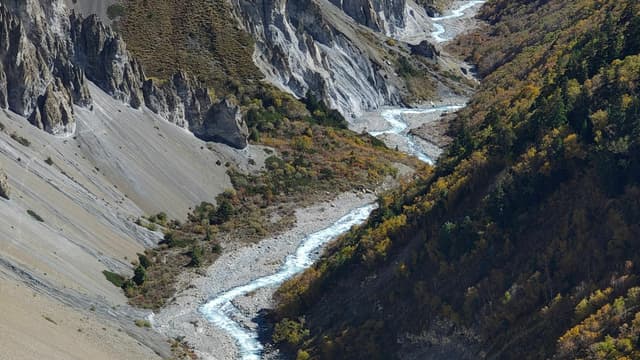
The Kali Gandaki gorge is, by the measure of the drop from the peaks on either side to the river below, the deepest gorge on Earth. On this Mustang jeep tour you drive right through the bottom of it, with Dhaulagiri (8,167 m) rising on your left and Annapurna I (8,091 m) on your right — two of the world's fourteen 8,000-metre peaks, only a few dozen kilometres apart, with a river running between them. There is no other road journey in Nepal, and arguably in the world, quite like it.
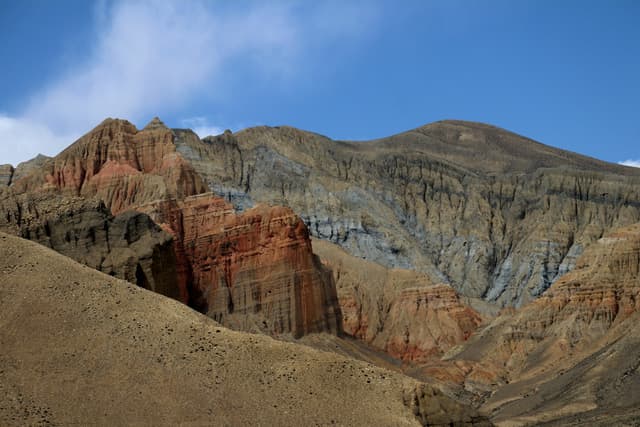
What makes the drive memorable is not just the scale but the change. Leaving Pokhara and Beni you are in green, sub-tropical hills with terraced fields and waterfalls. By Tatopani the valley walls close in. Past Ghasa the forest thins, the wind picks up, and by Tukuche and Marpha the land has turned into a high, dry, ochre-coloured desert with Tibetan-style flat-roofed houses and prayer flags. In a single morning you cross from the monsoon-fed side of the Himalaya into its rain shadow. This is the reason the Kali Gandaki is often described as a "gateway between two worlds".
Along the river you will see people collecting shaligram — the black ammonite fossil stones sacred to Vishnu worshippers — and locals will happily explain why the Kali Gandaki is the only place in the world where they are found. Whether or not you are religious, holding a 100-million-year-old sea creature in your hand at the foot of the Himalaya is a strange and wonderful thing.
What is the road actually like?
Honest answer: it is a proper Himalayan jeep road, not a highway. The stretch from Pokhara to Beni is a paved hill road. From Beni to Jomsom the surface alternates between blacktop, gravel and rough sections, with a few narrow ledges above the river and, in places, a bumpy ride. That is exactly why we use a private 4WD with an experienced Mustang driver rather than a bus or a tourist coach. Expect a long day in the vehicle on the way up, with plenty of stops for tea, photos and a proper Thakali lunch — the journey is part of the experience, not something to rush through.
Why is Muktinath so important to Hindus and Buddhists?
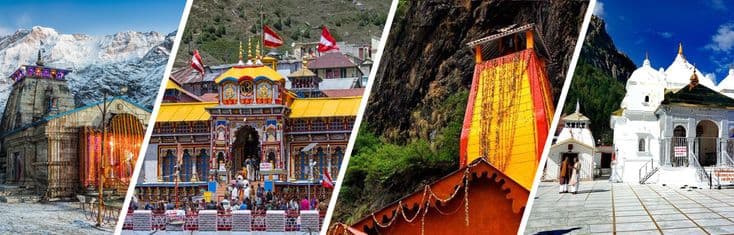
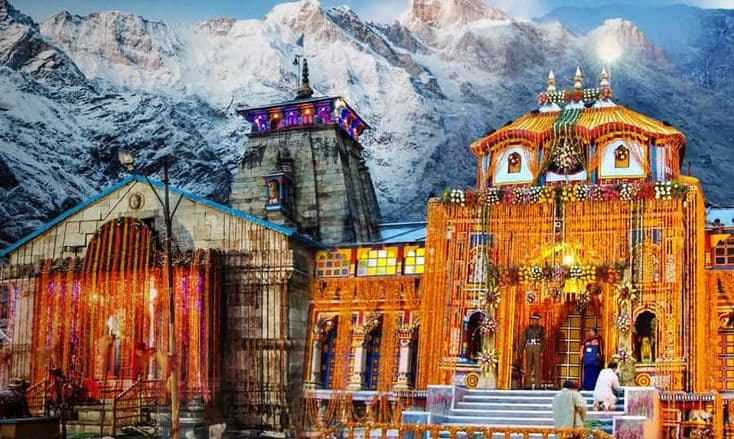
Muktinath is one of the very few places in the world that is a major pilgrimage site for both Hindus and Buddhists at the same time. For Hindus it is Mukti Kshetra, the "place of liberation", one of the 108 Divya Desams (sacred abodes of Vishnu) and the only one outside India. For Tibetan Buddhists it is Chumig Gyatsa, "a hundred waters", a place where Guru Rinpoche (Padmasambhava) is believed to have meditated on his way to Tibet. The temple sits at about 3,700-3,800 m at the foot of the Thorong La pass, and the same courtyard is shared peacefully by Hindu priests and Buddhist nuns.
For Nepali Hindus, a Muktinath darshan is often a lifelong wish, especially for parents and grandparents. The belief is that bathing at Muktinath and offering prayers here grants moksha — freedom from the cycle of rebirth. It is common to see three generations of one family making the trip together, which is one of the reasons this Mustang tour package is designed to be gentle enough for elderly travellers.
What does darshan at Muktinath involve?
Darshan at Muktinath usually takes two to three hours and follows a fairly set sequence. You arrive by jeep at Ranipauwa, the small settlement below the temple, and then walk gently uphill along a paved path lined with prayer wheels and small shops selling puja items, rudraksha and Tibetan handicrafts. The walk takes most people 15 to 25 minutes at an easy pace. Horses and porters are available at Ranipauwa for anyone who prefers not to walk, and our team will arrange them on the spot.
- The 108 water spouts (Muktidhara): Behind the main temple, 108 brass spouts shaped like bulls' heads pour ice-cold spring water. Pilgrims walk beneath all 108 in sequence — the water is believed to wash away sins. Most people do it in a few seconds each, and it is genuinely cold; bring a towel and a change of clothes.
- The two sacred ponds (Mukti Kunda): In front of the temple, two ponds where pilgrims dip. Again, cold, and again, optional.
- The main Vishnu temple: A small pagoda-style shrine with a gold-and-brass image of Vishnu as Shri Muktinath. Offerings of flowers, incense and coins are made here.
- Jwala Mai temple and the eternal flame: A short walk away, a small Buddhist gompa where a natural gas flame burns continuously from a spring — fire, water and earth together, which is the reason for the site's sanctity in both faiths.
- Gompa Samba and the Buddha statue: A large seated Buddha and a Buddhist monastery complete the circuit, a reminder that this is a shared sacred space.
The whole site is surrounded by an ancient poplar grove and, on a clear morning, the snow ridge of Dhaulagiri and Nilgiri glows behind it. Please be respectful — remove shoes where asked, ask before photographing priests or nuns, and keep voices low inside the shrines.
What will I see in Kagbeni, Marpha and Jomsom?
Kagbeni, Marpha and Jomsom are the three villages where you spend your nights in Mustang, and each has its own character. Jomsom is the district headquarters, airport town and the practical hub. Kagbeni is a medieval mud-walled village at the very gate of Upper Mustang, and the most atmospheric place on the whole route. Marpha is the neat, whitewashed "apple capital" of Nepal, famous for its orchards, dried apples and apple brandy.
Kagbeni — the gateway to Upper Mustang
Kagbeni sits at the confluence of the Kali Gandaki and the Jhong Khola, at roughly 2,800 m. It is a genuinely old Tibetan-style village: narrow tunnel-like lanes between packed-earth houses, a red-walled gompa (Kag Chode Thupten Samphel Ling, dating from the 15th century), chortens, a fortress ruin, and fields of buckwheat and barley in an otherwise barren valley. Just north of the village stands the restricted-area checkpoint — beyond it lies Upper Mustang. Standing there, looking up the wind-scoured valley toward Lo, is a highlight for almost everyone. Kagbeni is also a Hindu pilgrimage stop in its own right; many families perform shraddha (ancestor rites) at the riverside here before continuing to Muktinath.
Marpha — the apple village
Marpha is a beautifully kept Thakali village a little south of Jomsom, with flagstone lanes, whitewashed houses with black-trimmed windows, a monastery above the town and an irrigation channel running under the street. Its orchards produce the apples that Mustang is famous for across Nepal. Sample fresh apples in season, dried apple slices, apple juice, apple pie in the lodges and, of course, the local apple brandy (and its cousin, apricot brandy). Marpha also has a small Horticulture Research Station that pioneered apple growing in the region — worth a short walk if you are curious.
Jomsom — the hub
Jomsom straddles the Kali Gandaki at about 2,700 m, with the airstrip on one bank and the older town on the other. It is windy — famously so, every afternoon — and the view of Nilgiri's white pyramid over the rooftops is one of the best "free" views in Nepal. There is a small Mustang Eco-Museum, an army barracks, banks and ATMs (do not rely on them), and a good choice of lodges and Thakali kitchens.
Other stops along the way
- Tatopani — natural hot springs beside the river, perfect for a soak on the return day.
- Rupse Chhahara — a tall, roaring waterfall right beside the road above Dana.
- Ghasa and Tukuche — traditional Thakali villages; Tukuche was once the salt-trade capital of the valley.
- Kalopani / Lete — where, on a clear day, you get both Dhaulagiri and Annapurna in one view.
- Pokhara — Phewa Lake, Lakeside, and the optional Sarangkot sunrise with the whole Annapurna range and Machhapuchhre.
Is the Mustang tour suitable for elderly parents, children and non-trekkers?
Yes — that is precisely who this Mustang tour package is designed for. There is no trekking. You sit in a private 4WD from Kathmandu to Muktinath and back, and the only walking that matters is the gentle 15-25 minute stroll from Ranipauwa up to the temple, for which horses are available. We regularly take grandparents in their seventies, toddlers, pregnant mothers in early pregnancy (with their doctor's consent), and people who have never spent a night above Kathmandu.
That said, honesty is more useful than reassurance, so here is what to consider:
- Altitude. Muktinath is at roughly 3,700-3,800 m and your nights in Jomsom and Kagbeni are at about 2,700-2,800 m. Because you gain height gradually by road over two days, with a night in Pokhara first, most people feel nothing worse than slight breathlessness on the temple path. Some feel a mild headache or poor sleep the first night. Serious altitude sickness is rare on this route because you go up, spend a few hours, and come back down the same day.
- Long drives. The Pokhara-Jomsom stretch is a long, bumpy day. Anyone with a bad back, severe motion sickness or who cannot sit for extended periods should tell us in advance so we can plan more breaks.
- Cold and wind. Even in spring and autumn, mornings and evenings in Mustang are cold and afternoons are very windy. Lodges have limited heating.
- Existing heart or lung conditions. If you have serious heart, lung or blood-pressure problems, please consult your doctor before booking, and share the advice with us. We can adjust pace and add rest.
Our jeeps carry a basic first-aid kit and our drivers know the route, the lodges and where the nearest health post is. For a family group with mixed ages, this is one of the safest ways to experience the high Himalaya.
Who is this trip best for?
- Pilgrim families who want Muktinath darshan without the strain of a trek.
- Couples and honeymooners — the landscapes, the apple orchards, the quiet lodges and the Pokhara nights make it surprisingly romantic.
- Nepali diaspora visiting home on a short holiday who want to "finally see Mustang" in under a week.
- Photographers and first-time Himalayan travellers who want dramatic scenery with a comfortable base.
- Small friend groups who prefer a private jeep to a shared bus.
When is the best time to visit Mustang?
The best time for a Mustang tour is spring (March to May) and autumn (September to November), when the skies are clearest, the road is most reliable and daytime temperatures in Jomsom and Kagbeni are pleasant. Because Lower Mustang lies in the rain shadow of the Annapurna and Dhaulagiri ranges, it stays far drier than the rest of Nepal even during monsoon, which makes it one of the few Himalayan destinations that can genuinely be visited most of the year. Winter is possible but cold, with occasional snow on the road near Muktinath.
Month-by-month guide
| Months | Weather in Lower Mustang | Good for | Things to note |
|---|---|---|---|
| March - May | Mild days, cold nights, mostly clear mornings; some afternoon haze in late spring | Pilgrims, families, apple blossom in April, rhododendron on the lower road | Peak season; book lodges early. Strong afternoon wind is normal. |
| June - August | Monsoon in Pokhara and the lower valley, but Jomsom/Kagbeni stay relatively dry; clouds can hide the peaks | Travellers who want fewer crowds and green lower hills; Janai Purnima and Yartung horse festival | Landslide risk on the Beni-Ghasa road; occasional delays. Muktinath crowds spike around festivals. |
| September - November | Clearest skies of the year, crisp air, superb mountain views, apple harvest | Everything - the single best window for this trip; Dashain-Tihar holidays | Busiest period for Nepali travellers; book jeeps and lodges well ahead. |
| December - February | Cold, clear and quiet; sub-zero nights; possible snow above Jomsom | Solitude, dramatic snow-dusted scenery, very clear light | Muktinath road may briefly close after snowfall; lodges are basic on heating; pack serious warm layers. |
Which festivals fall on the route?
If you can time it, a few festivals add a lot to the Mustang experience. Ram Navami in spring and Janai Purnima in August bring large numbers of Hindu pilgrims to Muktinath. The Mustang Yartung horse festival, usually held around the August full moon in Muktinath and Jomsom, is one of the most colourful events in the region. During Dashain and Tihar, the Mustang road is one of Nepal's favourite family road trips — expect a happy, busy atmosphere and book early.
What is the food like — and why do people rave about Thakali cuisine?
Food is one of the genuine highlights of this Mustang tour. The Kali Gandaki valley is the homeland of the Thakali people, and the Thakali khana set — dal, rice, seasonal vegetable curry, a meat curry (usually chicken or mutton), gundruk or spinach, pickles, fried papad and a bowl of ghee — is considered by many Nepalis to be the best version of dal bhat in the country. The lodges along the route serve it fresh, unlimited and hot, often with buckwheat (phapar) dhindo and roti as alternatives.
Other things worth trying on the way:
- Marpha apples in every form — fresh, dried, juice, jam, pie, and the famous apple brandy or apricot brandy.
- Buckwheat dishes — phapar ko roti, dhindo, and buckwheat pancakes, a staple of high Mustang.
- Yak cheese and butter tea in the more Tibetan-influenced villages like Kagbeni.
- Thukpa and momo — warming noodle soup and dumplings for cold evenings.
- Sukuti — dried meat, a Thakali speciality, often served with the khana set.
- Local seabuckthorn juice — a tangy, vitamin-rich drink from a berry that grows wild in the valley.
Vegetarian, Jain-style (no onion/garlic) and pilgrim-fast meals can be arranged in most lodges if you tell us in advance. In Pokhara, Lakeside has everything from lake-view Newari thalis to pizza and coffee.
What is the accommodation like in Mustang?
In Pokhara you stay in a comfortable, well-rated hotel with hot showers, good beds and Wi-Fi. In Jomsom, Kagbeni and Marpha you stay in the best available local lodges — clean, family-run, with private rooms, attached or shared bathrooms depending on the village, warm blankets and a communal dining room heated by a stove. They are honest mountain lodges, not star hotels, and it is important you know that before you book.
What to realistically expect in the Mustang lodges:
- Rooms: simple twin or double rooms with wooden or concrete walls, clean bedding, and extra blankets on request. We always try for attached bathrooms, but availability in peak season is not guaranteed.
- Hot water: usually solar or gas-heated, so hot showers are possible but not always at the exact moment you want one. Morning is best.
- Heating: the dining room has a stove; bedrooms generally do not have heating. Bring a warm sleeping layer in winter.
- Electricity and charging: available in all three villages, with occasional cuts; carry a power bank.
- Wi-Fi and mobile: NTC and Ncell both work in Jomsom, Kagbeni and Marpha with decent data; many lodges offer Wi-Fi, but do not expect Kathmandu speeds.
- Food: the lodge kitchen is where you eat; meals are fresh, plentiful and mostly Thakali or Tibetan style.
Our team has stayed in, eaten at and checked the lodges we use. If you have a special requirement — a ground-floor room for an elderly parent, an attached bathroom, an extra-warm room — tell us at booking and we will do our best.
Do I need a permit for the Mustang tour?
For Lower Mustang you need only the standard Annapurna Conservation Area Project (ACAP) entry permit, because Jomsom, Kagbeni, Marpha and Muktinath all lie inside the Annapurna Conservation Area. No restricted-area permit, no TIMS card for a jeep tour, no special guide requirement. The ACAP permit is checked at the entry point on the way up the valley, and we handle the paperwork for you before you arrive.
The restricted-area permit that people read about online applies only to Upper Mustang, north of the checkpoint at Kagbeni. Our route stops at Kagbeni and Muktinath, so it is not needed. What we do need from you at booking:
- For Nepali citizens: a copy of your citizenship card for each traveller (children on a parent's card or birth certificate).
- For foreign nationals and NRNs travelling on a foreign passport: a passport copy and two passport-size photos per person.
Carry the original ID with you on the trip — there are police and army checkpoints along the Kali Gandaki road where IDs are sometimes checked.
How do you get to Mustang, and why by road rather than by flight?
You get to Lower Mustang on this package entirely by road: Kathmandu to Pokhara on the Prithvi Highway, then Pokhara up the Kali Gandaki valley through Beni, Tatopani, Ghasa and Marpha to Jomsom, and on to Kagbeni and Muktinath. The alternative is to fly Pokhara-Jomsom in a small aircraft, which takes about 20 minutes but is highly weather-dependent and skips the entire gorge experience. For most Nepali travellers, the road is both the more reliable and the more rewarding way to go.
Road versus flight — an honest comparison
- Reliability: Jomsom flights operate only in the early morning window before the wind rises, and are frequently cancelled by cloud. A jeep leaves when you are ready.
- Experience: The drive through the deepest gorge on Earth, the waterfalls, the hot springs and the changing landscape are the reasons people fall in love with Mustang. From the air you see a few peaks and then land.
- Flexibility: With your own 4WD you stop when you want — for photos at Kalopani, for lunch at Tukuche, for shaligram hunting by the river.
- Comfort: The road is bumpy in places, and a full day in the vehicle is tiring. If someone in your group cannot manage long drives, ask us about combining a flight one way — it can be done, weather permitting.
- Group logistics: A private jeep keeps a family together with luggage, snacks, and grandparents at their own pace.
What does the 5-day Mustang tour look like in outline?
Without going into the detailed day-by-day schedule (which you will find in the Itinerary section of this page), the shape of the trip is simple: one day to reach Pokhara, one long scenic day up the Kali Gandaki to Jomsom and Kagbeni, one day for Muktinath darshan and the apple village of Marpha, one day back down to Pokhara with a soak at Tatopani, and a final day — with an optional Sarangkot sunrise — returning to Kathmandu. Every night is at a fixed place, every drive is with the same driver and vehicle, and the pace is deliberately unhurried.
How many days do you need for Mustang?
Five days is the sweet spot for a Lower Mustang tour from Kathmandu by road. It gives you a night in Pokhara on each side to break the long drives, a full morning at Muktinath without rushing, and time in Kagbeni and Marpha rather than just passing through. You can technically do it in four days by skipping a Pokhara night, but that means two consecutive very long driving days, which we do not recommend for families or elderly travellers.
How the options compare:
- 3-4 days from Pokhara: Only if you are already in Pokhara. Still tight.
- 5 days from Kathmandu (this package): Balanced — enough rest, enough time at the temple, and a Pokhara evening on the way home.
- 6-7 days: Adds an extra night in Mustang for a side trip to Lupra village, Dhumba Lake, or Jhong, or a second night in Pokhara for paragliding and sightseeing. Ask us if you want to extend.
- 8+ days: This is Upper Mustang territory — a different trip altogether.
What should I pack for the Mustang jeep tour?
Pack for four seasons in one trip: warm and possibly humid in Pokhara, cold and windy in Mustang, and freezing at Muktinath in the early morning. Layers are the answer — a fleece or down jacket you can pull on at Jomsom and take off at the hot springs. Because you are travelling by jeep, weight is not a big issue, but a soft bag is easier to fit than a hard suitcase.
| Category | What to bring |
|---|---|
| Clothing | Warm jacket (down or thick fleece), thermal inner layer for winter, windproof outer shell, comfortable trousers, warm hat, gloves, warm socks, sturdy walking shoes or trainers with grip, slippers for the lodge |
| For Muktinath | Towel, a change of clothes and a plastic bag for the 108-spout bath; puja items if you wish (also sold at Ranipauwa); a small bag for prasad |
| Sun and wind | Sunglasses, sunscreen (the high-altitude sun is fierce), lip balm, a scarf or buff for the afternoon dust and wind |
| Health | Personal medicines, motion-sickness tablets for the hill roads, paracetamol, a basic first-aid kit, hand sanitiser, any altitude medicine your doctor recommends |
| Practical | Power bank, phone charger, torch or headlamp, reusable water bottle, snacks, wet wipes, a small daypack for the temple walk |
| Documents | Original citizenship card or passport, a few photocopies, passport photos, any prescription letters |
| Cash | Enough Nepali rupees for personal shopping, tips, horse hire and extras — ATMs in Jomsom are unreliable |
| Optional | Camera and spare batteries, binoculars, a book for the evenings, swimwear for Tatopani hot springs |
Is the Mustang tour worth it?
Yes. For a five-day trip that needs no fitness training, no flight risk and no restricted permits, the Mustang tour packs in more variety than almost any other short holiday in Nepal: the deepest gorge on Earth, two 8,000-metre mountains, a high-altitude desert that looks like Tibet, a temple sacred to two religions, a medieval village at the edge of a forbidden kingdom, apple orchards, hot springs, Nepal's best dal bhat and two evenings by Phewa Lake. Very few of our guests come back saying it was not worth it; a great many come back planning Upper Mustang.
Where it may not be worth it: if you hate long drives, if you want luxury hotels every night, or if your only interest is a quick temple visit and you would rather fly in and out of Jomsom. In those cases, tell us — we can design something different.
What are the most useful tips for a first Mustang trip?
The most useful tips are to leave early each day, drink more water than you think you need, dress in layers, keep cash on hand and treat the drive as part of the holiday rather than a means to an end. Beyond those, here are the things our drivers and guides tell every group:
- Start early on the Pokhara-Jomsom day. The road is quieter, the peaks are clearer, and you avoid arriving in the dark.
- Do Muktinath in the morning. The wind rises around midday and the temple is calmer and warmer early.
- Take altitude gently. Walk slowly on the temple path, skip alcohol the night before Muktinath, and tell the driver if anyone has a headache.
- Carry cash. Card payments are rare outside Pokhara and ATMs in Jomsom often run dry.
- Keep the camera ready between Ghasa and Marpha. The gorge narrows, Dhaulagiri appears, and the landscape changes every few minutes.
- Respect local customs. Walk clockwise around chortens and mani walls, ask before photographing people, and dress modestly in the villages and at the temple.
- Buy Marpha products in Marpha. The dried apples and brandy are cheaper and fresher at source than in Pokhara.
- Book early for Dashain, Tihar and spring holidays. Jeeps and good lodges sell out.
- Expect delays. Landslides in monsoon, snow in winter, and roadworks year-round can add an hour or two. A relaxed attitude makes for a better trip.
How can I travel responsibly in Mustang?
Mustang is a fragile, high-altitude environment with a small population and a unique Tibetan-Buddhist culture. Travelling responsibly here mostly comes down to leaving no waste, spending money locally and behaving respectfully in sacred places. A few concrete things that make a real difference:
- Refill, don't buy. Carry a reusable bottle; lodges provide boiled or filtered water. Plastic bottles are a growing problem in the valley.
- Take your rubbish back. Especially at Muktinath, where the volume of pilgrims puts pressure on the site. Do not leave plastic puja packaging by the ponds.
- Eat and shop locally. Your Thakali lunch, your dried apples and your lodge night support families in the valley directly.
- Respect the sacred. Shoes off where required, no loud music, no climbing on chortens or mani walls for photos.
- Leave shaligram where you find them unless permitted. Ask locals about customs around collecting stones from the river.
- Be kind to the horses. If you hire a horse at Ranipauwa, choose an animal that looks well cared for and do not overload it.
- Support conservation. Your ACAP permit funds conservation and community projects across the Annapurna region.
What is Pokhara like as the start and end of the journey?
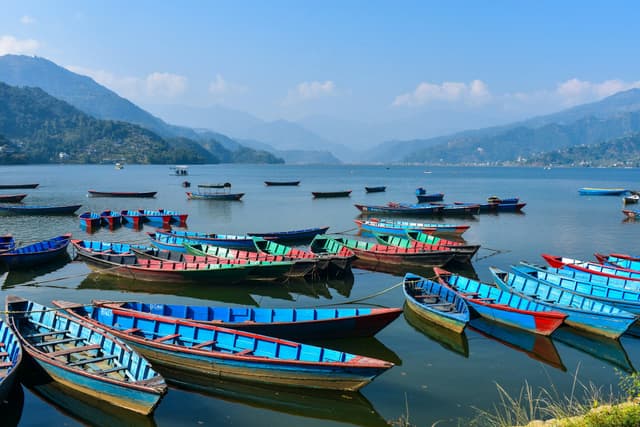
Pokhara is the gentle bookend to this Mustang tour — a lakeside town with the Annapurna range and Machhapuchhre (Fishtail) reflected in Phewa Lake, and a relaxed Lakeside strip of cafes, restaurants and shops. On the way up it is a chance to rest after the Prithvi Highway; on the way back it is where you shower off the Mustang dust, eat well, and stroll along the lake. If you have the energy, the optional Sarangkot sunrise on the last morning is worth the early alarm: from the ridge you see the whole Annapurna panorama turn from pink to gold, with Dhaulagiri on one end and Manaslu on the other on a very clear day.
Other things you can squeeze into a Pokhara evening or morning: a boat on Phewa Lake to the Tal Barahi temple, the World Peace Pagoda, Devi's Falls and Gupteshwor Cave, or, for the adventurous, a tandem paraglide from Sarangkot. Tell us if you would like a longer Pokhara stay built into the trip.
Why book your Mustang tour package with Gomayu?
We are a Nepal-based, locally registered travel company, and Mustang is one of our home routes. Our drivers know every turn of the Kali Gandaki road, our lodges are ones we have slept in ourselves, and our office team is on WhatsApp before, during and after your trip. We tell you honestly what the road, the lodges and the weather are like, and we design each departure around who is actually travelling — whether that is a group of college friends or three generations of one family going for darshan.
- Private 4WD with an experienced Mustang driver — no shared buses, no strangers, your own pace.
- Every night pre-booked in Pokhara and in the best available lodges in Mustang.
- ACAP permits and paperwork handled before you leave.
- Flexible dates and group sizes — families, couples, friends, corporate groups.
- Honest advice on season, altitude and who the trip suits.
- Nepali and English support for both travellers from home and the diaspora flying in.
Ready to see the deepest gorge on Earth, stand under the 108 spouts at Muktinath and eat the best Thakali khana of your life? Message us on WhatsApp with your preferred dates and group size, and we will send you a personalised quote for the 5-day Mustang tour package and answer any question you have about the road, the lodges or the darshan.
Price per person
| Group size | Price / person |
|---|---|
| 2 pax | NRs 62,000 /person |
| 3 pax | NRs 47,500 /person |
| 4 pax | NRs 44,500 /person |
| 5 pax | NRs 39,500 /person |
| 6+ pax | NRs 36,000 /person |
Per person · see what’s included
- Prices vary with your travel dates, season and group size.
Mustang Tour
Mustang Tour
5Days
Mustang Tour
The Mustang tour package is the classic road journey into Nepal's high desert - up the Kali Gandaki, the deepest gorge on earth, wedged between the eight-thousanders Dhaulagiri and Annapurna. You trade Kathmandu's traffic for apple orchards, Thakali kitchens, wind-carved cliffs and the sacred temple of Muktinath at 3,800 m, with a restful night in Pokhara at each end.
This is Lower Mustang - Jomsom, Kagbeni, Marpha and Muktinath - reached entirely by private 4WD, with no trekking and no restricted-area permit. That makes it one of the easiest ways for families, couples and older parents to stand in one of the most dramatic landscapes in the Himalaya, staying in comfortable hotels in Pokhara and the best local lodges up in Mustang.
Trip highlights
Day-by-day itinerary
Everything below is fully customizable. Add nights, swap activities, or change hotels.
Day1 Kathmandu to Pokhara
- Drive from Kathmandu to Pokhara along the Prithvi Highway (~6-7 hours) with a lunch stop. Check in at lakeside and enjoy leisure time exploring Pokhara.
Day2 Pokhara to Jomsom (Mustang), explore Marpha
- Drive by private 4WD from Pokhara up the Kali Gandaki gorge to Jomsom, the gateway to Mustang. On the way, explore Marpha, the whitewashed Thakali village famous for its apple orchards and brandy.
Day3 Roaming Mustang - Muktinath, Kagbeni & Dumba Lake
- Early morning drive to the sacred Muktinath Temple for darshan, one of the holiest sites for Hindus and Buddhists alike. Visit the medieval village of Kagbeni and the turquoise Dumba Lake, then enjoy leisure time back in Jomsom.
- Activities: Muktinath, Kagbeni, Dumba Lake
Day4 Back to Pokhara - Tatopani & Baglung Kalika›
- Drive back down the gorge to Pokhara. Stop to soak at the Tatopani natural hot springs and visit the Baglung Kalika temple on the way. Evening free at lakeside.
- Activities: Tatopani hot spring, Baglung Kalika temple
Day5 Pokhara to Kathmandu
- After breakfast, drive back to Kathmandu with a lunch stop en route. Drop-off in Kathmandu, where the tour ends.
Package pricing
The more travellers in your group, the lower the price per person.
| Group size | Price / person |
|---|---|
| 2 pax | NRs 62,000 /person |
| 3 pax | NRs 47,500 /person |
| 4 pax | NRs 44,500 /person |
| 5 pax | NRs 39,500 /person |
| 6+ pax | NRs 36,000 /person |
- Prices vary with your travel dates, season and group size.
Prices are per person · see what’s included.
What's included
| Items | This package |
|---|---|
| 3/4-star hotel & village lodges | Included |
| Private 4WD transport | Included |
| Meals in the itinerary | Included |
| ACAP permit & entry fees | Included |
| Muktinath & valley sightseeing | Included |
| Full-trip guide | Not included |
| Pokhara-Jomsom flights | Not included |
| Travel & medical insurance | Not included |
| Personal expenses & tips | Not included |
Anything not listed here is not included.
Things to carry
- Warm layers and a windproof jacket — Mustang is cold and windy year-round
- Comfortable walking shoes
- Sunscreen, sunglasses and a sun hat (the high-altitude sun is strong)
- Any personal medication, plus lip balm and moisturiser for the dry air
- A reusable water bottle
- A power bank — charging is limited in remote lodges
- A light daypack, your citizenship or ID, and some cash (few ATMs beyond Pokhara)
What our travellers say
Real reviews from Google, verified by travelers.
“It was our best decision to choose Gomayu. We had a wonderful experience with GOMAYU during our Thailand trip. Hotels, Location and itinerary all were well planned and was according to our expectations. Response and communication was very good in Thailand as well. You made our trip very smooth, hassle free and stress free from begning to the end of our trip. This trip was memorable, as me and my husband got to celebrate our 20th wedding Anniversary together in the beautiful place of Thailand and credit goes to GOMAYU for all the arrangements . We are very much satisfied with your service and hope to have other trips with you soon. I would happily Recommend GOMAYU to my friends and family for their excellent service and professional support.”
“Me and my family had a great 10 days trip to Vietnam and Bangkok. All thanks to the wonderful service of Gomayu. Thank you so much for making our trip so easy, fun and stress free.”
“We had an unforgettable 5D4N trip to Bali with Gomayu Holidays! From the very beginning, the communication was smooth, clear, and professional. Everything was perfectly organized; airport pickup, hotel check-ins, and daily tours were always on time, with no stress at all. Our stay was split between a beautiful private pool villa in Seminyak and a comfortable room at Grand Mega Resort, both of which exceeded expectations. The itinerary was well-balanced with adventure, culture, and relaxation. We really enjoyed the watersports (banana boat, jet ski, parasailing), the stunning Uluwatu Temple with Kecak dance, and the romantic candlelight dinner at Jimbaran Beach. The Bali swing and tandem ATV ride were absolute highlights and so much fun! Visiting Lempuyang Temple (Gate of Heaven) was magical and very well arranged despite the crowds. We had some spare time to visit the malls and try local food as well. Special thanks to the guide and driver, who was friendly, helpful, super-flexible and always made sure we were comfortable. We didn’t have to worry about anything as everything was well-organized. Highly recommended for anyone planning a hassle-free and memorable Bali trip. Thank you, Gomayu Holidays, for making our holiday truly special!”
“We had a wonderful experience with Gomayau as our travel partner, with everything being well-organized and thoughtfully planned from start to finish, making the entire trip smooth and enjoyable; the overall coordination was excellent, with timely arrangements and great attention to detail, and the team’s consistent support throughout the journey made a real difference, while communication remained easy and reliable, giving us confidence and peace of mind; we truly appreciated the professionalism and dedication in handling logistics and day-to-day planning, which allowed us to fully relax and enjoy the trip, and overall, it was a great experience that we will remember for future travels and would highly recommend to anyone looking for a hassle-free and well-managed trip.”
“Thank you so much Gomayu Holidays. We had an amazing trip. we are extremely satisfied with their service. The itinerary was wonderfully planned and perfectly organized.Highly recommend planning your next vacation with Gomayu Holidays they are truly EXCELLENT. Special heartfelt thank you to Krishtina and Elho from Gomayu Holidays!”
Good to know
Complete travel guide
What is the Mustang Tour Package, and which Mustang does it cover?
This Mustang tour package is a 5-day, fully-by-road journey from Kathmandu to Lower Mustang — Jomsom, Kagbeni, Marpha and the sacred temple of Muktinath — with a night in Pokhara on the way up and on the way back. You travel in a private 4WD (Scorpio or similar jeep), you do not trek, and you do not need any restricted-area permit. It is the classic Jomsom Muktinath tour by road that Nepali families, pilgrims and couples have been asking us about for years, packaged so that every driving day, every lodge and every darshan is arranged before you leave home.
The word "Mustang" confuses a lot of people, so let us be clear from the very first paragraph. Mustang district has two very different halves:
- Lower Mustang — the southern half of the district, from the Kali Gandaki gorge villages (Ghasa, Tukuche, Marpha) up through Jomsom to Kagbeni and Muktinath. Open to everyone with a standard Annapurna Conservation Area permit, reachable by jeep, no trekking required. This is what our package covers.
- Upper Mustang — the northern, formerly forbidden kingdom beyond Kagbeni, with Lo Manthang as its walled capital. A restricted area that needs a special permit and a registered guide for foreign visitors, and involves a much longer, rougher and more expensive journey.
If your goal is Muktinath darshan, the Kali Gandaki, apple orchards, Thakali food and Himalayan views without walking for days — you want Lower Mustang, and this is the tour for you. If your goal is Lo Manthang, the sky caves and the Tiji festival, you want an Upper Mustang trip, which we can also help you plan, but it is not this package.
Lower Mustang vs Upper Mustang: what is the real difference?
The real difference is access, cost, time and comfort. Lower Mustang is open, road-connected, and can be done comfortably in five days from Kathmandu with children or grandparents in the vehicle. Upper Mustang sits beyond the restricted-area checkpoint at Kagbeni, requires special permits (for foreign nationals a costly restricted-area permit plus a licensed guide), and typically needs eight to twelve days because the road north of Kagbeni is far rougher and the altitude keeps climbing.
Here is how the two compare on the things that matter when you are choosing a trip:
| Feature | Lower Mustang (this package) | Upper Mustang |
|---|---|---|
| Main places | Jomsom, Kagbeni, Marpha, Muktinath, Kali Gandaki gorge | Lo Manthang, Chhoser caves, Ghami, Tsarang, Dhakmar |
| Permit | Standard ACAP entry only | ACAP plus a restricted-area permit (foreigners), guide compulsory for foreigners |
| How you travel | Private 4WD jeep the whole way; short easy walks only | 4WD on a rough track, or a multi-day trek |
| Typical length | 5 days from Kathmandu | 8-14 days from Kathmandu |
| Highest point | Muktinath, roughly 3,700-3,800 m | Passes above 4,000 m |
| Best for | Pilgrims, families, elderly, couples, first-time Himalayan travellers | Adventure travellers, culture and history enthusiasts, repeat visitors |
| Accommodation | Hotel in Pokhara; clean local lodges in Mustang | Basic lodges and homestays throughout |
Both are magnificent. But for most Nepali travellers planning their first Mustang trip, Lower Mustang delivers the majority of the "wow" — the desert-like landscape, the Himalayan giants, the Tibetan-Buddhist villages, the temple — at a fraction of the effort. Many of our guests do this 5-day Mustang tour first and come back later for Upper Mustang once they have fallen in love with the region.
Why is the drive up the Kali Gandaki so special?
The Kali Gandaki gorge is, by the measure of the drop from the peaks on either side to the river below, the deepest gorge on Earth. On this Mustang jeep tour you drive right through the bottom of it, with Dhaulagiri (8,167 m) rising on your left and Annapurna I (8,091 m) on your right — two of the world's fourteen 8,000-metre peaks, only a few dozen kilometres apart, with a river running between them. There is no other road journey in Nepal, and arguably in the world, quite like it.
What makes the drive memorable is not just the scale but the change. Leaving Pokhara and Beni you are in green, sub-tropical hills with terraced fields and waterfalls. By Tatopani the valley walls close in. Past Ghasa the forest thins, the wind picks up, and by Tukuche and Marpha the land has turned into a high, dry, ochre-coloured desert with Tibetan-style flat-roofed houses and prayer flags. In a single morning you cross from the monsoon-fed side of the Himalaya into its rain shadow. This is the reason the Kali Gandaki is often described as a "gateway between two worlds".
Along the river you will see people collecting shaligram — the black ammonite fossil stones sacred to Vishnu worshippers — and locals will happily explain why the Kali Gandaki is the only place in the world where they are found. Whether or not you are religious, holding a 100-million-year-old sea creature in your hand at the foot of the Himalaya is a strange and wonderful thing.
What is the road actually like?
Honest answer: it is a proper Himalayan jeep road, not a highway. The stretch from Pokhara to Beni is a paved hill road. From Beni to Jomsom the surface alternates between blacktop, gravel and rough sections, with a few narrow ledges above the river and, in places, a bumpy ride. That is exactly why we use a private 4WD with an experienced Mustang driver rather than a bus or a tourist coach. Expect a long day in the vehicle on the way up, with plenty of stops for tea, photos and a proper Thakali lunch — the journey is part of the experience, not something to rush through.
Why is Muktinath so important to Hindus and Buddhists?
Muktinath is one of the very few places in the world that is a major pilgrimage site for both Hindus and Buddhists at the same time. For Hindus it is Mukti Kshetra, the "place of liberation", one of the 108 Divya Desams (sacred abodes of Vishnu) and the only one outside India. For Tibetan Buddhists it is Chumig Gyatsa, "a hundred waters", a place where Guru Rinpoche (Padmasambhava) is believed to have meditated on his way to Tibet. The temple sits at about 3,700-3,800 m at the foot of the Thorong La pass, and the same courtyard is shared peacefully by Hindu priests and Buddhist nuns.
For Nepali Hindus, a Muktinath darshan is often a lifelong wish, especially for parents and grandparents. The belief is that bathing at Muktinath and offering prayers here grants moksha — freedom from the cycle of rebirth. It is common to see three generations of one family making the trip together, which is one of the reasons this Mustang tour package is designed to be gentle enough for elderly travellers.
What does darshan at Muktinath involve?
Darshan at Muktinath usually takes two to three hours and follows a fairly set sequence. You arrive by jeep at Ranipauwa, the small settlement below the temple, and then walk gently uphill along a paved path lined with prayer wheels and small shops selling puja items, rudraksha and Tibetan handicrafts. The walk takes most people 15 to 25 minutes at an easy pace. Horses and porters are available at Ranipauwa for anyone who prefers not to walk, and our team will arrange them on the spot.
- The 108 water spouts (Muktidhara): Behind the main temple, 108 brass spouts shaped like bulls' heads pour ice-cold spring water. Pilgrims walk beneath all 108 in sequence — the water is believed to wash away sins. Most people do it in a few seconds each, and it is genuinely cold; bring a towel and a change of clothes.
- The two sacred ponds (Mukti Kunda): In front of the temple, two ponds where pilgrims dip. Again, cold, and again, optional.
- The main Vishnu temple: A small pagoda-style shrine with a gold-and-brass image of Vishnu as Shri Muktinath. Offerings of flowers, incense and coins are made here.
- Jwala Mai temple and the eternal flame: A short walk away, a small Buddhist gompa where a natural gas flame burns continuously from a spring — fire, water and earth together, which is the reason for the site's sanctity in both faiths.
- Gompa Samba and the Buddha statue: A large seated Buddha and a Buddhist monastery complete the circuit, a reminder that this is a shared sacred space.
The whole site is surrounded by an ancient poplar grove and, on a clear morning, the snow ridge of Dhaulagiri and Nilgiri glows behind it. Please be respectful — remove shoes where asked, ask before photographing priests or nuns, and keep voices low inside the shrines.
What will I see in Kagbeni, Marpha and Jomsom?
Kagbeni, Marpha and Jomsom are the three villages where you spend your nights in Mustang, and each has its own character. Jomsom is the district headquarters, airport town and the practical hub. Kagbeni is a medieval mud-walled village at the very gate of Upper Mustang, and the most atmospheric place on the whole route. Marpha is the neat, whitewashed "apple capital" of Nepal, famous for its orchards, dried apples and apple brandy.
Kagbeni — the gateway to Upper Mustang
Kagbeni sits at the confluence of the Kali Gandaki and the Jhong Khola, at roughly 2,800 m. It is a genuinely old Tibetan-style village: narrow tunnel-like lanes between packed-earth houses, a red-walled gompa (Kag Chode Thupten Samphel Ling, dating from the 15th century), chortens, a fortress ruin, and fields of buckwheat and barley in an otherwise barren valley. Just north of the village stands the restricted-area checkpoint — beyond it lies Upper Mustang. Standing there, looking up the wind-scoured valley toward Lo, is a highlight for almost everyone. Kagbeni is also a Hindu pilgrimage stop in its own right; many families perform shraddha (ancestor rites) at the riverside here before continuing to Muktinath.
Marpha — the apple village
Marpha is a beautifully kept Thakali village a little south of Jomsom, with flagstone lanes, whitewashed houses with black-trimmed windows, a monastery above the town and an irrigation channel running under the street. Its orchards produce the apples that Mustang is famous for across Nepal. Sample fresh apples in season, dried apple slices, apple juice, apple pie in the lodges and, of course, the local apple brandy (and its cousin, apricot brandy). Marpha also has a small Horticulture Research Station that pioneered apple growing in the region — worth a short walk if you are curious.
Jomsom — the hub
Jomsom straddles the Kali Gandaki at about 2,700 m, with the airstrip on one bank and the older town on the other. It is windy — famously so, every afternoon — and the view of Nilgiri's white pyramid over the rooftops is one of the best "free" views in Nepal. There is a small Mustang Eco-Museum, an army barracks, banks and ATMs (do not rely on them), and a good choice of lodges and Thakali kitchens.
Other stops along the way
- Tatopani — natural hot springs beside the river, perfect for a soak on the return day.
- Rupse Chhahara — a tall, roaring waterfall right beside the road above Dana.
- Ghasa and Tukuche — traditional Thakali villages; Tukuche was once the salt-trade capital of the valley.
- Kalopani / Lete — where, on a clear day, you get both Dhaulagiri and Annapurna in one view.
- Pokhara — Phewa Lake, Lakeside, and the optional Sarangkot sunrise with the whole Annapurna range and Machhapuchhre.
Is the Mustang tour suitable for elderly parents, children and non-trekkers?
Yes — that is precisely who this Mustang tour package is designed for. There is no trekking. You sit in a private 4WD from Kathmandu to Muktinath and back, and the only walking that matters is the gentle 15-25 minute stroll from Ranipauwa up to the temple, for which horses are available. We regularly take grandparents in their seventies, toddlers, pregnant mothers in early pregnancy (with their doctor's consent), and people who have never spent a night above Kathmandu.
That said, honesty is more useful than reassurance, so here is what to consider:
- Altitude. Muktinath is at roughly 3,700-3,800 m and your nights in Jomsom and Kagbeni are at about 2,700-2,800 m. Because you gain height gradually by road over two days, with a night in Pokhara first, most people feel nothing worse than slight breathlessness on the temple path. Some feel a mild headache or poor sleep the first night. Serious altitude sickness is rare on this route because you go up, spend a few hours, and come back down the same day.
- Long drives. The Pokhara-Jomsom stretch is a long, bumpy day. Anyone with a bad back, severe motion sickness or who cannot sit for extended periods should tell us in advance so we can plan more breaks.
- Cold and wind. Even in spring and autumn, mornings and evenings in Mustang are cold and afternoons are very windy. Lodges have limited heating.
- Existing heart or lung conditions. If you have serious heart, lung or blood-pressure problems, please consult your doctor before booking, and share the advice with us. We can adjust pace and add rest.
Our jeeps carry a basic first-aid kit and our drivers know the route, the lodges and where the nearest health post is. For a family group with mixed ages, this is one of the safest ways to experience the high Himalaya.
Who is this trip best for?
- Pilgrim families who want Muktinath darshan without the strain of a trek.
- Couples and honeymooners — the landscapes, the apple orchards, the quiet lodges and the Pokhara nights make it surprisingly romantic.
- Nepali diaspora visiting home on a short holiday who want to "finally see Mustang" in under a week.
- Photographers and first-time Himalayan travellers who want dramatic scenery with a comfortable base.
- Small friend groups who prefer a private jeep to a shared bus.
When is the best time to visit Mustang?
The best time for a Mustang tour is spring (March to May) and autumn (September to November), when the skies are clearest, the road is most reliable and daytime temperatures in Jomsom and Kagbeni are pleasant. Because Lower Mustang lies in the rain shadow of the Annapurna and Dhaulagiri ranges, it stays far drier than the rest of Nepal even during monsoon, which makes it one of the few Himalayan destinations that can genuinely be visited most of the year. Winter is possible but cold, with occasional snow on the road near Muktinath.
Month-by-month guide
| Months | Weather in Lower Mustang | Good for | Things to note |
|---|---|---|---|
| March - May | Mild days, cold nights, mostly clear mornings; some afternoon haze in late spring | Pilgrims, families, apple blossom in April, rhododendron on the lower road | Peak season; book lodges early. Strong afternoon wind is normal. |
| June - August | Monsoon in Pokhara and the lower valley, but Jomsom/Kagbeni stay relatively dry; clouds can hide the peaks | Travellers who want fewer crowds and green lower hills; Janai Purnima and Yartung horse festival | Landslide risk on the Beni-Ghasa road; occasional delays. Muktinath crowds spike around festivals. |
| September - November | Clearest skies of the year, crisp air, superb mountain views, apple harvest | Everything - the single best window for this trip; Dashain-Tihar holidays | Busiest period for Nepali travellers; book jeeps and lodges well ahead. |
| December - February | Cold, clear and quiet; sub-zero nights; possible snow above Jomsom | Solitude, dramatic snow-dusted scenery, very clear light | Muktinath road may briefly close after snowfall; lodges are basic on heating; pack serious warm layers. |
Which festivals fall on the route?
If you can time it, a few festivals add a lot to the Mustang experience. Ram Navami in spring and Janai Purnima in August bring large numbers of Hindu pilgrims to Muktinath. The Mustang Yartung horse festival, usually held around the August full moon in Muktinath and Jomsom, is one of the most colourful events in the region. During Dashain and Tihar, the Mustang road is one of Nepal's favourite family road trips — expect a happy, busy atmosphere and book early.
What is the food like — and why do people rave about Thakali cuisine?
Food is one of the genuine highlights of this Mustang tour. The Kali Gandaki valley is the homeland of the Thakali people, and the Thakali khana set — dal, rice, seasonal vegetable curry, a meat curry (usually chicken or mutton), gundruk or spinach, pickles, fried papad and a bowl of ghee — is considered by many Nepalis to be the best version of dal bhat in the country. The lodges along the route serve it fresh, unlimited and hot, often with buckwheat (phapar) dhindo and roti as alternatives.
Other things worth trying on the way:
- Marpha apples in every form — fresh, dried, juice, jam, pie, and the famous apple brandy or apricot brandy.
- Buckwheat dishes — phapar ko roti, dhindo, and buckwheat pancakes, a staple of high Mustang.
- Yak cheese and butter tea in the more Tibetan-influenced villages like Kagbeni.
- Thukpa and momo — warming noodle soup and dumplings for cold evenings.
- Sukuti — dried meat, a Thakali speciality, often served with the khana set.
- Local seabuckthorn juice — a tangy, vitamin-rich drink from a berry that grows wild in the valley.
Vegetarian, Jain-style (no onion/garlic) and pilgrim-fast meals can be arranged in most lodges if you tell us in advance. In Pokhara, Lakeside has everything from lake-view Newari thalis to pizza and coffee.
What is the accommodation like in Mustang?
In Pokhara you stay in a comfortable, well-rated hotel with hot showers, good beds and Wi-Fi. In Jomsom, Kagbeni and Marpha you stay in the best available local lodges — clean, family-run, with private rooms, attached or shared bathrooms depending on the village, warm blankets and a communal dining room heated by a stove. They are honest mountain lodges, not star hotels, and it is important you know that before you book.
What to realistically expect in the Mustang lodges:
- Rooms: simple twin or double rooms with wooden or concrete walls, clean bedding, and extra blankets on request. We always try for attached bathrooms, but availability in peak season is not guaranteed.
- Hot water: usually solar or gas-heated, so hot showers are possible but not always at the exact moment you want one. Morning is best.
- Heating: the dining room has a stove; bedrooms generally do not have heating. Bring a warm sleeping layer in winter.
- Electricity and charging: available in all three villages, with occasional cuts; carry a power bank.
- Wi-Fi and mobile: NTC and Ncell both work in Jomsom, Kagbeni and Marpha with decent data; many lodges offer Wi-Fi, but do not expect Kathmandu speeds.
- Food: the lodge kitchen is where you eat; meals are fresh, plentiful and mostly Thakali or Tibetan style.
Our team has stayed in, eaten at and checked the lodges we use. If you have a special requirement — a ground-floor room for an elderly parent, an attached bathroom, an extra-warm room — tell us at booking and we will do our best.
Do I need a permit for the Mustang tour?
For Lower Mustang you need only the standard Annapurna Conservation Area Project (ACAP) entry permit, because Jomsom, Kagbeni, Marpha and Muktinath all lie inside the Annapurna Conservation Area. No restricted-area permit, no TIMS card for a jeep tour, no special guide requirement. The ACAP permit is checked at the entry point on the way up the valley, and we handle the paperwork for you before you arrive.
The restricted-area permit that people read about online applies only to Upper Mustang, north of the checkpoint at Kagbeni. Our route stops at Kagbeni and Muktinath, so it is not needed. What we do need from you at booking:
- For Nepali citizens: a copy of your citizenship card for each traveller (children on a parent's card or birth certificate).
- For foreign nationals and NRNs travelling on a foreign passport: a passport copy and two passport-size photos per person.
Carry the original ID with you on the trip — there are police and army checkpoints along the Kali Gandaki road where IDs are sometimes checked.
How do you get to Mustang, and why by road rather than by flight?
You get to Lower Mustang on this package entirely by road: Kathmandu to Pokhara on the Prithvi Highway, then Pokhara up the Kali Gandaki valley through Beni, Tatopani, Ghasa and Marpha to Jomsom, and on to Kagbeni and Muktinath. The alternative is to fly Pokhara-Jomsom in a small aircraft, which takes about 20 minutes but is highly weather-dependent and skips the entire gorge experience. For most Nepali travellers, the road is both the more reliable and the more rewarding way to go.
Road versus flight — an honest comparison
- Reliability: Jomsom flights operate only in the early morning window before the wind rises, and are frequently cancelled by cloud. A jeep leaves when you are ready.
- Experience: The drive through the deepest gorge on Earth, the waterfalls, the hot springs and the changing landscape are the reasons people fall in love with Mustang. From the air you see a few peaks and then land.
- Flexibility: With your own 4WD you stop when you want — for photos at Kalopani, for lunch at Tukuche, for shaligram hunting by the river.
- Comfort: The road is bumpy in places, and a full day in the vehicle is tiring. If someone in your group cannot manage long drives, ask us about combining a flight one way — it can be done, weather permitting.
- Group logistics: A private jeep keeps a family together with luggage, snacks, and grandparents at their own pace.
What does the 5-day Mustang tour look like in outline?
Without going into the detailed day-by-day schedule (which you will find in the Itinerary section of this page), the shape of the trip is simple: one day to reach Pokhara, one long scenic day up the Kali Gandaki to Jomsom and Kagbeni, one day for Muktinath darshan and the apple village of Marpha, one day back down to Pokhara with a soak at Tatopani, and a final day — with an optional Sarangkot sunrise — returning to Kathmandu. Every night is at a fixed place, every drive is with the same driver and vehicle, and the pace is deliberately unhurried.
How many days do you need for Mustang?
Five days is the sweet spot for a Lower Mustang tour from Kathmandu by road. It gives you a night in Pokhara on each side to break the long drives, a full morning at Muktinath without rushing, and time in Kagbeni and Marpha rather than just passing through. You can technically do it in four days by skipping a Pokhara night, but that means two consecutive very long driving days, which we do not recommend for families or elderly travellers.
How the options compare:
- 3-4 days from Pokhara: Only if you are already in Pokhara. Still tight.
- 5 days from Kathmandu (this package): Balanced — enough rest, enough time at the temple, and a Pokhara evening on the way home.
- 6-7 days: Adds an extra night in Mustang for a side trip to Lupra village, Dhumba Lake, or Jhong, or a second night in Pokhara for paragliding and sightseeing. Ask us if you want to extend.
- 8+ days: This is Upper Mustang territory — a different trip altogether.
What should I pack for the Mustang jeep tour?
Pack for four seasons in one trip: warm and possibly humid in Pokhara, cold and windy in Mustang, and freezing at Muktinath in the early morning. Layers are the answer — a fleece or down jacket you can pull on at Jomsom and take off at the hot springs. Because you are travelling by jeep, weight is not a big issue, but a soft bag is easier to fit than a hard suitcase.
| Category | What to bring |
|---|---|
| Clothing | Warm jacket (down or thick fleece), thermal inner layer for winter, windproof outer shell, comfortable trousers, warm hat, gloves, warm socks, sturdy walking shoes or trainers with grip, slippers for the lodge |
| For Muktinath | Towel, a change of clothes and a plastic bag for the 108-spout bath; puja items if you wish (also sold at Ranipauwa); a small bag for prasad |
| Sun and wind | Sunglasses, sunscreen (the high-altitude sun is fierce), lip balm, a scarf or buff for the afternoon dust and wind |
| Health | Personal medicines, motion-sickness tablets for the hill roads, paracetamol, a basic first-aid kit, hand sanitiser, any altitude medicine your doctor recommends |
| Practical | Power bank, phone charger, torch or headlamp, reusable water bottle, snacks, wet wipes, a small daypack for the temple walk |
| Documents | Original citizenship card or passport, a few photocopies, passport photos, any prescription letters |
| Cash | Enough Nepali rupees for personal shopping, tips, horse hire and extras — ATMs in Jomsom are unreliable |
| Optional | Camera and spare batteries, binoculars, a book for the evenings, swimwear for Tatopani hot springs |
Is the Mustang tour worth it?
Yes. For a five-day trip that needs no fitness training, no flight risk and no restricted permits, the Mustang tour packs in more variety than almost any other short holiday in Nepal: the deepest gorge on Earth, two 8,000-metre mountains, a high-altitude desert that looks like Tibet, a temple sacred to two religions, a medieval village at the edge of a forbidden kingdom, apple orchards, hot springs, Nepal's best dal bhat and two evenings by Phewa Lake. Very few of our guests come back saying it was not worth it; a great many come back planning Upper Mustang.
Where it may not be worth it: if you hate long drives, if you want luxury hotels every night, or if your only interest is a quick temple visit and you would rather fly in and out of Jomsom. In those cases, tell us — we can design something different.
What are the most useful tips for a first Mustang trip?
The most useful tips are to leave early each day, drink more water than you think you need, dress in layers, keep cash on hand and treat the drive as part of the holiday rather than a means to an end. Beyond those, here are the things our drivers and guides tell every group:
- Start early on the Pokhara-Jomsom day. The road is quieter, the peaks are clearer, and you avoid arriving in the dark.
- Do Muktinath in the morning. The wind rises around midday and the temple is calmer and warmer early.
- Take altitude gently. Walk slowly on the temple path, skip alcohol the night before Muktinath, and tell the driver if anyone has a headache.
- Carry cash. Card payments are rare outside Pokhara and ATMs in Jomsom often run dry.
- Keep the camera ready between Ghasa and Marpha. The gorge narrows, Dhaulagiri appears, and the landscape changes every few minutes.
- Respect local customs. Walk clockwise around chortens and mani walls, ask before photographing people, and dress modestly in the villages and at the temple.
- Buy Marpha products in Marpha. The dried apples and brandy are cheaper and fresher at source than in Pokhara.
- Book early for Dashain, Tihar and spring holidays. Jeeps and good lodges sell out.
- Expect delays. Landslides in monsoon, snow in winter, and roadworks year-round can add an hour or two. A relaxed attitude makes for a better trip.
How can I travel responsibly in Mustang?
Mustang is a fragile, high-altitude environment with a small population and a unique Tibetan-Buddhist culture. Travelling responsibly here mostly comes down to leaving no waste, spending money locally and behaving respectfully in sacred places. A few concrete things that make a real difference:
- Refill, don't buy. Carry a reusable bottle; lodges provide boiled or filtered water. Plastic bottles are a growing problem in the valley.
- Take your rubbish back. Especially at Muktinath, where the volume of pilgrims puts pressure on the site. Do not leave plastic puja packaging by the ponds.
- Eat and shop locally. Your Thakali lunch, your dried apples and your lodge night support families in the valley directly.
- Respect the sacred. Shoes off where required, no loud music, no climbing on chortens or mani walls for photos.
- Leave shaligram where you find them unless permitted. Ask locals about customs around collecting stones from the river.
- Be kind to the horses. If you hire a horse at Ranipauwa, choose an animal that looks well cared for and do not overload it.
- Support conservation. Your ACAP permit funds conservation and community projects across the Annapurna region.
What is Pokhara like as the start and end of the journey?
Pokhara is the gentle bookend to this Mustang tour — a lakeside town with the Annapurna range and Machhapuchhre (Fishtail) reflected in Phewa Lake, and a relaxed Lakeside strip of cafes, restaurants and shops. On the way up it is a chance to rest after the Prithvi Highway; on the way back it is where you shower off the Mustang dust, eat well, and stroll along the lake. If you have the energy, the optional Sarangkot sunrise on the last morning is worth the early alarm: from the ridge you see the whole Annapurna panorama turn from pink to gold, with Dhaulagiri on one end and Manaslu on the other on a very clear day.
Other things you can squeeze into a Pokhara evening or morning: a boat on Phewa Lake to the Tal Barahi temple, the World Peace Pagoda, Devi's Falls and Gupteshwor Cave, or, for the adventurous, a tandem paraglide from Sarangkot. Tell us if you would like a longer Pokhara stay built into the trip.
Why book your Mustang tour package with Gomayu?
We are a Nepal-based, locally registered travel company, and Mustang is one of our home routes. Our drivers know every turn of the Kali Gandaki road, our lodges are ones we have slept in ourselves, and our office team is on WhatsApp before, during and after your trip. We tell you honestly what the road, the lodges and the weather are like, and we design each departure around who is actually travelling — whether that is a group of college friends or three generations of one family going for darshan.
- Private 4WD with an experienced Mustang driver — no shared buses, no strangers, your own pace.
- Every night pre-booked in Pokhara and in the best available lodges in Mustang.
- ACAP permits and paperwork handled before you leave.
- Flexible dates and group sizes — families, couples, friends, corporate groups.
- Honest advice on season, altitude and who the trip suits.
- Nepali and English support for both travellers from home and the diaspora flying in.
Ready to see the deepest gorge on Earth, stand under the 108 spouts at Muktinath and eat the best Thakali khana of your life? Message us on WhatsApp with your preferred dates and group size, and we will send you a personalised quote for the 5-day Mustang tour package and answer any question you have about the road, the lodges or the darshan.
Price per person
| Group size | Price / person |
|---|---|
| 2 pax | NRs 62,000 /person |
| 3 pax | NRs 47,500 /person |
| 4 pax | NRs 44,500 /person |
| 5 pax | NRs 39,500 /person |
| 6+ pax | NRs 36,000 /person |
Per person · see what’s included
- Prices vary with your travel dates, season and group size.