
Pokhara Tour
4Days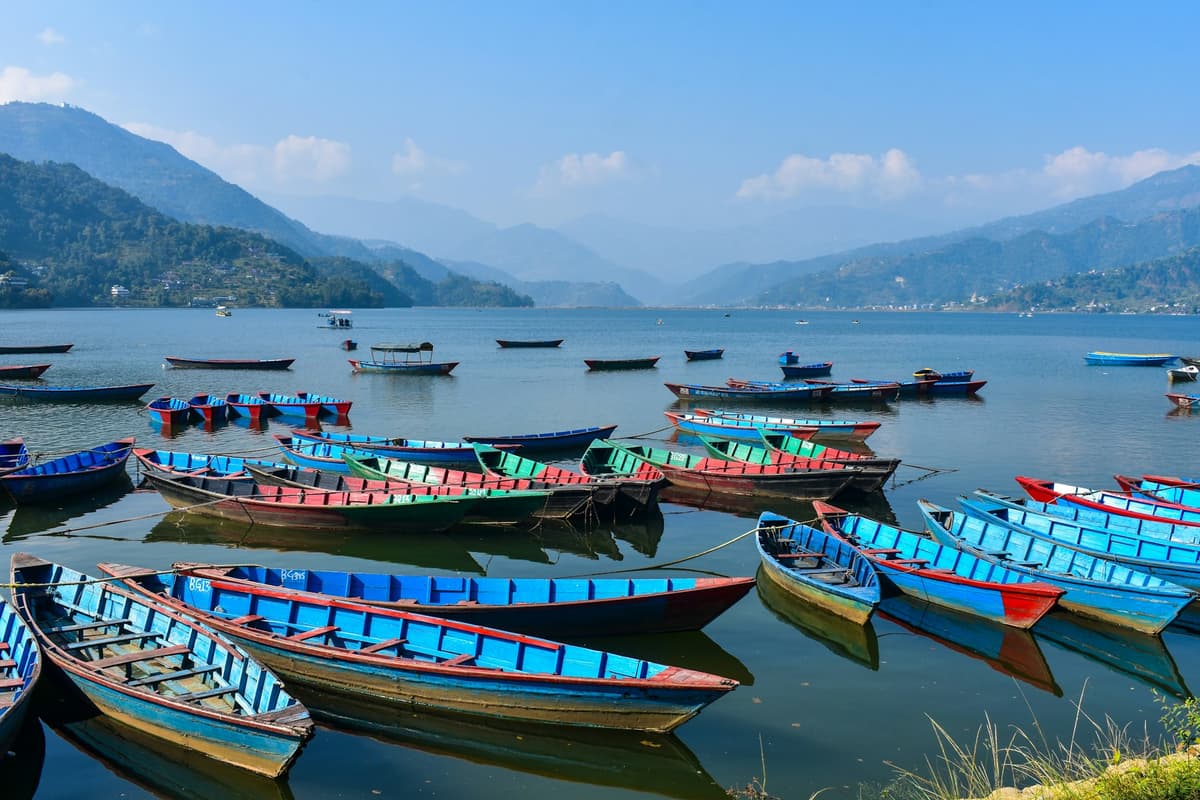
| Group size | Price / person |
|---|---|
| 2 pax | NRs 43,500 /person |
| 3 pax | NRs 34,000 /person |
| 4 pax | NRs 34,000 /person |
| 5 pax | NRs 31,500 /person |
| 6+ pax | NRs 29,000 /person |
- Prices vary with your travel dates, season and group size.
Pokhara Tour
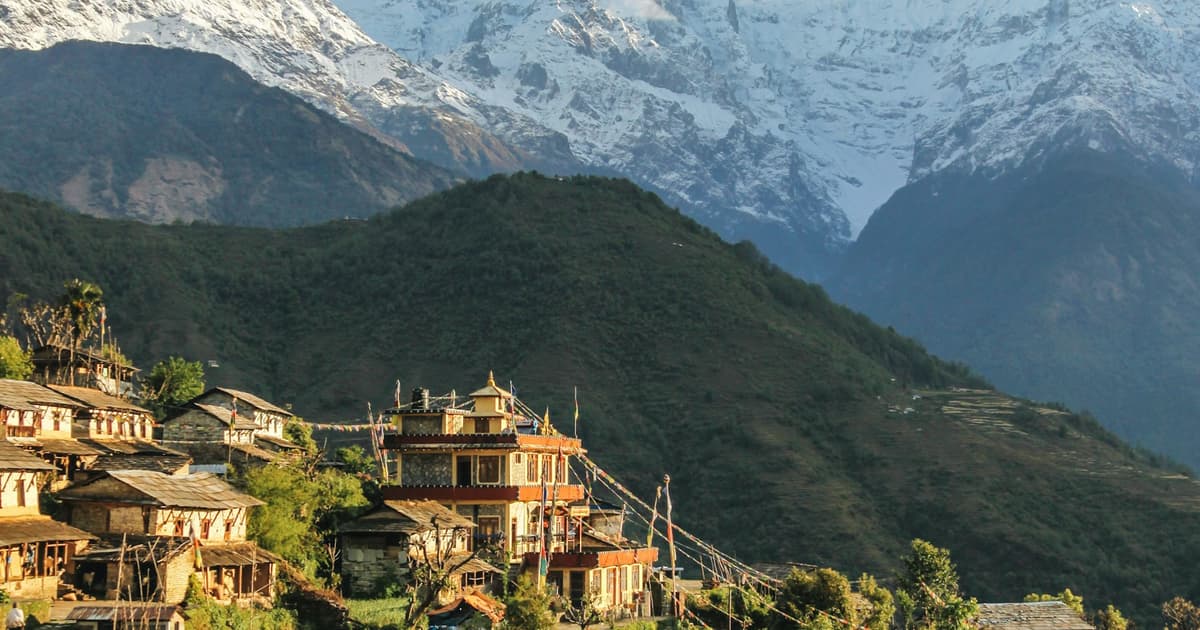
The Pokhara tour package is Nepal's easy-going lakeside escape - a chance to slow down under the Annapurnas, drift on Phewa Lake and watch the sun light up Machapuchare from a hilltop at dawn. You travel by private vehicle from Kathmandu and stay right at Lakeside, in the middle of everything.
Over four unhurried days you see the Sarangkot sunrise, Davis Falls, the Gupteshwor cave, the World Peace Pagoda and a boat on Phewa Lake, with a full free day to relax, shop or add your own adventure. There is no trekking and no rush - just Nepal's most relaxing getaway, ideal for families, couples and anyone who needs a breather.
Trip highlights
Day-by-day itinerary
Everything below is fully customizable. Add nights, swap activities, or change hotels.
Day1 Kathmandu to Pokhara›
- Set off from home and drive west along the Prithvi Highway, following the Trishuli River.
- Arrive at lakeside Pokhara and check in; free evening by Phewa Lake.
Day2 Pokhara sightseeing››
- Early sunrise trip to Sarangkot for the Annapurna panorama.
- Davis Falls, the Gupteshwor cave and the Seti river gorge.
- A boat across Phewa Lake to the island temple and up to the World Peace Pagoda.
Day3 Free day at the lake
- A free day to relax at Lakeside, shop, or add your own adventure - paragliding, zipline or a day trip to Begnas Lake (on request).
Day4 Pokhara to Kathmandu (homecoming)
- Breakfast, then the drive back to Kathmandu, arriving by evening.
Package pricing
The more travellers in your group, the lower the price per person.
| Group size | Price / person |
|---|---|
| 2 pax | NRs 43,500 /person |
| 3 pax | NRs 34,000 /person |
| 4 pax | NRs 34,000 /person |
| 5 pax | NRs 31,500 /person |
| 6+ pax | NRs 29,000 /person |
- Prices vary with your travel dates, season and group size.
Prices are per person · see what’s included.
What's included
| Items | This package |
|---|---|
| 3/4-star hotel in lakeside | Included |
| Private vehicle from Kathmandu | Included |
| Pokhara sightseeing | Included |
| Phewa Lake boat ride | Included |
| Entry fees | Included |
| Meals in the itinerary | Included |
| Adventure activities | Not included |
| Dinners in Pokhara | Not included |
| Travel & personal expenses | Not included |
Anything not listed here is not included.
Things to carry
- Light layers plus a warm layer for the early Sarangkot sunrise
- Comfortable walking shoes
- Sunglasses, a sun hat and sunscreen
- A light rain jacket
- A camera for the mountain views
- A reusable water bottle
- Personal medication and some cash for Lakeside
What our travellers say
Real reviews from Google, verified by travelers.
“It was our best decision to choose Gomayu. We had a wonderful experience with GOMAYU during our Thailand trip. Hotels, Location and itinerary all were well planned and was according to our expectations. Response and communication was very good in Thailand as well. You made our trip very smooth, hassle free and stress free from begning to the end of our trip. This trip was memorable, as me and my husband got to celebrate our 20th wedding Anniversary together in the beautiful place of Thailand and credit goes to GOMAYU for all the arrangements . We are very much satisfied with your service and hope to have other trips with you soon. I would happily Recommend GOMAYU to my friends and family for their excellent service and professional support.”

“Me and my family had a great 10 days trip to Vietnam and Bangkok. All thanks to the wonderful service of Gomayu. Thank you so much for making our trip so easy, fun and stress free.”

“We had an unforgettable 5D4N trip to Bali with Gomayu Holidays! From the very beginning, the communication was smooth, clear, and professional. Everything was perfectly organized; airport pickup, hotel check-ins, and daily tours were always on time, with no stress at all. Our stay was split between a beautiful private pool villa in Seminyak and a comfortable room at Grand Mega Resort, both of which exceeded expectations. The itinerary was well-balanced with adventure, culture, and relaxation. We really enjoyed the watersports (banana boat, jet ski, parasailing), the stunning Uluwatu Temple with Kecak dance, and the romantic candlelight dinner at Jimbaran Beach. The Bali swing and tandem ATV ride were absolute highlights and so much fun! Visiting Lempuyang Temple (Gate of Heaven) was magical and very well arranged despite the crowds. We had some spare time to visit the malls and try local food as well. Special thanks to the guide and driver, who was friendly, helpful, super-flexible and always made sure we were comfortable. We didn’t have to worry about anything as everything was well-organized. Highly recommended for anyone planning a hassle-free and memorable Bali trip. Thank you, Gomayu Holidays, for making our holiday truly special!”

“We had a wonderful experience with Gomayau as our travel partner, with everything being well-organized and thoughtfully planned from start to finish, making the entire trip smooth and enjoyable; the overall coordination was excellent, with timely arrangements and great attention to detail, and the team’s consistent support throughout the journey made a real difference, while communication remained easy and reliable, giving us confidence and peace of mind; we truly appreciated the professionalism and dedication in handling logistics and day-to-day planning, which allowed us to fully relax and enjoy the trip, and overall, it was a great experience that we will remember for future travels and would highly recommend to anyone looking for a hassle-free and well-managed trip.”

“Thank you so much Gomayu Holidays. We had an amazing trip. we are extremely satisfied with their service. The itinerary was wonderfully planned and perfectly organized.Highly recommend planning your next vacation with Gomayu Holidays they are truly EXCELLENT. Special heartfelt thank you to Krishtina and Elho from Gomayu Holidays!”

Good to know
Complete travel guide
What is the Pokhara Tour and why do so many Nepalis choose it?
The Pokhara Tour is a 4-day sightseeing and relaxation trip from Kathmandu to Pokhara, Nepal's lakeside city under the Annapurna range. You travel by private vehicle, stay at Lakeside, watch the Sarangkot sunrise, boat on Phewa Lake, climb to the World Peace Pagoda and visit Davis Falls and Gupteshwor cave. There is no trekking. It is an easy pokhara tour package built for families, couples and anyone who simply needs a break from the city.
Pokhara sits in the Kaski district of Gandaki Province, roughly 200 kilometres west of Kathmandu by road. What makes the city special is the contrast: you stand beside a calm lake at around 800 metres above sea level and look straight up at peaks above 7,000 and 8,000 metres. Machhapuchhre, the Fishtail, seems close enough to touch on a clear morning. Behind it stand Annapurna South, Annapurna I, Annapurna II, Annapurna IV, Lamjung Himal, and further along the horizon Dhaulagiri to the west and Manaslu to the east. Very few places on earth give this kind of view without a single day of hard walking.
For Nepalis living in Kathmandu, Pokhara is the classic escape. The air is cleaner, the pace is slower, the lake is calm and the cafes along Lakeside stay open late. For members of the Nepali diaspora visiting home from Australia, the USA, the UK, the Gulf or Japan, a pokhara tour from kathmandu is the easiest way to show your children or your partner the Himalaya without a long trek. Many families combine a visit to relatives with these four days, and it works well because the schedule is relaxed and the driving is done for you.
This guide is written by our Gomayu team who have driven the Prithvi Highway more times than we can count and who have watched the Sarangkot sunrise in every season. We will tell you what is genuinely wonderful, what is overrated, when the mountains hide behind cloud, and how to make the most of your four days. If you have a question we have not answered, message us on WhatsApp and we will reply with a straight answer and an instant quote in NPR.
How do you get from Kathmandu to Pokhara?
On this Pokhara tour package you travel by private vehicle along the Prithvi Highway. The drive takes around 6 to 7 hours depending on traffic and road conditions, with stops for breakfast, lunch and photos. The road follows the Trishuli River for a long stretch, then the Marsyangdi, before climbing gently into the Pokhara valley. Alternatives are the tourist bus, which is cheaper but slower and fixed to a schedule, and the 25-minute flight, which we can arrange if you would rather skip the road.
The road journey on the Prithvi Highway
The private vehicle is the heart of this package because it turns a long transfer into part of the holiday. You leave Kathmandu early, usually before the morning traffic builds, and drop down through Naubise into the Trishuli valley. From here the river stays beside you for hours. You will pass rafting camps near Charaudi and Fishling, the busy market town of Malekhu famous for its river fish, and Mugling where the road turns west and joins the Marsyangdi.
Along the way you can stop wherever you like. Popular breaks are a riverside breakfast, a look at Manakamana cable car station from the road at Kurintar, and a lunch stop around Mugling or Dumre. Families with small children appreciate that a private vehicle can stop for the toilet or a snack at any time, and older travellers appreciate the more comfortable seats and the air conditioning compared to a bus.
Be honest with yourself about the road. It is a working highway used by trucks and buses, and sections are being widened, so there can be slow patches, dust and the occasional delay. In monsoon there is a small chance of landslides causing a wait. Our drivers know the road well and know when to leave early to avoid the worst of it. If anyone in your group suffers from motion sickness, sit in the front seat, keep the window slightly open and take a motion sickness tablet before leaving.
Tourist bus as an alternative
Tourist buses leave Kathmandu from Kantipath and Sorhakhutte every morning, most of them between 6 and 8 am, and arrive in Pokhara in the afternoon. They are a reasonable budget option for solo travellers and students. The trade-off is that you cannot stop where you want, you share the bus with strangers, and the arrival time is less predictable. For a family holiday or a honeymoon, a private vehicle is worth it for comfort and flexibility alone.
Flying from Kathmandu to Pokhara
Domestic airlines fly between Kathmandu and Pokhara many times a day and the flight itself takes about 25 minutes. On a clear day the right-hand side of the aircraft flying west gives a view of Ganesh Himal, Manaslu and the Annapurnas. Flights can be delayed or cancelled in poor visibility, especially in monsoon and in foggy winter mornings, so keep a buffer if you are connecting to an international flight afterwards. If you prefer to fly one way and drive the other, tell us and we will adjust the package.
Is the Sarangkot sunrise worth waking up early for?
Yes. In autumn and spring the Sarangkot sunrise is the single best moment of any pokhara tour. You leave Lakeside in the dark, drive about 30 to 40 minutes up the hill to the viewpoint at around 1,600 metres, and watch the first light turn Machhapuchhre pink, then orange, then white, while the whole Annapurna range and Dhaulagiri light up one by one. It is emotional even for people who have seen it before.
Sarangkot is the hill directly north of Phewa Lake. From the top you see the lake below you, the city spread across the valley, and a long unbroken wall of Himalaya to the north. The famous panorama runs from Dhaulagiri in the west, through Annapurna South, Hiunchuli, Annapurna I, Machhapuchhre, Annapurna III and IV, Annapurna II and Lamjung Himal, to Manaslu in the far east. Your driver will time the departure so you arrive before the sky starts to glow.
A few practical tips from our team. Bring a warm layer even in October; it is cold and windy at the viewpoint before the sun is up. Arrive early enough to get a spot at the front. There is a small entry fee for the viewing tower area collected at Nepali rates, which is included in your sightseeing. Tea and coffee sellers set up near the top, and a hot cup of chiya while you wait is part of the experience. Once the sun is fully up, the colours fade quickly, so take your photos in the first fifteen minutes.
Now the honest part. In monsoon, from June to August, Sarangkot sunrise is often a wall of cloud with no mountains at all. In winter, from December to February, the mornings can be foggy in the valley but the peaks above are usually clear and sharp, so it is still worth going. If the forecast is cloudy on your Day 2 morning, we will suggest swapping the sunrise to Day 3 when possible, because a clear Sarangkot is worth rearranging for.
What is Phewa Lake and Tal Barahi Temple like?
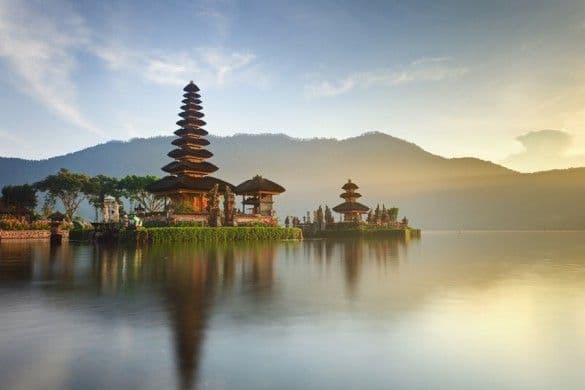
Phewa Lake is the second largest lake in Nepal and the reason Pokhara exists as a holiday town. It stretches roughly four kilometres from Lakeside westward with forested hills on its southern shore and, on a still morning, a perfect reflection of Machhapuchhre on its surface. In the middle of the eastern part of the lake, on a tiny island, stands Tal Barahi Temple, a two-storey pagoda dedicated to the goddess Barahi, reached only by boat.
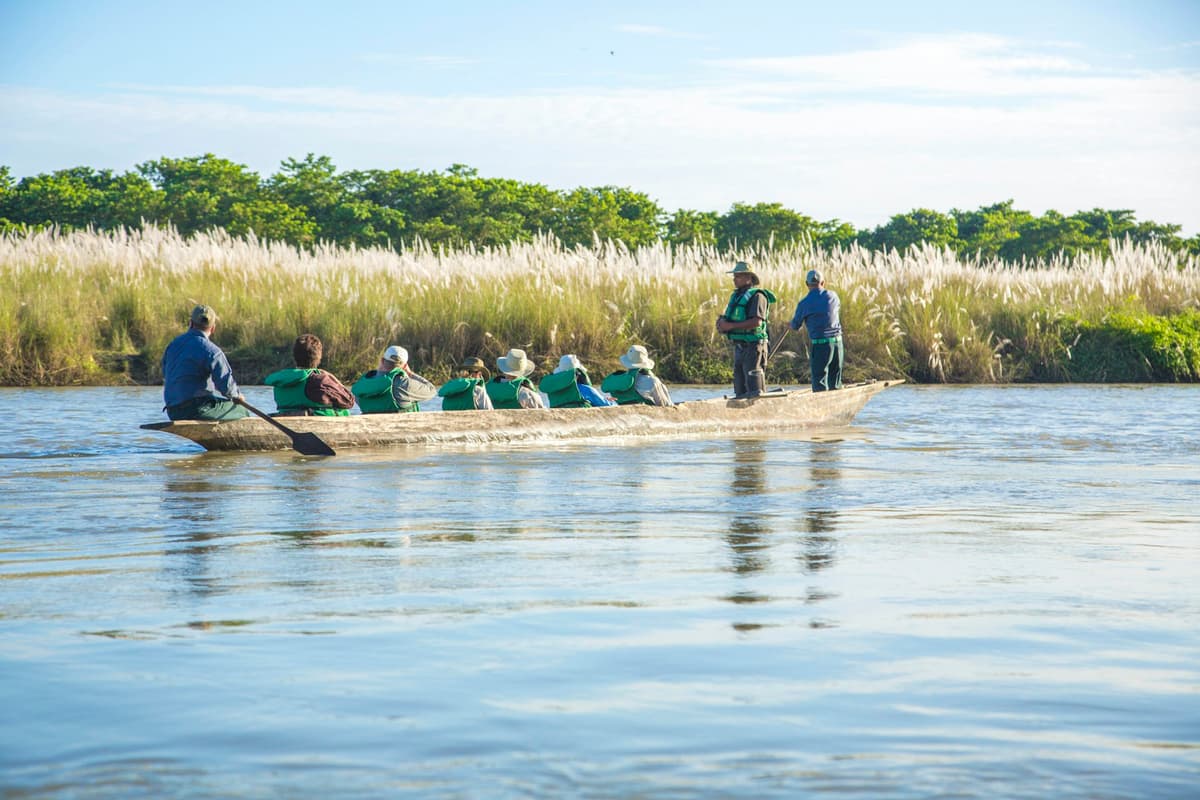
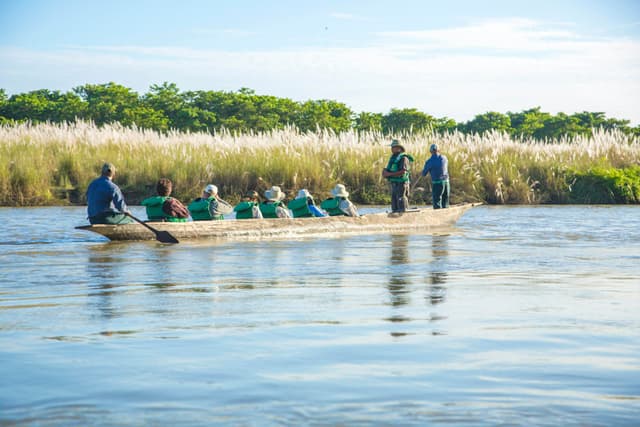
Boating on Phewa Lake is included in your sightseeing day. Colourful wooden boats, called doongas, wait at the Barahi ghat on Lakeside. You can take a rowed boat with a boatman or, on the quieter stretches, a paddle boat. The crossing to Tal Barahi takes only a few minutes. Pilgrims come especially on Saturdays to offer prayers, and if you visit on a Saturday morning you will see a lively scene of families, offerings and the temple bell ringing across the water. Photography is fine on the island, but be respectful inside the shrine.
On Day 2 the boat also carries you across the lake to the southern shore, where the path to the World Peace Pagoda begins. On your free day you can return and simply drift. Many couples hire a boat for an hour in the late afternoon when the light turns golden and the hills go soft. Life jackets are provided and we ask everyone, including strong swimmers, to wear them. Do not swim in the lake near the ghats; the water is busy with boats.
The lake is best enjoyed early in the morning before the breeze picks up, or in the hour before sunset. Midday can be hot and glary in spring and autumn. On your free evening on Day 1, walk along the lakeside path from the Barahi ghat towards Hallan Chowk and simply watch the boats come in. That first evening is often the moment people relax for the first time in months.
Why visit the World Peace Pagoda in Pokhara?
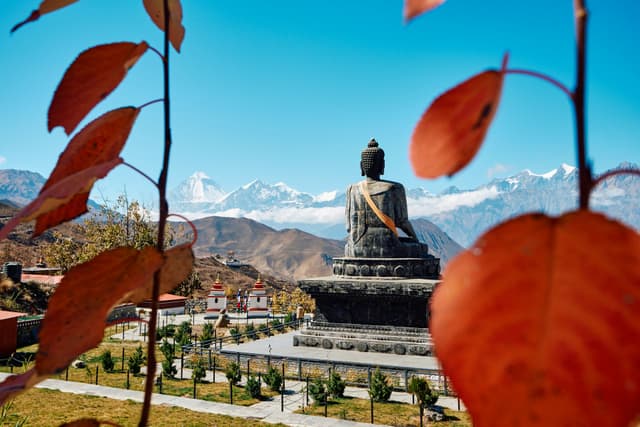
The World Peace Pagoda, called Shanti Stupa locally, is a white Buddhist stupa on the Ananda hill above the southern shore of Phewa Lake. It was built by the Japanese Buddhist order Nipponzan Myohoji, one of a series of peace pagodas around the world. From its terrace you look down on the whole lake and the city, and straight across to the Annapurna range. Many visitors say the view here is even better than Sarangkot because you get lake and mountains in one frame.
On this Pokhara tour package you reach the pagoda the classic way: boat across the lake, then a walk of about 30 to 45 minutes up a shaded forest path with stone steps. It is steady uphill but not difficult; children from about six years old manage it easily and so do fit grandparents who take their time. If anyone in your group cannot manage the steps, tell us in advance and we will drive around by road to the car park near the top, from where it is only a few minutes on foot.
The pagoda itself has four golden Buddha statues facing the four directions, each donated by a different country. Remove your shoes before stepping onto the upper platform, walk clockwise, and keep your voice low; it is an active place of worship. There are a couple of small cafes near the top where you can sit with a cold drink and simply look at the view. In the afternoon the light on the lake is beautiful, and if the day is clear you will have Machhapuchhre in front of you the whole time.
What are Davis Falls and Gupteshwor Mahadev Cave?
Davis Falls, known in Nepali as Patale Chhango, is a waterfall in the south of Pokhara where the Pardi Khola stream drops into a deep, narrow gorge and disappears underground. Directly across the road is Gupteshwor Mahadev Cave, a long limestone cave with a Shiva shrine near the entrance and a lower chamber where you can see the same waterfall from below. The two sites sit together and take about an hour to visit.
Davis Falls, or Patale Chhango
The waterfall gets its foreign name from a Swiss visitor who was swept away in the water in 1961, and the Nepali name Patale Chhango means the waterfall to the underworld, because the water vanishes into a tunnel in the rock. The falls are dramatic in monsoon and immediately after, from July through October, when the volume is high and spray fills the gorge. In the dry months of the late winter and spring the flow is much smaller, so manage your expectations if you visit in March or April. The park around the falls has a small garden, a wishing pond and a few statues that children enjoy.
Gupteshwor Mahadev Cave
Cross the road and you enter Gupteshwor Mahadev Cave, one of the most visited caves in Nepal. A spiral staircase leads down to the shrine of Lord Shiva, where a naturally formed lingam is worshipped. Beyond the shrine the cave continues down to a viewing point where the Davis Falls water thunders into the cavern. The path is wet, low in places and slippery, so wear shoes with grip, mind your head, and hold the rail. The lower section is sometimes closed in heavy monsoon when the water is too high. Photography is not allowed in the shrine area, so please respect the signs.
Both sites charge a small entry fee at Nepali rates, which is handled within your package sightseeing. They are a short drive from Lakeside on the road towards the airport, and we usually combine them with the Seti gorge and the Tibetan refugee settlement at Tashiling if you are interested in Tibetan handicrafts.
What is special about the Seti River gorge?
The Seti Gandaki river flows right through Pokhara but for much of its length you cannot see it, because it has carved a gorge so narrow and deep that in places it is only a few metres wide and disappears under the city. The best viewpoint is at K.I. Singh Bridge near the old bus park, where you look down into a milky white channel far below. The river is white because it carries fine limestone silt from the Annapurna glaciers, and Seti means white in Nepali.
The Seti gorge is a quick stop of ten to fifteen minutes and it is one of those places that surprises people who have only thought of Pokhara as a lake. Other viewpoints are at Mahendrapul in the city centre and inside the grounds of Gurkha Memorial Museum area near the bridge. It is an easy addition on the sightseeing day, and a good place to explain to children how rivers cut through rock over thousands of years.
What can you do on the free day in Pokhara?
Day 3 of the Pokhara tour is deliberately free so you can choose your own pace. Options include relaxing and shopping at Lakeside, an early morning paragliding flight from Sarangkot, the zipline, an ultralight flight, a day trip to quieter Begnas Lake, the International Mountain Museum, Bindhyabasini temple and the Old Bazaar, or Mahendra and Bat caves. Adventure activities are paid optional add-ons that we can book for you at the time.
Paragliding in Pokhara, an honest note
Pokhara is one of the best-known paragliding sites in the world. Tandem flights launch from Sarangkot and land beside the lake, and the view during the flight, with Machhapuchhre ahead and Phewa Lake below, is unforgettable. A standard tandem flight lasts roughly 20 to 30 minutes in the air, and you do not need any experience; a licensed pilot handles everything while you sit in a harness and enjoy the ride.
A few honest points. Paragliding is weather-dependent; flights only run when wind and visibility are safe, and mornings are the most reliable window. In monsoon it is often cancelled. It is not suitable for people with serious heart conditions, back problems, pregnancy, or those far above the operator's weight limit. Motion sickness is possible during turns. Choose a registered company with experienced pilots rather than the cheapest offer on the street; we work only with licensed operators and will tell you honestly if we think the conditions are not right on the day. It is a paid optional activity and is not included in the base package, so ask us for the current rate when you book.
Zipline and ultralight
The zipline from the Sarangkot ridge is one of the longest and steepest in the world, a fast ride of about a minute and a half down towards the valley floor. It is a pure adrenaline rush and very popular with teenagers and young couples. The ultralight flight is a small open aircraft, with a pilot, that flies you towards the mountains in the early morning for a close-up of the Annapurna range. Both run from Pokhara on clear days and both are optional paid add-ons.
Begnas Lake day trip
If you want quiet, go to Begnas Lake, about 15 kilometres east of the city. It is the second lake of Pokhara and far less developed than Phewa. There are boats to hire, small resorts on the ridge with views over the water, and fresh fish lunches by the shore. A half day here in the afternoon is perfect for couples and for older travellers who want to sit and look at the water without the Lakeside bustle. Nearby Rupa Lake is even quieter.
Museums and temples
The International Mountain Museum, near the airport, tells the story of the Himalaya, its people and the climbers who have attempted its peaks. There are displays on Everest expeditions, the Sherpa, Gurung and Thakali communities, the geology of the range and a model climbing wall. It is excellent for children and for anyone curious about the mountains they have been staring at for two days. Allow two hours.
Bindhyabasini Temple stands on a small hill in the north of the old town. It is dedicated to the goddess Bhagwati, a form of Durga, and is the most important Hindu temple in Pokhara. Saturdays and festival days bring crowds of devotees, and the hilltop has a fine mountain view. From the temple it is a short walk down to the Old Bazaar.
Old Bazaar and Pokhara's Newari heritage
Pokhara's Old Bazaar, along the road from Bagar to Bindhyabasini, is what the town looked like before Lakeside existed. Traditional Newari brick houses with carved wooden windows line the street, a reminder that Pokhara grew as a trading post on the route between Tibet and India. It is a good place for a slow walk, some local sweets, and photographs of the everyday city that tourists rarely see.
Mahendra Cave and Bat Cave
In the north of the city at Batulechaur are two more caves. Mahendra Cave is easy and lit, with stalactites and a small shrine, while the nearby Bat Cave, or Chamero Gufa, is home to thousands of horseshoe bats hanging from the ceiling. The Bat Cave has a narrow exit that adventurous visitors squeeze through; it is not for the claustrophobic but children love it. Bring a torch.
Simply relaxing at Lakeside
There is no shame in doing nothing. Many of our guests spend the free day with a late breakfast, a slow walk along the lake, a massage, an afternoon in a cafe with a book and the mountains, and a long dinner. That is what a break is for. If you want to be busy, Pokhara has plenty; if you want to rest, Pokhara is the best place in Nepal to do it.
When is the best time to visit Pokhara?
The best time to visit Pokhara for mountain views is autumn, from late September to November, and spring, from March to April. In these months the skies are usually clear, the Sarangkot sunrise delivers, and the daytime temperature is pleasant. Winter is mild and clear but cold in the early mornings. Monsoon, from June to August, is green and beautiful but the mountains are hidden behind cloud most days, so go then for the lake and the rain, not the peaks.
Pokhara receives more rain than almost any other city in Nepal, so the wet season matters here more than in Kathmandu. Here is our honest month-by-month view of what you can expect.
| Month | Weather | Mountain visibility | Our honest note |
|---|---|---|---|
| January | Cold mornings, sunny mild days | Usually clear above valley fog | Good for views; bring warm clothes for Sarangkot |
| February | Cool, dry, warming late in the month | Clear most days | Quiet, good value, excellent light |
| March | Warm and pleasant, rhododendrons on hills | Clear, some haze building late | One of the best months; Holi celebrations |
| April | Warm, hazier afternoons | Mornings clear, afternoons hazy | Go to Sarangkot early; still a good time |
| May | Hot, pre-monsoon showers | Often hazy or cloudy | Views unreliable; lake and cafes still lovely |
| June | Monsoon begins, humid | Mostly hidden | Green valley, waterfalls full, expect rain |
| July | Heavy monsoon rain | Rarely visible | Davis Falls spectacular; road delays possible |
| August | Heavy rain, brief clear spells | Rarely visible | Lowest season; only if you love the rain |
| September | Rain easing, fresh and green | Improving through the month | Late September can be superb |
| October | Clear, warm days, cool nights | Excellent | Peak month; Dashain and Tihar crowds, book early |
| November | Dry, clear, cooler | Excellent | Best combination of views and comfort |
| December | Cold mornings, sunny days | Clear, morning fog in valley | Good views, festive Lakeside at New Year |
Dashain and Tihar in Pokhara
October is the busiest month because Dashain and Tihar fall in it in most years, schools close, and families from Kathmandu and overseas travel together. The weather is at its best, but hotels at Lakeside fill up and the highway is busy. If you are planning a Pokhara trip over the festival period, book at least two to three months ahead, especially if you need family rooms or lake-view rooms. The weeks just after Tihar, in November, are calmer and just as clear.
Visiting Pokhara in the monsoon
We will not pretend the monsoon is ideal for mountain views. What you get instead is a lush green valley, a full and dramatic Davis Falls, fewer crowds, and cooler evenings. Rain often falls at night and in the afternoon, with clear-ish mornings, and sometimes the clouds part for a few minutes and the peaks appear, which feels like a gift. If your only free dates are in monsoon, still come, but come for the lake and the rest rather than the sunrise.
Who is the Pokhara Tour best suited for?
This Pokhara tour package suits almost everyone because there is no trekking, the driving is done for you, and every activity can be adjusted. It is ideal for families with children, couples and honeymooners, elderly parents, groups of friends, and diaspora Nepalis visiting home who have limited time. The only people it may not suit are those looking for a serious trek or a party holiday, and we can suggest other trips for them.
Families with children
Pokhara is the easiest mountain holiday you can give a child. The boat ride, the caves, the waterfall, the bats and the museum are all naturally exciting for kids, and the walks are short. The private vehicle means you can stop when you need to. Lakeside hotels have family rooms and many have gardens or small pools. Keep an eye on children near the lake edge and inside the caves, and pack a torch and some snacks for the road.
Couples and honeymooners
Pokhara is Nepal's honeymoon capital for good reason. A sunrise at Sarangkot, a private boat at sunset, dinner at a lakeside restaurant with the Fishtail glowing above, and a quiet afternoon at Begnas Lake add up to a genuinely romantic four days. Tell us it is a honeymoon and we will arrange a lake-view room where available and a few small touches. Paragliding as a couple is a favourite add-on for adventurous newlyweds.
Elderly parents and grandparents
We regularly take groups where the youngest is five and the oldest is over seventy. For older travellers we keep the pace slow, use the road route to the Peace Pagoda instead of the steps if needed, and choose hotels with lifts or ground-floor rooms. Sarangkot involves only a few minutes of walking from the car park, and the boat ride is gentle. Do let us know about any mobility or health concerns when you book so we can plan around them.
Solo travellers and small groups of friends
Solo travellers enjoy Pokhara because Lakeside is safe, walkable and social, and there is always someone to talk to in the cafes. Groups of friends often use Day 3 for paragliding or the zipline together and then a long evening at one of the live music venues. If you are travelling alone and want to share the vehicle cost with others, ask us about joining a small group departure.
Where should you stay in Pokhara?
Stay at Lakeside, the hotel and restaurant district along the eastern shore of Phewa Lake. It is where the boats leave, where the cafes and shops are, and where you can walk everywhere on foot in the evening. Within Lakeside, the stretch from Barahi ghat north to Hallan Chowk is the liveliest, while the northern end towards Khahare and the quieter Damside area to the south are calmer and better for families and couples wanting peace.
On our Pokhara tour package you can choose the hotel category that fits your budget, from clean standard hotels with hot water and a good breakfast, to boutique properties with gardens and lake views, to premium resorts on the ridges above the city with the mountains in your window. If you want a lake-view room, say so when booking because they are limited and go first in autumn. Most hotels include breakfast; lunches and dinners are usually left free so you can try different restaurants each evening.
A few things to know. Power cuts are rare now but many hotels still have backup. Hot water is standard in mid-range and above. Air conditioning matters in April, May and September; heating matters in December and January. If you are travelling with elderly parents, ask for a room without many stairs. If you are on a honeymoon, tell us and we will do our best with the room selection.
What is the food and Lakeside scene like in Pokhara?
Lakeside is the most relaxed dining street in Nepal. Along a couple of kilometres you will find Nepali thakali sets, Newari snacks, fresh lake fish, momo of every kind, Indian, Tibetan, Italian, Korean and Japanese food, good coffee, bakeries and rooftop bars with the lake in front and the mountains behind. Prices are reasonable and the pace is unhurried. Evenings bring live music in several venues, mostly acoustic and Nepali folk-rock, and things wind down by around 11 pm.
Do not leave Pokhara without a Thakali khana set, the dal bhat of the Thakali people from the Kali Gandaki valley, served with dhido if you ask, gundruk, timur pickle and local ghee. Fresh fish from Phewa or Begnas, fried whole with garlic and chilli, is another local favourite. For breakfast the Lakeside bakeries sell good bread and cakes, and the coffee culture is strong, with several roasters using beans grown in the Kaski hills. If you have a sweet tooth, look for sel roti in the mornings in the old town.
Lakeside is also the place for shopping. You will find pashmina, felt goods, singing bowls, trekking clothing, Tibetan jewellery from the Tashiling and Tashi Palkhel settlements, local tea and coffee, and handmade paper. Bargaining is normal in the small shops but be fair. For a more authentic shopping experience walk the Old Bazaar in the morning. Cafes and restaurants generally take cash and increasingly accept QR payments; ATMs are plentiful on the main street.
What should you pack for a Pokhara trip?
Pack light layers, one warm jacket for the Sarangkot sunrise, comfortable walking shoes with grip for the caves and the Peace Pagoda path, sunscreen, sunglasses, a hat, a rain jacket or umbrella in any season, a small torch, motion sickness tablets for the highway, and your citizenship card or passport for hotel check-in. Pokhara is a place for comfort rather than style, so leave the heavy suitcase at home.
- Clothing: light cotton for the day, a fleece or jacket for early mornings and evenings, and something warmer from December to February.
- Footwear: trainers or walking shoes; sandals are fine for Lakeside but not for the caves.
- Rain protection: Pokhara can rain in any month, and a light rain jacket or a folding umbrella takes no space.
- Sun protection: the sun is strong at the lake and on the water; sunscreen, hat and sunglasses.
- Health: any personal medication, motion sickness tablets, hand sanitiser, and a small first aid kit for families.
- Documents: citizenship card for Nepali citizens, passport for others; hotels require ID at check-in.
- Electronics: phone, charger, power bank for the road, and a camera if you have one, because the sunrise deserves better than a phone.
- Money: some cash for small purchases, boat tips and snacks; ATMs and QR payment are widely available at Lakeside.
- Extras: swimwear if your hotel has a pool, a book for the free day, and a reusable water bottle.
How many days do you need in Pokhara?
Four days is the ideal length for a Pokhara tour from Kathmandu: one day to travel there, one full sightseeing day, one free day, and one day to travel back. Two nights feels rushed and leaves no time to relax, which is the whole point. If you have more time, a fifth or sixth day allows a Begnas Lake overnight, a short hike to an Australian Camp or Dhampus viewpoint, or a day of rafting on the Trishuli on the way home.
We have designed this package as 4 days and 3 nights because it balances sightseeing and rest. Day 2 covers the main sights so nothing is missed; Day 3 lets you choose adventure or rest. Guests who fly one way can even squeeze the same experience into a slightly shorter stay, but we do not recommend fewer than three nights if you are driving both ways.
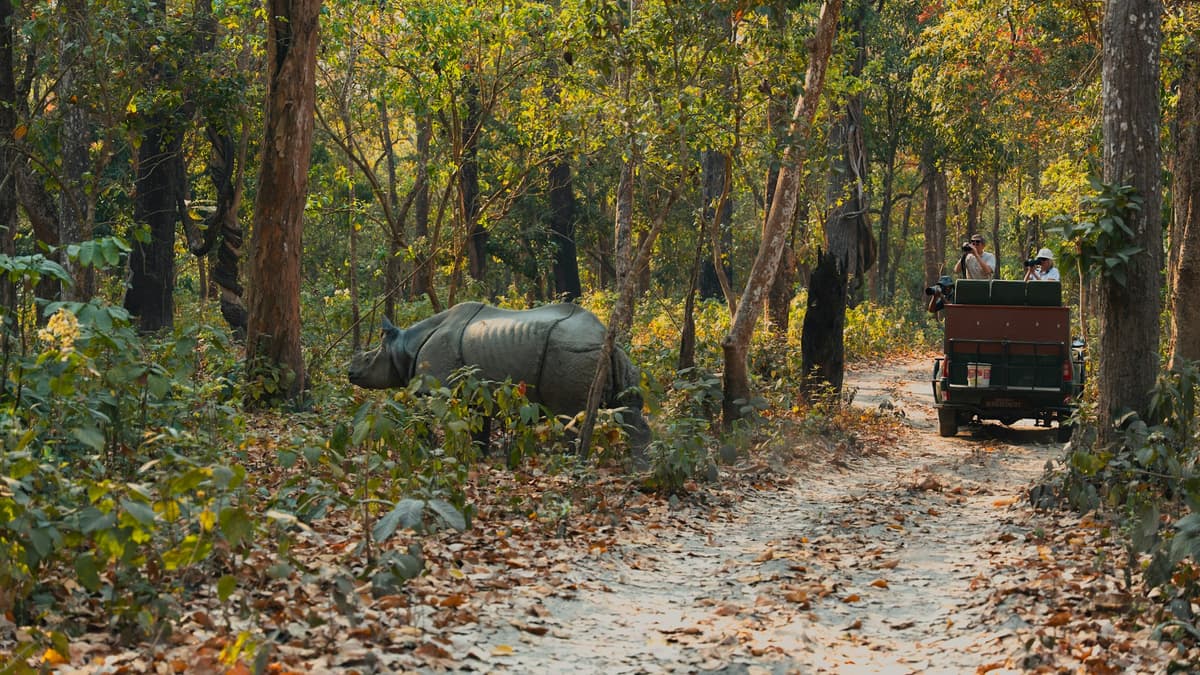
Popular extensions we can add on request include an extra night at Begnas Lake, a night at a mountain-view resort above the city, a day hike from Kande to Australian Camp with a village lunch and an easy walk down, a stop at Manakamana temple by cable car on the return journey, or a Chitwan safari combined into a longer Pokhara and Chitwan tour. Tell us your dates and interests and we will shape it.
Is a Pokhara tour package worth it, or should you go on your own?
A Pokhara tour package is worth it if you value time, comfort and certainty over saving a little money. You get a private vehicle and driver for the whole trip, hotels booked in the right area, sightseeing entry handled, the Sarangkot timing right, and one point of contact on WhatsApp if anything changes. Going on your own is perfectly possible, especially for young solo travellers, but for families, couples and visitors with limited leave the package removes the friction.
Think about what you would otherwise be doing: negotiating a taxi to Sarangkot at 4:30 am, working out which boat to take, finding the right road to the Peace Pagoda car park with elderly parents, and juggling a hotel booking site during Dashain. None of these are hard individually, but together they eat the very rest you came for. Our guests tell us the best part of the package is not thinking about logistics at all.
The package is also flexible. It is your vehicle, so if you want to stay longer at the lake and skip a cave, you can. If the weather is poor on Day 2 we will reshuffle to protect the sunrise. If you decide on the morning of Day 3 that you would like to paraglide, we will make the call. That kind of flexibility is difficult to get with a fixed group tour or a bus schedule.
How can you travel responsibly in Pokhara?
Pokhara depends on its lake and its mountains, and both are under pressure from waste, silt and overbuilding. Travelling responsibly means carrying a reusable bottle, refusing single-use plastic where you can, not throwing anything into the lake, keeping to paths at the caves and the pagoda, respecting temple rules, and spending your money with local businesses. Small habits by many visitors make a real difference to a city this size.
- Phewa Lake is shrinking from silt and pollution; never litter on the water or the shore, and support the boatmen who keep the ghats clean.
- Do not feed or disturb the bats in the Bat Cave and do not touch the formations in Gupteshwor; oils from hands damage them.
- Dress modestly at Tal Barahi, Bindhyabasini and the Peace Pagoda, remove shoes where asked, and do not photograph inside shrines where signs prohibit it.
- Choose licensed paragliding and adventure operators with proper insurance; the cheapest offer is not always the safe one.
- Buy handicrafts from the Tibetan settlements and local makers rather than imported copies; ask where things are made.
- Tip your driver and boatman fairly; they are the people who make the trip work.
- Use water sensibly at hotels and turn off air conditioning and lights when you go out.
Why book your Pokhara tour with Gomayu?
Gomayu is the holiday brand of Zeta Tours and Travels Pvt. Ltd., a registered Nepali travel company with a real office in Kathmandu and a team that knows Pokhara from years of driving guests there. We give you a private vehicle and a reliable driver, hotels at Lakeside chosen for the right reasons, sightseeing handled at Nepali rates, honest advice about weather and add-ons, and a single WhatsApp contact from your first question to the day you get home.
We do not oversell. If the forecast says cloud, we will tell you. If a hotel you have seen online is on a noisy corner, we will say so. If your elderly parents would struggle with the pagoda steps, we will plan the road route. Nepali travellers and diaspora families come back to us because we treat the trip as ours, not just a booking. Our reviews are from real guests and we are happy to connect you with past travellers if that helps you decide.
Booking is simple. Send us your dates, the number of people and the hotel category you prefer, and we will reply on WhatsApp with an instant quote in NPR and a clear list of what is included. Customisations such as a one-way flight, an extra night at Begnas, paragliding, or a Chitwan extension are added on request. The pricing for the standard package is shown in the pricing section of this page. Whether it is your first Pokhara sightseeing trip or your tenth, we would love to take you.
Pokhara does not need a hard sell. A lake, a row of the highest mountains on earth, a slow evening walk and a hot cup of chiya at sunrise are enough. Come and see for yourself.
Price per person
| Group size | Price / person |
|---|---|
| 2 pax | NRs 43,500 /person |
| 3 pax | NRs 34,000 /person |
| 4 pax | NRs 34,000 /person |
| 5 pax | NRs 31,500 /person |
| 6+ pax | NRs 29,000 /person |
Per person · see what’s included
- Prices vary with your travel dates, season and group size.
Pokhara Tour
Pokhara Tour
4Days
Pokhara Tour
The Pokhara tour package is Nepal's easy-going lakeside escape - a chance to slow down under the Annapurnas, drift on Phewa Lake and watch the sun light up Machapuchare from a hilltop at dawn. You travel by private vehicle from Kathmandu and stay right at Lakeside, in the middle of everything.
Over four unhurried days you see the Sarangkot sunrise, Davis Falls, the Gupteshwor cave, the World Peace Pagoda and a boat on Phewa Lake, with a full free day to relax, shop or add your own adventure. There is no trekking and no rush - just Nepal's most relaxing getaway, ideal for families, couples and anyone who needs a breather.
Trip highlights
Day-by-day itinerary
Everything below is fully customizable. Add nights, swap activities, or change hotels.
Day1 Kathmandu to Pokhara›
- Set off from home and drive west along the Prithvi Highway, following the Trishuli River.
- Arrive at lakeside Pokhara and check in; free evening by Phewa Lake.
Day2 Pokhara sightseeing››
- Early sunrise trip to Sarangkot for the Annapurna panorama.
- Davis Falls, the Gupteshwor cave and the Seti river gorge.
- A boat across Phewa Lake to the island temple and up to the World Peace Pagoda.
Day3 Free day at the lake
- A free day to relax at Lakeside, shop, or add your own adventure - paragliding, zipline or a day trip to Begnas Lake (on request).
Day4 Pokhara to Kathmandu (homecoming)
- Breakfast, then the drive back to Kathmandu, arriving by evening.
Package pricing
The more travellers in your group, the lower the price per person.
| Group size | Price / person |
|---|---|
| 2 pax | NRs 43,500 /person |
| 3 pax | NRs 34,000 /person |
| 4 pax | NRs 34,000 /person |
| 5 pax | NRs 31,500 /person |
| 6+ pax | NRs 29,000 /person |
- Prices vary with your travel dates, season and group size.
Prices are per person · see what’s included.
What's included
| Items | This package |
|---|---|
| 3/4-star hotel in lakeside | Included |
| Private vehicle from Kathmandu | Included |
| Pokhara sightseeing | Included |
| Phewa Lake boat ride | Included |
| Entry fees | Included |
| Meals in the itinerary | Included |
| Adventure activities | Not included |
| Dinners in Pokhara | Not included |
| Travel & personal expenses | Not included |
Anything not listed here is not included.
Things to carry
- Light layers plus a warm layer for the early Sarangkot sunrise
- Comfortable walking shoes
- Sunglasses, a sun hat and sunscreen
- A light rain jacket
- A camera for the mountain views
- A reusable water bottle
- Personal medication and some cash for Lakeside
What our travellers say
Real reviews from Google, verified by travelers.
“It was our best decision to choose Gomayu. We had a wonderful experience with GOMAYU during our Thailand trip. Hotels, Location and itinerary all were well planned and was according to our expectations. Response and communication was very good in Thailand as well. You made our trip very smooth, hassle free and stress free from begning to the end of our trip. This trip was memorable, as me and my husband got to celebrate our 20th wedding Anniversary together in the beautiful place of Thailand and credit goes to GOMAYU for all the arrangements . We are very much satisfied with your service and hope to have other trips with you soon. I would happily Recommend GOMAYU to my friends and family for their excellent service and professional support.”
“Me and my family had a great 10 days trip to Vietnam and Bangkok. All thanks to the wonderful service of Gomayu. Thank you so much for making our trip so easy, fun and stress free.”
“We had an unforgettable 5D4N trip to Bali with Gomayu Holidays! From the very beginning, the communication was smooth, clear, and professional. Everything was perfectly organized; airport pickup, hotel check-ins, and daily tours were always on time, with no stress at all. Our stay was split between a beautiful private pool villa in Seminyak and a comfortable room at Grand Mega Resort, both of which exceeded expectations. The itinerary was well-balanced with adventure, culture, and relaxation. We really enjoyed the watersports (banana boat, jet ski, parasailing), the stunning Uluwatu Temple with Kecak dance, and the romantic candlelight dinner at Jimbaran Beach. The Bali swing and tandem ATV ride were absolute highlights and so much fun! Visiting Lempuyang Temple (Gate of Heaven) was magical and very well arranged despite the crowds. We had some spare time to visit the malls and try local food as well. Special thanks to the guide and driver, who was friendly, helpful, super-flexible and always made sure we were comfortable. We didn’t have to worry about anything as everything was well-organized. Highly recommended for anyone planning a hassle-free and memorable Bali trip. Thank you, Gomayu Holidays, for making our holiday truly special!”
“We had a wonderful experience with Gomayau as our travel partner, with everything being well-organized and thoughtfully planned from start to finish, making the entire trip smooth and enjoyable; the overall coordination was excellent, with timely arrangements and great attention to detail, and the team’s consistent support throughout the journey made a real difference, while communication remained easy and reliable, giving us confidence and peace of mind; we truly appreciated the professionalism and dedication in handling logistics and day-to-day planning, which allowed us to fully relax and enjoy the trip, and overall, it was a great experience that we will remember for future travels and would highly recommend to anyone looking for a hassle-free and well-managed trip.”
“Thank you so much Gomayu Holidays. We had an amazing trip. we are extremely satisfied with their service. The itinerary was wonderfully planned and perfectly organized.Highly recommend planning your next vacation with Gomayu Holidays they are truly EXCELLENT. Special heartfelt thank you to Krishtina and Elho from Gomayu Holidays!”
Good to know
Complete travel guide
What is the Pokhara Tour and why do so many Nepalis choose it?
The Pokhara Tour is a 4-day sightseeing and relaxation trip from Kathmandu to Pokhara, Nepal's lakeside city under the Annapurna range. You travel by private vehicle, stay at Lakeside, watch the Sarangkot sunrise, boat on Phewa Lake, climb to the World Peace Pagoda and visit Davis Falls and Gupteshwor cave. There is no trekking. It is an easy pokhara tour package built for families, couples and anyone who simply needs a break from the city.
Pokhara sits in the Kaski district of Gandaki Province, roughly 200 kilometres west of Kathmandu by road. What makes the city special is the contrast: you stand beside a calm lake at around 800 metres above sea level and look straight up at peaks above 7,000 and 8,000 metres. Machhapuchhre, the Fishtail, seems close enough to touch on a clear morning. Behind it stand Annapurna South, Annapurna I, Annapurna II, Annapurna IV, Lamjung Himal, and further along the horizon Dhaulagiri to the west and Manaslu to the east. Very few places on earth give this kind of view without a single day of hard walking.
For Nepalis living in Kathmandu, Pokhara is the classic escape. The air is cleaner, the pace is slower, the lake is calm and the cafes along Lakeside stay open late. For members of the Nepali diaspora visiting home from Australia, the USA, the UK, the Gulf or Japan, a pokhara tour from kathmandu is the easiest way to show your children or your partner the Himalaya without a long trek. Many families combine a visit to relatives with these four days, and it works well because the schedule is relaxed and the driving is done for you.
This guide is written by our Gomayu team who have driven the Prithvi Highway more times than we can count and who have watched the Sarangkot sunrise in every season. We will tell you what is genuinely wonderful, what is overrated, when the mountains hide behind cloud, and how to make the most of your four days. If you have a question we have not answered, message us on WhatsApp and we will reply with a straight answer and an instant quote in NPR.
How do you get from Kathmandu to Pokhara?
On this Pokhara tour package you travel by private vehicle along the Prithvi Highway. The drive takes around 6 to 7 hours depending on traffic and road conditions, with stops for breakfast, lunch and photos. The road follows the Trishuli River for a long stretch, then the Marsyangdi, before climbing gently into the Pokhara valley. Alternatives are the tourist bus, which is cheaper but slower and fixed to a schedule, and the 25-minute flight, which we can arrange if you would rather skip the road.
The road journey on the Prithvi Highway
The private vehicle is the heart of this package because it turns a long transfer into part of the holiday. You leave Kathmandu early, usually before the morning traffic builds, and drop down through Naubise into the Trishuli valley. From here the river stays beside you for hours. You will pass rafting camps near Charaudi and Fishling, the busy market town of Malekhu famous for its river fish, and Mugling where the road turns west and joins the Marsyangdi.
Along the way you can stop wherever you like. Popular breaks are a riverside breakfast, a look at Manakamana cable car station from the road at Kurintar, and a lunch stop around Mugling or Dumre. Families with small children appreciate that a private vehicle can stop for the toilet or a snack at any time, and older travellers appreciate the more comfortable seats and the air conditioning compared to a bus.
Be honest with yourself about the road. It is a working highway used by trucks and buses, and sections are being widened, so there can be slow patches, dust and the occasional delay. In monsoon there is a small chance of landslides causing a wait. Our drivers know the road well and know when to leave early to avoid the worst of it. If anyone in your group suffers from motion sickness, sit in the front seat, keep the window slightly open and take a motion sickness tablet before leaving.
Tourist bus as an alternative
Tourist buses leave Kathmandu from Kantipath and Sorhakhutte every morning, most of them between 6 and 8 am, and arrive in Pokhara in the afternoon. They are a reasonable budget option for solo travellers and students. The trade-off is that you cannot stop where you want, you share the bus with strangers, and the arrival time is less predictable. For a family holiday or a honeymoon, a private vehicle is worth it for comfort and flexibility alone.
Flying from Kathmandu to Pokhara
Domestic airlines fly between Kathmandu and Pokhara many times a day and the flight itself takes about 25 minutes. On a clear day the right-hand side of the aircraft flying west gives a view of Ganesh Himal, Manaslu and the Annapurnas. Flights can be delayed or cancelled in poor visibility, especially in monsoon and in foggy winter mornings, so keep a buffer if you are connecting to an international flight afterwards. If you prefer to fly one way and drive the other, tell us and we will adjust the package.
Is the Sarangkot sunrise worth waking up early for?
Yes. In autumn and spring the Sarangkot sunrise is the single best moment of any pokhara tour. You leave Lakeside in the dark, drive about 30 to 40 minutes up the hill to the viewpoint at around 1,600 metres, and watch the first light turn Machhapuchhre pink, then orange, then white, while the whole Annapurna range and Dhaulagiri light up one by one. It is emotional even for people who have seen it before.
Sarangkot is the hill directly north of Phewa Lake. From the top you see the lake below you, the city spread across the valley, and a long unbroken wall of Himalaya to the north. The famous panorama runs from Dhaulagiri in the west, through Annapurna South, Hiunchuli, Annapurna I, Machhapuchhre, Annapurna III and IV, Annapurna II and Lamjung Himal, to Manaslu in the far east. Your driver will time the departure so you arrive before the sky starts to glow.
A few practical tips from our team. Bring a warm layer even in October; it is cold and windy at the viewpoint before the sun is up. Arrive early enough to get a spot at the front. There is a small entry fee for the viewing tower area collected at Nepali rates, which is included in your sightseeing. Tea and coffee sellers set up near the top, and a hot cup of chiya while you wait is part of the experience. Once the sun is fully up, the colours fade quickly, so take your photos in the first fifteen minutes.
Now the honest part. In monsoon, from June to August, Sarangkot sunrise is often a wall of cloud with no mountains at all. In winter, from December to February, the mornings can be foggy in the valley but the peaks above are usually clear and sharp, so it is still worth going. If the forecast is cloudy on your Day 2 morning, we will suggest swapping the sunrise to Day 3 when possible, because a clear Sarangkot is worth rearranging for.
What is Phewa Lake and Tal Barahi Temple like?
Phewa Lake is the second largest lake in Nepal and the reason Pokhara exists as a holiday town. It stretches roughly four kilometres from Lakeside westward with forested hills on its southern shore and, on a still morning, a perfect reflection of Machhapuchhre on its surface. In the middle of the eastern part of the lake, on a tiny island, stands Tal Barahi Temple, a two-storey pagoda dedicated to the goddess Barahi, reached only by boat.
Boating on Phewa Lake is included in your sightseeing day. Colourful wooden boats, called doongas, wait at the Barahi ghat on Lakeside. You can take a rowed boat with a boatman or, on the quieter stretches, a paddle boat. The crossing to Tal Barahi takes only a few minutes. Pilgrims come especially on Saturdays to offer prayers, and if you visit on a Saturday morning you will see a lively scene of families, offerings and the temple bell ringing across the water. Photography is fine on the island, but be respectful inside the shrine.
On Day 2 the boat also carries you across the lake to the southern shore, where the path to the World Peace Pagoda begins. On your free day you can return and simply drift. Many couples hire a boat for an hour in the late afternoon when the light turns golden and the hills go soft. Life jackets are provided and we ask everyone, including strong swimmers, to wear them. Do not swim in the lake near the ghats; the water is busy with boats.
The lake is best enjoyed early in the morning before the breeze picks up, or in the hour before sunset. Midday can be hot and glary in spring and autumn. On your free evening on Day 1, walk along the lakeside path from the Barahi ghat towards Hallan Chowk and simply watch the boats come in. That first evening is often the moment people relax for the first time in months.
Why visit the World Peace Pagoda in Pokhara?
The World Peace Pagoda, called Shanti Stupa locally, is a white Buddhist stupa on the Ananda hill above the southern shore of Phewa Lake. It was built by the Japanese Buddhist order Nipponzan Myohoji, one of a series of peace pagodas around the world. From its terrace you look down on the whole lake and the city, and straight across to the Annapurna range. Many visitors say the view here is even better than Sarangkot because you get lake and mountains in one frame.
On this Pokhara tour package you reach the pagoda the classic way: boat across the lake, then a walk of about 30 to 45 minutes up a shaded forest path with stone steps. It is steady uphill but not difficult; children from about six years old manage it easily and so do fit grandparents who take their time. If anyone in your group cannot manage the steps, tell us in advance and we will drive around by road to the car park near the top, from where it is only a few minutes on foot.
The pagoda itself has four golden Buddha statues facing the four directions, each donated by a different country. Remove your shoes before stepping onto the upper platform, walk clockwise, and keep your voice low; it is an active place of worship. There are a couple of small cafes near the top where you can sit with a cold drink and simply look at the view. In the afternoon the light on the lake is beautiful, and if the day is clear you will have Machhapuchhre in front of you the whole time.
What are Davis Falls and Gupteshwor Mahadev Cave?
Davis Falls, known in Nepali as Patale Chhango, is a waterfall in the south of Pokhara where the Pardi Khola stream drops into a deep, narrow gorge and disappears underground. Directly across the road is Gupteshwor Mahadev Cave, a long limestone cave with a Shiva shrine near the entrance and a lower chamber where you can see the same waterfall from below. The two sites sit together and take about an hour to visit.
Davis Falls, or Patale Chhango
The waterfall gets its foreign name from a Swiss visitor who was swept away in the water in 1961, and the Nepali name Patale Chhango means the waterfall to the underworld, because the water vanishes into a tunnel in the rock. The falls are dramatic in monsoon and immediately after, from July through October, when the volume is high and spray fills the gorge. In the dry months of the late winter and spring the flow is much smaller, so manage your expectations if you visit in March or April. The park around the falls has a small garden, a wishing pond and a few statues that children enjoy.
Gupteshwor Mahadev Cave
Cross the road and you enter Gupteshwor Mahadev Cave, one of the most visited caves in Nepal. A spiral staircase leads down to the shrine of Lord Shiva, where a naturally formed lingam is worshipped. Beyond the shrine the cave continues down to a viewing point where the Davis Falls water thunders into the cavern. The path is wet, low in places and slippery, so wear shoes with grip, mind your head, and hold the rail. The lower section is sometimes closed in heavy monsoon when the water is too high. Photography is not allowed in the shrine area, so please respect the signs.
Both sites charge a small entry fee at Nepali rates, which is handled within your package sightseeing. They are a short drive from Lakeside on the road towards the airport, and we usually combine them with the Seti gorge and the Tibetan refugee settlement at Tashiling if you are interested in Tibetan handicrafts.
What is special about the Seti River gorge?
The Seti Gandaki river flows right through Pokhara but for much of its length you cannot see it, because it has carved a gorge so narrow and deep that in places it is only a few metres wide and disappears under the city. The best viewpoint is at K.I. Singh Bridge near the old bus park, where you look down into a milky white channel far below. The river is white because it carries fine limestone silt from the Annapurna glaciers, and Seti means white in Nepali.
The Seti gorge is a quick stop of ten to fifteen minutes and it is one of those places that surprises people who have only thought of Pokhara as a lake. Other viewpoints are at Mahendrapul in the city centre and inside the grounds of Gurkha Memorial Museum area near the bridge. It is an easy addition on the sightseeing day, and a good place to explain to children how rivers cut through rock over thousands of years.
What can you do on the free day in Pokhara?
Day 3 of the Pokhara tour is deliberately free so you can choose your own pace. Options include relaxing and shopping at Lakeside, an early morning paragliding flight from Sarangkot, the zipline, an ultralight flight, a day trip to quieter Begnas Lake, the International Mountain Museum, Bindhyabasini temple and the Old Bazaar, or Mahendra and Bat caves. Adventure activities are paid optional add-ons that we can book for you at the time.
Paragliding in Pokhara, an honest note
Pokhara is one of the best-known paragliding sites in the world. Tandem flights launch from Sarangkot and land beside the lake, and the view during the flight, with Machhapuchhre ahead and Phewa Lake below, is unforgettable. A standard tandem flight lasts roughly 20 to 30 minutes in the air, and you do not need any experience; a licensed pilot handles everything while you sit in a harness and enjoy the ride.
A few honest points. Paragliding is weather-dependent; flights only run when wind and visibility are safe, and mornings are the most reliable window. In monsoon it is often cancelled. It is not suitable for people with serious heart conditions, back problems, pregnancy, or those far above the operator's weight limit. Motion sickness is possible during turns. Choose a registered company with experienced pilots rather than the cheapest offer on the street; we work only with licensed operators and will tell you honestly if we think the conditions are not right on the day. It is a paid optional activity and is not included in the base package, so ask us for the current rate when you book.
Zipline and ultralight
The zipline from the Sarangkot ridge is one of the longest and steepest in the world, a fast ride of about a minute and a half down towards the valley floor. It is a pure adrenaline rush and very popular with teenagers and young couples. The ultralight flight is a small open aircraft, with a pilot, that flies you towards the mountains in the early morning for a close-up of the Annapurna range. Both run from Pokhara on clear days and both are optional paid add-ons.
Begnas Lake day trip
If you want quiet, go to Begnas Lake, about 15 kilometres east of the city. It is the second lake of Pokhara and far less developed than Phewa. There are boats to hire, small resorts on the ridge with views over the water, and fresh fish lunches by the shore. A half day here in the afternoon is perfect for couples and for older travellers who want to sit and look at the water without the Lakeside bustle. Nearby Rupa Lake is even quieter.
Museums and temples
The International Mountain Museum, near the airport, tells the story of the Himalaya, its people and the climbers who have attempted its peaks. There are displays on Everest expeditions, the Sherpa, Gurung and Thakali communities, the geology of the range and a model climbing wall. It is excellent for children and for anyone curious about the mountains they have been staring at for two days. Allow two hours.
Bindhyabasini Temple stands on a small hill in the north of the old town. It is dedicated to the goddess Bhagwati, a form of Durga, and is the most important Hindu temple in Pokhara. Saturdays and festival days bring crowds of devotees, and the hilltop has a fine mountain view. From the temple it is a short walk down to the Old Bazaar.
Old Bazaar and Pokhara's Newari heritage
Pokhara's Old Bazaar, along the road from Bagar to Bindhyabasini, is what the town looked like before Lakeside existed. Traditional Newari brick houses with carved wooden windows line the street, a reminder that Pokhara grew as a trading post on the route between Tibet and India. It is a good place for a slow walk, some local sweets, and photographs of the everyday city that tourists rarely see.
Mahendra Cave and Bat Cave
In the north of the city at Batulechaur are two more caves. Mahendra Cave is easy and lit, with stalactites and a small shrine, while the nearby Bat Cave, or Chamero Gufa, is home to thousands of horseshoe bats hanging from the ceiling. The Bat Cave has a narrow exit that adventurous visitors squeeze through; it is not for the claustrophobic but children love it. Bring a torch.
Simply relaxing at Lakeside
There is no shame in doing nothing. Many of our guests spend the free day with a late breakfast, a slow walk along the lake, a massage, an afternoon in a cafe with a book and the mountains, and a long dinner. That is what a break is for. If you want to be busy, Pokhara has plenty; if you want to rest, Pokhara is the best place in Nepal to do it.
When is the best time to visit Pokhara?
The best time to visit Pokhara for mountain views is autumn, from late September to November, and spring, from March to April. In these months the skies are usually clear, the Sarangkot sunrise delivers, and the daytime temperature is pleasant. Winter is mild and clear but cold in the early mornings. Monsoon, from June to August, is green and beautiful but the mountains are hidden behind cloud most days, so go then for the lake and the rain, not the peaks.
Pokhara receives more rain than almost any other city in Nepal, so the wet season matters here more than in Kathmandu. Here is our honest month-by-month view of what you can expect.
| Month | Weather | Mountain visibility | Our honest note |
|---|---|---|---|
| January | Cold mornings, sunny mild days | Usually clear above valley fog | Good for views; bring warm clothes for Sarangkot |
| February | Cool, dry, warming late in the month | Clear most days | Quiet, good value, excellent light |
| March | Warm and pleasant, rhododendrons on hills | Clear, some haze building late | One of the best months; Holi celebrations |
| April | Warm, hazier afternoons | Mornings clear, afternoons hazy | Go to Sarangkot early; still a good time |
| May | Hot, pre-monsoon showers | Often hazy or cloudy | Views unreliable; lake and cafes still lovely |
| June | Monsoon begins, humid | Mostly hidden | Green valley, waterfalls full, expect rain |
| July | Heavy monsoon rain | Rarely visible | Davis Falls spectacular; road delays possible |
| August | Heavy rain, brief clear spells | Rarely visible | Lowest season; only if you love the rain |
| September | Rain easing, fresh and green | Improving through the month | Late September can be superb |
| October | Clear, warm days, cool nights | Excellent | Peak month; Dashain and Tihar crowds, book early |
| November | Dry, clear, cooler | Excellent | Best combination of views and comfort |
| December | Cold mornings, sunny days | Clear, morning fog in valley | Good views, festive Lakeside at New Year |
Dashain and Tihar in Pokhara
October is the busiest month because Dashain and Tihar fall in it in most years, schools close, and families from Kathmandu and overseas travel together. The weather is at its best, but hotels at Lakeside fill up and the highway is busy. If you are planning a Pokhara trip over the festival period, book at least two to three months ahead, especially if you need family rooms or lake-view rooms. The weeks just after Tihar, in November, are calmer and just as clear.
Visiting Pokhara in the monsoon
We will not pretend the monsoon is ideal for mountain views. What you get instead is a lush green valley, a full and dramatic Davis Falls, fewer crowds, and cooler evenings. Rain often falls at night and in the afternoon, with clear-ish mornings, and sometimes the clouds part for a few minutes and the peaks appear, which feels like a gift. If your only free dates are in monsoon, still come, but come for the lake and the rest rather than the sunrise.
Who is the Pokhara Tour best suited for?
This Pokhara tour package suits almost everyone because there is no trekking, the driving is done for you, and every activity can be adjusted. It is ideal for families with children, couples and honeymooners, elderly parents, groups of friends, and diaspora Nepalis visiting home who have limited time. The only people it may not suit are those looking for a serious trek or a party holiday, and we can suggest other trips for them.
Families with children
Pokhara is the easiest mountain holiday you can give a child. The boat ride, the caves, the waterfall, the bats and the museum are all naturally exciting for kids, and the walks are short. The private vehicle means you can stop when you need to. Lakeside hotels have family rooms and many have gardens or small pools. Keep an eye on children near the lake edge and inside the caves, and pack a torch and some snacks for the road.
Couples and honeymooners
Pokhara is Nepal's honeymoon capital for good reason. A sunrise at Sarangkot, a private boat at sunset, dinner at a lakeside restaurant with the Fishtail glowing above, and a quiet afternoon at Begnas Lake add up to a genuinely romantic four days. Tell us it is a honeymoon and we will arrange a lake-view room where available and a few small touches. Paragliding as a couple is a favourite add-on for adventurous newlyweds.
Elderly parents and grandparents
We regularly take groups where the youngest is five and the oldest is over seventy. For older travellers we keep the pace slow, use the road route to the Peace Pagoda instead of the steps if needed, and choose hotels with lifts or ground-floor rooms. Sarangkot involves only a few minutes of walking from the car park, and the boat ride is gentle. Do let us know about any mobility or health concerns when you book so we can plan around them.
Solo travellers and small groups of friends
Solo travellers enjoy Pokhara because Lakeside is safe, walkable and social, and there is always someone to talk to in the cafes. Groups of friends often use Day 3 for paragliding or the zipline together and then a long evening at one of the live music venues. If you are travelling alone and want to share the vehicle cost with others, ask us about joining a small group departure.
Where should you stay in Pokhara?
Stay at Lakeside, the hotel and restaurant district along the eastern shore of Phewa Lake. It is where the boats leave, where the cafes and shops are, and where you can walk everywhere on foot in the evening. Within Lakeside, the stretch from Barahi ghat north to Hallan Chowk is the liveliest, while the northern end towards Khahare and the quieter Damside area to the south are calmer and better for families and couples wanting peace.
On our Pokhara tour package you can choose the hotel category that fits your budget, from clean standard hotels with hot water and a good breakfast, to boutique properties with gardens and lake views, to premium resorts on the ridges above the city with the mountains in your window. If you want a lake-view room, say so when booking because they are limited and go first in autumn. Most hotels include breakfast; lunches and dinners are usually left free so you can try different restaurants each evening.
A few things to know. Power cuts are rare now but many hotels still have backup. Hot water is standard in mid-range and above. Air conditioning matters in April, May and September; heating matters in December and January. If you are travelling with elderly parents, ask for a room without many stairs. If you are on a honeymoon, tell us and we will do our best with the room selection.
What is the food and Lakeside scene like in Pokhara?
Lakeside is the most relaxed dining street in Nepal. Along a couple of kilometres you will find Nepali thakali sets, Newari snacks, fresh lake fish, momo of every kind, Indian, Tibetan, Italian, Korean and Japanese food, good coffee, bakeries and rooftop bars with the lake in front and the mountains behind. Prices are reasonable and the pace is unhurried. Evenings bring live music in several venues, mostly acoustic and Nepali folk-rock, and things wind down by around 11 pm.
Do not leave Pokhara without a Thakali khana set, the dal bhat of the Thakali people from the Kali Gandaki valley, served with dhido if you ask, gundruk, timur pickle and local ghee. Fresh fish from Phewa or Begnas, fried whole with garlic and chilli, is another local favourite. For breakfast the Lakeside bakeries sell good bread and cakes, and the coffee culture is strong, with several roasters using beans grown in the Kaski hills. If you have a sweet tooth, look for sel roti in the mornings in the old town.
Lakeside is also the place for shopping. You will find pashmina, felt goods, singing bowls, trekking clothing, Tibetan jewellery from the Tashiling and Tashi Palkhel settlements, local tea and coffee, and handmade paper. Bargaining is normal in the small shops but be fair. For a more authentic shopping experience walk the Old Bazaar in the morning. Cafes and restaurants generally take cash and increasingly accept QR payments; ATMs are plentiful on the main street.
What should you pack for a Pokhara trip?
Pack light layers, one warm jacket for the Sarangkot sunrise, comfortable walking shoes with grip for the caves and the Peace Pagoda path, sunscreen, sunglasses, a hat, a rain jacket or umbrella in any season, a small torch, motion sickness tablets for the highway, and your citizenship card or passport for hotel check-in. Pokhara is a place for comfort rather than style, so leave the heavy suitcase at home.
- Clothing: light cotton for the day, a fleece or jacket for early mornings and evenings, and something warmer from December to February.
- Footwear: trainers or walking shoes; sandals are fine for Lakeside but not for the caves.
- Rain protection: Pokhara can rain in any month, and a light rain jacket or a folding umbrella takes no space.
- Sun protection: the sun is strong at the lake and on the water; sunscreen, hat and sunglasses.
- Health: any personal medication, motion sickness tablets, hand sanitiser, and a small first aid kit for families.
- Documents: citizenship card for Nepali citizens, passport for others; hotels require ID at check-in.
- Electronics: phone, charger, power bank for the road, and a camera if you have one, because the sunrise deserves better than a phone.
- Money: some cash for small purchases, boat tips and snacks; ATMs and QR payment are widely available at Lakeside.
- Extras: swimwear if your hotel has a pool, a book for the free day, and a reusable water bottle.
How many days do you need in Pokhara?
Four days is the ideal length for a Pokhara tour from Kathmandu: one day to travel there, one full sightseeing day, one free day, and one day to travel back. Two nights feels rushed and leaves no time to relax, which is the whole point. If you have more time, a fifth or sixth day allows a Begnas Lake overnight, a short hike to an Australian Camp or Dhampus viewpoint, or a day of rafting on the Trishuli on the way home.
We have designed this package as 4 days and 3 nights because it balances sightseeing and rest. Day 2 covers the main sights so nothing is missed; Day 3 lets you choose adventure or rest. Guests who fly one way can even squeeze the same experience into a slightly shorter stay, but we do not recommend fewer than three nights if you are driving both ways.
Popular extensions we can add on request include an extra night at Begnas Lake, a night at a mountain-view resort above the city, a day hike from Kande to Australian Camp with a village lunch and an easy walk down, a stop at Manakamana temple by cable car on the return journey, or a Chitwan safari combined into a longer Pokhara and Chitwan tour. Tell us your dates and interests and we will shape it.
Is a Pokhara tour package worth it, or should you go on your own?
A Pokhara tour package is worth it if you value time, comfort and certainty over saving a little money. You get a private vehicle and driver for the whole trip, hotels booked in the right area, sightseeing entry handled, the Sarangkot timing right, and one point of contact on WhatsApp if anything changes. Going on your own is perfectly possible, especially for young solo travellers, but for families, couples and visitors with limited leave the package removes the friction.
Think about what you would otherwise be doing: negotiating a taxi to Sarangkot at 4:30 am, working out which boat to take, finding the right road to the Peace Pagoda car park with elderly parents, and juggling a hotel booking site during Dashain. None of these are hard individually, but together they eat the very rest you came for. Our guests tell us the best part of the package is not thinking about logistics at all.
The package is also flexible. It is your vehicle, so if you want to stay longer at the lake and skip a cave, you can. If the weather is poor on Day 2 we will reshuffle to protect the sunrise. If you decide on the morning of Day 3 that you would like to paraglide, we will make the call. That kind of flexibility is difficult to get with a fixed group tour or a bus schedule.
How can you travel responsibly in Pokhara?
Pokhara depends on its lake and its mountains, and both are under pressure from waste, silt and overbuilding. Travelling responsibly means carrying a reusable bottle, refusing single-use plastic where you can, not throwing anything into the lake, keeping to paths at the caves and the pagoda, respecting temple rules, and spending your money with local businesses. Small habits by many visitors make a real difference to a city this size.
- Phewa Lake is shrinking from silt and pollution; never litter on the water or the shore, and support the boatmen who keep the ghats clean.
- Do not feed or disturb the bats in the Bat Cave and do not touch the formations in Gupteshwor; oils from hands damage them.
- Dress modestly at Tal Barahi, Bindhyabasini and the Peace Pagoda, remove shoes where asked, and do not photograph inside shrines where signs prohibit it.
- Choose licensed paragliding and adventure operators with proper insurance; the cheapest offer is not always the safe one.
- Buy handicrafts from the Tibetan settlements and local makers rather than imported copies; ask where things are made.
- Tip your driver and boatman fairly; they are the people who make the trip work.
- Use water sensibly at hotels and turn off air conditioning and lights when you go out.
Why book your Pokhara tour with Gomayu?
Gomayu is the holiday brand of Zeta Tours and Travels Pvt. Ltd., a registered Nepali travel company with a real office in Kathmandu and a team that knows Pokhara from years of driving guests there. We give you a private vehicle and a reliable driver, hotels at Lakeside chosen for the right reasons, sightseeing handled at Nepali rates, honest advice about weather and add-ons, and a single WhatsApp contact from your first question to the day you get home.
We do not oversell. If the forecast says cloud, we will tell you. If a hotel you have seen online is on a noisy corner, we will say so. If your elderly parents would struggle with the pagoda steps, we will plan the road route. Nepali travellers and diaspora families come back to us because we treat the trip as ours, not just a booking. Our reviews are from real guests and we are happy to connect you with past travellers if that helps you decide.
Booking is simple. Send us your dates, the number of people and the hotel category you prefer, and we will reply on WhatsApp with an instant quote in NPR and a clear list of what is included. Customisations such as a one-way flight, an extra night at Begnas, paragliding, or a Chitwan extension are added on request. The pricing for the standard package is shown in the pricing section of this page. Whether it is your first Pokhara sightseeing trip or your tenth, we would love to take you.
Pokhara does not need a hard sell. A lake, a row of the highest mountains on earth, a slow evening walk and a hot cup of chiya at sunrise are enough. Come and see for yourself.
Price per person
| Group size | Price / person |
|---|---|
| 2 pax | NRs 43,500 /person |
| 3 pax | NRs 34,000 /person |
| 4 pax | NRs 34,000 /person |
| 5 pax | NRs 31,500 /person |
| 6+ pax | NRs 29,000 /person |
Per person · see what’s included
- Prices vary with your travel dates, season and group size.