






Visa for Nepali passport holdersPick a country: what you need, documents, and how our visa desk applies for you.
Maldives tour packages
Showing 7 of 7 packages
News & AlertsNORMALNo disruptions reported for Maldives.Checked 21 Oct 2026, 05:56 NPTView details ↓Hide details ↑
Weather by month
Rain records aren't available for Maldives (Malé & resorts); highs and lows by month are below.
- Jan31°26°no rain data
- Feb31°27°no rain data
- Mar32°27°no rain data
- Apr32°28°no rain data
- May32°27°no rain data
- Jun32°27°no rain data
- Jul31°27°no rain data
- Aug31°26°no rain data
- Sep31°26°no rain data
- Oct31°26°no rain data, this month
- Nov31°26°no rain data
- Dec31°26°no rain data
Best monthNowdryheavy rainHigh / low °C
Weather: 10-year averages, 2015–2024 (NOAA weather stations). News: GDACS, ReliefWeb, GOV.UK travel advice (OGL v3.0) and local sources.Best Time to Visit the Maldives →
FAQ
Journey Questions
Written and checked by the Gomayu travel desk, KathmanduUpdated October 2026About this guide
Complete Guide
Complete Maldives Travel Guide
Written and checked by the Gomayu travel desk, KathmanduUpdated October 2026About this guide
Why the Maldives is worth the trip
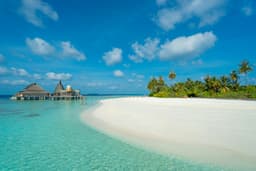
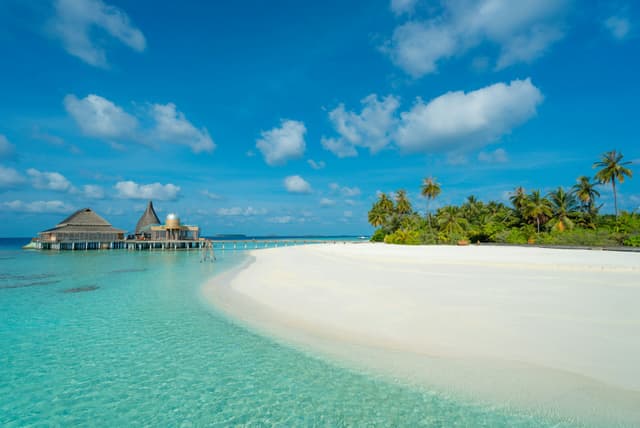
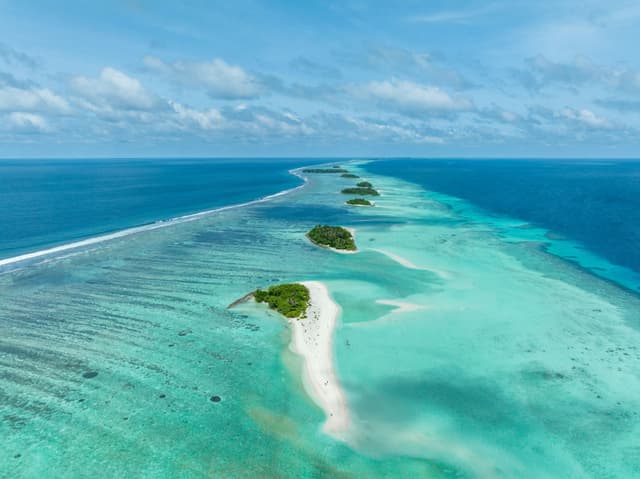
The Maldives is a nation of low lying coral islands and atolls in the Indian Ocean, and the reason it works so well as a holiday is structural rather than scenic. Reefs sit close enough to shore that snorkelling becomes something you do before breakfast rather than an excursion you book. A Maldives tour package from Nepal is usually built around one stop flying and a single island base, which is why it suits a short block of leave and a long honeymoon equally well.
Three things separate it from other beach destinations. The first is the one island one resort model: most resorts occupy an entire private island, so the property is the destination and there is no town to walk to. The second is the water. The marine life is unusually dependable, with resident juvenile whale sharks in South Ari Atoll and the largest known manta feeding aggregation in the world at Hanifaru Bay in Baa Atoll. The third is a choice that only opened up in 2009, when licensed guesthouses on inhabited islands became legal. You can now do the Maldives as a private island resort holiday, as a local island trip with village life and shared boat excursions, or as a split of both.
It also asks for more planning than most people expect, and the mistakes are expensive in time rather than money. Your transfer type is fixed by the atoll your resort sits in, not by what you are willing to spend. Seaplanes fly in daylight only. Alcohol rules differ completely between a resort island and an inhabited one. And the quality of the house reef varies enormously between two properties a few kilometres apart, which is the difference between free snorkelling every day and a paid boat every time you want to see a fish. Get those four decisions right and the rest looks after itself. That is really what planning a Maldives trip comes down to.
How a Maldives tour package from Nepal works
Every Maldives tour package from Nepal that Gomayu arranges is curated for three groups of travellers: Nepali passport holders flying out of Kathmandu, the Nepali diaspora, and non resident Nepalis (NRNs) booking from Australia, the UK, the US, the Gulf and beyond. Many of our travellers start from Kathmandu, and many book from abroad, so each package is designed to work on any passport and from either starting point.
The process is deliberately simple. Pick your dates first, then keep the route realistic rather than squeezing everything into one holiday. From there the package covers the pieces that are annoying to arrange alone: hotels matched to your budget, airport transfers on both ends, day tours with English speaking guides, and step by step help with whatever visa or entry paperwork your passport needs.
The same structure works for split families. Parents can fly out of Kathmandu while children join from London, Sydney or Doha, everyone meets at the same hotel on arrival day, and each traveller follows the entry rules of their own passport. If that describes your family, mention it when you enquire and the package is built around both starting points from day one.
Planning a Maldives trip from Nepal: what Nepali travellers ask
Nepali travellers planning the Maldives usually ask what the price covers, which package suits a honeymoon or a family, what there is to eat, and whether it can be combined with Sri Lanka. Short answers are here; visa, transfer and season detail follow further down this guide.
What the package price covers
Every Maldives package on this page is priced per person as a land package: nights at the resort or hotel, the meal plan and transfers stated on the tour page, and any listed excursions. Flights from Kathmandu are not in the card price and are quoted separately. The live prices are in the first question of the FAQ and on each package card, and our Maldives trip cost guide explains what changes them.
Which Maldives package suits you
- Honeymoon and couples: the Maldives Honeymoon Package, the Maldives Couple Package or the Premium Tour, on a resort island.
- First trip or a smaller budget: the Maldives Holiday Package, or the Maafushi and Private Resort Island Tour, which splits a local island and a resort.
- Families with children: a resort near Male with a speedboat transfer, a calm lagoon and family rooms.
- Parents and senior travellers: a speedboat resort rather than a seaplane one, and a morning arrival so the transfer is easy.
- Two countries in one trip: the Maldives and Sri Lanka Combo Tour (7 days) or Luxury Tour (9 days); Sri Lanka needs its own ETA before travel.
Food for Nepali travellers
On a resort island the resort restaurants are the only option, so the meal plan matters: bed and breakfast, half board (breakfast and dinner), full board (all three meals) or all inclusive (meals and selected drinks). If you are vegetarian, avoid beef or have other dietary needs, tell us when you enquire and we confirm it with the resort before you book. Local islands have simpler cafe menus and no pork.
Money and the Nepal Embassy
Resorts bill in US dollars, so carry dollars and an international card. Buy the dollars in Nepal through a bank or licensed money changer, within the per-trip limit set by Nepal Rastra Bank. Nepal has no embassy in the Maldives: the Embassy of Nepal in Colombo is accredited to the Maldives and assists Nepali citizens there.
Maldives visa for Nepali citizens: what you actually need
The Maldives visa for Nepali citizens is a 30 day tourist visa issued on arrival at the airport. There is no advance application, no embassy appointment and no paperwork to file before you fly. Every nationality receives the same thing, which makes a Maldives holiday for Nepali passport holders one of the least bureaucratic international trips available. What you do need is a set of documents an officer can actually check at the counter.
The visa on arrival and what immigration asks for
The 30 day tourist visa is stamped on arrival and can be extended up to 90 days in country under conditions. Admission is at the immigration officer's discretion, and officers ask for four things: a complete travel itinerary, a confirmed onward or return ticket, a prepaid confirmed booking at a government registered tourist facility, and sufficient funds for the length of your stay.
The registered facility requirement is the one that catches people out. The booking must be at a registered resort, hotel, guesthouse or liveaboard. A room arranged privately, or an unregistered short let, is a genuine refusal risk however good the listing looks. A yellow fever certificate is required only if you are arriving from a country with transmission risk. Travel insurance is strongly recommended, and several websites wrongly describe it as mandatory; it is not a legal entry condition, but going without it in a country where a serious medical case means evacuation to Male is a poor decision.
Passport validity
Maldives immigration asks for a machine-readable passport with at least one month of validity, but carry a Nepali passport with more than six months left beyond your travel dates. Airlines and connecting countries often work to six months, and it is what we ask for before confirming any booking.
Both current Nepali passport types are accepted. Nepal began issuing the biometric e-passport a few years ago, and the older machine readable passport, the MRP, is still in circulation because passports run for ten years. Either one is fine at the counter. What matters is the validity date, not which generation of passport you hold.
If your passport has less than six months left, renew it before you book rather than risking it at check in. A check in agent who declines to board you has effectively ended the trip there, whatever the rules technically say, and it is a problem with no fix at the airport.
The IMUGA Traveller Declaration
The Maldives Traveller Declaration, submitted through IMUGA, is mandatory and online for every traveller both arriving and departing, regardless of nationality, age or purpose of travel. It can only be submitted within 96 hours of your flight time, so you cannot get it out of the way weeks in advance. Submit it 48 to 72 hours before departure and save the QR confirmation to your phone offline.
The only official portal is imuga.immigration.gov.mv. Any website that charges you to file it on your behalf, or that offers to sell you a Maldives visa, is a reseller, not the official service. You need one submission for the inbound flight and a second for the outbound, and travellers regularly forget the second one.
Resort island or local island, the decision that shapes the whole trip
Resort island or local island is the first real decision of any Maldives trip, and it changes everything downstream: what you can wear, whether you can drink, what you eat, how much you move around, and how much of the country you actually see. Neither is the right answer. They are two different holidays that happen in the same ocean.
What one island one resort really means
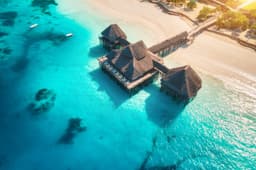
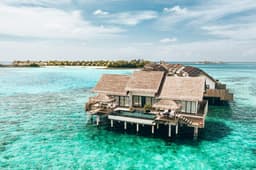
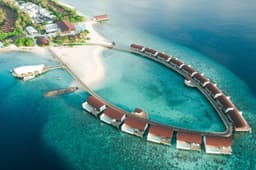
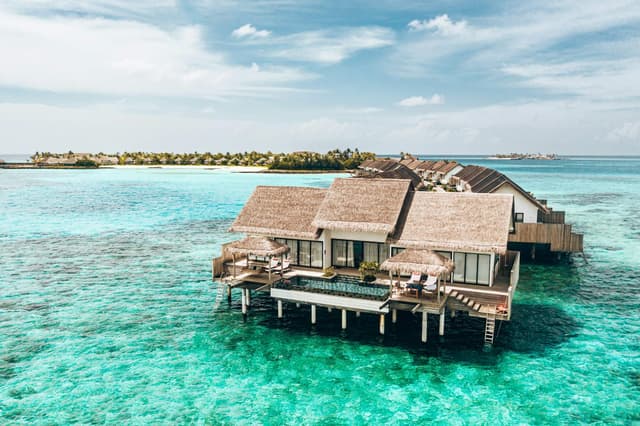
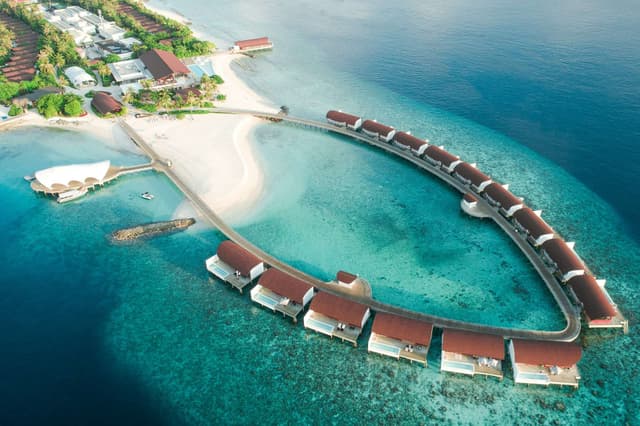
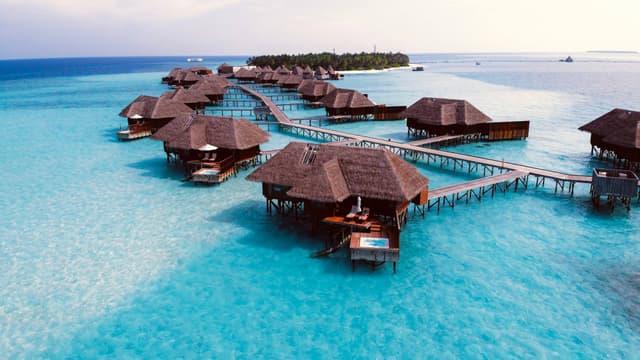
Most Maldivian resorts occupy an entire private island. You are booking the island, not a room in a town. That means one set of restaurants, one spa, one dive centre, one bar, and no way to leave without a paid boat. It is the reason the meal plan decision matters far more here than anywhere else you will travel. There is no cheap cafe down the road, because there is no road.
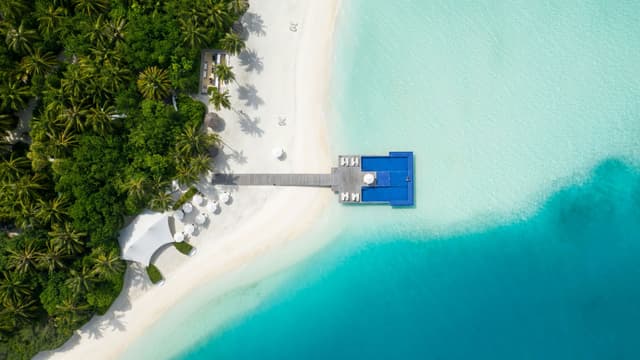
What you get in return is complete privacy, licensed alcohol, unrestricted swimwear anywhere on the island, and staff who absorb the logistics. Nobody is going to ask you to cover your shoulders. For honeymooners, and for anyone who wants to arrive and stop making decisions, that is the whole point. It also means you should choose the property with unusual care, because for a week it is not your hotel, it is your entire world.
Local islands and guesthouses
Inhabited islands have been open to tourism through licensed guesthouses since 2009, and they give you the version of the Maldives where people actually live. You share the island with a village, eat at local cafes, and join shared boat excursions rather than private charters. Excursion access is often better than at a mid range resort, because several dive shops compete for the same guests.
Islands worth knowing by name, with their atolls. Maafushi in South Male Atoll is the busiest and most developed, with the widest choice of excursions and dive shops. Thulusdhoo in North Male Atoll is the surf island, sitting beside the Cokes and Chickens breaks. Dhigurah in South Ari is a long sandbank tipped island inside the whale shark protected area. Fulidhoo in Vaavu Atoll is small and traditional, with boduberu drumming and nurse sharks off the jetty. Ukulhas in Alif Alif is known for its house reef and its island waste programme. Thoddoo grows fruit and vegetables, Rasdhoo is the base for hammerhead dives, and Dharavandhoo is the gateway to Hanifaru Bay.
The rules on inhabited islands
These are law and custom, not preference, and your guesthouse owner will tell you the same thing. Cover shoulders and knees in the village, in cafes, in shops and on the streets, men and women alike. Swimwear is permitted only on the designated bikini beach, a marked and often screened stretch of sand. Wearing it elsewhere can bring a warning or a fine.
Alcohol is illegal on every inhabited island. You cannot buy it, guesthouses cannot serve it, and you cannot bring it in, because alcohol is seized at Male customs on arrival and handed back to you on departure. Pork is generally unavailable. Public displays of affection are not appropriate. Ask before photographing people, remove your shoes at mosques and in homes, and expect shops and offices to close around Friday midday prayers. Guesthouse islands that want to look after drinkers do it through floating bar boats moored in permitted waters, or through a day trip to a nearby resort.
Splitting your stay between both
The split is what experienced repeat visitors tend to do, and it is the best value structure in the country: a few nights on a local island for excursions, village life and reef access, then the resort island for the finish. Do the local island first. Ending on the resort means your last morning is a lie in rather than a ferry timetable, and it keeps the honeymoon half of the trip uninterrupted by luggage and boats.
| What changes | Resort island | Local island |
|---|---|---|
| Island setup | One resort occupies the whole island; the property is the destination | You stay in a licensed guesthouse in a working village |
| Alcohol | Licensed and available on the island | Illegal on the island; floating bar boats or a resort day trip only |
| Swimwear | Unrestricted anywhere on the island | Designated bikini beach only |
| Dress in public | No restrictions | Shoulders and knees covered in the village, men and women |
| Food | Resort restaurants only; meal plan choice matters | Local cafes, guesthouse kitchens, no pork |
| Leaving the island | Paid boat, arranged by the resort | Public ferry, shared speedboat or excursion boat |
| Excursions | Resort dive centre and in house programme | Multiple competing dive shops and shared trips |
| Best suited to | Honeymooners, privacy, switching off completely | Divers, surfers, curious travellers, longer stays |
Maldives airport transfers: speedboat, seaplane and domestic flight
Maldives airport transfers are arranged by your resort rather than by you, and the type you get is decided by which atoll the resort sits in, not by what you are prepared to spend. There are three: speedboat, seaplane, and a domestic flight followed by a short boat. Each behaves differently, and one of them quietly dictates which international flight you should book.
Which transfer you get and why
Speedboat serves resorts within roughly 30 to 40 km of Male, typically 20 to 60 minutes on the water, and it runs day and night. A late international arrival still works. Seaplane serves resorts beyond speedboat range, roughly 25 to 75 minutes of flight, landing on the resort's own floating platform. Domestic flight plus speedboat serves the far north and the far south, on Maldivian, Manta Air or Flyme, into regional airports including Hanimaadhoo, Ifuru, Maafaru, Dharavandhoo, Maamigili, Kooddoo, Kaadedhdhoo and Gan, followed by a short boat ride. Domestic flights run to fixed schedules and some operate in the evening.
There are no rental cars and no self drive between islands. Public ferries exist and are the local option, but they are slow, infrequent and do not run on Fridays on many routes, which rules them out for anyone on a fixed schedule.
The seaplane daylight rule
Seaplanes fly in daylight only, sunrise to sunset. Trans Maldivian Airways generally needs you on the ground at Male by around 15:30 for a same day onward transfer, and individual resorts often set an earlier cutoff, some as early as 15:00 for the most distant atolls. Confirm your own resort's cutoff in writing rather than assuming the general one applies.
Seaplanes are also weather sensitive and are not strictly scheduled. You fly when the aircraft fills, so a wait of one to three hours at the seaplane terminal is normal operating procedure rather than a delay, and it is worth knowing that before you sit down and start counting the minutes.
What it means for choosing your flight
Choose the resort before you book the flight. This is the single most common and most costly sequencing mistake in the Maldives. If your resort is seaplane transfer and your international arrival lands after mid afternoon, you have two options and neither is good: an unplanned night in Male or Hulhumale at your own cost, or losing your first resort night entirely.
Book the morning arrival. Departure day works the same way in reverse, because a seaplane cannot bring you back to Male in time for an early morning international departure, so most resorts will either move you the previous evening or put you on the first flight out. Ask which of the two before you commit, and build a generous buffer into any connecting flight, since a missed connection can cost you the seaplane window rather than just a few hours.
When is the best time to visit the Maldives?
The best time to visit the Maldives is the northeast monsoon, roughly December to April, when the islands get sunshine, light winds, flat calm lagoons and the clearest underwater visibility of the year. February, March and April are the driest and calmest months of all. The southwest monsoon, May to November, is wetter and windier but carries the best marine life.
The local names are worth knowing because resorts and dive centres use them. Iruvai is the northeast monsoon and the dry season. Hulhangu is the southwest monsoon and the wet season, and the rain arrives as short heavy downpours rather than grey all day drizzle, alongside higher humidity, more wind and choppier seas. May to September is the low season and the value window, and it is also when the ocean is at its most spectacular. That trade off is rarely explained clearly enough.
Diving is a year round activity. Visibility is best January to April and again August to October, and the currents flip with the monsoon, which changes which side of an atoll is productive in any given week. Surfing runs March to October with the biggest swells June to September, around Thulusdhoo and the central atoll breaks Cokes, Chickens, Sultans, Honkys and Jailbreaks. Manta rays peak during the southwest monsoon, roughly May to November, when plankton concentrates them in Baa Atoll, and they are seen year round elsewhere. Whale sharks are the exception to the whole calendar: South Ari Atoll holds the world's only documented resident aggregation of juveniles, so sightings are reliable in any month.
Bioluminescent plankton is most reported April to October, best on a new moon, well after dark and on islands with little light pollution. It is unpredictable and nobody can promise it.
| Months | Weather | Diving | Surfing | Manta rays | Whale sharks |
|---|---|---|---|---|---|
| December to February | Dry, sunny, light winds, calm lagoons | Excellent visibility | Off season | Seen outside Baa Atoll | Reliable in South Ari |
| March to April | Driest and calmest of the year | Peak visibility | Season begins | Seen outside Baa Atoll | Reliable in South Ari |
| May to July | Wet season begins, short downpours, more wind | Good, currents reverse | Biggest swells from June | Baa Atoll season underway | Reliable in South Ari |
| August to October | Wet and humid, breezy, choppier seas | Visibility improves again | Strong through September | Peak at Hanifaru Bay | Reliable in South Ari |
| November | Tail of the wet season, easing | Improving | Season ending | Season ending | Reliable in South Ari |
Two booking notes. The dry season overlaps with the turn of year peak and with school holidays in most source markets, so the calmest weather is also the most contested; fixed holiday dates need booking well ahead. And a Maldives trip for Nepali travellers taking leave around Dashain (11 to 25 October 2026) and Tihar (7 to 11 November 2026) falls in the tail of the southwest monsoon, which means some rain and wind but also manta season in Baa Atoll and a much quieter country.
How to get to the Maldives from Nepal
There is no nonstop flight from Kathmandu to the Maldives, so the trip from Nepal always connects at least once, and every international arrival lands at Velana International Airport (MLE) beside Male. The quickest connection is usually through Colombo on SriLankan Airlines; other common connections run through Bengaluru, Mumbai, Delhi, Dubai, Doha or Kuala Lumpur. From the Gulf, India, Sri Lanka and Southeast Asia there are non stop options, and from Australia, Japan and North America there are none.
- Nepal. No direct service to Male, so every routing involves at least one stop. The natural connections are Colombo on SriLankan, usually the fastest, Delhi or Mumbai on IndiGo, Air India or Air India Express, Dubai on Emirates or flydubai, Doha on Qatar Airways, Kuala Lumpur on Malaysia Airlines or Batik Air, and Bangkok.
- The Gulf. The strongest market for Male, with non stop flights from Dubai, Doha, Abu Dhabi and Sharjah.
- India. Non stop from Delhi, Mumbai, Bengaluru, Kochi, Chennai, Hyderabad and Thiruvananthapuram.
- Sri Lanka. Colombo to Male is the shortest hop into the country and the most useful single connection for anyone coming through South Asia.
- Southeast Asia. Non stop from Kuala Lumpur, Singapore, Bangkok and Hong Kong.
- Australia. No legacy non stop service; routings go via Singapore, Kuala Lumpur, Colombo, Dubai or Doha. Maldivian has recently launched a Melbourne route for 2026, which is new enough that you should confirm it is operating on your dates before you plan around it.
- Japan and North America. No non stop service, so these are effectively two stop trips via a Gulf hub, Istanbul, Singapore or Colombo.
One routing note that matters specifically to a Nepali passport. Nepali citizens need no visa for India, but India requires a valid passport when you enter or leave India to or from a country other than Nepal, so a connection through Delhi, Mumbai or Bengaluru is simple with a valid passport. For other hubs, check the transit rule for a Nepali passport before booking separate tickets. Whatever you choose, allow a generous connection buffer in both directions, because in the Maldives a missed connection can cost you a transfer window and a night, not just a couple of hours.
Things to do in the Maldives
The things to do in the Maldives are mostly underwater, and the most valuable one is free: snorkelling your own house reef, every day, without booking anything. Above the water there is Male's coral stone heritage, sandbanks that surface at low tide, bioluminescence on dark nights, and some of the most consistent reef surf in the Indian Ocean between March and October.
The house reef and why it decides your property
The house reef is the single biggest difference between two properties that look identical in photographs, and it is the fact most buyers do not know to ask about. A resort or guesthouse with a good swimmable house reef gives you unlimited free snorkelling straight off the beach or the villa steps at any hour. A property without one means every reef visit is a paid boat trip on somebody else's schedule.
Ask two specific questions before you book. Is the house reef swimmable directly from the shore, and is there a channel or a drop off within snorkelling distance. Photographs of a lagoon tell you nothing useful, because a wide shallow lagoon with a distant reef edge photographs beautifully and contains very little.
Diving
Maldivian diving is built around channel dives, thilas and pinnacles, where current pushes the big animals through. Expect grey reef and whitetip sharks, eagle rays, turtles, large schooling fish and a few wrecks. Rasdhoo is the known site for hammerheads, Fuvahmulah in the far south for tiger sharks and pelagics, and Vaavu Atoll for night dives with sharks. Because the currents reverse with the monsoon, the productive side of an atoll changes through the year, so take your dive centre's advice on the day rather than picking sites off a list you read months earlier.
One practical point that matters more here than in most dive destinations: most islands have no decompression chamber and serious cases go to Male. Dive conservatively and respect the surface interval before flying, because everybody flies out.
Hanifaru Bay and its rules
Hanifaru Bay in Baa Atoll, part of a UNESCO Biosphere Reserve, holds the largest known manta feeding aggregation in the world, and the rules there are strict and actively enforced. Snorkelling only; scuba diving is prohibited inside the bay. Every visit is guided and permitted, with rangers managing entry, roughly 45 minutes maximum in the water, around 20 people in the water at a time and about 80 visitors across a day. A per person conservation permit is required.
The season is the southwest monsoon, roughly May to November, peaking around the full and new moons of August to October. Access is from Dharavandhoo or from a Baa Atoll resort. No operator can promise a sighting, because the mantas follow plankton and plankton follows tide and current. If Hanifaru is the reason for your trip, give yourself several days in the atoll rather than one attempt.
Whale sharks in South Ari
South Ari Atoll Marine Protected Area is why whale sharks are a year round proposition in the Maldives rather than a seasonal gamble. It holds the world's only documented resident aggregation of juvenile whale sharks, and snorkelling trips run from Maamigili and Dhigurah in every month of the year.
There is a code of conduct and good operators enforce it: no touching, no flash photography, keep 3 m from the body and 4 m from the tail, a limited number of swimmers per animal, and no boats inside the exclusion zone. If a crew encourages you to grab a fin or drives the boat across an animal, that is an operator to walk away from. Choose the boat on how it behaves in the water, not on how fast it gets you there.
Sandbanks and bioluminescence
Sandbanks are bare crescents of sand that surface at low tide, reached by boat, with absolutely nothing on them. That is the appeal. They are tide dependent, so the trip is scheduled by the tide table and not by your preference, which is worth knowing if you are planning a proposal or a photo shoot.
Bioluminescence, the so called Sea of Stars, is a plankton bloom that glows when the water is disturbed. It is associated with Vaadhoo and also reported on Thoddoo, Fulidhoo and elsewhere. It shows most often April to October, on a new moon, well after dark, on islands with little artificial light. It is unpredictable and never guaranteed, and any listing that sells it as a certainty is overselling.
Surfing
Maldivian surf runs March to October, with the biggest swells June to September. The best known breaks sit in the central atolls, Cokes, Chickens, Sultans, Honkys and Jailbreaks, and Thulusdhoo is the local island base for reaching them. These are reef breaks over live coral, so booties and an honest assessment of your own level matter more than they would at a sand bottomed beach break.
Male and Hulhumale
Male is worth half a day and most visitors skip it entirely, which is a shame. Hukuru Miskiy, the Old Friday Mosque completed in 1658, is the finest coral stone building in the world, made from carved coral blocks with the Munnaaru minaret standing beside it. It sits on the UNESCO tentative list as part of the Coral Stone Mosques of Maldives, and it is not an inscribed World Heritage Site, whatever some listings tell you. Permission is needed to enter and dress must be modest. Also in the city: the Islamic Centre and Grand Friday Mosque, the fish and produce markets, Sultan Park, the National Museum and Mulee-aage.
Hulhumale, the reclaimed island next to the airport, has a long swimmable beach, cafes and affordable hotels. It is the sensible base for a late arrival or a very early departure, and booking a night there deliberately is far better than being forced into one because a transfer window closed.
Money, alcohol, Ramadan and connectivity
Travelling to the Maldives means dealing with two currencies in practice. The official currency is the Maldivian rufiyaa, MVR, but the tourist economy runs on US dollars and resorts quote and bill in USD. You rarely need rufiyaa unless you are taking public ferries, shopping in village stores or eating at local cafes, and you will often receive rufiyaa as change.
Visa and Mastercard work at essentially every resort, at guesthouses and at most businesses in Male. Carry some cash anyway, because small village shops, market stalls, ferries and some excursion operators are cash only. ATMs are in Male, Hulhumale and on the larger local islands, and there are none at all on resort islands.
Alcohol is legal only on licensed resort islands, on liveaboards and at a small number of licensed venues including the airport hotel area. Importing it is prohibited: it will be taken from you at Male customs and returned when you leave. If you are staying on an inhabited island and want a drink, the options are a licensed floating bar boat or a resort day trip.
Ramadan is observed nationally and in 2027 is expected to run roughly 8 February to 8 March, subject to moon sighting. Resort islands operate normally throughout. On inhabited islands many cafes close during daylight hours, opening times shorten, and eating, drinking or smoking in public during the day is inappropriate. If your dates fall inside Ramadan and you want local island life, plan around it rather than being surprised by it on arrival.
For connectivity, Dhiraagu and Ooredoo are the two operators and both have 24 hour counters past customs at Velana. Both offer eSIM, which you can install before you leave home and activate the moment you land, and that is the easiest route. Resort wifi is generally good. Coverage on smaller local islands and on boats is patchier.
One line on billing that surprises people. A green tax is a mandatory government environmental levy charged per person per night by every registered establishment, at a lower rate at guesthouses and hotels on inhabited islands with 50 or fewer registered rooms, with children under two exempt. It sits on top of TGST and the customary service charge, which is why a final bill lands above the quoted room rate. Ask for the fully inclusive total when you book so there is nothing to argue about at checkout.
- Tap water is desalinated and is not recommended for drinking; use the filtered or bottled water supplied.
- Drone use is restricted and requires permission.
- Taking coral, shells, turtle products or sand out of the country is illegal.
Is the Maldives safe, and what should you know about local etiquette?
Yes. Both the UK FCDO and the US State Department place the Maldives at their lowest advisory levels, and resort islands are effectively crime free, since a private island with controlled boat access is about as secure an environment as travel offers. The caution is not the resorts. It is the capital, the ocean and the law.
In Male and Hulhumale, gang related violence including knife crime does occur. It is not directed at tourists, but the sensible rule is the one you would apply in any city: avoid empty streets on foot after dark and keep an eye on your bag in crowded areas. Petty theft happens in the busier parts of the capital.
Maldivian law is based on Islamic law and is applied strictly. That means no alcohol outside licensed premises, no importing alcohol, pork products or religious material contrary to Islam, no public intoxication, discretion around public displays of affection, and modest dress anywhere off a designated bikini beach. None of it is onerous, but none of it is negotiable either.
Ocean safety is the underrated risk and the one that actually injures visitors. Currents between islands and through reef cuts are strong, and a calm looking lagoon can sit right beside a channel that will move you faster than you can swim back. Snorkel with a float or a vest in channels, stay with a guide when the current is running, and never touch coral or marine life. Use reef safe sunscreen, because several islands and resorts ban oxybenzone based sunscreen outright and will not let you into the water wearing it.
Medically, resorts carry basic first aid and serious cases require evacuation to Male. Most islands have no decompression chamber, which is the detail divers should factor into their planning rather than discover afterwards.
For honeymooners specifically, the Maldives is one of the easiest places in the world to relax completely, because the resort island model strips out the ordinary friction of arriving in a new country. There is no navigating, no haggling and no crowd to negotiate.
How many days do you need, and how to plan yours
Three or four nights, the length of our 4-day Maldives packages, works well for a resort or local island near Male with a speedboat transfer, because boats run day and night and little time is lost. With a seaplane resort, five to seven nights at the property is the realistic answer, because arrival and departure days are both partly consumed by transfers. Seven to ten nights works well if you are splitting between a local island and a resort, or if the trip is built around diving.
Plan in this order and the trip assembles itself. Decide resort island, local island, or the split. Choose the property, and check the house reef and the transfer type before anything else. Only then book the international flight, matching your arrival to the transfer cutoff rather than to the cheapest departure time. Submit IMUGA within 96 hours of each flight. Finally, confirm the season for whatever you actually came for, whether that is Hanifaru mantas, South Ari whale sharks or the surf.
If you would like help turning that into a firm plan, Gomayu Holidays builds a Maldives tour package from Nepal around the property and transfer combination that fits your dates, and we will tell you plainly when a resort's transfer window does not work with the flight you are considering. Send us your dates on WhatsApp and we will come back with options.
Best Maldives tour packages from Nepal
To summarise, these are the most popular Maldives tour packages from Nepal that we arrange for Nepali travellers and the Nepali diaspora:
- Maldives Holiday Package (4 days)
- Maldives Couple Package (4 days)
- Maldives Honeymoon Package (4 days)
- Maldives Premium Tour (4 days)
- Maafushi & Private Resort Island Tour (5 days)
- Maldives & Sri Lanka Combo Tour (7 days)
- Maldives & Sri Lanka Luxury Tour (9 days)
All destinations
Explore more destinations
Search Tours or Places
Search Tours or Places