







Bardiya Jungle Safari Tour
4Days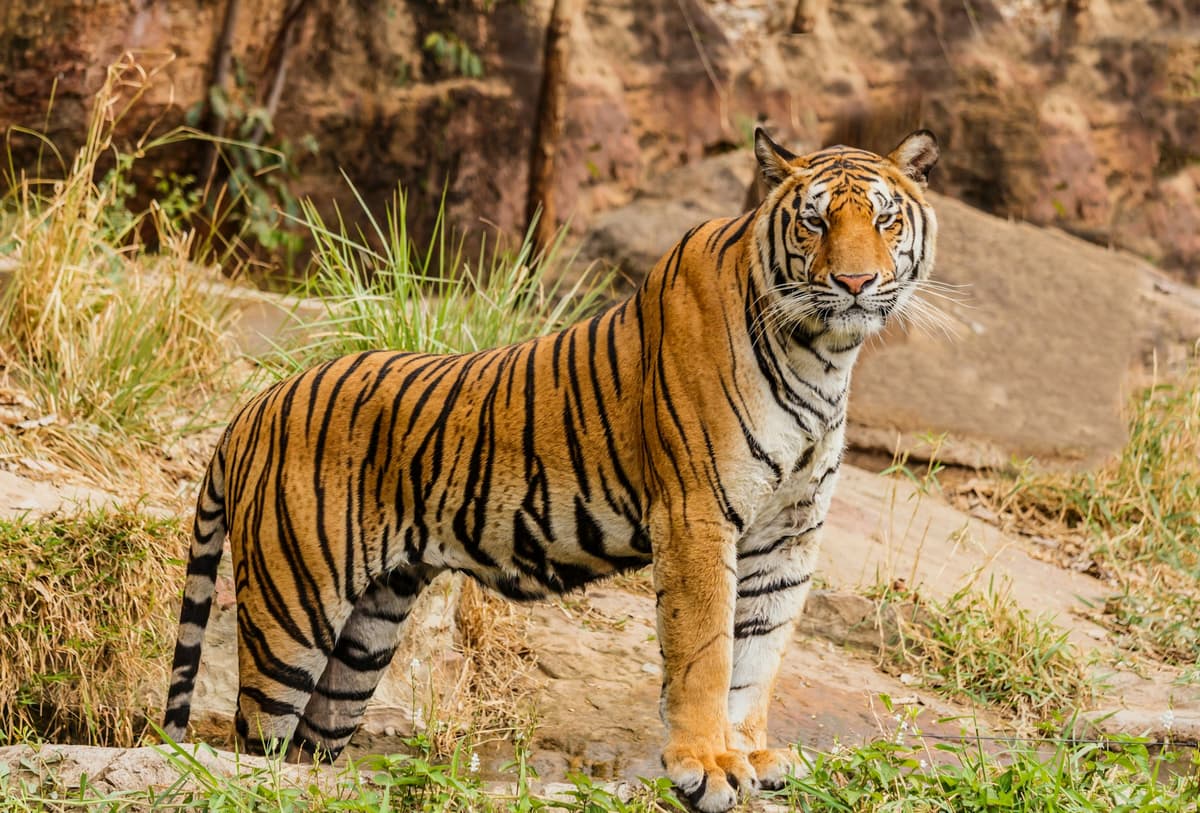
| Group size | Price / person |
|---|---|
| 2 pax | NRs 63,500 /person |
| 3 pax | NRs 60,000 /person |
| 4 pax | NRs 60,000 /person |
| 5 pax | NRs 59,000 /person |
| 6+ pax | NRs 58,000 /person |
- Prices vary with your travel dates, season and group size.
Bardiya Jungle Safari Tour
The Bardiya jungle safari is Gomayu's 4-day wildlife trip to Bardiya National Park in far-western Nepal, the largest national park in the Terai and one of the best places in Asia to track a wild Royal Bengal tiger. You fly Kathmandu to Nepalgunj, drive to a jungle resort beside the park, and spend your days on a full-day jeep safari through the Babai Valley and Karnali floodplains, a guided jungle walk with a naturalist, and a quiet afternoon on the Karnali River watching for Gangetic dolphins. Tigers are wild and never guaranteed, but Bardiya gives you a genuine chance, with far fewer vehicles than Chitwan.
This Bardiya jungle safari suits families with older children, couples, groups of friends, and wildlife lovers who want Nepal's quieter, wilder park. It is also a favourite with Nepalis returning from abroad who want to show visiting family a side of Nepal beyond Kathmandu and Pokhara. Evenings bring a Tharu village walk and cultural dance, so you get the indigenous culture of the western Terai alongside the wildlife. Gomayu handles flights, transfers, resort, park activities and guides, so you simply arrive and enjoy the jungle.
Trip highlights
Day-by-day itinerary
Everything below is fully customizable. Add nights, swap activities, or change hotels.
Day1 Fly to Nepalgunj & transfer to Bardiya›
- Fly from Kathmandu to Nepalgunj (about 50 minutes), where our driver meets you and transfers you to your jungle resort near Bardiya National Park (1.5-2 hours). Settle in, then head out for an evening Tharu village walk to see local life and culture, followed by dinner with a Tharu cultural dance (subject to the resort).
- Activities: Tharu village walk & cultural dance
Day2 Full-day jeep safari in Bardiya National Park
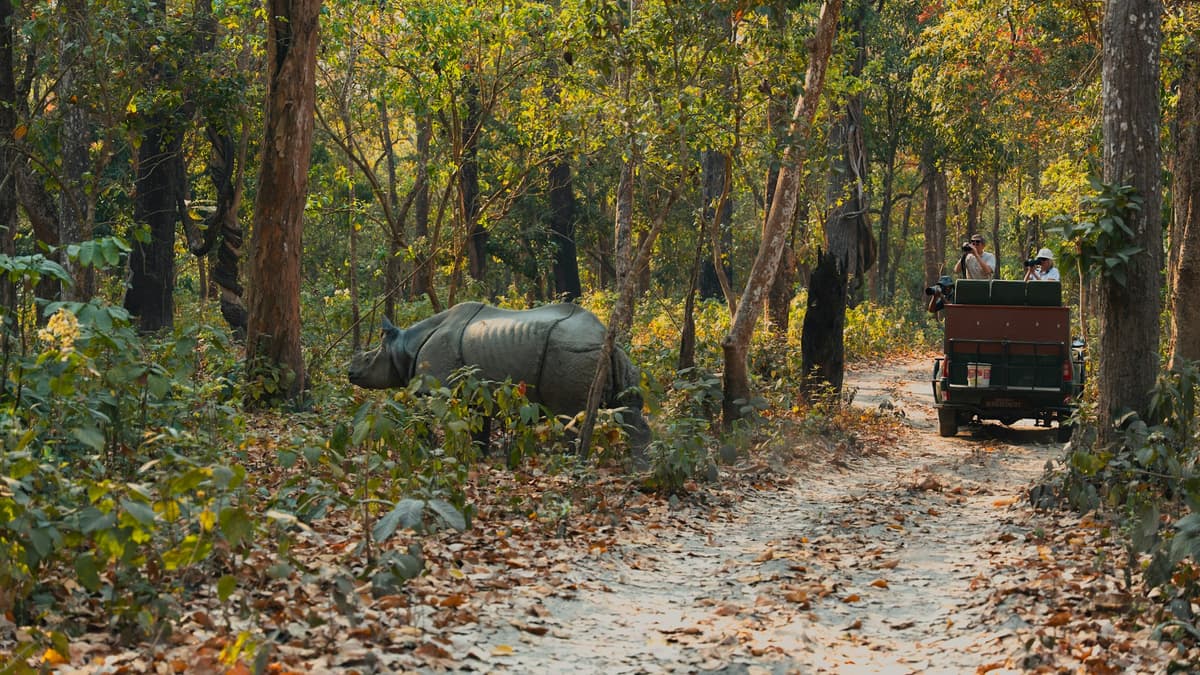
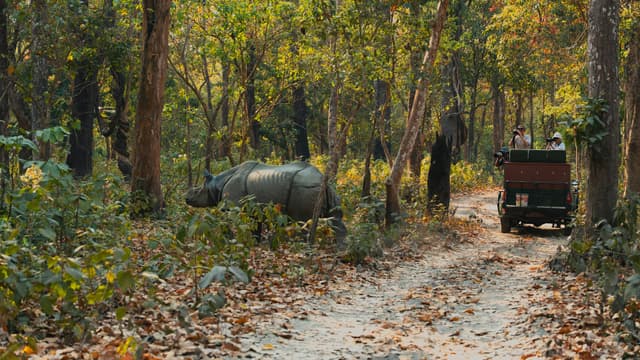
- After an early breakfast, set off on a full-day jeep safari deep inside Bardiya National Park. Explore the Babai Valley, Karnali floodplains and grasslands in search of Royal Bengal tiger, wild elephant, one-horned rhino, swamp deer and birds, with a bush lunch inside the jungle. Return to the resort in the evening for dinner.
- Activities: Full-day jeep safari, bush lunch
Day3 Jungle walk & Karnali River
- In the morning, take a guided jungle walk with a naturalist to track wildlife and birds on foot. In the afternoon, head to the Karnali River to relax and watch for Gangetic dolphins (water level permitting), gharial and mugger crocodiles. Return to the resort for dinner.
- Activities: Naturalist jungle walk, Karnali River & dolphin watching
Day4 Fly back to Kathmandu
- After breakfast at the resort, transfer to Nepalgunj airport for your flight back to Kathmandu, where the tour ends.
Package pricing
The more travellers in your group, the lower the price per person.
| Group size | Price / person |
|---|---|
| 2 pax | NRs 63,500 /person |
| 3 pax | NRs 60,000 /person |
| 4 pax | NRs 60,000 /person |
| 5 pax | NRs 59,000 /person |
| 6+ pax | NRs 58,000 /person |
- Prices vary with your travel dates, season and group size.
Prices are per person · see what’s included.
What's included
| Items | This package |
|---|---|
| Two-way flight (KTM-Nepalgunj) | Included |
| Airport pick-up & drop | Included |
| Jungle resort stay (3 nights) | Included |
| Full-day jeep safari & park entry | Included |
| Jungle walk & Karnali River | Included |
| Tharu village walk & cultural show | Included |
| Meals in the itinerary | Included |
| Experienced naturalist guide | Included |
| Beverages & alcohol | Not included |
| Tips & personal expenses | Not included |
| Travel & medical insurance | Not included |
| Extra activities | Not included |
Anything not listed here is not included.
Things to carry
- Neutral, earth-coloured clothing (khaki, olive, brown) for the jungle
- Long sleeves and trousers for sun, insects and the jungle walk
- A warm jacket and windproof layer for cold dawn jeep rides (Nov-Feb)
- Hat, sunglasses and sunscreen for the strong Terai sun
- Closed walking shoes for the jungle walk
- Binoculars - the single most useful item for every sighting
- Camera with zoom lens, spare batteries and memory cards
- Insect repellent, a refillable water bottle and a small daypack
- Your citizenship card or passport for park permits, and personal medicines
What our travellers say
Real reviews from Google, verified by travelers.
“It was our best decision to choose Gomayu. We had a wonderful experience with GOMAYU during our Thailand trip. Hotels, Location and itinerary all were well planned and was according to our expectations. Response and communication was very good in Thailand as well. You made our trip very smooth, hassle free and stress free from begning to the end of our trip. This trip was memorable, as me and my husband got to celebrate our 20th wedding Anniversary together in the beautiful place of Thailand and credit goes to GOMAYU for all the arrangements . We are very much satisfied with your service and hope to have other trips with you soon. I would happily Recommend GOMAYU to my friends and family for their excellent service and professional support.”

“Me and my family had a great 10 days trip to Vietnam and Bangkok. All thanks to the wonderful service of Gomayu. Thank you so much for making our trip so easy, fun and stress free.”

“We had an unforgettable 5D4N trip to Bali with Gomayu Holidays! From the very beginning, the communication was smooth, clear, and professional. Everything was perfectly organized; airport pickup, hotel check-ins, and daily tours were always on time, with no stress at all. Our stay was split between a beautiful private pool villa in Seminyak and a comfortable room at Grand Mega Resort, both of which exceeded expectations. The itinerary was well-balanced with adventure, culture, and relaxation. We really enjoyed the watersports (banana boat, jet ski, parasailing), the stunning Uluwatu Temple with Kecak dance, and the romantic candlelight dinner at Jimbaran Beach. The Bali swing and tandem ATV ride were absolute highlights and so much fun! Visiting Lempuyang Temple (Gate of Heaven) was magical and very well arranged despite the crowds. We had some spare time to visit the malls and try local food as well. Special thanks to the guide and driver, who was friendly, helpful, super-flexible and always made sure we were comfortable. We didn’t have to worry about anything as everything was well-organized. Highly recommended for anyone planning a hassle-free and memorable Bali trip. Thank you, Gomayu Holidays, for making our holiday truly special!”

“We had a wonderful experience with Gomayau as our travel partner, with everything being well-organized and thoughtfully planned from start to finish, making the entire trip smooth and enjoyable; the overall coordination was excellent, with timely arrangements and great attention to detail, and the team’s consistent support throughout the journey made a real difference, while communication remained easy and reliable, giving us confidence and peace of mind; we truly appreciated the professionalism and dedication in handling logistics and day-to-day planning, which allowed us to fully relax and enjoy the trip, and overall, it was a great experience that we will remember for future travels and would highly recommend to anyone looking for a hassle-free and well-managed trip.”

“Thank you so much Gomayu Holidays. We had an amazing trip. we are extremely satisfied with their service. The itinerary was wonderfully planned and perfectly organized.Highly recommend planning your next vacation with Gomayu Holidays they are truly EXCELLENT. Special heartfelt thank you to Krishtina and Elho from Gomayu Holidays!”

Good to know
Complete travel guide
A Bardiya jungle safari takes you to Bardiya National Park, a 968 sq km stretch of sal forest, grassland and riverine jungle in Bardiya district, western Nepal. It is the largest national park in Nepal's Terai lowlands and, since the 2022 national tiger survey counted around 125 tigers here, one of the most important tiger habitats in Asia. This guide explains why Bardiya is worth the trip, how it compares with Chitwan, what wildlife you can realistically expect, when to go, how to get there from Kathmandu, and what the safari days actually feel like. It is written for Nepali travellers living in Nepal and across the diaspora who want a serious wildlife experience without leaving home soil.
If you want a quick answer on dates or group options for the Bardiya Jungle Safari Tour, message Gomayu on WhatsApp and we will reply with a clear plan.
Why visit Bardiya National Park?
Bardiya National Park is the wildest and least crowded of Nepal's Terai parks, and it offers the best combination in the country of tiger habitat, big river scenery, and authentic Tharu culture. The park was gazetted in 1988, covers 968 sq km of the Bardiya district, and is bordered on the west by the Karnali River and cut through by the Babai River. At least 53 species of mammals and over 400 species of birds have been recorded here.
Three things set a Bardiya jungle safari apart from anywhere else in Nepal:
- Tiger country. The 2022 national tiger survey counted around 125 tigers in Bardiya, up from 18 in 2010, making it the second-largest tiger population in Nepal after Chitwan. Because the park is large and vehicle numbers are low, tiger tracking here is patient, quiet work, which is exactly why serious wildlife travellers rate it so highly.
- The Karnali River. Nepal's longest river forms the park's western edge. Its channels hold Gangetic river dolphins, gharial and mugger crocodiles, and the floodplain grasslands are where much of the big wildlife feeds.
- Space. Bardiya sees a fraction of Chitwan's visitors. On a jeep safari you can drive for long stretches without meeting another vehicle, and jungle walks feel like real wilderness rather than a tourist circuit.
For Nepali travellers, there is an extra reason. Most of us have been to Chitwan on a school trip or family holiday. Bardiya is the park we talk about but rarely reach, because it is far and needs a flight. A packaged Bardiya jungle safari removes that friction.
Bardiya vs Chitwan: which jungle safari should you choose?
Chitwan is easier to reach, better for guaranteed rhino sightings, and better for first-timers and small children; Bardiya is quieter, wilder, and the better choice if your goal is a wild tiger and a true jungle atmosphere. Both are excellent, and many Gomayu guests who did Chitwan first come back for Bardiya as their "second safari".
Here is an honest side-by-side comparison.
| Factor | Bardiya National Park | Chitwan National Park |
|---|---|---|
| Location | Bardiya district, far-western Terai | Central Terai, near Bharatpur / Sauraha |
| Size | 968 sq km, largest Terai park | Roughly 950 sq km |
| Getting there from Kathmandu | Fly to Nepalgunj (about 50 min) then 1.5–2 hr drive | Road (roughly 5–7 hours) or short flight to Bharatpur |
| Crowds | Low; few vehicles in the park | High, especially in peak season and long weekends |
| Tiger chances | Among the best in Asia; still never guaranteed | Tigers present (128 in 2022) but harder to see; more vehicles, denser forest |
| Rhino chances | Small population; sightings possible but not the main draw | Very high; Chitwan is the rhino park |
| Wild elephant | Resident wild herds; sightings possible | Present but less often seen than rhinos |
| River experience | Karnali River: dolphins, gharial, wide floodplain views | Rapti River: canoe rides, crocodiles, sunsets |
| Best for | Wildlife lovers, tiger tracking, couples, families with older kids, repeat safari-goers | First safari, young children, short trips, budget road trips |
| Trip length needed | 4 days (because of the flight) | 3 days works well |
Choose Chitwan if this is your first jungle trip, you are travelling with toddlers, or you want to drive from Kathmandu or combine it with Pokhara. Gomayu's Chitwan Jungle Safari Tour covers that.
Choose Bardiya if you want fewer people, a stronger chance of tiger and wild elephant, a big river with dolphins, and a jungle that still feels remote. If you have already done Chitwan, Bardiya is the natural next step.
What wildlife can you see on a Bardiya jungle safari?
On a Bardiya jungle safari you can realistically expect to see several species of deer, langur and rhesus monkeys, wild boar, crocodiles, a wide range of birds, and, with luck and patience, Royal Bengal tiger, wild Asian elephant, one-horned rhino and Gangetic dolphin. The park records at least 53 mammal species and around 407 bird species, so even a "quiet" safari day is full of life.
The Royal Bengal tiger in Bardiya: an honest note
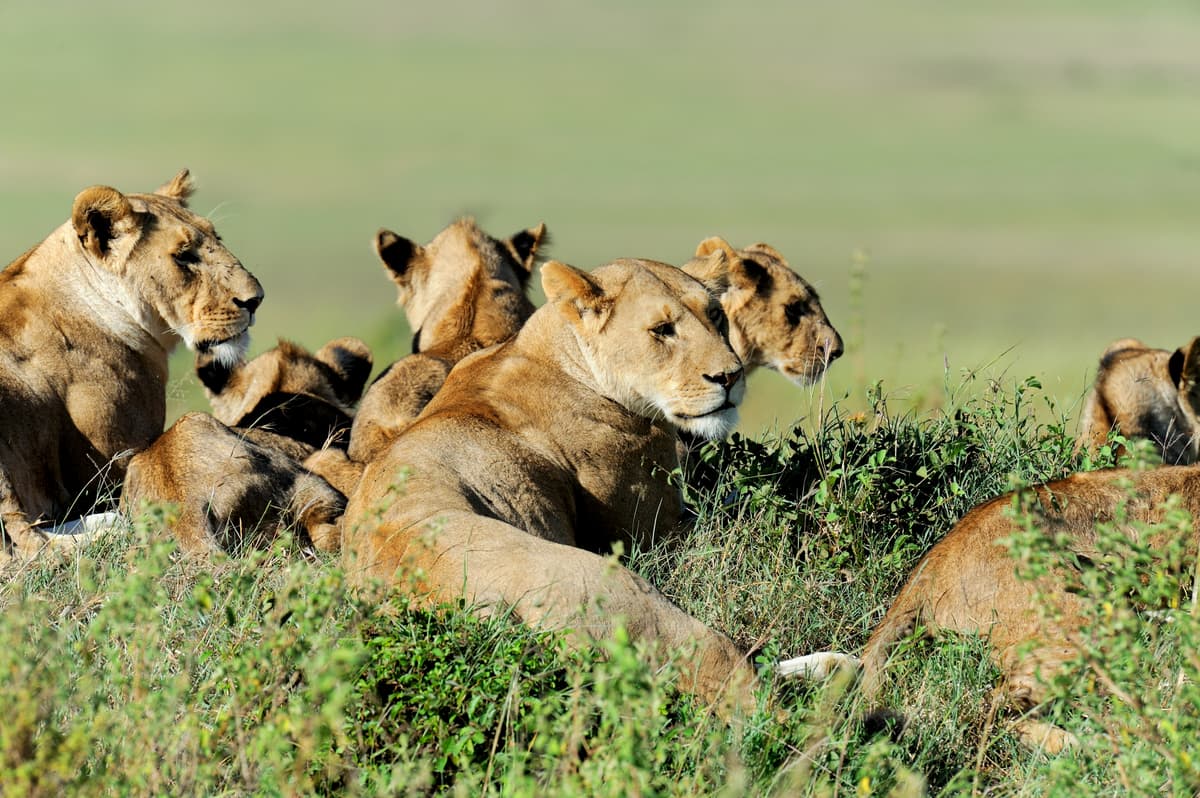
Bardiya National Park is one of the best places in Asia to see a wild Royal Bengal tiger, but no ethical operator will promise a sighting, and neither will Gomayu. Tigers are solitary, territorial and mostly active at dawn, dusk and night. What Bardiya gives you is a genuine, well-above-average chance because:
- The tiger population is large and growing (around 125 in the 2022 survey).
- Low vehicle traffic means animals are less disturbed and guides can work quietly.
- The dry-season grasslands and river beds give long sightlines.
- Naturalist guides here read pugmarks, alarm calls of deer and monkeys, and known tiger routes rather than chasing radio reports.
Many guests see a tiger on a two-day visit; many do not. Sightings are more frequent in the hot months (roughly March to May) when grass is short and animals come to water. Treat the tiger as the prize, not the plan, and you will enjoy Bardiya either way.
Mammals you may encounter
| Animal | How likely | Where |
|---|---|---|
| Spotted deer (chital), barking deer, sambar | Very likely | Sal forest edges, grasslands |
| Swamp deer (barasingha) | Likely in season | Karnali floodplain grasslands |
| Rhesus macaque, grey langur | Very likely | Forest, riverside |
| Wild boar | Likely | Forest floor, grassland |
| Royal Bengal tiger | Possible; never guaranteed | Babai Valley, riverbeds, grassland edges |
| Wild Asian elephant | Possible | Karnali floodplain, forest corridors |
| One-horned rhino | Possible but small population | Riverine grassland near the Karnali |
| Nilgai (blue bull), hog deer | Possible | Open grassland |
| Sloth bear, leopard | Rare | Forest; usually signs rather than sightings |
| Gangetic dolphin | Possible when water level allows | Karnali River channels |
| Gharial, mugger crocodile | Likely on sunny days | Sandbanks of the Karnali and Babai |
Birds of Bardiya
Bardiya is a serious birding destination. Around 407 species have been recorded, including hornbills, kingfishers, eagles, storks and a long list of forest and wetland birds. Birdwatching is at its best from November to March, when winter migrants join the residents. Bring binoculars even if you do not think of yourself as a birder; your guide will point out species you have never noticed at home.
What is the best time to visit Bardiya National Park?
The best time for a Bardiya jungle safari is October to April for comfortable weather and reliable safaris, with March to May the peak months for tiger sightings because the grass is short and animals gather at water. The monsoon (June to September) is hot, humid and lush, with floods and closed tracks, so most safari activity pauses.
Season by season
| Season | Months | Weather | Wildlife | Verdict |
|---|---|---|---|---|
| Post-monsoon / autumn | October–November | Warm days, cool nights, clear skies | Grass still tall after monsoon; good birding begins; tigers harder to spot | Excellent all-round; Dashain and Tihar holidays fall here, so book early |
| Winter | December–February | Cool to cold mornings, foggy dawns, pleasant afternoons | Peak birding; deer and elephants active; tigers seen but grass still thick in places | Very good; pack warm layers for early jeep rides |
| Spring / pre-monsoon | March–May | Getting hot, dry, hazy; afternoons can be very hot | Best tiger season: short grass, animals at waterholes and rivers; dolphins easier as river settles | Best for tiger; be ready for heat |
| Monsoon | June–September | Hot, wet, humid; rivers high, tracks flooded | Jungle lush and green; safaris limited or paused | Not recommended for a first visit |
Dashain and Tihar timing
Dashain and Tihar (usually October and November) are the natural window for a Bardiya jungle safari, especially for diaspora families home for the festivals. The weather is at its best and the whole family is together. The catch is that flights to Nepalgunj and the small resorts near the park fill quickly. If you are planning a festival-season Bardiya jungle safari, talk to Gomayu about three months ahead so we can lock flights and rooms.
If tiger is your priority
Go in March, April or early May. Days are hot, so early starts and a rest after lunch are part of the rhythm, but this is when Bardiya's tigers are seen most often. Carry sun protection and plenty of water.
If comfort and birds are your priority
Go from late November to February. Mornings are cold on an open jeep, but the days are perfect and the birdlife is exceptional.
How do you get to Bardiya National Park from Kathmandu?
The fastest way from Kathmandu to Bardiya National Park is a domestic flight to Nepalgunj (roughly 50 minutes) followed by a 1.5–2 hour drive north to the Thakurdwara area, where the park headquarters and most jungle resorts are located. Gomayu's Bardiya jungle safari includes both the flight and the airport-to-resort transfer, so the whole journey door to door is a comfortable half day.
By air (recommended)
- Domestic airlines fly Kathmandu (Tribhuvan International Airport) to Nepalgunj Airport (Ranjha) several times daily.
- Flight time is approximately 50 minutes over roughly 366 km.
- A Gomayu driver meets you at Nepalgunj and transfers you to the resort near the park.
- Sit on the right side of the aircraft on the way out for Himalayan views on clear mornings.
By road (for reference)
It is possible to drive from Kathmandu to Bardiya along the East–West Highway, but it is a very long day, typically well over 12 hours, and many travellers break the journey in Butwal, Lumbini or Dang. For a 4-day trip the flight is the only sensible choice; the road makes sense only if you are already touring western Nepal or coming from Pokhara or Lumbini.
For Nepalis flying in from abroad
If you are coming from the Gulf, Australia, the UK, the US or elsewhere, the Bardiya jungle safari connects neatly with an international arrival in Kathmandu. Plan at least one night in Kathmandu before the Nepalgunj flight so a delayed international arrival does not cost you the safari. Gomayu can add the Kathmandu night and airport transfers if you want a single, seamless plan.
Coming from India
Nepalgunj sits close to the Indian border at Rupaidiha, so relatives or friends coming from Lucknow and Uttar Pradesh can join the group at Nepalgunj rather than routing through Kathmandu. Tell us at booking and we will arrange the pickup.
What are the safari experiences in Bardiya?
A Bardiya jungle safari is built around three core experiences: a full-day jeep safari deep into the park, a guided jungle walk with a naturalist, and a river afternoon on the Karnali watching for dolphins. Each shows you the park in a different way, and together they give you a far better chance of good sightings than any single activity.
The full-day jeep safari
The jeep safari is the backbone of the trip. You leave the resort early with a driver and naturalist guide in an open safari jeep, enter the park, and spend the day moving between the habitats where wildlife is most active: the sal forest, the Babai Valley, the Karnali floodplain grasslands, and the dry riverbeds where tigers, elephants and deer come to water.
What a full day gives you that a half day cannot:
- Time at the good spots. Guides can wait quietly at a waterhole or a tiger crossing instead of rushing back for lunch.
- The Babai Valley. The interior of the park, away from the buffer zone, where wildlife is densest and vehicles fewest.
- Bush lunch inside the park. A packed lunch at a shady riverside spot, which is a highlight in itself.
- Two peak activity periods. Early morning and late afternoon, when animals move most.
Tips from Gomayu guides: stay silent when the jeep stops, keep bright clothing and perfume at home, and let the guide decide when to move. Alarm calls of deer and langur often tell you a tiger is close long before you see anything.
The guided jungle walk
A jungle walk in Bardiya is a slow, quiet walk on foot inside the park or its buffer forest with a licensed naturalist guide, usually in the morning. It is not a trek; the pace is gentle and the aim is to notice things a jeep passes by: pugmarks in the sand, scratch marks on trees, fresh dung, bird calls, the smell of an elephant nearby.
Walking in tiger and elephant country sounds alarming, and it deserves respect, but it is a long-established, guided activity in Bardiya. Guides walk in front and behind, carry sticks, read the wind and the signs, and choose routes accordingly. You follow instructions without discussion. Children under about ten and anyone who cannot stay still and quiet should skip the walk and enjoy the jeep instead.
For many guests the walk ends up being the memory of the trip. Standing in the grassland with only birdsong and the river is something a vehicle cannot give you.
The Karnali River and the Gangetic dolphin
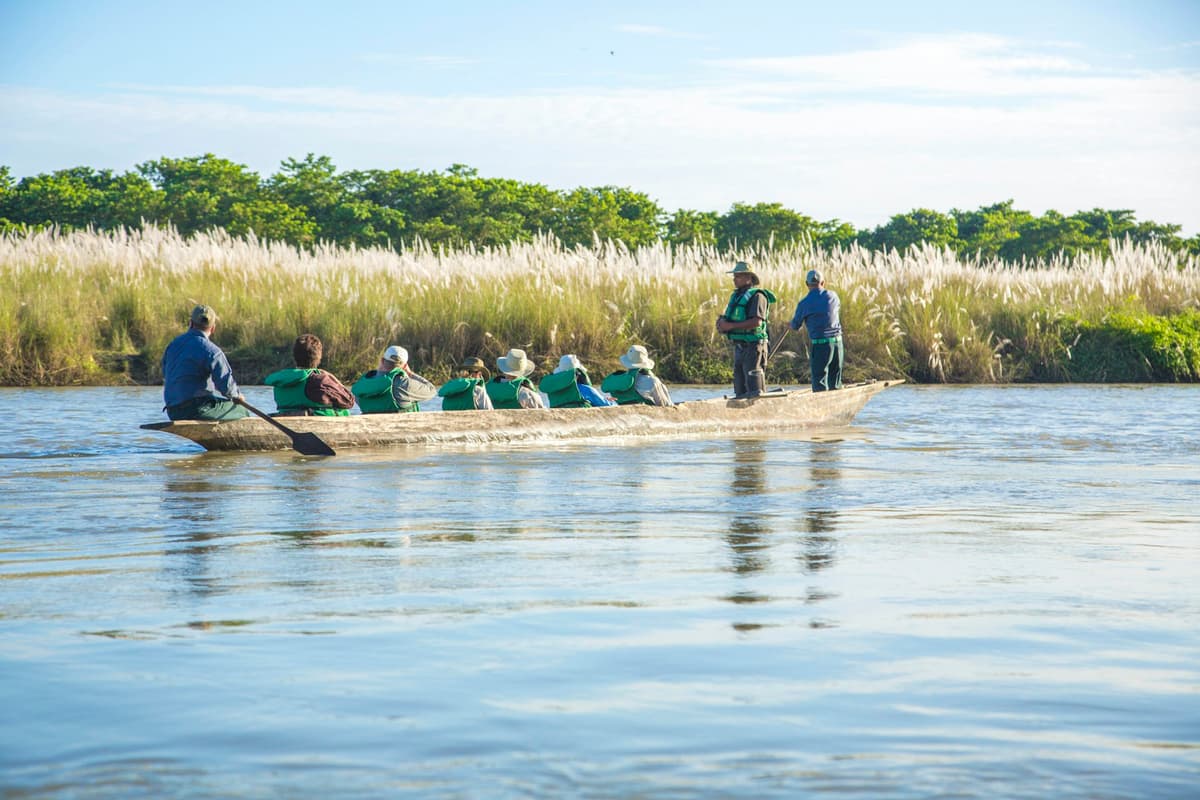
The Karnali is Nepal's longest river and one of the few places in the country where you can see the Gangetic river dolphin. An afternoon on the riverbank near the park is the calm counterpoint to the jeep and the walk. Dolphins surface briefly to breathe, so you watch patiently for the curve of a back and the sound of a breath; sightings depend on water level and season, and are never guaranteed.
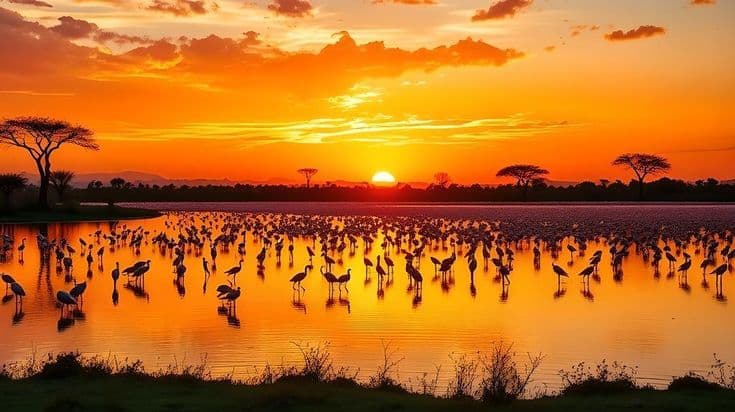
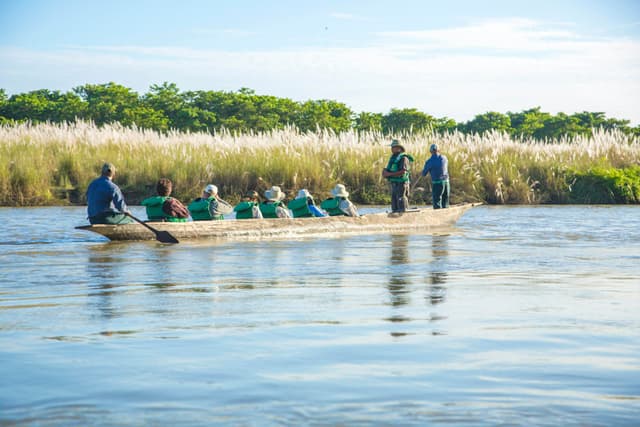
The riverbank is also where you see gharial and mugger crocodiles sunning on sandbanks, wading birds, and sometimes deer or elephants coming down to drink on the far side. Sunset over the Karnali with the Churia hills behind is the picture most people take home.
Tharu village walk and cultural evening
The evening you arrive, a guided walk through a nearby Tharu village shows you the mud-and-thatch homes, the painted walls, the courtyards and the farming life that has existed here for centuries. After dinner, most resorts host a Tharu cultural dance performance, typically the stick dance and other traditional forms. Details vary by resort.
Who are the Tharu people?
The Tharu are the indigenous people of Nepal's Terai and have lived in and around what is now Bardiya National Park for centuries. They are recognised for their traditional farming, distinctive painted mud houses, and a cultural life shaped by the forest and rivers. In the western Terai the Tharu, particularly the Dangaura Tharu, form the majority of villages around the park.
For Nepali visitors, the Tharu village walk is a chance to understand a community that many of us know only by name. You will see:
- Long, thatched family homes with painted clay walls.
- Traditional fishing tools, grain stores and courtyards.
- Farming rhythms tied to the monsoon and the rivers.
- Festivals such as Maghi, the Tharu new year in mid-January, if your visit coincides.
Many naturalist guides, jeep drivers and resort staff in Bardiya are themselves Tharu, so the culture is not a show but the daily life of the people who host you. Buying local crafts and food directly supports these communities, whose land has been shaped by conservation for decades.
Where do you stay on a Bardiya jungle safari?
On Gomayu's Bardiya jungle safari you stay at a jungle resort or lodge near the park boundary in the Thakurdwara area, close to the park headquarters. Bardiya is a remote destination, so accommodation is honest rather than glamorous: comfortable rooms, hot showers, home-style Nepali and continental meals, gardens, and evenings by a fire or under the stars.
What to expect:
- Setting. Resorts sit in gardens or forest edges a short drive from the park gate. Birds visit the grounds all day; you may hear elephants from your room at night.
- Rooms. Cottages or lodge rooms with attached bathrooms and fans; better properties have air conditioning for the hot months.
- Meals. Full board is typical, with dal bhat, Nepali dishes, and simple continental options. Bush lunch on safari day is packed by the resort.
- Cultural evening. Tharu dance performances are hosted by many resorts and depend on the property.
- Power and network. Electricity is generally reliable but backup may be limited; mobile data can be patchy inside the park. Treat it as a feature.
Gomayu selects resorts on the basis of location, safari quality, guide standards and reviews from our own guests. If you want an upgraded property, tell us and we will confirm what is available for your dates.
Who is a Bardiya jungle safari best for?
A Bardiya jungle safari suits anyone who wants real wildlife and a quiet jungle: couples, families with children of school age and above, groups of friends, and diaspora Nepalis home on holiday who want to show relatives or foreign partners a wild side of Nepal.
- Families. Children love the jeep safari, the river and the Tharu dance. Older children can join the jungle walk; younger ones can stay with the jeep. Early mornings and long rides are the only challenge, so bring snacks and patience.
- Couples. Quiet resorts, sunset on the Karnali, and days without crowds make Bardiya an excellent honeymoon or anniversary trip for couples who prefer nature over shopping malls.
- Friends' groups. A jeep holds a small group comfortably, and a group of four to six gets the best value from a private safari.
- Wildlife lovers and photographers. Bardiya rewards patience. If you have already done Chitwan and want tiger, elephant and dolphin, this is the park.
- Nepali diaspora and NRNs. The flight makes Bardiya realistic even on a short home visit. Many guests combine it with Dashain or Tihar at home, or with a Lumbini pilgrimage in the same western circuit.
- Foreign friends and partners. They can join the same trip. Note that Nepali citizens, SAARC nationals and other foreign nationals pay different park entry categories, which Gomayu handles in the booking.
Good to know before you go
What to pack for a Bardiya jungle safari
| Item | Why |
|---|---|
| Neutral-coloured clothing (khaki, olive, brown, grey) | Bright colours and white stand out to wildlife; neutral tones are standard on safari |
| Long sleeves and long trousers | Sun, insects, and grass on the jungle walk |
| Warm layer and windproof jacket (Nov–Feb) | Open jeep rides at dawn are cold in winter |
| Hat, sunglasses, sunscreen | Terai sun is strong even in winter |
| Closed walking shoes | Required for the jungle walk |
| Binoculars | The single most useful item; makes every sighting better |
| Camera with zoom lens, spare batteries, memory cards | Charging may be limited |
| Insect repellent | Especially evenings and the river |
| Refillable water bottle | Reduces plastic in the park |
| Small daypack | For the jeep and the walk |
| Torch or headlamp | Resort grounds at night |
| Personal medicines and a basic first-aid kit | Nearest pharmacy is in town, not at the resort |
Health, heat and safety
- The Terai is warm to hot most of the year and very hot from April onwards. Drink plenty of water, rest in the afternoon, and use sun protection.
- Bardiya is a low-altitude, lowland destination, so there is no altitude concern. Mosquito precautions are sensible, particularly after the monsoon; ask your doctor about malaria advice for the Terai if you are travelling from abroad.
- Follow your guide's instructions in the park without exception. This matters most on the jungle walk.
- Keep valuables minimal. Nepalgunj and the park area are safe and welcoming, but a remote resort has no bank at the door.
Responsible wildlife etiquette
Bardiya's conservation success depends on visitors behaving well. Please:
- Stay quiet at sightings; never call out, whistle or bang the jeep to make an animal move.
- Never ask the driver to go off-track or approach animals closer than the guide allows.
- Do not feed any animal, including monkeys at the resort.
- Do not use flash photography on wildlife, especially at dawn and dusk.
- Carry your litter out of the park. Plastic wrappers kill animals.
- Respect Tharu villagers' privacy: ask before photographing people and homes.
- Do not buy animal products. Trade in tiger, rhino or elephant parts is a serious crime and Bardiya's communities have worked hard to end poaching.
Mobile, money and connectivity
Mobile coverage is reasonable around Thakurdwara and poor inside the park. Cash for tips and small purchases should be withdrawn in Kathmandu or Nepalgunj; do not count on ATMs near the park. Resorts accept advance payment through Gomayu, so you do not need to carry the trip cost.
Park rules in brief
- Guided entry only for walks; jeeps run with licensed drivers and guides.
- Park activities operate in daylight hours.
- Entry permits are arranged by Gomayu; categories differ for Nepali, SAARC and other nationals.
- Fires, drones and alcohol inside the park are prohibited.
Frequently misunderstood facts about Bardiya
Because Bardiya is less visited than Chitwan, a few myths circulate. Here is what is actually true.
- "Bardiya is too far." It is a 50-minute flight and a short drive. The journey is easier than a Kathmandu–Pokhara drive.
- "You are guaranteed a tiger." No. Chances are excellent by Asian standards, but tigers are wild. Anyone who guarantees a sighting is either selling something dishonestly or planning to bait wildlife, which is illegal.
- "There are no rhinos." There is a small population of one-horned rhino in Bardiya, translocated from Chitwan over the years, but Chitwan remains the rhino park.
- "The resorts are luxury." Some are very comfortable, but this is a remote jungle. Expect good, clean, honest lodging rather than five-star polish.
- "Bardia and Bardiya are different places." They are the same park; Bardia is simply the older English spelling. The official name is Bardiya National Park.
Bardiya jungle safari at a glance
| Question | Answer |
|---|---|
| Where is Bardiya National Park? | Bardiya district, far-western Terai of Nepal, bordered by the Karnali River |
| How big is it? | 968 sq km, the largest national park in the Terai |
| When was it established? | Gazetted as a national park in 1988 |
| Main draw | Royal Bengal tiger tracking; wild elephant; Karnali River dolphins; Tharu culture |
| Tiger population | Around 125 in the 2022 national survey |
| Best months | October to April overall; March to May for tiger |
| Avoid | June to September monsoon |
| How to get there | Fly Kathmandu–Nepalgunj (about 50 min), then 1.5–2 hr drive |
| Trip length | 4 days / 3 nights |
| Core activities | Full-day jeep safari, guided jungle walk, Karnali River and dolphin watching, Tharu village walk and cultural dance |
| Who it suits | Couples, families with school-age children, friends, wildlife lovers, diaspora Nepalis and their guests |
Plan your Bardiya jungle safari with Gomayu
Gomayu is a Kathmandu-based travel company (Zeta Tours & Travels Pvt. Ltd.) built for Nepali travellers at home and across the diaspora. Our Bardiya Jungle Safari Tour includes the Kathmandu–Nepalgunj flights, airport transfers, resort stay with meals, the full-day jeep safari, the guided jungle walk, the Karnali River afternoon, the Tharu village walk and cultural programme, park permits, and experienced naturalist guides. You can travel as a couple, a family or a group of friends; a private jeep works best for four to six people.
We do not promise tigers, and we will not oversell the resorts. What we do promise is a properly organised trip with people on the ground who know the park, honest advice on the best dates for your priorities, and a single point of contact from the first WhatsApp message to your flight home.
If you are planning around Dashain, Tihar or a school holiday, reach out about three months in advance so we can secure Nepalgunj flights and rooms. NRNs, Nepalis abroad, and foreign friends or partners are all welcome on the same booking.
Message Gomayu on WhatsApp or use the enquiry form on this page, tell us your dates and group size, and we will send you a clear plan for your Bardiya jungle safari.
Price per person
| Group size | Price / person |
|---|---|
| 2 pax | NRs 63,500 /person |
| 3 pax | NRs 60,000 /person |
| 4 pax | NRs 60,000 /person |
| 5 pax | NRs 59,000 /person |
| 6+ pax | NRs 58,000 /person |
Per person · see what’s included
- Prices vary with your travel dates, season and group size.
Bardiya Jungle Safari Tour
Bardiya Jungle Safari Tour
4Days
Bardiya Jungle Safari Tour
The Bardiya jungle safari is Gomayu's 4-day wildlife trip to Bardiya National Park in far-western Nepal, the largest national park in the Terai and one of the best places in Asia to track a wild Royal Bengal tiger. You fly Kathmandu to Nepalgunj, drive to a jungle resort beside the park, and spend your days on a full-day jeep safari through the Babai Valley and Karnali floodplains, a guided jungle walk with a naturalist, and a quiet afternoon on the Karnali River watching for Gangetic dolphins. Tigers are wild and never guaranteed, but Bardiya gives you a genuine chance, with far fewer vehicles than Chitwan.
This Bardiya jungle safari suits families with older children, couples, groups of friends, and wildlife lovers who want Nepal's quieter, wilder park. It is also a favourite with Nepalis returning from abroad who want to show visiting family a side of Nepal beyond Kathmandu and Pokhara. Evenings bring a Tharu village walk and cultural dance, so you get the indigenous culture of the western Terai alongside the wildlife. Gomayu handles flights, transfers, resort, park activities and guides, so you simply arrive and enjoy the jungle.
Trip highlights
Day-by-day itinerary
Everything below is fully customizable. Add nights, swap activities, or change hotels.
Day1 Fly to Nepalgunj & transfer to Bardiya›
- Fly from Kathmandu to Nepalgunj (about 50 minutes), where our driver meets you and transfers you to your jungle resort near Bardiya National Park (1.5-2 hours). Settle in, then head out for an evening Tharu village walk to see local life and culture, followed by dinner with a Tharu cultural dance (subject to the resort).
- Activities: Tharu village walk & cultural dance
Day2 Full-day jeep safari in Bardiya National Park
- After an early breakfast, set off on a full-day jeep safari deep inside Bardiya National Park. Explore the Babai Valley, Karnali floodplains and grasslands in search of Royal Bengal tiger, wild elephant, one-horned rhino, swamp deer and birds, with a bush lunch inside the jungle. Return to the resort in the evening for dinner.
- Activities: Full-day jeep safari, bush lunch
Day3 Jungle walk & Karnali River
- In the morning, take a guided jungle walk with a naturalist to track wildlife and birds on foot. In the afternoon, head to the Karnali River to relax and watch for Gangetic dolphins (water level permitting), gharial and mugger crocodiles. Return to the resort for dinner.
- Activities: Naturalist jungle walk, Karnali River & dolphin watching
Day4 Fly back to Kathmandu
- After breakfast at the resort, transfer to Nepalgunj airport for your flight back to Kathmandu, where the tour ends.
Package pricing
The more travellers in your group, the lower the price per person.
| Group size | Price / person |
|---|---|
| 2 pax | NRs 63,500 /person |
| 3 pax | NRs 60,000 /person |
| 4 pax | NRs 60,000 /person |
| 5 pax | NRs 59,000 /person |
| 6+ pax | NRs 58,000 /person |
- Prices vary with your travel dates, season and group size.
Prices are per person · see what’s included.
What's included
| Items | This package |
|---|---|
| Two-way flight (KTM-Nepalgunj) | Included |
| Airport pick-up & drop | Included |
| Jungle resort stay (3 nights) | Included |
| Full-day jeep safari & park entry | Included |
| Jungle walk & Karnali River | Included |
| Tharu village walk & cultural show | Included |
| Meals in the itinerary | Included |
| Experienced naturalist guide | Included |
| Beverages & alcohol | Not included |
| Tips & personal expenses | Not included |
| Travel & medical insurance | Not included |
| Extra activities | Not included |
Anything not listed here is not included.
Things to carry
- Neutral, earth-coloured clothing (khaki, olive, brown) for the jungle
- Long sleeves and trousers for sun, insects and the jungle walk
- A warm jacket and windproof layer for cold dawn jeep rides (Nov-Feb)
- Hat, sunglasses and sunscreen for the strong Terai sun
- Closed walking shoes for the jungle walk
- Binoculars - the single most useful item for every sighting
- Camera with zoom lens, spare batteries and memory cards
- Insect repellent, a refillable water bottle and a small daypack
- Your citizenship card or passport for park permits, and personal medicines
What our travellers say
Real reviews from Google, verified by travelers.
“It was our best decision to choose Gomayu. We had a wonderful experience with GOMAYU during our Thailand trip. Hotels, Location and itinerary all were well planned and was according to our expectations. Response and communication was very good in Thailand as well. You made our trip very smooth, hassle free and stress free from begning to the end of our trip. This trip was memorable, as me and my husband got to celebrate our 20th wedding Anniversary together in the beautiful place of Thailand and credit goes to GOMAYU for all the arrangements . We are very much satisfied with your service and hope to have other trips with you soon. I would happily Recommend GOMAYU to my friends and family for their excellent service and professional support.”
“Me and my family had a great 10 days trip to Vietnam and Bangkok. All thanks to the wonderful service of Gomayu. Thank you so much for making our trip so easy, fun and stress free.”
“We had an unforgettable 5D4N trip to Bali with Gomayu Holidays! From the very beginning, the communication was smooth, clear, and professional. Everything was perfectly organized; airport pickup, hotel check-ins, and daily tours were always on time, with no stress at all. Our stay was split between a beautiful private pool villa in Seminyak and a comfortable room at Grand Mega Resort, both of which exceeded expectations. The itinerary was well-balanced with adventure, culture, and relaxation. We really enjoyed the watersports (banana boat, jet ski, parasailing), the stunning Uluwatu Temple with Kecak dance, and the romantic candlelight dinner at Jimbaran Beach. The Bali swing and tandem ATV ride were absolute highlights and so much fun! Visiting Lempuyang Temple (Gate of Heaven) was magical and very well arranged despite the crowds. We had some spare time to visit the malls and try local food as well. Special thanks to the guide and driver, who was friendly, helpful, super-flexible and always made sure we were comfortable. We didn’t have to worry about anything as everything was well-organized. Highly recommended for anyone planning a hassle-free and memorable Bali trip. Thank you, Gomayu Holidays, for making our holiday truly special!”
“We had a wonderful experience with Gomayau as our travel partner, with everything being well-organized and thoughtfully planned from start to finish, making the entire trip smooth and enjoyable; the overall coordination was excellent, with timely arrangements and great attention to detail, and the team’s consistent support throughout the journey made a real difference, while communication remained easy and reliable, giving us confidence and peace of mind; we truly appreciated the professionalism and dedication in handling logistics and day-to-day planning, which allowed us to fully relax and enjoy the trip, and overall, it was a great experience that we will remember for future travels and would highly recommend to anyone looking for a hassle-free and well-managed trip.”
“Thank you so much Gomayu Holidays. We had an amazing trip. we are extremely satisfied with their service. The itinerary was wonderfully planned and perfectly organized.Highly recommend planning your next vacation with Gomayu Holidays they are truly EXCELLENT. Special heartfelt thank you to Krishtina and Elho from Gomayu Holidays!”
Good to know
Complete travel guide
A Bardiya jungle safari takes you to Bardiya National Park, a 968 sq km stretch of sal forest, grassland and riverine jungle in Bardiya district, western Nepal. It is the largest national park in Nepal's Terai lowlands and, since the 2022 national tiger survey counted around 125 tigers here, one of the most important tiger habitats in Asia. This guide explains why Bardiya is worth the trip, how it compares with Chitwan, what wildlife you can realistically expect, when to go, how to get there from Kathmandu, and what the safari days actually feel like. It is written for Nepali travellers living in Nepal and across the diaspora who want a serious wildlife experience without leaving home soil.
If you want a quick answer on dates or group options for the Bardiya Jungle Safari Tour, message Gomayu on WhatsApp and we will reply with a clear plan.
Why visit Bardiya National Park?
Bardiya National Park is the wildest and least crowded of Nepal's Terai parks, and it offers the best combination in the country of tiger habitat, big river scenery, and authentic Tharu culture. The park was gazetted in 1988, covers 968 sq km of the Bardiya district, and is bordered on the west by the Karnali River and cut through by the Babai River. At least 53 species of mammals and over 400 species of birds have been recorded here.
Three things set a Bardiya jungle safari apart from anywhere else in Nepal:
- Tiger country. The 2022 national tiger survey counted around 125 tigers in Bardiya, up from 18 in 2010, making it the second-largest tiger population in Nepal after Chitwan. Because the park is large and vehicle numbers are low, tiger tracking here is patient, quiet work, which is exactly why serious wildlife travellers rate it so highly.
- The Karnali River. Nepal's longest river forms the park's western edge. Its channels hold Gangetic river dolphins, gharial and mugger crocodiles, and the floodplain grasslands are where much of the big wildlife feeds.
- Space. Bardiya sees a fraction of Chitwan's visitors. On a jeep safari you can drive for long stretches without meeting another vehicle, and jungle walks feel like real wilderness rather than a tourist circuit.
For Nepali travellers, there is an extra reason. Most of us have been to Chitwan on a school trip or family holiday. Bardiya is the park we talk about but rarely reach, because it is far and needs a flight. A packaged Bardiya jungle safari removes that friction.
Bardiya vs Chitwan: which jungle safari should you choose?
Chitwan is easier to reach, better for guaranteed rhino sightings, and better for first-timers and small children; Bardiya is quieter, wilder, and the better choice if your goal is a wild tiger and a true jungle atmosphere. Both are excellent, and many Gomayu guests who did Chitwan first come back for Bardiya as their "second safari".
Here is an honest side-by-side comparison.
| Factor | Bardiya National Park | Chitwan National Park |
|---|---|---|
| Location | Bardiya district, far-western Terai | Central Terai, near Bharatpur / Sauraha |
| Size | 968 sq km, largest Terai park | Roughly 950 sq km |
| Getting there from Kathmandu | Fly to Nepalgunj (about 50 min) then 1.5–2 hr drive | Road (roughly 5–7 hours) or short flight to Bharatpur |
| Crowds | Low; few vehicles in the park | High, especially in peak season and long weekends |
| Tiger chances | Among the best in Asia; still never guaranteed | Tigers present (128 in 2022) but harder to see; more vehicles, denser forest |
| Rhino chances | Small population; sightings possible but not the main draw | Very high; Chitwan is the rhino park |
| Wild elephant | Resident wild herds; sightings possible | Present but less often seen than rhinos |
| River experience | Karnali River: dolphins, gharial, wide floodplain views | Rapti River: canoe rides, crocodiles, sunsets |
| Best for | Wildlife lovers, tiger tracking, couples, families with older kids, repeat safari-goers | First safari, young children, short trips, budget road trips |
| Trip length needed | 4 days (because of the flight) | 3 days works well |
Choose Chitwan if this is your first jungle trip, you are travelling with toddlers, or you want to drive from Kathmandu or combine it with Pokhara. Gomayu's Chitwan Jungle Safari Tour covers that.
Choose Bardiya if you want fewer people, a stronger chance of tiger and wild elephant, a big river with dolphins, and a jungle that still feels remote. If you have already done Chitwan, Bardiya is the natural next step.
What wildlife can you see on a Bardiya jungle safari?
On a Bardiya jungle safari you can realistically expect to see several species of deer, langur and rhesus monkeys, wild boar, crocodiles, a wide range of birds, and, with luck and patience, Royal Bengal tiger, wild Asian elephant, one-horned rhino and Gangetic dolphin. The park records at least 53 mammal species and around 407 bird species, so even a "quiet" safari day is full of life.
The Royal Bengal tiger in Bardiya: an honest note
Bardiya National Park is one of the best places in Asia to see a wild Royal Bengal tiger, but no ethical operator will promise a sighting, and neither will Gomayu. Tigers are solitary, territorial and mostly active at dawn, dusk and night. What Bardiya gives you is a genuine, well-above-average chance because:
- The tiger population is large and growing (around 125 in the 2022 survey).
- Low vehicle traffic means animals are less disturbed and guides can work quietly.
- The dry-season grasslands and river beds give long sightlines.
- Naturalist guides here read pugmarks, alarm calls of deer and monkeys, and known tiger routes rather than chasing radio reports.
Many guests see a tiger on a two-day visit; many do not. Sightings are more frequent in the hot months (roughly March to May) when grass is short and animals come to water. Treat the tiger as the prize, not the plan, and you will enjoy Bardiya either way.
Mammals you may encounter
| Animal | How likely | Where |
|---|---|---|
| Spotted deer (chital), barking deer, sambar | Very likely | Sal forest edges, grasslands |
| Swamp deer (barasingha) | Likely in season | Karnali floodplain grasslands |
| Rhesus macaque, grey langur | Very likely | Forest, riverside |
| Wild boar | Likely | Forest floor, grassland |
| Royal Bengal tiger | Possible; never guaranteed | Babai Valley, riverbeds, grassland edges |
| Wild Asian elephant | Possible | Karnali floodplain, forest corridors |
| One-horned rhino | Possible but small population | Riverine grassland near the Karnali |
| Nilgai (blue bull), hog deer | Possible | Open grassland |
| Sloth bear, leopard | Rare | Forest; usually signs rather than sightings |
| Gangetic dolphin | Possible when water level allows | Karnali River channels |
| Gharial, mugger crocodile | Likely on sunny days | Sandbanks of the Karnali and Babai |
Birds of Bardiya
Bardiya is a serious birding destination. Around 407 species have been recorded, including hornbills, kingfishers, eagles, storks and a long list of forest and wetland birds. Birdwatching is at its best from November to March, when winter migrants join the residents. Bring binoculars even if you do not think of yourself as a birder; your guide will point out species you have never noticed at home.
What is the best time to visit Bardiya National Park?
The best time for a Bardiya jungle safari is October to April for comfortable weather and reliable safaris, with March to May the peak months for tiger sightings because the grass is short and animals gather at water. The monsoon (June to September) is hot, humid and lush, with floods and closed tracks, so most safari activity pauses.
Season by season
| Season | Months | Weather | Wildlife | Verdict |
|---|---|---|---|---|
| Post-monsoon / autumn | October–November | Warm days, cool nights, clear skies | Grass still tall after monsoon; good birding begins; tigers harder to spot | Excellent all-round; Dashain and Tihar holidays fall here, so book early |
| Winter | December–February | Cool to cold mornings, foggy dawns, pleasant afternoons | Peak birding; deer and elephants active; tigers seen but grass still thick in places | Very good; pack warm layers for early jeep rides |
| Spring / pre-monsoon | March–May | Getting hot, dry, hazy; afternoons can be very hot | Best tiger season: short grass, animals at waterholes and rivers; dolphins easier as river settles | Best for tiger; be ready for heat |
| Monsoon | June–September | Hot, wet, humid; rivers high, tracks flooded | Jungle lush and green; safaris limited or paused | Not recommended for a first visit |
Dashain and Tihar timing
Dashain and Tihar (usually October and November) are the natural window for a Bardiya jungle safari, especially for diaspora families home for the festivals. The weather is at its best and the whole family is together. The catch is that flights to Nepalgunj and the small resorts near the park fill quickly. If you are planning a festival-season Bardiya jungle safari, talk to Gomayu about three months ahead so we can lock flights and rooms.
If tiger is your priority
Go in March, April or early May. Days are hot, so early starts and a rest after lunch are part of the rhythm, but this is when Bardiya's tigers are seen most often. Carry sun protection and plenty of water.
If comfort and birds are your priority
Go from late November to February. Mornings are cold on an open jeep, but the days are perfect and the birdlife is exceptional.
How do you get to Bardiya National Park from Kathmandu?
The fastest way from Kathmandu to Bardiya National Park is a domestic flight to Nepalgunj (roughly 50 minutes) followed by a 1.5–2 hour drive north to the Thakurdwara area, where the park headquarters and most jungle resorts are located. Gomayu's Bardiya jungle safari includes both the flight and the airport-to-resort transfer, so the whole journey door to door is a comfortable half day.
By air (recommended)
- Domestic airlines fly Kathmandu (Tribhuvan International Airport) to Nepalgunj Airport (Ranjha) several times daily.
- Flight time is approximately 50 minutes over roughly 366 km.
- A Gomayu driver meets you at Nepalgunj and transfers you to the resort near the park.
- Sit on the right side of the aircraft on the way out for Himalayan views on clear mornings.
By road (for reference)
It is possible to drive from Kathmandu to Bardiya along the East–West Highway, but it is a very long day, typically well over 12 hours, and many travellers break the journey in Butwal, Lumbini or Dang. For a 4-day trip the flight is the only sensible choice; the road makes sense only if you are already touring western Nepal or coming from Pokhara or Lumbini.
For Nepalis flying in from abroad
If you are coming from the Gulf, Australia, the UK, the US or elsewhere, the Bardiya jungle safari connects neatly with an international arrival in Kathmandu. Plan at least one night in Kathmandu before the Nepalgunj flight so a delayed international arrival does not cost you the safari. Gomayu can add the Kathmandu night and airport transfers if you want a single, seamless plan.
Coming from India
Nepalgunj sits close to the Indian border at Rupaidiha, so relatives or friends coming from Lucknow and Uttar Pradesh can join the group at Nepalgunj rather than routing through Kathmandu. Tell us at booking and we will arrange the pickup.
What are the safari experiences in Bardiya?
A Bardiya jungle safari is built around three core experiences: a full-day jeep safari deep into the park, a guided jungle walk with a naturalist, and a river afternoon on the Karnali watching for dolphins. Each shows you the park in a different way, and together they give you a far better chance of good sightings than any single activity.
The full-day jeep safari
The jeep safari is the backbone of the trip. You leave the resort early with a driver and naturalist guide in an open safari jeep, enter the park, and spend the day moving between the habitats where wildlife is most active: the sal forest, the Babai Valley, the Karnali floodplain grasslands, and the dry riverbeds where tigers, elephants and deer come to water.
What a full day gives you that a half day cannot:
- Time at the good spots. Guides can wait quietly at a waterhole or a tiger crossing instead of rushing back for lunch.
- The Babai Valley. The interior of the park, away from the buffer zone, where wildlife is densest and vehicles fewest.
- Bush lunch inside the park. A packed lunch at a shady riverside spot, which is a highlight in itself.
- Two peak activity periods. Early morning and late afternoon, when animals move most.
Tips from Gomayu guides: stay silent when the jeep stops, keep bright clothing and perfume at home, and let the guide decide when to move. Alarm calls of deer and langur often tell you a tiger is close long before you see anything.
The guided jungle walk
A jungle walk in Bardiya is a slow, quiet walk on foot inside the park or its buffer forest with a licensed naturalist guide, usually in the morning. It is not a trek; the pace is gentle and the aim is to notice things a jeep passes by: pugmarks in the sand, scratch marks on trees, fresh dung, bird calls, the smell of an elephant nearby.
Walking in tiger and elephant country sounds alarming, and it deserves respect, but it is a long-established, guided activity in Bardiya. Guides walk in front and behind, carry sticks, read the wind and the signs, and choose routes accordingly. You follow instructions without discussion. Children under about ten and anyone who cannot stay still and quiet should skip the walk and enjoy the jeep instead.
For many guests the walk ends up being the memory of the trip. Standing in the grassland with only birdsong and the river is something a vehicle cannot give you.
The Karnali River and the Gangetic dolphin
The Karnali is Nepal's longest river and one of the few places in the country where you can see the Gangetic river dolphin. An afternoon on the riverbank near the park is the calm counterpoint to the jeep and the walk. Dolphins surface briefly to breathe, so you watch patiently for the curve of a back and the sound of a breath; sightings depend on water level and season, and are never guaranteed.
The riverbank is also where you see gharial and mugger crocodiles sunning on sandbanks, wading birds, and sometimes deer or elephants coming down to drink on the far side. Sunset over the Karnali with the Churia hills behind is the picture most people take home.
Tharu village walk and cultural evening
The evening you arrive, a guided walk through a nearby Tharu village shows you the mud-and-thatch homes, the painted walls, the courtyards and the farming life that has existed here for centuries. After dinner, most resorts host a Tharu cultural dance performance, typically the stick dance and other traditional forms. Details vary by resort.
Who are the Tharu people?
The Tharu are the indigenous people of Nepal's Terai and have lived in and around what is now Bardiya National Park for centuries. They are recognised for their traditional farming, distinctive painted mud houses, and a cultural life shaped by the forest and rivers. In the western Terai the Tharu, particularly the Dangaura Tharu, form the majority of villages around the park.
For Nepali visitors, the Tharu village walk is a chance to understand a community that many of us know only by name. You will see:
- Long, thatched family homes with painted clay walls.
- Traditional fishing tools, grain stores and courtyards.
- Farming rhythms tied to the monsoon and the rivers.
- Festivals such as Maghi, the Tharu new year in mid-January, if your visit coincides.
Many naturalist guides, jeep drivers and resort staff in Bardiya are themselves Tharu, so the culture is not a show but the daily life of the people who host you. Buying local crafts and food directly supports these communities, whose land has been shaped by conservation for decades.
Where do you stay on a Bardiya jungle safari?
On Gomayu's Bardiya jungle safari you stay at a jungle resort or lodge near the park boundary in the Thakurdwara area, close to the park headquarters. Bardiya is a remote destination, so accommodation is honest rather than glamorous: comfortable rooms, hot showers, home-style Nepali and continental meals, gardens, and evenings by a fire or under the stars.
What to expect:
- Setting. Resorts sit in gardens or forest edges a short drive from the park gate. Birds visit the grounds all day; you may hear elephants from your room at night.
- Rooms. Cottages or lodge rooms with attached bathrooms and fans; better properties have air conditioning for the hot months.
- Meals. Full board is typical, with dal bhat, Nepali dishes, and simple continental options. Bush lunch on safari day is packed by the resort.
- Cultural evening. Tharu dance performances are hosted by many resorts and depend on the property.
- Power and network. Electricity is generally reliable but backup may be limited; mobile data can be patchy inside the park. Treat it as a feature.
Gomayu selects resorts on the basis of location, safari quality, guide standards and reviews from our own guests. If you want an upgraded property, tell us and we will confirm what is available for your dates.
Who is a Bardiya jungle safari best for?
A Bardiya jungle safari suits anyone who wants real wildlife and a quiet jungle: couples, families with children of school age and above, groups of friends, and diaspora Nepalis home on holiday who want to show relatives or foreign partners a wild side of Nepal.
- Families. Children love the jeep safari, the river and the Tharu dance. Older children can join the jungle walk; younger ones can stay with the jeep. Early mornings and long rides are the only challenge, so bring snacks and patience.
- Couples. Quiet resorts, sunset on the Karnali, and days without crowds make Bardiya an excellent honeymoon or anniversary trip for couples who prefer nature over shopping malls.
- Friends' groups. A jeep holds a small group comfortably, and a group of four to six gets the best value from a private safari.
- Wildlife lovers and photographers. Bardiya rewards patience. If you have already done Chitwan and want tiger, elephant and dolphin, this is the park.
- Nepali diaspora and NRNs. The flight makes Bardiya realistic even on a short home visit. Many guests combine it with Dashain or Tihar at home, or with a Lumbini pilgrimage in the same western circuit.
- Foreign friends and partners. They can join the same trip. Note that Nepali citizens, SAARC nationals and other foreign nationals pay different park entry categories, which Gomayu handles in the booking.
Good to know before you go
What to pack for a Bardiya jungle safari
| Item | Why |
|---|---|
| Neutral-coloured clothing (khaki, olive, brown, grey) | Bright colours and white stand out to wildlife; neutral tones are standard on safari |
| Long sleeves and long trousers | Sun, insects, and grass on the jungle walk |
| Warm layer and windproof jacket (Nov–Feb) | Open jeep rides at dawn are cold in winter |
| Hat, sunglasses, sunscreen | Terai sun is strong even in winter |
| Closed walking shoes | Required for the jungle walk |
| Binoculars | The single most useful item; makes every sighting better |
| Camera with zoom lens, spare batteries, memory cards | Charging may be limited |
| Insect repellent | Especially evenings and the river |
| Refillable water bottle | Reduces plastic in the park |
| Small daypack | For the jeep and the walk |
| Torch or headlamp | Resort grounds at night |
| Personal medicines and a basic first-aid kit | Nearest pharmacy is in town, not at the resort |
Health, heat and safety
- The Terai is warm to hot most of the year and very hot from April onwards. Drink plenty of water, rest in the afternoon, and use sun protection.
- Bardiya is a low-altitude, lowland destination, so there is no altitude concern. Mosquito precautions are sensible, particularly after the monsoon; ask your doctor about malaria advice for the Terai if you are travelling from abroad.
- Follow your guide's instructions in the park without exception. This matters most on the jungle walk.
- Keep valuables minimal. Nepalgunj and the park area are safe and welcoming, but a remote resort has no bank at the door.
Responsible wildlife etiquette
Bardiya's conservation success depends on visitors behaving well. Please:
- Stay quiet at sightings; never call out, whistle or bang the jeep to make an animal move.
- Never ask the driver to go off-track or approach animals closer than the guide allows.
- Do not feed any animal, including monkeys at the resort.
- Do not use flash photography on wildlife, especially at dawn and dusk.
- Carry your litter out of the park. Plastic wrappers kill animals.
- Respect Tharu villagers' privacy: ask before photographing people and homes.
- Do not buy animal products. Trade in tiger, rhino or elephant parts is a serious crime and Bardiya's communities have worked hard to end poaching.
Mobile, money and connectivity
Mobile coverage is reasonable around Thakurdwara and poor inside the park. Cash for tips and small purchases should be withdrawn in Kathmandu or Nepalgunj; do not count on ATMs near the park. Resorts accept advance payment through Gomayu, so you do not need to carry the trip cost.
Park rules in brief
- Guided entry only for walks; jeeps run with licensed drivers and guides.
- Park activities operate in daylight hours.
- Entry permits are arranged by Gomayu; categories differ for Nepali, SAARC and other nationals.
- Fires, drones and alcohol inside the park are prohibited.
Frequently misunderstood facts about Bardiya
Because Bardiya is less visited than Chitwan, a few myths circulate. Here is what is actually true.
- "Bardiya is too far." It is a 50-minute flight and a short drive. The journey is easier than a Kathmandu–Pokhara drive.
- "You are guaranteed a tiger." No. Chances are excellent by Asian standards, but tigers are wild. Anyone who guarantees a sighting is either selling something dishonestly or planning to bait wildlife, which is illegal.
- "There are no rhinos." There is a small population of one-horned rhino in Bardiya, translocated from Chitwan over the years, but Chitwan remains the rhino park.
- "The resorts are luxury." Some are very comfortable, but this is a remote jungle. Expect good, clean, honest lodging rather than five-star polish.
- "Bardia and Bardiya are different places." They are the same park; Bardia is simply the older English spelling. The official name is Bardiya National Park.
Bardiya jungle safari at a glance
| Question | Answer |
|---|---|
| Where is Bardiya National Park? | Bardiya district, far-western Terai of Nepal, bordered by the Karnali River |
| How big is it? | 968 sq km, the largest national park in the Terai |
| When was it established? | Gazetted as a national park in 1988 |
| Main draw | Royal Bengal tiger tracking; wild elephant; Karnali River dolphins; Tharu culture |
| Tiger population | Around 125 in the 2022 national survey |
| Best months | October to April overall; March to May for tiger |
| Avoid | June to September monsoon |
| How to get there | Fly Kathmandu–Nepalgunj (about 50 min), then 1.5–2 hr drive |
| Trip length | 4 days / 3 nights |
| Core activities | Full-day jeep safari, guided jungle walk, Karnali River and dolphin watching, Tharu village walk and cultural dance |
| Who it suits | Couples, families with school-age children, friends, wildlife lovers, diaspora Nepalis and their guests |
Plan your Bardiya jungle safari with Gomayu
Gomayu is a Kathmandu-based travel company (Zeta Tours & Travels Pvt. Ltd.) built for Nepali travellers at home and across the diaspora. Our Bardiya Jungle Safari Tour includes the Kathmandu–Nepalgunj flights, airport transfers, resort stay with meals, the full-day jeep safari, the guided jungle walk, the Karnali River afternoon, the Tharu village walk and cultural programme, park permits, and experienced naturalist guides. You can travel as a couple, a family or a group of friends; a private jeep works best for four to six people.
We do not promise tigers, and we will not oversell the resorts. What we do promise is a properly organised trip with people on the ground who know the park, honest advice on the best dates for your priorities, and a single point of contact from the first WhatsApp message to your flight home.
If you are planning around Dashain, Tihar or a school holiday, reach out about three months in advance so we can secure Nepalgunj flights and rooms. NRNs, Nepalis abroad, and foreign friends or partners are all welcome on the same booking.
Message Gomayu on WhatsApp or use the enquiry form on this page, tell us your dates and group size, and we will send you a clear plan for your Bardiya jungle safari.
Price per person
| Group size | Price / person |
|---|---|
| 2 pax | NRs 63,500 /person |
| 3 pax | NRs 60,000 /person |
| 4 pax | NRs 60,000 /person |
| 5 pax | NRs 59,000 /person |
| 6+ pax | NRs 58,000 /person |
Per person · see what’s included
- Prices vary with your travel dates, season and group size.