


























































Visa for Nepali passport holdersPick a country: what you need, documents, and how our visa desk applies for you.
China tour packages
Showing 10 of 10 packages



News & AlertsNORMALNo disruptions reported for China.Checked 21 Oct 2026, 05:56 NPTView details ↓Hide details ↑
Weather by month
Best time for Beijing: October to June — little rain, highs 4–33°C.
- Jan4°-10°dry, best month
- Feb7°-7°dry, best month
- Mar16°0°dry, best month
- Apr23°7°dry, best month
- May29°13°low rain, best month
- Jun33°19°low rain, best month
- Jul33°22°heavy rain
- Aug32°21°medium rain
- Sep28°16°medium rain
- Oct20°6°dry, best month, this month
- Nov12°-1°dry, best month
- Dec5°-8°dry, best month
Best time for Shanghai: December — little rain, highs 12°C.
- Jan10°2°medium rain
- Feb11°3°medium rain
- Mar16°7°medium rain
- Apr21°12°medium rain
- May26°17°medium rain
- Jun29°21°heavy rain
- Jul33°26°medium rain
- Aug33°26°heavy rain
- Sep29°22°heavy rain
- Oct23°16°medium rain, this month
- Nov19°10°medium rain
- Dec12°3°low rain, best month
Best time for Xi'an: November to April — little rain, highs 7–23°C.
- Jan7°-3°dry, best month
- Feb11°0°dry, best month
- Mar18°7°low rain, best month
- Apr23°11°low rain, best month
- May28°16°medium rain
- Jun32°21°medium rain
- Jul34°23°medium rain
- Aug32°23°medium rain
- Sep27°18°medium rain
- Oct20°11°medium rain, this month
- Nov14°5°dry, best month
- Dec8°-2°dry, best month
Best time for Guilin & Yangshuo: September to October, December — little rain, highs 16–33°C.
- Jan14°6°medium rain
- Feb16°7°medium rain
- Mar20°12°heavy rain
- Apr25°16°heavy rain
- May29°20°heavy rain
- Jun31°24°heavy rain
- Jul34°25°heavy rain
- Aug34°25°medium rain
- Sep33°23°low rain, best month
- Oct27°17°low rain, best month, this month
- Nov22°12°medium rain
- Dec16°6°low rain, best month
Best time for Chengdu: October to March — little rain, highs 11–21°C.
- Jan11°2°dry, best month
- Feb13°4°dry, best month
- Mar19°9°low rain, best month
- Apr24°13°medium rain
- May27°17°medium rain
- Jun29°20°medium rain
- Jul31°22°heavy rain
- Aug32°22°heavy rain
- Sep27°19°heavy rain
- Oct21°14°low rain, best month, this month
- Nov17°9°dry, best month
- Dec12°3°dry, best month
Best time for Zhangjiajie: November to February — little rain, highs 10–18°C.
- Jan10°3°low rain, best month
- Feb12°4°low rain, best month
- Mar18°8°medium rain
- Apr24°13°medium rain
- May27°17°heavy rain
- Jun30°21°heavy rain
- Jul33°23°heavy rain
- Aug34°23°medium rain
- Sep30°20°medium rain
- Oct23°14°medium rain, this month
- Nov18°9°low rain, best month
- Dec12°3°dry, best month
Best monthNowdryheavy rainHigh / low °C
Weather: 10-year averages, 2015–2024 (NOAA weather stations). News: GDACS, ReliefWeb, GOV.UK travel advice (OGL v3.0) and local sources.Best Time to Visit China →
FAQ
Journey Questions
Written and checked by the Gomayu travel desk, KathmanduUpdated October 2026About this guide
Complete guide
Complete China Travel Guide
Written and checked by the Gomayu travel desk, KathmanduUpdated October 2026About this guide
Why China is worth it for Nepali travellers
China gives a Nepali traveller more variety per day than almost any other Asian destination. You land in a country with a continuously recorded 5,000 year history, and by the next morning you can be walking a Ming dynasty wall or crossing a province at 350 km/h. A China tour package from Nepal covers ground that Thailand or Dubai simply cannot.
Most Nepali travellers have already done the standard Southeast Asia circuit. China is the step up. The scale is the first thing that hits you. Tiananmen Square is bigger than most Nepali town centres. The Forbidden City has close to a thousand surviving buildings and you can spend half a day inside it without repeating a courtyard. Then you take a train to Shanghai, stand on the Bund at night, and the skyline across the Huangpu River looks like a different century from the one you were standing in that morning.
The practical side matters too. Distances that would take a full day of driving in Nepal take two or three hours on China high speed rail, seated, with your bag beside you. Metro systems in Beijing, Shanghai, Guangzhou and Chengdu are signposted in English and run late. Public toilets, hotel standards and road quality are consistently good, which removes a lot of the low grade stress that tires people out on a holiday.
And it is genuinely different. Nepali travellers who go to Bangkok or Dubai are visiting places built partly for tourists. China is not built for you, and that is the appeal. You eat where local families eat, you queue where they queue, and you come back with a trip that very few people in your circle have done.
If you want a plan shaped around your dates, message the Gomayu team on WhatsApp and ask for an instant quote in NPR.
How a China tour package from Nepal works
Every China tour package from Nepal that Gomayu arranges is curated for three groups of travellers: Nepali passport holders flying out of Kathmandu, the Nepali diaspora, and non resident Nepalis (NRNs) booking from Australia, the UK, the US, the Gulf and beyond. Many of our travellers start from Kathmandu, and many book from abroad, so each package is designed to work on any passport and from either starting point.
The process is deliberately simple. Pick your dates first, then keep the route realistic rather than squeezing everything into one holiday. From there the package covers the pieces that are annoying to arrange alone: hotels matched to your budget, airport transfers on both ends, day tours with English speaking guides, and step by step help with whatever visa or entry paperwork your passport needs.
The same structure works for split families. Parents can fly out of Kathmandu while children join from London, Sydney or Doha, everyone meets at the same hotel on arrival day, and each traveller follows the entry rules of their own passport. If that describes your family, mention it when you enquire and the package is built around both starting points from day one.
Which China package suits you
Choose by who is travelling and what you want from the trip rather than by the number of cities. All of these are listed as cards above, with the number of days on each.
- First trip, families and parents: the Beijing & Shanghai Tour (7 days) pairs the capital with China's biggest modern city, linked by high speed rail.
- More leave, more of China: the China Holiday Package (10 days) and the Shanghai, Qingdao & Beijing Tour (7 days).
- Five day breaks: the Beijing City Tour, the Shanghai City Tour and Chengdu & the Giant Pandas Tour. Chengdu also has the shortest nonstop flight from Kathmandu.
- Couples and honeymooners: the Guilin & Yangshuo Tour (5 days), or the Zhangjiajie Tour (5 days) for couples who do not mind stairs.
- Repeat visitors: the Chongqing & the Yangtze Tour (6 days) and the Yunnan: Kunming, Dali & Lijiang Tour (7 days). Kunming also has a nonstop flight from Kathmandu.
What is included, and what changes the price
China packages on this page are priced per person as land packages: the tour, hotels and transfers as listed on each package page. International flights and the Chinese visa are not in the card price. We quote flights from Kathmandu, or from wherever you are joining, alongside the package and prepare the visa documents with you.
The price moves with the number of cities, rail or domestic flights between them, hotel category, private or group touring, group size and dates, since demand peaks in Golden Week and around Chinese New Year. The live prices are in the first question on this page and on each package card. Message us on WhatsApp for a quote in NPR for your dates.
What a China trip usually covers
A China trip is normally built as a two or three city route rather than a single base. The usual shape is one historic city, one modern city, and if you have the days, one landscape or wildlife leg. Cities are linked by high speed rail, guided days are mixed with free days, and the ground team handles the parts that need Mandarin.
The most common combination for a first trip is Beijing and Shanghai. Beijing gives you the Great Wall of China, the Forbidden City and Tiananmen Square. Shanghai gives you the Bund, Yu Garden and the modern face of the country. The train between them does the connecting work and doubles as an experience in itself.
Travellers with more time add Xi'an for the Terracotta Warriors, Guilin and Yangshuo for the Li River karst scenery, Chengdu for the panda base, or Zhangjiajie for the sandstone pillars and the glass bridge. Each addition costs you a day of travel time, so the choice is usually about what you most want to see rather than how much you can squeeze in.
Guiding is the part Nepali travellers underestimate. English signage is good at major sites, but understanding what you are looking at inside the Forbidden City, or getting through a Xi'an ticketing system in peak season, is far smoother with a local guide. Most well built China itineraries front load the guided days in the first city and loosen up later, once you have found your feet.
Best time to visit China
The best time to visit China is autumn, roughly late September to early November, followed by spring from April to early June. Autumn in Beijing gives dry air, clear skies and comfortable walking weather. A trip booked in these windows gets the best light for photographs and the least weather disruption at outdoor sites.
China is large enough that season advice changes by region. The north, meaning Beijing and Xi'an, has cold dry winters and hot summers. The east around Shanghai is humid with four clear seasons. The south, including Guilin, Yangshuo and Guangzhou, has mild winters and wet, hot summers. Most Nepali itineraries sit in the north and east, so plan around those first.
Season by season
| Season | Weather in Beijing and Shanghai | Crowds |
|---|---|---|
| Spring, April to June | Mild and mostly dry, blossom at the palaces and parks, occasional dust in Beijing | Moderate |
| Summer, July to August | Hot and humid, afternoon rain in the east and south | Heavy, school holidays |
| Autumn, September to November | Clear, dry, cool mornings, the best walking weather of the year | Heavy in the first week of October, then easier |
| Winter, December to March | Cold and dry in Beijing with occasional snow on the Great Wall, mild in Guangzhou and Guilin | Light apart from the Chinese New Year period |
Winter is underrated if you can handle cold. The Great Wall of China under snow, with almost nobody else on the ramparts, is a stronger memory than the same wall shoulder to shoulder in October. Pack properly and it works.
Dates to avoid: Chinese New Year and Golden Week
Two periods are genuinely difficult. Chinese New Year falls between late January and mid February and triggers the largest annual movement of people on earth. Trains sell out weeks ahead, many small restaurants and family run shops close for several days, and cities empty while transport hubs jam. Golden Week, the national holiday from 1 to 7 October, is the other one. Every major site runs at capacity and rail seats disappear fast.
This matters for Nepali travellers specifically, because the Dashain and Tihar break is when most families can actually travel, and it sits right on the edge of Golden Week. The workable answer is to fly after 7 October rather than before it (in 2026 Vijaya Dashami falls on 21 October, well after Golden Week), and to lock your dates around three months ahead. Autumn is China's own peak season, so late booking in that window costs you hotel choice and train timings.
How to get to China from Nepal: flights and routes
From Kathmandu you can fly nonstop to several Chinese cities: Chengdu Tianfu on Air China and Sichuan Airlines (about 3 hours), Kunming on China Eastern (about 3 hours 15 minutes), Guangzhou on China Southern and Nepal Airlines (about 4 hours 35 minutes), and Lhasa, Shenzhen and Shanghai Pudong on Himalaya Airlines, which resumed its Shanghai service on 28 September 2026. Beijing has no nonstop from Kathmandu and needs one connection through a Chinese hub. There is also an overland crossing at Rasuwagadhi into Tibet, which is relevant only if you are travelling from within Nepal, and it has been closed since the August 2026 flood.
Flight routes and connections
Beijing, Shanghai and Guangzhou are the long haul gateways and take direct arrivals from the Gulf, Southeast Asia, Australia, Japan, Europe and North America. Chengdu and Kunming are the practical entry points for anyone arriving from South Asia, and non-stop services out of Kathmandu currently run to Chengdu, Guangzhou, Kunming, Lhasa, Shanghai and Shenzhen, operated by carriers including Air China, Sichuan Airlines, China Southern, China Eastern, Nepal Airlines and Himalaya Airlines. Chengdu is the shortest of those hops, which is one reason it shows up so often as an entry point on Nepali itineraries.
If your starting point has no direct service to the city you want, Beijing and Shanghai are usually reached with one connection, either through a Chinese hub such as Chengdu, Kunming or Guangzhou, or through a regional hub. Connecting inside China is straightforward once your visa is in the passport, since you clear immigration at the first Chinese airport and continue as a domestic passenger. Schedules change by season, so confirm the current pattern before you commit to dates.
One practical point. If your route enters through one city and exits from another, Chengdu or Kunming in and Shanghai or Beijing out for example, you avoid backtracking and save a full travel day. Open jaw routing is worth asking about on any China itinerary.
The overland route and when it makes sense
The Rasuwagadhi border into Kerung, on the Tibet side, is the crossing normally used for the Kailash Mansarovar pilgrimage. It has been completely closed since a flood on 26 August 2026 damaged roads and infrastructure, so check the current status before you plan around it. It is a real option for anyone travelling from within Nepal, but it is not a general purpose entry into China. Travel in the Tibet Autonomous Region requires a Tibet Travel Permit arranged in advance through a registered agency, and independent travel there is not permitted for foreign passport holders.
So the honest position is this. Take the overland route if Tibet, Kailash or Mansarovar is the point of your trip. If you want Beijing, Xi'an, Shanghai or the south, fly. The road journey adds days, altitude and permit complexity that buy you nothing on a mainland China itinerary.
China visa for Nepali citizens: how the process works
Nepali citizens need a visa for China. Nepal is not on China's unilateral visa exemption list, which was extended to 31 December 2026 for a set of selected countries that does not include Nepali ordinary passports. Tourists apply for the L category visa. Any China trip therefore starts with a visa application filed before departure, not on arrival.
An L visa issued as single entry is typically valid for up to three months from issue, with a permitted stay of 30 to 90 days as marked on the visa itself. Double entry versions generally carry three to six months of validity. Read the sticker rather than assuming, because validity, entries and duration of stay are three separate fields and travellers routinely confuse them.
Documents typically asked for
- Passport valid for at least six months with at least two blank visa pages
- Two recent colour photographs, 48mm by 33mm, plain white background, bareheaded and facing forward
- The online China visa application form, completed on the official system, then printed and signed
- Proof of onward or return travel
- Confirmed accommodation for your stay, or an invitation letter from a host in China
- Evidence that you have sufficient funds for the trip
For a tourist (L) visa, the Chinese Embassy in Nepal names the itinerary documents it wants: a round-trip air ticket booking and a hotel reservation, or an invitation letter from a host in China.
Photograph specifications are enforced strictly. Nepali applicants are frequently sent back for photos with a shadow behind the head, a cream background, or glasses causing glare. Get them taken at a studio that knows the Chinese format.
Where Nepali citizens apply
You apply at the Chinese embassy or visa application centre that covers the country you actually live in, and if you are resident abroad you will usually be asked to show proof of that residence status. For applicants based in Nepal that means the Chinese Visa Application Service Center in Kathmandu, which handles submissions on behalf of the Chinese Embassy. The current process starts online: you complete the form on the official visa website, upload your documents, and wait for the initial review. When the status moves to passport submission, you attend the centre in person with your passport and papers.
Fingerprints are normally collected at the centre. The Chinese Embassy in Nepal says that applicants for short-term visas, a stay of up to 180 days, are exempt from fingerprinting until 31 December 2026 and may authorise another person to submit on their behalf, which covers most tourists. Children under 14, adults over 70 and anyone who gave fingerprints at the same centre within the past five years are also exempt. Submission and collection run on separate morning and afternoon windows, Monday to Friday, and the centre closes on public holidays in both calendars.
Start the process at least two to three weeks before departure, and earlier if you are travelling in the autumn peak or around Dashain. Gomayu prepares the supporting documentation set, checks your form before you submit, and tells you honestly if a date is too tight. Message us on WhatsApp for a document checklist and an instant quote in NPR.
Places to visit in China: the cities worth your days
The places to visit in China that earn their place on a first trip are Beijing, Xi'an, Shanghai, Guilin with Yangshuo, Zhangjiajie and Chengdu. A China trip built around two or three of these works far better than one that tries to touch six. Each city below is described by what it actually gives you, so you can choose on interest rather than on a list.
Beijing
Beijing is the one city almost nobody should skip. It holds the Great Wall of China, the Forbidden City and Tiananmen Square within reach of a single base, and it is where the history you half remember from school becomes a physical place you are standing in.
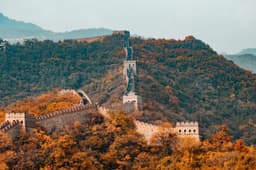
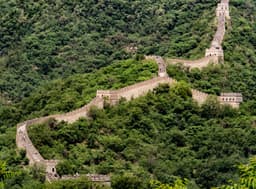
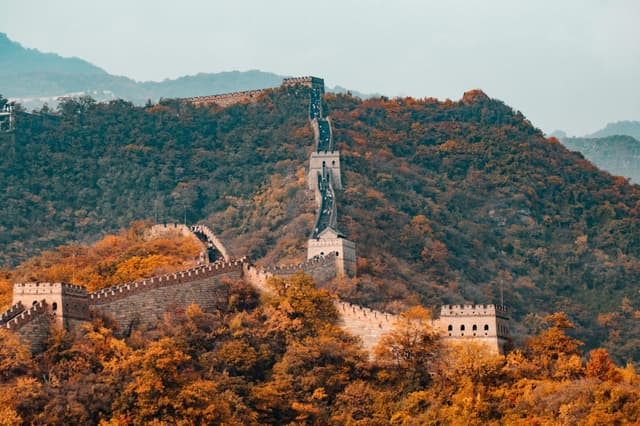
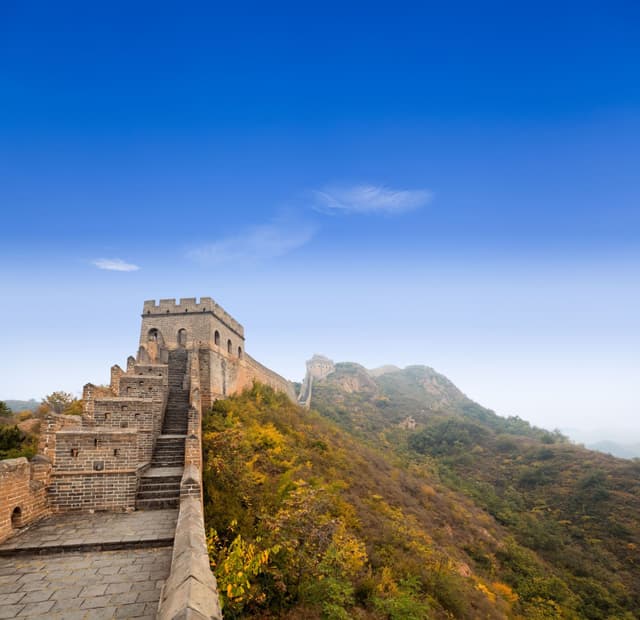
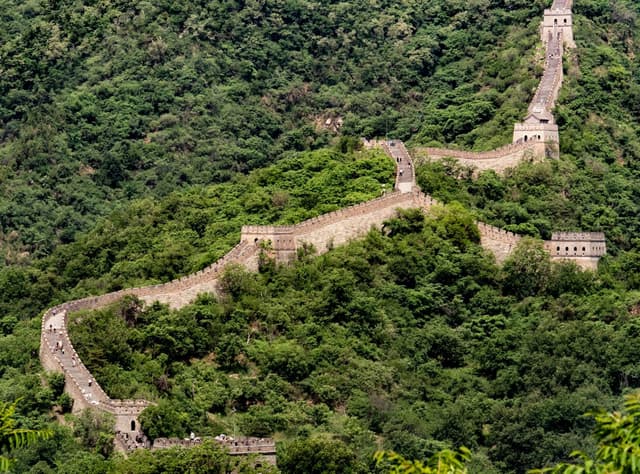
The Great Wall is a half day trip out of the city. Mutianyu is the usual choice for travellers who want restored ramparts, a cable car and manageable crowds. Badaling is the closest and the busiest. Jinshanling is rougher, quieter and better if you actually want to walk a long stretch. Go early. The light is better and the tour buses arrive mid morning.
The Forbidden City needs a booked entry slot and at least three hours. Enter from the south at the Meridian Gate and walk north so you finish near Jingshan Park, where the climb up the hill gives you the roofline of the whole palace complex in one frame. Tiananmen Square sits immediately south and requires ID and a security check to enter.
Beyond the headline sites, Beijing is a hutong city. The lanes around Nanluoguxiang and the Drum Tower are where you get courtyard houses, small noodle shops and old men playing chess. Autumn in Beijing, with yellow ginkgo leaves against red temple walls, is the single most photographed season in the country for good reason.
Xi'an
Xi'an is the history stop. The Terracotta Warriors sit outside the city, thousands of individually modelled figures buried with China's first emperor and still being excavated. Seeing Pit One for the first time is the closest thing China offers to a jaw drop moment, and it is worth taking a guide because the pits mean very little without the story.
In the city, the Ming era wall still runs a complete circuit and you can cycle the full loop on top of it. The Xi'an Muslim Quarter is the other reason to come. It is the historic Hui neighbourhood, the food street runs late into the night, and for Nepali Muslim travellers it is the easiest halal eating in China outside the far west. Roujiamo, hand pulled noodles and lamb skewers are the things to order.
Xi'an was the eastern end of the Silk Road, and the Great Mosque, tucked behind the market lanes, is built in Chinese architectural style rather than Arabic. That single building explains more about Chinese cultural absorption than any museum panel.
Shanghai
Shanghai is the modern counterweight to Beijing. The Bund is the reason most people come: a curve of 1920s colonial banking houses on one bank, and the Pudong skyline of the Oriental Pearl Tower and Shanghai Tower on the other. Walk it at dusk, when both sides are lit and the river traffic is moving.
Yu Garden, in the old city, is a Ming dynasty classical garden of rockeries, ponds and pavilions, surrounded by a bazaar that is touristy but enjoyable. Nanjing Road handles shopping. The French Concession handles the afternoon you did not plan, with plane tree lined streets, small cafes and old villas, and it is where Shanghai stops performing and just lives.
Shanghai also functions as a base. Suzhou and Hangzhou are short high speed rail rides away, for classical gardens and West Lake respectively, and both work as a comfortable day trip without changing hotel.
Guilin and Yangshuo
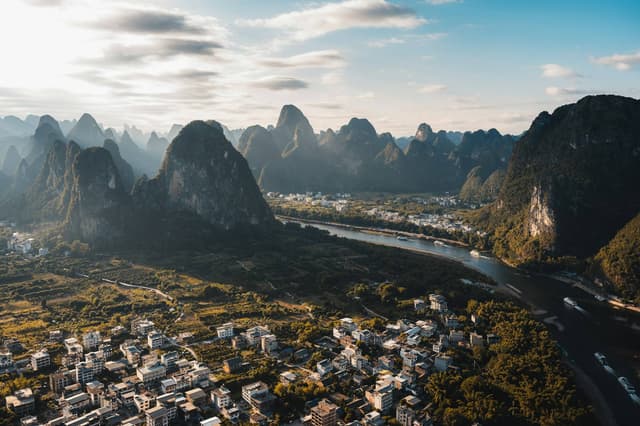
Guilin and Yangshuo are where China gets beautiful in a way photographs undersell. The Li River cruise runs between the two, through limestone karst peaks rising straight out of flat farmland and mist. It is the scenery printed on Chinese banknotes, and it takes several hours by boat.
Yangshuo at the far end is the better place to stay. It is small, surrounded by peaks, and built for cycling. Rent a bike, ride out along the Yulong River past rice fields and water buffalo, and take a bamboo raft in the late afternoon. Reed Flute Cave near Guilin is the standard add on, a limestone cave lit in colour.
For Nepali couples and honeymooners this region is the strongest argument in the whole country. It is slow, green, and unlike anything in the itinerary before or after it.
Zhangjiajie
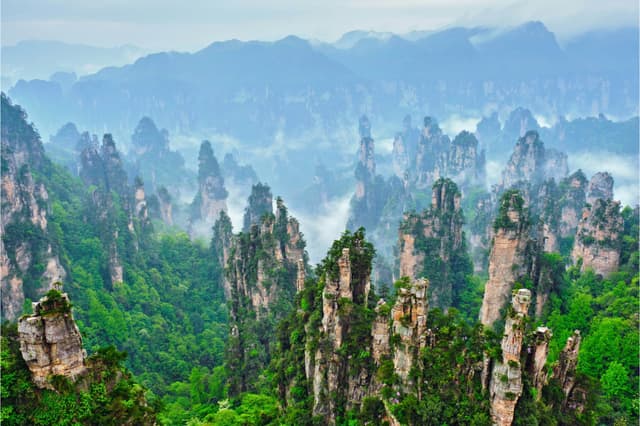
Zhangjiajie in Hunan province is the sandstone pillar landscape that inspired the floating mountains in Avatar. Zhangjiajie National Forest Park is the core: hundreds of quartz sandstone columns, walkways threaded between them, and the Bailong glass elevator running up a cliff face.
The Zhangjiajie Grand Canyon glass bridge is the other draw, a transparent span across the canyon that people either love or refuse to step on. Tianmen Mountain, near the city, has a long cable car, a cliff hanging walkway and the natural arch known as Heaven's Gate above a famous stretch of hairpin road.
Be realistic about effort. Zhangjiajie involves a lot of stairs, walking and queuing for cable cars, and it needs at least two full days to be worth the detour. Families with young children or elderly parents usually get more out of Guilin.
Chengdu
Chengdu is the panda city and, for anyone arriving from South Asia, often the easiest entry point into China because the flight is short. The Chengdu Research Base of Giant Panda Breeding is the reason most people stop here. Arrive at opening time, because pandas are active in the cool morning and asleep by midday.
The city itself is more relaxed than Beijing or Shanghai. People's Park has an old teahouse where locals sit for hours over bamboo leaf green tea. Jinli and Kuanzhai Alley handle the evening. Sichuan food is the other headline: numbing peppercorn, chilli oil, and hotpot that Nepali palates usually take to immediately.
Chengdu is also the gateway for Leshan and Mount Emei, and for onward travel toward Tibet if that is part of your plan.
How many days do you need in China
Seven to nine days covers a solid first trip, and that is where most travellers land. A trip of five to six days realistically covers one city plus a day trip. Seven to nine days covers two cities linked by high speed rail. Ten days and above lets you add a third, such as Xi'an, Guilin or Chengdu.
The mistake is counting calendar days instead of usable days. Your first day goes to the flight and arrival, your last day goes to the airport transfer, and any city change consumes half a day even by train. A seven day trip is really about four and a half days of sightseeing.
Most China itineraries are sized against a simple reality: how much there actually is to see in each place. Beijing needs three days minimum, one of them for the Great Wall. Shanghai works in two, three if you want Suzhou or Hangzhou. Xi'an needs two. Guilin and Yangshuo need three to be worth the flight. Zhangjiajie needs two full park days. Chengdu works in two.
For Nepali families travelling in the Dashain and Tihar break, eight days is usually the sweet spot between leave availability and not feeling rushed. Couples with more flexibility often do better with ten and a slower pace.
Getting around: high speed rail, metro and domestic flights
China high speed rail is the default way to move between cities in China, metro handles everything inside cities, and domestic flights only make sense over long distances. Trains leave from city centre stations, run to the minute, and remove the airport time that makes short flights slower than they look.
| Mode | Best for | What to know |
|---|---|---|
| High speed rail | City pairs such as Beijing to Xi'an, Beijing to Shanghai, Shanghai to Hangzhou | Book with your passport, which also serves as your ticket at the gate. Arrive 30 to 40 minutes early for security and boarding. |
| Domestic flight | Long hops such as Beijing to Guilin, Shanghai to Zhangjiajie, anything toward the far west | Add airport transfer and check-in time at both ends before deciding it is faster. |
| Metro | All movement inside Beijing, Shanghai, Guangzhou, Xi'an and Chengdu | Signage and announcements are in English. Every station has a bag scan, so allow a couple of minutes. |
Second class seats on high speed rail are comfortable enough that first class is rarely necessary on a three hour ride. Bring your passport to the station every time, since ID checks happen at entry, at the gate and sometimes on board.
For taxis, use the ride hailing app rather than flagging cars, and have your destination saved in Chinese characters. Drivers in China rarely read the Roman alphabet, and a hotel business card in Chinese has saved more travellers than any phrasebook.
Money in China: Alipay, WeChat Pay and why cash barely works
China runs on Alipay and WeChat Pay, and a traveller without one of them will struggle. Both apps now allow foreign visitors to link an international Visa or Mastercard, so set this up before you fly and test it once. Cash in Chinese Yuan is legal tender everywhere, but many small vendors no longer keep change.
The Chinese currency is the Renminbi, quoted as CNY or RMB and called Yuan in conversation. The practical route is to carry some USD and convert it in China at a bank branch, or simply to rely on the apps and keep a modest cash reserve. Exchange rates between NPR and CNY move, so check the rate on the day rather than working from an old figure.
Set up before departure, in this order: install Alipay or WeChat, complete identity verification with your passport, link your card, and top up a small balance. Verification sometimes takes a day and is far easier on home wifi than standing at a Beijing metro machine.
Keep some cash anyway. Temple donation boxes, a few rural stalls around Yangshuo, and the occasional stubborn taxi still want notes. Foreign cards work at large hotels and international chains but fail more often than they succeed in small local shops.
Internet in China: eSIM, VPN and the Great Firewall reality
Google, WhatsApp, Facebook, Instagram and YouTube are blocked inside China by the filtering system commonly called the Great Firewall. The two workable answers are a roaming eSIM bought before you leave home, or a VPN installed and tested before departure. Doing nothing and hoping to fix it on arrival is how people lose contact with home for two days.
A travel eSIM is the cleaner option for most travellers. Because the data routes through the provider's network outside mainland China, the usual apps generally keep working without any extra software. Buy it before departure, install it while you still have working internet, and confirm your phone supports eSIM before you pay for one.
A local Chinese SIM gives you cheaper data and better local app performance, but it sits behind the same filtering as everyone else, so you will need a VPN with it. VPN apps are difficult to download once you are inside the country, and app store availability changes. Install and log in to yours before you travel, and have a second one as backup.
Also install what actually works locally: WeChat for messaging and payment, an offline map, and a translation app with the Chinese language pack downloaded. Hotel wifi is fast and widely available, but it is filtered like everything else.
Food in China for Nepali travellers, including vegetarian and halal
Nepali travellers usually adapt to Chinese food quickly, because rice, noodles, chilli and slow cooked meat are familiar territory. What surprises people is how much the food changes by region. Sichuan is numbing and hot, Cantonese is mild and steamed, northern food leans on wheat, dumplings and lamb.
Vegetarian eating is possible but needs clear communication. A dish described as vegetable is often cooked in pork lard or chicken stock, and asking for no meat may not exclude either. The reliable options are Buddhist vegetarian restaurants, which serve fully meat free menus and exist near most major temples, plus tofu dishes, cold vegetable plates and plain noodles ordered explicitly. Carry a translation card that states no meat, no fish, no meat stock in Chinese.
Halal food is easier than most people expect. Look for the Arabic script or the Chinese characters for qingzhen on the sign. Lanzhou beef noodle shops are halal, extremely common in every city, and cheap. The Xi'an Muslim Quarter is a full halal food district. Beijing and Shanghai both have established Muslim restaurant clusters.
Two practical habits. Drink bottled or boiled water rather than tap. And carry a few packets of Nepali tea or noodles if you are travelling with elderly parents, because on day four of unfamiliar breakfasts that small comfort matters more than it sounds.
Language and communication without Mandarin
You can travel China comfortably without Mandarin, but not without preparation. English is limited outside hotels, airports and major tourist sites, and it disappears entirely in small restaurants and taxis. A translation app with the offline Chinese pack downloaded, plus your destinations saved in Chinese characters, solves most of it.
The camera translation feature is the one that earns its keep. Point it at a menu, a station board or a medicine box and you get a usable reading instantly. Learn ni hao for hello, xie xie for thank you, and duo shao qian for how much, and use them, because effort is noticed and repaid.
Keep your hotel name and address in Chinese as a screenshot on your phone and on paper, since a dead battery is the one failure mode that leaves you stranded. On guided days this is a non-issue, which is precisely why most Nepali travellers book the first city guided and go independent afterwards.
Culture, etiquette and rules travellers get wrong
Chinese social etiquette is less formal than visitors expect, but a few rules are firm. Tipping is not customary and can cause confusion. Queue properly and board only when your turn comes. Keep your voice down inside temples. Photography of military installations, border posts and some government buildings is prohibited, and this is enforced.
Carry your passport at all times. You need it to enter train stations, to check in at hotels, and to buy tickets at several major attractions. Hotels register foreign guests with the police automatically. If you stay in a private residence instead, you are expected to register at the local police station yourself within 24 hours of arrival.
Book ahead for the big sites. The Forbidden City and the Terracotta Warriors run on timed entry slots that regularly sell out in peak season, and turning up at the gate is not a plan. Many museums also require advance reservation using your passport number.
Smaller things that smooth the trip: accept a business card or a gift with both hands, do not stick chopsticks upright in rice, and expect people to be direct rather than rude. Nepali travellers sometimes read Chinese bluntness as hostility. It is not.
Safety, health and what to pack
China is one of the safest countries a Nepali traveller can visit. Violent crime against tourists is rare, cities are heavily monitored, and walking at night in Beijing, Shanghai or Chengdu is normal. The realistic risks are pickpocketing in crowded markets, traffic, and overpriced tea house or art gallery scams aimed at foreigners.
On health, tap water is not for drinking. Air quality in northern cities can be poor in winter, which matters if anyone in your group has asthma. Pharmacies are well stocked but staff rarely speak English, so bring your regular medication in its original packaging along with a copy of the prescription. Travel insurance is strongly advised, and cheap relative to what a hospital admission abroad costs.
Pack for the season you are actually travelling in, not for a generic idea of China. Beijing in December is genuinely cold and dry. Shanghai in July is heavy and humid. What everyone needs regardless of month: comfortable walking shoes, because a single day at the Great Wall or the Forbidden City involves a lot of ground.
- Universal travel adapter, since Chinese sockets are commonly flat pin and plugs from Nepal, the Gulf and Europe often do not fit
- Power bank, because navigation, translation and payment all run off your phone
- Photocopy and phone photo of your passport and visa page, stored separately from the passport
- Basic medicine for cold, stomach upset and altitude if Tibet is on your route
- Warm layers for the north from November to March, sun protection for the south
Travel insurance, money and the Embassy of Nepal
Buy travel insurance with medical cover before you leave, and read the exclusions if your plan includes Tibet or other high altitude areas. Nepal Rastra Bank sets how much foreign currency a Nepali citizen can buy for a trip abroad, so ask your bank about the current allowance and the documents it needs. The Embassy of Nepal in Beijing, in the Sanlitun area, is the Nepali mission to contact if you lose your passport or need consular help. For more on safety, read our guide Is it safe to travel to China.
Common mistakes Nepali travellers make on a first China trip
The most expensive mistakes on a first China trip are made before departure, not during the trip. Leaving the visa too late, arriving without a payment app, and packing too many cities into too few days account for most of the disappointment we hear about afterwards. All three are avoidable.
- Applying for the visa too late. The online review and the passport submission both take time. Two to three weeks minimum, more in peak season.
- Landing without Alipay or WeChat Pay set up and verified. Standing at a Beijing metro gate trying to register on filtered wifi is a bad first hour.
- Not installing a VPN or buying an eSIM before departure. Once you are inside China, getting one is much harder.
- Trying to do Beijing, Xi'an, Shanghai and Guilin in seven days. You will spend the holiday in transit.
- Travelling into Golden Week or Chinese New Year without knowing what those dates mean.
- Assuming English is widely spoken. It is not, once you leave the hotel lobby.
- Booking nothing in advance for the Forbidden City or the Terracotta Warriors, then finding the slots gone.
- Leaving the passport in the hotel safe on a train day. You cannot enter the station without it.
Planning your China trip with Gomayu
Gomayu Holidays, operated by Zeta Tours and Travels Pvt. Ltd., plans China trips for Nepali travellers wherever they are living. We handle the routing from your own starting point, the visa documentation set for the Chinese authorities, the rail connections between cities, and the ground arrangements that need Mandarin. Most of our planning runs on WhatsApp and email, and we also keep a real office in Kathmandu if you would rather sit down with us.
What we will tell you honestly: whether your dates clash with Golden Week, whether your leave allows the cities you want, and whether the visa timeline is realistic. We would rather adjust the plan than send you into a trip that does not work.
We plan for every kind of Nepali traveller. Honeymooners choosing between Guilin and Shanghai. Families travelling in the Dashain break. Solo travellers who want Beijing done properly. Groups who want a premium pace and private transport. Message us on WhatsApp for an instant quote and we will map your China trip with you in one sitting.
Best China tour packages from Nepal
To summarise, these are the most popular China tour packages from Nepal that we arrange for Nepali travellers and the Nepali diaspora:
- Beijing & Shanghai Tour (7 days)
- China Holiday Package (10 days)
- Shanghai, Qingdao & Beijing Tour (7 days)
All destinations
Explore more destinations





Search Tours or Places
Search Tours or Places