













Chitwan Jungle Safari Tour
3Days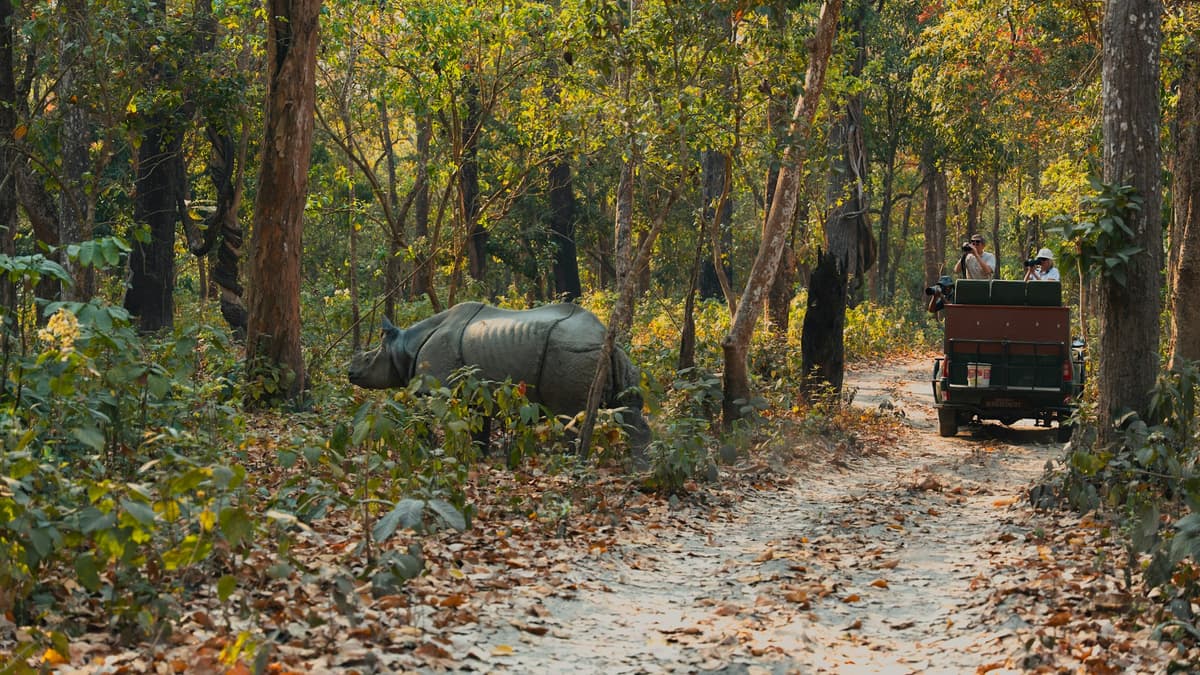
| Group size | Price / person |
|---|---|
| 2 pax | NRs 39,000 /person |
| 3 pax | NRs 31,000 /person |
| 4 pax | NRs 31,000 /person |
| 5 pax | NRs 28,000 /person |
| 6+ pax | NRs 26,000 /person |
- Prices vary with your travel dates, season and group size.
Chitwan Jungle Safari Tour
The Chitwan jungle safari takes you into Nepal's great wild lowland - a belt of sal forest, elephant grass and slow rivers where one-horned rhinos wallow, deer scatter and, if the jungle is generous, a tiger slips across the trail. Based in Sauraha on the edge of Chitwan National Park, it is a proper safari without the fuss.
Over three easy days you get a jeep safari, a dugout canoe on the Rapti, a guided jungle walk with a trained naturalist, the elephant breeding centre and an evening of Tharu culture. There is no trekking - just wildlife, warm Terai evenings and private transfers from Kathmandu, which makes it one of the most family-friendly breaks in Nepal.
Trip highlights
Day-by-day itinerary
Everything below is fully customizable. Add nights, swap activities, or change hotels.
Day1 Kathmandu to Sauraha, Chitwan
- Private drive from Kathmandu to Sauraha on the edge of Chitwan National Park (~5-6 hours) with a lunch stop en route. Check in and freshen up, relax by the Rapti river for sunset, and in the evening enjoy the lively Tharu stick-dance cultural show.
Day2 Full day of jungle activities
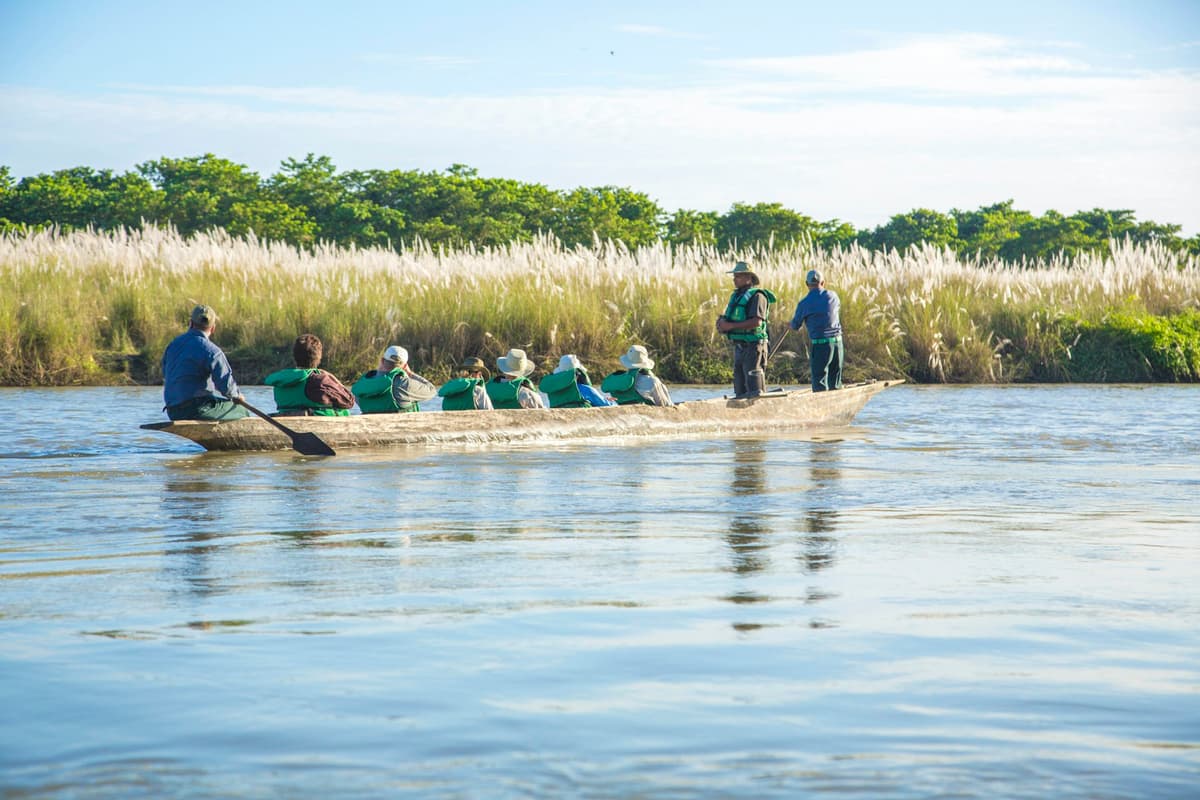
- Early morning dugout canoe ride on the Rapti river to spot crocodiles and birdlife, followed by a guided jungle walk with a naturalist. After lunch, an open jeep safari deep inside Chitwan National Park in search of one-horned rhino, deer and wild boar. In the evening, an optional visit to the elephant breeding centre if time allows.
- Activities: Canoe, jungle walk, jeep safari
Day3 Sauraha to Kathmandu via Bis Hazari Tal
- After breakfast, check out and begin the drive back to Kathmandu. On the way, stop at Bis Hazari Tal (Beeshazari Lake), a Ramsar-listed wetland and birdwatching haven on the edge of the park. Continue to Kathmandu, where the tour ends.
- Activity: Bis Hazari Tal (Beeshazari Lake)
Package pricing
The more travellers in your group, the lower the price per person.
| Group size | Price / person |
|---|---|
| 2 pax | NRs 39,000 /person |
| 3 pax | NRs 31,000 /person |
| 4 pax | NRs 31,000 /person |
| 5 pax | NRs 28,000 /person |
| 6+ pax | NRs 26,000 /person |
- Prices vary with your travel dates, season and group size.
Prices are per person · see what’s included.
What's included
| Items | This package |
|---|---|
| 3/4-star hotel / jungle resort | Included |
| Private vehicle from Kathmandu | Included |
| Jeep safari & park entry | Included |
| Canoe & naturalist jungle walk | Included |
| Tharu culture & breeding centre | Included |
| Meals in the itinerary | Included |
| Dinners in Sauraha | Not included |
| Full-trip guide | Not included |
| Travel & personal expenses | Not included |
Anything not listed here is not included.
Things to carry
- Light, breathable clothes in neutral or earth colours for the jungle
- A hat, sunglasses and sunscreen
- Insect repellent
- Comfortable walking shoes
- A light rain layer (especially in spring and monsoon)
- Binoculars and a camera if you have them
- A reusable water bottle and any personal medication
What our travellers say
Real reviews from Google, verified by travelers.
“It was our best decision to choose Gomayu. We had a wonderful experience with GOMAYU during our Thailand trip. Hotels, Location and itinerary all were well planned and was according to our expectations. Response and communication was very good in Thailand as well. You made our trip very smooth, hassle free and stress free from begning to the end of our trip. This trip was memorable, as me and my husband got to celebrate our 20th wedding Anniversary together in the beautiful place of Thailand and credit goes to GOMAYU for all the arrangements . We are very much satisfied with your service and hope to have other trips with you soon. I would happily Recommend GOMAYU to my friends and family for their excellent service and professional support.”

“Me and my family had a great 10 days trip to Vietnam and Bangkok. All thanks to the wonderful service of Gomayu. Thank you so much for making our trip so easy, fun and stress free.”

“We had an unforgettable 5D4N trip to Bali with Gomayu Holidays! From the very beginning, the communication was smooth, clear, and professional. Everything was perfectly organized; airport pickup, hotel check-ins, and daily tours were always on time, with no stress at all. Our stay was split between a beautiful private pool villa in Seminyak and a comfortable room at Grand Mega Resort, both of which exceeded expectations. The itinerary was well-balanced with adventure, culture, and relaxation. We really enjoyed the watersports (banana boat, jet ski, parasailing), the stunning Uluwatu Temple with Kecak dance, and the romantic candlelight dinner at Jimbaran Beach. The Bali swing and tandem ATV ride were absolute highlights and so much fun! Visiting Lempuyang Temple (Gate of Heaven) was magical and very well arranged despite the crowds. We had some spare time to visit the malls and try local food as well. Special thanks to the guide and driver, who was friendly, helpful, super-flexible and always made sure we were comfortable. We didn’t have to worry about anything as everything was well-organized. Highly recommended for anyone planning a hassle-free and memorable Bali trip. Thank you, Gomayu Holidays, for making our holiday truly special!”

“We had a wonderful experience with Gomayau as our travel partner, with everything being well-organized and thoughtfully planned from start to finish, making the entire trip smooth and enjoyable; the overall coordination was excellent, with timely arrangements and great attention to detail, and the team’s consistent support throughout the journey made a real difference, while communication remained easy and reliable, giving us confidence and peace of mind; we truly appreciated the professionalism and dedication in handling logistics and day-to-day planning, which allowed us to fully relax and enjoy the trip, and overall, it was a great experience that we will remember for future travels and would highly recommend to anyone looking for a hassle-free and well-managed trip.”

“Thank you so much Gomayu Holidays. We had an amazing trip. we are extremely satisfied with their service. The itinerary was wonderfully planned and perfectly organized.Highly recommend planning your next vacation with Gomayu Holidays they are truly EXCELLENT. Special heartfelt thank you to Krishtina and Elho from Gomayu Holidays!”

Good to know
Complete travel guide
What is a Chitwan jungle safari?
A Chitwan jungle safari is a two- or three-day wildlife holiday in Chitwan National Park, Nepal's first national park and a UNESCO World Heritage Site in the Terai lowlands. Based in the riverside village of Sauraha, you go into the park by open jeep and dugout canoe, walk the forest with a trained naturalist, watch birds, meet the Tharu community and, on most trips, see the greater one-horned rhino in the wild. It is one of the easiest and most rewarding trips in Nepal because there is no trekking, no altitude and no hard walking. Grandparents, small children, honeymoon couples and first-time travellers all manage it comfortably.
For many Nepali families this is the trip they have always meant to take. We grow up hearing about gainda and bagh in school books, and then we spend our holidays in Pokhara or abroad. Chitwan is five to six hours from Kathmandu by private vehicle, and within an afternoon of arriving you can be sitting on the bank of the Rapti River watching the sun go down behind the forest while a mugger crocodile drifts past. This guide explains exactly what a Chitwan jungle safari involves, what you will realistically see, when to go, who it suits and how to do it responsibly, so you can decide with confidence.
Where is Chitwan National Park and what is Sauraha?
Chitwan National Park sits in the inner Terai of south-central Nepal, in Chitwan district, roughly 150 to 170 kilometres south-west of Kathmandu by road. It covers about 952 square kilometres of sal forest, riverine grassland, oxbow lakes and floodplain along the Rapti, Narayani and Reu rivers, with the Churia hills forming its southern edge. The park was established in 1973 and was listed by UNESCO as a World Heritage Site in 1984 for its outstanding wildlife, especially the one-horned rhino and the Bengal tiger.
Sauraha is the small village on the northern bank of the Rapti River that serves as the main gateway to the park. It is where nearly all the lodges, restaurants, naturalist guides and safari operators are based, and where the jeeps and canoes depart. Sauraha sits about 20 kilometres from Bharatpur, the district headquarters, which has the closest airport. The village has a relaxed, low-rise feel: a main street with cafes and souvenir shops, Tharu homesteads with mud-plastered walls, rice fields, and then the river, with the park's forest wall directly on the other side.
The park is bordered by a buffer zone of community forests and farmland, and animals move freely between the two. It is not unusual to see rhino grazing in the buffer zone at dusk within walking distance of Sauraha. That closeness is exactly why the park rules and your guide's instructions matter, which we cover further down.
What does a Chitwan jungle safari involve?
A Chitwan jungle safari combines several different ways of exploring the park in one trip: a jeep safari deep inside the core area, a canoe ride on the Rapti River, a guided walk in the forest, bird watching, a visit to the elephant breeding centre and an evening of Tharu culture. Each activity shows you a different side of Chitwan, and doing all of them across a full day is what makes a three-day Chitwan safari package feel complete rather than rushed.
Jeep safari inside Chitwan National Park
The jeep safari is the heart of the trip. You ride in an open-sided safari jeep with a driver and a park-licensed naturalist, entering the core area of the national park and following forest tracks and grassland edges for several hours. Jeeps can cover far more ground than a walk, which is why this is your best chance of seeing rhino, spotted deer, sambar, wild boar, gaur and, if luck is on your side, a tiger, sloth bear or leopard. The naturalist reads tracks, dung and alarm calls to guess where animals might be. Jeep safaris usually run in the morning and again in the afternoon when animals are most active, and the sound of the engine does not bother the wildlife the way many people expect. This tour uses jeep safari as the main way to explore the park.
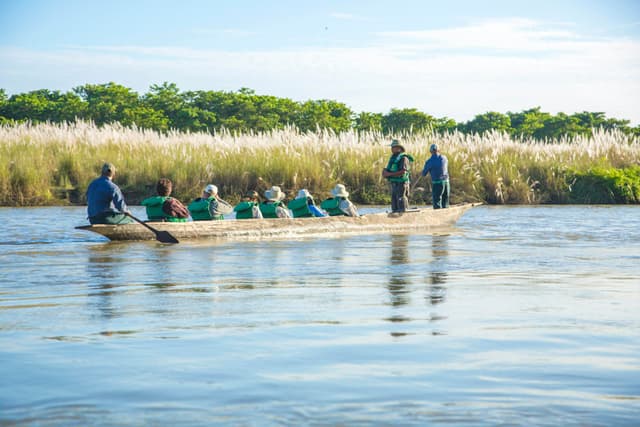
Dugout canoe ride on the Rapti River
The canoe ride is quiet, slow and surprisingly close to the wildlife. You sit low in a traditional dugout canoe carved from a single tree trunk while a boatman poles you down the Rapti. Along the banks you will see mugger crocodiles basking with their mouths open and, with luck, the rare gharial with its long, thin snout. Kingfishers, storks, egrets and cormorants line the river, and in the cool months the mist over the water in the early morning is beautiful. It is calm enough for young children and older family members, and the canoe usually drops you at the start of the jungle walk.
Guided jungle walk with a naturalist
The jungle walk takes you on foot into the forest with two trained naturalists, one at the front and one at the back. Walking is the most intimate way to experience Chitwan: you hear the forest, see fresh rhino footprints in the mud, learn which plants the Tharu use as medicine and understand how the guides read the jungle. Walks on a family safari are short and easy, on flat ground, and the guides brief you clearly on what to do if you meet a rhino or sloth bear. You will not be taken deep into tiger territory on foot, and the guides are trained and licensed by the park.
Bird watching
Chitwan National Park is one of the best birding areas in Asia, with more than 500 recorded species. Even if you have never held binoculars before, you will notice the birds: Indian peafowl calling from the grassland, hornbills flying across the river, parakeets, bee-eaters, drongos, and in winter huge numbers of migratory ducks and waders on the river and oxbow lakes. A short early-morning birding walk near Sauraha or in the community forest is included, and serious birders can ask us to extend it.
Elephant breeding centre
The elephant breeding centre at Khorsor, near Sauraha, is a government facility where the park's working elephants are bred and cared for. You can see mothers with calves and learn how elephants are used for park patrols and anti-poaching work. It is an educational visit, not a ride, and we explain why that matters in the section on elephants below.
The Tharu stick-dance cultural show
The Tharu are the indigenous people of the Terai and have lived beside this forest for centuries, in villages of long mud-and-thatch houses with painted walls and grain stores, where daily life runs around farming and the river. On your first evening in Sauraha, a Tharu cultural show presents the famous stick dance, in which dancers strike sticks in fast rhythm, along with the peacock dance and fire dance. It is a lively end to the first day, and children love it.
Rapti River sunset
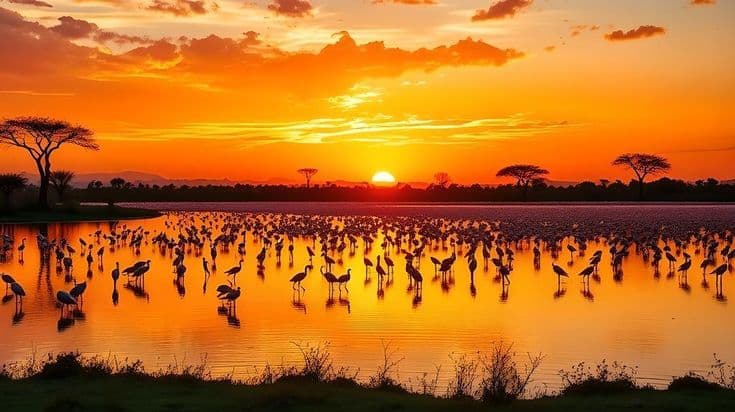
On your first evening in Sauraha, you walk to the riverbank at sunset. The sky turns orange over the forest, the river goes still, elephants are sometimes brought down to bathe, and you sit with a cup of tea watching for rhino on the far bank. It is simple, and it is the moment most visitors remember.
What wildlife can you realistically see in Chitwan?
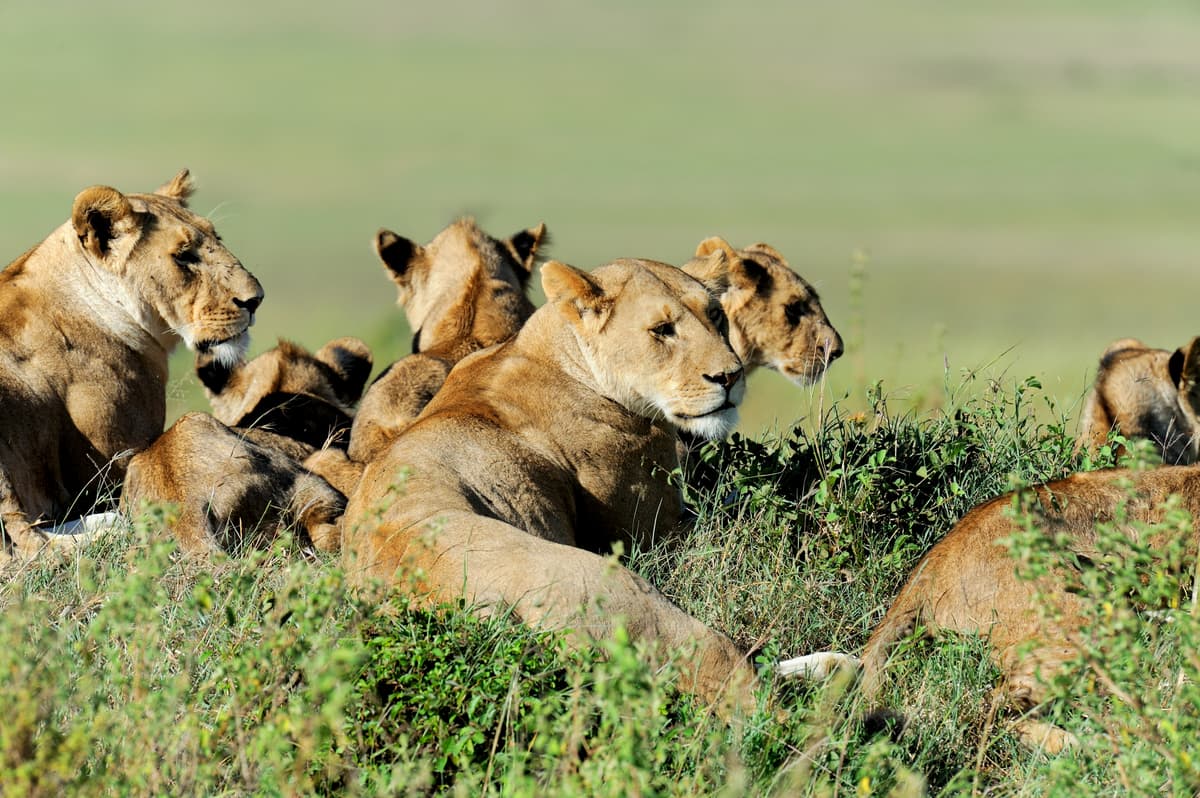
On a Chitwan jungle safari you can realistically expect to see the greater one-horned rhino, several species of deer, mugger crocodiles, wild boar, monkeys and a large number of birds. Tiger, sloth bear, leopard and gharial are all present but sightings are a matter of luck. We prefer to be honest about this before you book rather than have you arrive with the wrong expectations.
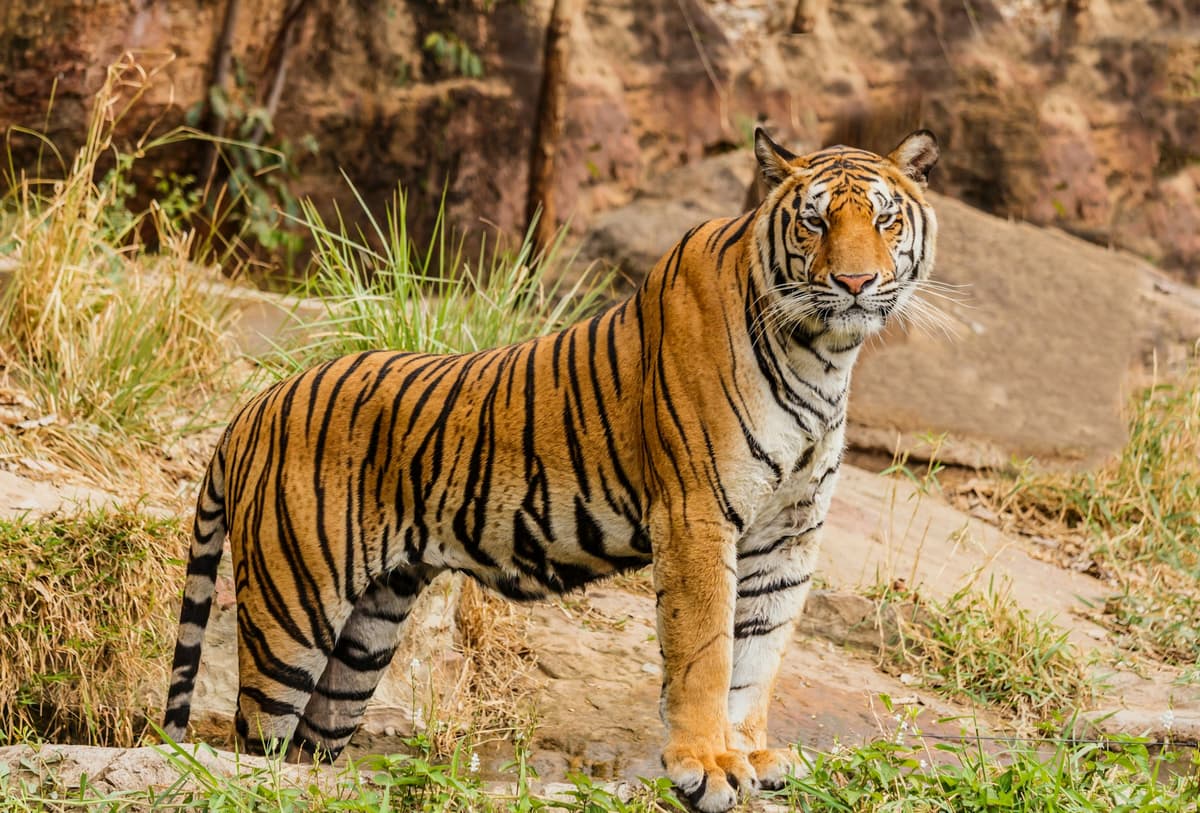
- Greater one-horned rhino: the star of Chitwan and commonly seen. Chitwan holds one of the largest populations of this species in the world, and rhino are seen on the great majority of jeep safaris, often more than once. They graze in the grassland and wallow in the mud near rivers and lakes.
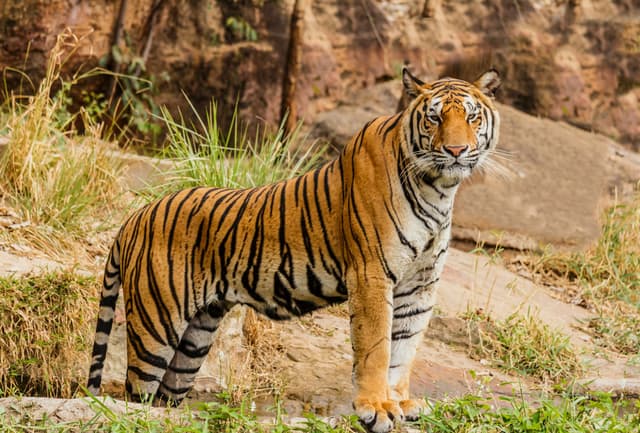
- Bengal tiger: present in healthy numbers but shy, and the forest is dense. A tiger sighting is rare and genuinely lucky. Fresh pugmarks are common; the animal itself is not.
- Gharial and mugger crocodile: mugger crocodiles are commonly seen basking on the riverbanks during the canoe ride. The gharial, a critically endangered fish-eating crocodile, is rarer but is regularly seen in the cooler months on sandbanks of the Rapti and Narayani.
- Deer: spotted deer (chital), sambar, hog deer and barking deer are all common. Spotted deer herds are one of the classic sights of the park.
- Sloth bear: present and occasionally seen, especially in the morning. Sightings are unpredictable.
- Gaur: the huge wild bison of the Churia foothills, seen more often in the hot months when they come down to the grassland.
- Wild boar, rhesus and langur monkeys, jackal: commonly seen.
- Birds: more than 500 species recorded, including hornbills, storks, kingfishers, eagles, peafowl and winter migrants.
Chitwan is wild forest, not a zoo. Nothing is guaranteed, and the guides will never chase or corner an animal to get you a photo. What we can promise is that the naturalists know the park intimately and will give you the best possible chance of good sightings within the rules.
Will I see a tiger in Chitwan?
Probably not, and any operator who promises you a tiger is not being straight with you. Chitwan National Park has a healthy tiger population and numbers have risen in recent years thanks to strong anti-poaching work, but tigers are solitary, mostly active at dawn and dusk, and the tall grass and dense sal forest hide them well. Some visitors see one on their very first jeep safari; many regulars have visited for years without a sighting.
What improves your odds: going in the dry months from February to April when the grass has been cut and burned and visibility is best, taking both a morning and an afternoon jeep safari, staying quiet in the jeep, and listening to your naturalist when they stop to wait for alarm calls. If seeing a tiger is your main goal, tell us and we can add an extra full-day jeep safari to your Chitwan safari package. Otherwise, come for the rhino, the river and the forest, and treat any tiger as a bonus.
Is elephant safari available in Chitwan and is it ethical?
Elephant-back safaris were the traditional way to see Chitwan for decades, but they are being phased out on animal welfare and ethical grounds, and this tour does not include elephant rides. Instead you explore the park by jeep, canoe and on foot, and you visit the elephant breeding centre to learn about the animals without sitting on them. We believe this is the right direction for Nepal's tourism and we ask our guests to support it.
Why the change? Captive elephants used for tourist rides are typically trained through harsh methods, carry heavy howdahs for hours in the heat and spend their off-time chained. International animal welfare organisations, many tour companies and a growing number of Chitwan lodges have moved away from rides, and Nepal has been gradually reducing elephant-back safaris in favour of more ethical alternatives. You may still see private elephant rides advertised in Sauraha. We do not book them, and we do not recommend them.
What you can still do ethically: visit the breeding centre at Khorsor, watch the park's patrol elephants being bathed in the Rapti from the riverbank, and learn from your naturalist how elephants are used for anti-poaching patrols where jeeps cannot go. If you have young children who are excited about elephants, this is the version you can feel good about.
What is Tharu culture and why does it matter on a Chitwan trip?
The Tharu are the indigenous people of the Terai, and Chitwan was their homeland long before it became a national park. Historically the Tharu were among the few communities with a natural resistance to malaria, which allowed them to farm the fertile but disease-ridden lowlands when others could not. Their traditional houses are long, low buildings of mud, bamboo and elephant grass with painted walls and small windows to keep the heat out, and their villages around Sauraha are still very much lived in.
Tharu culture is a memorable part of any Chitwan trip. Their communities around Sauraha still live by farming and the river and keep traditions such as the Maghi festival in January, the Tharu new year. On this tour you meet that culture through the evening cultural show rather than a village walk.
The evening cultural show brings the community's dances to a stage in Sauraha. The stick dance, performed in a fast circle with wooden sticks striking in rhythm, is the most famous, and the peacock dance, with a dancer inside a large feathered costume, delights children. Guests are often invited to join the final dance. For Nepali visitors from the hills and Kathmandu, it is a chance to know a part of our own country that many of us have only read about.
Best time to visit Chitwan for a jungle safari
The best time for a Chitwan jungle safari is October to March, when the weather is cool and dry, the skies are clear and wildlife viewing is at its best. February to April is also excellent because the tall elephant grass is cut and burned in this period, which opens up the grassland and makes rhino and other animals far easier to spot. The monsoon from June to September is hot and humid, the rivers rise and some activities such as the canoe ride and jungle walk may be limited.
For Nepali families the sweet spot is the Dashain and Tihar holidays in October and November: the rain has stopped, the air is fresh, the rivers are full and clear and the forest is green. This is also the busiest period in Sauraha, so we recommend booking your Chitwan safari package around three months ahead if you want your first choice of lodge. Winter mornings from December to January can be foggy and chilly on the river, so bring a jacket for the early canoe and birding walks, but the middle of the day is pleasant and the birdlife is at its peak.
| Month | Weather in Chitwan | Wildlife viewing | Good for |
|---|---|---|---|
| October | Warm days, cool evenings, post-monsoon greenery | Very good | Dashain holidays, families |
| November | Clear, dry, pleasant | Very good | Tihar holidays, couples, birding begins |
| December | Cool, foggy mornings, mild afternoons | Good | Winter migrant birds, quiet season |
| January | Coldest month, fog on the river | Good | Maghi festival, birders, warm clothes needed |
| February | Warming up, grass cutting begins | Excellent | Best visibility, tiger hopefuls |
| March | Warm, dry, open grassland | Excellent | Rhino, gharial on sandbanks, school holidays |
| April | Hot, dry, hazy | Very good | Animals gather at water, Nepali New Year trips |
| May | Very hot, pre-monsoon storms | Good | Budget travellers, early mornings only |
| June | Monsoon begins, humid | Limited | Lush forest, fewer visitors |
| July | Heavy rain, rivers high | Limited | Some activities may not run |
| August | Heavy rain, humid | Limited | Some activities may not run |
| September | Rain easing, very green | Improving | Late-season value, pre-Dashain |
If you can only travel in the monsoon, a Chitwan trip is still possible and the forest is beautifully green, but be prepared for heat, mosquitoes and the chance that the canoe ride or jungle walk is replaced with an alternative for safety. Talk to us before booking a monsoon date and we will tell you honestly what will and will not run.
Who is a Chitwan jungle safari for?
A Chitwan jungle safari suits almost everyone: families with young children, elderly parents, honeymoon couples, groups of friends, solo travellers and first-time visitors to Nepal's wildlife. There is no trekking, no altitude, no long walks and no rough camping. Every activity is done from a vehicle, a boat or a short flat walk, and you return to a comfortable lodge for every meal and every night.
- Families with children: this is probably the best family trip in Nepal. Children love the jeep, the crocodiles, the elephant calves and the stick dance, and a first rhino sighting is something they will talk about for years. The activity day is long, so we can trim it for very small children.
- Elderly parents and grandparents: highly accessible. The private vehicle from Kathmandu, jeep safari and canoe ride involve almost no walking, and the jungle walk can be shortened or skipped. Lodges are on ground level with easy paths. Many Nepali families bring three generations together on this trip.
- Honeymoon couples: Sauraha has quiet riverside lodges, sunset walks and candle-lit dinners, and the pace is slow. It pairs beautifully with Pokhara for a longer honeymoon within Nepal.
- Friends and office groups: a three-day Chitwan tour from Kathmandu fits a long weekend and works well as a team outing. Jeeps and lodges take groups easily.
- Solo travellers: safe and social. Activities are done with a guide, and lodges are friendly.
- Diaspora Nepalis visiting home: if you are back from abroad for Dashain or a wedding and want to show your children or foreign spouse something of Nepal beyond Kathmandu, Chitwan is an easy, memorable addition.
The only people we would advise caution for are those with severe back problems, because jeep tracks are bumpy, and anyone who cannot tolerate heat if travelling in April to September. Tell us about any mobility or health concerns and we will adjust the programme.
Where do you stay in Sauraha?
Accommodation in Sauraha ranges from simple guesthouses to comfortable mid-range lodges and a few premium resorts, most of them set among gardens on the edge of the village or along the river. On our Chitwan safari package you stay in a well-run lodge with private rooms, attached bathrooms, hot water, fans or air conditioning depending on season, and meals included. Several lodges have riverside terraces where you can watch the sunset or spot rhino across the water without leaving your chair.
What to expect from a typical Sauraha lodge:
- Ground-floor or low-rise cottages set in a garden, often with a small pool at mid-range and above.
- Mosquito nets or screened windows, and air conditioning in warmer months at most mid-range properties.
- Buffet or set meals with Nepali, Indian and continental options, and vegetarian food always available.
- An in-house naturalist team and a briefing each evening about the next day's activities.
- Reliable electricity and Wi-Fi in the village, though mobile signal can drop inside the park.
If you would like an upgrade to a premium resort, a lodge inside the buffer zone with more privacy, or a specific property you have read about, ask us when you enquire. We will tell you honestly which lodges we trust and which we do not.
What food will you eat in Chitwan?
Food on a Chitwan jungle safari is simple, fresh and mostly Nepali, with lodges serving dal bhat tarkari, seasonal vegetables, chicken or fish curry, and continental breakfasts with eggs, toast and fruit. Tharu cuisine is worth trying if your lodge offers it: dhikri, a steamed rice-flour dumpling, ghonghi, a snail curry, and fresh river fish are local specialities, and Tharu-style home-brewed rice beer is offered at some cultural evenings.
Sauraha's main street has cafes serving momo, chowmein, pizza and coffee if you want a change, and there are small shops for snacks and bottled water. Vegetarian and Jain-friendly food is easy to arrange; just tell us in advance. Drink only bottled or filtered water, and in the hot season carry electrolytes for the jeep safari.
What should you pack for a Chitwan jungle safari?
Pack light, comfortable clothes in muted jungle colours such as khaki, olive, brown and grey, closed shoes for the jungle walk, a hat, sunscreen, insect repellent and binoculars if you have them. Bright colours and white stand out to wildlife and can affect sightings, so leave the red kurtas and neon jackets for the cultural show in the evening.
- Clothing: light long-sleeved shirts and trousers in earth tones for the safari (protection from sun, grass and insects), a fleece or jacket for early mornings from November to February, and something comfortable for the evening.
- Footwear: closed walking shoes or trainers for the jungle walk; sandals for the lodge.
- Sun and insects: hat, sunglasses, sunscreen, a good mosquito repellent. Mosquitoes are worst from April to October.
- Gear: binoculars make a huge difference for birds and distant animals; a camera with zoom if you have one; a power bank; a small daypack; a reusable water bottle.
- Health: personal medicines, basic first aid, motion sickness tablets for the winding highway if you need them.
- Documents: Nepali citizenship card or passport for park permit registration.
Leave drones at home unless you have a permit, as they are not allowed in the park. Perfume and strong scents are best avoided in the jungle.
How many days do you need for a Chitwan jungle safari?
Two nights and three days is the ideal length for a first Chitwan jungle safari. It gives you one full activity day in the park with the jeep safari, canoe ride, jungle walk, an optional elephant breeding centre visit, birding and the Tharu cultural show, plus a relaxed sunset on arrival and a stop at Bis Hazari Tal (Beeshazari Lake), a Ramsar-listed wetland, on the drive back. This is the structure of our Chitwan safari package and it fits a long weekend from Kathmandu.
How the options compare:
- 1 night 2 days: possible but rushed. With ten to twelve hours of driving in two days, you get only half a day in the park. We recommend it only if you are combining Chitwan with Pokhara or Lumbini and time is very tight.
- 2 nights 3 days: the standard and the best value for time. One full day of activities plus two easy half days.
- 3 nights 4 days or longer: worth it for keen wildlife watchers, photographers and birders. An extra full-day jeep safari deep into the park noticeably improves your chances of tiger, sloth bear and gaur, and lets you visit the Bishazari Tal wetland, also known as Twenty Thousand Lakes, for birds.
Chitwan also combines naturally with Pokhara (about four to five hours by road from Sauraha) and Lumbini (about three to four hours), so many guests build a five- to seven-day Terai and lakes circuit. Ask us and we will map it out.
Park rules and staying safe around wildlife
Chitwan is a wild place and the rules exist because rhino, sloth bear and tiger can and do injure people who ignore them. Stay with your guide at all times, keep your voice down, never leave the jeep unless your naturalist says so, and never approach or feed any animal. Follow these rules and a Chitwan jungle safari is very safe; the park has hosted visitors for fifty years and serious incidents are rare and almost always involve people who broke them.
- Always walk with a licensed naturalist. Never enter the park or the community forest alone, including at dusk near Sauraha.
- On the jungle walk, listen to the safety briefing. If a rhino charges, the standard advice is to climb a tree or put a large tree between you and the animal, and your guides will point out escape routes as you go.
- Keep a respectful distance from all animals and never try to get closer for a photo. Use zoom.
- Do not use flash photography, play music or shout inside the park.
- Do not litter, and carry your rubbish out. Plastic is a serious problem in the buffer zone.
- Do not swim in the Rapti or Narayani. Crocodiles are present.
- Smoking and fires are not allowed in the park, especially in the dry season.
- Carry your identification. Park permits are registered by name and checked at the entry point.
- Children must stay seated in the jeep and within arm's reach of an adult on walks.
Malaria risk in the Terai is now low but not zero, so use repellent and sleep under a net or in a screened room. Tap water is not safe to drink. If you have a medical condition, tell your guide at the start so they can plan the day accordingly. Bharatpur has hospitals, and Sauraha has pharmacies and a health post.
How do you get to Chitwan from Kathmandu?
Chitwan is about 150 to 170 kilometres from Kathmandu by road and the drive to Sauraha takes roughly five to six hours in a private vehicle, depending on traffic and road conditions. Our Chitwan tour from Kathmandu includes a private car or van with a driver, so you leave from your door in the morning, stop for lunch on the way and reach Sauraha in the early afternoon in time for the Rapti sunset.
The route follows the Prithvi Highway west along the Trishuli River to Mugling, then turns south along the Narayani to Narayanghat and Bharatpur before the last short stretch east to Sauraha. The river scenery through the gorge is beautiful, and the road improves as you leave the hills. Kurintar and Malekhu are the usual stops for tea or a fish lunch. Departure around seven in the morning avoids the worst of the Kathmandu traffic and lets you enjoy the afternoon in Sauraha.
Other ways to reach Chitwan if you prefer not to drive: daily flights from Kathmandu to Bharatpur take around twenty to twenty-five minutes, followed by a short drive to Sauraha, and tourist buses run from Kathmandu and Pokhara to Sauraha each morning. We can arrange a flight-based version of the package if you are short on time or travelling with someone who finds long drives difficult, though the road journey is part of the experience for many families.
Is a Chitwan jungle safari worth it?
Yes. A Chitwan jungle safari is worth it because it is the only place in Nepal where you can reliably see a greater one-horned rhino in the wild, one of the rarest large mammals on earth, in a UNESCO-listed park that is just five to six hours from Kathmandu. Add the crocodiles on the canoe ride, the birdlife, the Tharu culture and the fact that the whole trip is comfortable enough for children and grandparents, and there is no other short break in Nepal that offers this much variety with this little effort.
It is worth it for Nepali families because it is our own heritage. Chitwan's rhino were nearly wiped out in the 1960s and have recovered because of decades of conservation work by the park, the army and the buffer-zone communities. Seeing that success with your own eyes is a different experience from seeing it on television. It is worth it for couples because Sauraha is quiet, green and unhurried. It is worth it for the diaspora because it gives visiting relatives and children a Nepal beyond temples and traffic.
When it might not be worth it: if you are expecting a guaranteed tiger, if you want an African-style open savannah with animals everywhere, or if you are travelling in July or August and expect every activity to run. Chitwan is a dense, humid Asian jungle. Come with realistic expectations and you will leave delighted.
Responsible and eco-friendly travel in Chitwan
Responsible travel in Chitwan means choosing jeep and canoe safaris over elephant rides, using licensed naturalists, keeping to park rules, avoiding single-use plastic and spending money where it reaches the local Tharu community. The park's success depends on the buffer-zone villages having a stake in conservation, and tourism done well is one of the main ways they benefit.
- Skip elephant rides. Choose the jeep safari and the breeding centre visit instead. This is the single biggest ethical choice you can make in Chitwan.
- Book licensed guides. Park-licensed naturalists are trained in safety and wildlife ethics and their fees support local families.
- Reduce plastic. Bring a refillable bottle. Many lodges provide filtered water.
- Respect the animals. No chasing, no baiting, no drones, no noise. A far-off rhino seen calmly is better than a close one that has been disturbed.
- Support Tharu businesses. Buy handicrafts, eat at local restaurants and pay for the cultural show; that money stays in the community.
- Stay on tracks. Jeeps and walkers must keep to designated routes to protect grassland and nesting sites.
- Do not buy wildlife products. Anything made from animal parts is illegal and fuels poaching.
Gomayu works only with operators who follow park regulations, and we brief every guest on these points before the safari. If you ever see a guide behaving unethically on your trip, tell us and we will act on it.
Why book your Chitwan jungle safari with Gomayu?
Gomayu is a Nepal-based travel company operated by Zeta Tours and Travels Pvt. Ltd., and we build Chitwan safari packages specifically for Nepali travellers and the Nepali diaspora. That means Nepali-rate park fees and activity permits handled for you, a private vehicle from your home in Kathmandu, lodges we have checked ourselves, licensed naturalists, and honest advice in Nepali or English about what you will and will not see.
- Everything handled: transport, lodge, meals, park entry, activity permits and guide are arranged before you leave. You do not queue at the ticket counter.
- Family and elderly friendly: we adjust the activity day for small children, grandparents or anyone with mobility concerns, and we choose lodges accordingly.
- Ethical by default: jeep safari, not elephant rides; licensed guides only.
- Honest expectations: we will never promise a tiger or oversell the monsoon.
- Flexible add-ons: extra jeep safaris, birding extensions, Pokhara or Lumbini combinations, or a flight instead of the drive.
- A real office and real people: reach us on WhatsApp for a quick answer, and speak to someone who has actually done the trip.
To check dates, ask about lodges or get a quote for your family or group, message us on WhatsApp or use the enquiry form on this page. Pricing for the standard three-day Chitwan safari package is shown in the pricing section, and we will confirm any customisation in writing before you pay anything.
Ready to see your first rhino?
A Chitwan jungle safari is three easy days, one unforgettable wildlife park and a part of Nepal every Nepali should see at least once. Pick your dates, especially if you are aiming for Dashain, Tihar or the February to April dry season, tell us who is travelling, and let Gomayu take care of the rest. The forest is waiting on the other side of the Rapti.
Price per person
| Group size | Price / person |
|---|---|
| 2 pax | NRs 39,000 /person |
| 3 pax | NRs 31,000 /person |
| 4 pax | NRs 31,000 /person |
| 5 pax | NRs 28,000 /person |
| 6+ pax | NRs 26,000 /person |
Per person · see what’s included
- Prices vary with your travel dates, season and group size.
Chitwan Jungle Safari Tour
Chitwan Jungle Safari Tour
3Days
Chitwan Jungle Safari Tour
The Chitwan jungle safari takes you into Nepal's great wild lowland - a belt of sal forest, elephant grass and slow rivers where one-horned rhinos wallow, deer scatter and, if the jungle is generous, a tiger slips across the trail. Based in Sauraha on the edge of Chitwan National Park, it is a proper safari without the fuss.
Over three easy days you get a jeep safari, a dugout canoe on the Rapti, a guided jungle walk with a trained naturalist, the elephant breeding centre and an evening of Tharu culture. There is no trekking - just wildlife, warm Terai evenings and private transfers from Kathmandu, which makes it one of the most family-friendly breaks in Nepal.
Trip highlights
Day-by-day itinerary
Everything below is fully customizable. Add nights, swap activities, or change hotels.
Day1 Kathmandu to Sauraha, Chitwan
- Private drive from Kathmandu to Sauraha on the edge of Chitwan National Park (~5-6 hours) with a lunch stop en route. Check in and freshen up, relax by the Rapti river for sunset, and in the evening enjoy the lively Tharu stick-dance cultural show.
Day2 Full day of jungle activities
- Early morning dugout canoe ride on the Rapti river to spot crocodiles and birdlife, followed by a guided jungle walk with a naturalist. After lunch, an open jeep safari deep inside Chitwan National Park in search of one-horned rhino, deer and wild boar. In the evening, an optional visit to the elephant breeding centre if time allows.
- Activities: Canoe, jungle walk, jeep safari
Day3 Sauraha to Kathmandu via Bis Hazari Tal
- After breakfast, check out and begin the drive back to Kathmandu. On the way, stop at Bis Hazari Tal (Beeshazari Lake), a Ramsar-listed wetland and birdwatching haven on the edge of the park. Continue to Kathmandu, where the tour ends.
- Activity: Bis Hazari Tal (Beeshazari Lake)
Package pricing
The more travellers in your group, the lower the price per person.
| Group size | Price / person |
|---|---|
| 2 pax | NRs 39,000 /person |
| 3 pax | NRs 31,000 /person |
| 4 pax | NRs 31,000 /person |
| 5 pax | NRs 28,000 /person |
| 6+ pax | NRs 26,000 /person |
- Prices vary with your travel dates, season and group size.
Prices are per person · see what’s included.
What's included
| Items | This package |
|---|---|
| 3/4-star hotel / jungle resort | Included |
| Private vehicle from Kathmandu | Included |
| Jeep safari & park entry | Included |
| Canoe & naturalist jungle walk | Included |
| Tharu culture & breeding centre | Included |
| Meals in the itinerary | Included |
| Dinners in Sauraha | Not included |
| Full-trip guide | Not included |
| Travel & personal expenses | Not included |
Anything not listed here is not included.
Things to carry
- Light, breathable clothes in neutral or earth colours for the jungle
- A hat, sunglasses and sunscreen
- Insect repellent
- Comfortable walking shoes
- A light rain layer (especially in spring and monsoon)
- Binoculars and a camera if you have them
- A reusable water bottle and any personal medication
What our travellers say
Real reviews from Google, verified by travelers.
“It was our best decision to choose Gomayu. We had a wonderful experience with GOMAYU during our Thailand trip. Hotels, Location and itinerary all were well planned and was according to our expectations. Response and communication was very good in Thailand as well. You made our trip very smooth, hassle free and stress free from begning to the end of our trip. This trip was memorable, as me and my husband got to celebrate our 20th wedding Anniversary together in the beautiful place of Thailand and credit goes to GOMAYU for all the arrangements . We are very much satisfied with your service and hope to have other trips with you soon. I would happily Recommend GOMAYU to my friends and family for their excellent service and professional support.”
“Me and my family had a great 10 days trip to Vietnam and Bangkok. All thanks to the wonderful service of Gomayu. Thank you so much for making our trip so easy, fun and stress free.”
“We had an unforgettable 5D4N trip to Bali with Gomayu Holidays! From the very beginning, the communication was smooth, clear, and professional. Everything was perfectly organized; airport pickup, hotel check-ins, and daily tours were always on time, with no stress at all. Our stay was split between a beautiful private pool villa in Seminyak and a comfortable room at Grand Mega Resort, both of which exceeded expectations. The itinerary was well-balanced with adventure, culture, and relaxation. We really enjoyed the watersports (banana boat, jet ski, parasailing), the stunning Uluwatu Temple with Kecak dance, and the romantic candlelight dinner at Jimbaran Beach. The Bali swing and tandem ATV ride were absolute highlights and so much fun! Visiting Lempuyang Temple (Gate of Heaven) was magical and very well arranged despite the crowds. We had some spare time to visit the malls and try local food as well. Special thanks to the guide and driver, who was friendly, helpful, super-flexible and always made sure we were comfortable. We didn’t have to worry about anything as everything was well-organized. Highly recommended for anyone planning a hassle-free and memorable Bali trip. Thank you, Gomayu Holidays, for making our holiday truly special!”
“We had a wonderful experience with Gomayau as our travel partner, with everything being well-organized and thoughtfully planned from start to finish, making the entire trip smooth and enjoyable; the overall coordination was excellent, with timely arrangements and great attention to detail, and the team’s consistent support throughout the journey made a real difference, while communication remained easy and reliable, giving us confidence and peace of mind; we truly appreciated the professionalism and dedication in handling logistics and day-to-day planning, which allowed us to fully relax and enjoy the trip, and overall, it was a great experience that we will remember for future travels and would highly recommend to anyone looking for a hassle-free and well-managed trip.”
“Thank you so much Gomayu Holidays. We had an amazing trip. we are extremely satisfied with their service. The itinerary was wonderfully planned and perfectly organized.Highly recommend planning your next vacation with Gomayu Holidays they are truly EXCELLENT. Special heartfelt thank you to Krishtina and Elho from Gomayu Holidays!”
Good to know
Complete travel guide
What is a Chitwan jungle safari?
A Chitwan jungle safari is a two- or three-day wildlife holiday in Chitwan National Park, Nepal's first national park and a UNESCO World Heritage Site in the Terai lowlands. Based in the riverside village of Sauraha, you go into the park by open jeep and dugout canoe, walk the forest with a trained naturalist, watch birds, meet the Tharu community and, on most trips, see the greater one-horned rhino in the wild. It is one of the easiest and most rewarding trips in Nepal because there is no trekking, no altitude and no hard walking. Grandparents, small children, honeymoon couples and first-time travellers all manage it comfortably.
For many Nepali families this is the trip they have always meant to take. We grow up hearing about gainda and bagh in school books, and then we spend our holidays in Pokhara or abroad. Chitwan is five to six hours from Kathmandu by private vehicle, and within an afternoon of arriving you can be sitting on the bank of the Rapti River watching the sun go down behind the forest while a mugger crocodile drifts past. This guide explains exactly what a Chitwan jungle safari involves, what you will realistically see, when to go, who it suits and how to do it responsibly, so you can decide with confidence.
Where is Chitwan National Park and what is Sauraha?
Chitwan National Park sits in the inner Terai of south-central Nepal, in Chitwan district, roughly 150 to 170 kilometres south-west of Kathmandu by road. It covers about 952 square kilometres of sal forest, riverine grassland, oxbow lakes and floodplain along the Rapti, Narayani and Reu rivers, with the Churia hills forming its southern edge. The park was established in 1973 and was listed by UNESCO as a World Heritage Site in 1984 for its outstanding wildlife, especially the one-horned rhino and the Bengal tiger.
Sauraha is the small village on the northern bank of the Rapti River that serves as the main gateway to the park. It is where nearly all the lodges, restaurants, naturalist guides and safari operators are based, and where the jeeps and canoes depart. Sauraha sits about 20 kilometres from Bharatpur, the district headquarters, which has the closest airport. The village has a relaxed, low-rise feel: a main street with cafes and souvenir shops, Tharu homesteads with mud-plastered walls, rice fields, and then the river, with the park's forest wall directly on the other side.
The park is bordered by a buffer zone of community forests and farmland, and animals move freely between the two. It is not unusual to see rhino grazing in the buffer zone at dusk within walking distance of Sauraha. That closeness is exactly why the park rules and your guide's instructions matter, which we cover further down.
What does a Chitwan jungle safari involve?
A Chitwan jungle safari combines several different ways of exploring the park in one trip: a jeep safari deep inside the core area, a canoe ride on the Rapti River, a guided walk in the forest, bird watching, a visit to the elephant breeding centre and an evening of Tharu culture. Each activity shows you a different side of Chitwan, and doing all of them across a full day is what makes a three-day Chitwan safari package feel complete rather than rushed.
Jeep safari inside Chitwan National Park
The jeep safari is the heart of the trip. You ride in an open-sided safari jeep with a driver and a park-licensed naturalist, entering the core area of the national park and following forest tracks and grassland edges for several hours. Jeeps can cover far more ground than a walk, which is why this is your best chance of seeing rhino, spotted deer, sambar, wild boar, gaur and, if luck is on your side, a tiger, sloth bear or leopard. The naturalist reads tracks, dung and alarm calls to guess where animals might be. Jeep safaris usually run in the morning and again in the afternoon when animals are most active, and the sound of the engine does not bother the wildlife the way many people expect. This tour uses jeep safari as the main way to explore the park.
Dugout canoe ride on the Rapti River
The canoe ride is quiet, slow and surprisingly close to the wildlife. You sit low in a traditional dugout canoe carved from a single tree trunk while a boatman poles you down the Rapti. Along the banks you will see mugger crocodiles basking with their mouths open and, with luck, the rare gharial with its long, thin snout. Kingfishers, storks, egrets and cormorants line the river, and in the cool months the mist over the water in the early morning is beautiful. It is calm enough for young children and older family members, and the canoe usually drops you at the start of the jungle walk.
Guided jungle walk with a naturalist
The jungle walk takes you on foot into the forest with two trained naturalists, one at the front and one at the back. Walking is the most intimate way to experience Chitwan: you hear the forest, see fresh rhino footprints in the mud, learn which plants the Tharu use as medicine and understand how the guides read the jungle. Walks on a family safari are short and easy, on flat ground, and the guides brief you clearly on what to do if you meet a rhino or sloth bear. You will not be taken deep into tiger territory on foot, and the guides are trained and licensed by the park.
Bird watching
Chitwan National Park is one of the best birding areas in Asia, with more than 500 recorded species. Even if you have never held binoculars before, you will notice the birds: Indian peafowl calling from the grassland, hornbills flying across the river, parakeets, bee-eaters, drongos, and in winter huge numbers of migratory ducks and waders on the river and oxbow lakes. A short early-morning birding walk near Sauraha or in the community forest is included, and serious birders can ask us to extend it.
Elephant breeding centre
The elephant breeding centre at Khorsor, near Sauraha, is a government facility where the park's working elephants are bred and cared for. You can see mothers with calves and learn how elephants are used for park patrols and anti-poaching work. It is an educational visit, not a ride, and we explain why that matters in the section on elephants below.
The Tharu stick-dance cultural show
The Tharu are the indigenous people of the Terai and have lived beside this forest for centuries, in villages of long mud-and-thatch houses with painted walls and grain stores, where daily life runs around farming and the river. On your first evening in Sauraha, a Tharu cultural show presents the famous stick dance, in which dancers strike sticks in fast rhythm, along with the peacock dance and fire dance. It is a lively end to the first day, and children love it.
Rapti River sunset
On your first evening in Sauraha, you walk to the riverbank at sunset. The sky turns orange over the forest, the river goes still, elephants are sometimes brought down to bathe, and you sit with a cup of tea watching for rhino on the far bank. It is simple, and it is the moment most visitors remember.
What wildlife can you realistically see in Chitwan?
On a Chitwan jungle safari you can realistically expect to see the greater one-horned rhino, several species of deer, mugger crocodiles, wild boar, monkeys and a large number of birds. Tiger, sloth bear, leopard and gharial are all present but sightings are a matter of luck. We prefer to be honest about this before you book rather than have you arrive with the wrong expectations.
- Greater one-horned rhino: the star of Chitwan and commonly seen. Chitwan holds one of the largest populations of this species in the world, and rhino are seen on the great majority of jeep safaris, often more than once. They graze in the grassland and wallow in the mud near rivers and lakes.
- Bengal tiger: present in healthy numbers but shy, and the forest is dense. A tiger sighting is rare and genuinely lucky. Fresh pugmarks are common; the animal itself is not.
- Gharial and mugger crocodile: mugger crocodiles are commonly seen basking on the riverbanks during the canoe ride. The gharial, a critically endangered fish-eating crocodile, is rarer but is regularly seen in the cooler months on sandbanks of the Rapti and Narayani.
- Deer: spotted deer (chital), sambar, hog deer and barking deer are all common. Spotted deer herds are one of the classic sights of the park.
- Sloth bear: present and occasionally seen, especially in the morning. Sightings are unpredictable.
- Gaur: the huge wild bison of the Churia foothills, seen more often in the hot months when they come down to the grassland.
- Wild boar, rhesus and langur monkeys, jackal: commonly seen.
- Birds: more than 500 species recorded, including hornbills, storks, kingfishers, eagles, peafowl and winter migrants.
Chitwan is wild forest, not a zoo. Nothing is guaranteed, and the guides will never chase or corner an animal to get you a photo. What we can promise is that the naturalists know the park intimately and will give you the best possible chance of good sightings within the rules.
Will I see a tiger in Chitwan?
Probably not, and any operator who promises you a tiger is not being straight with you. Chitwan National Park has a healthy tiger population and numbers have risen in recent years thanks to strong anti-poaching work, but tigers are solitary, mostly active at dawn and dusk, and the tall grass and dense sal forest hide them well. Some visitors see one on their very first jeep safari; many regulars have visited for years without a sighting.
What improves your odds: going in the dry months from February to April when the grass has been cut and burned and visibility is best, taking both a morning and an afternoon jeep safari, staying quiet in the jeep, and listening to your naturalist when they stop to wait for alarm calls. If seeing a tiger is your main goal, tell us and we can add an extra full-day jeep safari to your Chitwan safari package. Otherwise, come for the rhino, the river and the forest, and treat any tiger as a bonus.
Is elephant safari available in Chitwan and is it ethical?
Elephant-back safaris were the traditional way to see Chitwan for decades, but they are being phased out on animal welfare and ethical grounds, and this tour does not include elephant rides. Instead you explore the park by jeep, canoe and on foot, and you visit the elephant breeding centre to learn about the animals without sitting on them. We believe this is the right direction for Nepal's tourism and we ask our guests to support it.
Why the change? Captive elephants used for tourist rides are typically trained through harsh methods, carry heavy howdahs for hours in the heat and spend their off-time chained. International animal welfare organisations, many tour companies and a growing number of Chitwan lodges have moved away from rides, and Nepal has been gradually reducing elephant-back safaris in favour of more ethical alternatives. You may still see private elephant rides advertised in Sauraha. We do not book them, and we do not recommend them.
What you can still do ethically: visit the breeding centre at Khorsor, watch the park's patrol elephants being bathed in the Rapti from the riverbank, and learn from your naturalist how elephants are used for anti-poaching patrols where jeeps cannot go. If you have young children who are excited about elephants, this is the version you can feel good about.
What is Tharu culture and why does it matter on a Chitwan trip?
The Tharu are the indigenous people of the Terai, and Chitwan was their homeland long before it became a national park. Historically the Tharu were among the few communities with a natural resistance to malaria, which allowed them to farm the fertile but disease-ridden lowlands when others could not. Their traditional houses are long, low buildings of mud, bamboo and elephant grass with painted walls and small windows to keep the heat out, and their villages around Sauraha are still very much lived in.
Tharu culture is a memorable part of any Chitwan trip. Their communities around Sauraha still live by farming and the river and keep traditions such as the Maghi festival in January, the Tharu new year. On this tour you meet that culture through the evening cultural show rather than a village walk.
The evening cultural show brings the community's dances to a stage in Sauraha. The stick dance, performed in a fast circle with wooden sticks striking in rhythm, is the most famous, and the peacock dance, with a dancer inside a large feathered costume, delights children. Guests are often invited to join the final dance. For Nepali visitors from the hills and Kathmandu, it is a chance to know a part of our own country that many of us have only read about.
Best time to visit Chitwan for a jungle safari
The best time for a Chitwan jungle safari is October to March, when the weather is cool and dry, the skies are clear and wildlife viewing is at its best. February to April is also excellent because the tall elephant grass is cut and burned in this period, which opens up the grassland and makes rhino and other animals far easier to spot. The monsoon from June to September is hot and humid, the rivers rise and some activities such as the canoe ride and jungle walk may be limited.
For Nepali families the sweet spot is the Dashain and Tihar holidays in October and November: the rain has stopped, the air is fresh, the rivers are full and clear and the forest is green. This is also the busiest period in Sauraha, so we recommend booking your Chitwan safari package around three months ahead if you want your first choice of lodge. Winter mornings from December to January can be foggy and chilly on the river, so bring a jacket for the early canoe and birding walks, but the middle of the day is pleasant and the birdlife is at its peak.
| Month | Weather in Chitwan | Wildlife viewing | Good for |
|---|---|---|---|
| October | Warm days, cool evenings, post-monsoon greenery | Very good | Dashain holidays, families |
| November | Clear, dry, pleasant | Very good | Tihar holidays, couples, birding begins |
| December | Cool, foggy mornings, mild afternoons | Good | Winter migrant birds, quiet season |
| January | Coldest month, fog on the river | Good | Maghi festival, birders, warm clothes needed |
| February | Warming up, grass cutting begins | Excellent | Best visibility, tiger hopefuls |
| March | Warm, dry, open grassland | Excellent | Rhino, gharial on sandbanks, school holidays |
| April | Hot, dry, hazy | Very good | Animals gather at water, Nepali New Year trips |
| May | Very hot, pre-monsoon storms | Good | Budget travellers, early mornings only |
| June | Monsoon begins, humid | Limited | Lush forest, fewer visitors |
| July | Heavy rain, rivers high | Limited | Some activities may not run |
| August | Heavy rain, humid | Limited | Some activities may not run |
| September | Rain easing, very green | Improving | Late-season value, pre-Dashain |
If you can only travel in the monsoon, a Chitwan trip is still possible and the forest is beautifully green, but be prepared for heat, mosquitoes and the chance that the canoe ride or jungle walk is replaced with an alternative for safety. Talk to us before booking a monsoon date and we will tell you honestly what will and will not run.
Who is a Chitwan jungle safari for?
A Chitwan jungle safari suits almost everyone: families with young children, elderly parents, honeymoon couples, groups of friends, solo travellers and first-time visitors to Nepal's wildlife. There is no trekking, no altitude, no long walks and no rough camping. Every activity is done from a vehicle, a boat or a short flat walk, and you return to a comfortable lodge for every meal and every night.
- Families with children: this is probably the best family trip in Nepal. Children love the jeep, the crocodiles, the elephant calves and the stick dance, and a first rhino sighting is something they will talk about for years. The activity day is long, so we can trim it for very small children.
- Elderly parents and grandparents: highly accessible. The private vehicle from Kathmandu, jeep safari and canoe ride involve almost no walking, and the jungle walk can be shortened or skipped. Lodges are on ground level with easy paths. Many Nepali families bring three generations together on this trip.
- Honeymoon couples: Sauraha has quiet riverside lodges, sunset walks and candle-lit dinners, and the pace is slow. It pairs beautifully with Pokhara for a longer honeymoon within Nepal.
- Friends and office groups: a three-day Chitwan tour from Kathmandu fits a long weekend and works well as a team outing. Jeeps and lodges take groups easily.
- Solo travellers: safe and social. Activities are done with a guide, and lodges are friendly.
- Diaspora Nepalis visiting home: if you are back from abroad for Dashain or a wedding and want to show your children or foreign spouse something of Nepal beyond Kathmandu, Chitwan is an easy, memorable addition.
The only people we would advise caution for are those with severe back problems, because jeep tracks are bumpy, and anyone who cannot tolerate heat if travelling in April to September. Tell us about any mobility or health concerns and we will adjust the programme.
Where do you stay in Sauraha?
Accommodation in Sauraha ranges from simple guesthouses to comfortable mid-range lodges and a few premium resorts, most of them set among gardens on the edge of the village or along the river. On our Chitwan safari package you stay in a well-run lodge with private rooms, attached bathrooms, hot water, fans or air conditioning depending on season, and meals included. Several lodges have riverside terraces where you can watch the sunset or spot rhino across the water without leaving your chair.
What to expect from a typical Sauraha lodge:
- Ground-floor or low-rise cottages set in a garden, often with a small pool at mid-range and above.
- Mosquito nets or screened windows, and air conditioning in warmer months at most mid-range properties.
- Buffet or set meals with Nepali, Indian and continental options, and vegetarian food always available.
- An in-house naturalist team and a briefing each evening about the next day's activities.
- Reliable electricity and Wi-Fi in the village, though mobile signal can drop inside the park.
If you would like an upgrade to a premium resort, a lodge inside the buffer zone with more privacy, or a specific property you have read about, ask us when you enquire. We will tell you honestly which lodges we trust and which we do not.
What food will you eat in Chitwan?
Food on a Chitwan jungle safari is simple, fresh and mostly Nepali, with lodges serving dal bhat tarkari, seasonal vegetables, chicken or fish curry, and continental breakfasts with eggs, toast and fruit. Tharu cuisine is worth trying if your lodge offers it: dhikri, a steamed rice-flour dumpling, ghonghi, a snail curry, and fresh river fish are local specialities, and Tharu-style home-brewed rice beer is offered at some cultural evenings.
Sauraha's main street has cafes serving momo, chowmein, pizza and coffee if you want a change, and there are small shops for snacks and bottled water. Vegetarian and Jain-friendly food is easy to arrange; just tell us in advance. Drink only bottled or filtered water, and in the hot season carry electrolytes for the jeep safari.
What should you pack for a Chitwan jungle safari?
Pack light, comfortable clothes in muted jungle colours such as khaki, olive, brown and grey, closed shoes for the jungle walk, a hat, sunscreen, insect repellent and binoculars if you have them. Bright colours and white stand out to wildlife and can affect sightings, so leave the red kurtas and neon jackets for the cultural show in the evening.
- Clothing: light long-sleeved shirts and trousers in earth tones for the safari (protection from sun, grass and insects), a fleece or jacket for early mornings from November to February, and something comfortable for the evening.
- Footwear: closed walking shoes or trainers for the jungle walk; sandals for the lodge.
- Sun and insects: hat, sunglasses, sunscreen, a good mosquito repellent. Mosquitoes are worst from April to October.
- Gear: binoculars make a huge difference for birds and distant animals; a camera with zoom if you have one; a power bank; a small daypack; a reusable water bottle.
- Health: personal medicines, basic first aid, motion sickness tablets for the winding highway if you need them.
- Documents: Nepali citizenship card or passport for park permit registration.
Leave drones at home unless you have a permit, as they are not allowed in the park. Perfume and strong scents are best avoided in the jungle.
How many days do you need for a Chitwan jungle safari?
Two nights and three days is the ideal length for a first Chitwan jungle safari. It gives you one full activity day in the park with the jeep safari, canoe ride, jungle walk, an optional elephant breeding centre visit, birding and the Tharu cultural show, plus a relaxed sunset on arrival and a stop at Bis Hazari Tal (Beeshazari Lake), a Ramsar-listed wetland, on the drive back. This is the structure of our Chitwan safari package and it fits a long weekend from Kathmandu.
How the options compare:
- 1 night 2 days: possible but rushed. With ten to twelve hours of driving in two days, you get only half a day in the park. We recommend it only if you are combining Chitwan with Pokhara or Lumbini and time is very tight.
- 2 nights 3 days: the standard and the best value for time. One full day of activities plus two easy half days.
- 3 nights 4 days or longer: worth it for keen wildlife watchers, photographers and birders. An extra full-day jeep safari deep into the park noticeably improves your chances of tiger, sloth bear and gaur, and lets you visit the Bishazari Tal wetland, also known as Twenty Thousand Lakes, for birds.
Chitwan also combines naturally with Pokhara (about four to five hours by road from Sauraha) and Lumbini (about three to four hours), so many guests build a five- to seven-day Terai and lakes circuit. Ask us and we will map it out.
Park rules and staying safe around wildlife
Chitwan is a wild place and the rules exist because rhino, sloth bear and tiger can and do injure people who ignore them. Stay with your guide at all times, keep your voice down, never leave the jeep unless your naturalist says so, and never approach or feed any animal. Follow these rules and a Chitwan jungle safari is very safe; the park has hosted visitors for fifty years and serious incidents are rare and almost always involve people who broke them.
- Always walk with a licensed naturalist. Never enter the park or the community forest alone, including at dusk near Sauraha.
- On the jungle walk, listen to the safety briefing. If a rhino charges, the standard advice is to climb a tree or put a large tree between you and the animal, and your guides will point out escape routes as you go.
- Keep a respectful distance from all animals and never try to get closer for a photo. Use zoom.
- Do not use flash photography, play music or shout inside the park.
- Do not litter, and carry your rubbish out. Plastic is a serious problem in the buffer zone.
- Do not swim in the Rapti or Narayani. Crocodiles are present.
- Smoking and fires are not allowed in the park, especially in the dry season.
- Carry your identification. Park permits are registered by name and checked at the entry point.
- Children must stay seated in the jeep and within arm's reach of an adult on walks.
Malaria risk in the Terai is now low but not zero, so use repellent and sleep under a net or in a screened room. Tap water is not safe to drink. If you have a medical condition, tell your guide at the start so they can plan the day accordingly. Bharatpur has hospitals, and Sauraha has pharmacies and a health post.
How do you get to Chitwan from Kathmandu?
Chitwan is about 150 to 170 kilometres from Kathmandu by road and the drive to Sauraha takes roughly five to six hours in a private vehicle, depending on traffic and road conditions. Our Chitwan tour from Kathmandu includes a private car or van with a driver, so you leave from your door in the morning, stop for lunch on the way and reach Sauraha in the early afternoon in time for the Rapti sunset.
The route follows the Prithvi Highway west along the Trishuli River to Mugling, then turns south along the Narayani to Narayanghat and Bharatpur before the last short stretch east to Sauraha. The river scenery through the gorge is beautiful, and the road improves as you leave the hills. Kurintar and Malekhu are the usual stops for tea or a fish lunch. Departure around seven in the morning avoids the worst of the Kathmandu traffic and lets you enjoy the afternoon in Sauraha.
Other ways to reach Chitwan if you prefer not to drive: daily flights from Kathmandu to Bharatpur take around twenty to twenty-five minutes, followed by a short drive to Sauraha, and tourist buses run from Kathmandu and Pokhara to Sauraha each morning. We can arrange a flight-based version of the package if you are short on time or travelling with someone who finds long drives difficult, though the road journey is part of the experience for many families.
Is a Chitwan jungle safari worth it?
Yes. A Chitwan jungle safari is worth it because it is the only place in Nepal where you can reliably see a greater one-horned rhino in the wild, one of the rarest large mammals on earth, in a UNESCO-listed park that is just five to six hours from Kathmandu. Add the crocodiles on the canoe ride, the birdlife, the Tharu culture and the fact that the whole trip is comfortable enough for children and grandparents, and there is no other short break in Nepal that offers this much variety with this little effort.
It is worth it for Nepali families because it is our own heritage. Chitwan's rhino were nearly wiped out in the 1960s and have recovered because of decades of conservation work by the park, the army and the buffer-zone communities. Seeing that success with your own eyes is a different experience from seeing it on television. It is worth it for couples because Sauraha is quiet, green and unhurried. It is worth it for the diaspora because it gives visiting relatives and children a Nepal beyond temples and traffic.
When it might not be worth it: if you are expecting a guaranteed tiger, if you want an African-style open savannah with animals everywhere, or if you are travelling in July or August and expect every activity to run. Chitwan is a dense, humid Asian jungle. Come with realistic expectations and you will leave delighted.
Responsible and eco-friendly travel in Chitwan
Responsible travel in Chitwan means choosing jeep and canoe safaris over elephant rides, using licensed naturalists, keeping to park rules, avoiding single-use plastic and spending money where it reaches the local Tharu community. The park's success depends on the buffer-zone villages having a stake in conservation, and tourism done well is one of the main ways they benefit.
- Skip elephant rides. Choose the jeep safari and the breeding centre visit instead. This is the single biggest ethical choice you can make in Chitwan.
- Book licensed guides. Park-licensed naturalists are trained in safety and wildlife ethics and their fees support local families.
- Reduce plastic. Bring a refillable bottle. Many lodges provide filtered water.
- Respect the animals. No chasing, no baiting, no drones, no noise. A far-off rhino seen calmly is better than a close one that has been disturbed.
- Support Tharu businesses. Buy handicrafts, eat at local restaurants and pay for the cultural show; that money stays in the community.
- Stay on tracks. Jeeps and walkers must keep to designated routes to protect grassland and nesting sites.
- Do not buy wildlife products. Anything made from animal parts is illegal and fuels poaching.
Gomayu works only with operators who follow park regulations, and we brief every guest on these points before the safari. If you ever see a guide behaving unethically on your trip, tell us and we will act on it.
Why book your Chitwan jungle safari with Gomayu?
Gomayu is a Nepal-based travel company operated by Zeta Tours and Travels Pvt. Ltd., and we build Chitwan safari packages specifically for Nepali travellers and the Nepali diaspora. That means Nepali-rate park fees and activity permits handled for you, a private vehicle from your home in Kathmandu, lodges we have checked ourselves, licensed naturalists, and honest advice in Nepali or English about what you will and will not see.
- Everything handled: transport, lodge, meals, park entry, activity permits and guide are arranged before you leave. You do not queue at the ticket counter.
- Family and elderly friendly: we adjust the activity day for small children, grandparents or anyone with mobility concerns, and we choose lodges accordingly.
- Ethical by default: jeep safari, not elephant rides; licensed guides only.
- Honest expectations: we will never promise a tiger or oversell the monsoon.
- Flexible add-ons: extra jeep safaris, birding extensions, Pokhara or Lumbini combinations, or a flight instead of the drive.
- A real office and real people: reach us on WhatsApp for a quick answer, and speak to someone who has actually done the trip.
To check dates, ask about lodges or get a quote for your family or group, message us on WhatsApp or use the enquiry form on this page. Pricing for the standard three-day Chitwan safari package is shown in the pricing section, and we will confirm any customisation in writing before you pay anything.
Ready to see your first rhino?
A Chitwan jungle safari is three easy days, one unforgettable wildlife park and a part of Nepal every Nepali should see at least once. Pick your dates, especially if you are aiming for Dashain, Tihar or the February to April dry season, tell us who is travelling, and let Gomayu take care of the rest. The forest is waiting on the other side of the Rapti.
Price per person
| Group size | Price / person |
|---|---|
| 2 pax | NRs 39,000 /person |
| 3 pax | NRs 31,000 /person |
| 4 pax | NRs 31,000 /person |
| 5 pax | NRs 28,000 /person |
| 6+ pax | NRs 26,000 /person |
Per person · see what’s included
- Prices vary with your travel dates, season and group size.