
































Visa for Nepali passport holdersPick a country: what you need, documents, and how our visa desk applies for you.
Vietnam tour packages
Showing 10 of 11 packages
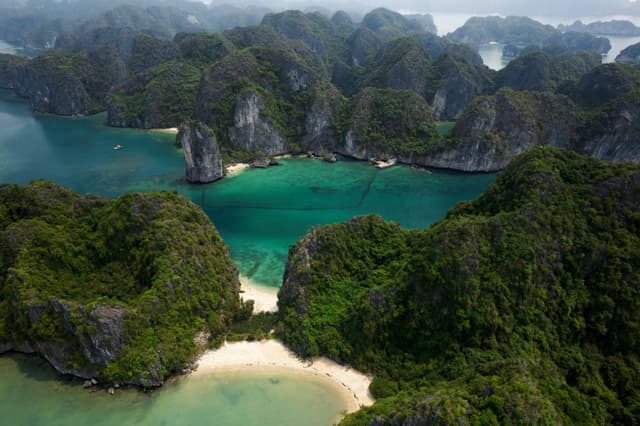
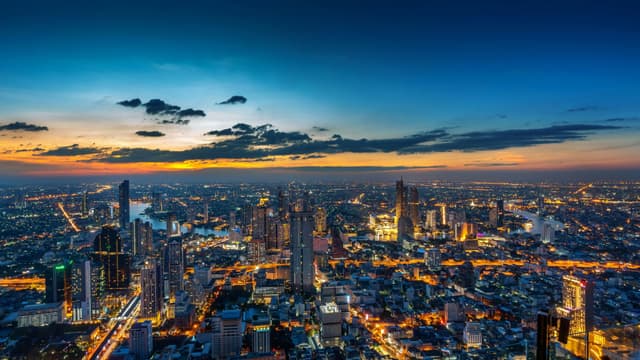
Hanoi, Ha Long Bay, Phu Quoc & Da Nang Tour
10 Days · 9 Nights
NRs 1,01,500/ person
✓ Tour✕ Visa✕ Flights
News & AlertsNORMALNo disruptions reported for Vietnam.Checked 21 Oct 2026, 05:56 NPTView details ↓Hide details ↑
Resolved in the last 14 days (2)
- Hue and Da Nang: Flooding in Hue and Da Nang after very heavy rain; rain easing from 11 October — ended 17 Oct 2026
- Ho Chi Minh City: Heavy downpours and street flooding risk in Ho Chi Minh City — ended 8 Oct 2026
Weather by month
Best time for Hanoi: November to March — little rain, highs 21–27°C.
- Jan21°15°low rain, best month
- Feb22°17°low rain, best month
- Mar25°20°low rain, best month
- Apr28°22°medium rain
- May33°25°medium rain
- Jun35°27°heavy rain
- Jul34°27°heavy rain
- Aug33°26°heavy rain
- Sep32°26°heavy rain
- Oct29°23°medium rain, this month
- Nov27°20°low rain, best month
- Dec22°16°dry, best month
Best time for Ha Long Bay: November to April — little rain, highs 21–27°C.
- Jan21°15°low rain, best month
- Feb21°16°low rain, best month
- Mar24°19°low rain, best month
- Apr27°22°low rain, best month
- May31°25°medium rain
- Jun33°27°heavy rain
- Jul32°26°heavy rain
- Aug32°26°heavy rain
- Sep31°25°heavy rain
- Oct29°22°medium rain, this month
- Nov27°20°low rain, best month
- Dec22°16°dry, best month
Best time for Da Nang & Hoi An: January to April — little rain, highs 26–32°C.
- Jan26°20°low rain, best month
- Feb27°20°dry, best month
- Mar29°23°low rain, best month
- Apr32°24°low rain, best month
- May34°26°medium rain
- Jun36°27°low rain
- Jul35°26°medium rain
- Aug35°26°medium rain
- Sep33°25°heavy rain
- Oct30°24°heavy rain, this month
- Nov29°23°heavy rain
- Dec26°21°heavy rain
Best time for Hue: March to April — little rain, highs 29–32°C.
- Jan24°18°medium rain
- Feb26°18°medium rain
- Mar29°21°low rain, best month
- Apr32°23°low rain, best month
- May35°25°medium rain
- Jun37°25°medium rain
- Jul36°25°medium rain
- Aug36°25°medium rain
- Sep34°24°heavy rain
- Oct30°23°heavy rain, this month
- Nov28°22°heavy rain
- Dec24°19°heavy rain
Best time for Ho Chi Minh City: December to April — little rain, highs 31–34°C.
- Jan31°23°dry, best month
- Feb32°23°dry, best month
- Mar33°25°dry, best month
- Apr34°26°low rain, best month
- May34°26°heavy rain
- Jun33°25°heavy rain
- Jul32°25°heavy rain
- Aug33°25°heavy rain
- Sep32°25°heavy rain
- Oct32°25°heavy rain, this month
- Nov32°25°medium rain
- Dec31°24°dry, best month
Best time for Phu Quoc: January to March — little rain, highs 31–32°C.
- Jan31°23°low rain, best month
- Feb31°23°low rain, best month
- Mar32°24°low rain, best month
- Apr33°25°heavy rain
- May33°26°heavy rain
- Jun32°26°heavy rain
- Jul31°25°heavy rain
- Aug31°25°heavy rain
- Sep30°25°heavy rain
- Oct31°25°heavy rain, this month
- Nov32°25°heavy rain
- Dec31°24°medium rain
Best monthNowdryheavy rain36°+ very hotHigh / low °C
Weather: 10-year averages, 2015–2024 (NOAA weather stations). News: GDACS, ReliefWeb, GOV.UK travel advice (OGL v3.0) and local sources.Best Time to Visit Vietnam →
FAQ
Journey Questions
Written and checked by the Gomayu travel desk, KathmanduUpdated October 2026About this guide
Complete Guide
Complete Vietnam Travel Guide
Written and checked by the Gomayu travel desk, KathmanduUpdated October 2026About this guide
Why Vietnam is worth the trip
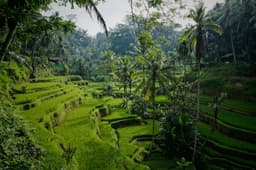
Vietnam is worth the trip because it holds three different countries inside one visa. The north is cool, mountainous and old, with a French colonial capital and rice terraces cut into hillsides. The centre is imperial tombs, a lantern lit trading port and a long flat beach. The south is a hot commercial city on top of a river delta. You see all three on one entry stamp, and no other country in the region gives that much variation for so little effort, which is why a Vietnam tour package from Nepal rarely feels like a single destination.
The practical case is strong too. Domestic flights run all day, the rail line connects every major stop, ride hailing works nationwide with metered fares, and hotel standards at every level beat the regional average. Food is excellent almost everywhere.
There is real cultural familiarity for Nepali travellers too. Vietnam is a Mahayana Buddhist country with a strong tradition of ancestor veneration, so pagodas, incense and shoes off at a threshold read as normal rather than exotic, and the terraced north will feel recognisable to anyone who has walked in the Nepali hills.
The honest trade off is distance. Vietnam is about 1,650 km long, and the common mistake is treating it as one destination and trying to cover Hanoi, Hoi An and Ho Chi Minh City in six days. That holiday is spent in airports. The second is traffic: motorbike density in the two big cities is intense at first, and crossing a road takes a technique nobody warns you about. Neither is a reason to skip Vietnam, only to plan it properly.
How a Vietnam tour package from Nepal works
Every Vietnam tour package from Nepal that Gomayu arranges is curated for three groups of travellers: Nepali passport holders flying out of Kathmandu, the Nepali diaspora, and non resident Nepalis (NRNs) booking from Australia, the UK, the US, the Gulf and beyond. Many of our travellers start from Kathmandu, and many book from abroad, so each package is designed to work on any passport and from either starting point.
The process is deliberately simple. Pick your dates first, then keep the route realistic rather than squeezing everything into one holiday. From there the package covers the pieces that are annoying to arrange alone: hotels matched to your budget, airport transfers on both ends, day tours with English speaking guides, and step by step help with whatever visa or entry paperwork your passport needs.
The same structure works for split families. Parents can fly out of Kathmandu while children join from London, Sydney or Doha, everyone meets at the same hotel on arrival day, and each traveller follows the entry rules of their own passport. If that describes your family, mention it when you enquire and the package is built around both starting points from day one.
Planning a Vietnam trip from Nepal: what Nepali travellers ask
Nepali travellers planning Vietnam usually ask what the price covers, which package suits their group, when to go around Nepali holidays, and how to handle money. Short answers are here; visa, flight and season detail follow further down this guide.
What the package price covers
Every Vietnam package on this page is priced per person as a land package: hotels, airport transfers, and the tours, cruises and transport listed on the tour page. Flights from Kathmandu and the Vietnam e-Visa are not in the card price; we quote flights separately, and the per-person price falls as your group grows. The live prices are in the first question of the FAQ and on each package card, and our Vietnam trip cost guide explains what changes them.
Which Vietnam package suits you
- First visit: Hanoi, Ninh Binh and Ha Long Bay, or Hanoi, Ha Long Bay and Da Nang.
- Honeymoon and couples: Da Nang and Hoi An from February to August, or the Phu Quoc Tour from November to March.
- Families with children: the Vietnam Family Tour Package, with domestic flights instead of long drives.
- Parents and senior travellers: one or two regions, few hotel changes, no Sapa in winter and no central Vietnam from September to December.
- Friends and office groups: Hanoi, Ha Long Bay and Da Nang, or Ho Chi Minh City; the per-person price drops for larger groups.
Vietnam around Nepali holidays
Dashain (11 to 25 October 2026) and Tihar (7 to 11 November 2026) fall in the best season for Hanoi and Ha Long Bay and the worst for Hue, Da Nang and Hoi An, so build those trips around the north. Around Nepali New Year in mid-April, March to April works reasonably everywhere. Over the winter school holidays the south is dry and Hanoi is cool, while Sapa can be freezing.
Combining Vietnam with Thailand
Many Kathmandu to Vietnam connections run through Bangkok, which is why the Thailand and Vietnam Tour (8 days) is a natural pairing. You need a Thai e-Visa and a Vietnam e-Visa, and our visa desk handles both.
Money, insurance and the Nepal Embassy
US dollars are the easiest cash to carry. Buy them in Nepal through a bank or licensed money changer, within the per-trip limit set by Nepal Rastra Bank, and change them to dong only at licensed banks, hotels or authorised counters in Vietnam. Buy travel insurance before you leave, covering medical treatment and evacuation; Gomayu does not sell insurance itself. Nepal has no embassy in Vietnam: the Embassy of Nepal in Bangkok is accredited to Vietnam and assists Nepali citizens there.
Vietnam visa for Nepali citizens: what you need before you fly
Nepali citizens need a visa for Vietnam. Nepal is not on Vietnam's visa exemption list, so there is no visa exempt entry on arrival. The normal route is the online e-Visa at evisa.gov.vn, valid up to 90 days and available as single or multiple entry. Almost everyone now needs a second thing too: the Digital Arrival Card, separate from the visa.
One structural point shapes everything else. There is no Vietnamese embassy in Kathmandu, and Nepal is covered from the mission in New Delhi. That alone is why the online route is the practical one, wherever in the world you live.
How the Vietnam e-Visa works
The Vietnam e-Visa is applied for entirely online at evisa.gov.vn. Since 15 August 2023, under Law 23/2023/QH15, it has been open to all nationalities, valid up to 90 days and issued as single or multiple entry. Before that it was 30 days and single entry only, which is why older guides say the wrong thing.
Official processing is about three working days, with three to five realistic and longer around Tet. Apply two to three weeks before you fly, so a rejection still leaves room to reapply. The e-Visa is accepted at 42 designated border gates, covering every international airport, the seaports and the main land crossings, so you are not limited to arriving by air.
Payment methods on the portal change, so check evisa.gov.vn when you apply rather than relying on a blog. A rejected application is not refunded, and rejections usually come from a mistyped passport number or a photo that fails the format check, so fill the form slowly.
Documents and passport validity
You need a Nepali passport, either the e-passport or the older machine readable passport (MRP), valid more than six months. Beyond that the portal asks for a short and specific set of documents.
- A clear scan of the passport data page, in jpg format and under 2MB.
- A 4x6cm photograph on a white background, taken face on, with no glasses.
- Your intended entry and exit dates, and the border gates you plan to use.
- A temporary address in Vietnam, which is normally your first hotel.
What the portal does not ask for is worth stating plainly, because agents often claim otherwise: no bank statement, no flight ticket and no hotel voucher. Enter your name exactly as it appears in the passport, including the order of names, because the approval is checked against the passport at the border and a mismatch is treated as invalid.
The Vietnam Digital Arrival Card
The Vietnam Digital Arrival Card is Vietnam's online pre-arrival declaration. It started at Tan Son Nhat in Ho Chi Minh City in April 2026 and now covers the main international airports, including Noi Bai in Hanoi, Da Nang, Nha Trang (Cam Ranh) and Phu Quoc. Vietnamese authorities strongly advise every foreign arrival to complete it to avoid long immigration queues.
Submit it at prearrival.immigration.gov.vn on the day of arrival or up to three days before. It generates a QR code you show at the border, so screenshot it rather than relying on airport wifi. Any site charging to file it for you is a reseller. Critically, the card does not replace the visa and the visa does not exempt you from the card. They are two separate requirements.
Visa on arrival, and why you can ignore it
Vietnam's visa on arrival still technically exists, but for a tourist it is now redundant. It is not a stamp you can request at immigration. It needs a pre approval letter arranged in advance by a sponsoring company inside Vietnam, works only at airports and not at land or sea crossings, and the agency adds a service charge on top of the same stamping process.
So the advice is simple: apply for the e-Visa and ignore visa on arrival offers. Any page telling a Nepali traveller to get a visa on arrival in Vietnam is out of date, and following it narrows your options.
Applying if you live outside Nepal
The Vietnam e-Visa is issued on nationality, not residence, so a Nepali passport holder living in Australia, Japan, the United States, Canada or the UAE uses the same portal and the same documents. There is no separate queue and no local sponsor. Only the border gates and travel dates change, and they should match the flights you hold. You never send your passport anywhere. The embassy route matters only for stays beyond the e-Visa validity, or for work, study and family categories.
| Requirement | What it is | When to complete it | Where to do it |
|---|---|---|---|
| Vietnam e-Visa | Mandatory visa for Nepali passport holders, up to 90 days, single or multiple entry, accepted at 42 border gates | Two to three weeks before departure, allowing three to five working days | Official portal at evisa.gov.vn, applied for online from any country |
| Vietnam Digital Arrival Card | Pre arrival declaration producing a QR code shown at immigration, strongly advised and additional to the visa | On the day of arrival or up to three days before | Official portal at prearrival.immigration.gov.vn |
| Visa on arrival (legacy) | Older route needing a pre approval letter from a Vietnamese sponsor, valid at airports only | Not recommended for tourists, superseded by the e-Visa | Through a sponsoring company in Vietnam, stamped at the airport |
When is the best time to visit Vietnam?
There is no single best time to visit Vietnam, because the country stretches 1,650 km north to south and the three regions have different and partly opposite seasons. If you want one window that works reasonably everywhere, take March to April. Otherwise decide which region matters most first, then pick the month.
| Region | Best months | Months to avoid | What the weather is like | Best for |
|---|---|---|---|---|
| North (Hanoi, Sapa, Ha Long) | October to December, and March to April | June to August | Dry and clear in autumn, cold in winter with Hanoi around 10 to 17C, hot humid summers inside the Gulf of Tonkin typhoon window | Rice terraces, trekking, bay cruises, city walking |
| Centre (Hue, Da Nang, Hoi An) | February to August | September to December | Warm and dry in spring and summer, then a typhoon and flood season peaking in October and November | Beaches, heritage towns, tailoring, food |
| South (Ho Chi Minh City, Mekong) | December to April | No true closed season | Hot all year, dry in winter and spring, wet May to November with short heavy afternoon downpours | City breaks, delta trips, first time visits |
| Phu Quoc | November to March | July to September | Calm seas and reliable sun in winter, wetter and choppier in the southwest monsoon | Honeymoons, resort stays, island add ons |
The north
Northern Vietnam is at its best from October to December and again from March to April, when the air is dry and the humidity drops. Those are the months to plan Hanoi, Ha Long and Sapa together, and also the busiest, so hotels and cruises fill early.
Winter, December to February, is genuinely cold rather than mildly cool. Hanoi sits around 10 to 17C with grey damp days, and Sapa drops to near or below zero with frost and occasional snow on Fansipan, which stands at 3,147m. Bring layers, because hotels in the north are not always heated. Summer, June to August, is hot, humid and inside the Gulf of Tonkin typhoon window.
The centre and the typhoon season
Central Vietnam is the region most people get wrong. Hue, Da Nang and Hoi An are best from February to August and should be avoided from September to December, the typhoon and flood season. The peak is October and November, when Hoi An old town regularly floods knee to waist deep and shops trade from upper floors or close entirely.
This matters because the most repeated advice about the country, that you should visit Vietnam in September to November, is simply wrong for central Vietnam, and it is the single most damaging piece of stale advice in circulation. Those months are excellent for Hanoi and fine for Ho Chi Minh City, but they are the worst possible window for the one region most first time visitors build their trip around. If your dates are fixed in autumn, reshape the route rather than cancelling.
The south
Southern Vietnam is hot all year and splits into dry and wet. The dry season runs December to April and is the most comfortable time for Ho Chi Minh City, the Cu Chi tunnels and the Mekong Delta. The wet season, May to November, brings short heavy afternoon downpours rather than all day rain, and the south stays entirely travellable. You plan around a two hour interruption, not a washed out week.
Phu Quoc follows the same pattern with a sharper edge, because sea conditions matter. November to March is the island's window, with calm water and reliable sun. July to September is the wettest stretch, when boat trips are cancelled more often.
Tet, and what actually shuts
Tet is the Vietnamese lunar new year and the one date that can genuinely disrupt a holiday. Tet 2027 falls on Saturday 6 February 2027, the Year of the Goat, with core days from 6 to 8 February and a national break running roughly from 5 to 13 February 2027.
What actually shuts is more specific than the rumours suggest. Between 80 and 90 percent of family restaurants, street food stalls, local markets and small shops close for three to five days, which removes most of the eating you came for. Hotels, hotel restaurants, international chains, convenience stores and malls stay open on reduced hours, and the major museums keep working.
The bigger problem is movement. Domestic flights, trains and buses sell out four to six weeks ahead as the whole country travels home, and fares multiply. If your dates fall across Tet, book internal transport the moment your international flights are confirmed and expect fewer places. The upside is real: the flower markets and the atmosphere before Tet are worth seeing. Mid Autumn, the other major festival, falls on the fifteenth day of the eighth lunar month, so September or early October, and it disrupts nothing.
How to get to Vietnam from Nepal
There is no nonstop flight from Kathmandu to Vietnam, so every trip from Nepal connects at least once. The usual connections are through Bangkok, Kuala Lumpur or Kunming, with Delhi and Kolkata as alternatives, and from those hubs there are flights to Hanoi (HAN), Ho Chi Minh City (SGN) and Da Nang (DAD). On the quickest one-stop routings the flying time is about five hours, so total journey time depends mostly on the layover; compare connections rather than flying time alone. If you connect in Bangkok on separate tickets, or stay there longer than 12 hours, a Nepali passport needs a Thai transit visa.
Schedules on that market have changed repeatedly, with carriers adding and dropping the route, so check current connections when you book rather than what worked for someone last season. Nepali passport holders living elsewhere have it easier: Vietnam is well connected to Australia, Japan, Korea and the Gulf, and many of those routes are nonstop or a single short connection.
The international airports you will use are Noi Bai (HAN) for Hanoi, Tan Son Nhat (SGN) for Ho Chi Minh City and Da Nang (DAD) for the centre, plus Phu Quoc (PQC) and Cam Ranh (CXR) for Nha Trang. Because the country is long, the smart move is an open jaw booking: in to Hanoi and out of Ho Chi Minh City, or the reverse, so you never backtrack. Make sure the gates on your e-Visa match what you booked.
One forward looking point will catch people out. Long Thanh International Airport, about 40 km east of Ho Chi Minh City in Dong Nai, held its technical opening in December 2025 with a commercial launch targeted for 1 December 2026. After that, international routes over 1,000 km are due to shift there from Tan Son Nhat. If you are booking Ho Chi Minh City for late 2026 or later, confirm which airport your flight uses, because the transfer time into the city is very different.
Places to visit in Vietnam
Vietnam divides into three clusters, and the best trips pick two rather than sprinting through all three: the north with Hanoi, Ha Long Bay and the mountains; the centre with Hue, Da Nang and Hoi An within an hour of each other; and the south with Ho Chi Minh City, the Mekong Delta and Phu Quoc.
Hanoi and the north
Hanoi is the more atmospheric of Vietnam's two big cities and the better base for a first visit. The Old Quarter is a dense grid of streets that still sell by trade, and the walking between Hoan Kiem Lake, the Temple of Literature and the Ho Chi Minh Mausoleum complex is much of the point. Give it two full days.
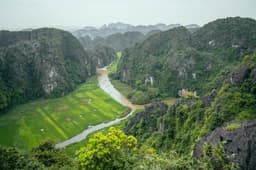
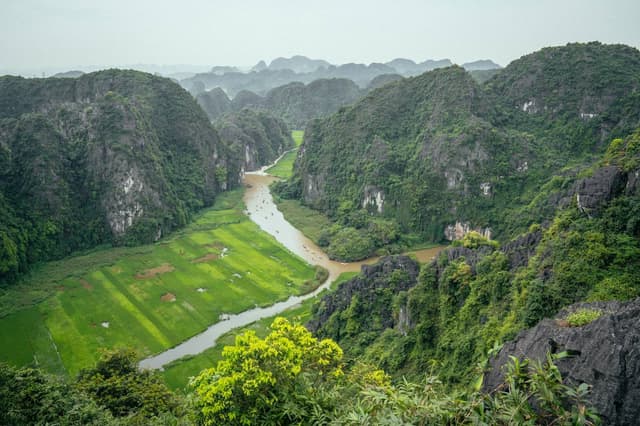
Ninh Binh, roughly two hours south, is the best day trip in the country. The limestone karsts of Trang An and Tam Coc rise out of flooded rice fields and are rowed rather than motored, which is why it is called Ha Long on land, and it is a genuine fallback if a cruise is cancelled.
The Ha Giang loop in the far north is the most spectacular road in Vietnam, but a Nepali licence and a Nepali issued international permit are not valid there, so riding it yourself is not an option. The standard solution is the easy rider arrangement, riding pillion with a local driver for the whole loop.
Ha Long Bay and Lan Ha Bay
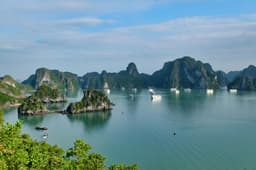
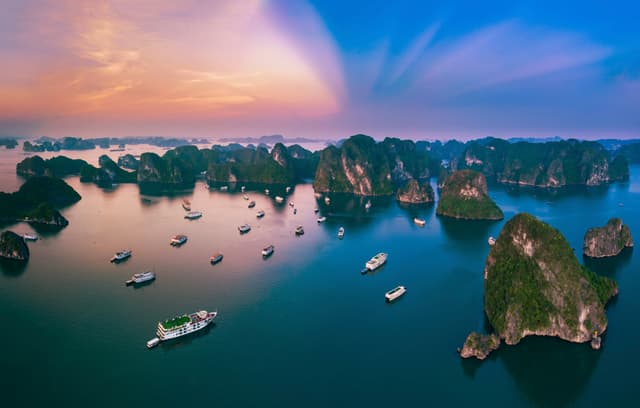
Ha Long Bay is the image most people have of Vietnam, and it is also the part of the trip most likely to be disrupted. On 19 July 2025 the tourist boat Wonder Sea capsized in a sudden squall there, killing 39 people. It was the country's deadliest maritime accident in over twenty years, and it is why the current rules are strict.
Departures are now suspended by the Quang Ninh Port Authority, not by the cruise operator, whenever there is an official storm warning or winds reach Force 6 or above, roughly 39 km per hour. There are typically eight to twelve full closure days a year, most often in July, and the decision is out of the operator's hands.
Three consequences follow. A cruise can be cancelled or shortened at no notice. The refund policy is the operator's own, so read it before booking. And never put a cruise on the day before an international flight.
Lan Ha Bay is the sensible hedge. Same continuous water, same karst scenery, but it sits under Hai Phong rather than Quang Ninh province, so it issues sailing permits independently and can sometimes depart on a day Ha Long is closed. It is also noticeably quieter.
Sapa
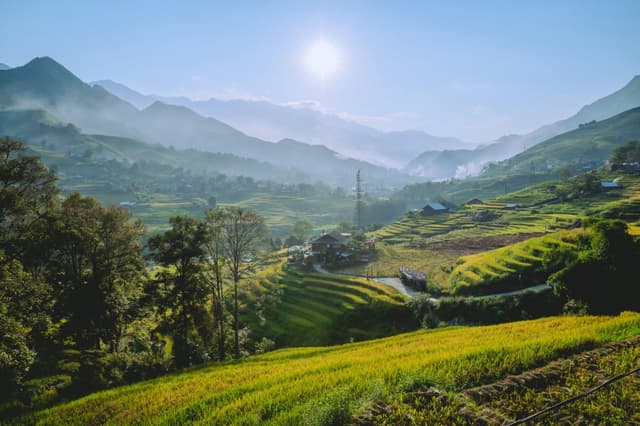
September is the best month for Sapa. That is the golden harvest, when the terraces turn yellow before cutting, and the driest stretch, around 15 to 22C with firm trails underfoot. The harvest runs late August to late September and peaks in the first half, so aim at the first two weeks. The second window is late April to June, the water and reflection season, when the flooded terraces mirror the sky.
July and August are the worst time in Sapa: peak rain, slippery landslide prone trails, fog that removes the views, leeches, and landslide risk on the Lao Cai to Sapa road. December to February is cold with bare terraces, frost and occasional snow at altitude.
Hue, Da Nang and Hoi An
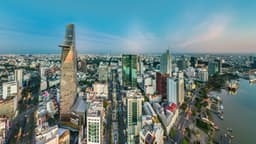
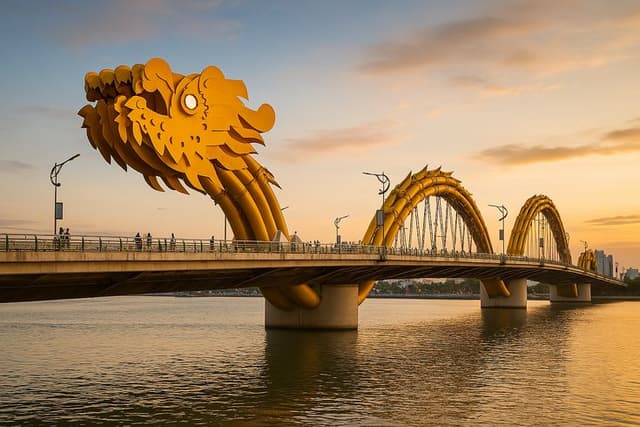
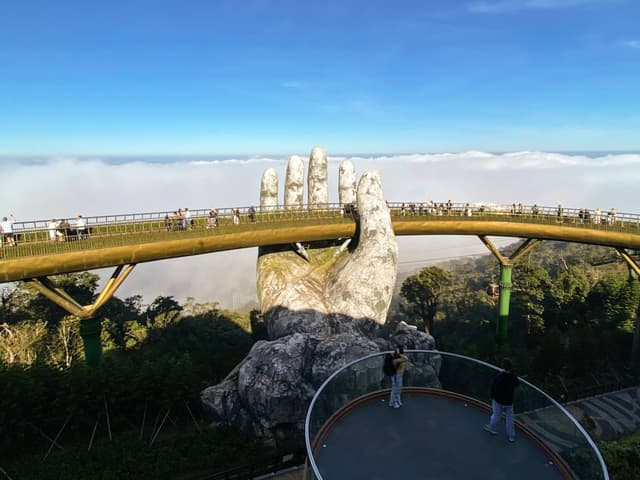
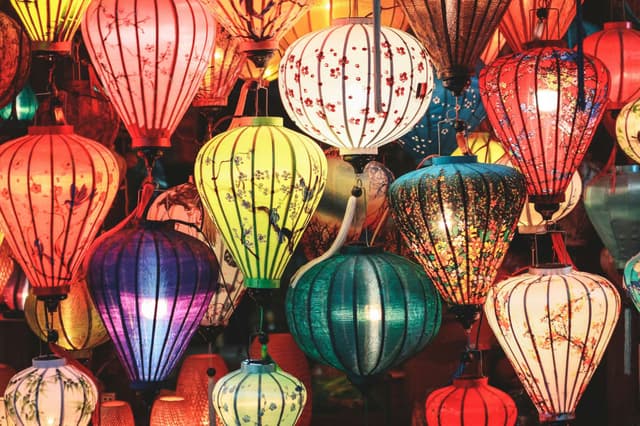
These three sit within about two hours of each other and are usually done as one block. Hue is the old imperial capital, with the walled Citadel, the royal tombs along the Perfume River and the most formal cuisine in the country. Da Nang has the long beach, the Marble Mountains and the Golden Bridge at Ba Na Hills. Hoi An is the lantern lit former trading port, with a pedestrianised old town, a serious tailoring trade and the My Son ruins nearby.
One administrative change makes older sources wrong. From 1 July 2025 Vietnam went from 63 provinces to 34 and abolished the district tier. Quang Nam was absorbed into Da Nang City, so Hoi An is now a ward of Da Nang City, not a separate city in Quang Nam. If a guide or even a hotel booking address still places Hoi An in Quang Nam, it is out of date.
Ho Chi Minh City, the Mekong Delta and Phu Quoc
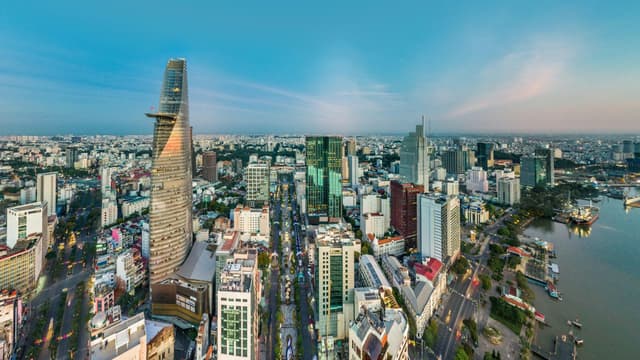
Ho Chi Minh City is faster, hotter and more commercial than Hanoi, and it is where the twentieth century is most directly confronted. The War Remnants Museum is difficult and essential, the Reunification Palace sits as it was in 1975, and the Cu Chi tunnels are a half day out.
The Mekong Delta is the counterweight, a flat green world of channels and boat traffic. The floating markets around Can Tho are the draw and need an early start, because the trade is over by mid morning. Doing the delta as a rushed day trip is the standard mistake; one night in Can Tho fixes it.
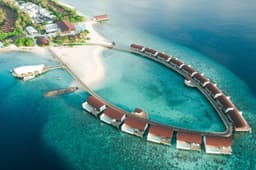
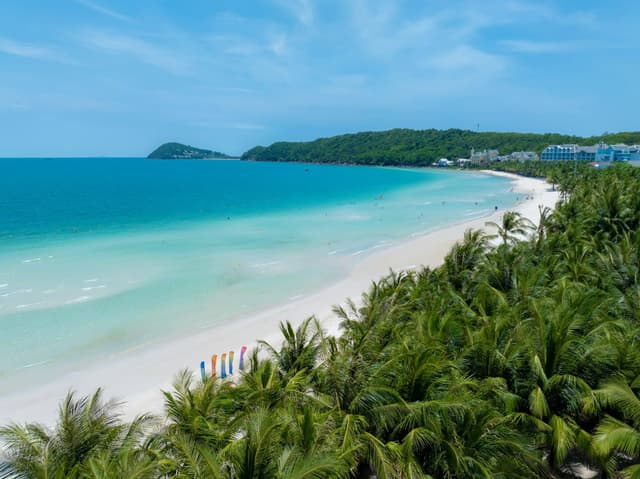
Phu Quoc is the island add on, at its best from November to March. It suits honeymooners and families who want to finish a busy route lying still for three or four days, and it is the one part of Vietnam that works as a pure resort stay. A well built Vietnam tour package from Nepal usually pairs two regions with a few flat days at the end rather than tick off the entire map.
Getting around Vietnam
Start with the fact that matters most, because people discover it too late. You cannot legally drive or ride in Vietnam on a Nepali licence. Vietnam recognises only International Driving Permits issued under the 1968 Vienna Convention, and Nepal is party to neither the 1949 Geneva nor the 1968 Vienna Convention. A Nepali issued permit is therefore not valid, which means a Nepali tourist cannot legally ride a motorbike or drive a car in Vietnam at all. Converting to a Vietnamese licence needs a residence card, a work permit or a visa of three months or more, none of which a holidaymaker holds.
Riding without a valid licence risks a fine plus a vehicle impound of ten to fifteen days. More importantly, it voids your travel insurance in a crash. Vietnam records on the order of nine to eleven thousand road deaths a year, overwhelmingly motorbikes, and helmets are legally compulsory. Rental shops will still hand you a bike without asking, and that is the trap.
Use Grab instead. It works nationwide for cars and motorbike taxis, shows a metered fare before you accept, and removes the bargaining entirely. Be and Xanh SM are local alternatives that work the same way, Xanh SM with electric vehicles.
For distance, the railway is the pleasure option. The North South Reunification Express runs Hanoi to Hue to Da Nang to Nha Trang to Ho Chi Minh City in 32 to 37 hours end to end, which is why almost nobody rides the whole thing. Ride a segment instead: Hanoi to Da Nang overnight, and Da Nang to Nha Trang over the Hai Van Pass, are the scenic stretches, and the four berth soft sleeper is the visitor standard.
Do not plan around high speed rail, because it does not exist yet. The North South high speed line was approved in November 2024, with groundbreaking targeted for the end of 2026 and substantial completion around 2035. Anything describing a fast Hanoi to Ho Chi Minh City train describes a project, not a service.
Sleeper buses run every long route with fully reclining berths and are the cheapest way to cover ground, but night driving standards vary a great deal between operators. For the length of the country, flying is the sensible answer. Domestic carriers are Vietnam Airlines, VietJet Air, Bamboo Airways, Vietravel Airlines and Pacific Airlines, and the main hops take about an hour.
What to eat in Vietnam
Vietnamese food is lighter and fresher than most of the region, built on herbs, broth and rice rather than heat and oil, which makes it easy to eat three times a day for two weeks. It is also strongly regional, so the same dish name means different things in Hanoi and Ho Chi Minh City.
The dishes worth planning around: pho, the clear beef or chicken noodle soup that is the national dish; banh mi, the baguette sandwich that is the best cheap meal in Asia; bun cha in Hanoi, grilled pork in a dipping broth with cold noodles; cao lau and white rose dumplings, both local to Hoi An; bun bo Hue, a spicier beef noodle soup; and com tam and banh xeo in the south. Vietnamese coffee is its own reason to go, and the egg coffee of Hanoi is worth the detour.
For vegetarian travellers the essential word is chay. Dedicated Buddhist chay restaurants are common in every city, and chay dishes are widely available on the first and fifteenth days of the lunar month. This matters because fish sauce, or nuoc mam, and pork are in almost everything by default, including dishes that look plainly vegetable, so asking for vegetarian in English will often still get you a meat broth. Say chay explicitly. The same works reasonably well for Jain travellers, though root vegetables and garlic need raising separately.
Halal restaurants exist in Hanoi, Ho Chi Minh City, Da Nang and Phu Quoc, mostly near the mosques, so plan meals around location rather than assuming availability everywhere. Travellers who avoid beef should know that beef is entirely ordinary in Vietnam, with pho bo the national dish; ask for pho ga, the chicken version, on every menu.
On water: tap water is not potable anywhere in Vietnam, so drink bottled or filtered water throughout. Ice is less of a worry than its reputation suggests, because ice in established restaurants and cafes is factory made and generally safe. Roadside and market ice, stored in open bags, is the risk.
Money, connectivity and practical basics
The currency is the Vietnamese dong, VND, in polymer notes of 10,000, 20,000, 50,000, 100,000, 200,000 and 500,000. One trap catches almost everyone at least once: the 20,000 and the 500,000 are both blue polymer notes of the same width and very similar appearance, and confusing them is the most common accidental overpayment in Vietnam. The tell is the picture: the 20,000 shows the Japanese Covered Bridge of Hoi An. Keep large notes in a separate pocket.
Cash still dominates for street food, markets, small vendors and cyclos, while cards are fine in hotels, malls and chain restaurants. QR payment is everywhere among locals but needs a Vietnamese bank account, so it is rarely an option for a visitor. ATMs are widespread and apply a per withdrawal charge for foreign cards on top of your own bank's, so withdraw larger amounts less often.
Always decline dynamic currency conversion. When a card machine or ATM offers to bill you in your home currency instead of dong, choose dong. The markup runs roughly three to seven percent on every transaction you accept it on.
Currency exchange in Vietnam is legal only at licensed banks, hotels and authorised gold or jewellery counters. Street exchange is illegal for both parties, not just the dealer. Cash above the customs declaration threshold must be declared on arrival.
There are three mobile operators. Viettel has clearly the best rural and mountain coverage and is the right choice if Sapa or Ha Giang is on your route. Vinaphone and Mobifone are fine in the cities and along the coast. Passport registration is mandatory by law for a physical SIM, and the airport counters at Noi Bai, Tan Son Nhat and Da Nang do it on the spot. Vietnamese operators do not sell tourist eSIMs directly, so travel eSIMs come from third party providers and activate by QR. Download offline maps before leaving the airport.
Laws and customs that catch travellers out
Vietnam is an easy country to travel in and a strict one to break the law in. Most visitors never come close to a problem, but a few rules are enforced far more seriously than a tourist would expect.
Photography and currency exchange
Do not photograph military installations, border posts, airport security areas, police officers, or government and party buildings. These are not soft conventions, and a camera pointed at the wrong building can turn into a long conversation. The interior of the Ho Chi Minh Mausoleum is strictly no photography. On money, worth repeating: change money only at licensed banks, hotels or authorised gold and jewellery counters, because street exchange is illegal for the customer as well as the dealer.
Temples, pagodas and the Ho Chi Minh Mausoleum
Pagoda etiquette in Vietnam will be familiar to Nepali travellers. Cover shoulders and knees, remove shoes where indicated, do not point your feet at a Buddha image, no flash, keep your voice down. Do not photograph worshippers mid prayer without asking.
The Ho Chi Minh Mausoleum in Hanoi has a much stricter code, enforced at the door. Shoulders and knees covered, no shorts, no sleeveless tops, no flip flops, hats and sunglasses off. Bags, cameras and phones must be left at the security deposit before you join the queue. Inside there is silence, no photography, hands out of pockets and no stopping, because the line keeps moving.
Opening hours are narrow and seasonal: 07:30 to 10:30 from 1 April to 31 October, and 08:00 to 11:00 from 1 November to 31 March. It is closed Mondays and Fridays, and closes entirely for roughly two months around September to November each year for embalming maintenance. Check it is open before building a Hanoi day around it, because the surrounding complex stays open when the mausoleum does not.
Common scams in Vietnam
The scams in Vietnam are financial rather than dangerous and follow a small number of scripts. Knowing them is enough to avoid all of them, in a country where the overwhelming majority of interactions are straight.
- Rigged taxi meters. The most common one, with documented cases of tenfold overcharging on short airport runs. Use Grab so the fare is fixed before you get in, and if you must take a street taxi, use Mai Linh or Vinasun and nothing else.
- The passport as deposit demand. Rental shops often ask to hold your passport as security, then produce damage claims for scratches that were already there. Surrendering your passport is not required and you should refuse, offering a cash deposit instead, and film any rented item from every angle first.
- The unsolicited shoe shine. Someone crouches and starts on your shoe uninvited, then demands roughly ten times a fair price once the job is half done. A firm no before contact ends it.
- The cyclo with no agreed price. A pleasant quoted fare becomes a much larger bill at the end, recalculated per person per minute. Agree the total, in writing, in dong, before you sit down.
- Copycat tour agency shopfronts. Small offices trade under a well known operator's name with a word changed. Book through an operator you contacted directly, not one you walked past.
- Overpriced Ha Long day trip resellers. Street agents sell the same boat with no accountability if it is cancelled. Given how often Ha Long closes for weather, buy from someone whose refund policy you can read first.
Is Vietnam safe?
Yes, Vietnam is a safe country for tourists and violent crime against visitors is rare. Solo travellers, including women, and families move around Vietnam without difficulty. The genuine risks are specific and mostly avoidable.
Road traffic is the real one. With nine to eleven thousand road deaths a year, overwhelmingly motorbikes, the roads are where a Vietnam holiday goes wrong. Do not ride, because you cannot do it legally or insured. Cross roads at a slow steady pace without stopping or running, because traffic flows around a predictable pedestrian and cannot react to a sudden one.
The second risk is bag snatching from passing motorbikes, concentrated in Ho Chi Minh City. Keep your phone off the table at a pavement cafe, carry your bag on the wall side of the pavement, and do not walk along a street navigating with your phone held out.
The third is water and weather. A suspended Ha Long departure, a flooded Hoi An in November or a landslide prone road into Sapa in August are all seasonal, predictable and solved by picking the right month. Take closures seriously rather than seeking an operator willing to sail anyway.
Carry travel insurance that covers what you actually plan to do, and remember it will not cover a motorbike incident without a valid licence. The emergency numbers are Police 113, Fire 114 and Ambulance 115.
How many days do you need, and how to plan yours
Ten days is the honest answer for a first visit to Vietnam. That covers two of the three regions properly, with a bay cruise or a beach stretch built in, without spending every second day in an airport. A week gives one region done well, which beats three done badly. Two weeks takes all three, and is the point at which Sapa or Phu Quoc stops being a squeeze.
Sequence the trip around four fixed points and let everything else move. Which region your dates actually suit, because September to November rules out the centre. Whether Tet falls inside your window. Where your open jaw flights enter and exit, because that must match your e-Visa. And the fact that you cannot ride, which determines how you see Ha Giang, Ninh Binh and the countryside. Get those right and the route designs itself.
A well built Vietnam tour package from Nepal is really just those decisions taken in the right order, with the internal flights and the bay cruise booked around the weather rather than against it. Book roughly three months ahead for the autumn peak in the north or anywhere near Tet, when the good cruise cabins and the domestic seats go first.
Gomayu Holidays plans each Vietnam holiday for Nepali passport holders around the region and the season rather than a fixed template, whichever country you are flying out of. Send us your dates on WhatsApp and we will tell you honestly which regions are worth your days, and which month to move to if yours falls in the wrong window.
Best Vietnam tour packages from Nepal
To summarise, these are the most popular Vietnam tour packages from Nepal that we arrange for Nepali travellers and the Nepali diaspora:
- Hanoi, Ha Long Bay & Da Nang Tour (6 days)
- Hanoi, Ninh Binh & Ha Long Bay Tour (5 days)
- Ho Chi Minh Tour (5 days)
- Phu Quoc Tour (5 days)
- Vietnam Family Tour Package (10 days)
- Hanoi, Ha Long Bay, Phu Quoc & Da Nang Tour (10 days)
- Da Nang Getaway (5 days)
- Thailand & Vietnam Tour (8 days)
All destinations
Explore more destinations

Search Tours or Places
Search Tours or Places