

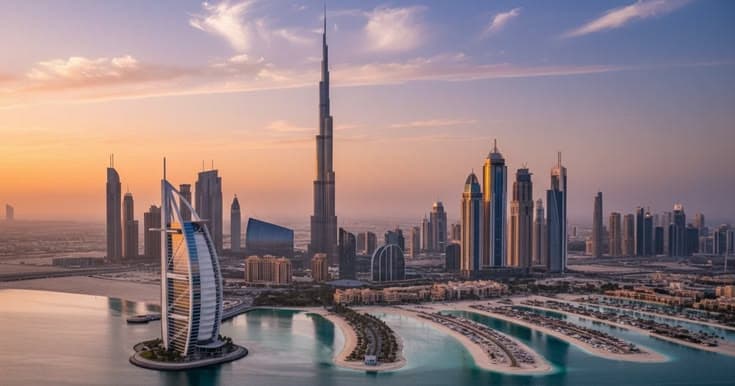





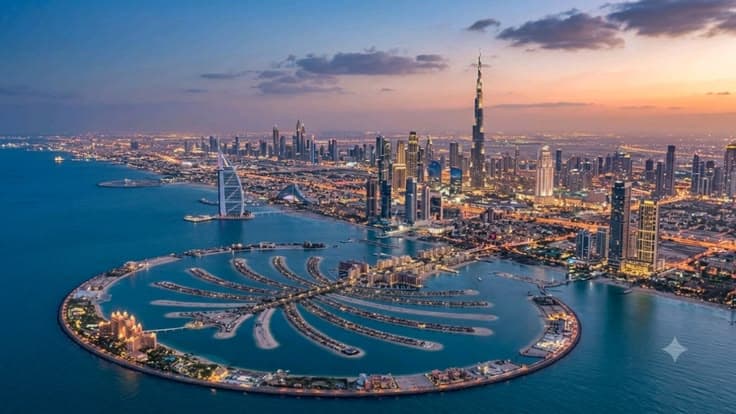

The best time to visit Dubai is November to March, when daytime highs sit between about 24C and 31C (75F to 88F) and you can spend a full day outdoors without building your plans around the heat. Within that window, December to February is the peak: the most comfortable weather, the biggest events, and the hardest few weeks to get the hotel and the table you actually want.
Planning the rest of your trip? Our full Dubai travel guide covers the top places, food, costs and how many days you need.
That is the short version. The useful part is knowing what each month really feels like, because Dubai is not simply "hot" or "not hot". A 39C day in September is harder work than a 41C day in July, and late October is quietly one of the best weeks of the year. Here is when to visit Dubai, month by month, with the events that should move your dates.
The short answer, season by season
November to March: comfortable, dry, sunny. Everything outdoors works. Book early.
December to February: the best of the best, and the busiest. Peak demand for hotels and restaurants.
April and May: still workable in April, hot by late May. The last easy weeks for beach and desert.
June to August: genuinely tough outdoors. Excellent indoors, at the pool and in the water parks. Quieter and easier to book.
September and October: September is humid and heavy. October improves fast, and the last ten days are underrated.
Dubai's climate in plain terms
Dubai sits on the edge of a desert next to a warm, shallow sea, and those two things explain almost everything about its weather. Winters are mild and dry. Summers are extreme. There is very little in between, and almost no rain at any point.
Average annual rainfall is around 95mm, and nearly all of it falls between December and April. May through September are effectively dry, and sun is close to guaranteed year round.
The part most guides get wrong is humidity. Dubai's moisture comes off the Gulf, and the sea itself warms up through summer to around 32C by August. That warm water keeps the air heavy well into September, so a September evening at 33C can feel more punishing than a dry June afternoon several degrees hotter. If you are weighing months, weigh the humidity as much as the number on the forecast.
Official climate records for the country are published by the UAE National Center of Meteorology, the government body responsible for weather monitoring and forecasting across the Emirates.
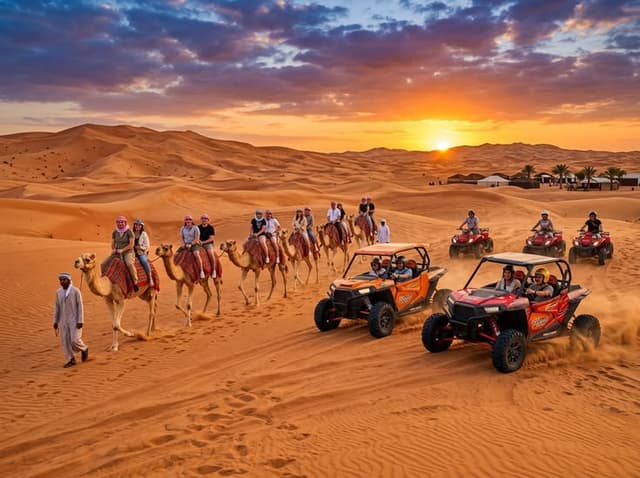
The best months: November to March
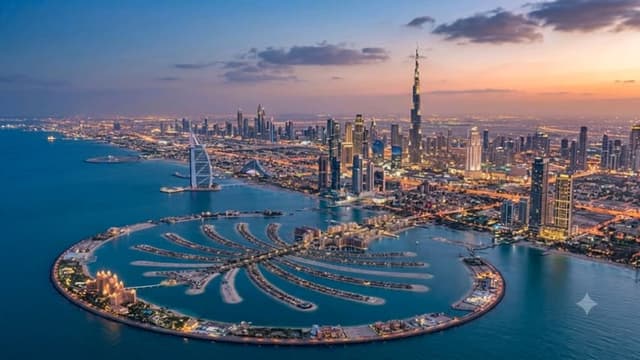
From early November to the end of March, Dubai does exactly what people imagine it does. Highs run from about 31C in November down to 24C in January, then back up to 29C in March. Nights are cool enough for a light jacket in January, especially near the water or out in the desert.
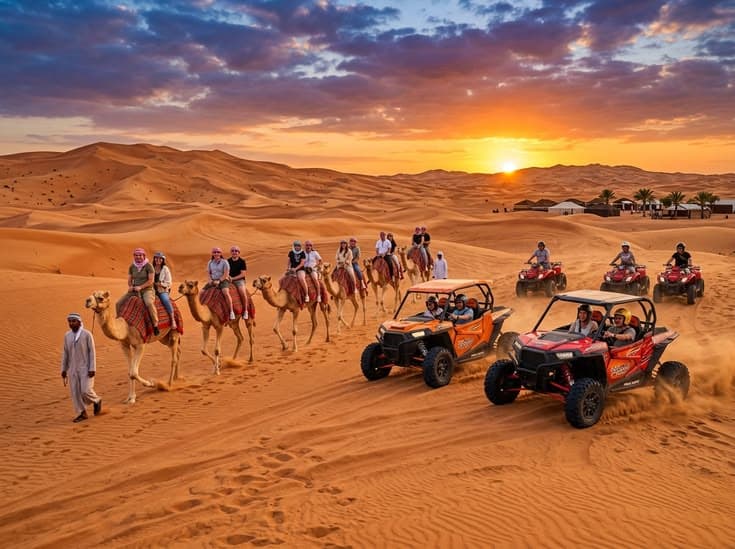
In practice you can walk the Dubai Marina promenade at midday, eat outside, do a desert camp without wilting and still have energy for the evening. Old Dubai around the Creek, Al Fahidi and the souks is only really pleasant on foot in these months.
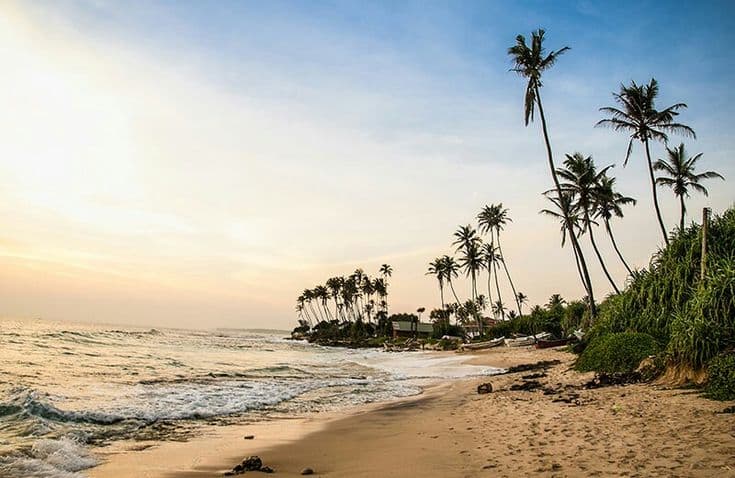
The trade off is the sea. Water temperature drops to roughly 22C to 23C from January to March, which is swimmable for most people but noticeably brisk. Hotel pools are usually heated in winter for exactly this reason. If you are planning a trip around what to see rather than where to swim, our companion guide to things to do in Dubai covers the sights worth building days around.
December to February: the peak
These three months are the reason Dubai has a high season. Daytime highs of 24C to 26C, cloudless skies, warm sun and cool evenings. It is the one stretch where the weather asks nothing of you.
It is also when everyone else comes. UAE schools take a winter break from mid December into the first days of January, international holiday travelers arrive at the same time, and the city's biggest events land in the same weeks. Restaurants need booking, the best rooms go first, and New Year's Eve around Burj Khalifa is the busiest night of the year. Plan two to three months ahead, more for a specific hotel over New Year.
April and May: the last comfortable weeks
April is the quiet winner for a lot of travelers. Highs average around 34C, the crowds thin out after the winter rush, and the sea has warmed to a genuinely pleasant 25C to 29C. Mornings and evenings outdoors are still easy. Midday is when you move indoors.
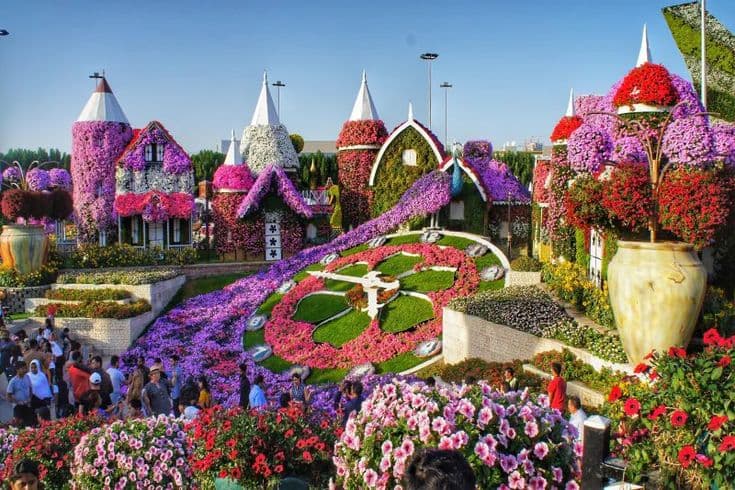
May is where it turns. Average highs climb to 38C and the last two weeks feel like early summer. Outdoor terraces start closing or switching to indoor service, desert activities move to sunrise and sunset slots, and long walking days stop being realistic. Global Village, the city's big open air seasonal attraction, closes for the year in May and does not reopen until October.
June to August: the hard months
Be honest about this stretch. Average highs are 40C in June, 41.5C in July and close to 42C in August, with lows that barely drop below 31C at night. Peaks above 45C happen every summer. Combined with sea temperatures over 32C, the air stays heavy after dark, so there is no cool part of the day to retreat into.
What still works, and works well: the malls, the aquariums, the indoor ski slope, the museums, the viewing decks, air conditioned water parks and hotel pools that are chilled rather than heated in summer. Dubai Summer Surprises runs across these months with retail promotions and family entertainment across the city, and 2026's edition ran from 2 July to 30 August. This is also, in plain terms, the cheapest time to visit Dubai: demand is at its lowest, availability is at its best, and you will have space almost everywhere.
Who it suits: families with young children who will spend most of the day in water or indoors, travelers who care more about shopping and attractions than sightseeing on foot, and anyone who would rather have a quiet Dubai than a comfortable one.
September and October: the recovery
September is the last summer month, not the first autumn one. Highs average close to 39.5C and the humidity is at its most oppressive, because the sea is still holding its summer heat. Do not book September expecting relief.
October is a different story. Highs fall to around 36C on average, but the drop through the month is steep, and by the final ten days evenings are properly enjoyable again. That late October pocket is underrated: the weather has turned, Global Village has just opened for its new season, and the winter crowds have not arrived. Sea temperature is still around 30C, which is the warmest swimming you will get outside summer.
Dubai weather by month at a glance
| Month | Average high / low | Crowds | What is on |
|---|---|---|---|
| January | 24C / 15C | Very high | Dubai Shopping Festival, World Cup Carnival racing |
| February | 26C / 16C | High | Global Village, outdoor dining season |
| March | 29C / 19C | High | Dubai World Cup at Meydan, 27 March 2027 |
| April | 34C / 22C | Moderate | Sea warming, UAE spring break in early April |
| May | 38C / 26C | Low | Global Village season ends |
| June | 40C / 29C | Low | Indoor attractions, pool and water park season |
| July | 41.5C / 31C | Low | Dubai Summer Surprises begins |
| August | 42C / 31.5C | Low | Dubai Summer Surprises, hottest and most humid weeks |
| September | 39.5C / 29C | Low | Still summer, very humid |
| October | 36C / 25C | Rising | Global Village opens, UAE school break mid month |
| November | 31C / 21C | High | Full outdoor season, desert camps, Dubai Airshow in odd years |
| December | 26.5C / 17C | Very high | Dubai Shopping Festival, New Year fireworks |
Ramadan and Eid: what actually changes
Ramadan is the Islamic month of fasting, observed from dawn to sunset. In 2027 it is expected to begin around 8 February and end with Eid al Fitr around 9 March, though the exact dates are confirmed by moon sighting and can shift by a day.
For a visitor, the practical changes are modest and easy to respect. Eating, drinking and smoking in public during daylight hours is not appropriate, though hotel restaurants and many venues continue to serve. Office and some attraction hours are shorter. Days are quieter. Evenings, after the fast is broken at sunset, are lively and social, with iftar and late night dining running well past midnight.
Some travelers choose Ramadan deliberately, and it is a fair choice. The weather in February and early March is excellent, the daytime city is calm, and the evening atmosphere is one of the more memorable things about the region. Dress a little more modestly than usual and it is a straightforward trip.
Events worth planning around
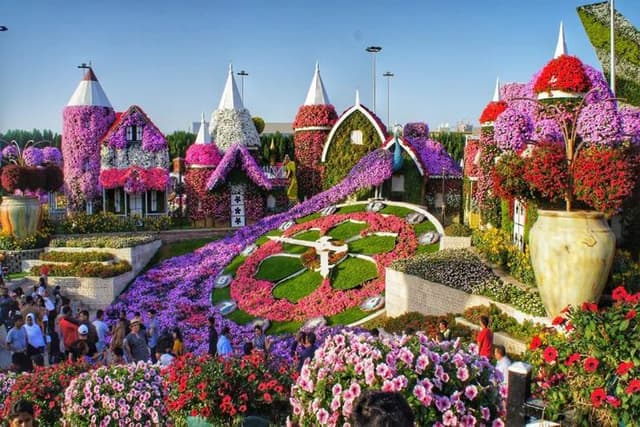
Global Village runs from October to May each year. Season 30 opened on 15 October 2025 and closed on 10 May 2026, and Season 31 follows the same October to May pattern.
Dubai Shopping Festival takes over the city from early December to mid January. The 31st edition ran for 38 days from 5 December to 11 January.
Dubai Summer Surprises covers July and August with promotions, concerts and family programming.
Dubai World Cup, the season finale at Meydan Racecourse, is set for 27 March 2027.
Dubai Airshow is biennial and falls in odd numbered years. The next edition is 15 to 19 November 2027 at Dubai World Central, and it fills hotels across the city.
New Year's Eve fireworks at Burj Khalifa and along the coast are the peak of the peak. Decide months ahead or accept whatever is left.
Event listings and confirmations are published by Visit Dubai, the official tourism site of the Dubai Department of Economy and Tourism.
How to choose your month
Families: late October to early December, or April. Comfortable enough for parks and beaches, and outside the tightest booking crush.
Couples: January and February. Cool evenings, full outdoor dining season, best desert weather.
Beach first: late October or April to early May, when air and sea temperatures line up.
Quiet and easy to book: June to September. You trade comfort for space and availability.
Indoor sightseeing and shopping: July and August, or the December festival weeks if you want the atmosphere too.
Poolside only: any month. Winter pools are heated, summer pools are chilled.
One last note, since many readers saw the headlines. On 16 April 2024 the UAE recorded its heaviest rainfall since records began in 1949, with 254mm falling at Khatm Al Shakla in Al Ain in under 24 hours. It was an exceptional event, not a new normal, and Dubai's rainfall pattern is unchanged: a small amount, mostly in winter. Build your Dubai itinerary around heat and humidity, not rain.
If planning all this yourself feels like a lot, a packaged Dubai tour package bundles hotels, transfers and day tours into one booking.
Frequently asked questions about when to visit Dubai
What is the single best month to visit Dubai?
February. Average highs around 26C, cool evenings, no rain to speak of, and every outdoor attraction operating normally. November and March are close behind and slightly easier to book.
Is Dubai in summer really unbearable?
Outdoors, largely yes. July and August average 41C to 42C with high humidity and nights that stay above 31C. Indoors it is comfortable everywhere, and the city is built for it. Plan an indoor and poolside trip, not a walking one.
When is the cheapest time to visit Dubai?
June to early September, when demand drops to its lowest point of the year and availability is at its best. You will find space at almost every restaurant, attraction and hotel, but you will be planning your days around the heat.
Can you swim in the sea in Dubai in winter?
Yes, though the water cools to about 22C to 23C from January to March, which feels cold to many people after the air temperature. Most hotel pools are heated in winter. For warm sea swimming, aim for late October or April onward.
Should I avoid Dubai during Ramadan?
No. Ramadan is expected to run from around 8 February to 9 March 2027, subject to moon sighting. Daytime eating and drinking in public is not appropriate and some hours are shorter, but the weather is excellent, the city is calm by day and evenings are lively.
How far ahead should I book for December and January?
Two to three months for most trips, and longer if you want a specific hotel over New Year's Eve. This is Dubai's busiest window, with the UAE school break, the shopping festival and international holiday travelers all overlapping.
'/%3E%3C/svg%3E)