Short answer: Where is Dubai? Dubai is on the southeastern coast of the Arabian Peninsula in Western Asia, on the shore of the Arabian Gulf (also called the Persian Gulf). It is not a country. Dubai is one of the seven emirates of the United Arab Emirates (UAE), and it is also the name of that emirate's main city. The capital of the UAE is Abu Dhabi, about 140 km down the coast by road. From Kathmandu, Dubai is roughly 2,990 km to the west, a nonstop flight of about 4 hours 40 minutes to 5 hours 15 minutes, and its clocks run 1 hour 45 minutes behind Nepal.
That one paragraph covers what most people want to know. The rest of this guide goes further: a described map of Dubai, the seven emirates side by side, how the UAE came together in 1971 and 1972, distances to the neighbouring countries, the time difference with Nepal, the language and currency, the climate, who actually lives in Dubai, and the mix-ups that confuse first-time visitors. Every number comes from a named source, mostly official UAE and Nepali government pages, and anything that changes over time carries a "Checked" date.
The guide is written for anyone who has typed "where is Dubai" or "is Dubai a country" into a search bar, and especially for Nepali readers: travellers planning a first trip, and families whose sons, daughters or parents work in the Gulf and who want to picture where their relatives live. If you want the full trip planning picture after this, our complete Dubai travel guide is the place to go next.
Where is Dubai located?
Dubai is located on the Arabian Gulf coast of the United Arab Emirates, in the north of the country, at roughly 25° North and 55° East. The emirate sits between Abu Dhabi to the south and Sharjah to the northeast, and it shares an international border with the Sultanate of Oman to the southeast. In continental terms, Dubai is in Asia: the UAE government describes the country as being in Western Asia, and most people also call the region the Middle East or the Gulf.
"The UAE is located in Western Asia, on the southeastern coast of the Arabian Peninsula. It overlooks the Arabian Gulf on the north and northwest, borders the Kingdom of Saudi Arabia to the west and south and the Sultanate of Oman to the southeast." (UAE Government portal, Fact sheet)
Dubai quick facts
| Question | Answer | Source |
|---|---|---|
| Country | United Arab Emirates (UAE) | u.ae |
| Is Dubai a country? | No. It is an emirate (one of seven) and a city | u.ae |
| Capital of the UAE | Abu Dhabi city | u.ae Fact sheet |
| Capital of the emirate of Dubai | Dubai city | u.ae, Dubai page |
| Continent and region | Asia (Western Asia), Arabian Peninsula, Middle East | u.ae Fact sheet |
| Body of water | Arabian Gulf (also called the Persian Gulf) | u.ae, Dubai Media Office |
| Coordinates | About 25°16′ N, 55°18′ E | Dubai Media Office |
| Area of the emirate | 4,114 sq km, about 5% of the UAE | Dubai Media Office, u.ae |
| Coastline | About 72 km | Dubai Media Office |
| Borders | Abu Dhabi (south), Sharjah (northeast), Oman (southeast) | Dubai Media Office |
| Population (emirate) | 4,807,185 in late September 2026 | Dubai Data and Statistics Establishment, via Gulf News |
| Time zone | Gulf Standard Time, UTC+4, no daylight saving | u.ae, timeanddate.com |
| Official language | Arabic; road signs in Arabic and English | u.ae Fact sheet |
| Currency | UAE dirham (AED), pegged at 3.6725 per US dollar | u.ae Fact sheet |
| Distance from Kathmandu | About 2,990 km (straight-line distance, approx.) | flydubai, FlightConnections |
| Nonstop flight from Kathmandu | About 4 h 40 min to 5 h 15 min (scheduled) | flydubai, FlightConnections, airline schedules |
Checked: 3 November 2026, sources: u.ae Fact sheet, Dubai Media Office, Gulf News report of Dubai Data and Statistics Establishment figures.
A described map of Dubai
If you picture a map of the Arabian Peninsula, Saudi Arabia fills most of it. The UAE is the smaller country tucked into the southeastern corner, with a long coast curving along the bottom of the Gulf. Dubai sits on that coast in the north of the country. Here is how the land lies around it, direction by direction:
- North and west: the open water of the Arabian Gulf. Across the Gulf to the north lies Iran. The Gulf is shallow here, which is one reason Dubai's air feels so humid.
- Northeast: the emirate of Sharjah. Dubai and Sharjah cities have grown into each other, so the "border" is often just a road junction.
- East and southeast: desert, then the Hajar Mountains and the Sultanate of Oman. Dubai's mountain town of Hatta is a separate piece of the emirate (an exclave) in this area, surrounded by Oman and by the emirates of Ajman and Ras Al Khaimah.
- South and southwest: the emirate of Abu Dhabi, which is by far the largest emirate and holds the federal capital.
- Further away: Qatar lies across the water to the west, Saudi Arabia beyond Abu Dhabi to the southwest, and the Strait of Hormuz, the narrow mouth of the Gulf, lies to the north near Ras Al Khaimah.
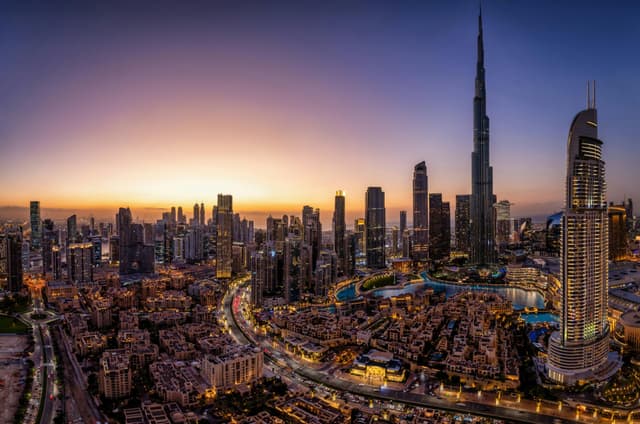
Inside the city, the most useful landmark for finding your way is Dubai Creek. This natural inlet runs inland from the sea and splits the old city into Deira on the north side and Bur Dubai on the south side. Modern Dubai, with Downtown, Dubai Marina and the beach districts of Jumeirah, stretches southwest from the creek along Sheikh Zayed Road towards Abu Dhabi. Since 2016 the whole emirate has used an addressing system that divides it into 14 districts (u.ae, Dubai).
What is the land and climate like around Dubai?
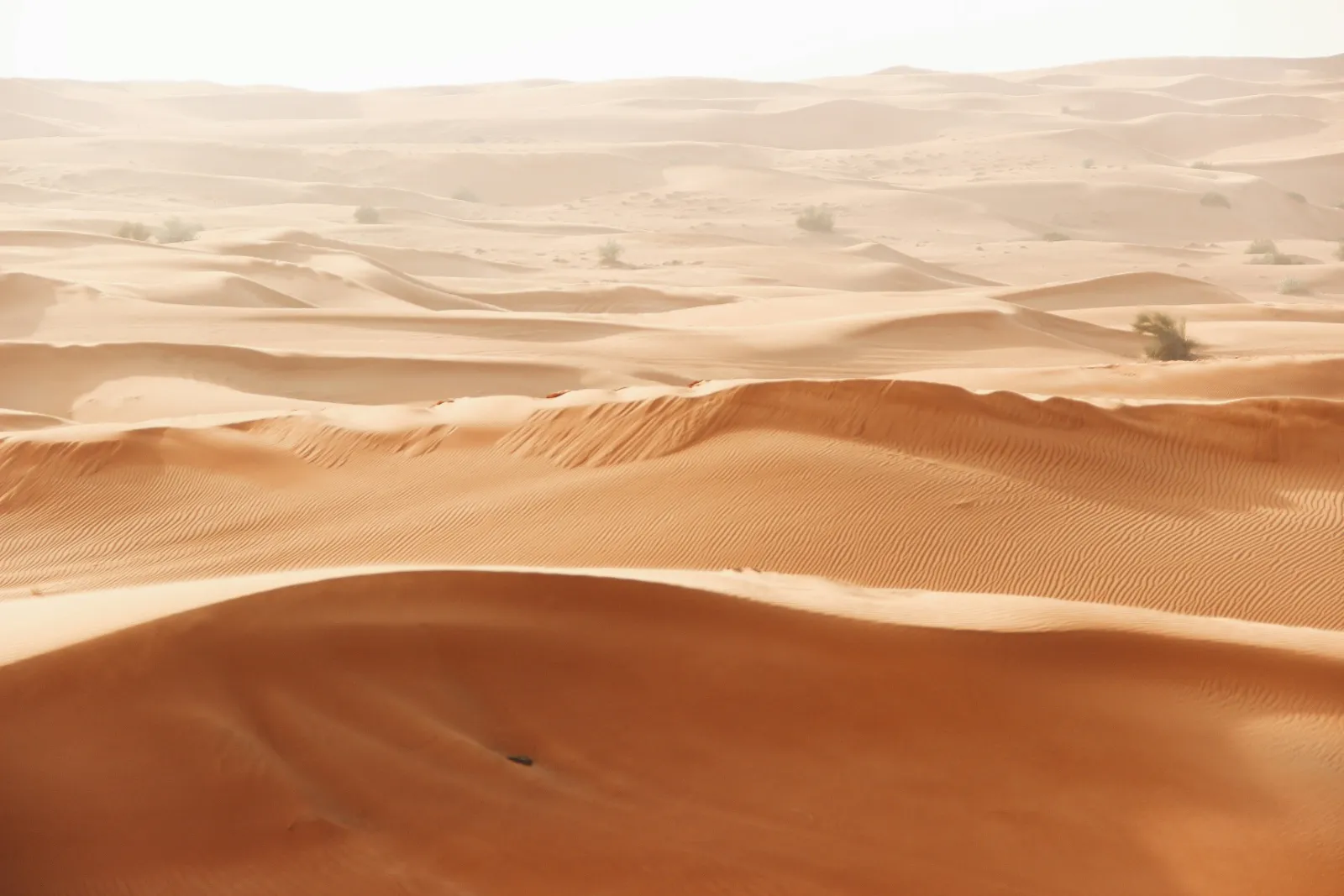
Dubai has a hot desert climate, with very hot, humid summers and short, warm winters. The city lies within the Arabian Desert, and the Dubai Media Office describes the landscape as mostly sandy desert, while gravel desert is more common further south in the UAE. The emirate also has sandy beaches on its western side, a mangrove area at the inland end of the creek, and wadis (dry valleys) in the Hatta mountains (u.ae). Most of Dubai is close to sea level; u.ae gives the city's height as roughly 16 metres above sea level.
| Climate measure | Dubai figure |
|---|---|
| Average summer high | About 41.8 °C |
| Average summer overnight low | About 29.7 °C |
| Average winter high | About 23 °C |
| Average winter overnight low | About 14 °C |
| Average yearly rainfall | About 87.3 mm |
| Wettest months | January (15 mm), February (31 mm), March (18.9 mm) |
| Average humidity | 59% a year, peaking around 65% in January and February |
Checked: 3 November 2026, source: Dubai Media Office, Geographic Location and Climate. For daily forecasts, use the UAE National Center of Meteorology.
To put that in Nepali terms: a Dubai summer feels like the hottest days in the Terai, but the nights stay near 30 °C and humid, so the city does not cool down the way Kathmandu does after sunset. A Dubai winter, on the other hand, feels like a pleasant Kathmandu spring. This is why most visitors aim for the cooler months. Our month by month guide to the best time to visit Dubai explains which weeks work best, and why November to March is the main season. For Nepali families, the Dashain and Tihar holidays usually fall between late September and mid November, right as Dubai is coming out of its hottest months.
Is Dubai only desert?
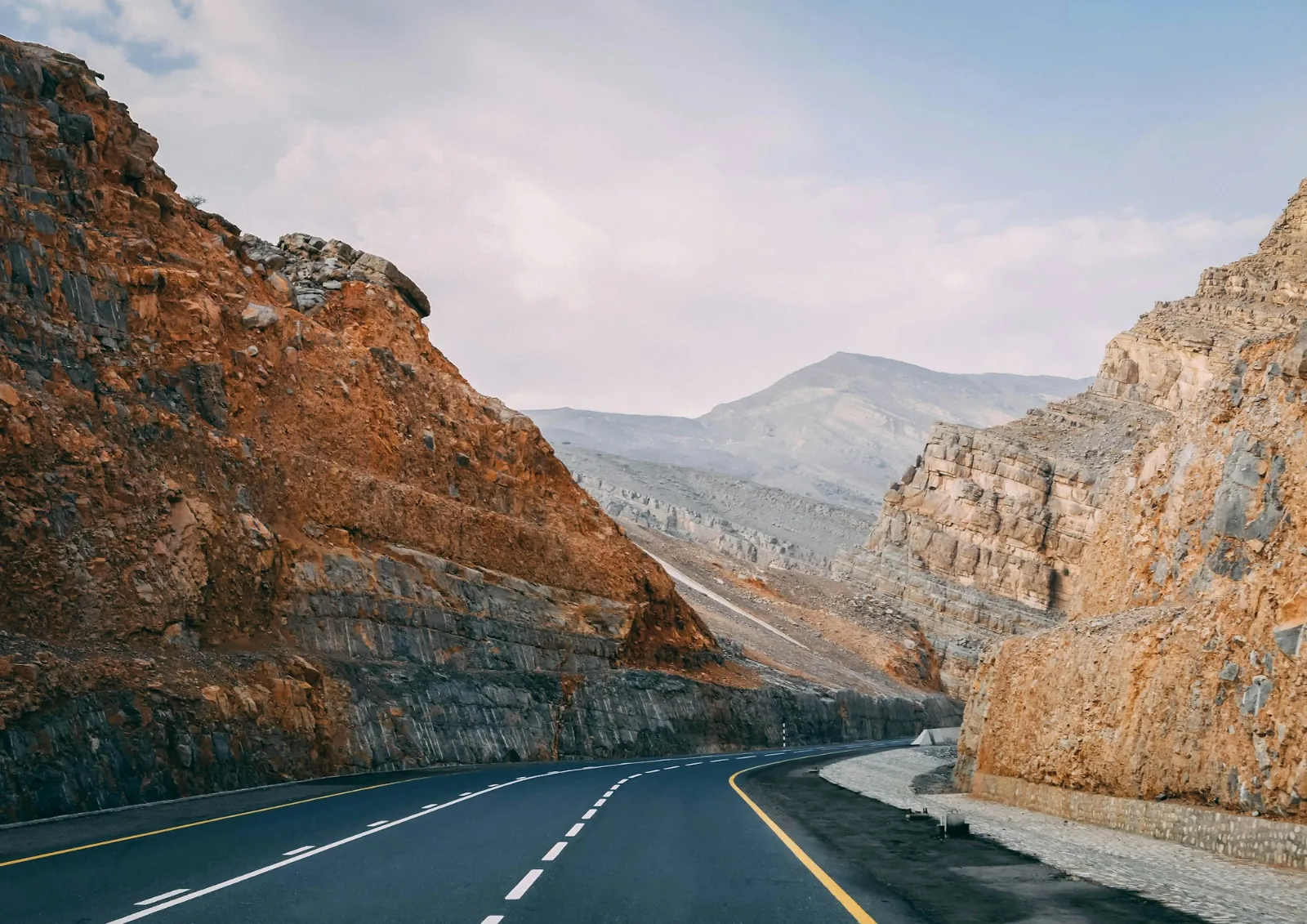
No. The UAE has real mountains, and Dubai itself has some. The Hajar Mountains run along the country's eastern side, and Dubai's Hatta area sits among them. The western Hajar range rises to about 1,300 metres in places (Geography of Dubai). The highest ground in the country is further north, in Ras Al Khaimah, around Jebel Jais. The summit of Jebel Jais (1,934 m) is actually on the Omani side of the border, and a nearby high point at about 1,892 m is usually given as the highest point in the UAE (Jebel Jais). In Abu Dhabi, Jebel Hafeet near Al Ain rises to 1,240 metres (u.ae, Abu Dhabi).
For a Nepali visitor these are modest hills, well below the height of Kathmandu's own valley rim at places like Nagarkot, but they surprise many people who expect only sand. The mountain roads and the cooler east coast are a good reminder that the UAE is more varied than the skyline photos suggest.
Is Dubai a country or a city?
Dubai is a city and an emirate, but not a country. The word "Dubai" is used for two things at once: the emirate of Dubai, which is one of the seven member states of the UAE federation, and Dubai city, which is the capital of that emirate and where almost everyone in the emirate lives. The country is the United Arab Emirates. Dubai has no seat at the United Nations of its own, no separate passport and no separate currency.
The confusion is understandable. Dubai is better known worldwide than the country it belongs to, it has its own famous airline and airport, and many people fly "to Dubai" without ever hearing the name of the UAE at the check-in desk. A good comparison for Nepali readers: think of Dubai as something like a province with a very famous capital city that shares its name, inside a federal country. The comparison is not exact, because each emirate has its own hereditary ruler, which Nepal's provinces do not, but it gets the layers right.
The three layers: country, emirate and city
| Layer | Name | What it means | Who leads it |
|---|---|---|---|
| Country | United Arab Emirates (UAE) | A constitutional federation of seven emirates, with its capital in Abu Dhabi | President H. H. Sheikh Mohamed bin Zayed Al Nahyan, in office since 14 May 2022 |
| Emirate | Emirate of Dubai | One of the seven emirates; 4,114 sq km, including the Hatta exclave | Ruler H. H. Sheikh Mohammed bin Rashid Al Maktoum, Ruler since 4 January 2006, also UAE Vice President and Prime Minister |
| City | Dubai city | The capital of the emirate, built around Dubai Creek, with Deira to the north and Bur Dubai to the south | Governed by the Government of Dubai through the Dubai Executive Council |
Checked: 3 November 2026, sources: u.ae Fact sheet, u.ae Dubai, Dubai Media Office, The Emirate of Dubai.
What is the difference between Dubai the emirate and Dubai the city?
In everyday speech there is very little difference, because the city takes up most of the populated part of the emirate. The difference shows up at the edges. The emirate includes empty desert inland, the Hatta mountain area in the east, and new districts far down the coast towards Abu Dhabi. When you read a population figure for "Dubai", it normally refers to the whole emirate. When someone says "I live in Dubai" while actually living in Sharjah and commuting, they are using Dubai loosely as the name of the wider metro area. That happens a lot, and it is one reason Gulf workers' families in Nepal sometimes hear "Dubai" for any job in the northern UAE.
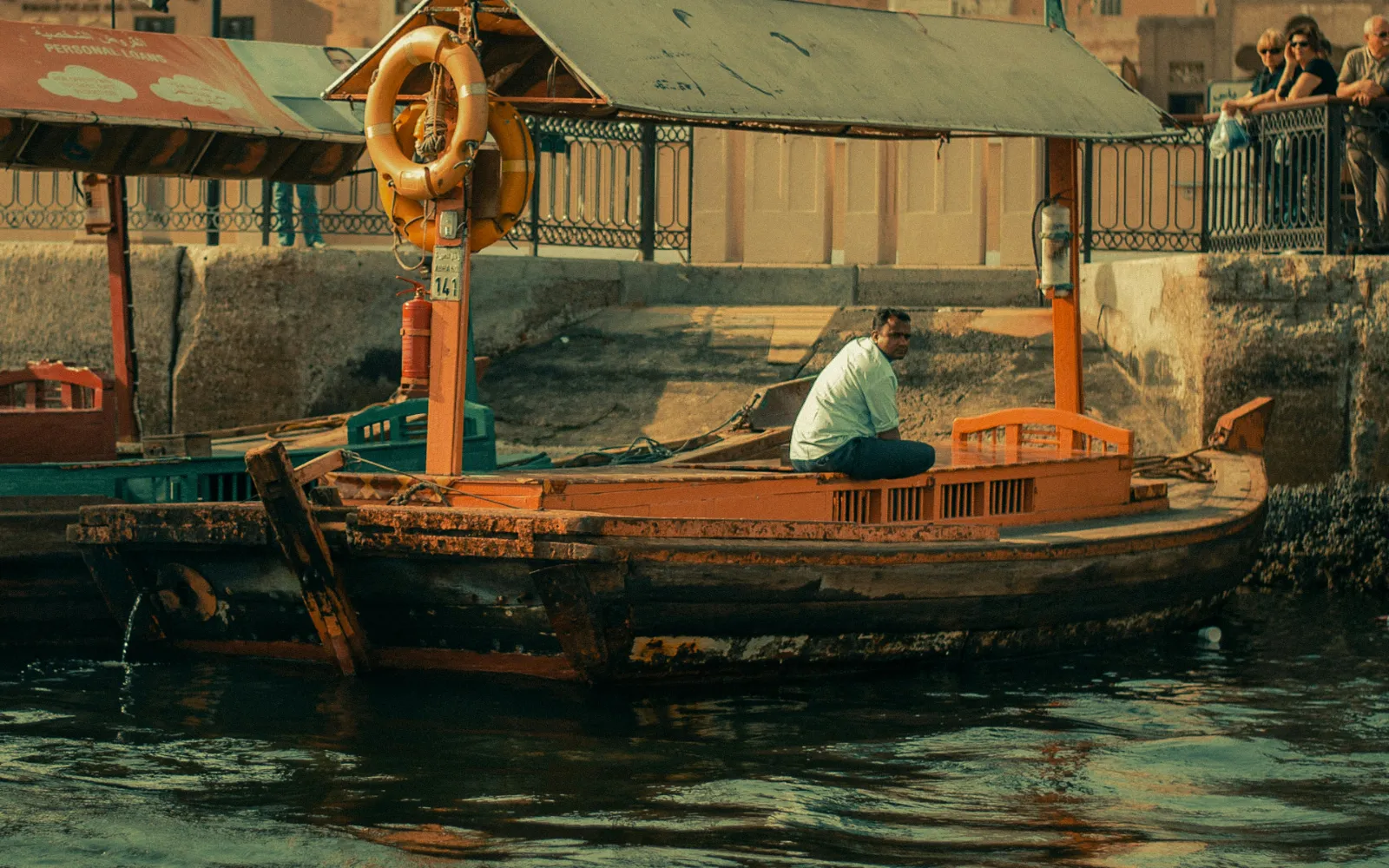
Dubai as a city has deep roots. The UAE government says Dubai was established in 1833, when about 800 members of the Bani Yas tribe, led by the Maktoum family, settled by Dubai Creek, and the Al Maktoum family has ruled ever since (u.ae). The creek was a natural harbour that made Dubai a centre for fishing, pearling and sea trade, and by the beginning of the 20th century it had become a successful port town. Oil was found in the 1960s and the first exports left in 1969. Under Sheikh Rashid bin Saeed Al Maktoum, who ruled from 1958 to 1990, the town grew into the city we know, and in the 1980s and early 1990s Dubai chose to build itself into a major tourism destination. Today its economy is diversified and relies heavily on trade, services and finance.
Which country is Dubai in?
Dubai is in the United Arab Emirates, a federation of seven emirates on the Arabian Peninsula, with Abu Dhabi city as its capital. Dubai is not in Saudi Arabia, Qatar or Oman, although it is close to all three. The UAE is a young country: it was formed on 2 December 1971, and 2 December is still celebrated every year as UAE National Day.
How was the UAE formed?
Before 1971, the seven sheikhdoms along this coast were known as the Trucial States and had treaty relations with Britain. The road to a single country began when Britain announced that it would withdraw from the Gulf. According to the UAE government's account of the founders of the union, these were the key steps (u.ae, Founders of the Union):
| Date | What happened |
|---|---|
| 16 January 1968 | After the announcement of British withdrawal from the Gulf, Sheikh Zayed bin Sultan Al Nahyan of Abu Dhabi went straight to Dubai to talk with Sheikh Rashid bin Saeed Al Maktoum. |
| 18 February 1968 | Abu Dhabi and Dubai agreed on a federation between them and called for a wider union that would include the other Trucial States and also Qatar and Bahrain. Qatar and Bahrain are separate countries today. |
| 2 December 1971 | Six emirates (Abu Dhabi, Dubai, Sharjah, Ajman, Umm Al Quwain and Fujairah) formed the United Arab Emirates. The Rulers elected Sheikh Zayed as the first President. |
| 10 February 1972 | Ras Al Khaimah joined the federation, making seven emirates. |
| 24 May 1981 | The charter of the Gulf Cooperation Council (GCC) was signed in Abu Dhabi by Bahrain, Kuwait, Oman, Qatar, Saudi Arabia and the UAE. |
| 14 May 2022 | H. H. Sheikh Mohamed bin Zayed Al Nahyan, Ruler of Abu Dhabi, became the UAE's third President. |
Sheikh Zayed led the country from 1971 until his death in 2004 and is known in the UAE as the Father of the Nation. Sheikh Khalifa bin Zayed Al Nahyan was the second President, from 2004 to 13 May 2022 (u.ae Fact sheet).
How is the UAE governed, and where does Dubai fit?
The UAE constitution sets up five federal authorities: the Supreme Council, the President and Vice President, the Cabinet, the Federal National Council and the Federal Judiciary. The Supreme Council is made up of the Rulers of the seven emirates. By tradition the Ruler of Abu Dhabi has been President and the Ruler of Dubai has been Vice President and Prime Minister, which is why Sheikh Mohammed bin Rashid holds both the Dubai rulership and the national posts today. Each emirate also has its own local government; in Dubai, the Dubai Executive Council oversees the government departments.
For a visitor, the practical meaning is simple. There is one country, one nationality (Emirati), one passport and one federal entry system for all seven emirates. Local rules, such as some traffic, tourism and alcohol licensing rules, can differ from emirate to emirate, so it is worth checking the local authority if you plan to drive or stay in more than one. If you are a Nepali passport holder, entry rules are set nationally by the UAE, and our visa guides page is the place to start.
Nepal and the UAE have had diplomatic relations since 22 January 1977. Nepal's embassy in the UAE is in Abu Dhabi, the capital, not in Dubai (Embassy of Nepal, Abu Dhabi). That surprises many families, who assume the embassy must be in the best known city.
What are the seven emirates of the UAE?
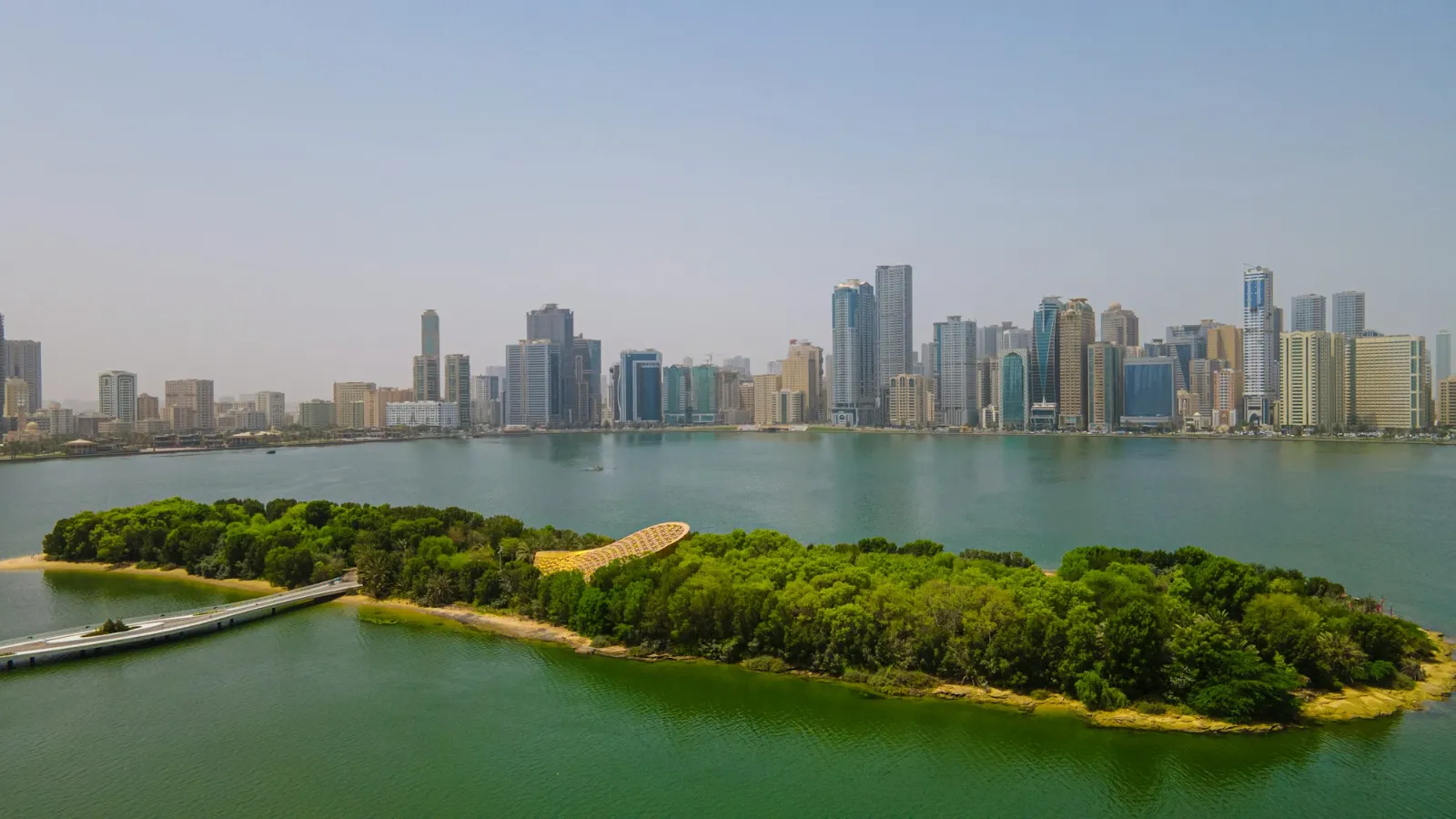
The seven emirates of the UAE are Abu Dhabi, Dubai, Sharjah, Ajman, Umm Al Quwain, Ras Al Khaimah and Fujairah. Each one has a capital city with the same name as the emirate. Abu Dhabi is the largest by far and holds the national capital, Dubai is second largest and the most populous, and Ajman is the smallest. Six of the seven face the Arabian Gulf; Fujairah lies entirely on the Gulf of Oman, and Sharjah touches both coasts.
The seven emirates compared
| Emirate | Capital | Area | Where it is | Notable fact |
|---|---|---|---|---|
| Abu Dhabi | Abu Dhabi city (also the UAE capital) | 67,340 sq km (largest, about 80% of the UAE) | West and south; borders Saudi Arabia, Oman and Dubai | 700 km of coastline and more than 200 natural islands; home to most ministries and embassies |
| Dubai | Dubai city | 4,114 sq km (second largest, about 5%) | Gulf coast between Abu Dhabi and Sharjah; Hatta exclave in the east | The most populous emirate; Dubai Creek divides the old city into Deira and Bur Dubai |
| Sharjah | Sharjah city | 2,590 sq km (third largest, 3.3%) | Northeast of Dubai, with land on the east coast too | The only emirate on both the Arabian Gulf and the Gulf of Oman; the largest number of nature reserves in the UAE |
| Ras Al Khaimah | Ras Al Khaimah city | 1,684 sq km (fourth largest, about 3.2%) | Far north, near the Strait of Hormuz; borders Oman | About 1,000 archaeological sites and the Hajar Mountains around Jebel Jais; joined the UAE on 10 February 1972 |
| Fujairah | Fujairah city | 1,580 sq km | East coast, on the Gulf of Oman | The only emirate wholly on the east coast, with about 70 km of shore on the Gulf of Oman and a major port |
| Umm Al Quwain | Umm Al Quwain city | About 720 sq km (second smallest, about 1%) | Between Sharjah and Ras Al Khaimah | The least populated emirate; the city is built on a narrow peninsula and the coast has rich mangroves |
| Ajman | Ajman city | About 260 sq km (smallest, about 0.3%) | On the Gulf coast between Sharjah and Umm Al Quwain | u.ae describes it as only about 16 km long; it also has two inland enclaves, Masfout and Al Manamah |
Checked: 3 November 2026, source: u.ae, The Seven Emirates and each emirate's page. Area shares are as given by u.ae (land area without islands); Abu Dhabi's share is our calculation from its area and the UAE total of about 83,600 sq km.
How many people live in each emirate?
Dubai is the most populous emirate, with just over 4.8 million residents in September 2026, followed by Abu Dhabi with about 4.1 million at its 2024 census. For the other emirates, the most recent figures on the UAE government portal (u.ae) come from very different years, from 2005 to 2024. Only the Abu Dhabi, Fujairah and Dubai figures are recent. The Sharjah figure is from 2022, and the Ajman, Ras Al Khaimah and Umm Al Quwain figures are 9 to 21 years old: treat them as historical numbers, not as today's populations.
| Emirate or country | Population at the date shown | Year of figure | Source |
|---|---|---|---|
| Dubai | 4,807,185 | September 2026 (latest) | Dubai Data and Statistics Establishment, reported by Gulf News |
| Abu Dhabi | 4,135,985 | 2024 census | u.ae |
| Sharjah | About 1.8 million | 2022 census (Sharjah Census 2022) | u.ae |
| Ajman | 504,846 | 2017 (latest on u.ae; outdated) | u.ae |
| Ras Al Khaimah | About 345,000 | 2015 estimate (latest on u.ae; outdated) | u.ae |
| Fujairah | 314,829 | Mid 2024 | u.ae |
| Umm Al Quwain | 49,159 | December 2005 census (latest on u.ae; outdated) | u.ae |
| UAE total | 11,294,243 | 2024 | Federal Competitiveness and Statistics Centre, reported by Gulf News |
Checked: 3 November 2026, sources: u.ae, Gulf News on Dubai's 2026 population, Gulf News on the UAE's 2024 population. The figures for different years do not add up to the UAE total and should not be summed.
Is Abu Dhabi in Dubai?
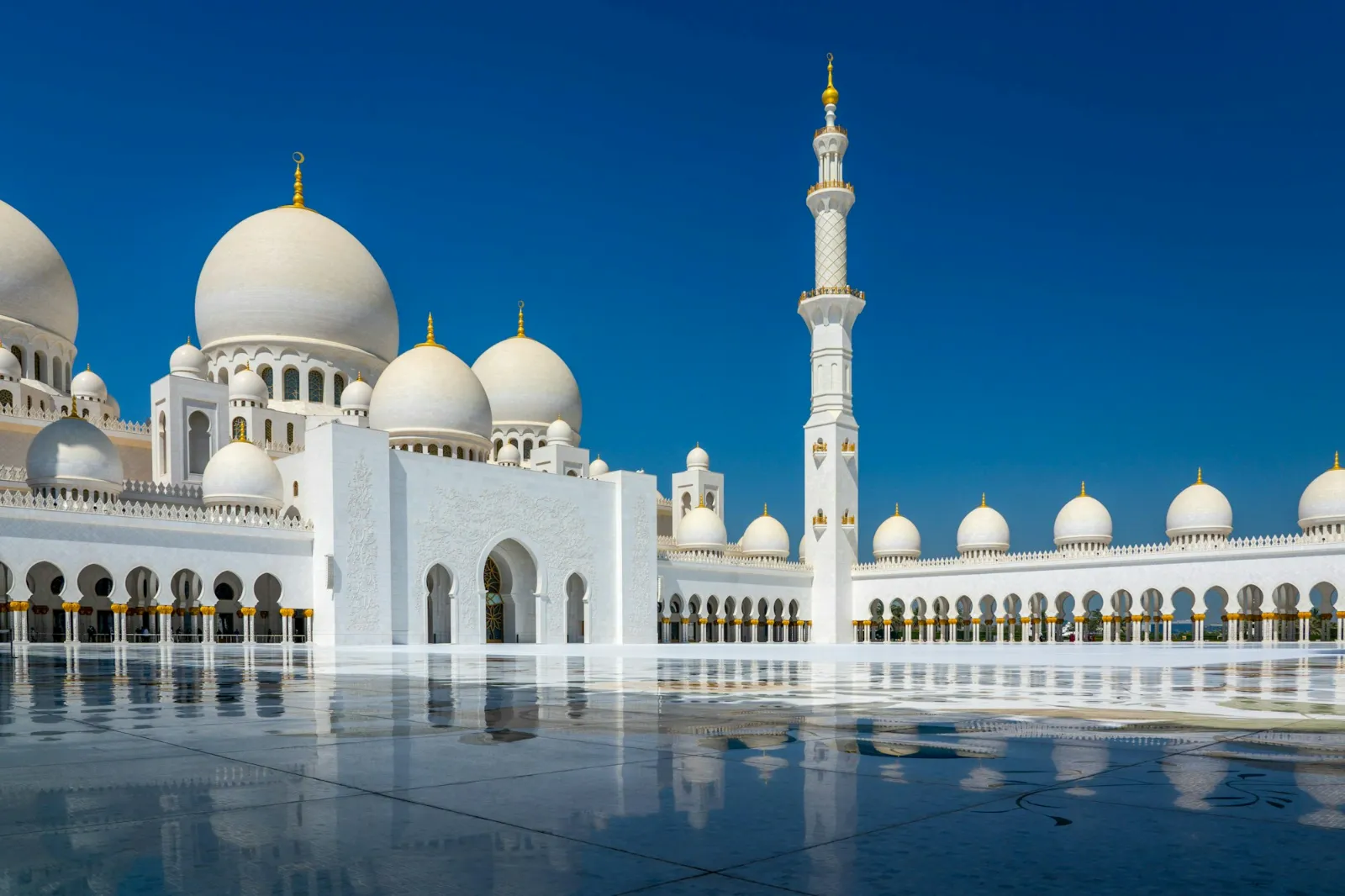
No. Abu Dhabi is not in Dubai, and it is not part of Dubai. Abu Dhabi is a separate emirate, and its main city, also called Abu Dhabi, is the capital of the whole UAE. The two cities are neighbours on the same coast, about 140 km apart by road, mostly along the E11 Sheikh Zayed Road. Route planner Rome2rio gives about 141 km and a drive of roughly 1 hour 20 minutes from central Dubai without traffic; allow longer at rush hour.
People mix them up because both are in the UAE, both have big international airports, and many trips combine them. But they have different rulers, different local governments and quite different characters. Dubai is the commercial and tourism hub; Abu Dhabi is the political capital and, in the UAE government's words, a leading energy producer. If you are planning to see both, our guide to an Abu Dhabi day trip from Dubai covers the transport options and the main sights in one day.
| Dubai | Abu Dhabi | |
|---|---|---|
| Status | Emirate and city | Emirate and city; the city is the UAE capital |
| Area of the emirate | 4,114 sq km | 67,340 sq km |
| Population of the emirate | 4,807,185 (September 2026) | 4,135,985 (2024 census) |
| Ruler | Sheikh Mohammed bin Rashid Al Maktoum, also UAE Vice President and Prime Minister | Sheikh Mohamed bin Zayed Al Nahyan, also UAE President |
| Main airport | Dubai International (DXB) | Zayed International (AUH) |
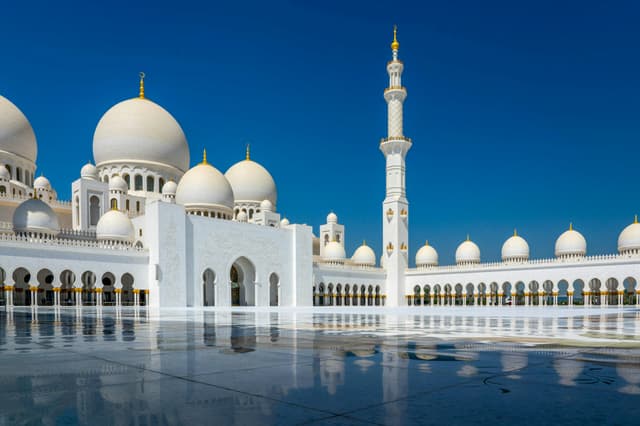
| Best known for | Burj Khalifa (828 m), shopping, beaches, the creek | Sheikh Zayed Grand Mosque, Qasr Al Watan, Yas Island |
| Coastline | About 72 km | About 700 km, with more than 200 natural islands |
| Distance between the cities | About 140 km by road to Abu Dhabi city | About 140 km by road to central Dubai |
The same goes for Sharjah: it is not part of Dubai either, even though the cities run into each other. Sharjah city directly adjoins the northern edge of Dubai city, and many people who work in Dubai live in Sharjah, which adds to the confusion.
How far is Dubai from Nepal?
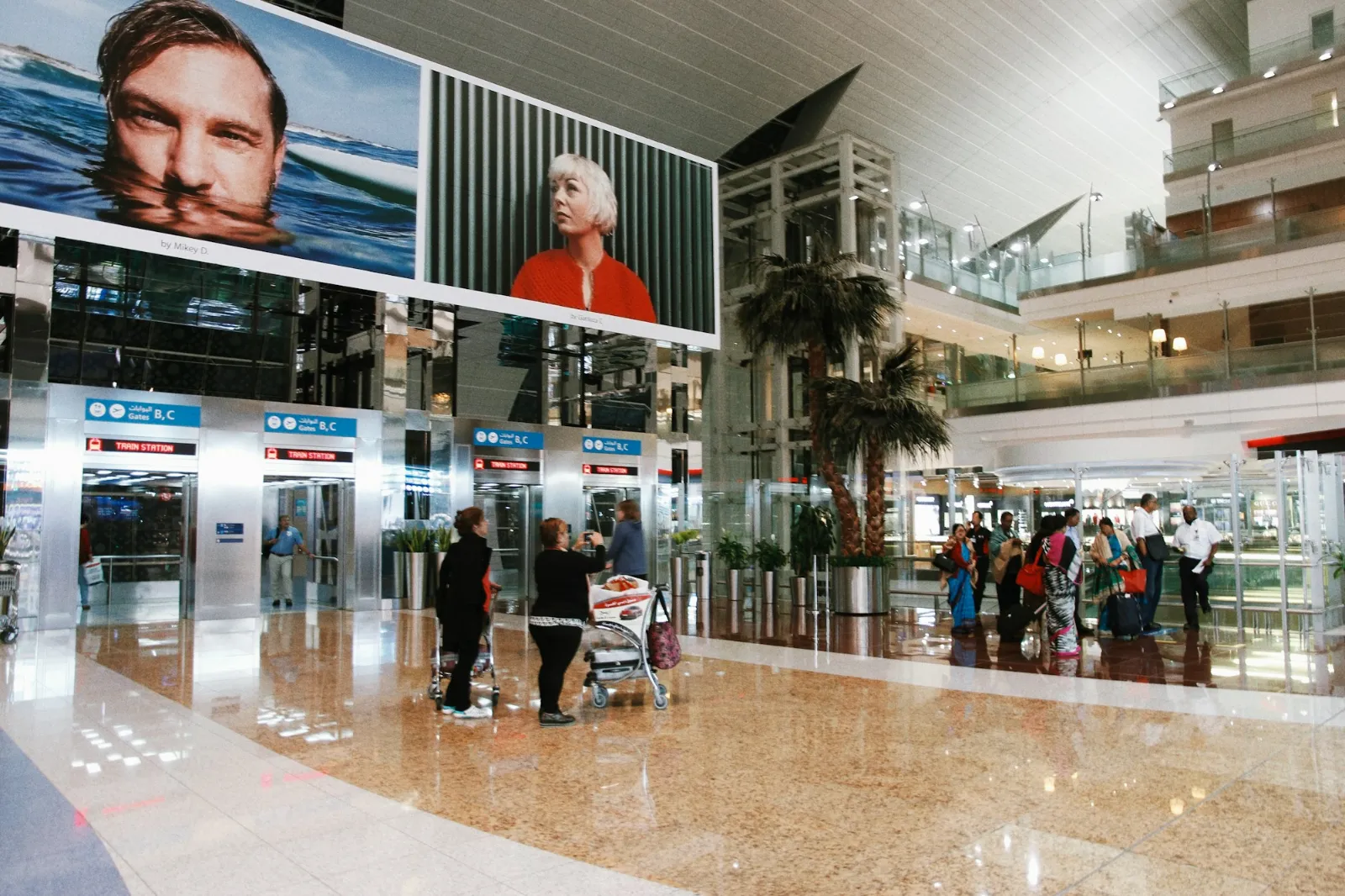
Dubai is about 2,990 km west of Kathmandu in a straight line, and a nonstop flight takes about 4 hours 40 minutes to 5 hours 15 minutes. The flight back from Dubai to Kathmandu is usually shorter, at about 4 hours. flydubai's route page lists the distance as 2,987 km and a flight time of 4 hours 50 minutes, and FlightConnections lists 4 hours 40 minutes; individual flights are scheduled between about 4 hours 40 minutes and 5 hours 15 minutes. That puts Dubai further from Kathmandu than Delhi or Bangkok, but still within an easy half-day journey, which is one reason it is such a popular first trip abroad.
| Route from Kathmandu (KTM) | Nonstop airlines | Approximate flight time |
|---|---|---|
| Kathmandu to Dubai (DXB) | flydubai, Himalaya Airlines, Nepal Airlines | About 4 h 40 min to 5 h 15 min |
| Dubai (DXB) to Kathmandu | flydubai, Himalaya Airlines, Nepal Airlines | About 4 h |
| Kathmandu to Sharjah (SHJ) | Air Arabia | Similar to Dubai; Sharjah airport is close to Dubai city |
| Kathmandu to Abu Dhabi (AUH) | Air Arabia Abu Dhabi | Similar to Dubai |
Checked: 3 November 2026, sources: flydubai, flights from Kathmandu to Dubai (distance 2,987 km, flight duration 4 h 50 min), FlightConnections, Kathmandu to Dubai (4 h 40 min, 2,989 km) and airline schedules. Schedules change by season, so check the airline before you book.
Our detailed post on Kathmandu to Dubai flights covers which terminal each airline uses, how often they fly and whether Sharjah or Abu Dhabi might suit you better. If Dubai is only a stop on the way to Europe, Africa or the Americas, see our Dubai stopover guide for what you can fit into a layover.
What does a Kathmandu to Dubai flight look like on the clock?
Because Dubai is 1 hour 45 minutes behind Nepal, the arrival time on your ticket looks shorter than the flight really is. As a simple example, a flight that leaves Kathmandu at 10:00 Nepal time and flies for 4 hours 50 minutes lands at 14:50 Nepal time, which is 13:05 in Dubai. On the way home the effect reverses: you "lose" the 1 hour 45 minutes, so a 4 hour flight that leaves Dubai at 10:00 lands in Kathmandu at 15:45 local time. This is a worked example only, not a real timetable.
How far is Dubai from nearby countries and cities?
Dubai is close to several Gulf capitals: Muscat in Oman is about 350 km away and Doha in Qatar about 380 km, both as straight-line distances between the main airports. The table below shows approximate straight-line distances from Dubai International Airport (DXB) to the main airport of each city, which helps if you are wondering what is "next door" or planning a multi-country trip. Road distances are longer, and some routes, such as Dubai to Doha, are normally flown rather than driven.
| Place (airport) | Country | Straight-line distance from Dubai (DXB), approx. |
|---|---|---|
| Muscat (MCT) | Oman | About 350 km |
| Doha (DOH) | Qatar | About 380 km |
| Riyadh (RUH) | Saudi Arabia | About 870 km |
| Karachi (KHI) | Pakistan | About 1,190 km |
| Mumbai (BOM) | India | About 1,930 km |
| Delhi (DEL) | India | About 2,180 km |
| Kathmandu (KTM) | Nepal | About 2,990 km |
Checked: 3 November 2026. Straight-line (great-circle) distances between airports, rounded, from published flight distance calculators: myflight.life (Muscat 348 km, Delhi 2,183 km), 1flt (Doha 377 km), flightpaths.com (Riyadh 542 miles, Karachi 739 miles, Mumbai 1,197 miles, Kathmandu 1,858 miles) and flydubai (Kathmandu 2,987 km). City-centre distances differ slightly.
What time zone is Dubai in?
Dubai uses Gulf Standard Time (GST), which is UTC+4, all year round. The UAE does not use daylight saving time, so the clocks never change. Nepal uses Nepal Standard Time, UTC+5:45, and also has no daylight saving. That means Dubai is always exactly 1 hour 45 minutes behind Nepal: when it is noon in Kathmandu, it is 10:15 in Dubai.
All seven emirates share the same time zone, so Abu Dhabi, Sharjah and Ras Al Khaimah are on the same clock as Dubai. The UAE government simply states that "the UAE is 4 hours ahead of GMT" (u.ae Fact sheet).
| Time in Dubai (GST, UTC+4) | Time in Nepal (NST, UTC+5:45) |
|---|---|
| 06:00 | 07:45 |
| 09:00 | 10:45 |
| 13:00 | 14:45 |
| 18:00 | 19:45 |
| 21:00 | 22:45 |
| 22:30 | 00:15 (next day) |
Checked: 3 November 2026, sources: timeanddate.com, Dubai time zone ("There are no Daylight Saving Time clock changes"), u.ae Fact sheet.
A tip from families who call relatives in the Gulf: the 45 minutes is what catches people out. If your brother says "call me after 8", that is 9:45 in Nepal, not 9:00. Saving a Dubai clock on your phone's world clock removes the guesswork.
Which days are the weekend in Dubai?
The UAE working week for federal government offices runs from Monday to Friday, with Saturday and Sunday as the weekend, according to the UAE government portal. Sharjah is the exception: its government entities work Monday to Thursday. Many people still assume the Gulf weekend is Friday, which was true in the past, so check opening days if you need an office, a bank or a consulate. Friday prayers still shape the middle of the day on Fridays, and many private businesses set their own hours.
Which language and currency are used in Dubai?
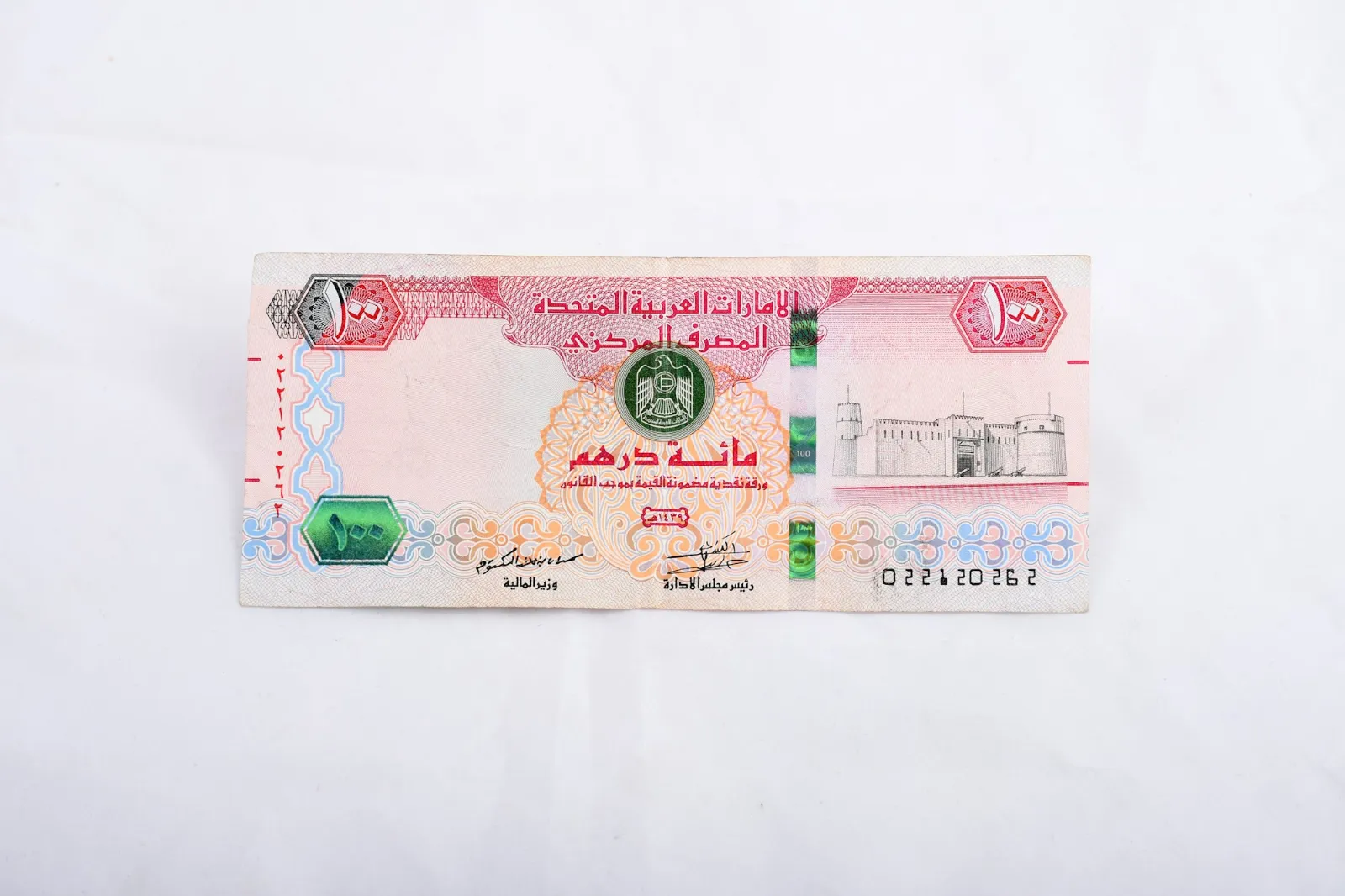
Arabic is the official language of Dubai and the whole UAE, and the official currency is the UAE dirham (AED). In practice, English is the everyday shared language in shops, hotels, airports and offices, and all road and traffic signs, as well as shop signs, are in both Arabic and English. The dirham is pegged to the US dollar, so its value against the dollar does not change.
What languages do people speak in Dubai?
The UAE government lists Arabic as the official language and notes that road signs and the signs on commercial outlets are in Arabic and English. It also lists Bengali, Farsi, Malayalam, Turkish and Urdu among other widely spoken languages, and says Chinese, English, French, Hindi and Russian are also used in the courts (u.ae Fact sheet).
For Nepali visitors, language is rarely a barrier. If you speak some English you will manage almost everywhere, and if you speak Hindi you will often find a shared language with shopkeepers and drivers from South Asia, because spoken Hindi and Urdu are close. You may also hear Nepali in places, given how many Nepalis work in the UAE, though u.ae does not list it among the widely spoken languages. Learning a few Arabic greetings such as "marhaba" (hello) and "shukran" (thank you) is polite and appreciated.
What currency is used in Dubai?
The currency of Dubai is the UAE dirham, the same currency used in all seven emirates. Its official code is AED, and you will often see the informal abbreviations Dh or Dhs on price tags. One dirham is divided into 100 fils.
| Item | Detail |
|---|---|
| Name | UAE dirham (u.ae calls it the Arab Emirati Dirham) |
| Code | AED (informally Dh or Dhs) |
| Subunit | 100 fils = 1 dirham |
| Coins | AED 1, 50 fils, 25 fils |
| Banknotes | AED 5, 10, 20, 50, 100, 200, 500 and 1,000 |
| Exchange rate policy | Pegged to the US dollar since February 2002 |
| Peg rate | 1 US dollar = AED 3.6725 |
Checked: 3 November 2026, source: u.ae Fact sheet.
For Nepali travellers, the useful point is this: the dirham is tied to the US dollar, while the Nepali rupee (NPR) is tied to the Indian rupee. So the NPR to AED rate moves roughly in step with the rupee against the dollar. Nepal Rastra Bank publishes daily buying and selling rates for the dirham, and that is the reference banks and money changers in Nepal work from. Dubai itself has money exchange counters at the airport and in most malls, and cards are widely accepted.
Who lives in Dubai?
Most people who live in Dubai are expatriates, not Emirati citizens. The emirate had 4,807,185 residents in late September 2026, according to the Dubai Data and Statistics Establishment, up 226,885 since the start of the year. Across the UAE, expatriates make up roughly 88 per cent of residents, according to the Embassy of Nepal in Abu Dhabi, and the Dubai Media Office says the emirate is home to more than 200 nationalities.
| Measure | Figure | Source |
|---|---|---|
| Dubai population, late September 2026 | 4,807,185 | Dubai Data and Statistics Establishment, via Gulf News |
| Dubai population, end of 2025 | 4,580,300 | Dubai Data and Statistics Establishment, via Gulf News |
| Growth in 2026 to late September | 226,885 people | Dubai Data and Statistics Establishment, via Gulf News |
| Share of men in Dubai's population, 2025 | 68.5% | Dubai Data and Statistics Establishment, via Gulf News |
| UAE population, 2024 | 11,294,243 | Federal Competitiveness and Statistics Centre, via Gulf News |
| Expatriate share of UAE residents | Roughly 88% | Embassy of Nepal in the UAE |
| Nationalities in Dubai | More than 200 | Dubai Media Office |
| Sharjah example (2022 census) | 208,000 Emirati citizens and 1.6 million expatriate residents | u.ae |
Checked: 3 November 2026, sources: Gulf News, Embassy of Nepal, Abu Dhabi, Dubai Media Office, u.ae Sharjah. We could not open the Dubai Data and Statistics Establishment's own website on the day of writing, so the 2026 figures are as reported by Gulf News (and, with the same numbers, Emirates 24|7).
The large share of men reflects the many workers in construction, transport, security and services who come without their families. It also explains why some districts feel very different from the family-oriented beach and suburban areas.
How big is the Nepali community in the UAE?
The Embassy of Nepal in Abu Dhabi describes the UAE as one of the five major destination countries for Nepali migrants to work and live, and says Nepalis constitute "the fifth largest group of expatriates in this country" (the page is undated). The embassy lists security, driving, sales, hospitality, construction and cleaning as the main fields where Nepalis work, and notes that the UAE is one of the largest sources of remittance income for Nepal (Embassy of Nepal, Nepal and UAE relations). The embassy page does not give a current headcount, and we have not found an official, dated figure, so we do not quote one here.
For families in Nepal, this is often the real reason behind the question "where is Dubai?". Many Nepali workers in "Dubai" actually live or work in Sharjah, Ajman or Abu Dhabi, so it helps to ask your relative which emirate and which area they are in. If you are visiting relatives, agree a meeting point by emirate and district first; many Nepali visitors combine sightseeing with time spent with family who work there.
What do people often get wrong about where Dubai is?
The most common mistake is thinking Dubai is a country, closely followed by thinking it is the UAE's capital or that it is in Saudi Arabia. None of these is true. The table below sets out the usual mix-ups next to the facts, with the source for each.
| Common belief | The fact | Source |
|---|---|---|
| Dubai is a country | Dubai is an emirate and a city in the United Arab Emirates | u.ae |
| Dubai is the capital of the UAE | The capital is Abu Dhabi city | u.ae Fact sheet |
| Dubai is in Saudi Arabia | Dubai is in the UAE; the emirate of Dubai does not border Saudi Arabia at all (Abu Dhabi does) | u.ae, Dubai Media Office |
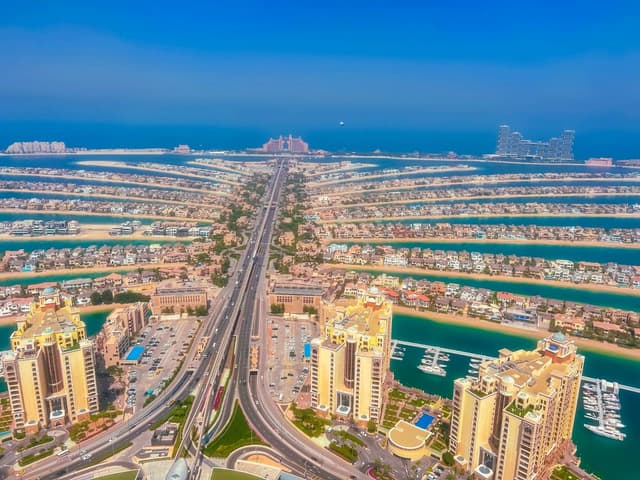
| Dubai is an island | Dubai is on the mainland of the Arabian Peninsula. Its famous islands, such as Palm Jumeirah, are artificial, built by land reclamation, which also grew the emirate's official area from about 3,900 sq km to 4,114 sq km | Wikipedia |
| Abu Dhabi and Sharjah are parts of Dubai | Both are separate emirates with their own rulers | u.ae |
| Dubai is all flat desert | Dubai's Hatta area lies in the Hajar Mountains; the UAE's highest point is near Jebel Jais in Ras Al Khaimah | Wikipedia |
| It never rains in Dubai | Dubai averages about 87.3 mm of rain a year, mostly from January to March | Dubai Media Office |
| The weekend is Friday | Federal government offices work Monday to Friday, with a Saturday and Sunday weekend (Sharjah government works Monday to Thursday) | u.ae |
| You need Arabic to get around | Signs are in Arabic and English, and English is the common working language | u.ae Fact sheet |
How does this help you plan a trip?
Knowing that Dubai is one emirate in a small, connected country makes planning simpler. You can stay in Dubai, work through our list of places to visit in Dubai, and still reach Abu Dhabi, Sharjah and even the mountains of Ras Al Khaimah in a day. The time difference with Nepal is small, the flight is under five hours for most departures, and English signs mean first-time travellers settle in quickly. For a short trip, most visitors base themselves in Dubai, add one Abu Dhabi day and one desert evening, and our Dubai desert safari guide explains what that evening usually involves.
Plan around the heat first. From June to September, outdoor sightseeing is hard in the middle of the day, so families with children or older parents usually prefer November to March. Check entry rules for your passport well before you book, especially if you are travelling with relatives who hold a different nationality. If you would like to see how others put a UAE trip together, you can browse Dubai tour packages for ideas on how many nights people spend and which emirates they combine.
Updated: 3 November 2026. Main sources: the UAE Government portal (u.ae), the Government of Dubai Media Office, the Dubai Data and Statistics Establishment (as reported by Gulf News), the Embassy of Nepal in Abu Dhabi, flydubai and timeanddate.com.
Frequently asked questions
Is Dubai a country?
No, Dubai is not a country. Dubai is one of the seven emirates that make up the United Arab Emirates (UAE), and it is also the name of that emirate's capital city. The country is the UAE, with its capital in Abu Dhabi. Dubai has its own ruler and local government, but it shares one passport, one currency and one federal government with the other six emirates.
Is Dubai in Saudi Arabia?
No, Dubai is in the United Arab Emirates, not Saudi Arabia. The UAE and Saudi Arabia are separate countries that share a land border, but that border is with the emirate of Abu Dhabi, not with Dubai. Dubai's own neighbours are Abu Dhabi to the south, Sharjah to the northeast and Oman to the southeast. Riyadh, the Saudi capital, is about 870 km from Dubai in a straight line (airport to airport, approx.).
What is the capital of the UAE?
The capital of the United Arab Emirates is Abu Dhabi city, not Dubai. Abu Dhabi is the largest of the seven emirates, covering about 67,340 sq km, and its capital city is home to most federal ministries and foreign embassies, including Nepal's embassy. Dubai is the UAE's largest city by population and its main commercial and tourism hub, which is why many people assume it is the capital.
Is Dubai in Asia?
Yes, Dubai is in Asia. The UAE government describes the United Arab Emirates as being in Western Asia, on the southeastern coast of the Arabian Peninsula. In everyday terms, Dubai is part of the Middle East and the Gulf region. It is not in Africa or Europe, although its airport connects to both, and it is close to South Asia, about a 4 to 5 hour flight from Kathmandu.
Is Dubai an island?
No, Dubai is not an island. Dubai city sits on the mainland coast of the Arabian Peninsula, and you can drive there from Abu Dhabi, Sharjah or Oman. Dubai does have well known artificial islands, such as Palm Jumeirah, which were built by land reclamation in the Arabian Gulf. These islands are districts of the city, but the emirate itself is mostly mainland desert, coast and some mountains around Hatta.
How many hours is Dubai from Nepal by flight?
A nonstop flight from Kathmandu to Dubai takes about 4 hours 40 minutes to 5 hours 15 minutes, and the return flight from Dubai to Kathmandu takes about 4 hours. flydubai, Himalaya Airlines and Nepal Airlines fly the route nonstop, and flydubai lists the distance as 2,987 km. Schedules change by season, so check the exact timing with your airline before travelling.
Is Abu Dhabi part of Dubai?
No, Abu Dhabi is not part of Dubai. Abu Dhabi and Dubai are two separate emirates of the UAE, each with its own ruler and local government, and Abu Dhabi city is the national capital. The two cities are neighbours on the same coast, about 140 km apart by road, usually about 1 hour 20 minutes to 1 hour 30 minutes by car on the E11 Sheikh Zayed Road outside rush hour, so many visitors see both on one trip.
What is the official language of Dubai?
Arabic is the official language of Dubai and the whole UAE. English is widely used as the common working language in shops, hotels, airports and offices, and all road and traffic signs are in Arabic and English. Many other languages are spoken by Dubai's residents, including Urdu, Malayalam, Bengali, Farsi and Hindi, so most visitors from Nepal and South Asia find it easy to communicate.
Which currency is used in Dubai?
Dubai uses the UAE dirham, the official currency of all seven emirates, with the code AED. One dirham is divided into 100 fils, and notes come in 5, 10, 20, 50, 100, 200, 500 and 1,000 dirhams. The dirham has been pegged to the US dollar since February 2002 at AED 3.6725 per dollar. Nepal Rastra Bank publishes daily NPR rates for the dirham.
What is the time difference between Nepal and Dubai?
Dubai is 1 hour 45 minutes behind Nepal all year. Dubai uses Gulf Standard Time (UTC+4) and Nepal uses Nepal Standard Time (UTC+5:45), and neither country uses daylight saving time, so the gap never changes. When it is 12:00 noon in Kathmandu, it is 10:15 in Dubai. The same time applies in Abu Dhabi, Sharjah and the other emirates.
When was the UAE formed, and when did Dubai join?
The United Arab Emirates was formed on 2 December 1971, and Dubai was one of the founding emirates that day, together with Abu Dhabi, Sharjah, Ajman, Umm Al Quwain and Fujairah. Ras Al Khaimah joined on 10 February 1972, making seven emirates. The first President was Sheikh Zayed bin Sultan Al Nahyan of Abu Dhabi, and 2 December is celebrated as UAE National Day.