

+977-9709047652
Explore by Country
See all 12 Thailand packages
Most popular pick
See all 12 Thailand packages
See all 8 Vietnam packages
Most popular pick
See all 8 Vietnam packages
See all 4 Indonesia (Bali) packages
Most popular pick
See all 4 Indonesia (Bali) packages
See all 3 Maldives packages
Most popular pick
See all 3 Maldives packages
See all 3 China packages
Most popular pick
See all 3 China packages
See all 2 Sri Lanka packages
Most popular pick
See all 2 Sri Lanka packages
See all 3 Malaysia packages
Most popular pick
See all 3 Malaysia packages
See all 2 Singapore packages
Most popular pick
See all 2 Singapore packages
See all 2 Kenya packages
Most popular pick
See all 2 Kenya packages
See all 4 India packages
Most popular pick
See all 4 India packages
Search Tours or Places
Blog / Dubai

Things to Do in Dubai: A First Timer's Guide

12 min read 27 Jul 2026

Most lists of things to do in Dubai read like an inventory: forty attractions, no order, no sense of how they fit into a real day. This Dubai travel guide works the other way round, grouping the city by area so you can see which experiences sit near each other, which need a whole evening, and which you can skip. If it is your first time in Dubai, that is the difference between a trip that flows and one spent in traffic. The old creek district and the new towers are twenty minutes apart and feel like different decades.

How many days do you need, and why the season decides everything

Four full days covers the city properly: one for Downtown, one for Old Dubai, one for the beach and the Marina, and one for the desert. Three days works if you cut a day trip. Five or six lets you add Abu Dhabi or Hatta without rushing.

Season matters more than length. Average daily highs reach about 41.5C in July and 41.9C in August, and southerly winds can push the thermometer to 48C or 49C. In those months outdoor plans collapse into short bursts between air conditioned spaces, and the desert only works after sunset. From November through March the weather is genuinely pleasant, which is also when the city is busiest. Our companion piece on the best time to visit Dubai goes through the trade offs month by month.

Build your Dubai itinerary around one rule: outdoor things early morning or after dark, indoor things in the middle of the day. It sounds obvious and almost nobody does it.

Burj Khalifa, Dubai Mall and the fountain show

Downtown Dubai is the anchor of most first trips. The Burj Khalifa has several ticketed levels: At the Top on levels 124 and 125, the higher At the Top SKY on level 148, and lounge experiences on levels 152 to 154. Tickets are timed, tied to a specific date and slot, so book in advance. Sunset slots go first, often days ahead in winter.

The Dubai Fountain sits on the lake at the base of the tower and runs several shows every evening. The promenade outside Dubai Mall is a free vantage point. You can also watch from an abra on the lake or from the fountain boardwalk.

Dubai Mall is a destination in itself, with the aquarium tunnel, the ice rink and the indoor waterfall. Nearby, Sky Views Observatory offers a glass floor, a glass slide and an Edge Walk on a ledge 219.5 meters up, a good alternative if Burj Khalifa slots are gone.

Old Dubai: Al Fahidi, the creek and the souks

This is the half of the city people skip and then wish they had seen first. Al Fahidi Historical Neighborhood is a restored quarter of narrow lanes, coral stone walls and wind towers, with small galleries, coffee houses and the Sheikh Mohammed Centre for Cultural Understanding, which runs meals and talks aimed at explaining Emirati custom to visitors.

From there, cross Dubai Creek on an abra, the wooden ferry boats that have run the water for generations. On the Deira side you land near the Gold Souk and the Spice Souk, where haggling is expected and gold is sold by weight against the daily rate.

Al Shindagha Museum, on the Bur Dubai side of the creek mouth, tells the city's story through pearl diving, trade and the ruling family's old waterfront houses. Give it two hours. It is the clearest explanation of how Dubai got here that you will find anywhere.

The desert: dune drives, camps and the quiet alternative

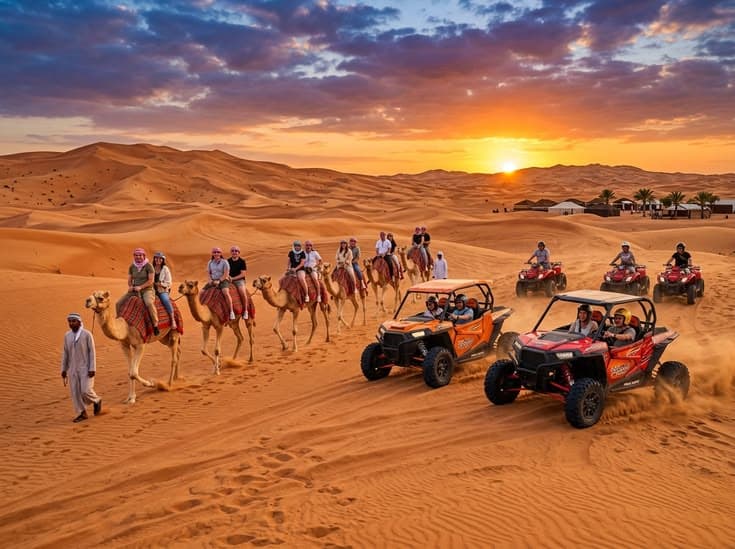
A desert evening is the experience most visitors remember. The standard version is a late afternoon pickup, dune bashing in a four wheel drive over the red sands, a stop at a camel farm, then a camp with dinner, henna, shisha and a show. It is touristy and it is also a lot of fun.

If that sounds like too much, the Dubai Desert Conservation Reserve is the quieter option: a protected area with strict vehicle limits, run for wildlife rather than volume, where you are likelier to see Arabian oryx than a convoy of Land Cruisers. Morning drives, falconry and camel treks are the usual formats. Take a light layer either way, because desert nights cool off fast.

Beaches, Jumeirah and the Burj Al Arab from outside

Dubai's public beaches are free, clean and open long hours. Kite Beach has the best food trucks, a running track and a straight view of the Burj Al Arab. JBR beach is the busier, more social stretch, with restaurants right behind the sand. La Mer and Jumeirah Beach are calmer.

The Burj Al Arab is a hotel, so the interior is for guests and diners only. The classic photograph is taken for free from Kite Beach at golden hour. Sea temperatures average around 32C in July and August, warm enough that swimming stops feeling cooling. In January and February the water sits near 22C.

Palm Jumeirah, Dubai Marina and the canal

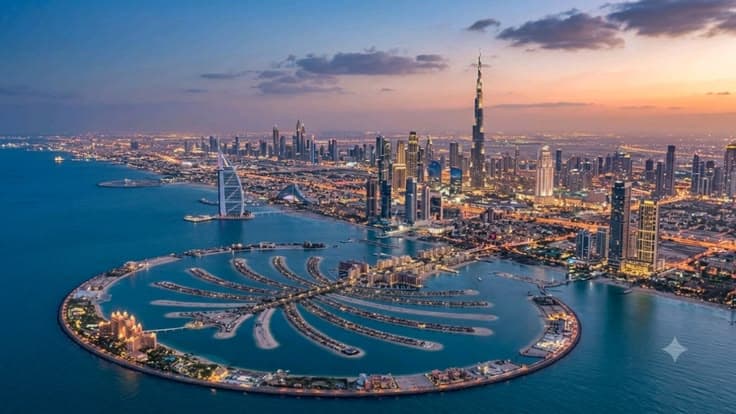
The Palm is the artificial island shaped like a tree. The View at The Palm, on the 52nd floor of The Palm Tower, is the observation deck built to look back at the whole shape, which you cannot see from ground level. At the tip sits Atlantis, with Aquaventure waterpark and the Lost Chambers aquarium.

Worth knowing: the Dubai Metro does not go to the Palm. The Palm Monorail runs from Palm Gateway station to Atlantis, and most visitors reach the gateway by Metro Red Line then Dubai Tram, or by taxi.

Dubai Marina, next door, is best seen from the water, by Dubai Ferry or on a traditional dhow. Ain Dubai, the giant observation wheel on Bluewaters Island, has spent long stretches closed to the public, so check its official status first. Inland, the Dubai Water Canal cuts through Business Bay with a waterfall that switches off as boats pass beneath.

Museums, Dubai Frame and the newer attractions

The Museum of the Future is the silver ellipse on Sheikh Zayed Road, and it is a genuine highlight rather than a photo stop. It opens daily from 10:00 to 19:00 with last admission at 17:00, and entry is by timed ticket booked in advance. Slots disappear on weekends.

Etihad Museum, near Jumeirah, covers the founding of the United Arab Emirates in 1971 and the documents behind it. Compact, well designed and rarely crowded.

Dubai Frame in Zabeel Park is a giant rectangle with a glass floored bridge across the top, positioned so old Dubai lies on one side and the new towers on the other. For immersive digital art indoors, AYA Universe and Theatre of Digital Art are the current picks.

Water parks and theme parks with children

Aquaventure at Atlantis is the largest waterpark in the city and the one most families choose. Wild Wadi, opposite the Burj Al Arab, is smaller and easier with young children. Laguna Waterpark at La Mer is smaller still.

Indoors, IMG Worlds of Adventure has Marvel and Cartoon Network zones and is a reliable answer to a 45C afternoon. Dubai Parks and Resorts, home to Motiongate, LEGOLAND and Real Madrid World, has had periods of closure, so confirm its status before driving out. Ski Dubai inside Mall of the Emirates has real snow and penguins.

Global Village and the seasonal events calendar

Global Village is an open air park of country pavilions, street food, stage shows and rides. It is seasonal and closed all summer. The next season, Season 31, runs from October 2026 to May 2027, and it is one of the most enjoyable evenings in the city.

The Dubai Shopping Festival runs from early December into January, with citywide sales, concerts and raffles. Dubai Summer Surprises fills the July and August gap with indoor promotions. Dubai Food Festival lands in spring, and winter carries most of the sport and concert calendar.

ExperienceAreaBest forWhen to go
Burj Khalifa and fountain showDowntownFirst time in DubaiSunset slot, book ahead
Abra ride and the souksDeira and Bur DubaiHistory, shoppingMorning or after 16:00
Desert safariAl Marmoom, LahbabGroups, familiesLate afternoon, October to April
Kite Beach and Burj Al Arab viewUmm SuqeimFree, relaxed daysEarly morning, November to March
The View at The PalmPalm JumeirahPhotographyLate afternoon
Museum of the FutureSheikh Zayed RoadCouples, teenagersWeekday, timed ticket
Global VillageDubailandFamilies, eveningsOctober to May only
Sheikh Zayed Grand MosqueAbu DhabiDay tripAny season, modest dress

Day trips: Abu Dhabi, Hatta and Sharjah

Sheikh Zayed Grand Mosque in Abu Dhabi is roughly ninety minutes away by road and worth the drive on its own. Modest dress is enforced at the entrance, and women are given an abaya if needed. Pair it with Louvre Abu Dhabi or Qasr Al Watan for a full day.

Hatta sits in the Hajar mountains about ninety minutes inland, with a turquoise dam you can kayak on, mountain bike trails and a heritage village. Best between November and March.

Sharjah is the closest option, twenty minutes on a good day. The Sharjah Art Foundation, the Museum of Islamic Civilization and the restored Heart of Sharjah district make a strong cultural half day. Sharjah is a dry emirate, with no alcohol served or sold.

Where and what to eat

Start at street level. Shawarma counters, Iranian bakeries turning out fresh khubz, Keralan cafeterias in Karama and Pakistani grill houses in Al Satwa are where the city actually eats. Al Rigga and Deira are dense with them.

For Emirati food, look for machboos, harees and luqaimat, best found at restaurants like Al Fanar or through the cultural meals at the Sheikh Mohammed Centre. Friday brunch is a Dubai institution, more social event than meal.

Dubai has had a Michelin Guide since 2022, and the starred list now spans Emirati, Japanese, Indian and modern European kitchens. Book those weeks ahead. The pleasant surprise is how many small street food places also make the guide's Bib Gourmand selection.

Getting around, what to wear, and the laws visitors get wrong

The Dubai Metro has two lines, Red and Green. A third, the Blue Line, is under construction and due to begin operations in September 2029, so ignore anything that says otherwise. Buy a nol card at any station and use it on the Metro, buses, the tram, water buses and now the Palm Monorail. Taxis and ride hailing apps are plentiful and metered. Full route and fare information sits on the Roads and Transport Authority site, the government body that runs Dubai's public transport.

On clothing: malls, souks and government buildings expect shoulders and knees covered. Swimwear is for beaches, pools and beach clubs only, not the walk home. At mosques, women cover hair, arms and legs, and men wear long trousers.

On the laws that catch people out. Alcohol is legal for over 21s in licensed hotels, bars and restaurants; tourists can buy from licensed shops such as MMI and African and Eastern by showing a passport for a free permit. Drinking or being drunk in public is an offense, and driving with any alcohol in your blood is zero tolerance. Do not photograph people, especially women and children, without asking. Keep public affection to a minimum. Vapes are sold legally and follow cigarette rules, so only where smoking is allowed. Some painkillers, sleeping tablets and cold remedies contain controlled ingredients and need prior approval plus a prescription. Drones require a permit and are banned near airports.

Entry rules vary by passport. Some nationalities receive a visa on arrival, others must arrange an entry permit in advance. Check your own case on the UAE Government's official visa on arrival page. For opening times, event dates and official listings of places to visit in Dubai, Visit Dubai, run by the Dubai Department of Economy and Tourism, is the source that stays current.

One last note on timing. Ramadan is expected to begin around 8 February 2027. Visiting during it is entirely possible and quietly rewarding, but eating and drinking in public during daylight is not done, live music is reduced, and restaurants shift their hours around iftar. Nights are lively, days are slow.

Frequently asked questions about visiting Dubai

How many days are enough for a first trip to Dubai?

Four full days covers Downtown, Old Dubai, the beach and Marina area, and a desert evening at a comfortable pace. Three days works if you drop a day trip. Add a fifth or sixth day if you want Abu Dhabi or Hatta.

What are the best free things to do in Dubai?

The Dubai Fountain show, all the public beaches including Kite Beach and JBR, walking Al Fahidi Historical Neighborhood, the Gold and Spice Souks, Dubai Marina Walk, and the view of the Burj Al Arab from the Umm Suqeim breakwater.

Does the Dubai Metro go to Palm Jumeirah?

No. The Metro Red Line stops on the mainland. To reach the Palm you take the Dubai Tram to Palm Jumeirah station and then the Palm Monorail from Palm Gateway to Atlantis, or you simply take a taxi. A nol card now works on the monorail.

Can tourists drink alcohol in Dubai?

Yes, if you are 21 or over. Alcohol is served in licensed hotels, bars, restaurants and beach clubs. Tourists can buy from licensed shops with a free permit issued on presenting a passport. Drinking in public, public drunkenness and drink driving are all offenses.

Is it worth visiting Dubai in summer?

Only if you plan for it. July and August average highs near 42C and can reach 48C, so outdoor sightseeing is limited to early morning and evening. Hotels are quieter, indoor attractions and Dubai Summer Surprises run all season, and the desert is uncomfortable until after dark.

What should I wear in Dubai as a visitor?

Cover shoulders and knees in malls, souks and government buildings. Swimwear belongs on beaches and at pools only. At mosques, women cover hair, arms and legs, and men wear long trousers. Beyond that, lightweight fabrics and a layer for heavy air conditioning.

Tags
DubaiUAEThings To DoTravel GuideCity BreakMiddle EastFirst Time TravelFamily Travel
Share
G
Gomayu Team
Writer at Gomayu
Keep reading
Blog / Dubai

Things to Do in Dubai: A First Timer's Guide

12 min read 27 Jul 2026

Most lists of things to do in Dubai read like an inventory: forty attractions, no order, no sense of how they fit into a real day. This Dubai travel guide works the other way round, grouping the city by area so you can see which experiences sit near each other, which need a whole evening, and which you can skip. If it is your first time in Dubai, that is the difference between a trip that flows and one spent in traffic. The old creek district and the new towers are twenty minutes apart and feel like different decades.

How many days do you need, and why the season decides everything

Four full days covers the city properly: one for Downtown, one for Old Dubai, one for the beach and the Marina, and one for the desert. Three days works if you cut a day trip. Five or six lets you add Abu Dhabi or Hatta without rushing.

Season matters more than length. Average daily highs reach about 41.5C in July and 41.9C in August, and southerly winds can push the thermometer to 48C or 49C. In those months outdoor plans collapse into short bursts between air conditioned spaces, and the desert only works after sunset. From November through March the weather is genuinely pleasant, which is also when the city is busiest. Our companion piece on the best time to visit Dubai goes through the trade offs month by month.

Build your Dubai itinerary around one rule: outdoor things early morning or after dark, indoor things in the middle of the day. It sounds obvious and almost nobody does it.

Burj Khalifa, Dubai Mall and the fountain show

Downtown Dubai is the anchor of most first trips. The Burj Khalifa has several ticketed levels: At the Top on levels 124 and 125, the higher At the Top SKY on level 148, and lounge experiences on levels 152 to 154. Tickets are timed, tied to a specific date and slot, so book in advance. Sunset slots go first, often days ahead in winter.

The Dubai Fountain sits on the lake at the base of the tower and runs several shows every evening. The promenade outside Dubai Mall is a free vantage point. You can also watch from an abra on the lake or from the fountain boardwalk.

Dubai Mall is a destination in itself, with the aquarium tunnel, the ice rink and the indoor waterfall. Nearby, Sky Views Observatory offers a glass floor, a glass slide and an Edge Walk on a ledge 219.5 meters up, a good alternative if Burj Khalifa slots are gone.

Old Dubai: Al Fahidi, the creek and the souks

This is the half of the city people skip and then wish they had seen first. Al Fahidi Historical Neighborhood is a restored quarter of narrow lanes, coral stone walls and wind towers, with small galleries, coffee houses and the Sheikh Mohammed Centre for Cultural Understanding, which runs meals and talks aimed at explaining Emirati custom to visitors.

From there, cross Dubai Creek on an abra, the wooden ferry boats that have run the water for generations. On the Deira side you land near the Gold Souk and the Spice Souk, where haggling is expected and gold is sold by weight against the daily rate.

Al Shindagha Museum, on the Bur Dubai side of the creek mouth, tells the city's story through pearl diving, trade and the ruling family's old waterfront houses. Give it two hours. It is the clearest explanation of how Dubai got here that you will find anywhere.

The desert: dune drives, camps and the quiet alternative

A desert evening is the experience most visitors remember. The standard version is a late afternoon pickup, dune bashing in a four wheel drive over the red sands, a stop at a camel farm, then a camp with dinner, henna, shisha and a show. It is touristy and it is also a lot of fun.

If that sounds like too much, the Dubai Desert Conservation Reserve is the quieter option: a protected area with strict vehicle limits, run for wildlife rather than volume, where you are likelier to see Arabian oryx than a convoy of Land Cruisers. Morning drives, falconry and camel treks are the usual formats. Take a light layer either way, because desert nights cool off fast.

Beaches, Jumeirah and the Burj Al Arab from outside

Dubai's public beaches are free, clean and open long hours. Kite Beach has the best food trucks, a running track and a straight view of the Burj Al Arab. JBR beach is the busier, more social stretch, with restaurants right behind the sand. La Mer and Jumeirah Beach are calmer.

The Burj Al Arab is a hotel, so the interior is for guests and diners only. The classic photograph is taken for free from Kite Beach at golden hour. Sea temperatures average around 32C in July and August, warm enough that swimming stops feeling cooling. In January and February the water sits near 22C.

Palm Jumeirah, Dubai Marina and the canal

The Palm is the artificial island shaped like a tree. The View at The Palm, on the 52nd floor of The Palm Tower, is the observation deck built to look back at the whole shape, which you cannot see from ground level. At the tip sits Atlantis, with Aquaventure waterpark and the Lost Chambers aquarium.

Worth knowing: the Dubai Metro does not go to the Palm. The Palm Monorail runs from Palm Gateway station to Atlantis, and most visitors reach the gateway by Metro Red Line then Dubai Tram, or by taxi.

Dubai Marina, next door, is best seen from the water, by Dubai Ferry or on a traditional dhow. Ain Dubai, the giant observation wheel on Bluewaters Island, has spent long stretches closed to the public, so check its official status first. Inland, the Dubai Water Canal cuts through Business Bay with a waterfall that switches off as boats pass beneath.

Museums, Dubai Frame and the newer attractions

The Museum of the Future is the silver ellipse on Sheikh Zayed Road, and it is a genuine highlight rather than a photo stop. It opens daily from 10:00 to 19:00 with last admission at 17:00, and entry is by timed ticket booked in advance. Slots disappear on weekends.

Etihad Museum, near Jumeirah, covers the founding of the United Arab Emirates in 1971 and the documents behind it. Compact, well designed and rarely crowded.

Dubai Frame in Zabeel Park is a giant rectangle with a glass floored bridge across the top, positioned so old Dubai lies on one side and the new towers on the other. For immersive digital art indoors, AYA Universe and Theatre of Digital Art are the current picks.

Water parks and theme parks with children

Aquaventure at Atlantis is the largest waterpark in the city and the one most families choose. Wild Wadi, opposite the Burj Al Arab, is smaller and easier with young children. Laguna Waterpark at La Mer is smaller still.

Indoors, IMG Worlds of Adventure has Marvel and Cartoon Network zones and is a reliable answer to a 45C afternoon. Dubai Parks and Resorts, home to Motiongate, LEGOLAND and Real Madrid World, has had periods of closure, so confirm its status before driving out. Ski Dubai inside Mall of the Emirates has real snow and penguins.

Global Village and the seasonal events calendar

Global Village is an open air park of country pavilions, street food, stage shows and rides. It is seasonal and closed all summer. The next season, Season 31, runs from October 2026 to May 2027, and it is one of the most enjoyable evenings in the city.

The Dubai Shopping Festival runs from early December into January, with citywide sales, concerts and raffles. Dubai Summer Surprises fills the July and August gap with indoor promotions. Dubai Food Festival lands in spring, and winter carries most of the sport and concert calendar.

ExperienceAreaBest forWhen to go
Burj Khalifa and fountain showDowntownFirst time in DubaiSunset slot, book ahead
Abra ride and the souksDeira and Bur DubaiHistory, shoppingMorning or after 16:00
Desert safariAl Marmoom, LahbabGroups, familiesLate afternoon, October to April
Kite Beach and Burj Al Arab viewUmm SuqeimFree, relaxed daysEarly morning, November to March
The View at The PalmPalm JumeirahPhotographyLate afternoon
Museum of the FutureSheikh Zayed RoadCouples, teenagersWeekday, timed ticket
Global VillageDubailandFamilies, eveningsOctober to May only
Sheikh Zayed Grand MosqueAbu DhabiDay tripAny season, modest dress

Day trips: Abu Dhabi, Hatta and Sharjah

Sheikh Zayed Grand Mosque in Abu Dhabi is roughly ninety minutes away by road and worth the drive on its own. Modest dress is enforced at the entrance, and women are given an abaya if needed. Pair it with Louvre Abu Dhabi or Qasr Al Watan for a full day.

Hatta sits in the Hajar mountains about ninety minutes inland, with a turquoise dam you can kayak on, mountain bike trails and a heritage village. Best between November and March.

Sharjah is the closest option, twenty minutes on a good day. The Sharjah Art Foundation, the Museum of Islamic Civilization and the restored Heart of Sharjah district make a strong cultural half day. Sharjah is a dry emirate, with no alcohol served or sold.

Where and what to eat

Start at street level. Shawarma counters, Iranian bakeries turning out fresh khubz, Keralan cafeterias in Karama and Pakistani grill houses in Al Satwa are where the city actually eats. Al Rigga and Deira are dense with them.

For Emirati food, look for machboos, harees and luqaimat, best found at restaurants like Al Fanar or through the cultural meals at the Sheikh Mohammed Centre. Friday brunch is a Dubai institution, more social event than meal.

Dubai has had a Michelin Guide since 2022, and the starred list now spans Emirati, Japanese, Indian and modern European kitchens. Book those weeks ahead. The pleasant surprise is how many small street food places also make the guide's Bib Gourmand selection.

Getting around, what to wear, and the laws visitors get wrong

The Dubai Metro has two lines, Red and Green. A third, the Blue Line, is under construction and due to begin operations in September 2029, so ignore anything that says otherwise. Buy a nol card at any station and use it on the Metro, buses, the tram, water buses and now the Palm Monorail. Taxis and ride hailing apps are plentiful and metered. Full route and fare information sits on the Roads and Transport Authority site, the government body that runs Dubai's public transport.

On clothing: malls, souks and government buildings expect shoulders and knees covered. Swimwear is for beaches, pools and beach clubs only, not the walk home. At mosques, women cover hair, arms and legs, and men wear long trousers.

On the laws that catch people out. Alcohol is legal for over 21s in licensed hotels, bars and restaurants; tourists can buy from licensed shops such as MMI and African and Eastern by showing a passport for a free permit. Drinking or being drunk in public is an offense, and driving with any alcohol in your blood is zero tolerance. Do not photograph people, especially women and children, without asking. Keep public affection to a minimum. Vapes are sold legally and follow cigarette rules, so only where smoking is allowed. Some painkillers, sleeping tablets and cold remedies contain controlled ingredients and need prior approval plus a prescription. Drones require a permit and are banned near airports.

Entry rules vary by passport. Some nationalities receive a visa on arrival, others must arrange an entry permit in advance. Check your own case on the UAE Government's official visa on arrival page. For opening times, event dates and official listings of places to visit in Dubai, Visit Dubai, run by the Dubai Department of Economy and Tourism, is the source that stays current.

One last note on timing. Ramadan is expected to begin around 8 February 2027. Visiting during it is entirely possible and quietly rewarding, but eating and drinking in public during daylight is not done, live music is reduced, and restaurants shift their hours around iftar. Nights are lively, days are slow.

Frequently asked questions about visiting Dubai

How many days are enough for a first trip to Dubai?

Four full days covers Downtown, Old Dubai, the beach and Marina area, and a desert evening at a comfortable pace. Three days works if you drop a day trip. Add a fifth or sixth day if you want Abu Dhabi or Hatta.

What are the best free things to do in Dubai?

The Dubai Fountain show, all the public beaches including Kite Beach and JBR, walking Al Fahidi Historical Neighborhood, the Gold and Spice Souks, Dubai Marina Walk, and the view of the Burj Al Arab from the Umm Suqeim breakwater.

Does the Dubai Metro go to Palm Jumeirah?

No. The Metro Red Line stops on the mainland. To reach the Palm you take the Dubai Tram to Palm Jumeirah station and then the Palm Monorail from Palm Gateway to Atlantis, or you simply take a taxi. A nol card now works on the monorail.

Can tourists drink alcohol in Dubai?

Yes, if you are 21 or over. Alcohol is served in licensed hotels, bars, restaurants and beach clubs. Tourists can buy from licensed shops with a free permit issued on presenting a passport. Drinking in public, public drunkenness and drink driving are all offenses.

Is it worth visiting Dubai in summer?

Only if you plan for it. July and August average highs near 42C and can reach 48C, so outdoor sightseeing is limited to early morning and evening. Hotels are quieter, indoor attractions and Dubai Summer Surprises run all season, and the desert is uncomfortable until after dark.

What should I wear in Dubai as a visitor?

Cover shoulders and knees in malls, souks and government buildings. Swimwear belongs on beaches and at pools only. At mosques, women cover hair, arms and legs, and men wear long trousers. Beyond that, lightweight fabrics and a layer for heavy air conditioning.

Tags
DubaiUAEThings To DoTravel GuideCity BreakMiddle EastFirst Time TravelFamily Travel
Share
G
Gomayu Team
Writer at Gomayu
Keep reading