





















China is the size of a continent, so picking the best places to visit in China is really a question of picking two or three regions and doing them properly. A traveler who tries to see Beijing, Guilin, Chengdu and Shanghai in eight days spends most of the trip in transit. The smarter approach is to think in clusters. This China travel guide groups the country's top destinations by region, tells you who each one suits, and gives you one honest warning for each.
Best time to visit China, and the two weeks to avoid
Spring and autumn are the best windows for most of China. April to May and September to October give you mild days, clear light and open mountain trails. Summer is hot, humid and busy with domestic school holidays. Winter suits the north, the ice cities and the museums.
Two national holiday weeks will ruin a badly timed trip. The first is Chinese New Year, also called Spring Festival, which moves each year between late January and mid February. The second is National Day, starting October 1 and running about a week. During both, hundreds of millions of people travel at once, trains sell out, and popular sites hit their daily visitor caps early in the morning.
If those dates are your only option, go anyway, but book transport and attraction tickets the moment the booking window opens, and expect queues everywhere.
Beijing and the Great Wall
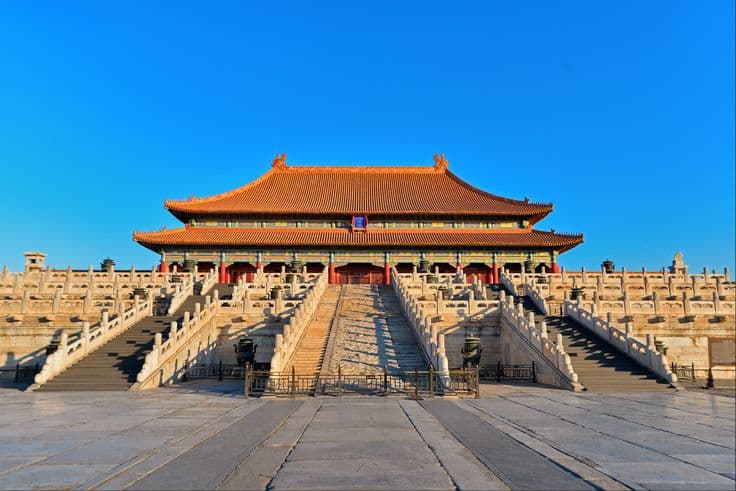
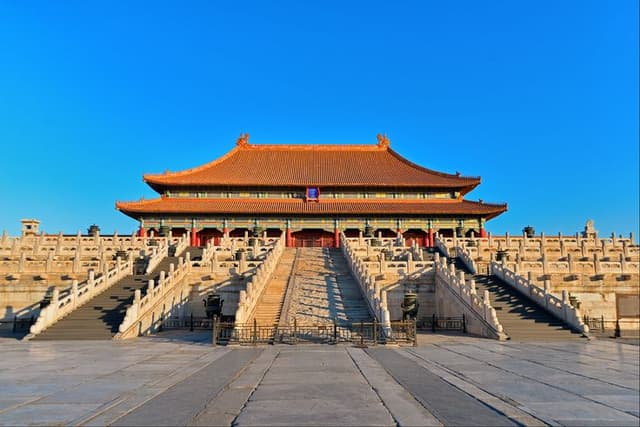
Beijing is where most first trips start. The Forbidden City, Temple of Heaven, the hutong lanes and the Summer Palace sit close together, and the subway reaches all of them. Two full days in the city plus one for the wall is a sensible minimum.
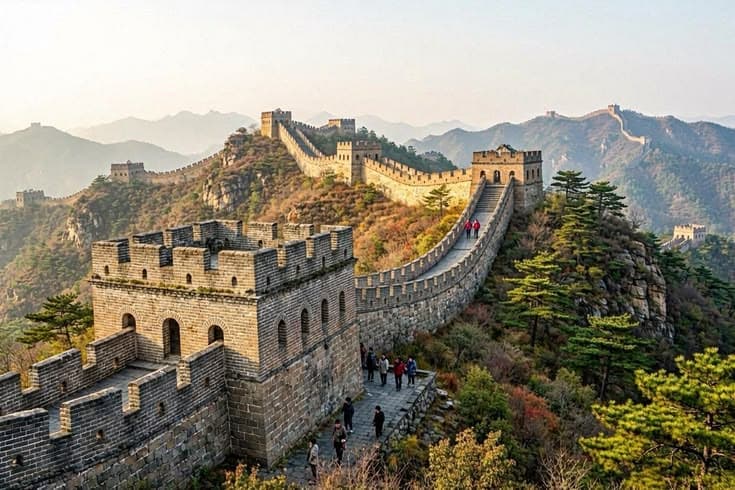
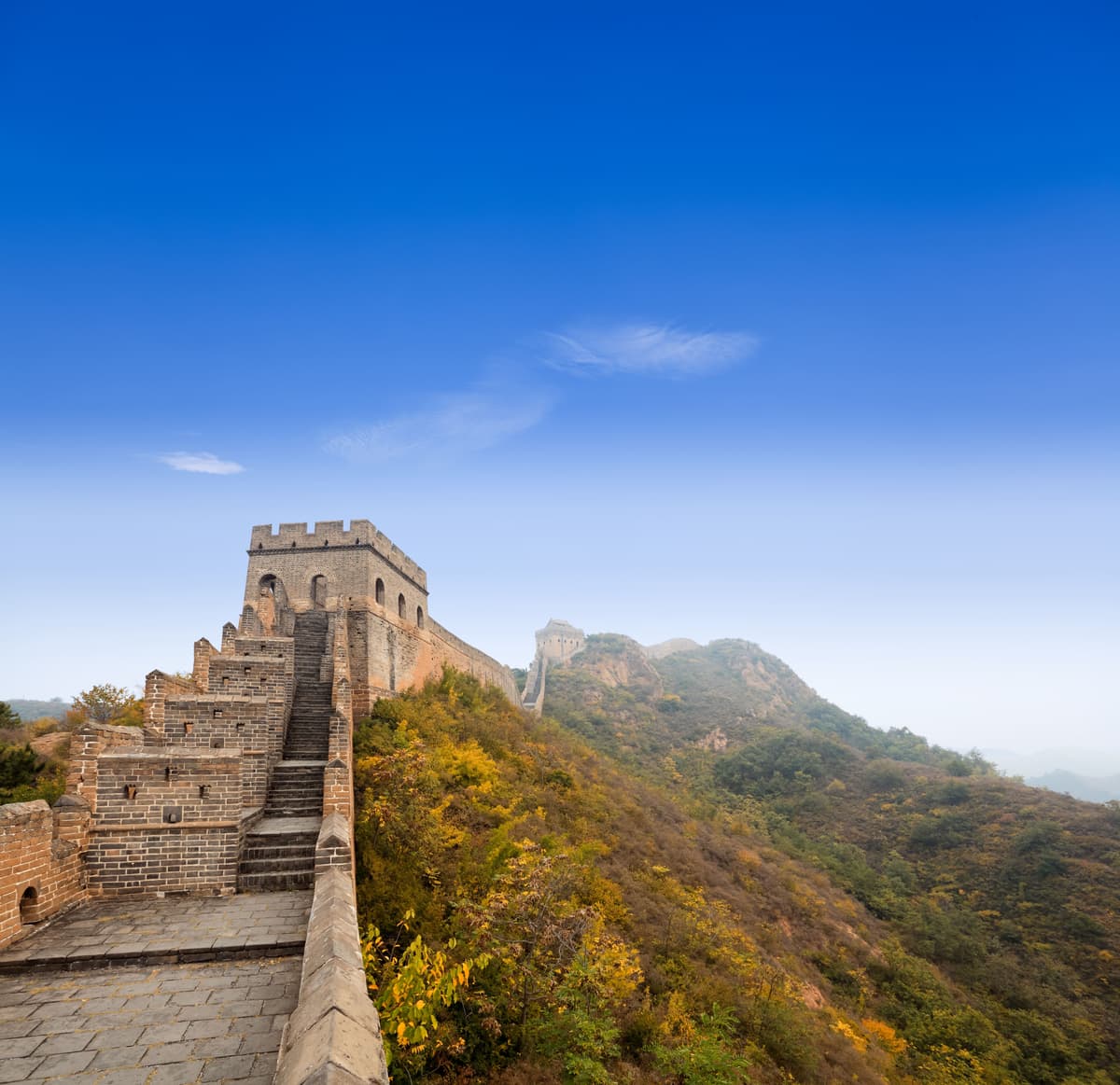
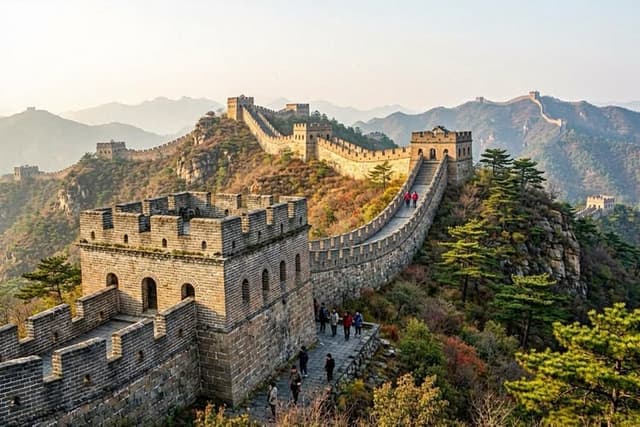
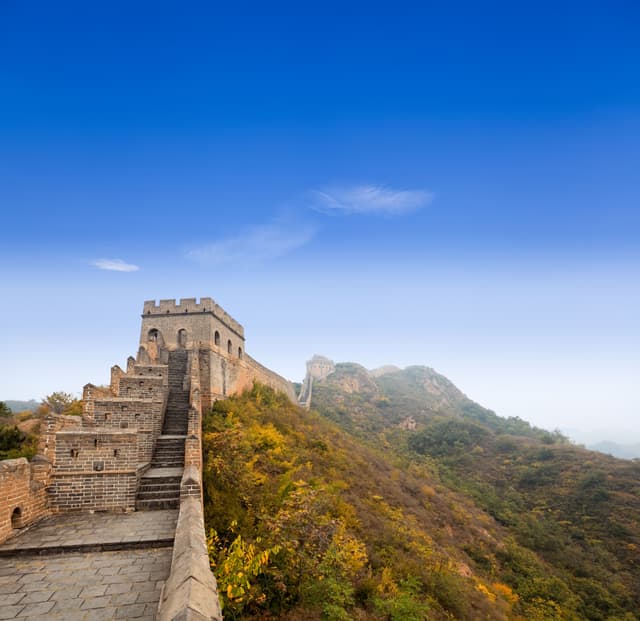
The Great Wall: Badaling is fully restored, closest to the city at roughly an hour and a half, and by far the busiest. Mutianyu is also restored, quieter, and has a cable car and a toboggan run down. Jinshanling, two to three hours out, mixes rebuilt towers with crumbling original stonework and is the best choice if you want photos without crowds. Simatai near Gubei Water Town runs strict daily quotas and evening visits.
Honest warning: most Great Wall sections now require advance online booking with your passport number, so you cannot just turn up. Wild, unrestored stretches such as Jiankou are not official scenic areas, have no railings or rescue points, and people are injured there every year.

Xi'an and the Terracotta Army
Xi'an was the capital for a string of dynasties and the eastern end of the old Silk Road trading routes. The Terracotta Army sits about an hour outside town at the Emperor Qinshihuang's Mausoleum Site Museum, where thousands of clay soldiers stand in open excavation pits. In the city you can cycle the full loop of the intact Ming city wall and eat your way through the Muslim Quarter, where the stalls run from familiar skewers to some genuinely strange Chinese dishes.
Honest warning: the museum uses real name ticketing, so bring the passport you booked with. Tickets are released only a short window in advance and sell out fast in summer and around holidays. Pit 1 is the famous one, and it is a wide view from a raised walkway, not a close up.
Shanghai, Suzhou and Hangzhou
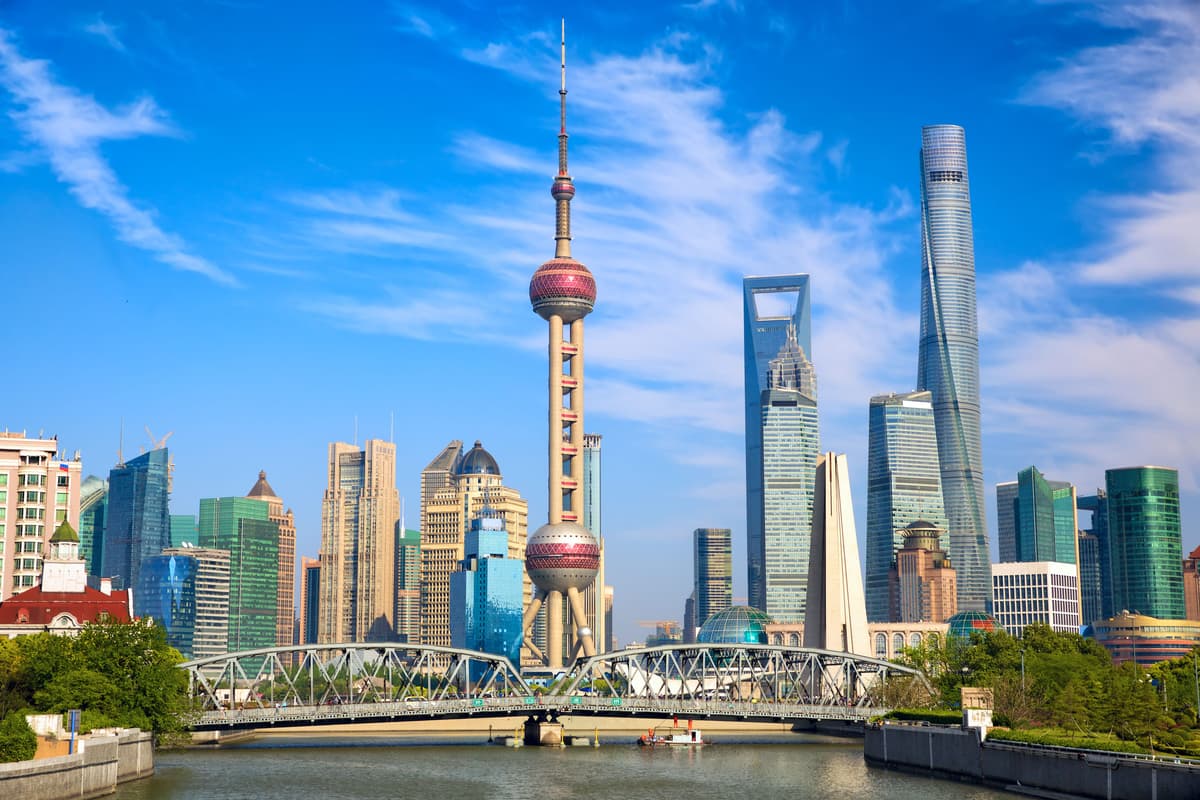
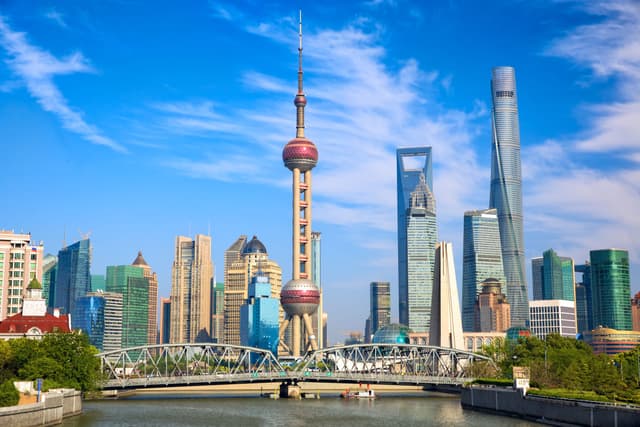
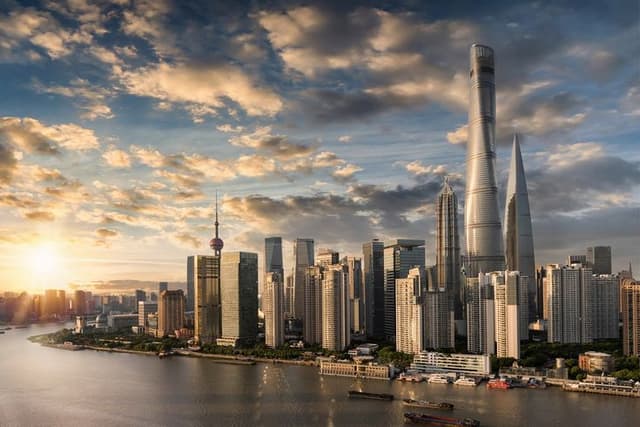
Shanghai is the easy landing point for a first trip. The Bund, the old French Concession streets and the skyline across the river need no planning at all. It pairs naturally with Beijing, which is why the two cities are such a common first route into the country.
From Shanghai, high speed trains reach Suzhou in around half an hour and Hangzhou in under an hour. Suzhou has classical walled gardens listed by UNESCO. Hangzhou has West Lake, a long walking and cycling loop that locals treat as a public park.
Honest warning: Suzhou's gardens are small and were designed for quiet viewing, so a weekend visit can feel like a queue. Go early on a weekday and pick two gardens rather than five.
Guilin and Yangshuo
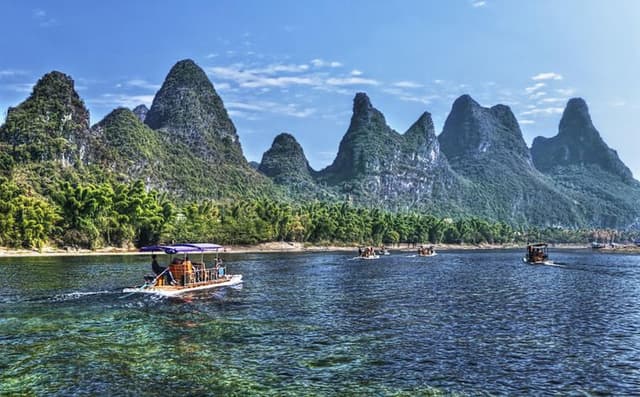
The limestone karst peaks along the Li River are the landscape most people picture when they think of rural China. The standard trip is a cruise from Guilin down to Yangshuo, then a few days cycling the flat lanes, hiking Moon Hill or rafting the Yulong River. It suits couples and slow travelers more than sightseers with a checklist.
Honest warning: haze and rain are common here, and the peaks disappear into grey on a bad day. Build in a spare day rather than pinning everything on one cruise.
Zhangjiajie and the sandstone pillars
The towering stone columns in Hunan province sit inside Zhangjiajie National Forest Park, part of the larger Wulingyuan Scenic and Historic Interest Area. The Bailong Elevator, a glass sided lift built into a cliff, carries visitors up the rock face, and there is a well known glass walkway. The glass bridge that gets shared online is not in the forest park at all. It spans the Zhangjiajie Grand Canyon, a separate ticketed site nearby.
Honest warning: the park is enormous and mostly vertical, with shuttle buses, cable cars and long stair sections. Two days is realistic. Fog is frequent, and the glass attractions close in bad weather or high wind.
Chengdu and the pandas
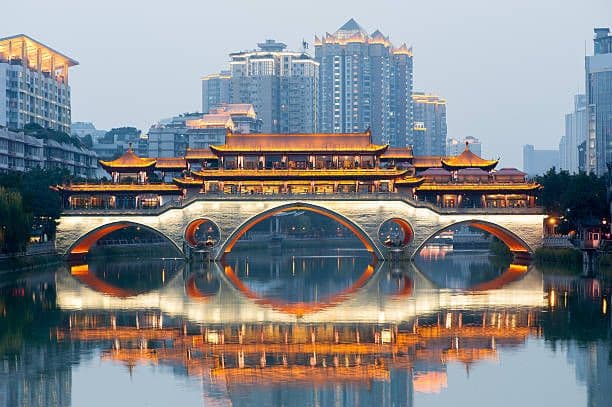
Chengdu is the base for giant panda viewing at the Chengdu Research Base of Giant Panda Breeding. Sichuan hotpot, teahouses in People's Park and day trips to Leshan and Mount Emei round out three or four days.
Honest warning: pandas are most active early in the morning when they are fed, and they sleep through the middle of the day. Arrive at opening or accept that you will be photographing a sleeping animal.
Huangshan, the Yellow Mountain
Huangshan in Anhui province is the granite peak and pine tree scenery that shaped centuries of Chinese landscape painting. Cable cars carry you most of the way up, and staying overnight at a summit hotel is the way to catch sunrise above the cloud layer. Nearby, the old villages of Hongcun and Xidi are worth a night.
Honest warning: summit accommodation is limited, basic for the money and books out far ahead. Weather decides everything here, and a cloud inversion is luck, not a guarantee.
Zhangye Danxia, the rainbow mountains
Zhangye Danxia National Geological Park in Gansu is a set of striped hills in red, orange, yellow and grey. The colors are real. They come from layers of iron rich sandstone laid down over millions of years, not paint or filters. Wooden boardwalks and viewing platforms are linked by shuttle bus, and it fits into a wider Silk Road route with Dunhuang and Jiayuguan.
Honest warning: the stripes only show properly in direct sun, so an overcast day is a wasted trip. Early morning and the hour before sunset give the strongest color. June to September is the usual season, there is no shade at all, and the wind carries a lot of dust.
Lijiang and Yunnan
Yunnan in the southwest is the province people return for. Lijiang Old Town is a walled maze of canals and tiled roofs below a snow mountain, Dali sits on a lake with easy cycling, and Shangri La is higher, colder and quieter. Tiger Leaping Gorge is one of the country's best multi day walks.
Honest warning: Lijiang Old Town is heavily commercialized and loud at night. Shangri La sits above 3,000 meters, so give yourself a day to adjust before hiking.
Hong Kong, Macau and the Pearl River Delta
Hong Kong gives you harbor views, hiking trails, islands and some of the best eating in Asia, from street stalls to tasting menus. Macau adds Portuguese colonial streets, egg tarts and large casino resorts. Bridges, ferries and high speed rail link both to Guangzhou and Shenzhen, so the whole delta works as one compact cluster.
Honest warning: Hong Kong and Macau run their own immigration systems. Leaving the mainland to visit either one counts as an exit, so a single entry mainland visa will not let you back in afterwards. Plan the order of your route around that.
Harbin and the ice festival
Harbin in the far northeast holds the Harbin International Ice and Snow Festival each winter. The main park, Ice and Snow World, is a full city of illuminated buildings carved from river ice, with slides and towers you can climb. It usually opens in the second half of December and runs into late February, with the official opening ceremony on January 5.
Honest warning: this is genuinely severe cold, often between minus 25 and minus 10 degrees Celsius. Phone batteries die in minutes, and normal winter clothing from a mild country is not enough. Rent or buy proper gear.
Comparing China's top destinations
| Place | Region | Best for | When to go |
|---|---|---|---|
| Beijing and the Great Wall | North | First timers, history | April to May, September to October |
| Xi'an | Central north | History, food | March to May, September to November |
| Shanghai | East coast | City breaks, easy arrival | March to May, October to November |
| Suzhou and Hangzhou | East | Gardens, lakes, slow days | March to May, October |
| Guilin and Yangshuo | South | Couples, cycling, river scenery | April to October |
| Zhangjiajie | Central south | Hikers, dramatic scenery | April to June, September to November |
| Chengdu | Southwest | Families, pandas, food | March to June, September to November |
| Huangshan | East | Sunrise views, walkers | April to May, October to November |
| Zhangye Danxia | Northwest | Photographers, Silk Road routes | June to September |
| Lijiang and Yunnan | Southwest | Culture, trekking, long trips | March to June, September to November |
| Hong Kong and Macau | South coast | Food, shopping, short breaks | October to December |
| Harbin | Northeast | Winter travel, ice sculpture | Late December to February |
How to plan your China trip
Start with distances. Beijing to Guilin is roughly 2,000 kilometers, and Shanghai to Chengdu is about the same. High speed rail is excellent and links most major cities at up to 350 kilometers per hour, but a long leg still eats a day. For anything over about six hours by train, fly. A workable first China itinerary is Beijing plus Xi'an plus Shanghai, or Shanghai plus Guilin plus Chengdu, and not both.
Book rail tickets in advance and carry the passport you booked with, because entry to stations, museums and most major sites uses real name checks.
Payments and apps. Daily life runs on QR codes. Alipay and WeChat Pay both now let visitors link an international Visa or Mastercard, which covers most transactions, though small vendors and some ticket machines still refuse. Carry cash as a backup, since shops are legally required to accept it. Plan for connectivity too. Many international apps and search engines are not reachable on local networks, so download offline maps, a translation app and your booking confirmations before you arrive.
Permits. Travel to the Tibet Autonomous Region requires a separate permit and must be arranged through an organized tour, so it cannot be added to a trip at the last minute.
Entry rules to check before you book
China has widened visa free access considerably. As of now, around 50 nationalities can enter visa free for up to 30 days for tourism, business, family visits and transit, under a trial policy currently set to run to the end of December 2026. Separately, citizens of 55 countries can use the 240 hour visa free transit rule, which allows a stay of up to 10 days when entering and leaving through designated ports with a confirmed onward ticket to a third country. A 24 hour transit allowance applies more widely.
These rules have changed several times in recent years and are subject to change again, so verify your own nationality against China's National Immigration Administration or your nearest Chinese embassy before you book flights. Note also that Hong Kong and Macau have their own entry requirements, separate from the mainland.
If planning all this yourself feels like a lot, a packaged China tour package bundles hotels, transfers and day tours into one booking.
Frequently asked questions about visiting China
How many days do you need for a first trip to China?
Ten to fourteen days is comfortable for a first visit. That is enough for two or three cities with a day trip from each, without spending half your holiday on trains and planes. With a week, limit yourself to two cities.
What is the best time to visit China overall?
April to May and September to October give the most reliable weather across the country. Avoid Chinese New Year and the National Day week starting October 1, when domestic travel volumes make transport and attraction tickets very hard to get.
Is high speed rail better than flying inside China?
For journeys under about six hours, rail usually wins. Stations are central, security is quicker than at airports, and delays are less common. For longer routes, such as Beijing to Kunming or Shanghai to Urumqi, flying saves a full day.
Do I need to book attraction tickets in advance?
Yes, for the major sites. The Forbidden City, most Great Wall sections and the Terracotta Army all use real name reservations tied to your passport, with daily visitor caps. Booking windows are short, often around a week ahead.
Can I use my normal credit card in China?
Sometimes, mostly at hotels and larger stores. Day to day spending runs through Alipay and WeChat Pay, which both accept linked foreign cards. Keep some cash for small vendors, rural areas and any moment the apps fail.
Do I need a separate visa for Hong Kong and Macau?
Hong Kong and Macau control their own borders and have their own entry rules, which are often more relaxed than the mainland's. The catch is re-entry. Going back into mainland China afterwards counts as a fresh entry, so a single entry mainland visa will not cover it.
New to the country? Our China travel guide pulls together visas, cities, costs and how to plan a first trip.
'/%3E%3C/svg%3E)