

































Short answer: The best things to do in Beijing are walking through the Forbidden City and Tiananmen Square, hiking a restored Great Wall section such as Mutianyu or Badaling, watching morning life at the Temple of Heaven, spending a slow afternoon at the Summer Palace and getting lost in the hutong lanes around Shichahai. Most big sites now use real-name booking tied to your passport, several close on Mondays, and spring (April to May) and autumn (September to October) are the most comfortable months to go.
Beijing rewards first-time visitors who plan a little. The palaces and temples are huge, the distances between them are long, and the booking systems are different from what most travellers are used to at home. This guide lists the sights that are easiest for a first trip, explains how advance booking works at each one, helps you pick a Great Wall section, and covers payment basics so you are not stuck at a ticket window. It does not give a day-by-day plan; if you want one, our sample China itinerary shows how Beijing fits into a wider route. For the bigger picture of the country, start with the complete China travel guide.
Checked: 9 Oct 2026. Opening hours, closed days and booking windows below come from official Beijing municipal pages and the official Mutianyu site. Beijing attractions change their rules often, especially around holidays such as the National Day Golden Week (1 to 7 October) and Spring Festival, so confirm on each site's official booking page a few days before you go.
What are the best things to do in Beijing?
The best things to do in Beijing are the imperial sights on the city's Central Axis, at least one Great Wall section, the Temple of Heaven and Summer Palace, and an evening in the old hutong neighbourhoods. Beijing has been a capital for most of the last 800 years, so the city is unusually dense with palaces, altars, gardens and temples built for emperors.
In July 2024 UNESCO inscribed the Beijing Central Axis on the World Heritage List. It is a 7.8 km north to south line that runs from the Bell and Drum Towers down to Yongdingmen Gate and includes 15 components, among them the Forbidden City and Tiananmen Square. Walking even part of it is a good way to understand how the old city was laid out. Beijing is also the natural starting point for many China trips; our guide to the best cities in China explains how it compares with Shanghai, Xi'an and Chengdu.
The table below is a quick planner for the main sights. "Booking" means you should reserve online with your passport before the day; "Closed day" is the regular weekly closure outside public holidays.
| Sight | Booking needed? | Regular closed day | Time to allow | Best for |
|---|---|---|---|---|
| Forbidden City (Palace Museum) | Yes, no same-day tickets | Monday | 3 to 5 hours | Everyone on a first visit |
| Tiananmen Square | Yes, real-name reservation | None regular; may close for events | 45 to 90 minutes | History, flag-raising ceremony |
| Mutianyu Great Wall | Yes, real-name, up to 15 days ahead | None regular; may close in bad weather | Half day plus travel | Families, first-timers, couples |
| Badaling Great Wall | Yes, real-name | None regular | Half day plus travel | Fast access by train |
| Jinshanling Great Wall | Check before you go | None regular | Full day | Hikers and photographers |
| Temple of Heaven | Recommended; park itself has no reservation rule | Monday for the inner halls | 2 to 3 hours | Morning local life, architecture |
| Summer Palace | Recommended | Monday for ticketed halls, November to March only | 3 to 4 hours | Gardens, lake, slow afternoons |
| National Museum of China | Yes, opens 7 days ahead at 17:00 | Monday | 2 to 3 hours | History lovers, rainy days |
| Jingshan Park | No | None | 45 minutes | View over the Forbidden City roofs |
| Lama Temple (Yonghegong) | Check before you go | None listed officially; open 9:00 to 17:00 (April to October), 9:00 to 16:30 (November to March) | 1 to 1.5 hours | Tibetan Buddhist temple, worshippers |
| Hutongs around Shichahai | No | None | 2 to 3 hours | Evening walks, food, cafes |
If you only have a short stay, the classic first-visit combination is the Forbidden City, one Great Wall section, the Temple of Heaven and a hutong evening. With more time, add the Summer Palace, the National Museum and a temple such as Yonghegong. For other regions of the country, our list of places to visit in China and our wider round-up of things to do in China go beyond the capital.
Forbidden City and Jingshan Park
The Forbidden City is the single most important sight in Beijing. Completed in 1420 during the Ming dynasty, it was home to 24 Ming and Qing emperors and covers more than one million square metres. Today it is the Palace Museum, which holds a collection of more than 1.86 million objects. After you exit at the north gate, cross the road to Jingshan Park and climb the small hill for the classic view over the golden roofs.
Great Wall of China
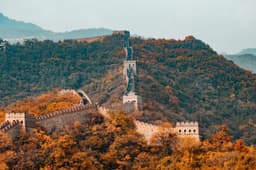
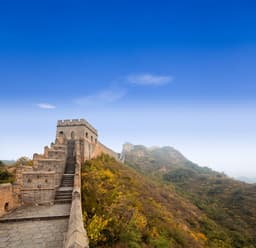
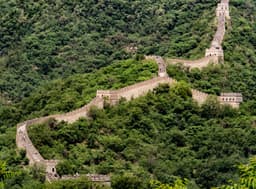
No first trip to Beijing feels complete without the Great Wall. Several restored sections sit within a two to three hour journey of the city, each with a different feel. We compare them in detail further down, and our dedicated Great Wall of China guide covers the history and every major section.
Temple of Heaven
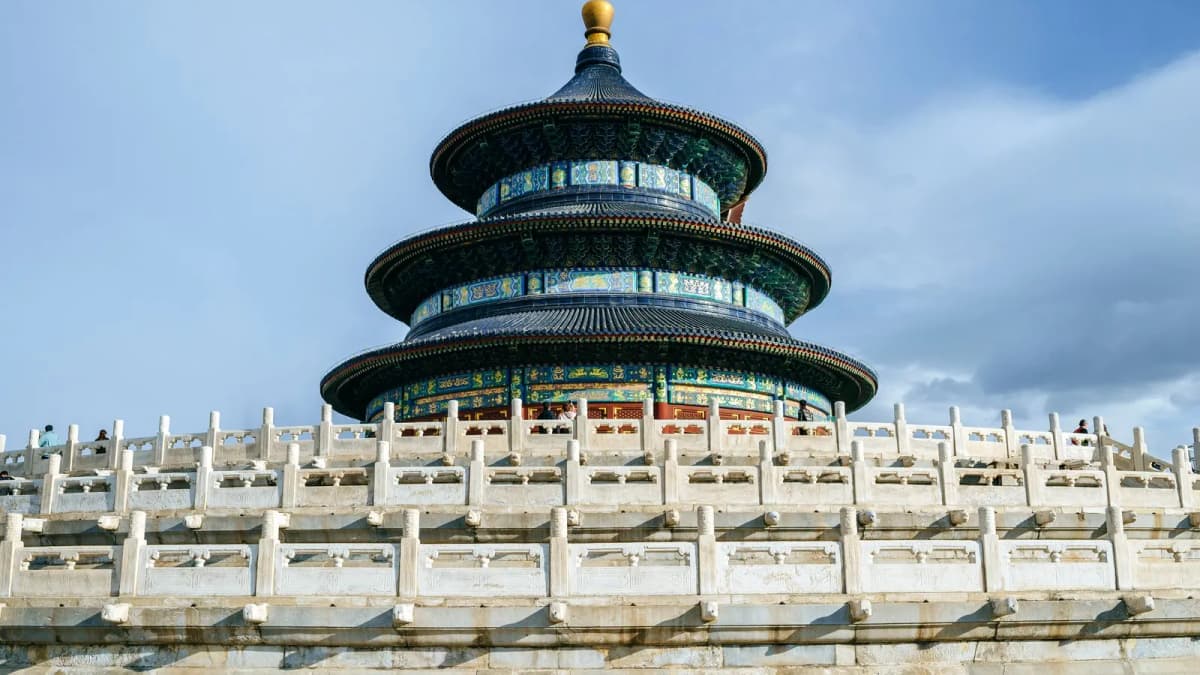
The Temple of Heaven is where Ming and Qing emperors prayed for good harvests. Its round, blue-roofed Hall of Prayer for Good Harvests is one of the best-known buildings in China, and the surrounding park is full of local people doing tai chi, dancing and playing cards in the mornings.
Summer Palace
The Summer Palace is a vast imperial garden in northwest Beijing, built around Kunming Lake and Longevity Hill. It was first built in 1750, rebuilt and renamed in 1886, and inscribed by UNESCO in 1998.
Hutongs and Shichahai
Hutongs are the narrow lanes of old courtyard houses that once made up most of the city. The lanes around Shichahai, Nanluoguxiang and the Bell and Drum Towers are the easiest to explore on foot or by bicycle rickshaw.
Museums and temples
The National Museum of China on the east side of Tiananmen Square covers Chinese history and art and is a good rainy-day choice. The Lama Temple (Yonghegong), which began in 1694 as a prince's residence and became a lamasery in 1744, is an active Tibetan Buddhist temple that many Nepali visitors find familiar and moving.
How do you visit the Forbidden City and Tiananmen Square?
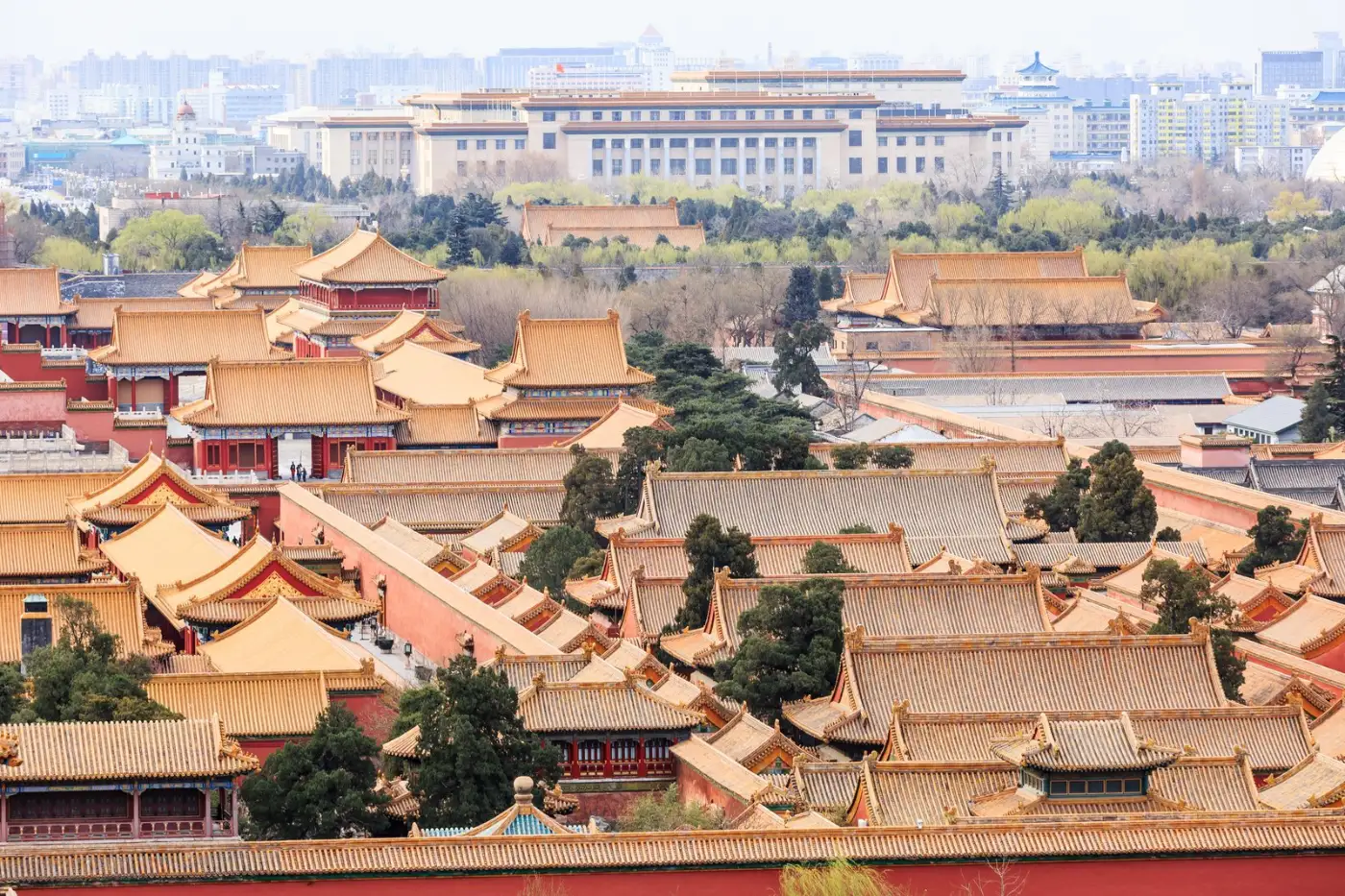
To visit the Forbidden City you must book a timed, real-name ticket online before your visit; same-day tickets are not sold and you enter with the original passport you booked with. Tiananmen Square, directly south of the palace, also uses real-name reservations, so the simplest plan is to book both for the same morning.
Forbidden City booking rules
The Palace Museum is closed on Mondays except on national holidays. Under the rules announced by the museum in 2023, tickets for a given date open at 20:00 Beijing time seven days before the visit, and each person can hold one admission ticket per date. Tickets often sell out quickly for weekends, Chinese school holidays and Golden Week, so set a reminder for the release time.
| Item | Rule (official sources) |
|---|---|
| Same-day tickets | Not available; all tickets must be bought in advance |
| Release time | 20:00 Beijing time, seven days before the visit date |
| Booking channels | Official Palace Museum website (English version available) and the official WeChat mini program |
| ID for foreign visitors | Passport or Foreign Permanent Resident ID Card |
| On the day | Bring the original ID used for booking; foreign passport holders use the manual ticket check channel |
| Entrance | Meridian Gate (south gate); you exit at the north |
| Closed day | Monday, except national holidays |
| Opening | From 8:30; ticket office open 8:30 to 16:10 (April to October) and 8:30 to 15:40 (November to March), per the museum's 2023 notice |
| Extra halls | Treasure Gallery and Gallery of Clocks need separate reservations |
The Beijing municipal 12345 hotline has confirmed that you do not need a Chinese mobile number to book the Forbidden City: foreign visitors can book on the English version of the official website with their passport. Many travellers also use well-known travel platforms that resell entry slots; if you do, make sure the name and passport number on the booking match your passport exactly.
Step-by-step: booking with your passport
- Decide your visit date and check it is not a Monday.
- Seven days before, just before 20:00 Beijing time, open the official Palace Museum booking site in English.
- Register and choose "passport" as the ID type. Type your name and passport number exactly as printed.
- Add each traveller separately; every person needs their own passport-linked ticket, including children.
- Select add-ons such as the Treasure Gallery or Gallery of Clocks if you want them.
- Pay and save the confirmation. Take a screenshot in case your phone loses signal.
- On the day, carry the original passport, not a photocopy or photo, and enter through the Meridian Gate.
Nepali travellers should double-check that the passport used for booking is the one they will carry. If you renewed recently or moved to an e-passport, book with the new number; our Nepal e-passport guide explains the change.
Tiananmen Square
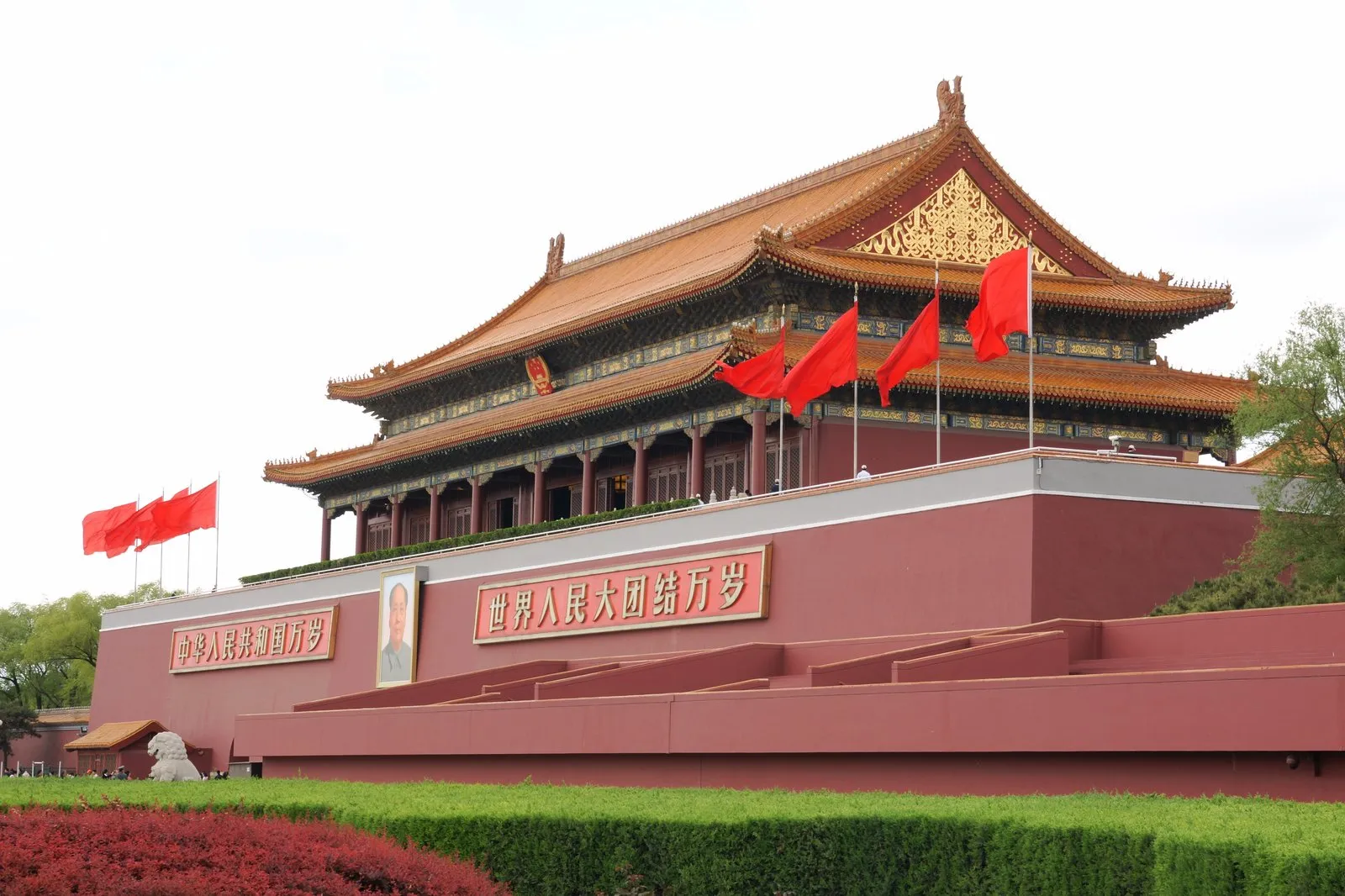
Tiananmen Square is the large public square in front of the Gate of Heavenly Peace and is reached through security checks. According to the Beijing municipal government, visits are by real-name reservation through the Tiananmen Square visit reservation platform or its official WeChat mini program. The 2024 official guidance says you can book one to seven days ahead, with new dates released daily at 12:00 noon. Bring the same ID you booked with.
The flag-raising ceremony at sunrise is popular and needs its own reservation; people without one cannot attend. The square can also close temporarily for state events, as it did for several days in August 2025, so check the official notices close to your date.
| Tiananmen area sight | What it is | Practical note |
|---|---|---|
| Tiananmen Square | Huge public square on the Central Axis | Real-name reservation and security check |
| Gate of Heavenly Peace (Tiananmen) | Gate with the famous portrait, north side of the square | Leads to the Forbidden City approach |
| National Museum of China | National history and art museum, east side | Book 7 days ahead from 17:00; closed Mondays |
| Qianmen and Zhengyangmen | Old gate towers and shopping street to the south | Good for an evening walk and snacks |
| Jingshan Park | Hill park north of the palace | No reservation needed; best light late afternoon |
Tips for a smoother palace day
- Arrive early. Security queues at the square and the palace build up through the morning.
- Travel light. Large bags slow you down at security. Carry water, a hat and comfortable shoes; you will walk several kilometres.
- Do not stop at the central halls. Most visitors walk straight up the middle. The side palaces to the east and west are quieter and often more interesting.
- Use the north exit. You cannot re-enter, so finish what you want to see before leaving.
- Rest at Jingshan. The climb is short and the view helps you understand the palace you just walked through.

Which Great Wall section should you choose?
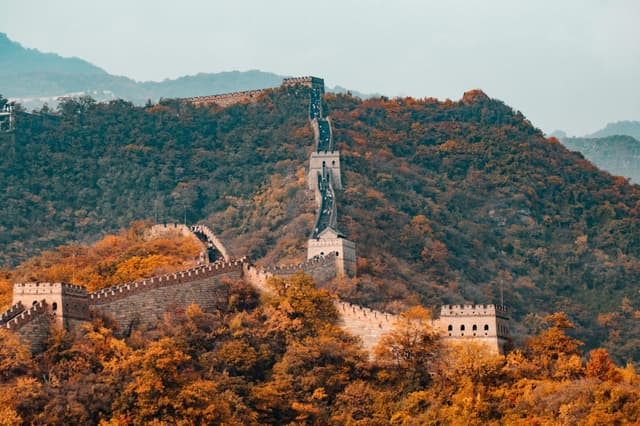
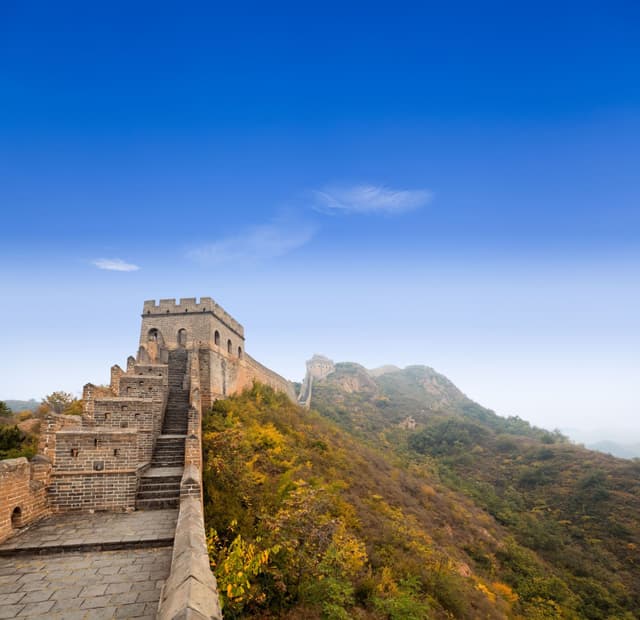
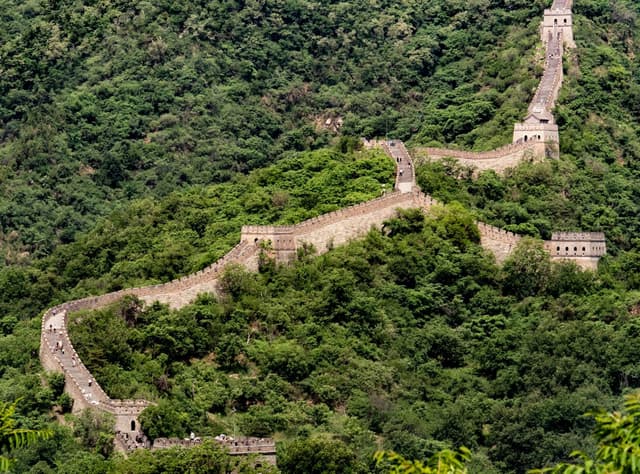
For most first-time visitors, Mutianyu is the best Great Wall section from Beijing: it is fully restored, green and less crowded than Badaling, and it has a cable car and a toboggan ride. Badaling is the quickest to reach thanks to a high-speed train, while Jinshanling is the pick for fit walkers who want wilder views.
All three sections are Ming dynasty walls and all require walking up and down steep steps, so wear proper shoes. For the wall's history and the sections further from Beijing, see our in-depth Great Wall guide. If you are travelling with grandparents or small children, plan on using the cable car rather than climbing from the base.
| Feature | Mutianyu | Badaling | Jinshanling |
|---|---|---|---|
| Location | Huairou District, Beijing | Yanqing District, Beijing | Luanping County, Hebei Province |
| Approximate distance from central Beijing | About 73 km | About 60 to 70 km | About 130 km |
| Condition | Restored, watchtowers 1 to 20 open by day | Restored, most visited section | Partly restored, about 10.5 km long with 67 watchtowers |
| Crowds | Moderate | Heavy on weekends and holidays | Usually light |
| Easiest transport | Tourist bus or private car | High-speed train | Private car or tour |
| Rides | Cable car, ropeway, toboggan | Cable cars | Check on-site options |
| Fitness needed | Easy to moderate with cable car | Easy to moderate | Moderate to hard |
| Best for | Families, couples, first-timers | Short on time, public transport users | Hikers, photographers |
| Booking | Real-name, up to 15 days ahead | Real-name; daily visitor cap | Check current rules before you go |
Mutianyu: the all-round favourite
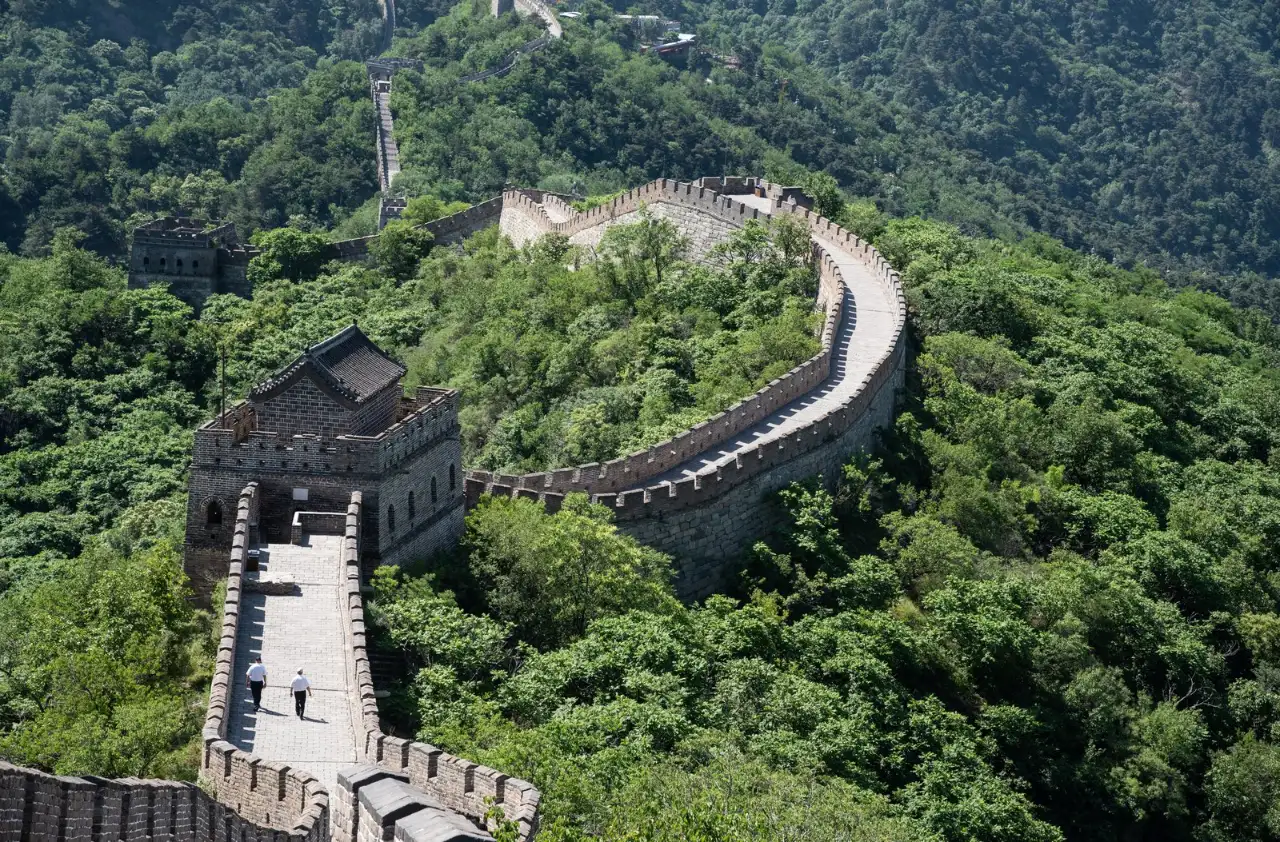
Mutianyu suits most visitors because it balances scenery, comfort and crowd levels. The official scenic area site says real-name reservation is required, tickets can be booked up to 15 days ahead, and each passport is limited to one ticket per day. Foreign passport holders do not need to exchange tickets; they show the original passport used for the reservation at the gate.
The cable car, the ropeway and the toboggan slide are run by separate companies, so their tickets are not interchangeable, and a round-trip cable car ticket means returning the same way. A shuttle bus runs from the ticket area to the base of the wall, about 3 km, and needs its own ticket. In peak season (16 March to 15 November) the cable car runs 7:30 to 18:00 on weekdays and 7:30 to 18:30 at weekends; in the off season it runs 8:00 to 17:30. Parts of the site can close in thunderstorms, snow, fog or strong wind.
Badaling: fastest by train
Badaling is the most famous and most visited section, about 60 km northwest of downtown in Yanqing District. It introduced real-name ticketing and a daily cap of 65,000 visitors in June 2019. The big advantage is the high-speed railway: trains from Beijing North and Qinghe stations reach Badaling Great Wall station in roughly 20 to 30 minutes. Our China high-speed rail guide explains how to book train tickets with a passport.
Badaling is the section most likely to be crowded, especially during Golden Week and summer weekends. Go early on a weekday if you can.
Jinshanling: for walkers
Jinshanling lies about 130 km from Beijing in Hebei Province, bordering Beijing's Miyun District. It runs about 10.5 km from Gubeikou in the west to Wangjinglou in the east, with 5 passes, 67 watchtowers and 3 beacon towers. Its towers vary in shape and the ridgeline views are excellent for photography. Getting there by public transport means a bus from Wangjing West towards Luanping and a transfer, so most visitors go by private car or a small-group tour and spend a full day.
Getting to the Great Wall from Beijing
| Section | Option | How it works | Approximate time one way |
|---|---|---|---|
| Mutianyu | Tourist bus lines | Several scheduled lines leave from central points such as Qianmen, Dongzhimen and Shaoyaoju in the morning and return in the afternoon | 1.5 to 2 hours |
| Mutianyu | Public bus | Bus 916 from Dongzhimen to Huairou Beidajie, then a local H-route bus such as H23 | About 3 hours |
| Mutianyu | Private car | Jingcheng Expressway, exit 13 (Beitai Road) | 1.5 to 2 hours |
| Badaling | High-speed train | From Beijing North or Qinghe station to Badaling Great Wall station | 20 to 30 minutes by train |
| Badaling | Public bus 877 | From Beitucheng bus station; last return in late afternoon | 1.5 to 2.5 hours |
| Jinshanling | Bus and transfer | Subway Line 13 to Wangjing West, bus towards Luanping, then local transfer | Half a day of travel |
| Jinshanling | Private car or tour | Door to door from your hotel | About 2.5 to 3 hours |
Road times depend heavily on traffic, and return traffic on Sunday afternoons and holiday evenings can be slow. If you are combining the Great Wall with Beijing in a wider China trip, a private transfer often saves the most time.
Is the Temple of Heaven worth visiting?
Yes, the Temple of Heaven is worth visiting, especially in the early morning when local people fill the park with tai chi, dancing, singing and card games. It combines one of China's most famous buildings with a genuine slice of everyday Beijing life, and it is easy to reach by subway.
The Temple of Heaven was built in the Ming dynasty, in the same era as the Forbidden City, and was where emperors performed ceremonies to pray for good harvests. It became a UNESCO World Heritage Site in 1998. The main structures are laid out along a north to south line, so a simple walk takes you through all the highlights.
What to see at the Temple of Heaven
- Hall of Prayer for Good Harvests: the round, triple-roofed blue hall that appears on postcards and guidebook covers.
- Echo Wall: the circular wall around the Imperial Vault of Heaven, famous for carrying whispers.
- Circular Mound Altar: an open, three-tier marble altar where winter solstice rites took place.
- Danbi Bridge: the raised walkway that links the southern altars to the hall.
- Long Corridor and park: where you see local people gathering most mornings.
Hours and booking
The Temple of Heaven park and its inner halls (the official term is "scenic spots") keep different hours, and only the halls close on Mondays.
| Area | April to October | November to March | Monday |
|---|---|---|---|
| Park gates | 6:00 to 22:00, last entry 21:00 | 6:30 to 22:00, last entry 21:00 | Open |
| Inner halls and altars | 8:00 to 18:00, last entry 17:30 | 8:00 to 17:00, last entry 16:30 | Closed, except statutory holidays |
Beijing's municipal parks, including the Temple of Heaven and the Summer Palace, no longer require a visit reservation, but booking a ticket in advance saves time. The official answer from Beijing's 12345 hotline says the park authority sells tickets through the "Changyou Gongyuan" WeChat account and website one to seven days ahead, which needs a Chinese mobile number for verification. Without one, you can buy at the comprehensive service window at the gate with your passport; staff place the order for you, and cash in Chinese yuan and international cards such as Visa and Mastercard are accepted there. The same hotline answer notes that the park has not authorised any third-party ticket platform.
How long to spend and how to get there
Allow two to three hours. The East Gate is the most convenient entry: Tiantandongmen station on Subway Line 5 is right outside. Arrive by 8:00 if you want to watch the morning exercise groups and still reach the halls as they open. Combining it with a hutong walk in the afternoon makes a relaxed, varied day.
What is the Summer Palace like?
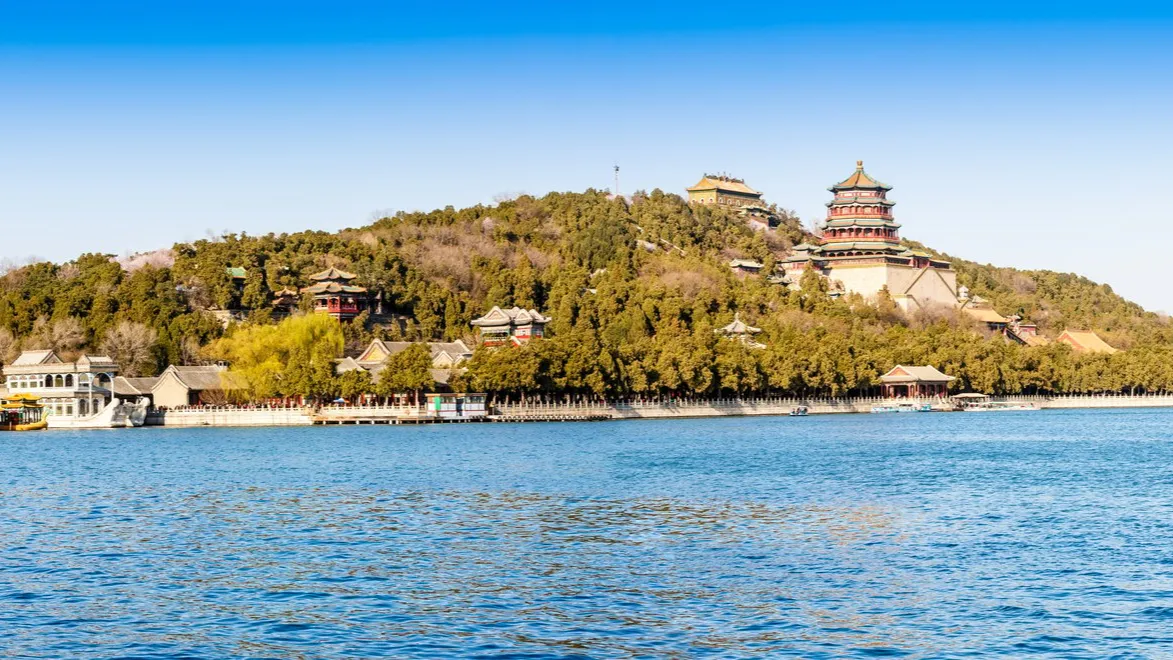
The Summer Palace is a huge imperial garden of lakes, bridges, pavilions and covered walkways, and it feels very different from the stone courtyards of the Forbidden City. Most of it is water: Kunming Lake fills the south of the park, and Longevity Hill rises on the north shore with temples and towers stepping up its slope.
The Summer Palace began life in 1750 as Qingyi Garden. It was rebuilt by the Qing government and renamed the Summer Palace in 1886, became a national protected site in 1961 and was added to the UNESCO World Heritage List in 1998. It sits at 19 Xinjian Gongmen Road in Haidian District, in the northwest of the city, roughly 15 km from Tiananmen Square. Subway Line 4 to Beigongmen station brings you to the north side of the park.
Highlights of the Summer Palace
| Highlight | Where | Why go |
|---|---|---|
| Tower of Buddhist Incense | Longevity Hill | The palace's signature tower, with views across the lake |
| Hall of Dispelling Clouds | Foot of Longevity Hill | Grand ceremonial hall on the central axis of the hill |
| Sea of Wisdom Temple | Top of Longevity Hill | Glazed tile temple decorated with small Buddha figures |
| Long Corridor | North shore of Kunming Lake | Covered walkway painted with thousands of scenes |
| South Lake Island and Seventeen-Arch Bridge | Kunming Lake | Classic photo spot, beautiful at sunset |
| West Causeway | West side of the lake | Quiet tree-lined walk away from the crowds |
| Suzhou Street | Back Lake, north side | Recreated canal-side shopping street |
Hours and booking
| Area | April to October | November to March |
|---|---|---|
| Entrance gates | 6:00 to 19:00; park closes 20:00 | 6:30 to 18:00; park closes 19:00 |
| Ticketed halls and attractions | Entry 8:00 to 17:30; close 18:00 | Entry 8:30 to 16:30; close 17:00; closed Mondays except major holidays |
Tickets can be booked one to seven days ahead through the park's official WeChat account, and you bring your passport on the day. Beijing's 12345 hotline notes that online booking currently needs a Chinese mainland phone number, so most foreign visitors buy at the entrance service window with their passport and staff help. Allow three to four hours. In summer, boats run across Kunming Lake; in winter, parts of the lake freeze and the hillside temples look striking under snow.
Many first-time visitors pair the Summer Palace with the nearby Yuanmingyuan Ruins Park, the remains of the Old Summer Palace. Both are in the same part of Haidian District, so they fit easily into a single day.
Where can you explore hutongs?
The easiest place to explore Beijing's hutongs is the area around Shichahai lakes, Nanluoguxiang and the Bell and Drum Towers, just north of the Forbidden City. These lanes still have courtyard homes, small shops, cafes and family restaurants, and they are lively in the late afternoon and evening.
A hutong is a narrow lane lined with traditional siheyuan courtyard houses. For centuries most of Beijing lived this way, and the lanes carry names that recall old trades, temples and officials. Many have been rebuilt, but walking them still gives a feel for the old city that the big monuments do not.
| Hutong area | What you find | Best time | Good for |
|---|---|---|---|
| Shichahai (Houhai, Qianhai, Xihai) | Lakeside lanes, rickshaw tours, bars and cafes | Late afternoon and evening | Couples, first-timers |
| Nanluoguxiang | Busy lane of snack shops and boutiques with quieter side lanes | Weekday mornings | Street food, souvenirs |
| Yandai Xiejie | Short, crooked old shopping lane near Houhai | Afternoon | Photos, small shops |
| Bell and Drum Towers | Two historic towers at the north end of the Central Axis | Daytime | History, views |
| Wudaoying Hutong | Quieter lane near the Lama Temple with cafes | Afternoon | Pairing with Yonghegong |
| Dashilar and Qianmen | Historic shopping area south of Tiananmen with old shop signs | Evening | Families, food lovers |
Ways to see the hutongs
- On foot: the best way to notice small details such as carved doorways and courtyard gates.
- Bicycle rickshaw: popular around Shichahai and good for older family members. Agree the route and the price clearly before you set off.
- By bicycle: shared bikes are everywhere, but they are usually unlocked with a payment app.
- With a guide: a local guide can take you into courtyards and explain the history of the lanes.
Prince Gong's Mansion
Near Shichahai, Prince Gong's Mansion at No. 17 Qianhai West Street is the best-preserved Qing dynasty prince's residence in the city, with formal halls and a large garden. Its published hours are Tuesday to Sunday, 8:30 to 16:30, so treat Monday as closed and check the official booking page before you go.
Respect residents while you walk. People still live in many courtyards, so do not enter open gates uninvited, keep voices down in the evening and ask before photographing people. Our list of dos and don'ts in China covers more etiquette points.
What to eat while you are there
Beijing's most famous dish is Peking roast duck, carved at the table and wrapped in thin pancakes with spring onion and sweet bean sauce. Other local favourites include zhajiangmian (noodles with fermented soybean paste), jiaozi dumplings, jianbing breakfast crepes and lamb skewers. Vegetarians can find tofu, vegetable dumplings and noodle dishes, though it helps to have the words for "no meat" saved on your phone. For more ideas see what to eat in China, and if you are curious about the more unusual snacks on sale in tourist lanes, read our guide to weird Chinese food.
What should you know about booking and payments?
Beijing runs on two things visitors must prepare for: real-name bookings linked to your passport, and mobile payments. Book the major sights online before you travel where you can, carry your original passport every day, and set up a payment method that works in China while keeping some Chinese yuan in cash as a backup.
Real-name booking: the general rule
Most major attractions in Beijing tie each ticket to an identity document. For foreign visitors that document is the passport. The name and number must match exactly, and you show the original passport at the gate. Photocopies and phone photos are generally not accepted.
| Sight | Booking window | Main channel | Without a Chinese phone number |
|---|---|---|---|
| Forbidden City | Opens 20:00, seven days ahead | Official website (English) or WeChat mini program | Possible on the English website with a passport |
| Tiananmen Square | One to seven days ahead, dates released at 12:00 | Official reservation platform or WeChat mini program | Check current options before travel |
| National Museum of China | Opens 17:00, seven days ahead | Official website, app or WeChat mini program | Check current options before travel |
| Mutianyu Great Wall | Up to 15 days ahead | Official scenic area ticketing | Show passport at the designated gate |
| Badaling Great Wall | Advance online booking | Official ticketing | Check current options before travel |
| Temple of Heaven | One to seven days ahead (optional) | Changyou Gongyuan WeChat account or website | Buy at the gate service window with passport |
| Summer Palace | One to seven days ahead (optional) | Park's official WeChat account | Buy at the gate service window with passport |
The Beijing municipal government also runs an English "Visit Beijing" ticketing page that lists major attractions, museums and parks, filters them by whether a reservation is needed, and links to each site's own booking page. It is a useful starting point if you are unsure which sights need booking. For entry, connectivity and money basics across the whole country, keep our China travel guide handy.
Paying in Beijing
Mobile payment is the normal way to pay in Beijing, but visitors have more options than before. According to China's official payment guide for overseas visitors, foreign users can link international Visa and Mastercard cards to Alipay and WeChat Pay, bank cards are accepted at three-star and higher hotels, 4A and 5A attractions and other designated tourism sites, and ATMs that show your card network's logo let you withdraw yuan. China has also been working to expand cash acceptance in transport, shopping and dining.
| Method | Where it works best | Things to know |
|---|---|---|
| Alipay or WeChat Pay with a linked international card | Almost everywhere: shops, restaurants, taxis, metro, street stalls | Set up and test before you leave home; small international card fees may apply on some payments |
| International Visa or Mastercard | Larger hotels, major attractions, big stores | Not accepted at many small shops and food stalls |
| UnionPay card | Card terminals across China | Widely accepted where cards are taken |
| Cash (Chinese yuan) | Ticket windows, taxis, markets, many restaurants | Keep small notes; some small vendors may not have change |
| ATM withdrawal | Bank ATMs showing your card network logo | Tell your bank before travelling so the card is not blocked |
For Nepali travellers, the practical point is to sort out foreign currency and an international card before leaving Kathmandu. Our explainer on the foreign currency limit from Nepal covers how much you can carry. Prices in this guide are deliberately left out; for an idea of overall budgets, see is China expensive.
Apps that help
Beyond payment apps, a translation app with offline Chinese, a map app that works well in China and a ride-hailing app make Beijing much easier. Many global services work differently in mainland China, so test everything before you fly. Our round-up of the best travel apps lists useful options, and the China travel tips guide covers SIM cards and connectivity.
Getting to Beijing from Kathmandu
Beijing has two international airports: Beijing Capital International Airport (PEK) in the northeast and Beijing Daxing International Airport (PKX) in the south. Travellers from Kathmandu usually connect through a Chinese hub such as Chengdu, Guangzhou or Kunming, or through another Asian hub; schedules change by season, so check current routes when you plan. If it is your first long-haul journey, our first-time flight tips explain transfers and check-in. Our guide to direct flights from Kathmandu shows which routes leave Tribhuvan International Airport without a stop.
Entry requirements for China depend on your nationality, so check the official entry rules for your passport before you book.
Staying safe and comfortable
Beijing is generally considered a safe city for visitors, with a heavy security presence around major sights. The main risks are everyday ones: tea-house and art-gallery invitations from friendly strangers, unlicensed taxis at stations, and long walks in heat or cold. Our guide on whether it is safe to travel to China goes into detail.
When is the best time to visit Beijing?
The best time to visit Beijing is spring, from April to May, and autumn, from September to October, when days are mild, skies are often clear and walking between sights is comfortable. Summer is hot and humid with most of the year's rain, and winter is cold and dry but quiet and bright.
Air quality in Beijing has improved sharply. Official figures for 2025 show an annual average PM2.5 of 27.0 micrograms per cubic metre, the first year below 30, with 311 days of good or moderate air quality and only one heavily polluted day. Spring can still bring windy days and occasional dust blowing in from the north, and winter heating season can mean hazier days, so a quick look at the daily air quality index each morning is a sensible habit.
| Month | Weather feel | Crowds | Verdict |
|---|---|---|---|
| January | Very cold and dry, often sunny | Low, then high around Spring Festival | Good for budget and snow scenes |
| February | Cold, dry | High during Spring Festival week | Check holiday dates first |
| March | Cool, windy, possible dust | Moderate | Fair |
| April | Mild, blossom season | Moderate to high | Excellent |
| May | Warm and pleasant; Labour Day holiday early in the month | High in holiday week | Excellent outside the holiday |
| June | Hot, getting humid | Moderate | Good |
| July | Hot, humid, rainy | High with summer holidays | Fair; plan for heat |
| August | Hot, humid, rainy | High with summer holidays | Fair; go early in the day |
| September | Warm days, cooler nights, clear skies | Moderate | Excellent |
| October | Crisp, autumn colours | Very high 1 to 7 October (Golden Week) | Excellent after Golden Week |
| November | Cold, autumn ends | Low | Good, shorter opening hours |
| December | Very cold, dry | Low | Good for quiet sightseeing |
Timing tips for Nepali travellers
Dashain and Tihar, the main holiday window for families in Nepal, usually fall in late September to November, which matches Beijing's best autumn weather. The catch is that China's National Day Golden Week, 1 to 7 October, is the busiest domestic travel week of the year, and tickets for the Forbidden City and the Great Wall can sell out. If your Dashain leave overlaps Golden Week, start your Beijing days after 7 October or book the palace the moment tickets open. Our guide to Dashain and Tihar holidays abroad has more festival-season planning ideas, and the best time to visit China compares seasons across the country.
Who Beijing suits
- Families: Mutianyu's cable car and toboggan, the Summer Palace boats and the Olympic Park area are easy wins with children. Book every family member's passport separately.
- Couples and honeymooners: sunset at Jingshan Park, a rickshaw ride around Houhai and a quiet day at Jinshanling make a romantic mix.
- Seniors: choose Mutianyu with the cable car, use a private car for long transfers and build in rest after the Forbidden City walk.
- Solo travellers: the subway is simple to use, and hutong walking tours are a good way to meet other travellers.
- Diaspora visitors: if you are flying in from the Gulf, Malaysia or elsewhere and meeting family from Nepal, Beijing is a practical meeting point with two large airports. Our list of the best travel destinations for Nepalese travellers compares it with other options.
How many days do you need?
Three to four full days in Beijing is enough for a first visit: one for the Forbidden City and Tiananmen area, one for the Great Wall, one for the Temple of Heaven and hutongs, and one for the Summer Palace and a museum. With five days you can add a second Great Wall section or a slower pace. Many travellers then continue by fast train to another city; our guide to China's top cities helps you choose the next stop, and nature lovers often add the Rainbow Mountains of Zhangye or other highlights across China. For overall costs of a China holiday from Nepal, see our China trip cost guide, and before you fly, run through our pre-trip checklist.
If you would rather see Beijing as part of a planned multi-city route, our China tour packages page shows how the capital fits with Shanghai, Xi'an and other cities.
Frequently asked questions
What is Beijing famous for?
Beijing is famous for its imperial heritage: the Forbidden City, Tiananmen Square, the Temple of Heaven and the Summer Palace, plus nearby sections of the Great Wall. Its 7.8 km Central Axis became a UNESCO World Heritage Site in 2024. Beijing is also known for hutong lanes and Peking roast duck.
Which part of the Great Wall is best from Beijing?
Mutianyu is the best Great Wall section from Beijing for most first-time visitors because it is restored, scenic and less crowded than Badaling, with a cable car and toboggan. Badaling is fastest to reach by high-speed train. Jinshanling, about 130 km away in Hebei, suits keen hikers and photographers.
Do I need to book the Forbidden City in advance?
Yes. The Forbidden City in Beijing does not sell same-day tickets, so you must book online in advance with your passport. Tickets open at 20:00 Beijing time seven days before your visit, and the palace is closed on Mondays except national holidays. Bring the original passport you booked with.
Is the Temple of Heaven worth it?
Yes, the Temple of Heaven in Beijing is worth it, especially early in the morning when locals practise tai chi and dance in the park. The Hall of Prayer for Good Harvests is one of China's most famous buildings. Allow two to three hours, and remember the inner halls close on Mondays.
How far is the Summer Palace from the city?
The Summer Palace is in Haidian District, northwest Beijing, roughly 15 km from Tiananmen Square. Subway Line 4 to Beigongmen station is the easiest way to get there. Allow three to four hours to see Longevity Hill, the Long Corridor and Kunming Lake properly.
What is a hutong?
A hutong is a narrow lane in old Beijing lined with traditional courtyard houses called siheyuan. The easiest hutongs to explore are around Shichahai, Nanluoguxiang and the Bell and Drum Towers. People still live in many of them, so walk quietly and respect private courtyards.
When is the best time to visit Beijing?
The best time to visit Beijing is April to May and September to October, when the weather is mild and skies are often clear. Avoid 1 to 7 October if you dislike crowds, because China's National Day Golden Week fills the major sights. Summer is hot and rainy; winter is cold but quiet.
Can I pay with cash in Beijing?
Yes, you can pay with Chinese yuan cash in Beijing, and China has been expanding cash acceptance in transport, shops and restaurants. Mobile payment is still the norm, so most visitors also link an international Visa or Mastercard to Alipay or WeChat Pay. Keep small notes, as some vendors may lack change.
How many days do you need in Beijing?
Three to four full days is enough for a first visit to Beijing. That covers the Forbidden City and Tiananmen, one Great Wall section, the Temple of Heaven with a hutong walk, and the Summer Palace. Five days lets you add a second Great Wall section or a museum at a slower pace.
Do I need my passport every day in Beijing?
Yes, carry your original passport every day in Beijing. Most major sights, including the Forbidden City, Tiananmen Square and the Great Wall, check the passport you used for real-name booking at the gate. Hotels and train stations also ask for it, and photocopies are generally not accepted.
Beijing ma k k herne?
Beijing ma pahilo patak jane le Forbidden City ra Tiananmen Square, Mutianyu wa Badaling ko Great Wall, Temple of Heaven, Summer Palace ra Shichahai ko hutong galli herna sakchhan. Dherai thau ma passport bata advance booking garnu parchha, ani Forbidden City Sombar band hunchha.
'/%3E%3C/svg%3E)