


















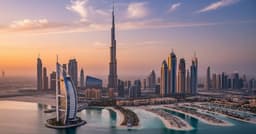






















Short answer: The best things to do in Shanghai are walking the Bund at dusk, looking back across the Huangpu River at the Pudong skyline, going up Shanghai Tower to its 118th floor observatory at 546 metres, exploring Yu Garden and the old town lanes around it, spending a full day at Shanghai Disneyland, eating soup dumplings, and taking a half-day trip to the canal town of Zhujiajiao. Three to four days covers the highlights comfortably, and spring (April to May) and autumn (late September to November) are the most comfortable months.
Shanghai, one of the most popular places to visit in China, is the country's biggest and most outward-looking city: a place where 1920s banks face a forest of glass towers, where a Ming dynasty garden sits five minutes from luxury malls, and where a magnetic levitation train still runs to the airport. It works well as a first taste of China, as a city break on its own, or as the arrival or departure point for a longer trip that also takes in Beijing, Suzhou and Hangzhou. This guide is organised by what you will actually do on the ground: neighbourhood by neighbourhood, view by view, with practical notes on booking, transport and food. For the wider picture of the country, start with our complete China travel guide, and see how Shanghai compares with other cities in our round-up of the best cities in China to visit.
Checked: 9 Oct 2026. Opening hours, booking rules and transport times below were checked against official and current sources on this date (Shanghai Municipal Government English portal, Shanghai Disney Resort announcements, Shanghai Museum and current visitor guides). Hours change for public holidays and maintenance, and Shanghai Disneyland, Shanghai Tower and most big attractions now use real-name tickets that must match the physical passport you carry. Always confirm on the official site or app a day or two before you go, and check the official entry rules for your passport before booking flights.
What are the best things to do in Shanghai?
The best things to do in Shanghai fall into five groups: the Bund and Pudong skyline, the old town around Yu Garden, the leafy former French Concession, big ticket attractions such as Shanghai Tower and Shanghai Disneyland, and easy escapes to water towns like Zhujiajiao. Most first-time visitors spend one day on the Bund, Nanjing Road and Pudong, one day in the old town and former French Concession, one day at Disneyland, and a half day or full day on a water town or Suzhou.
Shanghai is huge, roughly the size of a small country in population, so the smartest way to plan is by district. The Huangpu River splits the city into Puxi (west of the river, the older city with the Bund, Nanjing Road, Yu Garden and the former French Concession) and Pudong (east of the river, with Lujiazui's skyscrapers, the airport, and Shanghai Disneyland far to the southeast). The metro links nearly everything, and the table below groups the main sights by area so you can cluster them and cut travel time.
| District | Top things to do | Nearest metro | Time to allow | Best for |
|---|---|---|---|---|
| Huangpu (the Bund) | Bund waterfront promenade, colonial era buildings, Huangpu River cruise, Waibaidu Bridge | East Nanjing Road (Lines 2 and 10) | 2 to 3 hours, ideally at sunset | Everyone, photographers, couples |
| Huangpu (Nanjing Road) | Nanjing Road pedestrian street, department stores, neon at night | East Nanjing Road, People's Square (Lines 1, 2, 8) | 1 to 2 hours | Shoppers, first-timers |
| Huangpu (People's Square) | Shanghai Museum (People's Square site), People's Park, Shanghai Grand Theatre | People's Square (Lines 1, 2, 8) | 2 to 3 hours | History and art lovers |
| Huangpu (old town) | Yu Garden, Yuyuan Bazaar, Huxinting teahouse, zigzag bridge, City God Temple area | Yuyuan Garden (Lines 10 and 14) | Half a day | Culture, families, food |
| Pudong (Lujiazui) | Shanghai Tower, Shanghai World Financial Center, Jin Mao Tower, Oriental Pearl Tower, riverside walk | Lujiazui (Lines 2 and 14) | Half a day | Skyline views, families |
| Pudong (Century Avenue) | Shanghai Museum East, Century Park | Shanghai Science and Technology Museum (Line 2) | 2 to 4 hours | Museums, rainy days |
| Xuhui and Jing'an (former French Concession) | Wukang Road, Anfu Road, plane tree lined lanes, cafes, Tianzifang, Xintiandi | Jiaotong University, Shanghai Library, Xintiandi | Half a day | Couples, walkers, cafe lovers |
| Jing'an | Jing'an Temple, Jade Buddha Temple, West Nanjing Road | Jing'an Temple (Lines 2, 7, 14) | 2 to 3 hours | Temples, vegetarian food |
| Xuhui (West Bund) | Riverside art museums, cycling and walking paths | Yunjin Road (Line 11) | Half a day | Art, slow travellers |
| Pudong (Shanghai International Resort) | Shanghai Disneyland, Disneytown | Disney Resort (Line 11) | Full day | Families, couples, Disney fans |
| Qingpu | Zhujiajiao water town, Fangsheng Bridge, canal boats | Zhujiajiao (Line 17) | Half a day to a full day | Photographers, culture |
If you are planning a wider trip, our guide to the top things to do in China shows how Shanghai fits alongside the Great Wall, Xi'an and the karst landscapes of the south.
Walk the Bund and ride a Huangpu River cruise
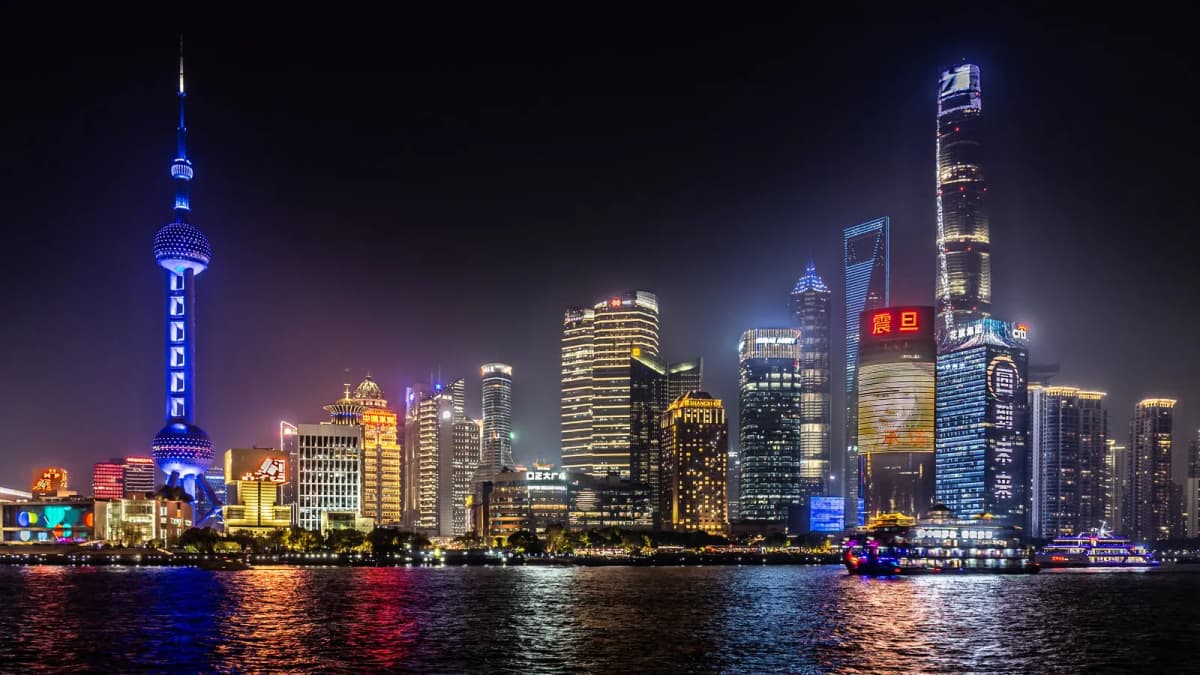
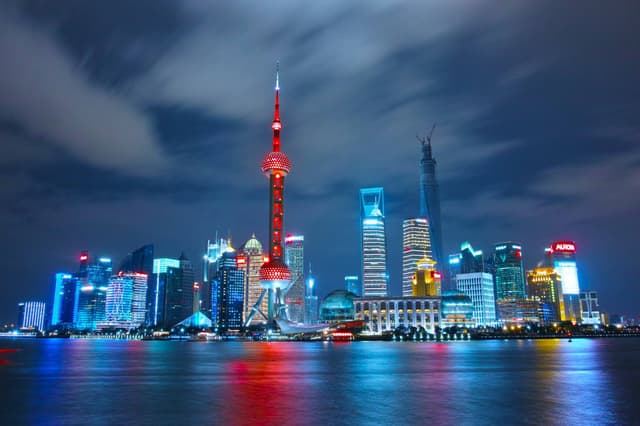
The Bund (Waitan) is the single most iconic thing to do in Shanghai. It is a raised riverside promenade on Zhongshan East 1st Road lined with early twentieth century banks, trading houses and hotels in neoclassical, art deco and Gothic revival styles. Directly across the river rise the towers of Lujiazui. Come late afternoon, watch the light fade, and stay for the buildings lighting up on both banks. A Huangpu River cruise from one of the piers near the Bund adds a water level view of both sides.
Explore Yu Garden and the old town
Yu Garden is a classical Jiangnan garden begun in 1559 during the Ming dynasty. Inside are rockeries, ponds, carved halls and covered walkways; outside is the busy Yuyuan Bazaar with its upturned eaves, snack stalls and souvenir shops. Details are in the Yu Garden section below.
Go up Shanghai Tower
Shanghai Tower is 632 metres tall, the tallest building in China, and its Top of Shanghai Observatory on the 118th floor sits 546 metres above the ground. The ride up takes under a minute. See the section on whether Shanghai Tower is worth visiting for how it compares with the other decks.
Spend a day at Shanghai Disneyland
Shanghai Disneyland opened on 16 June 2016 and is the only Disney park in mainland China. It is best known for its huge Enchanted Storybook Castle, TRON Lightcycle Power Run and the Zootopia themed land. It needs a full day and some planning, covered in its own section below.
Wander the former French Concession
The former French Concession is the Shanghai most residents love: quiet streets shaded by plane trees, 1920s and 1930s villas, small boutiques and a strong cafe culture. Wukang Road, with the wedge shaped Wukang Mansion at its northern end, is the best known stretch, and Anfu Road and Fuxing Road are pleasant for an unhurried walk. Tianzifang, a maze of converted shikumen lane houses, and Xintiandi, a polished restaurant and shopping quarter built into restored lane houses, are both nearby.
See the Shanghai Museum
The Shanghai Museum now has two sites: the original museum on People's Square and Shanghai Museum East on Century Avenue in Pudong. Shanghai Museum East has 13 permanent galleries covering bronzes, sculpture, jade, seals, calligraphy, painting, ceramics, coins and archaeology. Official guidance says individual visitors do not need a reservation at Shanghai Museum East; bring your passport for the security check. It opens 10:00 to 18:00 (last admission 17:00) and is closed on Tuesdays except public holidays.
Visit Jade Buddha Temple and Jing'an Temple
Two working Buddhist temples give a calm break from the city. Jade Buddha Temple, in Putuo near the Jing'an border, is known for its seated and reclining white jade Buddha statues, which came from Myanmar, and its vegetarian noodle restaurant. Jing'an Temple, with its gilded roofs, stands in the middle of the West Nanjing Road shopping district, a striking contrast with the towers around it. Many Nepali visitors, used to temple etiquette at home, find these the most relaxing stops in Shanghai: dress modestly, keep voices low and ask before photographing worshippers. Our list of dos and don'ts in China covers temple manners and other local customs.
Take a day trip to a water town
Zhujiajiao, in Shanghai's Qingpu District, is the easiest canal town to reach by metro, and Suzhou's classical gardens are around 25 minutes away by the fastest high-speed trains. Options are compared in the water towns section below.
How do you see the Bund and Pudong skyline?
The best way to see the Bund and Pudong skyline is from three angles: on foot along the Bund promenade at sunset, from the water on a Huangpu River cruise after dark, and from above on one of the Lujiazui observation decks. If you only have one evening, walk the Bund from Waibaidu Bridge south towards the Shiliupu area as the lights come on, then take the metro or the river ferry across to Pudong for the reverse view.
The Bund faces east across the Huangpu River, which means the Pudong towers catch the late afternoon sun and glow at dusk, while the Bund's own historic facades are floodlit after dark. Lighting schedules vary by season and are extended for holidays and big events, so treat the first hour after sunset as the reliable window rather than relying on a fixed switch-off time. Weekends and the National Day Golden Week in early October bring very large crowds; weekday evenings are noticeably calmer.
| Viewpoint | Where | Height or level | What you see | Best time | Booking |
|---|---|---|---|---|---|
| Bund promenade | Zhongshan East 1st Road, Puxi | Raised riverside walkway | Classic full Pudong skyline across the river | Sunset and blue hour | Free, no booking |
| Lujiazui riverside walk | Pudong bank opposite the Bund | River level | The historic Bund facades lit up at night | After dark | Free, no booking |
| Huangpu River cruise | Piers on both banks, including near the Bund | Water level | Both skylines in one loop | Evening | Ticket needed, timed departures |
| Top of Shanghai Observatory | Shanghai Tower, 118th floor | 546 m | The whole city, including the tops of neighbouring towers | Clear afternoon into sunset | Real-name ticket, passport at entry |
| Shanghai World Financial Center Sky Walk | SWFC, 100th floor | 474 m | Glass floor panels, close view of Shanghai Tower and Jin Mao | Late afternoon to evening | Ticket needed |
| Jin Mao Tower observation deck | Jin Mao Tower, 88th floor | About 340 m | Looks down into the hotel atrium and across to the Bund | Daytime | Ticket needed |
| Oriental Pearl Tower | Lujiazui, next to the river | Main sphere about 263 m, glass floor 259 m, top capsule 351 m | The Bund close up and the Lujiazui towers | Daytime or evening | Ticket needed |
| Rooftop bars on the Bund | Upper floors of Bund hotels and restaurants | Rooftop | Pudong skyline at eye level with the river | Evening | Usually reservation or minimum spend |
Tips for the best Bund photos
- Arrive 45 minutes before sunset to claim a spot at the railing; the promenade fills fast on clear evenings.
- Stand near the northern end close to Waibaidu Bridge for a wider angle that takes in the curve of the river.
- Cross to Pudong after dark for the reverse view of the lit Bund buildings, which most visitors never see.
- Check the haze: on hazy days the towers disappear from the observation decks, so save the decks for a clear day and do the Bund promenade on a cloudy one.
Is a Huangpu River cruise worth it?
A Huangpu River cruise is worth it if you want both skylines in one easy outing, especially with children or older parents who prefer sitting to walking. Most cruises run a loop of under an hour in the evening. Choose a departure that starts after sunset, sit on the open upper deck if the weather allows, and bring a light jacket because it is windy on the water even in autumn.

What is Yu Garden and the old town like?
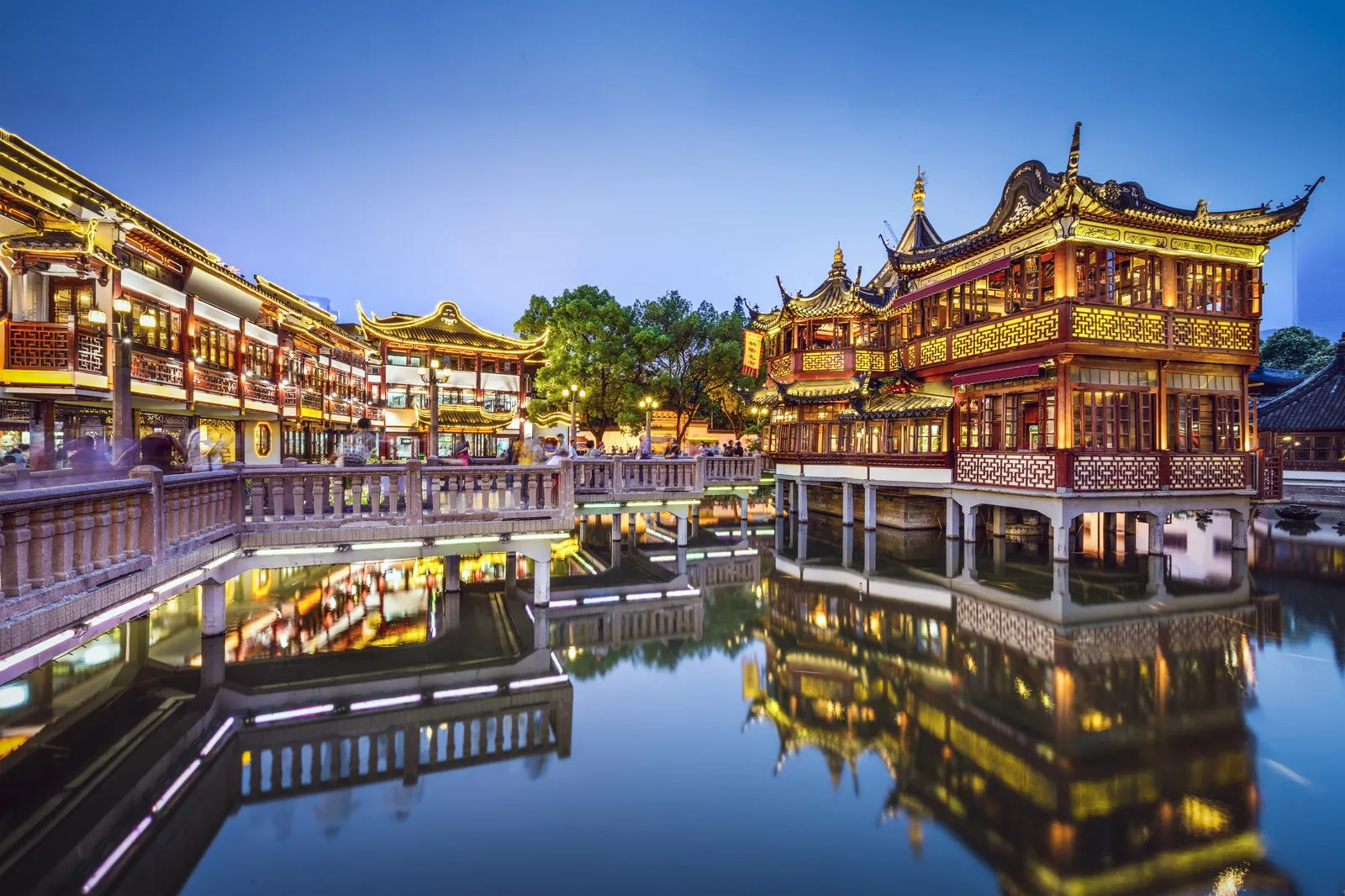
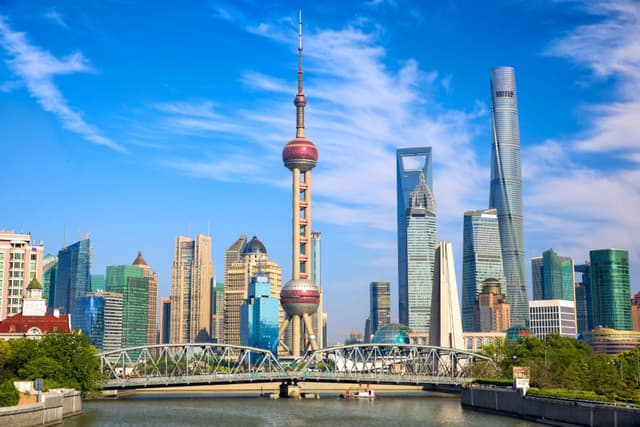
Yu Garden (Yuyuan) is a classical Chinese garden in the heart of Shanghai's old walled town, built from 1559 by the Ming official Pan Yunduan for his elderly parents, and it is surrounded by the bustling Yuyuan Bazaar of traditional style shops and snack stalls. Inside the garden it is quiet and intricate; outside it is loud, crowded and fun. Allow two hours for the garden and another hour or two for the bazaar and lunch.
Construction reportedly took close to two decades, and the cost is said to have drained the Pan family fortune. The garden later passed through several hands, survived war damage in the nineteenth and twentieth centuries, and was restored and opened to the public. Today it is one of the best preserved Jiangnan style gardens inside a Chinese city centre.
| Highlight | Where | Why it matters |
|---|---|---|
| Exquisite Jade Rock (Yulinglong) | Inside the garden, facing Yuhua Hall | A porous limestone rock about 3.3 m tall, counted among the most famous garden rocks in China |
| Great Rockery | Inside, near the entrance area | A Ming era artificial hill built from yellow stone, with a small pavilion on top |
| Dragon walls | Throughout the garden | Undulating walls topped with dragon heads that divide the garden into scenes |
| Huxinting teahouse (Mid-lake Pavilion) | Outside the garden gate, in the pond | Called Shanghai's first teahouse and more than 240 years old; reopened in July 2025 after restoration |
| Zigzag (Nine-turn) bridge | Leading to Huxinting | Folklore says spirits travel only in straight lines, so the bends keep them out |
| Yuyuan Bazaar | Around the garden | Traditional style lanes of snack stalls and shops, busiest in the afternoon |
| City God Temple area | Next to the bazaar | Taoist temple that gives the old town quarter its name |
Yu Garden opening hours and night tours
Yu Garden's daytime hours are reported as 8:30 to 16:30, Tuesday to Sunday, with last entry around 16:00 and closure on Mondays, so do not plan it for a Monday. In 2025 the garden launched an evening light-and-shadow tour called "Yu Xiang Shan Lin". According to the Shanghai government portal, from May to October it runs on Tuesday, Wednesday, Friday, Saturday and Sunday evenings, and from November to April on Friday to Sunday evenings only, with timed QR code tickets sold through the official "Shanghai Yuyuan" WeChat account or at the South Gate ticket office. Night tickets are valid only for the date booked.
Tips for visiting the old town
- Go at opening time on a weekday; tour groups arrive mid-morning and the bazaar is packed by early afternoon.
- Come back at night for the bazaar's illuminated rooftops, which are free to see from the lanes.
- Lantern Festival: around two weeks after Chinese New Year the bazaar hosts a famous lantern show with giant dragons and mythical creatures. It is spectacular and extremely crowded.
- Walk a block or two away from the bazaar to find older residential lanes and better value snacks.
- Combine with the Bund: Yu Garden is about a 15 to 20 minute walk from the southern end of the Bund.
For a longer stay that also covers other ancient sites, our China itinerary ideas show how many days to give each city.
Is Shanghai Tower worth visiting?
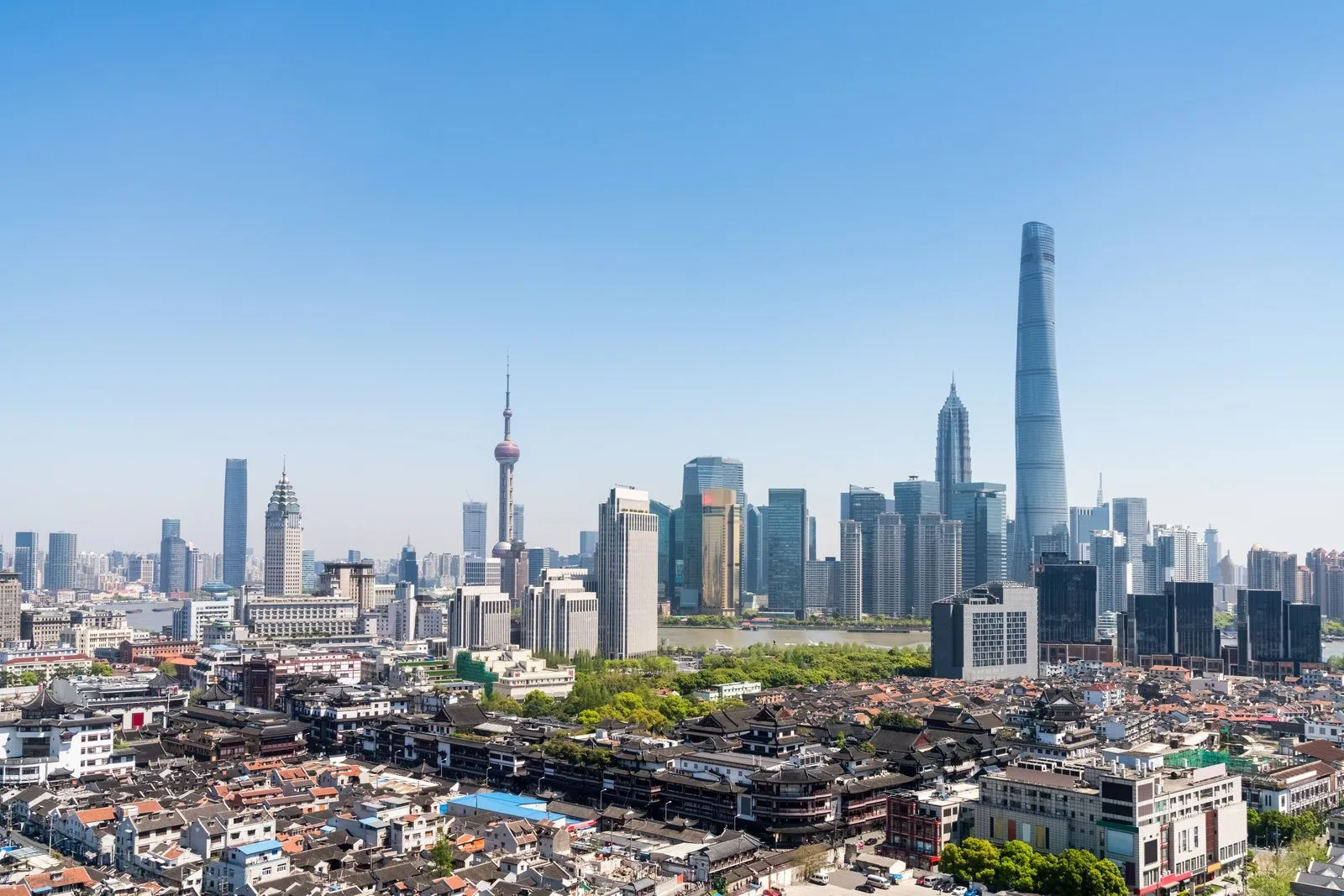
Yes, Shanghai Tower is worth visiting if you want the highest view in the city: at 632 metres it is China's tallest building, and its Top of Shanghai Observatory on the 118th floor puts you 546 metres up with a 360 degree view. Go on a clear day, ideally arriving in the late afternoon so you see the city in daylight, at sunset and after dark in one visit. On a hazy or rainy day, the view can vanish completely, so check the forecast and visibility before you buy.
The tower's twisting shape is designed to reduce wind loads, and its elevators are among the fastest in the world, with a top speed of about 18 metres per second and a ride to the 118th floor of under a minute. The 119th floor has a cafe reached by stairs from the observatory, and a separate ticket gives access to the 125th and 126th floors to see the huge tuned mass damper that steadies the building in strong wind.
| Observation deck | Building height | Deck height | Reported hours (check before going) | Strength | Drawback |
|---|---|---|---|---|---|
| Top of Shanghai (Shanghai Tower, 118F) | 632 m | 546 m | Daytime into the evening; check the official site for your date | Highest view in China, fast lifts, the damper add-on | Shanghai Tower itself is missing from your photos |
| SWFC Sky Walk (100F) | 492 m | 474 m | Long opening hours into the late evening; times vary | Glass floor panels, great view of Shanghai Tower right next door | Slightly lower, can feel busy |
| Jin Mao Tower (88F) | About 420 m | About 340 m | Daytime into evening; check official site | Look down into the hotel atrium, often quieter | Lowest of the three skyscraper decks |
| Oriental Pearl Tower | 468 m | 259 m to 351 m | Daytime into the evening; check the official site for your date | Retro icon, glass floor, city history museum in the base | Lower view and longest queues |
Which deck should you choose?
- First visit, clear day: Shanghai Tower for the height.
- Photographers: SWFC, because Shanghai Tower fills your frame next door.
- Families with young children: Oriental Pearl Tower, which combines the glass floor and the city history museum, and is right by the riverside walk.
- Short on time: skip the decks and do the Bund at sunset plus a river cruise; you will still see the skyline at its best.
Shanghai Tower tickets are real-name: foreign visitors are expected to show the physical passport used to book at collection and at security, and the name on the booking must match the passport exactly. Most standard tickets are non-refundable, which is another reason to watch the weather before booking. Bring the same passport you booked with; a photo of it is not enough.
How do you plan a day at Shanghai Disneyland?
To plan a day at Shanghai Disneyland, book a date-specific, real-name ticket in advance through the official Shanghai Disney Resort app or website (or an authorised reseller), carry the original passport used to book, arrive before park opening, and use the official app for live wait times and optional paid Premier Access. Avoid Chinese public holidays and weekends if you can, and go straight to the most popular rides first.
Shanghai Disneyland opened on 16 June 2016 and celebrates its tenth anniversary in 2026. It sits in the Shanghai International Resort area in southeastern Pudong. Its lands include Mickey Avenue, Gardens of Imagination, Fantasyland, Adventure Isle, Treasure Cove, Tomorrowland, Toy Story Land and Zootopia, the world's first Zootopia themed land, which opened in December 2023. The Enchanted Storybook Castle at the centre is the largest Disney castle, and the night ends with the "Ignite the Dream" fireworks and projection show.
Checked: 9 Oct 2026. Shanghai Disney Resort has used real-name ticketing since 23 December 2024: each valid ID can buy one ticket per visit date, and you must show the original ID used for the purchase at the gate. Child tickets apply to ages 3 to 11 on the visit date, and children under 3 enter free. For direct-channel standard 1-day and 2-day tickets, refund rules updated on 12 January 2026 give a full refund for requests at least 7 days before the visit and a partial refund closer to the date, with no refund on the day. Resellers set their own terms. Source: Shanghai Municipal Government English portal and current Shanghai Disney Resort booking guidance.
Shanghai Disneyland planning checklist
| When | What to do | Why |
|---|---|---|
| 2 to 4 weeks before | Pick a weekday outside Chinese school holidays, Chinese New Year, May Day and National Day Golden Week (1 to 7 October) | Crowd levels on holidays can double queue times |
| 2 to 4 weeks before | Book dated tickets on the official app or website, or an authorised reseller, entering each guest's passport name and number exactly as printed | Real-name tickets are checked against the original passport at the gate |
| 1 week before | Download the official Shanghai Disney Resort app and set up an account | Live wait times, show schedules, maps and Premier Access purchases |
| 1 week before | Check the refund and date-change deadline for your channel and screenshot it | The full refund window closes 7 days out for eligible direct tickets |
| The day before | Check park hours and show times for your date in the app | Hours vary by season and event |
| The day before | Pack passports, power bank, refillable water bottle, rain poncho, sun hat, light snacks | Free drinking water is available; ponchos are useful in the rainy months |
| On the day | Arrive at the gate 45 to 60 minutes before opening by Metro Line 11 to Disney Resort station | Security and ID checks take time, and the first hour has the shortest queues |
| First hour | Head to the biggest rides first: Zootopia: Hot Pursuit, TRON Lightcycle Power Run, Soaring Over the Horizon | These build the longest queues by late morning |
| Midday | Shows, indoor rides and a long lunch in the shade | Midday heat and crowds peak in summer |
| Evening | Claim a spot for "Ignite the Dream" in front of the castle | Best views go 30 to 45 minutes before the show |
Rides worth prioritising
- Zootopia: Hot Pursuit in Zootopia: the newest headline ride and usually the longest queue.
- TRON Lightcycle Power Run in Tomorrowland: a fast motorbike style coaster; check height limits for children.
- Pirates of the Caribbean: Battle for the Sunken Treasure in Treasure Cove: a different and more spectacular version than the classic ride in other Disney parks.
- Soaring Over the Horizon in Adventure Isle: a gentle flying simulator that suits grandparents and young children.
- Roaring Rapids in Adventure Isle: a river raft ride where you will get wet.
- Peter Pan's Flight and Seven Dwarfs Mine Train in Fantasyland: family favourites with long queues.
Food, bags and practical rules
Under the policy Shanghai Disney Resort introduced in September 2019, guests may bring their own food and drinks, including bottled water, but not food that needs heating, cooking, refrigeration or insulation, strong smelling foods such as durian and stinky tofu, alcohol, canned drinks or glass containers. Bags are checked at security. Eat only in designated areas and follow the waste sorting rules. Rules can change, so check the official park rules page before your visit.
Shanghai Disneyland tips for families, couples and Nepali travellers
- Families with toddlers: strollers can be rented in the park; plan a rest break in the afternoon and stay for the fireworks only if little ones can last.
- Families with grandparents: the park is large; build in seated shows and Soaring rather than chasing every coaster.
- Vegetarian travellers: park restaurants have limited clearly vegetarian options, so many Nepali families bring dry snacks such as biscuits, fruit (not watermelon or durian) and nuts.
- Honeymooners and couples: a two-day ticket or a night at a resort hotel lets you enjoy the castle and Disneytown without rushing.
- Dashain and Tihar timing: the Dashain holiday often overlaps with China's National Day Golden Week in early October, the busiest week of the year at Shanghai Disneyland. If your school holiday allows, go in the second half of October instead.
What should you eat in Shanghai?
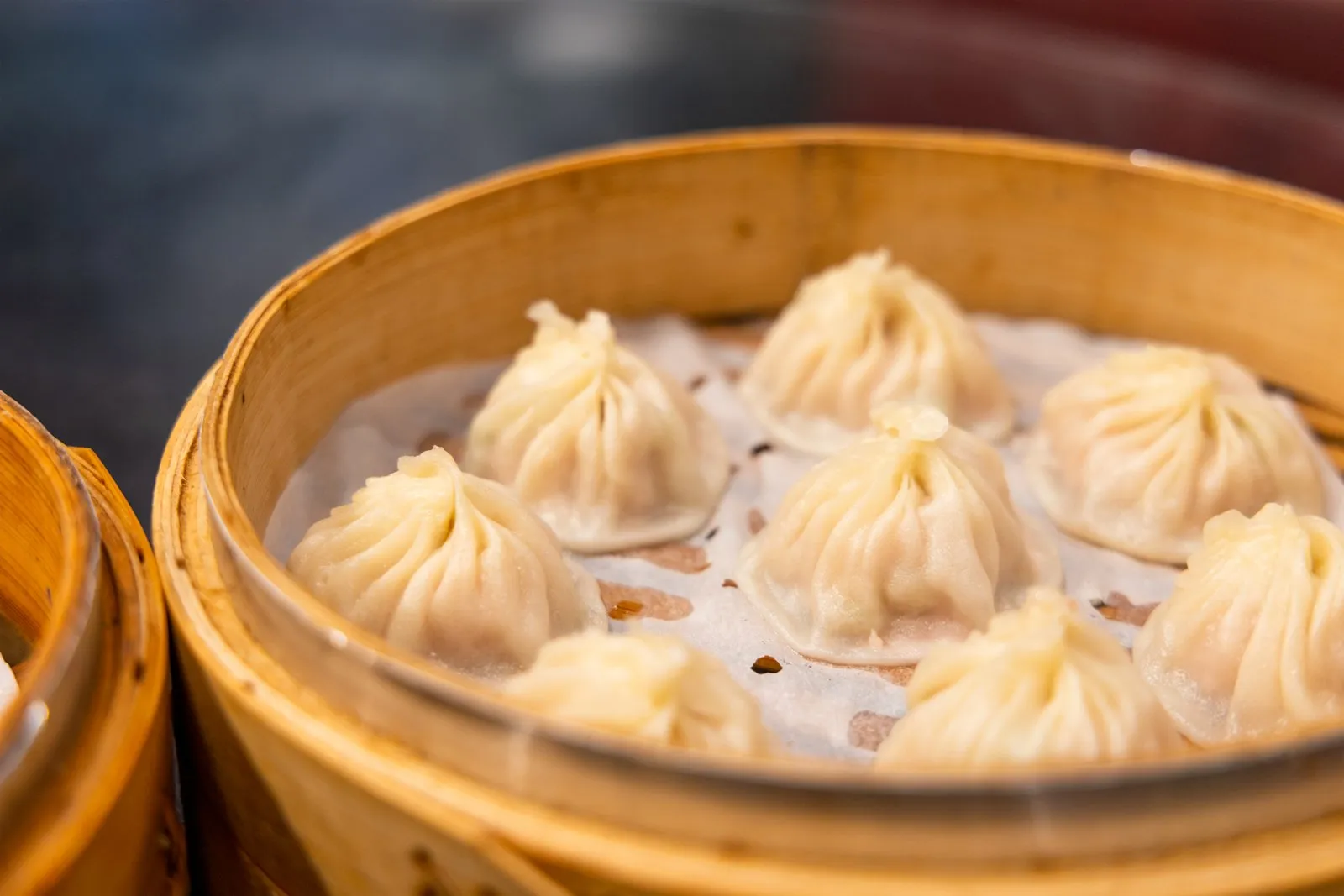
You should eat xiaolongbao (soup dumplings), shengjian bao (pan-fried pork buns), scallion oil noodles, hairy crab in autumn, red braised pork and sweet and sour spare ribs, the core of Shanghainese (Benbang) cuisine, which is known for its sweetness, soy sauce and slow braising. Vegetarians also eat well here thanks to a long Buddhist vegetarian tradition. For the full picture of regional dishes across the country, see our guide on what to eat in China, which covers Shanghai cuisine in depth.
| Dish | What it is | Vegetarian version? | Where to try it |
|---|---|---|---|
| Xiaolongbao | Thin-skinned steamed dumplings filled with pork and hot soup | Some shops offer vegetable or mushroom fillings; ask | Nanxiang Steamed Bun restaurant by the Yu Garden zigzag bridge, dumpling chains citywide |
| Shengjian bao | Pan-fried buns with crispy bottoms, sesame and scallion on top | Usually pork; vegetarian versions are rare | Breakfast shops and local chains |
| Scallion oil noodles (congyou banmian) | Noodles tossed in fried scallion oil and soy | Yes, often naturally vegetarian, but check the oil | Small noodle shops, breakfast and lunch |
| Hongshao rou | Red braised pork belly in soy and sugar | Vegetarian restaurants make mock versions | Benbang restaurants |
| Hairy crab | Freshwater crab, a prized autumn delicacy | No | Seasonal, roughly October to December |
| Cifantuan | Sticky rice roll with fried dough stick inside | Sweet versions can be vegetarian | Breakfast stalls |
| Vegetarian Buddhist set meals | Tofu, mushrooms, greens and mock meats | Yes | Gongdelin, Jade Buddha Temple's vegetarian restaurant, other temple kitchens |
| Vegetarian fine dining | Creative multi-course plant based menus | Yes | Fu He Hui in Changning and similar restaurants (book ahead) |
Can vegetarians eat well in Shanghai?
Vegetarians can eat very well in Shanghai, which has some of the best Buddhist vegetarian cooking in China. Gongdelin, opened in 1922, is often described as the city's oldest vegetarian restaurant and is known for mock meat versions of Shanghainese classics. Jade Buddha Temple's restaurant serves simple vegetarian noodles, and fine dining spots such as Fu He Hui offer tasting menus that have earned Michelin recognition. Learn the phrase "wo chi su" (I eat vegetarian) and show it written in Chinese, because broth and lard are common hidden ingredients in ordinary restaurants. Many Nepali travellers also find Indian restaurants in the city, which are useful for a familiar dal and roti on longer trips.
Food tips for visitors
- Eat xiaolongbao carefully: bite a small hole, sip the soup, then eat; the soup is very hot.
- Breakfast is the best street food meal: shengjian bao, cifantuan and soy milk are all morning foods.
- Use photo menus or a translation app, and see our pick of the best travel apps for menu translation and maps.
- Adventurous eaters can read our light-hearted guide to unusual Chinese foods before trying the night markets.
Which water towns are easy day trips?
The easiest water town day trip from Shanghai is Zhujiajiao, in the city's Qingpu District, reached by Metro Line 17 from Hongqiao in around an hour from central Shanghai. Qibao is even closer, inside the city on Metro Line 9, while Zhouzhuang, Tongli, Xitang and Wuzhen are larger, more picturesque towns in neighbouring Jiangsu and Zhejiang provinces that need most of a day.
Water towns are old canal settlements of the Yangtze delta, with stone bridges, whitewashed houses with black tiled roofs, and narrow boats poled along the canals. They are photogenic and can be very busy at weekends. Go early on a weekday, walk beyond the main shopping streets, and you will find quiet lanes and residents going about daily life.
Zhujiajiao water town
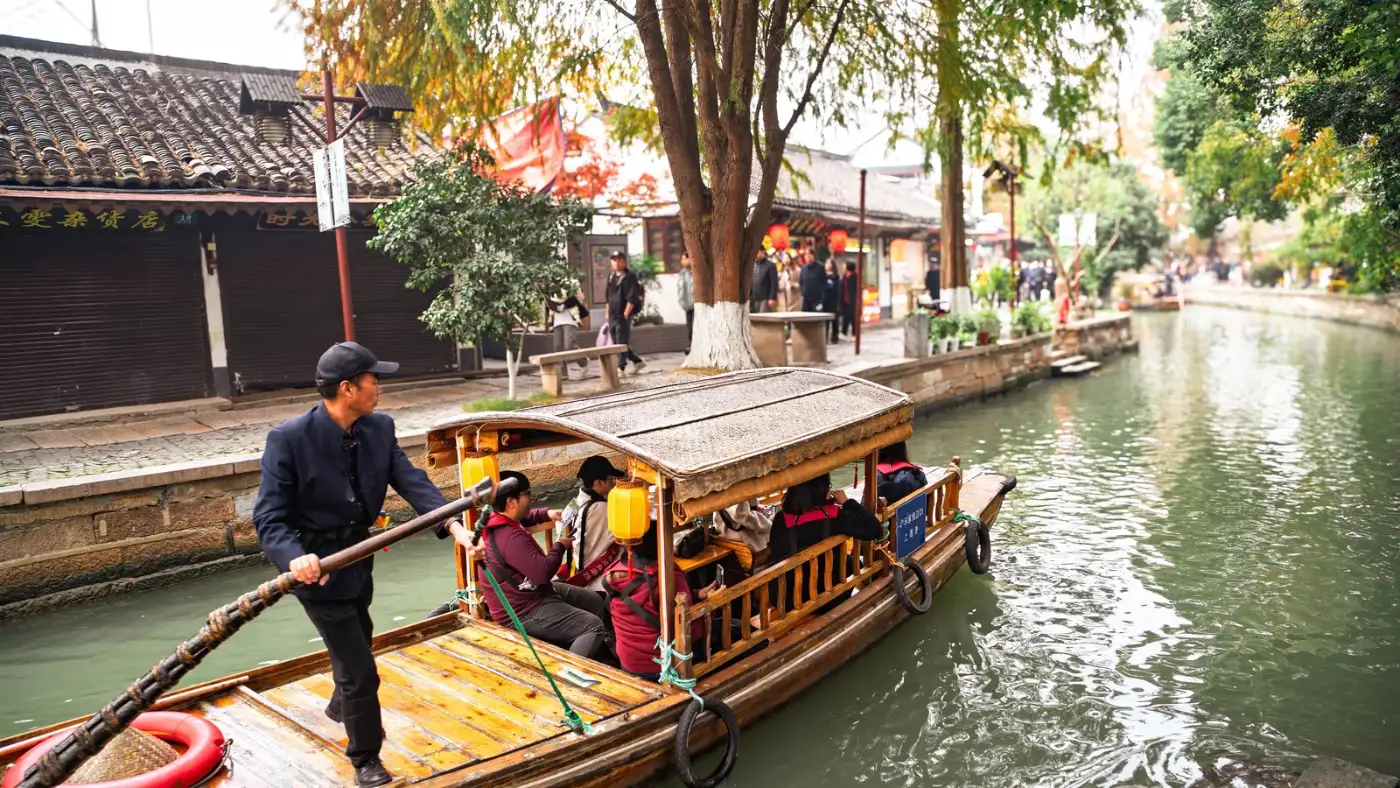
Zhujiajiao is the most practical water town for a half-day trip. Walking the old streets and crossing the public bridges is generally free; selected sights such as Kezhi Garden and some museums are on a joint ticket, and canal boat rides are paid separately. Ticketed attractions open roughly 8:30 to 17:00 according to the official site; check before going.
- How to get there: take the metro to Hongqiao Railway Station, then Line 17 west to Zhujiajiao station. The station is not right next to the old town, so allow time for a short taxi, local bus or walk with a map app.
- Do not miss: Fangsheng Bridge, a five-arch Ming dynasty stone bridge and the town's landmark; North Street with its timber shopfronts; Kezhi Garden; Yuanjin Temple and the quieter canal lanes beyond the bridge.
- Time needed: about half a day including the journey, more if you want a long lunch by the canal.
| Water town or day trip | Location | How to get there from central Shanghai | Approximate travel time each way | Best for |
|---|---|---|---|---|
| Zhujiajiao | Qingpu District, Shanghai | Metro to Hongqiao, then Line 17 to Zhujiajiao station | About 1 hour | Easy half-day trip without a tour |
| Qibao | Minhang District, Shanghai | Metro Line 9 to Qibao station | About 30 minutes from People's Square | A quick taste of a water town and snacks |
| Zhouzhuang | Kunshan, Jiangsu | Usually by road or as part of a tour | Most of a day for the round trip and visit | Classic postcard canal scenes |
| Tongli | Wujiang, Suzhou, Jiangsu | High-speed train to Suzhou, then bus or taxi | Suzhou train plus 30 to 40 minutes | Quieter, combine with Suzhou |
| Xitang | Jiashan, Zhejiang | Train or road, often by tour | Allow most of a day | Covered corridors, evening lanterns |
| Wuzhen | Tongxiang, Zhejiang | Train plus local transfer, or by road | About 2 hours | The most polished town, best overnight |
| Suzhou (gardens) | Jiangsu | G-class high-speed train from Hongqiao or Shanghai Station | Around 25 minutes on the fastest trains | UNESCO classical gardens |
| Hangzhou (West Lake) | Zhejiang | High-speed train from Hongqiao to Hangzhou East | About 45 to 60 minutes | West Lake, tea plantations |
Train tickets for Suzhou and Hangzhou are real-name and need your passport details; our China high-speed rail guide explains booking, stations and boarding for foreign visitors.
How do you get around Shanghai and from Pudong airport?
Getting around Shanghai is easiest by metro, which reaches almost every sight in this guide, with taxis and ride-hailing apps for late evenings and short hops. From Pudong International Airport (PVG), the main choices are Metro Line 2, the Maglev to Longyang Road, airport buses and taxis, and the Airport Link Line connects Pudong airport with Hongqiao airport in about 40 minutes.
| Option | Route | Approximate time | Operating hours (checked 9 Oct 2026) | Good for |
|---|---|---|---|---|
| Maglev | Pudong Airport to Longyang Road (30 km, nonstop), then metro | About 8 minutes at 300 km/h, plus metro transfer | Roughly 07:00 to 21:40 from the airport; trains every 15 to 20 minutes | The experience, travellers with light bags heading into Pudong or onward on Lines 2, 7, 16 or 18 |
| Metro Line 2 | Pudong Airport Terminal 1&2 to People's Square and East Nanjing Road | About 1 hour to People's Square | Daytime into late evening; check last train | Budget travellers, hotels near Line 2 |
| Airport Link Line | Pudong Airport Terminal 1&2 to Hongqiao Airport Terminal 2, with a stop at Shanghai International Resort | About 40 minutes end to end | About 06:00 to 22:00, trains roughly every 14 minutes | Transfers to Hongqiao, trains to Suzhou and Hangzhou, Disneyland area |
| Taxi or ride-hailing | Door to door | About 50 minutes to People's Square without heavy traffic | 24 hours | Families, late arrivals, lots of luggage |
| Airport buses | Several lines to city areas and Hongqiao | Varies with traffic | Check the airport's current timetable | Hotels near a bus terminal |
Is the Shanghai Maglev still running at 431 km/h?
No. The Shanghai Maglev has run commercially at a maximum of 300 km/h since 2021, rather than the 431 km/h top speed it used to reach during set windows. It still covers the 30 km between Pudong airport and Longyang Road in about eight minutes and is a memorable ride, but with a metro transfer at Longyang Road it is not always faster door to door than a taxi for hotels in Puxi. Ride it for fun on the way in or out if your hotel is near Lines 2, 7, 16 or 18.
Payments and apps for visitors
Shanghai is a nearly cashless city: most shops, taxis and even street stalls expect payment by Alipay or WeChat Pay, both of which now let international visitors link many foreign Visa and Mastercard cards. Set them up and test them before you fly, carry a small amount of Chinese yuan (CNY, also called renminbi or RMB) in cash as a backup, and have a translation and map app ready. Nepali travellers should also read our guide on the foreign currency you can carry from Nepal. Note that many Western apps and websites are restricted in mainland China, so arrange connectivity in advance; our China travel tips cover this in detail.
Getting to Shanghai from Kathmandu
Most travellers from Kathmandu reach Shanghai with one connection, commonly via a Chinese hub such as Kunming, Chengdu or Guangzhou, or via another Asian hub; schedules change by season, so check current routings with an airline or agent. First-time flyers can read our tips for a first international flight, and Nepali passport holders renewing documents should see our Nepal e-passport guide. Our guide to direct flights from Kathmandu lists which routes currently run nonstop. Many visitors combine Shanghai with Beijing, which is about four and a half to six hours away by high-speed train; see our list of things to do in Beijing for the capital's highlights, including the Great Wall of China.
Is Shanghai safe and expensive?
Shanghai is one of the safer big cities in Asia for visitors, with low street crime, well lit streets and heavy public transport use late into the evening; usual city precautions about pickpockets in crowds and unlicensed taxis apply. Read our full answer on whether China is safe to travel. Shanghai is generally the most expensive city in mainland China for hotels and dining, though metro travel and local food remain good value; our guide on whether China is expensive gives a broader picture, and our China trip cost guide for travellers from Nepal explains how to budget.
When is the best time to visit Shanghai?
The best time to visit Shanghai is April to May and late September to November, when days are mild, skies are often clearer and walking the Bund or a water town is comfortable. June brings the plum rain (meiyu) season, July and August are hot and humid with occasional typhoons, and December to February is cold and grey but quiet outside Chinese New Year.
| Month | Average high | Average low | Average rainfall | What to expect |
|---|---|---|---|---|
| January | 7 °C | 0 °C | About 43 mm | Cold and damp, few tourists; Chinese New Year may fall late January or February |
| February | 8 °C | 1 °C | About 61 mm | Cold; Lantern Festival at Yu Garden; very busy around Chinese New Year |
| March | 12 °C | 5 °C | About 84 mm | Warming up, early blossoms |
| April | 18 °C | 10 °C | About 104 mm | One of the best months; spring flowers, pleasant walking |
| May | 23 °C | 16 °C | About 114 mm | Warm and green; May Day holiday (early May) is crowded |
| June | 27 °C | 20 °C | About 160 mm | Plum rain season, humid with frequent showers |
| July | 31 °C | 25 °C | About 135 mm | Hot and humid; Chinese school holidays; typhoon risk |
| August | 31 °C | 25 °C | About 137 mm | Hottest month; plan indoor middays; typhoon risk |
| September | 27 °C | 21 °C | About 152 mm | Still warm, drier towards the end of the month |
| October | 22 °C | 15 °C | About 58 mm | Excellent weather; avoid Golden Week (1 to 7 October) if you can; hairy crab season |
| November | 17 °C | 9 °C | About 51 mm | Crisp and clear, autumn colours in the former French Concession |
| December | 10 °C | 2 °C | About 38 mm | Cold, festive lights, quieter attractions |
Figures are long-term averages rounded from climate data; actual weather varies year to year. For a country-wide view by region, see our guide to the best time to visit China.
Shanghai during Dashain and Tihar
For travellers from Nepal, the Dashain and Tihar holidays fall in late September to November, which is Shanghai's best weather window. The catch is that Dashain often overlaps with China's National Day Golden Week (1 to 7 October), when Shanghai's attractions, trains and hotels are at their busiest. If your dates are flexible, plan Shanghai for the days after Golden Week or around Tihar, when the weather is still excellent and the crowds have thinned. Our guide to Dashain and Tihar holidays abroad has more festival-season planning ideas, and our list of the best destinations for Nepali travellers compares Shanghai with other favourites.
How many days do you need in Shanghai?
Three to four days is the sweet spot for a first visit to Shanghai. That gives time for the Bund and Pudong, Yu Garden and the former French Concession, a full day at Shanghai Disneyland if it is on your list, and a half day in Zhujiajiao or a quick train trip to Suzhou. Two days is enough for the city highlights without Disneyland; five or more lets you add Hangzhou or an overnight in Wuzhen.
| Trip length | What fits | Who it suits |
|---|---|---|
| 2 days | Bund, Nanjing Road, Lujiazui decks, Yu Garden, former French Concession | Stopovers, business travellers, part of a multi-city trip |
| 3 days | City highlights plus Shanghai Disneyland or a water town | Couples, first-timers |
| 4 days | City highlights, Disneyland and Zhujiajiao or Suzhou | Families, honeymooners |
| 5 days or more | Add Hangzhou or an overnight in Wuzhen | Slow travellers, diaspora families visiting with parents |
A final planning note
Shanghai rewards a little planning: the right hotel location near a metro line, real-name bookings for the big attractions that match your passport, and dates that dodge Chinese public holidays. If you would like a trip that combines Shanghai with Beijing, Suzhou or Hangzhou, our China tour packages page shows how these cities link up on one route. Before you fly, run through our pre-trip checklist so nothing is left to the last minute.
Frequently asked questions
What is Shanghai famous for?
Shanghai is famous for the Bund, a riverside promenade of early twentieth century buildings facing the Pudong skyline, and for Shanghai Tower, China's tallest building at 632 metres. It is also known for Yu Garden, xiaolongbao soup dumplings, Shanghai Disneyland, its former French Concession lanes and its role as China's leading financial and trading city.
Where is the best view of the Bund?
The best view of the Bund's historic buildings is from the Lujiazui riverside walk in Pudong after dark, while the best view of the Pudong skyline is from the Bund promenade itself at sunset. For a view from above, Shanghai Tower's 118th floor observatory at 546 metres and the Shanghai World Financial Center's 100th floor Sky Walk are the highest options.
Is Shanghai Disneyland worth it?
Shanghai Disneyland is worth it for families and Disney fans, thanks to rides you cannot find elsewhere, such as the Zootopia land and the unique Pirates of the Caribbean: Battle for the Sunken Treasure. Book a dated real-name ticket, bring the original passport, go on a weekday outside Chinese holidays and arrive before opening to make the most of the day.
Is Yu Garden worth visiting?
Yu Garden is worth visiting for its Ming dynasty rockeries, dragon walls and pavilions, begun in 1559, and for the lively Yuyuan Bazaar around it. Go early on a weekday to avoid tour groups, remember the garden is closed on Mondays, and come back after dark to see the bazaar rooftops lit up. Allow two to four hours with lunch.
What food is Shanghai known for?
Shanghai is known for xiaolongbao soup dumplings, shengjian bao pan-fried buns, scallion oil noodles, red braised pork and hairy crab in autumn. Shanghainese cooking, called Benbang cuisine, is slightly sweet and relies on soy sauce and slow braising. Breakfast stalls are the best place to try the city's street food.
Can vegetarians eat well in Shanghai?
Vegetarians eat well in Shanghai thanks to its Buddhist vegetarian tradition. Gongdelin, opened in 1922, serves mock meat versions of local classics, Jade Buddha Temple has a vegetarian restaurant, and fine dining spots such as Fu He Hui offer plant based tasting menus. In ordinary restaurants, say "wo chi su" and check for meat broth or lard.
Which water town is near Shanghai?
Zhujiajiao is the closest well known water town to central Shanghai, reached by Metro Line 17 from Hongqiao in around an hour. Qibao is even closer on Metro Line 9 but smaller. Zhouzhuang, Tongli, Xitang and Wuzhen are larger and prettier water towns in neighbouring provinces, best visited on a full-day trip or overnight.
How do I get from Pudong airport to the city?
From Pudong airport you can take Metro Line 2 to People's Square in about an hour, the Maglev to Longyang Road in about eight minutes and then the metro, or a taxi in about 50 minutes without heavy traffic. The Airport Link Line runs to Hongqiao airport in about 40 minutes. Check last train times if you land late.
How many days in Shanghai?
Three to four days in Shanghai suits most first-time visitors: one day for the Bund and Pudong, one for Yu Garden and the former French Concession, one for Shanghai Disneyland, and a half day for Zhujiajiao or Suzhou. Two days covers the city highlights only, and five or more lets you add Hangzhou.
Is Shanghai Tower worth going up?
Shanghai Tower is worth going up on a clear day: its Top of Shanghai Observatory on the 118th floor sits 546 metres high, the highest viewpoint in China. Arrive in the late afternoon to see daylight, sunset and night views. On hazy days the view can disappear, and tickets are real-name and usually non-refundable.
When is the best time to visit Shanghai?
The best time to visit Shanghai is April to May and late September to November, when the weather is mild and pleasant for walking. Avoid China's National Day Golden Week from 1 to 7 October and Chinese New Year if you dislike crowds. June brings the plum rain season and July to August is hot and humid.
Shanghai ma k k herne?
Shanghai ma herne pramukh thau haru: the Bund ma sunset, Pudong ko skyline, Shanghai Tower ko 118th floor observatory, Yu Garden ra old town, Shanghai Disneyland, former French Concession ka galli haru ra Zhujiajiao water town. Pahilo patak jane le 3 dekhi 4 din rakhda sabai mukhya thau aaramle herna sakinchha.
'/%3E%3C/svg%3E)