












































Short answer: No, China is not expensive by international standards. A careful budget traveller can get by on roughly 260 to 350 yuan a day (about 40 to 52 US dollars), a comfortable mid-range trip runs about 650 to 1,000 yuan a day (about 100 to 150 US dollars), and even four and five star comfort usually stays under 1,800 yuan a day. Food and city transport are cheap. What pushes the total up is long-distance high-speed rail, flagship entry fees and big-city hotels in Beijing and Shanghai. All figures below use an exchange rate of roughly 6.7 yuan to 1 US dollar, as of September 2026.
The yuan strengthened through 2026 and touched about 6.69 per US dollar in mid-September, its firmest level in more than three years. That makes China slightly dearer for dollar spenders than it was in 2024, but day to day prices inside China have barely moved. For the bigger picture on routes, regions and planning, start with our complete China travel guide, then use this page to put real numbers against your plan.
How much does a day in China cost?
Daily spending in China depends far more on your hotel and how you move around than on anything else. The table below is built from 2026 price surveys for Beijing, which sits at the upper end of mainland prices. Knock roughly 15 to 25 percent off for cities such as Xi'an, Chengdu, Guilin or Kunming, and add a little for central Shanghai.
| Travel style | What it looks like | Per person per day (CNY) | Approx. USD |
|---|---|---|---|
| Shoestring | Hostel dorm, street food and noodle shops, metro only, one paid sight | 260 to 350 | 39 to 52 |
| Budget independent | Private hostel room or simple hotel, local restaurants, occasional DiDi | 400 to 600 | 60 to 90 |
| Mid-range | Three or four star hotel, sit-down meals, taxis when tired, most major sights | 650 to 1,000 | 97 to 150 |
| Upper mid-range | Boutique or courtyard hotel, good restaurants, some guided visits | 1,200 to 1,800 | 180 to 270 |
| Luxury | International five star hotel, fine dining, private car and guide | 1,800 to 2,800 and up | 270 to 420 and up |
These daily figures exclude international flights and long intercity train legs, which we cover separately below because they vary so much with your route. Most first-time independent visitors who want comfort without splurging land somewhere around 800 to 1,200 yuan a day in Beijing or Shanghai.
What is cheap in China and what is not?
The pattern is consistent across the country: everyday living is inexpensive, while headline experiences and distance cost real money.
- Genuinely cheap: noodles, dumplings and street snacks, city metros and buses, bottled water, bike share, public parks and many museums (a lot of state museums are free with a passport reservation).
- Fair value: high-speed rail, three and four star hotels, DiDi rides across town, sit-down restaurant meals, most single-site entry tickets.
- Where it adds up: national park tickets with compulsory buses, cable cars, Shanghai Disneyland, private guides and drivers, international brand hotels in Beijing and Shanghai, and anything booked during Golden Week or Chinese New Year.

How much do hotels cost in China?
Accommodation is usually the largest single line in a China budget, and the spread is huge. A clean private room in a chain hotel can cost less than a dinner in London, while a heritage courtyard hotel in Beijing can match European prices.
| Hotel type | Beijing / Shanghai per night (CNY) | Approx. USD | Smaller cities (Xi'an, Chengdu, Guilin) |
|---|---|---|---|
| Hostel dorm bed | 80 to 150 | 12 to 22 | Often 50 to 100 |
| Hostel private room | 250 to 400 | 37 to 60 | Often 150 to 300 |
| Budget chain hotel (two to three star) | 280 to 500 | 42 to 75 | Often 200 to 350 |
| Mid-range hotel (three to four star) | 500 to 900 | 75 to 135 | Often 350 to 650 |
| Boutique or courtyard hotel | 800 to 2,000 | 120 to 300 | Varies widely |
| International five star | 1,500 to 4,000 and up | 225 to 600 and up | Often 800 to 1,800 |
Two practical points. First, not every cheap hotel in China is licensed to accept foreign guests, so book through platforms that let you filter for this, or confirm by message before you pay. Second, rates can double or more over Golden Week and the Spring Festival, and in scenic towns such as Zhangjiajie and Jiuzhaigou during peak foliage.
How much does food cost in China?
Food is where China is outstanding value. You can eat very well on 60 to 120 yuan a day if you follow local crowds, and a genuinely memorable dinner rarely needs to cost more than 150 yuan a head. For what to order, see our guide on what to eat in China.
| Item | Typical price (CNY) | Approx. USD |
|---|---|---|
| Street snack (jianbing, baozi, skewers) | 5 to 20 | 1 to 3 |
| Bowl of noodles or plate of dumplings at a local shop | 20 to 40 | 3 to 6 |
| Casual sit-down restaurant, per person | 80 to 150 | 12 to 22 |
| Peking duck at a well-known Beijing restaurant, per person | 200 to 400 | 30 to 60 |
| International or Western restaurant, per person | 150 to 400 | 22 to 60 |
| Coffee at a chain cafe | 18 to 45 | 3 to 7 |
| Bottled water (convenience store) | 2 to 4 | under 1 |
Local coffee chains are aggressively priced, and delivery apps and supermarket ready meals are cheaper still. Hotel breakfasts in mid-range properties can be poor value compared with a baozi stall on the corner, so check whether breakfast is really worth adding to a booking.
How much does transport cost inside Chinese cities?
City transport is one of China's great bargains. Metros are clean, fast and cheap, and ride-hailing is affordable enough that tired travellers can use it freely.
| Transport | Typical fare (CNY) | Approx. USD | Notes |
|---|---|---|---|
| Beijing Subway single ride | 3 to 7 | 0.45 to 1.05 | Distance based; a cross-city ride is about 5 to 6 |
| Beijing Subway tourist pass | 20 (24 h) / 40 (72 h) | 3 / 6 | Unlimited rides |
| City bus | 1 to 2 | under 0.30 | Most cities |
| Beijing taxi flag fall | 13 for first 3 km, then about 2.3 per km | 2, then 0.35 per km | Night surcharge about 20 percent |
| Beijing Capital Airport Express (PEK) | 25 | about 3.70 | To Dongzhimen in about 20 to 25 minutes |
| Beijing Daxing Airport Express (PKX) | 35 | about 5.20 | To Caoqiao in about 19 minutes |
| Taxi, Capital Airport to central Beijing | 100 to 150 | 15 to 22 | Daxing is typically 200 and up |
DiDi, China's main ride-hailing app, has an English interface and accepts foreign cards through the app or via Alipay. Fares usually track or slightly undercut metered taxis. In Alipay you can also switch on the transport QR code and simply scan in and out of metro gates in many cities, including Beijing and Shanghai, which avoids buying single tickets.
How much is high-speed rail in China?
High-speed rail is excellent value for the distance covered, but it is not cheap in the way a metro ride is. Over a two-week trip, train tickets can easily become your second largest cost after hotels. The operator, China Railway, runs a flexible pricing system, and in May 2026 it raised the ceiling fares on the Beijing to Shanghai corridor by up to about 20 percent, with discounts still offered on quieter trains and off-peak times. Treat the ranges below as typical 2026 levels and check the live price when you book.
| Route | Distance | Fastest time | Second class (CNY) | Approx. USD | First class (CNY) |
|---|---|---|---|---|---|
| Beijing to Shanghai | 1,318 km | about 4 h 20 min | 576 to 697 | 86 to 104 | 967 to 1,115 |
| Beijing to Xi'an | 1,216 km | about 4 h 30 min | 480 to 593 | 72 to 89 | 769 to 948 |
| Guangzhou to Guilin | 433 km | about 2 h | 164 to 318 | 24 to 47 | 263 to 509 |
| Beijing to Shanghai overnight D train, second class seat | 1,318 km | about 12 h | 367 to 406 | 55 to 61 | Sleepers from about 640 |
Business class, the lie-flat seats at the front or rear of the train, costs roughly three to four times second class, for example about 2,000 to 2,400 yuan from Beijing to Shanghai. Second class is perfectly comfortable for journeys of up to five hours. Tickets open about 15 days ahead on the official 12306 system, and your passport acts as the ticket at the gates. For seat classes, stations and booking tips, read our China high-speed rail guide.
Is flying cheaper than the train?
Sometimes. On very long routes such as Beijing to Chengdu, Kunming or Guilin, discounted domestic flights can undercut the train, especially if booked early and outside holidays. Add the cost and time of airport transfers and the lower baggage allowances on some fares, though, and trains usually win on routes under five hours.
How much are entry fees at China's top attractions?
Individual tickets are moderate, but they stack up quickly because many famous sites add a compulsory shuttle bus, a cable car or a separate gallery fee. Many sights now require real-name advance booking with your passport, often opening seven days ahead, and popular dates sell out.
| Attraction | Entry (CNY) | Approx. USD | Common extras |
|---|---|---|---|
| Forbidden City, Beijing | 60 (Apr to Oct) / 40 (Nov to Mar) | 9 / 6 | Treasure Gallery and Clock Gallery 10 each; closed Mondays; online booking only |
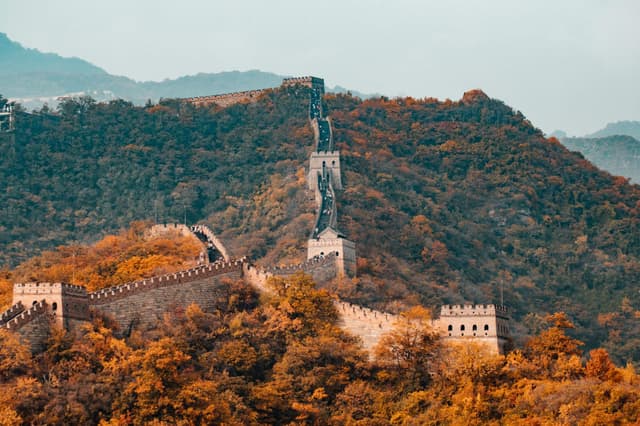
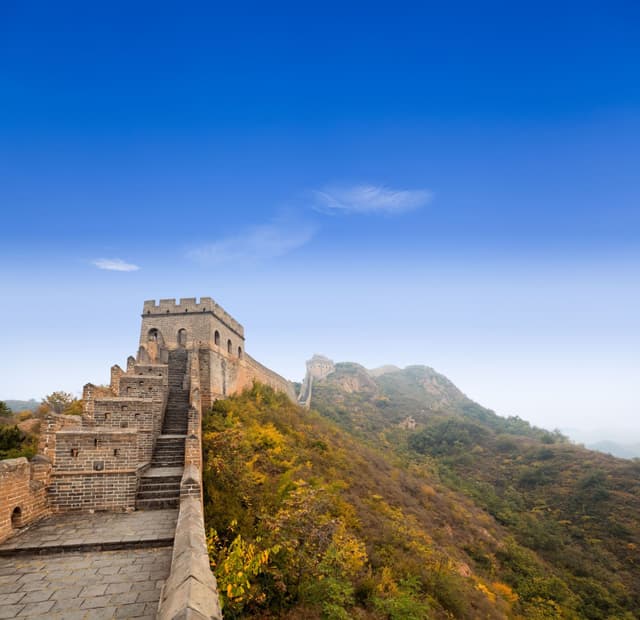
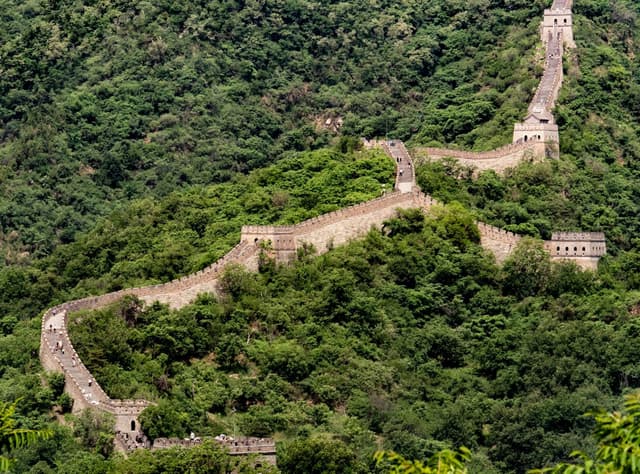
| Mutianyu Great Wall | 40 | 6 | Shuttle bus 15; cable car 100 one way or 140 return; toboggan 100 |
| Badaling Great Wall | 40 (peak) / 35 (low) | 6 / 5 | Cable car 100 one way or 140 return |
| Jinshanling Great Wall | 65 | 10 | Shuttle about 10 |
| Terracotta Warriors, Xi'an | 120 (Mar to Nov) / 100 (Dec to Feb) | 18 / 15 | Includes the Lishan mausoleum site and free shuttle |
| Zhangjiajie National Forest Park | about 240 (four-day pass) | 36 | Bailong Elevator 65 one way; Tianzi and Yellow Stone cableways about 65 one way |
| Tianmen Mountain, Zhangjiajie | 288 (includes cable car) | 43 | Separate from the Forest Park ticket |
| Jiuzhaigou National Park | 190 (Apr 1 to Nov 15) / 80 (off season) | 28 / 12 | Sightseeing bus 90 peak, 80 off season |
| West Lake, Hangzhou | Free | 0 | Boats and some temples charge separately |
| Shanghai Disneyland | 475 to 799 (date based) | 71 to 119 | Premier Access express passes extra |
The lesson from the table: a Great Wall day at Mutianyu with shuttle and a return cable car costs about 195 yuan, not 40, and a full day in Jiuzhaigou in peak season is 280 yuan once the bus is added. Our Great Wall of China guide compares sections if you are choosing where to go. Jiuzhaigou's current fees are published on the Jiuzhai Valley National Park visitor page.
How do you pay in China as a foreign visitor?
China runs on mobile payment, and this has a real effect on your costs. The good news is that foreign visitors can now link Visa, Mastercard and several other international cards directly to Alipay and WeChat Pay, pay by scanning QR codes almost everywhere, and avoid carrying much cash.
| Payment point | Detail (as of 2026) |
|---|---|
| Alipay per-transaction limit (foreign card) | Up to 5,000 US dollars |
| Alipay annual limit (foreign card) | Up to 50,000 US dollars |
| WeChat Pay limits | Broadly similar ceilings; your card issuer may set lower limits |
| Service fee | Commonly no fee on payments of 200 yuan or less; about 3 percent on single payments above 200 yuan |
| Your own bank | May add a foreign transaction fee on top |
| Cash | Legally accepted; useful as a backup in rural areas and small markets |
Because of that 3 percent threshold, paying hotels by card at the front desk or in advance through a booking platform is often cheaper than paying a large hotel bill by Alipay. For small everyday spending, mobile payment is simply the easiest option. Set up and verify both apps before you fly, and bring two different cards in case one is declined. More practical advice is in our China travel tips.
Do you need a visa, and does it affect the budget?
For many travellers, entry to China got much easier and cheaper in 2025 and 2026. China's unilateral visa-free policy lets citizens of around 50 countries, including much of Europe, Australia, New Zealand and, since February 2026, the United Kingdom and Canada, stay up to 30 days without a visa for tourism, business or family visits. The arrangement currently runs to 31 December 2026, so check before booking a trip for 2027.
Separately, the 240-hour visa-free transit policy lets nationals of about 55 countries spend up to 10 days in China if they are travelling on to a third country, entering and leaving through approved ports, of which there were 65 as of late 2025. This is useful for adding China to a wider Asia trip, for example flying Bangkok to Shanghai and on to Seoul.
Travellers holding Nepali or Indian passports are not on either visa-free list as of 2026 and need a regular Chinese tourist (L) visa. In Kathmandu, applications go through the Chinese Visa Application Service Center with a passport valid for six months, flight and hotel bookings or an invitation letter, and recent bank statements. Allow extra time around Dashain and Tihar, when demand peaks.
How much does a 7, 10 or 14 day China trip cost?
The totals below combine the daily ranges above with typical intercity train fares and entry tickets for a first trip covering two or three cities, for example Beijing, Xi'an and Shanghai. They are per person, assume twin-share rooms, and exclude international flights and visa costs. They are planning estimates, not quotes, and are not tied to any particular route plan. For route ideas by trip length, see our China itinerary guide.
| Trip length | Budget (CNY) | Mid-range (CNY) | Comfort (CNY) |
|---|---|---|---|
| 7 days, 2 cities | 3,500 to 4,500 (520 to 670 USD) | 6,500 to 8,500 (970 to 1,270 USD) | 12,000 to 16,000 (1,800 to 2,400 USD) |
| 10 days, 3 cities | 5,000 to 6,500 (750 to 970 USD) | 9,500 to 12,000 (1,420 to 1,790 USD) | 18,000 to 23,000 (2,690 to 3,430 USD) |
| 14 days, 4 cities | 7,000 to 9,000 (1,040 to 1,340 USD) | 13,000 to 16,500 (1,940 to 2,460 USD) | 25,000 to 32,000 (3,730 to 4,780 USD) |
How those totals break down
- Budget: about 350 yuan a day for bed, food, metro and small extras, plus second class trains and only the unmissable paid sights.
- Mid-range: about 800 yuan a day, second class trains, most flagship sights including cable cars, and DiDi when useful.
- Comfort: about 1,500 yuan a day, first class trains, guided visits at two or three major sites and better restaurants.
Adding a nature region such as Zhangjiajie or Jiuzhaigou raises the total more than an extra city does, because of park tickets, cableways and the extra transfer or flight needed to reach them.
When is China most expensive to visit?
Timing matters as much as travel style. China's domestic travel market is enormous, and during national holidays hundreds of millions of people move at once, so hotel prices, flight fares and crowds all spike.
| Period | Dates | Cost impact |
|---|---|---|
| National Day Golden Week | 1 to 7 October 2026 | Hotels at scenic sites often double; trains sell out within minutes of release |
| Chinese New Year (Spring Festival) | Late January or February; 6 February 2027 | Transport sells out around the holiday; some small restaurants close |
| Labour Day holiday | Around 1 to 5 May | Short but intense domestic travel peak |
| Summer school holidays | July and August | Busy at family sights, hot and humid in the east |
| Shoulder seasons | April to May (outside holidays), mid-October to November | Best balance of weather and prices |
| Winter off season | December to February (outside New Year) | Lower ticket prices at many sights, e.g. Jiuzhaigou 80 instead of 190 |
In 2026 China also scheduled make-up working days on 20 September and 10 October around Golden Week. From 8 October onward, prices and crowds drop quickly while the autumn weather stays excellent. For a month-by-month view, read our guide to the best time to visit China.
Is China cheaper than Japan, Korea or Thailand?
China sits between Thailand and Japan on cost. It is clearly cheaper than Japan and South Korea for food, city transport and mid-range hotels, and broadly comparable with Thailand for eating out, though Chinese big-city hotels cost more than Thai ones. High-speed rail is where China gives the most value per kilometre.
| Cost item | China | Japan | South Korea | Thailand |
|---|---|---|---|---|
| Simple local meal | 20 to 40 yuan (3 to 6 USD) | roughly 1,000 to 1,500 yen (7 to 10 USD) | roughly 9,000 to 15,000 won (7 to 11 USD) | roughly 50 to 100 baht (2 to 3 USD) |
| Flagship fast train | Beijing to Shanghai, 1,318 km, 576 to 697 yuan | Tokyo to Kyoto, about 510 km, roughly 14,000 yen or more | Seoul to Busan, about 420 km, roughly 60,000 won | No high-speed line in service as of 2026 |
| Metro ride | 3 to 7 yuan | roughly 180 to 330 yen | roughly 1,500 won and up | roughly 17 to 47 baht on the BTS |
| Overall verdict | Moderate | Expensive | Moderately expensive | Cheap |
Exchange rates for yen, won and baht move constantly, so use the dollar figures only as a rough guide. The broader point holds, though: a week of mid-range travel in China typically costs noticeably less than the same week in Japan, and gives you faster trains for the money.
How can you keep a China trip affordable?
Most savings come from a few decisions rather than constant penny-pinching.
- Avoid the holiday peaks. Skipping Golden Week and the Spring Festival can cut hotel costs by half at scenic sites.
- Book trains as soon as sales open. The cheapest seats and fastest trains go first, particularly on Fridays and Sundays.
- Choose fewer bases. Every extra city adds a train or flight; three well-chosen cities in ten days is better value than five.
- Eat where locals eat. Noodle shops, food courts in malls and night markets beat hotel restaurants on both price and quality.
- Use metro passes and Alipay transit codes. In Beijing a 72-hour pass costs 40 yuan for unlimited rides.
- Walk up instead of riding up. At Mutianyu, fit walkers can climb the steps to the wall in roughly 30 to 45 minutes and save the cable car fare.
- Pay larger bills by card, small ones by app. This avoids the roughly 3 percent fee that applies to single app payments above 200 yuan.
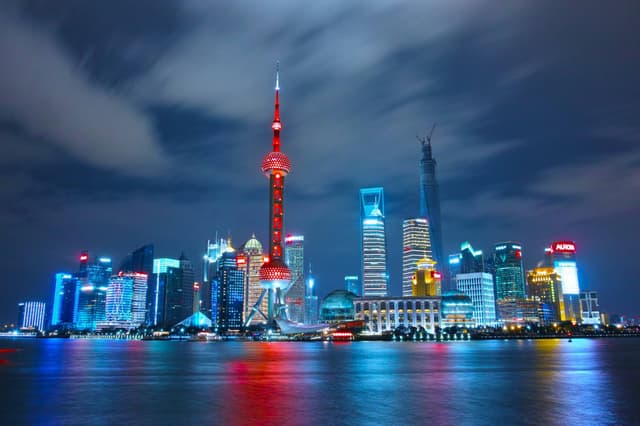
- Look for free sights. West Lake, the Bund, Chengdu's People's Park and many state museums cost nothing.
- Stay safe from tourist traps. Politely decline invitations to tea ceremonies or art galleries from strangers in tourist zones, a well-known overcharging scam. Our guide on whether it is safe to travel to China covers more.
Which hidden costs catch travellers out?
- Compulsory park buses. Jiuzhaigou's 90 yuan bus and Zhangjiajie's internal transport are not optional in practice.
- Cable cars and elevators. At mountain sites these can cost more than the entry ticket itself.
- Mobile data. Many Western apps are blocked on local networks, so travellers often buy a roaming plan or a travel eSIM that routes data abroad. Prices vary by provider; compare before you fly.
- Airport transfers. Beijing Daxing and Shanghai Pudong are far from the centre, and a taxi can cost 200 yuan or more.
- Guided tours at remote Great Wall sections. Getting to Jinshanling or Jiankou without a car is slow, and private transfers add significantly to the day.
- Card and app fees. Your bank's foreign transaction fee plus the platform fee on larger payments.
If you would rather have flights, transfers and hotels arranged in one place, compare China tour packages.
Frequently asked questions
Is China expensive to travel in 2026?
China is not expensive for most international visitors in 2026. Budget travellers can manage on about 260 to 350 yuan a day (roughly 40 to 52 US dollars), and mid-range travellers typically spend 650 to 1,000 yuan a day. Food and city transport are cheap, while high-speed rail, national park tickets and big-city hotels are the main costs. A stronger yuan, around 6.7 per dollar, has made it slightly dearer for dollar spenders.
How much money do I need per day in China?
Plan roughly 350 yuan a day in China if you stay in hostels and eat street food, around 800 yuan a day for comfortable mid-range travel, and 1,500 yuan or more for four or five star hotels with some guided visits. These figures exclude international flights and long train journeys, which should be budgeted separately. Smaller cities such as Xi'an, Chengdu and Guilin are usually 15 to 25 percent cheaper than Beijing or Shanghai.
Is China cheaper than Japan or Thailand?
China is clearly cheaper than Japan for meals, metro rides and mid-range hotels, and its high-speed trains cost less per kilometre than Japan's Shinkansen. Compared with Thailand, China is similar for street food but more expensive for hotels in big cities, and Thailand has no high-speed rail network yet. Overall, China sits between the two: moderate rather than cheap or expensive.
What is the most expensive part of a China trip?
After international flights, the biggest costs of a China trip are usually hotels in Beijing and Shanghai and long-distance high-speed rail. A single Beijing to Shanghai second class ticket costs about 576 to 697 yuan. Flagship sights with compulsory buses or cable cars, such as Jiuzhaigou, Zhangjiajie and the Great Wall at Mutianyu, also add up if you visit several.
How much does a 10-day trip to China cost?
A 10-day trip to China covering three cities typically costs about 5,000 to 6,500 yuan per person on a budget, 9,500 to 12,000 yuan mid-range, and 18,000 to 23,000 yuan for comfort travel, as of 2026. That covers hotels on a twin-share basis, food, local transport, intercity trains and entry fees, but excludes international flights and any visa costs.
Can foreigners use Alipay and WeChat Pay in China?
Yes. Foreign visitors can link international Visa or Mastercard cards to Alipay and WeChat Pay and pay almost anywhere in China by QR code. Alipay allows up to 5,000 US dollars per transaction and 50,000 US dollars a year. Payments of 200 yuan or less are usually fee free, while larger single payments commonly carry a fee of about 3 percent. Keep some cash as a backup.
How much is the Great Wall of China entrance fee?
Entry to the popular Mutianyu section of the Great Wall of China costs 40 yuan, with a 15 yuan shuttle bus and a cable car of 100 yuan one way or 140 yuan return. Badaling is 40 yuan in peak season and 35 in low season, and Jinshanling is 65 yuan. Book in advance with your passport, especially at weekends and holidays.
How much is a high-speed train ticket in China?
High-speed train tickets in China are priced by distance. As of 2026, Beijing to Shanghai costs about 576 to 697 yuan in second class, Beijing to Xi'an about 480 to 593 yuan, and Guangzhou to Guilin about 164 to 318 yuan. First class is roughly 1.6 times second class, and business class three to four times. Fares vary by train, time and season.
Is it more expensive to visit China during Golden Week?
Yes, much more. During China's National Day Golden Week, 1 to 7 October in 2026, domestic tourism peaks, hotel prices at scenic sites often double, and popular trains sell out within minutes. The Spring Festival around Chinese New Year has the same effect. Travelling from 8 October onward gives similar autumn weather at far lower prices and with smaller crowds.
Who needs a visa to visit China?
As of 2026, citizens of about 50 countries, including the UK and Canada since February 2026, can visit China visa-free for up to 30 days under a policy running until 31 December 2026. About 55 nationalities can also use the 240-hour visa-free transit scheme at 65 ports. Everyone else, including Nepali and Indian passport holders, needs a tourist (L) visa arranged in advance.
Is food in China cheap for tourists?
Food in China is cheap for tourists who eat like locals. Street snacks cost 5 to 20 yuan, a bowl of noodles or plate of dumplings about 20 to 40 yuan, and a casual sit-down dinner 80 to 150 yuan per person. Peking duck at a famous Beijing restaurant and Western restaurants cost more, often 150 to 400 yuan per person.
What currency is used in China and what is the exchange rate?
China uses the renminbi, whose unit is the yuan (CNY). As of September 2026 the rate is roughly 6.7 yuan to 1 US dollar, after the yuan strengthened to its firmest level in over three years. Rates move daily, so check a live converter before exchanging money. Most spending is done through Alipay or WeChat Pay rather than cash.