

+977-9709047652
Explore by Country
See all 12 Thailand packages
Most popular pick
See all 12 Thailand packages
See all 8 Vietnam packages
Most popular pick
See all 8 Vietnam packages
See all 4 Indonesia (Bali) packages
Most popular pick
See all 4 Indonesia (Bali) packages
See all 3 Maldives packages
Most popular pick
See all 3 Maldives packages
See all 3 China packages
Most popular pick
See all 3 China packages
See all 2 Sri Lanka packages
Most popular pick
See all 2 Sri Lanka packages
See all 3 Malaysia packages
Most popular pick
See all 3 Malaysia packages
See all 2 Singapore packages
Most popular pick
See all 2 Singapore packages
See all 2 Kenya packages
Most popular pick
See all 2 Kenya packages
See all 4 India packages
Most popular pick
See all 4 India packages
Search Tours or Places
Blog / China

Rainbow Mountain China: The Honest Zhangye Danxia Guide

10 min read 27 Jul 2026

If you have ever saved a photo of striped, candy colored hills and wondered where on earth that is, you were probably looking at the rainbow mountain china is famous for. The real place is called Zhangye Danxia, and it sits in Gansu province in the northwest of the country. It is a genuine geological site with real color in the rock. It is also one of the most heavily edited landscapes on the internet, which is why so many people come home feeling let down. This guide sets your expectations properly, then tells you how to actually visit.

The short version: go on a sunny day, go late in the afternoon, and know what you are walking into. Do that and it is one of the strangest and best things you can see in the country.

What the rainbow mountains in China actually are

Zhangye Danxia is a scenic area of striped sandstone hills inside Zhangye National Geopark, in Gansu province. The colorful section is often called the Colorful Hills or Qicai Danxia, and it lies roughly 40 kilometers west of Zhangye city. The park protects a much wider area of gorges, cliffs and eroded rock, but the striped hills are what everyone comes for.

Danxia is a Chinese geological term for red bed landforms, so the word describes a rock type rather than this one location. Zhangye was designated a UNESCO Global Geopark in 2020, which is a real designation and worth knowing.

Here is the correction almost every article gets wrong. There is a separate UNESCO World Heritage listing called China Danxia, inscribed in 2010, and Zhangye is not part of it. That listing covers six sites in the south and southeast of the country: Chishui, Taining, Langshan, Danxiashan, Longhushan and Jianglangshan. You can check the component list yourself on the UNESCO World Heritage listing for China Danxia. So Zhangye is a UNESCO Global Geopark, not a World Heritage site. Both are real, they are just different programs.

WhatDetail
WhereZhangye, Gansu province, northwest China, in the Hexi Corridor
What it isStriped sandstone hills, part of Zhangye National Geopark, a UNESCO Global Geopark
SeasonOpen year round; late spring through early autumn is the comfortable window
Best lightDirect sun, low angle. Late afternoon into sunset, or the first hour after opening
Time neededTwo to three hours for the standard shuttle loop, longer if you wait for sunset
How to reachZhangye West railway station or Zhangye Ganzhou airport, then around an hour by road
NearbyBinggou Danxia, plus Jiayuguan and Dunhuang further along the Silk Road

The honest truth about those photos

The colors are real. The photos you have seen are not accurate. Most viral images of Zhangye Danxia have been pushed hard in editing, with saturation and contrast raised until the hills look like spilled paint. Some of the worst offenders have had greens and blues added that simply are not in the rock.

What you actually see is a range of reds, rust oranges, dusty pinks, mustard yellows, cream and grey, laid down in clean diagonal bands across bare hillsides. It is subtle rather than neon. On a good afternoon it is genuinely beautiful. On a flat grey day it can look like brown dirt.

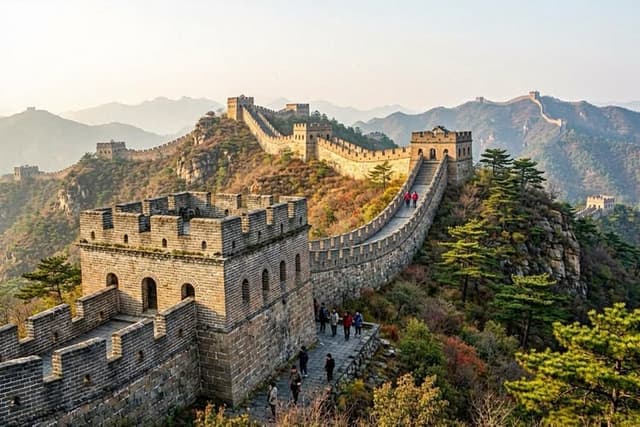
Go in expecting a striped desert landscape rather than a fairground, and you will enjoy it. It is a bit like seeing the Great Wall of China for the first time: the reality is different from the postcard, and usually better once you stop comparing. If you are still deciding what to build a trip around, our guide to the best places to visit in China puts this site in context with everything else.
How the colors formed

The stripes are layers of sandstone and mudstone that were laid down as sediment over tens of millions of years, in a landscape of ancient lakes, rivers and shallow seas. Different layers picked up different minerals, and each mineral holds a different color.

  • Hematite and other iron oxides give the reds and rust tones
  • Goethite and limonite produce the yellows and browns
  • Chlorite adds the faint green bands
  • Calcite and dolomite show up as the pale cream and white layers

Those layers were originally flat. The collision between the Indian and Eurasian plates, the same slow crash that raised the Himalaya and the Tibetan Plateau, tilted and buckled them into the ridges you see now. Wind and water then stripped off the soil and cut the valleys, leaving the layers exposed on the surface. Estimates for the age of the rock vary between sources, but the deposition runs into the tens of millions of years and the uplift is far more recent than the sediment itself.

What a visit is really like

The colorful area has four numbered viewing platforms spread over several kilometers, connected by the park shuttle bus. Private cars and tour coaches are not allowed inside, so everyone uses the same buses. They run frequently and you hop off at each platform, walk the boardwalks and steps, then get back on.

Platform two involves a serious stair climb. Platform four is generally considered the best viewpoint and is the one people crowd for sunset, so it fills up and gets tight. The whole standard loop takes about two to three hours. Add another hour if you plan to sit and wait for the light.

There is almost no shade anywhere. Bring water, a hat and sunscreen, and wear shoes you can climb steps in. Personal drone flying is prohibited inside the park, so do not plan your shots around one.

When to go, and what time of day

The colors need direct sunlight. An overcast day is a wasted trip. This is the single most useful thing to know. Without the sun hitting the rock at an angle, the bands flatten out and the whole hillside turns dull. Midday sun is almost as bad, because overhead light washes the contrast out.

Aim for the last hour or two before sunset, or the first hour after the park opens. Low sun deepens the reds and yellows and makes the layering pop. A shower the day before helps too, because damp rock holds color better once it dries in the sun.

The park stays open through winter, but hours are shorter in the cold months and longer in summer, so check current times before you plan a sunset. Late spring through early autumn is the comfortable window, roughly May to October. Summer afternoons in Gansu get hot and exposed, which is another argument for the evening slot.

How to get to Zhangye Danxia

Zhangye is well connected by rail. Zhangye West station is on the high speed line, with trains from Lanzhou taking around three hours, and services running along the corridor toward Jiayuguan and beyond. There is also a small airport, Zhangye Ganzhou, with limited domestic flights from cities like Lanzhou, Xian and Urumqi.

From the city, the park is about 40 kilometers west, which is roughly 45 minutes to an hour by taxi or local bus. Most people base themselves in Zhangye for a night, visit in the late afternoon, and move on the next day. Trying to do it as a same day stop between trains is possible but tight, and it removes your ability to wait for good light.

Binggou Danxia and what else is nearby

Binggou Danxia is the second park in the area, a short drive from the colorful hills. It is a completely different experience. Instead of stripes, Binggou is about shapes: eroded red rock towers, mushroom columns, narrow canyons and cliff faces that people compare to castles and animals. There is far less color and far more sculpture, and far fewer visitors. Two hours covers it comfortably, and it works well as a morning before an evening at the colorful hills.

Zhangye also sits in the middle of the Hexi Corridor, the narrow strip that carried the historic Silk Road west. Jiayuguan, with its fort at the western end of the Ming wall, is the next major stop, and Dunhuang with the Mogao Caves lies further on. Strung together, that makes a natural five or six day route across Gansu, which is how most China tour packages covering this region are built.

The Peru mix up, cleared up once

There is a second, entirely unrelated place also called Rainbow Mountain: Vinicunca, in the Cusco region of Peru. It reaches about 5,036 meters and is reached by a drive from Cusco plus a steep hike at serious altitude. Its colors also come from mineral layers, but it is a single striped peak in the Andes, not a park of low sandstone hills in a Chinese desert. Photos of the two get swapped constantly online. If someone shows you a picture of a hiker on a knife edge ridge with llamas, that is Peru, not Gansu.

Entry paperwork before you go

China has expanded visa free entry considerably in recent years. Many nationalities can now enter for short tourist stays without a visa, and separately there is a transit arrangement allowing eligible travelers from a long list of countries to stay for up to ten days when passing through to a third country, entering at a wide range of ports across most provinces. You need a confirmed onward ticket to qualify for that one.

These rules change often, and eligibility depends on your passport, your route and where you land. Always confirm your own case against the official source, the National Immigration Administration of China, before you book anything. Treat anything you read elsewhere, including this page, as subject to change.

A short practical checklist

  • Book a night in Zhangye rather than trying to squeeze it between trains
  • Check the forecast and go on the sunniest day you have
  • Target late afternoon into sunset, and get to platform four early
  • Carry water, sun protection and shoes for stairs; there is no shade
  • Leave the drone at home
  • Add Binggou Danxia in the morning if you have a full day
  • Chain it with Jiayuguan and Dunhuang if you want a proper Silk Road run

If you would rather have the trains, drivers and timing handled for you, our China Holiday Package covers this stretch of Gansu as part of a wider route.

Frequently asked questions about the Rainbow Mountains

Are the rainbow mountains in China real or photoshopped?

The rock really is striped and colored, but the photos are usually edited heavily. In person the hills show reds, oranges, pinks, yellows, cream and grey. The bright greens and blues in viral images are added in post processing and are not in the rock.

Where exactly is Zhangye Danxia?

Zhangye Danxia is in Gansu province in northwest China, about 40 kilometers west of Zhangye city, inside Zhangye National Geopark. It sits in the Hexi Corridor, the historic Silk Road route between Lanzhou and Dunhuang.

Is Zhangye Danxia a UNESCO World Heritage site?

No. Zhangye is a UNESCO Global Geopark, designated in 2020. The separate China Danxia World Heritage listing from 2010 covers six other sites in southern and southeastern China and does not include Zhangye.

What is the best time of day to see the colors?

Late afternoon into sunset gives the strongest color, with the first hour after opening as the alternative. Direct sun at a low angle is essential. Overcast weather or harsh midday light flattens the stripes and makes the hills look dull.

How long do you need at the park?

Allow two to three hours for the standard loop of four viewing platforms, which are linked by the park shuttle bus. Add an extra hour if you intend to wait at platform four for sunset, since it gets crowded.

Is the Rainbow Mountain in China the same as the one in Peru?

No, they are different places. Peru's Rainbow Mountain is Vinicunca near Cusco, a high Andean peak above 5,000 meters reached by hiking. Zhangye Danxia is a park of low sandstone hills in a Chinese desert, visited by shuttle bus.

Tags
Rainbow Mountain ChinaZhangye DanxiaGansuChina Travel GuideSilk RoadNatural WondersHexi Corridor
Share
G
Gomayu Team
Writer at Gomayu
Keep reading
Blog / China

Rainbow Mountain China: The Honest Zhangye Danxia Guide

10 min read 27 Jul 2026

If you have ever saved a photo of striped, candy colored hills and wondered where on earth that is, you were probably looking at the rainbow mountain china is famous for. The real place is called Zhangye Danxia, and it sits in Gansu province in the northwest of the country. It is a genuine geological site with real color in the rock. It is also one of the most heavily edited landscapes on the internet, which is why so many people come home feeling let down. This guide sets your expectations properly, then tells you how to actually visit.

The short version: go on a sunny day, go late in the afternoon, and know what you are walking into. Do that and it is one of the strangest and best things you can see in the country.

What the rainbow mountains in China actually are

Zhangye Danxia is a scenic area of striped sandstone hills inside Zhangye National Geopark, in Gansu province. The colorful section is often called the Colorful Hills or Qicai Danxia, and it lies roughly 40 kilometers west of Zhangye city. The park protects a much wider area of gorges, cliffs and eroded rock, but the striped hills are what everyone comes for.

Danxia is a Chinese geological term for red bed landforms, so the word describes a rock type rather than this one location. Zhangye was designated a UNESCO Global Geopark in 2020, which is a real designation and worth knowing.

Here is the correction almost every article gets wrong. There is a separate UNESCO World Heritage listing called China Danxia, inscribed in 2010, and Zhangye is not part of it. That listing covers six sites in the south and southeast of the country: Chishui, Taining, Langshan, Danxiashan, Longhushan and Jianglangshan. You can check the component list yourself on the UNESCO World Heritage listing for China Danxia. So Zhangye is a UNESCO Global Geopark, not a World Heritage site. Both are real, they are just different programs.

WhatDetail
WhereZhangye, Gansu province, northwest China, in the Hexi Corridor
What it isStriped sandstone hills, part of Zhangye National Geopark, a UNESCO Global Geopark
SeasonOpen year round; late spring through early autumn is the comfortable window
Best lightDirect sun, low angle. Late afternoon into sunset, or the first hour after opening
Time neededTwo to three hours for the standard shuttle loop, longer if you wait for sunset
How to reachZhangye West railway station or Zhangye Ganzhou airport, then around an hour by road
NearbyBinggou Danxia, plus Jiayuguan and Dunhuang further along the Silk Road

The honest truth about those photos

The colors are real. The photos you have seen are not accurate. Most viral images of Zhangye Danxia have been pushed hard in editing, with saturation and contrast raised until the hills look like spilled paint. Some of the worst offenders have had greens and blues added that simply are not in the rock.

What you actually see is a range of reds, rust oranges, dusty pinks, mustard yellows, cream and grey, laid down in clean diagonal bands across bare hillsides. It is subtle rather than neon. On a good afternoon it is genuinely beautiful. On a flat grey day it can look like brown dirt.

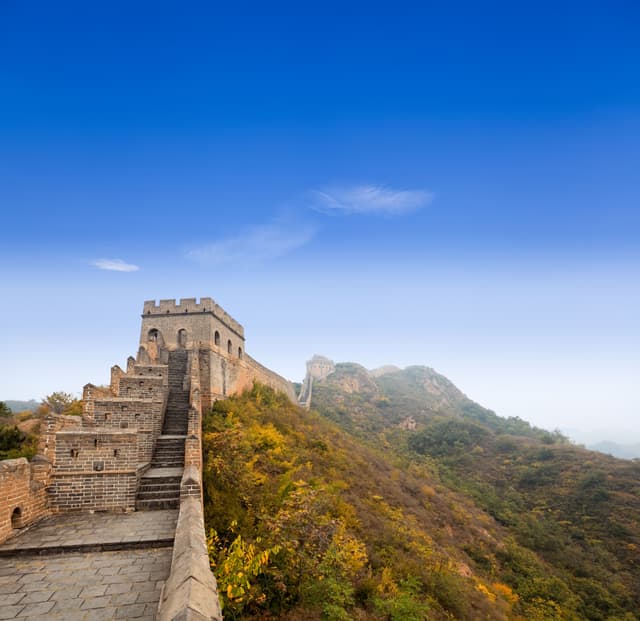
Go in expecting a striped desert landscape rather than a fairground, and you will enjoy it. It is a bit like seeing the Great Wall of China for the first time: the reality is different from the postcard, and usually better once you stop comparing. If you are still deciding what to build a trip around, our guide to the best places to visit in China puts this site in context with everything else.
How the colors formed

The stripes are layers of sandstone and mudstone that were laid down as sediment over tens of millions of years, in a landscape of ancient lakes, rivers and shallow seas. Different layers picked up different minerals, and each mineral holds a different color.

  • Hematite and other iron oxides give the reds and rust tones
  • Goethite and limonite produce the yellows and browns
  • Chlorite adds the faint green bands
  • Calcite and dolomite show up as the pale cream and white layers

Those layers were originally flat. The collision between the Indian and Eurasian plates, the same slow crash that raised the Himalaya and the Tibetan Plateau, tilted and buckled them into the ridges you see now. Wind and water then stripped off the soil and cut the valleys, leaving the layers exposed on the surface. Estimates for the age of the rock vary between sources, but the deposition runs into the tens of millions of years and the uplift is far more recent than the sediment itself.

What a visit is really like

The colorful area has four numbered viewing platforms spread over several kilometers, connected by the park shuttle bus. Private cars and tour coaches are not allowed inside, so everyone uses the same buses. They run frequently and you hop off at each platform, walk the boardwalks and steps, then get back on.

Platform two involves a serious stair climb. Platform four is generally considered the best viewpoint and is the one people crowd for sunset, so it fills up and gets tight. The whole standard loop takes about two to three hours. Add another hour if you plan to sit and wait for the light.

There is almost no shade anywhere. Bring water, a hat and sunscreen, and wear shoes you can climb steps in. Personal drone flying is prohibited inside the park, so do not plan your shots around one.

When to go, and what time of day

The colors need direct sunlight. An overcast day is a wasted trip. This is the single most useful thing to know. Without the sun hitting the rock at an angle, the bands flatten out and the whole hillside turns dull. Midday sun is almost as bad, because overhead light washes the contrast out.

Aim for the last hour or two before sunset, or the first hour after the park opens. Low sun deepens the reds and yellows and makes the layering pop. A shower the day before helps too, because damp rock holds color better once it dries in the sun.

The park stays open through winter, but hours are shorter in the cold months and longer in summer, so check current times before you plan a sunset. Late spring through early autumn is the comfortable window, roughly May to October. Summer afternoons in Gansu get hot and exposed, which is another argument for the evening slot.

How to get to Zhangye Danxia

Zhangye is well connected by rail. Zhangye West station is on the high speed line, with trains from Lanzhou taking around three hours, and services running along the corridor toward Jiayuguan and beyond. There is also a small airport, Zhangye Ganzhou, with limited domestic flights from cities like Lanzhou, Xian and Urumqi.

From the city, the park is about 40 kilometers west, which is roughly 45 minutes to an hour by taxi or local bus. Most people base themselves in Zhangye for a night, visit in the late afternoon, and move on the next day. Trying to do it as a same day stop between trains is possible but tight, and it removes your ability to wait for good light.

Binggou Danxia and what else is nearby

Binggou Danxia is the second park in the area, a short drive from the colorful hills. It is a completely different experience. Instead of stripes, Binggou is about shapes: eroded red rock towers, mushroom columns, narrow canyons and cliff faces that people compare to castles and animals. There is far less color and far more sculpture, and far fewer visitors. Two hours covers it comfortably, and it works well as a morning before an evening at the colorful hills.

Zhangye also sits in the middle of the Hexi Corridor, the narrow strip that carried the historic Silk Road west. Jiayuguan, with its fort at the western end of the Ming wall, is the next major stop, and Dunhuang with the Mogao Caves lies further on. Strung together, that makes a natural five or six day route across Gansu, which is how most China tour packages covering this region are built.

The Peru mix up, cleared up once

There is a second, entirely unrelated place also called Rainbow Mountain: Vinicunca, in the Cusco region of Peru. It reaches about 5,036 meters and is reached by a drive from Cusco plus a steep hike at serious altitude. Its colors also come from mineral layers, but it is a single striped peak in the Andes, not a park of low sandstone hills in a Chinese desert. Photos of the two get swapped constantly online. If someone shows you a picture of a hiker on a knife edge ridge with llamas, that is Peru, not Gansu.

Entry paperwork before you go

China has expanded visa free entry considerably in recent years. Many nationalities can now enter for short tourist stays without a visa, and separately there is a transit arrangement allowing eligible travelers from a long list of countries to stay for up to ten days when passing through to a third country, entering at a wide range of ports across most provinces. You need a confirmed onward ticket to qualify for that one.

These rules change often, and eligibility depends on your passport, your route and where you land. Always confirm your own case against the official source, the National Immigration Administration of China, before you book anything. Treat anything you read elsewhere, including this page, as subject to change.

A short practical checklist

  • Book a night in Zhangye rather than trying to squeeze it between trains
  • Check the forecast and go on the sunniest day you have
  • Target late afternoon into sunset, and get to platform four early
  • Carry water, sun protection and shoes for stairs; there is no shade
  • Leave the drone at home
  • Add Binggou Danxia in the morning if you have a full day
  • Chain it with Jiayuguan and Dunhuang if you want a proper Silk Road run

If you would rather have the trains, drivers and timing handled for you, our China Holiday Package covers this stretch of Gansu as part of a wider route.

Frequently asked questions about the Rainbow Mountains

Are the rainbow mountains in China real or photoshopped?

The rock really is striped and colored, but the photos are usually edited heavily. In person the hills show reds, oranges, pinks, yellows, cream and grey. The bright greens and blues in viral images are added in post processing and are not in the rock.

Where exactly is Zhangye Danxia?

Zhangye Danxia is in Gansu province in northwest China, about 40 kilometers west of Zhangye city, inside Zhangye National Geopark. It sits in the Hexi Corridor, the historic Silk Road route between Lanzhou and Dunhuang.

Is Zhangye Danxia a UNESCO World Heritage site?

No. Zhangye is a UNESCO Global Geopark, designated in 2020. The separate China Danxia World Heritage listing from 2010 covers six other sites in southern and southeastern China and does not include Zhangye.

What is the best time of day to see the colors?

Late afternoon into sunset gives the strongest color, with the first hour after opening as the alternative. Direct sun at a low angle is essential. Overcast weather or harsh midday light flattens the stripes and makes the hills look dull.

How long do you need at the park?

Allow two to three hours for the standard loop of four viewing platforms, which are linked by the park shuttle bus. Add an extra hour if you intend to wait at platform four for sunset, since it gets crowded.

Is the Rainbow Mountain in China the same as the one in Peru?

No, they are different places. Peru's Rainbow Mountain is Vinicunca near Cusco, a high Andean peak above 5,000 meters reached by hiking. Zhangye Danxia is a park of low sandstone hills in a Chinese desert, visited by shuttle bus.

Tags
Rainbow Mountain ChinaZhangye DanxiaGansuChina Travel GuideSilk RoadNatural WondersHexi Corridor
Share
G
Gomayu Team
Writer at Gomayu
Keep reading