+977-9709047652
Explore by Country
See all 22 Thailand packages
Most popular pick
See all 22 Thailand packages →
See all 11 Vietnam packages
Most popular pick
See all 11 Vietnam packages →
See all 10 Indonesia (Bali) packages
Most popular pick
See all 10 Indonesia (Bali) packages →
See all 7 Maldives packages
Most popular pick
See all 7 Maldives packages →
See all 10 China packages
Most popular pick
See all 10 China packages →
See all 13 Sri Lanka packages
Most popular pick
See all 13 Sri Lanka packages →
See all 9 Malaysia packages
Most popular pick
See all 9 Malaysia packages →
See all 8 Singapore packages
Most popular pick
See all 8 Singapore packages →
See all 2 Kenya packages
Most popular pick
See all 2 Kenya packages →
See all 16 India packages
Most popular pick
See all 16 India packages →
See all 3 Dubai packages
Most popular pick
See all 3 Dubai packages →
See all 7 Nepal packages
Most popular pick
See all 7 Nepal packages →
See all 6 Philippines packages
Most popular pick
See all 6 Philippines packages →
Search Tours or Places
Blog / Philippines

Things To Do in Boracay: Beaches & Top Activities

18 min read 24 Aug 2026 · Updated 12 Sep 2026
Things To Do in Boracay: Beaches & Top Activities

The best things to do in Boracay center on White Beach, the island's roughly four kilometre stretch of powder soft sand split into Station 1, Station 2 and Station 3, where you can swim, sunbathe and stroll a car free beachfront path lined with restaurants and shops. Beyond the beach, top activities include sailing a traditional paraw outrigger boat at sunset, kitesurfing or windsurfing at Bulabog Beach between November and April, island hopping by boat to snorkelling spots such as Crystal Cove and Crocodile Island, cliff jumping at Ariel's Point, and escaping the crowds at quieter Puka Shell Beach on the island's northern tip. Most travellers need three to five days to cover the beaches, water sports and day trips without feeling rushed.

What are the top things to do in Boracay?

Boracay packs an unusual amount of variety into a small island, roughly 7 kilometres long and only about 1 kilometre across at its narrowest point. The table below is a quick reference for what to do and where, before the detailed sections that follow.

ActivityWhere to do itBest for
Swimming and sunbathingWhite Beach, Stations 1 to 3First timers, families, sunset watchers
Sunset paraw sailingWhite Beach, departing near Station 2 or 3Couples, photographers
Kitesurfing and windsurfingBulabog BeachWater sports enthusiasts, November to April
Island hopping and snorkellingCrystal Cove, Crocodile Island, Magic IslandGroups, first time visitors, snorkellers
Cliff jumpingAriel's Point, northwest coastAdventure seekers, small groups
Quiet beach timePuka Shell Beach, Diniwid BeachTravellers avoiding crowds
Viewpoints and zipliningMount Luho, near BulabogPanoramic photos, adrenaline activities
Shopping and nightlifeD'Mall and D'Talipapa, Station 2Evenings, souvenir hunting, dining

What can you do on White Beach, Boracay's main attraction?

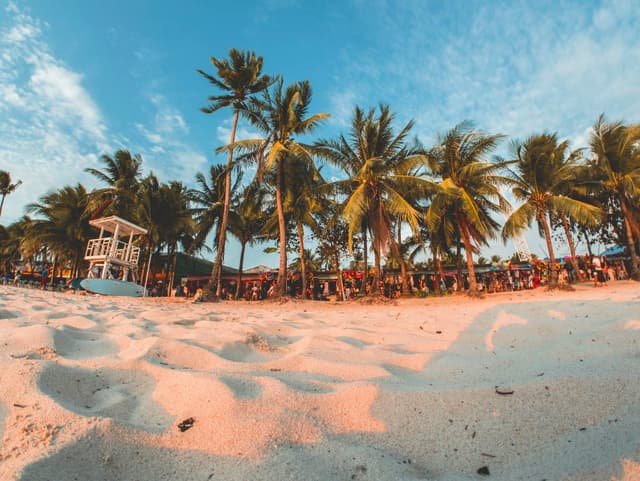
White Beach is the reason Boracay became famous. Its fine, talcum soft sand stays cool underfoot even at midday, and the beach curves gently along the island's western shore facing the open sea, which is what gives it Boracay's celebrated sunsets. A paved and landscaped beachfront path, sometimes called the boardwalk, runs almost the entire length of the beach, connecting resorts, restaurants, dive shops and souvenir stalls without needing a vehicle.

The beach is informally divided into three stations, a naming system left over from when boats used numbered landing points to drop off passengers. Each station has a distinct character, and where you base yourself shapes the kind of trip you have.

StationSand and atmosphereBest forLandmarks nearby
Station 1Widest, whitest sand on the beach, calmer and more spread outUpscale stays, quieter beach walks, sunset viewsWilly's Rock, a small shrine on a rock formation just offshore
Station 2Busiest section, narrower sand, constant foot trafficShopping, dining, nightlife, budget to mid range staysD'Mall de Boracay, D'Talipapa market, the main boat jetty
Station 3Quieter, more low key, closer to Angol areaBudget travellers, longer stays, a slower paceAngol area restaurants, easy access to Bulabog on foot or tricycle

Even if you are not staying at Station 1, it is worth walking or taking a tricycle there in the late afternoon. The sand is widest and the crowds thinner, and the view west across the water is unobstructed, which makes it the classic spot for watching the sun drop into the sea. Station 2 is where most of the restaurants, massage parlours, convenience stores and bars cluster, so even travellers based elsewhere usually pass through it daily. For a broader look at how Boracay's beaches compare with others around the country, see this guide to the best beaches in the Philippines.

What is the D'Mall and D'Talipapa experience like?

D'Mall de Boracay is an open air, pedestrian only shopping and dining strip in Station 2, packed with restaurants ranging from casual Filipino eateries to international chains, along with souvenir shops, spas and tour booking counters. A short walk away, D'Talipapa is a wet market where you can buy fresh seafood, from prawns and squid to local fish, by weight, then have it cooked at an adjoining restaurant for a small cooking fee, a popular and inexpensive way to eat well in Boracay.
Explore Philippines tour packages
View all →

What water sports and adventure activities can you try in Boracay?

Boracay's water sports scene splits geographically. White Beach, on the calmer western side, is used for gentler activities like banana boats, stand up paddleboarding and helmet diving close to shore. Bulabog Beach, on the exposed eastern side, catches steady wind and is where kitesurfing, windsurfing and most of the adrenaline heavy water sports happen.

ActivityLocationBest season or timeNotes
Kitesurfing and windsurfingBulabog BeachNovember to April, amihan wind seasonReef protected lagoon, several kite schools offer lessons and multi day courses
ParasailingBulabog Beach, sometimes launched near White BeachYear round, wind dependentShort flights towed by speedboat, good for first timers
Banana boat and towablesWhite Beach and Bulabog BeachYear roundGroup activity, calmer on White Beach's sheltered water
Helmet diving or sea walkingNear Station 1 or 2, White BeachYear roundNo swimming skill required, walk along the shallow seabed in a diving helmet
Stand up paddleboardingWhite Beach, calmer morningsYear round, best early morningRentals and short lessons widely available near the stations
Scuba divingVarious dive sites around the island, including Yapak and Crocodile IslandYear round, visibility often best outside habagat rainsPADI affiliated dive shops offer introductory and certified dives
Cliff jumpingAriel's Point, northwest coastAmihan season for calmer seasMultiple jump platforms at different heights, reached by boat
Ziplining and ATV ridesMount Luho and hills above BulabogYear roundCombines an aerial view of the island with the ride itself

Why is Bulabog Beach the water sports hub?

Bulabog Beach faces east, opposite White Beach, and sits inside a reef protected lagoon that creates flat water close to shore with stronger, more consistent wind further out. During the amihan season, the northeast monsoon delivers steady onshore to cross shore wind almost daily, which is why kite schools and equipment rental shops line the beach and why Bulabog is regularly ranked among Asia's better known kitesurfing destinations. Outside that window, particularly during the habagat months, wind is less reliable and the beach is quieter, though some schools still operate. Swimming conditions at Bulabog are generally less pleasant than White Beach even when the wind drops, since the seabed can be rocky and the water murkier, so it is best treated as a sports beach rather than a swimming one.

What are the best beaches in Boracay beyond White Beach?

White Beach gets the attention, but Boracay has several other beaches worth a visit, each with a different mood and a shorter walk to reach fewer people.

BeachLocation on the islandCharacterBest for
Puka Shell BeachNorthern tip of BoracayCoarser, shell flecked sand, more open sea and gentle waves, a scattering of drink shacks rather than a resort stripTravellers wanting a quieter, less developed beach day
Diniwid BeachA small cove just north of Station 1, reached by boardwalk or footpathCompact, sheltered, framed by rock outcropsA calmer alternative close to White Beach's amenities
Bulabog BeachEastern side of the island, opposite White BeachWind swept, lively with kite schools rather than sunbathersKitesurfing, windsurfing, sunrise views
Ilig Iligan BeachNortheast coastRocky, forested surroundings with a small cave nearbySnorkelling and a break from the main tourist strip
Tambisaan BeachSoutheast coastWorking beach used as a ferry landing during habagat season, plus local fishing boatsTravellers arriving or departing during the rainy season

Puka Shell Beach in particular has become popular enough that it is no longer the secret it once was, but it remains far less crowded than White Beach, and the walk or tricycle ride out through the island's interior is a good way to see a slice of everyday Boracay away from the resorts.

Where can you go island hopping and snorkelling around Boracay?

Half day and full day island hopping tours are one of the most popular ways to see Boracay's surrounding waters, typically departing by outrigger boat from Station 1 or Station 3. A standard route links a handful of small islands and reefs a short boat ride from the main island.

  • Crystal Cove Island: a small island with two natural caves and a viewing platform, reachable by a short boat ride and often combined with a swimming stop.
  • Crocodile Island: named for its crocodile shaped silhouette, a well known snorkelling spot with coral formations close to the surface.
  • Magic Island: a compact reef and rock formation popular for snorkelling and cliff jumping from a small diving platform.
  • Ariel's Point: usually sold as its own excursion rather than bundled into a standard island hopping tour, combining cliff jumping from several platform heights with snorkelling and a beach stop.

Snorkelling gear is generally provided or easy to rent at each stop, and the water around these islands is calmer than the open sea, making the tours suitable for children and inexperienced swimmers, though conditions vary with the season and should always be checked with the boat operator before setting out.

What can you do at sunset and in the evening in Boracay?

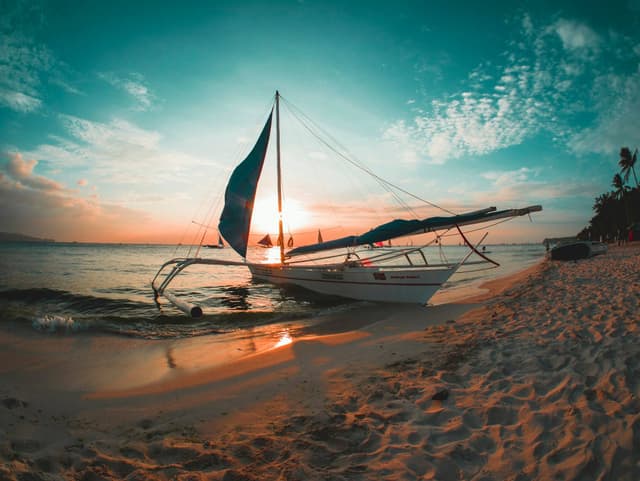
Because White Beach faces west, sunset is close to a daily event, with the sand filling up as the sky turns orange over the sea. The classic way to experience it is aboard a traditional paraw, a double outrigger sailboat with a colourful triangular sail, on a short cruise along the coastline timed to end as the sun sets. Beachfront bars and restaurants along all three stations set up tables directly on the sand for sunset dinners, and fire dancing shows are a regular feature at several bars after dark, especially around Station 2.

Station 2 carries most of the nightlife, with a mix of beach bars, live music venues and late night spots, while Station 1 and Station 3 are noticeably quieter in the evening, which suits travellers who prefer an early night after a day in the water.

What local food should you try in Boracay?

Boracay's food scene reflects both Filipino coastal cooking and the island's international visitor mix. Freshly grilled or steamed seafood, bought by weight at D'Talipapa market and cooked to order, is one of the most distinctly Boracay ways to eat. Elsewhere on the island, look for grilled chicken and pork barbecue skewers, chori burgers, which are Filipino chorizo patties in a bun, and the ubiquitous fresh fruit shakes made from mango, banana, watermelon and other seasonal fruit, sold from small stands along the beachfront. For a wider view of Filipino dishes worth seeking out on any trip through the country, this guide to what to eat in the Philippines is a useful companion.

When is the best time to visit Boracay?

Boracay's climate is shaped by two monsoon seasons. The amihan, a northeast monsoon, brings drier weather, lower humidity and steadier wind from roughly November through April, and is generally considered the best overall window to visit. The habagat, a southwest monsoon, brings the rainy season from around June through October, with more frequent showers and a higher chance of tropical storms later in that period.

MonthsSeasonGeneral conditionsGood for
December to FebruaryAmihan, peak dry seasonCooler, drier, steady breeze, calmer seas on the western shoreBeach days, sailing, general sightseeing, the busiest and most popular months
March to AprilAmihan, late dry seasonHotter and more humid, still generally dryStrong kitesurfing wind, warm water swimming
MayTransitionBuilding heat and humidity ahead of the rainsFewer crowds before the wet season begins
June to AugustHabagat, early rainy seasonIncreasing rain showers, generally still swimmable between showersLower rates and quieter beaches, with some rain to plan around
September to OctoberHabagat, peak rainy seasonHeaviest rain and the highest chance of tropical stormsBudget travel for those flexible with plans, though some tours may be cancelled in rough weather
NovemberTransition back to amihanRain tapering off, wind picking upEarly kitesurfing season and shoulder season pricing

Kitesurfers should aim for the amihan months, since Bulabog's wind is far less consistent during habagat. Sun seekers wanting the calmest seas and driest skies should target December through April, understanding that this is also when the island is at its busiest. For a broader look at seasonal planning across the country, see this guide to the best time to visit the Philippines.

During the habagat season, rougher seas on Boracay's western side sometimes push ferry departures away from Caticlan Jetty Port and Cagban Port toward Tabon Jetty Port and Tambisaan Port on the island's more sheltered eastern side. It is a normal seasonal adjustment rather than a sign of a closure, but it is worth knowing about if you are trying to time your arrival.

How do you get to Boracay?

Boracay has no airport of its own; access is by air to a nearby airport on Panay Island, followed by a land and sea transfer. There are two main gateways.

StepWhat happensDetails
1. Fly inLand at either Caticlan or KaliboGodofredo P. Ramos Airport in Caticlan is the closer option, a short transfer from the jetty port; Kalibo International Airport is further away but often served by more flights, including some international routes
2. Reach the jetty portTransfer overland to the portFrom Caticlan airport it is a short tricycle or van ride to Caticlan Jetty Port; from Kalibo it is a longer van or bus transfer of roughly one and a half to two hours to reach the same port
3. Pay port feesEnvironmental and terminal fees are collected before boardingFees are paid at the jetty port terminal and go toward island maintenance and boat operations; amounts can change, so check current signage at the port
4. Cross by boatA short pump boat or ferry crossing to Boracay islandBoats typically dock at Cagban Port during the amihan season or at Tambisaan Port during the habagat season
5. Reach your accommodationA final short tricycle rideMotorised tricycles are the standard way to reach hotels along White Beach from either landing point

Private transfer services and many hotels can arrange the whole route from either airport as a single booking, which removes the need to coordinate each leg separately. For more detail on moving between islands and cities elsewhere in the country, this guide on how to get around the Philippines covers domestic flights, ferries and buses in depth.

How many days do you need in Boracay?

Three days is the practical minimum to see White Beach properly, fit in one water activity such as island hopping or a kitesurfing lesson, and have at least one relaxed sunset. Four to five days allows time to add a day trip to Puka Shell Beach or Ariel's Point, try a second water sport, and simply spend an unhurried day doing very little on the sand, which for many visitors is the actual point of coming to Boracay. Travellers combining Boracay with other stops on a longer Philippine trip, for example Palawan or Cebu, often allocate three to four days here and build the rest of the itinerary around flight availability out of Caticlan or Kalibo. For help structuring a multi stop trip, this Philippines itinerary guide lays out how islands like Boracay fit alongside other regions.

Travellers who also want to compare Boracay against other well known Philippine islands before deciding how to split their time might find this roundup of the best islands in the Philippines useful for weighing options like Palawan and Siargao against Boracay's beach and nightlife focus.

Is Boracay suitable for families, couples and solo travellers?

Boracay works well across traveller types because the island's compact size and range of stations let different groups self select the pace they want. Families with young children generally gravitate toward Station 1's wide, calm sand and the gentle, shallow water for swimming, while avoiding Bulabog's rougher conditions. Couples are well served by Station 1's quieter sunset views, private paraw cruises and beachfront dinner tables. Solo travellers and groups of friends tend to base themselves nearer Station 2, close to the shops, restaurants and nightlife, with easy access to group activities like island hopping tours where it is simple to join other travellers.

Whatever the travel style, distances on the island are short enough that basing yourself in one station rarely limits access to the others, since tricycles and the beachfront path connect the whole stretch of White Beach in minutes.

What else is worth knowing before you go?

What is Mount Luho?

Mount Luho is Boracay's highest point, reached by a short habal habal motorbike ride or a walk up from the road near Bulabog. A viewing deck at the top gives a panoramic view over both White Beach and Bulabog Beach, and the same hillside area is home to a zipline course and ATV trails.

Did Boracay ever close to visitors?

Yes. In 2018 the Philippine government closed Boracay to tourists for six months for an environmental rehabilitation programme, addressing sewage and infrastructure issues that had built up over years of rapid growth. The island reopened later that year with stricter environmental rules, including limits on some beach activities and infrastructure upgrades, and remains a working example of tourism management that other Philippine destinations have referenced since. You can read a fuller history of the island on Wikipedia's entry for Boracay.

How developed is the rest of the island?

Away from White Beach and Station 2's density, much of Boracay's interior and eastern coast is far less built up, with palm groves, small farms and quieter roads. A tricycle ride to Puka Shell Beach or Ilig Iligan Beach passes through this quieter side of the island, which is worth seeing even briefly for contrast with the beach strip. The Philippine Department of Tourism's official travel site, Philippines.travel, is a useful reference for current travel advisories and regional information before you go.

For travellers mapping out a longer Philippine trip that includes Boracay alongside other islands, browsing Philippines tour packages is a useful way to see how flights, inter island transfers and accommodation across multiple stops can fit together.

Frequently asked questions

What is Boracay famous for?

Boracay is famous for White Beach, a roughly four kilometre stretch of fine, powder white sand repeatedly ranked among the best beaches in the world by international travel publications. It is also known for its sunsets, water sports at Bulabog Beach, and a lively but walkable beachfront strip of restaurants, bars and shops.

Which station should I stay in on White Beach?

Station 1 suits travellers who want the widest sand, calmer surroundings and upscale resorts. Station 2 is best for anyone who wants to be near D'Mall's restaurants, shops and nightlife. Station 3 is the quieter, more budget friendly option, still within walking or tricycle distance of everything else.

Is Boracay good for swimming year round?

White Beach is swimmable for most of the year, though the amihan season from November to April generally offers calmer, clearer water. During the habagat rainy season from June to October, conditions can turn choppier at times, particularly at Bulabog Beach, which is better suited to wind sports than swimming in any season.

When is the best time for kitesurfing in Boracay?

The kitesurfing and windsurfing season at Bulabog Beach runs roughly from November to April, when the amihan monsoon delivers steady, reliable wind. Outside this window, wind is far less consistent, and while some kite schools still operate, conditions are considered less favourable.

Do I need to book a boat for island hopping, or can I just show up?

Island hopping tours around Boracay run by outrigger boat from Station 1 or Station 3, and while some travellers arrange a boat on the day, booking ahead through a hotel or tour desk is more reliable, especially in peak season when boats can fill up early in the morning.

Is Puka Shell Beach worth the trip?

Yes, for travellers wanting a break from White Beach's crowds. Puka Shell Beach on the island's northern tip has coarser, shell flecked sand and a more open, natural feel, with fewer resorts and shops, and is typically reached by a tricycle ride of around twenty minutes from the main beach.

How do I get from Caticlan airport to Boracay island?

From Godofredo P. Ramos Airport in Caticlan, take a short tricycle or van ride to Caticlan Jetty Port, pay the environmental and terminal fees at the terminal, then cross by boat to Boracay, landing at Cagban Port or Tambisaan Port depending on the season. A final tricycle ride connects the landing point to most hotels.

Can I visit Boracay during the rainy season?

Yes, Boracay is open year round, including during the habagat rainy season from roughly June to October. Expect more frequent rain showers and a higher chance of tropical storms later in that period, along with thinner crowds, and be prepared for ferries to sometimes reroute to Tambisaan Port when the western crossing is rough.

Is there an entry or environmental fee for Boracay?

Yes, visitors pay an environmental fee and a terminal fee at the jetty port before crossing to the island, part of the island's environmental management programme introduced after its 2018 rehabilitation closure. Exact amounts can change, so it is best to check current signage or your transfer provider rather than relying on older figures.

How many days should I spend in Boracay?

Three days covers White Beach, one water activity and at least one sunset comfortably. Four to five days allows time for a day trip to Puka Shell Beach or Ariel's Point and a more relaxed pace, which suits most travellers combining Boracay with other stops on a wider Philippine trip.

Tags
Philippines
Share
G
Gomayu Team
Writer at Gomayu
Keep reading
Blog / Philippines
Things To Do in Boracay: Beaches & Top Activities
18 min read 24 Aug 2026 · Updated 12 Sep 2026
Things To Do in Boracay: Beaches & Top Activities

The best things to do in Boracay center on White Beach, the island's roughly four kilometre stretch of powder soft sand split into Station 1, Station 2 and Station 3, where you can swim, sunbathe and stroll a car free beachfront path lined with restaurants and shops. Beyond the beach, top activities include sailing a traditional paraw outrigger boat at sunset, kitesurfing or windsurfing at Bulabog Beach between November and April, island hopping by boat to snorkelling spots such as Crystal Cove and Crocodile Island, cliff jumping at Ariel's Point, and escaping the crowds at quieter Puka Shell Beach on the island's northern tip. Most travellers need three to five days to cover the beaches, water sports and day trips without feeling rushed.

What are the top things to do in Boracay?

Boracay packs an unusual amount of variety into a small island, roughly 7 kilometres long and only about 1 kilometre across at its narrowest point. The table below is a quick reference for what to do and where, before the detailed sections that follow.

ActivityWhere to do itBest for
Swimming and sunbathingWhite Beach, Stations 1 to 3First timers, families, sunset watchers
Sunset paraw sailingWhite Beach, departing near Station 2 or 3Couples, photographers
Kitesurfing and windsurfingBulabog BeachWater sports enthusiasts, November to April
Island hopping and snorkellingCrystal Cove, Crocodile Island, Magic IslandGroups, first time visitors, snorkellers
Cliff jumpingAriel's Point, northwest coastAdventure seekers, small groups
Quiet beach timePuka Shell Beach, Diniwid BeachTravellers avoiding crowds
Viewpoints and zipliningMount Luho, near BulabogPanoramic photos, adrenaline activities
Shopping and nightlifeD'Mall and D'Talipapa, Station 2Evenings, souvenir hunting, dining

What can you do on White Beach, Boracay's main attraction?

White Beach is the reason Boracay became famous. Its fine, talcum soft sand stays cool underfoot even at midday, and the beach curves gently along the island's western shore facing the open sea, which is what gives it Boracay's celebrated sunsets. A paved and landscaped beachfront path, sometimes called the boardwalk, runs almost the entire length of the beach, connecting resorts, restaurants, dive shops and souvenir stalls without needing a vehicle.

The beach is informally divided into three stations, a naming system left over from when boats used numbered landing points to drop off passengers. Each station has a distinct character, and where you base yourself shapes the kind of trip you have.

StationSand and atmosphereBest forLandmarks nearby
Station 1Widest, whitest sand on the beach, calmer and more spread outUpscale stays, quieter beach walks, sunset viewsWilly's Rock, a small shrine on a rock formation just offshore
Station 2Busiest section, narrower sand, constant foot trafficShopping, dining, nightlife, budget to mid range staysD'Mall de Boracay, D'Talipapa market, the main boat jetty
Station 3Quieter, more low key, closer to Angol areaBudget travellers, longer stays, a slower paceAngol area restaurants, easy access to Bulabog on foot or tricycle

Even if you are not staying at Station 1, it is worth walking or taking a tricycle there in the late afternoon. The sand is widest and the crowds thinner, and the view west across the water is unobstructed, which makes it the classic spot for watching the sun drop into the sea. Station 2 is where most of the restaurants, massage parlours, convenience stores and bars cluster, so even travellers based elsewhere usually pass through it daily. For a broader look at how Boracay's beaches compare with others around the country, see this guide to the best beaches in the Philippines.

What is the D'Mall and D'Talipapa experience like?

D'Mall de Boracay is an open air, pedestrian only shopping and dining strip in Station 2, packed with restaurants ranging from casual Filipino eateries to international chains, along with souvenir shops, spas and tour booking counters. A short walk away, D'Talipapa is a wet market where you can buy fresh seafood, from prawns and squid to local fish, by weight, then have it cooked at an adjoining restaurant for a small cooking fee, a popular and inexpensive way to eat well in Boracay.
Explore Philippines tour packages
View all →

What water sports and adventure activities can you try in Boracay?

Boracay's water sports scene splits geographically. White Beach, on the calmer western side, is used for gentler activities like banana boats, stand up paddleboarding and helmet diving close to shore. Bulabog Beach, on the exposed eastern side, catches steady wind and is where kitesurfing, windsurfing and most of the adrenaline heavy water sports happen.

ActivityLocationBest season or timeNotes
Kitesurfing and windsurfingBulabog BeachNovember to April, amihan wind seasonReef protected lagoon, several kite schools offer lessons and multi day courses
ParasailingBulabog Beach, sometimes launched near White BeachYear round, wind dependentShort flights towed by speedboat, good for first timers
Banana boat and towablesWhite Beach and Bulabog BeachYear roundGroup activity, calmer on White Beach's sheltered water
Helmet diving or sea walkingNear Station 1 or 2, White BeachYear roundNo swimming skill required, walk along the shallow seabed in a diving helmet
Stand up paddleboardingWhite Beach, calmer morningsYear round, best early morningRentals and short lessons widely available near the stations
Scuba divingVarious dive sites around the island, including Yapak and Crocodile IslandYear round, visibility often best outside habagat rainsPADI affiliated dive shops offer introductory and certified dives
Cliff jumpingAriel's Point, northwest coastAmihan season for calmer seasMultiple jump platforms at different heights, reached by boat
Ziplining and ATV ridesMount Luho and hills above BulabogYear roundCombines an aerial view of the island with the ride itself

Why is Bulabog Beach the water sports hub?

Bulabog Beach faces east, opposite White Beach, and sits inside a reef protected lagoon that creates flat water close to shore with stronger, more consistent wind further out. During the amihan season, the northeast monsoon delivers steady onshore to cross shore wind almost daily, which is why kite schools and equipment rental shops line the beach and why Bulabog is regularly ranked among Asia's better known kitesurfing destinations. Outside that window, particularly during the habagat months, wind is less reliable and the beach is quieter, though some schools still operate. Swimming conditions at Bulabog are generally less pleasant than White Beach even when the wind drops, since the seabed can be rocky and the water murkier, so it is best treated as a sports beach rather than a swimming one.

What are the best beaches in Boracay beyond White Beach?

White Beach gets the attention, but Boracay has several other beaches worth a visit, each with a different mood and a shorter walk to reach fewer people.

BeachLocation on the islandCharacterBest for
Puka Shell BeachNorthern tip of BoracayCoarser, shell flecked sand, more open sea and gentle waves, a scattering of drink shacks rather than a resort stripTravellers wanting a quieter, less developed beach day
Diniwid BeachA small cove just north of Station 1, reached by boardwalk or footpathCompact, sheltered, framed by rock outcropsA calmer alternative close to White Beach's amenities
Bulabog BeachEastern side of the island, opposite White BeachWind swept, lively with kite schools rather than sunbathersKitesurfing, windsurfing, sunrise views
Ilig Iligan BeachNortheast coastRocky, forested surroundings with a small cave nearbySnorkelling and a break from the main tourist strip
Tambisaan BeachSoutheast coastWorking beach used as a ferry landing during habagat season, plus local fishing boatsTravellers arriving or departing during the rainy season

Puka Shell Beach in particular has become popular enough that it is no longer the secret it once was, but it remains far less crowded than White Beach, and the walk or tricycle ride out through the island's interior is a good way to see a slice of everyday Boracay away from the resorts.

Where can you go island hopping and snorkelling around Boracay?

Half day and full day island hopping tours are one of the most popular ways to see Boracay's surrounding waters, typically departing by outrigger boat from Station 1 or Station 3. A standard route links a handful of small islands and reefs a short boat ride from the main island.

  • Crystal Cove Island: a small island with two natural caves and a viewing platform, reachable by a short boat ride and often combined with a swimming stop.
  • Crocodile Island: named for its crocodile shaped silhouette, a well known snorkelling spot with coral formations close to the surface.
  • Magic Island: a compact reef and rock formation popular for snorkelling and cliff jumping from a small diving platform.
  • Ariel's Point: usually sold as its own excursion rather than bundled into a standard island hopping tour, combining cliff jumping from several platform heights with snorkelling and a beach stop.

Snorkelling gear is generally provided or easy to rent at each stop, and the water around these islands is calmer than the open sea, making the tours suitable for children and inexperienced swimmers, though conditions vary with the season and should always be checked with the boat operator before setting out.

What can you do at sunset and in the evening in Boracay?

Because White Beach faces west, sunset is close to a daily event, with the sand filling up as the sky turns orange over the sea. The classic way to experience it is aboard a traditional paraw, a double outrigger sailboat with a colourful triangular sail, on a short cruise along the coastline timed to end as the sun sets. Beachfront bars and restaurants along all three stations set up tables directly on the sand for sunset dinners, and fire dancing shows are a regular feature at several bars after dark, especially around Station 2.

Station 2 carries most of the nightlife, with a mix of beach bars, live music venues and late night spots, while Station 1 and Station 3 are noticeably quieter in the evening, which suits travellers who prefer an early night after a day in the water.

What local food should you try in Boracay?

Boracay's food scene reflects both Filipino coastal cooking and the island's international visitor mix. Freshly grilled or steamed seafood, bought by weight at D'Talipapa market and cooked to order, is one of the most distinctly Boracay ways to eat. Elsewhere on the island, look for grilled chicken and pork barbecue skewers, chori burgers, which are Filipino chorizo patties in a bun, and the ubiquitous fresh fruit shakes made from mango, banana, watermelon and other seasonal fruit, sold from small stands along the beachfront. For a wider view of Filipino dishes worth seeking out on any trip through the country, this guide to what to eat in the Philippines is a useful companion.

When is the best time to visit Boracay?

Boracay's climate is shaped by two monsoon seasons. The amihan, a northeast monsoon, brings drier weather, lower humidity and steadier wind from roughly November through April, and is generally considered the best overall window to visit. The habagat, a southwest monsoon, brings the rainy season from around June through October, with more frequent showers and a higher chance of tropical storms later in that period.

MonthsSeasonGeneral conditionsGood for
December to FebruaryAmihan, peak dry seasonCooler, drier, steady breeze, calmer seas on the western shoreBeach days, sailing, general sightseeing, the busiest and most popular months
March to AprilAmihan, late dry seasonHotter and more humid, still generally dryStrong kitesurfing wind, warm water swimming
MayTransitionBuilding heat and humidity ahead of the rainsFewer crowds before the wet season begins
June to AugustHabagat, early rainy seasonIncreasing rain showers, generally still swimmable between showersLower rates and quieter beaches, with some rain to plan around
September to OctoberHabagat, peak rainy seasonHeaviest rain and the highest chance of tropical stormsBudget travel for those flexible with plans, though some tours may be cancelled in rough weather
NovemberTransition back to amihanRain tapering off, wind picking upEarly kitesurfing season and shoulder season pricing

Kitesurfers should aim for the amihan months, since Bulabog's wind is far less consistent during habagat. Sun seekers wanting the calmest seas and driest skies should target December through April, understanding that this is also when the island is at its busiest. For a broader look at seasonal planning across the country, see this guide to the best time to visit the Philippines.

During the habagat season, rougher seas on Boracay's western side sometimes push ferry departures away from Caticlan Jetty Port and Cagban Port toward Tabon Jetty Port and Tambisaan Port on the island's more sheltered eastern side. It is a normal seasonal adjustment rather than a sign of a closure, but it is worth knowing about if you are trying to time your arrival.

How do you get to Boracay?

Boracay has no airport of its own; access is by air to a nearby airport on Panay Island, followed by a land and sea transfer. There are two main gateways.

StepWhat happensDetails
1. Fly inLand at either Caticlan or KaliboGodofredo P. Ramos Airport in Caticlan is the closer option, a short transfer from the jetty port; Kalibo International Airport is further away but often served by more flights, including some international routes
2. Reach the jetty portTransfer overland to the portFrom Caticlan airport it is a short tricycle or van ride to Caticlan Jetty Port; from Kalibo it is a longer van or bus transfer of roughly one and a half to two hours to reach the same port
3. Pay port feesEnvironmental and terminal fees are collected before boardingFees are paid at the jetty port terminal and go toward island maintenance and boat operations; amounts can change, so check current signage at the port
4. Cross by boatA short pump boat or ferry crossing to Boracay islandBoats typically dock at Cagban Port during the amihan season or at Tambisaan Port during the habagat season
5. Reach your accommodationA final short tricycle rideMotorised tricycles are the standard way to reach hotels along White Beach from either landing point

Private transfer services and many hotels can arrange the whole route from either airport as a single booking, which removes the need to coordinate each leg separately. For more detail on moving between islands and cities elsewhere in the country, this guide on how to get around the Philippines covers domestic flights, ferries and buses in depth.

How many days do you need in Boracay?

Three days is the practical minimum to see White Beach properly, fit in one water activity such as island hopping or a kitesurfing lesson, and have at least one relaxed sunset. Four to five days allows time to add a day trip to Puka Shell Beach or Ariel's Point, try a second water sport, and simply spend an unhurried day doing very little on the sand, which for many visitors is the actual point of coming to Boracay. Travellers combining Boracay with other stops on a longer Philippine trip, for example Palawan or Cebu, often allocate three to four days here and build the rest of the itinerary around flight availability out of Caticlan or Kalibo. For help structuring a multi stop trip, this Philippines itinerary guide lays out how islands like Boracay fit alongside other regions.

Travellers who also want to compare Boracay against other well known Philippine islands before deciding how to split their time might find this roundup of the best islands in the Philippines useful for weighing options like Palawan and Siargao against Boracay's beach and nightlife focus.

Is Boracay suitable for families, couples and solo travellers?

Boracay works well across traveller types because the island's compact size and range of stations let different groups self select the pace they want. Families with young children generally gravitate toward Station 1's wide, calm sand and the gentle, shallow water for swimming, while avoiding Bulabog's rougher conditions. Couples are well served by Station 1's quieter sunset views, private paraw cruises and beachfront dinner tables. Solo travellers and groups of friends tend to base themselves nearer Station 2, close to the shops, restaurants and nightlife, with easy access to group activities like island hopping tours where it is simple to join other travellers.

Whatever the travel style, distances on the island are short enough that basing yourself in one station rarely limits access to the others, since tricycles and the beachfront path connect the whole stretch of White Beach in minutes.

What else is worth knowing before you go?

What is Mount Luho?

Mount Luho is Boracay's highest point, reached by a short habal habal motorbike ride or a walk up from the road near Bulabog. A viewing deck at the top gives a panoramic view over both White Beach and Bulabog Beach, and the same hillside area is home to a zipline course and ATV trails.

Did Boracay ever close to visitors?

Yes. In 2018 the Philippine government closed Boracay to tourists for six months for an environmental rehabilitation programme, addressing sewage and infrastructure issues that had built up over years of rapid growth. The island reopened later that year with stricter environmental rules, including limits on some beach activities and infrastructure upgrades, and remains a working example of tourism management that other Philippine destinations have referenced since. You can read a fuller history of the island on Wikipedia's entry for Boracay.

How developed is the rest of the island?

Away from White Beach and Station 2's density, much of Boracay's interior and eastern coast is far less built up, with palm groves, small farms and quieter roads. A tricycle ride to Puka Shell Beach or Ilig Iligan Beach passes through this quieter side of the island, which is worth seeing even briefly for contrast with the beach strip. The Philippine Department of Tourism's official travel site, Philippines.travel, is a useful reference for current travel advisories and regional information before you go.

For travellers mapping out a longer Philippine trip that includes Boracay alongside other islands, browsing Philippines tour packages is a useful way to see how flights, inter island transfers and accommodation across multiple stops can fit together.

Frequently asked questions

What is Boracay famous for?

Boracay is famous for White Beach, a roughly four kilometre stretch of fine, powder white sand repeatedly ranked among the best beaches in the world by international travel publications. It is also known for its sunsets, water sports at Bulabog Beach, and a lively but walkable beachfront strip of restaurants, bars and shops.

Which station should I stay in on White Beach?

Station 1 suits travellers who want the widest sand, calmer surroundings and upscale resorts. Station 2 is best for anyone who wants to be near D'Mall's restaurants, shops and nightlife. Station 3 is the quieter, more budget friendly option, still within walking or tricycle distance of everything else.

Is Boracay good for swimming year round?

White Beach is swimmable for most of the year, though the amihan season from November to April generally offers calmer, clearer water. During the habagat rainy season from June to October, conditions can turn choppier at times, particularly at Bulabog Beach, which is better suited to wind sports than swimming in any season.

When is the best time for kitesurfing in Boracay?

The kitesurfing and windsurfing season at Bulabog Beach runs roughly from November to April, when the amihan monsoon delivers steady, reliable wind. Outside this window, wind is far less consistent, and while some kite schools still operate, conditions are considered less favourable.

Do I need to book a boat for island hopping, or can I just show up?

Island hopping tours around Boracay run by outrigger boat from Station 1 or Station 3, and while some travellers arrange a boat on the day, booking ahead through a hotel or tour desk is more reliable, especially in peak season when boats can fill up early in the morning.

Is Puka Shell Beach worth the trip?

Yes, for travellers wanting a break from White Beach's crowds. Puka Shell Beach on the island's northern tip has coarser, shell flecked sand and a more open, natural feel, with fewer resorts and shops, and is typically reached by a tricycle ride of around twenty minutes from the main beach.

How do I get from Caticlan airport to Boracay island?

From Godofredo P. Ramos Airport in Caticlan, take a short tricycle or van ride to Caticlan Jetty Port, pay the environmental and terminal fees at the terminal, then cross by boat to Boracay, landing at Cagban Port or Tambisaan Port depending on the season. A final tricycle ride connects the landing point to most hotels.

Can I visit Boracay during the rainy season?

Yes, Boracay is open year round, including during the habagat rainy season from roughly June to October. Expect more frequent rain showers and a higher chance of tropical storms later in that period, along with thinner crowds, and be prepared for ferries to sometimes reroute to Tambisaan Port when the western crossing is rough.

Is there an entry or environmental fee for Boracay?

Yes, visitors pay an environmental fee and a terminal fee at the jetty port before crossing to the island, part of the island's environmental management programme introduced after its 2018 rehabilitation closure. Exact amounts can change, so it is best to check current signage or your transfer provider rather than relying on older figures.

How many days should I spend in Boracay?

Three days covers White Beach, one water activity and at least one sunset comfortably. Four to five days allows time for a day trip to Puka Shell Beach or Ariel's Point and a more relaxed pace, which suits most travellers combining Boracay with other stops on a wider Philippine trip.
Tags
Philippines
Share
G
Gomayu Team
Writer at Gomayu
Keep reading