












































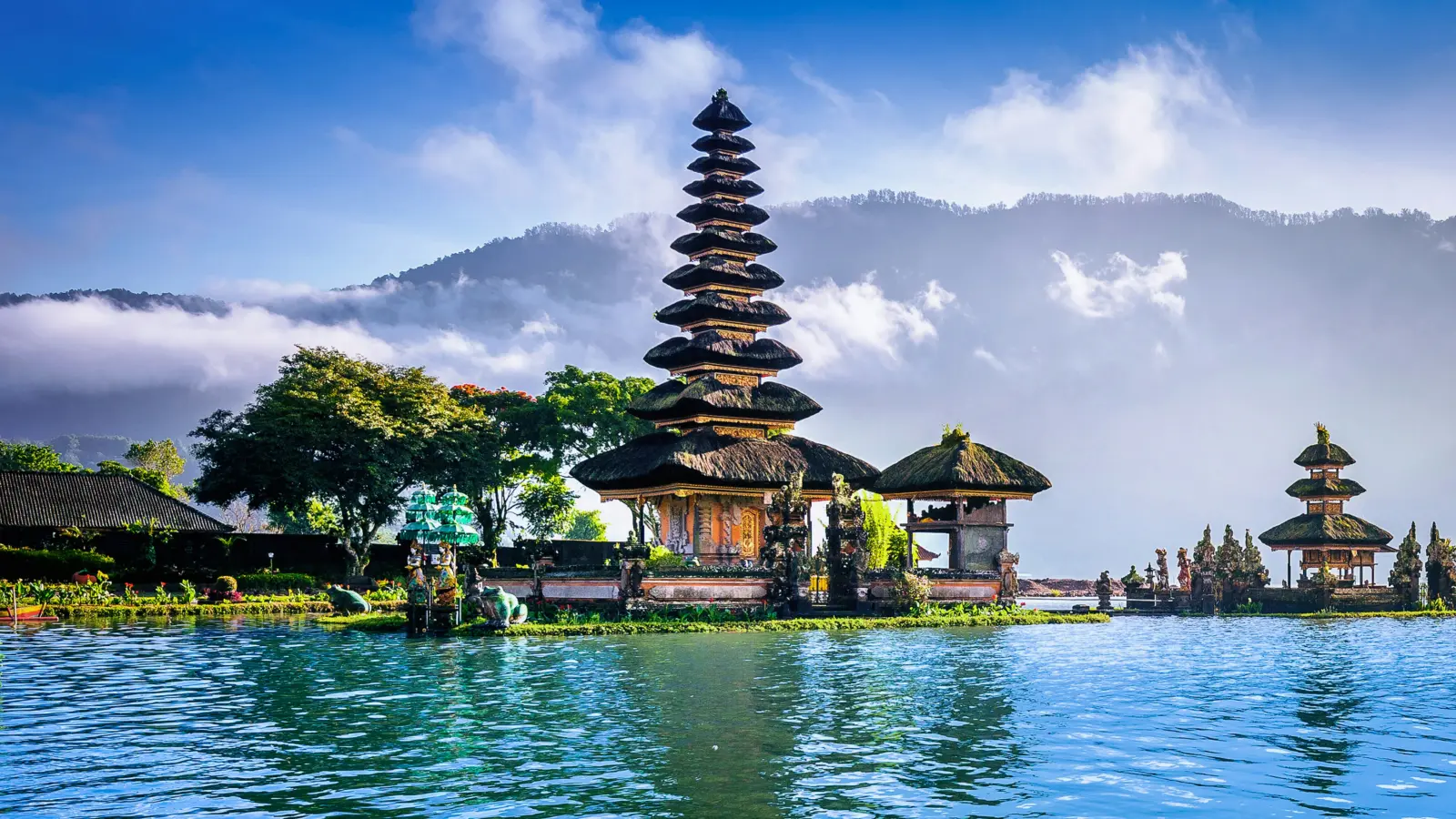
Short answer: Bali is an island in Indonesia, in Southeast Asia. It sits about 8 degrees south of the Equator, between the much larger island of Java to the west and the island of Lombok to the east. Bali is not a country. It is one of Indonesia's provinces, with its own provincial capital, Denpasar, and it uses Indonesia's currency, the rupiah, and Indonesia's national language, Bahasa Indonesia. Most people on the island are Hindu, which makes Bali unusual inside a Muslim majority country.
The follow up questions are almost always the same: which country, what language, which religion, what time is it there, how far is it, and what is the island known for. Each answer below is short and self contained. For readers in Nepal, we have added what matters from Kathmandu: the time difference, the routing, and why a Nepali Hindu often feels at home in a Balinese temple courtyard.
Where is Bali?
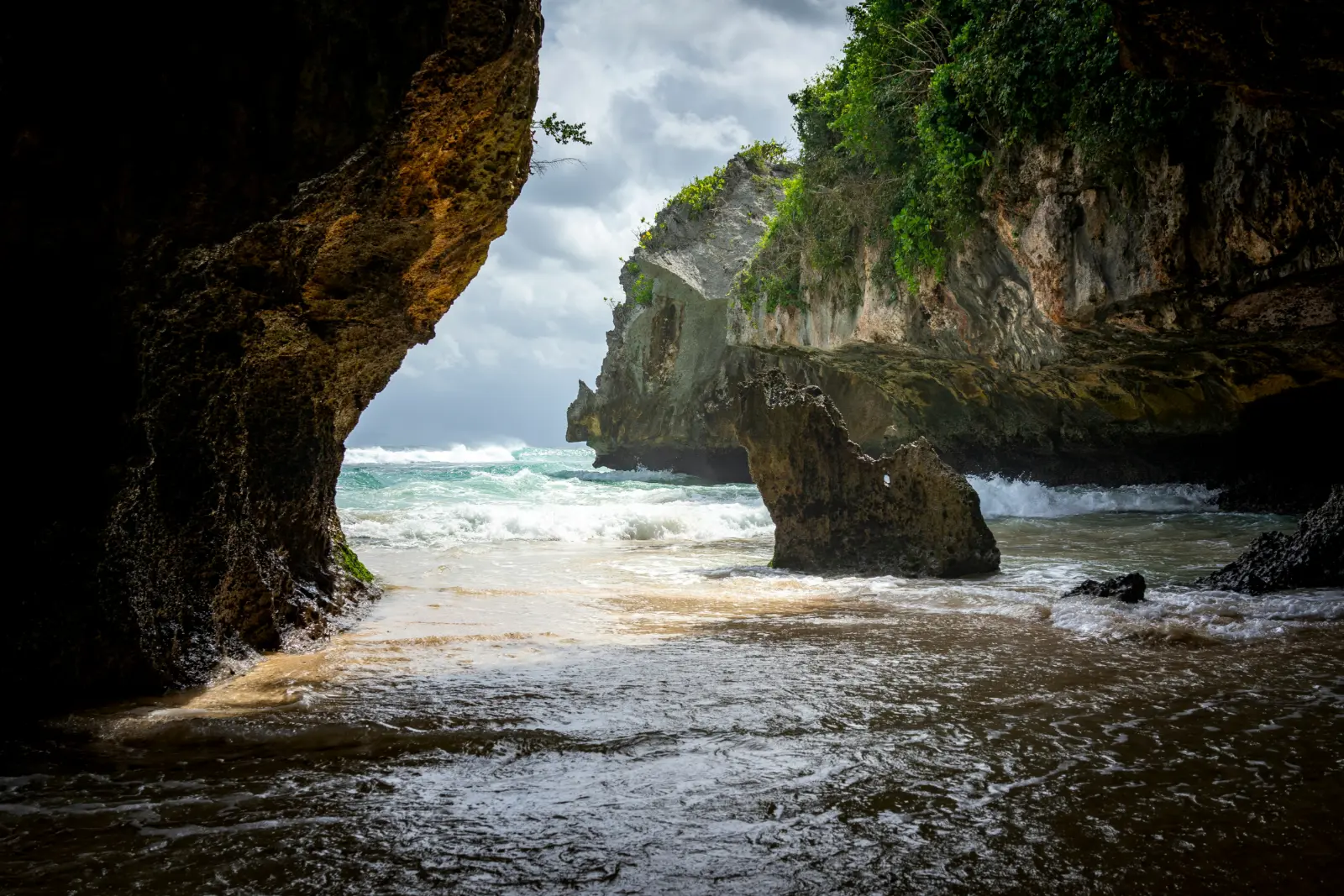
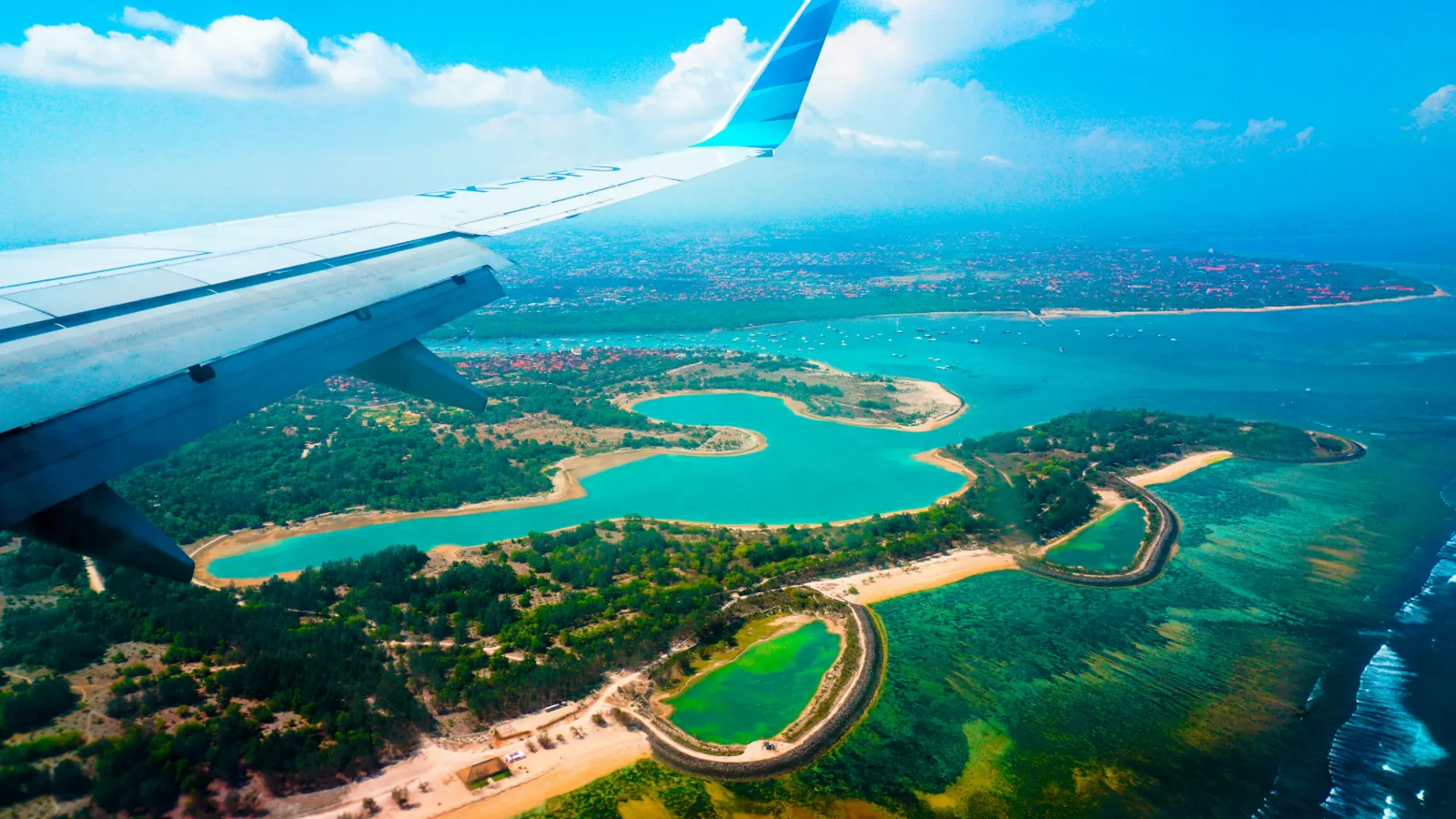
Bali is a tropical island in the Indonesian archipelago, in the south of Southeast Asia. On a map, find the long island of Java (where Jakarta is), then look immediately east of its eastern tip. The next island is Bali. Keep going east across a deeper channel and you reach Lombok.
Bali belongs to the island chain that geographers call the Lesser Sunda Islands, which runs east from Java towards Timor. To the north of Bali is the Bali Sea. To the south is the open Indian Ocean, which is why the south coast gets the surf that Bali is famous for. The island sits roughly 8 degrees south of the Equator, so technically it is in the Southern Hemisphere, although in practice the climate is tropical all year and you think in terms of wet and dry seasons rather than summer and winter.
Bali quick facts
Here are the core facts in one table. Where a figure comes from an official source, the source is named.
| Question | Answer |
|---|---|
| Country | Indonesia (Republic of Indonesia) |
| Status | Province of Indonesia (Provinsi Bali), formed in 1958 |
| Provincial capital | Denpasar |
| Administrative units | 8 regencies and 1 city (Denpasar) |
| Land area | 5,780.06 square kilometres (BPS, 2020 Census release) |
| Population | 4.32 million in September 2020 (BPS, 2020 Census) |
| Main languages | Bahasa Indonesia (national) and Balinese (Basa Bali); English is common in tourism |
| Main religion | Balinese Hinduism (Agama Hindu Dharma), followed by a large majority of residents |
| Currency | Indonesian rupiah (IDR) |
| Time zone | WITA, Central Indonesia Time, UTC+8, no daylight saving |
| Time versus Nepal | Bali is 2 hours 15 minutes ahead of Nepal |
| Main airport | I Gusti Ngurah Rai International Airport (DPS), in Tuban, south of Denpasar |
| Highest point | Mount Agung (Gunung Agung), an active volcano of roughly 3,000 metres |
| Nickname | Island of the Gods (Pulau Dewata) |
A note on Mount Agung's height: published figures differ. The Smithsonian Institution's Global Volcanism Program lists 2,997 metres, while many local and tourism sources quote slightly higher numbers. Rather than pick one, we say "roughly 3,000 metres", which is true whichever survey you trust.
What is around Bali?
It helps to know Bali's neighbours, because many Bali trips include a hop to one of them.
| Direction | Neighbour | What separates it from Bali | Why travellers care |
|---|---|---|---|
| West | Java (East Java province) | Bali Strait, a narrow channel | Car ferries cross between Ketapang (Java) and Gilimanuk (Bali); Java has volcano trips such as Mount Bromo |
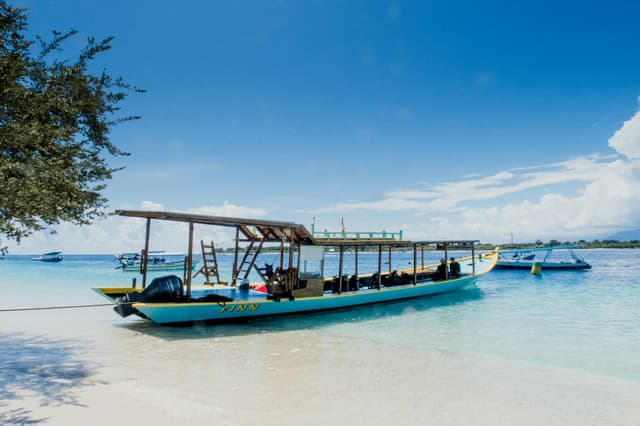
| East | Lombok (West Nusa Tenggara province) | Lombok Strait, deep water | Ferries and fast boats link Bali with Lombok and the Gili Islands |
| Southeast (offshore) | Nusa Penida, Nusa Lembongan, Nusa Ceningan | Badung Strait | These small islands are part of Bali province (Klungkung regency) and are popular day trips |
| North | Bali Sea | Open sea | Calmer black sand coast around Lovina |
| South | Indian Ocean | Open ocean | Surf breaks, cliffs and beaches of the Bukit peninsula |
There is a nice piece of natural history hidden in that table. The Wallace Line, the boundary that the naturalist Alfred Russel Wallace drew between Asian and Australasian wildlife, runs through the Lombok Strait between Bali and Lombok. Bali's animals are broadly Asian; a short boat ride east, the mix starts to change.
Is Bali a country?
No, Bali is not a country. Bali is a province of the Republic of Indonesia, in the same way that Koshi or Gandaki is a province of Nepal. It has a provincial governor and its own provincial laws, but foreign policy, immigration, the currency and the passport all belong to Indonesia.
The confusion is understandable. Bali is so well known as a holiday brand that many people know the name "Bali" long before they know the name "Indonesia". Airlines sell "Bali" flights, hotels advertise "Bali" addresses, and travellers say "I am going to Bali", not "I am going to Indonesia". Bali also feels different from the rest of the country because of its Hindu culture, which reinforces the impression that it is somewhere separate.
Here is a simple way to check what kind of place Bali is.
| Test | A country would have | What Bali has |
|---|---|---|
| Passport and visa | Its own passport and its own visa rules | Indonesian passport; Indonesian immigration and visa rules apply |
| Currency | Its own currency | Indonesian rupiah, the same as Jakarta |
| Head of state | A president or monarch | A provincial governor; the head of state is Indonesia's president |
| Seat at the United Nations | Its own membership | Represented by Indonesia |
| Flights to the rest of Indonesia | International flights | Domestic flights |
| National language | Its own official language | Bahasa Indonesia, plus Balinese as the regional language |
Practically, this matters in two ways. First, when a form or booking site asks for your destination country, the answer is Indonesia, with Bali or Denpasar as the city or region. Second, a flight from Bali to Jakarta, Yogyakarta or Labuan Bajo is a domestic flight inside Indonesia, so you do not go through immigration again.
Which country is Bali in?
Bali is in Indonesia. It is one of Indonesia's 38 provinces, and the island of Bali plus a few small islands off its coast make up the province. Indonesia itself is the world's largest archipelago nation: the national geospatial agency, Badan Informasi Geospasial, counted 17,380 islands in 2024.
Bali became a province in its own right in 1958. Before that it was administered together with the islands to its east as part of the Lesser Sunda (Sunda Kecil, later Nusa Tenggara) region. Indonesia's Law No. 15 of 2023 on Bali Province, the current law for the province, confirms that the province was formed under Law No. 64 of 1958 and names Denpasar as its capital.
Is Denpasar the capital of Bali?
Yes. Denpasar is the capital of Bali province and its largest city. It is the administrative and business centre, and it is a short drive north of the airport. Many visitors never stay in Denpasar itself, because the beach areas of Kuta, Sanur and Seminyak, and the cultural town of Ubud, are where most hotels are. If you have ever seen "Denpasar" on a flight ticket and wondered why it did not say "Bali", that is the reason: the airport serves the capital region.
How is Bali divided?
The 2023 law lists eight regencies (kabupaten) and one city (kota). The table shows each one with a few places in it that visitors will recognise, which is often the easiest way to understand where a hotel or attraction actually is.
| Regency or city | Part of Bali | Places visitors know |
|---|---|---|
| Kota Denpasar | South | Denpasar city, Sanur |
| Badung | South | Kuta, Legian, Seminyak, Canggu, Jimbaran, Nusa Dua, Uluwatu, the airport |
| Gianyar | South central | Ubud, Tegallalang rice terraces, Tirta Empul |
| Tabanan | Southwest and central | Tanah Lot, Jatiluwih rice terraces, Bedugul |
| Bangli | Central highlands | Kintamani, Mount Batur and Lake Batur |
| Klungkung | East, plus offshore islands | Semarapura, Nusa Penida, Nusa Lembongan |
| Karangasem | East | Mount Agung, Besakih temple, Sidemen, Amed |
| Buleleng | North | Singaraja, Lovina |
| Jembrana | West | Negara, Gilimanuk ferry port |
One small surprise for Nepali readers: the town of Negara in Jembrana shares its root with the Nepali word "nagar", and the Balinese "desa" (village) sounds like the Nepali "desh" but means something smaller. Sanskrit loanwords like these are everywhere in Bali.
What language do they speak in Bali?
People in Bali speak Bahasa Indonesia, Indonesia's national language, and Balinese (Basa Bali), the island's own regional language. Most Balinese grow up speaking Balinese at home and Indonesian at school, at work and with other Indonesians. In hotels, restaurants, shops and tour services in the main tourist areas, English is widely spoken.
Indonesia's constitution names Bahasa Indonesia as the language of the state (Article 36), so road signs, official forms, menus and airport announcements are in Indonesian, often with English alongside in tourist areas. Indonesian is written in the Latin alphabet and is one of the easier Asian languages for a visitor to pick up a few words of.
Balinese is a separate language, not a dialect of Indonesian. It has its own script, aksara Bali, a Brahmic script, distantly related to the Devanagari that Nepali uses. You will see it above the Latin letters on temple signs, government offices and street name boards, because a 2018 Bali Governor's Regulation (No. 80 of 2018) on the Balinese language, script and literature requires Balinese script on the nameplates of offices and public facilities. The same regulation set Thursdays, among other days, as days for using Balinese and wearing traditional dress in government settings.
Balinese also has speech levels that depend on who you are addressing. Visitors are not expected to master them; a greeting and a thank you are enough.
Useful words for a first trip
| English | Bahasa Indonesia | Balinese | Note for Nepali speakers |
|---|---|---|---|
| Hello | Selamat pagi (good morning) | Om Swastiastu | "Om" and "swasti" will sound familiar |
| Thank you | Terima kasih | Suksma | Suksma is widely understood in tourist areas |
| Yes / No | Ya / Tidak | Nggih / Ten (polite forms) | Indonesian is fine everywhere |
| Language | Bahasa | Basa | Same root as the Nepali "bhasa" |
| Temple | Pura | Pura | From the Sanskrit "pura", a walled town |
| Vegetarian (no meat) | Tanpa daging | Tanpa daging | Also try "vegetarian", widely understood |
Many Indonesian and Balinese words come from Sanskrit, like much of Nepali: "bahasa" and "bhasa", "dewa" and "dev", "guru", "raja", "dharma". You will not follow conversations, but the echoes make the island feel less foreign.
What religion is followed in Bali?
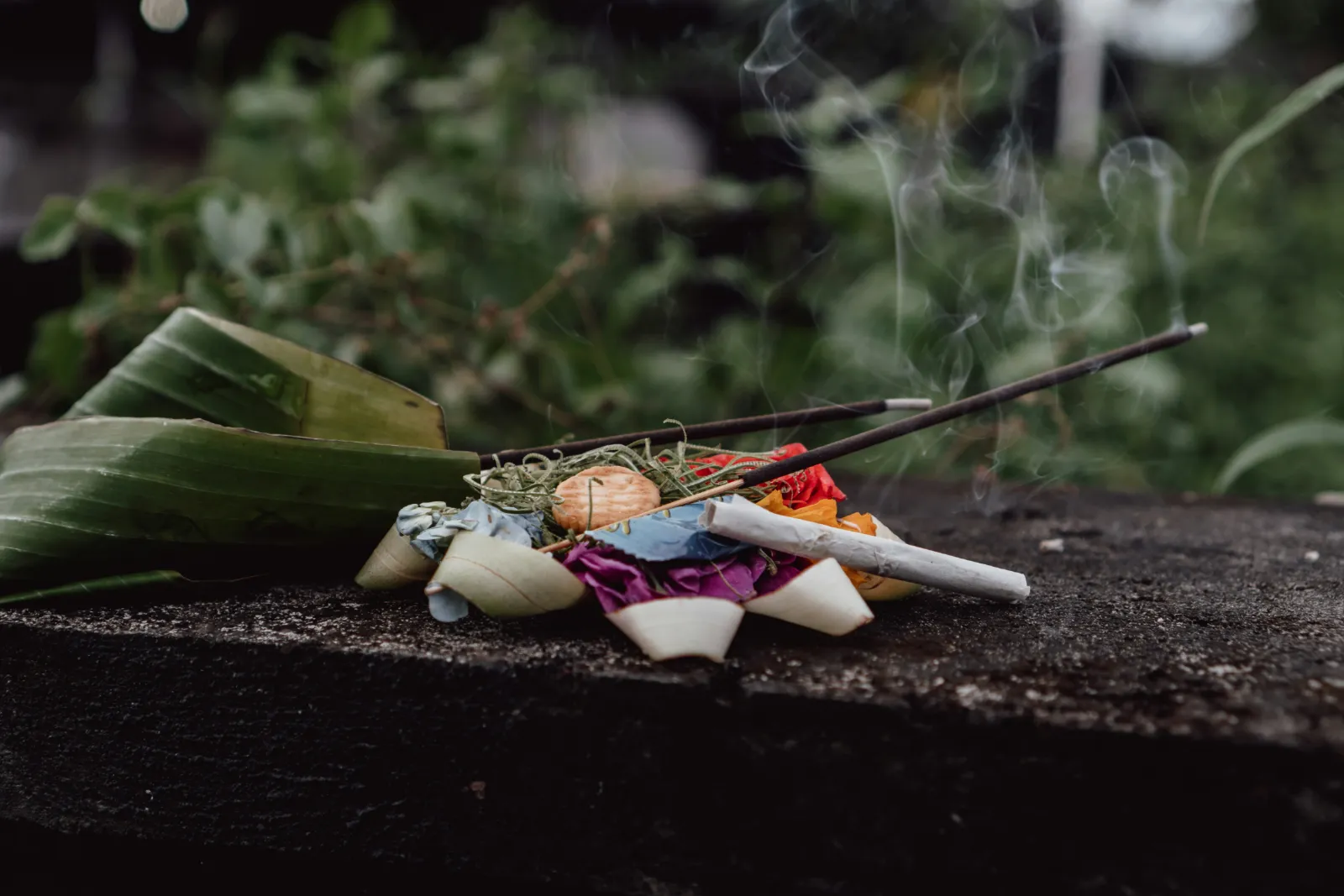
Most people in Bali follow Balinese Hinduism, known formally in Indonesia as Agama Hindu Dharma. This makes Bali the main Hindu majority region of Indonesia, a country where most of the population is Muslim. The island also has Muslim, Christian and Buddhist communities, especially in Denpasar, the north and the west, and mosques and churches stand alongside temples in the larger towns.
Ministry of Religious Affairs data for 2024, as reported by Databoks, put the Hindu share of Bali's population at about 86.5 percent. Whatever the exact figure in a given year, every source agrees that Hindus are a large majority on the island.
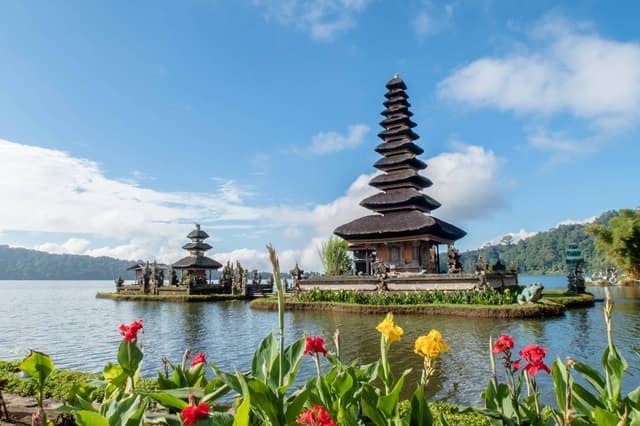
Religion in Bali is not something kept inside temples. It shapes daily life: small palm leaf offerings (canang sari) are placed on doorsteps, shop counters and dashboards every morning; every family compound has its own shrine; every village has its temples; and the island's calendar is full of ceremonies. The rice terraces themselves are run by subak, water associations that are religious and agricultural at the same time. UNESCO inscribed the Cultural Landscape of Bali Province, the subak system and its water temples, on the World Heritage List in 2012 as an expression of Tri Hita Karana, the Balinese idea of harmony between people, nature and the divine.
If you want the full picture of temples, offerings, festivals and visiting rules, our separate guide to Balinese Hinduism and its temple customs goes into far more detail than we can here.
Balinese Hinduism through Nepali eyes
Nepali Hindus usually find Bali familiar and unfamiliar in equal measure. The gods have the same names, the vocabulary overlaps, and incense, flowers and holy water are part of every ritual. But the forms are different, because Balinese Hinduism grew over a thousand years on an island with its own ancestor traditions, and arrived largely through Javanese kingdoms rather than directly from South Asia.
| Theme | Common ground with Nepal | What is different in Bali |
|---|---|---|
| Deities | Shiva, Vishnu, Brahma, Ganesha, Saraswati are known by name | Worship is directed to one supreme divinity, Sang Hyang Widhi Wasa, and to ancestors and local deities; statues of gods are less central than in Nepali temples |
| Temples | A sacred place with shrines, bells, incense and priests | A pura is an open walled compound of courtyards, not a building with a sanctum; tiered meru towers resemble pagoda roofs |
| Calendar | The Saka era is also known in South Asia | Nyepi, the Saka new year, is a day of total silence; Galungan follows a 210 day ritual cycle |
| Daily practice | Morning puja and flower offerings at home | Canang sari offerings on the ground and at shrines, often several times a day |
| Greeting | Namaste with joined palms | Om Swastiastu, also with joined palms |
| Dress at temples | Modest clothing | A sarong and a sash are required at temples that receive visitors |
Being Hindu yourself does not change the temple rules. Follow the posted signs, wear the sarong and sash, stay out of inner courtyards unless invited, and ask before photographing people at prayer.
What is Nyepi, and does it affect travel?
Nyepi is the Balinese Hindu new year, a day of silence when the whole island stops for 24 hours. No one goes outside, there is no traffic, shops close, lights are kept low and the airport shuts. In 2026 Bali's airport closed from 06:00 on 19 March to 06:00 on 20 March, local time. Indonesia's national holiday list for 2027 puts Nyepi (Saka year 1949) on Monday 8 March 2027.
If your dates touch Nyepi, plan to stay in your hotel for the day, or move your flights. The night before Nyepi, villages parade huge ogoh-ogoh figures through the streets, which is one of the most memorable things you can see in Bali.
Checked: 13 Oct 2026, Bisnis.com report on the 2026 airport closure and the 2027 national holiday decree as reported by ANTARA.
What currency and time zone does Bali use?
Bali uses the Indonesian rupiah (IDR), the same currency as the rest of Indonesia, and it runs on WITA, Central Indonesia Time, which is UTC+8. There is no daylight saving, so the time difference with Nepal stays the same all year: Bali is 2 hours 15 minutes ahead of Nepal.
Money in Bali: the essentials
The rupiah is the only legal tender for transactions in Indonesia. Bank Indonesia regulation No. 17/3/PBI/2015, under Indonesia's Law No. 7 of 2011 on Currency, requires cash and non cash transactions inside the country to be in rupiah, and businesses must quote prices in rupiah. So even if a tour operator quotes you in US dollars before you travel, the price on the shop shelf in Bali will be in rupiah.
| Topic | What to know |
|---|---|
| Currency name and code | Indonesian rupiah, IDR, written "Rp" on price tags |
| Large numbers | Rupiah prices have many zeros; count them carefully before paying |
| Cards | Accepted at hotels, malls and many restaurants in tourist areas |
| Cash | Still needed at small warungs, markets, temple entrances and in villages |
| Nepali rupees | Do not count on exchanging NPR in Bali; most Nepali travellers carry a widely traded currency such as US dollars, within Nepal's allowance rules |
| Exchange | Use bank branches or authorised money changers; when a card machine offers your home currency, choosing rupiah usually avoids a poor conversion |
We are not quoting an exchange rate here because it changes daily. Before you fly from Kathmandu, read our guide to how much foreign currency you can carry out of Nepal, so the cash you take is within the rules.
What time is it in Bali compared with Nepal?
Nepal runs on UTC+5:45 and Bali on UTC+8, so add 2 hours 15 minutes to Nepal time to get Bali time. Neither place changes its clocks.
| Time in Kathmandu (NPT) | Time in Bali (WITA) | What that means |
|---|---|---|
| 06:00 | 08:15 | Breakfast in Bali while Nepal is waking up |
| 09:45 | 12:00 | Midday in Bali |
| 13:00 | 15:15 | Afternoon in both, a good window for a video call home |
| 17:45 | 20:00 | Dinner in Bali, early evening in Nepal |
| 21:45 | 00:00 | Midnight in Bali |
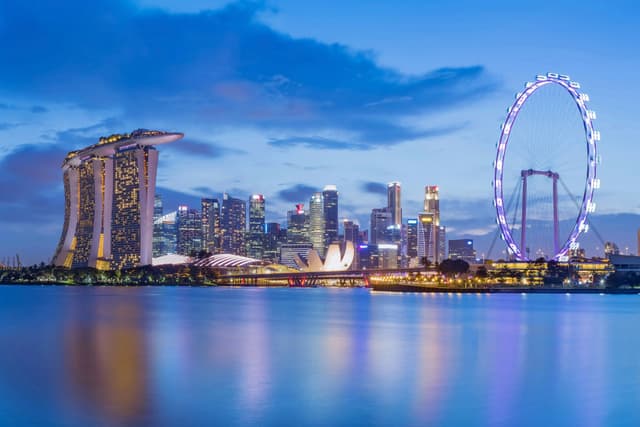
For comparison with the hubs you will probably fly through: Bangkok is UTC+7 (1 hour 15 minutes ahead of Nepal), while Kuala Lumpur and Singapore are UTC+8, the same as Bali. So if you connect in Kuala Lumpur or Singapore, your watch will already be on Bali time.
Jet lag is mild for travellers from Nepal: a 2 hour 15 minute shift is easy to absorb.
Bali's time zone is shared with the islands east of it and with parts of Borneo and Sulawesi. Java, next door, uses WIB (UTC+7), so if you cross the Bali Strait by ferry, your clock goes back one hour.
How far is Bali from Nepal and how do you get there?
Bali is about 5,170 kilometres from Kathmandu in a straight line, measured between Tribhuvan International Airport and Bali's airport. That is more than six times the distance from Kathmandu to Delhi. There is no nonstop flight between Kathmandu and Bali, so travellers fly with one stop, most often in Kuala Lumpur, Bangkok or Singapore.
Where you land: Bali's airport
International flights land at I Gusti Ngurah Rai International Airport (code DPS), in Tuban on the narrow neck of land between Kuta and Jimbaran in Badung regency. It is about 13 kilometres south of Denpasar city centre and close to the main southern beach areas. The airport is named after I Gusti Ngurah Rai, a Balinese hero of Indonesia's independence struggle who died in the Battle of Margarana in 1946. It is often listed on tickets as "Denpasar" or "Bali (Denpasar)".
The usual routes from Kathmandu
Kathmandu (KTM) has nonstop services to several Southeast Asian hubs that have their own nonstop flights to Bali. These are the routes most Nepali travellers use. Flight times are typical scheduled times and vary by airline and season.
| Connecting hub | Nonstop airlines from Kathmandu (as listed) | Kathmandu to hub, typical flight time | Hub to Bali, typical flight time |
|---|---|---|---|
| Kuala Lumpur (KUL) | Malaysia Airlines, Batik Air Malaysia, Himalaya Airlines, Nepal Airlines | About 4 hours 30 minutes to 5 hours | About 3 hours to 3 hours 20 minutes |
| Bangkok (BKK) | Thai Airways, Himalaya Airlines, Nepal Airlines | About 3 hours 30 minutes | About 4 hours 25 minutes |
| Singapore (SIN) | Singapore Airlines | About 5 hours | About 2 hours 55 minutes |
| Delhi or Gulf hubs | Several airlines | Varies | Varies; usually a longer total journey |
Checked: 13 Oct 2026, FlightConnections (Kathmandu route list, last updated Feb 2026) and FlightsFrom route pages. Airlines add and drop routes; always confirm the current schedule before booking.
Two practical points. First, a connection on a single ticket with one airline or alliance (for example Kathmandu to Bangkok to Bali with Thai Airways, or Kathmandu to Kuala Lumpur to Bali with Malaysia Airlines) is usually simpler than two separate tickets, because your bag goes through and a missed connection is the airline's problem. Second, the length of the layover makes a bigger difference to your total journey than which hub you choose. Our full Kathmandu to Bali flight guide compares routes, layovers and typical seasonal fares in detail.
Bali in distance terms
| Route | Approximate straight line distance |
|---|---|
| Kathmandu to Delhi | About 815 km |
| Kathmandu to Bangkok | About 2,230 km |
| Kathmandu to Kuala Lumpur | About 3,270 km |
| Kathmandu to Singapore | About 3,540 km |
| Kathmandu to Bali | About 5,170 km |
| Kuala Lumpur to Bali | About 1,960 km |
| Singapore to Bali | About 1,670 km |
| Jakarta to Bali | About 980 km |
Great circle distances calculated between airport coordinates, rounded. Actual flight paths are a little longer.
Visa and entry, in one line
Indonesian immigration rules apply in Bali, and requirements depend on your passport; Nepali passport holders should check the current rules on our Indonesia visa page and the official Indonesian e-Visa site before booking. Separately, Bali's provincial government charges foreign tourists a tourist levy of IDR 150,000 per person, set under Bali Provincial Regulation No. 6 of 2023 (amended in 2025) and paid only through the official Love Bali portal. Checked: 13 Oct 2026, lovebali.baliprov.go.id.
What are the main areas of Bali?
Bali is small on a map but slow to cross, because roads are narrow and traffic in the south is heavy. That is why the area you stay in shapes your whole trip. The south is where the airport, the beaches and most hotels are; the centre is green, hilly and cultural; the east and north are quieter.
| Area | Where it is | Best known for | Suits |
|---|---|---|---|
| Kuta and Legian | South, next to the airport | Long beach, shopping, busy nightlife | First timers, short stays, budget travellers |
| Seminyak and Canggu | Southwest coast, north of Kuta | Cafes, beach clubs, boutiques, surf | Couples, friends, younger travellers |
| Uluwatu and Jimbaran | Bukit peninsula, far south | Cliff top temple, kecak dance at sunset, surf, seafood dinners on the sand | Couples, honeymooners, surfers |
| Nusa Dua | Southeast of the Bukit | Gated resort area, calm beaches | Families, premium travellers, older travellers |
| Sanur | East coast of the south | Calm sea, beach path, boats to Nusa Penida | Families, relaxed travellers |
| Ubud | Inland, Gianyar regency | Rice terraces, art, temples, yoga, vegetarian friendly cafes | Culture lovers, couples, solo travellers |
| Kintamani | Central highlands | Mount Batur sunrise trek, crater lake views | Active travellers |
| East Bali (Sidemen, Amed) | Karangasem regency | Mount Agung views, quiet villages, snorkelling | Slow travellers, divers |
| North Bali (Lovina) | Buleleng regency | Black sand beaches, waterfalls, quieter pace | Repeat visitors |
Most first trips combine a beach base in the south with a few nights in Ubud. For a deeper look at each area and the sights in it, our guide to the best places to visit in Bali is the natural next read.
What is the weather like in Bali?
Bali has a tropical climate with two seasons: a drier season, roughly April to October, and a wetter season, roughly November to March, when heavy afternoon rain is common. It is warm all year on the coast and noticeably cooler in the highlands around Kintamani and Bedugul.
| Period | Season | What it means for a Nepali traveller |
|---|---|---|
| April to June | Early dry season | Good weather, before the July and August peak |
| July and August | Peak dry season | Best weather and the busiest time on the island |
| September and October | Late dry season | Often a good balance of weather and crowds; overlaps the Dashain and Tihar holidays in many years |
| November to March | Wet season | Greener and quieter, with downpours; Mangsir wedding season honeymooners often travel in this window |
Season timing shifts a little from year to year; Indonesia's weather agency BMKG publishes a seasonal outlook for Bali. For a month by month breakdown, see our guide to the best time to visit Bali.
What is Bali best known for?
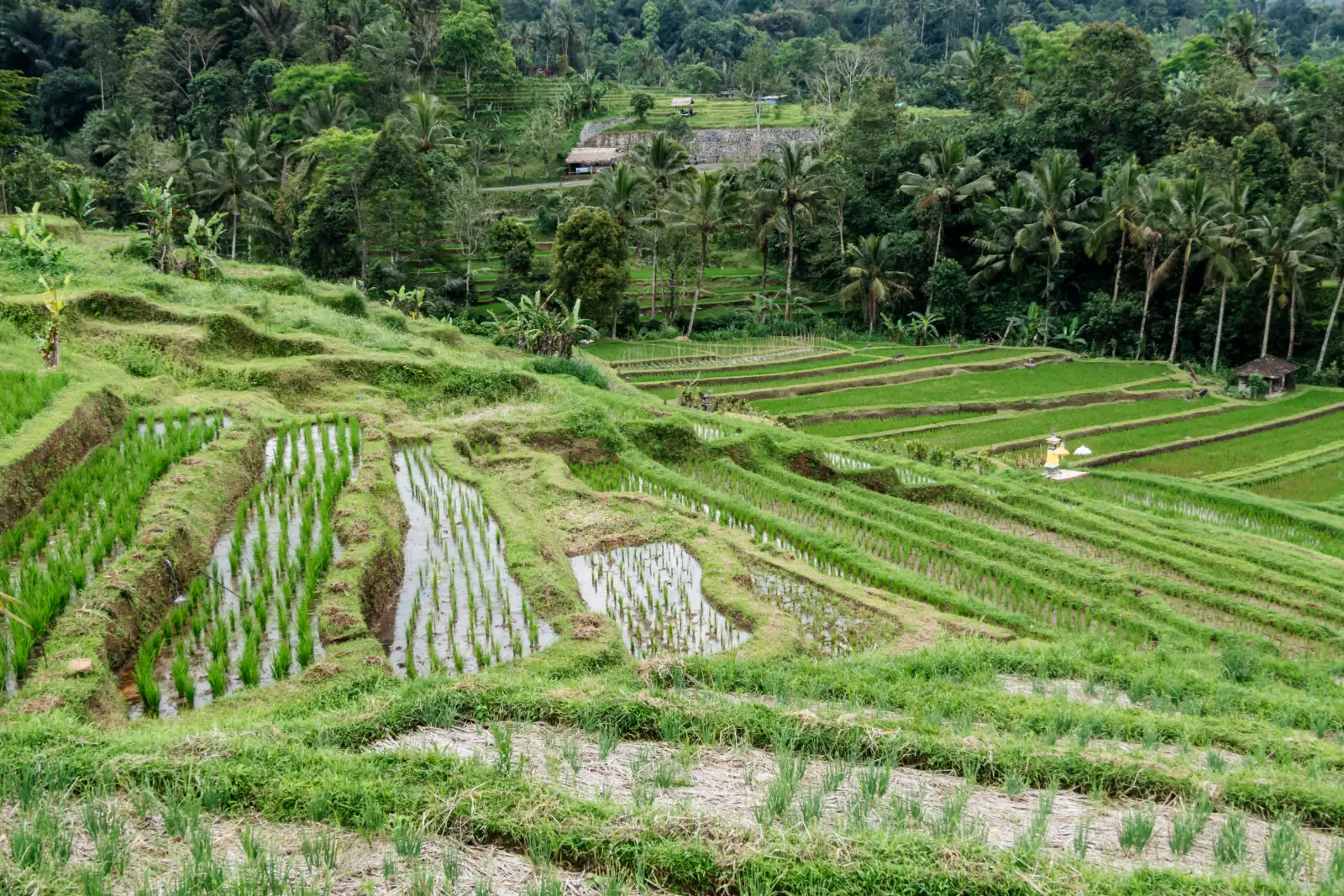
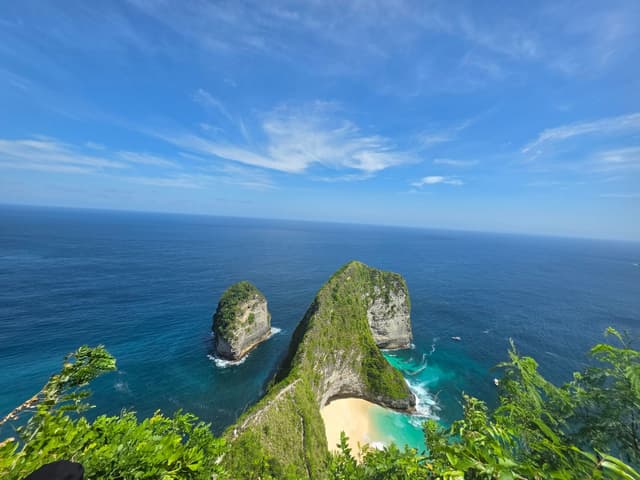
Bali is best known for its Hindu temples and ceremonies, its terraced rice fields, its beaches and surf, its volcanoes, and its dance and craft traditions. It is one of Asia's best known holiday islands: Indonesia's statistics agency reported 6,333,360 foreign tourist arrivals to Bali in 2024, up about 20 per cent on 2023.
Here is what that reputation is built on, with the places most people mean.
| Known for | Where to see it | Why it stands out |
|---|---|---|
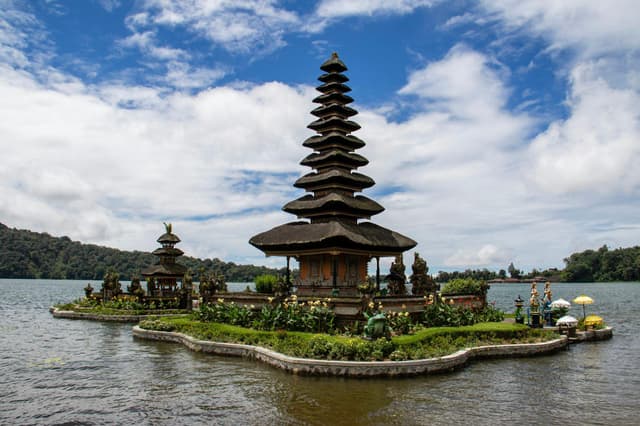
| Temples | Besakih, Tanah Lot, Uluwatu, Ulun Danu Beratan, Tirta Empul, Taman Ayun | Thousands of temples, from sea cliffs to lake shores to volcano slopes |
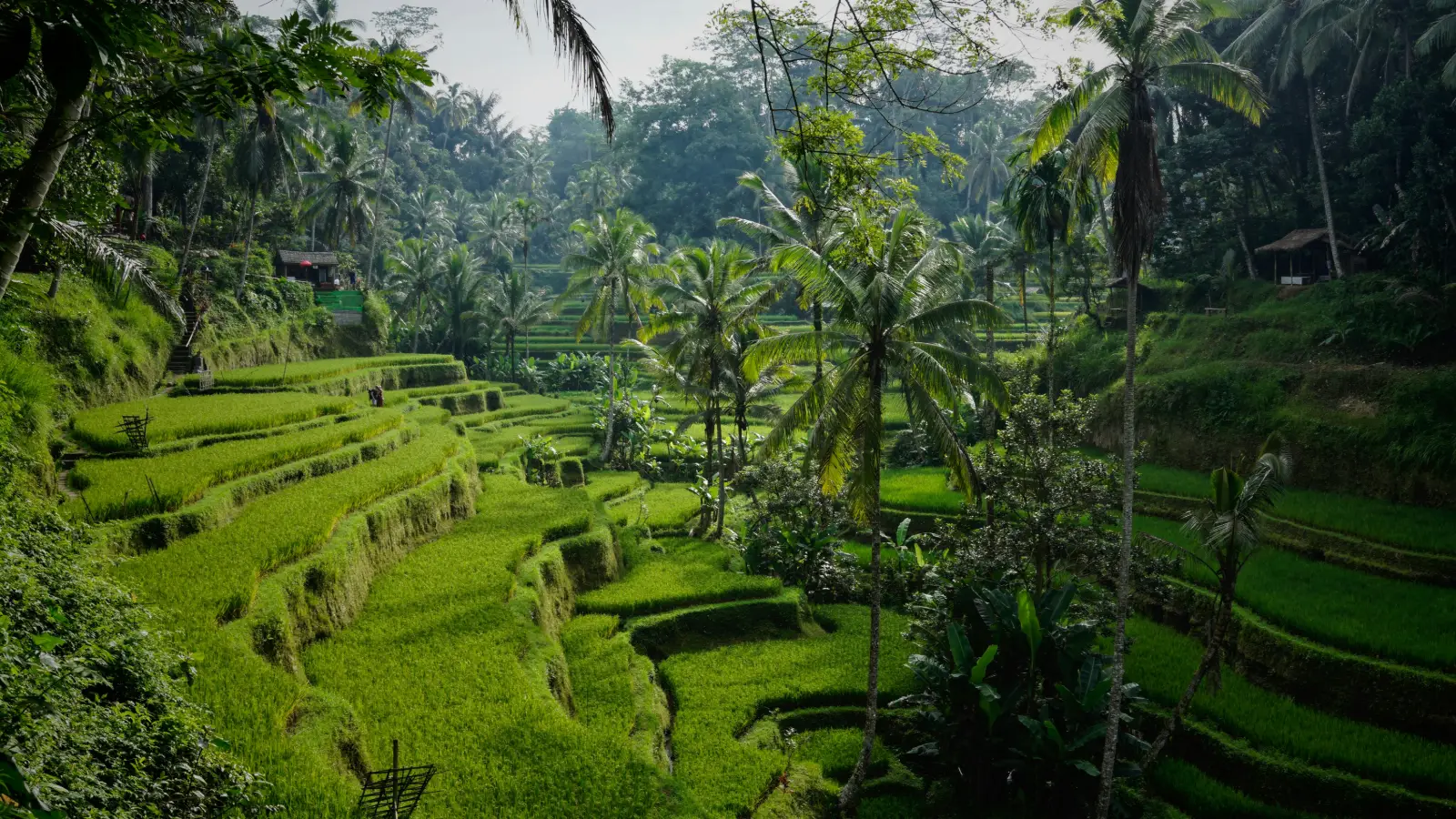
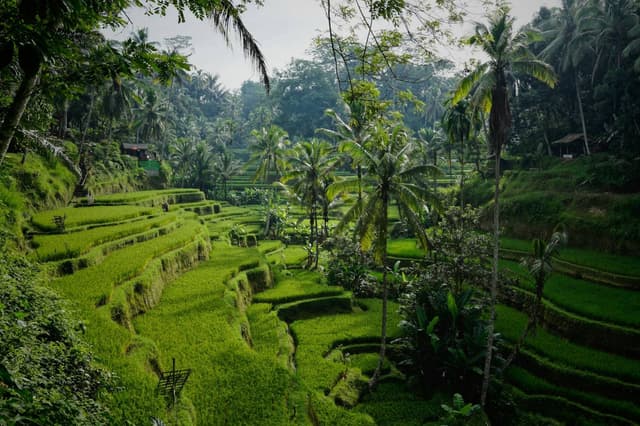
| Rice terraces | Jatiluwih, Tegallalang, Sidemen | Subak irrigation landscape on the UNESCO World Heritage List since 2012 |
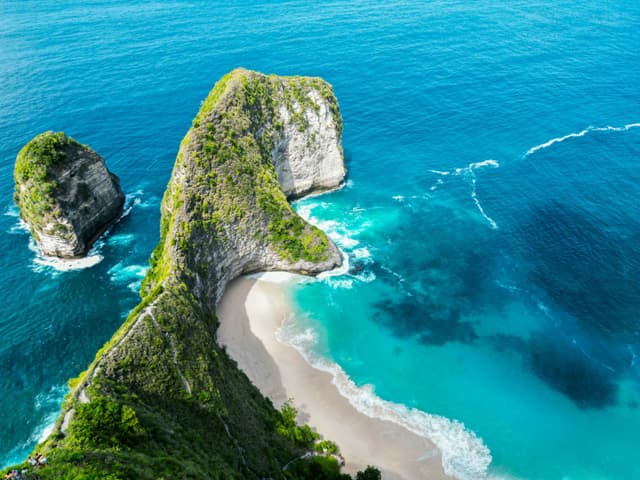
| Beaches | Nusa Dua, Sanur, Jimbaran, Seminyak, Nusa Penida | Calm family beaches on the east, sunset beaches on the west |
| Surf | Uluwatu, Kuta, Canggu | Indian Ocean swells on the south coast |
| Volcanoes | Mount Batur, Mount Agung | Sunrise treks and crater lake views |
| Dance and music | Ubud, Uluwatu | Three genres of traditional Balinese dance are on UNESCO's intangible heritage list (2015); gamelan orchestras accompany them |
| Arts and crafts | Ubud and nearby villages | Wood carving, stone carving, painting, silver work |
| Food | Warungs across the island | Nasi campur, sate lilit, fresh seafood, and plenty of vegetable dishes |
| Wellness | Ubud, the Bukit | Spas, Balinese massage, yoga retreats |
For temple lovers, our guide to the best temples in Bali explains which temples are worth the drive and when to visit them.
What Bali means for different travellers from Nepal
Because Bali is one stop from Kathmandu and has such a range of areas, it suits most kinds of trip. This is how it usually fits.
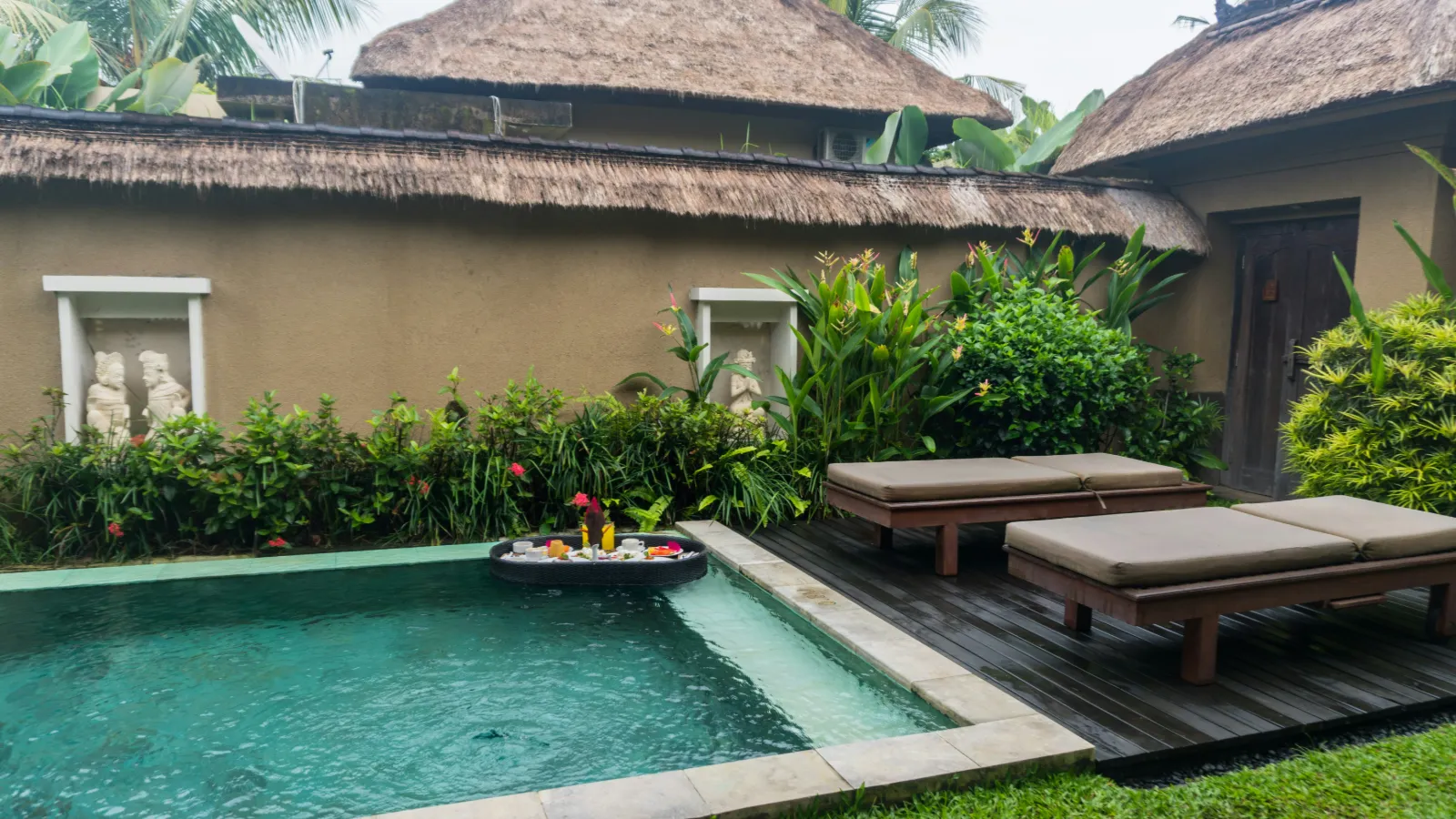
- Honeymooners and couples: private pool villas in Ubud and Seminyak, cliff sunsets in Uluwatu, and a calmer resort stay in Nusa Dua. The Mangsir wedding season and the months after it are a popular honeymoon window.
- Families: the calm water at Nusa Dua and Sanur, short drives, and family friendly resorts. Many Nepali families travel during the Dashain and Tihar break, so it pays to plan early.
- Vegetarian travellers: Balinese cooking uses a lot of pork, but tofu, tempeh, vegetables and rice are staples too, and Ubud in particular has many vegetarian cafes. Gado-gado, tempeh dishes and vegetable nasi campur are easy orders. Our guide to what to eat in Bali lists dishes worth trying.
- Solo travellers and friends: Canggu and Ubud have the most cafes, co working spaces and day tours.
- Nepali diaspora: for families split between Nepal and the Gulf, Malaysia, Australia or Korea, Bali is a common meeting point, because it is reachable nonstop or with one stop from many of those countries.
- Pilgrims and culture seekers: Besakih, the main temple complex on the slopes of Mount Agung, and Tirta Empul's holy springs are meaningful visits for Hindu travellers, provided you follow the dress and conduct rules.
Bali also sits close to other Indonesian highlights. Java's volcanoes are just west across the Bali Strait, and Lombok and the Gili Islands are a boat ride east, so a longer trip can easily take in more than one island.
How to start planning a Bali trip
Once you know where Bali is, the next step is working out how long to stay, which areas to combine and when to go. Our main Bali travel guide covers getting around, money, health and etiquette in one place. If you would rather see how a trip fits together with flights, hotels, transfers and sightseeing already arranged, browse our Bali tour packages for example routes and durations.
Frequently asked questions
Is Bali a country?
No. Bali is not a country. Bali is a province of Indonesia, made up of the island of Bali and a few small nearby islands such as Nusa Penida. It uses Indonesia's currency, the rupiah, follows Indonesian immigration rules, and is governed by a provincial governor under Indonesia's national government.
What country is Bali in?
Bali is in Indonesia, in Southeast Asia. It is one of Indonesia's 38 provinces and lies between the islands of Java and Lombok. When a booking form asks for your destination country, enter Indonesia, with Bali or Denpasar as the city or region.
Is Bali in Indonesia?
Yes. Bali is part of Indonesia and has been its own province since 1958. Flights between Bali and other Indonesian cities such as Jakarta or Yogyakarta are domestic, and the island uses Indonesian rupiah and Indonesia's time zones, laws and visa rules.
What is the capital of Bali?
Denpasar is the capital of Bali. It is the provincial capital and the island's largest city, located in the south, a short drive north of I Gusti Ngurah Rai International Airport. Most visitors stay in nearby beach areas or in Ubud rather than in Denpasar itself.
What language do they speak in Bali?
People in Bali speak Bahasa Indonesia, the national language, and Balinese, the island's own language with its own script. English is widely spoken in hotels, restaurants and tourist services. A Balinese "Om Swastiastu" (hello) and "suksma" (thank you) are always appreciated.
Is Bali a Hindu island?
Yes, Bali is a Hindu majority island. Most residents follow Balinese Hinduism, formally Agama Hindu Dharma, which makes Bali different from the rest of Muslim majority Indonesia. Bali also has Muslim, Christian and Buddhist communities. Temples, daily offerings and ceremonies are part of everyday life.
What currency is used in Bali?
Bali uses the Indonesian rupiah (IDR), the same currency as the rest of Indonesia. Indonesian regulation requires transactions inside the country to be in rupiah. Cards work at hotels and many restaurants, but carry some cash for small warungs, markets and temple entrances.
What is the time difference between Nepal and Bali?
Bali is 2 hours 15 minutes ahead of Nepal. Bali uses WITA (UTC+8) and Nepal uses UTC+5:45, and neither changes its clocks, so the gap is the same all year. When it is 10:00 in Kathmandu, it is 12:15 in Bali.
How far is Bali from Nepal?
Bali is about 5,170 kilometres from Kathmandu in a straight line. There is no nonstop flight from Kathmandu to Bali, so Nepali travellers usually fly with one stop in Kuala Lumpur, Bangkok or Singapore, landing at I Gusti Ngurah Rai International Airport (DPS).
Bali kun desh ma parcha?
Bali is in Indonesia. It is an island province of Indonesia in Southeast Asia, between Java and Lombok, with Denpasar as its capital. It is not a separate country, so Indonesian visa rules and the Indonesian rupiah apply. Bali is 2 hours 15 minutes ahead of Nepal.
Why is Bali called the Island of the Gods?
Bali is called the Island of the Gods (Pulau Dewata) because of its Hindu culture: thousands of temples, shrines in every home, daily offerings and a calendar full of ceremonies. Its sacred volcanoes, especially Mount Agung, and the temple linked rice terraces add to that reputation.