












































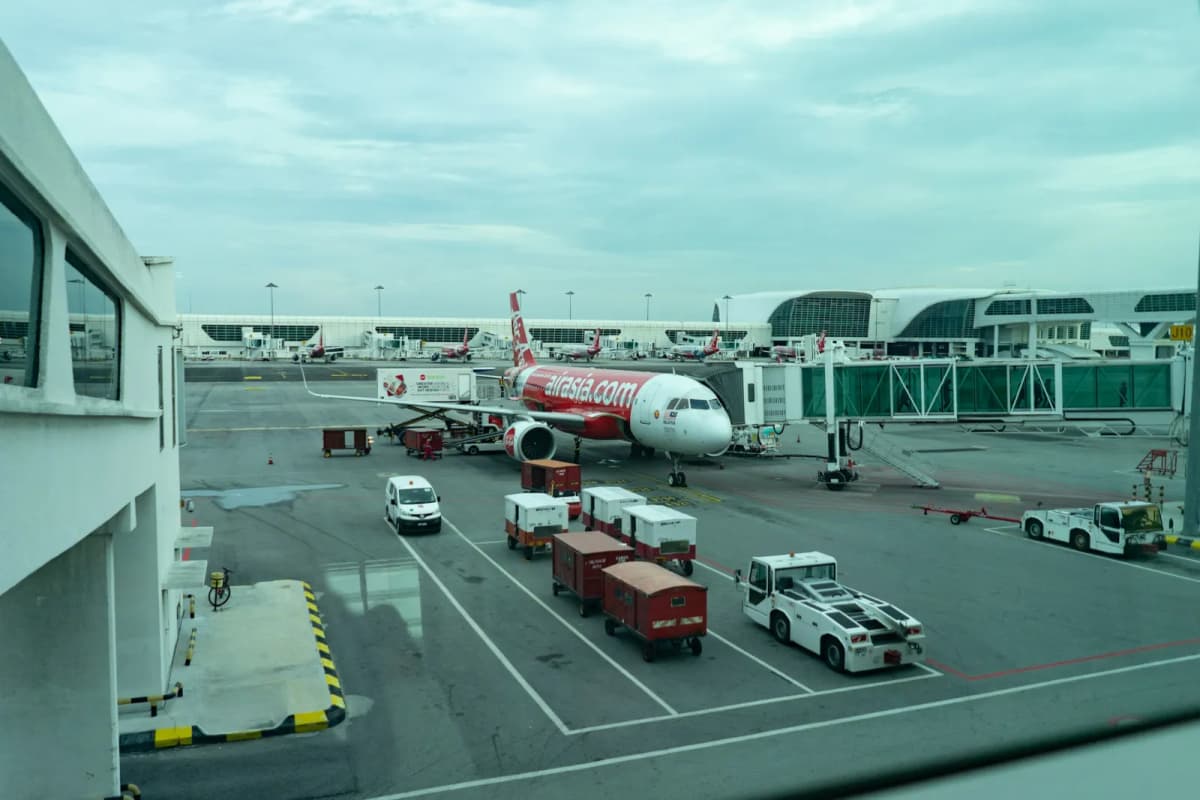
Short answer: Kuala Lumpur airport, officially Kuala Lumpur International Airport (KLIA, code KUL), has two separate terminal buildings, a 3-minute train ride apart: Terminal 1 for full-service and most hybrid airlines, and Terminal 2 (the former klia2) for AirAsia and other low-cost carriers. Every non-stop flight from Kathmandu currently uses Terminal 1, though you should still confirm it on your e-ticket. From there, the non-stop KLIA Ekspres train reaches KL Sentral in about 28 minutes, and the KLIA Transit train takes about 35 minutes with stops along the way.
That is the quick version. The rest of this guide covers what most airport guides skip: which terminal each Kathmandu airline uses, why a cheap self-transfer onto an AirAsia flight can go wrong, what to expect at immigration, how the Aerotrain works now that it is back in service, where to rest on a long layover, and what to sort out before the flight home to Nepal. It is written for anyone using KLIA, with extra notes for Nepali passport holders, families visiting relatives who work in Malaysia, and the Nepali diaspora flying on other passports.
If you are still choosing a flight, start with our Kathmandu to Kuala Lumpur flight guide, which covers airlines, flying time and seasons. This post picks up the moment your wheels touch the runway at KLIA.
| KLIA at a glance | Detail |
|---|---|
| Official name | Kuala Lumpur International Airport (KLIA) |
| Codes | IATA KUL, ICAO WMKK |
| Location | Sepang, Selangor, about 45 km south of Kuala Lumpur city |
| Terminals | KLIA Terminal 1 (opened 27 June 1998) and KLIA Terminal 2 (opened 2 May 2014 as klia2) |
| Renaming | KLIA and klia2 became Terminal 1 and Terminal 2, announced on 9 February 2023 |
| Passengers | About 63 million in 2025 |
| Operator | Malaysia Airports (MAHB) |
| Fastest rail link to the city | KLIA Ekspres, non-stop, about 28 minutes from Terminal 1 to KL Sentral |
| Time zone | Malaysia Time (UTC+8), 2 hours 15 minutes ahead of Nepal |
Checked: 2 November 2026, sources: Wikipedia, Kuala Lumpur International Airport; KLIA Ekspres schedule.
Which KLIA terminal do flights from Kathmandu use?
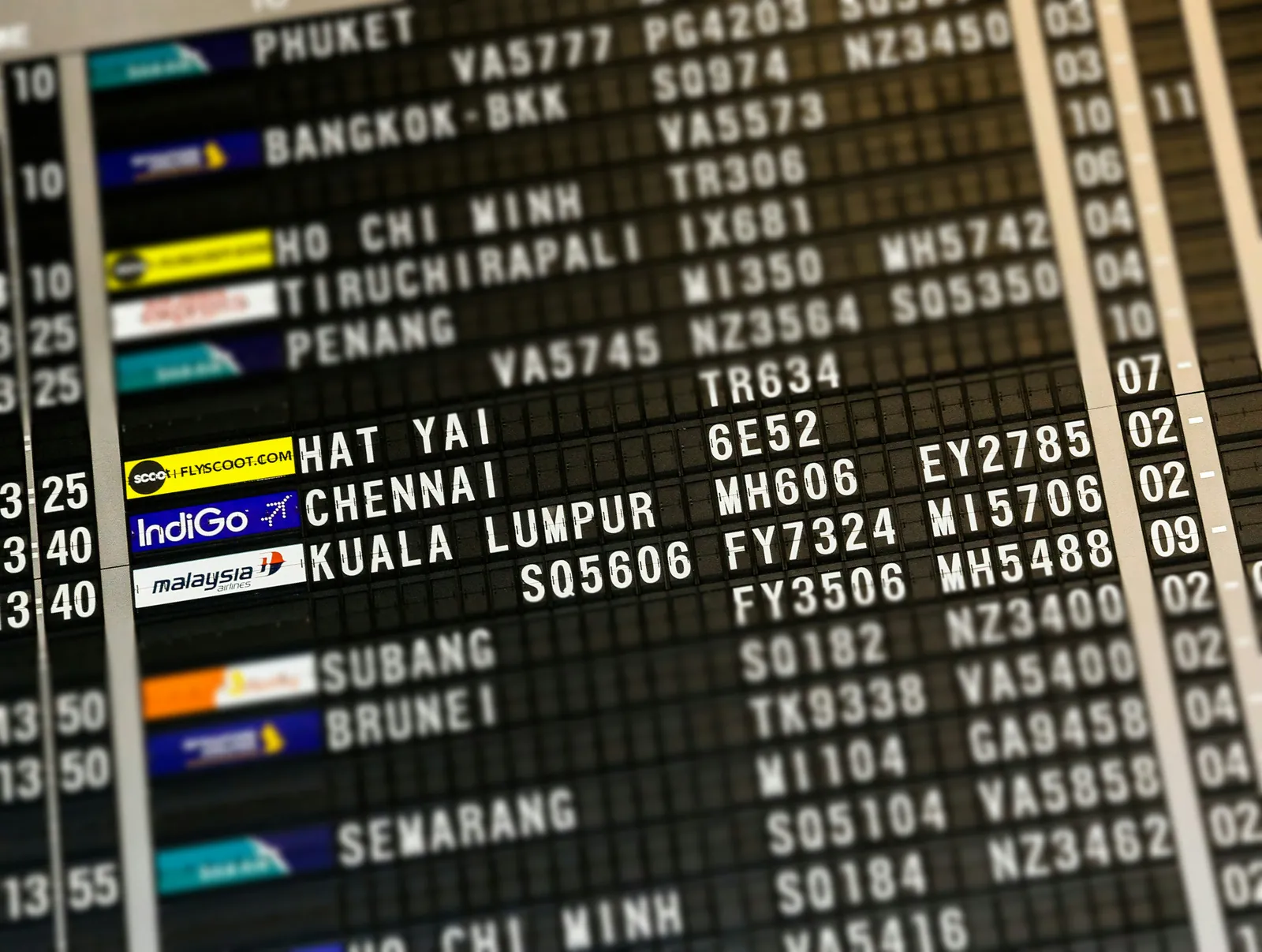
All four airlines flying non-stop between Kathmandu and Kuala Lumpur use KLIA Terminal 1: Malaysia Airlines, Batik Air Malaysia, Himalaya Airlines and Nepal Airlines. If you fly one of them, you land at Terminal 1 and you depart from Terminal 1 on the way home. Terminal 2 only matters if you connect onward on AirAsia or another low-cost airline based there.
This is worth getting right before you leave Kathmandu, because the two terminals are separate buildings. They are not joined by a walkway, and moving between them means a short train or bus ride on the public side of the airport. People who head to the wrong terminal for a departure lose time they may not have.
| Airline | KLIA terminal | Kathmandu link | Notes |
|---|---|---|---|
| Malaysia Airlines | Terminal 1 | Non-stop Kathmandu to Kuala Lumpur | Main hub airline; international check-in on Level 5 |
| Batik Air Malaysia | Terminal 1 | Non-stop Kathmandu to Kuala Lumpur | Hybrid airline (formerly Malindo Air) |
| Himalaya Airlines | Terminal 1 | Non-stop Kathmandu to Kuala Lumpur | Service resumed from August 2026 after a break |
| Nepal Airlines | Terminal 1 | Non-stop Kathmandu to Kuala Lumpur | Nepal's national flag carrier; not every day of the week |
| AirAsia and AirAsia X | Terminal 2 | No non-stop Kathmandu flight at the time of our check | Relevant for onward connections to Bali, Vietnam, Thailand and elsewhere |
Checked: 2 November 2026, sources: Malaysia Airlines, KLIA Terminal 1 passenger journey; airline terminal lists at klia2.info and klia.info (independent airport guides). Terminal assignments can change, so confirm on your e-ticket or airline app 24 to 48 hours before you fly.
Schedules on the Kathmandu route change by season, and Nepal Airlines and Himalaya Airlines have both paused and restarted the route in the past. For days, departure times and the Dashain and Tihar rush, see the route guide linked above, or browse every non-stop route in our guide to direct flights from Kathmandu.
How to check your terminal in 30 seconds
- Look at your e-ticket or booking confirmation. Many show the terminal as "KUL Terminal 1" or "KUL T1".
- Open the airline app or website and check the flight status page on the day.
- Use the official Malaysia Airports flight information page for KLIA Terminal 1 arrivals and departures.
- If your booking says "KUL" only, ask the airline. Do not guess based on the airline's name alone, because terminal assignments can change.
What is the difference between KLIA Terminal 1 and Terminal 2?
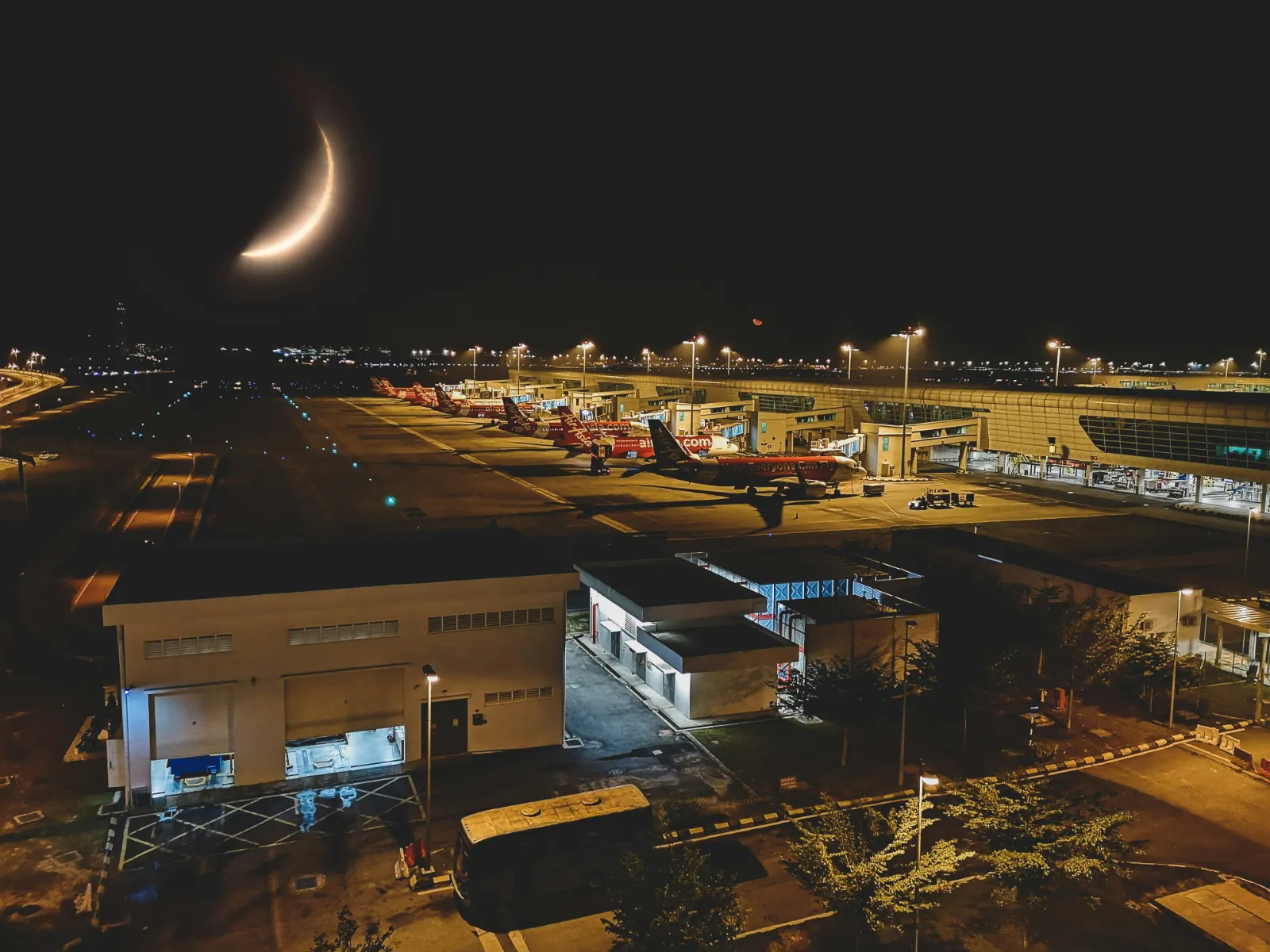
KLIA Terminal 1 is the original 1998 terminal used by Malaysia Airlines, Batik Air and most foreign full-service airlines, while KLIA Terminal 2 is the 2014 low-cost terminal built mainly for the AirAsia group. They share runways and the rail line, but they have separate check-in halls, immigration, security and gates. Think of them as two airports on one site.
| Feature | KLIA Terminal 1 | KLIA Terminal 2 (former klia2) |
|---|---|---|
| Opened | 27 June 1998 | 2 May 2014 |
| Main users | Malaysia Airlines, Batik Air Malaysia, Himalaya Airlines, Nepal Airlines and most foreign full-service airlines | AirAsia, AirAsia X and other low-cost airlines |
| Kathmandu flights | Yes, all current non-stop flights | No non-stop Kathmandu flights at the time of our check |
| Layout | Main Terminal Building plus a Contact Pier (gates A, B, G, H) and a separate Satellite Building (gate C) | Main terminal linked to piers by a skybridge, with the Gateway@klia2 shopping mall attached |
| Link inside the terminal | Aerotrain between the Main Terminal and the Satellite Building | Walking, travelators and the skybridge |
| Airside transit hotel | Sama-Sama Express in the Satellite Building | Sama-Sama Express in the Satellite Building, International Departure Level 3 |
| Rail station | KLIA T1 station, Level 1 | KLIA T2 station in Gateway@klia2 |
Checked: 2 November 2026, sources: Wikipedia and Malaysia Airlines (both linked above); Sama-Sama Express (linked in the layover section below).
How Terminal 1 is laid out
For a passenger from Kathmandu, Terminal 1 has three parts that matter:
- Main Terminal Building. Check-in and the departure hall are on Level 5. Departure immigration and customs are on Level 4. The arrival hall, arrival immigration and baggage reclaim are on Level 3. The KLIA Ekspres and KLIA Transit station is on Level 1.
- Contact Pier. Joined to the Main Terminal. International gates G and H and domestic gates A and B are here, so you can walk to them.
- Satellite Building. A separate building for international gate C, reached only by the Aerotrain (or by bus when the train is not running).
Malaysia Airlines lists its international economy check-in at Row H on Level 5, with boarding at gates G and H in the Main Terminal or gate C in the Satellite Building. Other Terminal 1 airlines use different rows, so follow the departure screens.
Is the KLIA Aerotrain running?
Yes. The Aerotrain, the driverless people mover between the Terminal 1 Main Terminal and the Satellite Building, is running again after a long rebuild. New trains entered service on 1 July 2025, and after a period of faults and overnight closures, Malaysia's Ministry of Transport announced a return to full 24-hour operation from 1 June 2026. The ride itself takes a couple of minutes.
There is one thing to watch this month. KLIA said on 7 October 2026 that the Aerotrain was due a scheduled software upgrade after 20,000 operating hours. Field testing ran from 8 to 17 October 2026 with the train paused from midnight to 5am, and a second roll-out phase is planned for 28 November to 1 December 2026, subject to safety assessments. During those works, buses replace the train between the Main Terminal and the Satellite Building.
"Our priority is to ensure that the Aerotrain continues to provide a reliable and smooth service for passengers at KLIA."
Adam Nicholas Wilson, KLIA chief operating officer, statement of 7 October 2026, reported by Bernama
In practice: if your gate is a C gate and you are flying late at night around those dates, allow extra time for the bus transfer, follow the signs to the bus lounge, or ask KLIA ground staff.
Checked: 2 November 2026, sources: Bernama, 31 May 2026 (24-hour service from 1 June); Bernama, 7 October 2026 (software update, linked above).

How do you transfer between KLIA Terminal 1 and Terminal 2?
The quickest way between KLIA Terminal 1 and Terminal 2 is the train: both KLIA Ekspres and KLIA Transit run between the two terminal stations in about 3 minutes. A shuttle bus also links the terminals on the public side. Either way, an international passenger has to pass through Malaysian immigration first, because there is no airside connection between the terminals for travellers today.
| Option | Time between terminals | Where to board | Best for |
|---|---|---|---|
| KLIA Ekspres or KLIA Transit train | About 3 minutes on the train | KLIA T1 station (Level 1) or KLIA T2 station (Gateway@klia2) | Most people, especially with tight timing |
| Inter-terminal shuttle bus | About 10 minutes, depending on traffic | Terminal 1: Level 1, Door 4. Terminal 2: Transportation Hub, Level 1, Gateway@klia2 (follow bus signs) | Late night, or if you prefer not to use the train |
| Taxi or Grab | Depends on traffic and pickup wait | Official taxi counters or the e-hailing pickup zone | Large families with lots of luggage |
Checked: 2 November 2026, sources: KLIA Ekspres and KLIA Transit official timetables (T1 to T2 journey time, linked above); shuttle bus details from the independent guide klia.info, transfer between Terminal 1 and Terminal 2, so confirm at the information counter.
Why the terminal change is the riskiest part of KLIA
Because there is no airside link, a Terminal 1 to Terminal 2 connection usually looks like this:
- Land at Terminal 1 and clear Malaysian immigration as an arriving passenger.
- Collect your checked bags at reclaim on Level 3 and pass customs.
- Go down to Level 1 and take the train or bus to Terminal 2.
- Check in again and drop your bags with the second airline.
- Clear departure immigration and security again, then walk to your gate.
That means you need to be allowed to enter Malaysia, even if you only stay inside the airport for two hours. For Nepali passport holders, that question belongs with our visa information for Malaysia. For other passports, including Nepali diaspora holding British, American, Australian or other nationalities, check the official Immigration Department of Malaysia site at imi.gov.my for your passport before you book.
Is an airside link between the terminals coming?
Malaysia's Transport Minister Anthony Loke said in April 2026 that airside transfers by coach between Terminal 1 and Terminal 2 would start in phases, beginning with passengers who have no checked bags, with bag transfers following later. At the time of writing we found no official confirmation that the service is open to the public. Until your airline confirms it in writing, plan as if you must clear immigration.
Checked: 2 November 2026, source: paultan.org report of the minister's statement, 6 April 2026.
What happens at immigration when you land at Kuala Lumpur airport?
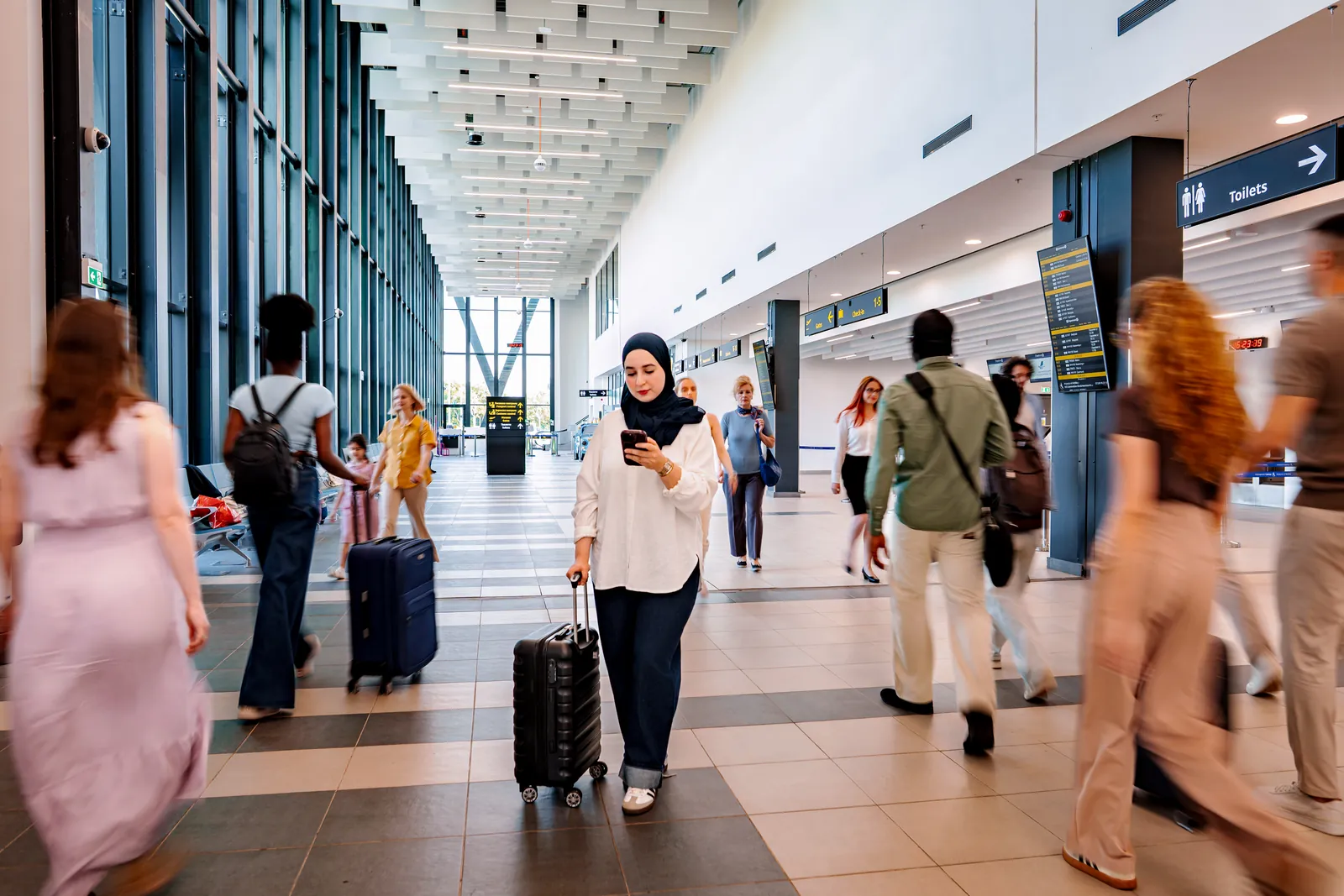
When you land at Kuala Lumpur airport as a visitor, you follow the "Arrival" signs to immigration on Level 3 of the Terminal 1 Main Terminal, have your passport checked at a counter or an autogate, collect your bags, and then walk through customs into the public arrival hall. If you arrive at a C gate in the Satellite Building, you ride the Aerotrain to the Main Terminal first.
The documents you need depend on your passport. This guide does not list them on purpose: entry rules for Malaysia change, and a wrong list can cost someone their trip. Here is what we can say:
- Malaysia Digital Arrival Card (MDAC). Malaysia uses an online arrival card for foreign visitors, run by the Immigration Department of Malaysia. Nepali passport holders can find what applies to them on our visa information page linked above; other travellers should check imi.gov.my.
- Visa. Whether you need one depends on your nationality. Nepali passport holders can find the current position on the same visa information page. Everyone else should check imi.gov.my for their own passport.
- Autogates. Some foreign passport holders can use automated immigration gates at KLIA. Eligibility depends on nationality and changes from time to time, so check imi.gov.my rather than assuming you qualify.
Checked: 2 November 2026, source: Immigration Department of Malaysia, imi.gov.my (linked above). Entry rules change; always check the official source for your passport.
Arrival tips from Nepali travellers
- Overnight flights land early. Several overnight departures from Kathmandu are timed to land at KLIA before 6am Malaysia time, close to the first airport train at 05:00. Immigration queues vary, so keep your documents in your hand luggage, not in the checked bag.
- Carry your hotel details. A hotel booking printout or screenshot helps at immigration, and you need a local address when registering a Malaysian SIM card.
- Families meeting relatives. Relatives cannot come airside. Agree a meeting point in the public arrival hall on Level 3 before you fly, and keep a Nepali or Malaysian phone number that works on airport Wi-Fi.
- Elderly parents or first-time flyers. Ask the airline at the Kathmandu check-in for wheelchair or special assistance. It is arranged by the airline, not by the airport on the day. Our first-time flight tips explain how to request it and what to expect on board.
- Clock change. Malaysia is 2 hours 15 minutes ahead of Nepal. Change your phone or watch before you land so you do not misread train times.
How do you get from KLIA to Kuala Lumpur city?
The fastest way from KLIA to Kuala Lumpur city is the KLIA Ekspres train, which runs non-stop from Terminal 1 to KL Sentral in about 28 minutes. The KLIA Transit train covers the same line in about 35 minutes with stops at Salak Tinggi, Putrajaya and Cyberjaya, and Bandar Tasik Selatan. Grab, taxis and airport coaches use the road, so their time depends on traffic.
| Option | Journey time (Terminal 1 to KL Sentral) | Frequency | Good for |
|---|---|---|---|
| KLIA Ekspres | About 28 minutes, non-stop (from Terminal 2, add about 3 minutes) | Every 20 minutes for most of the day; every 30 minutes late at night | Speed, predictable timing, hotels near KL Sentral or a short taxi ride from it |
| KLIA Transit | About 35 minutes, stopping at Salak Tinggi, Putrajaya and Cyberjaya, and Bandar Tasik Selatan | Every 15, 20 or 30 minutes depending on the time of day | Travellers staying in Putrajaya or Cyberjaya, or changing to buses at Bandar Tasik Selatan (TBS) |
| Grab (ride-hailing) | Depends on traffic; KLIA is about 45 km from the city centre | On demand | Door-to-door travel, families and heavy luggage |
| Airport taxi | Depends on traffic | On demand from official counters | When you do not have mobile data |
| Airport coach | Slower than the train and depends on traffic | Varies by operator | Tight budgets, with time to spare |
Checked: 2 November 2026, source: KLIA Ekspres timetable effective 8 December 2025 and KLIA Transit timetable effective 21 March 2026, both published on the operator's schedule page linked above. We do not list fares here because they change; see the operator's site.
First and last trains
Both trains start around 5am and stop running after 1am. Since 8 December 2025, trains that start their journey from 11pm stop at all stations, so a late-night "Ekspres" takes about as long as KLIA Transit.
| Service and direction | First departure | Last departure |
|---|---|---|
| KLIA Ekspres, KL Sentral to the airport | 05:00 | 00:00 (midnight) |
| KLIA Ekspres, Terminal 1 to KL Sentral | 05:00 | 01:05 |
| KLIA Ekspres, Terminal 2 to KL Sentral | 04:55 | 01:00 |
| KLIA Transit, KL Sentral to the airport | 05:03 | 00:00 (midnight) |
| KLIA Transit, Terminal 1 to KL Sentral | 05:22 | 01:05 |
| KLIA Transit, Terminal 2 to KL Sentral | 05:18 | 01:00 |
Checked: 2 November 2026, source: KLIA Ekspres and KLIA Transit official PDF timetables (operator's schedule page, linked above). Times are Malaysia Time and can change for works or holidays; check the operator's notices on the day.
KLIA Ekspres or KLIA Transit: which should you take?
- Take KLIA Ekspres if you are going to KL Sentral or anywhere in central Kuala Lumpur and want the shortest, most predictable ride.
- Take KLIA Transit if your hotel or relative is in Putrajaya, Cyberjaya or near Bandar Tasik Selatan, or if you are changing to an intercity bus at Terminal Bersepadu Selatan (TBS), which is linked to Bandar Tasik Selatan station.
- Take Grab if you are four or more people with big bags, or you are going somewhere far from a rail station, such as Shah Alam or Klang.
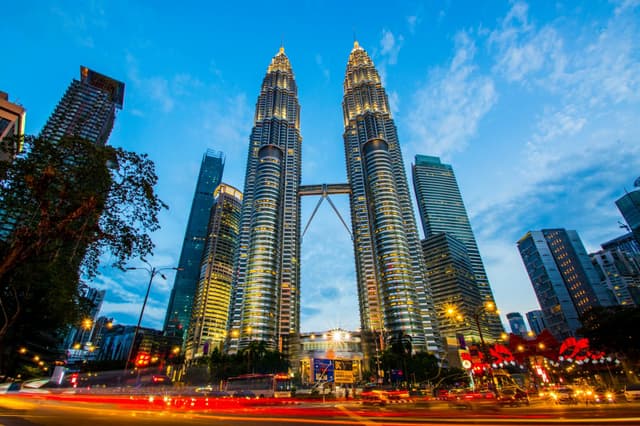
KL Sentral is Kuala Lumpur's main rail hub. From there you can change to the LRT, MRT, KL Monorail and KTM Komuter lines to reach Bukit Bintang, KLCC and the Petronas Twin Towers, Batu Caves or Chinatown. Our guide to things to do in Kuala Lumpur explains which line to take for each area.
Taxi and Grab tips at KLIA
- Book Grab inside the app and follow the e-hailing signs to the official pickup point.
- If you take a taxi, use the official counters inside the terminal. Ignore people who approach you in the arrival hall offering rides.
- Malaysia Airports runs an official scam alert page, which is worth a look if anyone asks for money or personal details on behalf of the airport.
- Download Grab, a maps app and your bank's app before you leave Nepal, and log in while you still have Nepali mobile data or Wi-Fi.
Can you transit at KLIA without entering Malaysia?
Yes, if both flights leave from the same terminal and are booked on one ticket, or the airlines have agreed to transfer your bags, you can normally stay airside at KLIA and go straight to the transfer area without passing immigration. If your connection involves changing terminals, or you booked two separate tickets, you will usually have to enter Malaysia, collect your bags and check in again.
This is where a lot of Kathmandu travellers get caught. A common plan is to fly Kathmandu to Kuala Lumpur on one airline, then save money with a separate AirAsia ticket to Bali, Phuket or Hanoi. That second flight leaves from Terminal 2, while you land at Terminal 1. On two separate tickets, nobody is responsible for your connection except you.
| Situation | Stay airside? | Bags | If the first flight is late |
|---|---|---|---|
| One ticket, same terminal (for example Kathmandu to KL to Sydney on Malaysia Airlines) | Normally yes, through the transfer area | Usually checked through to your final stop | The airline rebooks you |
| One ticket, different terminals | No, because there is no public airside link today | Ask the airline; you may need to collect and re-check them | The airline is usually responsible, but confirm when you book |
| Two separate tickets, same terminal | Sometimes, if the second airline can check you in airside; often no | You usually collect them and check in again | You may lose the second flight and pay for a new one |
| Two separate tickets, different terminals (for example Batik Air into Terminal 1, then AirAsia from Terminal 2) | No | Collect, clear customs, travel to Terminal 2, check in again | You carry the full risk |
Self-transfer or through ticket: a checklist before you book
- Check both terminals. Write down the terminal for each flight. If they differ, you are changing buildings.
- Check whether you can enter Malaysia. A self-transfer or a terminal change means passing immigration. Nepali passport holders should read the visa information page linked earlier; other passports should check imi.gov.my.
- Prefer one ticket where you can. A single booking puts the connection risk on the airline. Two tickets put it on you.
- Leave a real buffer on separate tickets. Allow time for immigration queues, baggage reclaim, the train to the other terminal, a new check-in that closes before departure, and departure immigration. Many experienced travellers leave several hours, and an overnight gap is safer still.
- Check the second airline's check-in closing time. Low-cost airlines are strict. If check-in closes before you reach the counter, the seat is gone.
- Check baggage rules on both tickets. A full-service fare from Kathmandu may include more checked baggage than a basic low-cost fare. Pay for the right allowance in advance. Our packing and baggage guide from Kathmandu explains how allowances work.
- Know your fallback. If you miss the second flight, what is the next one, and can you stay a night? The landside Sama-Sama Hotel is connected to Terminal 1.
- Buy insurance that covers missed connections. Read the policy wording on self-transfers, as many policies exclude them.
What is the minimum connection time at KLIA?
There is no single official minimum connection time that applies to every passenger. On a single ticket, the airline only sells connections that meet its own minimum, which already allows for the airport's layout. On separate tickets, no minimum protects you, so build in your own buffer as described above. When in doubt, ask the airline before you book rather than at the airport.
Where can you rest during a long layover at KLIA?
KLIA has an airside transit hotel in each terminal, Sama-Sama Express, where guests on a layover do not need to clear Malaysian immigration or customs. Terminal 1 also has the landside Sama-Sama Hotel connected to the Main Terminal, and airline and pay-per-use lounges in both terminals. Booking ahead is wise at busy times.
| Place to rest | Terminal | Airside or landside | Location |
|---|---|---|---|
| Sama-Sama Express KLIA Terminal 1 | Terminal 1 | Airside (no immigration needed) | Mezzanine Level, Satellite Building (near the C gates) |
| Sama-Sama Express KLIA Terminal 2 | Terminal 2 | Airside (no immigration needed) | Satellite Building, International Departure Level 3 |
| Sama-Sama Hotel KLIA | Terminal 1 | Landside (you must enter Malaysia) | Connected to the Main Terminal by a covered skybridge, with a buggy service |
| Airline lounges, such as Malaysia Airlines Golden Lounges | Terminal 1 | Airside | Satellite Building and Main Terminal; access depends on your ticket class or frequent flyer status |
| Pay-per-use lounges | Both | Airside | Several locations; check opening hours and entry rules with the operator |
Checked: 2 November 2026, sources: Sama-Sama Express KLIA Terminal 1; Sama-Sama Express KLIA Terminal 2; Tourism Selangor, Sama-Sama Hotel; Malaysia Airlines lounges (Terminal 1 passenger journey page, linked above). Room availability and rates are set by the hotel; check its site.
Planning a layover by length
| Layover | What makes sense |
|---|---|
| Under 3 hours, same terminal | Stay airside. Find your gate first, then eat. If your gate is a C gate, allow time for the Aerotrain. |
| 3 to 6 hours | Stay airside: a meal, a shower at a lounge or the transit hotel, and rest. Going into the city is rarely worth it after immigration and train time. |
| 6 to 12 hours, airside | A few hours in the airside transit hotel. Good for families with small children and elderly parents. |
| Overnight, if you can enter Malaysia | A landside or city hotel. Kuala Lumpur city is about 28 minutes away by KLIA Ekspres. |
Where can you get a SIM card, money and food at KLIA?
SIM card kiosks from Malaysian mobile networks, ATMs and money changers are found in the KLIA arrival areas, and food is available on both sides of security. A Malaysian prepaid SIM for a visitor now needs your original passport and is valid for up to three months, under rules that took effect on 26 February 2026.
SIM cards and mobile data
- Original documents only. Under the Malaysian Communications and Multimedia Commission (MCMC) rules in force from 26 February 2026, a visitor must show the original passport (and the original visa, if one is required) to register a prepaid SIM. Photos and photocopies are not accepted.
- Local address needed. The telco records your hotel or temporary address in Malaysia, so have your booking ready.
- Validity. A visitor's prepaid SIM can be used for up to three months from registration, and a non-Malaysian can register at most two prepaid SIMs per telco.
- Buy from the telco or an authorised dealer. The telco kiosks in the arrival area are the easiest option. Do not use a SIM that was activated before it was registered in your name.
- eSIM. If your phone supports eSIM, a travel eSIM bought before you leave Nepal means you have data the moment you land. Check what your Nepali network charges for roaming before relying on it.
Checked: 2 November 2026, sources: Malay Mail report of the MCMC Determination No. 1 of 2026, 26 February 2026; Bernama, 26 February 2026.
Money
- Malaysia's currency is the Malaysian ringgit (MYR, written RM). Do not count on changing Nepali rupees (NPR) in Malaysia; many Nepali travellers carry US dollars or use an international card instead.
- ATMs and money changers are in the public arrival halls. Airport rates are rarely the best, so change a small amount for the first day and the rest in the city.
- Cards and e-wallets are widely accepted in Kuala Lumpur. Tell your bank in Nepal you are travelling, and check whether your card works abroad and what it charges.
- Check the limits that apply to taking foreign currency out of Nepal with your bank before you fly. Rules on foreign exchange for travel are set by Nepal Rastra Bank.
Halal, vegetarian and Nepali-friendly food
Malaysia is a Muslim-majority country, and many outlets at KLIA serve halal food. In Malaysia, official halal certification is issued by JAKIM and state religious authorities, and certified outlets display the halal logo. If you avoid beef or pork, or eat only vegetarian food, ask before you order: say "no beef", "no pork" or "vegetarian, no meat, no fish", because some vegetable dishes are cooked with shrimp paste or anchovies.
- Indian and Malaysian Indian outlets are usually the easiest places for vegetarians, with rice, dal, roti and vegetable curries.
- Eat before you go airside if you like a wider choice, and always check the halal or vegetarian label rather than guessing from the dish name.
- For what to try once you are in the city, see our guide to Malaysian food, which flags vegetarian and halal options.
Prayer rooms and quiet spaces
Prayer rooms, called surau, are found in both terminals and are signposted. They are set up mainly for Muslim prayer, so respect the rules posted at the door, such as removing shoes. Travellers of other faiths usually find a quiet corner at a gate area or in a lounge more suitable.
What should you know before flying home from KLIA to Kathmandu?
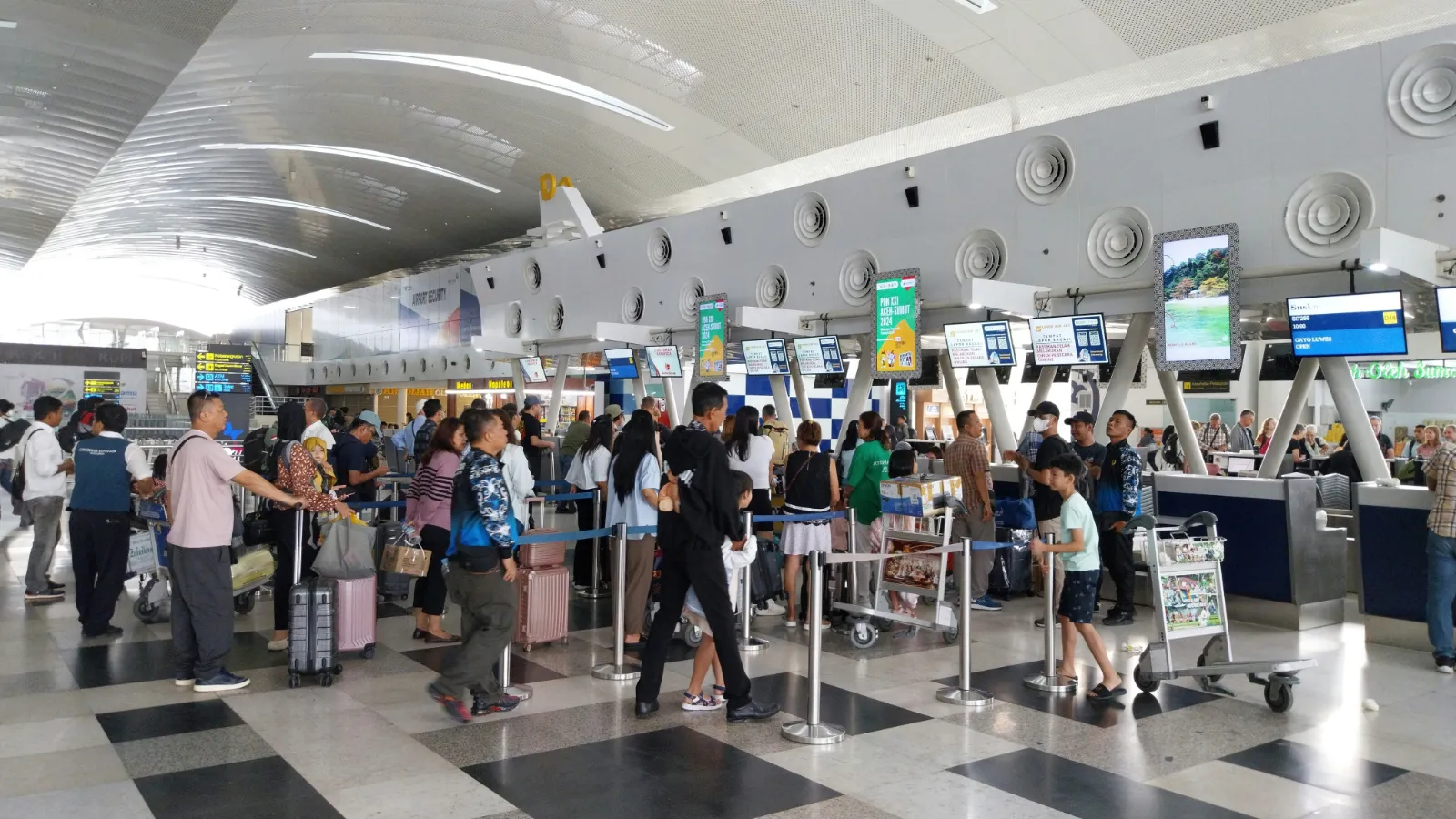
Before flying home from KLIA to Kathmandu, confirm that your flight leaves from Terminal 1, aim to reach the airport about three hours before departure, the usual guidance for international flights (four hours at festive peaks), and remember that check-in counters close 60 minutes before departure on Malaysia Airlines and gates close 30 minutes before. If your gate is a C gate, allow extra time for the Aerotrain to the Satellite Building.
| Step | Where at Terminal 1 | Timing to plan around |
|---|---|---|
| Arrive at the airport | Level 5 departure hall | About 3 hours before an international flight; Malaysia Airlines and Batik Air asked for 4 hours during the Chinese New Year 2026 rush |
| Check in and drop bags | Level 5 (Malaysia Airlines international economy: Row H) | Malaysia Airlines counters close 60 minutes before departure |
| Departure immigration and customs | Level 4 | Queues are longest in the evening and around holidays |
| Go to your gate | Gates G and H by walking; gate C by Aerotrain | Malaysia Airlines gates close 30 minutes before departure |
Checked: 2 November 2026, sources: Malaysia Airlines check-in; SAYS report of the Malaysia Airlines and Batik Air Chinese New Year 2026 advisories. Batik Air, Himalaya Airlines and Nepal Airlines set their own counter times, so check your airline.
The Dashain and Tihar rush
Flights from Kuala Lumpur to Kathmandu fill fast in the weeks before Dashain and Tihar, when many Nepalis working or studying in Malaysia head home, and again around the Nepali New Year in April. Departure halls are busier then, and bags are heavier. Book early, check in online where your airline allows it, and arrive at the upper end of the advice above. Malaysian holidays such as Hari Raya and Chinese New Year also make KLIA very busy, and airlines have asked passengers to arrive four hours early at such peaks.
Packing for the flight home
- Weigh your bags at your hotel. Excess baggage at the counter is the most common delay on Kuala Lumpur to Kathmandu flights.
- Keep liquids, gels and aerosols in your cabin bag within the security limits, and pack duty-free liquids bought in Kuala Lumpur in a sealed security bag.
- Electronics, gold and large amounts of cash may need to be declared at Nepali customs on arrival in Kathmandu. Check the current allowances with Nepal's Department of Customs before you buy.
- Power banks go in your cabin bag, never in checked luggage.
Tips for workers' families and first-time travellers
- If a family member working in Malaysia is flying home with you, make sure their own travel documents and employer exit arrangements are sorted before the airport day. The airport cannot fix paperwork problems at the counter.
- Keep the Embassy of Nepal's contact details (below) saved on your phone and written on paper.
- Arrive together. Only passengers can go through to departure immigration on Level 4, so say goodbyes before you go through.
Who can help Nepali travellers if something goes wrong in Kuala Lumpur?
For airport problems such as a missed flight, lost bags or a terminal mix-up, your airline's counter or transfer desk is the first stop. For a lost passport, an emergency or a legal or labour problem, Nepali citizens should contact the Embassy of Nepal in Kuala Lumpur, which is at Wisma Paradise, 63 Jalan Ampang, in the city centre.
| Embassy of Nepal, Kuala Lumpur | Details |
|---|---|
| Address | Wisma Paradise (Levels 1, 2, 3 and 9), No. 63 Jalan Ampang, 50450 Kuala Lumpur, Malaysia |
| General office hours | 9am to 5pm, Monday to Friday, lunch break 1pm to 2pm, closed on public holidays |
| Consular hours | 9am to 3pm, Monday to Friday, lunch break 1pm to 2pm |
| Reception, death and compensation matters | +60 3 5887 3945 (Level 9) |
| Passports | +60 3 2388 1935 (Level 2) |
| Detention and labour issues | +60 3 5887 7846 (Level 3) |
| Hotline (mobile) | 016 247 2777 within Malaysia; the embassy asks callers to use the landlines during office hours |
| General email | eonkualalumpur@mofa.gov.np |
| Labour email | labour.eonkl@mofa.gov.np |
Checked: 2 November 2026, source: Embassy of Nepal, Kuala Lumpur, office hours and contact details. Contact details can change; confirm on the embassy site.
For general safety in the city, including common scams and areas to be careful in, read our guide on whether Malaysia is safe for visitors.
Lost bags and lost items
- Checked bag missing on arrival. Report it at your airline's baggage service counter in the reclaim hall before you leave. Keep your bag tag sticker and get a written reference number.
- Item left on the plane. Contact the airline, not the airport.
- Item left in the terminal. Ask at the information counter, which can direct you to the airport's lost and found.
- Passport lost or stolen. Make a police report first, then contact the embassy's passport line listed above.
How should you plan the rest of your Malaysia trip?
Once you know how KLIA works, the rest of a Malaysia trip is easier to plan: most visitors spend a few days in Kuala Lumpur, then add the highlands, an island or a city such as Penang or Melaka. Our complete Malaysia travel guide covers regions, transport, money and culture in one place.
- Choosing between countries. If you are still deciding where to go from Nepal, our list of the best travel destinations for Nepali travellers compares Malaysia with Thailand, Singapore, Bali and others on flights, visas and travel style.
- When to go. Kuala Lumpur is hot and humid all year, with frequent afternoon showers. Dashain and Tihar holidays in October and November are popular with Nepali families, so book flights early for those dates.
- Organised trips. Some travellers prefer flights, hotels and airport transfers arranged in a single booking; for that style of travel, see Malaysia tour packages.
Frequently asked questions
Is klia2 the same as KLIA Terminal 2?
Yes. klia2 opened on 2 May 2014 as Kuala Lumpur International Airport's low-cost terminal, and on 9 February 2023 Malaysia's Transport Minister announced that KLIA and klia2 would be renamed KLIA Terminal 1 and KLIA Terminal 2. You will still see the old name on signs, tickets and websites. Terminal 2 is mainly used by AirAsia and AirAsia X, while all non-stop Kathmandu flights use Terminal 1.
How long does it take to transfer between KLIA T1 and T2?
The train ride between KLIA Terminal 1 and Terminal 2 takes about 3 minutes on KLIA Ekspres or KLIA Transit, and the shuttle bus takes about 10 minutes, depending on traffic. The ride is the quick part. Because there is no public airside link, international passengers usually clear immigration, collect bags, travel landside and check in again, so a full terminal change takes far longer than the ride itself, especially when immigration queues are long.
Can I stay airside on a connection at KLIA?
You can usually stay airside at KLIA if both flights leave from the same terminal and are on one ticket, or the airlines have agreed to transfer your bags. Follow the transfer signs instead of the arrival signs. If you change between Terminal 1 and Terminal 2, or hold two separate tickets, expect to pass Malaysian immigration, collect your bags and check in again with the second airline.
Do I need a transit visa at KLIA?
It depends on your passport and on whether you leave the airside area. Staying airside in the same terminal on a through ticket is different from changing terminals or self-transferring, which usually means entering Malaysia. Nepali passport holders should read Gomayu's Malaysia visa information page. Travellers on other passports should check the Immigration Department of Malaysia website, imi.gov.my, for their nationality before booking.
How early should I reach KLIA for a flight to Kathmandu?
Plan to reach KLIA Terminal 1 about three hours before a flight to Kathmandu. Allow four hours at Malaysian festive peaks such as Chinese New Year, when Malaysia Airlines and Batik Air have asked passengers to arrive four hours early, and consider the same in the busy Dashain and Tihar season. Malaysia Airlines counters close 60 minutes before departure and gates close 30 minutes before. Batik Air, Himalaya Airlines and Nepal Airlines set their own times, so check your ticket.
Is there a train from KLIA to KL Sentral?
Yes. Two trains link Kuala Lumpur International Airport with KL Sentral. KLIA Ekspres runs non-stop from Terminal 1 in about 28 minutes, about every 20 minutes for most of the day. KLIA Transit takes about 35 minutes and stops at Salak Tinggi, Putrajaya and Cyberjaya, and Bandar Tasik Selatan. Both start around 5am, and the last trains leave the airport just after 1am.
Can I buy a Malaysian SIM at the airport?
Yes. SIM kiosks from Malaysian mobile networks are in the KLIA arrival areas. Since 26 February 2026, visitors must show their original passport, and an original visa if one is required, plus a local address such as a hotel booking. A visitor's prepaid SIM is valid for up to three months, and you can register at most two prepaid SIMs per telco.
Is there somewhere to rest at KLIA during a long layover?
Yes. Sama-Sama Express runs an airside transit hotel in the Satellite Building of both KLIA terminals, so guests on a layover do not need to clear Malaysian immigration. Terminal 1 also has the landside Sama-Sama Hotel, linked to the Main Terminal by a covered skybridge, plus airline and pay-per-use lounges. Book ahead during busy holiday periods, as rooms can sell out.
Where is the Nepal embassy in Kuala Lumpur?
The Embassy of Nepal in Kuala Lumpur is at Wisma Paradise, Levels 1, 2, 3 and 9, No. 63 Jalan Ampang, 50450 Kuala Lumpur. General office hours are 9am to 5pm, Monday to Friday, with consular services from 9am to 3pm. The general email is eonkualalumpur@mofa.gov.np. Check the embassy website for current phone numbers before you visit.
What is the minimum connection time at KLIA?
There is no single official minimum connection time for every KLIA passenger. On one ticket, the airline only sells connections that meet its own minimum for the terminals involved. On separate tickets, nothing protects you if the first flight is late, so leave several hours for immigration, baggage reclaim, a terminal change and a fresh check-in, or plan an overnight gap.
Malaysia airport ma Aerotrain chalcha ki chaina?
Yes, the KLIA Aerotrain is running. It links the Terminal 1 Main Terminal with the Satellite Building and its C gates, and returned to full 24-hour service on 1 June 2026. KLIA has scheduled software works for 28 November to 1 December 2026, subject to safety checks, when buses may replace it from midnight to 5am. Allow extra time at night.