
























































Short answer: How much luggage is allowed in international flights from Kathmandu depends on your airline, your route and the exact fare you bought, not on one national rule. On the airlines we checked, most economy fares out of Tribhuvan International Airport (TIA) include about 20 to 35 kg of checked baggage plus one cabin bag of about 7 kg, but some low fares include no checked bag at all. Your e-ticket shows your allowance in kilograms (weight concept) or as "PC" (piece concept), and that line is the one to trust.
The second question Nepali travellers ask is about food. Can you take achar, ghee, sukuti or gundruk? The honest answer has two parts. Your airline and airport security decide how food travels (pastes and oily pickles count as liquids in the cabin), and the country you land in decides whether the food is allowed in at all. Some countries welcome a sealed jar of pickle; others confiscate dried meat on sight and fine people who do not declare it.
This guide covers both parts for travellers flying out of Kathmandu, whether it is a first holiday to one of the best travel destinations for Nepalese travellers, a family visit abroad, or a return to work in the Gulf. Use it alongside our pre-trip checklist so documents and bags are sorted in the same sitting.
How much luggage is allowed on international flights from Kathmandu?
There is no single Nepal-wide allowance. Each airline sets its own baggage rules, and within one airline the fare type (often called a fare family or fare brand) decides how many kilograms or pieces you get. IATA, the global airline body, puts it plainly: baggage allowances and conditions of carriage "remain airline specific". So two passengers on the same Kathmandu flight can have different allowances because they bought different fares, and the international flight luggage allowance from Nepal is really a question about your ticket.
If this is your first time flying abroad, our first-time flight tips explain check-in, boarding passes and transit in plain language. Here we focus on the luggage itself.
Weight concept vs piece concept
Airlines use one of two systems for checked baggage. Most of the airlines we checked on Asian and Gulf routes from Kathmandu use the weight concept, although Thai Airways has announced a new baggage policy based on pieces. Flights to or from the United States and Canada, and on some airlines Africa and the rest of the Americas, commonly use the piece concept.
| System | How it works | How it shows on your ticket | What to watch |
|---|---|---|---|
| Weight concept | You get a total number of kilograms. You can usually split that weight across more than one bag. | A weight, for example "25K" or "30 kg" | Each single bag still has a maximum weight, often 32 kg. Some airlines also cap the number of bags. |
| Piece concept | You get a number of bags, and each bag has its own weight and size limit. | A number of pieces, for example "1PC" or "2PC" | You cannot move spare kilos from a light bag to a heavy one. A 26 kg bag can be "overweight" even if your second bag is half empty. |
Malaysia Airlines describes the difference in exactly these terms on its baggage page: the weight concept is measured by the total weight of checked baggage and shown as a weight on the ticket, while the piece concept is measured by the number of pieces and shown as PC. The same airline also caps any single checked item at 32 kg and lists a normal size limit of under 158 cm in total (length plus height plus width).
Checked: October 2026, Malaysia Airlines checked baggage page.
What airlines flying from Kathmandu say
The table below shows only what each airline's own official baggage page or notice said when we checked. It is a snapshot to show how much allowances vary, not a promise for your booking. The fare you buy, the route and the travel date decide your real allowance, and airlines change these pages without much notice.
| Airline | Checked baggage (economy) | Notes from the official page |
|---|---|---|
| Nepal Airlines | Route by route. From Kathmandu: 25 kg to Dubai and Doha, 30 kg to Bangkok and Kuala Lumpur, 35 kg to Narita, 20 to 25 kg to Delhi depending on booking class | Maximum 32 kg per piece. Allowances into Kathmandu are often higher than out of it (see the return trip section). |
| Himalaya Airlines | Published as a separate notice for each route. Kathmandu to Kuala Lumpur: 30 kg, all booking classes. Kathmandu to Beijing Daxing: 15 kg, one piece only | Hand baggage 7 kg, total dimensions 114 cm. Route notices carry their own effective dates (January 2025 for Kuala Lumpur, November 2023 for Beijing). |
| Qatar Airways | Weight concept on most routes: Economy Lite 20 kg, Classic 25 kg, Convenience 30 kg, Comfort 35 kg | Piece concept on flights to or from Africa and the Americas. No single piece over 32 kg. |
| flydubai | Economy Lite: no checked baggage. Value: 20 kg. Flex: 30 kg | Up to 3 pieces within the total, each under 32 kg. Bags must not be strapped together. |
| Air Arabia | Checked baggage is chosen at booking or when you modify a booking, in 20, 30 or 40 kg options | Check what your fare includes before you pay; add weight in advance if you need it. |
| IndiGo | Kathmandu is in the group that gets 20 kg per person | Maximum 23 kg per piece and 158 cm total size per checked bag. |
| Malaysia Airlines | Depends on fare; shown on the ticket as weight or PC | Maximum 32 kg per item. |
| Thai Airways | Has announced a new baggage policy under the piece concept | The announcement is on Thai's own website, but we could not open the full notice when checking, so we do not quote figures. Confirm the rules on your own ticket. |
Checked: October 2026, Nepal Airlines checked baggage policy; Himalaya Airlines route baggage notices (KTM to KUL, KTM to PKX); Qatar Airways baggage allowance; flydubai checked baggage; Air Arabia checked and hand baggage page; IndiGo baggage allowance; Malaysia Airlines checked baggage page; Thai Airways news and announcements. In every case the ticket or fare type decides. VERIFY YEARLY.
Which airline you end up on depends on where you are going. Our guide to direct flights from Kathmandu lists the nonstop routes, and the route guides for Kathmandu to Dubai and Kathmandu to Kuala Lumpur cover the busiest diaspora corridors.
Why the fare type matters more than the airline
Many travellers compare airlines by name ("Qatar gives more kilos than flydubai") when the real difference is the fare. On flydubai, the same flight carries passengers with zero, 20 or 30 kg of checked baggage depending on whether they bought Lite, Value or Flex. On Qatar Airways, Economy Lite and Economy Comfort on the same aircraft differ by 15 kg.
Three habits prevent surprises:
- Read the baggage line before you pay. Booking sites and airline apps show it on the fare selection screen. If it says "cabin bag only" or "0 kg", believe it.
- Check the e-ticket again after booking. The allowance printed on the ticket or itinerary receipt is what the check-in agent at TIA will use.
- Check each leg on a connecting trip. If one ticket mixes two airlines, ask the airline that issued the ticket which allowance applies all the way and whether your bag is checked through to the final airport. Low-cost carriers on separate tickets apply their own rules on their own leg.
Airline apps are the quickest place to see your allowance and add bags; our roundup of the best travel apps covers which ones are worth installing before you fly.
What is the hand-luggage limit?
For economy passengers on the airlines we checked, the hand-luggage limit is usually one cabin bag of 7 kg, plus a small personal item such as a handbag or laptop bag. Sizes differ by airline, so a bag that fits one airline's frame can be refused by another.
| Airline | Cabin bag (economy) | Size limit | Extra personal item |
|---|---|---|---|
| Nepal Airlines | One bag, 7 kg | 22 x 18 x 10 inches | Handbag, wallet or laptop, camera, walking stick for elderly or disabled passengers, infant food |
| Himalaya Airlines | 7 kg | 114 cm total | Not stated in the route notices we read |
| Qatar Airways | One piece, 7 kg | 50 x 37 x 25 cm | See the airline's page for your cabin |
| flydubai | One bag, 7 kg | 55 x 38 x 20 cm | One personal item up to 25 x 33 x 20 cm, under the seat |
| IndiGo | One bag, 7 kg | 115 cm total | One personal article up to 3 kg |
Checked: October 2026, Nepal Airlines carry-on baggage page; Himalaya Airlines route notices; Qatar Airways, flydubai and IndiGo baggage pages. The ticket or fare type decides. VERIFY YEARLY.
Two practical points. First, cabin bags can be weighed at check-in or at the gate, so a cabin bag packed with heavy food or bottles is the one most likely to be stopped. Second, on Nepal Airlines' Dubai to Kathmandu policy the airline states that excess weight is not allowed to be moved into hand carry, even if the passenger is willing to pay at the last moment. Pack the cabin bag to the limit at home, not at the counter.
The liquids rule in plain words
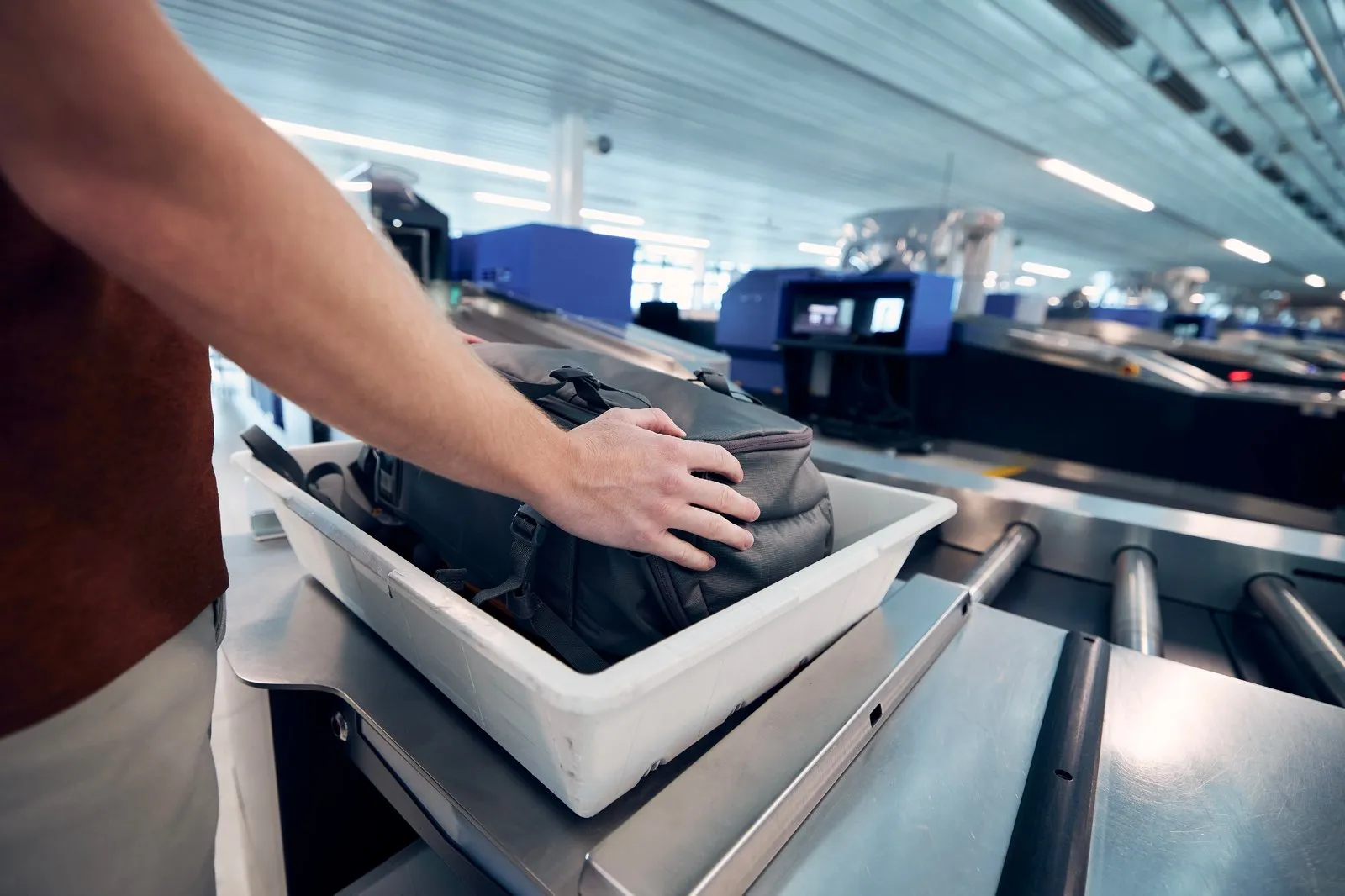
Liquids rule box
- Liquids in your cabin bag must be in containers of 100 ml or less. A bigger bottle is refused even if it is almost empty.
- All of those containers go in one clear, resealable plastic bag of about 1 litre (roughly 20 cm x 20 cm), one bag per passenger.
- "Liquids" includes drinks, soups, jam, honey, syrups, sprays, pastes, gels, creams and "items of similar consistency". In practice, ghee, achar in oil, chutney and pickle masala all count.
- Exemptions usually exist for essential medicines, special dietary foods and baby food or milk needed on the journey. Carry proof such as a prescription for large liquid medicines.
- Duty-free liquids must stay sealed in the security bag with the receipt visible until your final destination.
Checked: October 2026, GOV.UK hand luggage restrictions: liquids; Civil Aviation Authority of Singapore (ask.gov.sg); European Commission aviation security page on liquids, aerosols and gels.
The 100 ml rule follows ICAO recommendations and is applied at most international airports, including the transit hubs Nepali travellers use most, such as Singapore, Kuala Lumpur and the Gulf. We could not find a current Civil Aviation Authority of Nepal or TIA page that publishes the rule for Kathmandu, so treat 100 ml as the safe default at TIA as well. Some airports elsewhere, including several in the UK, now allow bigger containers, but you will be re-screened at your transit airport, and that airport's rule applies there.
A common Nepali mistake: buying a large bottle of water, juice or a sealed jar of honey after security at TIA, then losing it at the transfer security check in Doha, Dubai or Kuala Lumpur. If you have a connection, finish drinks before landing and keep food liquids in your checked bag.


















Can you carry achar, ghee, sukuti or gundruk on an international flight?
Usually yes as far as the airline is concerned, if the food is packed in your checked bag and does not leak. In the cabin, anything oily, wet or paste-like falls under the 100 ml liquids rule. The bigger question is the destination: some countries ban meat and dairy from Nepal outright, others require you to declare every food item, and Dubai Customs lists cooked and home-made foods among its banned items.
So always run two checks. Check one: can it go on the plane, and in which bag? Check two: will the country you land in let it in?
Do and don't table for Nepali foods
| Food | Cabin bag | Checked bag | Destination check |
|---|---|---|---|
| Achar (pickle in oil, mustard or water) | Only in containers of 100 ml or less inside the liquids bag | Usually fine if the jar is sealed, bagged twice and padded | Declare where food must be declared. Dubai Customs lists cooked and home-made foods as banned items. |
| Dry achar or timur and chilli mixes (powder) | Generally allowed; may be pulled for extra screening | Fine in a sealed pouch | Spices must be declared in Australia and some other countries. |
| Ghee | Counts as a liquid or paste: 100 ml or less only | Usually fine in a sealed tin or leakproof jar | Dairy is restricted in several countries. Great Britain does not allow milk-based products from Nepal for personal import. |
| Sukuti (dried buff, goat or other meat) | Dry, so not a liquid, but it is still meat | The airline will usually carry it | The riskiest item. Meat products from Nepal are not allowed into Great Britain, Singapore, Japan without a government certificate, or South Korea, and must be declared in Australia and the United States. |
| Gundruk and sinki (dried fermented greens and radish) | Dry, usually fine | Fine in a sealed bag | Plant products must be declared in Australia and the US. Home-made versions may be refused in Dubai. |
| Masala, spices, tea | Fine in small quantities | Fine | Declare herbs and spices where required. |
| Sel roti, homemade sweets and snacks | Fine if dry | Fine | Home-made and cooked food can be refused in Dubai; Singapore and others set quantity limits for processed food. |
| Shop-bought, sealed snacks with English labels | Fine if not liquid | Fine | Easiest for officers to identify. Still declare where the form asks. |
Checked: October 2026, GOV.UK liquids and food import pages; Singapore Food Agency; Australian Department of Agriculture, Fisheries and Forestry; US Customs and Border Protection; Japan Animal Quarantine Service; Dubai Customs. Each country's rules decide.
Can we take ghee in an international flight?
Yes, ghee can travel in checked baggage on most airlines if it is sealed and leakproof, but in the cabin it is treated as a liquid or paste, so only 100 ml or smaller containers are allowed. A 1 kg tin of ghee in a cabin bag will be taken away at security.
The destination is the real test. Ghee is a milk-based product. The UK government says travellers from outside the EU cannot bring milk or milk-based products into Great Britain, apart from limited infant milk, infant food and special medical food. Australia lists dairy among goods that must be declared. If you are flying to a country with strict dairy rules, plan to buy ghee locally after you land.
Can I take dry meat on an international flight?
The flight itself is rarely the problem: sukuti is dry, so it is not a liquid, and airlines generally carry it in checked baggage. The problem is entry. Dried meat is the single item most likely to be confiscated from Nepali travellers.
- Great Britain: meat and meat products from outside the EU cannot be brought in.
- Singapore: the Singapore Food Agency's list of approved meat sources for travellers does not include Nepal, and it counts any food containing meat as a meat product.
- Japan: meat products such as jerky, ham and sausage need a government inspection certificate from the exporting country, even as souvenirs or for personal use. Without one, they cannot be brought in.
- South Korea: a Korean government notice says travellers may not bring meat products such as ham, sausage and beef jerky, and must report livestock products at the airport, with heavy fines for not reporting.
- United States: US Customs and Border Protection says many fresh, dried and some canned meats are prohibited from most foreign countries, and all food must be declared.
- Australia: fresh, dried, cooked, smoked, salted and preserved meat must be declared.
If sukuti is a gift for family in the UK, Japan, Korea or Singapore, the kind choice is to leave it in Kathmandu.
Achar in checked baggage
Achar travels well in checked baggage if you pack it like it is going to fall off a conveyor belt, because it might. Use a jar with a tight screw lid, wrap the lid with tape, put the jar in two zip bags, then wrap it in clothes in the middle of the suitcase. Oil-based pickles can leak in the hold, and a broken jar of mustard-oil achar ruins everything around it.
Shop-bought achar in factory-sealed packaging is easier for customs officers to identify than a reused jar with no label. Write the contents in English on a piece of tape if the jar is homemade.
Gundruk, masala and homemade sweets
Dry foods like gundruk, sinki, masala and dried snacks are the easiest Nepali foods to carry. They are not liquids, so they can go in either bag. Still, food and powders can obstruct X-ray images, so the UK government suggests packing them in hold luggage to avoid delays at security. Declare them where the arrival card asks about plant products, seeds or herbs.
Which items are banned in checked bags?
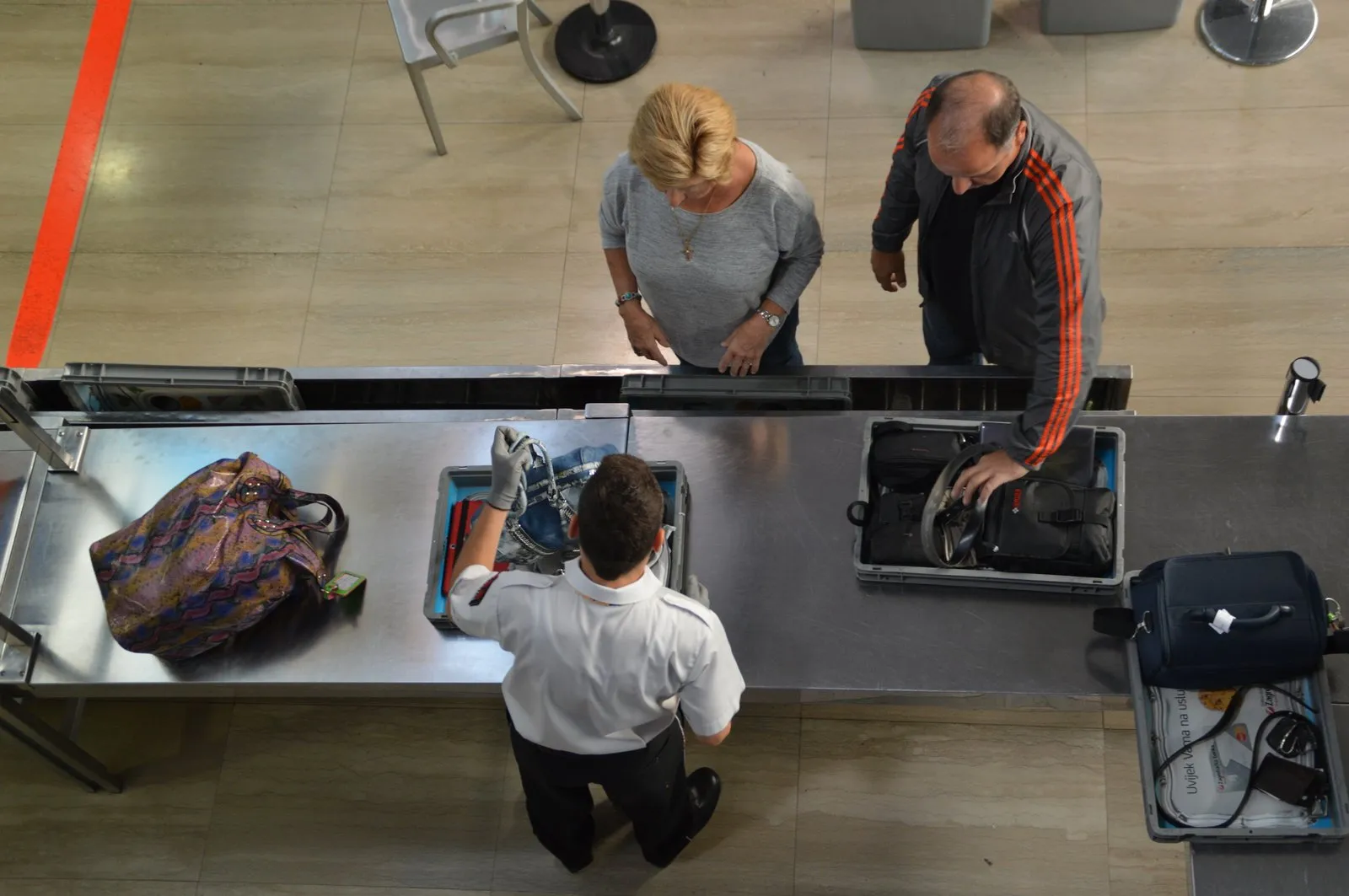
Lithium batteries are the main thing to keep out of checked bags: power banks, spare batteries and e-cigarettes must travel in your cabin bag. Lighters and matches are also cabin-only items (one, carried on your person). A further group, such as fireworks, spare lighter fuel and most non-toiletry aerosols, is banned from both bags. These are dangerous goods rules set internationally through ICAO and IATA, so they apply on every airline flying from Kathmandu.
| Item | Cabin bag | Checked bag |
|---|---|---|
| Power banks | Yes, up to 2 per person, 100 Wh or less each | No |
| Spare lithium batteries (camera, drone) | Yes, terminals insulated | No |
| Phones, laptops, tablets | Yes (recommended) | Only if completely switched off and protected |
| E-cigarettes and vapes | Yes, no charging on board | No |
| One lighter or one book of matches | On your person | No |
| Spare lighter fuel, butane refills, torch lighters | No | No |
| Fireworks, sparklers, firecrackers | No | No |
| Toiletry aerosols (deodorant, hairspray) | 100 ml rule applies | Yes, within per-container and total limits |
| Non-toiletry aerosols (spray paint, cooking spray, air freshener) | No | No |
| Camping stoves | Only with the airline's approval and the fuel tank empty and purged | Only with the airline's approval and the fuel tank empty and purged |
| Alcoholic drinks | 100 ml rule applies (except sealed duty-free) | In retail packaging, up to 70% alcohol |
Checked: October 2026, IATA guidance for passengers travelling with lithium batteries (31 March 2026); IATA Dangerous Goods Regulations Table 2.3.A; US FAA PackSafe guidance for passengers. Airlines can be stricter. VERIFY YEARLY.
Tihar travellers take note: sparklers and firecrackers are dangerous goods. They cannot go in any bag, and security will remove them.
Power banks: the 2026 rules
Power bank rules tightened in 2026. An addendum to the ICAO Technical Instructions applied from 27 March 2026, and IATA's guidance for passengers summarises the result.
| Rule | What it means for you |
|---|---|
| Cabin only | Never pack a power bank in checked baggage, including a bag checked at the gate. |
| Maximum two | No more than two power banks per person. |
| 100 Wh or less | IATA's March 2026 guidance treats power banks above 100 Wh as forbidden for passengers. Singapore's aviation regulator still allows 100 to 160 Wh power banks with the airline's approval, but the safe choice on any route is a power bank of 100 Wh or less. |
| No recharging on board | Do not plug the power bank into the seat power socket. |
| Do not use it in flight | Using it to charge your phone on board is discouraged, and airlines can set stricter rules of their own. |
| Protect the terminals | Keep each one in its pouch or a separate plastic bag. |
Checked: October 2026, IATA guidance to operators on power banks and IATA passenger lithium battery guidance (both March 2026); Civil Aviation Authority of Singapore safety information bulletin 2026-02. VERIFY YEARLY.
Most power banks print capacity in mAh, not Wh. To convert: multiply mAh by the voltage (usually 3.7 V) and divide by 1,000. A 20,000 mAh power bank at 3.7 V is 74 Wh, which is within the limit. A 27,000 mAh unit is about 99.9 Wh, right at the edge. If the label is worn off or unreadable, security may refuse it, so travel with one whose rating you can read.
Medicines from Nepal
Carry personal medicines in your cabin bag, in their original strips or bottles, with a copy of the prescription. The UK government, for example, allows essential liquid medicines above 100 ml through security but asks for proof that they are prescribed to you; tablets and liquids of 100 ml or less need no proof there.
Some countries control certain medicines tightly. The UAE's Ministry of Health and Prevention runs an online permit for narcotic and psychotropic (controlled) medicines for personal use. For visitors the advance approval is optional, but travellers without it must declare controlled medicines on arrival, and the ministry asks for a recent stamped prescription and a quantity of no more than three months' need. If you take strong painkillers, sleeping tablets or anxiety medicines, check the destination's health ministry page before you fly.
Checked: October 2026, GOV.UK medicines in hand luggage; UAE Ministry of Health and Prevention, permit to import medicines for personal use.
Medical paperwork also matters for insurance claims abroad; our guide to travel insurance from Nepal explains what policies usually expect. If you are heading to East Africa, see the separate note on the yellow fever certificate for Kenya.
Khukuri, kitchen knives and pressure cookers
Knives never belong in the cabin. The UK rule is a useful reference: it bans knives with a sharp or pointed blade or a blade longer than 6 cm from hand luggage and allows them in hold luggage subject to the airline. A khukuri bought as a gift must go in checked baggage, well wrapped, and you should check whether your destination treats large blades as restricted weapons.
A pressure cooker is not on the dangerous goods lists. It is ordinary baggage, so pack it clean, dry and empty in your checked bag and count it in your weight. It is heavy and bulky for a cabin bag, and screening staff can refuse anything they consider a risk, so the hold is the sensible place for it.
Which destinations are strict about food imports?
Australia, Great Britain, the United States, Japan, South Korea and Singapore all have firm, published rules on meat and dairy, and Dubai Customs lists cooked and home-made foods among banned items. Malaysia requires permits for imports of animals, meat and plant material under its quarantine law. The table below shows what each official page says; it is not a full list of every rule.
| Destination | What the official source says | What it means for Nepali food |
|---|---|---|
| Australia | Declare food, plant material and animal products, even small amounts: dairy, all forms of meat, herbs and spices, seeds and grains. False declarations can lead to penalties or visa cancellation. | Declare everything. Declared items that fail inspection may be treated, re-exported or destroyed, but honest declaration is not penalised. |
| Great Britain | No meat, meat products, milk or milk-based products from outside the EU, except limited infant milk, infant food and medical food. | Leave sukuti and ghee at home. |
| United States | Declare all agricultural products. Many fresh, dried and some canned meats are prohibited from most countries. | Declare all food; expect meat to be refused. |
| Japan | Meat products need a government inspection certificate from the exporting country, even as souvenirs. Illegal imports are seized and can lead to arrest. | Do not carry sukuti or meat pickles. |
| South Korea | Meat products such as ham, sausage and jerky are not allowed; livestock products must be reported at the airport. | Do not carry meat; report anything doubtful. |
| Singapore | Meat only from approved sources; Nepal is not on the list. Processed food from any country within a combined 5 kg or 5 litres. | No meat. Small amounts of sealed, non-meat food are workable. |
| Dubai (UAE) | Dubai Customs' banned items list includes "cooked and home-made foods". | Homemade achar, gundruk and sweets can be refused. |
| Malaysia | Under Act 728, no person may import any plant, animal, carcass (including meat), fish or agricultural produce without a permit, licence or certificate. Enforcement applies at entry points, including airports. | Do not carry meat. Ask MAQIS before carrying plant products in quantity. |
Checked: October 2026, Australian Department of Agriculture, Fisheries and Forestry traveller guide; GOV.UK bringing food into Great Britain; US Customs and Border Protection agricultural products page; Japan Animal Quarantine Service; Korean Ministry of Foreign Affairs notice (2019); Singapore Food Agency rules for bringing food and its list of food allowed; Dubai Customs permitted and banned items; Malaysian Quarantine and Inspection Services Act 2011 (Act 728). Rules change; check before each trip. VERIFY YEARLY.
Singapore is also strict about other everyday items; our dos and don'ts in Singapore covers them. Families planning a first city break there can also read Singapore with kids.
The declaration rule that protects you
Across these countries one rule keeps repeating: declare it. Australia states that travellers who declare and present all goods are not penalised under its Biosecurity Act, even if the item is then refused. The United States confiscates undeclared prohibited items and can fine travellers who failed to declare them. If you are unsure whether achar or gundruk counts, tick "yes" on the arrival form or go to the red channel and show it. Losing a jar of pickle is better than a fine or a problem with your visa.
Planning a longer trip to the UK or the Schengen area? Our Europe trip from Nepal guide covers the wider preparation.
How should you pack for the return trip?
Pack for the return trip on the outbound trip: leave about a quarter of your checked allowance free, and check the return allowance separately, because it is often different. On Nepal Airlines, for example, economy passengers get 25 kg from Kathmandu to Dubai but 40 kg from Dubai to Kathmandu, and 25 kg to Doha but 40 kg back. Himalaya Airlines lists 30 kg from Kathmandu to Kuala Lumpur and 35 kg in most economy booking classes on the way back.
| Route (Nepal Airlines, economy) | Out of Kathmandu | Into Kathmandu |
|---|---|---|
| Dubai | 25 kg | 40 kg |
| Doha | 25 kg | 40 kg |
| Kuala Lumpur | 30 kg | 35 kg |
| Bangkok | 30 kg | 30 kg |
| Narita (Tokyo) | 35 kg | 35 kg |
| Delhi | 20 to 25 kg | 20 to 30 kg |
Checked: October 2026, Nepal Airlines checked baggage policy (by booking class). The same page also listed a temporary 30 kg economy allowance for Dubai and Abu Dhabi to Kathmandu travel between 25 September and 20 October 2026, a reminder that allowances can change for set dates. The ticket or fare type decides. VERIFY YEARLY.
Return-trip tips that save trouble at the other end:
- Big items count as one piece. Nepal Airlines' Dubai policy says any item tagged at the counter, including a TV, counts as one piece, and very large TVs and oversize items attract a charge. Measure before you buy.
- Liquids bought abroad go in the checked bag. Shampoo, cooking oil, sauces and perfume above 100 ml will be taken at the transit security check if they are in your cabin bag.
- Duty-free stays sealed. Keep the security bag closed with the receipt visible until you reach Kathmandu.
- Know Nepal's own limits. Nepal Customs sets its own rules on arrival for gold, electronics, alcohol and cash. Our guide to the Nepal customs allowance explains what you can bring home duty-free, and the foreign currency limit guide covers cash in both directions.
- Gold shopping needs planning. If you plan to buy jewellery, read our note on buying gold in Dubai or Bangkok before you go.
Shoppers heading for the malls and souks can find more ideas in Dubai shopping, while Thailand's markets are where bags fill up fastest on a Bangkok trip.
How do you avoid excess baggage at TIA?
Know your exact allowance from the e-ticket, weigh every bag at home with a luggage scale, and buy extra weight from the airline in advance if you need it. Excess baggage at Tribhuvan International Airport is handled at your airline's check-in counter under that airline's own rules, so the counter staff can only apply what your ticket says.
- Read the baggage line on the e-ticket. Kilograms means weight concept; "PC" means pieces, each with its own limit.
- Weigh at home. A hand-held luggage scale is cheap and accurate enough. Leave a margin of a kilo or so, because home scales and airport scales rarely match exactly.
- Weigh the cabin bag too. On Gulf routes in particular, 7 kg means 7 kg.
- Buy extra allowance before the airport if you need it. Airlines such as Air Arabia let you select checked baggage weight when booking or modifying a booking, and most airline apps offer the same in "manage booking".
- Respect the per-piece cap. Even with a 40 kg allowance, no single bag can exceed the airline's maximum, typically 32 kg (23 kg on IndiGo). Split heavy loads across two bags.
- Use proper bags, not tied cartons. flydubai, for example, requires bags with at least one flat surface, no loose straps and items not strapped together. A carton tied up with rope may not meet rules like these, so check your airline's packaging rules before you tie up a box.
- Arrive early. Repacking at the counter takes time. Our guide to TIA international departure explains the security, check-in and immigration steps and how early to arrive.
- Carry your passport ready. If you are still on an older passport, our e-passport guide for Nepal explains the switch.
Checked: October 2026, Air Arabia checked and hand baggage page; flydubai checked baggage page; IndiGo baggage allowance; Nepal Airlines Dubai to Kathmandu policy.
Festival travel puts the most pressure on baggage. If you are flying during the long holiday, our guide to Dashain and Tihar holidays abroad helps with planning around the festival, and route guides such as Kathmandu to Bangkok, Kathmandu to Singapore and Kathmandu to Delhi explain which airlines fly each route.
What should be on your packing checklist?
Pack documents and batteries in the cabin bag, food and liquids in the checked bag, and leave meat and dairy at home if your destination restricts them. Use this list the night before you fly, together with the documents list in the pre-trip checklist linked at the top of this guide.
Cabin bag
- Passport, visa or e-visa printout, e-ticket, hotel booking and insurance document
- Medicines in original packaging, with prescription copies
- Phone, charger and up to two power banks of 100 Wh or less
- Spare camera or drone batteries, terminals taped
- Liquids bag: every container 100 ml or less, one 1 litre bag
- A light jacket and a change of clothes in case checked bags are delayed
- Pen for arrival and customs forms
Checked bag
- Sealed, double-bagged achar, ghee or sauces, only if your destination allows them
- Dry foods such as gundruk, masala or tea in sealed pouches with English labels
- Toiletries over 100 ml
- Knives, khukuri, scissors over 6 cm, tools (well wrapped)
- Name and phone number tag on the outside and inside of each bag
Leave at home
- Sukuti and other meat for the UK, Japan, Korea, Singapore and similar destinations
- Ghee and other dairy for Great Britain
- Fireworks and sparklers, spare lighter fuel and gas refills
- Power banks you cannot read the rating on
Destination guides help with the rest of the packing: weather, dress codes and local customs differ a lot between Bangkok and Kuala Lumpur. Start with Thailand travel tips or the Malaysia travel guide, keep our advice on avoiding Bali belly in mind for stomach medicines, and if you are still choosing where to go, see which countries are easier on paperwork in visa-free countries for Nepali passport holders. Transiting through the Gulf or Singapore? The Dubai stopover guide and Changi Airport guide help you plan the connection, and travellers bound for Sri Lanka can read the Kathmandu to Colombo flight guide.
Frequently asked questions
How much luggage is allowed from Kathmandu on international flights?
Luggage allowed from Kathmandu on international flights depends on the airline and fare. On the airlines we checked in October 2026, most economy fares included about 20 to 35 kg of checked baggage and a 7 kg cabin bag, while some low fares, such as flydubai Lite, include no checked bag. Your e-ticket shows the exact allowance.
Can we take ghee in an international flight?
Ghee can go in checked baggage on most international flights if it is sealed and leakproof. In the cabin it counts as a liquid or paste, so only containers of 100 ml or less are allowed. Check your destination too: Great Britain, for example, does not allow milk-based products from Nepal for personal import.
Can I take dry meat on an international flight?
Airlines usually carry dry meat such as sukuti in checked baggage, but many destinations refuse it. Great Britain, Singapore, Japan (without a government certificate) and South Korea do not allow meat products from Nepal, and Australia and the United States require all meat to be declared. Leave sukuti at home for these countries.
Can I carry achar in checked baggage?
Yes, achar can usually go in checked baggage on an international flight from Kathmandu if the jar is sealed, taped, double-bagged and padded. In the cabin, oily or wet achar must be in containers of 100 ml or less. Some destinations restrict home-made food, so declare it where the arrival form asks.
Can I carry gundruk to Dubai?
Airlines will carry dry gundruk, but entry is the question. Dubai Customs lists "cooked and home-made foods" among its banned items, so homemade gundruk can be refused. If you take some, a sealed, labelled shop product is easier for officers to identify, and the customs officer's decision is final.
Is a pressure cooker allowed in luggage?
A pressure cooker is not a dangerous good, so airlines carry it as ordinary checked baggage. Pack it clean, dry and empty in your checked bag and count its weight in your allowance. In the cabin it is bulky and heavy, and security staff can refuse items they consider a risk, so the hold is the better choice.
Can I carry a power bank in checked bags?
No. Under the 2026 ICAO and IATA rules, power banks must travel in your cabin bag, never in checked baggage. You can carry up to two per person, each 100 Wh or less, and you must not recharge them from the aircraft's power supply during the flight. Airlines can apply stricter rules.
What happens if my bag is overweight at TIA?
If your bag is overweight at Tribhuvan International Airport, the airline's check-in counter will ask you to pay excess baggage under that airline's rules or to remove items. A single bag over the airline's per-piece cap, often 32 kg, must be split. Weigh bags at home and buy extra allowance in advance to avoid this.
Can I carry medicines from Nepal?
Yes, you can carry personal medicines from Nepal in your cabin bag, ideally in original packaging with a copy of the prescription. Some countries control certain medicines: the UAE, for example, asks travellers to declare narcotic and psychotropic medicines on arrival or get approval in advance. Check your destination's health ministry before flying.
Achar flight ma lana milcha?
Yes, in most cases you can take achar on an international flight from Nepal. Put sealed, leakproof jars in your checked bag; in the cabin, only 100 ml or smaller containers are allowed because achar counts as a liquid. Then check your destination: home-made food can be refused in Dubai and must be declared in Australia.
Does the 100 ml liquids rule apply at Kathmandu airport?
Plan for it. The 100 ml rule follows ICAO recommendations and is used at most international airports, including Singapore and other major transit hubs. We could not find a current official Nepal page publishing the rule for Kathmandu, so pack as if it applies at TIA and at your transit airport.