












































+977-9709047652
Explore by Country
See all 22 Thailand packages
Most popular pick
See all 22 Thailand packages →
See all 11 Vietnam packages
Most popular pick
See all 11 Vietnam packages →
See all 10 Indonesia (Bali) packages
Most popular pick
See all 10 Indonesia (Bali) packages →
See all 7 Maldives packages
Most popular pick
See all 7 Maldives packages →
See all 10 China packages
Most popular pick
See all 10 China packages →
See all 13 Sri Lanka packages
Most popular pick
See all 13 Sri Lanka packages →
See all 9 Malaysia packages
Most popular pick
See all 9 Malaysia packages →
See all 8 Singapore packages
Most popular pick
See all 8 Singapore packages →
See all 2 Kenya packages
Most popular pick
See all 2 Kenya packages →
See all 16 India packages
Most popular pick
See all 16 India packages →
See all 3 Dubai packages
Most popular pick
See all 3 Dubai packages →
See all 7 Nepal packages
Most popular pick
See all 7 Nepal packages →
See all 6 Philippines packages
Most popular pick
See all 6 Philippines packages →
Search Tours or Places
Blog / Travel Tips

Kathmandu Airport International Departure: Step-by-Step Guide

29 min read 09 Oct 2026
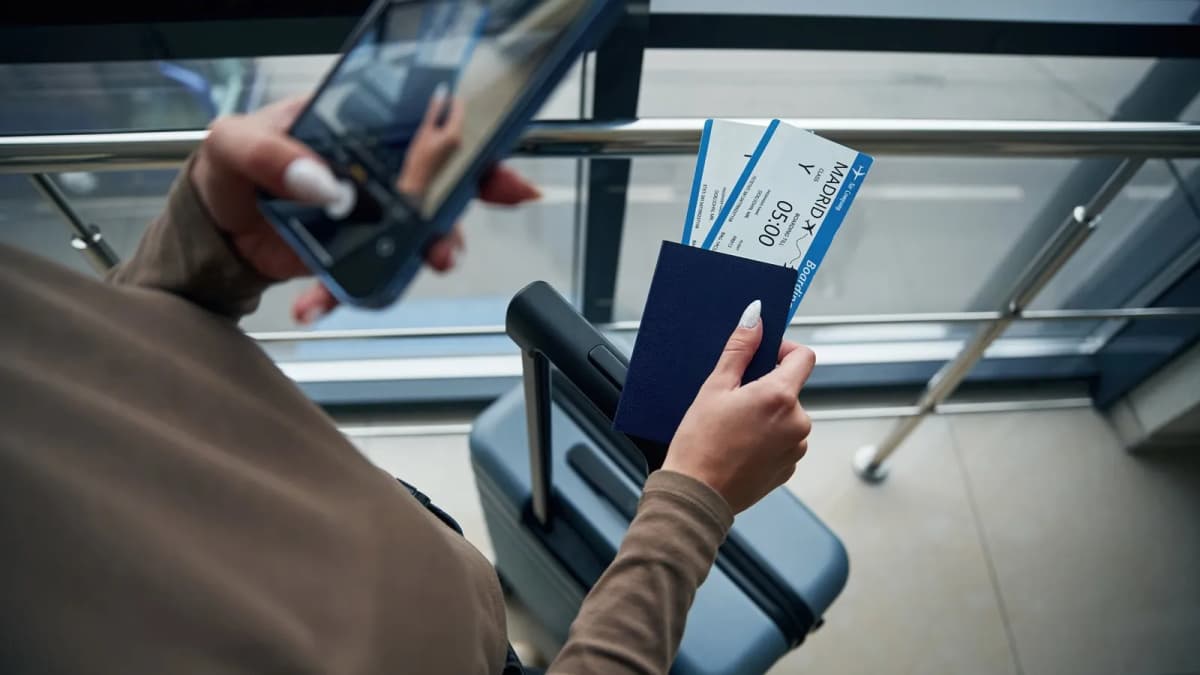
Traveller holding a passport, boarding passes and phone beside a suitcase in an airport departure area

Short answer: For a Kathmandu airport international departure, reach Tribhuvan International Airport (TIA) about three hours before your flight, as the airport itself advises, and closer to four hours in the Dashain and Tihar rush. The order is: kerbside drop-off, entrance check with passport and ticket, bag weighing and airline check-in, a paper embarkation card, immigration, the departure hall, a final security screening and then the gate. Keep your passport, boarding pass, the documents for your travel purpose and a pen in your hand, keep liquids under 100 ml in your cabin bag, and put power banks in your hand luggage, never in a checked bag.

Checked: 9 Oct 2026. Timings and facilities in this guide come from the TIA passenger FAQ (tiairport.com.np), the TIA Immigration Office departure page (tia.immigration.gov.np, last updated 27 March 2024) and recent Nepal news reports. Airport procedures, counter numbers and lounge access change without much notice. Check your airline and the official TIA and Department of Immigration sites in the week you fly.

This guide is written for people leaving Nepal by air for the first time, for parents flying alone to visit children abroad, for families on a holiday, and for anyone who simply wants the departure to feel calm. It follows the airport from kerb to gate, with the timing, the queue tips and the small things our Kathmandu team sees travellers get wrong. If you are still at the planning stage, start with our pre-trip checklist for international travel, then come back here for the airport day itself. If you are deciding where to go, our guide to the best travel destinations for Nepalese travellers is a good starting point.

What does the TIA international departure process look like, step by step?

The international departure process at TIA has eight stages, and you pass through them in a fixed order. Knowing the order is the easiest way to stay calm, because you always know what comes next and what to have ready.

  1. Drop-off at the international terminal kerb. Vehicles may only drop departing passengers in front of the international terminal. TIA warns that unattended vehicles there are taken into police custody and fined, so your driver should not wait at the kerb.
  2. Entrance check. Show your passport and ticket or e-ticket to security staff at the terminal gate. Only ticketed passengers continue into the check-in hall. Bags are screened before you reach the airline counters.
  3. Weighing and repacking. TIA provides weighing facilities before check-in. Use them if you are unsure about your baggage allowance.
  4. Airline check-in. Check-in counters sit on the A side and the B side of the hall. You hand over checked bags, receive your boarding pass, and declare any valuables to customs if needed.
  5. Embarkation card. Fill in the paper departure form, which the immigration office calls an embarkation card, before you join the immigration queue.
  6. Immigration. Present your passport, boarding pass and completed card at the counter for your passenger category. The officer stamps your passport and certifies the departure on your boarding pass.
  7. Departure hall. After immigration you reach the airside area with the lounges, shops, child care room and smoking area.
  8. Final security screening and gate. You and your hand baggage are screened before the gate areas. Then you wait at the gate printed on your boarding pass and listen for boarding calls.
StageWhat you show or doTypical sticking point
Kerb drop-offUnload quickly, take a free trolleyUnofficial porters offering to carry bags
Entrance checkPassport and ticketTicket only on a relative's phone
WeighingWeigh each checked bagRepacking on the floor in a crowd
Airline check-inPassport, any visa or entry document your airline asks forLong queues for full Gulf and Malaysia flights
Embarkation cardFill in passport number, flight and personal detailsNo pen, or details copied wrongly
ImmigrationPassport, boarding pass, card, purpose documentsDocuments packed in the checked bag
Departure hallLounge entry, shopping, restLosing track of time and gate announcements
Final security and gateHand baggage X-ray, body screeningWater bottles, large liquids, lighters

The departure process is broadly the same whether you hold a Nepali passport or a foreign one. The difference is which immigration counter you use and which documents an officer may want to see. For flight options and which airlines fly where, see our guide to direct flights from Kathmandu.

How early should you reach Kathmandu airport for an international flight?

Reach Kathmandu airport about three hours before an international flight. TIA's own FAQ says passengers should arrive "normally 3 hours before the flight", that check-in usually opens about three hours before departure, and that ticket checking counters close at least one hour before departure. Treat three hours as the normal minimum, not a target to cut close.

There are good reasons TIA asks for this much time. The international terminal is busy and compact. Nepali news reports citing the Civil Aviation Authority of Nepal put international passenger numbers at TIA above five million in 2025 (published figures differ slightly by source), with much of the growth coming from migrant workers, students and families visiting relatives abroad. Many of those flights leave in clusters, so queues can build quickly when several wide body aircraft board around the same time.

Official timing point at TIAWhat it saysSource
Recommended arrivalNormally 3 hours before the flightTIA passenger FAQ
Check-in openingUsually 3 hours before departureTIA passenger FAQ
Ticket checking counters closeAt least 1 hour before departureTIA passenger FAQ
Terminal entryAllowed at any time on the travel dateTIA passenger FAQ
Waiting room near Gate A1For passengers with a valid ticket for travel within the next 12 hours; entry may be restricted without noticeTIA passenger FAQ

Your airline may set its own check-in times, and some open counters earlier than three hours for long haul or full flights. Always read the check-in section of your e-ticket and the airline's website or app. Our list of the best travel apps for international trips includes airline and flight-status apps that send gate and delay alerts.

When should you leave home, by time of day?

Leave home early enough to stand at the terminal entrance three hours before departure, with a buffer for Kathmandu traffic. The table below is our team's planning rule of thumb from years of airport drops, not an official rule. Adjust it for where you live; travellers from Bhaktapur, Kirtipur or the outer valley need more time than someone in Sinamangal or Battisputali.

Your flight departsRoad conditions to expectSuggested buffer on top of 3 hours
Early morning (before 08:00)Roads usually clear, but taxis can be harder to find before dawnBook a ride the night before; 30 minutes buffer
Late morning and midday (08:00 to 13:00)Office and school traffic on the Ring Road, Tinkune and Gaushala45 to 60 minutes buffer
Afternoon (13:00 to 17:00)Moderate traffic, building towards the evening peak45 minutes buffer
Evening (17:00 to 21:00)Evening rush, the slowest time on most valley roads60 minutes or more buffer
Late night (after 21:00)Roads clearer, terminal can still be crowded with Gulf departures30 minutes buffer

Do you need extra time during Dashain, Tihar and other peaks?

Yes, add about an extra hour during festival and holiday peaks, so plan on arriving around four hours before departure. Outbound traffic rises before and after Dashain and Tihar and during school holidays, when many families travel together and many workers return to jobs abroad after the festivals. On those days check-in lines and immigration queues are longer and drop-off at the kerb is slower. Thailand is a popular first trip over the holidays, and our guide to the best time to visit Thailand explains what the weather is like in October and November. If you are travelling over the festival break, our guide to Dashain and Tihar holidays abroad covers booking windows and which destinations suit a short festival trip.

Weather and operations matter too. Morning fog in winter can delay arrivals into Kathmandu, which then pushes back departures. TIA also had restricted hours recently: The Kathmandu Post reported that from November 2024 to 31 March 2025 the airport closed for ten hours each night (22:00 to 08:00) for taxiway construction, and officials expect the parallel taxiway to be finished by the end of 2026. Flights were also halted briefly during unrest in September 2025. None of this changes the three hour rule, but it is a reminder to check flight status on the morning you travel.


Explore Thailand tour packages
View all →
Coral Island & Nong Nooch Garden Tour

Coral Island & Nong Nooch Garden Tour

🗓 6 Days · 5 Nights
from NRs 46,000 / person
View tour →
Thailand, Singapore & Malaysia Tour with Phuket

Thailand, Singapore & Malaysia Tour with Phuket

🗓 10 Days · 9 Nights
from NRs 1,01,000 / person
View tour →
Bangkok Pattaya Tour

Bangkok Pattaya Tour

🗓 5 Days · 4 Nights
from NRs 36,500 / person
View tour →
Bangkok Pattaya Phuket Tour

Bangkok Pattaya Phuket Tour

🗓 7 Days · 6 Nights
from NRs 57,500 / person
View tour →
Bangkok Krabi Tour

Bangkok Krabi Tour

🗓 6 Days · 5 Nights
from NRs 49,000 / person
View tour →
Bangkok & Koh Samui Honeymoon Tour

Bangkok & Koh Samui Honeymoon Tour

🗓 7 Days · 6 Nights
from NRs 74,500 / person
View tour →
Thailand & Vietnam Tour

Thailand & Vietnam Tour

🗓 8 Days · 7 Nights
from NRs 65,900 / person
View tour →
Bangkok Phuket Krabi Tour

Bangkok Phuket Krabi Tour

🗓 8 Days · 7 Nights
from NRs 64,800 / person
View tour →
Bangkok Phuket Tour

Bangkok Phuket Tour

🗓 6 Days · 5 Nights
from NRs 48,000 / person
View tour →
Bangkok & Krabi Tour with Free Days

Bangkok & Krabi Tour with Free Days

🗓 8 Days · 7 Nights
from NRs 59,000 / person
View tour →
Bangkok Pattaya Phuket Krabi Tour

Bangkok Pattaya Phuket Krabi Tour

🗓 9 Days · 8 Nights
from NRs 68,500 / person
View tour →
Bangkok, Chiang Rai & Chiang Mai Tour

Bangkok, Chiang Rai & Chiang Mai Tour

🗓 8 Days · 7 Nights
View tour →
Thailand, Singapore & Malaysia Family Tour

Thailand, Singapore & Malaysia Family Tour

🗓 11 Days · 10 Nights
from NRs 1,32,000 / person
View tour →
Royal Caribbean Cruise Tour

Royal Caribbean Cruise Tour

🗓 6 Days · 5 Nights
View tour →
Bangkok & Koh Phangan Full Moon Party Tour

Bangkok & Koh Phangan Full Moon Party Tour

🗓 8 Days · 7 Nights
View tour →
Phuket & Krabi Tour

Phuket & Krabi Tour

🗓 6 Days · 5 Nights
View tour →
Short Bangkok Tour

Short Bangkok Tour

🗓 4 Days · 3 Nights
from NRs 28,000 / person
View tour →
Phuket, Phi Phi & Krabi Island Escape

Phuket, Phi Phi & Krabi Island Escape

🗓 7 Days · 6 Nights
View tour →
Krabi Island Tour

Krabi Island Tour

🗓 5 Days · 4 Nights
from NRs 36,500 / person
View tour →
Phuket Tour

Phuket Tour

🗓 5 Days · 4 Nights
from NRs 37,000 / person
View tour →
Bangkok Family Friendly Tour

Bangkok Family Friendly Tour

🗓 5 Days · 4 Nights
View tour →
Bangkok & Pattaya Skydiving Tour

Bangkok & Pattaya Skydiving Tour

🗓 6 Days · 5 Nights
from NRs 1,21,000 / person
View tour →

What happens at the terminal entrance and check-in?

Passengers with suitcases and a stroller waiting in line at airline check-in counters

At the terminal entrance you show your passport and ticket, your bags are screened, and you go inside to weigh bags and check in with your airline. This is where most of the physical effort of departure happens, so it pays to arrive organised.

Can family members come inside Kathmandu airport?

Family members can see you off at the terminal forecourt, but in practice only ticketed passengers go through the entrance check into the check-in hall. TIA's FAQ says seeing passengers off is discouraged because of limited space, and that a maximum of three people may see off a passenger at the international terminal. Expect to say your goodbyes outside the entrance. If an elderly parent needs help beyond that point, arrange airline or wheelchair assistance in advance rather than relying on a relative getting inside (see the assistance section below).

WhoWhere they can goTip
Departing passengerThrough the entrance check, check-in, immigration and onwardKeep passport and ticket in hand at the gate
Family seeing you offTerminal forecourt; TIA allows a maximum of 3 people to see offFinish goodbyes, photos and handing over items before the entrance
DriverDrop-off only at the kerbDo not leave the vehicle unattended; use paid parking if waiting
Person needing helpAirline staff or wheelchair assistance takes over insideRequest assistance when booking and again at check-in

How does check-in work at TIA?

Check-in at TIA is done at your airline's counter, which you find from the screens and signs on the A side or B side of the hall. Join the correct queue for your flight, not just your airline, because some carriers run several departures close together.

  • Weigh first. Weighing facilities are available before check-in. Repacking at the counter holds up the queue and is stressful.
  • Use the free trolleys. TIA says baggage trolleys are free, and trolley collectors (who are not porters) can help in special cases at no charge. Politely decline anyone outside who offers to carry bags for money.
  • Know your allowance. Baggage allowances depend on your airline, fare type and route. TIA tells passengers to check carry-on and checked baggage rules with their airline.
  • Online check-in helps, but you still queue. Many airlines allow online check-in, but you still visit the counter to drop bags and, often, to have documents checked.
  • There is no left-luggage office. TIA's FAQ states that no left-luggage facility is available, so do not bring anything you plan to leave at the airport.

Do you need to declare valuables at departure?

You should not put gold, silver or cash in checked baggage. TIA's FAQ says these valuables can go in hand baggage with customs approval, with a declaration made at airline check-in. If you are carrying jewellery for a wedding abroad or foreign currency, ask the customs staff near the check-in area before you hand over your bags. How much foreign currency you may take out of Nepal is covered in our guide to the foreign currency limit when leaving Nepal, so we do not repeat the limits here. If you are wondering what you can bring back duty free when you return, read our Nepal customs allowance guide before you shop abroad.

What should you keep ready for immigration at TIA?

Passport with a boarding pass tucked inside being handed across a desk to an officer

Keep your passport, boarding pass, a completed embarkation card and the documents that support your purpose of travel in one folder in your hand. Immigration is the stage where travellers most often panic, usually because a document is in a checked bag or the card is half filled.

Is there still a departure card at Kathmandu airport?

Yes, as of our check the departure form at TIA is still a paper embarkation card. The TIA Immigration Office departure page (last updated 27 March 2024) says both Nepali and foreign nationals present a valid passport and a properly filled embarkation card to the immigration officer. A Nepal travel guide updated in April 2026 also reported that departures still use a physical card. We found no official notice of an online departure form or automated e-gates for departing passengers at TIA as of 9 October 2026, so expect a staffed counter and a paper card, and confirm on the Immigration Office website in the week you fly because forms can change.

Nepali citizens should also know about the self-declaration form. In February 2026 the TIA Immigration Office asked Nepali citizens travelling abroad on visit visas to download, complete and sign a self-declaration form, available through a QR code on its website, before reaching the immigration counter (reported by Ratopati, 27 February 2026). Check the Immigration Office website for the current form and whether it applies to your trip.

  • Cards are usually available near the immigration area. Pick one up as soon as you finish check-in.
  • Carry your own pen. Pens are always in short supply at busy times.
  • Copy your passport number and flight number exactly from your passport and boarding pass.
  • Write clearly in capital letters, and fill in every box the card asks for.

What documents should be in your hand, not your bag?

Keep every document an officer or airline might ask for in a single folder you can reach without opening a suitcase. Print copies, because a phone battery can fail at the worst moment.

Keep in handWhy it matters at TIA
Passport (valid for your whole trip)Checked at the entrance, check-in, immigration and the gate
Boarding passImmigration certifies your departure on it
Completed embarkation cardRequired at the immigration counter
Return or onward ticket (printed)Airlines and officers may ask how you are leaving your destination
Hotel bookings or host address (printed)Shows where you will stay
Documents for your travel purposeRequirements differ for tourism, study, work and official travel
PenFor the embarkation card
Contact number for your host or travel agentUseful if an officer or airline needs to confirm details

Exit documents and entry rules depend on your passport and the purpose of your trip, and they change. Check the official requirements for your passport and purpose with the TIA Immigration Office, the Department of Immigration and your destination's embassy before you fly. If you are getting a new passport, our e-passport Nepal guide explains the application and the timing.

Which immigration counter should you use?

Use the counter signposted for your passenger category; the immigration hall is divided by type of traveller. The TIA Immigration Office page lists the counters below. Counter numbers can change, so follow the signs and queue managers on the day.

Passenger categoryCounters listed by TIA Immigration Office
Nepali citizens (all purposes)Counters 9 to 22
Foreign nationalsCounters 1 to 8
Passengers above 70 or under 10Counter 5
DiplomatsCounter 6
CrewCounter 4

Source: tia.immigration.gov.np departure information page, last updated 27 March 2024. Checked: 9 Oct 2026.

What do immigration officers ask Nepali tourists?

Officers at TIA usually ask simple questions about your trip: where you are going, why, how long you will stay, where you will stay, who is paying, and when you are coming back. Answer briefly and truthfully, and show the matching document when asked. Nervous travellers sometimes give long or confused answers; a clear, short reply backed by a printed booking is far better. If you are travelling on a booked tour, keep the itinerary and hotel vouchers on top of your folder.

How does security screening work at TIA?

Passengers placing bags in trays while a screening officer checks items at airport security

Security screening at TIA follows the usual international rules: your hand baggage is X-rayed, you walk through a detector or are screened by hand, and liquids, sharp objects and batteries are restricted. Most confiscations are avoidable if you pack your cabin bag for screening the night before.

What are the liquid rules at Kathmandu airport?

Liquids, aerosols and gels in hand baggage must be in containers of 100 ml or less. TIA's FAQ adds that larger containers are refused at security even if they are partly filled, so a full water bottle will not pass screening: finish or empty it before you reach security. Most airports apply the 100 ml rule with all containers in one small clear resealable bag, so pack them that way to save time.

ItemHand baggageChecked baggage
Liquids, gels, creams, sprays100 ml or less per containerAllowed within airline rules
Water bottleFinish or empty before screening (100 ml rule)Not useful to pack
Power banksYes, hand baggage onlyNo, listed as not allowed by TIA
Laptops, tablets, phonesYes, screened separatelyBetter kept with you
Wired chargersAllowedAllowed
Gold, silver, cashYes, with customs approval and declarationNo, per TIA
Ghee, edible oil, honey, picklesOnly within the liquid ruleTIA asks passengers not to carry them in checked baggage
Meat items, including dried meat and meat picklesCheck airline and destination rulesListed as not to be carried by TIA
Liquor from airport duty-paid shopsSealed in a security tamper evident bagWithin airline and destination rules

Source: TIA passenger FAQ (tiairport.com.np). Checked: 9 Oct 2026.

Can you carry achar, ghee or homemade food?

Carrying achar, ghee and similar homemade food out of Kathmandu is harder than most people expect. TIA's FAQ asks passengers not to carry oily items such as ghee, edible oil, honey and pickles in checked baggage, and oily achar in your cabin bag counts as a liquid or gel under the 100 ml rule. On top of that, countries such as Australia have strict food import rules on arrival. If you really want to take homemade food, ask your airline before you pack, and check the customs rules of the country you are flying to.

What about power banks and batteries?

Power banks must travel in your hand baggage, never in checked baggage, according to TIA. Many airlines across Asia and the Gulf have also tightened rules on using or charging power banks during the flight since 2025, so read your airline's battery policy before you fly. Laptops, tablets, e-readers and phones are allowed in hand baggage but must be screened separately, so keep them easy to reach.

Are there special screening options?

Passengers with pacemakers can ask for a manual security check instead of walking through the metal detector, according to TIA. Tell the security officer before you reach the detector, and carry your device card. If you carry essential liquid medicines, keep a prescription or doctor's note with them in your cabin bag.

What facilities are there after immigration?

After immigration at TIA you find business lounges, duty-paid shops, a child care room, a smoking area and free Wi-Fi, but money exchange and ATMs are mainly on the public side. Do your banking and exchange before immigration. The departure hall is functional rather than large, so do not plan on a long shopping session.

FacilityWhat we foundSource
Free Wi-FiFree Wi-Fi across the international terminal; TIA names the network "!!Free_CAAN_WorldLink_WI-Fi!!", and a July 2026 travel guide reported a separate network named "TIA-Wifi-Departure" after immigrationTIA; Wego, 14 July 2026
Business loungesSeparate lounges operated by Hotel Soaltee and Hotel Radisson in the departure area after immigrationTIA
Child care loungeBaby feeding room with a baby cot in the international departure loungeTIA
Smoking areaIn the international departure lounge; smoking banned elsewhereTIA
ShopsAccept Mastercard, Visa and American ExpressTIA
Duty freeNo duty-free shop since 2008; Customs Regulations 2026 opened the way for new licences, opening not confirmedRepublica, May 2026
Medical centreRun by KMC and HAMS Hospital, open 24 hours, ambulances for emergenciesTIA
Help and information desksAt check-in, departure, arrival and customs areasTIA

Checked: 9 Oct 2026. Facilities and network names change; confirm on the day.

Is there free Wi-Fi at Kathmandu airport?

Yes, Kathmandu airport has free Wi-Fi in the international terminal from the departure area to arrivals. TIA lists the network as "!!Free_CAAN_WorldLink_WI-Fi!!". Speeds drop when the terminal is crowded, so download your boarding pass, hotel vouchers and offline maps at home, and do not rely on airport Wi-Fi for anything urgent. If you are buying an eSIM for your destination, install it before you leave home.

Is there an ATM or money exchange after immigration?

Do not count on an ATM or money exchange after immigration at TIA. The airport FAQ says two money exchange counters and an ATM are in the arrivals area before immigration, and mentions another ATM near the international departure terminal, which is on the public side. Change money at a licensed bank or money changer in the city before your flight day, and carry a card that works abroad as a backup. Our guide to carrying foreign currency out of Nepal explains what you can take.

Is there a lounge at Kathmandu international terminal?

Yes, there are business lounges at the Kathmandu international terminal, in the departure area after immigration and before the final security check. TIA says they are operated separately by Hotel Soaltee and Hotel Radisson. Third party lounge directories (reviewed June 2026) list them as the Executive Lounge by Radisson and the Horizon Lounge by Soaltee, with entry through business class tickets, airline status, lounge membership programmes or paid walk-in. Access rules and opening hours change, so check your airline, card or lounge app on the day.

Is there duty-free shopping at TIA?

There has been no duty-free shop at TIA since 2008, when the government closed the shop run by National Trading Ltd. Republica reported in May 2026 that the new Customs Regulations 2026 set out how duty-free shops can be licensed again through public bidding, but we could not confirm that any shop has opened as of 9 October 2026. The airside shops you see are duty-paid. Liquor bought there is sealed in a security tamper evident bag; check the rules of your destination before you buy.

What else is at the international terminal?

  • Post office: in the international check-in area, B side.
  • Waiting room near Gate A1: for passengers with a valid ticket for travel within 12 hours; entry may be restricted without notice.
  • Free shuttle to the domestic terminal: about every 20 minutes; the domestic terminal is roughly 500 metres north.
  • No airport hotel: TIA says there is no accommodation inside the airport; hotels are a few minutes' walk away and more are about 4 km away in the city.
  • Help lines: TIA lists +977 1 4113163 for international flight information and lost and found.

How do elderly travellers or families get help?

Elderly travellers, passengers with disabilities, pregnant women and parents with infants can use priority queues and free wheelchair assistance at TIA, and the best way to secure help is to ask your airline in advance. TIA's FAQ lists priority queues for these groups and tells passengers to contact their airline before the flight for assistance.

How do you request a wheelchair at TIA?

Request a wheelchair through your airline when you book, or well before departure (many airlines ask for at least 48 hours), and confirm it again at the check-in counter. TIA says wheelchairs are available and that passengers should contact their airline or a help desk. Once requested, airline or ground staff can take the passenger from check-in through immigration and security to the aircraft. You may use your own mobility equipment, but confirm with the airline whether it travels in the cabin or the hold.

WhoHelp available at TIAWhat to do before the day
Parents aged over 70 flying alonePriority queue; the immigration page lists a counter for passengers above 70Book wheelchair or assistance with the airline; give them a printed folder
Passengers with reduced mobilityFree wheelchair, priority queueRequest assistance at booking; confirm 48 hours ahead
Families with infantsPriority queue, child care lounge with baby cotCheck infant baggage and stroller rules with the airline
Children under 10The immigration page lists a counter for passengers under 10Carry the child's own passport and any documents for minors
Pregnant travellersPriority queueCheck the airline's pregnancy policy and carry a doctor's letter if required
Passengers with pacemakersManual security check on requestCarry the device card

Tips for a parent flying alone to visit children abroad

Many of our customers are parents travelling alone to see sons and daughters in Australia, the Gulf, Japan, Europe or the United States, and many combine the visit with a short holiday on the way, such as a few days in Dubai or Singapore. A little preparation makes the airport much easier for them.

  • Request wheelchair or meet and assist service with the airline, even if they walk well; it guarantees a guide through every stage.
  • Prepare one clear folder: passport, printed tickets, boarding pass if checked in online, host address and phone, and any letters needed for the trip.
  • Fill in as much of the embarkation card information as possible on a separate sheet at home, so they can copy it.
  • Pack their cabin bag with no liquids over 100 ml, no water bottle and the power bank inside.
  • Write the transit airport and connecting flight on a card in large letters. If they are changing planes in the Gulf or Singapore, our guides to the Dubai stopover and Singapore Changi Airport show what the transfer looks like.
  • Make sure their phone works abroad, or that they know how to connect to airport Wi-Fi on arrival.

What about families travelling together?

Families should check in together (our Malaysia with family guide has more tips for travelling with children), carry each person's passport in one folder held by one adult, and go through immigration together where officers allow it. Children need their own passports. Pack small snacks for children, remember that water bottles must be emptied before security, and keep a change of clothes in the cabin bag in case of delays. For destination ideas that work well with children, our guide to holiday destinations from Nepal includes family friendly options.

What are the most common mistakes first-time flyers make?

The most common mistakes first-time flyers make at TIA are arriving late, packing documents or power banks in checked bags, and carrying liquids or homemade food that security will not allow. Almost all of them can be avoided the night before. Our guide of first-time flight tips covers the in-flight side, from seat selection to what happens on board.

MistakeWhat happensHow to avoid it
Arriving 90 minutes before departureLong queues; counters close at least 1 hour before departureArrive 3 hours ahead, 4 in festival peaks
Documents in the checked suitcaseCannot show them at immigrationOne folder in hand with printed copies
Power bank in checked bagBag is pulled for inspection, flight delay for youPower banks in hand baggage only
Full water bottle in cabin bagConfiscatedFinish or empty water before security
Large cream, perfume or achar in cabin bagConfiscated at securityOnly containers of 100 ml or less
Overweight bagsRepacking at the counter or extra chargesWeigh at home and use TIA's weighing area
Hiring unofficial portersPaying for help you did not needUse free trolleys inside the terminal
No pen for the embarkation cardWaiting for a pen in a crowded areaCarry your own pen
Planning to exchange money airsideNo exchange after immigrationExchange in the city before your flight day
Ignoring gate announcementsMissed boarding or rushed gate changeCheck screens and stay near your gate

Passport and booking mistakes

  • A passport close to expiry. Many countries and airlines expect your passport to be valid well beyond your return date, often six months. Check your destination's rule before you book, and renew early if needed.
  • Name mismatch. The name on your ticket must match your passport exactly. A spelling difference can stop you at check-in.
  • Missing transit rules. Some transit countries have their own entry or transit requirements. Check them for your passport before booking a connection.
  • Only digital copies. Print your ticket, hotel bookings and any letters, and keep digital copies too.

Mistakes on the day

  • Too many people coming to the airport. Only three can see you off, and they stay outside. Say goodbye at home or at the forecourt.
  • Driver waiting at the kerb. Unattended vehicles can be taken by police and fined. Use paid parking if someone needs to wait.
  • Not telling anyone about a delay. If your flight is delayed, tell your host and your travel agent so transfers and hotels can be adjusted.

What is the quick Kathmandu airport departure checklist?

Use this checklist the night before and again in the car. If every line is ticked, the airport becomes a sequence of queues rather than a source of stress.

WhenCheck
A week beforePassport validity, entry rules for your passport and purpose, airline baggage allowance, wheelchair request if needed
Two days beforeExchange foreign currency, print tickets and bookings, install airline app and eSIM
Night beforeWeigh bags, move power banks and documents to hand baggage, liquids into small containers, pen in pocket
Before leaving homeCheck flight status, book a ride, allow 3 hours plus traffic buffer (4 hours in festival peaks)
At the terminalPassport and ticket for the entrance, weigh, check in, declare valuables if any
Before immigrationFill in the embarkation card, documents folder ready
Before securityFinish water, laptop and phone easy to reach
At the gateWatch the screens, listen for boarding and gate changes

Once the airport day is planned, the rest of the trip gets easier. If a first trip abroad is on your list, our ideas for a Thailand island holiday and our Thailand travel tips are a good place to start for Bangkok or Phuket.

Frequently asked questions

How many hours before an international flight should I reach TIA?

Reach Tribhuvan International Airport about three hours before an international flight. TIA's own FAQ advises arriving normally three hours ahead, says check-in usually opens three hours before departure, and says ticket checking counters close at least one hour before departure. During Dashain, Tihar and school holidays, allow about four hours because queues are longer.

Can family members come inside Kathmandu airport?

Family members can see you off at the Kathmandu airport forecourt, but only ticketed passengers pass the entrance check into the check-in hall. TIA discourages seeing off because space is limited and allows a maximum of three people to see off a passenger at the international terminal. Arrange airline assistance if an elderly traveller needs help inside.

Is there free Wi-Fi at Kathmandu airport?

Yes, Kathmandu airport offers free Wi-Fi in the international terminal from the departure area to arrivals. TIA lists the network as "!!Free_CAAN_WorldLink_WI-Fi!!", and a July 2026 guide reported a separate departure network after immigration. Speeds slow when the terminal is busy, so download boarding passes and bookings before you leave home.

Is there an ATM after immigration at TIA?

Do not rely on an ATM after immigration at TIA. The airport FAQ places the ATM and two money exchange counters in the arrivals area before immigration, plus another ATM near the international departure terminal on the public side. Withdraw cash and exchange money in the city before your flight day, and carry a card that works abroad.

Can I exchange money inside Kathmandu airport?

Money exchange at Kathmandu airport is mainly at the arrivals counters before immigration, so it is not convenient for departing passengers. Exchange foreign currency at a licensed bank or money changer in the city before you fly, keep the receipt, and check how much foreign currency you may carry out of Nepal in our foreign currency limit guide.

What do immigration officers ask Nepali tourists at TIA?

Immigration officers at TIA usually ask Nepali tourists where they are going, why, for how long, where they will stay, who is paying and when they will return. Answer briefly and show printed tickets and bookings. Document requirements depend on your passport and purpose, so check the official requirements with the Department of Immigration before you fly.

Can I carry achar in hand luggage from Kathmandu?

Oily achar in hand luggage from Kathmandu counts as a liquid or gel, so only containers of 100 ml or less pass security. TIA also asks passengers not to carry pickles, ghee, honey and edible oil in checked baggage, and many destinations restrict food imports. Ask your airline and check your destination's customs rules before packing homemade food.

How do I request a wheelchair at TIA?

Request a wheelchair at TIA through your airline when you book, or well before departure (many airlines ask for 48 hours), and confirm at the check-in counter. TIA says wheelchairs are available and that passengers can also ask at help desks. Staff then guide the passenger through immigration and security, with priority queues for elderly and disabled travellers.

Is there a lounge at Kathmandu international terminal?

Yes, the Kathmandu international terminal has business lounges after immigration and before the final security check. TIA says they are operated by Hotel Soaltee and Hotel Radisson. Entry is usually through business class tickets, airline status, lounge membership programmes or paid walk-in. Confirm access with your airline or lounge app on the day.

Is there a duty-free shop at Kathmandu airport?

Kathmandu airport has had no duty-free shop since 2008. Nepal's Customs Regulations 2026 created a way to license duty-free shops again, Republica reported in May 2026, but we could not confirm any had opened by 9 October 2026. The airside shops are duty-paid and accept major cards.

Airport ma k k document chahincha?

Kathmandu airport ma international flight ko lagi passport, boarding pass, bhareko embarkation card, printed return ticket, hotel booking ra tapaiko yatra ko uddeshya anusar ko document haat ma rakhnus. Kun document chahincha bhanne kura passport ra uddeshya anusar farak parcha, tyesaile Department of Immigration ko official jankari herera matra jaanus.

Tags
Travel Tips
Share
G
Gomayu Team
Writer at Gomayu
Keep reading
Blog / Travel Tips
Kathmandu Airport International Departure: Step-by-Step Guide
29 min read 09 Oct 2026
Traveller holding a passport, boarding passes and phone beside a suitcase in an airport departure area

Short answer: For a Kathmandu airport international departure, reach Tribhuvan International Airport (TIA) about three hours before your flight, as the airport itself advises, and closer to four hours in the Dashain and Tihar rush. The order is: kerbside drop-off, entrance check with passport and ticket, bag weighing and airline check-in, a paper embarkation card, immigration, the departure hall, a final security screening and then the gate. Keep your passport, boarding pass, the documents for your travel purpose and a pen in your hand, keep liquids under 100 ml in your cabin bag, and put power banks in your hand luggage, never in a checked bag.

Checked: 9 Oct 2026. Timings and facilities in this guide come from the TIA passenger FAQ (tiairport.com.np), the TIA Immigration Office departure page (tia.immigration.gov.np, last updated 27 March 2024) and recent Nepal news reports. Airport procedures, counter numbers and lounge access change without much notice. Check your airline and the official TIA and Department of Immigration sites in the week you fly.

This guide is written for people leaving Nepal by air for the first time, for parents flying alone to visit children abroad, for families on a holiday, and for anyone who simply wants the departure to feel calm. It follows the airport from kerb to gate, with the timing, the queue tips and the small things our Kathmandu team sees travellers get wrong. If you are still at the planning stage, start with our pre-trip checklist for international travel, then come back here for the airport day itself. If you are deciding where to go, our guide to the best travel destinations for Nepalese travellers is a good starting point.

What does the TIA international departure process look like, step by step?

The international departure process at TIA has eight stages, and you pass through them in a fixed order. Knowing the order is the easiest way to stay calm, because you always know what comes next and what to have ready.

  1. Drop-off at the international terminal kerb. Vehicles may only drop departing passengers in front of the international terminal. TIA warns that unattended vehicles there are taken into police custody and fined, so your driver should not wait at the kerb.
  2. Entrance check. Show your passport and ticket or e-ticket to security staff at the terminal gate. Only ticketed passengers continue into the check-in hall. Bags are screened before you reach the airline counters.
  3. Weighing and repacking. TIA provides weighing facilities before check-in. Use them if you are unsure about your baggage allowance.
  4. Airline check-in. Check-in counters sit on the A side and the B side of the hall. You hand over checked bags, receive your boarding pass, and declare any valuables to customs if needed.
  5. Embarkation card. Fill in the paper departure form, which the immigration office calls an embarkation card, before you join the immigration queue.
  6. Immigration. Present your passport, boarding pass and completed card at the counter for your passenger category. The officer stamps your passport and certifies the departure on your boarding pass.
  7. Departure hall. After immigration you reach the airside area with the lounges, shops, child care room and smoking area.
  8. Final security screening and gate. You and your hand baggage are screened before the gate areas. Then you wait at the gate printed on your boarding pass and listen for boarding calls.
StageWhat you show or doTypical sticking point
Kerb drop-offUnload quickly, take a free trolleyUnofficial porters offering to carry bags
Entrance checkPassport and ticketTicket only on a relative's phone
WeighingWeigh each checked bagRepacking on the floor in a crowd
Airline check-inPassport, any visa or entry document your airline asks forLong queues for full Gulf and Malaysia flights
Embarkation cardFill in passport number, flight and personal detailsNo pen, or details copied wrongly
ImmigrationPassport, boarding pass, card, purpose documentsDocuments packed in the checked bag
Departure hallLounge entry, shopping, restLosing track of time and gate announcements
Final security and gateHand baggage X-ray, body screeningWater bottles, large liquids, lighters

The departure process is broadly the same whether you hold a Nepali passport or a foreign one. The difference is which immigration counter you use and which documents an officer may want to see. For flight options and which airlines fly where, see our guide to direct flights from Kathmandu.

How early should you reach Kathmandu airport for an international flight?

Reach Kathmandu airport about three hours before an international flight. TIA's own FAQ says passengers should arrive "normally 3 hours before the flight", that check-in usually opens about three hours before departure, and that ticket checking counters close at least one hour before departure. Treat three hours as the normal minimum, not a target to cut close.

There are good reasons TIA asks for this much time. The international terminal is busy and compact. Nepali news reports citing the Civil Aviation Authority of Nepal put international passenger numbers at TIA above five million in 2025 (published figures differ slightly by source), with much of the growth coming from migrant workers, students and families visiting relatives abroad. Many of those flights leave in clusters, so queues can build quickly when several wide body aircraft board around the same time.

Official timing point at TIAWhat it saysSource
Recommended arrivalNormally 3 hours before the flightTIA passenger FAQ
Check-in openingUsually 3 hours before departureTIA passenger FAQ
Ticket checking counters closeAt least 1 hour before departureTIA passenger FAQ
Terminal entryAllowed at any time on the travel dateTIA passenger FAQ
Waiting room near Gate A1For passengers with a valid ticket for travel within the next 12 hours; entry may be restricted without noticeTIA passenger FAQ

Your airline may set its own check-in times, and some open counters earlier than three hours for long haul or full flights. Always read the check-in section of your e-ticket and the airline's website or app. Our list of the best travel apps for international trips includes airline and flight-status apps that send gate and delay alerts.

When should you leave home, by time of day?

Leave home early enough to stand at the terminal entrance three hours before departure, with a buffer for Kathmandu traffic. The table below is our team's planning rule of thumb from years of airport drops, not an official rule. Adjust it for where you live; travellers from Bhaktapur, Kirtipur or the outer valley need more time than someone in Sinamangal or Battisputali.

Your flight departsRoad conditions to expectSuggested buffer on top of 3 hours
Early morning (before 08:00)Roads usually clear, but taxis can be harder to find before dawnBook a ride the night before; 30 minutes buffer
Late morning and midday (08:00 to 13:00)Office and school traffic on the Ring Road, Tinkune and Gaushala45 to 60 minutes buffer
Afternoon (13:00 to 17:00)Moderate traffic, building towards the evening peak45 minutes buffer
Evening (17:00 to 21:00)Evening rush, the slowest time on most valley roads60 minutes or more buffer
Late night (after 21:00)Roads clearer, terminal can still be crowded with Gulf departures30 minutes buffer

Do you need extra time during Dashain, Tihar and other peaks?

Yes, add about an extra hour during festival and holiday peaks, so plan on arriving around four hours before departure. Outbound traffic rises before and after Dashain and Tihar and during school holidays, when many families travel together and many workers return to jobs abroad after the festivals. On those days check-in lines and immigration queues are longer and drop-off at the kerb is slower. Thailand is a popular first trip over the holidays, and our guide to the best time to visit Thailand explains what the weather is like in October and November. If you are travelling over the festival break, our guide to Dashain and Tihar holidays abroad covers booking windows and which destinations suit a short festival trip.

Weather and operations matter too. Morning fog in winter can delay arrivals into Kathmandu, which then pushes back departures. TIA also had restricted hours recently: The Kathmandu Post reported that from November 2024 to 31 March 2025 the airport closed for ten hours each night (22:00 to 08:00) for taxiway construction, and officials expect the parallel taxiway to be finished by the end of 2026. Flights were also halted briefly during unrest in September 2025. None of this changes the three hour rule, but it is a reminder to check flight status on the morning you travel.
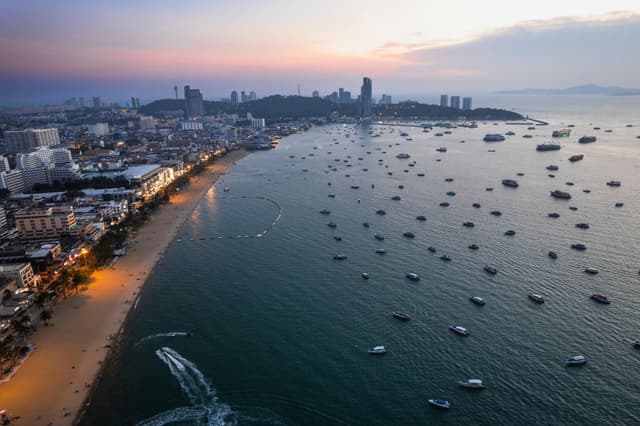
Explore Thailand tour packages
View all →
Coral Island & Nong Nooch Garden Tour

Coral Island & Nong Nooch Garden Tour

🗓 6 Days · 5 Nights
from NRs 46,000 / person
View tour →
Thailand, Singapore & Malaysia Tour with Phuket

Thailand, Singapore & Malaysia Tour with Phuket

🗓 10 Days · 9 Nights
from NRs 1,01,000 / person
View tour →
Bangkok Pattaya Tour

Bangkok Pattaya Tour

🗓 5 Days · 4 Nights
from NRs 36,500 / person
View tour →
Bangkok Pattaya Phuket Tour

Bangkok Pattaya Phuket Tour

🗓 7 Days · 6 Nights
from NRs 57,500 / person
View tour →
Bangkok Krabi Tour

Bangkok Krabi Tour

🗓 6 Days · 5 Nights
from NRs 49,000 / person
View tour →
Bangkok & Koh Samui Honeymoon Tour

Bangkok & Koh Samui Honeymoon Tour

🗓 7 Days · 6 Nights
from NRs 74,500 / person
View tour →
Thailand & Vietnam Tour

Thailand & Vietnam Tour

🗓 8 Days · 7 Nights
from NRs 65,900 / person
View tour →
Bangkok Phuket Krabi Tour

Bangkok Phuket Krabi Tour

🗓 8 Days · 7 Nights
from NRs 64,800 / person
View tour →
Bangkok Phuket Tour

Bangkok Phuket Tour

🗓 6 Days · 5 Nights
from NRs 48,000 / person
View tour →
Bangkok & Krabi Tour with Free Days

Bangkok & Krabi Tour with Free Days

🗓 8 Days · 7 Nights
from NRs 59,000 / person
View tour →
Bangkok Pattaya Phuket Krabi Tour

Bangkok Pattaya Phuket Krabi Tour

🗓 9 Days · 8 Nights
from NRs 68,500 / person
View tour →
Bangkok, Chiang Rai & Chiang Mai Tour

Bangkok, Chiang Rai & Chiang Mai Tour

🗓 8 Days · 7 Nights
View tour →
Thailand, Singapore & Malaysia Family Tour

Thailand, Singapore & Malaysia Family Tour

🗓 11 Days · 10 Nights
from NRs 1,32,000 / person
View tour →
Royal Caribbean Cruise Tour

Royal Caribbean Cruise Tour

🗓 6 Days · 5 Nights
View tour →
Bangkok & Koh Phangan Full Moon Party Tour

Bangkok & Koh Phangan Full Moon Party Tour

🗓 8 Days · 7 Nights
View tour →
Phuket & Krabi Tour

Phuket & Krabi Tour

🗓 6 Days · 5 Nights
View tour →
Short Bangkok Tour

Short Bangkok Tour

🗓 4 Days · 3 Nights
from NRs 28,000 / person
View tour →
Phuket, Phi Phi & Krabi Island Escape

Phuket, Phi Phi & Krabi Island Escape

🗓 7 Days · 6 Nights
View tour →
Krabi Island Tour

Krabi Island Tour

🗓 5 Days · 4 Nights
from NRs 36,500 / person
View tour →
Phuket Tour

Phuket Tour

🗓 5 Days · 4 Nights
from NRs 37,000 / person
View tour →
Bangkok Family Friendly Tour

Bangkok Family Friendly Tour

🗓 5 Days · 4 Nights
View tour →
Bangkok & Pattaya Skydiving Tour

Bangkok & Pattaya Skydiving Tour

🗓 6 Days · 5 Nights
from NRs 1,21,000 / person
View tour →

What happens at the terminal entrance and check-in?
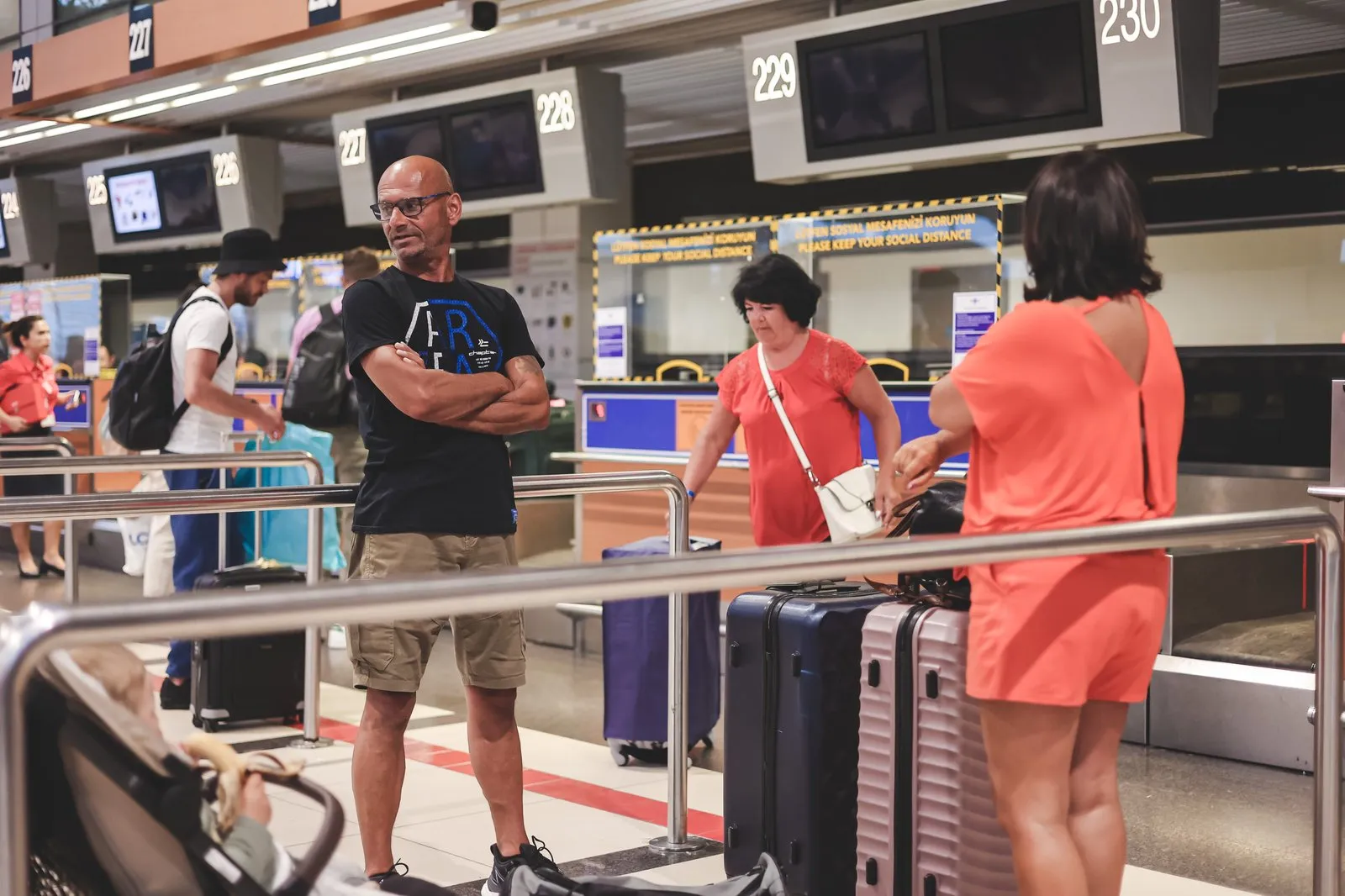
Passengers with suitcases and a stroller waiting in line at airline check-in counters

At the terminal entrance you show your passport and ticket, your bags are screened, and you go inside to weigh bags and check in with your airline. This is where most of the physical effort of departure happens, so it pays to arrive organised.

Can family members come inside Kathmandu airport?

Family members can see you off at the terminal forecourt, but in practice only ticketed passengers go through the entrance check into the check-in hall. TIA's FAQ says seeing passengers off is discouraged because of limited space, and that a maximum of three people may see off a passenger at the international terminal. Expect to say your goodbyes outside the entrance. If an elderly parent needs help beyond that point, arrange airline or wheelchair assistance in advance rather than relying on a relative getting inside (see the assistance section below).

WhoWhere they can goTip
Departing passengerThrough the entrance check, check-in, immigration and onwardKeep passport and ticket in hand at the gate
Family seeing you offTerminal forecourt; TIA allows a maximum of 3 people to see offFinish goodbyes, photos and handing over items before the entrance
DriverDrop-off only at the kerbDo not leave the vehicle unattended; use paid parking if waiting
Person needing helpAirline staff or wheelchair assistance takes over insideRequest assistance when booking and again at check-in

How does check-in work at TIA?

Check-in at TIA is done at your airline's counter, which you find from the screens and signs on the A side or B side of the hall. Join the correct queue for your flight, not just your airline, because some carriers run several departures close together.

  • Weigh first. Weighing facilities are available before check-in. Repacking at the counter holds up the queue and is stressful.
  • Use the free trolleys. TIA says baggage trolleys are free, and trolley collectors (who are not porters) can help in special cases at no charge. Politely decline anyone outside who offers to carry bags for money.
  • Know your allowance. Baggage allowances depend on your airline, fare type and route. TIA tells passengers to check carry-on and checked baggage rules with their airline.
  • Online check-in helps, but you still queue. Many airlines allow online check-in, but you still visit the counter to drop bags and, often, to have documents checked.
  • There is no left-luggage office. TIA's FAQ states that no left-luggage facility is available, so do not bring anything you plan to leave at the airport.

Do you need to declare valuables at departure?

You should not put gold, silver or cash in checked baggage. TIA's FAQ says these valuables can go in hand baggage with customs approval, with a declaration made at airline check-in. If you are carrying jewellery for a wedding abroad or foreign currency, ask the customs staff near the check-in area before you hand over your bags. How much foreign currency you may take out of Nepal is covered in our guide to the foreign currency limit when leaving Nepal, so we do not repeat the limits here. If you are wondering what you can bring back duty free when you return, read our Nepal customs allowance guide before you shop abroad.

What should you keep ready for immigration at TIA?
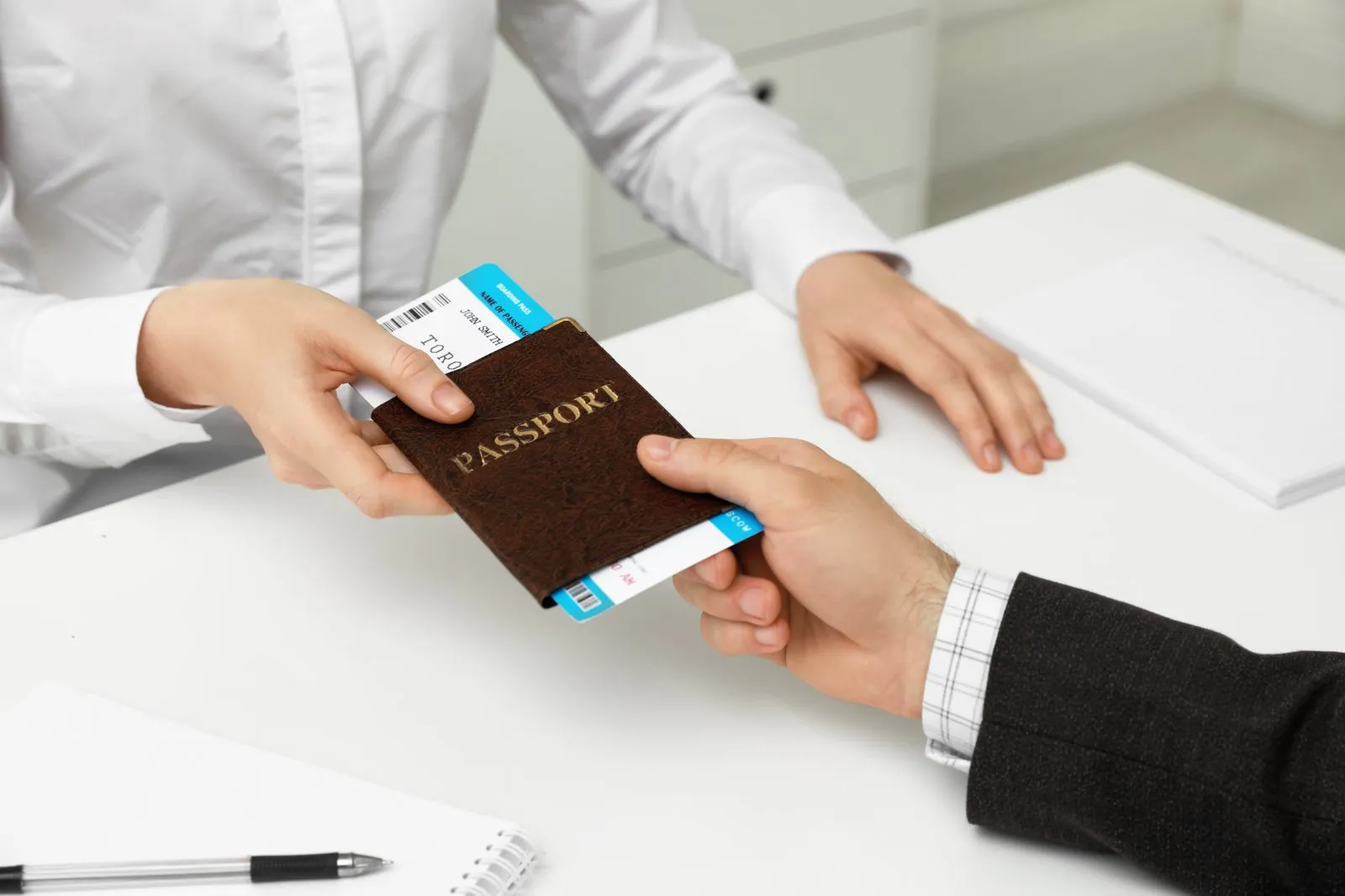
Passport with a boarding pass tucked inside being handed across a desk to an officer

Keep your passport, boarding pass, a completed embarkation card and the documents that support your purpose of travel in one folder in your hand. Immigration is the stage where travellers most often panic, usually because a document is in a checked bag or the card is half filled.

Is there still a departure card at Kathmandu airport?

Yes, as of our check the departure form at TIA is still a paper embarkation card. The TIA Immigration Office departure page (last updated 27 March 2024) says both Nepali and foreign nationals present a valid passport and a properly filled embarkation card to the immigration officer. A Nepal travel guide updated in April 2026 also reported that departures still use a physical card. We found no official notice of an online departure form or automated e-gates for departing passengers at TIA as of 9 October 2026, so expect a staffed counter and a paper card, and confirm on the Immigration Office website in the week you fly because forms can change.

Nepali citizens should also know about the self-declaration form. In February 2026 the TIA Immigration Office asked Nepali citizens travelling abroad on visit visas to download, complete and sign a self-declaration form, available through a QR code on its website, before reaching the immigration counter (reported by Ratopati, 27 February 2026). Check the Immigration Office website for the current form and whether it applies to your trip.

  • Cards are usually available near the immigration area. Pick one up as soon as you finish check-in.
  • Carry your own pen. Pens are always in short supply at busy times.
  • Copy your passport number and flight number exactly from your passport and boarding pass.
  • Write clearly in capital letters, and fill in every box the card asks for.

What documents should be in your hand, not your bag?

Keep every document an officer or airline might ask for in a single folder you can reach without opening a suitcase. Print copies, because a phone battery can fail at the worst moment.

Keep in handWhy it matters at TIA
Passport (valid for your whole trip)Checked at the entrance, check-in, immigration and the gate
Boarding passImmigration certifies your departure on it
Completed embarkation cardRequired at the immigration counter
Return or onward ticket (printed)Airlines and officers may ask how you are leaving your destination
Hotel bookings or host address (printed)Shows where you will stay
Documents for your travel purposeRequirements differ for tourism, study, work and official travel
PenFor the embarkation card
Contact number for your host or travel agentUseful if an officer or airline needs to confirm details

Exit documents and entry rules depend on your passport and the purpose of your trip, and they change. Check the official requirements for your passport and purpose with the TIA Immigration Office, the Department of Immigration and your destination's embassy before you fly. If you are getting a new passport, our e-passport Nepal guide explains the application and the timing.

Which immigration counter should you use?

Use the counter signposted for your passenger category; the immigration hall is divided by type of traveller. The TIA Immigration Office page lists the counters below. Counter numbers can change, so follow the signs and queue managers on the day.

Passenger categoryCounters listed by TIA Immigration Office
Nepali citizens (all purposes)Counters 9 to 22
Foreign nationalsCounters 1 to 8
Passengers above 70 or under 10Counter 5
DiplomatsCounter 6
CrewCounter 4

Source: tia.immigration.gov.np departure information page, last updated 27 March 2024. Checked: 9 Oct 2026.

What do immigration officers ask Nepali tourists?

Officers at TIA usually ask simple questions about your trip: where you are going, why, how long you will stay, where you will stay, who is paying, and when you are coming back. Answer briefly and truthfully, and show the matching document when asked. Nervous travellers sometimes give long or confused answers; a clear, short reply backed by a printed booking is far better. If you are travelling on a booked tour, keep the itinerary and hotel vouchers on top of your folder.

How does security screening work at TIA?
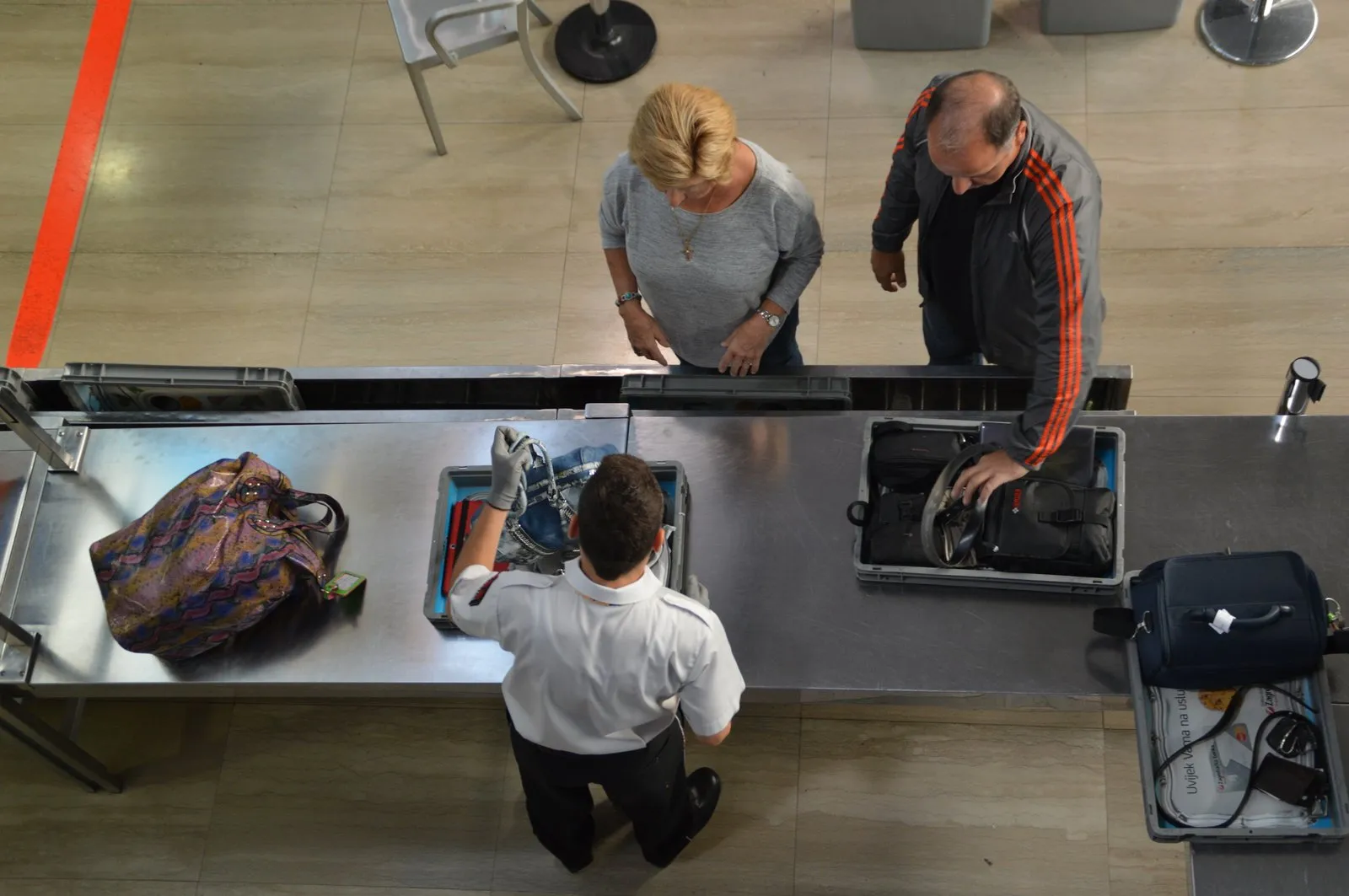
Passengers placing bags in trays while a screening officer checks items at airport security

Security screening at TIA follows the usual international rules: your hand baggage is X-rayed, you walk through a detector or are screened by hand, and liquids, sharp objects and batteries are restricted. Most confiscations are avoidable if you pack your cabin bag for screening the night before.

What are the liquid rules at Kathmandu airport?

Liquids, aerosols and gels in hand baggage must be in containers of 100 ml or less. TIA's FAQ adds that larger containers are refused at security even if they are partly filled, so a full water bottle will not pass screening: finish or empty it before you reach security. Most airports apply the 100 ml rule with all containers in one small clear resealable bag, so pack them that way to save time.

ItemHand baggageChecked baggage
Liquids, gels, creams, sprays100 ml or less per containerAllowed within airline rules
Water bottleFinish or empty before screening (100 ml rule)Not useful to pack
Power banksYes, hand baggage onlyNo, listed as not allowed by TIA
Laptops, tablets, phonesYes, screened separatelyBetter kept with you
Wired chargersAllowedAllowed
Gold, silver, cashYes, with customs approval and declarationNo, per TIA
Ghee, edible oil, honey, picklesOnly within the liquid ruleTIA asks passengers not to carry them in checked baggage
Meat items, including dried meat and meat picklesCheck airline and destination rulesListed as not to be carried by TIA
Liquor from airport duty-paid shopsSealed in a security tamper evident bagWithin airline and destination rules

Source: TIA passenger FAQ (tiairport.com.np). Checked: 9 Oct 2026.

Can you carry achar, ghee or homemade food?

Carrying achar, ghee and similar homemade food out of Kathmandu is harder than most people expect. TIA's FAQ asks passengers not to carry oily items such as ghee, edible oil, honey and pickles in checked baggage, and oily achar in your cabin bag counts as a liquid or gel under the 100 ml rule. On top of that, countries such as Australia have strict food import rules on arrival. If you really want to take homemade food, ask your airline before you pack, and check the customs rules of the country you are flying to.

What about power banks and batteries?

Power banks must travel in your hand baggage, never in checked baggage, according to TIA. Many airlines across Asia and the Gulf have also tightened rules on using or charging power banks during the flight since 2025, so read your airline's battery policy before you fly. Laptops, tablets, e-readers and phones are allowed in hand baggage but must be screened separately, so keep them easy to reach.

Are there special screening options?

Passengers with pacemakers can ask for a manual security check instead of walking through the metal detector, according to TIA. Tell the security officer before you reach the detector, and carry your device card. If you carry essential liquid medicines, keep a prescription or doctor's note with them in your cabin bag.

What facilities are there after immigration?

After immigration at TIA you find business lounges, duty-paid shops, a child care room, a smoking area and free Wi-Fi, but money exchange and ATMs are mainly on the public side. Do your banking and exchange before immigration. The departure hall is functional rather than large, so do not plan on a long shopping session.

FacilityWhat we foundSource
Free Wi-FiFree Wi-Fi across the international terminal; TIA names the network "!!Free_CAAN_WorldLink_WI-Fi!!", and a July 2026 travel guide reported a separate network named "TIA-Wifi-Departure" after immigrationTIA; Wego, 14 July 2026
Business loungesSeparate lounges operated by Hotel Soaltee and Hotel Radisson in the departure area after immigrationTIA
Child care loungeBaby feeding room with a baby cot in the international departure loungeTIA
Smoking areaIn the international departure lounge; smoking banned elsewhereTIA
ShopsAccept Mastercard, Visa and American ExpressTIA
Duty freeNo duty-free shop since 2008; Customs Regulations 2026 opened the way for new licences, opening not confirmedRepublica, May 2026
Medical centreRun by KMC and HAMS Hospital, open 24 hours, ambulances for emergenciesTIA
Help and information desksAt check-in, departure, arrival and customs areasTIA

Checked: 9 Oct 2026. Facilities and network names change; confirm on the day.

Is there free Wi-Fi at Kathmandu airport?

Yes, Kathmandu airport has free Wi-Fi in the international terminal from the departure area to arrivals. TIA lists the network as "!!Free_CAAN_WorldLink_WI-Fi!!". Speeds drop when the terminal is crowded, so download your boarding pass, hotel vouchers and offline maps at home, and do not rely on airport Wi-Fi for anything urgent. If you are buying an eSIM for your destination, install it before you leave home.

Is there an ATM or money exchange after immigration?

Do not count on an ATM or money exchange after immigration at TIA. The airport FAQ says two money exchange counters and an ATM are in the arrivals area before immigration, and mentions another ATM near the international departure terminal, which is on the public side. Change money at a licensed bank or money changer in the city before your flight day, and carry a card that works abroad as a backup. Our guide to carrying foreign currency out of Nepal explains what you can take.

Is there a lounge at Kathmandu international terminal?

Yes, there are business lounges at the Kathmandu international terminal, in the departure area after immigration and before the final security check. TIA says they are operated separately by Hotel Soaltee and Hotel Radisson. Third party lounge directories (reviewed June 2026) list them as the Executive Lounge by Radisson and the Horizon Lounge by Soaltee, with entry through business class tickets, airline status, lounge membership programmes or paid walk-in. Access rules and opening hours change, so check your airline, card or lounge app on the day.

Is there duty-free shopping at TIA?

There has been no duty-free shop at TIA since 2008, when the government closed the shop run by National Trading Ltd. Republica reported in May 2026 that the new Customs Regulations 2026 set out how duty-free shops can be licensed again through public bidding, but we could not confirm that any shop has opened as of 9 October 2026. The airside shops you see are duty-paid. Liquor bought there is sealed in a security tamper evident bag; check the rules of your destination before you buy.

What else is at the international terminal?

  • Post office: in the international check-in area, B side.
  • Waiting room near Gate A1: for passengers with a valid ticket for travel within 12 hours; entry may be restricted without notice.
  • Free shuttle to the domestic terminal: about every 20 minutes; the domestic terminal is roughly 500 metres north.
  • No airport hotel: TIA says there is no accommodation inside the airport; hotels are a few minutes' walk away and more are about 4 km away in the city.
  • Help lines: TIA lists +977 1 4113163 for international flight information and lost and found.

How do elderly travellers or families get help?

Elderly travellers, passengers with disabilities, pregnant women and parents with infants can use priority queues and free wheelchair assistance at TIA, and the best way to secure help is to ask your airline in advance. TIA's FAQ lists priority queues for these groups and tells passengers to contact their airline before the flight for assistance.

How do you request a wheelchair at TIA?

Request a wheelchair through your airline when you book, or well before departure (many airlines ask for at least 48 hours), and confirm it again at the check-in counter. TIA says wheelchairs are available and that passengers should contact their airline or a help desk. Once requested, airline or ground staff can take the passenger from check-in through immigration and security to the aircraft. You may use your own mobility equipment, but confirm with the airline whether it travels in the cabin or the hold.

WhoHelp available at TIAWhat to do before the day
Parents aged over 70 flying alonePriority queue; the immigration page lists a counter for passengers above 70Book wheelchair or assistance with the airline; give them a printed folder
Passengers with reduced mobilityFree wheelchair, priority queueRequest assistance at booking; confirm 48 hours ahead
Families with infantsPriority queue, child care lounge with baby cotCheck infant baggage and stroller rules with the airline
Children under 10The immigration page lists a counter for passengers under 10Carry the child's own passport and any documents for minors
Pregnant travellersPriority queueCheck the airline's pregnancy policy and carry a doctor's letter if required
Passengers with pacemakersManual security check on requestCarry the device card

Tips for a parent flying alone to visit children abroad

Many of our customers are parents travelling alone to see sons and daughters in Australia, the Gulf, Japan, Europe or the United States, and many combine the visit with a short holiday on the way, such as a few days in Dubai or Singapore. A little preparation makes the airport much easier for them.

  • Request wheelchair or meet and assist service with the airline, even if they walk well; it guarantees a guide through every stage.
  • Prepare one clear folder: passport, printed tickets, boarding pass if checked in online, host address and phone, and any letters needed for the trip.
  • Fill in as much of the embarkation card information as possible on a separate sheet at home, so they can copy it.
  • Pack their cabin bag with no liquids over 100 ml, no water bottle and the power bank inside.
  • Write the transit airport and connecting flight on a card in large letters. If they are changing planes in the Gulf or Singapore, our guides to the Dubai stopover and Singapore Changi Airport show what the transfer looks like.
  • Make sure their phone works abroad, or that they know how to connect to airport Wi-Fi on arrival.

What about families travelling together?

Families should check in together (our Malaysia with family guide has more tips for travelling with children), carry each person's passport in one folder held by one adult, and go through immigration together where officers allow it. Children need their own passports. Pack small snacks for children, remember that water bottles must be emptied before security, and keep a change of clothes in the cabin bag in case of delays. For destination ideas that work well with children, our guide to holiday destinations from Nepal includes family friendly options.

What are the most common mistakes first-time flyers make?

The most common mistakes first-time flyers make at TIA are arriving late, packing documents or power banks in checked bags, and carrying liquids or homemade food that security will not allow. Almost all of them can be avoided the night before. Our guide of first-time flight tips covers the in-flight side, from seat selection to what happens on board.

MistakeWhat happensHow to avoid it
Arriving 90 minutes before departureLong queues; counters close at least 1 hour before departureArrive 3 hours ahead, 4 in festival peaks
Documents in the checked suitcaseCannot show them at immigrationOne folder in hand with printed copies
Power bank in checked bagBag is pulled for inspection, flight delay for youPower banks in hand baggage only
Full water bottle in cabin bagConfiscatedFinish or empty water before security
Large cream, perfume or achar in cabin bagConfiscated at securityOnly containers of 100 ml or less
Overweight bagsRepacking at the counter or extra chargesWeigh at home and use TIA's weighing area
Hiring unofficial portersPaying for help you did not needUse free trolleys inside the terminal
No pen for the embarkation cardWaiting for a pen in a crowded areaCarry your own pen
Planning to exchange money airsideNo exchange after immigrationExchange in the city before your flight day
Ignoring gate announcementsMissed boarding or rushed gate changeCheck screens and stay near your gate

Passport and booking mistakes

  • A passport close to expiry. Many countries and airlines expect your passport to be valid well beyond your return date, often six months. Check your destination's rule before you book, and renew early if needed.
  • Name mismatch. The name on your ticket must match your passport exactly. A spelling difference can stop you at check-in.
  • Missing transit rules. Some transit countries have their own entry or transit requirements. Check them for your passport before booking a connection.
  • Only digital copies. Print your ticket, hotel bookings and any letters, and keep digital copies too.

Mistakes on the day

  • Too many people coming to the airport. Only three can see you off, and they stay outside. Say goodbye at home or at the forecourt.
  • Driver waiting at the kerb. Unattended vehicles can be taken by police and fined. Use paid parking if someone needs to wait.
  • Not telling anyone about a delay. If your flight is delayed, tell your host and your travel agent so transfers and hotels can be adjusted.

What is the quick Kathmandu airport departure checklist?

Use this checklist the night before and again in the car. If every line is ticked, the airport becomes a sequence of queues rather than a source of stress.

WhenCheck
A week beforePassport validity, entry rules for your passport and purpose, airline baggage allowance, wheelchair request if needed
Two days beforeExchange foreign currency, print tickets and bookings, install airline app and eSIM
Night beforeWeigh bags, move power banks and documents to hand baggage, liquids into small containers, pen in pocket
Before leaving homeCheck flight status, book a ride, allow 3 hours plus traffic buffer (4 hours in festival peaks)
At the terminalPassport and ticket for the entrance, weigh, check in, declare valuables if any
Before immigrationFill in the embarkation card, documents folder ready
Before securityFinish water, laptop and phone easy to reach
At the gateWatch the screens, listen for boarding and gate changes

Once the airport day is planned, the rest of the trip gets easier. If a first trip abroad is on your list, our ideas for a Thailand island holiday and our Thailand travel tips are a good place to start for Bangkok or Phuket.

Frequently asked questions

How many hours before an international flight should I reach TIA?

Reach Tribhuvan International Airport about three hours before an international flight. TIA's own FAQ advises arriving normally three hours ahead, says check-in usually opens three hours before departure, and says ticket checking counters close at least one hour before departure. During Dashain, Tihar and school holidays, allow about four hours because queues are longer.

Can family members come inside Kathmandu airport?

Family members can see you off at the Kathmandu airport forecourt, but only ticketed passengers pass the entrance check into the check-in hall. TIA discourages seeing off because space is limited and allows a maximum of three people to see off a passenger at the international terminal. Arrange airline assistance if an elderly traveller needs help inside.

Is there free Wi-Fi at Kathmandu airport?

Yes, Kathmandu airport offers free Wi-Fi in the international terminal from the departure area to arrivals. TIA lists the network as "!!Free_CAAN_WorldLink_WI-Fi!!", and a July 2026 guide reported a separate departure network after immigration. Speeds slow when the terminal is busy, so download boarding passes and bookings before you leave home.

Is there an ATM after immigration at TIA?

Do not rely on an ATM after immigration at TIA. The airport FAQ places the ATM and two money exchange counters in the arrivals area before immigration, plus another ATM near the international departure terminal on the public side. Withdraw cash and exchange money in the city before your flight day, and carry a card that works abroad.

Can I exchange money inside Kathmandu airport?

Money exchange at Kathmandu airport is mainly at the arrivals counters before immigration, so it is not convenient for departing passengers. Exchange foreign currency at a licensed bank or money changer in the city before you fly, keep the receipt, and check how much foreign currency you may carry out of Nepal in our foreign currency limit guide.

What do immigration officers ask Nepali tourists at TIA?

Immigration officers at TIA usually ask Nepali tourists where they are going, why, for how long, where they will stay, who is paying and when they will return. Answer briefly and show printed tickets and bookings. Document requirements depend on your passport and purpose, so check the official requirements with the Department of Immigration before you fly.

Can I carry achar in hand luggage from Kathmandu?

Oily achar in hand luggage from Kathmandu counts as a liquid or gel, so only containers of 100 ml or less pass security. TIA also asks passengers not to carry pickles, ghee, honey and edible oil in checked baggage, and many destinations restrict food imports. Ask your airline and check your destination's customs rules before packing homemade food.

How do I request a wheelchair at TIA?

Request a wheelchair at TIA through your airline when you book, or well before departure (many airlines ask for 48 hours), and confirm at the check-in counter. TIA says wheelchairs are available and that passengers can also ask at help desks. Staff then guide the passenger through immigration and security, with priority queues for elderly and disabled travellers.

Is there a lounge at Kathmandu international terminal?

Yes, the Kathmandu international terminal has business lounges after immigration and before the final security check. TIA says they are operated by Hotel Soaltee and Hotel Radisson. Entry is usually through business class tickets, airline status, lounge membership programmes or paid walk-in. Confirm access with your airline or lounge app on the day.

Is there a duty-free shop at Kathmandu airport?

Kathmandu airport has had no duty-free shop since 2008. Nepal's Customs Regulations 2026 created a way to license duty-free shops again, Republica reported in May 2026, but we could not confirm any had opened by 9 October 2026. The airside shops are duty-paid and accept major cards.

Airport ma k k document chahincha?

Kathmandu airport ma international flight ko lagi passport, boarding pass, bhareko embarkation card, printed return ticket, hotel booking ra tapaiko yatra ko uddeshya anusar ko document haat ma rakhnus. Kun document chahincha bhanne kura passport ra uddeshya anusar farak parcha, tyesaile Department of Immigration ko official jankari herera matra jaanus.

Tags
Travel Tips
Share
G
Gomayu Team
Writer at Gomayu
Keep reading