
























































+977-9709047652
Explore by Country
See all 22 Thailand packages
Most popular pick
See all 22 Thailand packages
See all 11 Vietnam packages
Most popular pick
See all 11 Vietnam packages
See all 10 Indonesia (Bali) packages
Most popular pick
See all 10 Indonesia (Bali) packages
See all 4 Maldives packages
Most popular pick
See all 4 Maldives packages
See all 10 China packages
Most popular pick
See all 10 China packages
See all 2 Sri Lanka packages
Most popular pick
See all 2 Sri Lanka packages
See all 9 Malaysia packages
Most popular pick
See all 9 Malaysia packages
See all 8 Singapore packages
Most popular pick
See all 8 Singapore packages
See all 2 Kenya packages
Most popular pick
See all 2 Kenya packages
See all 4 India packages
Most popular pick
See all 4 India packages
See all 3 Dubai packages
Most popular pick
See all 3 Dubai packages
See all 6 Philippines packages
Most popular pick
See all 6 Philippines packages
Search Tours or Places
Blog / Thailand

Best Time to Visit Thailand: Month-by-Month Guide

12 min read 04 Aug 2026 · Updated 11 Aug 2026
Best Time to Visit Thailand: Month-by-Month Guide

The best time to visit Thailand is not a single date on a calendar. It shifts depending on whether you are chasing dry beach days on the Andaman coast, cooler air for trekking in the north, or a specific festival like Songkran. Thailand weather is a story of three seasons and two coasts that follow opposite rhythms, and once you understand that, the planning gets a lot easier.

For most travelers, the sweet spot runs from November to early April, when the majority of the country stays dry and warm. That window is also the busiest and priciest, so timing becomes a trade between perfect weather and thinner crowds.

This guide breaks down Thailand weather by month, region by region, and interest by interest, so you can match your trip to the conditions you actually care about. Numbers here reflect widely accepted climate norms rather than any single forecast. For live conditions closer to your dates, cross-check the Thai Meteorological Department and the Tourism Authority of Thailand.

Thailand's Three Seasons at a Glance

Thailand runs on a tropical monsoon calendar with three broad seasons: cool and dry, hot, and green (the rainy season). These apply best to Bangkok, central Thailand, and the north. The two coasts have their own timing, which we cover further down.

Season Months Typical Temperature Rainfall Crowds Prices
Cool and dry November to February 24 to 32°C Low High (peak) High
Hot March to May 33 to 40°C Low to rising Medium Medium
Rainy (green) June to October 28 to 33°C High Low Low

The cool season is the classic answer to "when should I go." Days are warm, humidity eases, and rain is rare across most of the mainland. The hot season is genuinely hot, with Bangkok and the central plains regularly pushing past 35°C. The rainy season brings the southwest monsoon, though "rainy" usually means heavy afternoon downpours rather than all-day gray skies.

Tip: The rainy season rarely means a washout. Storms often hit hard for an hour, then clear. You get lush landscapes, lower prices, and fewer people, in exchange for planning around the afternoon.

Thailand Weather by Month

Here is the quick month-by-month view, based on Bangkok and central Thailand as a baseline. Coastal and northern conditions vary, so read this alongside the regional section below.

Month Avg High (Bangkok) Rainfall Crowds Verdict
January 32°C Very low High Prime time, dry and comfortable
February 33°C Very low High Excellent, north haze starts late month
March 34°C Low Medium Hot and hazy in the north, still good on the coasts
April 35°C Low Medium Very hot, Songkran mid-month, northern haze peaks
May 34°C Rising Low Hot with first monsoon storms, good value
June 33°C Moderate Low Green season begins, Gulf coast still decent
July 33°C Moderate to high Low to medium Wet but workable, short-lived downpours
August 32°C High Medium Wettest stretch nationwide, deals everywhere
September 32°C High Low Peak rain, the quietest month of all
October 32°C High, easing Low Rain tapers late month, shoulder value
November 31°C Low Rising Sweet spot begins, Loy Krathong lights up
December 31°C Very low High Cool, dry, festive, book early
Explore Thailand tour packages
View all →
Coral Island & Nong Nooch Garden Tour

Coral Island & Nong Nooch Garden Tour

🗓 6 Days · 5 Nights
from NRs 46,000 / person
View tour
Thailand, Singapore & Malaysia Tour

Thailand, Singapore & Malaysia Tour

🗓 10 Days · 9 Nights
from NRs 1,01,000 / person
View tour
Bangkok Pattaya Tour

Bangkok Pattaya Tour

🗓 5 Days · 4 Nights
from NRs 36,500 / person
View tour
Bangkok Pattaya Phuket Tour

Bangkok Pattaya Phuket Tour

🗓 7 Days · 6 Nights
from NRs 57,500 / person
View tour
Bangkok Krabi Tour

Bangkok Krabi Tour

🗓 6 Days · 5 Nights
from NRs 49,000 / person
View tour
Bangkok & Koh Samui Honeymoon Tour

Bangkok & Koh Samui Honeymoon Tour

🗓 7 Days · 6 Nights
from NRs 74,500 / person
View tour
Thailand & Vietnam Tour

Thailand & Vietnam Tour

🗓 8 Days · 7 Nights
from NRs 65,900 / person
View tour
Bangkok Phuket Krabi Tour

Bangkok Phuket Krabi Tour

🗓 8 Days · 7 Nights
from NRs 64,800 / person
View tour
Bangkok Phuket Tour

Bangkok Phuket Tour

🗓 6 Days · 5 Nights
from NRs 48,000 / person
View tour
Bangkok Krabi Explorer Tour

Bangkok Krabi Explorer Tour

🗓 8 Days · 7 Nights
from NRs 59,000 / person
View tour
Bangkok Pattaya Phuket Krabi Tour

Bangkok Pattaya Phuket Krabi Tour

🗓 9 Days · 8 Nights
from NRs 68,500 / person
View tour
Bangkok, Chiang Rai & Chiang Mai Tour

Bangkok, Chiang Rai & Chiang Mai Tour

🗓 8 Days · 7 Nights
View tour
Thailand, Singapore & Malaysia Grand Tour

Thailand, Singapore & Malaysia Grand Tour

🗓 11 Days · 10 Nights
from NRs 1,32,000 / person
View tour
Royal Caribbean Cruise Tour

Royal Caribbean Cruise Tour

🗓 6 Days · 5 Nights
View tour

Bangkok & Koh Phangan Full Moon Party Tour

🗓 8 Days · 7 Nights
View tour
Phuket & Krabi Tour

Phuket & Krabi Tour

🗓 6 Days · 5 Nights
View tour
Short Bangkok Tour

Short Bangkok Tour

🗓 4 Days · 3 Nights
from NRs 28,000 / person
View tour
Phuket, Phi Phi & Krabi Island Escape

Phuket, Phi Phi & Krabi Island Escape

🗓 7 Days · 6 Nights
View tour
Krabi Island Tour

Krabi Island Tour

🗓 5 Days · 4 Nights
from NRs 36,500 / person
View tour
Phuket Tour

Phuket Tour

🗓 5 Days · 4 Nights
from NRs 37,000 / person
View tour
Bangkok Family Friendly Tour

Bangkok Family Friendly Tour

🗓 5 Days · 4 Nights
View tour
Bangkok & Pattaya Skydiving Tour

Bangkok & Pattaya Skydiving Tour

🗓 6 Days · 5 Nights
from NRs 1,21,000 / person
View tour

Best Time to Visit by Region

Thailand is long. The distance from Chiang Mai in the north to the southern islands is roughly the same as London to Rome, so a single national forecast will always be too blunt. Here is how the main regions behave.

Bangkok and Central Thailand

Bangkok is hot and humid most of the year. The most comfortable stretch is November to February, when highs sit around 31 to 33°C and the air feels less heavy. March to May is the sticky, sweaty peak, often above 35°C. The rainy season from June to October brings dramatic afternoon storms and occasional street flooding, but mornings are frequently clear. If you are building a trip around the capital and the central plains, aim for the cool season and start your sightseeing early in the day. Our Thailand travel guide goes deeper on getting around the region.

Chiang Mai and the North

The north has the most pronounced cool season in the country. From November to February, Chiang Mai mornings can dip to 14 to 16°C, and the mountains around Chiang Rai and Pai get genuinely crisp. This is the best window for the north, and it lines up beautifully with trekking and the November lantern festivals.

There is one important caveat. Roughly late February through April is the burning or haze season, when agricultural stubble is burned across the region and neighboring countries. Air quality in Chiang Mai can drop to unhealthy levels for weeks, and mountain views vanish behind smoke. March and early April are usually the worst. If clean air and clear vistas matter to you, avoid the north during this stretch and plan your northern leg for November to January instead. For a fuller look at the region, see our northern Thailand guide.

Tip: If your dates land in the burning season and you still want the north, check daily air-quality readings before you commit, and keep a beach or Bangkok backup in your itinerary.

The Andaman Coast (Phuket, Krabi, Phi Phi)

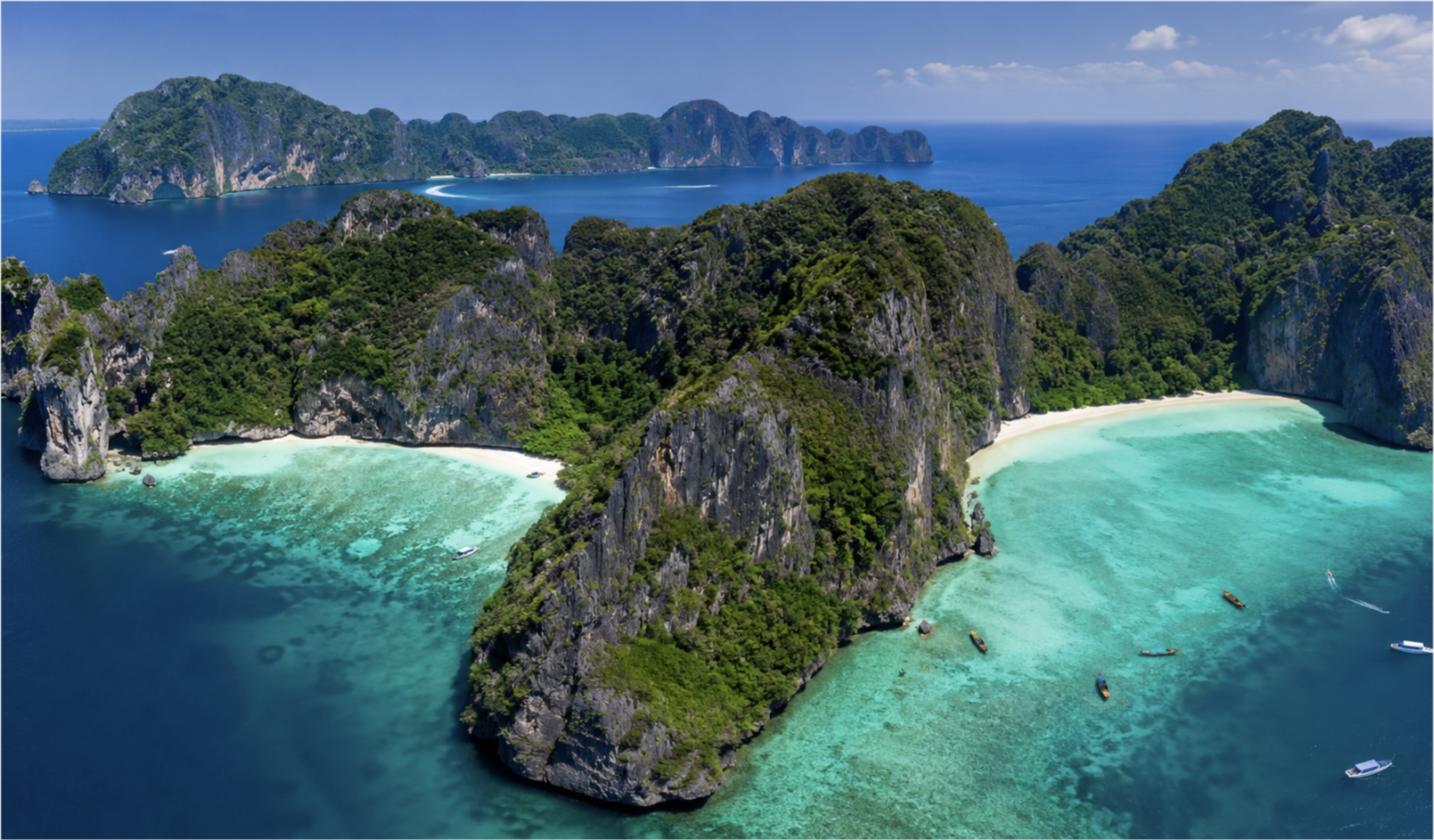
The Andaman coast faces the Andaman Sea on Thailand's west side. Its dry season runs roughly November to April, with calm, clear water and reliable sunshine. This is prime time for Phuket, Krabi, Ao Nang, Phi Phi, and the Similan Islands. The southwest monsoon from May to October brings bigger swell, murkier water, and stronger currents, though you can still get plenty of sunny hours between storms and prices drop sharply. For island specifics, our guide to the best beaches and islands in Thailand helps you match the coast to your dates.

The Gulf Coast (Koh Samui, Koh Phangan, Koh Tao)

Here is the twist that surprises a lot of first-timers. The Gulf coast runs on a different schedule from the Andaman coast. Koh Samui, Koh Phangan, and Koh Tao stay relatively dry through much of the year and see their heaviest rain from roughly October to December, when the northeast monsoon pushes moisture onto the eastern shore. Their best stretch is often February to April, and even June to September can be pleasant here while the Andaman side is at its wettest.

That opposite timing is the key to year-round beach travel in Thailand. Whenever one coast is wet, the other is usually dry.

Feature Andaman Coast (Phuket, Krabi) Gulf Coast (Koh Samui, Koh Phangan)
Sea Andaman Sea (west) Gulf of Thailand (east)
Dry season November to April Roughly January to September
Wettest months May to October October to December
Best for beaches December to March February to April, plus midyear
Monsoon driver Southwest monsoon Northeast monsoon

Best Time to Visit by Interest

Beaches

For classic sun-and-sand days, December to March is the safe bet on the Andaman coast, and February to April on the Gulf side. If you can only travel in the northern summer, point yourself at Koh Samui and its neighbors rather than Phuket.

Diving and Snorkeling

Andaman visibility is best from November to April, and the Similan Islands typically open only in that window. Koh Tao in the Gulf offers good diving much of the year and is a strong midyear option. For whale sharks and manta rays around the Similans, late in the dry season often brings the best sightings.

Trekking and the North

Cool, dry, low-humidity conditions make November to February ideal for hiking around Chiang Mai, Pai, and the national parks. Skip the burning season if long views and clean air are part of the appeal.

Festivals

Two windows stand out: mid-April for Songkran and November for Loy Krathong and Yi Peng. More on both below.

Budget Travel

The green season from June to October brings the lowest prices of the year on flights, hotels, and tours. September in particular is quiet and cheap, if you can work around the rain.

Interest Best Months Region Focus
Beaches December to April Andaman then Gulf
Diving November to April Andaman and Similans
Trekking November to February Chiang Mai and the north
Festivals April and November Nationwide and the north
Budget travel June to October Nationwide

Festivals Worth Timing a Trip Around

Songkran (mid-April)

Songkran is the Thai New Year, celebrated nationwide on April 13 to 15 with the world's biggest water fight. Streets in Chiang Mai, Bangkok, and beyond turn into joyful, soaking chaos for days. It falls in the hottest part of the year, so the water is a welcome relief. Book accommodation well ahead, because domestic travel spikes. Our Songkran festival guide covers where to be and what to expect.

Loy Krathong and Yi Peng (November)

Loy Krathong sees people float candlelit baskets on rivers and lakes, usually on the full moon in November (around November 24 in 2026, though the date shifts with the lunar calendar each year). In Chiang Mai it overlaps with Yi Peng, when thousands of paper lanterns rise into the night sky. It is one of the most photogenic events in Asia, and it lands right at the start of the north's best weather. Plan your Thailand itinerary around these dates if lanterns are on your list.

Cheapest and Least Crowded Times to Go

If your priority is value and space rather than guaranteed sunshine, the green season is your friend. From June to October, hotels discount heavily, flights ease off, and major sights feel calm. September is typically the cheapest and quietest month of the year, followed closely by May and October, the two shoulder months on either side of the wet stretch.

The shoulder weeks in early November and late April can be the smartest compromise: you dodge the absolute peak crowds and prices while still landing mostly dry weather. Avoid the mid-December to early-January holiday spike and the Songkran week if you want to keep costs down.

Tip: Traveling in the shoulder weeks, the second half of May or the first half of November, often gets you near-peak conditions at green-season prices.

Short on planning time? Compare Thailand tour packages to see typical routes and durations at a glance.

Frequently Asked Questions

What is the cheapest month to visit Thailand?

September is generally the cheapest, sitting in the heart of the green season when demand is lowest. May and October are close behind. You will trade some sunshine for meaningfully lower prices on flights, hotels, and tours.

What is the best time to visit Thailand overall?

For dry, comfortable weather across most of the country, November to February is hard to beat. It is also the busiest and most expensive season, so book accommodation and internal flights early.

Is the rainy season worth it?

Often, yes. Rain usually arrives as short, heavy afternoon storms rather than all-day downpours, so you still get plenty of usable hours. In return you get green landscapes, thin crowds, and the year's best prices. Keep your plans flexible and favor the Gulf coast midyear.

What is the worst month to visit Thailand?

It depends on your plans. For the north, March and April are the toughest because of the burning season haze plus intense heat. For the Andaman coast, September and October are the wettest. There is no single bad month nationwide, since one region is almost always in good shape.

What is the best month for the islands?

December to March is the safest bet for the Andaman coast (Phuket, Krabi, Phi Phi). For the Gulf islands (Koh Samui, Koh Phangan, Koh Tao), February to April is prime, and much of the northern summer works well too.

When should I avoid Chiang Mai because of haze?

Roughly late February through April, with March and early April usually the worst. Crop and forest burning across the region can push air quality to unhealthy levels and hide the mountain views. Visit the north from November to January for clean air and cool mornings instead.

Can I visit both coasts in one trip and stay dry?

Yes, and that is the beauty of Thailand's two-monsoon setup. The Andaman and Gulf coasts have opposite wet seasons, so in most months at least one side is dry. Check which coast is in its dry window for your dates and lean that way.

How hot does Thailand get in April?

Very hot. Bangkok and the central plains routinely reach 35°C and higher, with high humidity, and April is typically the hottest month of the year. Songkran's water celebrations are a genuine relief in that heat.

Frequently asked questions about the best time to visit Thailand

When is the best time to visit Thailand?

For dry, comfortable weather across most of the country, November to February is hard to beat. It is also the busiest and most popular season, so book your flights from Kathmandu and your hotels early.

Is Thailand a good trip around Dashain and Tihar?

Thailand suits the Dashain and Tihar break well. The festival window falls in the tail of the green season as the rain eases, and by November the country moves into its cool, dry sweet spot, so late in this period gives you good weather with better value than the December peak.

Can I visit Thailand's beaches at any time of year?

Yes, thanks to Thailand's two coasts running on opposite schedules. The Andaman coast, including Phuket and Krabi, is driest from November to April, while the Gulf islands such as Koh Samui and Koh Phangan are often best from February to April and stay decent through much of the midyear. Whenever one coast is wet, the other is usually dry.

Which months should I avoid in Chiang Mai and northern Thailand?

Avoid the north roughly from late February through April, the burning or haze season, with March and early April usually the worst. Crop burning can push air quality to unhealthy levels and hide the mountain views, so visit from November to January instead for clean air and cool mornings.

Is Thailand's rainy season worth travelling in?

Often, yes. The rain usually arrives as short, heavy afternoon storms rather than all day downpours, so you still get plenty of usable hours. In return you get green landscapes, thin crowds and the year's lowest prices, especially if you favour the Gulf coast midyear.

How hot does Thailand get, and when is the hottest month?

April is typically the hottest month, when Bangkok and the central plains routinely reach 35 degrees Celsius and higher with high humidity. It is also when Songkran, the Thai New Year water celebration, falls in mid April, which is a genuine relief in that heat.

New to Thailand? Our Thailand travel guide pulls together beaches, cities, food and how to plan a first trip.

Tags
Thailand
Share
G
Gomayu Team
Writer at Gomayu
Keep reading
Blog / Thailand
Best Time to Visit Thailand: Month-by-Month Guide
12 min read 04 Aug 2026 · Updated 11 Aug 2026
Best Time to Visit Thailand: Month-by-Month Guide

The best time to visit Thailand is not a single date on a calendar. It shifts depending on whether you are chasing dry beach days on the Andaman coast, cooler air for trekking in the north, or a specific festival like Songkran. Thailand weather is a story of three seasons and two coasts that follow opposite rhythms, and once you understand that, the planning gets a lot easier.

For most travelers, the sweet spot runs from November to early April, when the majority of the country stays dry and warm. That window is also the busiest and priciest, so timing becomes a trade between perfect weather and thinner crowds.

This guide breaks down Thailand weather by month, region by region, and interest by interest, so you can match your trip to the conditions you actually care about. Numbers here reflect widely accepted climate norms rather than any single forecast. For live conditions closer to your dates, cross-check the Thai Meteorological Department and the Tourism Authority of Thailand.

Thailand's Three Seasons at a Glance

Thailand runs on a tropical monsoon calendar with three broad seasons: cool and dry, hot, and green (the rainy season). These apply best to Bangkok, central Thailand, and the north. The two coasts have their own timing, which we cover further down.

Season Months Typical Temperature Rainfall Crowds Prices
Cool and dry November to February 24 to 32°C Low High (peak) High
Hot March to May 33 to 40°C Low to rising Medium Medium
Rainy (green) June to October 28 to 33°C High Low Low

The cool season is the classic answer to "when should I go." Days are warm, humidity eases, and rain is rare across most of the mainland. The hot season is genuinely hot, with Bangkok and the central plains regularly pushing past 35°C. The rainy season brings the southwest monsoon, though "rainy" usually means heavy afternoon downpours rather than all-day gray skies.

Tip: The rainy season rarely means a washout. Storms often hit hard for an hour, then clear. You get lush landscapes, lower prices, and fewer people, in exchange for planning around the afternoon.

Thailand Weather by Month

Here is the quick month-by-month view, based on Bangkok and central Thailand as a baseline. Coastal and northern conditions vary, so read this alongside the regional section below.

Month Avg High (Bangkok) Rainfall Crowds Verdict
January 32°C Very low High Prime time, dry and comfortable
February 33°C Very low High Excellent, north haze starts late month
March 34°C Low Medium Hot and hazy in the north, still good on the coasts
April 35°C Low Medium Very hot, Songkran mid-month, northern haze peaks
May 34°C Rising Low Hot with first monsoon storms, good value
June 33°C Moderate Low Green season begins, Gulf coast still decent
July 33°C Moderate to high Low to medium Wet but workable, short-lived downpours
August 32°C High Medium Wettest stretch nationwide, deals everywhere
September 32°C High Low Peak rain, the quietest month of all
October 32°C High, easing Low Rain tapers late month, shoulder value
November 31°C Low Rising Sweet spot begins, Loy Krathong lights up
December 31°C Very low High Cool, dry, festive, book early
Explore Thailand tour packages
View all →
Coral Island & Nong Nooch Garden Tour

Coral Island & Nong Nooch Garden Tour

🗓 6 Days · 5 Nights
from NRs 46,000 / person
View tour
Thailand, Singapore & Malaysia Tour

Thailand, Singapore & Malaysia Tour

🗓 10 Days · 9 Nights
from NRs 1,01,000 / person
View tour
Bangkok Pattaya Tour

Bangkok Pattaya Tour

🗓 5 Days · 4 Nights
from NRs 36,500 / person
View tour
Bangkok Pattaya Phuket Tour

Bangkok Pattaya Phuket Tour

🗓 7 Days · 6 Nights
from NRs 57,500 / person
View tour
Bangkok Krabi Tour

Bangkok Krabi Tour

🗓 6 Days · 5 Nights
from NRs 49,000 / person
View tour
Bangkok & Koh Samui Honeymoon Tour

Bangkok & Koh Samui Honeymoon Tour

🗓 7 Days · 6 Nights
from NRs 74,500 / person
View tour
Thailand & Vietnam Tour

Thailand & Vietnam Tour

🗓 8 Days · 7 Nights
from NRs 65,900 / person
View tour
Bangkok Phuket Krabi Tour

Bangkok Phuket Krabi Tour

🗓 8 Days · 7 Nights
from NRs 64,800 / person
View tour
Bangkok Phuket Tour

Bangkok Phuket Tour

🗓 6 Days · 5 Nights
from NRs 48,000 / person
View tour
Bangkok Krabi Explorer Tour

Bangkok Krabi Explorer Tour

🗓 8 Days · 7 Nights
from NRs 59,000 / person
View tour
Bangkok Pattaya Phuket Krabi Tour

Bangkok Pattaya Phuket Krabi Tour

🗓 9 Days · 8 Nights
from NRs 68,500 / person
View tour
Bangkok, Chiang Rai & Chiang Mai Tour

Bangkok, Chiang Rai & Chiang Mai Tour

🗓 8 Days · 7 Nights
View tour
Thailand, Singapore & Malaysia Grand Tour

Thailand, Singapore & Malaysia Grand Tour

🗓 11 Days · 10 Nights
from NRs 1,32,000 / person
View tour
Royal Caribbean Cruise Tour

Royal Caribbean Cruise Tour

🗓 6 Days · 5 Nights
View tour

Bangkok & Koh Phangan Full Moon Party Tour

🗓 8 Days · 7 Nights
View tour
Phuket & Krabi Tour

Phuket & Krabi Tour

🗓 6 Days · 5 Nights
View tour
Short Bangkok Tour

Short Bangkok Tour

🗓 4 Days · 3 Nights
from NRs 28,000 / person
View tour
Phuket, Phi Phi & Krabi Island Escape

Phuket, Phi Phi & Krabi Island Escape

🗓 7 Days · 6 Nights
View tour
Krabi Island Tour

Krabi Island Tour

🗓 5 Days · 4 Nights
from NRs 36,500 / person
View tour
Phuket Tour

Phuket Tour

🗓 5 Days · 4 Nights
from NRs 37,000 / person
View tour
Bangkok Family Friendly Tour

Bangkok Family Friendly Tour

🗓 5 Days · 4 Nights
View tour
Bangkok & Pattaya Skydiving Tour

Bangkok & Pattaya Skydiving Tour

🗓 6 Days · 5 Nights
from NRs 1,21,000 / person
View tour

Best Time to Visit by Region

Thailand is long. The distance from Chiang Mai in the north to the southern islands is roughly the same as London to Rome, so a single national forecast will always be too blunt. Here is how the main regions behave.

Bangkok and Central Thailand

Bangkok is hot and humid most of the year. The most comfortable stretch is November to February, when highs sit around 31 to 33°C and the air feels less heavy. March to May is the sticky, sweaty peak, often above 35°C. The rainy season from June to October brings dramatic afternoon storms and occasional street flooding, but mornings are frequently clear. If you are building a trip around the capital and the central plains, aim for the cool season and start your sightseeing early in the day. Our Thailand travel guide goes deeper on getting around the region.

Chiang Mai and the North

The north has the most pronounced cool season in the country. From November to February, Chiang Mai mornings can dip to 14 to 16°C, and the mountains around Chiang Rai and Pai get genuinely crisp. This is the best window for the north, and it lines up beautifully with trekking and the November lantern festivals.

There is one important caveat. Roughly late February through April is the burning or haze season, when agricultural stubble is burned across the region and neighboring countries. Air quality in Chiang Mai can drop to unhealthy levels for weeks, and mountain views vanish behind smoke. March and early April are usually the worst. If clean air and clear vistas matter to you, avoid the north during this stretch and plan your northern leg for November to January instead. For a fuller look at the region, see our northern Thailand guide.

Tip: If your dates land in the burning season and you still want the north, check daily air-quality readings before you commit, and keep a beach or Bangkok backup in your itinerary.

The Andaman Coast (Phuket, Krabi, Phi Phi)

The Andaman coast faces the Andaman Sea on Thailand's west side. Its dry season runs roughly November to April, with calm, clear water and reliable sunshine. This is prime time for Phuket, Krabi, Ao Nang, Phi Phi, and the Similan Islands. The southwest monsoon from May to October brings bigger swell, murkier water, and stronger currents, though you can still get plenty of sunny hours between storms and prices drop sharply. For island specifics, our guide to the best beaches and islands in Thailand helps you match the coast to your dates.

The Gulf Coast (Koh Samui, Koh Phangan, Koh Tao)

Here is the twist that surprises a lot of first-timers. The Gulf coast runs on a different schedule from the Andaman coast. Koh Samui, Koh Phangan, and Koh Tao stay relatively dry through much of the year and see their heaviest rain from roughly October to December, when the northeast monsoon pushes moisture onto the eastern shore. Their best stretch is often February to April, and even June to September can be pleasant here while the Andaman side is at its wettest.

That opposite timing is the key to year-round beach travel in Thailand. Whenever one coast is wet, the other is usually dry.

Feature Andaman Coast (Phuket, Krabi) Gulf Coast (Koh Samui, Koh Phangan)
Sea Andaman Sea (west) Gulf of Thailand (east)
Dry season November to April Roughly January to September
Wettest months May to October October to December
Best for beaches December to March February to April, plus midyear
Monsoon driver Southwest monsoon Northeast monsoon

Best Time to Visit by Interest

Beaches

For classic sun-and-sand days, December to March is the safe bet on the Andaman coast, and February to April on the Gulf side. If you can only travel in the northern summer, point yourself at Koh Samui and its neighbors rather than Phuket.

Diving and Snorkeling

Andaman visibility is best from November to April, and the Similan Islands typically open only in that window. Koh Tao in the Gulf offers good diving much of the year and is a strong midyear option. For whale sharks and manta rays around the Similans, late in the dry season often brings the best sightings.

Trekking and the North

Cool, dry, low-humidity conditions make November to February ideal for hiking around Chiang Mai, Pai, and the national parks. Skip the burning season if long views and clean air are part of the appeal.

Festivals

Two windows stand out: mid-April for Songkran and November for Loy Krathong and Yi Peng. More on both below.

Budget Travel

The green season from June to October brings the lowest prices of the year on flights, hotels, and tours. September in particular is quiet and cheap, if you can work around the rain.

Interest Best Months Region Focus
Beaches December to April Andaman then Gulf
Diving November to April Andaman and Similans
Trekking November to February Chiang Mai and the north
Festivals April and November Nationwide and the north
Budget travel June to October Nationwide

Festivals Worth Timing a Trip Around

Songkran (mid-April)

Songkran is the Thai New Year, celebrated nationwide on April 13 to 15 with the world's biggest water fight. Streets in Chiang Mai, Bangkok, and beyond turn into joyful, soaking chaos for days. It falls in the hottest part of the year, so the water is a welcome relief. Book accommodation well ahead, because domestic travel spikes. Our Songkran festival guide covers where to be and what to expect.

Loy Krathong and Yi Peng (November)

Loy Krathong sees people float candlelit baskets on rivers and lakes, usually on the full moon in November (around November 24 in 2026, though the date shifts with the lunar calendar each year). In Chiang Mai it overlaps with Yi Peng, when thousands of paper lanterns rise into the night sky. It is one of the most photogenic events in Asia, and it lands right at the start of the north's best weather. Plan your Thailand itinerary around these dates if lanterns are on your list.

Cheapest and Least Crowded Times to Go

If your priority is value and space rather than guaranteed sunshine, the green season is your friend. From June to October, hotels discount heavily, flights ease off, and major sights feel calm. September is typically the cheapest and quietest month of the year, followed closely by May and October, the two shoulder months on either side of the wet stretch.

The shoulder weeks in early November and late April can be the smartest compromise: you dodge the absolute peak crowds and prices while still landing mostly dry weather. Avoid the mid-December to early-January holiday spike and the Songkran week if you want to keep costs down.

Tip: Traveling in the shoulder weeks, the second half of May or the first half of November, often gets you near-peak conditions at green-season prices.

Short on planning time? Compare Thailand tour packages to see typical routes and durations at a glance.

Frequently Asked Questions

What is the cheapest month to visit Thailand?

September is generally the cheapest, sitting in the heart of the green season when demand is lowest. May and October are close behind. You will trade some sunshine for meaningfully lower prices on flights, hotels, and tours.

What is the best time to visit Thailand overall?

For dry, comfortable weather across most of the country, November to February is hard to beat. It is also the busiest and most expensive season, so book accommodation and internal flights early.

Is the rainy season worth it?

Often, yes. Rain usually arrives as short, heavy afternoon storms rather than all-day downpours, so you still get plenty of usable hours. In return you get green landscapes, thin crowds, and the year's best prices. Keep your plans flexible and favor the Gulf coast midyear.

What is the worst month to visit Thailand?

It depends on your plans. For the north, March and April are the toughest because of the burning season haze plus intense heat. For the Andaman coast, September and October are the wettest. There is no single bad month nationwide, since one region is almost always in good shape.

What is the best month for the islands?

December to March is the safest bet for the Andaman coast (Phuket, Krabi, Phi Phi). For the Gulf islands (Koh Samui, Koh Phangan, Koh Tao), February to April is prime, and much of the northern summer works well too.

When should I avoid Chiang Mai because of haze?

Roughly late February through April, with March and early April usually the worst. Crop and forest burning across the region can push air quality to unhealthy levels and hide the mountain views. Visit the north from November to January for clean air and cool mornings instead.

Can I visit both coasts in one trip and stay dry?

Yes, and that is the beauty of Thailand's two-monsoon setup. The Andaman and Gulf coasts have opposite wet seasons, so in most months at least one side is dry. Check which coast is in its dry window for your dates and lean that way.

How hot does Thailand get in April?

Very hot. Bangkok and the central plains routinely reach 35°C and higher, with high humidity, and April is typically the hottest month of the year. Songkran's water celebrations are a genuine relief in that heat.

Frequently asked questions about the best time to visit Thailand

When is the best time to visit Thailand?

For dry, comfortable weather across most of the country, November to February is hard to beat. It is also the busiest and most popular season, so book your flights from Kathmandu and your hotels early.

Is Thailand a good trip around Dashain and Tihar?

Thailand suits the Dashain and Tihar break well. The festival window falls in the tail of the green season as the rain eases, and by November the country moves into its cool, dry sweet spot, so late in this period gives you good weather with better value than the December peak.

Can I visit Thailand's beaches at any time of year?

Yes, thanks to Thailand's two coasts running on opposite schedules. The Andaman coast, including Phuket and Krabi, is driest from November to April, while the Gulf islands such as Koh Samui and Koh Phangan are often best from February to April and stay decent through much of the midyear. Whenever one coast is wet, the other is usually dry.

Which months should I avoid in Chiang Mai and northern Thailand?

Avoid the north roughly from late February through April, the burning or haze season, with March and early April usually the worst. Crop burning can push air quality to unhealthy levels and hide the mountain views, so visit from November to January instead for clean air and cool mornings.

Is Thailand's rainy season worth travelling in?

Often, yes. The rain usually arrives as short, heavy afternoon storms rather than all day downpours, so you still get plenty of usable hours. In return you get green landscapes, thin crowds and the year's lowest prices, especially if you favour the Gulf coast midyear.

How hot does Thailand get, and when is the hottest month?

April is typically the hottest month, when Bangkok and the central plains routinely reach 35 degrees Celsius and higher with high humidity. It is also when Songkran, the Thai New Year water celebration, falls in mid April, which is a genuine relief in that heat.

New to Thailand? Our Thailand travel guide pulls together beaches, cities, food and how to plan a first trip.

Tags
Thailand
Share
G
Gomayu Team
Writer at Gomayu
Keep reading