Short answer: Koh Samui is Thailand's second largest island, in the Gulf of Thailand about 35 km off Surat Thani. Most visitors fly into Samui Airport (USM) from Bangkok in roughly one to one and a half hours, or take a ferry from Donsak pier. Go between January and September; the heaviest rain falls from mid October to early December, the reverse of Phuket's season.
Koh Samui sits on the opposite coast to Phuket and runs on a different calendar, and that one fact shapes every decision on this page. This guide explains where the island is, how to reach it from Bangkok and from Kathmandu, which months are dry, which beach area suits couples, families and island hoppers, what is worth your time once you land, and how Samui really compares with Phuket. It is written for travellers anywhere, including Nepali families and diaspora Nepalis who route through Bangkok.
If you are still choosing between islands, start with our comparison of the best islands in Thailand, then come back here once Samui is on the shortlist. For the country as a whole, the complete Thailand travel guide covers cities, food and first trip planning.
Checked: 12 Oct 2026. Flight routes from FlightsFrom schedule pages and aviation news; ferry operators from the Lomprayah website and ferry booking platforms; weather from Thai Meteorological Department (TMD) seasonal outlooks; park closures from the Department of National Parks as reported by TAT. Schedules and park rules change every season, so confirm with the operator before you book.
Where is Koh Samui and how do you get there?
Koh Samui is in Surat Thani province on Thailand's Gulf coast, roughly 35 km northeast of Surat Thani town, and you reach it either by a direct flight to Samui Airport (USM) or by road to Donsak pier and a ferry of about 45 to 90 minutes. There is no bridge, so every arrival is by air or sea.
The island covers about 228.7 square kilometres, which makes it the second largest in Thailand after Phuket. A ring road of roughly 51 km runs around the coast, and almost every beach, village and resort sits on or just off it. The mountainous interior is mostly forest, fruit orchards and waterfalls. Around 70,000 people live on Samui, and the island is its own district and city municipality.
| Fact | Koh Samui |
|---|---|
| Country and province | Thailand, Surat Thani province |
| Sea | Gulf of Thailand (east coast of southern Thailand) |
| Size | About 228.7 sq km, second largest Thai island |
| Distance from the mainland | About 35 km northeast of Surat Thani town |
| Ring road | About 51 km around the island |
| Airport | Samui International Airport (USM), privately owned by Bangkok Airways |
| Main ferry piers | Nathon and Lipa Noi (west coast), Bang Rak and Maenam (north coast) |
| Nearest islands | Koh Phangan, Koh Tao and the 42 islands of Mu Ko Ang Thong National Park |
| Currency | Thai baht (THB) |
Flying to Koh Samui from Kathmandu via Bangkok
There is no direct flight from Kathmandu to Koh Samui, so the usual route is two flights with a change in Bangkok. Kathmandu to Bangkok is non-stop on Thai Airways and Nepal Airlines into Suvarnabhumi (BKK). Himalaya Airlines appears in schedule data for Suvarnabhumi from December 2026, and Thai Lion Air has flown to Don Mueang (DMK) on a limited schedule, so check current timetables before you book. The flight takes about 3 hours 20 to 3 hours 30 minutes. Our guide to the Kathmandu to Bangkok flight covers schedules, baggage and seasons, and the wider map of direct flights from Kathmandu shows the other hubs. First time flying abroad? Our Kathmandu airport departure guide walks through check-in and immigration.
From Bangkok, Bangkok Airways flies to Samui many times a day from Suvarnabhumi, with schedule data listing around 19 to 21 daily departures, plus a few daily flights from Don Mueang. Published flight times range from about 1 hour 5 minutes to 1 hour 35 minutes. That makes Suvarnabhumi the easier connection if you arrive from Kathmandu on Thai Airways or Nepal Airlines, because you stay in the same airport.
Thai Airways has a codeshare agreement with Bangkok Airways, so on some itineraries both legs can sit on one ticket. If your Kathmandu flight lands late in the evening, a night in the capital is often easier than a tight connection; our list of places to visit in Bangkok helps you use that day well.
Before any of this, check the entry rules for your passport. Nepali passport holders should read our Thailand visa page. All foreign visitors must also submit the Thailand Digital Arrival Card online before arrival, on the official portal at tdac.immigration.go.th; according to TAT, it can be submitted up to three days before you land.
Samui Airport (USM): what to expect
Samui Airport opened in 1989 and is privately owned by Bangkok Airways, which is why that airline operates most of its flights. The terminals are open-air buildings with thatched roofs, and the airport sits about 2 km north of Chaweng, so most hotels are a short drive away.
Bangkok Airways also links Samui with Phuket, Krabi, Chiang Mai, U-Tapao (Pattaya), Hong Kong and Singapore, though not every route runs all year. Scoot also flies to Samui from Singapore. Bangkok Airways paused its Samui to Phuket and Samui to Krabi flights for part of 2026 and has announced that its Samui to Singapore route is suspended from 25 October 2026 to 28 March 2027, so check the current timetable on the Bangkok Airways website before you plan around a regional link.
Ferry route via Surat Thani and Donsak
The cheaper and slower alternative is to fly from Bangkok Don Mueang to Surat Thani (URT), a flight of about 1 hour 15 minutes on Thai AirAsia, Nok Air or Thai Lion Air, then transfer by road to Donsak pier and take a ferry. Combined bus and boat tickets are sold at Surat Thani airport, but the last departures leave in the afternoon. If your flight lands after about 4 pm, plan a night in Surat Thani.
The road from Surat Thani airport to Donsak takes roughly an hour to an hour and a half. From Donsak, three operators run the main crossings to Samui, roughly hourly through the day.
| Operator | From | Arrives on Samui | Type | Approx. crossing |
|---|---|---|---|---|
| Raja Ferry | Donsak (Raja Ferry Port) | Lipa Noi pier | Car ferry | About 1 h 30 min |
| Seatran Ferry | Donsak (Seatran pier) | Nathon pier | Car and passenger ferry | About 1 h 30 min |
| Lomprayah | Donsak (Lomprayah pier) | Nathon pier | High speed catamaran | About 45 min |
Overland from Bangkok is possible too: by overnight train or bus to Surat Thani, then the same Donsak ferry. It saves money but costs most of a day each way, so it suits backpackers and long trips more than a short holiday.
Access options at a glance
| Route | How it works | Travel time | Best for |
|---|---|---|---|
| Bangkok (BKK or DMK) to Samui (USM) | Direct Bangkok Airways flight | About 1 h 5 min to 1 h 35 min in the air | Short trips, families, honeymooners, anyone connecting from Kathmandu |
| Singapore to Samui | Scoot (Bangkok Airways route paused 25 Oct 2026 to 28 Mar 2027) | About 1 h 35 min to 1 h 50 min | Twin centre trips with Singapore |
| Bangkok (DMK) to Surat Thani, then ferry | Flight, road transfer, Donsak ferry | Usually a full travel day door to door | Flexible budgets, travellers with time |
| Phuket or Krabi to Samui | Bangkok Airways flight when operating, or bus and ferry | A short flight; most of a day overland | Two coast trips |
| Koh Phangan or Koh Tao to Samui | Ferry or catamaran | About 20 min to 2 h depending on island and boat | Island hopping in the Gulf |
When is the best time to visit Koh Samui?
The best time to visit Koh Samui is from January to September, with February to April usually the driest and sunniest stretch; the wettest months are October, November and December, when the northeast monsoon brings heavy rain to the Gulf coast. November is the single wettest month on average.
This is the opposite of the Andaman coast. Phuket, Krabi and Phi Phi get their rain from the southwest monsoon, roughly mid May to mid October, while Samui stays comparatively dry through those months. When the monsoon flips in mid October, the Gulf islands take their turn. Thailand's Land Development Department describes the southern east coast as the place where "abundant rains remain until the end of the year", with November the wettest month.
The Thai Meteorological Department's own outlooks show the gap clearly. Its forecast for August and September 2026 expected 440 to 490 mm and 400 to 450 mm of rain on the southern west coast, against 100 to 140 mm and 110 to 150 mm on the southern east coast. For November and December 2024, the same department forecast 330 to 380 mm on the east coast in each month, driven by the northeast monsoon.
Gulf versus Andaman: month by month
| Month | Koh Samui (Gulf) average rainfall | Koh Samui verdict | Phuket and Krabi (Andaman) verdict |
|---|---|---|---|
| January | About 127 mm | Good; some leftover showers early in the month | Dry, peak season |
| February | About 64 mm | Driest month, excellent | Dry, peak season |
| March | About 116 mm | Very good, getting hotter | Dry and hot |
| April | About 83 mm | Very good, hot, calm sea | Hot, mostly dry |
| May | About 132 mm | Good, hottest time of year | Southwest monsoon starts |
| June | About 134 mm | Good, short showers | Wet, rough sea on west coasts |
| July | About 117 mm | Good, popular midyear choice | Wet |
| August | About 102 mm | Good, one of the drier months | Wet, among the wettest |
| September | About 118 mm | Good, quieter | Wet, among the wettest |
| October | About 295 mm | Rain builds from mid month | Rain easing late in the month |
| November | About 445 mm | Wettest month, rough sea, Ang Thong closed | Dry season begins |
| December | About 263 mm | Wet in the first half, improving later | Dry, peak season |
Checked: 12 Oct 2026. Samui averages are long-term monthly station normals as compiled on Wikipedia's Ko Samui climate table; seasonal pattern from TMD three-month outlooks (October to December 2024; August to October 2026) and the Land Development Department seasons page. Treat averages as a guide, not a forecast.
Which season suits which traveller
- Honeymooners and couples: February to April gives the calmest sea and the most reliable sunsets on the west coast at Lipa Noi and Taling Ngam.
- Families: school breaks between May and August work well on Samui while the Andaman beaches have strong surf and red flags.
- Divers and snorkellers: the drier months between February and September are the safer bet for boat trips to Ang Thong and Koh Tao, since rough seas from October to December cancel trips.
- Budget travellers: May, June and September are usually quieter than the July and August holiday peak and the Christmas to New Year rush. Our guide to whether Thailand is expensive helps you plan spending.
Dashain and Tihar on Koh Samui
For travellers from Nepal, the long Dashain and Tihar break is the busiest booking window, and it usually falls between late September and mid November. On Samui that window overlaps the start of the rainy season. Late September and early October still give plenty of usable beach days, but by late October and November the Gulf coast is in its wettest stretch and the Ang Thong marine park closes. If your family can only travel in Tihar, the Andaman coast around Phuket and Krabi is usually the safer beach choice that month. Our month by month guide to the best time to visit Thailand lays out both coasts and the north in one place.
Which Koh Samui beach area suits you?
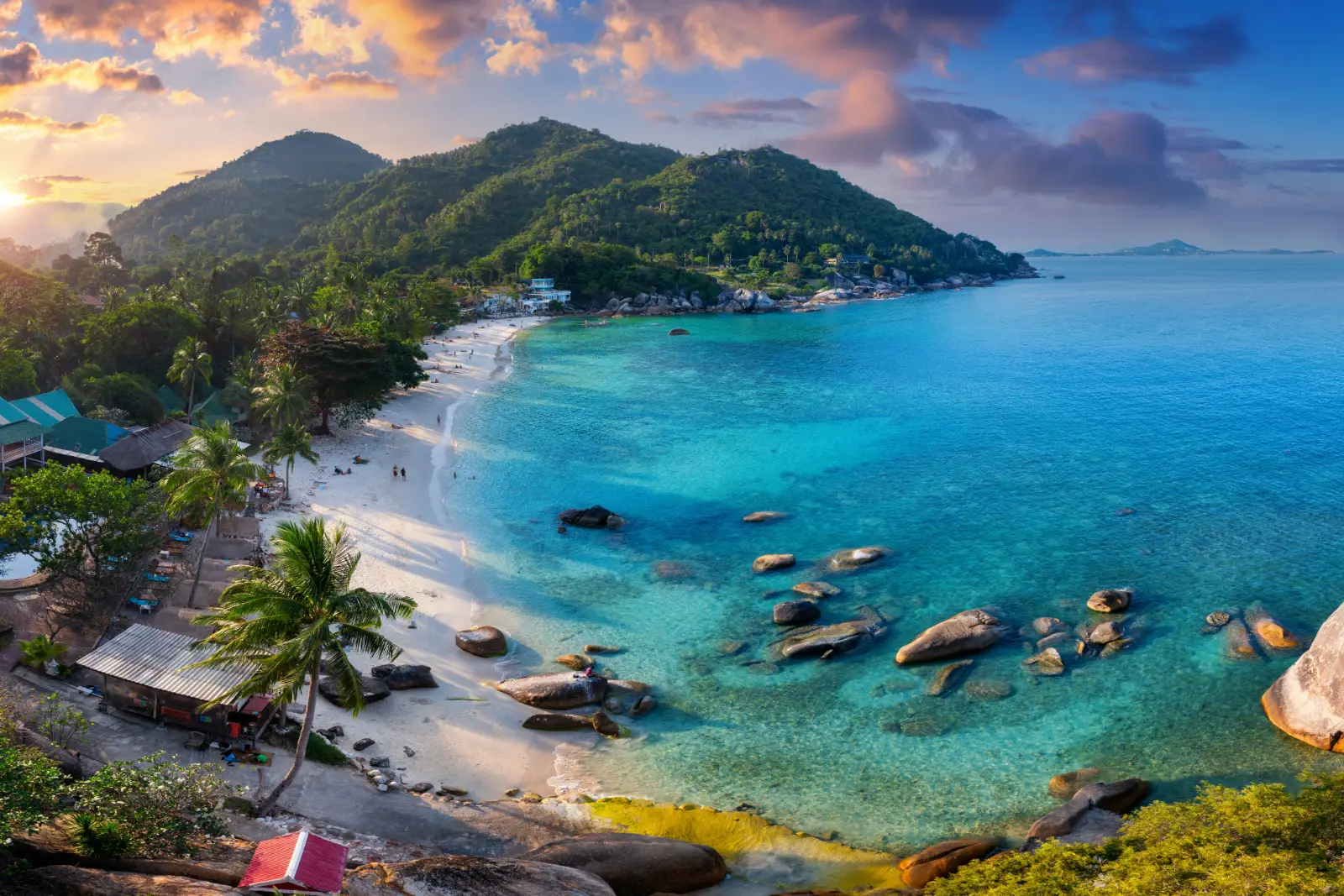
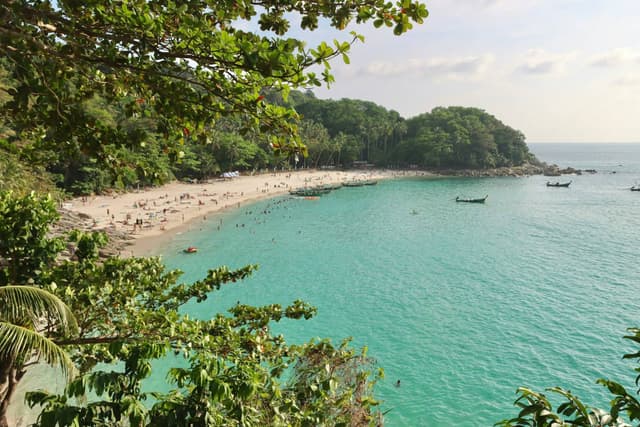
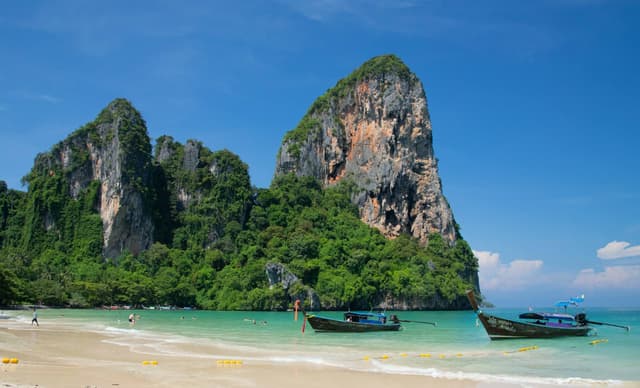
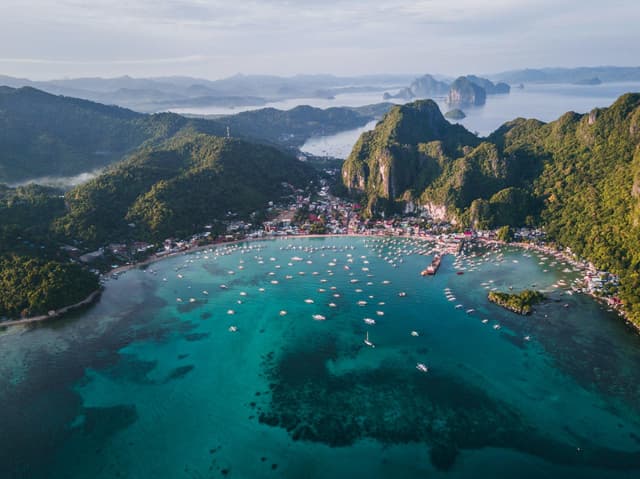
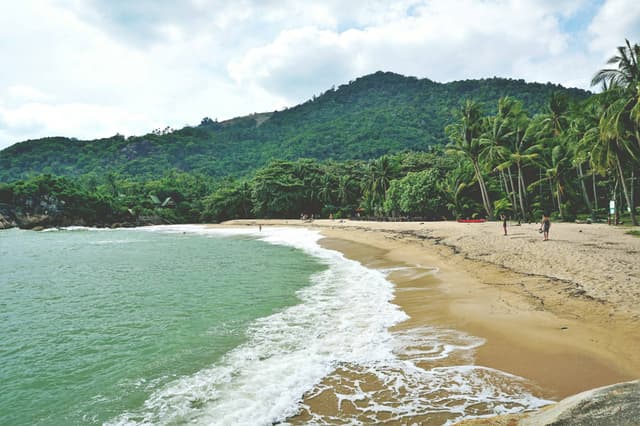
Chaweng suits travellers who want nightlife and the most choice, Lamai suits couples who want a slightly calmer version of Chaweng, Bophut suits food lovers and families, Choeng Mon suits honeymooners and families who want a quiet bay, and Maenam suits long stays and budget travellers. The west coast around Lipa Noi is the place for sunsets and seclusion.
Samui is small enough that you can visit any beach from any base, but where you sleep sets the tone of the trip. The north and east coasts hold most of the hotels, and the airport sits in the northeast corner, so transfers to Chaweng, Bophut and Choeng Mon are short. If you want to compare sand across the whole country, our guide to the best beaches in Thailand covers both coasts.
| Area | Coast | Character | Best for | Watch out for |
|---|---|---|---|---|
| Chaweng | East | Largest, busiest, most developed beach; clubs, bars, malls | First timers, groups, nightlife | Noise at night near the central strip |
| Lamai | East, south of Chaweng | Second resort town, bars plus a quieter northeast end; Hin Ta Hin Yai rocks | Couples, mid range stays | Stronger waves in the rainy months |
| Bophut | North | Fisherman's Village, restaurants, walking street, dive boat departures | Food lovers, families, couples | Sand and water less striking than Chaweng |
| Choeng Mon | Northeast | Small quiet bay about 10 minutes from Chaweng | Families, honeymooners | Fewer cheap places to eat |
| Maenam | North | Long, quiet beach with shallow water and a local feel | Long stays, families, budget | Farther from Chaweng nightlife |
| Bang Rak | Northeast tip | Big Buddha area, ferry pier, close to the airport | Short stays, early boats | Airport noise and a working pier |
| Lipa Noi and the west coast | West | Calm shallow water, sunsets, few crowds | Couples, seclusion | Long drives to the east coast |
Chaweng: the busiest beach with the most choice
Chaweng is the largest and most developed beach on Samui, a long curve of pale sand on the east coast with everything from luxury resorts to backpacker guesthouses. The central strip has the clubs, bars, shopping malls and late night food, while the north end and the stretch toward Chaweng Noi in the south are calmer. It sits only about 2 km from the airport.
Choose Chaweng if it is your first time on the island, you are travelling as a group of friends, or you want to walk to dinner rather than call a taxi. Families and light sleepers should pick a resort at either end of the bay rather than the middle.
Lamai: Chaweng's calmer neighbour
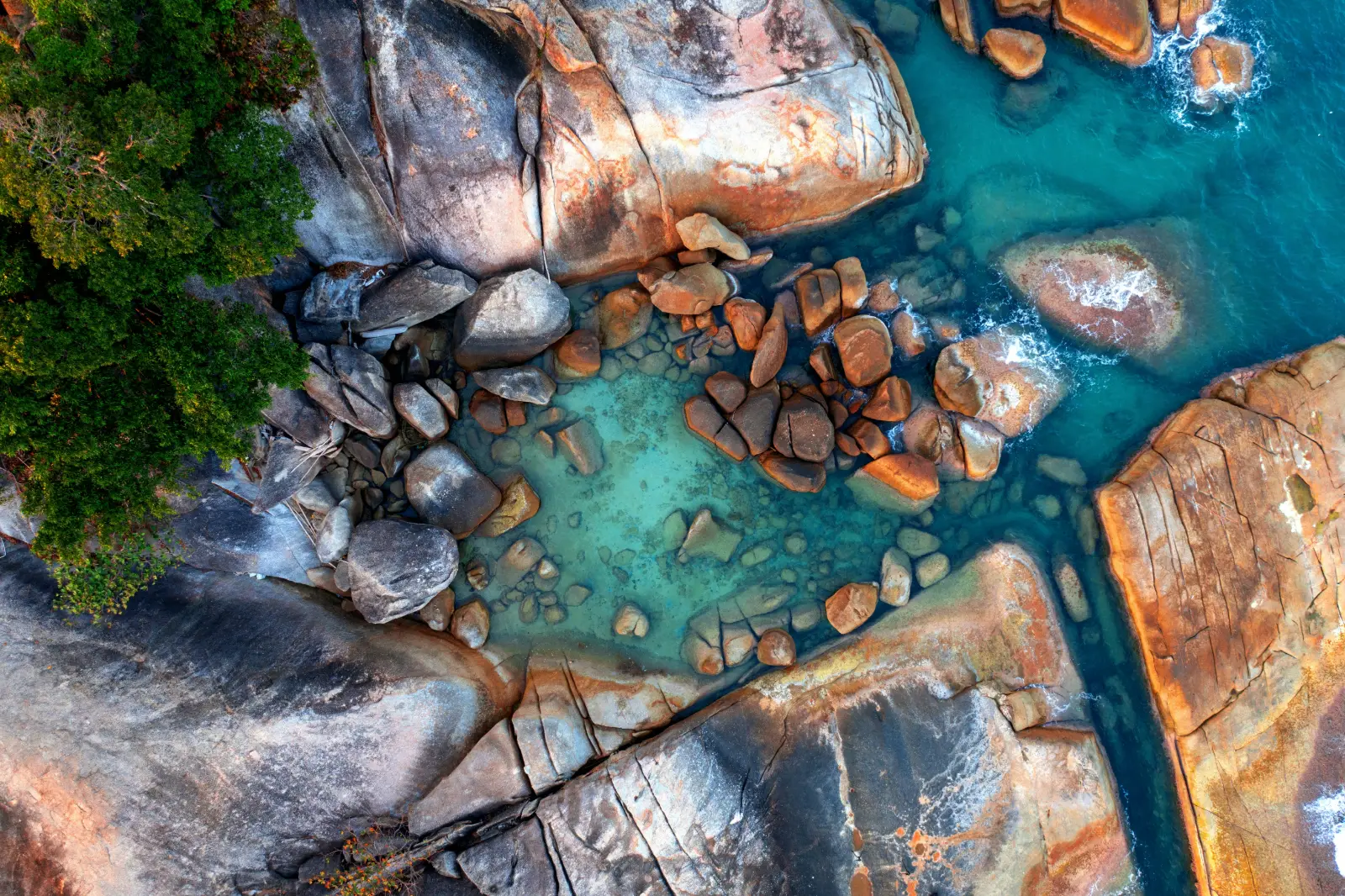
Lamai lies just south of Chaweng and is the island's second resort town. It has its own bar scene and night market area, but it feels smaller and more relaxed, and the northeast end of the bay is quiet with resorts and guesthouses spread along the sand.
The famous Hin Ta and Hin Yai rocks, known in English as Grandfather and Grandmother Rocks, stand at the south end of Lamai Bay. Lamai suits couples who want restaurants and some evening life without Chaweng's volume, and travellers who want a central base for exploring the south of the island.
Bophut and Fisherman's Village: food and evening walks
Bophut on the north coast is built around Fisherman's Village, a lane of old wooden shophouses that now holds restaurants, boutiques and candle-lit bars. The beach is calm and the atmosphere is relaxed, and Bophut is a common starting point for dive trips and boats to Koh Phangan.
The Fisherman's Village walking street takes over the lane in the evening, and Friday is the best known night; some listings add Monday and Wednesday, so check locally. Bophut suits families, couples and anyone who rates dinner above nightlife. It is also a short drive from both the airport and the Big Buddha.
Choeng Mon: a quiet bay for families and honeymooners
Choeng Mon is a small sheltered bay in the northeast, about ten minutes by road from Chaweng. It is quiet, family friendly and home to several upmarket resorts, which is why it appears on so many honeymoon shortlists. The sea is usually gentle here in the drier months, and small islands sit just offshore.
Stay at Choeng Mon if you want calm days and an easy taxi ride to Chaweng's restaurants in the evening. It suits honeymooners, young families and older travellers who prefer a resort pool to a bar.
Maenam: long, quiet and good for slower trips
Maenam is a long beach on the north coast with shallow water that suits children and a more local, unhurried feel than the east coast. It has a night market and a pier with boats toward Koh Phangan and Koh Tao, which makes it a sensible base for island hoppers.
Maenam suits long stays, families and budget travellers, and it is a good base for anyone who plans to spend days away on boats. The trade-off is distance: nightlife in Chaweng is a taxi ride away.
Lipa Noi, Taling Ngam and the west coast
The west coast faces the mainland and the sunset. Lipa Noi has calm, shallow water and is close to the Raja ferry pier, while Taling Ngam further south is home to a few secluded resorts. Nathon, the island's port and administrative town, has the public hospital and a market but is not a beach base. Choose the west coast for privacy, sunsets and a slower pace, and expect longer drives to the east side.
What are the top things to do on Koh Samui?
The top things to do on Koh Samui are a day trip to Ang Thong Marine Park, a temple loop taking in the Big Buddha and Wat Plai Laem, the Hin Ta Hin Yai rocks at Lamai, the Na Muang waterfalls, the Secret Buddha Garden in the hills, and an evening at the Fisherman's Village walking street. Most of these sit within half an hour of each other on the ring road.
Samui rewards a mix of beach days and short outings. The list below starts with the landmarks almost everyone visits and moves to quieter ideas. For the rest of the country, see what to do in Thailand.
Big Buddha (Wat Phra Yai)
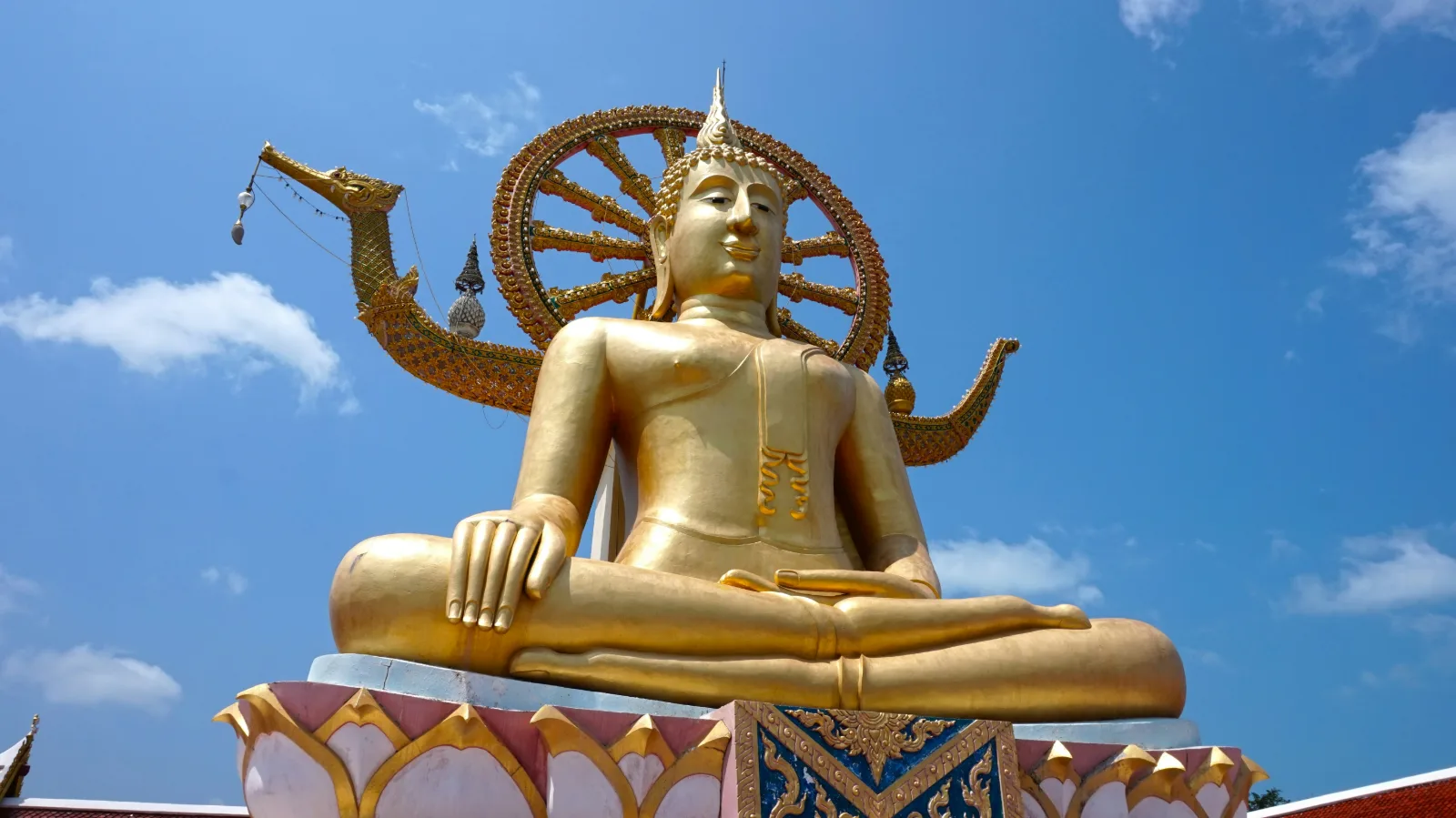
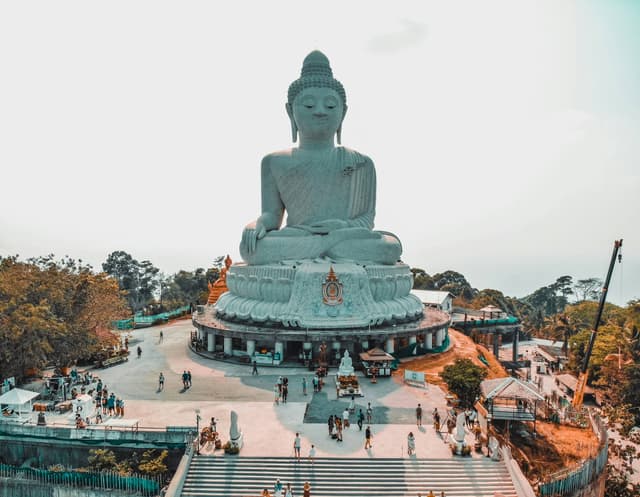
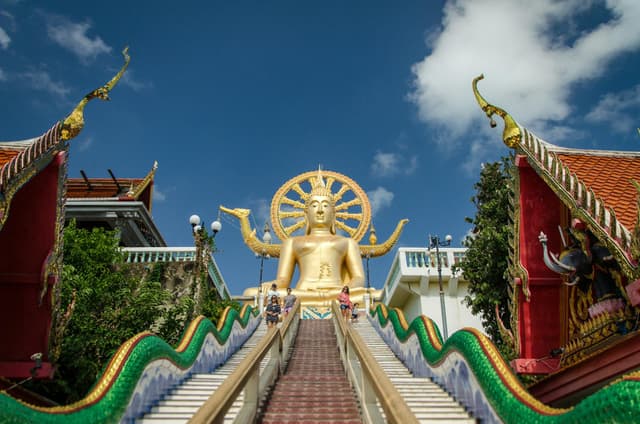
The Big Buddha stands at Wat Phra Yai on Koh Faan, a tiny island joined to Samui by a causeway near Bang Rak. The gold seated Buddha is about 12 metres tall, sits in the Maravijaya posture with the right hand touching the earth, and was built between 1972 and 1974. Go early or late in the day, because the stairway and courtyard get very hot at midday.
Wat Plai Laem
A few kilometres from the Big Buddha, Wat Plai Laem is one of the most photographed temples on the island. Its best known statue is an 18 armed image of Guanyin, the Chinese Goddess of Mercy, set beside a lake, along with a large white Chinese style Buddha. Visitors who make a small donation can feed the fish in the lake. The two temples fit easily into one morning.
Hin Ta and Hin Yai rocks
At the south end of Lamai Bay, Hin Ta and Hin Yai are two rock formations whose shapes are famously suggestive, which is why they appear on every round the island tour. It is a quick stop rather than a half day, and the sea views from the rocks are good. Combine it with lunch in Lamai.
Na Muang waterfalls
The Na Muang falls are the island's best known waterfalls, inland from the south coast and reached by a side road off the ring road. Na Muang 1 is close to the car park; Na Muang 2 is a walk of about 30 minutes uphill and is the more scenic of the two. Waterfall rocks on Samui have caused serious injuries, so wear proper footwear and stay out of the water after heavy rain.
Secret Buddha Garden
High in the hills of the interior, at around 450 metres above sea level, the Secret Buddha Garden is a collection of stone sculptures begun in 1976 by a local fruit farmer, Nim Thongsuk. The road up is uneven and often muddy, so most visitors arrive on a jungle jeep tour rather than a rented scooter. It pairs well with a viewpoint stop and the Na Muang falls.
Fisherman's Village walking street and night markets
Evenings on Samui revolve around markets. The Fisherman's Village walking street in Bophut is the most popular, with street food, crafts and live music along the old lane. Maenam and Lamai also have night markets. Our guide to Thailand's markets explains how they work, and the Thai food guide tells you what to order, including southern dishes that are hard to find in Kathmandu.
Wat Khunaram
On the road between Lamai and Na Muang, Wat Khunaram houses the mummified body of a monk, seated in meditation posture. It is a place of active devotion rather than a sight, so dress modestly and keep your voice low.
Snorkelling and diving
Samui's own reefs are modest, so most snorkelling and diving happens on boat trips: to Ang Thong, to the small islands off the south coast, or to Koh Tao, one of the most popular places in the world to learn to dive. Dive schools in Bophut and Chaweng run day boats. Check that your travel insurance covers diving before you book a course.
Temple etiquette and staying safe
Cover shoulders and knees at every temple, take off your shoes before entering a hall, and never point your feet at a Buddha image. For the full list, read our dos and don'ts in Thailand. On the beach, respect red flags, especially during the October to December monsoon on Samui. Our answer to whether Thailand is safe to travel covers scams, road safety and health.
| Activity | Area | Time needed | Good for |
|---|---|---|---|
| Ang Thong Marine Park day trip | Boats from Samui piers | Full day | Everyone fit for a steep climb |
| Big Buddha and Wat Plai Laem | Bang Rak, northeast | Half day | Families, first timers |
| Hin Ta Hin Yai rocks | South end of Lamai | 30 to 60 minutes | Quick stop on a loop |
| Na Muang waterfalls | South interior | 2 to 3 hours | Active travellers |
| Secret Buddha Garden | Central hills | Half day by jeep | Couples, photographers |
| Fisherman's Village walking street | Bophut | An evening | Food lovers, families |
| Koh Phangan or Koh Tao by boat | From Bang Rak, Maenam, Nathon | Day trip or overnight | Island hoppers, divers |
Can you visit Ang Thong Marine Park and nearby islands?
Yes. Mu Ko Ang Thong National Park lies about 30 km from Koh Samui and is visited on day trips with licensed tour operators, but it usually closes every year from 1 November to 15 December for the monsoon. Koh Phangan and Koh Tao are also easy by boat from Samui, all year when the sea allows.
Mu Ko Ang Thong National Park
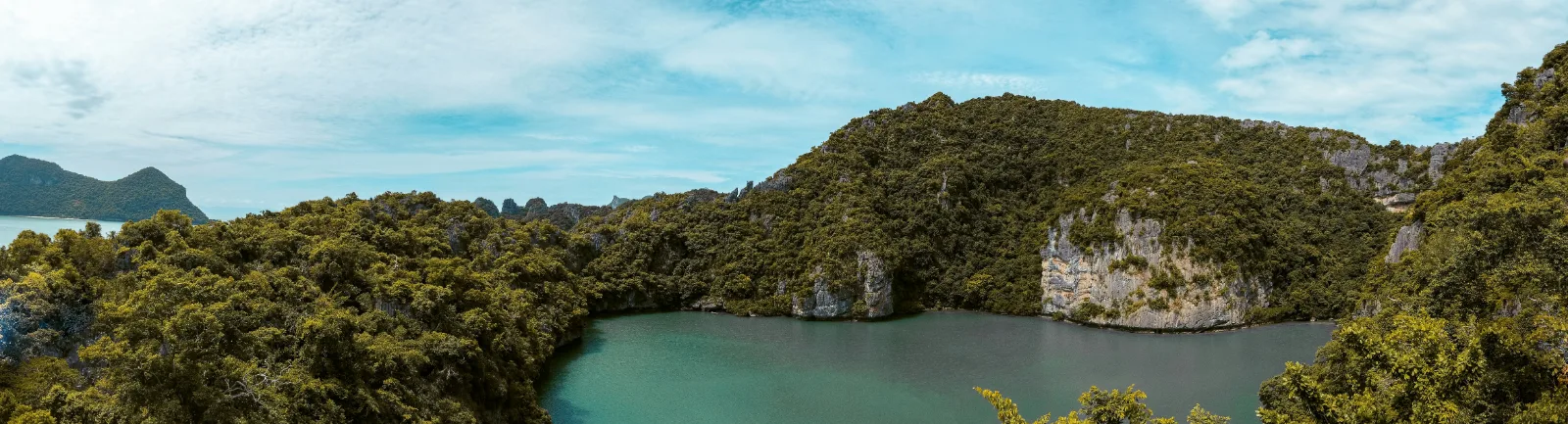
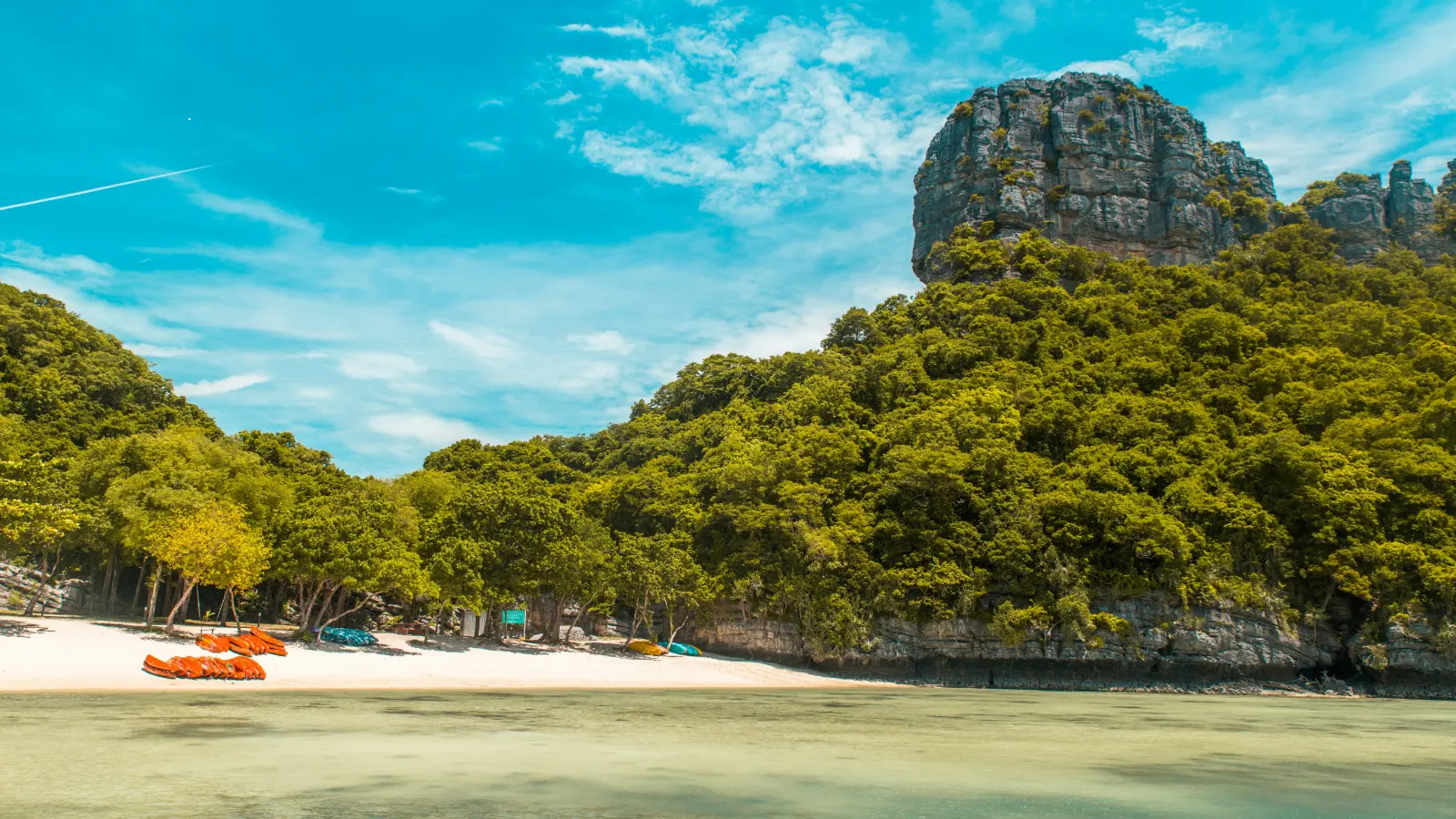
Ang Thong is a marine national park established in 1980, covering about 102 square kilometres of sea and 42 limestone islands. It is the scenery most people picture when they think of the Gulf: steep green islands, white beaches and clear water. Access is only through licensed tour operators, by speedboat in about 45 to 60 minutes each way or by larger, slower boat in close to two hours.
The two classic stops are both short hikes. On Koh Wua Ta Lap, the park headquarters island, a steep trail of about 500 metres with ropes leads to a viewpoint over the whole archipelago, taking around 25 to 30 minutes up. On Koh Mae Ko, a trail of about 20 minutes climbs to a viewpoint over Thale Nai, an emerald saltwater lake ringed by cliffs and connected to the sea by underwater channels. Swimming in the lake is not allowed. Most tours add kayaking and snorkelling.
| Ang Thong fact | Detail |
|---|---|
| Official name | Mu Ko Ang Thong National Park, Surat Thani province |
| Established | 1980 |
| Islands | 42, in a park area of about 102 sq km |
| Distance from Samui | About 30 km |
| Usual annual closure | 1 November to 15 December (confirm each year) |
| Boat time from Samui | About 45 to 60 min by speedboat; close to 2 h by big boat |
| Main viewpoints | Koh Wua Ta Lap (about 500 m steep trail), Thale Nai lake on Koh Mae Ko |
| Rules to know | Licensed operators only; no swimming in Thale Nai |
The closure dates are set by Thailand's Department of National Parks and announced each year, and trips can also be cancelled at short notice in rough weather. If Ang Thong is the reason for your trip, avoid November and early December entirely and keep a spare day in your plan.
Koh Phangan from Samui
Koh Phangan sits just north of Samui and is the easiest island to add. Lomprayah runs from Maenam, Bang Rak and Nathon to Thong Sala in about 30 minutes, Seatran from Bang Rak in about 45 minutes, and the Haadrin Queen goes from the Big Buddha pier straight to Haad Rin in about 50 minutes. Speedboats are quicker still.
Phangan is known for the Full Moon Party on Haad Rin beach, but most of the island is jungle, yoga retreats and quiet bays. Read our guide to Thailand's Full Moon Party before you go, especially if you want to avoid it: boats and rooms fill up around the full moon.
Koh Tao from Samui
Koh Tao is further north and smaller, built around diving. The Lomprayah high speed catamaran takes about 1 hour 30 minutes to 1 hour 45 minutes from Samui, often with a stop at Koh Phangan, while slower ferries can take close to three hours or more. As a day trip it is long; as an overnight stop it works far better.
| From Samui to | Main operators | Samui pier | Approx. time | Best as |
|---|---|---|---|---|
| Koh Phangan (Thong Sala) | Lomprayah, Seatran, Songserm | Maenam, Nathon, Bang Rak | About 20 to 45 min | Day trip or a few nights |
| Koh Phangan (Haad Rin) | Haadrin Queen | Big Buddha (Bang Rak) | About 50 min | Full Moon Party or beach day |
| Koh Tao | Lomprayah, Seatran, Songserm | Maenam, Nathon, Bang Rak | About 1 h 30 min to 3 h | Overnight, diving course |
| Ang Thong Marine Park | Licensed tour boats | Varies by operator | About 45 min to 2 h | Organised day trip |
Checked: 12 Oct 2026. Ferry routes from the Lomprayah website and ferry booking platforms; Ang Thong details from Thai National Parks and the TAT report of the Department of National Parks closure schedule. Timetables change seasonally.
Is Koh Samui or Phuket better for your trip?
Koh Samui is better if you travel between May and September, want a smaller and calmer island, or plan to hop to Koh Phangan, Koh Tao and Ang Thong; Phuket is better if you travel between November and April, want the widest choice of flights and hotels, or want boat trips to Phi Phi and Phang Nga Bay. Your travel month usually decides it.
The two islands are Thailand's largest, but they feel different. Phuket is more than twice the size of Samui, joined to the mainland by the Sarasin Bridge, and served by a major international airport. Samui has no bridge, a private airport with fewer airlines, and a gentler pace outside Chaweng. For things to do on the other coast, see our guide to things to do in Phuket, and if you are also weighing the mainland, our comparison of Bangkok, Pattaya or Phuket helps. To see both islands on the national map, read where to go in Thailand.
| Factor | Koh Samui | Phuket |
|---|---|---|
| Sea | Gulf of Thailand (east) | Andaman Sea (west) |
| Size | About 228.7 sq km | About 543 sq km, Thailand's largest island |
| Access | Own airport, mainly Bangkok Airways; ferry from Donsak | Large international airport with many airlines; road bridge to the mainland |
| Driest months | Roughly January to September | Roughly November to April |
| Wettest months | October to December, peak in November | Roughly May to October |
| Feel | Smaller, calmer, resort and village atmosphere | Bigger, busier, more city like in places |
| Nightlife | Concentrated in Chaweng | Concentrated in Patong, plus other beach towns |
| Island hopping | Koh Phangan, Koh Tao, Ang Thong | Phi Phi, Phang Nga Bay, Krabi, Similan Islands in season |
| Best for | Honeymoons, families wanting quiet bays, midyear travel | First timers, big groups, winter travel, wide choice |
When Phuket is the better pick
If your holiday falls in Tihar, the Christmas holidays or anywhere from November to early December, Phuket and the Andaman coast are usually drier. Phuket also suits groups who want variety, from day trips to the Phi Phi Islands to Old Town food streets, and travellers who want more flight choices home.
When Koh Samui is the better pick
If you travel between June and September, Samui is usually the stronger beach choice because the Andaman coast is in its monsoon. Samui also suits honeymooners who want a resort in a quiet bay like Choeng Mon, and families who want short transfers from the airport. Some travellers do both coasts in one trip by flying between them when the route is operating, but for most trips one coast is enough.
How do you get around Koh Samui?
The easiest ways to get around Koh Samui are taxis or ride hailing apps for short hops, shared songthaew pickups along the ring road by day, and a hired car or scooter if you hold the right licence. Everything sits on or near the 51 km ring road, so no journey on the island is long. For apps, cash and phone tips that apply across the country, see our Thailand travel tips.
| Option | How it works | Good for | Things to know |
|---|---|---|---|
| Songthaew | Shared pickup trucks running the ring road like a bus | Daytime trips between beaches | Fixed routes by day; after about 6 pm fares are negotiated |
| Taxi | Metered taxis, often quoted a flat fare | Airport and evening trips | Agree the fare before you get in, especially at piers |
| Ride hailing apps | NaviGo and Grab operate on Samui | Fixed fares, families | Fewer drivers than in Bangkok; can be scarce at busy times |
| Hire car | International and local rental firms | Families, round the island days | Valid licence or International Driving Permit needed |
| Scooter | Widely rented in every beach town | Experienced riders only | Licence, helmet and insurance rules apply |
| Jeep tours | Organised trips into the hills | Secret Buddha Garden, viewpoints | Easier than riding steep muddy roads yourself |
Scooters: licence, helmet and insurance
Scooters are everywhere on Samui, and so are scooter accidents. TAT's guidance for visitors is clear: to drive legally in Thailand you must hold a valid licence, such as a Thai licence, an International Driving Permit or an ASEAN licence with your home licence, and motorbike riders and passengers must wear helmets. Many travel insurance policies refuse claims if you ride without the correct licence or without a helmet, so read the policy before you rent. Our guide to travel insurance from Nepal explains what to look for. If you have not ridden in traffic before, Samui's steep inland roads are not the place to learn.
Checked: 12 Oct 2026, TAT Newsroom, driving in Thailand guidelines. Getting around details from Wikivoyage's Ko Samui guide.
How many days to plan on Koh Samui
Four or five nights lets you settle into one beach area, see the Big Buddha and the temples, take the Ang Thong day trip and keep a spare day for weather. Seven nights or more lets you add Koh Phangan or Koh Tao. Many travellers combine Samui with two or three nights in Bangkok; our sample Thailand itinerary shows how the pieces fit, and the pre-trip checklist covers documents, money and packing before you leave Kathmandu.
For honeymooners comparing Samui with Bali, the Maldives and other options, our round-up of honeymoon destinations from Nepal sets them side by side. If you would rather have flights, transfers and hotels arranged as one trip, browse our Thailand tour packages.
Frequently asked questions
Where is Koh Samui?
Koh Samui is an island in the Gulf of Thailand, in Surat Thani province, about 35 km northeast of Surat Thani town on the mainland. It is Thailand's second largest island after Phuket, at about 228.7 square kilometres, and sits just south of Koh Phangan and Koh Tao, with Ang Thong Marine Park about 30 km away.
Is Koh Samui better than Phuket?
Koh Samui is better for travel from roughly January to September, for quieter bays and for hopping to Koh Phangan, Koh Tao and Ang Thong. Phuket is better from November to April and offers more flights, hotels and nightlife. The two islands have opposite rainy seasons, so your travel month usually decides which one suits you.
When is the rainy season in Koh Samui?
Koh Samui's rainy season runs from about mid October to early December, when the northeast monsoon reaches the Gulf of Thailand. November is the wettest month on average, with October and December also wet. From January to September Koh Samui is comparatively dry, even while Phuket and the Andaman coast are in their own monsoon.
How do I get from Bangkok to Koh Samui?
The fastest way from Bangkok to Koh Samui is a direct Bangkok Airways flight from Suvarnabhumi or Don Mueang to Samui Airport, about 1 hour 5 minutes to 1 hour 35 minutes in the air. The cheaper way is a flight or train to Surat Thani, a road transfer to Donsak pier and a ferry of about 45 to 90 minutes.
Does Koh Samui have an airport?
Yes. Samui International Airport (USM) is about 2 km north of Chaweng and has been privately owned by Bangkok Airways since it opened in 1989. Bangkok Airways operates most flights, mainly to Bangkok, and Scoot flies in from Singapore. Some regional routes are seasonal or paused, so check current timetables before booking.
Which beach is best in Koh Samui?
The best Koh Samui beach depends on your trip. Chaweng is the liveliest with the most hotels and nightlife, Lamai is a calmer alternative, Bophut has Fisherman's Village and good restaurants, Choeng Mon is a quiet bay for families and honeymooners, and Maenam is long, shallow and peaceful. Lipa Noi on the west coast is best for sunsets.
Is Koh Samui good for a honeymoon?
Koh Samui is a strong honeymoon choice, especially from February to September. Quiet bays such as Choeng Mon and the west coast around Lipa Noi and Taling Ngam have secluded resorts and sunset views, while Bophut and Chaweng offer restaurants close by. An Ang Thong boat trip and a temple morning add variety between beach days.
Is Koh Samui good for families?
Koh Samui suits families well, thanks to a short airport transfer, calm north coast beaches such as Maenam and Choeng Mon, and easy outings like the Big Buddha, Wat Plai Laem and Fisherman's Village. Families travelling between May and August often find Koh Samui drier than Phuket. Choose a hotel away from central Chaweng for quieter nights.
Can you visit Koh Phangan from Samui?
Yes. Koh Phangan is the easiest island to reach from Koh Samui, about 20 to 50 minutes by boat. Lomprayah, Seatran and Songserm run to Thong Sala from Maenam, Nathon and Bang Rak, and the Haadrin Queen sails from the Big Buddha pier to Haad Rin. Boats and rooms fill up around the monthly Full Moon Party.
How many days do you need in Koh Samui?
Four to five nights on Koh Samui covers a beach base, the Big Buddha and temple loop, an Ang Thong Marine Park day trip and a spare day for weather. With seven nights or more you can add Koh Phangan or Koh Tao. Many travellers pair Koh Samui with two or three nights in Bangkok.
When is Ang Thong Marine Park closed?
Mu Ko Ang Thong National Park, the main day trip from Koh Samui, usually closes every year from 1 November to 15 December during the northeast monsoon. Thailand's Department of National Parks confirms the dates each year, and boat trips can also be cancelled at short notice in rough weather, so keep a spare day.