


















































Thailand is relaxed and forgiving, and locals do not expect visitors to know every custom. A handful of rules, though, are taken seriously, and getting them right shows respect and smooths the whole trip. This guide walks through the do's and don'ts that matter most in Thailand, covering temples, the monarchy, everyday etiquette, dress, food, money, transport and the scams first timers meet. For the wider practical picture, see our Thailand travel guide and our Thailand travel tips.
What are the most important do's and don'ts in Thailand?
If you remember only a short list, remember these. Respect the monarchy without exception, dress modestly at temples, keep your feet low and your head gestures polite, stay calm in every disagreement, and treat monks with deference. The table below is the quick version you can screenshot before you fly.
| Do | Don't |
|---|---|
| Cover shoulders and knees at temples | Wear beachwear away from the beach |
| Stand for the royal anthem | Criticise or joke about the monarchy |
| Return a wai with a slight bow | Touch anyone on the head |
| Tuck your feet behind you when seated | Point your feet at people or Buddha images |
| Smile and stay calm in disputes | Raise your voice or lose your temper |
| Use the Grab app or agree fares first | Hand your passport to a rental shop |
What is the etiquette at temples in Thailand?
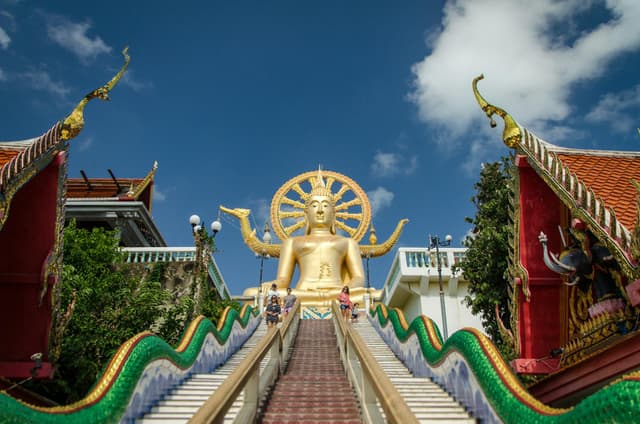
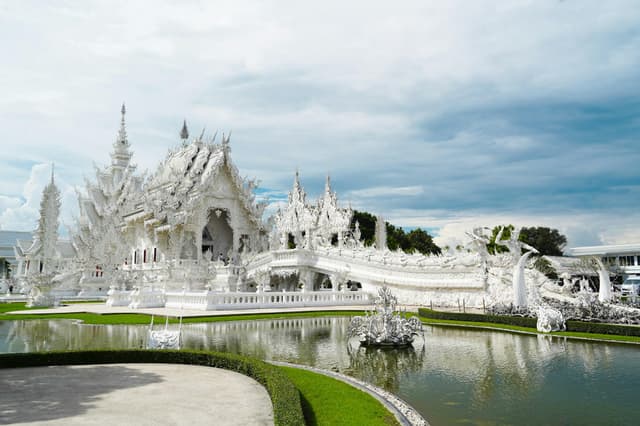
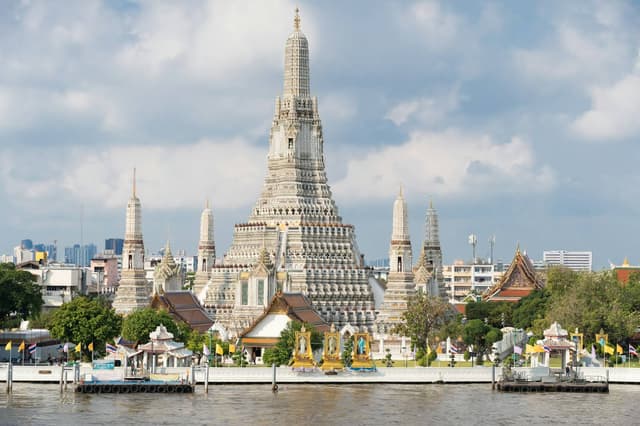
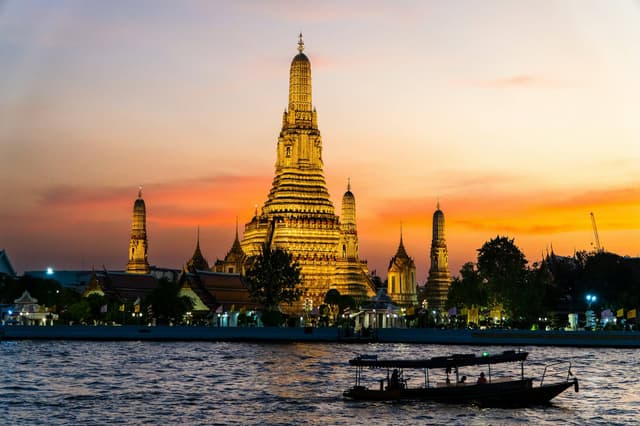
Thailand has more than 40,000 Buddhist temples, and around 93 percent of the population is Theravada Buddhist, so temples are living places of worship rather than museums. Dress and behaviour matter the moment you step inside the walls.
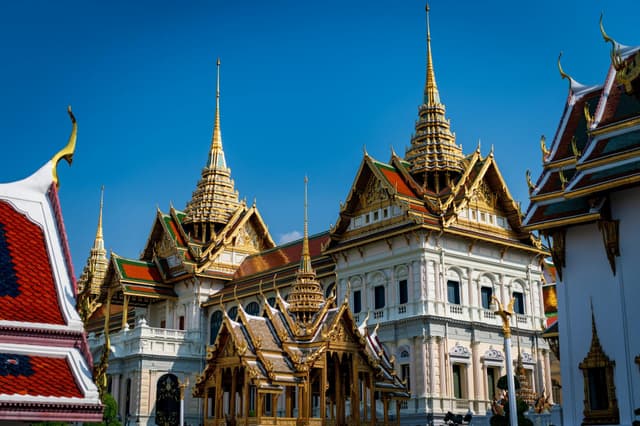
- Do cover your shoulders and knees. Carry a light scarf or sarong so you can cover up at short notice, and expect major sites such as the Grand Palace and Wat Phra Kaew to turn away anyone in vests, shorts or torn jeans.
- Do remove your shoes before entering any shrine building or ordination hall. Socks are fine, and shoe racks or a spot by the door make it obvious where to leave them.
- Do sit with your feet tucked behind you in the mermaid position, so your soles never face the Buddha image or the monks.
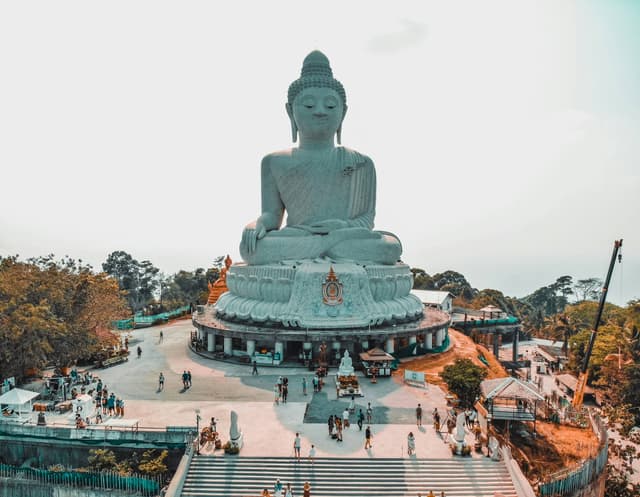
- Don't touch, climb on or pose disrespectfully with Buddha statues. A Buddha image is sacred, and treating one as a photo prop can cause real offence and, in some cases, legal trouble.
- Don't point at religious objects with your finger or foot, and lower your body slightly when passing in front of someone who is praying.
- Don't take Buddha images out of the country as souvenirs without care. Thailand restricts the export of Buddha heads and antique images, and airport checks do happen.
Women should be especially mindful around monks. A monk may not accept anything directly from a woman's hand, so if you want to give an offering, place it on a cloth or table for him to pick up, or hand it via a male companion.



How should visitors show respect for the monarchy?
Respect for the Thai monarchy is not a polite suggestion, it is written into law. The country enforces one of the world's strictest lese majeste statutes under Section 112 of the criminal code, and convictions can carry three to fifteen years in prison for each offence. Tourists have been arrested, so this is the single rule to take most seriously.
- Do stand respectfully when the royal anthem plays, which happens in many cinemas before the film and at 8am and 6pm in some public spaces and train stations.
- Do treat images of the king and royal family, including those on banknotes and coins, with care.
- Don't make jokes, negative comments or social media posts about any member of the royal family, in person or online, while in Thailand.
- Don't step on money or images that carry the king's face. Because Thai currency bears the royal portrait, stopping a rolling banknote with your foot is considered a serious insult.
Why do the head and feet matter so much?
Thai culture places a strong symbolic value on the body. The head is regarded as the highest and most sacred part of a person, and the feet as the lowest and least clean. Getting this pair of rules right will keep you clear of most everyday offence.
- Don't touch anyone on the head, including children whose hair you might be tempted to ruffle. Even a friendly pat can feel deeply disrespectful.
- Don't point your feet at people, at a Buddha image or at a shrine, and never rest your feet on a chair, table or temple ledge.
- Don't use your foot to point at objects, nudge a door open or move something on the floor. Use your hand instead.
- Do step over, not on, the raised threshold of a temple or a traditional Thai home. Thresholds are believed to house a spirit, and standing on one is bad manners.
- Do pass items to people with your right hand, or with both hands for extra politeness, rather than tossing them.
What is the wai and how do you use it?
The wai is the traditional Thai greeting, made by pressing your palms together at chest level and giving a slight bow of the head. It is used to say hello, thank you and sorry, and it also signals status, since the person of lower rank usually wais first and raises their hands higher.
- Do return a wai if someone offers one to you, with your hands somewhere between chest and chin.
- Don't feel you must wai service staff, children or people much younger than you. A nod and a smile is enough, and over waiing can feel awkward.
- Don't wai with a bag, phone or drink in your hands. Set things down first, or simply smile and nod.
What are the everyday social etiquette rules?
Thailand runs on the idea of keeping face and staying pleasant, summed up in the phrase jai yen, which means a cool heart. Loud, angry or confrontational behaviour rarely gets results and often makes a situation worse.
- Do stay calm and keep smiling in disputes over bills, delays or misunderstandings. A patient, friendly approach almost always works better than anger.
- Do speak softly in temples, hotels and on public transport. Thais tend to value a quiet, gentle manner.
- Don't show public anger, shout or use aggressive hand gestures. Causing someone to lose face in public is a serious social mistake.
- Don't be overly physical in public. Holding hands is fine, but long kisses and heavy public affection are frowned upon, especially near temples.
- Do ask before photographing people, monks or private ceremonies, and respect a no.
What should you wear in Thailand?
Thailand is hot and humid, with average daytime temperatures around 30 to 35 degrees Celsius, so light clothing makes sense. The catch is that appropriate dress changes with the setting. This table keeps it simple.
| Place | What to wear |
|---|---|
| Temples and palaces | Shoulders and knees covered, no tight or sheer fabric |
| Beaches and resorts | Swimwear and shorts are fine here only |
| Cities and markets | Light, modest casual clothing |
| Government offices | Smart casual, no vests or flip flops |
| Rural villages | Modest clothing that covers more |
Topless or nude sunbathing is not acceptable on Thai beaches, even at resort areas, and can lead to fines. Away from the sand, changing out of beachwear before you walk into town or a shop is both cooler and more respectful.
What is the etiquette around food and dining?
Thai food is central to the culture, and mealtimes are social and shared. A few habits will help you fit in at both street stalls and family tables.
- Do use a fork and spoon for most dishes, pushing food onto the spoon with the fork and eating from the spoon. Chopsticks are mainly for noodle soups.
- Do share dishes family style. Meals usually arrive together in the centre, and everyone takes small amounts onto their own plate of rice.
- Don't put chopsticks upright in a bowl of rice, which resembles incense at a funeral, and do not use your personal spoon to serve from a shared dish where a serving spoon is provided.
- Don't take the last piece from a shared plate without offering it around first.
- Do try the street food. Thailand's stalls are famous, and busy stands with a high turnover are usually a safe and delicious bet.
How does tipping and bargaining work in Thailand?
Thailand is not a strong tipping culture, and haggling has clear limits. Knowing where each applies saves both money and embarrassment.
| Situation | What is normal |
|---|---|
| Restaurants | Round up or leave small change, more for good service |
| Upscale restaurants | Check for a 10 percent service charge before adding more |
| Hotel staff and porters | 20 to 50 baht is a kind gesture |
| Taxis | Rounding up the fare is enough |
| Markets and souvenir stalls | Polite bargaining is expected |
| Malls and fixed price shops | Prices are set, do not haggle |
- Do bargain with a smile at markets, aiming for a fair middle ground rather than the lowest possible price.
- Don't haggle aggressively over tiny sums. A few baht mean far more to a stall owner than to a visiting traveller.
- Don't start bargaining unless you are genuinely interested in buying.
How should you handle taxis, tuk tuks and scooters?
Transport is where many first timers meet their first scam, so a little caution pays off. Bangkok, Chiang Mai and Phuket all have reliable options if you use them well.
- Do use the Grab app for cars and motorbike taxis. The price is agreed up front, the route is tracked, and there is no argument at the end.
- Do insist on the meter in a metered taxi, or agree a fixed fare before you get in if the driver refuses.
- Don't assume a tuk tuk is cheaper. They are an experience, but for anything beyond a short hop a metered taxi or Grab is usually better value.
- Don't hand your passport to a scooter or jet ski rental shop as a deposit. Leave a cash deposit or a photocopy instead, and photograph any existing damage before you ride away.
- Do wear a helmet on a scooter. It is the law, police do fine tourists, and travel insurance often requires a valid licence for a claim.
What scams do first time visitors meet?
Most trips to Thailand are trouble free, but a handful of scams target newcomers around the big attractions. Recognising them is usually enough to avoid them.
| Scam | How to avoid it |
|---|---|
| Attraction closed, take a tuk tuk tour | Check opening hours yourself, ignore the stranger |
| Gem or tailor shop detour | Never agree to a surprise shopping stop |
| Jet ski damage claim | Photograph the craft before and after, avoid cash pressure |
| Rigged taxi meter or no meter | Use Grab or insist on the meter |
| Overpriced tuk tuk fare | Agree the price before you sit down |
| Fake tour or ticket touts | Book through your hotel or a licensed operator |
The common thread is a stranger who seems very helpful and steers you somewhere you did not plan to go. A polite no thank you and a walk in the opposite direction handles nearly all of them.
What are the rules on drugs and cannabis?
Thailand takes narcotics extremely seriously, and penalties for possession, use or trafficking of hard drugs are severe, ranging up to life imprisonment or the death penalty for the largest trafficking cases. This is not an area to test.
- Don't buy, carry or use illegal drugs under any circumstances. Undercover checks and heavy penalties are real.
- Do treat cannabis with caution. Thailand decriminalised cannabis in 2022, but the rules have been tightening again, with moves to limit sales to medical use and to require prescriptions. What is legal can change, so check the current position before you assume anything.
- Don't carry any cannabis product across a border, in or out of Thailand. That remains illegal and is treated as trafficking.
How should you behave on beaches and in nature?
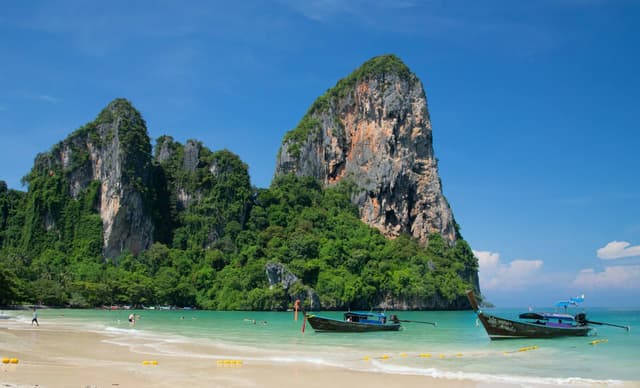
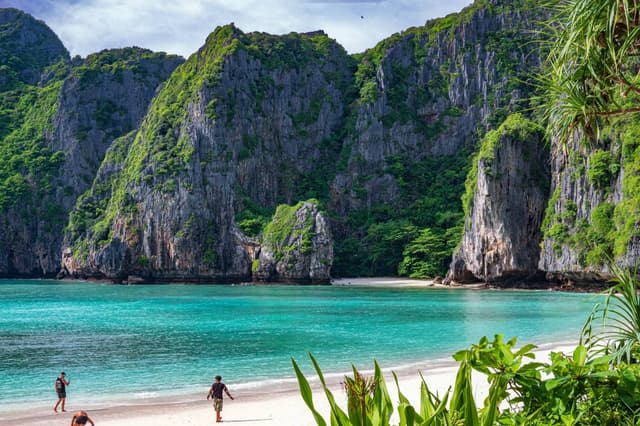
Thailand's islands and national parks are a huge draw, and protecting them is part of good travel etiquette. Some rules are also strictly enforced.
- Don't smoke on the many beaches where it is banned. Thailand prohibits smoking on dozens of popular beaches, with fines for offenders.
- Don't touch or stand on coral, feed fish, or take shells and sand as souvenirs. Removing sand from a beach can bring a fine.
- Do use reef safe sunscreen where you can, and follow guide instructions when snorkelling or diving.
- Do carry out your rubbish and refuse single use plastic bags, which many Thai shops have moved away from.
What is the etiquette during festivals?
Thailand's two most famous festivals come with their own unwritten rules. Timing a visit around them is a highlight, as long as you join in respectfully.
- Songkran, the Thai New Year water festival in April, involves friendly water throwing. Do expect to get soaked in the street, protect your phone in a waterproof pouch, and don't throw water at monks, the elderly or people who are clearly opting out.
- Loy Krathong, the festival of lights around November, sees people float decorated baskets on water. Do use a biodegradable krathong, and don't launch sky lanterns near airports, where they are restricted for safety.
Which Thai words and phrases help most?
A few words of Thai go a long way and are always appreciated. Thai is tonal, so your pronunciation will not be perfect, but the effort matters more than accuracy.
| English | Thai |
|---|---|
| Hello | Sawasdee khrap (men) or kha (women) |
| Thank you | Khop khun khrap or kha |
| Sorry or excuse me | Khor thot |
| How much | Tao rai |
| No spicy | Mai phet |
| Delicious | Aroi |
Men add khrap and women add kha to the end of sentences to sound polite. Using them turns a flat request into a friendly one and often earns a warm smile in return.
A quick checklist before you go
- Pack one modest outfit that covers shoulders and knees for temple days.
- Save the Grab app and your hotel address in Thai on your phone.
- Keep small notes and coins for markets, taxis and offerings.
- Photograph any rental scooter or jet ski before you use it.
- Learn the four or five polite phrases above.
- Keep at least six months of validity on your passport.
If you would rather have the logistics handled for you, compare a Thailand tour package to see what a bundled trip covers before you weigh doing it independently.
What are the do's and don'ts around monks?
Monks hold a revered place in Thai society, and you will see them everywhere, collecting morning alms, riding public transport and blessing shops and homes. A few extra courtesies apply beyond the temple walls.
- Do give way to monks on pavements, buses and trains. Many buses and metro carriages have seats reserved for monks, so avoid taking them.
- Do lower yourself slightly and keep your head below a monk's if you speak with one seated.
- Don't let a woman touch a monk or his robes, hand him anything directly, or sit next to him on transport. If a woman needs to give an offering, she can place it down or pass it through a man.
- Don't photograph the morning alms round as if it were a show. If you take part, do so quietly, barefoot and modestly dressed, and buy your offering from a respectful vendor rather than the tourist stalls that overcharge.
Is animal tourism ethical in Thailand?
Animal encounters are heavily marketed in Thailand, and this is an area where a responsible traveller can do real good or real harm. The kinder choices are also usually the more memorable ones.
- Don't ride elephants or visit venues that offer riding, painting or circus style shows. These usually rely on harsh training, and welfare groups advise against them.
- Do choose an ethical elephant sanctuary that lets you observe, feed and bathe rescued elephants without riding, and that has a clear no chains, no hooks policy.
- Don't pose with sedated tigers, slow lorises or gibbons used as photo props on beaches and in bars. The animals are often drugged or mistreated.
- Do support genuine rescue and rehabilitation projects, and ask how many elephants each carer looks after and whether the animals are free to roam.
How do regional differences change the etiquette?
Thailand is not one uniform place, and the manners that matter shift a little from the capital to the coast to the far south. The core rules stay the same, but the tone changes.
| Region | What to keep in mind |
|---|---|
| Bangkok | Fast paced and cosmopolitan, but temple and royal rules are strict |
| Chiang Mai and the north | Slower and more traditional, dress a little more modestly |
| Islands and beaches | Relaxed, yet cover up in villages and off the sand |
| The deep south | Largely Muslim, so dress conservatively and respect prayer times |
| Rural villages | Greet elders first and ask before entering homes |
In the mostly Muslim southern provinces near the Malaysian border, alcohol is less visible and modest dress is more important, especially for women. In the tourist islands you can relax, but the moment you leave the beachfront the mainland rules apply again.
What should LGBTQ travellers know?
Thailand is one of the most welcoming countries in Asia for LGBTQ visitors, with a visible scene in Bangkok, Phuket and Chiang Mai, and the country moved to recognise same sex marriage in 2025. Public affection norms still apply to everyone, so the same light touch expected of all couples is the only real guideline. Respect, discretion near temples and a friendly manner keep every traveller comfortable.
How do you stay healthy and comfortable in the heat?
Thailand's tropical climate is a factor in its own right, and a few habits keep small problems from spoiling a trip.
- Do drink bottled or filtered water rather than tap water, and carry a refillable bottle for the many refill stations.
- Do pace yourself in the midday heat, seek shade and use sunscreen, since temperatures and humidity are high most of the year.
- Do eat at busy, popular street stalls where the turnover is high and the food is freshly cooked.
- Don't overdo ice worries at reputable places, as most tourist areas use clean, factory made ice, but do use judgement at very remote stalls.
- Do carry a basic kit with rehydration salts, plasters and any personal medicine, and buy the rest cheaply at the widespread pharmacies.
What gestures and body language should you use or avoid?
Body language carries meaning in Thailand, and a few small habits mark you out as a considerate guest.
- Do beckon someone with your palm facing down and fingers waving toward you, never palm up with a curled finger, which is rude.
- Do point with your whole hand, or a gentle nod, rather than a single finger or your foot.
- Don't put your hands on your hips or fold your arms when speaking with someone, as it can read as aggressive.
- Do keep your voice gentle and your smile ready. The Thai smile has many meanings, and returning it is the easiest way to connect.
What are the most common mistakes tourists make?
Even well meaning visitors slip up in the same few ways. Knowing them in advance is the easiest fix.
| Mistake | Do this instead |
|---|---|
| Wearing shorts and vests to the Grand Palace | Bring a cover up or hire a sarong at the gate |
| Losing your temper over a fare or bill | Stay calm, smile and negotiate gently |
| Ruffling a child's hair | Admire without touching the head |
| Riding elephants for a photo | Choose a no riding sanctuary |
| Handing a passport to a jet ski shop | Leave a cash deposit and photograph the craft |
None of these are hard to avoid, and getting them right is exactly what turns a good trip into a smooth one. Thai people are famously forgiving of honest mistakes made with a smile and an apology.
The thread running through all of these do's and don'ts is simple respect. Thai culture rewards a calm manner, a modest appearance in the right places, and a genuine effort to honour what locals hold sacred. Do that, and the country opens up warmly, from temple courtyards and island beaches to family run kitchens and hill tribe villages. Get the big rules right, keep your cool, wear a smile, and almost everything else falls into place naturally on a Thailand trip.
Frequently asked questions
What should you not do in Thailand?
Never disrespect the monarchy, do not touch people on the head or point your feet at anyone or any Buddha image, and do not wear beachwear at temples. Avoid the closed attraction tuk tuk scam, never hand your passport to a rental shop, and stay well clear of illegal drugs.
Is it rude not to tip in Thailand?
No. Tipping is not obligatory, though leaving small change or rounding up the bill is appreciated in restaurants and for good service. Check for a 10 percent service charge at upscale places before adding more.
What do I wear to a temple in Thailand?
Cover your shoulders and knees, remove your shoes before entering shrine buildings, and avoid tight or revealing clothing. Carry a light scarf or sarong so you can cover up when needed, as major sites will turn away anyone dressed too casually.
Can you criticise the King in Thailand?
No. Thailand enforces one of the world's strictest lese majeste laws, and insulting the monarchy is a criminal offence that has led to long prison sentences, including for foreigners. Avoid any comment, joke or social media post about the royal family.
Is cannabis legal for tourists in Thailand?
Cannabis was decriminalised in 2022, but the rules are tightening and are moving toward medical use with prescriptions. The legal position can change quickly, so check the current law before assuming anything, and never carry cannabis across a border.
Do you have to take your shoes off in Thailand?
Yes, in temple shrine buildings, many shops, homes and some guesthouses. Look for a pile of shoes by the door as your cue, and wear slip on footwear to make it easy.
Is Thailand safe for first time travellers?
Yes, Thailand is generally very safe for tourists, with the main risks being petty scams, road accidents and heat. Use registered transport, keep valuables secure, and read our Thailand safety guide for the full picture.
How do you greet people politely in Thailand?
Return a wai by pressing your palms together at chest level with a slight bow, and add khrap if you are a man or kha if you are a woman to the end of greetings. A warm smile is always welcome.
Do Thai people mind if tourists do not know the customs?
Generally no. Thais are welcoming and forgiving of honest mistakes, especially when made with a smile and a quick apology. Making an effort with the big rules, the monarchy, temples, the head and feet, matters far more than perfection.
Is it rude to point in Thailand?
Pointing at people with a single finger is considered impolite, and pointing with your foot is worse. Use your whole hand or a gentle nod to indicate a person, place or object instead.
More Thailand travel guides
- Thailand Travel Guide: Beaches, Cities, Food and How to Plan a First Trip
- Thailand Travel Tips: What First Time Visitors Need to Know
- Is Thailand Safe? An Honest Travel Safety Guide
'/%3E%3C/svg%3E)