A Short, Complete Introduction to Bangkok
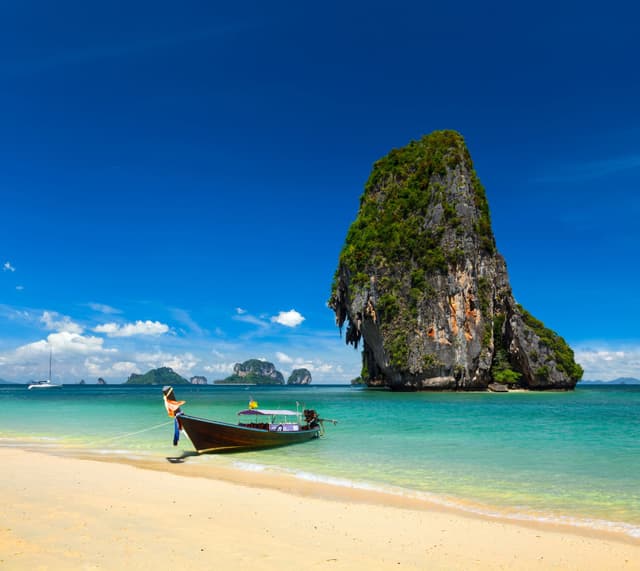
Four days is enough time to see Bangkok's essential sights without rushing, and this itinerary is built around exactly that balance. It opens with an arrival day that doubles as rest time after the flight, follows with a full day dedicated to the city's most important temples, dedicates a full day to the markets outside Bangkok, and closes with shopping and a final relaxing treatment before departure. It works equally well as a standalone city break or as the opening leg of a longer Thailand itinerary that continues to Pattaya, Phuket, or Krabi.
Getting to Bangkok from Nepal
Suvarnabhumi International Airport (BKK) is the arrival and departure point for this package. Flights from Kathmandu typically connect through hubs like Kolkata, Kuala Lumpur, or Delhi, since direct flights between Nepal and Thailand are limited. Because many of these routes involve an overnight or early-morning arrival, this itinerary builds in early hotel check-in on Day 1 so travelers can rest before sightseeing begins in earnest on Day 2. Suvarnabhumi itself is one of Southeast Asia's busiest airports, with a well-organized immigration process and reliable taxi, train, and private transfer options into the city center, roughly 30 to 45 minutes away depending on traffic.
Day 2: Bangkok's Temple Circuit
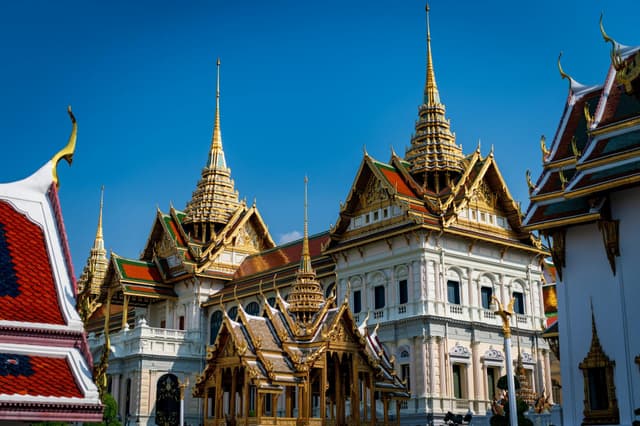
The second day of this trip covers Bangkok's three most significant religious and cultural landmarks, and the order matters. The Grand Palace has served as the official residence of the Kings of Thailand since 1782 and remains the most visited site in the country. Its most sacred structure, Wat Phra Kaew, houses the Emerald Buddha, a statue considered the palladium of the Thai nation. Visiting early in the day, as this itinerary does, meaningfully reduces crowd density and heat exposure, both of which build steadily through the late morning.
From the Grand Palace, Wat Pho is a short walk away. It houses a 46-metre reclining Buddha covered in gold leaf, one of the largest Buddha images in Thailand, and the temple complex is also widely recognized as the birthplace of traditional Thai massage, a tradition that continues at the temple's massage school today. This connects naturally to the massage included on Day 4 of this package.
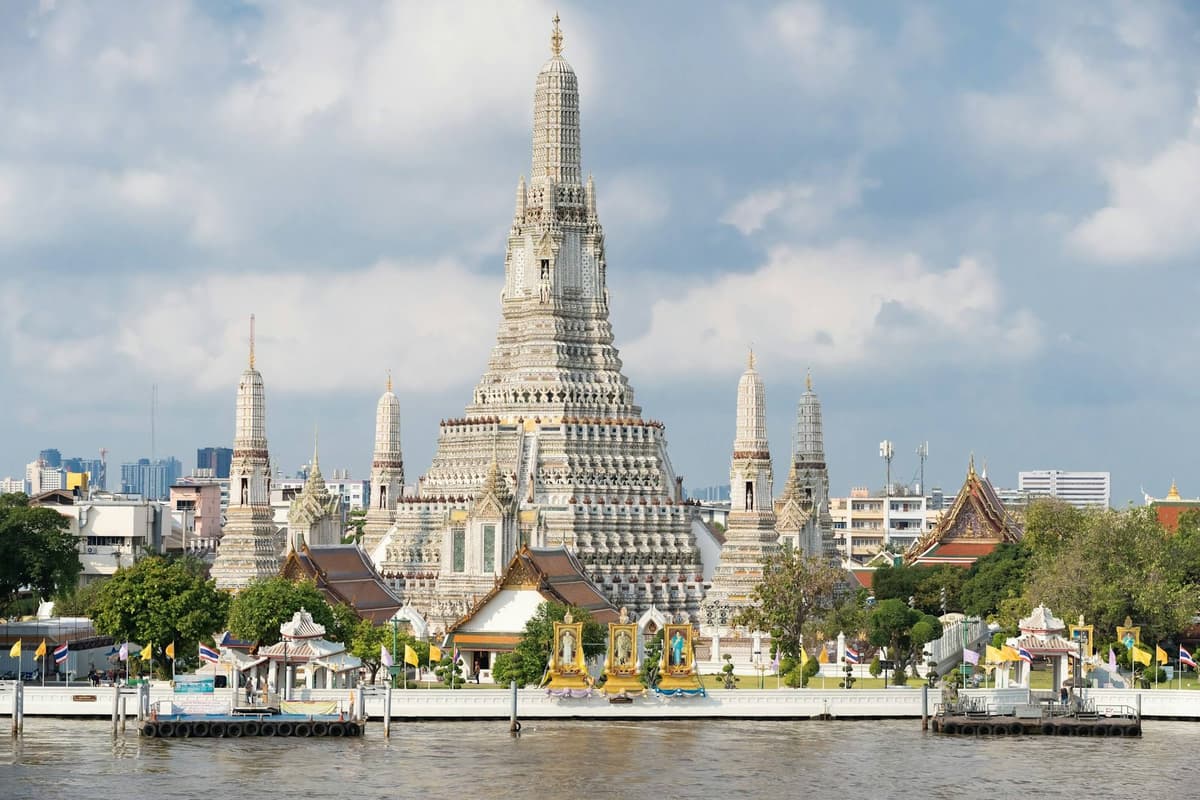
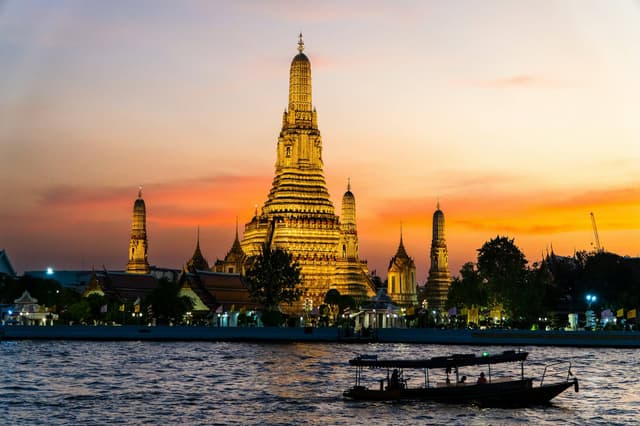
The final stop, Wat Arun, sits directly across the Chao Phraya River and is reached by a short and inexpensive ferry crossing. Its central prang is decorated with porcelain fragments and colored glass that catch the light differently depending on the time of day, making it a popular stop for both sunrise and late-afternoon photography. Returning to the hotel by mid-afternoon, as the itinerary specifies, leaves room to rest before the following day's early start.
Day 3: Floating Markets and the Chao Phraya at Night
Day 3 shifts the focus outside the city entirely. The Maeklong Railway Market, sometimes called the "umbrella pulldown market," is built directly along active train tracks. Several times a day, vendors fold back their awnings and produce stalls within seconds as a train passes through at close range, then reset everything as soon as it clears. It is a brief stop, usually 30 to 45 minutes, but a distinctive one that rarely appears on standard city tours.
From Maeklong, the itinerary continues to Damnoen Saduak, one of Thailand's best-known floating markets. A paddle-boat ride through its canals offers a view of vendors selling fruit, cooked food, and souvenirs directly from boats, a trading style that has continued in this region for generations even as much of Thailand's retail economy has modernized. Because both markets are busiest and coolest in the early morning, this itinerary's early start is intentional and worth keeping to.
The afternoon is left free for Siam Paragon and CentralWorld, two of Bangkok's largest shopping malls, both within the Siam area and well connected by the BTS Skytrain. The day closes with a buffet dinner cruise on the Chao Phraya River, featuring both Indian and international dishes, a detail that matters for many Nepali travelers looking for familiar food options during an otherwise fully Thai-focused day. The cruise passes illuminated riverside landmarks, including Wat Arun lit up at night, offering a different view of a site visited by daylight the day before.
Day 4: Shopping, Rest, and Departure
The final day is deliberately unhurried. Travelers choose between Chatuchak Weekend Market, one of the largest markets in the world with thousands of stalls spanning clothing, antiques, home goods, and food, or Platinum Fashion Mall, which is geared more specifically toward wholesale and retail clothing shopping. Both options suit different priorities: Chatuchak rewards travelers with time to browse, while Platinum is better suited to focused, efficient shopping before an afternoon flight.
A late checkout and a final Thai massage close out the trip before the transfer back to Suvarnabhumi International Airport, giving the itinerary a relaxed finish rather than an abrupt one.
Weather and Best Time to Visit
Bangkok is warm and humid for most of the year, but November through February is generally considered the most comfortable window for a trip built around walking between temples, markets, and malls. Daytime temperatures during this period typically sit in the high 20s to low 30s Celsius with lower humidity than the rest of the year. March through May is the hottest stretch, while the rainy season runs roughly June through October, with short, heavy afternoon downpours that rarely disrupt a full day of sightseeing but are worth planning around for outdoor stops like the floating markets.
Practical Notes for Nepali Travelers
Thai Baht (THB) is the local currency, and exchange counters are widely available at the airport, in hotels, and throughout tourist areas such as Siam and Pratunam, generally at better rates away from the airport itself. English is commonly understood in hotels, malls, and tourist-facing businesses, though it is less consistent at local markets. Modest clothing that covers shoulders and knees is required for entry into the Grand Palace and other temple complexes, so it is worth setting aside an appropriate outfit for Day 2 specifically. A prepaid Thai SIM card or eSIM, available at the airport on arrival, makes navigating between neighborhoods and using ride-hailing apps considerably easier during free-time blocks on Days 1, 3, and 4.
Compare this itinerary with every Thailand tour package from Nepal we run before you decide.
Plan your Thailand trip from Nepal
Before you book, Nepali and NRN travellers should review the Thailand visa for Nepali citizens. For planning, read places to visit in Bangkok and the top markets in Thailand. Compare every itinerary on our Thailand tour packages for Nepali travellers page, or see official visitor information from the Tourism Authority of Thailand.