






































































+977-9768558250
Explore by Country
See all 22 Thailand packages
Most popular pick
See all 22 Thailand packages →
See all 11 Vietnam packages
Most popular pick
See all 11 Vietnam packages →
See all 10 Indonesia (Bali) packages
Most popular pick
See all 10 Indonesia (Bali) packages →
See all 7 Maldives packages
Most popular pick
See all 7 Maldives packages →
See all 10 China packages
Most popular pick
See all 10 China packages →
See all 13 Sri Lanka packages
Most popular pick
See all 13 Sri Lanka packages →
See all 9 Malaysia packages
Most popular pick
See all 9 Malaysia packages →
See all 8 Singapore packages
Most popular pick
See all 8 Singapore packages →
See all 2 Kenya packages
Most popular pick
See all 2 Kenya packages →
See all 16 India packages
Most popular pick
See all 16 India packages →
See all 3 Dubai packages
Most popular pick
See all 3 Dubai packages →
See all 7 Nepal packages
Most popular pick
See all 7 Nepal packages →
See all 6 Philippines packages
Most popular pick
See all 6 Philippines packages →
Search Tours or Places
Blog / Kenya

Kenya from Nepal: Yellow Fever, Transit Routes and Health Prep

29 min read 27 Oct 2026
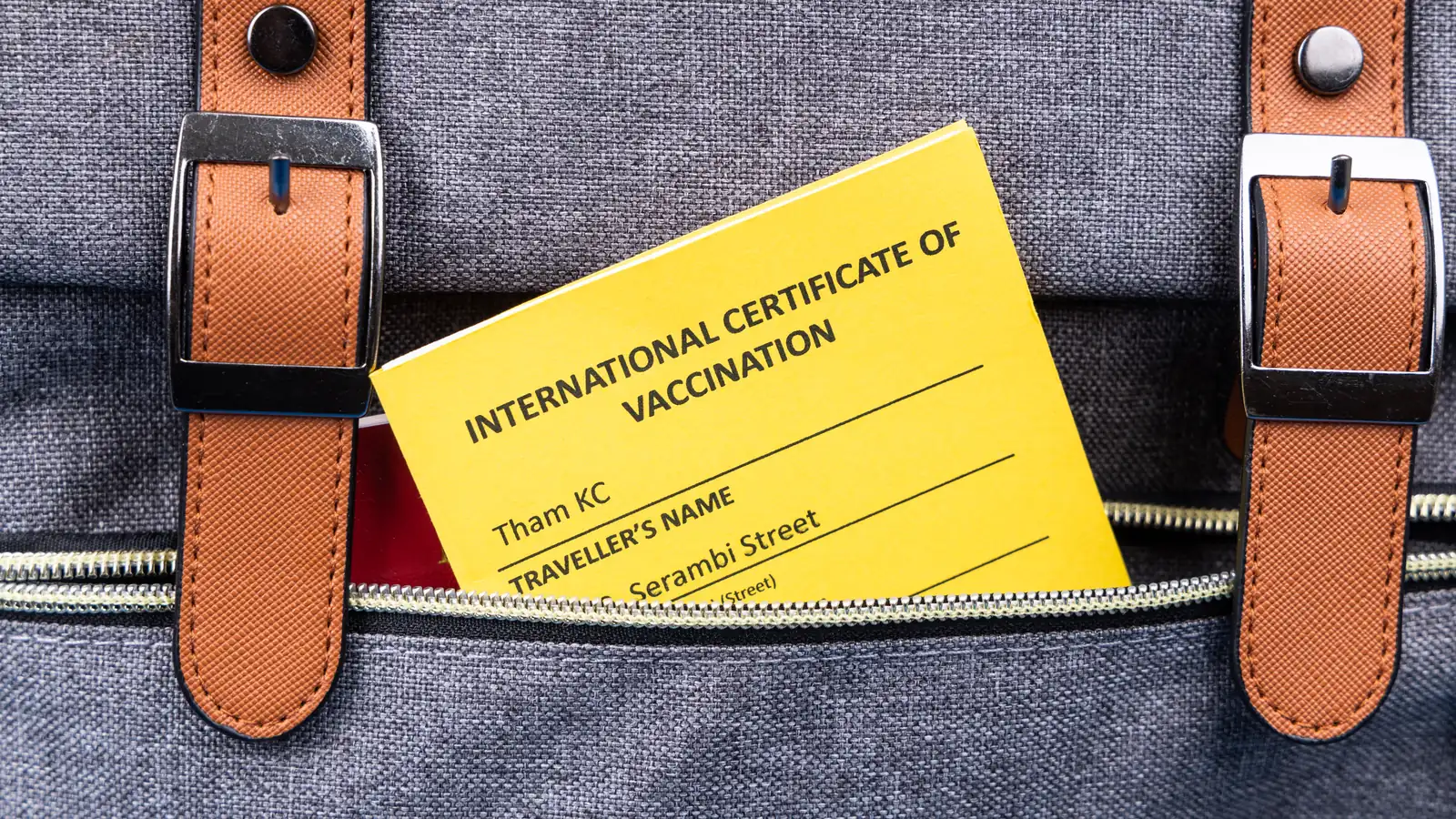
Yellow International Certificate of Vaccination tucked into the front pocket of a travel backpack

Short answer: If you fly from Kathmandu to Kenya through Doha, Dubai, Sharjah, Abu Dhabi or Mumbai, Kenya's own entry rule does not ask you for a yellow fever certificate, because Nepal and those hubs are not yellow fever risk countries. You will still almost certainly want the vaccine. WHO recommends it for travel to most of Kenya, including the Maasai Mara, and Nepal asks for proof of vaccination from travellers arriving from yellow fever risk countries, which Kenya is. So the certificate matters most on the way home. Of all the vaccinations for Kenya, this is the one with a hard deadline: the certificate only becomes valid 10 days after the dose. Talk to your doctor at least a month before you fly.

This guide is written for travellers starting in Nepal, including Nepali families visiting relatives in Nairobi and diaspora travellers routing home through Kathmandu. It covers how your transit airport changes the yellow fever picture, what the "yellow card" is, where to ask about the vaccine in Kathmandu, other vaccines and malaria precautions to raise with a doctor, and the realistic flight routes from Kathmandu to Nairobi. It does not give medical advice. Every rule below is dated and linked to the official source, because health entry rules change and a wrong one can stop you at an airport.

Do you need a yellow fever vaccine for Kenya if you fly from Nepal?

For entry into Kenya, usually not, as long as your route avoids yellow fever risk countries. Kenya requires proof of yellow fever vaccination from travellers aged 1 year or over who arrive from a country with risk of yellow fever transmission. Nepal is not on that list, and neither are Qatar, the United Arab Emirates, India or Türkiye. A traveller who flies Kathmandu to Doha to Nairobi is, under the rule as published, arriving from a country without risk.

That is only half the answer, though. Kenya itself is a country where WHO has found a risk of yellow fever transmission in parts of the country. WHO's recommendation for travellers is separate from Kenya's entry rule: it recommends yellow fever vaccination for all travellers to Kenya aged 9 months or over, except those whose trip is limited to the cities of Nairobi and Mombasa, the former North Eastern Province, and the coastal areas of Kilifi, Kwale, Lamu, Malindi and Tana River. A safari in the Maasai Mara, Amboseli, Lake Nakuru or Samburu sits outside those exceptions.

Then there is the flight home. Nepal requires proof of yellow fever vaccination from travellers aged 9 months or over arriving from countries with risk of yellow fever transmission. Coming back from Kenya puts you in that group. In practice, for almost every holiday from Nepal to Kenya that includes a safari, the sensible plan is to get vaccinated before you leave Kathmandu and carry the certificate both ways.

Rule or recommendationWhat it saysWho set itChecked
Kenya entry requirementProof of yellow fever vaccination for travellers aged 1 year or over arriving from countries with risk of yellow fever transmissionGovernment of Kenya, as published by WHOChecked: 27 Oct 2026, WHO country list, 2022 edition
Kenya Port Health wordingTravellers from a published list of countries are expected to hold valid yellow fever certificates on arrival, and this includes airport transit of 12 hours or more; the list may be updatedKenya Ministry of Health, Port HealthChecked: 27 Oct 2026, Kenya Ministry of Health Port Health page (KAA site)
WHO recommendation for travellers to KenyaVaccination recommended for all travellers aged 9 months or over, except itineraries limited to Nairobi, Mombasa, the former North Eastern Province and the coastal areas of Kilifi, Kwale, Lamu, Malindi and Tana RiverWHOChecked: 27 Oct 2026, WHO country list, 2022 edition
Nepal entry requirement (your return)Proof of yellow fever vaccination for travellers aged 9 months or over arriving from countries with risk of yellow fever transmission, and for those who transited more than 12 hours through an airport in such a countryGovernment of Nepal, as published by WHOChecked: 27 Oct 2026, WHO country list, 2022 edition; UK FCDO Nepal entry requirements
Certificate validityValid from 10 days after vaccination, for the rest of the person's life; boosters cannot be required for entryInternational Health Regulations (2005), Annex 7 as amendedChecked: 27 Oct 2026, WHO Annex 1 (2022); CDC ICVP page

A note on sources. WHO's most recent published country list is the 2022 edition, revised on 3 January 2023, and we found no newer edition on WHO's site on 27 Oct 2026. WHO says countries are consulted each year and that requirements can change at any time, and it tells travellers to confirm with the embassy or consulate of the country they are visiting. Kenya's entry in that list carries a "prior to 2013" date, which is one more reason to check the Kenyan Ministry of Health's own Port Health page as well. For the wider trip, from seasons to parks, start with our Kenya travel guide.

Does a transit stop change the yellow fever rule?

Yes, it can, and this is where travellers from Nepal get caught. Yellow fever entry rules look at where you are arriving from, and many countries also count time spent in transit. The same holiday can need a certificate or not depending on which airport you change planes in, and the rule on the way home is often stricter than the rule on the way out.

Outbound: Kathmandu to Kenya

On the outbound journey, the Gulf and Indian hubs are not yellow fever risk countries, so connecting through them does not trigger Kenya's requirement. The exception is Ethiopia. WHO lists Ethiopia as a country with risk of yellow fever transmission in parts of the country, and Kenya's Port Health page includes Ethiopia on its list of countries and says airport transit of 12 hours or more counts. The page does not spell out how officials treat a short airside connection in Addis Ababa, and you would be arriving on a flight from a listed country, so if you route through Ethiopia, carry the yellow card whatever the layover length. Because there is no non-stop flight from Kathmandu to Addis Ababa, a route through Ethiopia means at least two stops from Nepal, usually Delhi or Mumbai first.

Transit pointWHO yellow fever risk country?That country's own entry ruleEffect on your Kenya arrival
Doha, QatarNoProof required from travellers aged 9 months or over arriving from risk countriesNo certificate needed for Kenya on this basis
Dubai, Sharjah or Abu Dhabi, UAENoProof required from travellers aged 9 months or over arriving from risk countries, including transits over 12 hours in a risk countryNo certificate needed for Kenya on this basis
Mumbai or Delhi, IndiaNoStrict: certificate needed if you arrive within 6 days of leaving a risk country or have been in one in transit (a narrow airport-transit exemption is at the Health Officer's discretion); isolation of up to 6 days without oneNo certificate needed for Kenya on this basis
Istanbul, TürkiyeNoNo yellow fever requirementNo certificate needed for Kenya on this basis
Addis Ababa, EthiopiaYes, in parts of the countryProof required from travellers aged 9 months or over arriving from risk countries, including transits over 12 hoursEthiopia is on Kenya's Port Health list, which counts airport transits of 12 hours or more; carry the yellow card on any Addis routing

Checked: 27 Oct 2026, WHO country list 2022 edition and WHO Annex 1 (2022); Kenya Ministry of Health Port Health page; India's rule from the Ministry of Health and Family Welfare advisory.

The return: why Nepal and India matter more than Kenya

On the way back, you are the traveller arriving from a yellow fever risk country. That changes things at every airport where you enter the country rather than staying airside, and at home.

  • Nepal: proof of vaccination is required from travellers aged 9 months or over arriving from risk countries, and from those who transited more than 12 hours through an airport in one. Do not assume that a last flight from Doha or Dubai means you are "arriving from Qatar". Your passport shows where you have been, and health officials can ask.
  • India: India's rule is the strictest one a Nepali traveller is likely to meet. According to the Ministry of Health and Family Welfare, anyone arriving in India within 6 days of leaving a yellow fever endemic country needs an original, valid certificate, and those without one can be quarantined for up to 6 days. A January 2025 notice from an Indian embassy adds that photocopies, soft copies and QR codes are not accepted, and that travellers who passed through these countries in transit need the card too. If you return via Mumbai or Delhi, even just to connect, carry the original card in your hand luggage.
  • Qatar and the UAE: both list a requirement for travellers arriving from risk countries. If you plan a stopover night in Doha or Dubai on the way home, which means passing immigration, have the card ready.
Return route from NairobiWhere the yellow fever card can be checkedWhat to carry
Nairobi to Doha to KathmanduKathmandu on arrival; Doha only if you enter QatarOriginal yellow card
Nairobi to Dubai, Sharjah or Abu Dhabi to KathmanduKathmandu on arrival; UAE only if you enter the countryOriginal yellow card
Nairobi to Mumbai to KathmanduIndia (transit included under India's rule) and KathmanduOriginal yellow card; copies and QR codes not accepted in India
Nairobi to Addis Ababa to Delhi or Mumbai to KathmanduEthiopia if you enter or stay over 12 hours, India, and KathmanduOriginal yellow card

Checked: 27 Oct 2026, WHO country list 2022 edition; India MoHFW advisory; Embassy of India notice, 20 Jan 2025.

Adding Tanzania or Uganda to a Kenya safari

Many East Africa trips combine Kenya with the Serengeti or with gorilla trekking, so the order of countries matters. Tanzania is not a WHO risk country, but it requires proof of vaccination from travellers aged 1 year or over arriving from risk countries, including transits of more than 12 hours, and Kenya is a risk country. Uganda is a risk country and, in WHO's list, asks for proof from travellers aged 1 year or over arriving from any country. If your plan crosses borders, read our Tanzania travel guide and assume the yellow card is needed at every border. Checked: 27 Oct 2026, WHO country list 2022 edition and WHO Annex 1 (2022).
Explore Kenya tour packages
View all →

What is the yellow card, and what makes it valid?

The "yellow card" is the International Certificate of Vaccination or Prophylaxis, usually shortened to ICVP. It is the format the International Health Regulations (2005) set for recording yellow fever vaccination, which is why border health officials ask for this card rather than a letter or a hospital receipt.

Three details decide whether the card does its job:

  • The 10-day wait. The certificate becomes valid 10 days after the date of vaccination. A dose given a week before departure leaves you with a card that is not yet valid when you land. WHO's fact sheet (20 October 2025) says protective immunity develops in 80 to 100 percent of people within 10 days and in over 99 percent within 30 days.
  • Lifetime validity. Since 11 July 2016, a yellow fever certificate is valid for the life of the person vaccinated, including certificates issued before that date that show a 10-year expiry. Countries cannot demand a booster as a condition of entry. WHO says a single dose gives lifelong immunity for most people. If you were vaccinated years ago for a trip to Africa or South America, find that card before you book a new appointment.
  • Stamp and signature. According to CDC, the card must carry the official stamp of the centre where the vaccine was given and the clinician's handwritten signature; a signature stamp is not acceptable. Your name should match your passport exactly. Check the card before you leave the clinic.

If a doctor decides you should not have the vaccine, for example because of age, pregnancy, a severe egg allergy or a weakened immune system, they can issue a signed and dated medical exemption letter on letterhead. CDC notes that destination countries can decline to accept a waiver, and India's advisory says medical exemptions do not exempt a traveller from quarantine. If you need an exemption, discuss the route with your doctor before you book, not after.

Yellow card questionAnswerSource
When does it become valid?10 days after the vaccination dateChecked: 27 Oct 2026, CDC ICVP page; India MoHFW advisory
How long is it valid?For life, even if the card shows an expiry dateChecked: 27 Oct 2026, WHO Annex 1 (2022); CDC ICVP page
Can a country demand a booster?No, not as a condition of entry under the IHRChecked: 27 Oct 2026, WHO country list 2022 edition
Is a photocopy or phone photo enough?Do not rely on it; India accepts originals onlyChecked: 27 Oct 2026, Embassy of India notice, 20 Jan 2025
What makes it valid on paper?Official centre stamp and handwritten clinician signatureChecked: 27 Oct 2026, CDC ICVP page

Where can you get a yellow fever vaccination in Kathmandu?

Health worker giving an adult man a vaccine injection in the upper arm at a clinic

Ask your doctor first, and confirm with the clinic before you go. We could not find, on 27 Oct 2026, an official Government of Nepal page that publishes a current list of designated yellow fever vaccination centres in Kathmandu, so we are not naming one as official here. Clinic stock and services change, and a list we cannot verify is worse than no list.

What we can say from official pages:

  • The Sukraraj Tropical and Infectious Disease Hospital in Teku, Kathmandu, run under the Ministry of Health and Population, lists a "Travel Medicine" service on its official website. The page does not say whether yellow fever vaccine is available, so call before you go.
  • The Department of Health Services and the Epidemiology and Disease Control Division, both under the Ministry of Health and Population, are the government bodies to ask about vaccination services and international certificates.
  • Private travel clinics in Kathmandu also offer travel vaccines. Whichever clinic you use, ask two questions before you book: is the vaccine in stock on your date, and will they issue a properly stamped International Certificate of Vaccination or Prophylaxis?

Kenya's Ministry of Health says yellow fever vaccine is given at the Port Health clinics in Kenyan airports. That is useful for residents and emergencies, but it is not a substitute for vaccination in Nepal. The certificate would not be valid for 10 days, and you would be in the parks without protection in the meantime. Checked: 27 Oct 2026, Kenya Ministry of Health Port Health page.

How long before travel should you get vaccinated?

The legal minimum for the certificate is 10 days before you need to show it, but plan for about four to eight weeks before departure. That gives time for the doctor's visit, any vaccines that need more than one dose, a malaria discussion, and a buffer if the clinic is out of stock. Our pre-trip checklist works backwards from your departure date in the same way, and Kenya's Ministry of Health itself recommends getting the vaccine 10 days before you travel.

WhenWhat to doWhy
6 to 8 weeks before departureSee a doctor or travel clinic with your full route, including transit airports and any Tanzania or Uganda legsSome vaccines need a course; the route decides which certificates matter
4 to 6 weeks beforeYellow fever dose and any other vaccines your doctor advises; collect the stamped yellow cardLeaves room if stock or side effects delay things
At least 10 days before you need the cardAbsolute latest date for the yellow fever doseThe certificate is only valid from day 10
1 to 2 weeks beforeStart malaria tablets if your doctor prescribes them, as directedSome regimens start before arrival
Day of departureOriginal yellow card in hand luggage, with your passportChecked bags can be delayed; India accepts originals only

Checked: 27 Oct 2026, CDC ICVP page; WHO yellow fever fact sheet (20 Oct 2025); Kenya Ministry of Health Port Health page. Timing beyond the 10-day rule is general planning guidance, not medical advice.

If you are flying in the Dashain and Tihar window, when many Nepali families travel, book the travel clinic appointment before you book the flights. Festival holidays shorten the number of working days you have, and the 10-day rule does not move for public holidays.

Which other vaccinations for Kenya and malaria precautions should you discuss with a doctor?

Yellow fever is the vaccine most likely to be a formal entry condition on this trip (polio can be too, as explained below), but it is not the only health decision for Kenya. Take this list to your doctor as a starting point for the conversation, not as a prescription. The right answer depends on your age, health, vaccination history, the parks you visit and how long you stay.

Vaccine or measureHow it is usually listed for KenyaQuestions to ask your doctor
Yellow feverRecommended by WHO for most itineraries; certificate needed for re-entry to Nepal and some transitsAm I suitable for it? Do I already have a lifetime-valid card?
Routine boosters: tetanus, diphtheria, polioCourses or boosters usually advisedIs my booster up to date?
Hepatitis AUsually advisedDid I have it as a child, or do I need a dose?
Typhoid, hepatitis B, rabies, meningococcal meningitisVaccines to consider, depending on the tripDoes my itinerary or work put me at higher risk?
CholeraOnly for travellers at the highest riskDoes this apply to me?
Malaria preventionBite prevention plus preventive tablets in risk areasWhich tablet, if any, suits my health and my route?

Checked: 27 Oct 2026, NHS fitfortravel Kenya page (the site notes its updates have been paused since 7 October 2025, so ask your doctor about anything newer); WHO country list 2022 edition.

Polio and your return to Nepal

Nepal's entry in WHO's 2022 country list also mentions proof of polio vaccination, recorded in the International Certificate of Vaccination or Prophylaxis, for travellers arriving from a list of countries that included Kenya and Ethiopia at the time. The UK government's Nepal entry advice also lists a polio certificate for travellers coming from certain countries with transmission risk. Polio requirements of this kind follow WHO's temporary recommendations and change more often than yellow fever rules. Ask your doctor whether a polio dose should be recorded on your yellow card, and check the current position before you fly. Checked: 27 Oct 2026, WHO country list 2022 edition; UK FCDO Nepal entry requirements.

Malaria in Kenya: what WHO says

Two beds draped with white mosquito nets in a simple lodge bedroom

Malaria is the bigger day-to-day health risk on most Kenya safaris. WHO describes malaria risk, predominantly from P. falciparum, the most dangerous malaria parasite, as present throughout the year in the entire country, with normally little risk in the city of Nairobi and in the highlands above 2,500 metres. WHO places Kenya in its category C, which means mosquito-bite prevention plus preventive tablets in risk areas, with the drug chosen according to resistance patterns, side effects and the traveller's health. Which drug, and whether you need one at all, is a decision for your doctor.

Where in KenyaMalaria pictureWhat to raise with your doctor
Nairobi cityNormally little riskWhether a city-only trip needs tablets at all
Highlands above 2,500 mNormally little riskWhether your lodges are really above that altitude
Maasai Mara, Amboseli, Lake Nakuru, Samburu and other parksRisk present throughout the yearPreventive tablets, and how to start and finish them
Mombasa and the coastRisk present throughout the yearPreventive tablets for a beach extension

Checked: 27 Oct 2026, WHO country list 2022 edition (Kenya malaria entry, category C).

Whatever your doctor decides, bite prevention still matters. Use repellent on exposed skin, cover up from dusk, and sleep under a net where the lodge provides one. The mosquitoes that spread yellow fever bite mainly by day, according to WHO, so repellent is a daytime habit too. If you develop a fever after you come home, even weeks later, see a doctor and say you have been to Kenya. WHO describes Nepal's own malaria risk as mostly P. vivax, in the inner Terai and the far west, which is a different picture from Kenya, so experience at home is not a guide. For general safety on the ground, see our post on whether Kenya is safe to visit.

Elderly parents, children and pregnancy

These groups need the doctor's conversation most. WHO's fact sheet says the yellow fever vaccine is generally not given to infants under 9 months, to pregnant women except during outbreaks, to people with severe egg allergy, or to people with severe immune deficiency or thymus disorders, and that people over 60 need a careful assessment of risks and benefits. Kenya's entry rule applies from age 1 year, while Nepal's and India's apply from 9 months. If you are travelling with a baby or with parents in their sixties or seventies, raise the full route with the doctor early, because a medical exemption letter may help with some authorities but, as India's advisory makes clear, not with all of them.

How do you fly from Kathmandu to Nairobi?

Nairobi city skyline with high rise buildings above green trees in Kenya

There is no non-stop flight from Kathmandu to Nairobi, so every route needs at least one connection. The practical one-stop routes go through the Gulf: Doha, Dubai, Sharjah or Abu Dhabi, each with a non-stop flight from Kathmandu and a non-stop flight to Nairobi. Mumbai and Istanbul also connect, with different trade-offs, and Addis Ababa needs a second stop. Kenya runs on UTC+3, which is 2 hours 45 minutes behind Nepal, so set your watch back when you land. Our hub on direct flights from Kathmandu lists every non-stop route from Tribhuvan International Airport.

RouteFirst leg from Kathmandu (airlines)Second leg to NairobiApproximate flying timeYellow fever note
Via Doha (DOH)Qatar Airways, Himalaya Airlines, Nepal Airlines; about 5 hAbout 5 h 10 min; Qatar Airways sells Kathmandu to Nairobi via DohaAbout 10 h plus the connectionNot a risk country
Via Dubai (DXB)flydubai, Himalaya Airlines, Nepal Airlines; about 4 h 40 minAbout 5 h 05 min; flydubai and Emirates itineraries appear via DubaiAbout 9 h 45 min plus the connectionNot a risk country
Via Sharjah (SHJ)Air Arabia; about 4 h 25 minNon-stop service to Nairobi listed; Air Arabia itineraries appearShortest itineraries seen were about 11 h 20 min in total, connection includedNot a risk country
Via Abu Dhabi (AUH)Air Arabia Abu Dhabi; about 4 h 40 minNon-stop service to Nairobi listed; check which airline operates it on your dateVaries by connectionNot a risk country
Via Mumbai (BOM)IndiGo, Nepal Airlines; about 2 h 45 minNon-stop service to Nairobi listed; IndiGo itineraries appearMany itineraries seen were about 17 h in total, connection includedNot a risk country, but India's strict rule applies on the way home
Via Istanbul (IST)Turkish Airlines; about 8 hNon-stop service to Nairobi listedLong first leg; rarely the quickest optionNot a risk country
Via Delhi or Mumbai and Addis Ababa (ADD)Air India, IndiGo or Nepal Airlines to India firstAddis Ababa to Nairobi non-stop listedTwo stops; longEthiopia is a risk country; a transit of 12 hours or more counts for Kenya

Checked: 27 Oct 2026, FlightConnections Nairobi airport page, FlightConnections Kathmandu airport page and Addis Ababa airport page; Qatar Airways Kathmandu to Nairobi page; leg times from Gomayu's direct flights hub (checked 8 Oct 2026); total journey times from booking-site itinerary listings on 27 Oct 2026. Flying times are approximate scheduled times and exclude the connection unless stated. Routes and operating airlines change by season, so confirm on the airline's site.

Which route is quickest?

The Gulf routes are usually quickest, because both legs are around four and a half to five hours and the hubs are built for connections. Doha and Dubai give roughly 10 hours of flying in total. What decides the real journey time is the connection: a well-timed transfer of two or three hours keeps the trip to around half a day, while a poor one can stretch it past 20 hours. Look at total journey time, not just the first leg. Delhi has no non-stop flight to Nairobi on current listings, so a route through Delhi needs a second stop.

Choosing a route with yellow fever in mind

  • For the outbound journey, any Gulf or Indian connection keeps you clear of Kenya's yellow fever entry rule. WHO still recommends the vaccine for most safaris, and Nepal will still ask on your return.
  • For the return journey, a Gulf connection is simpler than an Indian one, because India's rule applies to anyone arriving within 6 days of leaving a risk country and allows isolation of up to 6 days. If you must route through Mumbai or Delhi on the way home, the original yellow card is not optional.
  • If you route through Addis Ababa, carry the original yellow card whatever the length of the layover.
  • If you want a break in the journey, a night in the Gulf is the easiest option. Our Dubai stopover guide covers how that works, and remember that entering the UAE on the way home means its yellow fever rule applies to you.

Before departure day, read our Kathmandu airport international departure guide so the Nepal side of the journey goes smoothly.

What documents should you carry on arrival?

Carry your passport, your approved Kenya travel authorisation, your original yellow card and your return or onward ticket in your hand luggage, not in a checked bag. Kenya's official eTA site states that all travellers to Kenya must submit information before departure, through the Kenya Electronic Travel Authorisation (eTA). For whether your passport needs one and how our team helps Nepali passport holders, see our Kenya visa and eTA guidance. If you hold a different passport, check the official eTA site for your nationality.

DocumentWhy you need itTip
PassportEntry to Kenya and every transit countryCheck its validity and blank pages well before booking
Kenya eTA approvalKenya's travel authorisation for visitorsCheck eligibility for your passport before booking flights
Yellow card (ICVP), originalKenya if your route triggers it, India on transit home, and Nepal on returnHand luggage only; keep a photo too, but do not rely on it
Doctor's exemption letter, if anyOnly if you were advised not to have the vaccineSigned, dated, on letterhead; not every country accepts it
Prescriptions for malaria tablets and other medicinesQuestions at security or customsKeep medicines in original packaging
Travel insurance policy with emergency numberMedical care or evacuation from a remote parkCheck that safari activities are covered

Kenya's Port Health page lists the countries whose arriving passengers are screened for yellow fever, Ethiopia and Uganda among them, so have the card in the same pouch as your passport rather than packed away. For cover that includes medical evacuation from a game park, see our guide to travel insurance from Nepal.

What should you check again before you fly?

Re-check the rules in the last two weeks before departure, because they can change between booking and flying. WHO's country list is updated only occasionally, Kenya's Port Health list "may be updated according to the prevailing disease patterns", and India adds countries to its list when a case is reported, according to WHO's summary of India's rule. A five-minute check against official sources beats days in a quarantine room.

  • Kenya: the Ministry of Health Port Health page and the official eTA site.
  • Every transit country: its yellow fever rule for the outbound and return legs, especially India if you connect through Mumbai or Delhi.
  • Nepal: the requirement for arrivals from yellow fever risk countries, and whether a polio record is currently needed.
  • Your airline: any document checks it applies at check-in for your route.
  • Outbreak news: WHO's travel advice pages for any new yellow fever or other outbreak along your route.
  • Your yellow card: name matches passport, stamp and signature present, vaccination date at least 10 days before you need it.
ItemOfficial place to checkWhen
Kenya yellow fever listKenya Ministry of Health Port Health pageWhen booking and 1 to 2 weeks before departure
Kenya eTAetakenya.go.ke and our Kenya visa team pageWhen booking
Nepal arrival ruleWHO country list and Nepal's Ministry of Health and PopulationBefore booking the return route
India transit ruleIndia Ministry of Health and Family WelfareOnly if returning via India
Vaccines and malariaYour doctor or travel clinic6 to 8 weeks before departure

Checked: 27 Oct 2026, WHO country list 2022 edition; Kenya Ministry of Health Port Health page; etakenya.go.ke; India MoHFW advisory.

Once the health side is settled, the fun part is the plan. Our sample Kenya itineraries show how many nights the Mara and Amboseli need, the Maasai Mara safari guide covers the reserve itself, and the best time to visit Kenya explains the migration window and the rains. If you are still comparing countries, Kenya features in our list of the best travel destinations for Nepalese travellers. When you are ready to see how a trip fits together, browse our Kenya tour packages.

Frequently asked questions

Is yellow fever vaccination required for Kenya?

Kenya requires a yellow fever certificate from travellers aged 1 year or over arriving from countries with risk of yellow fever transmission. Travellers flying from Nepal through Doha, Dubai or Mumbai usually do not meet that condition. WHO still recommends the vaccine for most Kenya itineraries, and Nepal asks for proof when you return from Kenya. Checked: 27 Oct 2026, WHO country list 2022 edition.

Is the yellow fever certificate valid for life?

Yes. Since 11 July 2016, a yellow fever certificate is valid for the life of the person vaccinated, including older cards that show a 10-year expiry date. Countries cannot require a booster as a condition of entry. The certificate only becomes valid 10 days after the vaccination date. Checked: 27 Oct 2026, WHO Annex 1 (2022) and CDC ICVP page.

Where can I get the yellow fever vaccine in Kathmandu?

Ask your doctor or a travel clinic, and call ahead to confirm stock. We found no official, current Government of Nepal list of designated centres on 27 Oct 2026. Sukraraj Tropical and Infectious Disease Hospital in Teku lists a travel medicine service; the Department of Health Services can advise on international certificates.

What if my flight connects in Ethiopia?

Ethiopia is a yellow fever risk country in WHO's list, and Kenya's Ministry of Health counts an airport transit of 12 hours or more there. Kenya's page does not spell out how a short airside connection is treated, so carry the original yellow card on any Addis routing. From Kathmandu, Addis routes need two stops. Checked: 27 Oct 2026, Kenya Port Health page.

How many days before travel must I be vaccinated?

The yellow fever certificate becomes valid 10 days after vaccination, so that is the absolute minimum before you need to show it. For a Kenya trip from Nepal, see a doctor six to eight weeks ahead, so there is time for other vaccines, malaria advice and any stock problems at the clinic. Checked: 27 Oct 2026, CDC ICVP page.

Do children need the yellow fever vaccine?

Kenya's rule applies from age 1 year, while Nepal's and India's rules apply from 9 months. WHO says the vaccine is generally not given to babies under 9 months. If you are taking young children to Kenya, discuss the whole route, including the return to Kathmandu, with a doctor before booking. Checked: 27 Oct 2026, WHO country list and fact sheet.

Is there a direct flight from Kathmandu to Nairobi?

No. There is no non-stop flight from Kathmandu to Nairobi, so every route to Kenya needs at least one connection. The usual one-stop hubs are Doha, Dubai, Sharjah and Abu Dhabi, with Mumbai and Istanbul as other options. Checked: 27 Oct 2026, FlightConnections Kathmandu and Nairobi airport pages.

Which route from Kathmandu to Nairobi is quickest?

A Gulf connection through Doha or Dubai is usually quickest, at roughly 10 hours of flying plus the connection, because each leg is about four and a half to five hours. The connection time decides the real total, so compare total journey times rather than the first leg. Checked: 27 Oct 2026, FlightConnections and Qatar Airways route pages.

Do I need malaria tablets for the Masai Mara?

Ask your doctor. WHO says malaria risk exists throughout the year across Kenya, with normally little risk only in Nairobi city and the highlands above 2,500 metres, and recommends bite prevention plus preventive tablets in risk areas. The Maasai Mara is a risk area, but the choice of tablet, if any, is a medical decision. Checked: 27 Oct 2026, WHO country list.

Do I need a Kenya eTA?

Kenya's official eTA site says all travellers must submit information before departure, through the Kenya Electronic Travel Authorisation. For what it means for Nepali passport holders, see our Kenya visa and eTA guidance. Other passports should check the official eTA site. Checked: 27 Oct 2026, etakenya.go.ke.

Kenya jana yellow fever khop lagaunu parcha?

Kathmandu bata Doha wa Dubai hudai Kenya janda Kenya le sadharantaya certificate maagdaina, tara Masai Mara jasto thau ko lagi WHO le khop siphaaris garcha, ra Kenya bata Nepal pharkanda Nepal le yellow fever certificate maagcha. Tesaile jaane bhanda kamti ma 10 din agadi khop lagaunus ra doctor sanga salah linus. (In English: Kenya usually does not ask for the certificate on a Gulf route from Nepal, but WHO recommends the vaccine and Nepal asks for it on your return, so get it at least 10 days before travel after talking to a doctor.)


Tags
Kenya
Share
G
Gomayu Team
Writer at Gomayu
Keep reading
Blog / Kenya
Kenya from Nepal: Yellow Fever, Transit Routes and Health Prep
29 min read 27 Oct 2026
Yellow International Certificate of Vaccination tucked into the front pocket of a travel backpack

Short answer: If you fly from Kathmandu to Kenya through Doha, Dubai, Sharjah, Abu Dhabi or Mumbai, Kenya's own entry rule does not ask you for a yellow fever certificate, because Nepal and those hubs are not yellow fever risk countries. You will still almost certainly want the vaccine. WHO recommends it for travel to most of Kenya, including the Maasai Mara, and Nepal asks for proof of vaccination from travellers arriving from yellow fever risk countries, which Kenya is. So the certificate matters most on the way home. Of all the vaccinations for Kenya, this is the one with a hard deadline: the certificate only becomes valid 10 days after the dose. Talk to your doctor at least a month before you fly.

This guide is written for travellers starting in Nepal, including Nepali families visiting relatives in Nairobi and diaspora travellers routing home through Kathmandu. It covers how your transit airport changes the yellow fever picture, what the "yellow card" is, where to ask about the vaccine in Kathmandu, other vaccines and malaria precautions to raise with a doctor, and the realistic flight routes from Kathmandu to Nairobi. It does not give medical advice. Every rule below is dated and linked to the official source, because health entry rules change and a wrong one can stop you at an airport.

Do you need a yellow fever vaccine for Kenya if you fly from Nepal?

For entry into Kenya, usually not, as long as your route avoids yellow fever risk countries. Kenya requires proof of yellow fever vaccination from travellers aged 1 year or over who arrive from a country with risk of yellow fever transmission. Nepal is not on that list, and neither are Qatar, the United Arab Emirates, India or Türkiye. A traveller who flies Kathmandu to Doha to Nairobi is, under the rule as published, arriving from a country without risk.

That is only half the answer, though. Kenya itself is a country where WHO has found a risk of yellow fever transmission in parts of the country. WHO's recommendation for travellers is separate from Kenya's entry rule: it recommends yellow fever vaccination for all travellers to Kenya aged 9 months or over, except those whose trip is limited to the cities of Nairobi and Mombasa, the former North Eastern Province, and the coastal areas of Kilifi, Kwale, Lamu, Malindi and Tana River. A safari in the Maasai Mara, Amboseli, Lake Nakuru or Samburu sits outside those exceptions.

Then there is the flight home. Nepal requires proof of yellow fever vaccination from travellers aged 9 months or over arriving from countries with risk of yellow fever transmission. Coming back from Kenya puts you in that group. In practice, for almost every holiday from Nepal to Kenya that includes a safari, the sensible plan is to get vaccinated before you leave Kathmandu and carry the certificate both ways.

Rule or recommendationWhat it saysWho set itChecked
Kenya entry requirementProof of yellow fever vaccination for travellers aged 1 year or over arriving from countries with risk of yellow fever transmissionGovernment of Kenya, as published by WHOChecked: 27 Oct 2026, WHO country list, 2022 edition
Kenya Port Health wordingTravellers from a published list of countries are expected to hold valid yellow fever certificates on arrival, and this includes airport transit of 12 hours or more; the list may be updatedKenya Ministry of Health, Port HealthChecked: 27 Oct 2026, Kenya Ministry of Health Port Health page (KAA site)
WHO recommendation for travellers to KenyaVaccination recommended for all travellers aged 9 months or over, except itineraries limited to Nairobi, Mombasa, the former North Eastern Province and the coastal areas of Kilifi, Kwale, Lamu, Malindi and Tana RiverWHOChecked: 27 Oct 2026, WHO country list, 2022 edition
Nepal entry requirement (your return)Proof of yellow fever vaccination for travellers aged 9 months or over arriving from countries with risk of yellow fever transmission, and for those who transited more than 12 hours through an airport in such a countryGovernment of Nepal, as published by WHOChecked: 27 Oct 2026, WHO country list, 2022 edition; UK FCDO Nepal entry requirements
Certificate validityValid from 10 days after vaccination, for the rest of the person's life; boosters cannot be required for entryInternational Health Regulations (2005), Annex 7 as amendedChecked: 27 Oct 2026, WHO Annex 1 (2022); CDC ICVP page

A note on sources. WHO's most recent published country list is the 2022 edition, revised on 3 January 2023, and we found no newer edition on WHO's site on 27 Oct 2026. WHO says countries are consulted each year and that requirements can change at any time, and it tells travellers to confirm with the embassy or consulate of the country they are visiting. Kenya's entry in that list carries a "prior to 2013" date, which is one more reason to check the Kenyan Ministry of Health's own Port Health page as well. For the wider trip, from seasons to parks, start with our Kenya travel guide.

Does a transit stop change the yellow fever rule?

Yes, it can, and this is where travellers from Nepal get caught. Yellow fever entry rules look at where you are arriving from, and many countries also count time spent in transit. The same holiday can need a certificate or not depending on which airport you change planes in, and the rule on the way home is often stricter than the rule on the way out.

Outbound: Kathmandu to Kenya

On the outbound journey, the Gulf and Indian hubs are not yellow fever risk countries, so connecting through them does not trigger Kenya's requirement. The exception is Ethiopia. WHO lists Ethiopia as a country with risk of yellow fever transmission in parts of the country, and Kenya's Port Health page includes Ethiopia on its list of countries and says airport transit of 12 hours or more counts. The page does not spell out how officials treat a short airside connection in Addis Ababa, and you would be arriving on a flight from a listed country, so if you route through Ethiopia, carry the yellow card whatever the layover length. Because there is no non-stop flight from Kathmandu to Addis Ababa, a route through Ethiopia means at least two stops from Nepal, usually Delhi or Mumbai first.

Transit pointWHO yellow fever risk country?That country's own entry ruleEffect on your Kenya arrival
Doha, QatarNoProof required from travellers aged 9 months or over arriving from risk countriesNo certificate needed for Kenya on this basis
Dubai, Sharjah or Abu Dhabi, UAENoProof required from travellers aged 9 months or over arriving from risk countries, including transits over 12 hours in a risk countryNo certificate needed for Kenya on this basis
Mumbai or Delhi, IndiaNoStrict: certificate needed if you arrive within 6 days of leaving a risk country or have been in one in transit (a narrow airport-transit exemption is at the Health Officer's discretion); isolation of up to 6 days without oneNo certificate needed for Kenya on this basis
Istanbul, TürkiyeNoNo yellow fever requirementNo certificate needed for Kenya on this basis
Addis Ababa, EthiopiaYes, in parts of the countryProof required from travellers aged 9 months or over arriving from risk countries, including transits over 12 hoursEthiopia is on Kenya's Port Health list, which counts airport transits of 12 hours or more; carry the yellow card on any Addis routing

Checked: 27 Oct 2026, WHO country list 2022 edition and WHO Annex 1 (2022); Kenya Ministry of Health Port Health page; India's rule from the Ministry of Health and Family Welfare advisory.

The return: why Nepal and India matter more than Kenya

On the way back, you are the traveller arriving from a yellow fever risk country. That changes things at every airport where you enter the country rather than staying airside, and at home.

  • Nepal: proof of vaccination is required from travellers aged 9 months or over arriving from risk countries, and from those who transited more than 12 hours through an airport in one. Do not assume that a last flight from Doha or Dubai means you are "arriving from Qatar". Your passport shows where you have been, and health officials can ask.
  • India: India's rule is the strictest one a Nepali traveller is likely to meet. According to the Ministry of Health and Family Welfare, anyone arriving in India within 6 days of leaving a yellow fever endemic country needs an original, valid certificate, and those without one can be quarantined for up to 6 days. A January 2025 notice from an Indian embassy adds that photocopies, soft copies and QR codes are not accepted, and that travellers who passed through these countries in transit need the card too. If you return via Mumbai or Delhi, even just to connect, carry the original card in your hand luggage.
  • Qatar and the UAE: both list a requirement for travellers arriving from risk countries. If you plan a stopover night in Doha or Dubai on the way home, which means passing immigration, have the card ready.
Return route from NairobiWhere the yellow fever card can be checkedWhat to carry
Nairobi to Doha to KathmanduKathmandu on arrival; Doha only if you enter QatarOriginal yellow card
Nairobi to Dubai, Sharjah or Abu Dhabi to KathmanduKathmandu on arrival; UAE only if you enter the countryOriginal yellow card
Nairobi to Mumbai to KathmanduIndia (transit included under India's rule) and KathmanduOriginal yellow card; copies and QR codes not accepted in India
Nairobi to Addis Ababa to Delhi or Mumbai to KathmanduEthiopia if you enter or stay over 12 hours, India, and KathmanduOriginal yellow card

Checked: 27 Oct 2026, WHO country list 2022 edition; India MoHFW advisory; Embassy of India notice, 20 Jan 2025.

Adding Tanzania or Uganda to a Kenya safari

Many East Africa trips combine Kenya with the Serengeti or with gorilla trekking, so the order of countries matters. Tanzania is not a WHO risk country, but it requires proof of vaccination from travellers aged 1 year or over arriving from risk countries, including transits of more than 12 hours, and Kenya is a risk country. Uganda is a risk country and, in WHO's list, asks for proof from travellers aged 1 year or over arriving from any country. If your plan crosses borders, read our Tanzania travel guide and assume the yellow card is needed at every border. Checked: 27 Oct 2026, WHO country list 2022 edition and WHO Annex 1 (2022).

Explore Kenya tour packages
View all →

What is the yellow card, and what makes it valid?

The "yellow card" is the International Certificate of Vaccination or Prophylaxis, usually shortened to ICVP. It is the format the International Health Regulations (2005) set for recording yellow fever vaccination, which is why border health officials ask for this card rather than a letter or a hospital receipt.

Three details decide whether the card does its job:

  • The 10-day wait. The certificate becomes valid 10 days after the date of vaccination. A dose given a week before departure leaves you with a card that is not yet valid when you land. WHO's fact sheet (20 October 2025) says protective immunity develops in 80 to 100 percent of people within 10 days and in over 99 percent within 30 days.
  • Lifetime validity. Since 11 July 2016, a yellow fever certificate is valid for the life of the person vaccinated, including certificates issued before that date that show a 10-year expiry. Countries cannot demand a booster as a condition of entry. WHO says a single dose gives lifelong immunity for most people. If you were vaccinated years ago for a trip to Africa or South America, find that card before you book a new appointment.
  • Stamp and signature. According to CDC, the card must carry the official stamp of the centre where the vaccine was given and the clinician's handwritten signature; a signature stamp is not acceptable. Your name should match your passport exactly. Check the card before you leave the clinic.

If a doctor decides you should not have the vaccine, for example because of age, pregnancy, a severe egg allergy or a weakened immune system, they can issue a signed and dated medical exemption letter on letterhead. CDC notes that destination countries can decline to accept a waiver, and India's advisory says medical exemptions do not exempt a traveller from quarantine. If you need an exemption, discuss the route with your doctor before you book, not after.

Yellow card questionAnswerSource
When does it become valid?10 days after the vaccination dateChecked: 27 Oct 2026, CDC ICVP page; India MoHFW advisory
How long is it valid?For life, even if the card shows an expiry dateChecked: 27 Oct 2026, WHO Annex 1 (2022); CDC ICVP page
Can a country demand a booster?No, not as a condition of entry under the IHRChecked: 27 Oct 2026, WHO country list 2022 edition
Is a photocopy or phone photo enough?Do not rely on it; India accepts originals onlyChecked: 27 Oct 2026, Embassy of India notice, 20 Jan 2025
What makes it valid on paper?Official centre stamp and handwritten clinician signatureChecked: 27 Oct 2026, CDC ICVP page

Where can you get a yellow fever vaccination in Kathmandu?

Health worker giving an adult man a vaccine injection in the upper arm at a clinic

Ask your doctor first, and confirm with the clinic before you go. We could not find, on 27 Oct 2026, an official Government of Nepal page that publishes a current list of designated yellow fever vaccination centres in Kathmandu, so we are not naming one as official here. Clinic stock and services change, and a list we cannot verify is worse than no list.

What we can say from official pages:

  • The Sukraraj Tropical and Infectious Disease Hospital in Teku, Kathmandu, run under the Ministry of Health and Population, lists a "Travel Medicine" service on its official website. The page does not say whether yellow fever vaccine is available, so call before you go.
  • The Department of Health Services and the Epidemiology and Disease Control Division, both under the Ministry of Health and Population, are the government bodies to ask about vaccination services and international certificates.
  • Private travel clinics in Kathmandu also offer travel vaccines. Whichever clinic you use, ask two questions before you book: is the vaccine in stock on your date, and will they issue a properly stamped International Certificate of Vaccination or Prophylaxis?

Kenya's Ministry of Health says yellow fever vaccine is given at the Port Health clinics in Kenyan airports. That is useful for residents and emergencies, but it is not a substitute for vaccination in Nepal. The certificate would not be valid for 10 days, and you would be in the parks without protection in the meantime. Checked: 27 Oct 2026, Kenya Ministry of Health Port Health page.

How long before travel should you get vaccinated?

The legal minimum for the certificate is 10 days before you need to show it, but plan for about four to eight weeks before departure. That gives time for the doctor's visit, any vaccines that need more than one dose, a malaria discussion, and a buffer if the clinic is out of stock. Our pre-trip checklist works backwards from your departure date in the same way, and Kenya's Ministry of Health itself recommends getting the vaccine 10 days before you travel.

WhenWhat to doWhy
6 to 8 weeks before departureSee a doctor or travel clinic with your full route, including transit airports and any Tanzania or Uganda legsSome vaccines need a course; the route decides which certificates matter
4 to 6 weeks beforeYellow fever dose and any other vaccines your doctor advises; collect the stamped yellow cardLeaves room if stock or side effects delay things
At least 10 days before you need the cardAbsolute latest date for the yellow fever doseThe certificate is only valid from day 10
1 to 2 weeks beforeStart malaria tablets if your doctor prescribes them, as directedSome regimens start before arrival
Day of departureOriginal yellow card in hand luggage, with your passportChecked bags can be delayed; India accepts originals only

Checked: 27 Oct 2026, CDC ICVP page; WHO yellow fever fact sheet (20 Oct 2025); Kenya Ministry of Health Port Health page. Timing beyond the 10-day rule is general planning guidance, not medical advice.

If you are flying in the Dashain and Tihar window, when many Nepali families travel, book the travel clinic appointment before you book the flights. Festival holidays shorten the number of working days you have, and the 10-day rule does not move for public holidays.

Which other vaccinations for Kenya and malaria precautions should you discuss with a doctor?

Yellow fever is the vaccine most likely to be a formal entry condition on this trip (polio can be too, as explained below), but it is not the only health decision for Kenya. Take this list to your doctor as a starting point for the conversation, not as a prescription. The right answer depends on your age, health, vaccination history, the parks you visit and how long you stay.

Vaccine or measureHow it is usually listed for KenyaQuestions to ask your doctor
Yellow feverRecommended by WHO for most itineraries; certificate needed for re-entry to Nepal and some transitsAm I suitable for it? Do I already have a lifetime-valid card?
Routine boosters: tetanus, diphtheria, polioCourses or boosters usually advisedIs my booster up to date?
Hepatitis AUsually advisedDid I have it as a child, or do I need a dose?
Typhoid, hepatitis B, rabies, meningococcal meningitisVaccines to consider, depending on the tripDoes my itinerary or work put me at higher risk?
CholeraOnly for travellers at the highest riskDoes this apply to me?
Malaria preventionBite prevention plus preventive tablets in risk areasWhich tablet, if any, suits my health and my route?

Checked: 27 Oct 2026, NHS fitfortravel Kenya page (the site notes its updates have been paused since 7 October 2025, so ask your doctor about anything newer); WHO country list 2022 edition.

Polio and your return to Nepal

Nepal's entry in WHO's 2022 country list also mentions proof of polio vaccination, recorded in the International Certificate of Vaccination or Prophylaxis, for travellers arriving from a list of countries that included Kenya and Ethiopia at the time. The UK government's Nepal entry advice also lists a polio certificate for travellers coming from certain countries with transmission risk. Polio requirements of this kind follow WHO's temporary recommendations and change more often than yellow fever rules. Ask your doctor whether a polio dose should be recorded on your yellow card, and check the current position before you fly. Checked: 27 Oct 2026, WHO country list 2022 edition; UK FCDO Nepal entry requirements.

Malaria in Kenya: what WHO says

Two beds draped with white mosquito nets in a simple lodge bedroom

Malaria is the bigger day-to-day health risk on most Kenya safaris. WHO describes malaria risk, predominantly from P. falciparum, the most dangerous malaria parasite, as present throughout the year in the entire country, with normally little risk in the city of Nairobi and in the highlands above 2,500 metres. WHO places Kenya in its category C, which means mosquito-bite prevention plus preventive tablets in risk areas, with the drug chosen according to resistance patterns, side effects and the traveller's health. Which drug, and whether you need one at all, is a decision for your doctor.

Where in KenyaMalaria pictureWhat to raise with your doctor
Nairobi cityNormally little riskWhether a city-only trip needs tablets at all
Highlands above 2,500 mNormally little riskWhether your lodges are really above that altitude
Maasai Mara, Amboseli, Lake Nakuru, Samburu and other parksRisk present throughout the yearPreventive tablets, and how to start and finish them
Mombasa and the coastRisk present throughout the yearPreventive tablets for a beach extension

Checked: 27 Oct 2026, WHO country list 2022 edition (Kenya malaria entry, category C).

Whatever your doctor decides, bite prevention still matters. Use repellent on exposed skin, cover up from dusk, and sleep under a net where the lodge provides one. The mosquitoes that spread yellow fever bite mainly by day, according to WHO, so repellent is a daytime habit too. If you develop a fever after you come home, even weeks later, see a doctor and say you have been to Kenya. WHO describes Nepal's own malaria risk as mostly P. vivax, in the inner Terai and the far west, which is a different picture from Kenya, so experience at home is not a guide. For general safety on the ground, see our post on whether Kenya is safe to visit.

Elderly parents, children and pregnancy

These groups need the doctor's conversation most. WHO's fact sheet says the yellow fever vaccine is generally not given to infants under 9 months, to pregnant women except during outbreaks, to people with severe egg allergy, or to people with severe immune deficiency or thymus disorders, and that people over 60 need a careful assessment of risks and benefits. Kenya's entry rule applies from age 1 year, while Nepal's and India's apply from 9 months. If you are travelling with a baby or with parents in their sixties or seventies, raise the full route with the doctor early, because a medical exemption letter may help with some authorities but, as India's advisory makes clear, not with all of them.

How do you fly from Kathmandu to Nairobi?

Nairobi city skyline with high rise buildings above green trees in Kenya

There is no non-stop flight from Kathmandu to Nairobi, so every route needs at least one connection. The practical one-stop routes go through the Gulf: Doha, Dubai, Sharjah or Abu Dhabi, each with a non-stop flight from Kathmandu and a non-stop flight to Nairobi. Mumbai and Istanbul also connect, with different trade-offs, and Addis Ababa needs a second stop. Kenya runs on UTC+3, which is 2 hours 45 minutes behind Nepal, so set your watch back when you land. Our hub on direct flights from Kathmandu lists every non-stop route from Tribhuvan International Airport.

RouteFirst leg from Kathmandu (airlines)Second leg to NairobiApproximate flying timeYellow fever note
Via Doha (DOH)Qatar Airways, Himalaya Airlines, Nepal Airlines; about 5 hAbout 5 h 10 min; Qatar Airways sells Kathmandu to Nairobi via DohaAbout 10 h plus the connectionNot a risk country
Via Dubai (DXB)flydubai, Himalaya Airlines, Nepal Airlines; about 4 h 40 minAbout 5 h 05 min; flydubai and Emirates itineraries appear via DubaiAbout 9 h 45 min plus the connectionNot a risk country
Via Sharjah (SHJ)Air Arabia; about 4 h 25 minNon-stop service to Nairobi listed; Air Arabia itineraries appearShortest itineraries seen were about 11 h 20 min in total, connection includedNot a risk country
Via Abu Dhabi (AUH)Air Arabia Abu Dhabi; about 4 h 40 minNon-stop service to Nairobi listed; check which airline operates it on your dateVaries by connectionNot a risk country
Via Mumbai (BOM)IndiGo, Nepal Airlines; about 2 h 45 minNon-stop service to Nairobi listed; IndiGo itineraries appearMany itineraries seen were about 17 h in total, connection includedNot a risk country, but India's strict rule applies on the way home
Via Istanbul (IST)Turkish Airlines; about 8 hNon-stop service to Nairobi listedLong first leg; rarely the quickest optionNot a risk country
Via Delhi or Mumbai and Addis Ababa (ADD)Air India, IndiGo or Nepal Airlines to India firstAddis Ababa to Nairobi non-stop listedTwo stops; longEthiopia is a risk country; a transit of 12 hours or more counts for Kenya

Checked: 27 Oct 2026, FlightConnections Nairobi airport page, FlightConnections Kathmandu airport page and Addis Ababa airport page; Qatar Airways Kathmandu to Nairobi page; leg times from Gomayu's direct flights hub (checked 8 Oct 2026); total journey times from booking-site itinerary listings on 27 Oct 2026. Flying times are approximate scheduled times and exclude the connection unless stated. Routes and operating airlines change by season, so confirm on the airline's site.

Which route is quickest?

The Gulf routes are usually quickest, because both legs are around four and a half to five hours and the hubs are built for connections. Doha and Dubai give roughly 10 hours of flying in total. What decides the real journey time is the connection: a well-timed transfer of two or three hours keeps the trip to around half a day, while a poor one can stretch it past 20 hours. Look at total journey time, not just the first leg. Delhi has no non-stop flight to Nairobi on current listings, so a route through Delhi needs a second stop.

Choosing a route with yellow fever in mind

  • For the outbound journey, any Gulf or Indian connection keeps you clear of Kenya's yellow fever entry rule. WHO still recommends the vaccine for most safaris, and Nepal will still ask on your return.
  • For the return journey, a Gulf connection is simpler than an Indian one, because India's rule applies to anyone arriving within 6 days of leaving a risk country and allows isolation of up to 6 days. If you must route through Mumbai or Delhi on the way home, the original yellow card is not optional.
  • If you route through Addis Ababa, carry the original yellow card whatever the length of the layover.
  • If you want a break in the journey, a night in the Gulf is the easiest option. Our Dubai stopover guide covers how that works, and remember that entering the UAE on the way home means its yellow fever rule applies to you.

Before departure day, read our Kathmandu airport international departure guide so the Nepal side of the journey goes smoothly.

What documents should you carry on arrival?

Carry your passport, your approved Kenya travel authorisation, your original yellow card and your return or onward ticket in your hand luggage, not in a checked bag. Kenya's official eTA site states that all travellers to Kenya must submit information before departure, through the Kenya Electronic Travel Authorisation (eTA). For whether your passport needs one and how our team helps Nepali passport holders, see our Kenya visa and eTA guidance. If you hold a different passport, check the official eTA site for your nationality.

DocumentWhy you need itTip
PassportEntry to Kenya and every transit countryCheck its validity and blank pages well before booking
Kenya eTA approvalKenya's travel authorisation for visitorsCheck eligibility for your passport before booking flights
Yellow card (ICVP), originalKenya if your route triggers it, India on transit home, and Nepal on returnHand luggage only; keep a photo too, but do not rely on it
Doctor's exemption letter, if anyOnly if you were advised not to have the vaccineSigned, dated, on letterhead; not every country accepts it
Prescriptions for malaria tablets and other medicinesQuestions at security or customsKeep medicines in original packaging
Travel insurance policy with emergency numberMedical care or evacuation from a remote parkCheck that safari activities are covered

Kenya's Port Health page lists the countries whose arriving passengers are screened for yellow fever, Ethiopia and Uganda among them, so have the card in the same pouch as your passport rather than packed away. For cover that includes medical evacuation from a game park, see our guide to travel insurance from Nepal.

What should you check again before you fly?

Re-check the rules in the last two weeks before departure, because they can change between booking and flying. WHO's country list is updated only occasionally, Kenya's Port Health list "may be updated according to the prevailing disease patterns", and India adds countries to its list when a case is reported, according to WHO's summary of India's rule. A five-minute check against official sources beats days in a quarantine room.

  • Kenya: the Ministry of Health Port Health page and the official eTA site.
  • Every transit country: its yellow fever rule for the outbound and return legs, especially India if you connect through Mumbai or Delhi.
  • Nepal: the requirement for arrivals from yellow fever risk countries, and whether a polio record is currently needed.
  • Your airline: any document checks it applies at check-in for your route.
  • Outbreak news: WHO's travel advice pages for any new yellow fever or other outbreak along your route.
  • Your yellow card: name matches passport, stamp and signature present, vaccination date at least 10 days before you need it.
ItemOfficial place to checkWhen
Kenya yellow fever listKenya Ministry of Health Port Health pageWhen booking and 1 to 2 weeks before departure
Kenya eTAetakenya.go.ke and our Kenya visa team pageWhen booking
Nepal arrival ruleWHO country list and Nepal's Ministry of Health and PopulationBefore booking the return route
India transit ruleIndia Ministry of Health and Family WelfareOnly if returning via India
Vaccines and malariaYour doctor or travel clinic6 to 8 weeks before departure

Checked: 27 Oct 2026, WHO country list 2022 edition; Kenya Ministry of Health Port Health page; etakenya.go.ke; India MoHFW advisory.

Once the health side is settled, the fun part is the plan. Our sample Kenya itineraries show how many nights the Mara and Amboseli need, the Maasai Mara safari guide covers the reserve itself, and the best time to visit Kenya explains the migration window and the rains. If you are still comparing countries, Kenya features in our list of the best travel destinations for Nepalese travellers. When you are ready to see how a trip fits together, browse our Kenya tour packages.

Frequently asked questions

Is yellow fever vaccination required for Kenya?

Kenya requires a yellow fever certificate from travellers aged 1 year or over arriving from countries with risk of yellow fever transmission. Travellers flying from Nepal through Doha, Dubai or Mumbai usually do not meet that condition. WHO still recommends the vaccine for most Kenya itineraries, and Nepal asks for proof when you return from Kenya. Checked: 27 Oct 2026, WHO country list 2022 edition.

Is the yellow fever certificate valid for life?

Yes. Since 11 July 2016, a yellow fever certificate is valid for the life of the person vaccinated, including older cards that show a 10-year expiry date. Countries cannot require a booster as a condition of entry. The certificate only becomes valid 10 days after the vaccination date. Checked: 27 Oct 2026, WHO Annex 1 (2022) and CDC ICVP page.

Where can I get the yellow fever vaccine in Kathmandu?

Ask your doctor or a travel clinic, and call ahead to confirm stock. We found no official, current Government of Nepal list of designated centres on 27 Oct 2026. Sukraraj Tropical and Infectious Disease Hospital in Teku lists a travel medicine service; the Department of Health Services can advise on international certificates.

What if my flight connects in Ethiopia?

Ethiopia is a yellow fever risk country in WHO's list, and Kenya's Ministry of Health counts an airport transit of 12 hours or more there. Kenya's page does not spell out how a short airside connection is treated, so carry the original yellow card on any Addis routing. From Kathmandu, Addis routes need two stops. Checked: 27 Oct 2026, Kenya Port Health page.

How many days before travel must I be vaccinated?

The yellow fever certificate becomes valid 10 days after vaccination, so that is the absolute minimum before you need to show it. For a Kenya trip from Nepal, see a doctor six to eight weeks ahead, so there is time for other vaccines, malaria advice and any stock problems at the clinic. Checked: 27 Oct 2026, CDC ICVP page.

Do children need the yellow fever vaccine?

Kenya's rule applies from age 1 year, while Nepal's and India's rules apply from 9 months. WHO says the vaccine is generally not given to babies under 9 months. If you are taking young children to Kenya, discuss the whole route, including the return to Kathmandu, with a doctor before booking. Checked: 27 Oct 2026, WHO country list and fact sheet.

Is there a direct flight from Kathmandu to Nairobi?

No. There is no non-stop flight from Kathmandu to Nairobi, so every route to Kenya needs at least one connection. The usual one-stop hubs are Doha, Dubai, Sharjah and Abu Dhabi, with Mumbai and Istanbul as other options. Checked: 27 Oct 2026, FlightConnections Kathmandu and Nairobi airport pages.

Which route from Kathmandu to Nairobi is quickest?

A Gulf connection through Doha or Dubai is usually quickest, at roughly 10 hours of flying plus the connection, because each leg is about four and a half to five hours. The connection time decides the real total, so compare total journey times rather than the first leg. Checked: 27 Oct 2026, FlightConnections and Qatar Airways route pages.

Do I need malaria tablets for the Masai Mara?

Ask your doctor. WHO says malaria risk exists throughout the year across Kenya, with normally little risk only in Nairobi city and the highlands above 2,500 metres, and recommends bite prevention plus preventive tablets in risk areas. The Maasai Mara is a risk area, but the choice of tablet, if any, is a medical decision. Checked: 27 Oct 2026, WHO country list.

Do I need a Kenya eTA?

Kenya's official eTA site says all travellers must submit information before departure, through the Kenya Electronic Travel Authorisation. For what it means for Nepali passport holders, see our Kenya visa and eTA guidance. Other passports should check the official eTA site. Checked: 27 Oct 2026, etakenya.go.ke.

Kenya jana yellow fever khop lagaunu parcha?

Kathmandu bata Doha wa Dubai hudai Kenya janda Kenya le sadharantaya certificate maagdaina, tara Masai Mara jasto thau ko lagi WHO le khop siphaaris garcha, ra Kenya bata Nepal pharkanda Nepal le yellow fever certificate maagcha. Tesaile jaane bhanda kamti ma 10 din agadi khop lagaunus ra doctor sanga salah linus. (In English: Kenya usually does not ask for the certificate on a Gulf route from Nepal, but WHO recommends the vaccine and Nepal asks for it on your return, so get it at least 10 days before travel after talking to a doctor.)

Tags
Kenya
Share
G
Gomayu Team
Writer at Gomayu
Keep reading