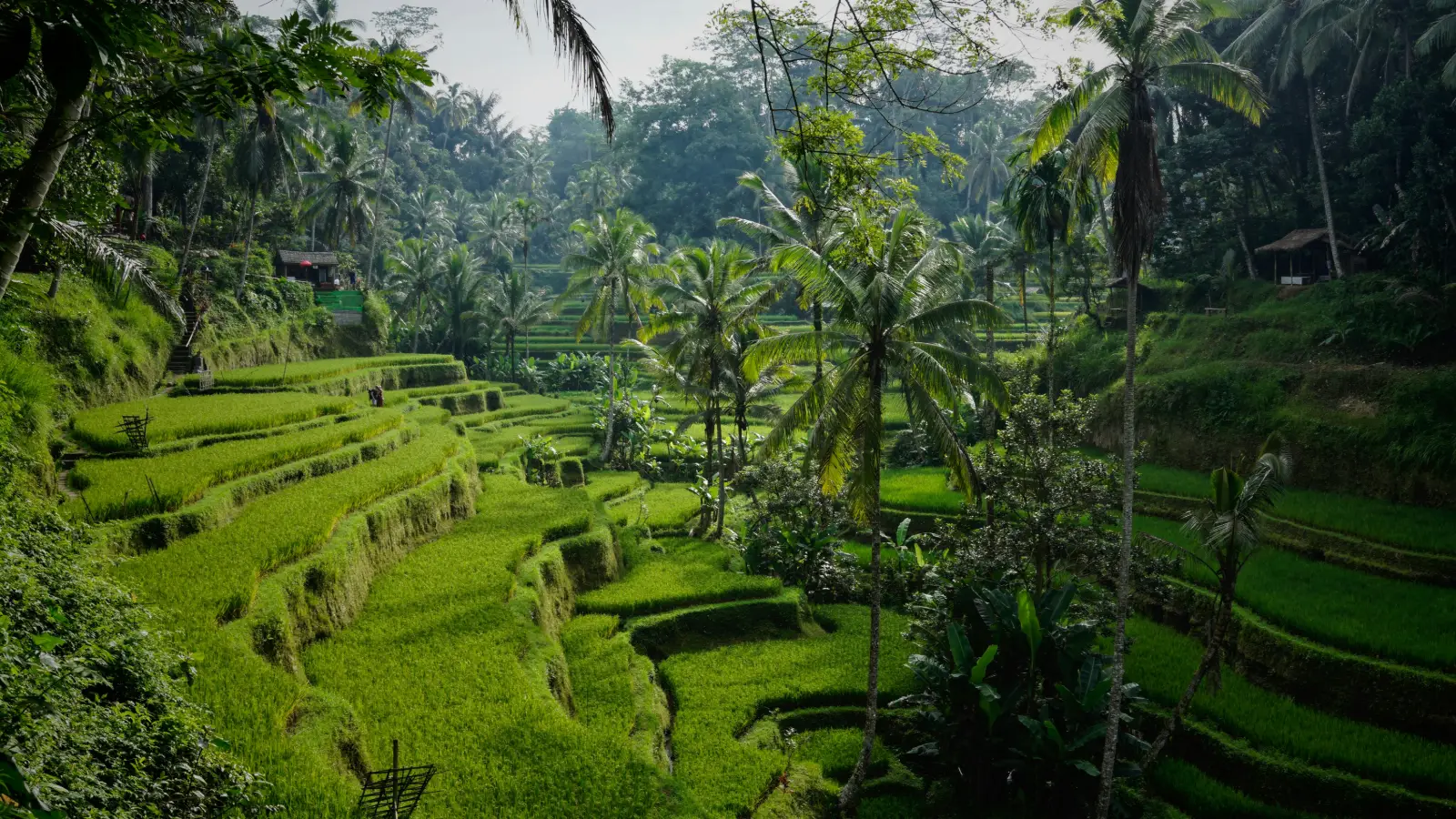













































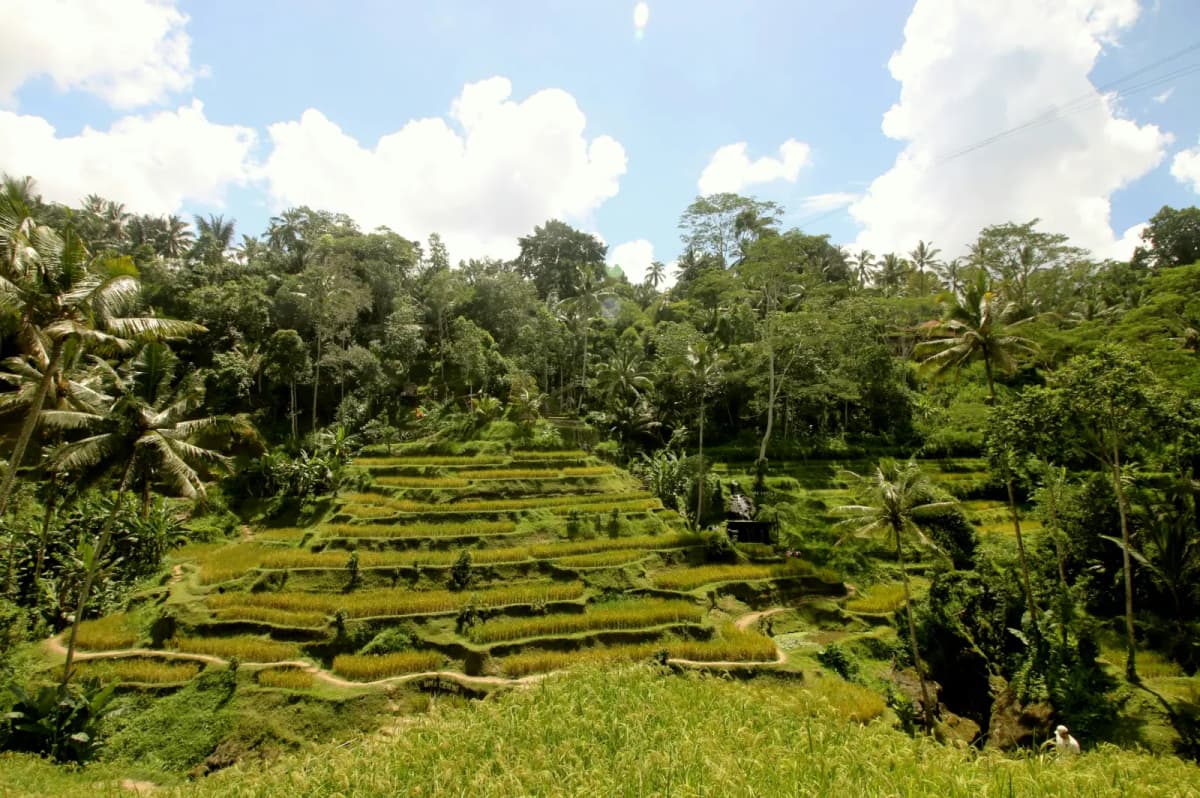
Short answer: The best things to do in Ubud are walking the Tegalalang Rice Terrace early in the morning, joining (or watching) the water purification at Tirta Empul, exploring the Goa Gajah cave temple, seeing a Legong dance at Ubud Palace, walking the Campuhan Ridge and visiting the Sacred Monkey Forest Sanctuary. Two to three full days covers the highlights at a relaxed pace. Go early, dress modestly for temples, and treat the famous Bali swings as an optional extra, not a must.
Ubud sits in the green, slightly cooler hills of Gianyar Regency in central Bali, about an hour and a half by road from the airport. It is the island's centre for Balinese art, dance and temple life, which is why it suits travellers who want more than a beach. This guide is for anyone basing themselves in Ubud or coming up for a day trip from the south. It sits under our wider guide to the best places to visit in Bali, and if you are still planning the whole trip, start with the complete Bali travel guide.
We have kept it practical: what each place is, when to go to beat the crowds, how long you need, and the rules that matter at temples and adventure sites. Opening hours and rules change, so anything time sensitive carries a "Checked" note with its source. Nepali travellers will find extra notes on flight routing from Kathmandu, vegetarian food and travelling with elderly parents.
What are the best things to do in Ubud?
The best things to do in Ubud fall into five groups: rice terraces, temples, culture (dance, art and cooking), gentle nature walks and a little adventure. Most of the classic sights sit within about 30 to 40 minutes of the town centre, so you can do two or three in a morning, rest through the hot middle of the day and see a dance performance in the evening.
The table below is a quick planner. "Best time" means the time of day when the place is usually quieter or more pleasant, based on the sources checked for each section.
| Thing to do in Ubud | What it is | Best time to beat crowds | Time needed |
|---|---|---|---|
| Tegalalang Rice Terrace | Terraced rice valley north of Ubud | About 6am to 8:30am, or late afternoon | 1 to 1.5 hours |
| Tirta Empul | Holy spring temple with purification pools | About 8am to 10am | 1.5 to 2 hours |
| Goa Gajah (Elephant Cave) | Ancient cave sanctuary and bathing place | Morning | 1 hour |
| Pura Taman Saraswati | Lotus pond temple in central Ubud | Morning, or evening for a show | 30 minutes (plus show) |
| Gunung Kawi | Rock cut shrines in a river valley | Morning, before the heat | 1.5 hours (many steps) |
| Ubud Palace | Former royal residence and dance venue | Morning for photos, evening for dance | 30 minutes (plus show) |
| Sacred Monkey Forest Sanctuary | Forest temple complex with macaques | Soon after opening | 1 to 1.5 hours |
| Campuhan Ridge Walk | Ridge path above two rivers | Sunrise or before sunset | About 1 to 1.5 hours return |
| Ubud Art Market | Crafts, textiles and souvenirs | Late morning to early afternoon | 1 hour |
| Puri Lukisan Museum | Balinese painting and carving collection | Midday, as a shady break | 1 hour |
| Ayung River rafting | Guided rafting trip | Morning, in the dry season | About 3 hours with lunch |
| Bali swing | Swing over a valley or jungle | Soon after opening | 1 to 2 hours |
If you are comparing Ubud with the rest of the island, our list of things to do in Bali covers the beaches, the Bukit Peninsula and the north. The rest of this section covers the sights in and around Ubud town; temples, Tegalalang, swings, shows and the market each get their own section below.
Walk through Ubud Palace (Puri Saren Agung)
Ubud Palace, also called Puri Saren Agung, is the former residence of Ubud's royal family and stands at the main crossroads of Jalan Raya Ubud and Monkey Forest Road. It was home to Tjokorda Gede Agung Sukawati, described as the last ruling monarch of Ubud. Today the Visit Indonesia tourism site describes it as a hub for traditional Balinese arts, with evening performances.
Visitors can walk through the split gate into the outer courtyard and see the open pavilions and carved stonework. The family temple and the private living quarters are not open to the public. There is no posted timetable, but the courtyards are generally open from about 8am to 6pm, after which chairs are set out for the evening show. Family ceremonies can close the courtyards at short notice. (Checked: October 2026, Visit Bali Guide, Ubud Palace page updated August 2026.)
No sarong is needed for the outer courtyard, but covered shoulders and clothing that reaches at least mid thigh are considered polite. Go in the morning for photos without the evening crowd, then come back after dark for a dance (see the culture section below).
Visit the Sacred Monkey Forest Sanctuary
The Sacred Monkey Forest Sanctuary, officially Mandala Suci Wenara Wana, is a forest temple complex at the southern end of Monkey Forest Road. The sanctuary's own website gives its area as about 12.5 hectares and its population as around 1,030 long tailed macaques. The land belongs to the village of Padangtegal, and the forest holds three Hindu temples, including Pura Dalem Agung Padangtegal.
The forest is open every day from 9am to 6pm, with last entry at 5pm, and the entrance is through the lobby in the Sentral Parking area. (Checked: October 2026, Monkey Forest Ubud official site.)
The sanctuary's own guidelines are clear and worth following:
- Do not feed or touch the monkeys. Food and drinks are not allowed inside, and only staff feed the animals.
- Plastic bags are not allowed. Use the lockers in the lobby for loose items, and keep sunglasses, jewellery and phones out of sight.
- Avoid direct eye contact, which monkeys may read as aggression.
- If a monkey jumps on you, do not panic. Stand up, walk away slowly and call a staff member.
- If you are bitten, go to the forest's first aid clinic straight away.
- The temples inside are for prayer only. Respect signs marking sacred areas.
- Supervise children closely so they do not play with the monkeys.
One more safety point: in December 2024 a tree fell in the forest during a sudden storm with strong winds, killing two visitors. The forest's guidelines ask visitors to stay alert to natural hazards such as falling branches. In heavy rain or wind, it is sensible to postpone your visit.
Walk the Campuhan Ridge
The Campuhan Ridge Walk is a path along a grassy ridge just west of central Ubud, above the point where two rivers meet. It is one of the easiest walks in Ubud and is popular at sunrise and sunset.
The trailhead is off Jalan Raya Ubud, opposite the Blanco Renaissance Museum, down the lane beside the Ibah hotel. The path is about 2 km each way and out and back, so allow around 45 minutes to an hour and a half depending on stops. There is little shade and no lighting, so avoid the middle of the day and finish before dark. The Visit Indonesia site notes there are no eateries along the ridge itself, so carry water; the village at the far end has cafes.
For older parents, this is one of the gentler outings in Ubud, but the slope at the start and the lack of shade still need planning. Go at 6:30am and they will enjoy it far more than at noon.
See Balinese art at Puri Lukisan and Ubud's museums
Ubud has several serious art museums, and Museum Puri Lukisan is the one to choose if you only have time for one. It was established in 1956 to keep Balinese art from being lost or sold abroad, and its collection covers Balinese painting and wood carving from the 1930s onwards, including work by the sculptor and architect I Gusti Nyoman Lempad.
The museum grew out of the Pita Maha artists' cooperative, founded in 1936 by Ubud's royal family with the Western painters Walter Spies and Rudolf Bonnet to preserve and develop Balinese art. Other museums in the area include the Agung Rai Museum of Art (ARMA), Neka Art Museum, Museum Rudana and the Blanco Renaissance Museum.
Museums are a good plan for the hottest part of the day or a rainy afternoon, and they make the dances and carvings you see elsewhere much easier to understand.
Raft the Ayung River
White water rafting on the Ayung River is the most popular adventure activity near Ubud. Visit Indonesia describes the usual route as relatively mild and suitable for beginners, at about three hours including lunch, with helmets and life jackets provided.
Choose your operator carefully. Al Jazeera reported in July 2023 that five tourists had died in Bali rafting incidents since November 2021, including a visitor lost on the Ayung in October 2022 after the river rose sharply mid trip and both rafts flipped. A veteran operator quoted in that report said there were no rafting specific procedures on equipment or rescue, although a local official said safety procedures form part of licensing. Practical steps: rafting in the dry season, asking how the operator decides when the river is too high, checking that helmets and life jackets fit properly before you get in, and walking away if the access steps or equipment look poorly kept. If you are travelling with children or older parents, ask about age limits for the day's water level.
Visit Kanto Lampo Waterfall
Kanto Lampo is a waterfall of roughly 15 metres in Beng village, Gianyar, a short drive south east of Ubud. Visit Indonesia notes that the waterfall is considered sacred by the local community, so behave as you would at a temple: modest swimwear covered when you are not in the water, no shouting, and no climbing on shrines.
Rocks around any Bali waterfall are slippery, and water levels rise quickly after rain. Wear shoes with grip, and skip the visit after heavy rain.
Taste coffee at a plantation
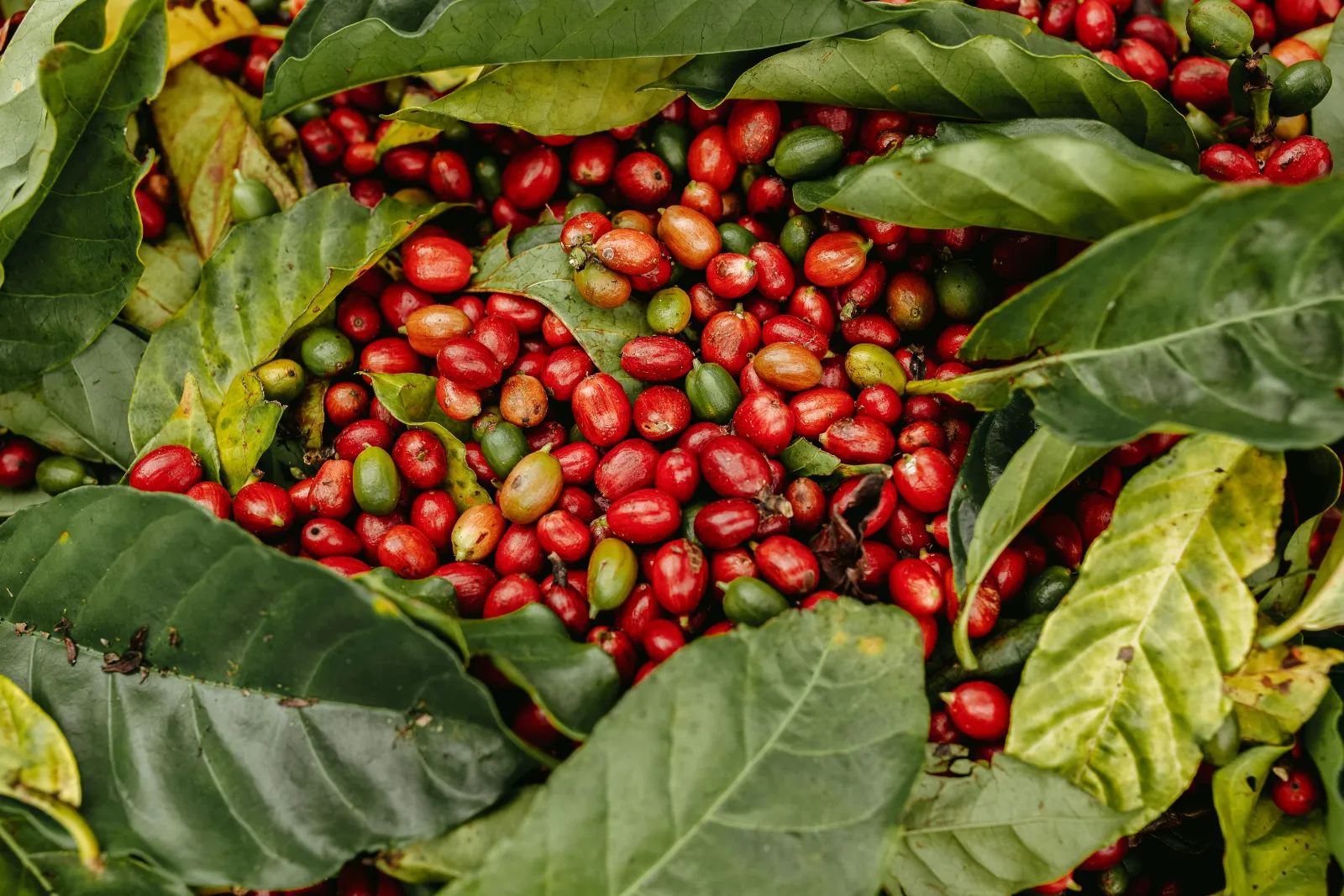
Several coffee and spice plantations sit on the road between Ubud and Tegalalang, and many tours stop at one for a tasting of local coffee, tea and cocoa. The best known product is kopi luwak, made from beans eaten and passed by the civet. Before you go, read our guide to luwak coffee in Bali, which explains the animal welfare concerns and how to choose ethically. You can enjoy the tasting without buying the luwak cup.
Is Tegalalang Rice Terrace worth visiting?
Yes, Tegalalang Rice Terrace is worth visiting if you go early in the morning or late in the afternoon. At those times the valley is cool, the light is soft and the paths are quiet. In the middle of the day it is hot, busy with tour groups and noticeably commercial, so timing makes the difference between a highlight and a disappointment.
Visiting Tegalalang Rice Terrace
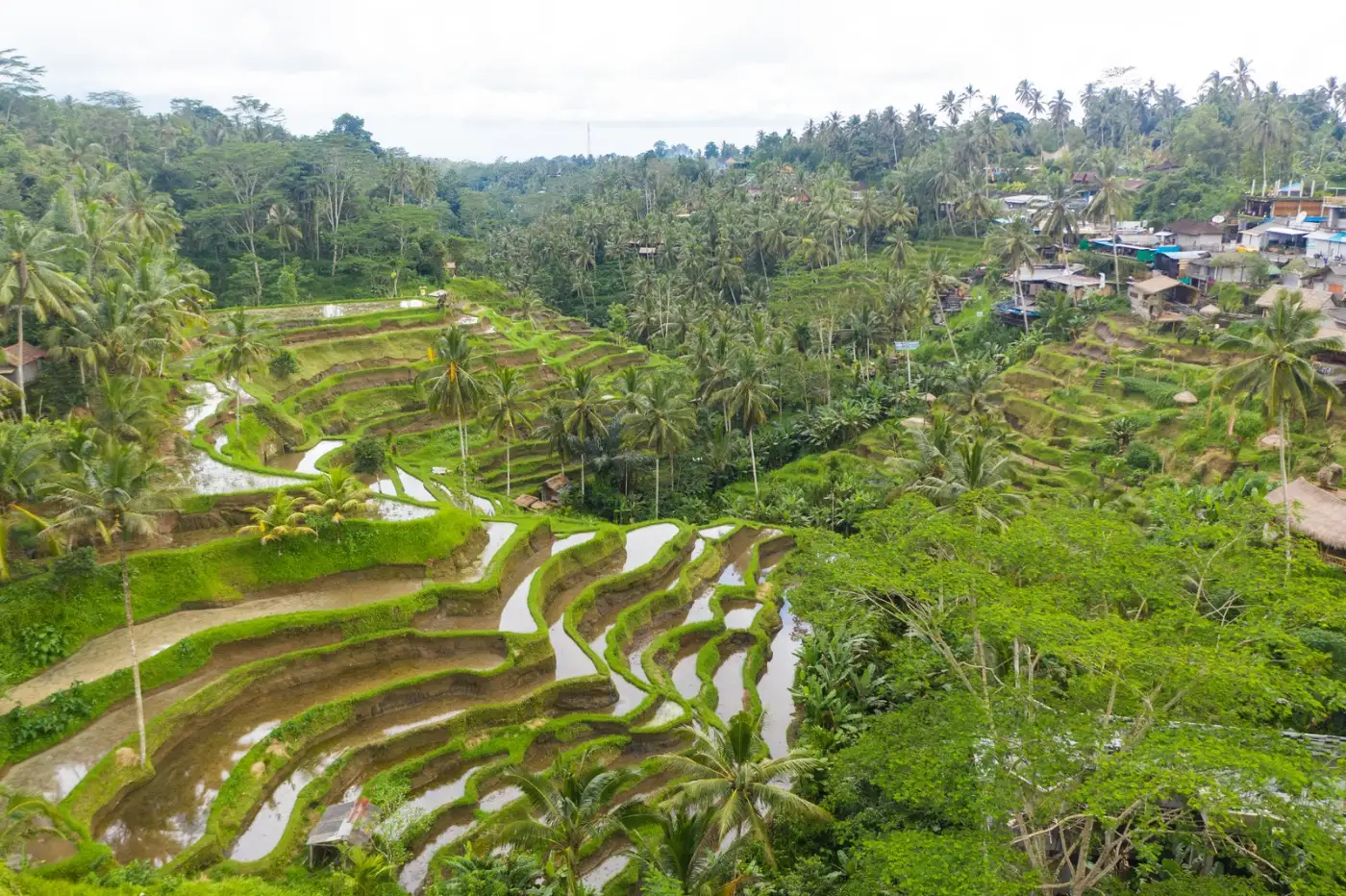
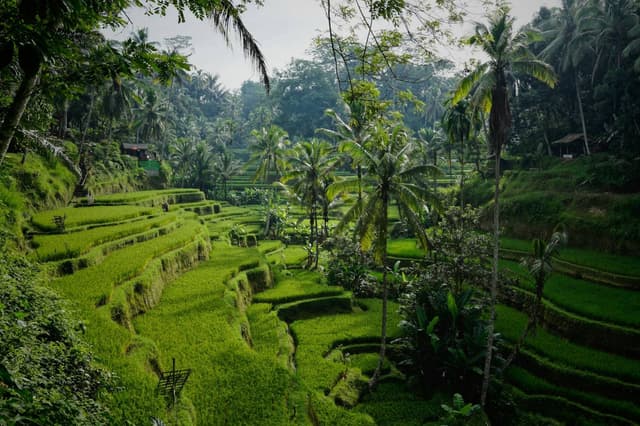
Tegalalang (also spelled Tegallalang) is about a 20 minute drive north of central Ubud, according to Visit Indonesia. The terraces fill a valley with lookouts and cafes along the top, and a network of narrow paths, steps and small bridges leading down into the fields and up the other side.
The area has no single gate and is generally accessible from early morning to early evening, while cafes and swings tend to open around 8am to 9am. (Checked: October 2026, Bali Holiday Secrets Tegalalang guide, updated June 2026.) Local landowners run small donation points at some entry points and along some trail sections, and certain photo spots charge separately, so carry small cash.
| Time of day at Tegalalang | What to expect |
|---|---|
| About 6am to 8:30am | Coolest air, softest light, fewest people. Cafes and swings may not be open yet. |
| About 9am to 3pm | Busiest. Tour buses arrive, parking fills, little shade and strong sun. |
| About 3:30pm to 5:30pm | Crowds thin out and the light turns golden. |
What to know before you walk down:
- Paths are narrow, steep in places and have no railings. They can be muddy and slippery, especially from November to March.
- Wear shoes with grip, not flip flops. Strollers are impractical; carry toddlers.
- Allow 30 to 60 minutes for the walking loop and 1 to 1.5 hours overall, as Visit Indonesia also suggests.
- Bring water and sunscreen. There is very little shade on the lower paths.
- Stay on the paths and do not step into the planted fields or irrigation channels. These are working farms.
For older travellers who are not steady on steps, the view from the cafes and lookouts along the road is still lovely, and there is no need to go down at all.
Why the terraces exist: the subak system
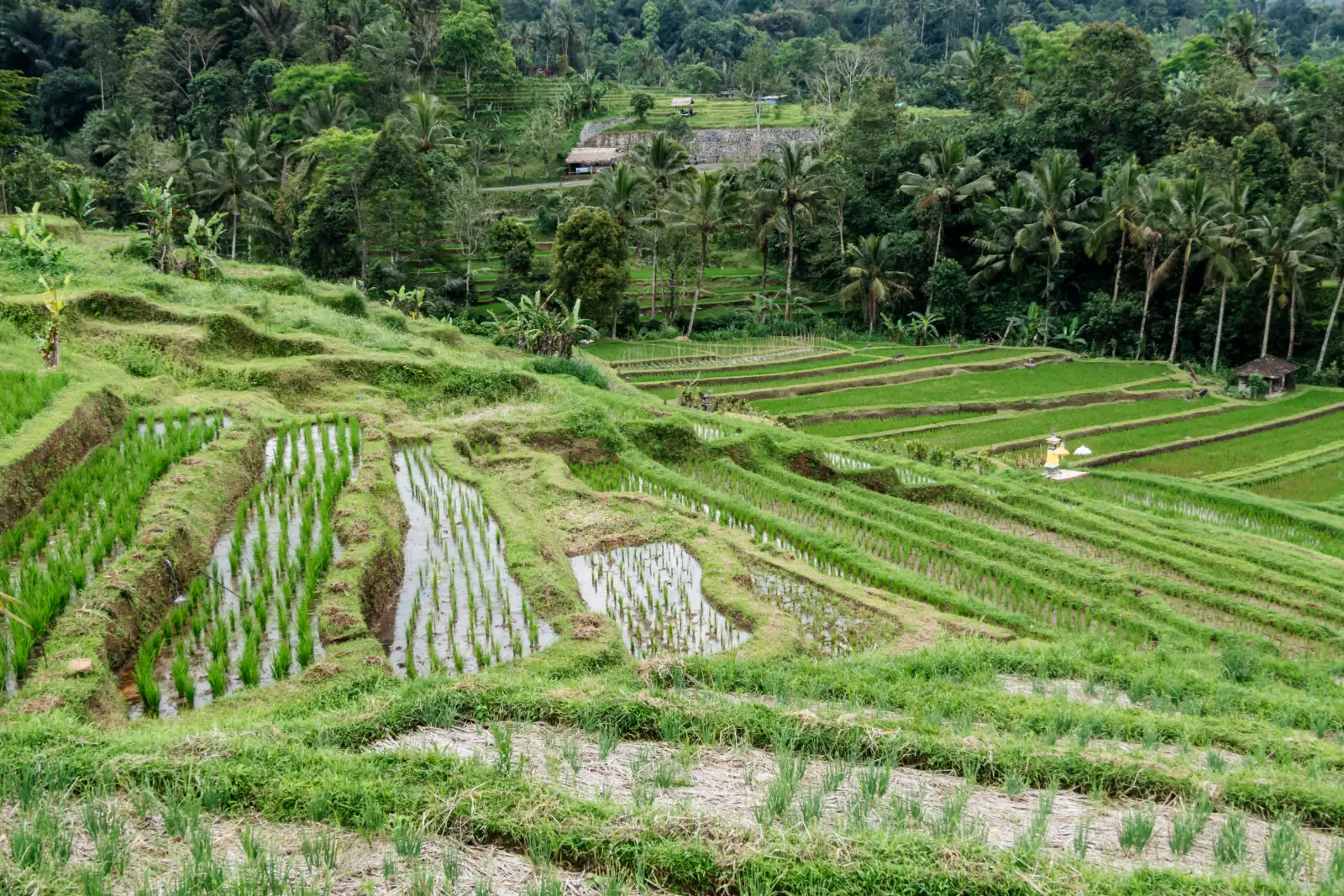
The terraces are shaped and watered by subak, Bali's cooperative system of canals and weirs that shares water between farmers and is organised around water temples. UNESCO describes subak as dating back to the 9th century and inscribed the Cultural Landscape of Bali Province, including several subak landscapes and water temples, on the World Heritage List.
One point that many guides get wrong: Tegalalang itself is not one of the named components of that UNESCO site. The listed sites include the Subak Landscape of the Pakerisan Watershed, near Tirta Empul and Gunung Kawi, and the Catur Angga Batukaru landscape further west. Tegalalang is beautiful and uses the same subak tradition, but if a UNESCO listed rice landscape matters to you, plan a longer day trip to the Batukaru area instead.
Visit Indonesia also names Pejeng and Campuhan, alongside Tegalalang, as the most striking terraced landscapes around Ubud, so they are worth a look if you want more than one rice field view.
Are Bali swings safe?
Bali swings are generally run with harnesses and staff, and many visitors use them without problems, but safety depends entirely on the individual operator. There is no single Bali wide swing safety standard that visitors can look up, and a serious accident has happened before. Choose a well established operator, check the equipment yourself, and skip it if anything feels wrong.
The Bali Swing experience near Ubud
"Bali swing" now means a whole category of attractions: large swings hung over valleys, rivers or rice terraces, mostly in the Tegalalang area and along the roads north of Ubud. Visit Indonesia lists several, with heights ranging from about 10 metres to more than 70 metres, and notes that most open daily from around 8am to 5pm, with some open later. Several operators offer long flowing dress hire for photos.
The Visit Indonesia Tegalalang page mentions that some swing operators hold CHSE certification. CHSE (Cleanliness, Health, Safety and Environmental Sustainability) is Indonesia's national standard for tourism businesses, SNI 9042:2021. It covers safety as one of four areas, but the Ministry of Tourism states that the certification is voluntary, and certified places display an "I Do Care" label with a QR code linking to their listing. (Checked: October 2026, Ministry of Tourism SNI CHSE FAQ.) A certificate is a useful sign, not a guarantee.
The accident most often cited is from July 2018, when a French visitor died after falling from a swing in Tegalalang while helping his son; Coconuts Bali reported that his hand caught in the rope and he was carried over a ravine. Afterwards the Gianyar government told swing operators to complete their permits and temporarily suspended swing tours until they met the requirements.
Bali swing safety checklist
Use this checklist before you sit down. It is based on what went wrong in reported incidents and on basic adventure activity practice.
- Harness, not just a seat. You should be clipped into a proper harness or safety belt attached to the swing frame, and a staff member should check it.
- Look at the gear. Ropes, carabiners and harness straps should look clean and undamaged. Frayed rope is a reason to leave.
- Staff only at the pushing point. Never help push or pull the swing yourself, and keep children away from the launch area. The 2018 death happened to a visitor who was pushing.
- Ask about weight and age limits and respect them. If the operator has none, that tells you something.
- Loose items off. Hats, phones and long scarves can snag. Let staff hold your phone.
- Check for certification and permits. Look for the CHSE "I Do Care" label and ask whether the business is licensed.
- Weather. Do not swing in rain, strong wind or poor visibility.
- Health. Skip it if you are pregnant, have back, neck or heart problems, or feel unwell.
- Insurance. Check that your travel insurance covers adventure activities before you go.
A popular, photogenic attraction is not automatically a well maintained one. For a broader view of risks on the island, see our guide on whether Bali is safe to travel.
Which temples near Ubud should you see?
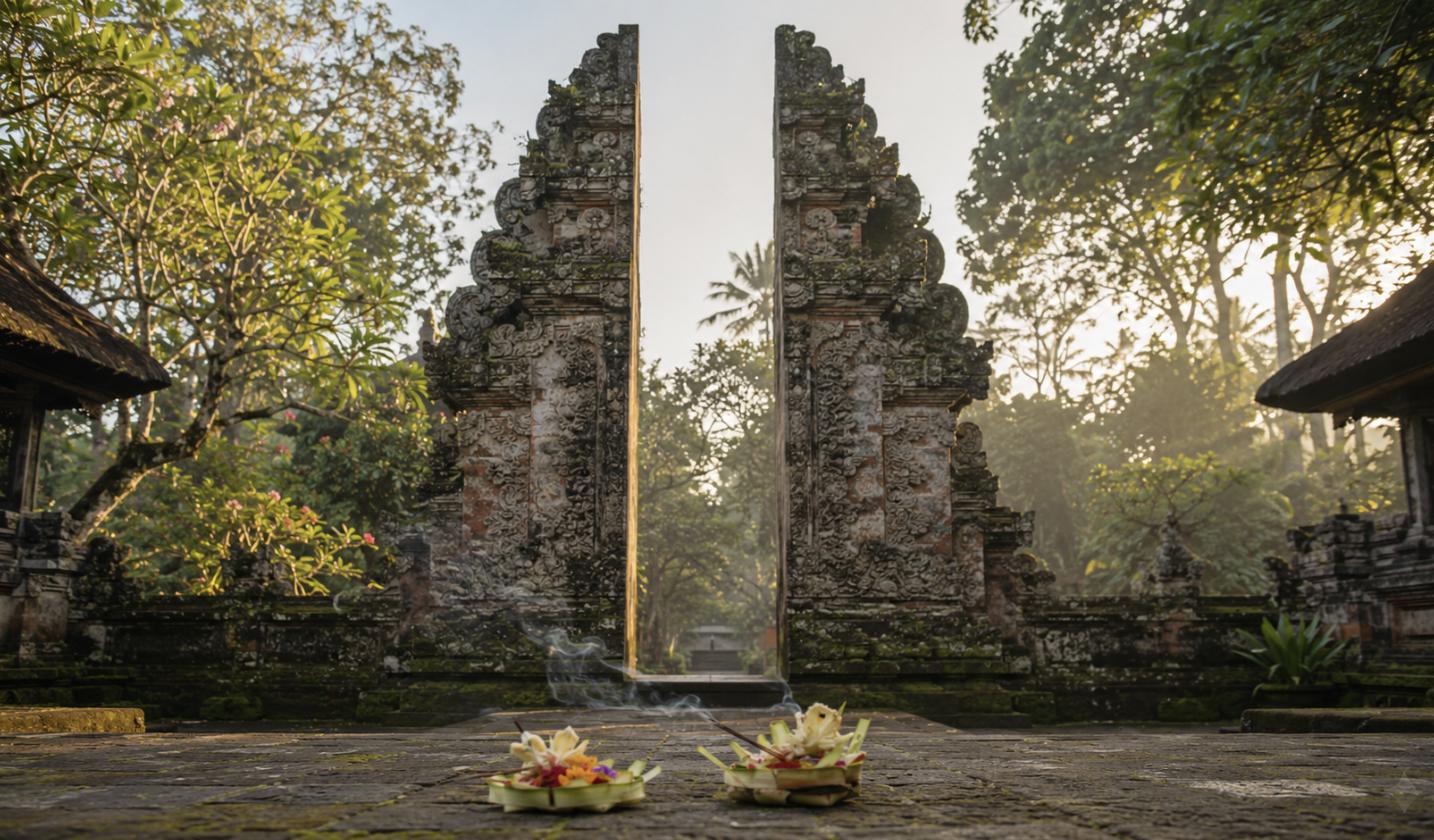
The temples near Ubud most worth seeing are Tirta Empul for its holy spring purification pools, Goa Gajah for its ancient cave sanctuary, Pura Taman Saraswati for its lotus pond in the town centre, and Gunung Kawi for its rock cut shrines. Each can be done in a morning, and Tirta Empul and Gunung Kawi pair naturally because both are in the Tampaksiring area north east of Ubud.
For Hindu travellers from Nepal and India, these temples are especially interesting. You will recognise Ganesha, the Shiva lingam, Saraswati and the idea of tirtha (holy water), but Balinese Hinduism has its own calendar, offerings and temple layout. Our guide to Hinduism in Bali explains the differences, and our list of the best temples in Bali covers the major temples beyond Ubud, such as Uluwatu, Tanah Lot and Besakih.
| Temple near Ubud | Where | Why go | Dress and access note |
|---|---|---|---|
| Tirta Empul | Manukaya village, Tampaksiring | Holy spring and purification pools | Sarong and shawl provided before the pool area |
| Goa Gajah | Bedulu village, Gianyar | 11th century cave with Hindu and Buddhist elements | Sarong and sash, available on site |
| Pura Taman Saraswati | Central Ubud | Temple to Saraswati with a lotus pond | Modest dress; inner temple for worshippers |
| Gunung Kawi | Pakerisan valley, Tampaksiring | Ten shrines carved into the cliff | Sarong and scarf; around 300 steps |
| Pura Dalem Agung Padangtegal | Inside the Monkey Forest | Forest temple seen on a Monkey Forest visit | Temple for prayer only |
Tirta Empul
Tirta Empul is a holy spring temple in Manukaya village near Tampaksiring, north east of Ubud, where Balinese Hindus come to purify themselves in spring fed pools. Visit Indonesia dates its founding to the 10th century and describes it as still in active use. The legend, from the Usana Bali manuscript, says the god Indra created the spring to revive his army after the demon king Mayadenawa poisoned their water.
The purification ritual is called melukat. Bathers stand waist deep under a row of carved spouts, moving from one to the next, and two spouts are reserved for cleansing the dead and are not used by the living. You must wear a sarong (kamen) and a shawl before entering the pool area; these can be borrowed at the entrance. Bring a change of clothes and a towel, because you will get soaked. Visit Indonesia lists the temple as open daily from 8am to 6pm and recommends 8am to 10am, when it is quieter. (Checked: October 2026, Visit Indonesia, Tirta Empul pages.)
Can non-Hindus bathe at Tirta Empul? Yes. The official tourism site says melukat is open to anyone regardless of religion, provided you dress appropriately and behave respectfully. Treat it as a religious ritual, not a pool: keep quiet, follow the order of the spouts, do not use soap, and avoid posing for photos in the water. You can also simply watch from the side and walk in the gardens. The Visit Indonesia page on Tirta Empul and melukat is worth reading before you go.
Goa Gajah (Elephant Cave)
Goa Gajah is an ancient cave sanctuary in Bedulu village, a short drive south east of Ubud, believed to date from around the 11th century. Its entrance is a huge carved face, and inside the dark cave are a Ganesha image and a lingam and yoni, symbols of Shiva. The site mixes Hindu and Buddhist elements, with Buddhist carvings near the river below.
In front of the cave is a sunken bathing place with fountain figures, excavated in the 1950s. Visit Indonesia notes that a sarong and sash are required and can be rented on site. The path down to the river is shaded but has steps, so allow about an hour.
Pura Taman Saraswati
Pura Taman Saraswati is a temple in the centre of Ubud dedicated to Saraswati, the Hindu goddess of learning, literature and the arts. It was built in 1951 to 1952, designed by I Gusti Nyoman Lempad for the Ubud royal family, and its outer area is a long lotus pond crossed by a straight path lined with carved statues.
Saraswati will be familiar to Nepali visitors from Basanta Panchami. In Bali, Saraswati day falls once in every 210 day Balinese pawukon cycle, when families bless their books and palm leaf manuscripts with offerings. The lotus pond is at its best in the morning. In the evening the temple courtyard becomes a dance venue (see the culture section).
Gunung Kawi
Gunung Kawi is a set of ten shrines (candi) carved directly into the cliffs of the Pakerisan river valley at Tampaksiring, believed to date from the 11th century reign of King Anak Wungsu. It is one of the most atmospheric sites near Ubud, with rice fields, the river and the huge carved facades.
Visit Indonesia puts the descent at about 300 to 400 steps, so it is a real climb on the way back up in the heat. Go early, carry water, and let older parents decide whether to go down or wait at the top. A sarong and scarf are required at the entrance.
Temple etiquette in Ubud
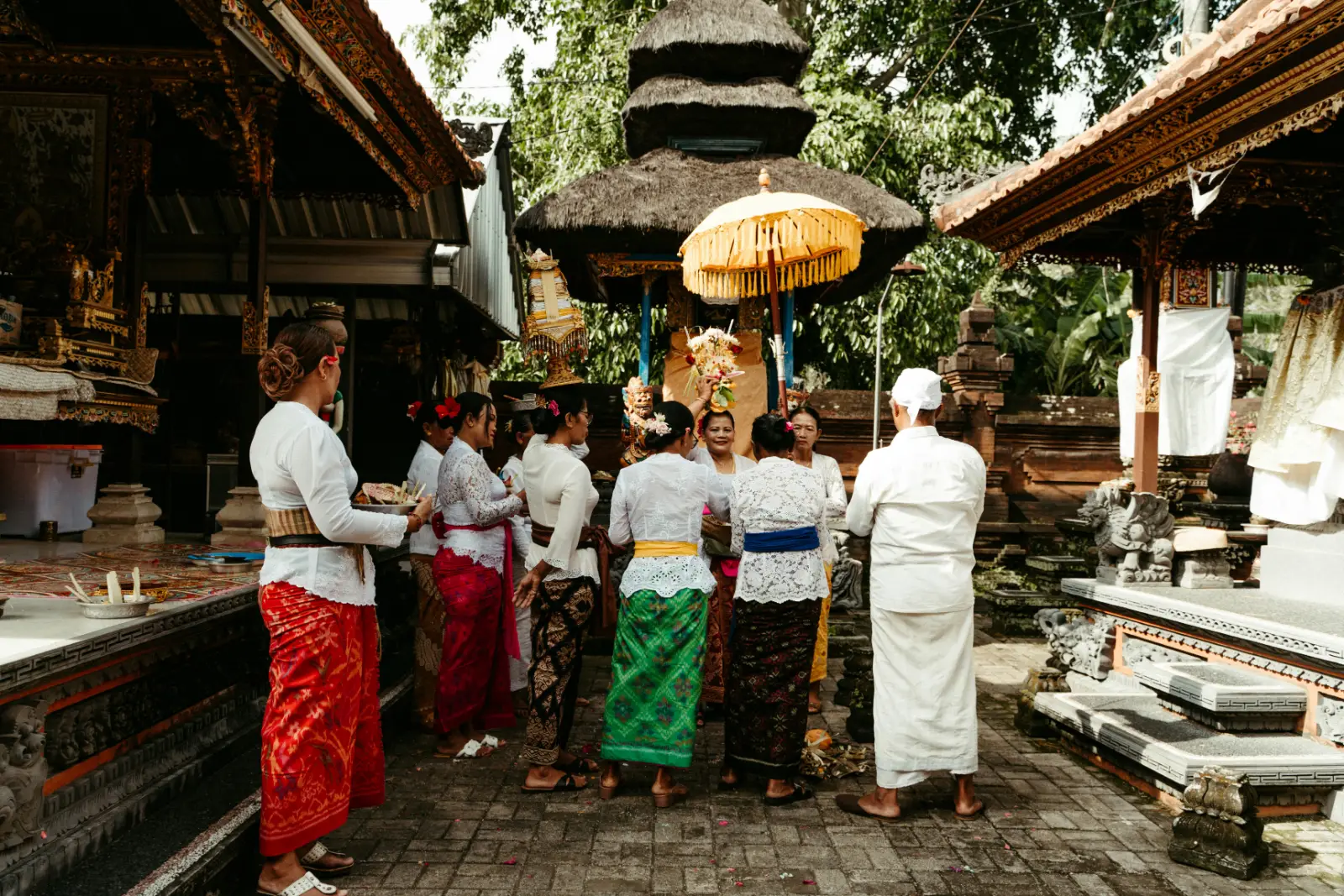
Bali's provincial government tightened its rules for foreign visitors in 2025. Under Governor's Circular Letter No. 7 of 2025, foreign tourists must dress modestly at temples and attractions and respect sacred sites and ceremonies. They may not enter the main or middle (inner) areas of temples unless they are there to pray in traditional Balinese dress, and the provincial tourism office's summary states that menstruating women may not enter these areas. Climbing sacred trees or monuments, and taking inappropriate or nude photos at religious sites, are prohibited. (Checked: October 2026, Bali Provincial Tourism Office.)
- Wear a sarong and sash where asked; most temples near Ubud lend or rent them at the gate.
- Cover shoulders and knees even where a sarong is not required.
- Watch where you walk: small offerings (canang sari) are placed on the ground and should not be stepped on.
- Give way to processions and ceremonies; do not walk through the middle to take photos.
- Do not touch shrines, statues or offerings.
Our dos and don'ts in Bali guide covers everyday etiquette beyond temples, from left hand use to tipping.
What cultural shows and classes are there in Ubud?
Ubud has traditional dance performances almost every evening, mostly Legong, Barong, Ramayana and Kecak, held at Ubud Palace, Pura Taman Saraswati and village halls and temples around town. During the day you can join a Balinese cooking class or a craft workshop. Watching one dance and taking one class is the best way to understand what makes Ubud different from the beach towns.
| Cultural experience in Ubud | What it is | Where it is usually held |
|---|---|---|
| Legong | Classical dance by young women, intricate hand and eye movements | Ubud Palace, ARMA, Pura Taman Saraswati |
| Barong | Dance drama of good against evil, with the lion like Barong | Ubud Palace (some nights), village halls |
| Ramayana ballet | The Ramayana told through Balinese dance | Ubud Palace, Pura Taman Saraswati |
| Kecak | Chanting circle of men, often by firelight | Pura Dalem Taman Kaja, Padangtegal and Peliatan |
| Cooking class | Balinese spice pastes, curries and offerings | Family compounds and farms around Ubud |
| Art museums | Painting and carving traditions | Puri Lukisan, ARMA, Neka, Rudana |
Watch a Legong dance at Ubud Palace
Legong is the dance most visitors come to Ubud to see. In 2015 UNESCO recognised three genres of traditional dance in Bali as Intangible Cultural Heritage of Humanity, and Legong Kraton is one of the entertainment (balih balihan) dances in that listing, alongside Joged Bumbung and Barong Ket. The sacred dances in the same listing, such as Rejang and Sanghyang Dedari, are performed in temple ceremonies, not as shows.
At Ubud Palace, performances usually start around 7:30pm and last about an hour to an hour and a half; arrive by 7pm for a good seat. The programme rotates, with Legong and the Ramayana staged regularly and Barong on some nights. Pura Taman Saraswati also runs a rotating programme and has no show on Fridays. (Checked: October 2026, Visit Bali Guide, updated August 2026.) Programmes change, so check the board outside each venue on the day.
See a Kecak performance
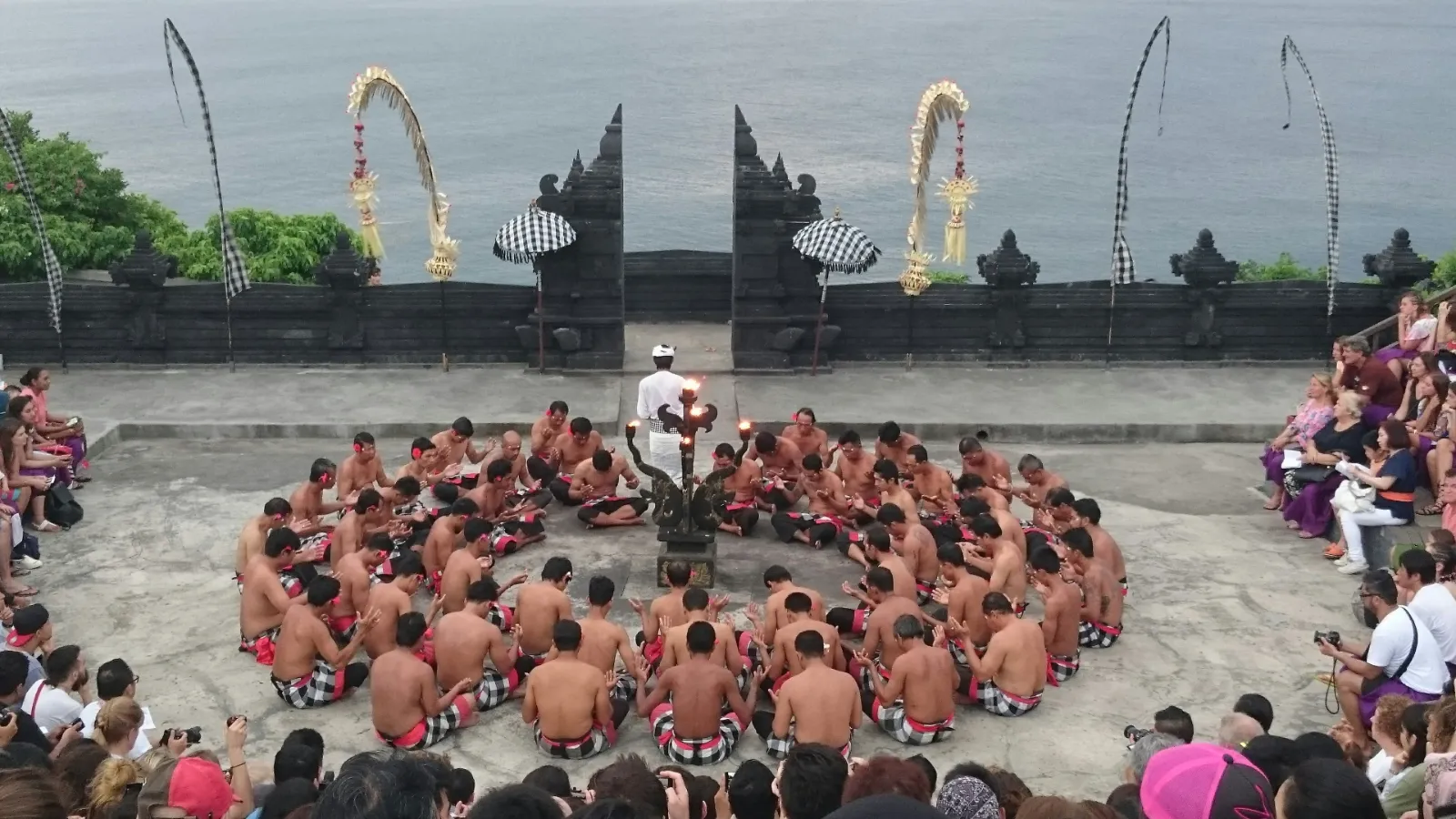
Kecak is the hypnotic "chak chak" chant performed by a circle of dozens of men, telling part of the Ramayana. In Ubud it is usually staged at Pura Dalem Taman Kaja and at halls in Padangtegal and Peliatan rather than at the palace. Ramayana scenes will feel familiar to Nepali and Indian audiences, and children usually enjoy the fire and drama. For the famous cliff top Kecak, you would need to go south to Uluwatu.
Take a Balinese cooking class
A cooking class is one of the most rewarding things to do in Ubud, especially if you travel for food. Classes are typically held in a family compound or on a farm, and many start with an optional morning visit to a local market to buy ingredients. You learn to grind a Balinese spice paste, then cook several dishes and eat what you make.
For vegetarian travellers from Nepal, ask before booking whether the menu can be made vegetarian; tofu, tempeh and vegetable dishes are common in Balinese cooking, but many pastes use shrimp paste. Our guide to avoiding Bali belly has tips on water and street food so a class or market visit does not cost you a day.
What is Ubud Market like?
Ubud Market is a covered market in the centre of town, opposite Ubud Palace, that works in two shifts: a local produce market early in the morning and an art and souvenir market (Pasar Seni Ubud) for the rest of the day. It is busy, cheerful and a good place to buy textiles, baskets and carvings, as long as you are ready to bargain.
Ubud Art Market
The market building was revitalised and reopened by Bali's governor in April 2023 as a tourism themed market, with stalls for local traders and art goods for visitors. Early in the morning you see Balinese shoppers buying fruit, flowers and offering materials; from mid morning the craft and souvenir stalls take over.
Stall hours vary. One recently updated guide gives core hours of roughly 9am to 5pm, with some vendors open earlier or later. (Checked: October 2026, Bali Holiday Secrets Ubud Art Market guide, updated August 2026.) Late morning to early afternoon is a good balance: most stalls are open but the late afternoon crowds have not arrived.
Popular buys:
- Handwoven rattan bags and baskets
- Batik and ikat textiles and sarongs (useful for temple visits)
- Wood carvings and Balinese masks
- Paintings and small bronze pieces
- Silver style jewellery (be aware that not every piece sold as silver is real silver)
Bargaining tips: very few items have fixed prices, so start well below the first figure, stay friendly and be willing to walk away. Cash in small notes helps. Bali's 2025 rules for visitors also say transactions should be in rupiah, so do not try to pay in another currency.
When is the best time to visit Ubud?
The best time to visit Ubud is the dry season, from about April to October, when walks, rice terraces and rafting are most comfortable. The wet season, from about November to March, brings heavy afternoon showers but also the greenest terraces and fewer visitors. Ubud is inland and higher than the coast, so it usually feels a little cooler than the beach areas, especially in the early morning.
Visit Indonesia gives April to October as the dry season and November to March as the wet season for Java and Bali, while noting that seasons have become less predictable. (Checked: October 2026, Visit Indonesia weather guide.)
| Month | Season | What it means in Ubud |
|---|---|---|
| January | Wet | Very green terraces; heavy showers; muddy paths at Tegalalang |
| February | Wet | Green and quieter; plan outdoor sights for mornings |
| March | Wet, easing | Nyepi (Day of Silence) closes the island for a day; check the date |
| April | Dry begins | Good walking weather; fewer crowds than mid year |
| May | Dry | One of the most pleasant months for Ubud |
| June | Dry | Dry and pleasant; visitor numbers start to build |
| July | Dry, peak | Peak holiday season; book early, go to sights at opening |
| August | Dry, peak | Peak holiday season; cool mornings in the hills |
| September | Dry | Excellent; crowds ease |
| October | Dry, ending | Warm, some early showers; good for the Dashain break |
| November | Wet begins | Afternoon rain more common; fits the Tihar break |
| December | Wet | Rainy, but busy over the year end holidays |
Festival dates worth knowing:
- Nyepi 2027: Monday 8 March 2027, Indonesia's national holiday for the Balinese Saka New Year (source: Indonesia's 2027 national holiday list, reported by Antara). On Nyepi, Bali shuts down for 24 hours: no one goes out, and the airport closes. Do not plan to arrive or leave that day.
- Galungan and Kuningan: Galungan follows the 210 day pawukon calendar. It fell on 17 June 2026, with Kuningan ten days later, and the next cycle puts Galungan on 13 January 2027 and Kuningan on 23 January 2027 (Bali Untold festival calendar; confirm locally, as ceremony days can vary by village). During this period bamboo penjor poles line the streets of Ubud and temples are busy with ceremonies.
- Ubud Writers and Readers Festival: held each October in central Ubud; the 2026 edition ran from 21 to 25 October (Visit Indonesia events listing), so check the festival's own site for 2027 dates.
For Nepali travellers, the Dashain and Tihar holidays fall around late September to November, which is the end of Ubud's dry season and the start of the wet season. That is still a good window: mornings are usually clear, and you can plan temples and terraces early and museums or a cooking class for the afternoon. Our guide to the best time to visit Bali covers the whole island month by month.
How do you get to Ubud?
You get to Ubud by flying into Bali's Ngurah Rai International Airport (DPS) near Kuta and then driving north, which takes about an hour and a half and longer in heavy traffic. Ubud has no airport or train station of its own, so most visitors use a pre arranged car, a taxi or a shuttle bus. From Nepal there is no direct flight; you connect through a hub such as Kuala Lumpur, Bangkok or Singapore.
From Kathmandu to Bali
Travellers from Kathmandu usually fly to Bali with one stop. Our Kathmandu to Bali flight guide explains the common routings and layover tips. Bali is 2 hours 15 minutes ahead of Nepal, so a late night arrival in Bali is still early evening at home, and it is worth planning an easy first evening rather than heading straight to Ubud after a long connection.
Before you fly, check the current entry rules for your passport on our Indonesia visa page. Bali also charges international visitors a tourist levy, paid once per visit and cashless only; the official Love Bali site recommends paying online before you travel. Under the 2025 provincial rules, visitors who have not paid can be refused entry to attractions.
From the airport to Ubud
| Option | How it works | Good for |
|---|---|---|
| Pre arranged private car | Driver meets you at arrivals and drives you to your hotel | Families, older parents, late arrivals, lots of luggage |
| Prepaid airport taxi | Booked at the airport on arrival | Travellers who have not pre booked |
| Shuttle bus | Scheduled tourist shuttles run between the south and Ubud; check current timetables | Solo and budget travellers with light bags |
| Hotel transfer | Many Ubud hotels arrange airport pickups | Anyone who wants the simplest arrival |
The Jakarta Post describes Ubud as about a 1.5 hour drive from the airport. Traffic on the roads out of the south and into central Ubud can add a lot more at busy times, and the town centre itself is congested in the afternoons. Bali's 2025 visitor rules also ask tourists to use licensed transport and to hold a valid licence and wear a helmet if riding a motorbike, so if you are not an experienced rider, hire a car and driver for day trips instead.
Planning your Ubud stay
Two to three full days in Ubud is enough to see the main sights without rushing; add a day if you want a cooking class, rafting or a slower pace. Our Bali itinerary guide shows how Ubud fits with the beaches and the south. For trips that pair a few nights in Ubud with time on the coast, see our Bali tour packages.
Frequently asked questions
What is Ubud famous for?
Ubud is famous as Bali's centre for traditional culture: Legong and Kecak dance, painting and wood carving, and temple life. It is also known for the Tegalalang rice terraces, the Sacred Monkey Forest Sanctuary, the holy spring at Tirta Empul and a relaxed, green setting in the hills of Gianyar Regency.
Is Tegalalang worth it?
Tegalalang Rice Terrace is worth it if you arrive early, ideally between about 6am and 8:30am, or in the late afternoon. Midday is hot, crowded and commercial. Wear shoes with grip, carry small cash for local donation points, and allow 1 to 1.5 hours. If you want other views, Pejeng and Campuhan also have fine terraces.
Are Bali swings safe?
Bali swings can be safe when the operator uses proper harnesses, well kept ropes and trained staff, but standards vary and a visitor died after falling from a Tegalalang swing in 2018. Check the harness and gear, never help push the swing, avoid rain and wind, and look for the CHSE "I Do Care" label.
What is Tirta Empul?
Tirta Empul is a holy spring temple in Manukaya village near Tampaksiring, north east of Ubud, founded more than a thousand years ago. Balinese Hindus purify themselves there in the melukat ritual, standing under a row of carved water spouts. Visitors must wear a sarong and shawl, which are lent at the entrance.
Can non-Hindus bathe at Tirta Empul?
Yes. Indonesia's official tourism site says the melukat purification at Tirta Empul is open to anyone, whatever their religion, if they dress appropriately and act respectfully. Wear the sarong and shawl provided, follow the order of the spouts, skip the two reserved for the dead, avoid soap and keep photos discreet.
How far is Ubud from the airport?
Ubud is about a 1.5 hour drive from Bali's Ngurah Rai International Airport, and longer in heavy traffic, especially in the afternoon and during holiday periods. There is no airport or train in Ubud, so most visitors take a pre arranged car, a prepaid airport taxi, a hotel transfer or a scheduled shuttle bus.
Is Ubud Palace open to visitors?
Yes. Visitors can enter the outer courtyards of Ubud Palace (Puri Saren Agung), generally from about 8am to 6pm, though no official hours are posted. The family temple and private quarters are closed, and ceremonies can close the courtyards at short notice. In the evening the palace hosts dance performances.
How many days in Ubud?
Two to three full days in Ubud is enough for the main sights: Tegalalang, Tirta Empul, Goa Gajah, the Monkey Forest, Campuhan Ridge and an evening dance. Add a day for a cooking class, rafting or simply a slower pace. Day trippers from the south can see two or three sights but will spend much of the day in traffic.
Is Ubud good for families?
Ubud is good for families who enjoy culture and nature. Children usually love the Monkey Forest, Kecak dance and rice terraces, but supervise them closely around the monkeys and on Tegalalang's steep, unrailed paths, which are not stroller friendly. Older parents will find Gunung Kawi's steps and Campuhan's lack of shade tiring, so go early.
Ubud ma k k herne?
In Ubud, the main things to see are Tegalalang Rice Terrace, Tirta Empul holy spring, Goa Gajah, Pura Taman Saraswati, Gunung Kawi, Ubud Palace with an evening Legong dance, the Sacred Monkey Forest, Campuhan Ridge and Ubud Art Market. Hindu travellers from Nepal will recognise Ganesha, Shiva and Saraswati in Ubud's temples.
Do I need to pay the Bali tourist levy to visit Ubud's attractions?
International visitors to Bali must pay the provincial tourist levy once per trip, cashless, ideally online before arrival through the official Love Bali site. Under Bali's 2025 visitor rules, tourists who have not paid can be refused entry to attractions, so keep your levy voucher on your phone while sightseeing in Ubud.
What should I wear to temples in Ubud?
At Ubud's temples, cover your shoulders and knees and wear a sarong and sash where asked; Tirta Empul, Goa Gajah and Gunung Kawi lend or rent them at the entrance. Bali's 2025 rules bar tourists from inner temple areas unless praying in traditional dress, and menstruating women may not enter those inner areas.