













































Eating well in Sri Lanka means starting the day with hoppers or string hoppers, having rice and curry for a proper lunch, snacking on kottu roti or short eats in between, and finishing with watalappan or curd and treacle. Expect fiery sambols, coconut in almost everything, fresh seafood on the coast, and some of the best tea in the world grown in the hill country. The cuisine blends Sinhalese, Tamil, Moor, Malay and Dutch Burgher traditions, so flavours shift noticeably as you move between regions, and nearly every meal is built around rice, coconut and a house-made spice blend rather than a single "national dish."
What is rice and curry, the everyday meal of Sri Lanka?
Rice and curry is less a single dish than a format: a mound of steamed white rice (sometimes red rice, which is more fibrous and nutty) surrounded by three to eight small curries. A typical spread includes a lentil curry (parippu), a vegetable curry such as pumpkin (wattakka), beans or brinjal, a meat or fish curry if you eat one, a coconut sambol, a mallung (finely shredded greens tossed with grated coconut and spices), and a crisp papadam. Sri Lankans eat this meal predominantly at lunch, traditionally with the right hand, mixing small amounts of each curry into the rice bite by bite rather than pouring everything on at once.
What makes it distinctive against other South Asian rice-and-curry traditions is the coconut. Coconut milk enriches the gravies, coconut oil is a common cooking fat on the coast, and grated fresh coconut appears raw in sambols and mallung. Curries are also typically cooked in clay pots over a slow flame in home kitchens, which mellows the spice base and thickens the gravy naturally without much added starch. For background on the island before you go, the Sri Lanka travel guide covers practical planning alongside the food culture.
What are hoppers and string hoppers?
Hoppers, known locally as appa, are bowl-shaped pancakes made from a fermented batter of rice flour, coconut milk and a little palm toddy or yeast, swirled in a small curved pan so the edges turn thin and lacy-crisp while the base stays soft and slightly spongy. The most popular version is the egg hopper (bittara appa), where an egg is cracked into the centre and cooked until the white sets and the yolk stays soft. Hoppers are eaten for breakfast or dinner, usually with lunu miris (a fiery onion and chilli paste), pol sambol or a thin curry for dipping. Sweet hoppers made with a dash of treacle or topped with honey and banana are a common dessert variation.
String hoppers (idiyappam) are a different preparation from the same rice flour base: the batter is pressed through a sieve into thin noodles, then coiled into flat, woven discs and steamed. They have almost no flavour on their own, which is the point, since they are designed to soak up whatever curry or coconut milk gravy (kiri hodi) they are served with. Both dishes trace back through South Indian and Sri Lankan Tamil cooking traditions, and you can read more on the history and technique of the hopper on Wikipedia.








What is kottu roti and other iconic street food?
Kottu roti is Sri Lanka's most recognisable street food: shredded godamba roti (a thin, layered flatbread) is stir-fried on a flat griddle with egg, vegetables, and often chicken, beef, cuttlefish or cheese, seasoned with a curry-based sauce. Cooks chop the roti into small pieces using two metal blades in a fast, rhythmic clatter that is as much a part of the experience as the taste, and you will often hear a kottu stall before you see it. It is typically eaten in the evening or late at night, and portions are generous enough to share.
Beyond kottu, the street food scene includes isso vadai (prawn and lentil fritters, especially good in Negombo), fish cutlets and patties from roadside bakeries, and devilled dishes, a Chinese-influenced style of stir-frying meat, prawns or cuttlefish with ketchup, soy sauce, chilli and capsicum that shows up on both street carts and bar menus. You can read a fuller technical description of the dish and its variations on the kottu Wikipedia page.
What are Sri Lanka's key dishes at a glance?
| Dish | What it is | Best eaten |
|---|---|---|
| Rice and curry | Rice with several small vegetable, lentil and meat or fish curries, sambol and mallung | Lunch |
| Egg hoppers (appa) | Bowl-shaped fermented rice and coconut milk pancake with an egg cooked in the centre | Breakfast or dinner |
| String hoppers (idiyappam) | Steamed rice flour noodles pressed into flat discs, served with curry | Breakfast |
| Kottu roti | Chopped flatbread stir-fried with egg, vegetables and meat or cheese | Evening or late night |
| Pittu | Steamed cylinders of rice flour layered with grated coconut in a bamboo mould | Breakfast, with coconut milk gravy |
| Dhal curry (parippu) | Red lentils simmered with turmeric, coconut milk and tempered spices | Any meal, a staple side |
| Pol sambol | Grated coconut pounded with chilli, onion, lime and sometimes dried fish | Alongside rice, hoppers or bread |
| Fish ambul thiyal | Sour, dry-style tuna curry cooked with goraka (a souring fruit) and black pepper | Lunch, southern coastal speciality |
| Isso vadai | Deep-fried lentil fritters studded with whole prawns | Street snack, any time |
| Jaffna crab curry | Lagoon crab cooked in a fiery northern curry powder with coconut milk | Lunch or dinner, northern speciality |
| Lamprais | Rice cooked in stock with meat curry, sambol and meatballs, wrapped in banana leaf and baked | Sunday lunch or special occasions |
| Kiribath | Rice cooked in coconut milk, cut into diamonds, eaten with sambol or treacle | Breakfast, especially on auspicious days |
| Watalappan | Steamed coconut custard sweetened with kithul treacle and spiced with cardamom | Dessert |
What are Sri Lanka's regional food specialities?
Sri Lanka is small, but its food changes sharply by region because of geography, climate and the communities who settled each area. Coastal towns lean on seafood and coconut, the cooler hill country grows temperate vegetables and the country's tea, and the north carries a distinct Tamil culinary identity shaped by the Palk Strait's proximity to South India.
| Region | Signature dishes | What shapes the food |
|---|---|---|
| Jaffna and the north | Jaffna crab curry, odiyal kool (a thick seafood and palmyrah-flour porridge), mutton curry with Jaffna curry powder, palmyrah-based sweets | Tamil culinary tradition, palmyrah palm produce, very high chilli heat |
| Colombo and the west coast | Kottu roti, devilled dishes, isso vadai, fusion and café-style cooking | Cosmopolitan population, colonial-era trade influences, dense street food scene |
| Hill country (Kandy, Nuwara Eliya) | Kandyan-style rice and curry, leek and carrot curries, plain Ceylon tea | Cooler climate suited to temperate vegetables and tea estates |
| South coast (Galle, Matara, Tangalle) | Fish ambul thiyal, coconut-based fish curries, fresh grilled seafood | Fishing communities and abundant coconut cultivation |
| East coast (Trincomalee, Batticaloa) | Biryani, watalappan, seafood curries | Muslim and Tamil communities with Malay-influenced sweets |
Why lamprais tells a story
Lamprais is one of the clearest edible traces of Sri Lanka's Dutch Burgher community, descended from settlers who arrived from the 16th century onward. The name comes from the Dutch word for a packet of rice, and the dish itself evolved from an Indonesian snack of rice wrapped in banana leaf, which the Burghers adapted with local spices, meat curry, seeni sambol (a sweet caramelised onion relish) and small meatballs, then baked so the banana leaf infuses everything with a faint smoky sweetness. It remains a Sunday lunch tradition in Colombo's older bakeries and Burgher households.
Why Jaffna cooking tastes different
Northern Sri Lankan food uses its own curry powder blend, roasted darker and spiced hotter than the versions used further south, and leans heavily on seafood from the Jaffna lagoon. Odiyal kool, a soup-like dish thickened with palmyrah flour and loaded with crab, prawns, fish and greens, is a good example of how the north's Tamil food culture and its palmyrah palm harvest shape a cuisine you will not find elsewhere on the island.
What should vegetarians and vegans eat in Sri Lanka?
Vegetarians eat unusually well in Sri Lanka because a full rice and curry spread is built around several vegetable and lentil dishes regardless of whether meat or fish is also served, and Buddhist dietary practice means meat-free eating is common and well understood. A vegetarian thali-style meal might include dhal curry, pumpkin curry, beetroot curry, potato curry, brinjal moju (a sweet and sour fried eggplant relish), polos curry (made from young, unripe jackfruit cooked until it takes on a shreddable, almost meaty texture), gotu kola sambol (a raw salad of pennywort leaves, coconut, onion and lime) and mallung.
- Ask for curries without Maldive fish or dried fish flakes if you are vegan, since these are used as a seasoning in some sambols and vegetable dishes even when the dish looks fully plant-based.
- Coconut milk, not dairy, is the standard enrichment in most curries and gravies, which makes rice and curry naturally vegan-friendly aside from the fish seasoning noted above.
- Kiribath, string hoppers, hoppers without egg, and most short eats sold at bakeries have vegetarian versions.
- Buddhist temples and pilgrimage towns almost always have simple, cheap vegetarian rice and curry shops nearby.
What is the spice and curry guide behind Sri Lankan cooking?
Sri Lankan cooking relies on a small set of spices used in very different proportions depending on the dish and region. Two curry powder styles form the backbone of most kitchens: a dark roasted blend (thuna paha) used for meat and fish curries, and a lighter, unroasted blend used for milder vegetable curries. Ceylon cinnamon, considered "true cinnamon" and different from the cassia commonly sold elsewhere, is grown on the island and used in both savoury and sweet cooking.
| Spice or ingredient | Role in cooking | Common in |
|---|---|---|
| Ceylon cinnamon | Warm, sweet, delicate aroma | Curries, tea, desserts like watalappan |
| Curry leaves | Aromatic base, usually tempered in hot oil first | Almost every savoury dish |
| Roasted curry powder | Dark, smoky blend of coriander, cumin, fennel and chilli | Meat and fish curries |
| Unroasted curry powder | Lighter, earthier blend | Vegetable curries and dhal |
| Goraka | Dried sour fruit used as a natural souring agent | Fish ambul thiyal and other sour curries |
| Fenugreek seeds | Slightly bitter, helps thicken gravies | Fish curries, milk rice gravies |
| Pandan leaf (rampe) | Fragrant, grassy aroma | Rice, curries, some desserts |
| Maldive fish | Dried, cured tuna flakes for umami depth | Sambols and vegetable curries |
| Cardamom and cloves | Warm, sweet spice notes | Watalappan, biryani, milk rice |
What seafood should you try on the coast?
With the Indian Ocean on three sides, seafood is central to coastal eating. Tuna, seer fish, prawns, crab, cuttlefish and reef fish appear grilled, curried, deviled or fried depending on where you are. Fish ambul thiyal, the sour, almost dry-cured tuna curry cooked with goraka and black pepper, was originally developed as a way to preserve fish before refrigeration and remains a signature of the southern coast. Jaffna crab curry, cooked in a much hotter and darker curry powder, is the north's answer, while Negombo, a major fishing town near the airport, is known for isso vadai and simple grilled prawns sold straight off the boats.
Along the coast you will also find seafood kottu, garlic crab, and whole fish rubbed with turmeric and chilli then grilled over coconut husks. If you are planning a coastal itinerary, the best beaches in Sri Lanka guide is a useful companion for pairing beach time with fresh seafood towns.
What are short eats and bakery snacks?
"Short eats" is the local term for the tray of savoury pastries found in every bakery, tea shop and train station kiosk on the island, usually eaten as a quick breakfast, afternoon snack, or with tea. They are inexpensive, filling and a good way to sample flavours without committing to a full meal.
- Fish or meat cutlets: minced fish or meat and mashed potato, shaped into balls, breaded and deep-fried.
- Patties: flaky pastry shells filled with spiced minced meat or fish and hard-boiled egg.
- Fish buns: soft bread rolls stuffed with a spiced fish and potato filling.
- Vegetable or egg rolls: a pancake wrapped around a spiced vegetable or egg filling, breaded and fried.
- Samosas: triangular pastries with a spiced vegetable or meat filling, a shared favourite across South Asia.
- Isso vadai: prawn-topped lentil fritters, best bought fresh and hot from a street vendor.
What to drink in Sri Lanka?
Tea is the obvious answer, but the island's drinking culture goes well beyond it, from fresh coconut water to a distinctive coconut-based spirit and a handful of drinks tied to specific communities and occasions.
| Drink | What it is | Note |
|---|---|---|
| Ceylon tea | Black tea grown in highland estates and graded by region and elevation | High-grown teas from Nuwara Eliya and Uva are prized for delicate flavour |
| King coconut (thambili) | Water from a distinct orange-husked coconut variety, drunk straight from the shell | Widely sold roadside, naturally sweet and hydrating |
| Arrack | Distilled spirit made from fermented coconut flower sap (toddy) | Sri Lanka's traditional spirit, often aged in halmilla wood barrels |
| Toddy | Mildly alcoholic, naturally fermented palm sap | Sold fresh at toddy taverns, strength increases the longer it ferments |
| Kola kanda | Savoury herbal rice porridge blended with green leaves | A traditional, healthy breakfast drink rather than a dessert |
| Faluda | Rose syrup drink layered with basil seeds, jelly, milk and ice cream | Reflects Muslim and Malay community influence on the coast |
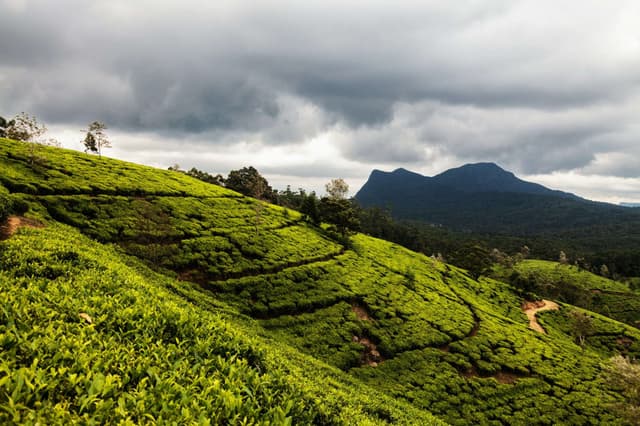
The history and grading of the island's most famous export is worth understanding before you visit an estate, and the Ceylon tea Wikipedia entry is a solid primer on how the industry developed in the central highlands.
What sweets and desserts should you try?
Sri Lankan sweets rely on two ingredients above all others: coconut, in the form of milk, cream or grated flesh, and kithul treacle, a syrup tapped from the kithul palm that has a deeper, more caramel-like flavour than regular cane sugar syrup. Many of the sweets below appear in larger quantities around the Sinhalese and Tamil New Year in April.
| Sweet | What it is | When you will see it |
|---|---|---|
| Watalappan | Steamed coconut milk custard with jaggery or treacle, cardamom and cashews | Year-round dessert, especially for celebrations |
| Curd and treacle | Thick buffalo milk curd served with kithul treacle drizzled over it | Anytime, a classic finish to a meal |
| Kavum | Deep-fried oil cake made from rice flour and treacle | New Year and festive occasions |
| Kokis | Crisp, rosette-shaped fried snack made from a thin rice flour batter | New Year and festive occasions |
| Aluwa | Diamond-cut sweet made from rice flour, semolina and jaggery | New Year and special occasions |
When should you eat what? A meal-by-meal guide
| Time of day | Typical dishes |
|---|---|
| Breakfast | String hoppers, plain or egg hoppers, pittu, kiribath, kola kanda, roti with lunu miris |
| Lunch | Full rice and curry spread with dhal, vegetable curries, sambol, mallung, and fish or meat curry |
| Afternoon snack | Short eats (cutlets, patties, fish buns), tea, isso vadai |
| Dinner | Kottu roti, hoppers, lighter rice and curry, devilled dishes |
| Dessert or anytime treat | Watalappan, curd and treacle, kavum, kokis |
What tropical fruits should you try in Sri Lanka?
Sri Lanka's tropical climate produces a rich variety of fruit worth seeking out at markets and roadside stalls, often sold ready to eat and sometimes sprinkled with chilli salt. Beyond the familiar mango, papaya and pineapple, a few island specialities are well worth a taste.
| Fruit | What it is | Roughly when in season |
|---|---|---|
| Rambutan | A hairy red skinned fruit with sweet, translucent flesh similar to lychee | Mid year, around June to August |
| Mangosteen | A purple skinned fruit with segmented, delicately sweet white flesh | Mid year |
| Wood apple (divul) | A hard shelled fruit with tangy brown pulp, usually blended into a juice or cordial | Later in the year |
| Mango (amba) | Many local varieties, eaten ripe or green with chilli salt | Peak around April to June |
| Banana (kesel) | Dozens of small, intensely flavoured local varieties, not just the export type | Year round |
| Durian | The pungent, custard textured fruit loved and loathed in equal measure | Mid year |
Wood apple in particular is worth trying at least once, usually as a thick juice sweetened with jaggery or as a cordial, since it is distinctly Sri Lankan and rarely found outside the region. Jackfruit deserves a mention too, eaten both as a ripe sweet fruit and, when young and unripe, cooked into the savoury polos curry described earlier. Avocado blended with milk and a little treacle, and fresh king coconut water, are both popular ways to cool down in the tropical heat.
Where and how should you eat in Sri Lanka?
Options range from unpretentious rice and curry shops, often just called "hotels" locally, to bakeries for short eats, roadside kottu stalls that fire up in the evening, seaside grills in fishing towns, and a growing number of fine-dining restaurants in Colombo and Galle reinterpreting traditional dishes. Eating at a local rice and curry shop at lunchtime is usually the most authentic and least expensive way to try a wide range of curries in one sitting, and street food more broadly is inexpensive relative to sit-down restaurants, though quality and hygiene vary by stall, so busy, high-turnover vendors are generally the safer bet.
Traditionally, rice and curry is eaten with the right hand, mixing rice with small amounts of curry as you go rather than combining everything at once; cutlery is offered everywhere for visitors and using it is entirely normal, but trying the local method is part of the experience. If you are unfamiliar with local customs around eating, greetings, dress or tipping, the dos and don'ts in Sri Lanka guide covers etiquette in more depth, and pairing a food-focused trip with the right route is easier with a full Sri Lanka itinerary. Because regional cuisine differs so much between the hill country, the coast and the north, choosing where to base yourself matters for how much culinary variety you experience, which the best cities in Sri Lanka guide can help with, while general cost expectations for eating out are covered in the guide to whether Sri Lanka is expensive.
For a deeper look at Sri Lankan food culture generally, including its historical influences from South India, the Malay Archipelago, the Middle East and colonial Europe, the Sri Lankan cuisine overview on Wikipedia is a useful reference. If you are building a trip around these flavours and want a structured route through the island, browsing Sri Lanka tour packages is a practical next step before you land.
Frequently asked questions
What is the national dish of Sri Lanka?
Sri Lanka does not have one official national dish, but rice and curry is the closest equivalent, since it is the everyday lunch eaten across the island in some form, adapted to local ingredients and each family's own curry powder blend.
What are hoppers made of?
Hoppers are made from a fermented batter of rice flour and coconut milk, cooked in a small curved pan so the base stays soft and the edges turn thin and crisp. The most popular version, the egg hopper, has an egg cracked into the centre and cooked until set.
Is Sri Lankan food very spicy?
Much of it is genuinely spicy, especially in the north and in sambols like lunu miris, but a full rice and curry meal usually includes milder dishes such as dhal curry and coconut-based vegetable curries alongside the hotter ones, so you can balance heat as you eat.
What is kottu roti?
Kottu roti is shredded flatbread stir-fried on a griddle with egg, vegetables and often meat or cheese, chopped into small pieces with two blades in a distinctive rhythmic motion. It is a popular street food eaten mainly in the evening.
Can vegetarians eat well in Sri Lanka?
Yes. A typical rice and curry meal already includes several vegetable and lentil dishes regardless of whether meat is served, and dishes like dhal curry, jackfruit curry and mallung are widely available. Vegans should just check that Maldive fish or dried fish flakes have not been added to sambols.
What is the difference between hoppers and string hoppers?
Hoppers (appa) are bowl-shaped pancakes cooked in a pan, with crisp edges and a soft centre, often served with an egg. String hoppers (idiyappam) are steamed rice flour noodles pressed into flat discs, with a much milder flavour designed to soak up curry.
What is watalappan?
Watalappan is a steamed coconut milk custard sweetened with kithul treacle or jaggery and flavoured with cardamom and cashews. It has Malay community origins and is one of the island's most popular desserts.
What is Ceylon tea and why is it well known?
Ceylon tea is black tea grown in Sri Lanka's central highlands, particularly around Nuwara Eliya, Uva, Dimbula and Kandy, where elevation and climate produce distinct, prized flavour profiles. It has been a major export and part of the island's identity since the 19th century.
Is street food in Sri Lanka safe to eat?
Street food is generally safe if you choose busy stalls with high turnover, where food is cooked fresh in front of you, such as kottu griddles and isso vadai fryers. As with any destination, drink bottled or filtered water and be cautious with anything that has been sitting out for a while.
What should I try if I only have one meal in Sri Lanka?
A full rice and curry lunch is the single best introduction, since it lets you sample multiple curries, a sambol, mallung and a lentil dish in one sitting. Follow it with an egg hopper or watalappan if you have room for a second course.