












































Short answer: the practical way to get around Sri Lanka in late 2026 is a mix of road and rail: a car with a driver or intercity buses for most legs, tuk tuks and the PickMe or Uber apps for short hops, and trains where the line is actually running. Cyclone Ditwah (late November 2025) broke the famous hill country railway, so as of early October 2026 trains are resuming from Colombo to Peradeniya and Gampola (from 2 and 3 October), the scenic Nanu Oya to Ella and Badulla stretch has been running again since 20 June 2026, full service into Kandy is planned for January 2027, and there is still no through train from Colombo or Kandy to Ella. Plan the Kandy to Nanu Oya leg by road and check the latest Sri Lanka Railways notices before you travel.
This guide covers every main option, with fares in Sri Lankan rupees (LKR), journey times between the towns most visitors use, how to book trains, what a driver really costs, the rules for driving yourself and how monsoons and holidays affect transport. Prices are given as checked in September and early October 2026; at roughly LKR 330 to one US dollar, most public transport in Sri Lanka is very cheap, while private transport is where the money goes.
What is the state of Sri Lanka's trains in October 2026?
Most of the network is running, but the hill country Main Line is only partly reopened. Cyclone Ditwah caused landslides and flood damage at 223 locations on the upcountry line, including six sections wiped out between Balana and Kadugannawa and serious damage to the Black Bridge (Kalu Palama) near Peradeniya. Repairs have been reopening the line in stages through 2026.
| Line or section | Status (as of early October 2026) | What it means for travellers |
|---|---|---|
| Colombo Fort to Peradeniya and Gampola | Sri Lanka Railways announced regular services resuming from the evening of 2 October 2026, with morning departures and the Podi Menike from 3 October | You can ride from Colombo into the hills again, but confirm the timetable at the station |
| Colombo to Kandy station (full service) | Sri Lanka Railways says full Colombo to Kandy service is planned for January 2027 | Peradeniya is a few kilometres from Kandy town; finish by tuk tuk or bus |
| Gampola to Nanu Oya (Nawalapitiya, Hatton, Talawakele) | Repairs continuing; no through passenger service announced | Travel this stretch by road |
| Nanu Oya to Ella and Badulla | Reopened on 20 June 2026 with a limited daily service (four trips a day were announced) | The most photographed part of the hill country ride is open again |
| Coastal Line (Colombo to Galle, Matara, Beliatta) | Running | Good option for the south and west coast |
| Northern Line (to Jaffna), Batticaloa and Trincomalee lines | Running | Long but useful for the north and east |
Check before you travel: reopening dates for the remaining hill country sections have slipped several times since the cyclone. Treat any date as a target, not a promise, and confirm on the Sri Lanka Railways website or at a station counter a few days before your journey.
What are the main ways to get around Sri Lanka?
There are six realistic options, and most visitors use at least three of them on one trip. Sri Lanka is small (about 430 km from north to south), but roads outside the expressways are slow, winding and busy, so think in hours rather than kilometres.
| Option | Best for | Typical cost | Watch out for |
|---|---|---|---|
| Train | Scenery, coast and long runs to the north and east | Very low; a few hundred to a few thousand LKR | Partial hill country closures, crowded unreserved carriages |
| Public bus | Budget travel to almost every town | Very low; from LKR 34 minimum fare | Fast, crowded, little luggage space |
| Expressway and AC intercity bus | Colombo to the south coast and Kandy quickly | Low; roughly LKR 900 to 1,300 on main routes | Limited routes, fill up at peak times |
| Tuk tuk and ride apps | Short hops, town to beach, station transfers | About LKR 110 first km in Western Province | Unmetered drivers overcharging tourists |
| Car with driver | Couples, families, multi stop trips, comfort | Roughly USD 60 to 115 a day for a car | Unlicensed drivers, shopping stop commissions |
| Self drive | Confident drivers who want independence | Rental plus a local permit | Chaotic traffic, local permit required |
| Domestic flight or seaplane | Saving a day on long transfers | High; priced in USD | Strict baggage limits, weather |
For route ideas built around these options, our Sri Lanka itinerary ideas for one to three weeks show how the legs fit together, and the complete Sri Lanka travel guide covers visas, money and the wider picture.
How do trains work in Sri Lanka?
Sri Lanka Railways (SLR) runs every passenger train on the island. Trains are slow by international standards, but cheap, sociable and often beautiful. There are three classes, and the key difference for visitors is whether a seat is reserved.
Which train class should you choose?
| Class | What you get | Who it suits |
|---|---|---|
| First class (AC or observation saloon) | Reserved seat, air conditioning or a rear observation car with big windows | Comfort seekers, families with children |
| Second class | Reserved or unreserved; padded seats, fans, opening windows | Most travellers; the best balance of views and comfort |
| Third class | Mostly unreserved; basic seats, very crowded at peak times | Budget travellers and short journeys |
Air conditioned first class has sealed windows, which is comfortable but poor for photos. Many travellers prefer reserved second class, where windows open and you can stand near the doors for short stretches. Hanging out of open doors is common in photos but genuinely dangerous; people have been killed doing it.
How much do train tickets cost?
Fares are low. SLR publishes ordinary (unreserved) fares by distance, and reserved seats on intercity and express trains are priced separately and cost more. The figures below are approximate, taken from SLR fare tables as transcribed in September 2026 and from recent rail guides; check the exact fare when you buy.
| Route | 3rd class (ordinary) | 2nd class (ordinary) | Reserved seats |
|---|---|---|---|
| Colombo Fort to Kandy (when through service resumes) | about LKR 240 | about LKR 500 | roughly LKR 1,500 to 3,000 depending on class and train |
| Kandy to Ella (ordinary fare, line partly closed) | about LKR 300 | about LKR 600 | first class about LKR 1,200 ordinary; more on special trains |
| Colombo Fort to Galle | about LKR 240 | about LKR 500 | first class reserved around LKR 1,100 |
Even the most expensive reserved seat on a scheduled train costs only a few US dollars. Tickets resold by agents and tour desks carry a markup, sometimes several times the face value in peak season.
How do you book train tickets?
Reserved seats can be booked up to 30 days ahead. There are four routes to a ticket:
- SLR online seat reservation at seatreservation.railway.gov.lk. You create an account, can reserve up to five seats per booking and receive an e-ticket by email. Foreign card payments sometimes fail, so have a backup plan.
- Pravesha, the new SLR e-ticketing website and app (pravesha.lk) launched on 18 September 2026. It sells tickets online by card with a QR code e-ticket sent by SMS or email. It is very new, so expect changes in what it covers.
- Station counters, which sell reserved seats (where available) and all unreserved tickets. Unreserved tickets are sold on the day of travel only.
- Agents and online resellers such as 12Go, which are convenient but add a markup.
Popular reserved seats on hill country and special trains can sell out within minutes of opening, especially from December to April. If you miss out, an unreserved second or third class ticket bought on the day almost always gets you on board, though you may stand for part of the journey.
What about the Ella Odyssey and other special trains?
The Ella Odyssey is a tourist oriented special train that, before the cyclone, ran Colombo to Badulla on set days with photo stops at waterfalls and the Nine Arch Bridge. With the line still broken between Gampola and Nanu Oya, a full Colombo to Badulla run is not possible. We could not confirm at an official source whether a shortened Ella Odyssey service was operating in October 2026, so check SLR notices or ask a station before planning around it. Regular trains use the same track and cost far less.
Can you still do the Kandy to Ella train ride?
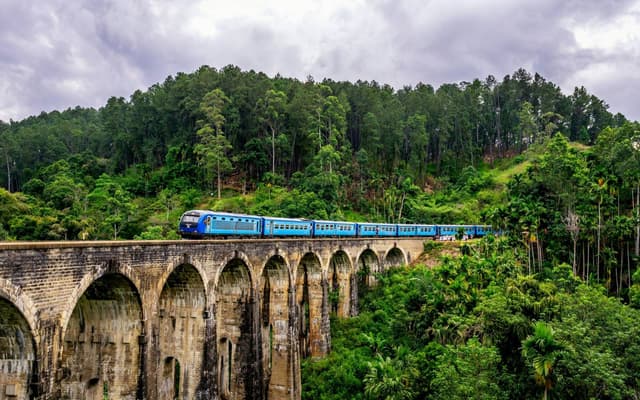
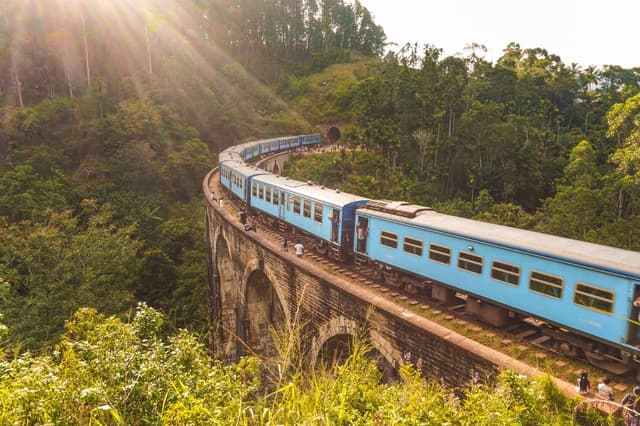
Not end to end, not yet. As of early October 2026 there is no through passenger train between Gampola and Nanu Oya, so the classic Kandy to Ella journey has to be split. The good news is that the most scenic part, the tea country between Nanu Oya and Ella, has been running again since 20 June 2026.
| Leg | How to do it now | Approximate time |
|---|---|---|
| Kandy to Nanu Oya (or Nuwara Eliya) | Car with driver, taxi or public bus | 2.5 to 3 hours |
| Nuwara Eliya to Nanu Oya station | Tuk tuk or taxi (about 8 km) | 20 minutes |
| Nanu Oya to Ella | Train on the special timetable | roughly 2.5 to 3 hours |
| Ella to Badulla (optional) | Train, via Demodara and its loop | about 1 hour |
This split actually suits many travellers: you skip the slower, less scenic first hours out of Kandy, spend a night in Nuwara Eliya, then take the train through Pattipola, Ohiya and Haputale, the highest and most dramatic part of the line. Services are few, so arrive early and buy your ticket at Nanu Oya station if you could not reserve one.
If you are travelling in early 2027, check whether the Gampola to Nanu Oya section has reopened. Officials have given targets from the end of 2026 into early 2027 for the remaining hill country sections, but earlier targets were missed, so we would not book anything non refundable around it.
Which other train routes are worth taking?
Three lines not affected by the hill country closures are useful and enjoyable.
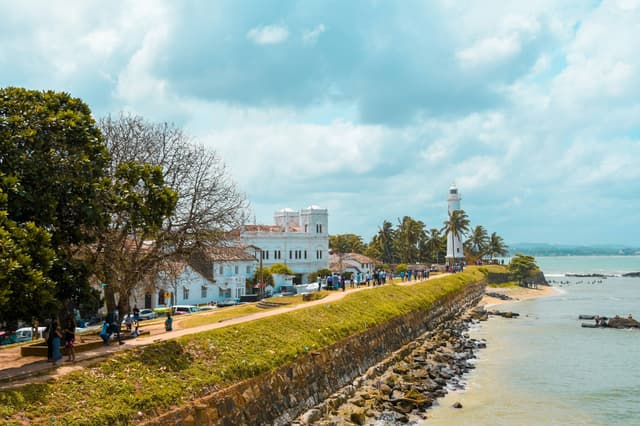
- The Coastal Line, Colombo to Galle and Matara. The track runs right beside the sea for long stretches south of Colombo, through Mount Lavinia, Kalutara, Bentota and Hikkaduwa. Colombo to Galle takes about 2.5 to 3 hours. Sit on the right heading south for sea views. Trains continue to Matara and Beliatta.
- The Northern Line to Jaffna. The Yal Devi and intercity services link Colombo with Anuradhapura, Vavuniya and Jaffna. Colombo to Jaffna takes around 6 to 7 hours on the faster trains, and it is far more comfortable than the bus.
- The lines to Trincomalee and Batticaloa. Useful for the east coast beaches such as Trincomalee, Nilaveli and Pasikuda, often with overnight options. Expect 7 to 10 hours or more from Colombo.
For the cultural triangle (Sigiriya, Dambulla, Polonnaruwa), trains run to Habarana and Polonnaruwa on the Batticaloa line, but road transport is usually more practical because the sites are spread out.
How do buses work in Sri Lanka?
Buses go almost everywhere, very often and very cheaply. They are run by two operators side by side: the state owned Sri Lanka Transport Board (SLTB, often called CTB, with red buses) and private operators, regulated by the National Transport Commission (NTC). Fares are set by the NTC; the latest annual revision took effect on 6 July 2026, with a minimum fare of LKR 34.
What types of bus are there?
| Bus type | What to expect | Good for |
|---|---|---|
| SLTB (CTB) red bus | Basic, no AC, frequent stops, fixed fares | Cheapest local and regional trips |
| Private normal bus | Similar to SLTB, often faster and more crowded, loud music common | Short and medium routes |
| Semi luxury | Padded seats, fewer stops, no or weak AC | Longer journeys on a budget |
| AC intercity (luxury) | Minibus or coach with AC, limited stops, roughly double the normal fare | Colombo to Kandy, Galle, Matara and hill towns |
| Expressway bus | AC coach using the expressways, very few stops | Colombo to Galle, Matara and the south quickly |
How much do buses cost?
The figures below are approximate fares on the NTC chart effective 6 July 2026, as transcribed by an independent fare calculator in October 2026. Bus fares are revised every year and when fuel prices move, so treat them as a guide.
| Route | Normal bus | AC or expressway bus |
|---|---|---|
| Colombo to Kandy | about LKR 520 | AC about LKR 1,020 |
| Colombo to Galle | about LKR 500 | AC about LKR 970 |
| Makumbura (Kottawa) to Galle by expressway | not applicable | about LKR 930 |
| Colombo to Matara | about LKR 680 | expressway about LKR 1,170 |
| Colombo to Badulla | about LKR 1,120 | AC about LKR 2,130 |
Where do you catch long distance buses?
- Colombo Central Bus Stand, Pettah (and the private stand at Bastian Mawatha nearby) for most long distance routes, including Kandy, the hill country and the north.
- Makumbura Multimodal Centre, Kottawa, at the start of the Southern Expressway (E01), for expressway buses to Galle, Matara and further south. It avoids the slow drive out of central Colombo.
- Kandy has the Goods Shed bus stand near the railway station for long distance routes, and the Clock Tower area for local buses.
What are the practical tips for bus travel?
- Pay the conductor on board in cash; small notes help, and ask for your ticket.
- Large backpacks may go by the driver or on a seat you are asked to pay for. Big suitcases are a real problem on normal buses.
- The front seats are often reserved for clergy and for pregnant women or passengers with disabilities; signs explain this.
- Drivers are fast and overtake hard on winding hill roads. If you get travel sick, sit near the front and take medication before hill country routes.
- Google Maps shows many bus routes, but timetables are informal; buses on busy routes simply leave when full or every few minutes.
How do tuk tuks and ride apps work?
Tuk tuks (three wheelers) are the default for trips of a few kilometres, and the ride apps PickMe and Uber have made them much easier for visitors. In Western Province, which includes Colombo, Negombo and the airport area, metered fares are regulated by the provincial Road Passenger Transport Authority. From 23 March 2026 the rate is LKR 110 for the first kilometre and LKR 90 for each kilometre after that.
| Distance | Fare at the Western Province meter rate | Roughly in USD |
|---|---|---|
| 2 km | LKR 200 | about 0.60 |
| 5 km | LKR 470 | about 1.40 |
| 10 km | LKR 920 | about 2.80 |
Outside Western Province there is no single enforced meter rate, and in tourist towns such as Ella, Mirissa, Unawatuna and Sigiriya drivers usually quote a fixed price, often well above the meter equivalent. A fair tactic is to check the PickMe price for the same trip and use it as your benchmark when negotiating.
PickMe or Uber?
| App | Coverage | Vehicles | Notes |
|---|---|---|---|
| PickMe | Colombo and most larger towns, including Kandy and Galle | Tuk, car, van, motorbike in some cities | Local app with the widest coverage; cash or card |
| Uber | Strongest in Colombo, patchier elsewhere | Tuk, car, van, motorbike in Colombo | Useful backup; uses the same app you have at home |
Both apps show the price before you confirm. In some places, traditional tuk tuk stands object to app pickups right outside stations or hotels, so walking a short distance away before your driver arrives avoids friction. For airport departures, a pre booked transfer is more dependable than hoping an app driver accepts the job at the right time.
Should you hire a car with a driver?
For most visitors on a one or two week trip, yes. A car with a driver is the most popular way to get around Sri Lanka because it solves the slow roads, the luggage problem and the hill country rail closures in one go, and it lets you stop at viewpoints, tea estates and roadside fruit stalls. For two to four people sharing, it is often better value than it first looks.
What does a driver cost?
Rates vary with vehicle size, season and how far you drive. Operator rate cards for 2026 commonly show roughly the following for multi day hire, including the driver, fuel and the driver's food and lodging:
| Vehicle | Typical daily rate (2026) | Suits |
|---|---|---|
| Compact car | about USD 60 to 90 | One or two people with light luggage |
| Comfort sedan | about USD 80 to 115 | Couples who want more space |
| Passenger van | about USD 100 to 110 and up | Families and groups of four or more |
Many companies price by kilometre instead of by day, with a daily allowance of kilometres included. Always confirm in writing whether expressway tolls, parking, the driver's accommodation and meals, and waiting time are included. Entry fees to sites are not.
Driver or chauffeur guide?
A driver drives; a chauffeur guide also explains sites and culture. The Sri Lanka Tourism Development Authority (SLTDA) licenses guides in categories including National Tourist Guide Lecturer and Chauffeur Tourist Guide Lecturer, and a licensed guide carries an SLTDA identity card. Note that at sites such as Sigiriya and the Temple of the Tooth, licensed site guides are available separately, and a chauffeur guide may not accompany you inside every site.
What should you agree before you set off?
- The full route and number of days, and what happens if you change plans.
- Whether the price includes tolls, parking and the driver's lodging (many hotels have driver rooms).
- Daily driving hours; driving after dark on rural roads is best avoided.
- No unrequested shopping stops. Gem shops, spice gardens and batik factories often pay drivers commission.
- How you will pay (cash in LKR or USD, card, bank transfer) and whether a deposit is needed.
Tipping a driver at the end of a multi day trip is customary in Sri Lanka; there is no fixed amount, so tip according to service.
Can tourists drive themselves in Sri Lanka?
Yes, but not on a home licence or an International Driving Permit (IDP) alone. Foreign visitors need a local recognition permit, also called a temporary driving licence, issued by the Department of Motor Traffic (DMT). Most travellers still choose a driver, because traffic is chaotic, buses dominate the road and rural roads are shared with cyclists, dogs, cattle and occasionally elephants.
| Route to a permit | Where | Key points |
|---|---|---|
| DMT counter at the airport | Arrivals hall, Bandaranaike International Airport (BIA), Katunayake; opened in August 2025 (check opening hours if you land late at night) | Fastest option; fee depends on validity period; covers cars and motorbikes |
| Automobile Association of Ceylon (AAC) | Colombo | Issues a local endorsement linked to your IDP; an IDP is required |
| DMT office | Werahera, near Colombo | Government counter; bring originals and copies of all documents |
Documents usually asked for: passport with your Sri Lanka visa or ETA, a full (not provisional) home driving licence, an IDP or certified English translation if your licence is not in English, and passport photos for the non airport routes. Any restrictions on your home licence carry over. Fees and validity periods have changed more than once, so check dmt.gov.lk before you go. Driving a tuk tuk needs specific authorisation; do not assume a car permit covers it.
Sri Lanka drives on the left. Speed limits are typically 50 km/h in towns, 70 km/h on open roads and 100 km/h on expressways, and police checkpoints are common.
Which expressways make journeys faster?
Sri Lanka's toll expressways have transformed travel to the south coast and the airport. They are the reason Colombo to Galle now takes around 1.5 hours instead of 3 or more. Tuk tuks and motorcycles are not allowed on expressways.
| Expressway | Route | Useful for |
|---|---|---|
| E01 Southern Expressway | Kottawa (Colombo) to Galle, Matara and Hambantota | Bentota, Galle, Unawatuna, Mirissa, Tangalle, Yala |
| E02 Outer Circular Expressway | Kottawa to Kadawatha and Kerawalapitiya | Linking the airport road with the south without crossing Colombo |
| E03 Colombo Katunayake Expressway | Colombo to the airport (about 26 km) | Airport transfers; around 30 to 45 minutes to the city |
| E04 Central Expressway (part) | Mirigama to Kurunegala section, open since January 2022 | Faster runs towards Kurunegala and the cultural triangle |
| E06 Magampura (Hambantota link) | Short link in the far south | Hambantota port area |
The rest of the Central Expressway, including the Kadawatha to Mirigama section and the extension towards Kandy, is still under construction; construction on Kadawatha to Mirigama restarted in September 2025. There is no expressway all the way to Kandy, which is why Colombo to Kandy by road still takes about 3 to 4 hours.
Are domestic flights and seaplanes worth it?
Only if time matters more than money. Cinnamon Air is the main domestic operator, flying small Cessna aircraft (some on floats) from Bandaranaike International Airport and from water aerodromes on lakes and reservoirs. It publishes scheduled services for its 2026 seasons as well as charters, with destinations including Sigiriya, Kandy, Nuwara Eliya, Koggala, Trincomalee, Batticaloa, Pasikuda and Jaffna.
- When it makes sense: a short trip where flying from the airport straight to Sigiriya or the east coast saves most of a day, or a family that wants to avoid a 6 hour drive.
- Limits: strict baggage allowances (often around 20 kg checked plus a small cabin bag, and passengers may be weighed), weather cancellations in monsoon season and fares quoted in USD at a much higher level than any land option.
- Scenic flights over the hill country or Sigiriya are sold as experiences in their own right.
How long do journeys take between key towns?
Plan by time, not distance. The times below are typical door to door by car with light traffic; public buses usually take 20 to 50 percent longer, and holidays, rain and Colombo traffic add more.
| From | To | By car | Train option (October 2026) |
|---|---|---|---|
| Airport (BIA) | Colombo city | 30 to 60 minutes via E03 | Slow local trains; not practical with luggage |
| Airport (BIA) | Negombo | 20 to 30 minutes | Not needed |
| Colombo | Galle | about 1.5 to 2 hours via E01 | Coastal Line, 2.5 to 3 hours |
| Colombo | Kandy | 3 to 4 hours | To Peradeniya from October 2026; Kandy itself planned January 2027 |
| Airport (BIA) | Sigiriya or Dambulla | 3.5 to 4.5 hours | No convenient train |
| Kandy | Sigiriya | about 2.5 hours | No convenient train |
| Kandy | Nuwara Eliya | 2.5 to 3 hours | Line closed Gampola to Nanu Oya |
| Nuwara Eliya | Ella | about 2.5 to 3 hours | Nanu Oya to Ella train, about 2.5 to 3 hours |
| Ella | Tissamaharama (for Yala) | about 2 hours | No train |
| Ella | Mirissa or the south coast | 3.5 to 4.5 hours | No train |
| Galle | Mirissa | about 1 hour | Coastal Line to Weligama or Matara |
| Colombo | Trincomalee | about 6 hours | Train, 7 hours or more |
| Colombo | Jaffna | 7 to 8 hours | Northern Line, about 6 to 7 hours on faster trains |
How do you get from Colombo airport to your first stop?
Bandaranaike International Airport (CMB) is at Katunayake, about 30 km north of Colombo, and most international flights, including those from South Asia, the Gulf and Southeast Asia, land there. Many arrivals are late at night or early morning, which narrows the choices.
| Option | How it works | Good to know |
|---|---|---|
| Pre booked transfer or driver | Driver meets you in arrivals with a name board | Best for late arrivals, families and anyone going straight to Kandy, Sigiriya or the south |
| Airport taxi counter | Fixed fare taxis from official counters in arrivals | Agree the destination and price before leaving the counter |
| PickMe or Uber | Book from the pickup zone once you have local data | Availability varies; buy a local SIM or eSIM first |
| Public bus | Route 187 buses between the airport area and Colombo, some via the E03 | Cheapest; a short shuttle or tuk tuk ride may be needed to reach the bus stand |
Many travellers skip Colombo on day one and stay in Negombo, 20 to 30 minutes from the airport, before heading inland the next morning.
What is the best way to get around for different kinds of trips?
There is no single best option; it depends on your budget, time, luggage and who you are travelling with.
| Traveller | Suggested mix | Why |
|---|---|---|
| Couple or honeymoon, 7 to 10 days | Car with driver throughout, plus the Nanu Oya to Ella train | Comfort, flexible stops, and the driver meets you at Ella with your luggage |
| Family with children or older parents | Van with driver; short train ride only | Luggage, car seats, toilet stops and AC matter more than cost |
| Budget or backpacker | Buses, unreserved trains and tuk tuks | Very low cost, easy to change plans |
| Short trip, 4 to 5 days | Driver, or one domestic flight to save a day | Minimises hours in transit |
| Independent and confident driver | Self drive with a local permit, or scooter in one area | Freedom, but tiring on main roads |
Travelling with children? Our guide to Sri Lanka with family has more on pacing long drives, and the breakdown in is Sri Lanka expensive shows how transport fits into a daily budget.
How do the weather and holidays affect getting around?
Sri Lanka has two monsoons, which affect different coasts at different times, and festival periods that fill every bus and train.
- Southwest monsoon (roughly May to September) brings rain to the west and south coasts and the hill country. Landslides can close hill roads and railway sections at short notice.
- Northeast monsoon (roughly October to January) brings rain to the north and east, and the inter monsoon months of October and November can be wet island wide. Cyclone Ditwah struck in late November 2025, and it is the reason the hill country railway is still being repaired.
- Sinhala and Tamil New Year (around 13 to 14 April) is the busiest travel period of the year. Many people travel home, buses and trains are packed and some services run reduced timetables.
- Poya (full moon) days are monthly public holidays. Transport runs, but alcohol sales stop and popular temples and pilgrimage routes are crowded.
- December to April is peak tourist season for the south and west coasts and the hill country, when reserved train seats and good drivers book out early.
For month by month detail, read our guide to the best time to visit Sri Lanka. After heavy rain, ask your driver or hotel about road conditions before setting off, and allow buffer days around flights.
What practical tips make getting around easier?
- Get local data on arrival. A Dialog, Mobitel or Hutch SIM or an eSIM makes ride apps, maps and contacting drivers far easier. SIM counters are in the airport arrivals hall.
- Carry small notes. Buses, tuk tuks and station counters often cannot change LKR 5,000 notes. As of 1 October 2026, banks quoted about LKR 326 buying and LKR 335 selling per US dollar; check the current rate before you exchange.
- Use Google Maps for road times, not train times. For trains, check SLR or the station board, especially during the post cyclone special timetables.
- Keep valuables close on crowded buses and trains, and keep your passport copy on your phone. Overall Sri Lanka is a safe country to travel around; our Sri Lanka safety guide covers scams and road safety in more depth.
- Dress modestly for temple stops on road trips (shoulders and knees covered, shoes and hats off), since drivers often include temples along the way.
- Visa rules depend on your passport. Most visitors need an Electronic Travel Authorisation (ETA) arranged before travel through the official eta.gov.lk site; check the current rules for your nationality, and carry proof of it when you collect a driving permit.
To see how these transport options fit into complete trip plans, look through these Sri Lanka tour packages, and check each rail leg against the latest status above before you travel.
Frequently asked questions
What is the best way to get around Sri Lanka?
For most visitors the best way to get around Sri Lanka is a car with a driver for the main legs, combined with the scenic Nanu Oya to Ella train and tuk tuks or PickMe for short trips. Budget travellers can do almost everything by bus and train for very little money.
Is the Kandy to Ella train running in 2026?
Not end to end. As of early October 2026, trains are resuming from Colombo to Peradeniya and Gampola (from 2 and 3 October), and the Nanu Oya to Ella and Badulla section has been running since 20 June 2026, but there is no through train between Gampola and Nanu Oya after Cyclone Ditwah. Check before you travel. Travel Kandy to Nanu Oya by road, then take the train to Ella.
When will the Colombo to Kandy train fully reopen?
Sri Lanka Railways said on 1 October 2026 that full Colombo to Kandy service is planned for January 2027. Until then, trains from Colombo run to Peradeniya, a few kilometres from Kandy town, where a tuk tuk or bus completes the trip. Confirm the date before booking.
How do I book train tickets in Sri Lanka?
Reserved seats can be booked up to 30 days ahead on the Sri Lanka Railways seat reservation website, through the new Pravesha e-ticket site and app, at station counters or through agents with a markup. Unreserved tickets are sold at stations on the day of travel.
How much does a tuk tuk cost in Sri Lanka?
In Western Province, which includes Colombo and Negombo, the regulated meter rate from March 2026 is LKR 110 for the first kilometre and LKR 90 for each extra kilometre. Elsewhere, fares are usually negotiated, so check the PickMe app price first and use it as a benchmark.
Do PickMe and Uber work in Sri Lanka?
Yes. PickMe works in Colombo and most larger towns including Kandy and Galle, and Uber is strongest in Colombo. Both offer tuk tuks, cars and vans, show the fare before you book and accept cash or card. You need mobile data, so get a local SIM or eSIM.
How much does a car and driver cost in Sri Lanka?
Operator rates in 2026 are commonly around USD 60 to 90 a day for a compact car and USD 100 or more for a van, usually including fuel and the driver's food and lodging. Confirm in writing whether tolls, parking and waiting time are included.
Can foreigners drive in Sri Lanka?
Yes, with a local recognition permit from the Department of Motor Traffic, available at a Department of Motor Traffic counter at Colombo airport (since August 2025), through the Automobile Association of Ceylon, or at the DMT office. A home licence or International Driving Permit alone is not enough. Fees and rules change, so check dmt.gov.lk before travel.
Are buses in Sri Lanka safe for tourists?
Buses in Sri Lanka are widely used and generally safe from crime, but driving is fast and overtaking aggressive, especially on hill roads. AC intercity and expressway buses are calmer and more comfortable. Keep valuables close, avoid travelling with large suitcases on normal buses and sit near the front if prone to travel sickness.
How long does it take to travel from Colombo to Galle?
Colombo to Galle takes about 1.5 to 2 hours by car or expressway bus on the Southern Expressway (E01), or roughly 2.5 to 3 hours on the Coastal Line train, which runs beside the sea for long stretches and was not affected by the cyclone closures.
Are there domestic flights in Sri Lanka?
Yes. Cinnamon Air runs scheduled and charter flights in small aircraft and seaplanes from Colombo airport to places such as Sigiriya, Kandy, Koggala, Trincomalee and Jaffna. Flights save time but cost far more than land transport, and baggage limits are strict.