






Short answer: the best time to visit Sri Lanka is December to March for the south coast, west coast and hill country, and May to September for the east coast around Trincomalee and Arugam Bay. January and February are the driest months in Colombo and Galle (about 70 to 90 mm of rain), while Trincomalee is at its driest in June (about 26 mm). Because two monsoons hit opposite sides of the island, some region is dry in every month, and only October and November bring widespread rain.
This guide breaks the year down month by month, with real climate figures for five key places, festival dates for 2026 and 2027, wildlife and surf seasons, price patterns and the current visa situation. For the wider picture of routes, costs and practicalities, keep our complete Sri Lanka travel guide open alongside this one.
When is the best time to visit Sri Lanka overall?
For most first-time visitors, who want beaches in the south, tea country around Ella and Nuwara Eliya, and the ancient sites of the Cultural Triangle, the sweet spot is mid-January to March. Skies are clearest in the hills, the southwest coast is calm and sunny, and the Christmas and New Year rush has passed. If your dates are fixed in the northern summer, switch your beach time to the east coast instead.
| Region | Key places | Best months | Wettest months |
|---|---|---|---|
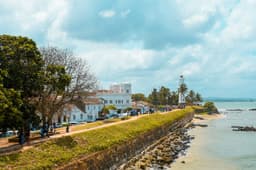
| Southwest and south coast | Colombo, Bentota, Hikkaduwa, Galle, Mirissa, Tangalle | December to April | May, and October to November |
| Hill country | Kandy, Nuwara Eliya, Ella, Horton Plains | January to April | October to December |
| Cultural Triangle | Sigiriya, Dambulla, Polonnaruwa, Anuradhapura | February to September | October to December |
| East coast | Trincomalee, Pasikudah, Batticaloa, Arugam Bay | May to September | November to January |
| North | Jaffna, Mannar | February to September | October to December |
"Monsoon" in Sri Lanka rarely means all-day rain. More often it means an afternoon or overnight downpour, rougher seas and grey skies, with dry spells between.
How do Sri Lanka's monsoons and seasons work?
Sri Lanka's Department of Meteorology divides the year into four climate seasons rather than the summer and winter most visitors expect. The island's central mountains block rain clouds, so when one side is wet the other is usually dry. That single fact explains almost every recommendation in this guide.
| Season | Months | Where it rains | Where it is dry |
|---|---|---|---|
| First inter-monsoon | March to April | Afternoon thunderstorms island-wide, heaviest in the southwest | Mornings are usually clear almost everywhere |
| Southwest monsoon | May to September | West coast, south coast, western hill slopes | East coast, north, Cultural Triangle |
| Second inter-monsoon | October to November | Most of the island, with the highest risk of cyclones and floods | No region is reliably dry |
| Northeast monsoon | December to February | North, east coast, eastern hill slopes | West coast, south coast, most of the hill country |
You will often see the words Yala and Maha used for the two monsoons. Strictly, they are the names of Sri Lanka's two rice cultivation seasons: Maha runs roughly September to March and is fed by the northeast monsoon, while Yala runs roughly May to August with the southwest monsoon. They are useful shorthand, but the official monsoon months are the ones in the table above.
What about cyclones?
The Bay of Bengal cyclone season peaks in October to December. Most storms pass north towards India or Bangladesh, but not all. In late November 2025, Cyclone Ditwah caused severe flooding and landslides across Sri Lanka and damaged the Colombo to Badulla railway at more than 200 locations. If you travel in October, November or early December, build a spare day into your plans and buy travel insurance that covers weather disruption.
What is the weather like in Sri Lanka month by month?
Temperatures barely change through the year at sea level: Colombo's average daily high moves only between about 30 and 32 degrees Celsius. What changes is rainfall, and altitude. Nuwara Eliya, at around 1,870 metres, averages highs near 20 degrees Celsius with nights around 10 to 14 degrees, so pack a fleece even in March.
Average daily maximum temperature (degrees Celsius)
| Month | Colombo | Galle | Kandy | Nuwara Eliya | Trincomalee |
|---|---|---|---|---|---|
| January | 31.4 | 29.9 | 27 | 19.9 | 28.9 |
| February | 31.6 | 30.7 | 28 | 21.0 | 30.1 |
| March | 32.0 | 31.6 | 30 | 22.3 | 31.7 |
| April | 32.0 | 31.4 | 30 | 22.5 | 33.4 |
| May | 31.5 | 30.4 | 29 | 21.5 | 35.2 |
| June | 30.7 | 29.4 | 28 | 19.2 | 35.4 |
| July | 30.3 | 29.0 | 27 | 18.6 | 35.3 |
| August | 30.3 | 29.0 | 28 | 19.0 | 35.3 |
| September | 30.4 | 29.2 | 28 | 19.5 | 34.8 |
| October | 30.4 | 29.4 | 28 | 19.7 | 32.4 |
| November | 30.6 | 29.9 | 27 | 19.8 | 29.8 |
| December | 30.9 | 29.9 | 27 | 19.4 | 28.8 |
Average monthly rainfall (millimetres)
| Month | Colombo | Galle | Kandy | Nuwara Eliya | Trincomalee |
|---|---|---|---|---|---|
| January | 80 | 87 | 79 | 116 | 152 |
| February | 77 | 71 | 74 | 73 | 96 |
| March | 103 | 90 | 71 | 72 | 72 |
| April | 249 | 202 | 188 | 134 | 55 |
| May | 314 | 316 | 144 | 172 | 48 |
| June | 197 | 184 | 132 | 168 | 26 |
| July | 123 | 173 | 128 | 155 | 51 |
| August | 116 | 162 | 113 | 132 | 67 |
| September | 264 | 261 | 155 | 161 | 113 |
| October | 359 | 345 | 264 | 247 | 216 |
| November | 346 | 283 | 296 | 226 | 376 |
| December | 171 | 176 | 196 | 183 | 339 |
| Year | 2,397 | 2,348 | 1,840 | 1,838 | 1,609 |
Figures are long-term averages (1991 to 2020 normals where available, rounded) compiled from national weather station data. Individual years vary, so treat them as a guide to likelihood rather than a forecast. Sea temperatures stay around 27 to 29 degrees Celsius all year, so the question is never whether the water is warm, only whether it is calm.
What is the best time to visit Sri Lanka each month?
This summary shows which side of the island is dry each month and how busy it tends to be.
| Month | Best region | Weather rating | Crowds and prices | Highlights |
|---|---|---|---|---|
| January | South, west, hills | Excellent | High | Thai Pongal, Duruthu Perahera, whale season |
| February | South, west, hills, Cultural Triangle | Excellent | High | Navam Perahera, driest month in Colombo |
| March | South, west, hills, Cultural Triangle | Very good | Medium to high | Clear hill views, peak blue whale sightings |
| April | Hills, Cultural Triangle, east starts | Good, with storms | Medium, busy locally mid-month | Sinhala and Tamil New Year, Nuwara Eliya season |
| May | East, north, Cultural Triangle | Good in the east | Low | Vesak, Arugam Bay surf begins |
| June | East, north | Very good in the east | Low to medium | Poson, Trincomalee at its driest |
| July | East, north, Cultural Triangle | Very good in the east | Medium to high | Surf peak, Kataragama festival, Gathering begins |
| August | East, north, Cultural Triangle | Very good in the east | High | Kandy Esala Perahera, Minneriya Gathering |
| September | East, Cultural Triangle | Good | Low | Quiet roads, last of the east coast season |
| October | No reliably dry region | Poor to fair | Lowest | Discounts, green landscapes |
| November | South coast late in the month | Poor to fair | Low | Deepavali, whale season restarts |
| December | South, west, hills (from mid-month) | Good to very good | Very high over the holidays | Adam's Peak season opens, Christmas |
January
January is one of the two best months for a classic loop. The northeast monsoon keeps the south and west dry, Colombo averages about 80 mm of rain, and the hill country has cool, clear mornings. The east coast, by contrast, is still wet and seas are rough. The first half of the month is expensive because of holiday demand; from mid-January, prices ease slightly.
February
February is arguably the single most reliable month, with the lowest rainfall in Colombo and Galle and settled weather in Kandy, Ella and around Sigiriya. It is ideal for combining beaches, the hills and ancient cities in one trip. Book popular beach hotels and Sigiriya-area lodges early, as this is peak season for European visitors.
March
March still delivers dry conditions in most places, and it is often the best month for blue whale sightings off Mirissa as seas are calm. Heat builds on the plains (Colombo and Galle average highs around 32 degrees), and late afternoon storms begin to appear towards the end of the month as the first inter-monsoon arrives.
April
April is a transition month. Mornings are usually bright but afternoon thunderstorms are common in the southwest, where rainfall jumps to about 200 to 250 mm. The hill country is at its warmest and busiest locally: Nuwara Eliya fills up for the April season of races and events around the Sinhala and Tamil New Year on 13 and 14 April, when many shops and businesses close for a few days. The east coast starts to dry out.
May
The southwest monsoon arrives, making May the wettest month on the south coast (Galle averages about 316 mm). Switch your beach time to the east: Trincomalee and Pasikudah are hot and dry, and the Arugam Bay surf season gets going. Vesak, the full moon festival of lanterns, is a beautiful time to be in Colombo or Kandy. May is also one of the cheapest months to travel.
June
June is excellent for the east coast, with Trincomalee averaging only about 26 mm of rain, and good for the Cultural Triangle, which is dry but very hot. The west and south stay unsettled with rough seas, and many southern beaches fly red flags. Poson, which marks the arrival of Buddhism in Sri Lanka, draws big crowds of pilgrims to Anuradhapura and Mihintale.
July
July is peak season on the east coast and for surfing at Arugam Bay. The Cultural Triangle is dry, elephants begin to gather at Minneriya and Kaudulla as water sources elsewhere shrink, and the Kataragama festival usually draws pilgrims to the south in July or August. Prices rise with northern hemisphere school holidays, so book east coast stays early.
August
August is busy and festive. The Kandy Esala Perahera, one of Asia's great processions, usually falls in July or August, the Minneriya Gathering is at or near its peak, and the east coast remains sunny. In 2026 the Kandy procession ran from 18 to 27 August. Kandy hotels sell out months ahead during the final nights of the Perahera.
September
September is a quiet shoulder month. The east coast is still mostly dry early in the month, and the Cultural Triangle is pleasant, but rain returns to Colombo and Galle (around 260 mm each). Yala National Park's main blocks are often closed for part of September and October in dry years; in 2026 Blocks 1 and 2 closed from 14 September to 15 October because of drought.
October
October is the wettest month in Colombo, Galle, Kandy and Nuwara Eliya, and no region is reliably dry. It is also the cheapest month, with the fewest visitors. If you go, focus on a flexible mix of the Cultural Triangle and Kandy, accept some rain, and avoid tight connections or hikes that depend on clear views.
November
November brings the northeast monsoon to the east and north (Trincomalee averages about 376 mm), while the south coast gradually dries out towards the end of the month. Whale watching boats restart from Mirissa, and Hindu communities celebrate Deepavali, which fell on 8 November in 2026. Late November can be a smart shoulder window for the south.
December
From mid-December, the south and west coasts are usually back in good shape and the hill country clears. The Adam's Peak pilgrimage season opens on the Unduvap full moon (23 December 2026). Christmas and New Year are the most expensive and crowded weeks of the year, so reserve flights and hotels well ahead if you plan to travel then.
When are Sri Lanka's main festivals in 2026 and 2027?
Every full moon, or Poya, is a public holiday in Sri Lanka. Alcohol sales are banned on Poya days, and many bars close, so check the calendar if you are planning a celebration. The bigger festivals are worth planning a trip around, but expect busier roads and fuller hotels.
| Festival | What it is | 2026 date | 2027 date |
|---|---|---|---|
| Thai Pongal | Tamil harvest festival | 15 January | Mid-January (confirm locally) |
| Duruthu Poya | Full moon, Kelaniya Temple procession | 3 January | 22 January |
| Navam Poya | Full moon, Gangaramaya Perahera in Colombo | 1 February | 20 February |
| Sinhala and Tamil New Year | National new year, family celebrations, many businesses close | 13 to 14 April | Around 13 to 14 April |
| Vesak Poya | Birth, enlightenment and passing of the Buddha, lanterns and pandals | 1 May | 20 May |
| Poson Poya | Arrival of Buddhism, pilgrimages to Anuradhapura and Mihintale | 29 June | 18 June |
| Kandy Esala Perahera | Ten nights of processions for the Sacred Tooth Relic | 18 to 27 August | Usually July or August, dates announced by the temple |
| Deepavali | Hindu festival of lights | 8 November | Late October or November (confirm locally) |
| Adam's Peak season | Pilgrimage climb to Sri Pada, 2,243 metres | Opens 23 December 2026 (Unduvap Poya) | Runs to Vesak, 20 May 2027 |
Poya dates follow the lunar calendar and are published in the government gazette; Islamic holidays can shift by a day depending on moon sighting. For the Kandy Perahera, the official schedule is released by the Temple of the Sacred Tooth Relic a few months before the event.
When is the best time for wildlife, whales and surfing?
Nature seasons do not always match beach weather. For park by park advice, see our Sri Lanka safari guide.
| Experience | Where | Best months | Notes |
|---|---|---|---|
| Blue and sperm whales | Mirissa (south coast) | November to April, best December to April | Boats do not run in the southwest monsoon |
| Whales and dolphins | Trincomalee (east coast) | Roughly March to August | Calmer, less crowded alternative in the northern summer |
| Spinner dolphins | Kalpitiya (northwest) | November to April | Large pods often seen early morning |
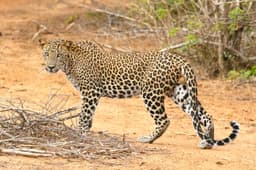
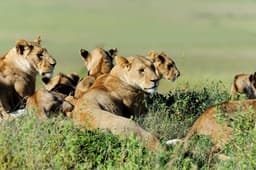
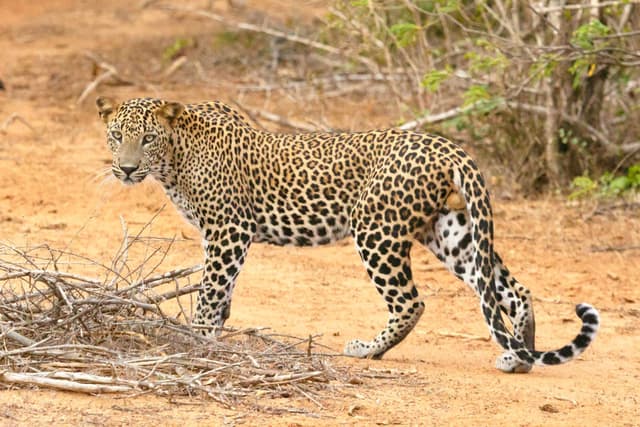
| Leopards | Yala National Park | February to July | Drier tracks and lower vegetation; blocks may close around September to October |
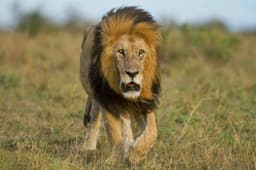
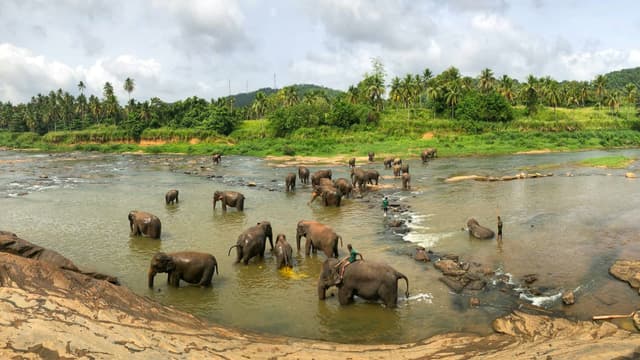
| Elephant Gathering | Minneriya and Kaudulla | July to October, peak August to September | Hundreds of elephants graze around the shrinking reservoirs |
| Elephants year round | Udawalawe National Park | All year | Reliable sightings in any month |
| Surfing | Arugam Bay (east) | May to October, peak June to August | Main point break is best for experienced surfers |
| Surfing | Weligama, Hikkaduwa, Midigama (south and west) | November to April | Weligama is ideal for beginners |
| Birdwatching | Sinharaja, Bundala, Kumana | November to April | Migrant species arrive from the north |
A note on Yala closures
Yala's busiest sections, Blocks 1 and 2, are frequently closed for several weeks between September and October, either for drought relief or maintenance. The exact dates change every year and are announced at short notice by the Department of Wildlife Conservation. If you are travelling then, have a backup such as Udawalawe, Bundala or Lunugamvehera, and confirm park status a few days before your safari.
When is the best time for the hill country and the scenic train?
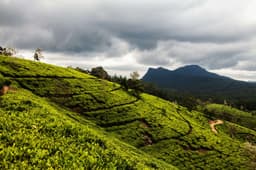
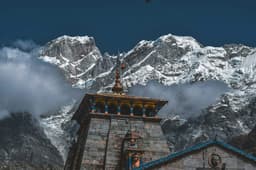
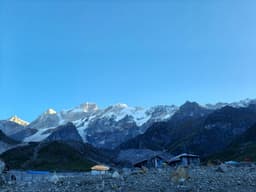
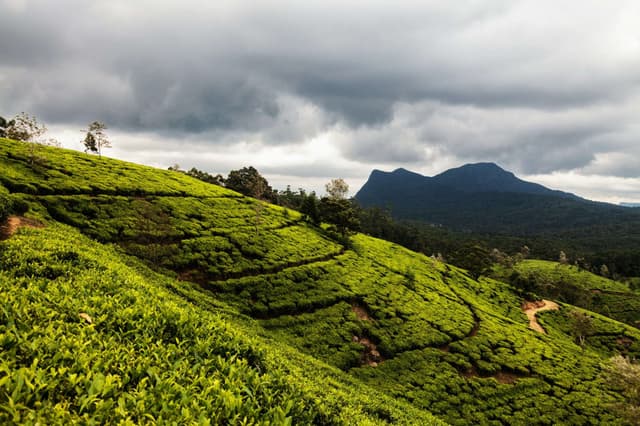
The hill country is at its clearest from January to April. Horton Plains and World's End, at around 2,100 metres, often cloud over by late morning, so arrive at opening time for the view. From May to September, the western slopes around Hatton and Adam's Peak are misty and wet, but Ella, on the eastern side, often stays drier. October to December is the wettest period across the highlands.
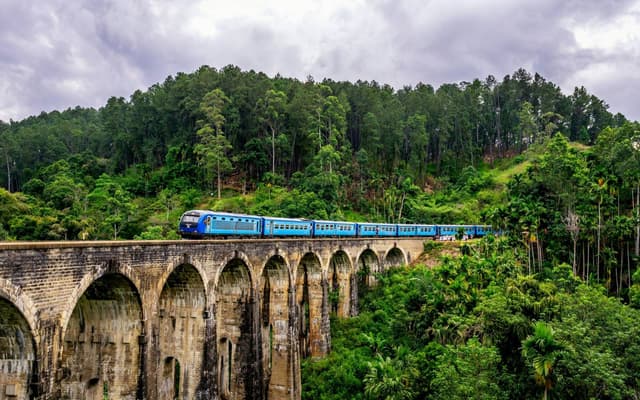
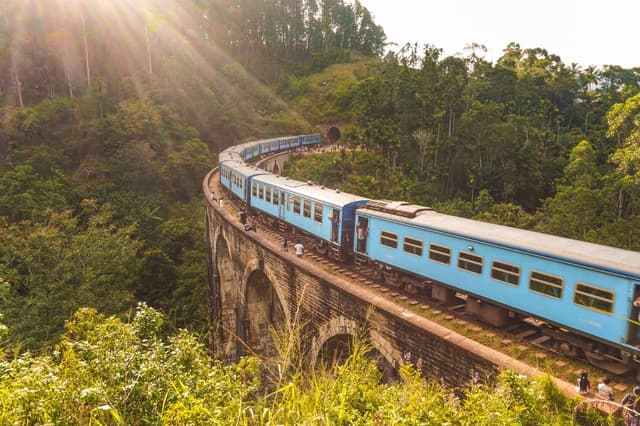
The famous Kandy to Ella train needs a timely update. Cyclone Ditwah badly damaged the Colombo to Badulla line in November 2025. As of September 2026, the scenic Nanu Oya to Ella stretch through the tea estates has reopened, but the section between Rambukkana and Kandy was still under repair, with officials targeting a reopening between late 2026 and early 2027. Until through services resume, most travellers go by road between Kandy and the hills (about 140 km from Kandy to Ella, roughly four to five hours) and ride the train for the most scenic part. Our guide on how to get around Sri Lanka covers buses, private drivers and train booking in more detail.
When can you climb Adam's Peak?
The official pilgrimage season runs from the Unduvap full moon in December to the Vesak full moon in May, when the path is lit at night, tea stalls are open and the weather is most likely to give a clear sunrise. Most climbers start from Dalhousie around 2 am. Outside the season the climb is possible but unlit, lonelier and often in cloud, so it is not recommended for most visitors. Weekends and Poya days are extremely crowded.
When is the cheapest time to visit Sri Lanka?
The cheapest months are usually May, June, September and October, when the southwest coast is wet and international demand is low. Hotels on the south coast commonly discount rooms in these months, and you will find more space at Sigiriya and in Ella. The trade-off is weather on the busy southern beaches. For day to day budgets and typical costs, see our breakdown of whether Sri Lanka is expensive.
| Season | Months | Hotel price trend | What to expect |
|---|---|---|---|
| Peak | Late December to early January | Highest of the year, minimum stays common | Crowded south coast, book three to six months ahead |
| High | Mid-January to March, and July to August | High | Best weather in the main region for that season |
| Shoulder | April, November, early December | Moderate | Mixed weather, good value, some storms |
| Low | May to June, September to October | Lowest, discounts on the south coast | Rain on the southwest coast, quiet sites, east coast still good until September |
A useful budget tip: travel in May, June or September and base yourself on the east coast and in the Cultural Triangle. You get dry weather and low season prices at the same time. As a currency reference, 1 US dollar was worth roughly 330 Sri Lankan rupees as of late September 2026; check the current rate before you travel, as it moves.
What is the best time to visit Sri Lanka for your type of trip?
| Traveller type | Best months | Why |
|---|---|---|
| Honeymooners | January to March (south), June to August (east) | Calm seas and reliable sunshine for boutique beach stays |
| Families | February to March, July to August | Dry weather, fits school holidays, whales or elephants for children |
| Budget travellers | May to June, September | Low season rates, east coast still dry |
| Wildlife lovers | February to April, August to September | Leopards in Yala, whales off Mirissa, the Minneriya Gathering |
| Surfers | June to August (Arugam Bay), December to March (south) | Consistent swell on the dry coast of each season |
| Culture and festivals | May (Vesak), August (Kandy Perahera), April (New Year) | Once a year celebrations at their most spectacular |
| Hikers | January to April | Clear views at Horton Plains, Ella Rock and Adam's Peak |
Honeymoon and couples
For a first honeymoon trip, February and March combine a few nights in the hills with a quiet beach stay in Tangalle or Mirissa, without the holiday rush. In the northern summer, pair Sigiriya with Trincomalee or Pasikudah. Our Sri Lanka honeymoon guide suggests romantic stays and experiences for each season.
Families
Families usually do best in February, March or during the July and August holidays on the east side. Keep drives short and plan activities for the cooler mornings. See Sri Lanka with family for child-friendly places and pacing.
Beach lovers
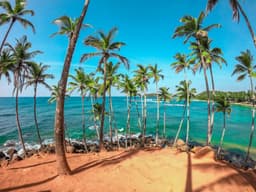
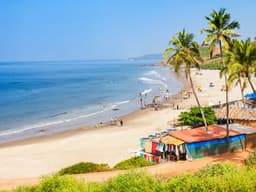
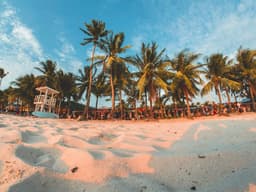
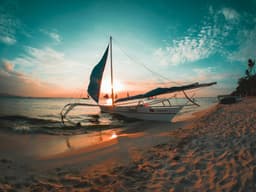
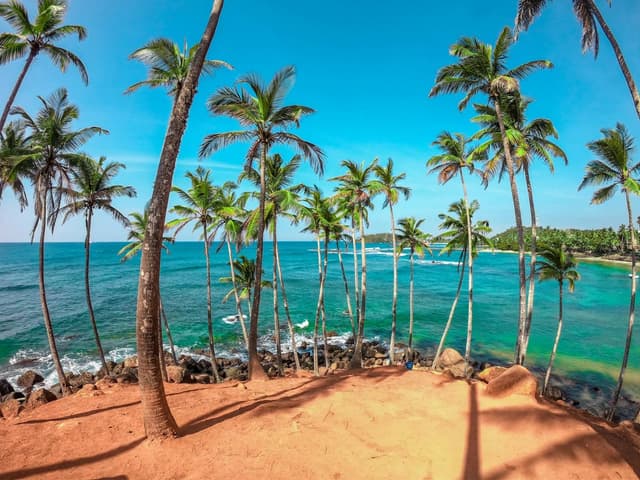
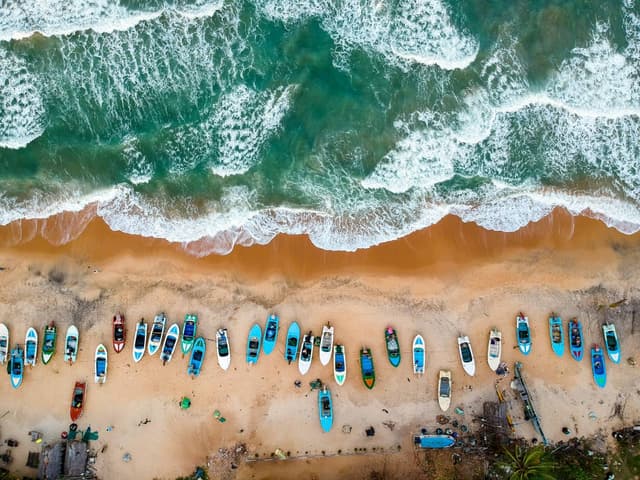
If beaches are the priority, the rule is simple: south and west from December to April, east from May to September. Our pick of the best beaches in Sri Lanka notes which beaches are safe for swimming in which months.
Do you need a visa to visit Sri Lanka, and does the season affect it?
Most visitors need an Electronic Travel Authorisation (ETA) before arrival, whatever the season. From 25 May 2026, Sri Lanka's Department of Immigration and Emigration made the 30-day tourist ETA free of charge for citizens of 40 countries, including the UK, the USA, Australia, India, China, Japan, Germany, France and the UAE. The free ETA allows a 30-day stay with double entry, and extensions are possible for a fee.
Free does not mean automatic: eligible travellers must still apply online before flying, and other nationalities pay a fee. Apply only through the official Sri Lanka ETA website to avoid agency mark-ups. Travellers flying in from South Asia will be glad to know that Nepal, India and Pakistan are all on the free ETA list. Rules have changed several times since 2024, so check the official site before you book.
| Item | Current position (as of September 2026) |
|---|---|
| Document needed | Tourist ETA, applied for online before arrival |
| Free ETA countries | 40 countries from 25 May 2026 |
| Length of stay | 30 days, double entry |
| Extensions | Possible through the Department of Immigration and Emigration, fee applies |
| Passport validity | At least six months from arrival is the standard requirement |
When should you avoid visiting Sri Lanka?
There is no month to avoid entirely, but some combinations are best skipped. October and November are the riskiest months for island-wide rain, floods and landslides, so avoid tight schedules then. May to September is a poor time for a south coast beach holiday, and November to January is a poor time for the east coast. Christmas and New Year are not bad for weather, but they are the most crowded and expensive weeks.
- Avoid the south coast for beaches: May to September, when seas are rough and many beaches are unsafe for swimming.
- Avoid the east coast: November to January, when the northeast monsoon brings heavy rain and many east coast hotels close.
- Be cautious island-wide: October to November, the second inter-monsoon, with the highest flood and cyclone risk.
- Expect closures: on Poya days (no alcohol sales) and over the Sinhala and Tamil New Year in mid-April.
Once you have picked your months, our list of places to visit in Sri Lanka will help you decide where to spend your time. If you would rather have flights, transfers and hotels arranged around the right season, you can compare Sri Lanka holiday packages.
Frequently asked questions
What is the best month to visit Sri Lanka?
February is the most reliable single month to visit Sri Lanka. Colombo and Galle are at their driest, with about 70 to 80 mm of rain, the hill country has clear mornings, and the Cultural Triangle is pleasant rather than scorching. January and March are close runners-up. If you can only travel in the northern summer, June and July are best, as long as you base your beach time on the east coast.
Which is the rainy season in Sri Lanka?
Sri Lanka has two main rainy seasons on opposite coasts. The southwest monsoon soaks the west coast, south coast and western hills from May to September, while the northeast monsoon brings rain to the north and east from December to February. Between them, October and November bring heavy rain to most of the island. The terms Yala and Maha, often used for these monsoons, are strictly rice farming seasons.
Is Sri Lanka good to visit in June, July and August?
Yes. From June to August the east coast of Sri Lanka, including Trincomalee, Pasikudah and Arugam Bay, is dry, sunny and calm, and Arugam Bay's surf is at its best. The Cultural Triangle is dry but hot, and August brings the Kandy Esala Perahera and the Minneriya elephant Gathering. The south and west coasts are showery with rough seas, so avoid them for swimming.
When is the best time for whale watching in Sri Lanka?
For blue and sperm whales off Mirissa on Sri Lanka's south coast, go between November and April, with the calmest seas and best sightings usually from December to April. In the northern summer, Trincomalee on the east coast is the alternative, with whales and dolphins seen roughly from March to August. Choose an operator that follows responsible whale watching guidelines and keeps a respectful distance.
What is the cheapest time to visit Sri Lanka?
The cheapest time to visit Sri Lanka is usually May, June, September and October, the low season on the southwest coast. Many south coast hotels discount rooms and major sites are quieter. To get both low prices and good weather, spend most of your time on the east coast and in the Cultural Triangle, which stay largely dry from May to September.
Is October a good time to visit Sri Lanka?
October is the wettest month in Colombo, Galle, Kandy and Nuwara Eliya, and no region of Sri Lanka is reliably dry. It is, however, the cheapest and quietest month. If you travel then, expect heavy afternoon or evening downpours, keep your plans flexible, allow buffer days for road delays and choose the Cultural Triangle and Kandy over beach-focused stays.
When is the best time to visit Ella and the hill country?
The best time to visit Ella, Nuwara Eliya and Sri Lanka's hill country is January to April, when skies are clearest for viewpoints such as Little Adam's Peak, Ella Rock and Horton Plains. Ella, on the eastern slopes, often stays reasonably dry from May to August too. October to December is the wettest period. Pack a warm layer, as highland nights can drop to about 10 degrees Celsius.
Is the Kandy to Ella train running in 2026?
Only in part. Cyclone Ditwah damaged the Colombo to Badulla line in November 2025. As of September 2026, the scenic Nanu Oya to Ella section had reopened, but the Rambukkana to Kandy stretch was still being repaired, with officials targeting late 2026 or early 2027. Most travellers go by road from Kandy and ride the most scenic section by train. Check the latest status before you book.
When is the Kandy Esala Perahera?
The Kandy Esala Perahera usually takes place over about ten nights in July or August, ending on or near a full moon. In 2026 it ran from 18 to 27 August, with the grand Randoli procession on the final night. The 2027 dates are announced by the Temple of the Sacred Tooth Relic in Kandy a few months in advance, so check their schedule before booking hotels.
When is the best time to see leopards in Yala National Park?
February to July is usually best for leopards in Yala National Park, when vegetation is lower and animals gather near water holes. Yala's busiest sections, Blocks 1 and 2, are often closed for a few weeks between September and October. In 2026 they closed from 14 September to 15 October because of drought, so confirm park status close to your travel date.
Do I need a visa for Sri Lanka in 2026?
Most visitors need a Sri Lanka Electronic Travel Authorisation (ETA) before arrival. Since 25 May 2026, the 30-day tourist ETA is free for citizens of 40 countries, including the UK, USA, Australia, India, Nepal, China and much of Europe, but you must still apply online. Other nationalities pay a fee. Apply only on the official eta.gov.lk website and check the rules before travelling.
When can you climb Adam's Peak?
The Adam's Peak pilgrimage season runs from the Unduvap full moon in December to the Vesak full moon in May. For the 2026 to 2027 season that means from 23 December 2026 to 20 May 2027. During the season the path is lit and tea stalls are open. Most climbers start around 2 am from Dalhousie to reach the 2,243 metre summit for sunrise.