












































+977-9768558250
Explore by Country
See all 22 Thailand packages
Most popular pick
See all 22 Thailand packages →
See all 11 Vietnam packages
Most popular pick
See all 11 Vietnam packages →
See all 10 Indonesia (Bali) packages
Most popular pick
See all 10 Indonesia (Bali) packages →
See all 7 Maldives packages
Most popular pick
See all 7 Maldives packages →
See all 10 China packages
Most popular pick
See all 10 China packages →
See all 13 Sri Lanka packages
Most popular pick
See all 13 Sri Lanka packages →
See all 9 Malaysia packages
Most popular pick
See all 9 Malaysia packages →
See all 8 Singapore packages
Most popular pick
See all 8 Singapore packages →
See all 2 Kenya packages
Most popular pick
See all 2 Kenya packages →
See all 16 India packages
Most popular pick
See all 16 India packages →
See all 3 Dubai packages
Most popular pick
See all 3 Dubai packages →
See all 7 Nepal packages
Most popular pick
See all 7 Nepal packages →
See all 6 Philippines packages
Most popular pick
See all 6 Philippines packages →
Search Tours or Places
Blog / Thailand

How to Get Around Thailand: Flights, Trains, Buses and Ferries (Bangkok to Phuket and More)

34 min read 30 Oct 2026
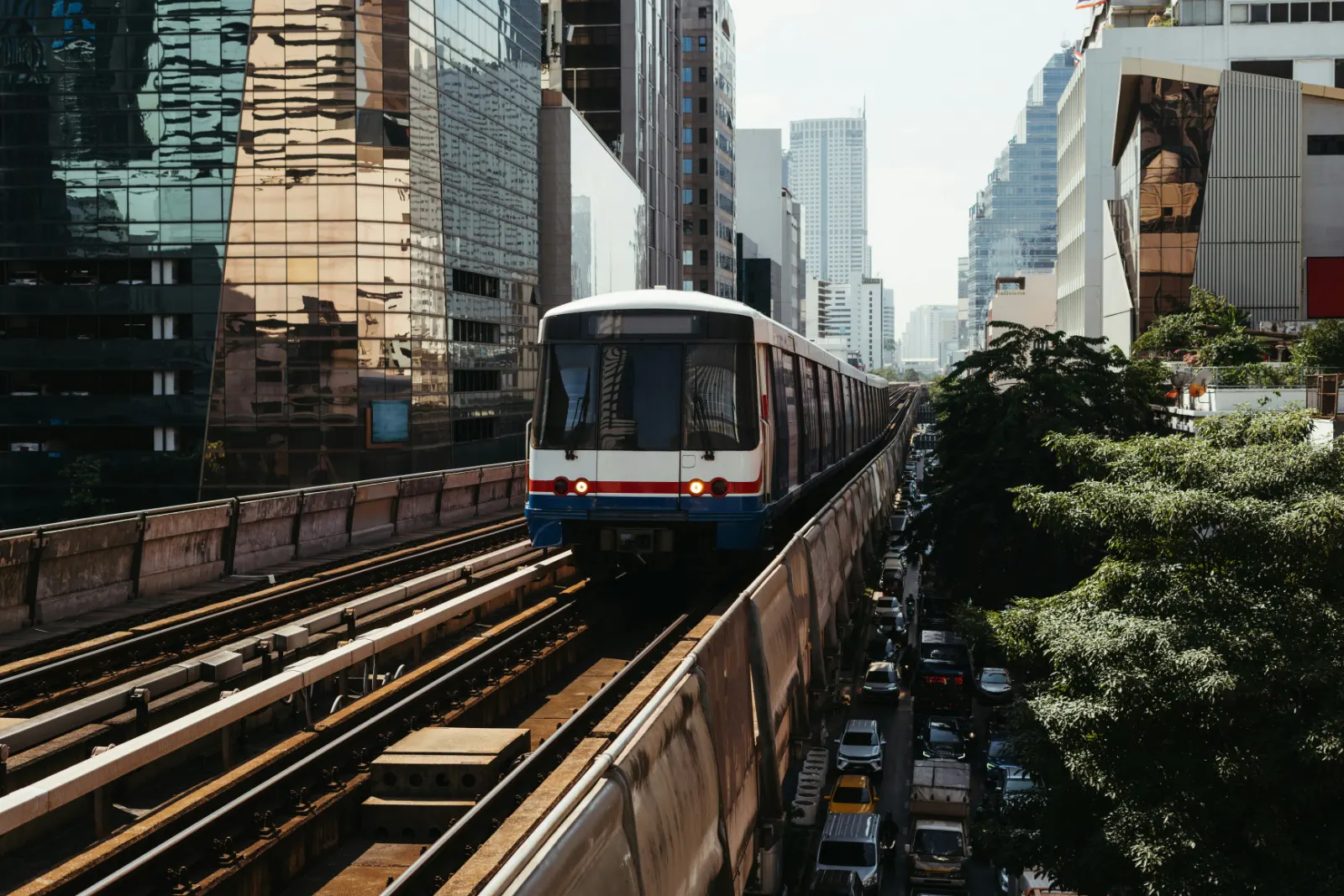
BTS Skytrain running on an elevated track through central Bangkok traffic and towers

Short answer: The easiest way to get around Thailand is to fly the long legs and use trains, buses and boats for the shorter ones. For Bangkok to Phuket, a direct flight takes about 1 hour 25 to 1 hour 30 minutes, an overnight bus takes roughly 12 to 15 hours, and the train to Surat Thani plus a connecting bus usually takes 14 hours or more in total. Chiang Mai is a short flight or one night on a sleeper train, Pattaya is about two and a half hours by road, and most island trips end with a ferry or speedboat.

This guide is for travellers moving between Bangkok, Chiang Mai, Pattaya, Phuket, Krabi and the Gulf islands such as Koh Samui. It explains which Bangkok airport, station or bus terminal you need for each route, how long each option really takes, how to book, and how to move around once you arrive. There are no fares here, because ticket prices change daily; journey times and timetables were checked on 30 Oct 2026 and can still change, so confirm with the operator before you travel. For the wider picture of the country, start with our complete Thailand travel guide.

What is the easiest way to get around Thailand?

For most visitors, the easiest way to get around Thailand is a mix: domestic flights for long distances such as Bangkok to Phuket or Chiang Mai, the train or a bus for routes under about 300 km, and ferries or speedboats for the islands. Inside Bangkok, the BTS Skytrain and MRT metro beat road traffic, and ride-hailing apps cover most other cities.

Chiang Mai is around 700 km north of Bangkok by road and Phuket more than 800 km south, so the mode you pick decides whether a transfer takes an hour or most of a day. A rule of thumb:

  • Under about 300 km (Pattaya, Hua Hin, Ayutthaya, Kanchanaburi): bus, minivan, train or private car. Flying saves nothing once you add airport time.
  • 300 to 600 km: a judgement call. An overnight train or bus saves a hotel night; a flight saves the day.
  • Over 600 km (Chiang Mai, Phuket, Krabi, Samui): fly if time is short, take the sleeper train if the journey is part of the trip.
  • Islands: there is always a boat at the end, apart from Phuket, which is joined to the mainland by road bridges.

Route matrix: main tourist routes, modes and journey times

This table gives typical times for the corridors most travellers use. Flight times are the airlines' own scheduled block times; train times come from published timetables; bus and ferry times are typical operator schedules and can stretch with traffic, weather or a slow connection. Checked: 30 Oct 2026.

RouteModeTypical journey timeLeaves from
Bangkok to PhuketDirect flightAbout 1 hr 25 to 1 hr 30 minSuvarnabhumi (BKK) or Don Mueang (DMK)
Bangkok to PhuketOvernight or day busRoughly 12 to 15 hrSouthern Bus Terminal (Sai Tai Mai)
Bangkok to PhuketTrain to Surat Thani, then busAbout 9 to 11 hr by train, then roughly 4 to 5 hr by busKrung Thep Aphiwat Central Terminal
Bangkok to Chiang MaiDirect flightAbout 1 hr 10 to 1 hr 20 minBKK or DMK
Bangkok to Chiang MaiSleeper or day trainAbout 10 hr 20 min (day express) to 13 hr 50 min (overnight)Krung Thep Aphiwat Central Terminal
Bangkok to Chiang MaiBusRoughly 10 hr on express services, longer on slower busesMo Chit 2 (Northern Bus Terminal)
Bangkok to PattayaBusAbout 2 hr 30 min, traffic permittingEkkamai (Eastern Bus Terminal) or Mo Chit 2
Bangkok to PattayaTrainAbout 2 hr 30 min (weekend express) to 3 hr 40 min (daily ordinary)Hua Lamphong station
Bangkok to KrabiDirect flightAbout 1 hr 20 to 1 hr 35 minBKK or DMK
Bangkok to KrabiBusRoughly 11 to 13 hrSouthern Bus Terminal (Sai Tai Mai)
Bangkok to Koh SamuiDirect flightAbout 1 hr 10 to 1 hr 20 minMainly Suvarnabhumi (BKK); Bangkok Airways also lists a Don Mueang route
Bangkok to Koh SamuiTrain or bus to Surat Thani, then ferry from DonsakAbout 9 to 11 hr by train to Surat Thani, then a transfer to the pier and about 1 hr 30 min by car ferryKrung Thep Aphiwat or Sai Tai Mai
Phuket to Phi PhiSpeedboat or ferryAbout 1 hr by speedboat, about 2 hr by large ferryRassada Pier, Phuket
Phuket to KrabiFerryAbout 2 hr on the direct ferry; longer on boats that stop at Phi PhiRassada Pier, Phuket
Krabi to Phi PhiFerryAbout 2 hrKhlong Chilat or Noppharat Thara Pier

Flight, train, bus or ferry: which suits you?

ModeBest forStrengthsWatch out for
Domestic flightShort trips, families with small children, Bangkok to Phuket, Chiang Mai, Krabi or SamuiFastest by far; many daily flights on the main routesTwo Bangkok airports; low-cost baggage limits; check-in closes well before departure
TrainBangkok to Chiang Mai, Bangkok to Surat Thani, travellers who want the journey to be part of the tripSleeper berths save a hotel night; room to walk around; sceneryBerths sell out at holidays; delays happen; no line to Phuket or Krabi
Long-distance busRoutes without a train, such as Phuket and Krabi; tight budgets; last-minute tripsCovers almost every town; frequent departures on busy routesLong hours on the road; night buses are tiring; keep valuables on you
Ferry or speedboatPhi Phi, Samui, Phangan, Tao, Lanta, Koh YaoThe only way to most islandsWeather cancellations, especially in the monsoon months; rough seas on speedboats

If you are still deciding which places to include, our guide to the best places to go in Thailand explains what each region is like before you work out the transport between them.

How do you get from Bangkok to Phuket?
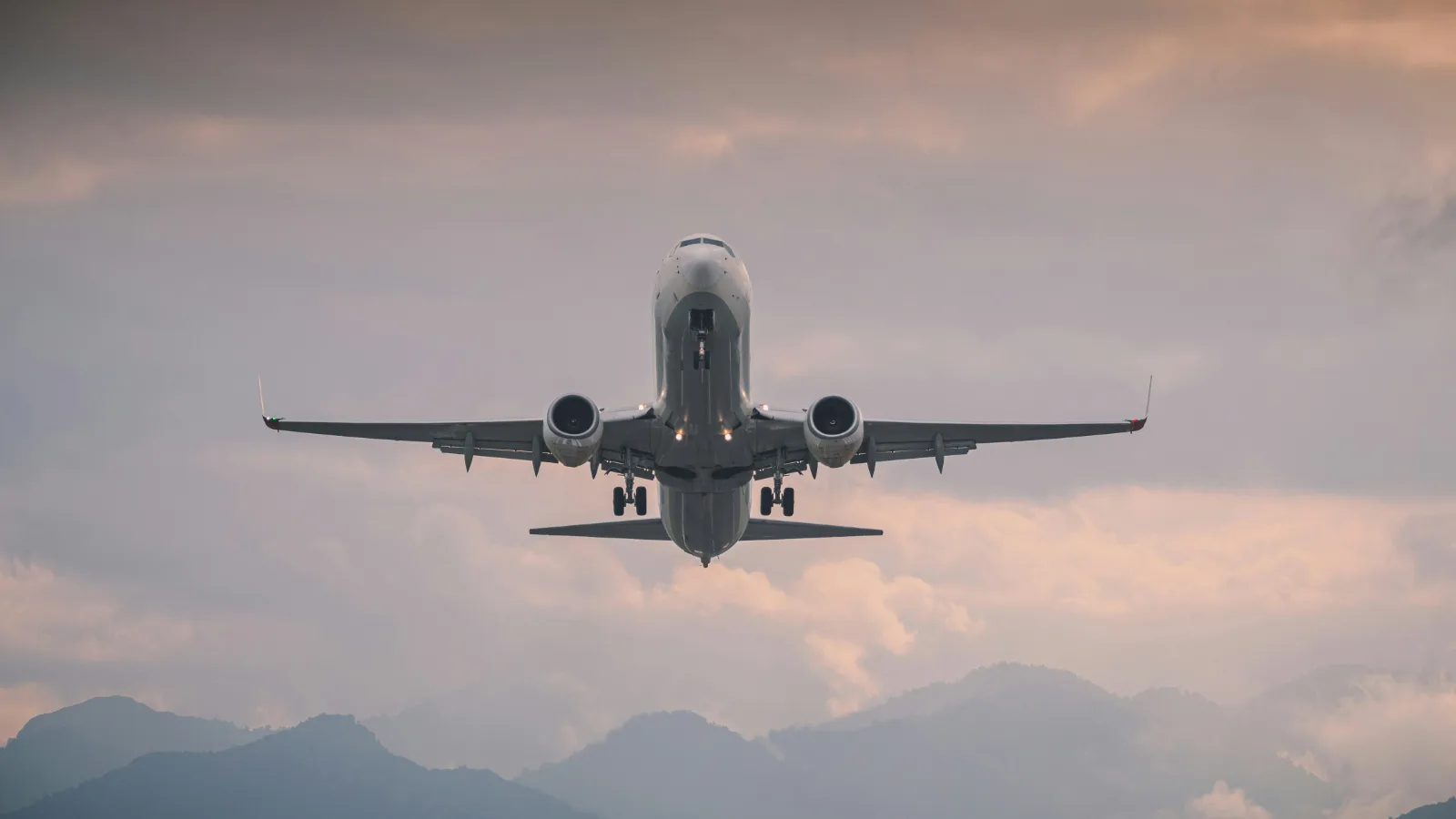
Passenger jet climbing away from the runway just after take off under a cloudy sky

The fastest way to get from Bangkok to Phuket is a direct flight of about 1 hour 25 to 1 hour 30 minutes from either Suvarnabhumi or Don Mueang. Overland, you can take a bus of roughly 12 to 15 hours from Bangkok's Southern Bus Terminal, or a train to Surat Thani followed by a bus of about 4 to 5 hours. There is no railway to Phuket and no ferry from Bangkok.

Phuket is more than 800 km from Bangkok by road. That distance is why most visitors fly, and also why the overland options are mostly overnight journeys.

Option 1: Fly from Bangkok to Phuket

Flying is the simplest choice and the one most families take. Bangkok Airways gives its direct Suvarnabhumi to Phuket flight as about 1 hour 30 minutes, and AirAsia lists non-stop Don Mueang to Phuket flights at about 1 hour 25 to 1 hour 30 minutes. Both airports have several departures a day on this route.

Which airlines use which Bangkok airport is set out in the airport section further down. Phuket International Airport is in the north of the island, so allow time to reach beaches further south such as Patong, Kata or Rawai.

Add the time to reach the Bangkok airport, check in and clear security, then the drive from Phuket airport to your beach. Door to door, a Bangkok hotel to a Phuket beach hotel usually takes about half a day even though the flight is short.

Option 2: Take the bus from Bangkok to Phuket

Long-distance buses to Phuket leave from the Southern Bus Terminal, known locally as Sai Tai Mai, on the Thonburi side of Bangkok. The government-owned Transport Co. (often written BKS or Bor Kor Sor) and several private companies run the route, with both daytime and overnight departures. Expect roughly 12 to 15 hours on the road; schedules differ between companies, so check the arrival time before you book. Most buses arrive at Phuket Bus Terminal 2, on the edge of Phuket Town.

Choose a VIP or first-class bus for a night journey, take a jacket for the air conditioning, and keep your passport, phone and cash on your lap rather than in the luggage hold.

Option 3: Train to Surat Thani, then bus or minivan to Phuket

The train is the more comfortable overland choice, but it does not go to Phuket. You ride the State Railway of Thailand (SRT) Southern Line from Krung Thep Aphiwat Central Terminal to Surat Thani station, which is in Phun Phin district outside Surat Thani town, and continue by road. Thai Train Guide's Southern Line summary lists two special express railcars that end at Surat Thani, both with reclining seats only: a daytime train leaving Bangkok at 07:30 and arriving 16:20, and an overnight one leaving 22:50 and arriving about 07:50. The sleeper trains to Hat Yai, Trang, Nakhon Si Thammarat and the far south also stop at Surat Thani, taking roughly 9 to 11 hours, but many of them arrive in the middle of the night, so pick a later evening departure if you want a morning arrival. The connecting bus or minivan from Surat Thani to Phuket takes roughly 4 to 5 hours.

On a well-timed sleeper you sleep in a berth and reach Surat Thani around dawn with the day ahead of you. Some booking platforms sell a joint train and bus ticket.

Bangkok to Phuket compared

OptionTime on the moveComfortGood for
Direct flightAbout 1 hr 25 to 1 hr 30 min in the air, about half a day door to doorHighFamilies, short holidays, honeymooners, anyone connecting from an international flight
Overnight busRoughly 12 to 15 hrMedium on a VIP bus, low on a standard busBudget travellers and late bookers
Train plus bus via Surat ThaniUsually 14 hr or more in total, including the connectionGood in a sleeper berth, then a long road legRail fans, slow travellers, anyone stopping at Khao Sok or the Gulf islands on the way

Once you arrive, our guide to things to do in Phuket covers the beaches, viewpoints and day trips worth planning around.

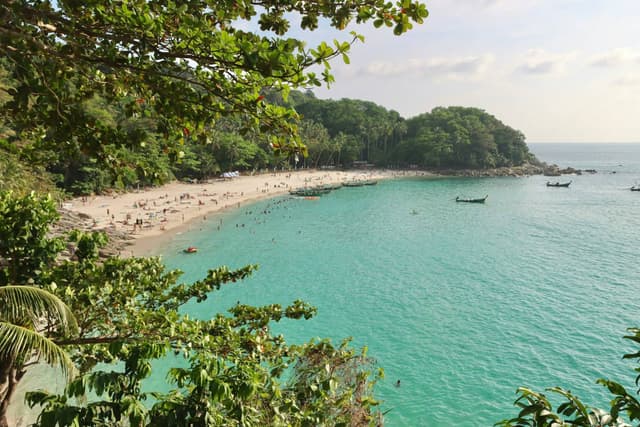
Explore Thailand tour packages
View all →
Coral Island & Nong Nooch Garden Tour

Coral Island & Nong Nooch Garden Tour

🗓 6 Days · 5 Nights
from NRs 46,000 / person
View tour →
Thailand, Singapore & Malaysia Tour with Phuket

Thailand, Singapore & Malaysia Tour with Phuket

🗓 10 Days · 9 Nights
from NRs 1,01,000 / person
View tour →
Bangkok Pattaya Tour

Bangkok Pattaya Tour

🗓 5 Days · 4 Nights
from NRs 36,500 / person
View tour →
Bangkok Pattaya Phuket Tour

Bangkok Pattaya Phuket Tour

🗓 7 Days · 6 Nights
from NRs 57,500 / person
View tour →
Bangkok Krabi Tour

Bangkok Krabi Tour

🗓 6 Days · 5 Nights
from NRs 49,000 / person
View tour →
Bangkok & Koh Samui Honeymoon Tour

Bangkok & Koh Samui Honeymoon Tour

🗓 7 Days · 6 Nights
from NRs 74,500 / person
View tour →
Thailand & Vietnam Tour

Thailand & Vietnam Tour

🗓 8 Days · 7 Nights
from NRs 65,900 / person
View tour →
Bangkok Phuket Krabi Tour

Bangkok Phuket Krabi Tour

🗓 8 Days · 7 Nights
from NRs 64,800 / person
View tour →
Bangkok Phuket Tour

Bangkok Phuket Tour

🗓 6 Days · 5 Nights
from NRs 48,000 / person
View tour →
Bangkok & Krabi Tour with Free Days

Bangkok & Krabi Tour with Free Days

🗓 8 Days · 7 Nights
from NRs 59,000 / person
View tour →
Bangkok Pattaya Phuket Krabi Tour

Bangkok Pattaya Phuket Krabi Tour

🗓 9 Days · 8 Nights
from NRs 68,500 / person
View tour →
Bangkok, Chiang Rai & Chiang Mai Tour

Bangkok, Chiang Rai & Chiang Mai Tour

🗓 8 Days · 7 Nights
View tour →
Thailand, Singapore & Malaysia Family Tour

Thailand, Singapore & Malaysia Family Tour

🗓 11 Days · 10 Nights
from NRs 1,32,000 / person
View tour →
Royal Caribbean Cruise Tour

Royal Caribbean Cruise Tour

🗓 6 Days · 5 Nights
View tour →
Bangkok & Koh Phangan Full Moon Party Tour

Bangkok & Koh Phangan Full Moon Party Tour

🗓 8 Days · 7 Nights
View tour →
Phuket & Krabi Tour

Phuket & Krabi Tour

🗓 6 Days · 5 Nights
View tour →
Short Bangkok Tour

Short Bangkok Tour

🗓 4 Days · 3 Nights
from NRs 28,000 / person
View tour →
Phuket, Phi Phi & Krabi Island Escape

Phuket, Phi Phi & Krabi Island Escape

🗓 7 Days · 6 Nights
View tour →
Krabi Island Tour

Krabi Island Tour

🗓 5 Days · 4 Nights
from NRs 36,500 / person
View tour →
Phuket Tour

Phuket Tour

🗓 5 Days · 4 Nights
from NRs 37,000 / person
View tour →
Bangkok Family Friendly Tour

Bangkok Family Friendly Tour

🗓 5 Days · 4 Nights
View tour →
Bangkok & Pattaya Skydiving Tour

Bangkok & Pattaya Skydiving Tour

🗓 6 Days · 5 Nights
from NRs 1,21,000 / person
View tour →

How do you get from Bangkok to Chiang Mai?

You can get from Bangkok to Chiang Mai by direct flight in about 1 hour 10 to 1 hour 20 minutes, by train in about 10 to 14 hours, or by bus in roughly 10 hours or more. The overnight sleeper train from Krung Thep Aphiwat Central Terminal is one of the classic journeys in Thailand, while the flight is the practical choice if your holiday is short.

Flying to Chiang Mai

Bangkok Airways gives its direct Suvarnabhumi to Chiang Mai flight as approximately 1 hour 20 minutes. From Don Mueang, AirAsia lists non-stop flights by Thai AirAsia and Thai Lion Air at about 1 hour 10 to 1 hour 20 minutes. Thai Airways and Thai Vietjet also fly the route from Suvarnabhumi. Chiang Mai International Airport is close to the old city, so the last leg is short.

The sleeper train to Chiang Mai

All long-distance trains on the Northern Line now start at Krung Thep Aphiwat Central Terminal, not the old Hua Lamphong station. The rail specialist Seat61 (updated 1 Oct 2026) describes the daytime special express leaving Bangkok at 07:30 and reaching Chiang Mai around 17:50, while the overnight trains take roughly 12 and a half to 14 hours. Its current timetable lists four overnight departures:

TrainLeaves BangkokArrives Chiang MaiJourney timeGood to know
Train 10914:1504:05About 13 hr 50 minArrives well before dawn
Train 918:4007:15About 12 hr 35 minNewer Chinese-built sleeping cars and a restaurant car; Seat61's top pick
Train 1320:0508:45About 12 hr 40 minRestaurant car; the hills near Chiang Mai in daylight
Train 5122:3011:40About 13 hr 10 minLate-morning arrival

Timetables do change, so check the times on the official SRT booking site before you plan connections. Thairath reported in April 2026 that the newer red CNR sleeper carriages on the Northern Line are fully air-conditioned, with a power outlet and reading light at every bed, and that berths sell out quickly at holiday times.

The bus to Chiang Mai

Buses to Chiang Mai leave from Mo Chit 2, the Northern and Northeastern Bus Terminal near Chatuchak. Express services take roughly 10 hours, and many departures run overnight. Slower standard buses with more stops can take much longer, so check the scheduled arrival time, not only the departure time, when you book.

For what to do once you are there, see our guide to things to do in Chiang Mai.

How do you get from Bangkok to Pattaya?

The usual way to get from Bangkok to Pattaya is by bus or minivan from the Eastern Bus Terminal at Ekkamai, which takes about two and a half hours depending on traffic. You can also take a bus from Mo Chit 2, a direct bus from Suvarnabhumi Airport, a slow train from Hua Lamphong, or a taxi or private car. Pattaya is about 150 km from central Bangkok, so it is not worth flying.

Bus and minivan from Ekkamai

Ekkamai (Bangkok Eastern Bus Terminal) is on Sukhumvit Soi 63, a short walk from BTS Ekkamai station, which makes it the easiest terminal for anyone staying on Sukhumvit Road. A terminal guide updated in August 2025 lists buses to Pattaya about every 30 minutes from early morning until late evening, taking about 2.5 hours, and minivans running even more often. Ekkamai also has buses to Rayong and Ban Phe (for Koh Samet) and to Trat (for Koh Chang).

Other ways to reach Pattaya

  • From Suvarnabhumi Airport: direct buses run from the airport to Pattaya and Jomtien, which saves going into Bangkok first. This suits travellers flying in from Kathmandu who want to start their holiday at the beach.
  • From Mo Chit 2: fewer buses, but handy if you are staying in the north of Bangkok.
  • By train: one of the few routes still using the old Hua Lamphong station. A timetable summary (updated March 2025) lists a daily ordinary train leaving 06:55 and arriving about 10:34, and a weekend express leaving 06:45 and arriving 09:13. It is slow but scenic; confirm the current times with SRT before you go.
  • By taxi, Grab or private transfer: the most comfortable option for families with luggage, and the travel time depends almost entirely on Bangkok traffic.

How do you get from Bangkok to Krabi or the islands?

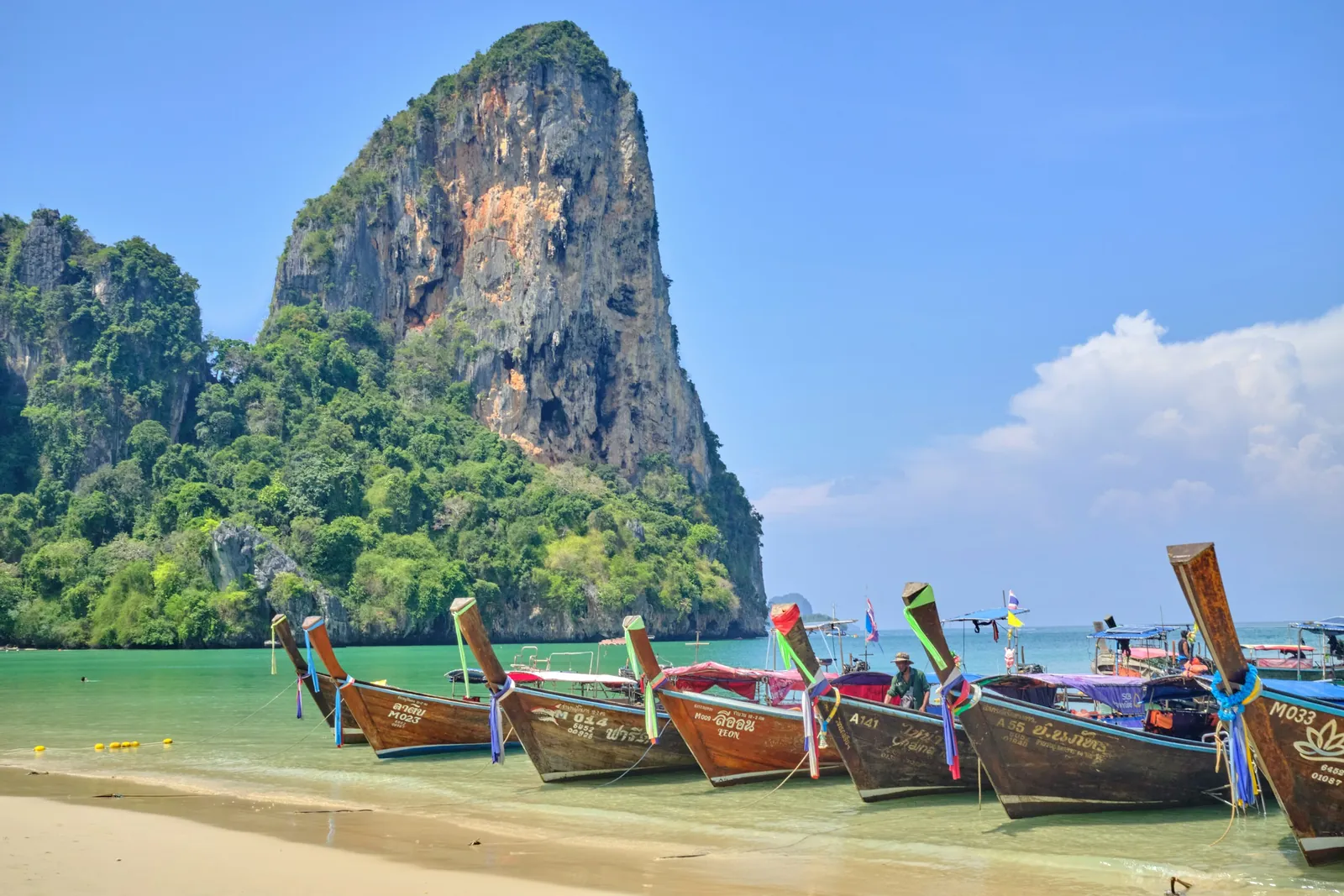
Colourful longtail boats pulled up on Ao Nang Beach below a limestone peak in Krabi

The quickest way from Bangkok to Krabi is a direct flight of about 1 hour 20 to 1 hour 35 minutes; overland, a bus takes roughly 11 to 13 hours, or you can take the train to Surat Thani and a bus of about 3 hours. For Koh Samui, Bangkok Airways flies direct from Suvarnabhumi in about 1 hour 10 to 1 hour 20 minutes, or you can travel overland to Surat Thani and take a ferry. Phi Phi, Lanta and the other Andaman islands are reached by boat from Phuket or Krabi.

Bangkok to Krabi

  • Fly: Bangkok Airways flies direct from Suvarnabhumi to Krabi in about 1 hour 25 minutes, and Thai AirAsia and Thai Lion Air fly non-stop from Don Mueang in about 1 hour 20 to 1 hour 35 minutes. Allow for the drive from Krabi Airport to Ao Nang or Krabi Town.
  • Bus: direct buses leave the Southern Bus Terminal (Sai Tai Mai) and take roughly 11 to 13 hours to Krabi bus terminal, a few kilometres north of Krabi Town.
  • Train plus bus: take the Southern Line to Surat Thani, then a bus or minivan of roughly 3 hours to Krabi.

For Railay, the Four Islands and Tiger Cave Temple, see our guide to things to do in Krabi.

Bangkok to Koh Samui, Koh Phangan and Koh Tao

Koh Samui has its own airport, which Bangkok Airways built and runs privately. Bangkok Airways gives its direct Suvarnabhumi to Samui flight as approximately 1 hour 10 to 20 minutes. Most Samui flights leave from Suvarnabhumi, although Bangkok Airways also lists a Don Mueang to Samui route. Because almost all Samui flights are on one airline, many travellers fly to Surat Thani instead and continue by bus and ferry.

The overland and sea route to the Gulf islands works like this:

  1. Bangkok to Surat Thani by train (about 9 to 11 hours) or by bus from Sai Tai Mai.
  2. Surat Thani to Donsak pier by connecting bus, which is usually included in a joint ticket.
  3. Donsak to the islands by ferry. Raja Ferry's car ferry timetable shows about 1 hour 30 minutes to Samui (Lipa Noi pier) and about 2 hours 30 minutes to Koh Phangan (Thong Sala). Lomprayah's high-speed boats take about 45 to 90 minutes per crossing, and the company also sells combined bus and boat tickets from Bangkok (Pinklao and Khaosan) to Koh Phangan and Koh Tao.

Koh Tao is also reached from Chumphon, further north on the same railway line, by high-speed boat.

Phuket and Krabi to Phi Phi, Lanta and between each other

On the Andaman side, the islands are a short boat ride from Phuket or Krabi:

RouteMain pierTypical timeNotes
Phuket to Phi PhiRassada Pier, PhuketAbout 1 hr by speedboat, about 2 hr by large ferryPhuket's main pier for Phi Phi, Krabi and Lanta boats
Krabi to Phi PhiKhlong Chilat Pier or Noppharat Thara PierAbout 2 hrDaily ferries, according to the Tourism Authority of Thailand
Phuket to KrabiRassada Pier to Khlong Chilat PierAround 2 hr direct; some boats go via Phi Phi and take much longerDepartures are mostly in the morning
Phuket to Koh Yao Noi or Koh Yao YaiBang Rong Pier or Ao Po PierAbout 15 to 30 min by speedboat, about 1 hr by long-tailSpeedboats from Bang Rong run roughly 07:30 to 17:00

Pier details and times above are from the Tourism Authority of Thailand's Krabi guide and the Phuket 101 pier guide (updated August 2026). Our Thailand itinerary guide shows how to fit a Phuket, Phi Phi and Krabi loop into one trip without doubling back.

The weather and the boats

Sea conditions decide whether island boats run, and the two coasts have different wet seasons. Thailand's rainy season runs from about mid-May to mid-October, which is when the Andaman coast (Phuket, Krabi, Phi Phi) has its rough seas. The government's seasons guide notes that the South keeps getting heavy rain until December, with more rain in the southeast, which is the Gulf side around Samui. The Tourism Authority of Thailand warned on 20 October 2026 that boat operators on the Andaman sometimes hold back when the waves run high in October and early November, and advised keeping a spare day.

Heavy rain can also stop trains. The SRT suspended or shortened many Southern Line trains after flooding in December 2024 and again from 25 November 2025. If you travel south in November or December, check SRT updates before you leave.

Which Bangkok airport do domestic flights use?

Domestic flights use both of Bangkok's airports. Suvarnabhumi (BKK) handles Thai Airways, Bangkok Airways, Thai Vietjet and some Thai AirAsia flights, while Don Mueang (DMK) is the base for low-cost airlines such as Thai AirAsia, Nok Air and Thai Lion Air. Your ticket always shows the airport code, and the two airports are far apart, so check it before you leave your hotel.

AirportMain domestic airlinesUseful to know
Suvarnabhumi (BKK)Thai Airways, Bangkok Airways, Thai Vietjet, some Thai AirAsia routesBangkok's main international airport; the main Bangkok airport for Koh Samui flights; linked to the city by the Airport Rail Link
Don Mueang (DMK)Thai AirAsia, Nok Air, Thai Lion AirBangkok's low-cost hub; linked to Krung Thep Aphiwat Central Terminal by the SRT Red Line

Airline line-ups per airport are taken from the Suvarnabhumi and Don Mueang airline tables and the airlines' own route pages, checked 30 Oct 2026. Airlines move routes between the two airports from time to time.

Tips for domestic flights

  • Carry your passport. Foreign visitors show it at check-in and security, even on domestic flights.
  • Check your baggage allowance. Low-cost fares often include only a cabin bag, and checked bags must be added when you book.
  • Check rules on power banks and lithium batteries with your airline before you pack. They are never allowed in checked bags, and some airlines also limit using them on board.
  • Do not plan a tight transfer between BKK and DMK. Moving between the two airports means a long road transfer across the city.

Flying in from Kathmandu

Travellers from Nepal usually land at Suvarnabhumi, which is where Thai Airways flies from Kathmandu, though a few low-cost services use Don Mueang. Our Kathmandu to Bangkok flight guide lists which airlines fly the route and which Bangkok airport each uses. If you land at Suvarnabhumi and fly straight on to Phuket, Krabi, Chiang Mai or Samui, book the onward flight from Suvarnabhumi too, so you avoid crossing Bangkok with bags. On separate tickets you clear immigration, collect your bags and check in again, so leave a generous gap of several hours. Entry rules for Thailand, including the Thailand Digital Arrival Card, are explained on our Thailand visa page.

Are Thai trains good for tourists?

Yes, Thai trains are good for tourists who have time, especially the overnight sleepers from Bangkok to Chiang Mai and Bangkok to Surat Thani. They are slower than flying and can run late, but a sleeper berth saves a hotel night, the carriages are roomy, and the scenery is part of the trip. All long-distance trains now leave from Krung Thep Aphiwat Central Terminal.

Krung Thep Aphiwat Central Terminal

Krung Thep Aphiwat Central Terminal, which many people still call Bang Sue Grand Station, took over long-distance services from Hua Lamphong on 19 January 2023, when 52 long-distance trains moved there, according to its Wikipedia entry and the reports it cites. It is a huge station with 26 platforms. Practical points:

  • An underground walkway links it to Bang Sue station on the MRT Blue Line.
  • The SRT Red Line runs from here north to Don Mueang airport and Rangsit, and west to Taling Chan. The Red Line operator lists about 23 minutes to Rangsit, with trains from about 05:00 to midnight.
  • Arrive early: it is a very large station, and walking to a long-distance platform with luggage takes time.
  • Hua Lamphong is not closed. Some ordinary and commuter trains still use it, including the Pattaya train, so always check which station your ticket shows.

Classes and sleeper berths

ClassWhat you getWho it suits
1st class sleeperLockable two-berth compartment, air-conditioned, on some overnight trains onlyCouples, honeymooners, a parent with one child
2nd class sleeperOpen-plan carriage with lower and upper berths made up at night, curtains for privacy, air-conditioned or fanMost travellers and families; lower berths are a little wider
2nd class seatReclining seat, often on daytime express trainsDay journeys such as Bangkok to Chiang Mai on the morning train
3rd classBasic seats, usually fan-cooledShort trips such as Bangkok to Ayutthaya or Pattaya

Selling and drinking alcohol on SRT trains and at stations has been banned since July 2014, according to Seat61. Restaurant cars run on some long-distance trains, and staff walk through selling set meals, snacks and drinks; vegetarian travellers should still carry some food of their own.

How to book Thai train tickets

Book on the SRT's official online system, D-Ticket, at dticket.railway.co.th, at any station ticket counter, or through the SRT call centre on 1690. The government reported in September 2024 that advance booking was extended to 180 days for long-distance trains on all lines; shorter trips on the same train open for booking later. Thairath's April 2026 guide describes the process: register, choose your train and berth, and pay by card or QR code. Sleeper berths for New Year, Songkran and Thai long weekends sell out early.

The SRT also runs a live train-tracking page (ttsview.railway.co.th), useful for checking whether a train is late before you head to the station.

Is the overnight train safe?

Overnight trains are a normal way for Thai families to travel. Still, the UK government's Thailand travel advice (updated 12 Oct 2026) warns that people have had items taken from their bags while asleep on buses and trains. Keep your passport, phone and cash inside the berth with you, lock zips on larger bags, and choose a lower berth for a child so you can keep them beside you.

How do long-distance buses work in Thailand?

Long-distance buses in Thailand leave from three main Bangkok terminals, one for each direction: Mo Chit 2 for the north and northeast, Ekkamai for the east coast, and Sai Tai Mai for the south and west. The government-owned Transport Co. (BKS) runs services alongside licensed private companies, and buses reach almost every town, including places the railway does not serve, such as Phuket and Krabi.

TerminalAlso calledMain destinations for visitorsGetting there
Northern and Northeastern Bus TerminalMo Chit 2, ChatuchakChiang Mai, Chiang Rai, Sukhothai, Ayutthaya, the northeast; some Pattaya busesTaxi or Grab from BTS Mo Chit or MRT Chatuchak Park
Eastern Bus TerminalEkkamaiPattaya, Rayong and Ban Phe (Koh Samet), Trat (Koh Chang)Short walk from BTS Ekkamai
Southern Bus TerminalSai Tai MaiPhuket, Krabi, Surat Thani, Hua Hin, KanchanaburiTaxi or Grab; it is on the Thonburi side of the river

There have been plans to move some terminals, but in May 2026 the Deputy Transport Minister said there was no policy to relocate Mo Chit 2; the focus is on linking it better with the rail network. Check your ticket for the exact terminal, because private operators sometimes use their own offices.

Tips for Thai buses

  • Pick the class. VIP buses have fewer, wider seats than first-class and standard buses. On a 12-hour trip the difference matters.
  • Watch out for unofficial "tourist buses" sold from backpacker streets. Buses from the official terminals, or from established operators with their own counters, are the safer choice.

How do you get around within cities?

Colourful tuk tuk taxis lined up beside traffic cones on a busy Bangkok street

Inside Bangkok, the fastest way around is rail: the BTS Skytrain, the MRT metro and, from Suvarnabhumi, the Airport Rail Link, with Chao Phraya river boats for the old town. In Phuket, Chiang Mai, Pattaya and Krabi, most visitors use Grab or Bolt, metered or fixed-price taxis, songthaews (shared pick-up trucks) and tuk-tuks. Our Thailand travel tips cover paying, apps and scams in more detail.

OptionWhereHow it worksTip
BTS SkytrainBangkokElevated Sukhumvit and Silom lines, plus the short Gold Line; Sukhumvit and Silom lines meet at SiamThe Rabbit card works on BTS but not on other rail lines
MRTBangkokBlue Line, which almost circles the centre, through Chinatown (Wat Mangkon), Hua Lamphong, Silom, Sukhumvit and Bang Sue, plus Purple, Yellow and Pink linesContactless bank cards work at MRT gates
Airport Rail LinkSuvarnabhumi to central BangkokEight stations from the airport to Phaya Thai in about 27 minutesChange at Phaya Thai for BTS or Makkasan for MRT Phetchaburi
SRT Red LineBangkok northKrung Thep Aphiwat to Don Mueang airport and RangsitThe easy link from Don Mueang to the long-distance trains
Chao Phraya boatsBangkok riversideCommuter express boats with coloured flags, plus a tourist boatCheck the flag on the boat; not all boats stop at every pier
Grab and BoltMost cities and islandsApp-booked cars, and in some places motorbikes; the price is shown before you bookGrab covers far more provinces than Bolt
Metered taxiBangkok mainlyHail on the street or use the official queue at airportsAsk for the meter; if a driver refuses, take the next one
Tuk-tukBangkok, Chiang Mai, Phuket and most townsOpen three-wheeler, no meterAgree the price before you get in
SongthaewChiang Mai, Pattaya, Phuket, Krabi and townsShared pick-up truck on a route, or hired for a tripPress the buzzer to stop and pay the driver when you get off
Motorbike taxiBangkok side streets, towns, islandsRiders in coloured, numbered vests at street-corner standsQuick for short hops; insist on a helmet

BTS, MRT and the Airport Rail Link

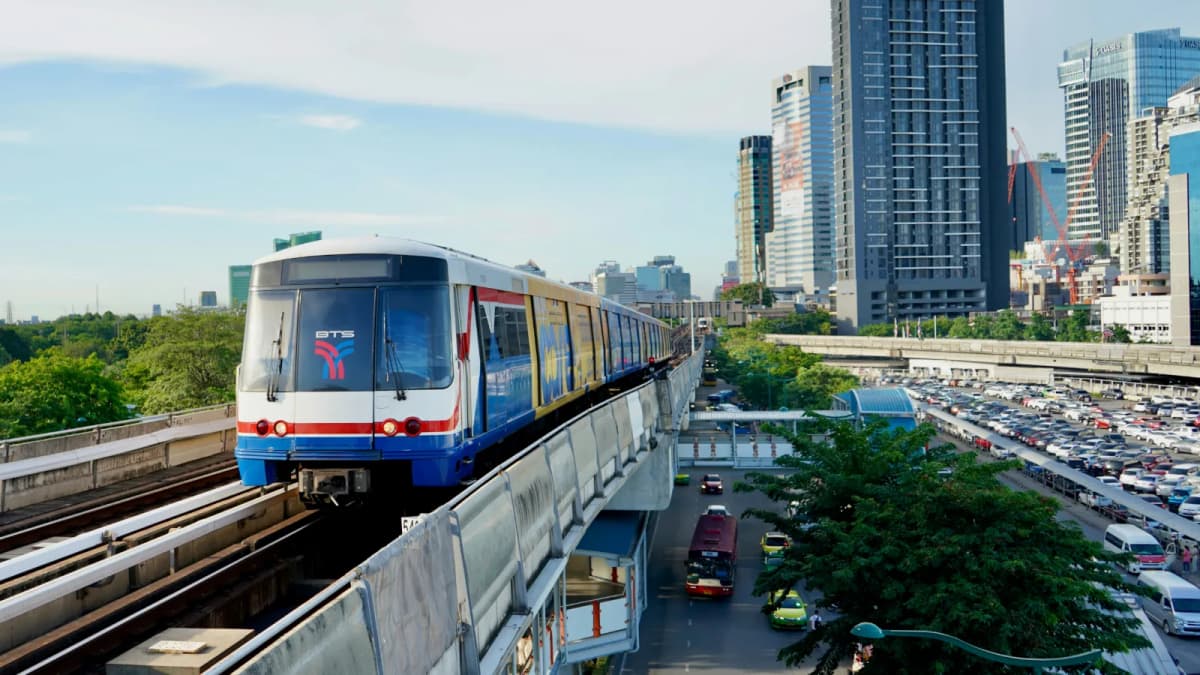
BTS Skytrain on its elevated track above a Bangkok street lined with tall towers

The BTS Sukhumvit and Silom lines meet at Siam. The MRT Blue Line runs from 05:30 to midnight on weekdays and from 06:00 at weekends and on public holidays. BTS and MRT are separate systems, so changing between them means exiting one and paying again on the other.

The Airport Rail Link runs daily from 05:30 to midnight, every 10 to 13 minutes. With small children and big suitcases a taxi or Grab is often easier, but the train beats rush-hour traffic.

Chao Phraya Express boats

The Chao Phraya Express boats run up and down the river between Nonthaburi in the north and piers south of Sathorn, and they are a scenic way to reach the Grand Palace area, Wat Arun and the old town. The flag on the boat tells you the service. As of October 2026 the arrangement is:

  • Orange flag: runs Monday to Friday only, mainly in the morning and late-afternoon rush hours. In the middle of the day, and all day at weekends and on public holidays, daytime yellow flag boats cover the route instead.
  • Yellow, green-yellow and red flags: faster commuter boats that skip many piers, mostly at weekday peak times.
  • Blue flag (tourist boat): a separate hop-on hop-off service that calls at the main sightseeing piers through the day.

This weekday-only pattern is described by the river guides THAIest (updated 5 Oct 2026) and FerryConnect (updated 4 Oct 2026), based on the operator's timetable from late June 2026; exact hours vary by pier, so check the board before you rely on a boat. Special events change the timetable too: the operator ran a temporary morning timetable on royal barge procession rehearsal days in October 2026, so look out for notices at the pier.

Grab, Bolt and taxis

Grab has the widest reach in Thailand: its locations page lists dozens of provinces, including Bangkok, Chiang Mai, Pattaya, Phuket, Krabi and Samui. Bolt is a common alternative and lists 13 Thai cities, including Bangkok, Chiang Mai, Phuket, Krabi and Surat Thani. Both show the price before you confirm, which removes the bargaining. Download the apps and set them up before you leave home, so you are not doing it at the airport.

Bangkok's metered taxis are fine when the meter is on; expressway tolls are paid on top. Taxis waiting outside hotels and sights are more likely to quote a fixed price, so walk to the main road or use an app.

Tuk-tuks, songthaews and local buses

With a tuk-tuk, agree the price and destination before you get in, and say no to any detour to a gem shop or tailor. In Chiang Mai, the red songthaews (rot daeng) work as shared taxis for people going roughly the same way; in Pattaya and other towns, songthaews run along fixed routes.

Phuket also has proper public buses. The Tourism Authority of Thailand describes Phuket OneMap, a browser-based map of the island's main bus lines with live bus locations, including the Smart Bus between the airport and Rawai along the west-coast beaches. Buses do not run through the night, so check the last departure.

Should you rent a motorbike or scooter in Thailand?

Motorbike riders on a busy street at sunset seen past a parked scooter mirror

Only rent a motorbike in Thailand if you already ride confidently, hold a licence that covers motorcycles, and carry the International Driving Permit your licensing authority says you need. Helmets are a legal requirement, and riding without the right licence can void your travel insurance. The World Health Organization ranks Thailand among the deadliest countries in the world for motorcycle deaths, so for most visitors a taxi, Grab or songthaew is the better choice.

The rules visitors most often get wrong, from the same UK government travel advice quoted above:

  • Licence and permit: the UK advice tells British drivers they need the 1968 version of the International Driving Permit together with their UK licence. Rules for other nationalities depend on the permit your own country issues, so check with your licensing authority before you travel. Nepali travellers should ask the Department of Transport Management in Nepal before travelling about getting an international permit, and make sure any permit covers motorcycles, not only cars.
  • Helmets: wearing a helmet on a motorcycle is a legal requirement. Wear one as a passenger too, including on motorbike taxis.
  • Insurance: riding without a valid licence for that vehicle can invalidate your travel insurance, so you may not be able to claim after an accident. Read your own policy's wording on motorcycles before you ride.
  • Unregistered bikes: many bikes for hire in tourist areas are not registered for use on public roads. Ask to see the registration papers before you ride away.
  • Your passport: do not hand it over as a deposit for a motorbike or jet ski. Some businesses keep passports to press claims for damage.

Thailand drives on the left, and island roads in Phuket, Samui and Phangan are steep and slippery in the rain. If you are unsure, hire a car with a driver for the day instead.

How should families and first-time travellers from Nepal plan their transport?

For families and first-time visitors, the simplest plan is two or three bases joined by short flights, with a sleeper train or a ferry only where it adds to the trip. Book the busy dates early, keep a spare day around boat journeys, and carry your passport on every flight, train and ferry.

Where to book each type of transport

TransportOfficial or main booking channelWhen to book
Domestic flightsThe airline's own website or app (Thai Airways, Bangkok Airways, Thai AirAsia, Thai Vietjet, Nok Air, Thai Lion Air)As soon as dates are fixed for holiday periods
SRT trainsD-Ticket (dticket.railway.co.th), station counters, call centre 1690Up to 180 days ahead for long-distance trains; early for sleepers at holidays
Long-distance busesCounters at Mo Chit 2, Ekkamai and Sai Tai Mai; operators' own counters and websitesA day or two ahead in high season; same day is usually fine otherwise
FerriesOperators such as Lomprayah and Raja Ferry, pier counters, or your hotelA day ahead in December and January; same day in quieter months

Family tips

  • Fly the long legs with small children. A 1 hour 30 minute flight is easier on toddlers than a 13-hour bus, even with airport time added.
  • On the sleeper train, book lower berths next to each other, and check the SRT's child ticket rules when you book.
  • On boats, check there are child-size life jackets before you board, and bring motion sickness tablets for speedboats.
  • Child car seats: do not expect one in a taxi or Grab car. If you need one, book a private transfer that confirms it in writing, or bring a travel seat.
  • Food on the move: carry snacks and water. Vegetarian travellers, and those who avoid beef, can say "mai gin neua wua" (I do not eat beef) or ask for "jay" (vegan Buddhist food), and should pack a few safe options for long train and bus rides.

Dashain, Tihar and the winter wedding season

Many Nepali families travel during the Dashain and Tihar holidays in October and November, and many couples take a honeymoon after the winter lagan season. That is Thailand's shoulder and early high season. On the Andaman coast, boats can still be held back by high waves in October and early November, and the Tourism Authority of Thailand expects the dry season to settle in by December. The Gulf side around Samui can stay wet into December. For a Tihar or Mangsir trip, a Phuket or Krabi plan with a spare day often works better than Samui. Flights and sleeper berths fill up early for Christmas, New Year and Songkran, so book transport as soon as your dates are fixed.

To see how Bangkok, Phuket, Krabi and Pattaya are usually combined in one trip, browse our Thailand tour packages page.

Frequently asked questions

How do I travel from Bangkok to Phuket?

You can travel from Bangkok to Phuket by direct flight in about 1 hour 25 to 1 hour 30 minutes from Suvarnabhumi or Don Mueang, by bus in roughly 12 to 15 hours from the Southern Bus Terminal (Sai Tai Mai), or by train to Surat Thani followed by a bus of about 4 to 5 hours. Phuket has no railway station and no ferry from Bangkok.

Is there a train from Bangkok to Chiang Mai?

Yes, several trains a day run from Bangkok to Chiang Mai from Krung Thep Aphiwat Central Terminal. The daytime express takes about 10 hours, and the overnight sleeper trains take about 12 to 14 hours, arriving in the morning. Book on the official SRT D-Ticket site or at a station, and book early for holidays.

How long is the bus from Bangkok to Pattaya?

The bus from Bangkok to Pattaya takes about two and a half hours, depending on traffic. Most buses and minivans leave from the Eastern Bus Terminal at Ekkamai, a short walk from BTS Ekkamai station, with departures from early morning until late evening. Some buses also run from Mo Chit 2 and directly from Suvarnabhumi Airport.

Can I take a ferry from Phuket to Krabi?

Yes, ferries run from Rassada Pier in Phuket to Khlong Chilat Pier in Krabi, with the direct boat taking about 2 hours. Some boats stop at Phi Phi on the way and take longer. Departures are mostly in the morning, and boats can be cancelled in rough seas, so allow a spare day in the monsoon months.

Is Grab available in Thailand?

Yes, Grab works across Thailand, including Bangkok, Chiang Mai, Pattaya, Phuket, Krabi and Koh Samui, and its locations page lists dozens of provinces. Bolt is also available in 13 Thai cities, including Bangkok, Phuket and Chiang Mai. Both apps show the price before you book, so there is no need to bargain.

Are domestic flights in Thailand easy?

Yes, domestic flights in Thailand are easy and frequent on the main routes, and most take about 1 hour 10 minutes to 1 hour 35 minutes from Bangkok. Book directly with the airline, check which Bangkok airport your flight uses, check the baggage allowance on low-cost fares, and carry your passport for check-in and security.

Which Bangkok airport for domestic flights?

Both Bangkok airports handle domestic flights. Suvarnabhumi (BKK) serves Thai Airways, Bangkok Airways, Thai Vietjet and some Thai AirAsia routes, and handles most Koh Samui flights. Don Mueang (DMK) is the low-cost hub for Thai AirAsia, Nok Air and Thai Lion Air. Your ticket shows the airport code.

Is the overnight train safe?

The overnight trains in Thailand are widely used by Thai families and are generally a safe way to travel, but take care with your belongings. The UK government warns that items have been taken from bags while passengers sleep on trains and buses, so keep your passport, phone and cash inside your berth with you.

How do I get to Koh Samui?

You can get to Koh Samui by flying direct with Bangkok Airways, mostly from Suvarnabhumi, in about 1 hour 10 to 1 hour 20 minutes. Overland, take a train or bus to Surat Thani, then a ferry from Donsak pier: about 1 hour 30 minutes by car ferry, or 45 to 90 minutes by high-speed boat. Some ferry operators also sell combined bus and boat tickets from Bangkok to the Gulf islands.

How do I get around Bangkok?

The quickest way around Bangkok is the BTS Skytrain and MRT metro, which avoid road traffic, with the Airport Rail Link from Suvarnabhumi and the Red Line from Don Mueang. Chao Phraya Express boats serve the riverside sights. For other trips, use Grab, Bolt or a metered taxi, and agree the price before taking a tuk-tuk.

Thailand ma ghumna kasari jane?

For Nepali travellers, Thailand ma ghumna is easiest by flying from Kathmandu to Bangkok, then taking short domestic flights to Phuket, Krabi, Chiang Mai or Samui. Pattaya is about two and a half hours from Bangkok by bus. Inside Bangkok use the BTS and MRT, and in other cities use Grab, Bolt or songthaews.

Tags
ThailandTransportBangkokPhuketTrains
Share
G
Gomayu Team
Writer at Gomayu
Keep reading
Blog / Thailand
How to Get Around Thailand: Flights, Trains, Buses and Ferries (Bangkok to Phuket and More)
34 min read 30 Oct 2026
BTS Skytrain running on an elevated track through central Bangkok traffic and towers

Short answer: The easiest way to get around Thailand is to fly the long legs and use trains, buses and boats for the shorter ones. For Bangkok to Phuket, a direct flight takes about 1 hour 25 to 1 hour 30 minutes, an overnight bus takes roughly 12 to 15 hours, and the train to Surat Thani plus a connecting bus usually takes 14 hours or more in total. Chiang Mai is a short flight or one night on a sleeper train, Pattaya is about two and a half hours by road, and most island trips end with a ferry or speedboat.

This guide is for travellers moving between Bangkok, Chiang Mai, Pattaya, Phuket, Krabi and the Gulf islands such as Koh Samui. It explains which Bangkok airport, station or bus terminal you need for each route, how long each option really takes, how to book, and how to move around once you arrive. There are no fares here, because ticket prices change daily; journey times and timetables were checked on 30 Oct 2026 and can still change, so confirm with the operator before you travel. For the wider picture of the country, start with our complete Thailand travel guide.

What is the easiest way to get around Thailand?

For most visitors, the easiest way to get around Thailand is a mix: domestic flights for long distances such as Bangkok to Phuket or Chiang Mai, the train or a bus for routes under about 300 km, and ferries or speedboats for the islands. Inside Bangkok, the BTS Skytrain and MRT metro beat road traffic, and ride-hailing apps cover most other cities.

Chiang Mai is around 700 km north of Bangkok by road and Phuket more than 800 km south, so the mode you pick decides whether a transfer takes an hour or most of a day. A rule of thumb:

  • Under about 300 km (Pattaya, Hua Hin, Ayutthaya, Kanchanaburi): bus, minivan, train or private car. Flying saves nothing once you add airport time.
  • 300 to 600 km: a judgement call. An overnight train or bus saves a hotel night; a flight saves the day.
  • Over 600 km (Chiang Mai, Phuket, Krabi, Samui): fly if time is short, take the sleeper train if the journey is part of the trip.
  • Islands: there is always a boat at the end, apart from Phuket, which is joined to the mainland by road bridges.

Route matrix: main tourist routes, modes and journey times

This table gives typical times for the corridors most travellers use. Flight times are the airlines' own scheduled block times; train times come from published timetables; bus and ferry times are typical operator schedules and can stretch with traffic, weather or a slow connection. Checked: 30 Oct 2026.

RouteModeTypical journey timeLeaves from
Bangkok to PhuketDirect flightAbout 1 hr 25 to 1 hr 30 minSuvarnabhumi (BKK) or Don Mueang (DMK)
Bangkok to PhuketOvernight or day busRoughly 12 to 15 hrSouthern Bus Terminal (Sai Tai Mai)
Bangkok to PhuketTrain to Surat Thani, then busAbout 9 to 11 hr by train, then roughly 4 to 5 hr by busKrung Thep Aphiwat Central Terminal
Bangkok to Chiang MaiDirect flightAbout 1 hr 10 to 1 hr 20 minBKK or DMK
Bangkok to Chiang MaiSleeper or day trainAbout 10 hr 20 min (day express) to 13 hr 50 min (overnight)Krung Thep Aphiwat Central Terminal
Bangkok to Chiang MaiBusRoughly 10 hr on express services, longer on slower busesMo Chit 2 (Northern Bus Terminal)
Bangkok to PattayaBusAbout 2 hr 30 min, traffic permittingEkkamai (Eastern Bus Terminal) or Mo Chit 2
Bangkok to PattayaTrainAbout 2 hr 30 min (weekend express) to 3 hr 40 min (daily ordinary)Hua Lamphong station
Bangkok to KrabiDirect flightAbout 1 hr 20 to 1 hr 35 minBKK or DMK
Bangkok to KrabiBusRoughly 11 to 13 hrSouthern Bus Terminal (Sai Tai Mai)
Bangkok to Koh SamuiDirect flightAbout 1 hr 10 to 1 hr 20 minMainly Suvarnabhumi (BKK); Bangkok Airways also lists a Don Mueang route
Bangkok to Koh SamuiTrain or bus to Surat Thani, then ferry from DonsakAbout 9 to 11 hr by train to Surat Thani, then a transfer to the pier and about 1 hr 30 min by car ferryKrung Thep Aphiwat or Sai Tai Mai
Phuket to Phi PhiSpeedboat or ferryAbout 1 hr by speedboat, about 2 hr by large ferryRassada Pier, Phuket
Phuket to KrabiFerryAbout 2 hr on the direct ferry; longer on boats that stop at Phi PhiRassada Pier, Phuket
Krabi to Phi PhiFerryAbout 2 hrKhlong Chilat or Noppharat Thara Pier

Flight, train, bus or ferry: which suits you?

ModeBest forStrengthsWatch out for
Domestic flightShort trips, families with small children, Bangkok to Phuket, Chiang Mai, Krabi or SamuiFastest by far; many daily flights on the main routesTwo Bangkok airports; low-cost baggage limits; check-in closes well before departure
TrainBangkok to Chiang Mai, Bangkok to Surat Thani, travellers who want the journey to be part of the tripSleeper berths save a hotel night; room to walk around; sceneryBerths sell out at holidays; delays happen; no line to Phuket or Krabi
Long-distance busRoutes without a train, such as Phuket and Krabi; tight budgets; last-minute tripsCovers almost every town; frequent departures on busy routesLong hours on the road; night buses are tiring; keep valuables on you
Ferry or speedboatPhi Phi, Samui, Phangan, Tao, Lanta, Koh YaoThe only way to most islandsWeather cancellations, especially in the monsoon months; rough seas on speedboats

If you are still deciding which places to include, our guide to the best places to go in Thailand explains what each region is like before you work out the transport between them.

How do you get from Bangkok to Phuket?

Passenger jet climbing away from the runway just after take off under a cloudy sky

The fastest way to get from Bangkok to Phuket is a direct flight of about 1 hour 25 to 1 hour 30 minutes from either Suvarnabhumi or Don Mueang. Overland, you can take a bus of roughly 12 to 15 hours from Bangkok's Southern Bus Terminal, or a train to Surat Thani followed by a bus of about 4 to 5 hours. There is no railway to Phuket and no ferry from Bangkok.

Phuket is more than 800 km from Bangkok by road. That distance is why most visitors fly, and also why the overland options are mostly overnight journeys.

Option 1: Fly from Bangkok to Phuket

Flying is the simplest choice and the one most families take. Bangkok Airways gives its direct Suvarnabhumi to Phuket flight as about 1 hour 30 minutes, and AirAsia lists non-stop Don Mueang to Phuket flights at about 1 hour 25 to 1 hour 30 minutes. Both airports have several departures a day on this route.

Which airlines use which Bangkok airport is set out in the airport section further down. Phuket International Airport is in the north of the island, so allow time to reach beaches further south such as Patong, Kata or Rawai.

Add the time to reach the Bangkok airport, check in and clear security, then the drive from Phuket airport to your beach. Door to door, a Bangkok hotel to a Phuket beach hotel usually takes about half a day even though the flight is short.

Option 2: Take the bus from Bangkok to Phuket

Long-distance buses to Phuket leave from the Southern Bus Terminal, known locally as Sai Tai Mai, on the Thonburi side of Bangkok. The government-owned Transport Co. (often written BKS or Bor Kor Sor) and several private companies run the route, with both daytime and overnight departures. Expect roughly 12 to 15 hours on the road; schedules differ between companies, so check the arrival time before you book. Most buses arrive at Phuket Bus Terminal 2, on the edge of Phuket Town.

Choose a VIP or first-class bus for a night journey, take a jacket for the air conditioning, and keep your passport, phone and cash on your lap rather than in the luggage hold.

Option 3: Train to Surat Thani, then bus or minivan to Phuket

The train is the more comfortable overland choice, but it does not go to Phuket. You ride the State Railway of Thailand (SRT) Southern Line from Krung Thep Aphiwat Central Terminal to Surat Thani station, which is in Phun Phin district outside Surat Thani town, and continue by road. Thai Train Guide's Southern Line summary lists two special express railcars that end at Surat Thani, both with reclining seats only: a daytime train leaving Bangkok at 07:30 and arriving 16:20, and an overnight one leaving 22:50 and arriving about 07:50. The sleeper trains to Hat Yai, Trang, Nakhon Si Thammarat and the far south also stop at Surat Thani, taking roughly 9 to 11 hours, but many of them arrive in the middle of the night, so pick a later evening departure if you want a morning arrival. The connecting bus or minivan from Surat Thani to Phuket takes roughly 4 to 5 hours.

On a well-timed sleeper you sleep in a berth and reach Surat Thani around dawn with the day ahead of you. Some booking platforms sell a joint train and bus ticket.

Bangkok to Phuket compared

OptionTime on the moveComfortGood for
Direct flightAbout 1 hr 25 to 1 hr 30 min in the air, about half a day door to doorHighFamilies, short holidays, honeymooners, anyone connecting from an international flight
Overnight busRoughly 12 to 15 hrMedium on a VIP bus, low on a standard busBudget travellers and late bookers
Train plus bus via Surat ThaniUsually 14 hr or more in total, including the connectionGood in a sleeper berth, then a long road legRail fans, slow travellers, anyone stopping at Khao Sok or the Gulf islands on the way

Once you arrive, our guide to things to do in Phuket covers the beaches, viewpoints and day trips worth planning around.
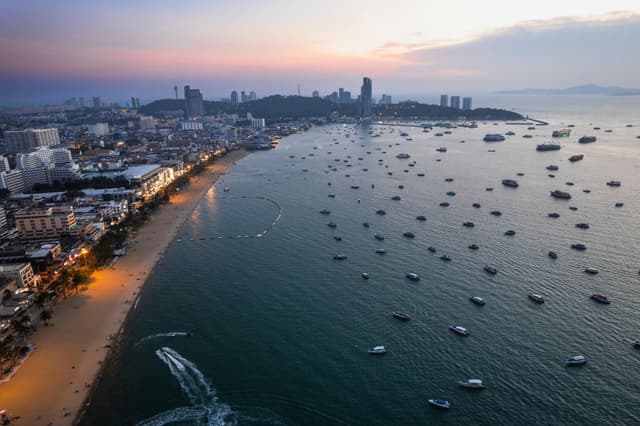
Explore Thailand tour packages
View all →
Coral Island & Nong Nooch Garden Tour

Coral Island & Nong Nooch Garden Tour

🗓 6 Days · 5 Nights
from NRs 46,000 / person
View tour →
Thailand, Singapore & Malaysia Tour with Phuket

Thailand, Singapore & Malaysia Tour with Phuket

🗓 10 Days · 9 Nights
from NRs 1,01,000 / person
View tour →
Bangkok Pattaya Tour

Bangkok Pattaya Tour

🗓 5 Days · 4 Nights
from NRs 36,500 / person
View tour →
Bangkok Pattaya Phuket Tour

Bangkok Pattaya Phuket Tour

🗓 7 Days · 6 Nights
from NRs 57,500 / person
View tour →
Bangkok Krabi Tour

Bangkok Krabi Tour

🗓 6 Days · 5 Nights
from NRs 49,000 / person
View tour →
Bangkok & Koh Samui Honeymoon Tour

Bangkok & Koh Samui Honeymoon Tour

🗓 7 Days · 6 Nights
from NRs 74,500 / person
View tour →
Thailand & Vietnam Tour

Thailand & Vietnam Tour

🗓 8 Days · 7 Nights
from NRs 65,900 / person
View tour →
Bangkok Phuket Krabi Tour

Bangkok Phuket Krabi Tour

🗓 8 Days · 7 Nights
from NRs 64,800 / person
View tour →
Bangkok Phuket Tour

Bangkok Phuket Tour

🗓 6 Days · 5 Nights
from NRs 48,000 / person
View tour →
Bangkok & Krabi Tour with Free Days

Bangkok & Krabi Tour with Free Days

🗓 8 Days · 7 Nights
from NRs 59,000 / person
View tour →
Bangkok Pattaya Phuket Krabi Tour

Bangkok Pattaya Phuket Krabi Tour

🗓 9 Days · 8 Nights
from NRs 68,500 / person
View tour →
Bangkok, Chiang Rai & Chiang Mai Tour

Bangkok, Chiang Rai & Chiang Mai Tour

🗓 8 Days · 7 Nights
View tour →
Thailand, Singapore & Malaysia Family Tour

Thailand, Singapore & Malaysia Family Tour

🗓 11 Days · 10 Nights
from NRs 1,32,000 / person
View tour →
Royal Caribbean Cruise Tour

Royal Caribbean Cruise Tour

🗓 6 Days · 5 Nights
View tour →
Bangkok & Koh Phangan Full Moon Party Tour

Bangkok & Koh Phangan Full Moon Party Tour

🗓 8 Days · 7 Nights
View tour →
Phuket & Krabi Tour

Phuket & Krabi Tour

🗓 6 Days · 5 Nights
View tour →
Short Bangkok Tour

Short Bangkok Tour

🗓 4 Days · 3 Nights
from NRs 28,000 / person
View tour →
Phuket, Phi Phi & Krabi Island Escape

Phuket, Phi Phi & Krabi Island Escape

🗓 7 Days · 6 Nights
View tour →
Krabi Island Tour

Krabi Island Tour

🗓 5 Days · 4 Nights
from NRs 36,500 / person
View tour →
Phuket Tour

Phuket Tour

🗓 5 Days · 4 Nights
from NRs 37,000 / person
View tour →
Bangkok Family Friendly Tour

Bangkok Family Friendly Tour

🗓 5 Days · 4 Nights
View tour →
Bangkok & Pattaya Skydiving Tour

Bangkok & Pattaya Skydiving Tour

🗓 6 Days · 5 Nights
from NRs 1,21,000 / person
View tour →

How do you get from Bangkok to Chiang Mai?

You can get from Bangkok to Chiang Mai by direct flight in about 1 hour 10 to 1 hour 20 minutes, by train in about 10 to 14 hours, or by bus in roughly 10 hours or more. The overnight sleeper train from Krung Thep Aphiwat Central Terminal is one of the classic journeys in Thailand, while the flight is the practical choice if your holiday is short.

Flying to Chiang Mai

Bangkok Airways gives its direct Suvarnabhumi to Chiang Mai flight as approximately 1 hour 20 minutes. From Don Mueang, AirAsia lists non-stop flights by Thai AirAsia and Thai Lion Air at about 1 hour 10 to 1 hour 20 minutes. Thai Airways and Thai Vietjet also fly the route from Suvarnabhumi. Chiang Mai International Airport is close to the old city, so the last leg is short.

The sleeper train to Chiang Mai

All long-distance trains on the Northern Line now start at Krung Thep Aphiwat Central Terminal, not the old Hua Lamphong station. The rail specialist Seat61 (updated 1 Oct 2026) describes the daytime special express leaving Bangkok at 07:30 and reaching Chiang Mai around 17:50, while the overnight trains take roughly 12 and a half to 14 hours. Its current timetable lists four overnight departures:

TrainLeaves BangkokArrives Chiang MaiJourney timeGood to know
Train 10914:1504:05About 13 hr 50 minArrives well before dawn
Train 918:4007:15About 12 hr 35 minNewer Chinese-built sleeping cars and a restaurant car; Seat61's top pick
Train 1320:0508:45About 12 hr 40 minRestaurant car; the hills near Chiang Mai in daylight
Train 5122:3011:40About 13 hr 10 minLate-morning arrival

Timetables do change, so check the times on the official SRT booking site before you plan connections. Thairath reported in April 2026 that the newer red CNR sleeper carriages on the Northern Line are fully air-conditioned, with a power outlet and reading light at every bed, and that berths sell out quickly at holiday times.

The bus to Chiang Mai

Buses to Chiang Mai leave from Mo Chit 2, the Northern and Northeastern Bus Terminal near Chatuchak. Express services take roughly 10 hours, and many departures run overnight. Slower standard buses with more stops can take much longer, so check the scheduled arrival time, not only the departure time, when you book.

For what to do once you are there, see our guide to things to do in Chiang Mai.

How do you get from Bangkok to Pattaya?

The usual way to get from Bangkok to Pattaya is by bus or minivan from the Eastern Bus Terminal at Ekkamai, which takes about two and a half hours depending on traffic. You can also take a bus from Mo Chit 2, a direct bus from Suvarnabhumi Airport, a slow train from Hua Lamphong, or a taxi or private car. Pattaya is about 150 km from central Bangkok, so it is not worth flying.

Bus and minivan from Ekkamai

Ekkamai (Bangkok Eastern Bus Terminal) is on Sukhumvit Soi 63, a short walk from BTS Ekkamai station, which makes it the easiest terminal for anyone staying on Sukhumvit Road. A terminal guide updated in August 2025 lists buses to Pattaya about every 30 minutes from early morning until late evening, taking about 2.5 hours, and minivans running even more often. Ekkamai also has buses to Rayong and Ban Phe (for Koh Samet) and to Trat (for Koh Chang).

Other ways to reach Pattaya

  • From Suvarnabhumi Airport: direct buses run from the airport to Pattaya and Jomtien, which saves going into Bangkok first. This suits travellers flying in from Kathmandu who want to start their holiday at the beach.
  • From Mo Chit 2: fewer buses, but handy if you are staying in the north of Bangkok.
  • By train: one of the few routes still using the old Hua Lamphong station. A timetable summary (updated March 2025) lists a daily ordinary train leaving 06:55 and arriving about 10:34, and a weekend express leaving 06:45 and arriving 09:13. It is slow but scenic; confirm the current times with SRT before you go.
  • By taxi, Grab or private transfer: the most comfortable option for families with luggage, and the travel time depends almost entirely on Bangkok traffic.

How do you get from Bangkok to Krabi or the islands?
Colourful longtail boats pulled up on Ao Nang Beach below a limestone peak in Krabi

The quickest way from Bangkok to Krabi is a direct flight of about 1 hour 20 to 1 hour 35 minutes; overland, a bus takes roughly 11 to 13 hours, or you can take the train to Surat Thani and a bus of about 3 hours. For Koh Samui, Bangkok Airways flies direct from Suvarnabhumi in about 1 hour 10 to 1 hour 20 minutes, or you can travel overland to Surat Thani and take a ferry. Phi Phi, Lanta and the other Andaman islands are reached by boat from Phuket or Krabi.

Bangkok to Krabi

  • Fly: Bangkok Airways flies direct from Suvarnabhumi to Krabi in about 1 hour 25 minutes, and Thai AirAsia and Thai Lion Air fly non-stop from Don Mueang in about 1 hour 20 to 1 hour 35 minutes. Allow for the drive from Krabi Airport to Ao Nang or Krabi Town.
  • Bus: direct buses leave the Southern Bus Terminal (Sai Tai Mai) and take roughly 11 to 13 hours to Krabi bus terminal, a few kilometres north of Krabi Town.
  • Train plus bus: take the Southern Line to Surat Thani, then a bus or minivan of roughly 3 hours to Krabi.

For Railay, the Four Islands and Tiger Cave Temple, see our guide to things to do in Krabi.

Bangkok to Koh Samui, Koh Phangan and Koh Tao

Koh Samui has its own airport, which Bangkok Airways built and runs privately. Bangkok Airways gives its direct Suvarnabhumi to Samui flight as approximately 1 hour 10 to 20 minutes. Most Samui flights leave from Suvarnabhumi, although Bangkok Airways also lists a Don Mueang to Samui route. Because almost all Samui flights are on one airline, many travellers fly to Surat Thani instead and continue by bus and ferry.

The overland and sea route to the Gulf islands works like this:

  1. Bangkok to Surat Thani by train (about 9 to 11 hours) or by bus from Sai Tai Mai.
  2. Surat Thani to Donsak pier by connecting bus, which is usually included in a joint ticket.
  3. Donsak to the islands by ferry. Raja Ferry's car ferry timetable shows about 1 hour 30 minutes to Samui (Lipa Noi pier) and about 2 hours 30 minutes to Koh Phangan (Thong Sala). Lomprayah's high-speed boats take about 45 to 90 minutes per crossing, and the company also sells combined bus and boat tickets from Bangkok (Pinklao and Khaosan) to Koh Phangan and Koh Tao.

Koh Tao is also reached from Chumphon, further north on the same railway line, by high-speed boat.

Phuket and Krabi to Phi Phi, Lanta and between each other

On the Andaman side, the islands are a short boat ride from Phuket or Krabi:

RouteMain pierTypical timeNotes
Phuket to Phi PhiRassada Pier, PhuketAbout 1 hr by speedboat, about 2 hr by large ferryPhuket's main pier for Phi Phi, Krabi and Lanta boats
Krabi to Phi PhiKhlong Chilat Pier or Noppharat Thara PierAbout 2 hrDaily ferries, according to the Tourism Authority of Thailand
Phuket to KrabiRassada Pier to Khlong Chilat PierAround 2 hr direct; some boats go via Phi Phi and take much longerDepartures are mostly in the morning
Phuket to Koh Yao Noi or Koh Yao YaiBang Rong Pier or Ao Po PierAbout 15 to 30 min by speedboat, about 1 hr by long-tailSpeedboats from Bang Rong run roughly 07:30 to 17:00

Pier details and times above are from the Tourism Authority of Thailand's Krabi guide and the Phuket 101 pier guide (updated August 2026). Our Thailand itinerary guide shows how to fit a Phuket, Phi Phi and Krabi loop into one trip without doubling back.

The weather and the boats

Sea conditions decide whether island boats run, and the two coasts have different wet seasons. Thailand's rainy season runs from about mid-May to mid-October, which is when the Andaman coast (Phuket, Krabi, Phi Phi) has its rough seas. The government's seasons guide notes that the South keeps getting heavy rain until December, with more rain in the southeast, which is the Gulf side around Samui. The Tourism Authority of Thailand warned on 20 October 2026 that boat operators on the Andaman sometimes hold back when the waves run high in October and early November, and advised keeping a spare day.

Heavy rain can also stop trains. The SRT suspended or shortened many Southern Line trains after flooding in December 2024 and again from 25 November 2025. If you travel south in November or December, check SRT updates before you leave.

Which Bangkok airport do domestic flights use?

Domestic flights use both of Bangkok's airports. Suvarnabhumi (BKK) handles Thai Airways, Bangkok Airways, Thai Vietjet and some Thai AirAsia flights, while Don Mueang (DMK) is the base for low-cost airlines such as Thai AirAsia, Nok Air and Thai Lion Air. Your ticket always shows the airport code, and the two airports are far apart, so check it before you leave your hotel.

AirportMain domestic airlinesUseful to know
Suvarnabhumi (BKK)Thai Airways, Bangkok Airways, Thai Vietjet, some Thai AirAsia routesBangkok's main international airport; the main Bangkok airport for Koh Samui flights; linked to the city by the Airport Rail Link
Don Mueang (DMK)Thai AirAsia, Nok Air, Thai Lion AirBangkok's low-cost hub; linked to Krung Thep Aphiwat Central Terminal by the SRT Red Line

Airline line-ups per airport are taken from the Suvarnabhumi and Don Mueang airline tables and the airlines' own route pages, checked 30 Oct 2026. Airlines move routes between the two airports from time to time.

Tips for domestic flights

  • Carry your passport. Foreign visitors show it at check-in and security, even on domestic flights.
  • Check your baggage allowance. Low-cost fares often include only a cabin bag, and checked bags must be added when you book.
  • Check rules on power banks and lithium batteries with your airline before you pack. They are never allowed in checked bags, and some airlines also limit using them on board.
  • Do not plan a tight transfer between BKK and DMK. Moving between the two airports means a long road transfer across the city.

Flying in from Kathmandu

Travellers from Nepal usually land at Suvarnabhumi, which is where Thai Airways flies from Kathmandu, though a few low-cost services use Don Mueang. Our Kathmandu to Bangkok flight guide lists which airlines fly the route and which Bangkok airport each uses. If you land at Suvarnabhumi and fly straight on to Phuket, Krabi, Chiang Mai or Samui, book the onward flight from Suvarnabhumi too, so you avoid crossing Bangkok with bags. On separate tickets you clear immigration, collect your bags and check in again, so leave a generous gap of several hours. Entry rules for Thailand, including the Thailand Digital Arrival Card, are explained on our Thailand visa page.

Are Thai trains good for tourists?

Yes, Thai trains are good for tourists who have time, especially the overnight sleepers from Bangkok to Chiang Mai and Bangkok to Surat Thani. They are slower than flying and can run late, but a sleeper berth saves a hotel night, the carriages are roomy, and the scenery is part of the trip. All long-distance trains now leave from Krung Thep Aphiwat Central Terminal.

Krung Thep Aphiwat Central Terminal

Krung Thep Aphiwat Central Terminal, which many people still call Bang Sue Grand Station, took over long-distance services from Hua Lamphong on 19 January 2023, when 52 long-distance trains moved there, according to its Wikipedia entry and the reports it cites. It is a huge station with 26 platforms. Practical points:

  • An underground walkway links it to Bang Sue station on the MRT Blue Line.
  • The SRT Red Line runs from here north to Don Mueang airport and Rangsit, and west to Taling Chan. The Red Line operator lists about 23 minutes to Rangsit, with trains from about 05:00 to midnight.
  • Arrive early: it is a very large station, and walking to a long-distance platform with luggage takes time.
  • Hua Lamphong is not closed. Some ordinary and commuter trains still use it, including the Pattaya train, so always check which station your ticket shows.

Classes and sleeper berths

ClassWhat you getWho it suits
1st class sleeperLockable two-berth compartment, air-conditioned, on some overnight trains onlyCouples, honeymooners, a parent with one child
2nd class sleeperOpen-plan carriage with lower and upper berths made up at night, curtains for privacy, air-conditioned or fanMost travellers and families; lower berths are a little wider
2nd class seatReclining seat, often on daytime express trainsDay journeys such as Bangkok to Chiang Mai on the morning train
3rd classBasic seats, usually fan-cooledShort trips such as Bangkok to Ayutthaya or Pattaya

Selling and drinking alcohol on SRT trains and at stations has been banned since July 2014, according to Seat61. Restaurant cars run on some long-distance trains, and staff walk through selling set meals, snacks and drinks; vegetarian travellers should still carry some food of their own.

How to book Thai train tickets

Book on the SRT's official online system, D-Ticket, at dticket.railway.co.th, at any station ticket counter, or through the SRT call centre on 1690. The government reported in September 2024 that advance booking was extended to 180 days for long-distance trains on all lines; shorter trips on the same train open for booking later. Thairath's April 2026 guide describes the process: register, choose your train and berth, and pay by card or QR code. Sleeper berths for New Year, Songkran and Thai long weekends sell out early.

The SRT also runs a live train-tracking page (ttsview.railway.co.th), useful for checking whether a train is late before you head to the station.

Is the overnight train safe?

Overnight trains are a normal way for Thai families to travel. Still, the UK government's Thailand travel advice (updated 12 Oct 2026) warns that people have had items taken from their bags while asleep on buses and trains. Keep your passport, phone and cash inside the berth with you, lock zips on larger bags, and choose a lower berth for a child so you can keep them beside you.

How do long-distance buses work in Thailand?

Long-distance buses in Thailand leave from three main Bangkok terminals, one for each direction: Mo Chit 2 for the north and northeast, Ekkamai for the east coast, and Sai Tai Mai for the south and west. The government-owned Transport Co. (BKS) runs services alongside licensed private companies, and buses reach almost every town, including places the railway does not serve, such as Phuket and Krabi.

TerminalAlso calledMain destinations for visitorsGetting there
Northern and Northeastern Bus TerminalMo Chit 2, ChatuchakChiang Mai, Chiang Rai, Sukhothai, Ayutthaya, the northeast; some Pattaya busesTaxi or Grab from BTS Mo Chit or MRT Chatuchak Park
Eastern Bus TerminalEkkamaiPattaya, Rayong and Ban Phe (Koh Samet), Trat (Koh Chang)Short walk from BTS Ekkamai
Southern Bus TerminalSai Tai MaiPhuket, Krabi, Surat Thani, Hua Hin, KanchanaburiTaxi or Grab; it is on the Thonburi side of the river

There have been plans to move some terminals, but in May 2026 the Deputy Transport Minister said there was no policy to relocate Mo Chit 2; the focus is on linking it better with the rail network. Check your ticket for the exact terminal, because private operators sometimes use their own offices.

Tips for Thai buses

  • Pick the class. VIP buses have fewer, wider seats than first-class and standard buses. On a 12-hour trip the difference matters.
  • Watch out for unofficial "tourist buses" sold from backpacker streets. Buses from the official terminals, or from established operators with their own counters, are the safer choice.

How do you get around within cities?
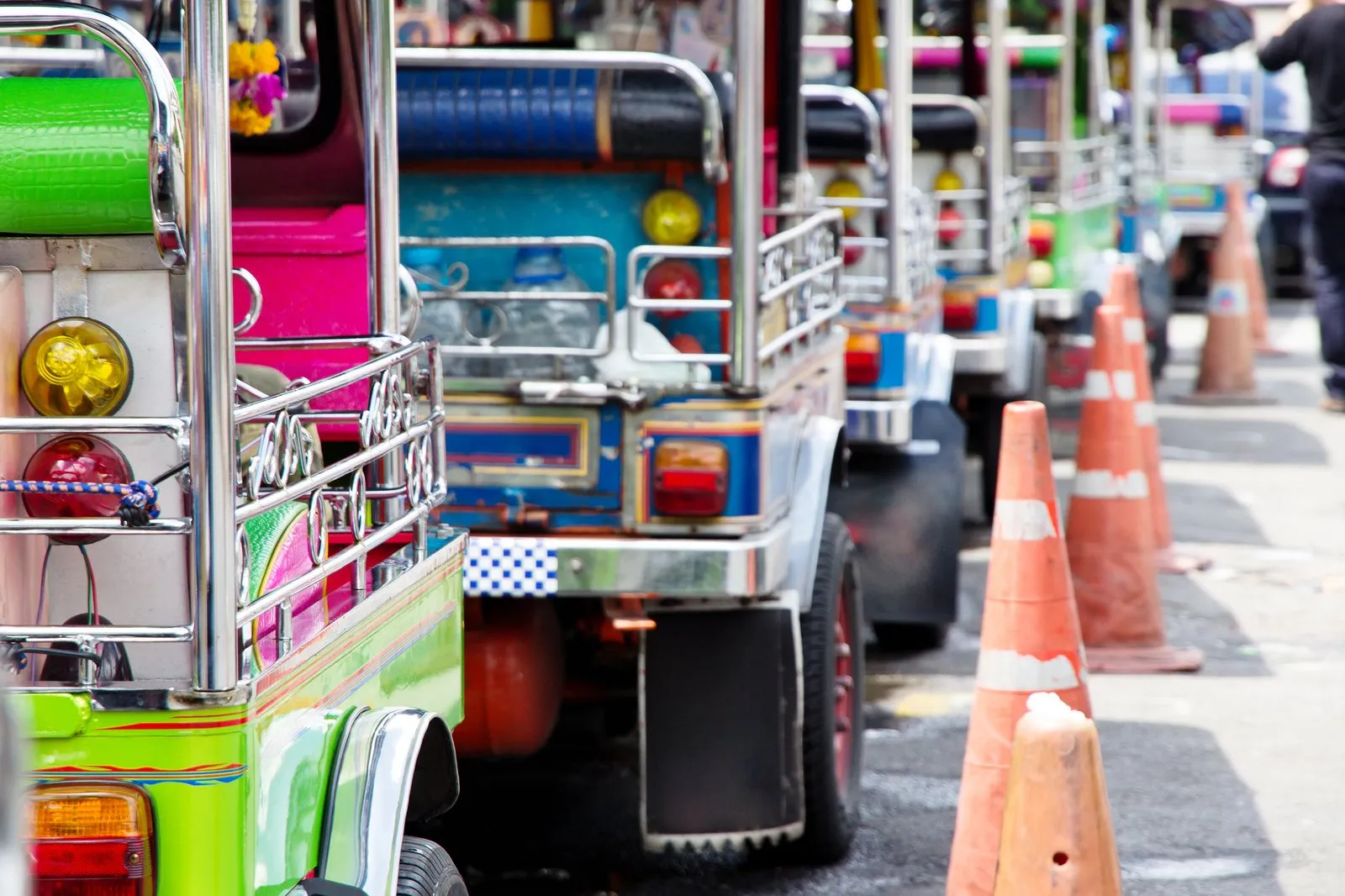
Colourful tuk tuk taxis lined up beside traffic cones on a busy Bangkok street

Inside Bangkok, the fastest way around is rail: the BTS Skytrain, the MRT metro and, from Suvarnabhumi, the Airport Rail Link, with Chao Phraya river boats for the old town. In Phuket, Chiang Mai, Pattaya and Krabi, most visitors use Grab or Bolt, metered or fixed-price taxis, songthaews (shared pick-up trucks) and tuk-tuks. Our Thailand travel tips cover paying, apps and scams in more detail.

OptionWhereHow it worksTip
BTS SkytrainBangkokElevated Sukhumvit and Silom lines, plus the short Gold Line; Sukhumvit and Silom lines meet at SiamThe Rabbit card works on BTS but not on other rail lines
MRTBangkokBlue Line, which almost circles the centre, through Chinatown (Wat Mangkon), Hua Lamphong, Silom, Sukhumvit and Bang Sue, plus Purple, Yellow and Pink linesContactless bank cards work at MRT gates
Airport Rail LinkSuvarnabhumi to central BangkokEight stations from the airport to Phaya Thai in about 27 minutesChange at Phaya Thai for BTS or Makkasan for MRT Phetchaburi
SRT Red LineBangkok northKrung Thep Aphiwat to Don Mueang airport and RangsitThe easy link from Don Mueang to the long-distance trains
Chao Phraya boatsBangkok riversideCommuter express boats with coloured flags, plus a tourist boatCheck the flag on the boat; not all boats stop at every pier
Grab and BoltMost cities and islandsApp-booked cars, and in some places motorbikes; the price is shown before you bookGrab covers far more provinces than Bolt
Metered taxiBangkok mainlyHail on the street or use the official queue at airportsAsk for the meter; if a driver refuses, take the next one
Tuk-tukBangkok, Chiang Mai, Phuket and most townsOpen three-wheeler, no meterAgree the price before you get in
SongthaewChiang Mai, Pattaya, Phuket, Krabi and townsShared pick-up truck on a route, or hired for a tripPress the buzzer to stop and pay the driver when you get off
Motorbike taxiBangkok side streets, towns, islandsRiders in coloured, numbered vests at street-corner standsQuick for short hops; insist on a helmet

BTS, MRT and the Airport Rail Link

BTS Skytrain on its elevated track above a Bangkok street lined with tall towers

The BTS Sukhumvit and Silom lines meet at Siam. The MRT Blue Line runs from 05:30 to midnight on weekdays and from 06:00 at weekends and on public holidays. BTS and MRT are separate systems, so changing between them means exiting one and paying again on the other.

The Airport Rail Link runs daily from 05:30 to midnight, every 10 to 13 minutes. With small children and big suitcases a taxi or Grab is often easier, but the train beats rush-hour traffic.

Chao Phraya Express boats

The Chao Phraya Express boats run up and down the river between Nonthaburi in the north and piers south of Sathorn, and they are a scenic way to reach the Grand Palace area, Wat Arun and the old town. The flag on the boat tells you the service. As of October 2026 the arrangement is:

  • Orange flag: runs Monday to Friday only, mainly in the morning and late-afternoon rush hours. In the middle of the day, and all day at weekends and on public holidays, daytime yellow flag boats cover the route instead.
  • Yellow, green-yellow and red flags: faster commuter boats that skip many piers, mostly at weekday peak times.
  • Blue flag (tourist boat): a separate hop-on hop-off service that calls at the main sightseeing piers through the day.

This weekday-only pattern is described by the river guides THAIest (updated 5 Oct 2026) and FerryConnect (updated 4 Oct 2026), based on the operator's timetable from late June 2026; exact hours vary by pier, so check the board before you rely on a boat. Special events change the timetable too: the operator ran a temporary morning timetable on royal barge procession rehearsal days in October 2026, so look out for notices at the pier.

Grab, Bolt and taxis

Grab has the widest reach in Thailand: its locations page lists dozens of provinces, including Bangkok, Chiang Mai, Pattaya, Phuket, Krabi and Samui. Bolt is a common alternative and lists 13 Thai cities, including Bangkok, Chiang Mai, Phuket, Krabi and Surat Thani. Both show the price before you confirm, which removes the bargaining. Download the apps and set them up before you leave home, so you are not doing it at the airport.

Bangkok's metered taxis are fine when the meter is on; expressway tolls are paid on top. Taxis waiting outside hotels and sights are more likely to quote a fixed price, so walk to the main road or use an app.

Tuk-tuks, songthaews and local buses

With a tuk-tuk, agree the price and destination before you get in, and say no to any detour to a gem shop or tailor. In Chiang Mai, the red songthaews (rot daeng) work as shared taxis for people going roughly the same way; in Pattaya and other towns, songthaews run along fixed routes.

Phuket also has proper public buses. The Tourism Authority of Thailand describes Phuket OneMap, a browser-based map of the island's main bus lines with live bus locations, including the Smart Bus between the airport and Rawai along the west-coast beaches. Buses do not run through the night, so check the last departure.

Should you rent a motorbike or scooter in Thailand?
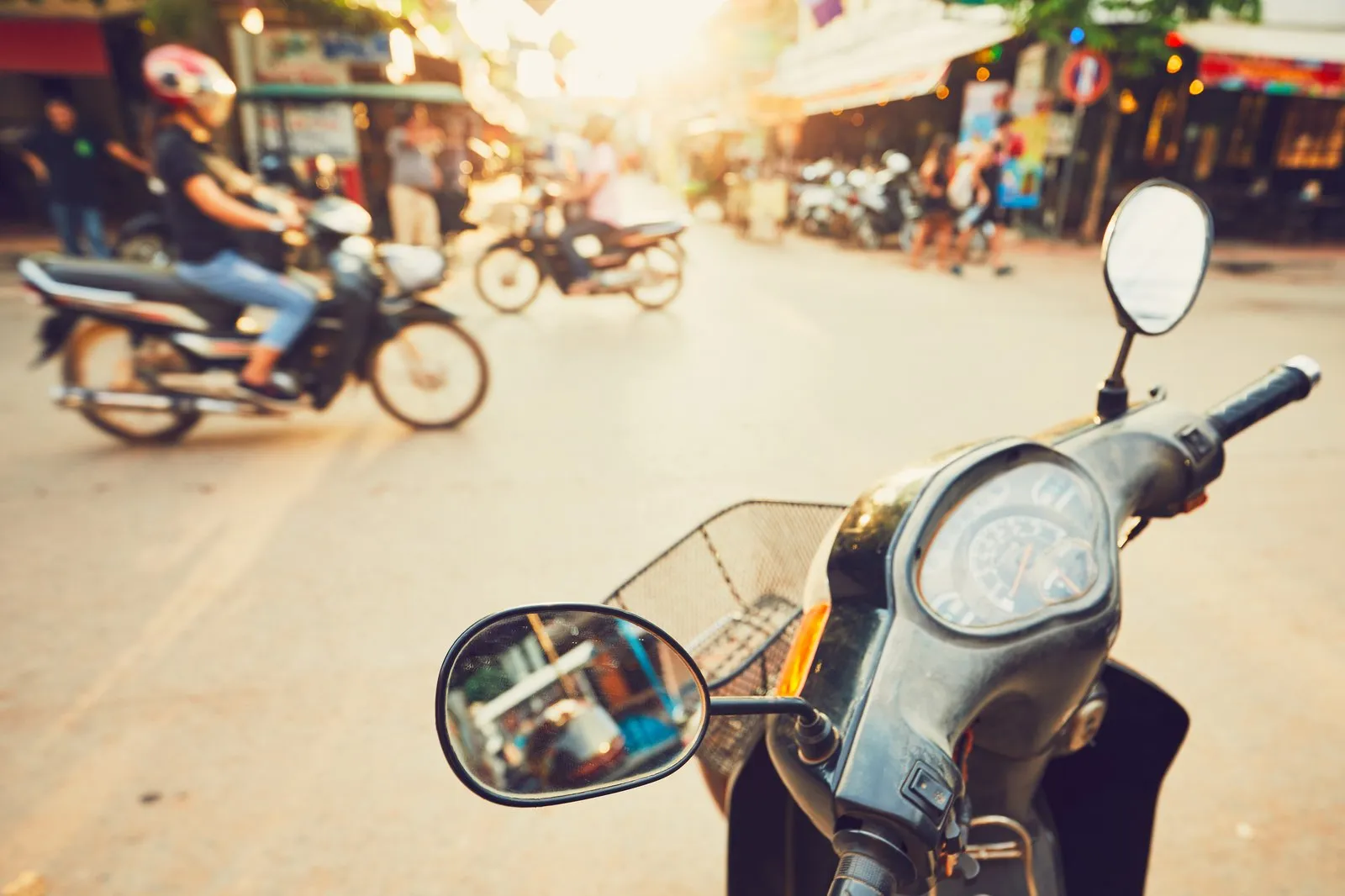
Motorbike riders on a busy street at sunset seen past a parked scooter mirror

Only rent a motorbike in Thailand if you already ride confidently, hold a licence that covers motorcycles, and carry the International Driving Permit your licensing authority says you need. Helmets are a legal requirement, and riding without the right licence can void your travel insurance. The World Health Organization ranks Thailand among the deadliest countries in the world for motorcycle deaths, so for most visitors a taxi, Grab or songthaew is the better choice.

The rules visitors most often get wrong, from the same UK government travel advice quoted above:

  • Licence and permit: the UK advice tells British drivers they need the 1968 version of the International Driving Permit together with their UK licence. Rules for other nationalities depend on the permit your own country issues, so check with your licensing authority before you travel. Nepali travellers should ask the Department of Transport Management in Nepal before travelling about getting an international permit, and make sure any permit covers motorcycles, not only cars.
  • Helmets: wearing a helmet on a motorcycle is a legal requirement. Wear one as a passenger too, including on motorbike taxis.
  • Insurance: riding without a valid licence for that vehicle can invalidate your travel insurance, so you may not be able to claim after an accident. Read your own policy's wording on motorcycles before you ride.
  • Unregistered bikes: many bikes for hire in tourist areas are not registered for use on public roads. Ask to see the registration papers before you ride away.
  • Your passport: do not hand it over as a deposit for a motorbike or jet ski. Some businesses keep passports to press claims for damage.

Thailand drives on the left, and island roads in Phuket, Samui and Phangan are steep and slippery in the rain. If you are unsure, hire a car with a driver for the day instead.

How should families and first-time travellers from Nepal plan their transport?

For families and first-time visitors, the simplest plan is two or three bases joined by short flights, with a sleeper train or a ferry only where it adds to the trip. Book the busy dates early, keep a spare day around boat journeys, and carry your passport on every flight, train and ferry.

Where to book each type of transport

TransportOfficial or main booking channelWhen to book
Domestic flightsThe airline's own website or app (Thai Airways, Bangkok Airways, Thai AirAsia, Thai Vietjet, Nok Air, Thai Lion Air)As soon as dates are fixed for holiday periods
SRT trainsD-Ticket (dticket.railway.co.th), station counters, call centre 1690Up to 180 days ahead for long-distance trains; early for sleepers at holidays
Long-distance busesCounters at Mo Chit 2, Ekkamai and Sai Tai Mai; operators' own counters and websitesA day or two ahead in high season; same day is usually fine otherwise
FerriesOperators such as Lomprayah and Raja Ferry, pier counters, or your hotelA day ahead in December and January; same day in quieter months

Family tips

  • Fly the long legs with small children. A 1 hour 30 minute flight is easier on toddlers than a 13-hour bus, even with airport time added.
  • On the sleeper train, book lower berths next to each other, and check the SRT's child ticket rules when you book.
  • On boats, check there are child-size life jackets before you board, and bring motion sickness tablets for speedboats.
  • Child car seats: do not expect one in a taxi or Grab car. If you need one, book a private transfer that confirms it in writing, or bring a travel seat.
  • Food on the move: carry snacks and water. Vegetarian travellers, and those who avoid beef, can say "mai gin neua wua" (I do not eat beef) or ask for "jay" (vegan Buddhist food), and should pack a few safe options for long train and bus rides.

Dashain, Tihar and the winter wedding season

Many Nepali families travel during the Dashain and Tihar holidays in October and November, and many couples take a honeymoon after the winter lagan season. That is Thailand's shoulder and early high season. On the Andaman coast, boats can still be held back by high waves in October and early November, and the Tourism Authority of Thailand expects the dry season to settle in by December. The Gulf side around Samui can stay wet into December. For a Tihar or Mangsir trip, a Phuket or Krabi plan with a spare day often works better than Samui. Flights and sleeper berths fill up early for Christmas, New Year and Songkran, so book transport as soon as your dates are fixed.

To see how Bangkok, Phuket, Krabi and Pattaya are usually combined in one trip, browse our Thailand tour packages page.

Frequently asked questions

How do I travel from Bangkok to Phuket?

You can travel from Bangkok to Phuket by direct flight in about 1 hour 25 to 1 hour 30 minutes from Suvarnabhumi or Don Mueang, by bus in roughly 12 to 15 hours from the Southern Bus Terminal (Sai Tai Mai), or by train to Surat Thani followed by a bus of about 4 to 5 hours. Phuket has no railway station and no ferry from Bangkok.

Is there a train from Bangkok to Chiang Mai?

Yes, several trains a day run from Bangkok to Chiang Mai from Krung Thep Aphiwat Central Terminal. The daytime express takes about 10 hours, and the overnight sleeper trains take about 12 to 14 hours, arriving in the morning. Book on the official SRT D-Ticket site or at a station, and book early for holidays.

How long is the bus from Bangkok to Pattaya?

The bus from Bangkok to Pattaya takes about two and a half hours, depending on traffic. Most buses and minivans leave from the Eastern Bus Terminal at Ekkamai, a short walk from BTS Ekkamai station, with departures from early morning until late evening. Some buses also run from Mo Chit 2 and directly from Suvarnabhumi Airport.

Can I take a ferry from Phuket to Krabi?

Yes, ferries run from Rassada Pier in Phuket to Khlong Chilat Pier in Krabi, with the direct boat taking about 2 hours. Some boats stop at Phi Phi on the way and take longer. Departures are mostly in the morning, and boats can be cancelled in rough seas, so allow a spare day in the monsoon months.

Is Grab available in Thailand?

Yes, Grab works across Thailand, including Bangkok, Chiang Mai, Pattaya, Phuket, Krabi and Koh Samui, and its locations page lists dozens of provinces. Bolt is also available in 13 Thai cities, including Bangkok, Phuket and Chiang Mai. Both apps show the price before you book, so there is no need to bargain.

Are domestic flights in Thailand easy?

Yes, domestic flights in Thailand are easy and frequent on the main routes, and most take about 1 hour 10 minutes to 1 hour 35 minutes from Bangkok. Book directly with the airline, check which Bangkok airport your flight uses, check the baggage allowance on low-cost fares, and carry your passport for check-in and security.

Which Bangkok airport for domestic flights?

Both Bangkok airports handle domestic flights. Suvarnabhumi (BKK) serves Thai Airways, Bangkok Airways, Thai Vietjet and some Thai AirAsia routes, and handles most Koh Samui flights. Don Mueang (DMK) is the low-cost hub for Thai AirAsia, Nok Air and Thai Lion Air. Your ticket shows the airport code.

Is the overnight train safe?

The overnight trains in Thailand are widely used by Thai families and are generally a safe way to travel, but take care with your belongings. The UK government warns that items have been taken from bags while passengers sleep on trains and buses, so keep your passport, phone and cash inside your berth with you.

How do I get to Koh Samui?

You can get to Koh Samui by flying direct with Bangkok Airways, mostly from Suvarnabhumi, in about 1 hour 10 to 1 hour 20 minutes. Overland, take a train or bus to Surat Thani, then a ferry from Donsak pier: about 1 hour 30 minutes by car ferry, or 45 to 90 minutes by high-speed boat. Some ferry operators also sell combined bus and boat tickets from Bangkok to the Gulf islands.

How do I get around Bangkok?

The quickest way around Bangkok is the BTS Skytrain and MRT metro, which avoid road traffic, with the Airport Rail Link from Suvarnabhumi and the Red Line from Don Mueang. Chao Phraya Express boats serve the riverside sights. For other trips, use Grab, Bolt or a metered taxi, and agree the price before taking a tuk-tuk.

Thailand ma ghumna kasari jane?

For Nepali travellers, Thailand ma ghumna is easiest by flying from Kathmandu to Bangkok, then taking short domestic flights to Phuket, Krabi, Chiang Mai or Samui. Pattaya is about two and a half hours from Bangkok by bus. Inside Bangkok use the BTS and MRT, and in other cities use Grab, Bolt or songthaews.
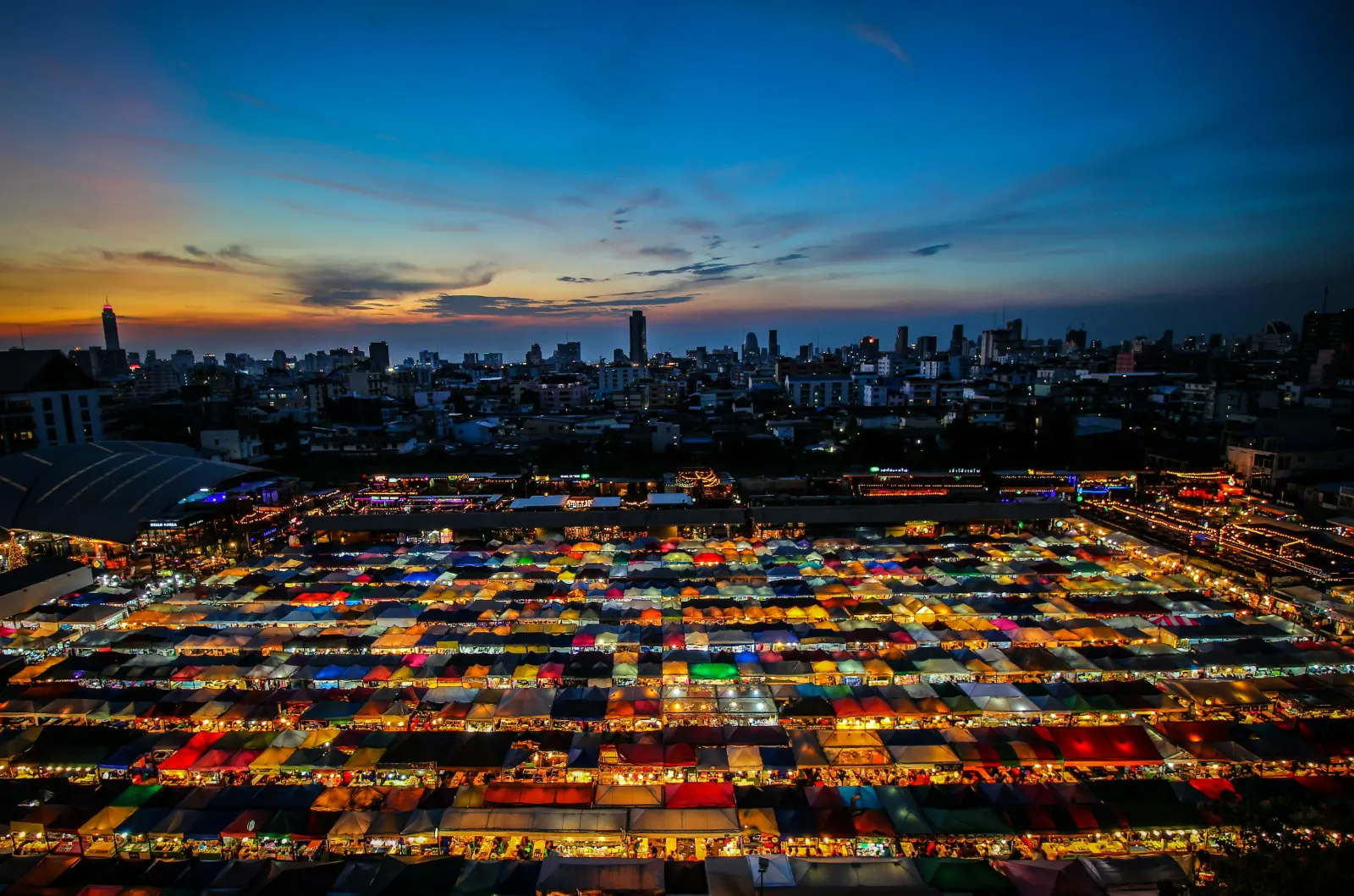
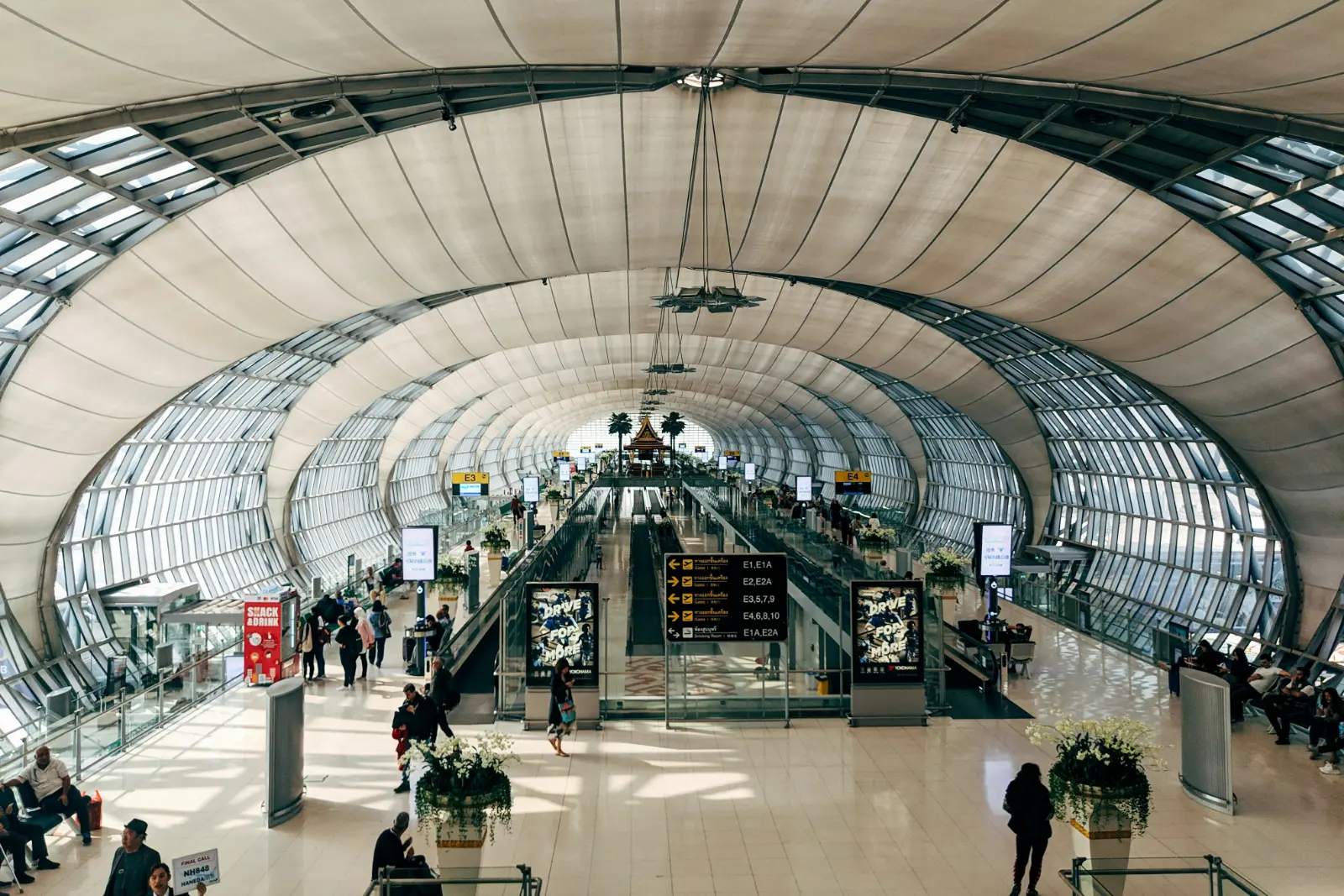
Tags
ThailandTransportBangkokPhuketTrains
Share
G
Gomayu Team
Writer at Gomayu
Keep reading