










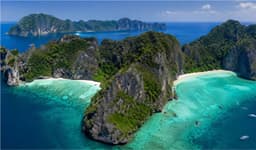










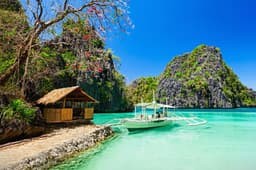

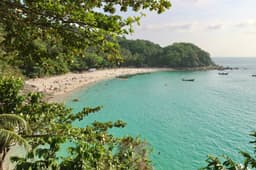
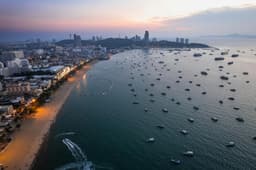
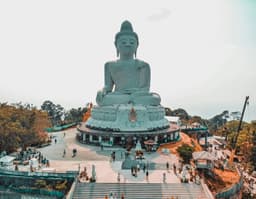

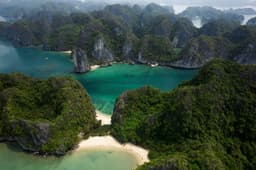
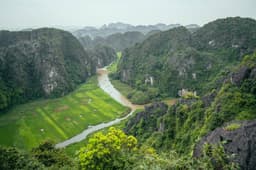

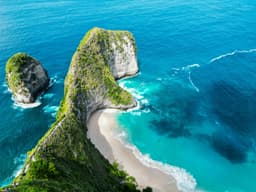













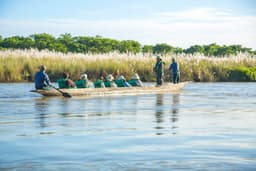
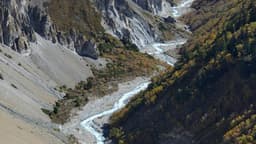
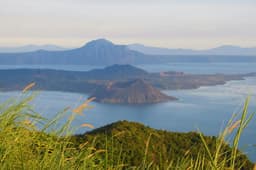
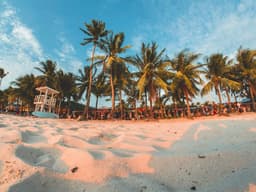
Short answer: The best things to do in Krabi are a day on Railay's cliff-backed beaches, a Four Islands or Hong Islands boat trip, the long stair climb at Tiger Cave Temple (Wat Tham Suea), and a swim in the Emerald Pool or the Khlong Thom hot springs inland. Base yourself in Ao Nang for boats and restaurants, Railay for scenery, or Ko Lanta for a slower pace, and go between December and April, when the Andaman Sea is calmest and island trips run most reliably.
Krabi is a province on Thailand's Andaman coast, not a single beach, and that is the first thing to understand when you plan. The limestone towers, mangrove rivers and offshore islands are spread across a wide area, and the boat you need for Railay is different from the boat you need for Phi Phi. This guide lists the things to do in Krabi, Thailand, that are worth your time, then answers the practical questions: how to reach Railay, which islands you can visit and when parks close, whether Tiger Cave Temple is worth the climb, where to stay, which months are wet, and how to get there from Bangkok.
If Krabi is one stop on a longer trip, our complete Thailand travel guide covers money, transport and etiquette for the whole country, and the wider list of places to go in Thailand shows how Krabi fits alongside Bangkok, Chiang Mai and the other islands.
What are the best things to do in Krabi?
The best things to do in Krabi mix sea and land: Railay and Phra Nang Cave Beach, an island-hopping day (Four Islands, Hong Islands or Phi Phi), Tiger Cave Temple, the Emerald Pool and hot springs, a short jungle hike to the Dragon Crest viewpoint, and an evening at a Krabi Town night market. Most visitors fit four or five of these into a stay of four to six nights.
The Tourism Authority of Thailand (TAT) describes Krabi as a place of hot springs, sea caves, coral reefs and limestone cliffs popular with rock climbers, with Ao Nang as the main launch point for boat trips to the islands and the Phra Nang Cape beaches (TAT, 10 things to do in Krabi). The table below gives you the quick view before the detail.
| Thing to do | Where | Best for | Time needed | Season note |
|---|---|---|---|---|
| Railay and Phra Nang Cave Beach | Railay peninsula, by boat from Ao Nang or Krabi Town | Couples, photographers, beach days | Half day to full day, or stay overnight | Year round, boats can be rough from May to October |
| Rock climbing | Railay and Tonsai cliffs | Active travellers, first-timers with a guide | Half day | Best in the drier months, rock is wet after rain |
| Four Islands boat trip | Ko Poda, Chicken Island, Ko Thap, Phra Nang | Families, first visit | Most of a day | Calmest from December to April |
| Hong Islands | Than Bok Khorani National Park | Kayaking, snorkelling, viewpoints | Full day | Weather dependent, check park status |
| Phi Phi Islands | Hat Noppharat Thara-Mu Ko Phi Phi National Park | Snorkelling, Maya Bay | Full day, better overnight | Maya Bay has an annual closure, see below |
| Tiger Cave Temple | Wat Tham Suea, near Krabi Town | Fit travellers, sunrise views | 2 to 3 hours | Year round, start early |
| Emerald Pool and hot springs | Khlong Thom district | Families, older travellers, rainy days | Most of a day | Year round |
| Dragon Crest hike | Khao Ngon Nak, inside the national park | Hikers | Half day | Trail is slippery in heavy rain |
| Ao Nang beach and sunset | Ao Nang and Noppharat Thara | Everyone | An evening | Year round |
| Krabi Town, Khao Khanap Nam and night markets | Krabi Town and the Krabi River | Food lovers, budget travellers | Half day | Year round |
| Ko Klang and Laem Sak communities | Krabi River estuary (Ko Klang) and Laem Sak | Culture, slow travel | Half day | Year round |
| Ko Lanta and Ko Rok | Mu Ko Lanta National Park | Longer stays, snorkelling | Two nights or more | Ko Rok has an annual closure, see below |
1. Railay West and Phra Nang Cave Beach
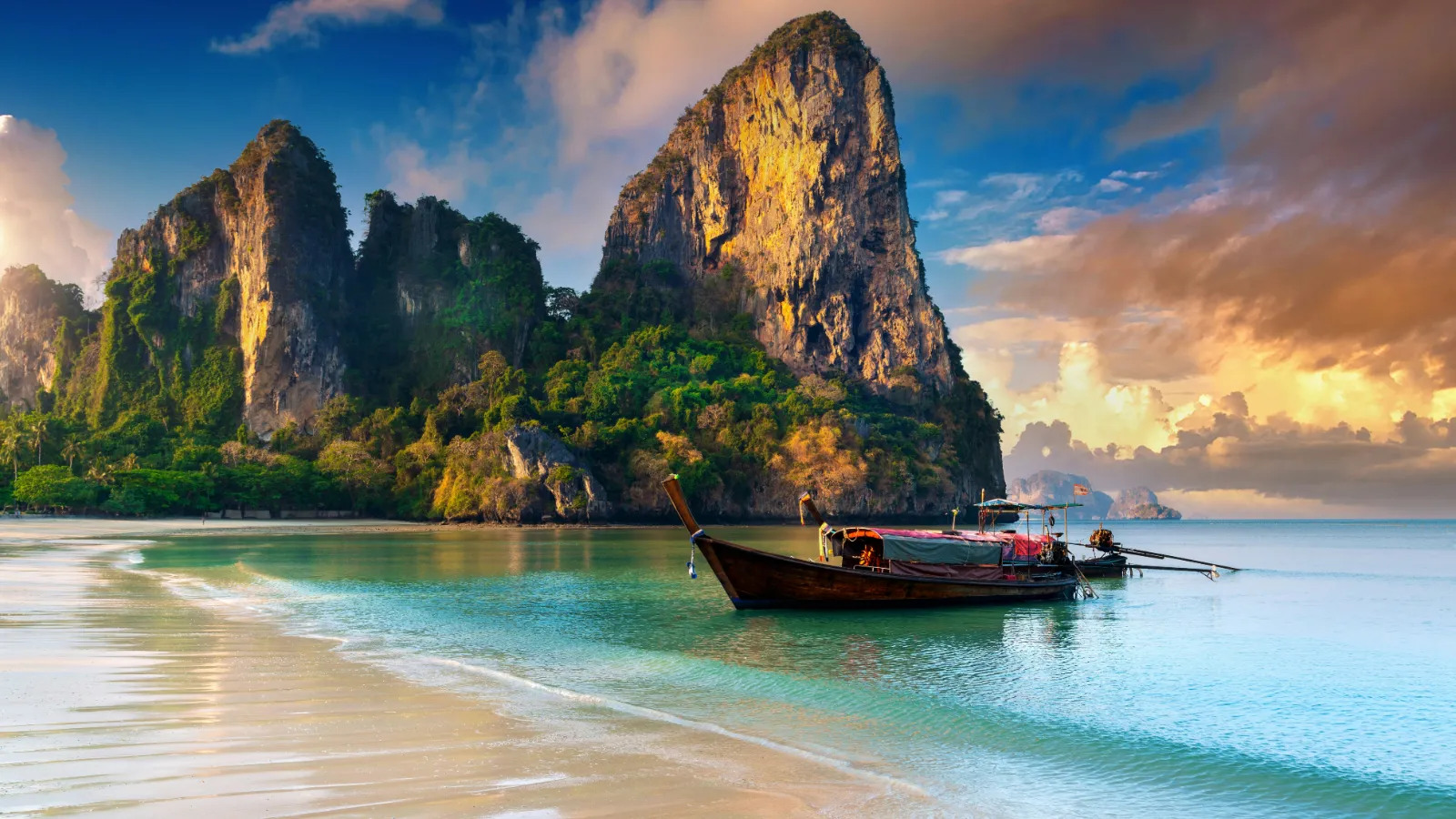
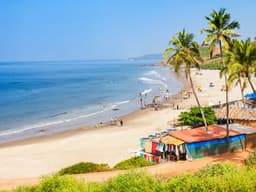
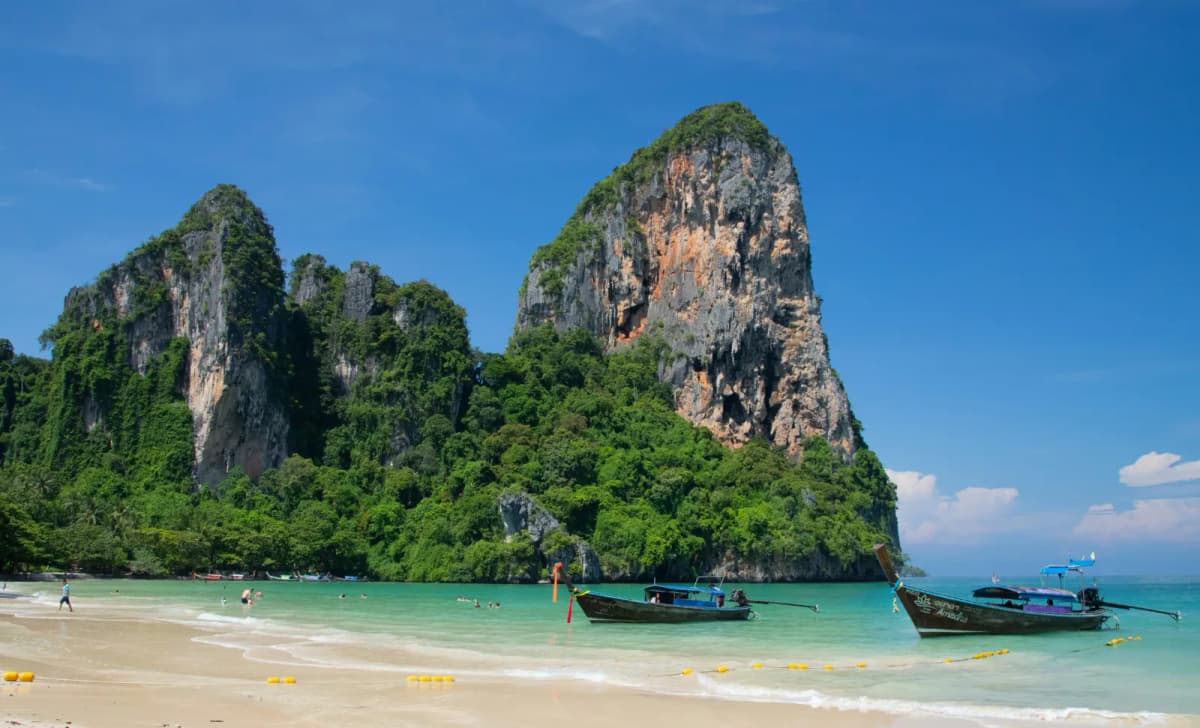
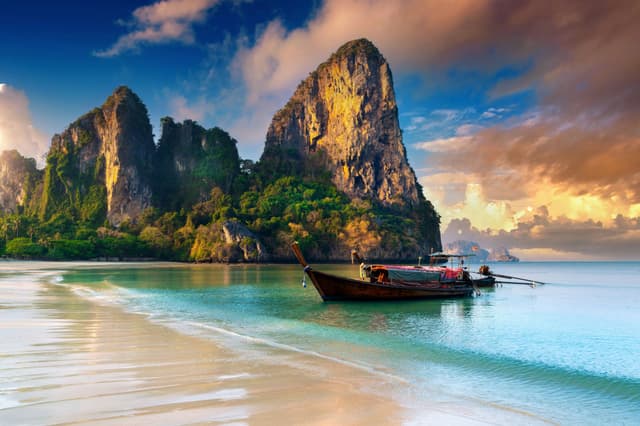
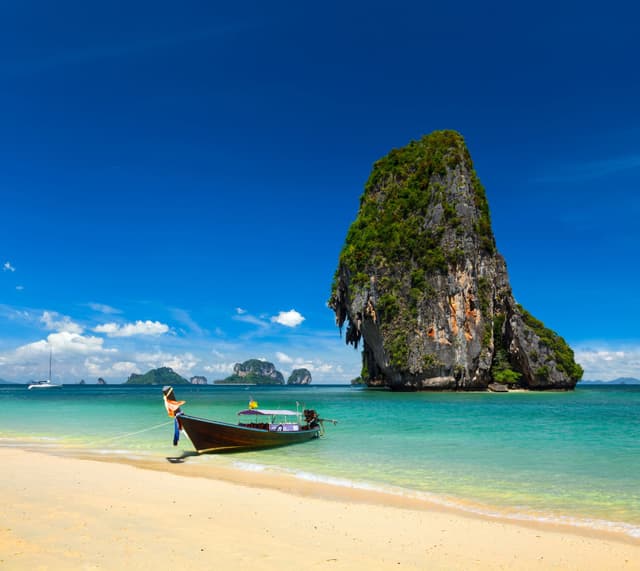
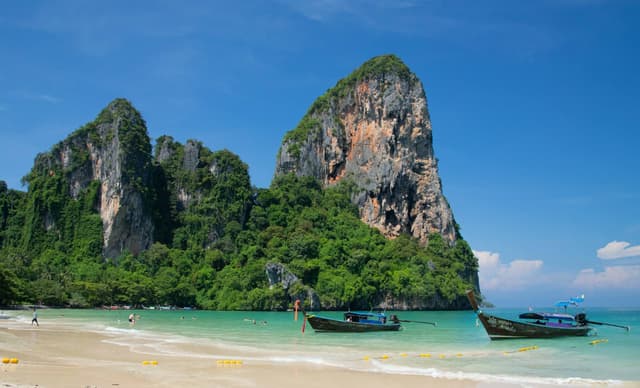
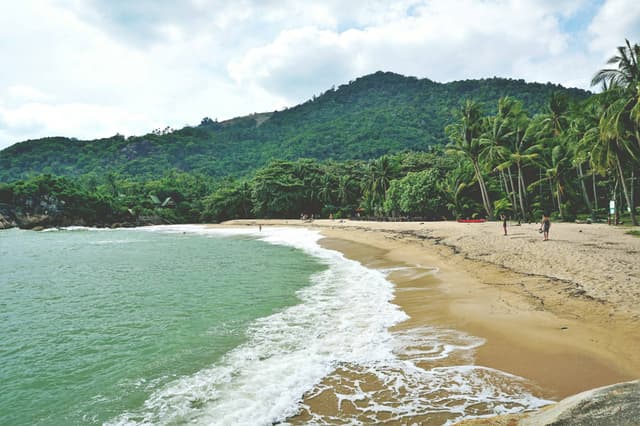
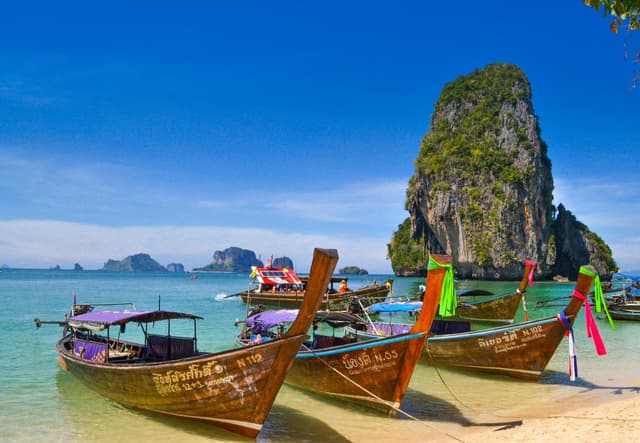
Railay is the image most people have of Krabi: pale sand framed by sheer limestone walls, with long-tail boats pulled up on the beach. TAT describes Hat Rai Le as a peaceful beach with three coastlines, west Rai Le, east Rai Le and Tham Phra Nang, about 20 minutes from Ao Nang (TAT). Phra Nang Cave Beach, at the southern tip, is the prettiest of the three and has a small cave shrine at the foot of the cliff.
Railay West is the swimming beach. Railay East faces mangroves and mudflats, so it is not for swimming, but it has the walkway of restaurants and bars, and the path to Phra Nang starts from its southern end. Go early in the morning or stay the night: day-trip boats fill the beaches by late morning.
2. Rock climbing on Railay's limestone cliffs
Railay is one of Asia's best-known rock-climbing areas. TAT's newsroom has called its limestone peaks possibly the best climbing spot in Thailand (TAT Newsroom, Discover the amazing natural wonders of Krabi). Local climbing schools offer guided sessions for beginners, so you do not need experience to try it.
If you are not a climber, you can still enjoy the cliffs. Watching climbers on the walls above Phra Nang is part of the Railay atmosphere, and the beaches below are shaded in the afternoon. Wear proper shoes for any trail on the peninsula: paths are steep, rooty and slippery after rain.
3. Four Islands tour: Ko Poda, Chicken Island and Thale Waek
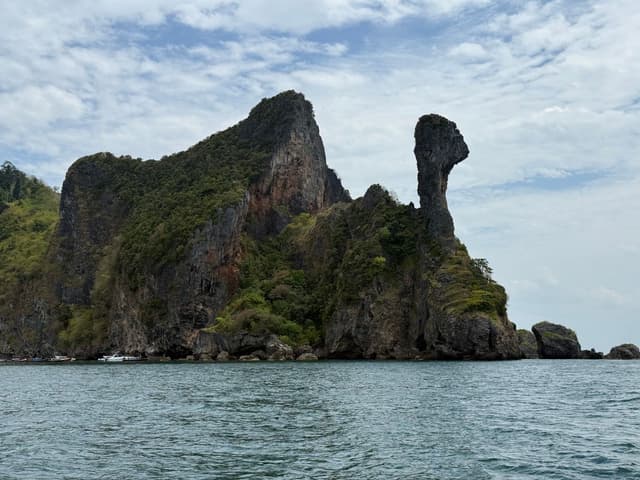
The Four Islands trip is the classic first boat day from Ao Nang. Routes vary by operator, but they usually combine Ko Poda, Chicken Island (Ko Kai), Ko Thap and Phra Nang Cave Beach. The highlight is Thale Waek, the "separated sea", which TAT lists among its Unseen Thailand attractions: at low tide a sandbar appears that links Ko Kai, Ko Thap and Ko Mo, and you can walk between them (TAT).
Because the sandbar depends on the tide, the walking section can be short or underwater on some days. Long-tail versions of this trip are slower and splashier; speedboat versions cover the same islands with less time on the water. Both are short hops compared with Phi Phi, which makes this the gentlest island day for children and older parents.
4. Hong Islands by kayak
Ko Hong sits in Than Bok Khorani National Park to the north of Ao Nang. TAT describes it as having soft, powder-like sand and a near half-circle beach, suited to swimmers and snorkellers (TAT). Tours usually include a long beach stop, a small snorkelling spot, kayaking and a climb to a panoramic viewpoint (TAT Newsroom).
Choose the Hong Islands if you want a quieter alternative to Phi Phi with more time in the water and less time in transit. It is a national park, so you need a park ticket as well as the boat trip, and park rules on litter, coral and wildlife apply.
5. A day, or a night, on the Phi Phi Islands
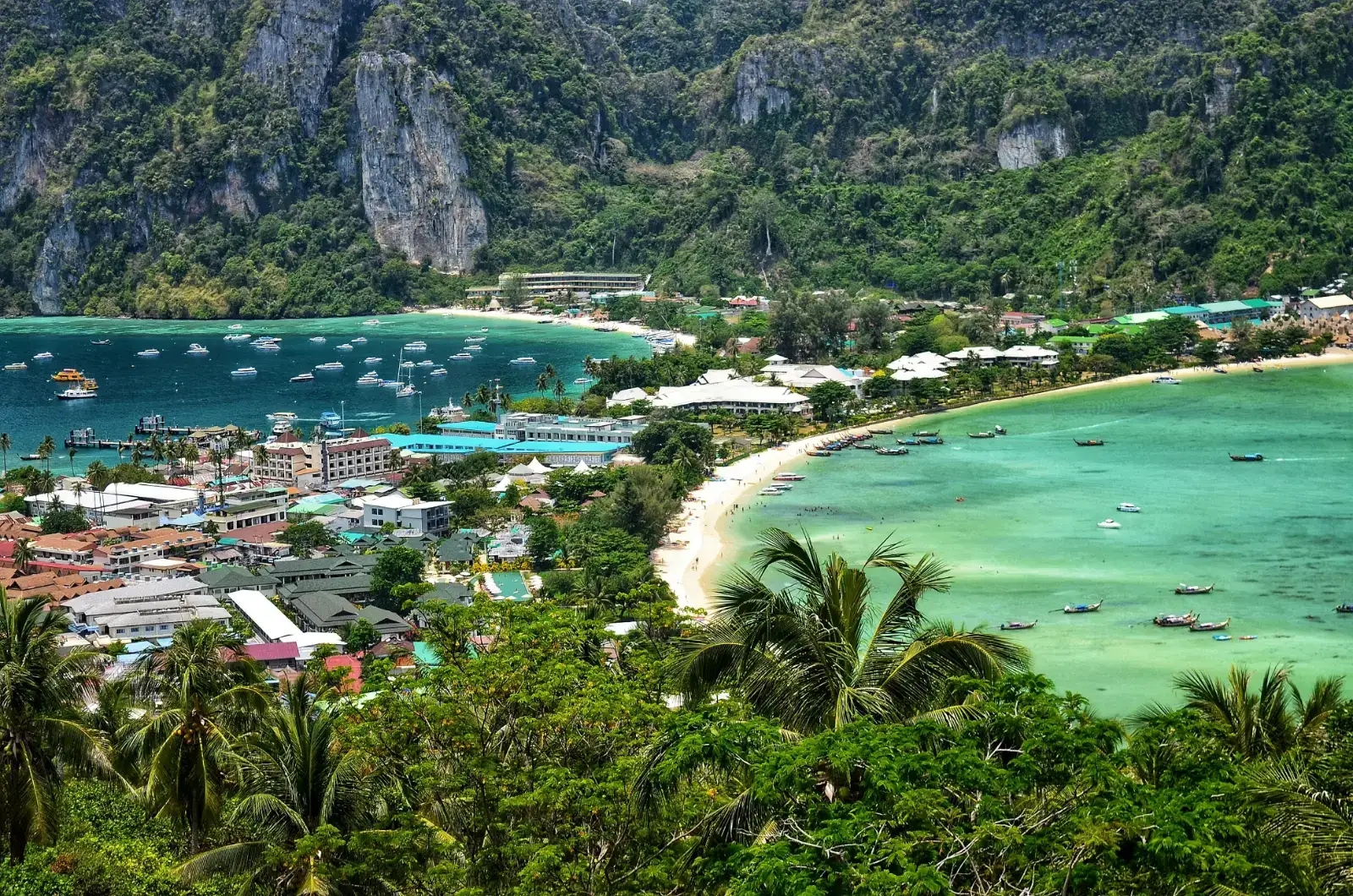
Phi Phi is an archipelago of two main islands: Phi Phi Don, with the piers, hotels, restaurants and beaches such as Ao Ton Sai and Ao Lo Dalam, and Phi Phi Le, with its limestone cliffs and bays including Pi Le, Maya and Lo Sama. TAT gives the crossing as about 2 hours by daily ferry from Khlong Chilat Pier or Noppharat Thara Pier, or you can join a day tour (TAT).
A day trip is possible, but TAT's own advice is that spending several days is the best way to really explore. Our full guide to the Phi Phi Islands, Maya Bay and Phi Phi Don covers where to stay, viewpoints and snorkelling, and the closure rules for Maya Bay are in the islands section below.
6. Climb Tiger Cave Temple (Wat Tham Suea)
Tiger Cave Temple is a working Buddhist temple and meditation centre near Krabi Town with a long stairway to a hilltop shrine and a gold Buddha, and a wide view over Krabi's limestone peaks. It is the most physically demanding sight on this list, and also one of the most rewarding. We cover the climb in detail, including step count and dress code, in its own section below.
7. Emerald Pool and the Khlong Thom hot springs
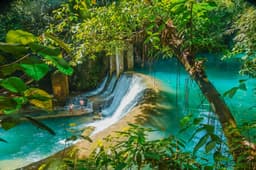
The Emerald Pool (Sa Morakot) is a circular, emerald-coloured pool with a small cascade inside Khao Pra-Bang Khram Wildlife Sanctuary, and swimming is allowed (TAT). A walk from the main pool leads to the Blue Pool (Bo Nam Phut), an ultramarine pool where you cannot swim because of its soft, muddy bottom (Thai National Parks). Go early or late in the afternoon: the Emerald Pool gets very busy around midday.
Nearby in Khlong Thom district are two hot-water sights. The Khlong Thom saltwater hot spring is described by TAT as the only salt hot spring in Thailand, with 14 natural hot springs in the area and water at about 40 to 47°C. The hot waterfall (Namtok Ron) is a forest stream of warm pools that tumble down small tiers. The Emerald Pool and hot springs combine easily into one day, often with Tiger Cave Temple on the way back, and this is a good plan for a rainy day when boats are not running.
8. Hike to the Dragon Crest viewpoint (Khao Ngon Nak)
Dragon Crest, or Khao Ngon Nak, is a forest trail inside Hat Noppharat Thara-Mu Ko Phi Phi National Park that climbs to a viewpoint over Ao Nang's coast and islands. Bangkok Airways' travel guide gives the trail as around 3.7 km from the start to the top viewing point, with 13 marked spots along the way, and notes that leaving marked trails is prohibited and the overhanging ledge at the summit is off-limits (Bangkok Airways).
Start early to avoid the midday heat, carry plenty of water and wear shoes with grip. This is a real hike with steep, rooty sections, not a stroll, so it suits fit travellers rather than young children or elderly parents.
9. Ao Nang beach and the sunset
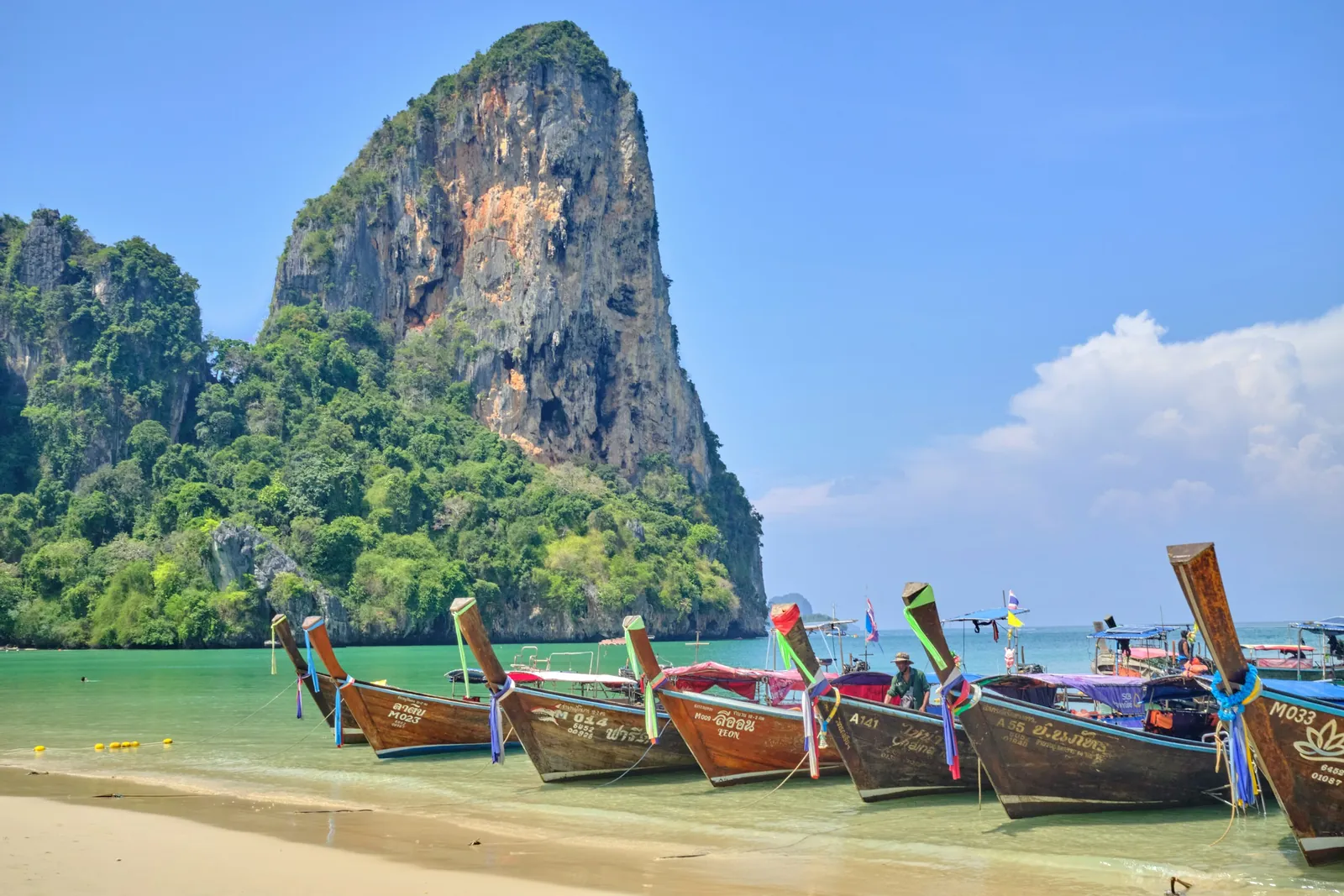
Ao Nang is Krabi's busiest beach town: a seaside strip of guesthouses, hotels, bars and restaurants, and the pier for most island boats. Just north is Hat Noppharat Thara, which TAT describes as a quiet, shady beach that is part of the same national park as the Phi Phi Islands (TAT, Krabi). TAT also rates Krabi's sunsets among the most photogenic in Thailand.
An easy evening plan is to head to Noppharat Thara, just north of Ao Nang, watch the sun drop behind the islands, then eat back in town. To compare Krabi beaches with Phuket, Koh Samui and the Gulf coast, see our list of the best beaches in Thailand.
10. Krabi Town, Khao Khanap Nam and the night markets
Krabi Town is the provincial capital on the Krabi River, about 20 km from Ao Nang, and it is where locals live, shop and eat. TAT lists two evening markets: the Chao Fah Pier night market, daily from 5:00 pm to 12:30 am, and the Maharaj Walking Street, Friday to Sunday from 5:00 pm to 10:00 pm (Checked: October 2026, TAT Krabi province page; hours can change, so confirm locally).
By day, take a long-tail from Chao Fa Pier to Khao Khanap Nam, two limestone hills of about 100 metres that stand on either side of the Krabi River, with a cave you can visit. At the river mouth is the Phuchong Naga King statue, a town landmark. Krabi Town is also the cheapest base in the province and good for street food.
11. Ko Klang and Laem Sak community visits
For a different side of Krabi, visit a local community. Ko Klang is a small island in the Krabi River surrounded by over 1,000 rai of mangrove forest; most residents are Muslim, and TAT asks visitors not to bring pigs or dogs onto the island. Community activities include organic Sangyod rice farming, long-tail boat model making and batik (TAT).
Laem Sak is a three-culture community of Thai Buddhists, Thai Muslims and Thai Chinese, with boat trips past limestone islands and old rock paintings in the bay. TAT now promotes both areas as part of its Krabi Prototype for community-led, low-impact tourism (TAT Newsroom, September 2026). Dress modestly in these villages, as you would at a temple.
12. Ko Lanta and the Ko Rok snorkelling trip
Ko Lanta is a long island in the south of Krabi province with a more relaxed pace than Ao Nang, and it is the base for trips into Mu Ko Lanta National Park. TAT describes Ko Rok, a pair of islands (Ko Rok Nok and Ko Rok Nai), as a good place for snorkelling and scuba diving among coral in the channel between them.
Ko Lanta has no road bridge to the mainland yet: you reach it by road with a vehicle-ferry crossing, or by passenger boat in the high season. A bridge is planned, but the Department of Rural Roads only signed the construction contract in October 2026, with completion scheduled for 2029 (Nation Thailand, 24 October 2026), so plan on the ferry for now. Ko Rok closes every year from 1 June to 30 September, so check the park calendar below before you plan around it.
How do you get to Railay Beach?
You get to Railay Beach by boat. High limestone cliffs cut the peninsula off from the mainland road network, so long-tail boats run from Ao Nang beach (about 20 minutes, per TAT) to Railay West, and from Krabi Town side piers to Railay East. There is no road and no car access.
Boats from Ao Nang leave from the beach once enough passengers have gathered. On most days you will step off into shallow water, so wear sandals and keep bags light. If you are staying overnight with large suitcases, ask your hotel how luggage is handled, and travel at higher tide if you can.
| Railay beach | What it is like | Good for | How to reach it |
|---|---|---|---|
| Railay West | Main sandy beach between cliffs, calm in the dry season | Swimming, sunsets, boat arrivals from Ao Nang | Long-tail from Ao Nang |
| Railay East | Mangrove shore and mudflats, walkway of bars and restaurants | Cheaper rooms, food, boats from the Krabi Town side | Long-tail to the east side, or a short walk from Railay West |
| Phra Nang Cave Beach | Small, beautiful beach under the cliffs with a cave shrine | Photos, snorkelling around the rocks, climbing views | Walking path from the south end of Railay East |
| Tonsai | Rustic bay next to Railay West | Climbers and backpackers | Short walk or boat from Railay West, depending on tide |
Long-tail services can stop in rough weather in the monsoon, which is one more reason to keep a spare day in your plan. Trails on the peninsula are steep and slippery after rain, so skip any scramble that looks beyond you, especially with young children or older parents.

Which islands can you visit from Krabi?
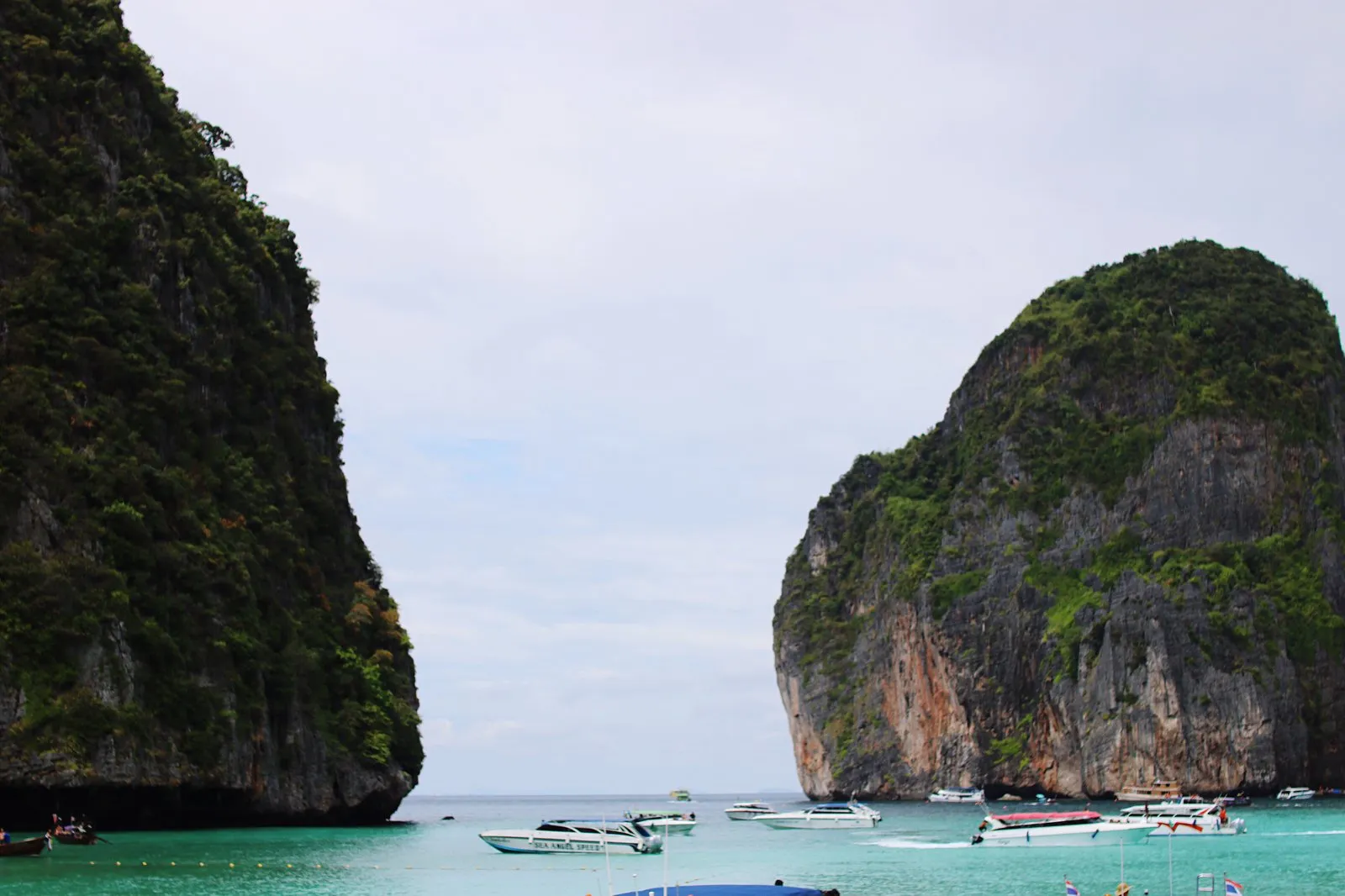
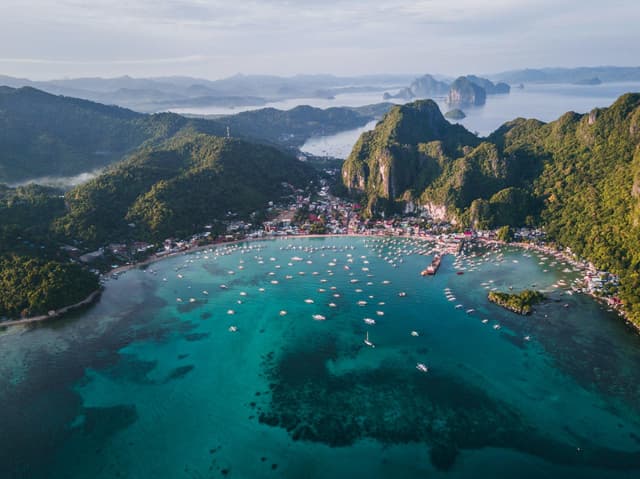
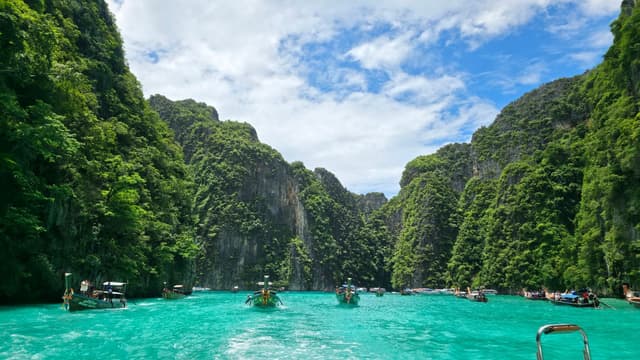
From Krabi you can visit the Four Islands (Ko Poda, Chicken Island, Ko Thap and Phra Nang), the Hong Islands, the Phi Phi Islands, and, from Ko Lanta, Ko Rok and the Ko Ha group. Most leave from Ao Nang or Noppharat Thara, and all depend on sea conditions, which are best from December to April.
| Island trip | Main departure | Highlights | Who it suits | Park status to check |
|---|---|---|---|---|
| Four Islands | Ao Nang beach | Thale Waek sandbar, Ko Poda beach, Phra Nang Cave Beach | First-timers, families with children | Mostly within the national park; trips stop in bad weather |
| Hong Islands | Ao Nang or piers north of it | Beach, kayaking, snorkelling, viewpoint | Couples, kayakers, a quieter day | Than Bok Khorani National Park; no annual island closure on the DNP list, but trips stop in bad weather |
| Phi Phi Islands | Khlong Chilat or Noppharat Thara Pier (about 2 hours by ferry, per TAT) | Maya Bay, Pi Le lagoon, snorkelling, viewpoints on Phi Phi Don | Snorkellers, those staying a night or more | Maya Bay annual closure; electronic park tickets |
| Ko Rok and Ko Ha | Ko Lanta | Coral, snorkelling and diving | Strong swimmers, divers | Mu Ko Lanta National Park; Ko Rok closed 1 June to 30 September, Ko Ha 1 August to 30 September |
For a side-by-side look at Krabi's islands against Koh Samui, Koh Tao, Koh Lipe and the rest, read our guide to the best islands in Thailand.
National park closures and electronic tickets
Most of Krabi's island trips are inside marine national parks run by the Department of National Parks, Wildlife and Plant Conservation (DNP), and the DNP closes some attractions each year for weather and recovery. TAT's January 2026 notice says closures depend on weather and park conditions, and points travellers to the DNP's published list of open, closed and partly open sites (TAT Newsroom, 15 January 2026). The dates below come from that DNP list (data dated 7 January 2026) and can change at short notice in bad weather.
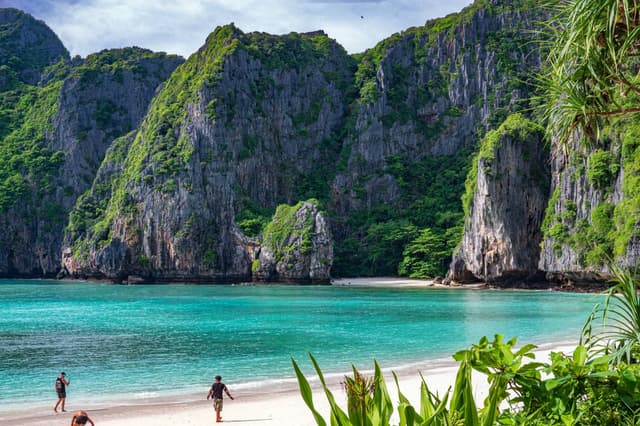
- Maya Bay (Phi Phi Le): Maya Bay, Loh Samah Bay and Lo Kor Bay close every year from 1 August to 30 September. The DNP lists this as an annual closure, and the park chief of Hat Noppharat Thara-Mu Ko Phi Phi National Park gives the reasons as ecosystem recovery and tourist safety in rough rainy-season seas (Nation Thailand, July 2024). TAT confirms Maya Bay welcomed visitors back on 1 October 2026. Checked: October 2026, DNP closure list and TAT Newsroom.
- Swimming at Maya Bay: under the rules set when the bay reopened, visitors may not play in the seawater, because the beach is a nursery for blacktip reef sharks. Expect to look and photograph rather than swim.
- Hong Islands (Than Bok Khorani National Park): the DNP list shows no annual closure for the island sites, so trips can run all year, but they are still cancelled when the sea is rough. Checked: October 2026, DNP closure list.
- Electronic tickets: six marine national parks, including Phi Phi and Ko Lanta, have used electronic tickets since October 2025, and TAT advises buying in advance and carrying your passport (TAT Newsroom, 20 October 2026). Checked: October 2026, TAT Newsroom.
- Ko Rok and Ko Ha (Mu Ko Lanta National Park): the DNP lists Ko Rok, with its park accommodation and campsite, as closed every year from 1 June to 30 September, and Ko Ha with the Hin Daeng and Hin Muang dive sites from 1 August to 30 September. Checked: October 2026, DNP closure list.
- Chicken Island (Ko Kai): the same list shows diving on the west side of Ko Kai temporarily closed, with no reopening date given, so ask your operator which snorkelling stops are open on the Four Islands trip. Checked: October 2026, DNP closure list.
Boat safety in the monsoon
TAT's guidance for the southwest monsoon is clear: boat trips can be cancelled or delayed at the last minute for the safety of passengers and crew, swells are larger in exposed areas such as the crossing to Phi Phi, and a red flag on a beach means do not swim, because large waves and rip currents can make swimming dangerous (TAT Newsroom, marine tourism in the southwest monsoon). Always wear the life jacket provided, and if the sea looks wrong to you, it is fine to stay ashore.
Is Tiger Cave Temple worth the climb?
Yes, if you are reasonably fit and start early. Tiger Cave Temple (Wat Tham Suea) rewards the long stairway with a 360-degree view over Krabi's limestone peaks and coast, and a quiet shrine at the top. It is a hard climb in the heat, so it is not for everyone, and the temple grounds at the base are worth a visit on their own.
The temple is an active place of Buddhist practice, which shapes how you should dress and behave. Bangkok Airways' guide places it about 9 km from Krabi Airport, so it fits easily on the way to or from a flight or into an inland day with the Emerald Pool.
How many steps is Tiger Cave Temple?
Sources differ slightly. TAT's newsroom describes a climb of 1,260 steps (TAT Newsroom), while Bangkok Airways' travel guide gives 1,237 steps (Bangkok Airways, Tiger Cave Krabi). Either way, plan for more than 1,200 steps, steep in places. Bangkok Airways gives the climb as about 40 to 60 minutes up and 30 to 45 minutes down for most visitors.
Tiger Cave Temple climb guide
| Stage | What to expect | Tip |
|---|---|---|
| Before you start | Heat and humidity build fast after mid-morning | Start around sunrise or in the late afternoon; Bangkok Airways suggests about 06:00 to 09:00 or 15:30 to 17:00 |
| What to bring | No shade on parts of the stairway | Water, a small towel, and a bag you can close |
| On the stairs | A long, steep stairway with landings to rest on | Take regular breaks, let faster climbers pass, hold the rail where there is one |
| Monkeys | Monkeys live around the temple and are known to grab belongings | Do not feed them, keep food and sunglasses out of sight |
| At the summit | Shrine, gold Buddha and viewpoint | Remove shoes where required, keep voices low, do not climb on statues |
| Coming down | Harder on the knees than going up | Go slowly and hold the rail, especially if the steps are wet |
Tiger Cave Temple dress code
Dress modestly. Bangkok Airways states that sleeveless tops and shorts are not allowed, and that shoes must come off before entering the sacred area at the summit. Choose a T-shirt that covers your shoulders and light trousers or a long skirt, and carry a scarf or sarong if you climb in sports clothes. The same rules apply at temples across Thailand, and our Thailand travel tips cover temple etiquette, money and transport in more detail.
Who should skip the summit: travellers with heart, knee or breathing problems, very young children, and anyone visiting at midday in the hot season. If you are travelling with elderly parents, they can visit the temple grounds at the base while the rest of the group climbs.
Where should you stay in Krabi?
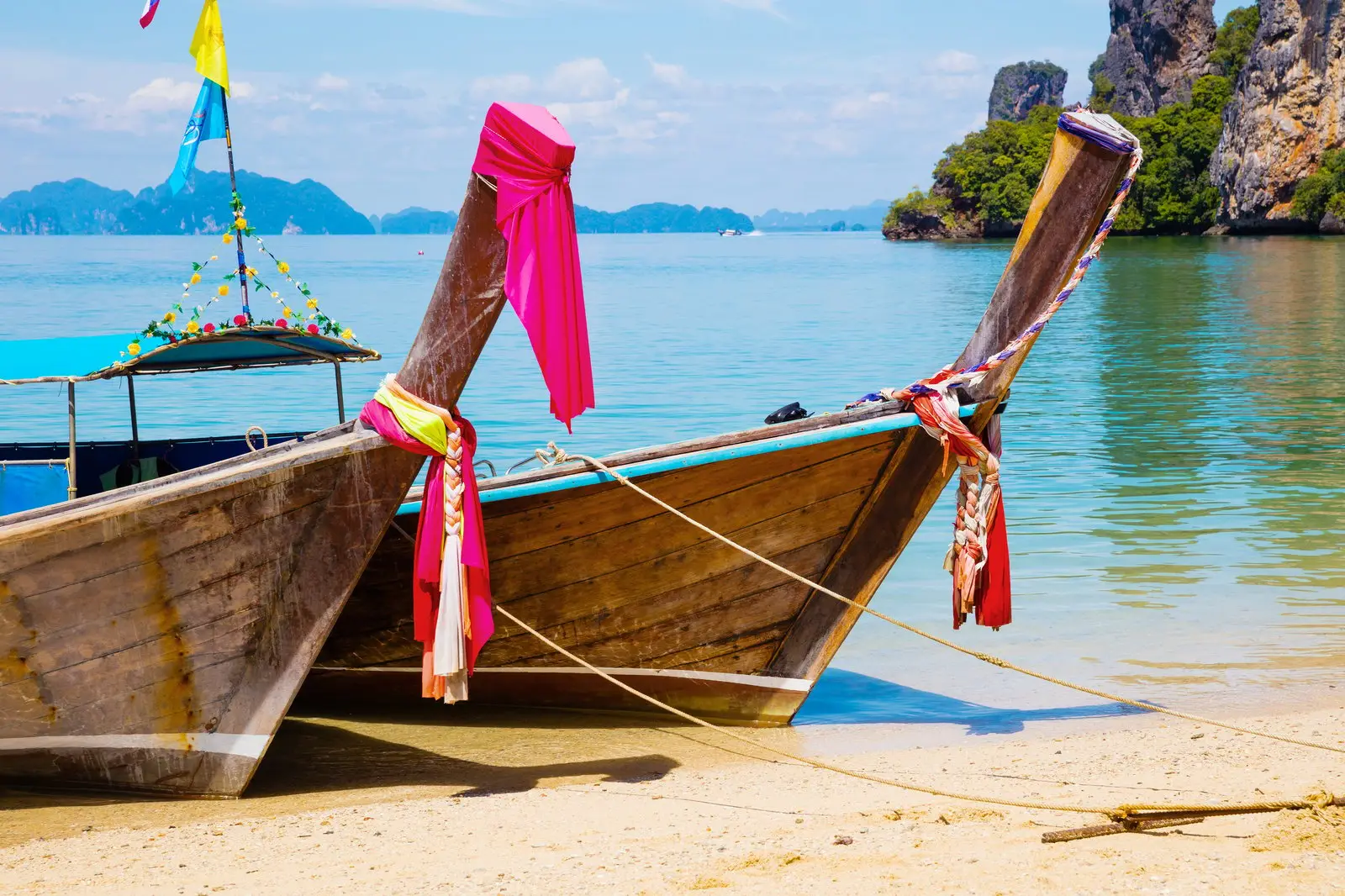
Ao Nang is the best all-round base in Krabi for a first visit, because most island boats leave from its beach and it has the widest range of hotels and restaurants. Choose Railay for scenery and quiet evenings, Klong Muang for a resort stay, Ko Lanta for a slower beach holiday, and Krabi Town for budget stays and local food.
| Area | Feel | Best for | Pros | Cons |
|---|---|---|---|---|
| Ao Nang | Busy beach town with a seaside strip | First-timers, families, mixed groups | Island boats from the beach, many restaurants, easy transfers | Beach itself is average; can feel crowded in peak season |
| Railay | Car-free peninsula under limestone cliffs | Couples, climbers, photographers | Most dramatic scenery, quiet after day-trippers leave | Boat access only, luggage is awkward, fewer food options |
| Klong Muang | Quieter resort strip north-west of Ao Nang | Families wanting a resort, honeymooners, older travellers | Calm, spacious resorts, sunset views | Few restaurants outside hotels; you need transport to Ao Nang |
| Ko Lanta | Long island with many beaches and a relaxed pace | Longer stays, divers, slow travellers | Space, Ko Rok trips, local villages | Further from Ao Nang's boats and the airport; ferries are seasonal |
| Krabi Town | Provincial capital on the Krabi River | Budget travellers, food lovers, early flights | Night markets, cheaper rooms, near Tiger Cave Temple | No beach; about 20 km to Ao Nang |
TAT advises booking accommodation very early, up to a year ahead, for the peak period from late December to early January (TAT). Families planning a Christmas or New Year trip should treat that as a real deadline, not a suggestion.
Families: Ao Nang or Klong Muang work best. The Four Islands trip, the Emerald Pool and the beaches at Noppharat Thara are the most child-friendly days. Couples: one or two nights at Railay, then move to Ao Nang or Ko Lanta, gives you both scenery and convenience. Vegetarian travellers: Thai menus in Ao Nang and Krabi Town usually have vegetable dishes; ask for "jay" (Thai vegan) or "mangsawirat" (vegetarian) and say no fish sauce if that matters to you.
If you are deciding between bases on the Andaman coast, our guide to things to do in Phuket shows what the bigger island offers, and the two combine well by ferry or road.
When is the best time to visit Krabi?
The best time to visit Krabi is December to April, when the Andaman coast is in its dry season, the sea is calmer and island trips run most reliably. May to October is the southwest monsoon: it is greener and quieter, but boats are cancelled more often, some park sites close, and swimming can be dangerous on red-flag days.
Thailand's meteorological service defines the rainy season as mid-May to mid-October, when the southwest monsoon covers the country, and winter as mid-October to mid-February under the northeast monsoon, and notes that the rainy season can start a week or two earlier or later than usual (Thailand.go.th, The Seasons of Thailand). The table below uses the Thai Meteorological Department's 1991 to 2020 normal rainfall for southern Thailand's west coast, the Andaman region that includes Krabi.
| Month | Normal rainfall, southern west coast (mm) | What it means for a Krabi trip |
|---|---|---|
| January | 50.2 | Dry season; calm seas, peak demand |
| February | 30.2 | Driest month; excellent for islands |
| March | 103.6 | Hot, mostly dry; good boat conditions |
| April | 162.2 | Hot, with more showers than March; Songkran holiday |
| May | 300.6 | Monsoon arrives in the second half of the month; seas rougher |
| June | 335.5 | Wet season; more boat cancellations |
| July | 349.4 | Wet season; quieter and greener |
| August | 419.2 | Very wet; Maya Bay, Ko Rok and Ko Ha closed |
| September | 429.2 | Wettest month; Maya Bay, Ko Rok and Ko Ha closed |
| October | 368.8 | Still wet; Maya Bay, Ko Rok and Ko Ha reopen from 1 October; some cancellations |
| November | 193.1 | Improving; showers ease through the month |
| December | 91.5 | Dry season established; busy over Christmas and New Year |
Source: Thai Meteorological Department three-month climate outlooks (issued November 2025 to August 2026), normal values for Southern Thailand (West Coast). Checked: October 2026, Thai Meteorological Department.
TAT's October 2026 note for the Andaman coast says the dry season should be well established by December, that October and early November can still bring rain and boat cancellations when waves are high, and that travellers should keep a spare day and book December and January ferries and rooms early. Checked: October 2026, TAT Newsroom.
Dashain, Tihar and school holidays
Dashain and Tihar usually fall between late September and mid-November, which is the tail end of Krabi's rainy season. You can still have a good trip at that time: inland sights such as Tiger Cave Temple, the Emerald Pool and the hot springs are not affected by the sea, and island days often go ahead between showers. Build in one or two flexible days for boats. If your family can travel over the winter school break or later, December to March gives the most reliable island weather. Our month-by-month guide to the best time to visit Thailand compares the Andaman coast with Bangkok, the north and the Gulf islands.
How do you get to Krabi from Bangkok?
The easiest way to get to Krabi from Bangkok is a domestic flight of about 1 hour 20 minutes to 1 hour 35 minutes into Krabi International Airport (KBV). Overland, you can take an overnight bus from Bangkok, or a train to Surat Thani and continue by road, but either takes most of a day or a night.
| Mode | Route | Travel time | Notes |
|---|---|---|---|
| Flight | Bangkok Don Mueang (DMK) to Krabi (KBV) | About 1 hour 20 to 35 minutes | Thai AirAsia and Thai Lion Air list non-stop flights (Checked: October 2026, AirAsia route page) |
| Flight | Bangkok Suvarnabhumi (BKK) to Krabi (KBV) | About 1 hour 25 minutes | Bangkok Airways operates direct flights (Checked: October 2026, Bangkok Airways route page); useful if you land at BKK on an international flight |
| Bus | Bangkok Southern Bus Terminal to Krabi | Overnight | Cheapest option; long and tiring with children or older parents |
| Train and road | Bangkok to Surat Thani by train, then bus or van to Krabi | Overnight plus a road transfer | Krabi has no railway station; sleeper berths sell out at holidays |
| Ferry or road | Phuket to Krabi | Varies by route and season | Ferries via Phi Phi in season; road transfer year round |
Krabi Airport is on the mainland outside Krabi Town, and Bangkok Airways puts Tiger Cave Temple about 9 km away. Transfers to Ao Nang are by taxi, shuttle or pre-booked car; for Railay you go by road to Ao Nang or a pier, then by long-tail boat. Thai National Parks' guide notes that the Ao Nang pier ferry towards Ko Lanta runs only from November to April, so outside those months plan on road and vehicle-ferry transfers to Lanta (Checked: October 2026, Thai National Parks).
Getting to Krabi from Kathmandu
There is no non-stop flight between Kathmandu and Krabi at the time of writing. Nepali travellers usually fly Kathmandu to Bangkok, then connect to Krabi on a domestic flight. If you land at Suvarnabhumi, a same-airport connection to Krabi saves you a road transfer across Bangkok to Don Mueang. Our guide to the Kathmandu to Bangkok flight covers airlines, flying time and the arrival process at Suvarnabhumi. For entry rules, check the current requirements for your passport on our Thailand visa page before you book.
Krabi works well as the beach end of a trip that starts in Bangkok, and it pairs naturally with Phuket or Phi Phi. If you are weighing Krabi against other ways to see the country, the Thailand tour packages page is a useful place to compare trip ideas.
Frequently asked questions
What is Krabi famous for?
Krabi is famous for its limestone cliffs and islands on Thailand's Andaman coast: Railay Beach and its rock climbing, the Phi Phi Islands and Maya Bay, the Hong Islands, and the Thale Waek sandbar on the Four Islands trip. Inland, Krabi is known for Tiger Cave Temple, the Emerald Pool and the Khlong Thom saltwater hot spring.
How do I get to Railay Beach?
You reach Railay Beach in Krabi only by boat, because cliffs cut the peninsula off from the road network. Long-tail boats run from Ao Nang beach to Railay West in about 20 minutes, and from the Krabi Town side to Railay East. Expect to wade ashore, so pack light and wear sandals.
Is Krabi better than Phuket?
Krabi is better than Phuket for scenery, rock climbing and a quieter, nature-led trip, while Phuket has more nightlife, larger malls, more hotel choice and more international flights. Many travellers combine both, since Krabi and Phuket are linked by road and, in the dry season, by ferry via the Phi Phi Islands.
Can you swim in Krabi in the rainy season?
You can swim in Krabi in the rainy season (May to October) on calm days, but conditions change quickly. TAT warns that large waves and rip currents can make swimming dangerous, and a red flag on the beach means do not swim. Swim near others, follow lifeguards where present, and use the Emerald Pool on rough days.
How many steps is Tiger Cave Temple?
Tiger Cave Temple (Wat Tham Suea) in Krabi has more than 1,200 steps to the summit. TAT gives 1,260 steps and Bangkok Airways gives 1,237. Most visitors take about 40 to 60 minutes to climb and 30 to 45 minutes to come down. Start early, carry water and dress modestly.
Is Ao Nang a good base in Krabi?
Ao Nang is the best base in Krabi for most first-time visitors. Boats to Railay, the Four Islands and the Hong Islands leave from or near its beach, and it has the widest choice of hotels and restaurants. Its own beach is average, so plan to spend days on the islands or at Railay.
Can you do Phi Phi from Krabi?
Yes, you can visit the Phi Phi Islands from Krabi. TAT lists daily ferries of about 2 hours from Khlong Chilat or Noppharat Thara Pier, and day tours also run. Maya Bay closes every year from 1 August to 30 September (it reopened on 1 October 2026), and Phi Phi uses electronic park tickets, so carry your passport.
Is Krabi good for families?
Krabi is good for families who base themselves in Ao Nang or Klong Muang. The Four Islands trip, the Emerald Pool, the Noppharat Thara beach and the Krabi Town night markets suit children and grandparents. Skip the steep Railay trails and the Dragon Crest hike with young children, and visit between December and April for calmer seas.
How many days in Krabi is enough?
Four to six nights in Krabi is enough for most travellers: one day for Railay, one or two island days, one inland day for Tiger Cave Temple and the Emerald Pool, plus a spare day for weather. Add two or three nights if you want Ko Lanta or an overnight stay on Phi Phi.
Krabi ma k k herne?
In Krabi, the main sights are Railay Beach, the Four Islands boat trip with the Thale Waek sandbar, the Hong Islands, the Phi Phi Islands, Tiger Cave Temple, the Emerald Pool and the Khlong Thom hot springs, plus Ao Nang's sunsets and the Krabi Town night markets. Nepali families usually fly via Bangkok and stay in Ao Nang.
Do you need a national park ticket for Krabi's islands?
Yes, most of Krabi's island trips enter marine national parks, so you need a park ticket as well as the boat. Six marine parks, including Phi Phi and Ko Lanta, have used electronic tickets since October 2025, and TAT advises buying in advance and carrying your passport. Ask your tour operator whether the park ticket is already included.