






























































Short answer: no, Vietnam is not expensive. It is one of the best value destinations in Asia, and in late 2026 a backpacker can travel on roughly 650,000 to 1,000,000 Vietnamese dong a day (about 25 to 38 US dollars), a mid-range traveller on 1,600,000 to 3,000,000 dong (about 62 to 115 US dollars), and a comfortable trip with four-star hotels and private transfers starts at around 4,000,000 dong (about 155 US dollars) per person per day. Street food, coffee, buses, trains and simple rooms are very cheap. The costs that push budgets up are overnight Ha Long Bay cruises, domestic flights booked late, theme-park style attractions such as Ba Na Hills, and multi-day caving expeditions.
Key facts at a glance
| Item | Figure (late September 2026) |
|---|---|
| Currency | Vietnamese dong (VND) |
| Exchange rate used in this guide | About 26,000 VND to 1 US dollar |
| State Bank of Vietnam central rate, 27 September 2026 | 25,641 VND per US dollar |
| Vietcombank selling rate, 27 September 2026 | About 26,170 to 26,180 VND per US dollar |
| Bowl of pho at a local shop | 35,000 to 70,000 VND (about 1.35 to 2.70 USD) |
| Hostel dorm bed | About 130,000 to 390,000 VND (5 to 15 USD) |
| Hanoi to Ho Chi Minh City by train | From about 1,000,000 VND, 32 to 35 hours |
| E-visa fee | 25 USD single entry, 50 USD multiple entry, up to 90 days |
| VAT on most goods and services | 8 percent (reduced rate) until 31 December 2026 |
What is the exchange rate, and how should you pay?
The dong is a managed currency. The State Bank of Vietnam publishes a daily central rate and commercial banks trade within a band around it. On 27 September 2026 the central rate was 25,641 dong per US dollar, while Vietcombank was selling dollars at about 26,170 to 26,180 dong. For simple maths, this guide converts at about 26,000 dong to the dollar. That means 100,000 dong is roughly 3.85 US dollars and 1,000,000 dong is roughly 38 US dollars.
| Dong amount | Approx. US dollars (at 26,000) | What it typically buys |
|---|---|---|
| 9,000 VND | 0.35 | Shortest single ride on the Hanoi Metro |
| 30,000 VND | 1.15 | A banh mi or an iced milk coffee from a local stall |
| 70,000 VND | 2.70 | Entry to the Temple of Literature in Hanoi |
| 200,000 VND | 7.70 | Entry to the Hue Imperial City |
| 500,000 VND | 19 | A double room in a simple guesthouse outside peak dates |
| 1,000,000 VND | 38 | A Hanoi to Ho Chi Minh City train berth on a cheaper service |
| 2,600,000 VND | 100 | A night in a good four-star city hotel |
Cash, cards and the zeros
Vietnam is still a cash-first country for street food, markets, small guesthouses, motorbike taxis and rural areas, but card and QR payments are now common in hotels, supermarkets, chain cafés and most mid-range restaurants. Banknotes run from 1,000 up to 500,000 dong, and the 10,000 and 20,000 notes look similar enough to cause mistakes, as do the 20,000 and 500,000 notes. Count your change, and keep small notes for stalls and tips. When a card terminal or ATM offers to charge you in your home currency, decline and pay in dong: the dynamic conversion rate is almost always worse.
How much does a day in Vietnam cost?
Your daily spend depends mostly on where you sleep and how you move between cities. Food is cheap at every level. The ranges below are per person, assume two people sharing a room for the mid-range and comfortable styles, include local transport and entry fees, and exclude international flights.
| Travel style | Per day (VND) | Per day (approx. USD) | What it usually covers |
|---|---|---|---|
| Backpacker | 650,000 to 1,000,000 | 25 to 38 | Dorm or basic guesthouse, street food, local beer, sleeper buses and trains, Grab motorbike rides |
| Mid-range | 1,600,000 to 3,000,000 | 62 to 115 | Three-star or boutique hotel, restaurant meals, a paid sight or tour most days, Grab cars, the odd domestic flight |
| Comfortable | 4,000,000 to 7,000,000 | 155 to 270 | Four or five-star hotels, private car and driver on day trips, a guide in key sites, cocktail bars |
| Luxury | 8,000,000 and up | 310 and up | Top resorts in Phu Quoc, Nha Trang or Hoi An, luxury Ha Long cruises, private everything |
These are planning estimates built from the typical prices in the sections below. Ho Chi Minh City tends to run 15 to 20 percent above Hanoi for everyday food, while Hue and smaller towns are cheaper. Beach islands such as Phu Quoc and Con Dao cost more for rooms, and tourist-zone restaurants in any city can charge two to three times the price of a local shop a street away.





How much does accommodation cost in Vietnam?
Accommodation in Vietnam is excellent value, especially in the mid-range. A clean private room with air conditioning, hot water and fast wifi is easy to find for under 25 US dollars outside the peak holiday weeks, and international four-star brands often cost less than half what they would in Europe or Singapore.
| Type | Typical price per night (VND) | Approx. USD | Notes |
|---|---|---|---|
| Hostel dorm bed | 130,000 to 390,000 | 5 to 15 | Many include breakfast or free beer hours; Hanoi Old Quarter and Hoi An are cheapest |
| Guesthouse or homestay, private room | 300,000 to 700,000 | 12 to 27 | Family-run; homestays in Sapa, Ha Giang and the Mekong Delta often include dinner |
| Two to three-star hotel | 400,000 to 1,000,000 | 15 to 40 | Air conditioning, lift, breakfast; the sweet spot for most travellers |
| Four-star or upscale boutique | 800,000 to 2,300,000 | 30 to 90 | Pools, rooftop bars; great value in Da Nang and Hanoi |
| Five-star and beach resorts | 2,600,000 to 8,000,000 and up | 100 to 300 and up | Top resorts in Phu Quoc, Nha Trang, Da Nang and Hoi An cost far more at peak |
Prices are typical 2026 ranges from city price guides and booking sites. Mid-range and upscale hotels often quote rates "plus plus", meaning a service charge (commonly 5 percent) and VAT are added at checkout. VAT on most goods and services is 8 percent until 31 December 2026 under a reduced rate approved by the National Assembly, after which the standard 10 percent is due to return unless extended again.
How much does food and drink cost in Vietnam?
Food is where Vietnam is spectacularly cheap. You can eat three good meals a day for well under 10 US dollars by sticking to local shops, markets and street stalls, and the quality is often better than in tourist restaurants. A sit-down Vietnamese meal in a mid-range restaurant is typically 150,000 to 300,000 dong per person, and a Western meal with wine in a smart restaurant can easily pass 800,000 dong.
| Item | Typical price (VND) | Approx. USD |
|---|---|---|
| Pho (beef or chicken noodle soup) | 35,000 to 70,000 | 1.35 to 2.70 |
| Banh mi (filled baguette) | 25,000 to 50,000 | 1 to 1.90 |
| Bun cha (grilled pork with noodles, Hanoi) | 50,000 to 100,000 | 1.90 to 3.85 |
| Com tam (broken rice plate, Ho Chi Minh City) | 50,000 to 105,000 | 1.90 to 4 |
| Ca phe sua da (iced milk coffee) | 26,000 to 40,000 | 1 to 1.55 |
| Egg coffee in a Hanoi café | 40,000 to 80,000 | 1.55 to 3.10 |
| Bia hoi (fresh draught beer), per glass | 13,000 to 26,000 | 0.50 to 1 |
| Bottled local beer in a bar | 26,000 to 40,000 | 1 to 1.55 |
| Main course in a tourist restaurant | 120,000 to 250,000 | 4.60 to 9.60 |
| Cocktail in a rooftop or hotel bar | 150,000 to 350,000 | 5.80 to 13.50 |
Street and local prices are from 2026 food price guides. Hanoi and Hue are the cheapest cities to eat in, Ho Chi Minh City is roughly 15 to 20 percent higher, and anything on a main tourist walking street costs more. For which dishes to try and how to order them, see our guide to what to eat in Vietnam.
Easy ways to eat well for less
- Eat where the plastic stools are full of locals, and check whether a menu shows prices before you sit down.
- Lunch is the best value meal: com binh dan (rice with a choice of dishes from a counter) is filling and cheap.
- Drink bia hoi rather than bottled imports, and coffee from a street stall rather than a chain.
- Tap water is not safe to drink, so refill from large bottles or hotel dispensers rather than buying many small ones.
- Tipping is not expected in local eateries. In mid-range restaurants, rounding up or leaving 5 to 10 percent for good service is appreciated; check first whether a service charge is already on the bill.
How much does getting around cities cost?
City transport is cheap, and ride-hailing apps have removed most of the old taxi haggling. Grab is the dominant app, with Be and the all-electric Xanh SM as strong rivals. Motorbike rides are the cheapest way to cross a city if you are comfortable riding pillion, and both Hanoi and Ho Chi Minh City now have metro lines that are useful for some trips.
| Mode | Typical fare (VND) | Approx. USD | Notes |
|---|---|---|---|
| GrabBike short city hop | 15,000 to 30,000 | 0.60 to 1.15 | Base around 12,000 to 14,000, then about 4,000 to 5,500 per km |
| GrabCar short city hop | 30,000 to 50,000 | 1.15 to 1.90 | Base around 27,000 to 32,000, then about 9,000 to 12,000 per km |
| Noi Bai Airport to Hanoi Old Quarter, GrabCar | 280,000 to 380,000 | 11 to 15 | Includes airport surcharge and tolls; surge can add more |
| Tan Son Nhat Airport to District 1, GrabCar | 180,000 to 280,000 | 7 to 11 | Heavy traffic at rush hour lengthens the ride |
| Hanoi Metro Line 2A or 3, single ride | 9,000 to 19,000 | 0.35 to 0.75 | Day pass 40,000 |
| Ho Chi Minh City Metro Line 1, single ride | 7,000 to 20,000 | 0.25 to 0.75 | Opened December 2024; 1-day pass 40,000, 3-day pass 90,000 |
| Scooter rental, per day | 150,000 to 300,000 | 6 to 12 | You need a licence valid in Vietnam and a helmet |
Ride-hailing fares are indicative 2026 ranges and change with demand: surge pricing typically multiplies fares by around 1.2 to 2 times at rush hour, in heavy rain and on holidays. Metro fares are from the operators' published fare tables.
How much do trains, buses and domestic flights cost?
Vietnam is long and thin, about 1,700 km by rail from Hanoi to Ho Chi Minh City, so how you cover that distance is the biggest transport decision you will make. Overnight trains and sleeper buses are cheap and save a night's accommodation. Domestic flights are fast and, if booked a few weeks ahead, often cost little more than the train.
| Route | Mode | Typical cost (VND) | Journey time |
|---|---|---|---|
| Hanoi to Ho Chi Minh City | Vietnam Railways, SE3, SE5 or SE7 | About 1,000,000 to 1,150,000 | 34 to 35 hours |
| Hanoi to Ho Chi Minh City | Vietnam Railways, SE1 (faster) | About 1,800,000 | About 33 hours |
| Hanoi to Ho Chi Minh City | Private carriage (for example Violette) | About 3,300,000 | About 33 hours |
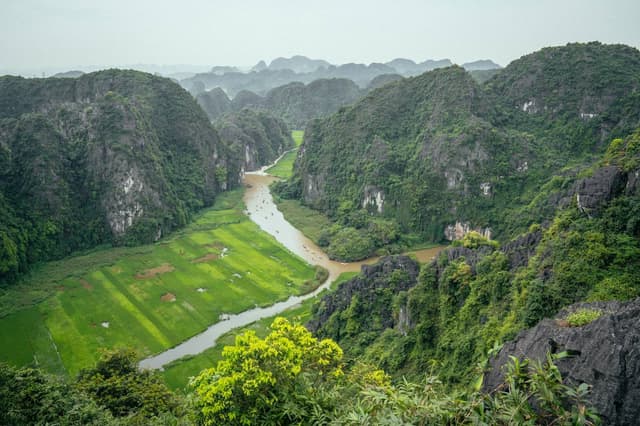
| Hanoi to Ninh Binh | Sleeper or limousine bus | 150,000 to 400,000 | 2 to 2.5 hours |
| Hanoi to Sapa | Sleeper bus | 250,000 to 550,000 | 5.5 to 7 hours |
| Hanoi to Ha Giang | Sleeper bus | 250,000 to 700,000 | 6 to 8 hours |
| Hanoi to Hue | Sleeper bus | 350,000 to 900,000 | 12 to 14 hours |
| Trunk domestic flights (Hanoi, Da Nang, Ho Chi Minh City) | Vietnam Airlines base fare | About 800,000 to 1,500,000 plus taxes | 1 to 2 hours flying |
| Trunk domestic flights, low-cost carriers | Vietjet and other lower-cost carriers | Often 30 to 50 percent below full-service fares | Checked bags extra |
Rail fares are sample October 2026 prices shown on booking platforms and vary by date and berth; soft four-berth sleepers cost more than hard six-berth ones. Bus ranges are standard berth to VIP cabin. Airfares are indicative: Vietnam Airlines domestic base fares range from about 500,000 to 3,500,000 dong one way before taxes and fees, and peak routes to Phu Quoc can double or triple at holidays.
Train or plane?
For short hops such as Hanoi to Ninh Binh, Hue to Da Nang over the Hai Van Pass, or Da Nang to Hoi An, road and rail are cheaper and easier than flying. For Hanoi to Ho Chi Minh City, a flight booked 30 to 45 days ahead often costs about the same as a soft sleeper, and saves more than a day and a half. Many travellers compromise: train one scenic overnight leg such as Hanoi to Hue, and fly the long southern leg.
What does a Ha Long Bay cruise cost?
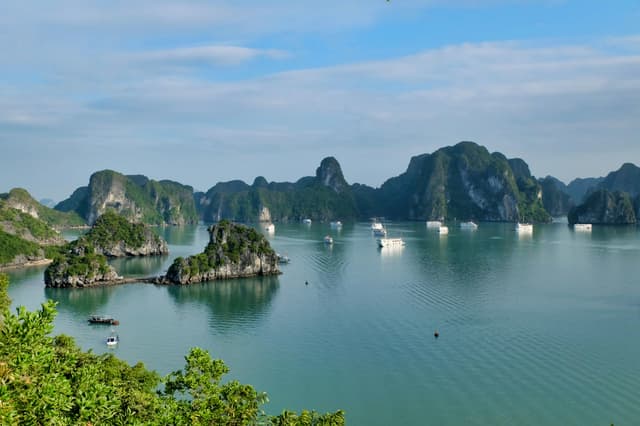
Ha Long Bay is the single biggest line in most Vietnam budgets after flights, and it is where prices vary most. The official entrance fee is only part of it: you pay for the boat, meals, cabin and transfer from Hanoi, which is about 2.5 to 3 hours by expressway.
| Cruise type | Typical price per person (USD) | Approx. VND | What you get |
|---|---|---|---|
| Day cruise | 23 to 120 | 600,000 to 3,100,000 | 4 to 6 hours on the water, lunch, one cave; cheapest trips are crowded |
| Budget three-star overnight (2 days, 1 night) | 105 to 160 | 2,700,000 to 4,200,000 | Steel-hull boat, basic en suite cabin, buffet meals |
| Mid-range four-star overnight | 145 to 250 | 3,800,000 to 6,500,000 | Balcony cabin, plated meals, kayaking included |
| Luxury five-star overnight | 250 to 450 | 6,500,000 to 11,700,000 | Larger balcony cabins, fine dining, spa access |
| Ultra-luxury overnight | 450 to 980 and up | 11,700,000 to 25,500,000 and up | Suites, pools, beverage packages |
| Three days, two nights | 250 to 1,650 | 6,500,000 to 42,900,000 | Reaches quieter areas such as Bai Tu Long or Lan Ha Bay |
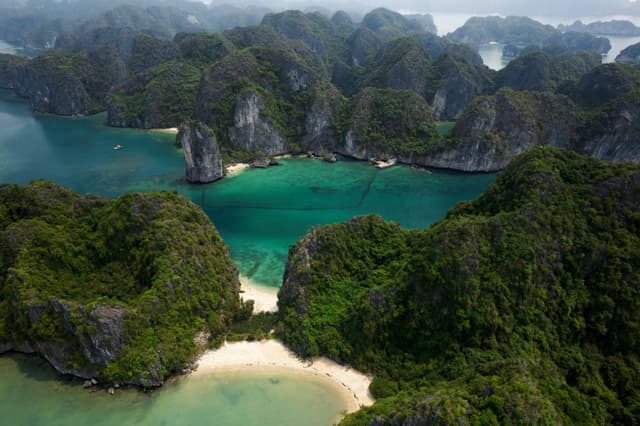
Prices are 2026 ranges across major operators and exclude drinks, spa treatments and crew tips; budget roughly 15 to 30 percent on top of the headline price. Most overnight cruises include the bay entrance fee, which the Ha Long Bay Management Board sets by route: its published schedule lists 200,000 to 250,000 dong for daytime routes, while several 2026 cruise guides quote 260,000 to 310,000 dong, so check what your operator includes. Lan Ha Bay, on the Cat Ba side, charges a much smaller fee. For choosing a route and the right season, read our Ha Long Bay guide.
What do the main sights and activities cost?
Most of Vietnam's temples, museums and heritage sites are cheap to enter, often less than a coffee in Europe. The exceptions are privately run attractions built around cable cars, and serious adventure expeditions.
| Sight or activity | Location | Adult price (VND) | Approx. USD |
|---|---|---|---|
| Temple of Literature | Hanoi | 70,000 | 2.70 |
| Hoa Lo Prison and most city museums | Hanoi, Ho Chi Minh City | Roughly 30,000 to 50,000 | 1.15 to 1.90 |
| Hoi An Ancient Town ticket (basic) | Hoi An | 80,000 | 3.10 |
| Hoi An Ancient Town ticket (with museums) | Hoi An | 120,000 | 4.60 |
| Imperial City (Citadel) | Hue | 200,000 | 7.70 |
| Tu Duc, Minh Mang or Khai Dinh tomb | Hue | 150,000 each | 5.80 |
| Imperial City plus three tombs combo | Hue | 530,000 | 20 |
| Cu Chi Tunnels (Ben Dinh or Ben Duoc), foreign visitors | Ho Chi Minh City area | 135,000 from 1 February 2026 | 5.20 |
| Ba Na Hills cable car and park (Golden Bridge) | Da Nang | 950,000 to 1,250,000 by season | 37 to 48 |
| Son Doong Cave expedition | Phong Nha | About 80,000,000 | About 3,000 |
Hue prices are from the Hue Monuments Conservation Centre schedule as reported in 2026; the Cu Chi figure combines a 35,000 dong site ticket and a 100,000 dong service and guidance ticket. The Hoi An ticket is valid for up to three days. Ba Na Hills is the most expensive single-day ticket most visitors buy, and online booking or buffet combos can save 100,000 to 200,000 dong. Son Doong is priced by its sole licensed operator, Oxalis, which says its 2027 and 2028 seasons are already fully booked; shorter caving trips such as Hang En or Tu Lan are far cheaper alternatives.
Other paid experiences worth budgeting for
- Massage: about 100,000 to 260,000 dong for a 60 minute foot massage and 200,000 to 365,000 dong for a full-body massage in local spas; hotel spas charge far more.
- Tailoring in Hoi An: prices depend on fabric and turnaround; ask for a written quote and allow time for at least one fitting.
How much do the visa and SIM card cost?
Entry costs are low but not always zero, so check your passport's rules before you book. Vietnam issues electronic visas to citizens of all countries, and a growing list of mostly European and Asian passports can enter without a visa.
| Item | Cost | Notes |
|---|---|---|
| E-visa, single entry | 25 USD | Up to 90 days; apply only on the official portal |
| E-visa, multiple entry | 50 USD | Up to 90 days |
| Visa exemption, 45 days (unilateral) | Free | UK, Germany, France, Italy, Spain, Japan, South Korea, Denmark, Sweden, Norway, Finland, Russia and others |
| Visa exemption, 45 days (added 2025) | Free | Belgium, Bulgaria, Croatia, Czech Republic, Hungary, Luxembourg, Netherlands, Poland, Romania, Slovakia, Slovenia and Switzerland, valid to 14 August 2028 |
| Local tourist SIM, bought in town | About 150,000 VND | A month of generous daily data from an official Viettel store |
| Tourist SIM at the airport | About 10 to 13 USD | Convenient but pricier than in town |
| Travel eSIM | A few USD upward | No local registration; good for short trips |
E-visas are issued through the Vietnam Immigration Department's official e-visa portal. Many lookalike websites charge several times the official fee. ASEAN citizens have their own bilateral exemptions, and many other nationalities, including the United States, Canada, Australia and India, currently need an e-visa. The rules change often; the overview of Vietnam's visa policy is a useful starting point, and the 2025 additions were confirmed by Viet Nam News. Local SIMs must be registered with your passport at an official store; an unregistered card can be cut off without warning.
What hidden costs catch visitors out?
No single hidden charge in Vietnam is large, but a few small ones can add 10 percent or more to a trip if you ignore them.
| Hidden cost | Typical amount | How to reduce it |
|---|---|---|
| ATM fee for foreign cards | About 22,000 to 66,000 VND per withdrawal, depending on the bank | Look for low-fee banks such as Eximbank; your home bank may also charge |
| Low ATM withdrawal limits | Often only 2,000,000 to 5,000,000 VND per transaction | Fewer, larger withdrawals spread the fixed fee |
| Dynamic currency conversion | A poor exchange rate | Always choose to be charged in dong |
| "Plus plus" hotel and restaurant pricing | Service charge plus 8 percent VAT (to end 2026) | Check whether quoted prices are net |
| Tourist-street price premium | Often 2 to 3 times local prices | Walk one or two streets back |
| Cruise extras | Drinks, kayaking, spa, tips: 15 to 30 percent on top | Compare what is included, not just the headline fare |
| Ride-hailing surge | 1.2 to 2 times normal fare | Try Be or Xanh SM, or wait out the rain |
| Low-cost airline extras | Checked bags, seats, card fees | Add baggage at booking, not at the airport |
ATM fees and limits are 2026 ranges and banks change them more than once a year, so always read the amount on screen before you confirm. Common scams that cost money include inflated cyclo fares, "free" photo props in Hanoi's Old Quarter, and taxis with fast meters; agree prices before you get in or pose for anything, and use app-based rides where possible.
How much does a 7, 10 or 14 day trip to Vietnam cost?
The estimates below combine the daily budgets above with a realistic amount of intercity travel and one Ha Long Bay trip at a matching standard. They are per person, exclude international flights and the visa fee, and assume a route that does not double back.
| Trip length | Backpacker | Mid-range | Comfortable |
|---|---|---|---|
| 7 days (Hanoi, Ninh Binh, Ha Long Bay) | 6,000,000 to 10,000,000 VND (about 230 to 385 USD) | 15,000,000 to 28,000,000 VND (about 575 to 1,075 USD) | 35,000,000 to 61,000,000 VND (about 1,345 to 2,345 USD) |
| 10 days (north plus Hue, Hoi An and Da Nang, one flight) | 8,500,000 to 15,000,000 VND (about 325 to 575 USD) | 21,000,000 to 40,000,000 VND (about 810 to 1,540 USD) | 50,000,000 to 88,000,000 VND (about 1,925 to 3,385 USD) |
| 14 days (north to south, two flights or a train leg) | 12,000,000 to 21,000,000 VND (about 460 to 810 USD) | 29,000,000 to 55,000,000 VND (about 1,115 to 2,115 USD) | 67,000,000 to 118,000,000 VND (about 2,575 to 4,540 USD) |
These are planning estimates calculated at about 26,000 dong to the dollar, not quotes. Your total depends most on the standard of your cruise and hotels, and on whether you fly or ride overland. For how to split the days, see our Vietnam travel guide, which covers regions, transport and practical tips in one place.
When is Vietnam cheapest to visit?
Vietnam has three weather zones, so there is no single cheap season. Prices rise most around Tet (the Lunar New Year, which falls on 6 February in 2027), the 30 April and 1 May holidays, National Day on 2 September, and the June to August school holidays when domestic families head to the beaches. The quietest and often cheapest times are the shoulder months when the weather is good in one region and changeable in another.
| Period | Weather picture | Price level | Budget notes |
|---|---|---|---|
| Late January to mid-February (Tet) | Cool north, dry south | Highest | Transport sells out; many family businesses close for several days |
| March to April | Warm and mostly dry across the country | Moderate to high | Popular with international visitors; book cruises early |
| May | Hot north and centre, rains starting in the south | Moderate | Good value before domestic summer holidays |
| June to August | Hot, humid north; dry central coast; wet south | High at beaches, moderate elsewhere | Da Nang, Nha Trang and Phu Quoc fill with domestic holidaymakers |
| September to November | Pleasant north; heavy rain and storm risk in the centre | Low to moderate | Hoi An and Hue can flood in October and November; strong deals, flexible plans needed |
| December | Cool north, dry south, rain easing in the centre | Moderate, high at Christmas | Phu Quoc peak season begins |
For month by month detail by region, read our guide to the best time to visit Vietnam.
Is Vietnam cheaper than Thailand, Bali or the Philippines?
For most travellers, yes, Vietnam is slightly cheaper than Thailand and Bali day to day, and usually cheaper overall than the Philippines. Street food, coffee, beer and mid-range hotels are the clearest savings. The gap is smaller than it was a decade ago, and Vietnam's tourism boom (a record 21.2 million international arrivals in 2025) has pushed up prices in the busiest spots, such as Hoi An's Ancient Town and Ha Long Bay cruises.
| Cost area | Vietnam | Thailand | Bali (Indonesia) | Philippines |
|---|---|---|---|---|
| Local food | Very cheap | Cheap | Cheap | Cheap |
| Mid-range hotels | Very good value | Good value | Good value, villas popular | Moderate on famous islands |
| Getting between highlights | Trains, buses, cheap flights | Buses, trains, cheap flights | Mostly road on one island | Flights and boats, often costly |
| Headline experience cost | Ha Long Bay cruise | Island tours and marine park fees | Tours and temple levies | Island hopping and local fees |
| Entry for many passports | 45-day exemption or 25 USD e-visa | Visa-free for many nationalities | Visa on arrival or exemption, plus a tourist levy | Visa-free for many nationalities |
This is a broad comparison of price levels rather than exact figures; costs vary widely by region and season within each country.
How can you save money in Vietnam?
The biggest savings come from how you travel between cities and which cruise you pick, not from skipping meals. After that, eating local and using apps rather than street taxis make the most difference.
- Cover one or two regions well instead of racing from Sapa to the Mekong Delta in ten days; every extra leg adds a flight or long bus.
- Take at least one overnight train or sleeper bus to save a night's accommodation.
- Book domestic flights 30 to 45 days ahead and fly midweek; compare full-service fares with low-cost fares plus baggage.
- Choose the cruise that fits. A good day cruise, or a mid-range overnight in Lan Ha Bay, can be more enjoyable than a crowded budget boat.
- Use Grab, Be or Xanh SM instead of hailing taxis, and GrabBike for short solo trips.
- Eat and drink local: bia hoi, street coffee and lunchtime rice plates cost a fraction of tourist-street menus.
- Withdraw cash from low-fee ATMs in larger amounts, and always pay in dong.
- Buy a SIM in town from an official store rather than at the airport, or use an eSIM for short trips.
- Avoid Tet and the summer beach holidays unless you book well ahead.
What else should you budget for before you go?
- Travel insurance: strongly recommended, and check that it covers motorbike riding if you plan to ride, and weather disruption in the storm season.
- Weather buffer: storms on the central coast between September and December can cancel flights, trains and cruises, so keep a night or two of flexibility.
- Administrative changes: Vietnam merged many provinces in 2025, so some sights now appear under new province names (Hoi An falls under Da Nang, and Phong Nha under Quang Tri). Prices are unaffected, but it helps when reading tickets and maps.
For travellers who would rather have hotels, transfers and a cruise arranged together, you can compare Vietnam tour packages against the independent costs above to see which suits your style.
Frequently asked questions
Is Vietnam expensive for tourists?
No. Vietnam is one of the most affordable countries in Asia for tourists. A bowl of pho costs about 35,000 to 70,000 dong (1.35 to 2.70 US dollars), dorm beds start around 130,000 dong and a comfortable three-star room is often under 40 US dollars. It becomes more expensive when you add luxury Ha Long Bay cruises, resort stays and late-booked domestic flights.
How much money do I need per day in Vietnam?
As of late 2026, budget travellers need roughly 650,000 to 1,000,000 dong a day (about 25 to 38 US dollars), mid-range travellers 1,600,000 to 3,000,000 dong (about 62 to 115 US dollars), and comfortable travellers from about 4,000,000 dong (about 155 US dollars) per person. These figures exclude international flights and big extras such as overnight cruises.
What is the most expensive part of a trip to Vietnam?
After international flights, the biggest costs are usually an overnight Ha Long Bay cruise (about 105 to 450 US dollars per person for one night, depending on standard), domestic flights, and higher-end hotels. Theme-park style attractions such as Ba Na Hills, at 950,000 dong or more per adult, and caving expeditions in Phong Nha can also add a lot.
How much does a Ha Long Bay cruise cost?
Day cruises cost about 23 to 120 US dollars per person. One-night cruises range from about 105 to 160 US dollars on budget boats, 145 to 250 on mid-range boats and 250 to 450 on luxury boats, with ultra-luxury ships higher still. Most overnight prices include the bay entrance fee and meals, but drinks, spa treatments and tips are extra.
How much does the Vietnam e-visa cost?
The official Vietnam e-visa costs 25 US dollars for a single entry and 50 US dollars for multiple entries, valid for up to 90 days. Apply only through the Vietnam Immigration Department's official portal, because unofficial sites often charge much more. Citizens of many European and Asian countries can enter without a visa for up to 45 days.
Should I use cash or card in Vietnam?
Use both. Cash in dong is essential for street food, markets, small guesthouses and rural areas, while cards and QR payments work in most hotels, supermarkets and mid-range restaurants. When paying by card or using an ATM, always choose to be charged in dong rather than your home currency to avoid poor conversion rates.
Are ATM fees high in Vietnam?
Most Vietnamese banks charge foreign cards roughly 22,000 to 66,000 dong per withdrawal, on top of any fee from your own bank. Per-transaction limits are often only 2,000,000 to 5,000,000 dong, so fees can mount up. Eximbank has a reputation for low fees, but banks change charges regularly, so check the screen before you confirm.
Is the train or a flight cheaper from Hanoi to Ho Chi Minh City?
They are often similar. Standard trains cost about 1,000,000 to 1,800,000 dong and take 32 to 35 hours, while a domestic flight booked a month or so ahead can cost about the same and takes around two hours. The train is best for a scenic overnight leg; flying saves more than a day on the full route.
Is Vietnam cheaper than Thailand?
Generally, yes, but only slightly. Vietnam is usually a little cheaper than Thailand for street food, coffee, beer and mid-range hotels, while intercity transport costs are broadly similar. The busiest tourist spots in both countries charge more, so the real difference depends on where you go and how you travel.
Do I need to tip in Vietnam?
Tipping is not traditionally expected in Vietnam, especially at street stalls and local eateries. In tourist restaurants, spas and on tours, a tip of around 5 to 10 percent, or a small amount for guides and cruise crew, is appreciated. Check whether a service charge has already been added to your bill before tipping.
What is the cheapest time to visit Vietnam?
Prices are usually lowest outside Tet, the 30 April and 1 May holidays, National Day on 2 September and the June to August domestic beach season. September to November can bring good deals, especially in the north, but the central coast has heavy rain and storm risk then. May and late November often balance price and weather well.
How much does a two week trip to Vietnam cost?
For 14 days, a backpacker should budget roughly 12,000,000 to 21,000,000 dong (about 460 to 810 US dollars) and a mid-range traveller about 29,000,000 to 55,000,000 dong (about 1,115 to 2,115 US dollars) per person, excluding international flights. These estimates include a Ha Long Bay trip and two long-distance legs by air or train.