












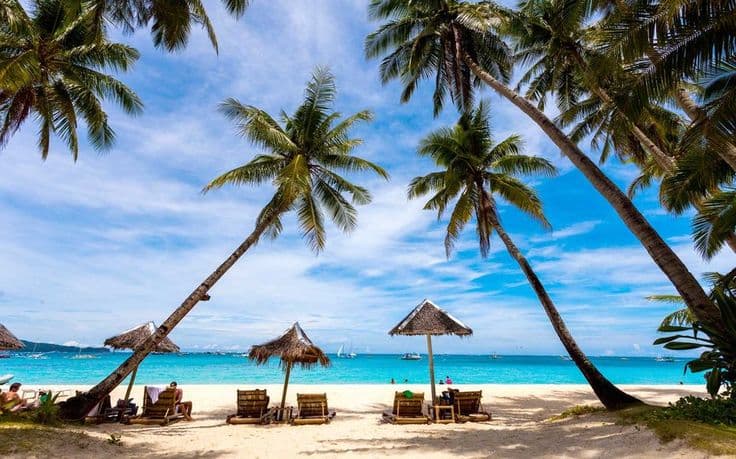
This Vietnam travel guide is the practical half of trip planning. Not where to go, but how the country works once you land: the visa, the weather that changes three times along the map, the money, the SIM card, the trains, and the rules nobody mentions until you have already broken one. For the sightseeing shortlist, read our guides to the best places to visit in Vietnam and the things to do in Vietnam alongside this one. What follows is the logistics.
Vietnam has three climate zones, and that changes everything
There is no single best time to visit Vietnam. The country stretches over roughly 1,700 kilometers of railway from top to bottom, and the north, center and south run on different weather calendars. The month that is perfect in one region can be the worst month in another.
The north gets a real winter, cold and gray from December to February, and a hot wet summer. The center is dry and bright through the first half of the year, then takes the brunt of typhoon season. The south has two settings, dry and wet, and stays warm all year.
| Region | Best months | Avoid | Why |
|---|---|---|---|
| North (Hanoi, Ha Long, Sapa) | October to November, March to April | June to August | Mild and dry in the shoulder months. Summer is hot, humid and the wettest part of the year, and northern typhoon risk peaks then. |
| Center (Hue, Da Nang, Hoi An) | February to August | September to November | Long dry season with reliable beach weather. September to November is peak typhoon and flood season for the central coast. |
| South (Ho Chi Minh City, Mekong Delta, Phu Quoc) | December to April | June to September | The dry season is warm and clear. The wet season brings heavy afternoon downpours, though they are usually short. |
For one window that works almost everywhere at once, aim for March and April. If you are set on a north to south run in October, accept that the center may be wet.
The Vietnam visa, step by step
Most travelers use the electronic visa. Since 2023 Vietnam has opened the e-visa to citizens of every country and territory, it allows a stay of up to 90 days, and you choose single entry or multiple entry when you apply. It is accepted at a long list of air, land and sea entry points.
Apply only through the government portal at evisa.gov.vn. Search results are full of lookalike sites that take your details and submit the same form you could have submitted yourself. The official portal moved domains in late 2024, which is why the copycats still rank.
- Have a passport valid well beyond your travel dates, a plain white background portrait photo, and a scan of your passport data page.
- Enter your intended entry date, entry point and exit point carefully; they are printed on the visa.
- Processing usually takes around three working days, longer around Vietnamese public holidays.
- Print the approved e-visa. Airline staff at check in often want paper.
Vietnam also waives the visa entirely for citizens of a list of countries for short stays, with the allowed days varying by nationality. Check your own passport against the current list first, and note that an e-visa cannot be extended from inside the country.
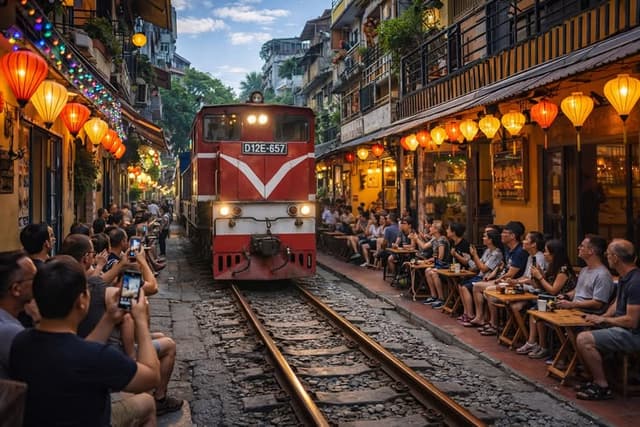




Arriving: the three hubs and what happens at immigration
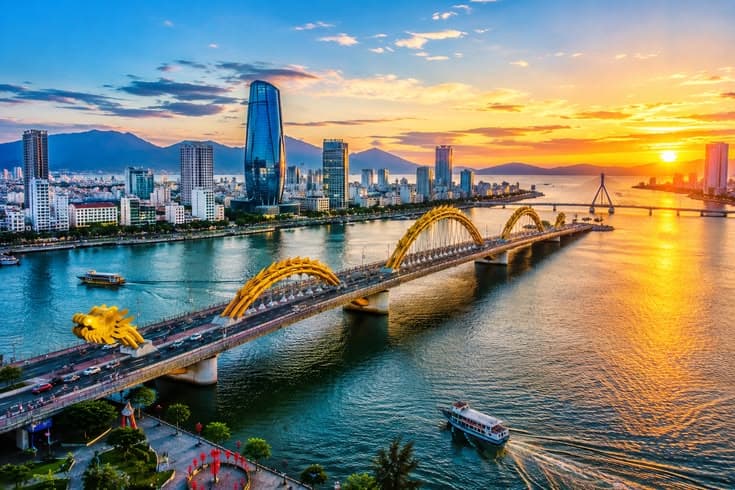
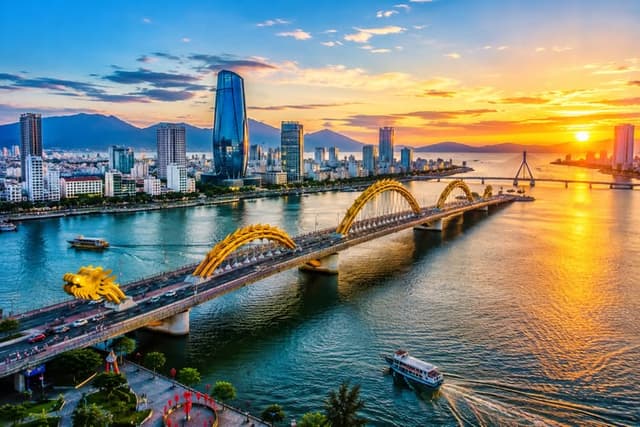
Almost everyone lands at Noi Bai in Hanoi, Tan Son Nhat in Ho Chi Minh City, or Da Nang in the middle. Da Nang is the quiet winner for a central trip and the natural base for things to do in Da Nang.
Immigration is straightforward. Hand over your passport and printed e-visa, look at the camera, and you are through. There is no arrival card for e-visa holders. Note the entry stamp date, because your permitted stay counts from that day, not from your visa approval.
One quirk: in 2025 Vietnam merged its provinces down to 34 administrative units, so some addresses and older articles still use province names that no longer officially exist. City and street names did not change.
Money: the dong, cards, ATMs and tipping
The currency is the Vietnamese dong. Notes carry a lot of zeros and several denominations look alike at a glance, so count carefully in low light and break big notes at your hotel, not at a street stall that cannot make change.
Vietnam runs on two payment layers. Hotels from mid range upward, malls, supermarkets, chain restaurants, airlines and tour operators take Visa and Mastercard. Street food, wet markets, family shops, motorbike taxis and budget guesthouses are cash. Carry both, every day.
- ATMs at major Vietnamese banks accept foreign cards. Use machines attached to a bank branch rather than a lonely one in an alley.
- If a terminal offers to charge you in your home currency, decline and pay in dong. The machine rate is worse than your bank's.
- Local QR wallets are everywhere but generally need a Vietnamese bank account, so they are not realistic for a short visit.
- Tipping is not built into the culture and nobody will chase you for it. It is welcomed by guides, drivers and hotel staff, and some restaurants add a service charge already.
Staying connected: eSIM, local SIM and what does not work
Coverage is good almost everywhere a traveler goes, and data is fast. A tourist eSIM from a local network is the least painful option: install it before you fly, it activates on landing, and it usually needs no registration because it carries data only.
A Vietnamese phone number is a registered product. You need your passport for identity verification at an official carrier store, so buy from a branded shop rather than a stranger with a tray of SIMs at arrivals.
Getting between the north, center and south
The three regions are far apart, and most itineraries connect them by air. Domestic flights between Hanoi, Da Nang and Ho Chi Minh City run constantly and take roughly the length of a movie.
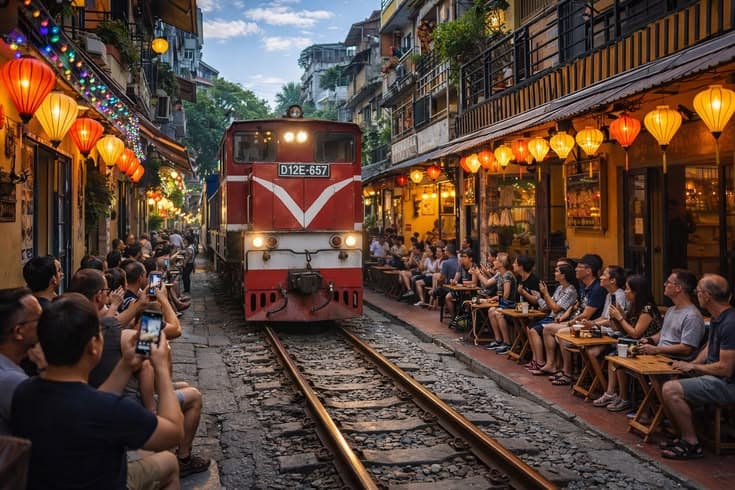
The Reunification Express runs the whole spine, but end to end it is over 30 hours. Take one leg, not the whole line. Hue to Da Nang is the famous stretch, a short ride over the Hai Van Pass with the sea on one side. Hanoi to Hue or Da Nang overnight in a soft sleeper is the other sensible choice.
Sleeper buses are the budget backbone and go everywhere the train does not. They are lie flat and driven with commitment. Book through your hotel or a known operator, keep valuables on your body, and take a front berth if you get travel sick.
Getting around a city, and the honest warning about motorbikes
Grab works across Vietnam's main cities for both cars and motorbike taxis, and it removes the haggling problem because the price is agreed in the app. Local rivals Xanh SM and Be work the same way. For metered taxis, stick to the large reputable companies and check the meter is running.
Now the part that matters most. Renting a motorbike looks easy and legally is not. Vietnam recognizes International Driving Permits issued under the 1968 Vienna Convention, with the correct motorcycle category endorsed on it for the engine size you are riding. Permits issued under the 1949 Geneva Convention, which is what countries including the United States, Canada and Australia issue, are not accepted.
The consequence is not a small fine. If you crash without a locally valid license, your travel insurance can refuse the claim because you were driving illegally, and medical evacuation is the kind of bill that ends trips permanently. If you are not certain your paperwork is valid, hire a driver or ride as a passenger.
Food and water: what is actually safe
Tap water is not safe to drink in Vietnam. Use bottled or properly filtered water, including for brushing teeth if your stomach is sensitive. Here is the part people get wrong: ice is usually fine. Commercial ice is factory made from treated water, and the cylindrical tubes with a hole through the middle you see in cafes and street stalls are that mass produced kind.
Street food is one of the best reasons to come, and busy stalls are safer than empty restaurants because nothing sits around. Eat where locals eat, choose food cooked in front of you, and go easy on raw herbs and unpeeled fruit in your first days. Three dishes to know by name: pho, the noodle soup eaten here at breakfast; banh mi, the baguette sandwich; and bun cha, grilled pork with noodles and broth.
Health: vaccines, mosquitoes and pharmacies
Go through the CDC travel health page for Vietnam with your doctor about six weeks before you fly. Beyond routine vaccinations, hepatitis A and typhoid are commonly recommended, Japanese encephalitis is advised for longer stays or rural outdoor trips, and rabies is worth discussing if you go off the beaten track.
Dengue is endemic and spread by a mosquito that bites during the day, so repellent is a daytime habit, not just an evening one. Malaria risk is limited to some rural forested areas; the big cities and beach towns report none. Pharmacies are everywhere, but bring your own prescription medicines with their labels. Get travel insurance that covers medical evacuation, and read what it says about riding a motorbike.
Etiquette: temples, shoes, photos and bargaining
Vietnam is relaxed with visitors, and a little care goes a long way.
- At temples and pagodas, cover shoulders and knees, remove your shoes where others do, and step over the raised threshold rather than on it.
- Take your shoes off entering a home or a family run guesthouse. Follow the pile by the door.
- Ask before photographing people, especially vendors, monks and highland communities. A smile and a gesture at the camera is enough.
- Bargain in markets politely, and not at all where prices are labeled. Never bargain hard over food.
- Keep your temper. Public anger causes loss of face and makes everything harder. Pass items with both hands, and avoid touching anyone's head.
Safety and the scams worth knowing
Vietnam is a safe country for travelers and violent crime against visitors is rare. The realistic risks are traffic and your wallet. Cross the road at a steady pace without stopping and let the scooters flow around you; hesitating is what causes accidents.
The annoyances are predictable. Unofficial airport taxis with fast meters, which is why you use an app. Shoe shiners and fruit sellers who hand you something and then name a price, which is why you accept nothing placed in your hands. Bag snatching from moving scooters, which is why your phone stays in your hand, not on the cafe table facing the road.
What to pack for a country with three climates
Pack for warm and wet, then add one layer. Light breathable clothes, a rain shell rather than an umbrella, sandals plus one pair of closed shoes, and something modest you can wear into a temple. Going north between December and February, or up to Sapa in any season, add a real jacket, because it gets cold and hotels rarely have heating.
Then the small things: insect repellent, high factor sunscreen, a reusable water bottle, a power bank, a universal adapter, and a copy of your passport and e-visa stored separately from the originals.
The mistakes first timers make
A first time in Vietnam usually goes wrong in the same handful of ways, and all of them are avoidable.
- Doing the whole country in ten days. Two regions done properly beats three rushed. Internal travel eats more days than the map suggests, and permit only trips such as the Son Doong cave expedition need booking years out.
- Treating the weather as national. A central coast beach week in October is the classic error.
- Paying a copycat visa site. Go straight to the official portal.
- Renting a motorbike on an invalid license. The expensive one.
- Carrying no cash. The best meals of your trip will not take a card.
- Over planning. Leave room for local events like the Hoi An lantern festival.
If planning all this yourself feels like a lot, a packaged Vietnam tour package bundles hotels, transfers and day tours into one booking.
Frequently asked questions about traveling in Vietnam
How many days do you need in Vietnam?
Ten to fourteen days is the realistic minimum for two of the three regions at a comfortable pace. Three weeks lets you travel the full north to south route without living on planes and night buses.
Is the Vietnam e-visa the same as visa on arrival?
No. The e-visa is applied for online before you fly through the official government portal and arrives as a document you print. Visa on arrival requires a pre approved letter and is a separate, older process most travelers no longer need.
Can I use my home country driving license in Vietnam?
Not on its own. Vietnam recognizes International Driving Permits issued under the 1968 Vienna Convention with the correct vehicle category. Permits issued under the 1949 Geneva Convention are not accepted, and riding without a valid license can void your travel insurance.
Is the ice safe to drink in Vietnam?
Generally yes. Commercial ice is produced in factories from treated water and is used almost everywhere, including street stalls. Tap water itself is not safe to drink, so stick to bottled or filtered water.
Do I need cash in Vietnam or will cards work?
You need both. Hotels, malls, chain restaurants and tour operators take cards, while street food, markets, small shops and motorbike taxis are cash only. ATMs at major Vietnamese banks accept foreign cards.
When is the worst time to visit Vietnam?
It depends on the region. September to November is the typhoon and flood season on the central coast, June to August is the hottest and wettest stretch in the north, and the southern wet season runs roughly May to November with heavy afternoon rain.
For planning specifics, see our guide to the best time to visit Vietnam and our Ha Long Bay guide.
'/%3E%3C/svg%3E)