












































+977-9709047652
Explore by Country
See all 22 Thailand packages
Most popular pick
See all 22 Thailand packages →
See all 11 Vietnam packages
Most popular pick
See all 11 Vietnam packages →
See all 10 Indonesia (Bali) packages
Most popular pick
See all 10 Indonesia (Bali) packages →
See all 7 Maldives packages
Most popular pick
See all 7 Maldives packages →
See all 10 China packages
Most popular pick
See all 10 China packages →
See all 13 Sri Lanka packages
Most popular pick
See all 13 Sri Lanka packages →
See all 9 Malaysia packages
Most popular pick
See all 9 Malaysia packages →
See all 8 Singapore packages
Most popular pick
See all 8 Singapore packages →
See all 2 Kenya packages
Most popular pick
See all 2 Kenya packages →
See all 16 India packages
Most popular pick
See all 16 India packages →
See all 3 Dubai packages
Most popular pick
See all 3 Dubai packages →
See all 7 Nepal packages
Most popular pick
See all 7 Nepal packages →
See all 6 Philippines packages
Most popular pick
See all 6 Philippines packages →
Search Tours or Places
Blog / Indonesia

Komodo Island Guide: Dragons, Pink Beach and Boat Trips

25 min read 08 Oct 2026
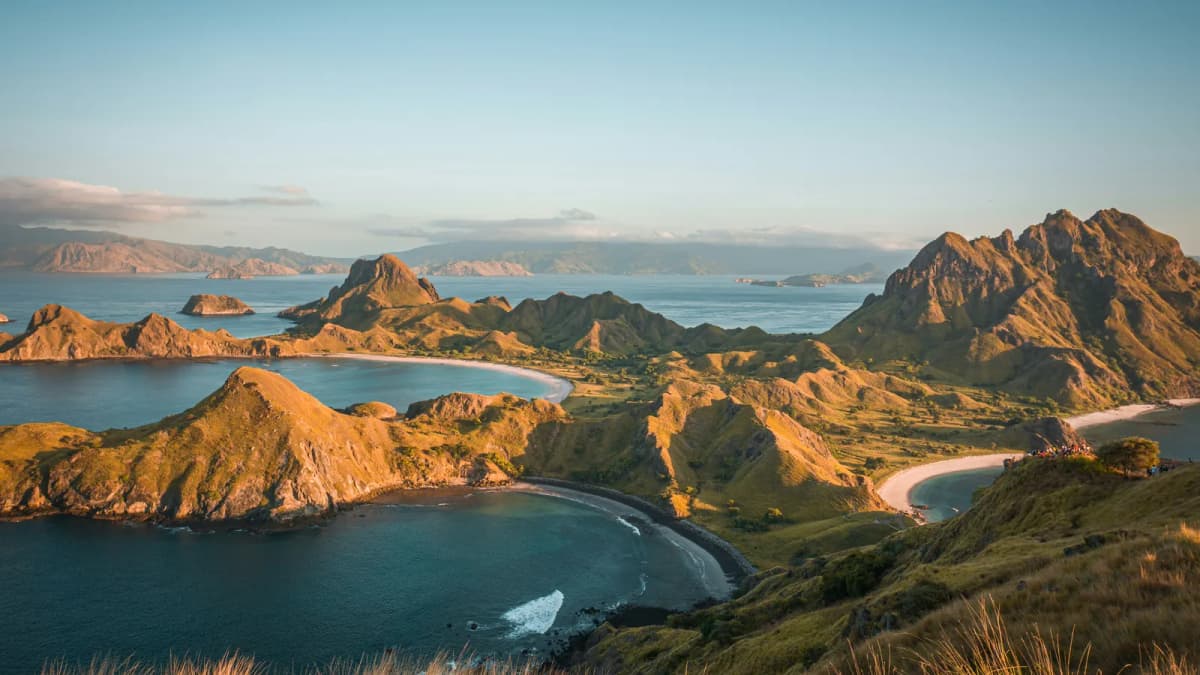
Padar Island viewpoint in Komodo National Park showing curved bays and golden hills at sunrise

Short answer: Komodo Island is part of Komodo National Park in East Nusa Tenggara, Indonesia, about an hour and a quarter by air east of Bali. You fly from Bali to Labuan Bajo on Flores, then join a ranger-led boat trip to see wild Komodo dragons on Komodo or Rinca, climb the Padar viewpoint and swim at Pink Beach. Since 1 April 2026 the park caps visitors at 1,000 people a day and tickets must be booked in advance, so check the official rules before you travel.

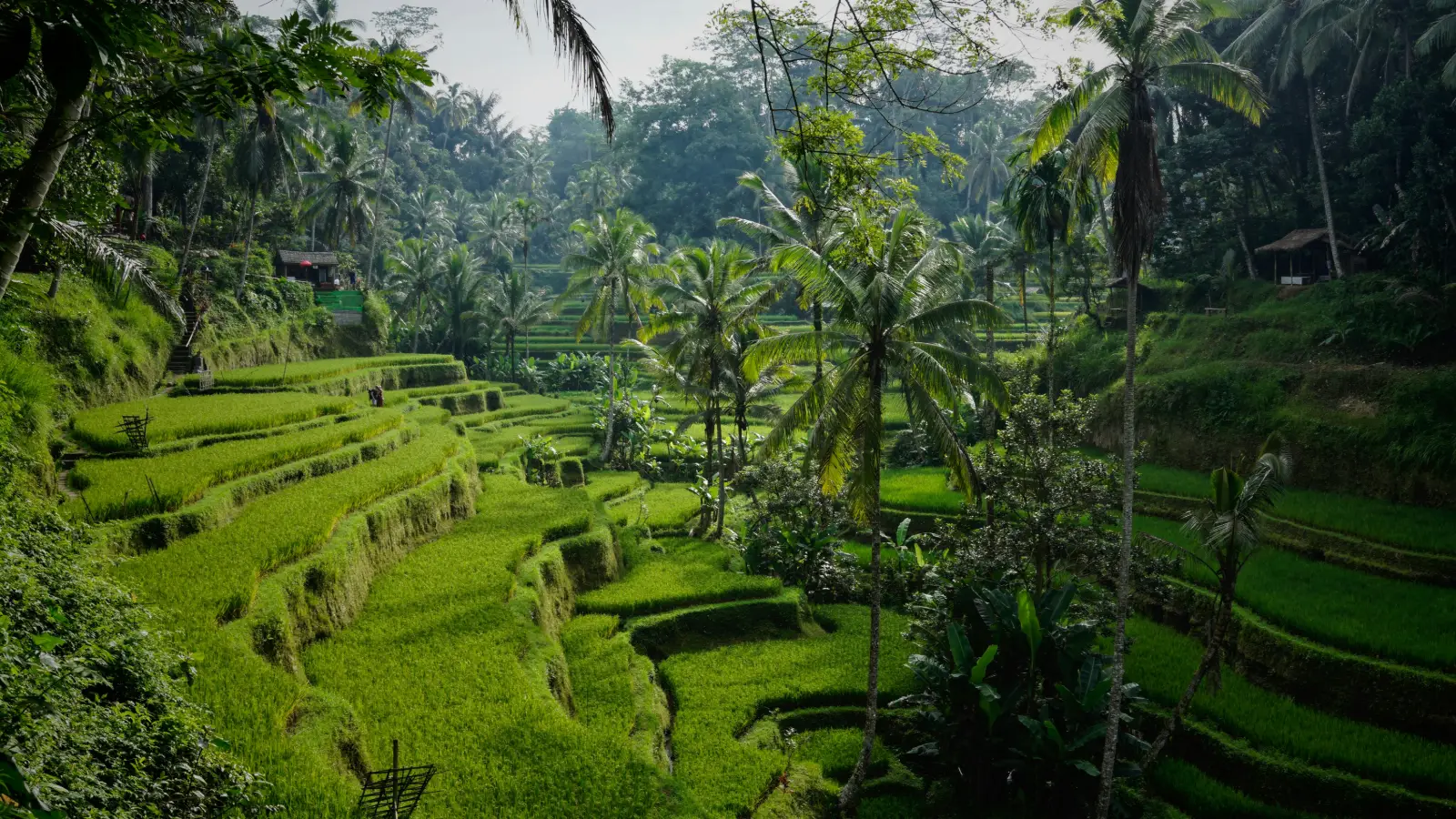
Komodo is the easiest "big wildlife" add-on to a Bali holiday. In one short flight you swap rice terraces and temples for dry savannah hills, turquoise bays and the largest living lizard on Earth. This guide covers getting there from Bali and Kathmandu, the islands worth your time, dragon safety, boat trip types and the calmest months. It is written for first-time visitors, families, honeymooners and Nepali travellers planning a trip around Dashain or Tihar, and it sits inside our wider Bali travel guide.

We do not list entry fees here. Park fees and rules have changed several times, so we link the official sources and date every rule that can change.

Quick factDetail
Country and provinceIndonesia, East Nusa Tenggara (Nusa Tenggara Timur)
Protected areaKomodo National Park, managed by the Komodo National Park Office (Balai Taman Nasional Komodo) under Indonesia's Ministry of Forestry
Main islandsKomodo, Rinca and Padar, plus many smaller islands
Gateway townLabuan Bajo, on the western tip of Flores
AirportKomodo Airport, Labuan Bajo (IATA code LBJ)
Flight from BaliRoughly 1 hour 15 minutes from Denpasar (DPS)
Time zoneCentral Indonesia Time (WITA, UTC+8), same as Bali and 2 hours 15 minutes ahead of Nepal
UNESCO World HeritageInscribed in 1991
New7Wonders of NatureOne of the seven winners; officially inaugurated in 2013
Daily visitor cap1,000 people per day from 1 April 2026 (Checked: 8 Oct 2026, Ministry of Forestry)
Ticket bookingIn advance through the park's SiOra system (Checked: 8 Oct 2026, siora.id)

Where is Komodo Island?

Komodo Island lies in the Lesser Sunda chain of eastern Indonesia, between the larger islands of Sumbawa to the west and Flores to the east. It is the best-known island in Komodo National Park, which UNESCO describes as covering 219,322 hectares of land and sea in East Nusa Tenggara province. The park's three main islands are Komodo, Rinca and Padar, surrounded by dozens of smaller islets, sandbanks and reefs.

The park was created to protect the Komodo dragon (Varanus komodoensis), but the sea around it is just as important. Strong currents between the Flores Sea and the Indian Ocean feed rich coral reefs, manta rays, turtles and reef sharks.

Komodo Island, Komodo National Park and Labuan Bajo: what is the difference?

People often use "Komodo" for three different things, which can confuse trip planning:

  • Komodo Island is one island inside the park. Its main ranger station is at Loh Liang, and a small fishing village (Kampung Komodo) sits on the island.
  • Komodo National Park is the whole protected area: Komodo, Rinca, Padar, smaller islands and the marine zone with dive and snorkel sites.
  • Labuan Bajo is the harbour town on Flores where you sleep, eat and board boats. It is outside the park and is where Komodo Airport is located.

Is Komodo part of Bali?

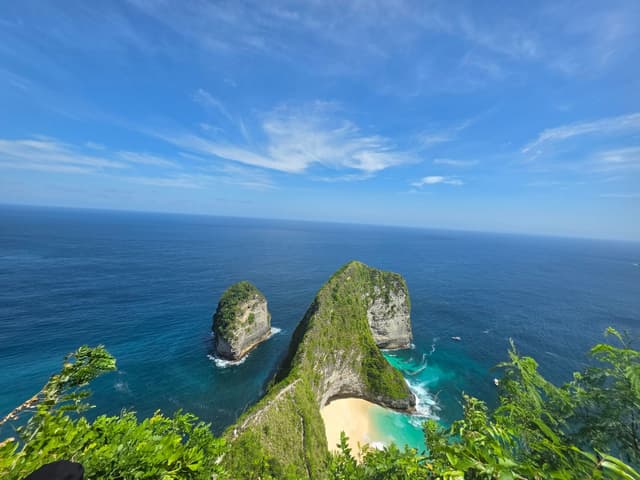
No. Bali is its own province, and Komodo is in East Nusa Tenggara, several islands to the east. Travellers pair them because Bali has regular direct flights to Labuan Bajo. If you have seen Bali's offshore islands, think of Komodo as the next step east: wilder, drier and more remote than the cliffs in our Nusa Penida guide.

How do you get to Komodo from Bali?

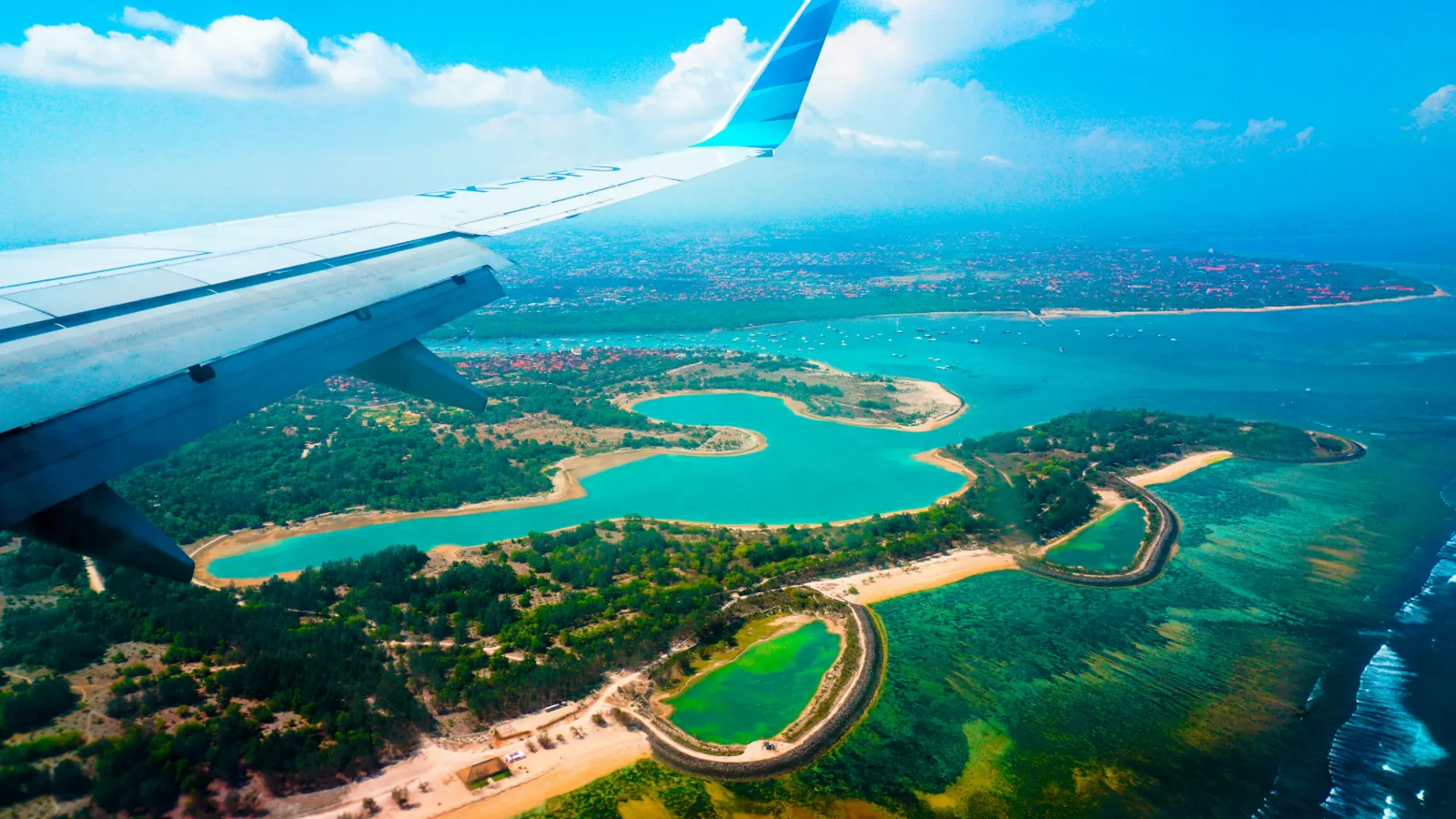
The usual way to reach Komodo from Bali is a direct domestic flight from Denpasar (DPS) to Komodo Airport in Labuan Bajo (LBJ), which takes roughly 1 hour 15 minutes. From Labuan Bajo harbour you then join a boat trip into Komodo National Park. There is no road or bridge to Komodo Island; every visit to the park is by boat.

Several Indonesian airlines fly the Denpasar to Labuan Bajo route. Flight comparison sites checked on 8 Oct 2026 listed carriers such as Batik Air and Indonesia AirAsia among others, with several departures a day, mostly in the morning and early afternoon. Airlines change routes and timetables often, so treat this as a guide and check the airline's own schedule for your dates.

Komodo Airport is a small, modern airport only a short drive from Labuan Bajo's harbour and hotel strip. Boat operators usually ask you to arrive the day before a trip, because many boats leave early in the morning.

Ways to travel from Bali to Labuan Bajo

OptionHow it worksTimeWho it suits
Direct flight DPS to LBJDomestic flight from Ngurah Rai International Airport, Bali, to Komodo Airport, Labuan BajoAbout 1 hr 15 min in the airAlmost everyone, especially families and short holidays
Multi-day boat from LombokShared or private boat trips that sail east from Lombok past Sumbawa into the park, ending in Labuan BajoSeveral daysBackpackers and adventurous travellers with time; check safety standards carefully
Overland and ferriesBali to Lombok, across Sumbawa by road, then a public ferry to Labuan BajoTwo days or moreSlow travellers only; schedules depend on weather and ferry operations

Getting to Komodo from Kathmandu

There is no direct flight from Kathmandu to Bali or to Labuan Bajo. Nepali travellers usually fly from Tribhuvan International Airport to Bali with one stop, commonly through hubs such as Kuala Lumpur, Bangkok or Singapore, and then take the domestic flight from Bali to Labuan Bajo. Allow a full travel day to reach Bali, and plan the Labuan Bajo flight for the next day so a delay on the first leg does not make you miss it.

A practical rule we give Nepali families: never plan a boat trip on the day you land in Labuan Bajo. For the wider picture of a Bali holiday from Nepal, see our Bali trip planning guide for Nepali travellers.

Visa and entry for Indonesia

Komodo is in Indonesia, so the same entry rules apply as for Bali. Rules depend on your passport, and they change. Check the official visa rules for your passport on the Indonesian Directorate General of Immigration e-Visa portal before you book. The Bali tourist levy applies to foreign visitors entering Bali; it does not replace any Komodo National Park ticket, which is a separate system.
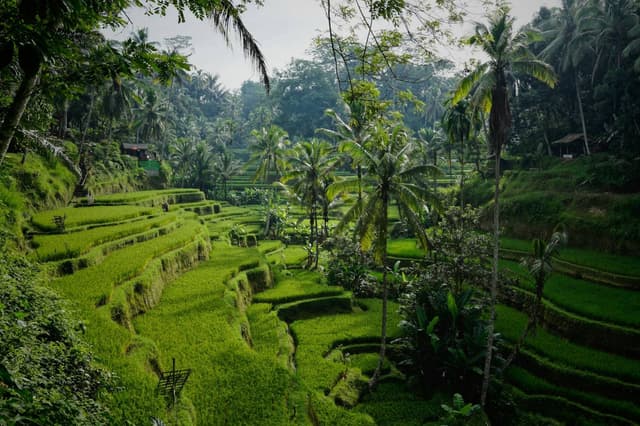
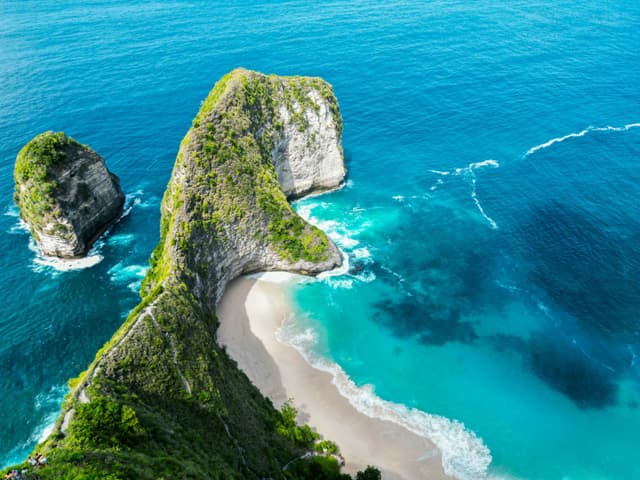
Explore Indonesia (Bali) tour packages
View all →

Which islands and spots should you see?

On a first Komodo trip, the core sights are a ranger-led dragon walk on Rinca or Komodo Island, the Padar Island viewpoint, Pink Beach for snorkelling, and Manta Point or Taka Makassar for manta rays and a sandbank swim. Most boat trips combine four to seven stops from the list below, depending on the boat type, the weather and which sites have quota on your date.

Komodo Island (Loh Liang)

Adult Komodo dragon walking on dry grassland with its forked tongue out in Komodo National Park

Komodo Island is the largest island in the park and gives the whole area its name. Boats land at the Loh Liang ranger station, where you are assigned a ranger and walk a set trail through dry forest and savannah. Dragons are often seen near the station and along the route, along with Timor deer, wild boar and birdlife such as the yellow-crested cockatoo in some seasons. The ranger decides the route length on the day.

Komodo Island is further from Labuan Bajo than Rinca, so it is usually visited on two-day or longer boat trips, or on a long speedboat day.

Rinca Island (Loh Buaya)

Rinca is closer to Labuan Bajo, which makes it the most common dragon stop on day trips. The Loh Buaya area was redeveloped a few years ago with an elevated walkway and new visitor buildings, so part of your walk is on a raised path above the ground. Rinca also has monkeys, buffalo and deer.

Padar Island

Green hills and three curved beaches of Padar Island in Komodo National Park after the rains

Padar Island is famous for one view: from the ridge, three or four crescent bays curve away below you, with white, black and pinkish sand between dry hills. The climb is a staircase and dirt trail of about 30 to 45 minutes up for most people. Padar is not a dragon-viewing stop; the dragon walks are on Komodo and Rinca.

Padar's visits run in timed sessions, including an early morning session for sunrise and an afternoon session for sunset light (Checked: 8 Oct 2026, SiOra session information reported by IDN Times). Because Padar has its own tight limits within the overall quota, good operators secure your Padar slot first and plan the rest of the day around it.

Pink Beach (Pantai Merah)

Pink sand shoreline and turquoise water at Pink Beach in Komodo National Park with a small boat

Pink Beach gets its colour from tiny red fragments of coral and shells from small marine organisms mixed into white sand. The pink shows best in bright sun at the water's edge; on a cloudy day or in photos taken from far away it can look closer to beige. The real reason to stop is the snorkelling: the reef starts just off the beach, with hard corals, reef fish and, on many days, turtles. Do not take sand, shells or coral from any beach in the park; leave Pink Beach as you found it.

Manta Point and Taka Makassar

Manta ray gliding through deep blue open water, the sight snorkellers hope for at Manta Point

Manta Point (Karang Makassar) is a shallow reef area where manta rays come to feed and be cleaned. Sightings are common but never guaranteed. Nearby, Taka Makassar is a sandbank that appears at lower tide, giving a short stop on a strip of white sand in the middle of the sea.

Kanawa, Kelor and Siaba Besar

These are calmer snorkelling and beach stops, mostly closer to Labuan Bajo. Kanawa Island has a reef near its jetty that is good for beginners. Kelor Island has a short, steep hill with a view and is often the first or last stop on a day. Siaba Besar is known for turtles; operators sometimes call the area "Turtle City". They suit children and nervous swimmers.

Kalong Island at sunset

On overnight boat trips, many boats anchor near Kalong Island in the late afternoon. At dusk, thousands of large fruit bats (flying foxes) leave the mangroves and fly across the sky towards Flores to feed. You only see it if you stay out overnight.

SpotMain highlightActivityGood for
Komodo Island (Loh Liang)Wild dragons in their largest homeRanger-led walkWildlife lovers, longer trips
Rinca Island (Loh Buaya)Dragons close to Labuan BajoRanger-led walk, partly on a raised walkwayDay trips, families
Padar IslandViewpoint over multi-coloured baysShort steep hikePhotographers, couples, sunrise seekers
Pink BeachPink-tinged sand and a reef off the beachSnorkelling, swimmingEveryone who can swim
Manta PointManta rays feedingSnorkelling or diving in currentConfident swimmers, divers
Taka MakassarSandbank in the open seaShort swim and photosCouples, families
Kanawa and KelorEasy reefs and small hillsSnorkelling, short climbBeginners, children
Kalong IslandFlying foxes at duskWatching from the boatOvernight trips only

If you enjoy island hopping, compare Komodo with Bali's own coast in our guide to the best beaches in Bali, and see our list of things to do in Bali for the days before or after your Komodo trip.

Is it safe to see Komodo dragons?

Yes, seeing Komodo dragons is safe when you follow the park's rules: walk only with a licensed park ranger, stay on the trail, keep your distance and never feed or approach the animals. Attacks on visitors are rare, but dragons are wild predators, and incidents involving rangers and local villagers have happened. The rules exist for a reason, so take them seriously.

What you should know about Komodo dragons

Komodo dragon resting on a grassy hillside above a calm bay in its natural island habitat
  • Size: The Komodo dragon is the largest living lizard. UNESCO notes adults typically reach 2 to 3 metres long.
  • Population: UNESCO's park description estimates around 5,700 dragons in the area. Dragons live wild on Komodo and Rinca, on parts of Flores, and on a few small islands.
  • Conservation status: In September 2021 the IUCN Red List moved the Komodo dragon from Vulnerable to Endangered, mainly because rising sea levels threaten its low-lying habitat, as reported by the Natural History Museum, London.
  • Behaviour: Dragons can look sleepy in the heat, but they can move quickly over short distances, and their bite is dangerous. They hunt deer, boar and buffalo, often by ambush. Compare other wildlife trips in our best safari destinations.

Ranger-led safety rules

Rangers carry a long forked stick and walk with every group. Their briefing is the rule book for the day; these are the usual points:

DoDo not
Stay with your ranger and your group at all timesWalk off the trail or go ahead of the ranger
Keep the distance the ranger tells you (several metres)Approach a dragon for a selfie or touch it
Keep children close and holding an adult's handLet children run, shout or wander
Tell the ranger privately if you have an open wound or are menstruating, so they can advise youIgnore the briefing or assume dragons are tame
Wear closed shoes and carry waterFeed any wildlife or leave food or rubbish
Move slowly and quietly near resting dragonsFly a drone without first checking the park's current drone rules

Safety on the water

For most visitors, the bigger risk on a Komodo trip is the sea, not the dragons. In late December 2025 a tourist boat sank in the strait near Padar Island in rough weather, and the port authority in Labuan Bajo suspended tourist boat sailings for a period while it reviewed conditions (reported by Antara, 28 Dec 2025). Weather and wave warnings can stop boats at short notice, especially in the wet season.

Before you board any boat, check:

  • Life jackets for every passenger, including child sizes, and where they are stored.
  • That the operator is licensed and registers your park tickets properly through SiOra.
  • That the crew follows the harbour's sailing permissions and weather warnings, and will change the route or cancel if conditions are poor.
  • A working radio or communication on board and a clear safety briefing.
  • Snorkelling support: a crew member in the water or watching from a tender at strong-current sites such as Manta Point.

A good operator will cancel or shorten a trip in bad weather. That is a sign of care, not bad service. Our wider Bali safety guide covers sea safety, scams and health tips that also apply in Labuan Bajo.

What are the current Komodo National Park rules?

Komodo National Park has had a daily visitor quota of 1,000 people since 1 April 2026, and tickets must be booked in advance through the park's online system, SiOra, usually by your boat operator. Rules, quotas and fees have changed several times in recent years, so always check the official sources listed below before you travel.

Indonesia's Ministry of Forestry announced in a press release dated 15 April 2026 that, from 1 April 2026, the park's visitor quota is 1,000 people per day, covering Padar, Rinca and Komodo islands and 23 nearby dive sites (Checked: 8 Oct 2026, Ministry of Forestry press release). The ministry said the limit is based on carrying-capacity studies that will be updated over time, so the numbers may change.

Indonesian media reporting on the park office's announcements added several practical details: tickets bought on site are no longer valid, reservations are made through the SiOra app or website, and visits to South Padar run in three timed sessions. Site-by-site limits have been reported differently by different outlets, so we do not repeat them here. Ask your operator which sites have space for your dates.

Rules check before you travel

What to checkWhy it mattersWhere to check
Daily quota and site availabilityPopular sites can fill in peak seasonSiOra, Komodo National Park Office
Ticket rules and park feesFees and ticket types have changed beforeSiOra and your licensed operator
Session times for PadarYou must arrive in your booked sessionSiOra
Any new national rules on the quotaThe ministry reviews carrying capacityMinistry of Forestry news (kehutanan.go.id)
Sailing permissions and weather warningsBoats can be stopped in rough seasYour operator, who follows the Labuan Bajo port authority
Indonesia entry rules for your passportEntry rules differ by nationalityIndonesian e-Visa portal

Day trip or liveaboard: which suits you?

A speedboat day trip suits travellers with limited time who want the highlights, while a two-day or longer liveaboard on a traditional phinisi boat suits those who want a slower pace, sunrise at Padar, the Kalong Island bat flight and more snorkelling.

Speedboat day trip

A day trip leaves Labuan Bajo early and returns in the late afternoon or evening. In one long day you can usually see Padar, Pink Beach, a dragon walk on Komodo or Rinca, and one or two snorkel stops such as Manta Point and Taka Makassar. The trade-off is time on a fast boat that can bounce hard in choppy water, and short stops at each site.

Two-day or three-day liveaboard

Traditional wooden phinisi liveaboard boat cruising a calm bay among green Komodo islands

Most liveaboards are wooden phinisi boats, from simple shared boats with deck mattresses to private boats with air-conditioned cabins. You sleep on the boat inside or near the park, which means you can be at Padar for the early session and at the reefs before day-trip boats arrive. Evenings include the bat flight at Kalong Island and quiet anchorages.

Divers have a third choice: dive centres in Labuan Bajo run day dive trips and dive liveaboards. Some sites have strong currents and suit only experienced divers.

FactorSpeedboat day tripPhinisi liveaboard (2 to 3 days)Dive trip
Time neededOne long dayTwo to three daysOne day to a week
PaceFast, short stopsRelaxed, longer stopsSet by dive schedule
Padar sunrisePossible but means a very early startEasier, as the boat sleeps nearbyDepends on the boat
Kalong Island batsNot usuallyUsually includedSometimes
Comfort at seaCan be bumpySmoother, with shade and bedsVaries
Best forShort holidays, families with older childrenCouples, honeymooners, photographersCertified divers
Main watch-outSeasickness in rough waterCheck cabin type and safety equipmentStrong currents

How many days do you need in Komodo?

Plan three to four nights in Labuan Bajo for a comfortable Komodo trip. That gives you a buffer day for flight or weather delays, one day trip or a two-day liveaboard, and a little time in town. With only two nights you can still manage a day trip, but you have no room if the sea is rough on your boat day.

Time in Labuan BajoWhat fitsWho it suits
2 nightsArrive, one speedboat day trip, fly outVery short add-on to Bali; no weather buffer
3 nightsArrival day, day trip or 2-day liveaboard, spare dayMost first-time visitors and families
4 to 5 nights3-day liveaboard or diving, sunset at Bukit Sylvia or similar viewpoints, a spare dayCouples, divers, photographers

For ideas on how to split your time between Bali and Komodo, our Bali itinerary guide shows how to shape the Bali part of the trip, and you can then add your Komodo nights at the start or the end.

When is the best time to visit Komodo?

The best time to visit Komodo is the dry season, roughly April to November, when seas are generally calmer and skies clearer. April to June brings green hills after the rains, July and August are the busiest months, and September to November offer warm water and good conditions with fewer crowds than mid-year. December to March is the wet season, with more rain, rougher seas and a higher chance of boat cancellations.

MonthsSeasonWhat to expectNotes
April to JuneEarly dry seasonHills still green, generally good seasA lovely time for Padar photos
July to AugustPeak dry seasonDry, sunny, busy; hills turn goldenQuota and boats fill fast; book early
September to NovemberLate dry seasonHot, dry, warm waterGood for Dashain and Tihar holidays; heat on hikes
December to MarchWet seasonRain, stronger winds, choppier seasHigher risk of sailing suspensions; keep plans flexible

The wet season is not a write-off: rain often comes in bursts and the hills are green. But boats are most likely to be held in port then, as happened after the December 2025 sinking. If you travel between December and March, keep at least one spare day and choose an operator with a clear weather policy.

Komodo during Dashain and Tihar

For Nepali travellers, the Dashain and Tihar holidays fall in October and November, which is the late dry season in Komodo. Seas are usually manageable, the water is warm and crowds are often lighter than in July and August; do hikes early to beat the heat. Because so many Nepali families travel in the same window, book flights early and ask your operator to secure park tickets in SiOra as soon as your dates are fixed. Our best time to visit Bali guide explains how the Bali side of your trip fits the same months.

What should you pack?

Pack for hot sun, short steep hikes, a lot of time in the water and a few nights on a boat: light breathable clothing, closed walking shoes, a hat, reef-safe sunscreen, a swimsuit, a dry bag, motion-sickness tablets and your passport (needed for park ticket registration). Keep luggage soft and small for boat transfers.

CategoryWhat to packWhy
DocumentsPassport, printed and digital copies, park booking details or QR codePark tickets are registered with passport details
ClothingLight long-sleeve shirt, quick-dry shorts or trousers, swimwear, a light jacket for the boat at nightSun protection and boat breezes
FootwearClosed trainers or trail shoes, plus sandals or water shoesDragon walks and Padar need closed shoes; sandals for beaches
Sun protectionWide-brim hat, sunglasses, reef-safe sunscreen, rash guardVery little shade on hikes and at sea
Water gearYour own mask and snorkel if you have them, dry bagBetter fit and hygiene; keep phones and cameras dry
HealthMotion-sickness tablets, personal medicines, insect repellent, basic first aid, oral rehydration saltsChoppy water, heat and mosquitoes; see our tips on avoiding Bali belly
MoneySome Indonesian rupiah in cash and a cardCash is useful in Labuan Bajo and for small purchases; card use is limited on the islands
TechPower bank, waterproof phone pouch, spare memory cardCharging on boats can be limited

Money, connectivity and practical tips

  • Currency: Indonesia uses the Indonesian rupiah (IDR). Labuan Bajo has ATMs and money changers; there are no reliable cash facilities on the park islands. Nepali travellers usually carry US dollars from Kathmandu and change them in Bali or Labuan Bajo; check the day's rate before changing money.
  • Food on boats: Most boats serve Indonesian meals such as rice, noodles, fish, chicken and vegetables. Vegetarian meals are usually possible if you ask in advance. For dishes worth trying in Indonesia, see what to eat in Bali.
  • Respect for local people: Komodo and Rinca have villages. Dress modestly there and ask before photographing people; our Bali dos and don'ts apply here too.
  • Leave no trace: Take all your rubbish back to Labuan Bajo, do not stand on coral, and never take sand, shells or coral from the park.

Is Komodo a natural wonder of the world?

Yes. Komodo National Park is one of the seven winners of the New7Wonders of Nature campaign run by the Swiss-based New7Wonders organisation, and it was officially inaugurated as a New7Wonders of Nature site at a ceremony in Bali in September 2013. It is also a UNESCO World Heritage Site, inscribed in 1991. These are two different lists: UNESCO is an intergovernmental heritage listing, while New7Wonders was a global public vote.

RecognitionYearWho gives it
UNESCO World Heritage Site1991UNESCO World Heritage Committee
New7Wonders of Nature (official inauguration)2013New7Wonders Foundation, after a global public vote
Komodo dragon listed as Endangered2021IUCN Red List

The other six New7Wonders of Nature are the Amazon, Ha Long Bay in Vietnam, Iguazu Falls in Argentina and Brazil, Jeju Island in South Korea, Table Mountain in South Africa, and the Puerto Princesa Underground River in the Philippines. If you like the idea of collecting wonders, our Ha Long Bay guide and our guide to things to do in Palawan cover two of them that are within reach of Kathmandu.

Planning Komodo as part of an Indonesia trip

Most travellers combine Komodo with Bali: a few nights in Ubud or the south, a short flight east to Labuan Bajo, a boat trip into the park, then back to Bali or home. Keep your Komodo days flexible, book park tickets through a licensed operator, and recheck the park rules a week before you go.

To see how Bali, the islands and Komodo can fit together in one holiday, browse our Indonesia tour packages. The Gomayu team can help you plan the flights from Kathmandu, the Bali stay and the Komodo boat days around your dates. For more ideas on where to spend your Bali days, see our guide to the best places to visit in Bali.

Frequently asked questions

Where is Komodo Island?

Komodo Island is in Komodo National Park, East Nusa Tenggara province, Indonesia, between Sumbawa and Flores. It is about 1 hour 15 minutes by air east of Bali to Labuan Bajo, the harbour town on Flores, and then a boat ride into the park. Komodo Island is the largest island in the park and home to wild Komodo dragons.

How do I get to Komodo from Bali?

Fly from Denpasar (DPS) in Bali to Komodo Airport in Labuan Bajo (LBJ), a flight of roughly 1 hour 15 minutes with several departures most days. From Labuan Bajo harbour, join a speedboat day trip or a liveaboard boat into Komodo National Park. There is no road to Komodo Island. Travellers from Nepal usually reach Bali first with one stop.

Is it safe to see Komodo dragons?

Seeing Komodo dragons is safe when you follow the rules: walk only with a park ranger, stay on the trail, keep the distance the ranger asks for, and never feed or approach the dragons. Attacks on visitors are rare, but Komodo dragons are wild predators with a dangerous bite. Keep children close, and tell the ranger privately about open wounds or menstruation.

What is the best time to visit Komodo?

The best time to visit Komodo is the dry season, roughly April to November, when seas are calmer and skies clearer. July and August are busiest. September to November, which covers Dashain and Tihar, is hot but usually good for boats. December to March is wet and windy, and boat trips can be suspended at short notice.

Is Pink Beach worth it?

Yes, mainly for the snorkelling. Pink Beach in Komodo National Park has sand tinted pink by tiny red marine fragments, which looks strongest in bright sun at the water's edge. The real highlight is the reef just offshore, with coral, reef fish and often turtles. Expect a pastel pink, not a bright pink, and never take any sand.

How many days do I need in Komodo?

Plan three to four nights in Labuan Bajo for a comfortable Komodo trip. That allows one speedboat day trip or a two-day liveaboard, plus a spare day for flight or weather delays. Two nights is possible for a quick day trip from Bali but leaves no buffer. Divers and photographers often stay four to five nights.

Can you visit Komodo on a day trip?

Yes. Speedboat day trips from Labuan Bajo usually combine Padar Island, Pink Beach, a ranger-led dragon walk on Komodo or Rinca, and one or two snorkel stops. It is a long, full day. You cannot do Komodo as a same-day return trip from Bali in comfort; plan at least two nights in Labuan Bajo.

Is Padar Island hard to climb?

The Padar Island viewpoint climb is short but steep: a mix of stairs and dirt path that takes most people about 30 to 45 minutes up. Fit children and older travellers can manage it with breaks. Go in the early morning session to avoid heat, wear closed shoes, and carry water, as there is no shade.

Is Komodo a natural wonder of the world?

Yes. Komodo National Park is one of the New7Wonders of Nature, officially inaugurated in a ceremony in Bali in 2013 after a global public vote. Komodo National Park has also been a UNESCO World Heritage Site since 1991, recognised for its dramatic landscapes and the Komodo dragon.

Do I need to book Komodo National Park tickets in advance?

Yes. Since 1 April 2026 Komodo National Park has a daily quota of 1,000 visitors, and tickets are booked in advance through the park's SiOra system, usually by your boat operator using your passport details. Tickets bought on site are no longer valid, according to reports on the park office's rules. Check siora.id before travel.

Can Nepali travellers combine Komodo with a Bali holiday?

Yes. Nepali travellers usually fly from Kathmandu to Bali with one stop, spend a few nights in Bali, then take the short domestic flight to Labuan Bajo for a Komodo boat trip. Check the Indonesian entry rules for your passport on the official e-Visa portal, and plan Komodo around Dashain or Tihar for dry-season weather.

Komodo dragon kaha paincha?

Komodo dragons are found in the wild only in eastern Indonesia: on Komodo Island and Rinca Island inside Komodo National Park, on parts of Flores, and on a few small nearby islands. Visitors see them on ranger-led walks at Loh Liang on Komodo Island and Loh Buaya on Rinca Island, reached by boat from Labuan Bajo.

Tags
Bali
Share
G
Gomayu Team
Writer at Gomayu
Keep reading
Blog / Indonesia
Komodo Island Guide: Dragons, Pink Beach and Boat Trips
25 min read 08 Oct 2026
Padar Island viewpoint in Komodo National Park showing curved bays and golden hills at sunrise

Short answer: Komodo Island is part of Komodo National Park in East Nusa Tenggara, Indonesia, about an hour and a quarter by air east of Bali. You fly from Bali to Labuan Bajo on Flores, then join a ranger-led boat trip to see wild Komodo dragons on Komodo or Rinca, climb the Padar viewpoint and swim at Pink Beach. Since 1 April 2026 the park caps visitors at 1,000 people a day and tickets must be booked in advance, so check the official rules before you travel.

Komodo is the easiest "big wildlife" add-on to a Bali holiday. In one short flight you swap rice terraces and temples for dry savannah hills, turquoise bays and the largest living lizard on Earth. This guide covers getting there from Bali and Kathmandu, the islands worth your time, dragon safety, boat trip types and the calmest months. It is written for first-time visitors, families, honeymooners and Nepali travellers planning a trip around Dashain or Tihar, and it sits inside our wider Bali travel guide.

We do not list entry fees here. Park fees and rules have changed several times, so we link the official sources and date every rule that can change.

Quick factDetail
Country and provinceIndonesia, East Nusa Tenggara (Nusa Tenggara Timur)
Protected areaKomodo National Park, managed by the Komodo National Park Office (Balai Taman Nasional Komodo) under Indonesia's Ministry of Forestry
Main islandsKomodo, Rinca and Padar, plus many smaller islands
Gateway townLabuan Bajo, on the western tip of Flores
AirportKomodo Airport, Labuan Bajo (IATA code LBJ)
Flight from BaliRoughly 1 hour 15 minutes from Denpasar (DPS)
Time zoneCentral Indonesia Time (WITA, UTC+8), same as Bali and 2 hours 15 minutes ahead of Nepal
UNESCO World HeritageInscribed in 1991
New7Wonders of NatureOne of the seven winners; officially inaugurated in 2013
Daily visitor cap1,000 people per day from 1 April 2026 (Checked: 8 Oct 2026, Ministry of Forestry)
Ticket bookingIn advance through the park's SiOra system (Checked: 8 Oct 2026, siora.id)

Where is Komodo Island?

Komodo Island lies in the Lesser Sunda chain of eastern Indonesia, between the larger islands of Sumbawa to the west and Flores to the east. It is the best-known island in Komodo National Park, which UNESCO describes as covering 219,322 hectares of land and sea in East Nusa Tenggara province. The park's three main islands are Komodo, Rinca and Padar, surrounded by dozens of smaller islets, sandbanks and reefs.

The park was created to protect the Komodo dragon (Varanus komodoensis), but the sea around it is just as important. Strong currents between the Flores Sea and the Indian Ocean feed rich coral reefs, manta rays, turtles and reef sharks.

Komodo Island, Komodo National Park and Labuan Bajo: what is the difference?

People often use "Komodo" for three different things, which can confuse trip planning:

  • Komodo Island is one island inside the park. Its main ranger station is at Loh Liang, and a small fishing village (Kampung Komodo) sits on the island.
  • Komodo National Park is the whole protected area: Komodo, Rinca, Padar, smaller islands and the marine zone with dive and snorkel sites.
  • Labuan Bajo is the harbour town on Flores where you sleep, eat and board boats. It is outside the park and is where Komodo Airport is located.

Is Komodo part of Bali?

No. Bali is its own province, and Komodo is in East Nusa Tenggara, several islands to the east. Travellers pair them because Bali has regular direct flights to Labuan Bajo. If you have seen Bali's offshore islands, think of Komodo as the next step east: wilder, drier and more remote than the cliffs in our Nusa Penida guide.

How do you get to Komodo from Bali?

The usual way to reach Komodo from Bali is a direct domestic flight from Denpasar (DPS) to Komodo Airport in Labuan Bajo (LBJ), which takes roughly 1 hour 15 minutes. From Labuan Bajo harbour you then join a boat trip into Komodo National Park. There is no road or bridge to Komodo Island; every visit to the park is by boat.

Several Indonesian airlines fly the Denpasar to Labuan Bajo route. Flight comparison sites checked on 8 Oct 2026 listed carriers such as Batik Air and Indonesia AirAsia among others, with several departures a day, mostly in the morning and early afternoon. Airlines change routes and timetables often, so treat this as a guide and check the airline's own schedule for your dates.

Komodo Airport is a small, modern airport only a short drive from Labuan Bajo's harbour and hotel strip. Boat operators usually ask you to arrive the day before a trip, because many boats leave early in the morning.

Ways to travel from Bali to Labuan Bajo

OptionHow it worksTimeWho it suits
Direct flight DPS to LBJDomestic flight from Ngurah Rai International Airport, Bali, to Komodo Airport, Labuan BajoAbout 1 hr 15 min in the airAlmost everyone, especially families and short holidays
Multi-day boat from LombokShared or private boat trips that sail east from Lombok past Sumbawa into the park, ending in Labuan BajoSeveral daysBackpackers and adventurous travellers with time; check safety standards carefully
Overland and ferriesBali to Lombok, across Sumbawa by road, then a public ferry to Labuan BajoTwo days or moreSlow travellers only; schedules depend on weather and ferry operations

Getting to Komodo from Kathmandu

There is no direct flight from Kathmandu to Bali or to Labuan Bajo. Nepali travellers usually fly from Tribhuvan International Airport to Bali with one stop, commonly through hubs such as Kuala Lumpur, Bangkok or Singapore, and then take the domestic flight from Bali to Labuan Bajo. Allow a full travel day to reach Bali, and plan the Labuan Bajo flight for the next day so a delay on the first leg does not make you miss it.

A practical rule we give Nepali families: never plan a boat trip on the day you land in Labuan Bajo. For the wider picture of a Bali holiday from Nepal, see our Bali trip planning guide for Nepali travellers.

Visa and entry for Indonesia

Komodo is in Indonesia, so the same entry rules apply as for Bali. Rules depend on your passport, and they change. Check the official visa rules for your passport on the Indonesian Directorate General of Immigration e-Visa portal before you book. The Bali tourist levy applies to foreign visitors entering Bali; it does not replace any Komodo National Park ticket, which is a separate system.
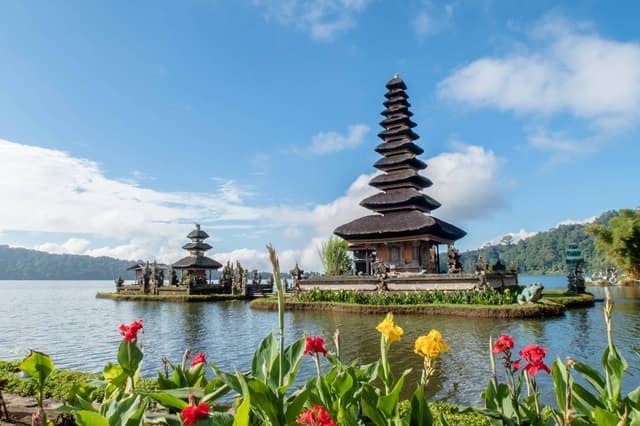
Explore Indonesia (Bali) tour packages
View all →

Which islands and spots should you see?

On a first Komodo trip, the core sights are a ranger-led dragon walk on Rinca or Komodo Island, the Padar Island viewpoint, Pink Beach for snorkelling, and Manta Point or Taka Makassar for manta rays and a sandbank swim. Most boat trips combine four to seven stops from the list below, depending on the boat type, the weather and which sites have quota on your date.

Komodo Island (Loh Liang)
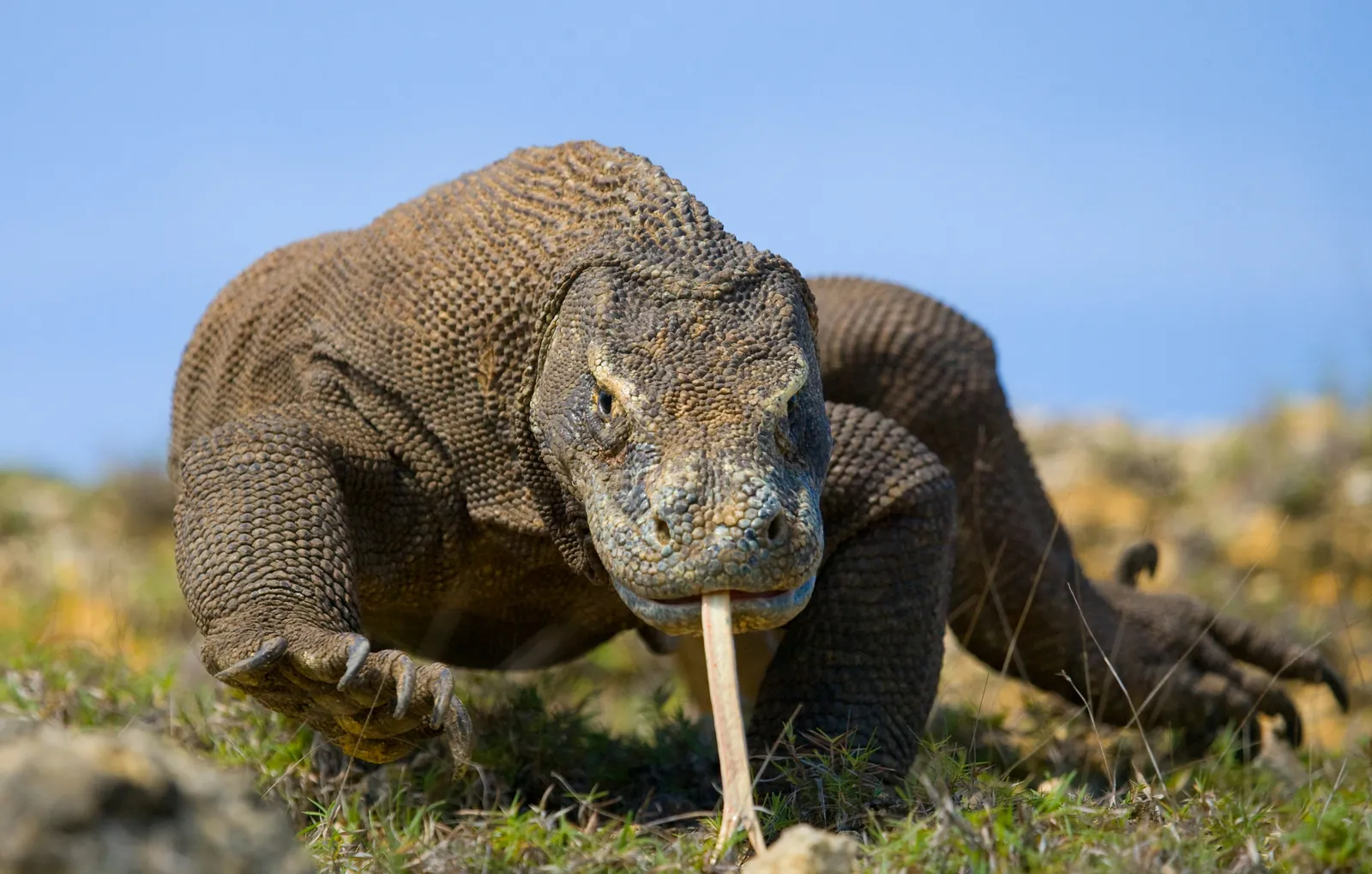
Adult Komodo dragon walking on dry grassland with its forked tongue out in Komodo National Park

Komodo Island is the largest island in the park and gives the whole area its name. Boats land at the Loh Liang ranger station, where you are assigned a ranger and walk a set trail through dry forest and savannah. Dragons are often seen near the station and along the route, along with Timor deer, wild boar and birdlife such as the yellow-crested cockatoo in some seasons. The ranger decides the route length on the day.

Komodo Island is further from Labuan Bajo than Rinca, so it is usually visited on two-day or longer boat trips, or on a long speedboat day.

Rinca Island (Loh Buaya)

Rinca is closer to Labuan Bajo, which makes it the most common dragon stop on day trips. The Loh Buaya area was redeveloped a few years ago with an elevated walkway and new visitor buildings, so part of your walk is on a raised path above the ground. Rinca also has monkeys, buffalo and deer.

Padar Island
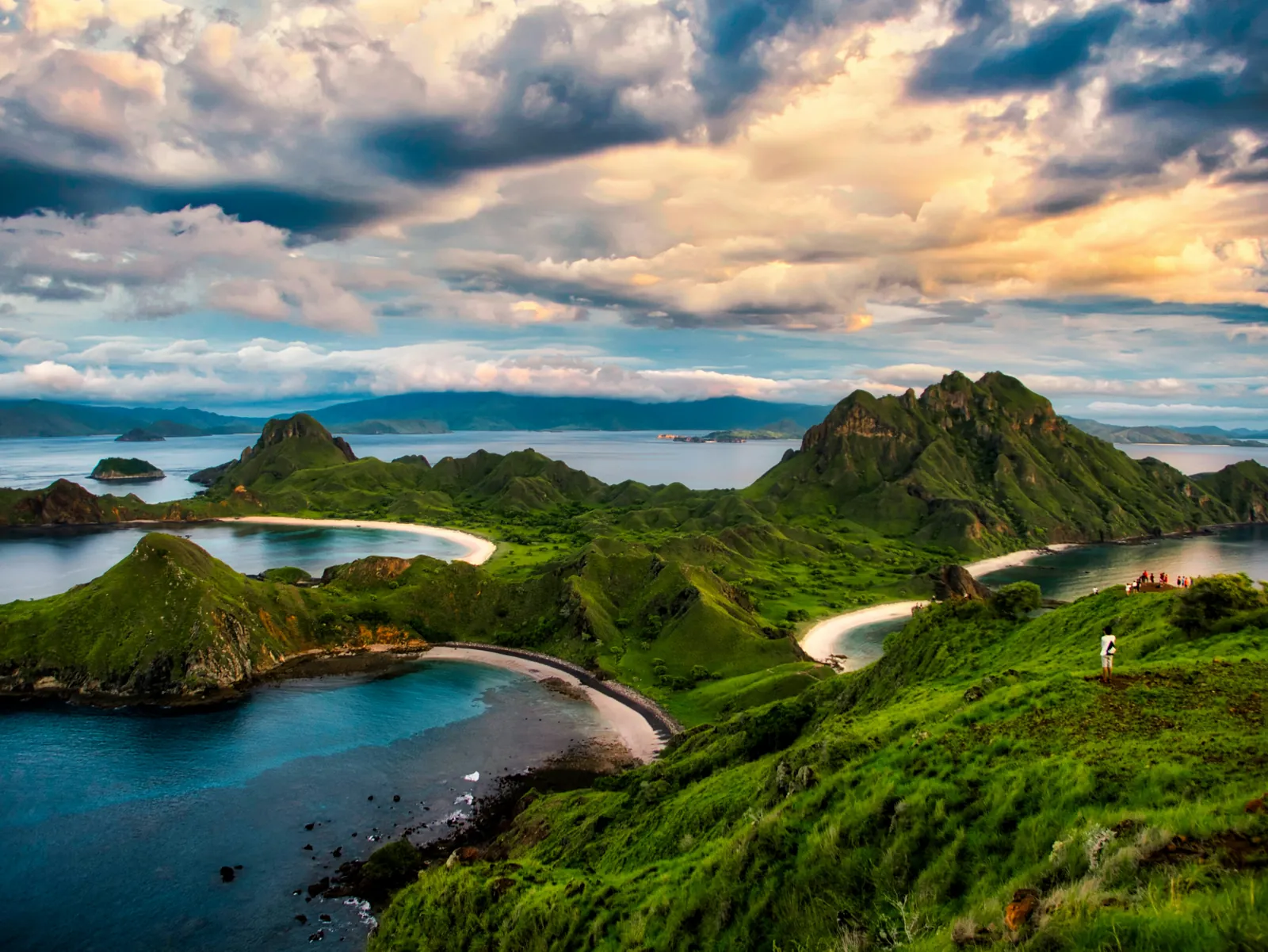
Green hills and three curved beaches of Padar Island in Komodo National Park after the rains

Padar Island is famous for one view: from the ridge, three or four crescent bays curve away below you, with white, black and pinkish sand between dry hills. The climb is a staircase and dirt trail of about 30 to 45 minutes up for most people. Padar is not a dragon-viewing stop; the dragon walks are on Komodo and Rinca.

Padar's visits run in timed sessions, including an early morning session for sunrise and an afternoon session for sunset light (Checked: 8 Oct 2026, SiOra session information reported by IDN Times). Because Padar has its own tight limits within the overall quota, good operators secure your Padar slot first and plan the rest of the day around it.

Pink Beach (Pantai Merah)
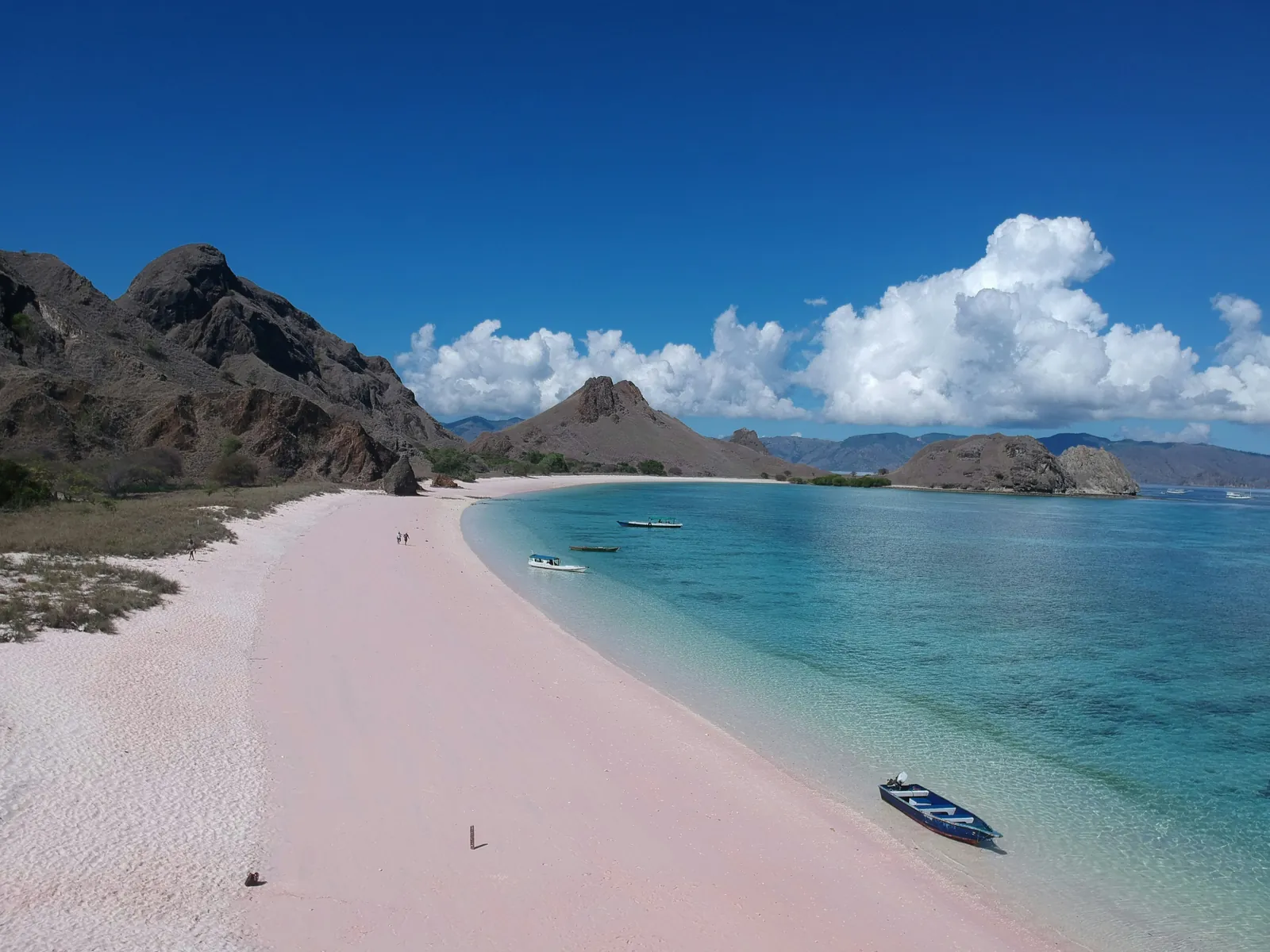
Pink sand shoreline and turquoise water at Pink Beach in Komodo National Park with a small boat

Pink Beach gets its colour from tiny red fragments of coral and shells from small marine organisms mixed into white sand. The pink shows best in bright sun at the water's edge; on a cloudy day or in photos taken from far away it can look closer to beige. The real reason to stop is the snorkelling: the reef starts just off the beach, with hard corals, reef fish and, on many days, turtles. Do not take sand, shells or coral from any beach in the park; leave Pink Beach as you found it.

Manta Point and Taka Makassar
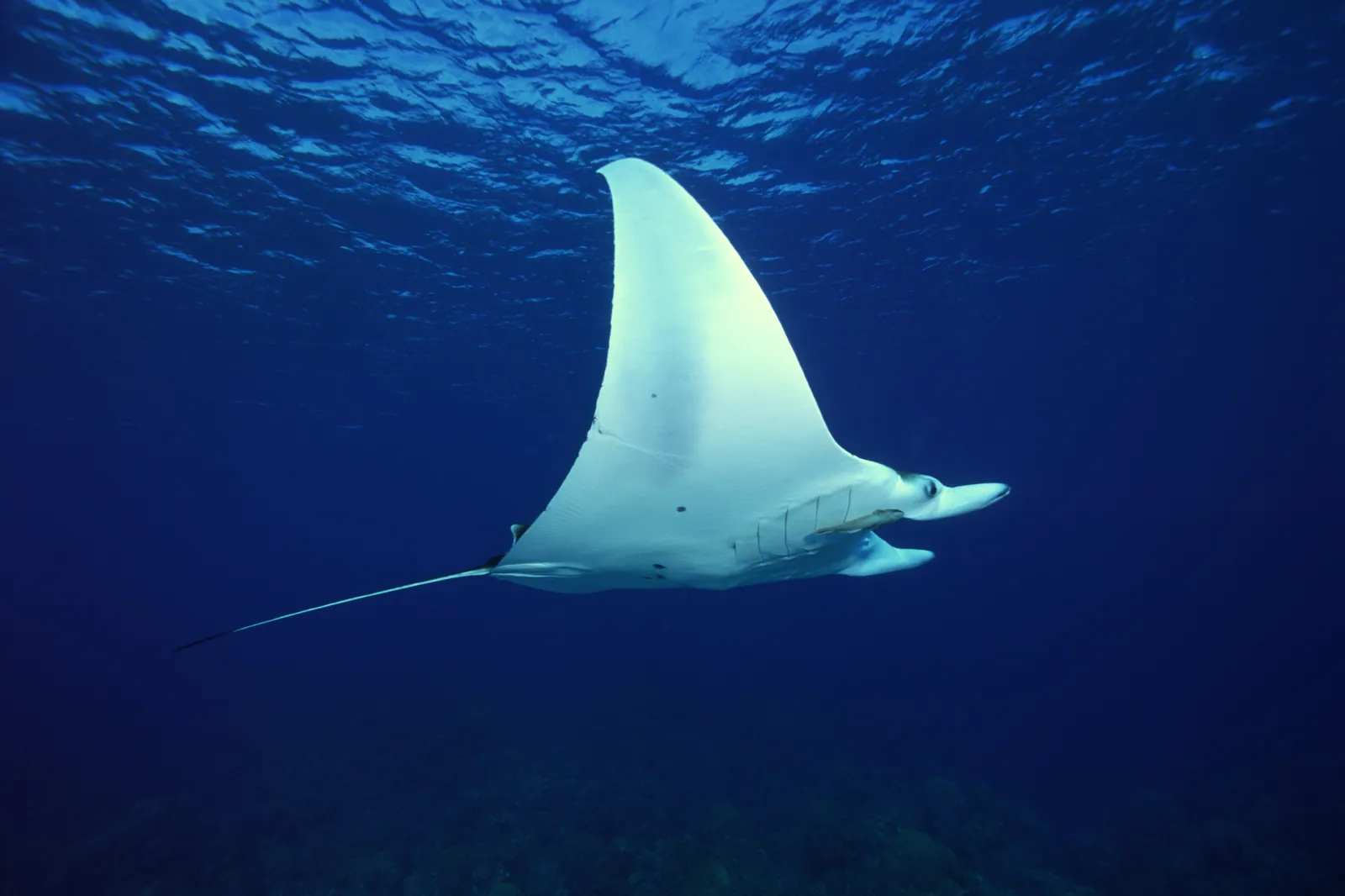
Manta ray gliding through deep blue open water, the sight snorkellers hope for at Manta Point

Manta Point (Karang Makassar) is a shallow reef area where manta rays come to feed and be cleaned. Sightings are common but never guaranteed. Nearby, Taka Makassar is a sandbank that appears at lower tide, giving a short stop on a strip of white sand in the middle of the sea.

Kanawa, Kelor and Siaba Besar

These are calmer snorkelling and beach stops, mostly closer to Labuan Bajo. Kanawa Island has a reef near its jetty that is good for beginners. Kelor Island has a short, steep hill with a view and is often the first or last stop on a day. Siaba Besar is known for turtles; operators sometimes call the area "Turtle City". They suit children and nervous swimmers.

Kalong Island at sunset

On overnight boat trips, many boats anchor near Kalong Island in the late afternoon. At dusk, thousands of large fruit bats (flying foxes) leave the mangroves and fly across the sky towards Flores to feed. You only see it if you stay out overnight.

SpotMain highlightActivityGood for
Komodo Island (Loh Liang)Wild dragons in their largest homeRanger-led walkWildlife lovers, longer trips
Rinca Island (Loh Buaya)Dragons close to Labuan BajoRanger-led walk, partly on a raised walkwayDay trips, families
Padar IslandViewpoint over multi-coloured baysShort steep hikePhotographers, couples, sunrise seekers
Pink BeachPink-tinged sand and a reef off the beachSnorkelling, swimmingEveryone who can swim
Manta PointManta rays feedingSnorkelling or diving in currentConfident swimmers, divers
Taka MakassarSandbank in the open seaShort swim and photosCouples, families
Kanawa and KelorEasy reefs and small hillsSnorkelling, short climbBeginners, children
Kalong IslandFlying foxes at duskWatching from the boatOvernight trips only

If you enjoy island hopping, compare Komodo with Bali's own coast in our guide to the best beaches in Bali, and see our list of things to do in Bali for the days before or after your Komodo trip.

Is it safe to see Komodo dragons?

Yes, seeing Komodo dragons is safe when you follow the park's rules: walk only with a licensed park ranger, stay on the trail, keep your distance and never feed or approach the animals. Attacks on visitors are rare, but dragons are wild predators, and incidents involving rangers and local villagers have happened. The rules exist for a reason, so take them seriously.

What you should know about Komodo dragons
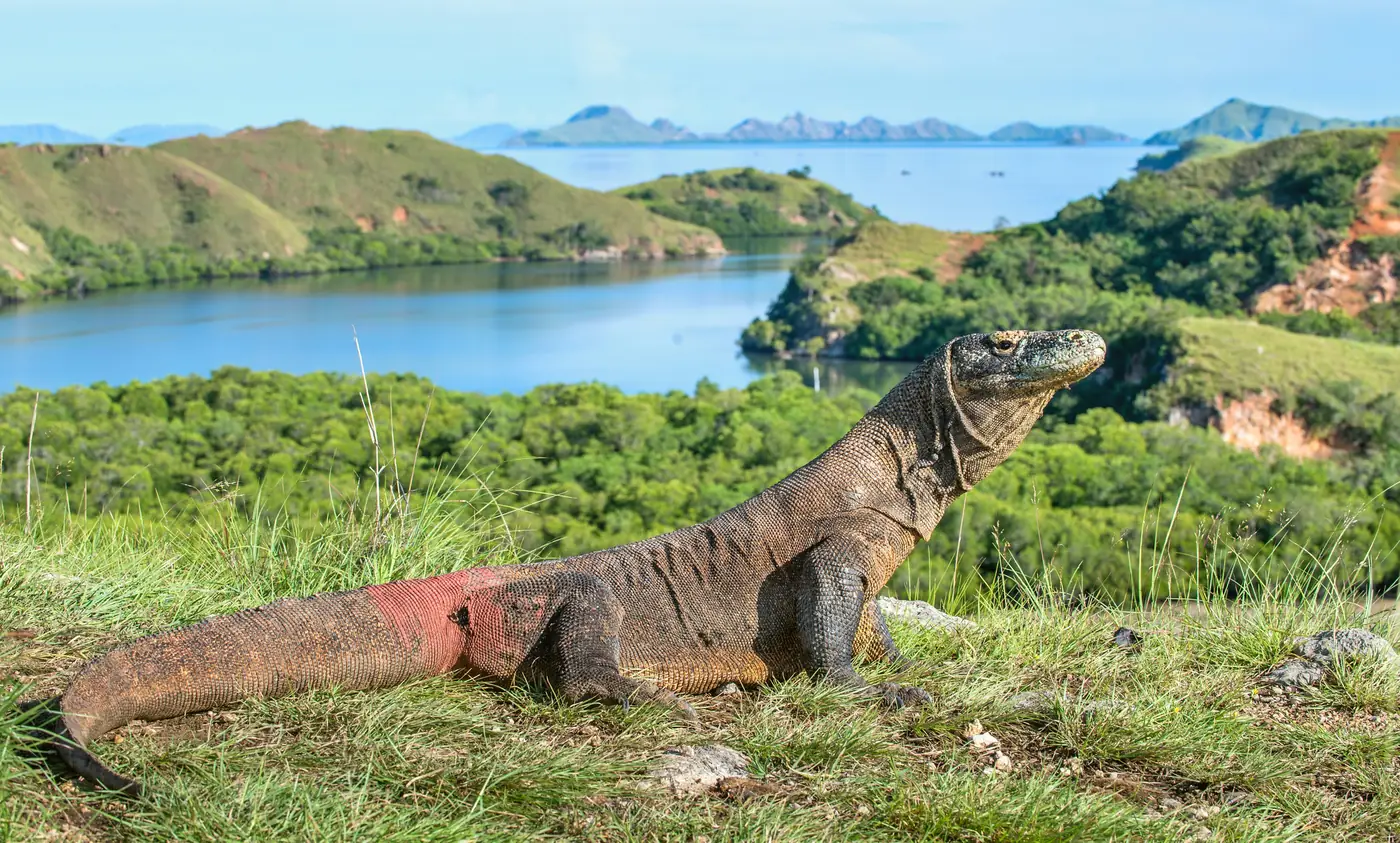
Komodo dragon resting on a grassy hillside above a calm bay in its natural island habitat
  • Size: The Komodo dragon is the largest living lizard. UNESCO notes adults typically reach 2 to 3 metres long.
  • Population: UNESCO's park description estimates around 5,700 dragons in the area. Dragons live wild on Komodo and Rinca, on parts of Flores, and on a few small islands.
  • Conservation status: In September 2021 the IUCN Red List moved the Komodo dragon from Vulnerable to Endangered, mainly because rising sea levels threaten its low-lying habitat, as reported by the Natural History Museum, London.
  • Behaviour: Dragons can look sleepy in the heat, but they can move quickly over short distances, and their bite is dangerous. They hunt deer, boar and buffalo, often by ambush. Compare other wildlife trips in our best safari destinations.

Ranger-led safety rules

Rangers carry a long forked stick and walk with every group. Their briefing is the rule book for the day; these are the usual points:

DoDo not
Stay with your ranger and your group at all timesWalk off the trail or go ahead of the ranger
Keep the distance the ranger tells you (several metres)Approach a dragon for a selfie or touch it
Keep children close and holding an adult's handLet children run, shout or wander
Tell the ranger privately if you have an open wound or are menstruating, so they can advise youIgnore the briefing or assume dragons are tame
Wear closed shoes and carry waterFeed any wildlife or leave food or rubbish
Move slowly and quietly near resting dragonsFly a drone without first checking the park's current drone rules

Safety on the water

For most visitors, the bigger risk on a Komodo trip is the sea, not the dragons. In late December 2025 a tourist boat sank in the strait near Padar Island in rough weather, and the port authority in Labuan Bajo suspended tourist boat sailings for a period while it reviewed conditions (reported by Antara, 28 Dec 2025). Weather and wave warnings can stop boats at short notice, especially in the wet season.

Before you board any boat, check:

  • Life jackets for every passenger, including child sizes, and where they are stored.
  • That the operator is licensed and registers your park tickets properly through SiOra.
  • That the crew follows the harbour's sailing permissions and weather warnings, and will change the route or cancel if conditions are poor.
  • A working radio or communication on board and a clear safety briefing.
  • Snorkelling support: a crew member in the water or watching from a tender at strong-current sites such as Manta Point.

A good operator will cancel or shorten a trip in bad weather. That is a sign of care, not bad service. Our wider Bali safety guide covers sea safety, scams and health tips that also apply in Labuan Bajo.

What are the current Komodo National Park rules?

Komodo National Park has had a daily visitor quota of 1,000 people since 1 April 2026, and tickets must be booked in advance through the park's online system, SiOra, usually by your boat operator. Rules, quotas and fees have changed several times in recent years, so always check the official sources listed below before you travel.

Indonesia's Ministry of Forestry announced in a press release dated 15 April 2026 that, from 1 April 2026, the park's visitor quota is 1,000 people per day, covering Padar, Rinca and Komodo islands and 23 nearby dive sites (Checked: 8 Oct 2026, Ministry of Forestry press release). The ministry said the limit is based on carrying-capacity studies that will be updated over time, so the numbers may change.

Indonesian media reporting on the park office's announcements added several practical details: tickets bought on site are no longer valid, reservations are made through the SiOra app or website, and visits to South Padar run in three timed sessions. Site-by-site limits have been reported differently by different outlets, so we do not repeat them here. Ask your operator which sites have space for your dates.

Rules check before you travel

What to checkWhy it mattersWhere to check
Daily quota and site availabilityPopular sites can fill in peak seasonSiOra, Komodo National Park Office
Ticket rules and park feesFees and ticket types have changed beforeSiOra and your licensed operator
Session times for PadarYou must arrive in your booked sessionSiOra
Any new national rules on the quotaThe ministry reviews carrying capacityMinistry of Forestry news (kehutanan.go.id)
Sailing permissions and weather warningsBoats can be stopped in rough seasYour operator, who follows the Labuan Bajo port authority
Indonesia entry rules for your passportEntry rules differ by nationalityIndonesian e-Visa portal

Day trip or liveaboard: which suits you?

A speedboat day trip suits travellers with limited time who want the highlights, while a two-day or longer liveaboard on a traditional phinisi boat suits those who want a slower pace, sunrise at Padar, the Kalong Island bat flight and more snorkelling.

Speedboat day trip

A day trip leaves Labuan Bajo early and returns in the late afternoon or evening. In one long day you can usually see Padar, Pink Beach, a dragon walk on Komodo or Rinca, and one or two snorkel stops such as Manta Point and Taka Makassar. The trade-off is time on a fast boat that can bounce hard in choppy water, and short stops at each site.

Two-day or three-day liveaboard
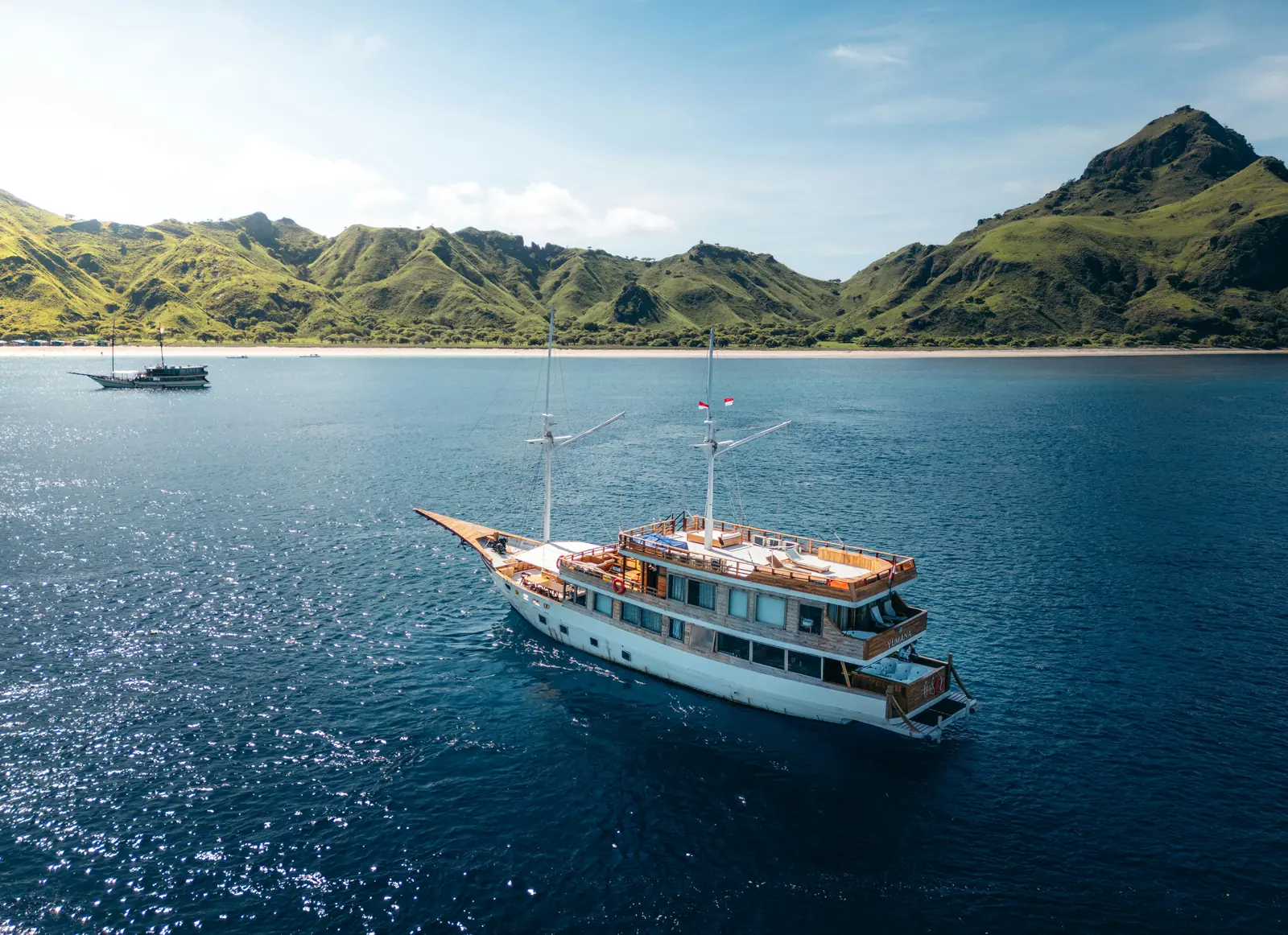
Traditional wooden phinisi liveaboard boat cruising a calm bay among green Komodo islands

Most liveaboards are wooden phinisi boats, from simple shared boats with deck mattresses to private boats with air-conditioned cabins. You sleep on the boat inside or near the park, which means you can be at Padar for the early session and at the reefs before day-trip boats arrive. Evenings include the bat flight at Kalong Island and quiet anchorages.

Divers have a third choice: dive centres in Labuan Bajo run day dive trips and dive liveaboards. Some sites have strong currents and suit only experienced divers.

FactorSpeedboat day tripPhinisi liveaboard (2 to 3 days)Dive trip
Time neededOne long dayTwo to three daysOne day to a week
PaceFast, short stopsRelaxed, longer stopsSet by dive schedule
Padar sunrisePossible but means a very early startEasier, as the boat sleeps nearbyDepends on the boat
Kalong Island batsNot usuallyUsually includedSometimes
Comfort at seaCan be bumpySmoother, with shade and bedsVaries
Best forShort holidays, families with older childrenCouples, honeymooners, photographersCertified divers
Main watch-outSeasickness in rough waterCheck cabin type and safety equipmentStrong currents

How many days do you need in Komodo?

Plan three to four nights in Labuan Bajo for a comfortable Komodo trip. That gives you a buffer day for flight or weather delays, one day trip or a two-day liveaboard, and a little time in town. With only two nights you can still manage a day trip, but you have no room if the sea is rough on your boat day.

Time in Labuan BajoWhat fitsWho it suits
2 nightsArrive, one speedboat day trip, fly outVery short add-on to Bali; no weather buffer
3 nightsArrival day, day trip or 2-day liveaboard, spare dayMost first-time visitors and families
4 to 5 nights3-day liveaboard or diving, sunset at Bukit Sylvia or similar viewpoints, a spare dayCouples, divers, photographers

For ideas on how to split your time between Bali and Komodo, our Bali itinerary guide shows how to shape the Bali part of the trip, and you can then add your Komodo nights at the start or the end.

When is the best time to visit Komodo?

The best time to visit Komodo is the dry season, roughly April to November, when seas are generally calmer and skies clearer. April to June brings green hills after the rains, July and August are the busiest months, and September to November offer warm water and good conditions with fewer crowds than mid-year. December to March is the wet season, with more rain, rougher seas and a higher chance of boat cancellations.

MonthsSeasonWhat to expectNotes
April to JuneEarly dry seasonHills still green, generally good seasA lovely time for Padar photos
July to AugustPeak dry seasonDry, sunny, busy; hills turn goldenQuota and boats fill fast; book early
September to NovemberLate dry seasonHot, dry, warm waterGood for Dashain and Tihar holidays; heat on hikes
December to MarchWet seasonRain, stronger winds, choppier seasHigher risk of sailing suspensions; keep plans flexible

The wet season is not a write-off: rain often comes in bursts and the hills are green. But boats are most likely to be held in port then, as happened after the December 2025 sinking. If you travel between December and March, keep at least one spare day and choose an operator with a clear weather policy.

Komodo during Dashain and Tihar

For Nepali travellers, the Dashain and Tihar holidays fall in October and November, which is the late dry season in Komodo. Seas are usually manageable, the water is warm and crowds are often lighter than in July and August; do hikes early to beat the heat. Because so many Nepali families travel in the same window, book flights early and ask your operator to secure park tickets in SiOra as soon as your dates are fixed. Our best time to visit Bali guide explains how the Bali side of your trip fits the same months.

What should you pack?

Pack for hot sun, short steep hikes, a lot of time in the water and a few nights on a boat: light breathable clothing, closed walking shoes, a hat, reef-safe sunscreen, a swimsuit, a dry bag, motion-sickness tablets and your passport (needed for park ticket registration). Keep luggage soft and small for boat transfers.

CategoryWhat to packWhy
DocumentsPassport, printed and digital copies, park booking details or QR codePark tickets are registered with passport details
ClothingLight long-sleeve shirt, quick-dry shorts or trousers, swimwear, a light jacket for the boat at nightSun protection and boat breezes
FootwearClosed trainers or trail shoes, plus sandals or water shoesDragon walks and Padar need closed shoes; sandals for beaches
Sun protectionWide-brim hat, sunglasses, reef-safe sunscreen, rash guardVery little shade on hikes and at sea
Water gearYour own mask and snorkel if you have them, dry bagBetter fit and hygiene; keep phones and cameras dry
HealthMotion-sickness tablets, personal medicines, insect repellent, basic first aid, oral rehydration saltsChoppy water, heat and mosquitoes; see our tips on avoiding Bali belly
MoneySome Indonesian rupiah in cash and a cardCash is useful in Labuan Bajo and for small purchases; card use is limited on the islands
TechPower bank, waterproof phone pouch, spare memory cardCharging on boats can be limited

Money, connectivity and practical tips

  • Currency: Indonesia uses the Indonesian rupiah (IDR). Labuan Bajo has ATMs and money changers; there are no reliable cash facilities on the park islands. Nepali travellers usually carry US dollars from Kathmandu and change them in Bali or Labuan Bajo; check the day's rate before changing money.
  • Food on boats: Most boats serve Indonesian meals such as rice, noodles, fish, chicken and vegetables. Vegetarian meals are usually possible if you ask in advance. For dishes worth trying in Indonesia, see what to eat in Bali.
  • Respect for local people: Komodo and Rinca have villages. Dress modestly there and ask before photographing people; our Bali dos and don'ts apply here too.
  • Leave no trace: Take all your rubbish back to Labuan Bajo, do not stand on coral, and never take sand, shells or coral from the park.

Is Komodo a natural wonder of the world?

Yes. Komodo National Park is one of the seven winners of the New7Wonders of Nature campaign run by the Swiss-based New7Wonders organisation, and it was officially inaugurated as a New7Wonders of Nature site at a ceremony in Bali in September 2013. It is also a UNESCO World Heritage Site, inscribed in 1991. These are two different lists: UNESCO is an intergovernmental heritage listing, while New7Wonders was a global public vote.

RecognitionYearWho gives it
UNESCO World Heritage Site1991UNESCO World Heritage Committee
New7Wonders of Nature (official inauguration)2013New7Wonders Foundation, after a global public vote
Komodo dragon listed as Endangered2021IUCN Red List

The other six New7Wonders of Nature are the Amazon, Ha Long Bay in Vietnam, Iguazu Falls in Argentina and Brazil, Jeju Island in South Korea, Table Mountain in South Africa, and the Puerto Princesa Underground River in the Philippines. If you like the idea of collecting wonders, our Ha Long Bay guide and our guide to things to do in Palawan cover two of them that are within reach of Kathmandu.

Planning Komodo as part of an Indonesia trip

Most travellers combine Komodo with Bali: a few nights in Ubud or the south, a short flight east to Labuan Bajo, a boat trip into the park, then back to Bali or home. Keep your Komodo days flexible, book park tickets through a licensed operator, and recheck the park rules a week before you go.

To see how Bali, the islands and Komodo can fit together in one holiday, browse our Indonesia tour packages. The Gomayu team can help you plan the flights from Kathmandu, the Bali stay and the Komodo boat days around your dates. For more ideas on where to spend your Bali days, see our guide to the best places to visit in Bali.

Frequently asked questions

Where is Komodo Island?

Komodo Island is in Komodo National Park, East Nusa Tenggara province, Indonesia, between Sumbawa and Flores. It is about 1 hour 15 minutes by air east of Bali to Labuan Bajo, the harbour town on Flores, and then a boat ride into the park. Komodo Island is the largest island in the park and home to wild Komodo dragons.

How do I get to Komodo from Bali?

Fly from Denpasar (DPS) in Bali to Komodo Airport in Labuan Bajo (LBJ), a flight of roughly 1 hour 15 minutes with several departures most days. From Labuan Bajo harbour, join a speedboat day trip or a liveaboard boat into Komodo National Park. There is no road to Komodo Island. Travellers from Nepal usually reach Bali first with one stop.

Is it safe to see Komodo dragons?

Seeing Komodo dragons is safe when you follow the rules: walk only with a park ranger, stay on the trail, keep the distance the ranger asks for, and never feed or approach the dragons. Attacks on visitors are rare, but Komodo dragons are wild predators with a dangerous bite. Keep children close, and tell the ranger privately about open wounds or menstruation.

What is the best time to visit Komodo?

The best time to visit Komodo is the dry season, roughly April to November, when seas are calmer and skies clearer. July and August are busiest. September to November, which covers Dashain and Tihar, is hot but usually good for boats. December to March is wet and windy, and boat trips can be suspended at short notice.

Is Pink Beach worth it?

Yes, mainly for the snorkelling. Pink Beach in Komodo National Park has sand tinted pink by tiny red marine fragments, which looks strongest in bright sun at the water's edge. The real highlight is the reef just offshore, with coral, reef fish and often turtles. Expect a pastel pink, not a bright pink, and never take any sand.

How many days do I need in Komodo?

Plan three to four nights in Labuan Bajo for a comfortable Komodo trip. That allows one speedboat day trip or a two-day liveaboard, plus a spare day for flight or weather delays. Two nights is possible for a quick day trip from Bali but leaves no buffer. Divers and photographers often stay four to five nights.

Can you visit Komodo on a day trip?

Yes. Speedboat day trips from Labuan Bajo usually combine Padar Island, Pink Beach, a ranger-led dragon walk on Komodo or Rinca, and one or two snorkel stops. It is a long, full day. You cannot do Komodo as a same-day return trip from Bali in comfort; plan at least two nights in Labuan Bajo.

Is Padar Island hard to climb?

The Padar Island viewpoint climb is short but steep: a mix of stairs and dirt path that takes most people about 30 to 45 minutes up. Fit children and older travellers can manage it with breaks. Go in the early morning session to avoid heat, wear closed shoes, and carry water, as there is no shade.

Is Komodo a natural wonder of the world?

Yes. Komodo National Park is one of the New7Wonders of Nature, officially inaugurated in a ceremony in Bali in 2013 after a global public vote. Komodo National Park has also been a UNESCO World Heritage Site since 1991, recognised for its dramatic landscapes and the Komodo dragon.

Do I need to book Komodo National Park tickets in advance?

Yes. Since 1 April 2026 Komodo National Park has a daily quota of 1,000 visitors, and tickets are booked in advance through the park's SiOra system, usually by your boat operator using your passport details. Tickets bought on site are no longer valid, according to reports on the park office's rules. Check siora.id before travel.

Can Nepali travellers combine Komodo with a Bali holiday?

Yes. Nepali travellers usually fly from Kathmandu to Bali with one stop, spend a few nights in Bali, then take the short domestic flight to Labuan Bajo for a Komodo boat trip. Check the Indonesian entry rules for your passport on the official e-Visa portal, and plan Komodo around Dashain or Tihar for dry-season weather.

Komodo dragon kaha paincha?

Komodo dragons are found in the wild only in eastern Indonesia: on Komodo Island and Rinca Island inside Komodo National Park, on parts of Flores, and on a few small nearby islands. Visitors see them on ranger-led walks at Loh Liang on Komodo Island and Loh Buaya on Rinca Island, reached by boat from Labuan Bajo.
Tags
Bali
Share
G
Gomayu Team
Writer at Gomayu
Keep reading