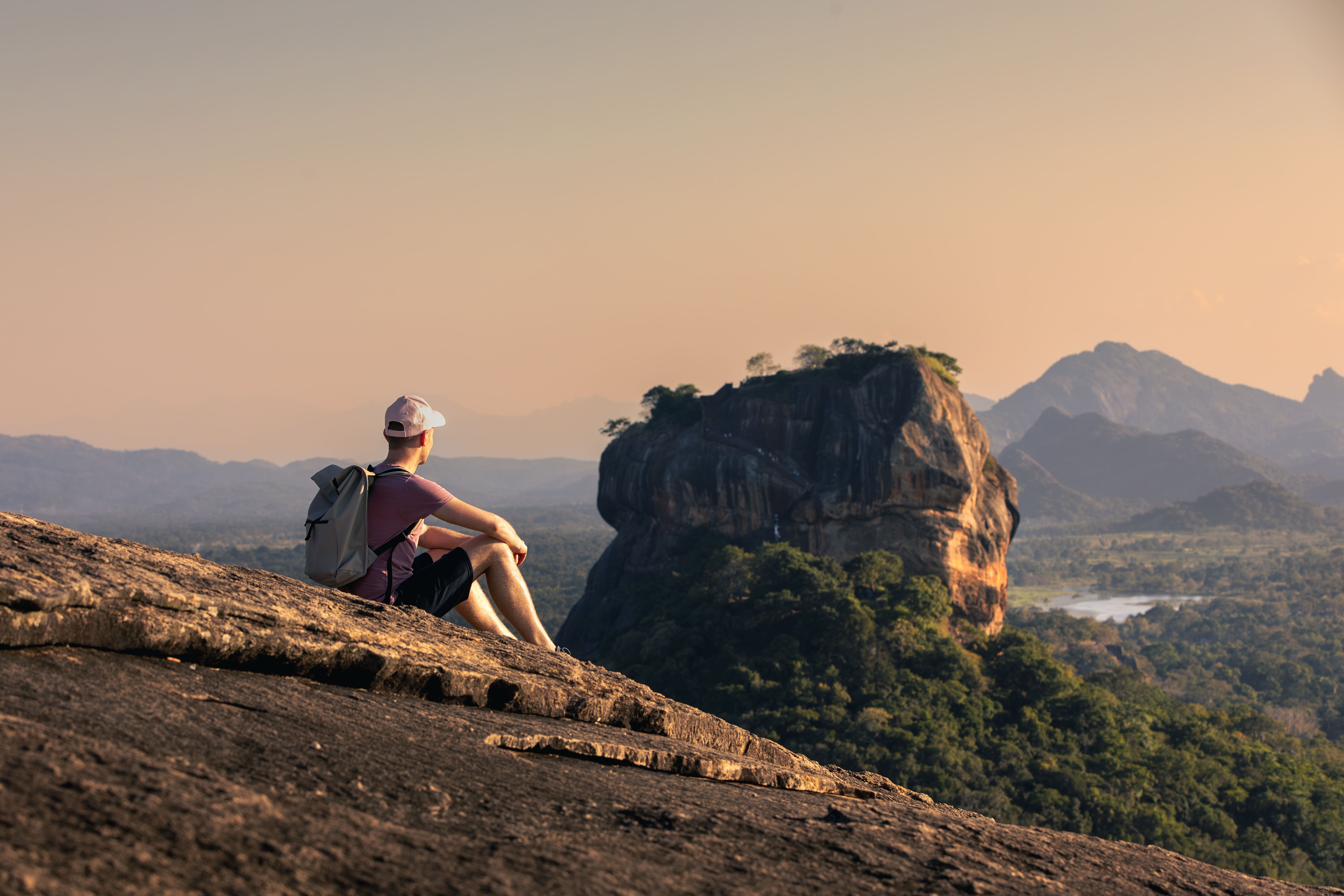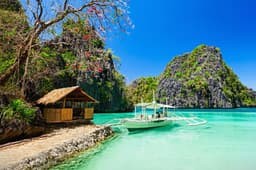













































The top things to do in Sri Lanka are climbing Sigiriya rock fortress at sunrise, riding the Kandy to Ella scenic train through tea country, tracking leopards and elephants on a jeep safari in Yala or Udawalawe National Park, wandering the Dutch era ramparts of Galle Fort, and unwinding on the south coast beaches around Mirissa, Unawatuna and Weligama. Round it out with a hike to Little Adam's Peak or World's End in Horton Plains, a visit to the cave temples of Dambulla, and, from November to April, a whale watching trip off Mirissa. Most travellers cover this core loop, the Cultural Triangle, the hill country and the south coast, in seven to ten days, extending to about two weeks to add the east coast beaches or the ancient city of Anuradhapura. Because the island is compact, roughly the size of Ireland, it is possible to go from ancient ruins to misty tea estates to wildlife parks to the ocean within a single relaxed trip.
Which regions should you plan your route around?
Sri Lanka rewards a loop rather than a single base. Most itineraries move counter clockwise or clockwise between five broad regions, each with a distinct landscape and pace. Distances are short by international standards, but roads wind through hills and towns, so travel times are longer than the map suggests.
| Region | Known for | Anchor towns | Typical time to allow |
|---|---|---|---|
| Cultural Triangle | Ancient cities, rock fortresses, cave temples | Sigiriya, Dambulla, Polonnaruwa, Anuradhapura | 2 to 3 days |
| Hill country | Tea estates, cool climate, scenic train rides | Kandy, Nuwara Eliya, Ella | 3 to 4 days |
| South coast | Beaches, surfing, whale watching, colonial fort | Galle, Mirissa, Unawatuna, Weligama, Tangalle | 3 to 4 days |
| East coast | Quieter beaches, surf season opposite the south, diving | Arugam Bay, Trincomalee, Nilaveli, Pasikudah | 2 to 4 days |
| Colombo and the west coast | Arrival and departure hub, markets, colonial architecture | Colombo, Negombo | 1 to 2 days |
Colombo's Bandaranaike International Airport is the main gateway for international arrivals, and Negombo, close to the airport, is a common first or last night stop. Many travellers skip a long stay in Colombo itself and use it only as a transit point, since the rest of the island offers a slower, more scenic pace. Travellers with two weeks or more sometimes add a sixth region, the Jaffna peninsula in the far north, which has a distinct Tamil culture, Dutch and Portuguese fort ruins, and a noticeably different food scene, though it sits further off the standard loop and needs its own two to three day allowance.
What are the must-see sights in the Cultural Triangle?
The Cultural Triangle, roughly the area between Kandy, Anuradhapura and Polonnaruwa, holds the bulk of Sri Lanka's ancient heritage. Sri Lanka has eight UNESCO World Heritage Sites in total, and six of them sit inside or near this region. Sigiriya, the Sacred City of Anuradhapura, the ancient city of Polonnaruwa, the Golden Temple of Dambulla, the Sacred City of Kandy and the Old Town of Galle are recognised for their cultural significance, while the Sinharaja Forest Reserve and the Central Highlands of Sri Lanka are the country's two natural World Heritage sites. You can read more about the sites on the UNESCO World Heritage Convention's Sri Lanka page.
| Site | What it is | Time needed | Best approach |
|---|---|---|---|
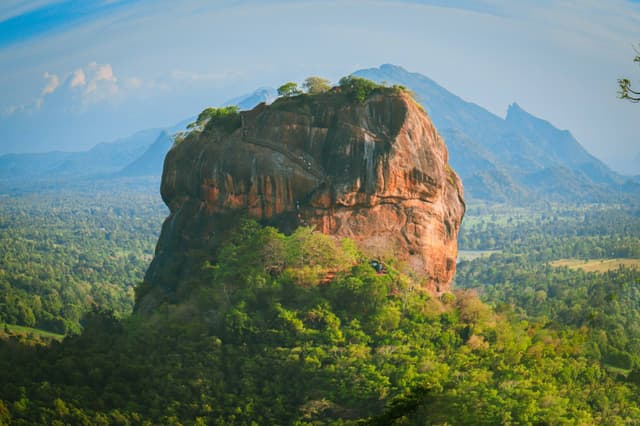
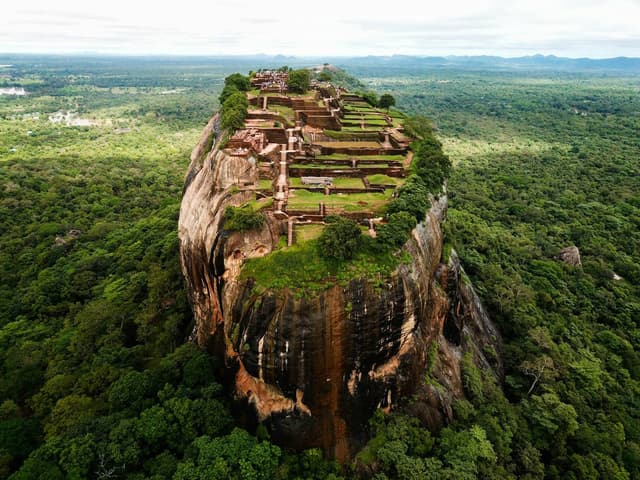
| Sigiriya rock fortress | A 5th century royal citadel on top of a 200 metre granite outcrop, with frescoes and landscaped water gardens at its base | 2 to 3 hours | Start at or before sunrise to beat the heat and the crowds on the final staircases |
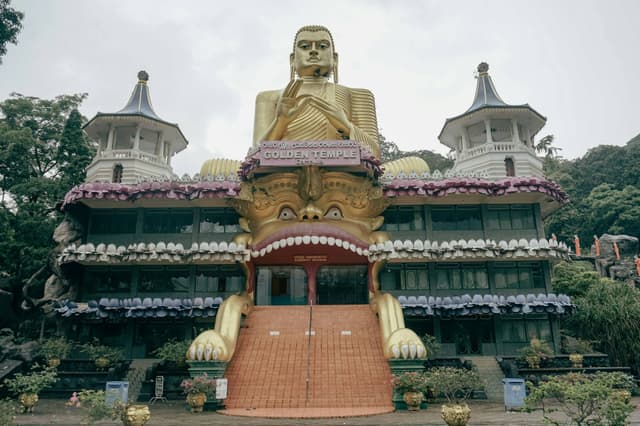
| Dambulla Cave Temple | Five cave shrines carved into a rock face, decorated with Buddhist murals and statues spanning over a thousand years | 1 to 2 hours | Combine with Sigiriya as a half day trip; a short climb leads up to the caves |
| Polonnaruwa | Ruins of the medieval capital, including the Gal Vihara rock cut Buddha statues and the Royal Palace complex | Half day | Best explored by bicycle, which you can rent near the entrance |
| Anuradhapura | Sri Lanka's first capital, with vast dagobas (stupas), monastery ruins and the sacred Sri Maha Bodhi tree | Half to full day | The site is spread out; a tuk-tuk or car with a driver saves time between clusters |
| Minneriya and Kaudulla National Parks | Dry zone parks famous for "the Gathering", when hundreds of elephants congregate around the reservoirs | 2 to 3 hours (jeep safari) | The Gathering typically peaks around July to September, though elephants can be seen year round |
Sigiriya and Dambulla sit close enough together to combine in a single day, while Polonnaruwa and Anuradhapura each deserve their own half day given how spread out the ruins are. If you only have time for one ancient city beyond Sigiriya, Polonnaruwa is more compact and easier to cover on a rented bicycle in a couple of hours.
What makes the hill country worth the detour?
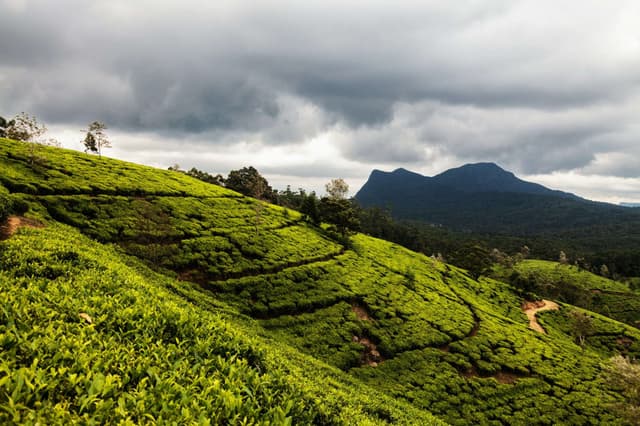
South of the Cultural Triangle, the land rises into tea covered hills with a noticeably cooler climate, a legacy of British colonial era plantations and hill stations. Kandy, the last capital of the Sinhalese kings, is home to the Temple of the Sacred Tooth Relic (Sri Dalada Maligawa), one of Buddhism's most revered sites, and hosts the Esala Perahera festival, a procession of dancers, drummers and decorated elephants usually held in July or August. Nuwara Eliya, nicknamed "Little England" for its colonial architecture and cool air, sits at the heart of Sri Lanka's tea country and makes a good base for visiting working tea estates and factories.
The Kandy to Ella train
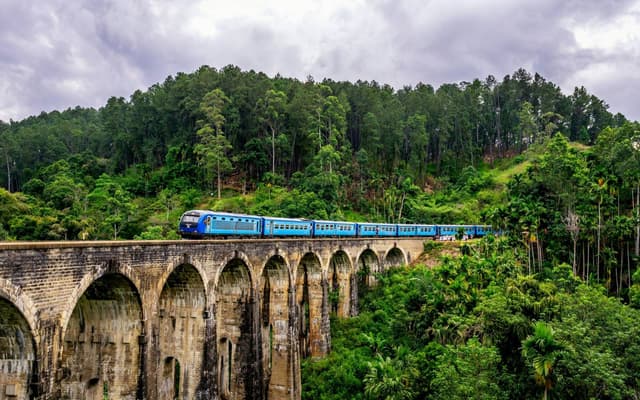
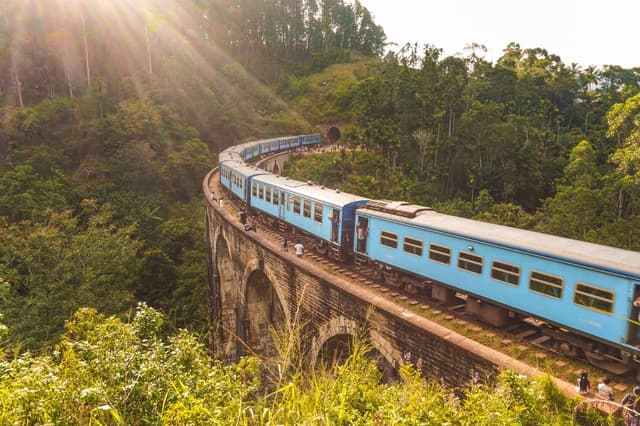
The rail journey between Kandy and Ella is consistently ranked among the world's most scenic train rides. The line climbs through tea plantations, tunnels, waterfalls and misty valleys, passing through Nanu Oya (the stop for Nuwara Eliya) on its way. The full run covers roughly 140 kilometres and typically takes six to seven hours, though many travellers ride only the more dramatic middle section, from Nanu Oya or Nuwara Eliya to Ella, which takes about three to four hours. Reserved second or first class seats sell out well in advance in peak season, so book ahead if you want a guaranteed seat rather than standing in the doorway.
Ella and its short hikes
Ella itself is a small, laid back town that has become a hub for short hikes and viewpoints. Little Adam's Peak is a gentle one to two hour round trip climb with panoramic views over tea plantations, suitable for most fitness levels. Ella Rock is a longer, steeper hike, around three to four hours round trip, that rewards you with wider views but requires more careful route finding. Nine Arch Bridge, a colonial era railway viaduct just outside town, is one of the most photographed spots on the island, especially when a train crosses it.
Which beaches and coastal towns stand out?
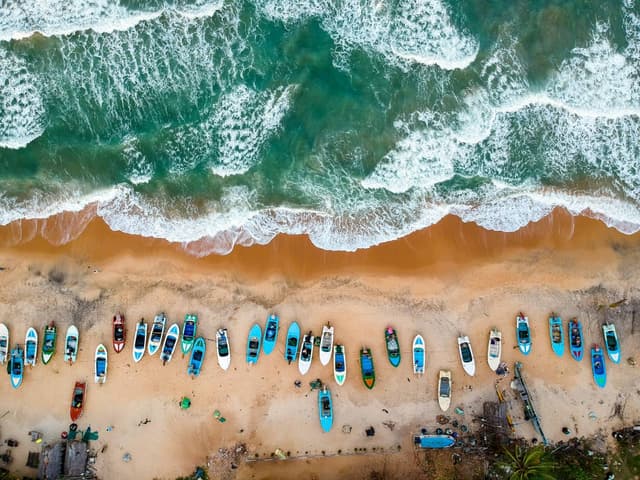
Sri Lanka's coastline splits into two distinct seasons on opposite sides of the island, which means there is almost always a good beach somewhere. For a deeper dive into specific stretches of sand, see our guide to the best beaches in Sri Lanka.
| Beach or town | Coast | Known for | Best season |
|---|---|---|---|
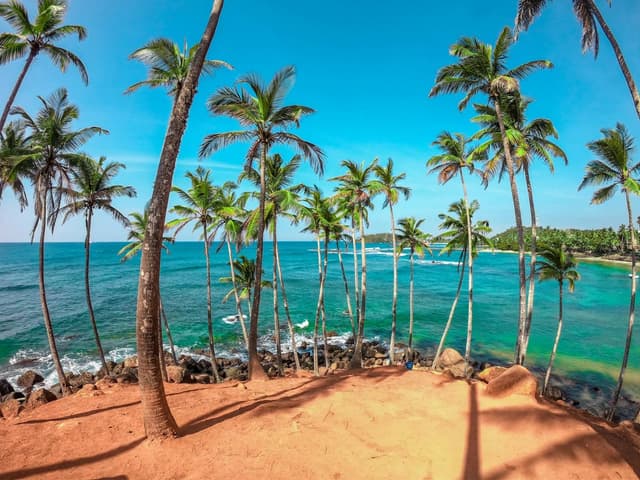
| Mirissa | South | Whale watching boat trips, laid back beach bars, Coconut Tree Hill viewpoint | November to April |
| Unawatuna | South | Sheltered bay, calm swimming, easy access from Galle | November to April |
| Weligama | South | Beginner friendly surf breaks, stilt fishermen | November to April |
| Galle | South | Fortified colonial old town, UNESCO listed ramparts, boutique shops | Year round, drier November to April |
| Arugam Bay | East | Renowned right hand point break, surf culture, lagoon wildlife | May to September |
| Trincomalee and Nilaveli | East / Northeast | Clear water, diving and snorkelling, quieter beaches | May to September |
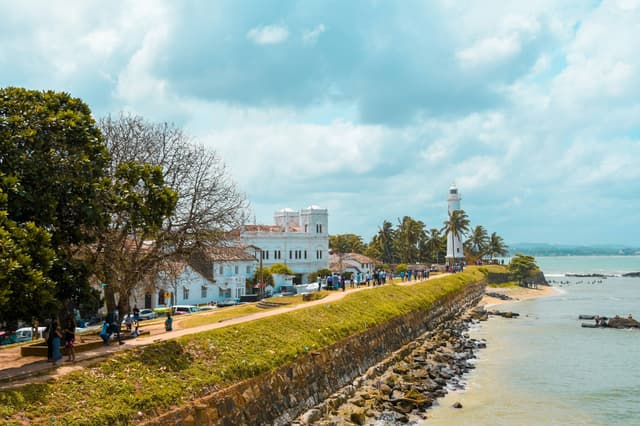
Galle Fort, a fortified old town first built by the Portuguese and expanded by the Dutch in the 17th century, is worth a half day on its own, with ramparts to walk at sunset, a lighthouse, and streets of converted colonial townhouses now housing cafes and galleries. It sits roughly midway along the south coast, making it easy to combine with either Unawatuna or Mirissa.
Where can you go on safari to see wildlife?
Sri Lanka packs an outsized amount of wildlife into a small area, and a jeep safari is one of the most reliable ways to see it. For a full breakdown of parks, seasons and what to expect on a game drive, see our dedicated Sri Lanka safari guide.
| Park | Approx. size | Best known for | Good to know |
|---|---|---|---|
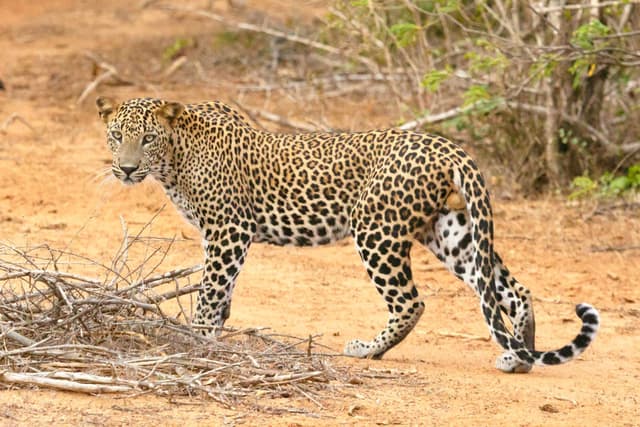
| Yala National Park | About 979 sq km (the core visitor area, Block 1, is a smaller part of this) | One of the highest reported densities of leopards in the world, plus elephants, sloth bears and crocodiles | The most visited park; early morning or late afternoon drives are quieter and cooler |
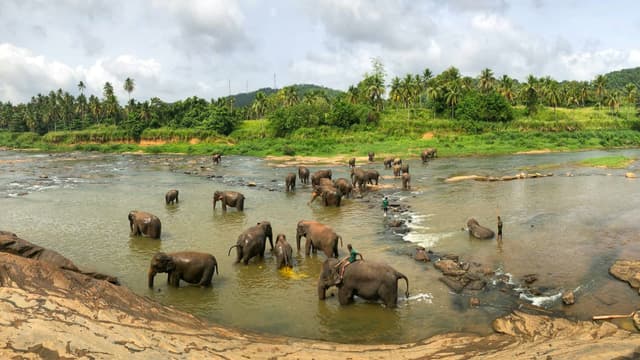
| Udawalawe National Park | About 30,800 hectares | Reliable, close range elephant sightings around open grassland and a reservoir | Good alternative to Yala when leopards are not the priority; also home to an elephant transit home |
| Wilpattu National Park | About 1,317 sq km, the largest national park on the island | Leopards in a wilder, less crowded setting, centred on natural lakes called "villus" | Further from Colombo and the south coast, so it suits a north or west coast itinerary |
| Minneriya and Kaudulla National Parks | Smaller dry zone parks near the Cultural Triangle | "The Gathering", large seasonal elephant herds around the reservoirs | Easy to combine with Sigiriya and Dambulla |
| Sinharaja Forest Reserve | About 8,800 hectares, a UNESCO World Heritage rainforest | Endemic birds, biodiversity rather than big mammal sightings | Explored on foot with a guide, not by jeep; best for birdwatchers and nature walkers |
If you can only fit in one safari park, choose based on what you most want to see: Yala for the best overall odds of a leopard sighting, Udawalawe for dependable elephant encounters in open terrain, or Wilpattu if you would rather trade slightly lower visitor numbers for a wilder, quieter drive. Bundala National Park, a wetland and lagoon system near Tissamaharama, is a good add on for birdwatchers, with large numbers of migratory wading birds visible especially between November and March. For a rainforest experience rather than a jeep safari, the Sinharaja Forest Reserve protects one of the last significant areas of Sri Lanka's original lowland rainforest and a high proportion of the island's endemic birds, mammals and amphibians.
Safari drives are usually done in open sided 4x4 jeeps, shared with other visitors unless you book a private vehicle, and typically run as a morning session starting near dawn or an afternoon session ending near dusk, since wildlife is most active and the heat least intense at those times. Parks are managed by the Department of Wildlife Conservation, and rangers or trackers riding along with the jeep will often spot animals well before visitors do.
How many days do you need in Sri Lanka?
The right length depends on how many regions you want to combine, but most first time visitors find a week gives a satisfying taste and ten days to two weeks allows a fuller loop without feeling rushed. For a detailed route with day by day pacing, see our Sri Lanka itinerary guide.
| Trip length | What it typically covers | Pace |
|---|---|---|
| 5 to 6 days | Cultural Triangle plus hill country, or Cultural Triangle plus south coast | Brisk; pick one coastal or one hill focus, not both |
| 7 to 8 days | The classic loop: Cultural Triangle, hill country (including the Kandy to Ella train), and south coast beaches | Comfortable, the most common first time itinerary |
| 10 days | The 7 to 8 day loop with more time in the hills or an extra beach town, or an added safari day at Wilpattu or Yala | Relaxed, with buffer days |
| 14 days | Full loop including the east coast (Arugam Bay or Trincomalee) or Anuradhapura, plus more time in national parks | Unhurried, minimal backtracking |
Because road travel between regions can take three to six hours depending on the route and season, it is worth resisting the urge to add too many stops. Two or three nights in each base, rather than one night hops, generally makes for a more enjoyable trip.
When is the best time to visit Sri Lanka?
Sri Lanka does not have a single dry season, it has two, arriving from opposite monsoons that affect different coasts at different times of year. This is the single most useful thing to understand when planning, and it is covered in more depth in our guide to the best time to visit Sri Lanka.
| Monsoon | Roughly when | Coast affected | What it means for travellers |
|---|---|---|---|
| Yala monsoon (southwest) | May to September | South and west coasts, hill country | Wetter on the south and west coasts and in the hills; the east coast is at its driest and best for surfing at Arugam Bay |
| Maha monsoon (northeast) | October to January (heaviest around November and December) | North and east coasts | Wetter on the east coast; the south and west coasts and hill country are drier and at their best |
| Inter monsoon / drier window | February to April, and short spells around the monsoon changeovers | Island wide | Often the most reliable stretch for combining Cultural Triangle, hill country and south coast in one trip |
In practical terms, November to April is the classic window for the Cultural Triangle, hill country and south coast, while May to September suits the east coast and Arugam Bay's surf season. The hill country, including Nuwara Eliya and Ella, is noticeably cooler year round and can see rain at any time of year given its elevation, so pack a light jacket regardless of season. Whale watching off Mirissa runs roughly November to April, coinciding with calmer seas on the south coast.
What hikes and outdoor adventures should you plan for?
Beyond the temples and safaris, Sri Lanka has a strong outdoor adventure side worth building into an itinerary.
- Adam's Peak (Sri Pada): A pilgrimage climb up thousands of steps to a summit shrine, traditionally done overnight to reach the top for sunrise. The main pilgrimage season runs roughly December to May; the trail is far quieter, and sometimes closed by weather, outside this window.
- Horton Plains and World's End: A high altitude grassland plateau in the Central Highlands, reached from Nuwara Eliya or Ella. The main loop trail leads to World's End, a sheer escarpment with dramatic drops, and Baker's Falls. Start early, both for clear views before clouds roll in and because the park has a fixed entry cutoff time.
- Surfing: Weligama on the south coast is a well known beginner surf spot with gentle, consistent waves, best from November to April. Arugam Bay on the east coast is a more advanced destination with a famous right hand point break, best from May to September.
- Whitewater rafting: Kitulgala, on the road between Colombo and the hill country, offers grade two to three rapids on the Kelani River and is a popular half day add on.
- Whale and dolphin watching: Boat trips from Mirissa run in season (November to April) with regular sightings of blue whales and sperm whales, alongside spinner dolphins.
What cultural experiences and food should you look out for?
Sri Lanka's Buddhist, Hindu, Muslim and Christian communities each contribute distinct festivals and traditions, and food varies noticeably by region. Rice and curry, usually several small vegetable, meat or fish curries served with rice, is the everyday staple, while hoppers (bowl shaped fermented rice pancakes, often eaten with an egg cracked into the centre) and kottu roti (chopped flatbread stir fried with vegetables, egg and meat) are widely loved street and roadside dishes. Coastal towns naturally lean toward seafood, while the hill country is where you will find Ceylon tea at its source, with estate tours and tastings around Nuwara Eliya and Ella.
Temples and religious sites have consistent etiquette across the island: shoulders and knees should be covered, shoes and hats removed before entering, and visitors should never turn their back on a Buddha statue for a photo. The Esala Perahera in Kandy, usually held in July or August, is the country's grandest festival, a ten day procession of drummers, dancers and elephants in honour of the Sacred Tooth Relic. Vesak, the full moon in May marking the Buddha's birth, enlightenment and passing, transforms towns and cities across the island with lanterns, illuminated displays and free food stalls.
What is Sri Lanka known for that makes a good souvenir?
Sri Lanka has several craft and produce traditions that make for meaningful souvenirs beyond generic trinkets. Ceylon tea is the obvious choice, and buying it directly from an estate shop or factory in the hill country, rather than an airport kiosk, generally gets you fresher, higher grade leaves along with an explanation of grading terms like orange pekoe. Ratnapura, on the edge of the hill country, is the historic centre of Sri Lanka's gem trade, particularly sapphires, and has gem museums and dealers, though buying loose stones is a specialist pursuit best done with independent knowledge or a trusted guide rather than on impulse. Other well known crafts include hand loom textiles, wood carving, brass work, and the carved and painted wooden masks traditionally made in Ambalangoda on the south coast, used historically in ritual devil dance ceremonies (kolam and thovil) and now sold widely as decorative pieces. Batik fabric, dyed using a wax resist technique introduced during the colonial period, is another widely available craft, particularly around Colombo and the south coast.
How do you get around Sri Lanka?
Getting between regions is part of the experience, particularly on the scenic rail lines, but it also takes planning given winding roads and variable traffic. Our full breakdown of routes, journey times and booking tips is in the guide on how to get around Sri Lanka.
| Mode | Best for | Notes |
|---|---|---|
| Private car with driver | Multi region loops, flexibility, families and groups | The most common way for visitors to cover the classic loop comfortably; driving is on the left |
| Trains | Kandy to Ella and other scenic hill country routes | Book reserved seats in advance in high season; unreserved third class is cheap but crowded |
| Tuk-tuks (three wheelers) | Short hops within towns, and some drivers offer half day hires | Agree the fare or use a metered ride app before setting off |
| Intercity and private buses | Budget travel between major towns | Frequent but can be slow and crowded on popular routes |
| Domestic flights and seaplanes | Fast transfers to Jaffna in the north or select resort areas | Limited routes; most visitors do not need domestic flights for the classic loop |
What should first-time visitors know before they go?
Most nationalities need an Electronic Travel Authorization (ETA) arranged online before arrival, so check the current requirement for your passport well ahead of your trip. Traffic drives on the left, and the currency is the Sri Lankan rupee. Dress modestly at religious sites regardless of the weather, and carry a light scarf or shawl for shoulders if you are travelling in summer clothing. Tap water is generally not recommended for drinking; bottled or filtered water is widely available. For a general sense of how safe the island is for travellers and what precautions are sensible, see our guide on is Sri Lanka safe. Mobile coverage is generally reliable even outside major towns, and a local SIM or eSIM is easy to arrange on arrival at the airport. Power sockets are typically the round three pin type used across South Asia, so check whether your devices need an adaptor. For official planning resources, attraction listings and event calendars, Sri Lanka Tourism's official website is a useful starting point alongside independent guides.
Health preparation is straightforward for most visitors: routine vaccinations should be up to date, and it is worth discussing malaria and other destination specific advice with a travel clinic or doctor before you go, since recommendations depend on which regions you plan to visit and the time of year. Sun protection matters more than most visitors expect, even on overcast days and even in the cooler hill country, given the island's tropical latitude and, in the hills, higher elevation.
If you are researching how to combine these regions and experiences into a complete trip, browse Sri Lanka tour packages for a sense of how the Cultural Triangle, hill country, safari parks and coast typically fit together.
Frequently asked questions
What are the top three things to do in Sri Lanka?
If you only have time for three experiences, most travellers prioritise climbing Sigiriya rock fortress, riding the scenic train section between Nuwara Eliya or Nanu Oya and Ella, and going on a jeep safari at Yala or Udawalawe National Park. Together these cover the island's ancient history, hill country scenery and wildlife in a compact way.
How many days do you need in Sri Lanka?
Seven to ten days is enough to cover the classic loop of the Cultural Triangle, hill country and south coast without rushing. Two weeks allows you to add the east coast beaches, Anuradhapura, or extra time in a national park.
What is the best time of year to visit Sri Lanka?
There is no single best time for the whole island, because two separate monsoons affect different coasts. Broadly, November to April suits the south and west coasts, the Cultural Triangle and the hill country, while May to September suits the east coast and Arugam Bay's surf season.
Can you see both ancient temples and beaches in one trip?
Yes, this is exactly what most itineraries do. A loop through the Cultural Triangle, then south through the hill country via the Kandy to Ella train, and on to the south coast beaches, is the most common route and typically takes seven to ten days.
Where is the best place to see leopards in Sri Lanka?
Yala National Park is the most famous destination for leopard sightings and is often cited as having one of the highest leopard densities anywhere in the world. Wilpattu National Park offers a wilder, less crowded alternative for leopard sightings, while Udawalawe is a better bet if elephants are the priority.
Is the Kandy to Ella train worth doing?
Yes, it is widely considered one of the most scenic train journeys in the world, winding through tea plantations, tunnels and misty hills. Many travellers ride only the shorter, more dramatic section between Nuwara Eliya or Nanu Oya and Ella rather than the full route from Kandy.
Can you see whales in Sri Lanka?
Yes, boat trips from Mirissa on the south coast run seasonally, roughly November to April, with regular sightings of blue whales, sperm whales and spinner dolphins. Calmer seas during this period make sightings more likely.
What is the difference between Yala and Udawalawe National Parks?
Yala is best known for leopard sightings and greater overall biodiversity, while Udawalawe offers more reliable, close range elephant sightings in open grassland. Yala tends to be busier with visitors, so Udawalawe or Wilpattu can be a quieter alternative.
Do you need a visa to visit Sri Lanka?
Most visitors need an Electronic Travel Authorization (ETA), which is arranged online before travel rather than a traditional visa. Requirements vary by nationality and can change, so check the official process for your passport before you book flights.
How many UNESCO World Heritage Sites does Sri Lanka have?
Sri Lanka has eight UNESCO World Heritage Sites: six cultural sites, including Sigiriya, Anuradhapura, Polonnaruwa, Dambulla, Kandy and Galle, and two natural sites, the Sinharaja Forest Reserve and the Central Highlands of Sri Lanka.