Short answer: Travelling abroad with elderly parents from Nepal goes smoothly when four things are settled before the ticket is paid: wheelchair or special assistance booked with the airline (not with the airport), medicines packed in original packaging with a doctor's letter, a short or non-stop flight from Kathmandu, and travel insurance that actually accepts your parent's age. Everything else on this checklist, from hotel lifts to an emergency contact card, makes the trip calmer but is easier to fix later.
This guide is for Nepali sons and daughters planning a first holiday abroad with Buwa and Aama, for families combining a Dashain or Tihar break with grandparents, and for the Nepali diaspora flying parents out of Kathmandu to visit them in the Gulf, Malaysia, Australia or further away. It follows the trip in order: choosing a country, the airport day at Tribhuvan International Airport (TIA), medicines, flights and seats, hotels and sightseeing, insurance, and what to do if a parent falls ill while you are away.
Medical points in this guide are general and practical, not medical advice. For anything about a specific condition, medicine, dose or fitness to fly, ask your parent's own doctor, ideally at an appointment booked a month or more before departure.
Checked: 4 November 2026. Airline assistance rules, special meal rules and medicine import rules were checked on the official airline and government pages named in each section. Rules change, so confirm with the airline and the destination authority before you fly.
What is the checklist for travelling abroad with elderly parents from Nepal?
The checklist for travelling abroad with elderly parents from Nepal is a timeline, not a single list: the doctor, insurance and airline assistance come first because they involve other people and lead times, while packing and paperwork folders come last.
Use the table below as the master plan. Each line links to a section further down that explains the detail.
| When | What to do for your parents | Why it matters |
|---|---|---|
| Before you choose the country | Ask how far they walk comfortably, how they manage stairs and heat, and what food they will eat every day | The honest answer decides the destination, the pace and the hotel |
| Two months out | Doctor's appointment, passport validity for each parent, entry requirement for their passport | Prescriptions, medical letters and visas all take time |
| When booking flights | Request wheelchair or special assistance, special meals and seats on the booking itself | Most airlines ask for 24 to 48 hours' notice at the very least; asking at booking is safer |
| One month out | Buy insurance after checking the age limit, declare every condition, check medicine rules for the destination | Nepali policies we checked have an upper age limit and exclude undeclared conditions |
| One week out | Reconfirm assistance with the airline, print the documents folder, fill in the emergency contact card | Requests sometimes drop off when flights are changed or rebooked |
| Airport day at TIA | Arrive early, ask for assistance again at the check-in counter, keep medicines in the cabin bag | Relatives cannot follow parents far inside the terminal |
| At the destination | One rest period every day, a hotel near transport, the local emergency number saved on every phone | Tired parents trip, dehydrate and get ill more easily |
If you have never organised an international trip before, read our general pre-trip checklist alongside this one. It covers the passport, visa and money items that apply to every traveller, so this page can focus on what changes when the travellers are in their 60s, 70s or 80s.
Which destinations suit elderly parents from Nepal?
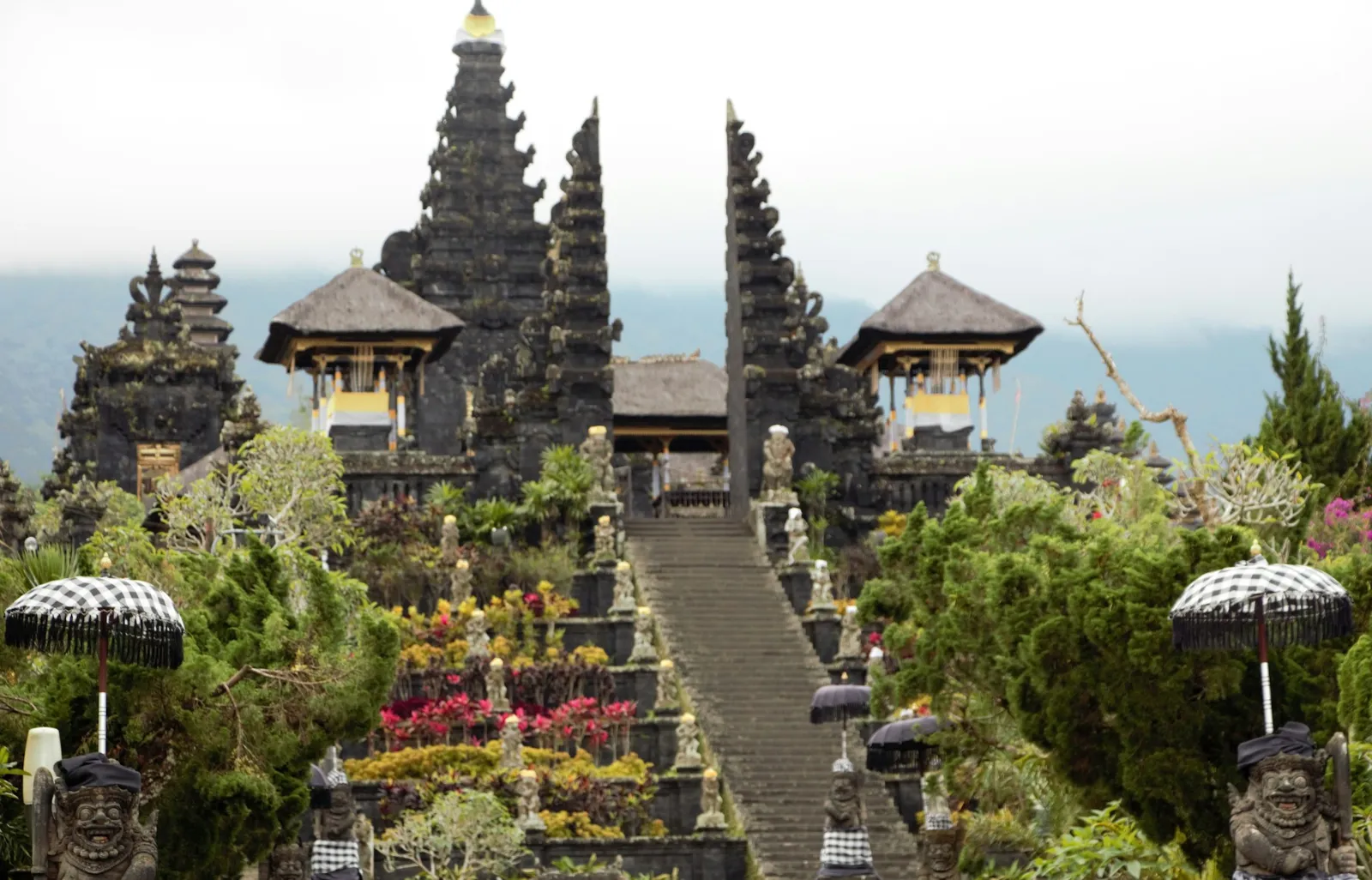
The destinations that suit elderly parents from Nepal best are the ones with a short non-stop flight from Kathmandu, familiar food and flat, air-conditioned sightseeing: India, Singapore, Dubai and Malaysia usually fit, Thailand and Sri Lanka work with a gentle plan, and one-stop trips such as Bali or the Maldives need more stamina.
The table compares the countries Nepali families ask about most. Flight times are approximate scheduled times for the shortest common routing from Kathmandu. Walking level and food comfort are our honest, qualitative judgement for a typical older Nepali traveller, not a rating system.
| Destination | Flight from Kathmandu | Walking level | Food comfort for Nepali parents | Entry for Nepali passport holders |
|---|---|---|---|---|
| India (Delhi and beyond) | Non-stop, about 1 hour 50 minutes to Delhi | Varies: heritage sites and pilgrim towns involve long walks, crowds and steps | Very high: dal, roti, rice and vegetarian food everywhere | No visa needed (India visa page) |
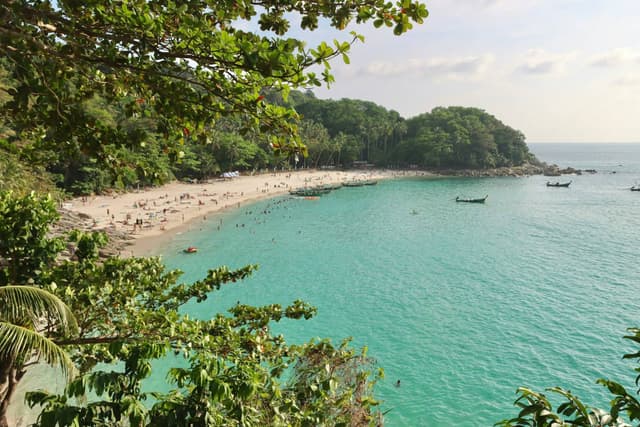
| Thailand (Bangkok) | Non-stop, about 3 hours 20 minutes | Moderate to high: big temple complexes, heat and humidity | Medium: Indian and vegetarian restaurants exist in Bangkok, but Thai dishes can be spicy or use fish sauce | Visa needed before travel (Thailand visa page) |
| Sri Lanka (Colombo) | Non-stop, about 3 hours 35 minutes | Low in Colombo and beach towns; high at climbs such as Sigiriya | High: rice and curry, lentils and vegetarian dishes are familiar | Electronic travel authorisation needed (Sri Lanka visa page) |
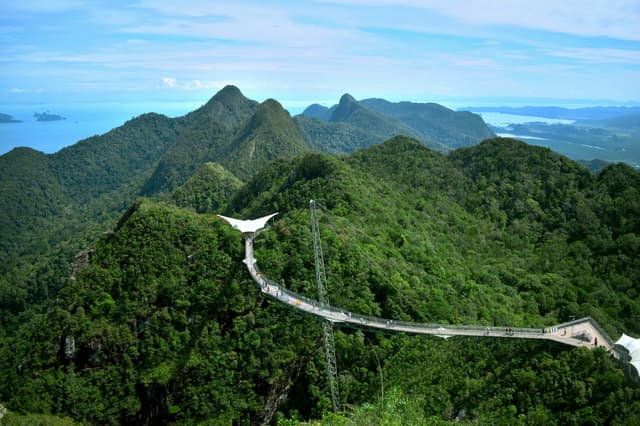
| Malaysia (Kuala Lumpur) | Non-stop, about 4 hours 40 minutes | Moderate: malls and towers are easy, Batu Caves has a steep stair climb | High: Indian Malaysian vegetarian food is easy to find | Visa needed, plus an arrival card (Malaysia visa page) |
| Dubai (UAE) | Non-stop, about 4 hours 40 minutes | Low if you move by car; long indoor walks in malls; very hot outdoors from late spring to early autumn | High: South Asian restaurants are everywhere | Visa needed before travel (Gomayu visa services) |
| Singapore | Non-stop, about 5 hours 10 minutes | Low to moderate: barrier-free public transport and many indoor attractions | High: Little India and hawker centres have vegetarian South Asian food | Nepal is not on Singapore's visa-required list; an arrival card applies (Singapore visa page) |
| Bali (Indonesia) | One stop, usually via Singapore, Kuala Lumpur or Bangkok, so a long travel day | Moderate to high: temple steps, uneven paths, slow traffic | Medium: Indian food exists in tourist areas but is less common | Visa needed (Indonesia visa page) |
| Maldives | One stop, often via Colombo | Very low at the resort, but boat or seaplane transfers involve steps and jetties | Medium to high: resort buffets usually include Indian dishes | See the Maldives visa page |
Checked: flight times from Gomayu's Kathmandu route guide (schedule data checked 8 October 2026); Singapore entry from the Immigration and Checkpoints Authority (ICA) visa requirements list, checked 4 November 2026. Walking and food columns are Gomayu's qualitative judgement.
A few patterns help when you narrow the list:
- Short flight first. For a parent who has never flown, or who has knee, back or heart problems, a flight under four hours (Delhi, Bangkok, Colombo) is a gentler first trip than a five hour flight, and much gentler than a one-stop journey. Our guide to direct flights from Kathmandu lists every non-stop route and the hubs used for one-stop trips.
- Flat and cool beats famous. Singapore and Dubai suit parents who tire quickly because so much of the sightseeing is indoors, air-conditioned and served by lifts.
- Food is not a small detail. Many older Nepali travellers eat dal bhat twice a day at home. A week of unfamiliar food is a common reason trips feel hard, so food comfort deserves real weight.
- Pilgrimage trips are a different category. Varanasi, Char Dham or temple circuits can mean early starts, long queues and steps. Plan them around the parent's stamina, not the itinerary of a younger group.
For a broader comparison of countries by paperwork, cost level and season, see our guide to the best travel destinations for Nepalese travellers.





How do you request a wheelchair at Kathmandu airport?
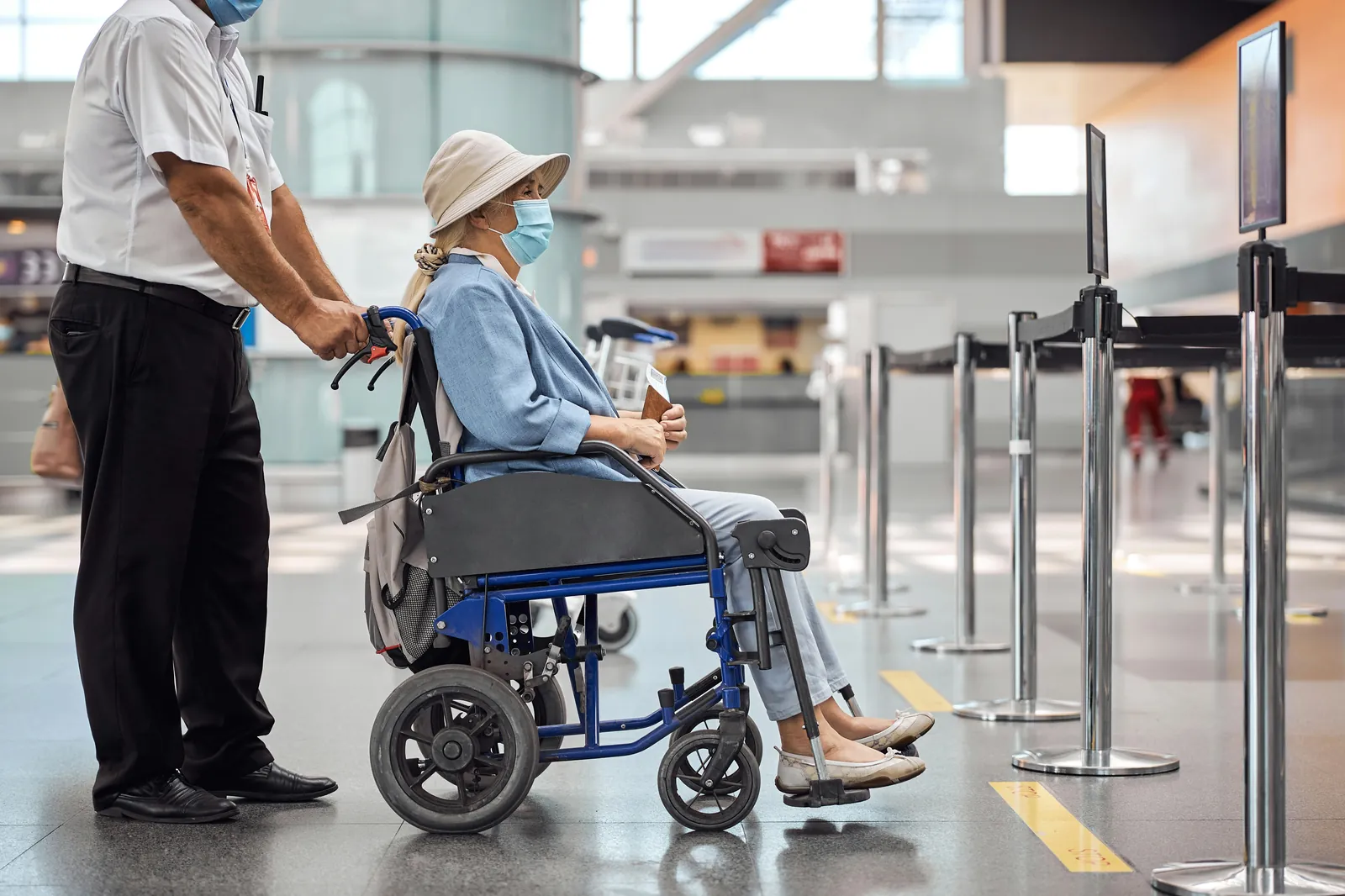
You request a wheelchair at Kathmandu airport through the airline you are flying with, ideally when you book the ticket, and then you ask again at the airline's check-in counter at TIA on the day. The airline arranges the wheelchair and the staff member who pushes it, and the request travels with the booking to the transit and arrival airports.
That is the single most important point in this guide. Families often assume they can simply ask at the terminal door. Sometimes that works, but on a busy festival morning it may mean a long wait, and the request will not have reached the connecting airport or the arrival airport. Booking it in advance means a wheelchair should be waiting at each end.
- Ask at booking. Tell the airline, the airline's ticket office or your ticketing agent that a passenger needs wheelchair assistance, and say which level (see the codes below). Ask for it on every flight in the journey, including the return.
- Get it confirmed. Ask for the request to appear on the booking. Many airlines let you add or check it in "Manage booking" on their website or app.
- Reconfirm a few days before. Flight changes and rebookings can drop special service requests. Call or check online again in the week of travel.
- Ask again at TIA check-in. Tell the check-in agent that assistance is booked. They will call for the wheelchair and the escort.
- Bring your own walking stick if your parent uses one. Nepal Airlines lists a walking stick for elderly or disabled passengers among the items carried in addition to the cabin bag, according to our Kathmandu packing and baggage guide; check your own airline's rule.
Which wheelchair code should you ask for?
Airlines use three standard codes to describe how much help a passenger needs, and naming the right one avoids confusion at the gate. Qatar Airways and flydubai both publish the same three levels on their assistance pages.
| Code | What it means | Typical parent who needs it |
|---|---|---|
| WCHR | Wheelchair to the aircraft ramp. The passenger can climb aircraft steps and walk to the seat, but cannot manage long walks in the terminal | A parent who walks slowly or tires after a few hundred metres |
| WCHS | Wheelchair up to the aircraft steps or door. The passenger cannot climb steps but can walk to the seat inside the cabin | A parent with bad knees or breathlessness on stairs, important at airports where you board by bus and stairs |
| WCHC | Wheelchair to the cabin seat. The passenger needs help all the way to and from the seat | A parent who cannot walk unaided; airlines may ask for a medical certificate and a companion |
Checked: 4 November 2026, Qatar Airways "Disability and medical" page and flydubai "Wheelchair and mobility assistance" page.
flydubai states that WCHC passengers need a medical certificate in English confirming fitness to fly and a companion in an adjoining seat. If a parent needs that level, ask the airline what it requires at the time of booking, not the week before.
What do the main airlines from Kathmandu ask for?
Each airline sets its own notice period, so check the one on your ticket. The table summarises what the airlines' own pages said on the day we checked.
| Airline | How to request | Notice the airline asks for |
|---|---|---|
| Qatar Airways | At booking, through Manage booking on the website or app, or a Qatar Airways office | Up to 48 hours before departure |
| flydubai | Customer centre or a flydubai travel shop, before checking in online | At least 24 hours before departure |
| Thai Airways | At booking, or through a THAI reservations office | At booking or at least 48 hours before departure |
| Singapore Airlines | Special assistance request on its website | As early as possible; requests within 48 hours of departure or on the day may be delayed |
| Malaysia Airlines | Contact centre, or the special assistance counter at the airport | At least 48 hours before departure for its meet and assist service |
| Nepal Airlines, Himalaya Airlines and others | Airline office, ticketing agent or the airline's contact centre | We did not find a published notice period on 4 November 2026; ask at booking and confirm at check-in |
Checked: 4 November 2026, Qatar Airways disability and medical page, flydubai wheelchair and mobility assistance page, Thai Airways "Traveling with a wheelchair" page, Singapore Airlines mobility aids page, Malaysia Airlines MHguardian senior citizens page.
Is there a priority queue for senior citizens at TIA?
TIA has announced priority handling for senior citizens, and our earlier airport guide recorded priority queues for elderly and disabled passengers on TIA's own FAQ page, but we could not reload the official TIA or immigration pages on 4 November 2026, so treat the queue as helpful rather than guaranteed and rely on the airline's assistance instead.
Here is what we could confirm:
- The Himalayan Times reported in September 2019 that TIA was preparing priority check-in, immigration and baggage handling for senior citizens, sick passengers and passengers with disabilities, plus a separate resting area, following directions from the tourism ministry.
- Our Kathmandu airport international departure guide records priority queues for these groups on TIA's FAQ, and a separate counter for passengers above 70 on the Department of Immigration's TIA departure page. We could not reload either official page on 4 November 2026, so ask on the day.
In practice, a parent travelling with wheelchair assistance is taken through check-in, emigration and security by the escort, which removes most of the queueing anyway. If you are not using a wheelchair, ask the airline check-in staff and the immigration officers where the priority line is on the day.
One TIA rule matters for families: relatives seeing parents off cannot go far inside the departure terminal, so the hand-over to airline staff happens near the entrance. Our departure guide explains the entrance rules, the embarkation card and the immigration folder in detail. If either parent has never flown, also walk them through our first time flight tips, which explain the order of the airport day in plain steps.
What happens at the transit airport and on arrival?
If assistance is on the booking, staff should meet your parent at the aircraft door at the transit airport and on arrival, and take them to the next gate or through immigration and baggage. Singapore Airlines says its meet-and-assist team helps from check-in to boarding and from disembarkation to the arrival hall, and that wheelchairs are available at information counters at Changi Airport.
Big hubs involve long distances between gates. If your route connects in Singapore or Kuala Lumpur, read our guides to Singapore Changi Airport and KLIA for Nepali travellers so you know the terminal layout before your parents land there. Choose a connection time that leaves room for a wheelchair escort, not the shortest one the booking system allows.
Can elderly parents fly alone from Kathmandu?
Yes, elderly parents can fly alone from Kathmandu, and many Nepali parents do so every year to visit children abroad; the key is to book airline assistance even if they walk well, because the escort guides them through each step and removes the language and signage problem.
Some airlines offer a dedicated escort service. Malaysia Airlines describes its MHguardian service for senior citizens as a ground handling assistant who accompanies the passenger from before departure until they exit the arrival airport, including immigration, customs, security and the gate. Its page did not state a minimum age or whether a charge applies, so ask the airline directly.
For a parent travelling alone, prepare the following:
- One document folder, held in the hand, never in the checked bag: passport, printed ticket, printed hotel or host address, visa or entry approval, insurance certificate and the emergency contact card described later in this guide.
- A note in English that says where they are going, who is meeting them and a phone number, which they can show to any airline staff member.
- A charged phone with roaming or an eSIM set up, and the family's numbers saved under clear names.
- Medicines in the cabin bag, enough for the flight plus a delay, with the doctor's letter in the folder.
- Someone waiting at arrivals who knows the flight number and can track it.
Diaspora families flying parents out to the Gulf, Malaysia, Australia, Europe or North America should also check two things early: the host country's visa rules for the parent's passport, and whether a Nepali travel policy covers that country (some policy areas exclude the USA and Canada, for example). Both points are covered in the insurance section below.
What should parents carry for medicines?

Parents should carry every regular medicine in its original labelled packaging, in the cabin bag, with a doctor's letter or prescription listing the generic names, and enough supply for the whole trip plus a few days' delay; how much spare to take, and how to time doses across time zones, is a question for their doctor.
Ask your doctor first. Book an appointment around a month before travel and ask: is my parent fit for this flight and this climate, do any medicines need adjusting for travel, how should doses be timed across the time difference, what should we carry for common problems such as stomach upsets, and would compression stockings or other precautions help on the flight? Write the answers down and keep them in the document folder. Do not change any medicine or dose without that conversation.
Medicine packing checklist
| Item | Why |
|---|---|
| All regular medicines in original labelled boxes or strips | Customs officers and pharmacies abroad can read the name and strength |
| Doctor's letter or prescription in English, with generic names | Brand names differ by country; several destinations ask for a prescription or doctor's letter |
| Medicines in the cabin bag, split between two cabin bags if two people travel | A delayed checked bag should never leave a parent without medicine |
| A daily pill organiser for the trip, with the original packs carried as well | Easier to take medicines on time when routines change; the packs prove what they are |
| Insulin, injections or inhalers declared at security | Qatar Airways reminds diabetic passengers to carry their insulin if needed; ask your airline how it handles needles and liquid medicines |
| Copies of recent test reports for a heart, kidney or diabetic condition | Speeds up treatment if a parent sees a doctor abroad |
| Blood pressure or sugar monitor if used at home | Daily readings help you notice a problem early |
| A photo of every medicine pack and the letter, saved on your phone | A backup if the folder is lost |
Which countries have rules on medicines you bring in?
Most destinations allow a reasonable personal supply of ordinary prescription medicines, but some restrict medicines that contain controlled substances, such as certain strong painkillers, sleeping tablets, anti-anxiety medicines or cough syrups with codeine. If your parent takes anything in these groups, check the official rule before booking.
| Destination | What the official source says | Where to check |
|---|---|---|
| Singapore | Up to 3 months' supply is allowed if the medicine needs no approval and is not prohibited; medicines containing controlled substances need approval, and applications should be made at least 2 weeks before arrival; carry a copy of the prescription or doctor's letter and keep medicines in original labelled containers | Health Sciences Authority (HSA), personal medications page |
| Thailand | A 30-day supply for personal use is allowed if the medicines stay in their original, clearly labelled packaging; a controlled substance must come with a prescription or doctor's letter; for narcotic or psychotropic medicines, 30 days' supply with a prescription is allowed, and larger amounts (up to 90 days) need a Thai FDA permit (Form IC-2) obtained at least 15 days before travel | Tourism Authority of Thailand news release on the Thai FDA guidelines |
| UAE (Dubai, Abu Dhabi) | Narcotic and controlled medicines are regulated by the Ministry of Health and Prevention (MOHAP), which runs an online "Issue of Permit to Import Medicines for Personal Use" service and links a controlled and semi-controlled medicines list; travellers without prior approval must declare narcotic and controlled medicines at the port of arrival and show the prescription and medical report | MOHAP service page; Dubai government controlled medicines page |
| Other destinations | Rules differ; check the national health or drug authority, or ask the embassy of that country | Official government site of the destination |
Checked: 4 November 2026, Singapore HSA personal medications page, TAT News (Thai FDA traveller guidelines), MOHAP permit service page and Dubai.ae controlled medicines page (last modified 14 April 2026).
These rules are about what you may bring into a country. They are not advice on whether a medicine is right for your parent, which only their doctor can decide. For the general items that belong in the cabin bag and the liquids rule at security, see the packing and baggage guide linked in the wheelchair section above.
How do you choose flights and seats for older travellers?
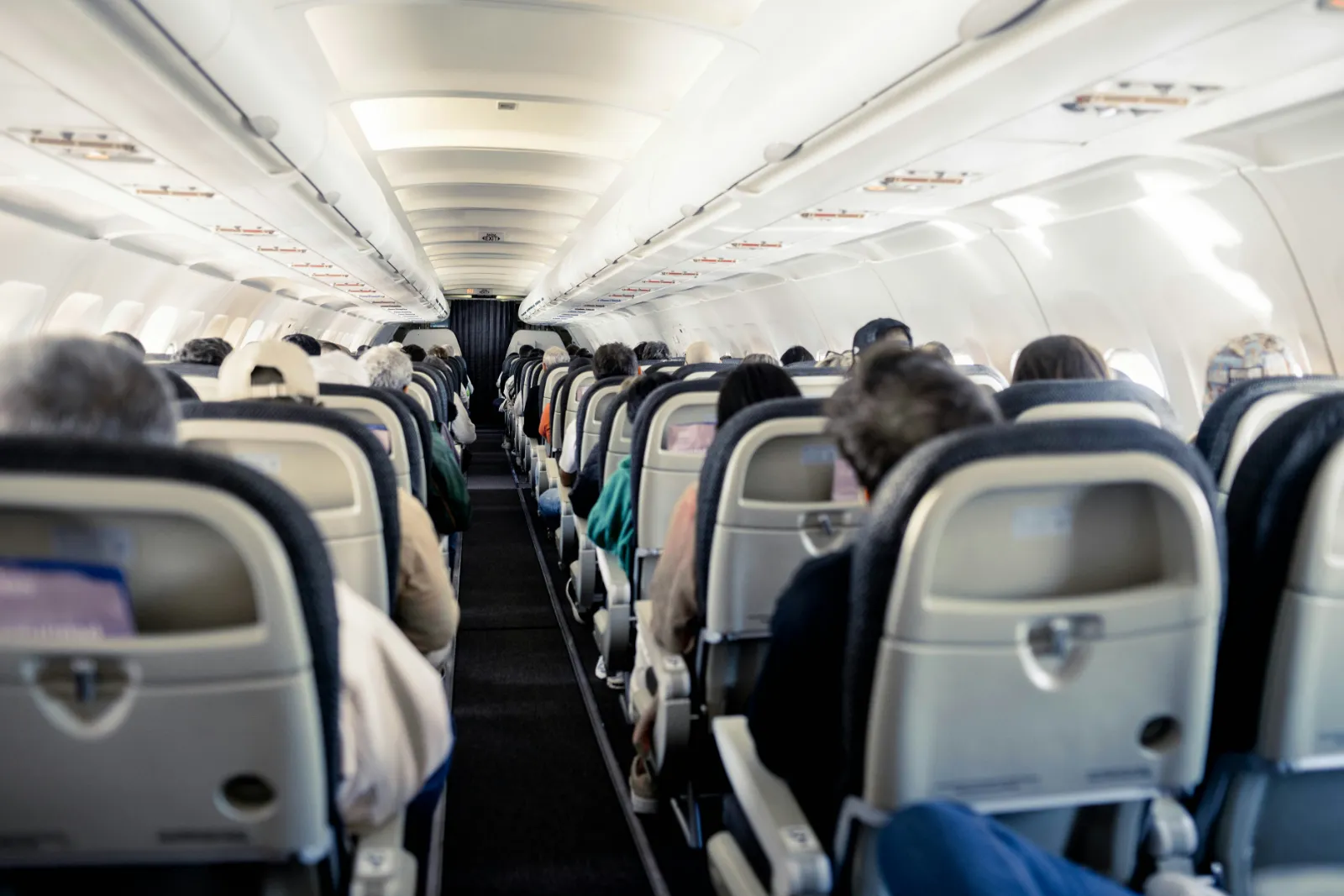
For older travellers, choose a non-stop flight from Kathmandu where one exists, a daytime departure rather than a late night one, and an aisle seat close to the toilets; avoid tight connections, overnight layovers and the emergency exit rows, which airlines do not allocate to elderly or frail passengers.
Non-stop, one stop and timing
- Non-stop where possible. Every connection adds a walk, a security check and a chance of a missed flight. Kathmandu has non-stop flights to Delhi, Bangkok, Colombo, Kuala Lumpur, Dubai, Doha and Singapore, among others.
- One ticket for connections. If a stop is unavoidable, book the whole journey on one ticket so bags are checked through and the airline rebooks a missed connection. Separate tickets mean collecting bags and checking in again, which is hard work for a parent.
- Daytime over red-eye. A late night departure followed by a morning arrival costs a full night's sleep, which older travellers take longer to recover from.
- Generous connection times. Allow for a wheelchair escort, toilet stops and slow walking at the hub.
- Arrive early at TIA. Airlines generally recommend about three hours before an international departure; leave extra time at festival peaks.
Which seats work best?
| Seat | Good for | Watch out for |
|---|---|---|
| Aisle seat | Getting up to stretch or use the toilet without climbing over others | Trolleys and passing passengers; elbows on the aisle side |
| Seats near the toilets | Parents who need the toilet often | Queues and light; ask for a row a few rows away rather than right beside it |
| Bulkhead (first row of a section) | No one reclining into the parent; easier to stand up | Armrests may not lift, and bags must go in the overhead bin for take-off and landing |
| Seats over the wing | Nervous flyers; turbulence is usually felt less over the wing | Check it is not an exit row |
| Companion in the next seat | Help with meals, forms and medicines | Book seats together at the same time as the ticket |
| Emergency exit rows | Not suitable | Airlines exclude elderly and frail passengers and anyone who needs assistance |
Qatar Airways states that exit row seats are offered only to able-bodied adults who can help in an evacuation and lists "passengers who are elderly and frail" among those who will not be given them. It also says an escort should sit immediately next to the passenger they are assisting. Korean Air's exit seat rules similarly name senior passengers as an example of people who should not sit there.
Checked: 4 November 2026, Qatar Airways seat request rules (trade portal) and Korean Air exit seat restrictions.
Which special meals can you request?
Airlines offer special meals for diabetic, low salt, low fat, bland and vegetarian diets, requested at least 24 hours before departure on the airlines we checked, and 32 hours on Singapore Airlines flights from Kathmandu. Our first time flight guide makes the same point: special meals are requested when you book, not on board.
| Code | Meal | Who it may suit |
|---|---|---|
| DBML | Diabetic meal, low in sugar | Parents managing diabetes (ask their doctor what suits them) |
| LSML | Low salt meal | Parents told to limit salt |
| LFML | Low fat or low cholesterol meal | Parents on a low fat diet |
| BLML | Bland meal of light, easily digested food | Parents with gastric problems |
| AVML | Asian vegetarian meal with Indian sub-continent flavours, may be mildly spicy | Vegetarian parents who want familiar flavours |
| VJML | Indian vegetarian meal prepared to Jain dietary practice, which avoids onion, garlic and other root vegetables | Parents who avoid onion and garlic |
| HNML | Hindu non-vegetarian meal, no beef | Parents who eat meat but not beef |
Checked: 4 November 2026, Qatar Airways special meals page (request at least 24 hours before departure) and Singapore Airlines special meals page (at least 24 hours in general, 32 hours from Kathmandu and Bangkok, 56 hours from Delhi and Mumbai). Codes and descriptions vary slightly by airline; Singapore Airlines uses AVML for its Indian vegetarian meal and a separate VOML code for an Oriental vegetarian meal.
A diabetic meal does not replace your parent's own routine. Pack familiar snacks they are allowed to eat, because meal service times rarely match a home schedule, and ask the doctor what to carry in case a meal is late.
When should you book around Dashain and Tihar?
Dashain and Tihar are the busiest weeks of the year for flights out of Kathmandu, because outbound holiday demand and diaspora travel peak together, so book early and ask for assistance at the same time. A family trip in the days right after Tika or Bhai Tika often means full flights, long queues at TIA and fewer seat choices together. If your parents' health allows a choice of dates, travelling just before the festival rush or in the quieter weeks afterwards makes the airport day easier.
Which hotels and activities are easy on the legs?
Hotels that are easy on the legs have a lift, a room close to it, a walk-in shower or grab rails, and a taxi stand at the door; activities that are easy on the legs are flat, shaded or indoors, close to a toilet and short enough to finish before parents tire. The table below is the checklist to send the hotel or your booking contact before you confirm.
Hotel checklist for elderly parents
| Ask about | What you want to hear |
|---|---|
| Lift | A lift to every floor, including from the lobby and the breakfast area |
| Room location | A low floor or a room close to the lift, not at the end of a long corridor |
| Bathroom | Walk-in shower rather than a bathtub, grab rails, a non-slip floor; ask for a shower chair if needed |
| Beds | Two separate beds if parents sleep better apart; a bed that is not too low |
| Steps at the entrance | A ramp or level entry; no long flights of stairs to reach reception |
| Transport | Taxis or ride hailing at the door; a station within a short, flat walk |
| Food | Breakfast with plain options such as rice, porridge, eggs or vegetarian dishes; Indian restaurants nearby |
| Help at night | A 24-hour reception and the nearest hospital or clinic noted |
| Location | Central enough that parents can return to rest in the afternoon |
Pacing the days
- One main outing a day, in the morning, with the afternoon free for rest. Older travellers rarely enjoy a second big sight after lunch.
- Start early in hot countries. Bangkok, Kuala Lumpur, Singapore and Dubai are hot and humid for much of the year; outdoor sights are easier before mid-morning.
- Taxi over train when tired. Ride hailing door to door often saves more energy than it costs.
- Water and toilet stops. Plan them into the day; dehydration makes dizziness and falls more likely.
- A rest day after the flight, especially after a one-stop journey.
Easy and hard sights at a glance

| Sight | Effort | What to know |
|---|---|---|
| Gardens by the Bay, Singapore | Easy | The Flower Dome is flat and cool; wheelchairs can be rented on site; see our Gardens by the Bay guide |
| Singapore public transport | Easy | The Land Transport Authority says all train stations and bus interchanges have barrier-free access routes, all public buses and trains are wheelchair accessible, and priority queue zones with seats exist at bus interchanges and MRT stations |
| Burj Khalifa observation deck, Dubai | Easy | Lifts do the climbing and the decks are enclosed and air-conditioned; the entrance is inside The Dubai Mall and the walk from the metro is long, so take a taxi to the mall; the mall lists wheelchairs among its guest services |
| Batu Caves, Kuala Lumpur | Hard | 272 steep steps to the Temple Cave and no confirmed lift or escalator; the statue and ground level shrines are flat |
| Sigiriya, Sri Lanka | Hard | Roughly 1,200 steps with steep metal stairs near the top; the gardens at the base are gentle |
| Bali temples | Moderate to hard | Many involve steps, uneven paths and heat; choose one or two rather than a full day circuit |
Checked: 4 November 2026, Land Transport Authority (LTA) "An inclusive public transport system" page; attraction details from Gomayu's destination guides, each checked on its own date.
Are Thai temples hard to walk?
Thai temples are not hard because of steps so much as because of size, heat and crowds: the Grand Palace complex in Bangkok involves a lot of walking on hot paving, and at Wat Arun visitors can reach the lower terrace of the central prang while the steepest upper stairs are kept closed. Go early, take water and an umbrella for shade, and let parents sit while younger family members explore further. Dress codes at major Thai temples ask for covered shoulders and knees, so pack light, loose clothing that also keeps parents cool. Our list of places to visit in Bangkok covers the main temples one by one.
What insurance and documents should you check?
Check the insurer's age limit before anything else, because the Nepali travel medical policies we checked accept travellers only up to 70 years old at the start of the policy; then declare every existing condition, confirm the policy area covers every country on the route, and keep the 24-hour assistance number with the family as well as the parent.
Sanima GIC Insurance's travel medical page says the product is "available for Nepali residents up to 70 years old at the time of purchase", and defines a pre-existing condition as any sickness treated, medicated or advised on in the 24 months before buying the policy. Our guide to travel insurance from Nepal found the same 70 and under limit in the Shikhar, SALICO and United Ajod wordings when it checked them on 12 October 2026, and noted that some wordings restrict personal accident benefits after 65.
Checked: 4 November 2026, Sanima GIC travel medical product page. Shikhar Insurance's product page did not state an age limit when we checked it; our insurance guide found the limit in its proposal form.
| Check | Why it matters for parents |
|---|---|
| Age at the start of the policy | If a parent is over the insurer's limit, ask the insurer in writing whether any cover exists before you pay for flights |
| Every condition declared | An undeclared condition can void a claim; regular medicines usually point to a condition that must be declared |
| How declared conditions are treated | Many policies exclude them; get the answer in writing |
| Policy area | Some area structures exclude the USA and Canada unless you choose the worldwide area that includes them |
| Medical evacuation and repatriation | Older travellers are more likely to need a medically escorted return |
| Family member benefit | Some policies help a relative fly out if a parent is in hospital for several days |
| Assistance company number | Call before treatment where you can; save it on every family phone |
| Who holds the documents | A younger family member should keep copies of the policy and know how to claim |
Insurance is worth more for older travellers than for anyone else, and it is also hardest to arrange for them, so start early. Our explainer on whether travel insurance is worth it walks through the cases where it pays off. Diaspora children buying cover for visiting parents should note that a Nepali policy is written for residents of Nepal travelling out and back; a policy bought abroad may have different eligibility rules.
Documents folder for each parent
- Passport, with validity checked against the destination's rule
- Visa, travel authorisation or arrival card confirmation for their passport (Nepali passport holders can check our visa pages; other passports should check the official site for their passport)
- Printed return ticket and hotel or host address
- Insurance certificate with the assistance phone number
- Doctor's letter, prescriptions and recent reports
- Embarkation card for TIA, filled in with a pen they have with them
- The emergency contact card (template below)
- Photos of all of the above on a family member's phone
What should you do if a parent feels unwell abroad?
If a parent feels unwell abroad, call the local emergency number at once for anything serious such as chest pain, breathing trouble, a fall with injury or sudden confusion, then call the insurer's assistance line; for milder illness, call the assistance line first, because many insurers want to approve or arrange treatment before it starts.
- Get help on the spot. Hotel reception, airline staff or tour staff can call an ambulance and explain the address in the local language.
- Call the insurer's assistance company. Give the policy number, the hospital name and what happened. Sanima GIC and United Ajod both name Global Response as their 24-hour assistance company.
- Bring the folder. Passport, insurance certificate, doctor's letter and the medicine packs all help the treating doctor.
- Keep every paper. Medical reports, bills, receipts and the discharge summary are needed for any claim back in Nepal.
- Tell the airline if the return date changes. If a parent needs a medical clearance or a wheelchair to fly home, ask the airline what it requires; Qatar Airways, for example, uses a medical information form (MEDIF) for passengers who need medical oxygen on board.
- Contact the Nepali embassy or consulate for the country if a passport is lost or the situation is serious; find the nearest mission on the Ministry of Foreign Affairs of Nepal website before you travel.
Emergency numbers to save before you land
| Country | Ambulance or medical emergency | Other useful numbers |
|---|---|---|
| Thailand | 1669 (National Institute of Emergency Medicine) | 1155 Tourist Police; 191 general emergency line |
| Singapore | 995 (emergencies only) | 1777 for a non-emergency ambulance |
| UAE | 998 | 999 Police; 997 Civil Defence |
| Other countries | Check the official tourism or government site before travel | Save the hotel's phone number and address in the local script |
Checked: 4 November 2026, Thailand government public relations page (thailand.go.th), Singapore Civil Defence Force (SCDF) emergency medical services page, UAE government portal (u.ae) handling emergencies page.
Emergency contact card template
Print one card per parent, fill it in by hand in English, and keep it in the passport cover. Take a photo of it for the family group chat.
| Field | What to write |
|---|---|
| Name (as in passport) | Full name and date of birth |
| Languages | For example "Speaks Nepali and Hindi, a little English" |
| Medical conditions | As written in the doctor's letter |
| Allergies | Medicines and foods |
| Regular medicines | Generic names, as on the prescription |
| Travelling with | Name and mobile number of the companion |
| Family contact in Nepal | Name, relationship, mobile number with country code |
| Family contact abroad | Name, relationship, mobile number with country code |
| Hotel or host address | In English and, if possible, in the local script |
| Insurance | Insurer, policy number, 24-hour assistance number |
| Doctor in Nepal | Name, clinic and phone number |
Keep family at home in the loop

A short daily video call with the family at home is a simple safety habit. It lets brothers and sisters see that parents are well, and it gives a second set of eyes on tiredness or confusion that the travelling companion may miss. Share the flight numbers, the hotel addresses and the insurance details with at least one person in Nepal before you leave.
How did we check these facts?
Every rule in this guide was taken from an official airline, government or insurer page, or from a Gomayu guide that names its own sources and check date. We did not include anything we could not source.
- Wheelchair levels and notice periods: the assistance pages of Qatar Airways, flydubai, Thai Airways, Singapore Airlines and the Malaysia Airlines MHguardian page.
- TIA priority services: The Himalayan Times, September 2019 and Gomayu's departure guide; the TIA website did not load for us on 4 November 2026.
- Special meals: Qatar Airways special meals and Singapore Airlines special meals.
- Seats: Qatar Airways seat request rules and Korean Air exit seat restrictions.
- Medicines: Singapore HSA, TAT News on the Thai FDA guidelines, UAE MOHAP and Dubai.ae.
- Insurance age limit: Sanima GIC travel medical insurance and Gomayu's insurance guide.
- Singapore entry and transport: ICA visa requirements and the LTA inclusive public transport page.
- Emergency numbers: thailand.go.th, SCDF and u.ae.
Airline and government rules change without notice. Treat every table here as a starting point dated 4 November 2026, and confirm the rule on the airline's or authority's own page in the week you book.
Frequently asked questions
How do I book a wheelchair at Kathmandu airport?
Book a wheelchair at Kathmandu airport through your airline, not the airport: ask when you buy the ticket or in Manage booking, name the level (WCHR, WCHS or WCHC), and confirm again at the TIA check-in counter. Airlines such as Qatar Airways and Thai Airways ask for at least 48 hours' notice, and flydubai for 24 hours.
Is there a priority queue for senior citizens at TIA?
TIA announced priority check-in, immigration and baggage handling for senior citizens in 2019, and its FAQ has listed priority queues for elderly passengers, but we could not reload the official page on 4 November 2026. The reliable route is airline wheelchair or special assistance, whose escort takes parents through the queues at Kathmandu.
Can elderly parents carry their medicines abroad?
Yes, elderly parents can usually carry a personal supply of their regular medicines abroad in original labelled packaging with a prescription or doctor's letter. Some countries limit quantities or need a permit for controlled medicines: Singapore allows up to 3 months' supply of medicines needing no approval, and Thailand allows 30 days of non-controlled medicines. Ask your doctor about anything controlled.
Which country is easiest for elderly travellers from Nepal?
For elderly travellers from Nepal, India is easiest on paperwork and food, while Singapore is easiest on the legs: a non-stop flight of about 5 hours 10 minutes from Kathmandu, barrier-free public transport, indoor sights and vegetarian South Asian food. Dubai and Kuala Lumpur also suit parents who prefer short car journeys and air-conditioned attractions.
Do airlines give special meals for diabetics?
Yes, airlines flying from Nepal and onwards offer a diabetic meal, coded DBML, prepared without added sugar. Qatar Airways and Singapore Airlines both ask for special meals at least 24 hours before departure, and Singapore Airlines asks for 32 hours on flights from Kathmandu. Request it at booking and pack snacks your parent's doctor approves in case meal times shift.
Can elderly parents travel alone on international flights?
Yes, elderly parents can travel alone on international flights from Kathmandu, and many Nepali parents fly alone to visit children abroad. Book wheelchair or meet and assist service even if they walk well, give them one document folder and an English note with the address, and have someone tracking the flight at arrivals. Malaysia Airlines offers an escort service called MHguardian.
Is travel insurance available for people over 70?
Travel insurance for people over 70 is hard to find in Nepal: Sanima GIC says its travel medical cover is for Nepali residents up to 70 years old at purchase, and other Nepali wordings we checked use the same limit. If a parent is older, ask insurers in writing whether any cover exists before you book the trip.
Which seats are best for older passengers?
The best seats for older passengers are aisle seats a few rows from the toilets, with a companion in the next seat. Bulkhead seats give more space to stand up but often have fixed armrests. Emergency exit rows are not allowed: Qatar Airways, for example, does not give exit seats to elderly and frail passengers.
Are Thai temples hard to walk for elderly people?
Thai temples are tiring for elderly people mainly because of size, heat and crowds rather than steep climbs. The Grand Palace in Bangkok involves long walks on hot paving, and at Wat Arun visitors use only the lower terrace because the steepest stairs are closed. Visit early in the morning, take water and plan rest stops.
Do elderly parents need a medical certificate to fly?
Most elderly parents do not need a medical certificate just to fly or to use a wheelchair. Airlines may ask for one in specific cases: flydubai requires an English fitness to fly certificate for full wheelchair-to-seat assistance, and Qatar Airways uses a medical form for passengers who need oxygen. After recent illness or surgery, ask your doctor and the airline.
Buwa aama lai bidesh lada k k garne?
When taking Buwa and Aama abroad from Nepal, book the airline's wheelchair or special assistance with the ticket, see their doctor a month before and carry medicines in original packs with a letter, choose a short non-stop flight, check the insurance age limit, and keep one document folder plus an emergency contact card with each parent.