+977-9768558250
Explore by Country
See all 22 Thailand packages
Most popular pick
See all 22 Thailand packages →
See all 11 Vietnam packages
Most popular pick
See all 11 Vietnam packages →
See all 10 Indonesia (Bali) packages
Most popular pick
See all 10 Indonesia (Bali) packages →
See all 7 Maldives packages
Most popular pick
See all 7 Maldives packages →
See all 10 China packages
Most popular pick
See all 10 China packages →
See all 13 Sri Lanka packages
Most popular pick
See all 13 Sri Lanka packages →
See all 9 Malaysia packages
Most popular pick
See all 9 Malaysia packages →
See all 8 Singapore packages
Most popular pick
See all 8 Singapore packages →
See all 2 Kenya packages
Most popular pick
See all 2 Kenya packages →
See all 16 India packages
Most popular pick
See all 16 India packages →
See all 3 Dubai packages
Most popular pick
See all 3 Dubai packages →
See all 7 Nepal packages
Most popular pick
See all 7 Nepal packages →
See all 6 Philippines packages
Most popular pick
See all 6 Philippines packages →
Search Tours or Places
Blog / India

Best Beaches in Goa: Calangute, Palolem and Quieter Coves

30 min read 28 Oct 2026
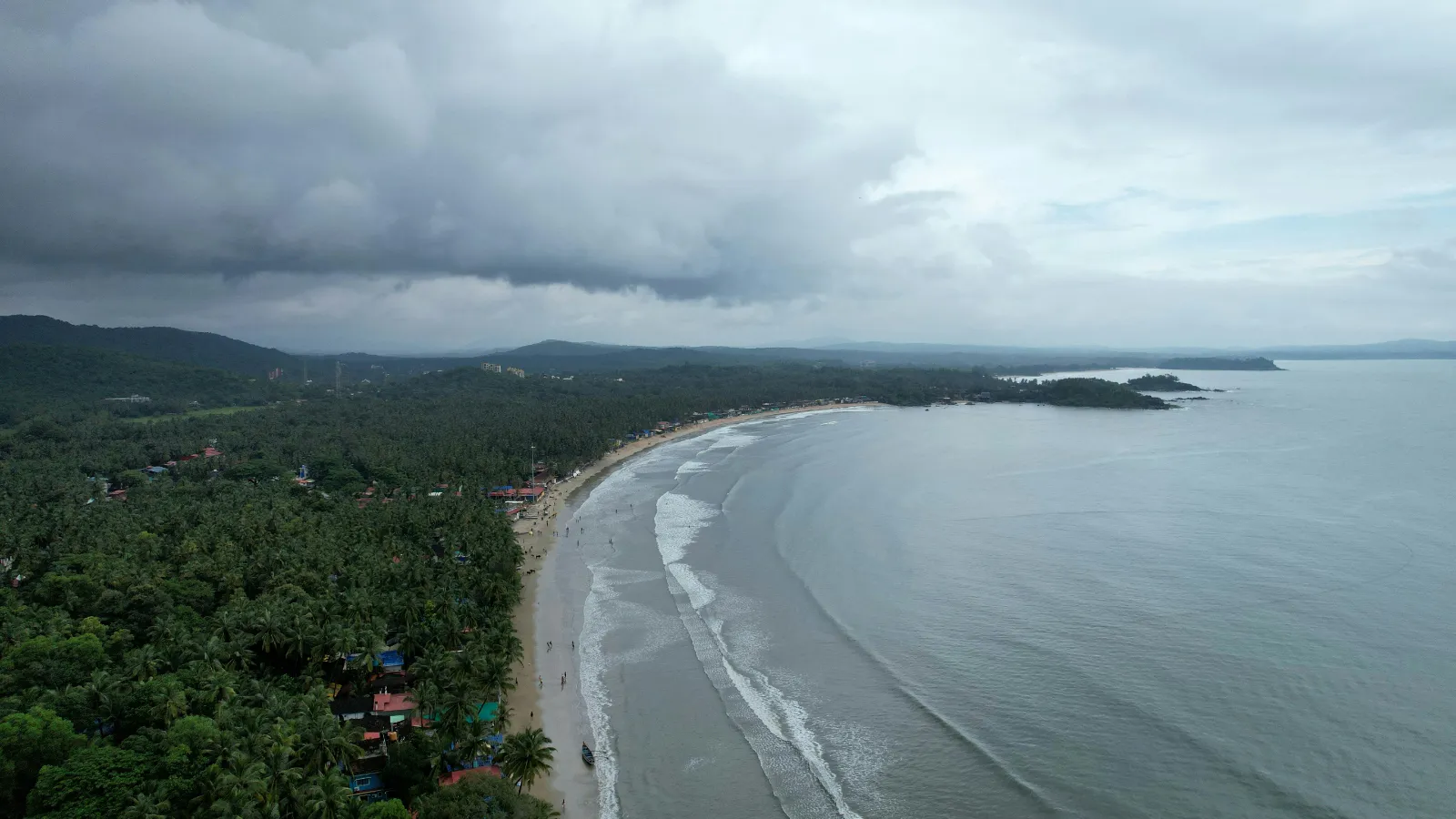
Aerial view of the crescent shaped Palolem Beach and its green hills in South Goa

Short answer: The best Goa beaches depend on the holiday you want. Calangute and Baga are the busiest, with water sports, shacks and nightlife close by. Anjuna and Vagator add cliffs, cafes and a party edge. Morjim and Arambol in the far north are slower and more bohemian. In the south, Palolem is the easy all rounder for couples and families, while Agonda, Cola and Benaulim are quieter. Swim only in lifeguard swim zones, stay out of the sea during the June to September monsoon, and come between November and February for the full shack season.

This guide goes beach by beach. For each one you get the feel of the place, how crowded it gets, what the water is usually like for swimming and who it tends to suit, so couples, honeymooners, friends and families can pick the right stretch of sand before they book a room. Everything about sea safety and seasons is checked against Goa government and Drishti Marine lifesaver sources, with dates beside anything that changes.

What this post does not do is repeat the bigger planning decisions. Whether to base yourself in North or South Goa, what to do away from the beach, and how to get to Goa are all covered in our complete Goa travel guide, and if Goa is one stop on a longer trip, start with the India travel guide for first time visitors.

Which are the best beaches in Goa?

Eleven beaches cover almost every kind of Goa holiday: Calangute, Baga, Anjuna, Vagator, Morjim and Arambol in the north, and Palolem, Agonda, Cola, Colva and Benaulim in the south. They are not interchangeable. A family that books Baga expecting a quiet sandcastle morning will be disappointed, and a group of friends that ends up in Agonda may wonder where everyone went.

Goa's whole coastline faces west onto the Arabian Sea, so every beach on this list has a sunset over water. The differences are in crowd levels, how much happens behind the sand, how the sea behaves and how far you are from everything else. If you are comparing Goa with Kerala, Gokarna or the Andaman Islands, our round up of the best beaches across India puts Goa in that wider picture.

The table below is a quick shortlist. Crowd levels describe the November to February peak season; swimming notes describe a normal dry season day and always depend on the flags on the day.

BeachAreaVibeCrowd level (peak)Swimming on a normal dry season dayBest for
CalanguteNorth (Bardez)Busy, commercial, lots of water sportsVery highPossible in marked swim zones; the bottom can drop suddenlyFirst timers, groups, families who want facilities
BagaNorth (Bardez)Shacks by day, clubs and bars by nightVery highPossible in marked swim zones; rip currents occurFriends, nightlife, water sports
AnjunaNorth (Bardez)Rocky, cafes, flea market, party historyHighLimited; rocky shore, not a swimming beachCafes, market day, sunset drinks
VagatorNorth (Bardez)Red cliffs, Chapora Fort, sunset barsMedium to highCalm on good days, but known rip spotsCouples, photographers, sunset seekers
MorjimNorth (Pernem)Wide, flat, quiet, turtle nestingLow to mediumSwim zone in season; respect nesting areasCouples, long stays, nature lovers
ArambolNorth (Pernem)Bohemian, yoga, music at sunsetMediumSwim zone in season; rip currents occurSolo travellers, long stays, remote workers
PalolemSouth (Canacona)Crescent bay, colourful huts, kayaksMedium to highGenerally gentle, shallowest at the north endCouples, honeymooners, families
AgondaSouth (Canacona)Long, quiet, low key, turtle nestingLowPaddling yes; swimming far out is not safeHoneymooners, readers, slow travellers
ColaSouth (Canacona)Hidden cove with a freshwater lagoonLowLagoon for a dip; sea depends on conditionsCouples, a night or two of seclusion
ColvaSouth (Salcete)Big, traditional, popular with Indian familiesHighPossible in marked swim zonesFamilies, easy access, local atmosphere
BenaulimSouth (Salcete)Fishing village, wide sand, calmer than ColvaLow to mediumPossible where lifeguards mark a zoneFamilies, couples, beach walks

Two things are worth knowing before you read on. First, Goa has an official beach lifesaving service, Drishti Marine, which marks swim zones with flags each day; it is covered in detail in the safety section at the end. Second, the shacks that give Goa's beaches their character are seasonal, temporary structures, so a beach in May or September looks very different from the same beach in December.

What is Calangute Beach like?

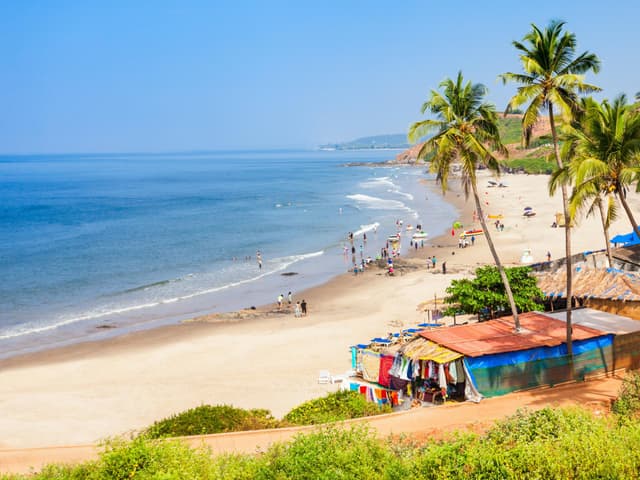
Calangute is Goa's busiest and best known beach: a long, wide stretch of sand in North Goa lined with shacks, sunbeds, water sports counters and hotels, crowded through the day for most of the year. The state government's own beach page calls it the "Queen of Beaches" and notes that it stays busy in peak and off season alike.

Calangute Beach
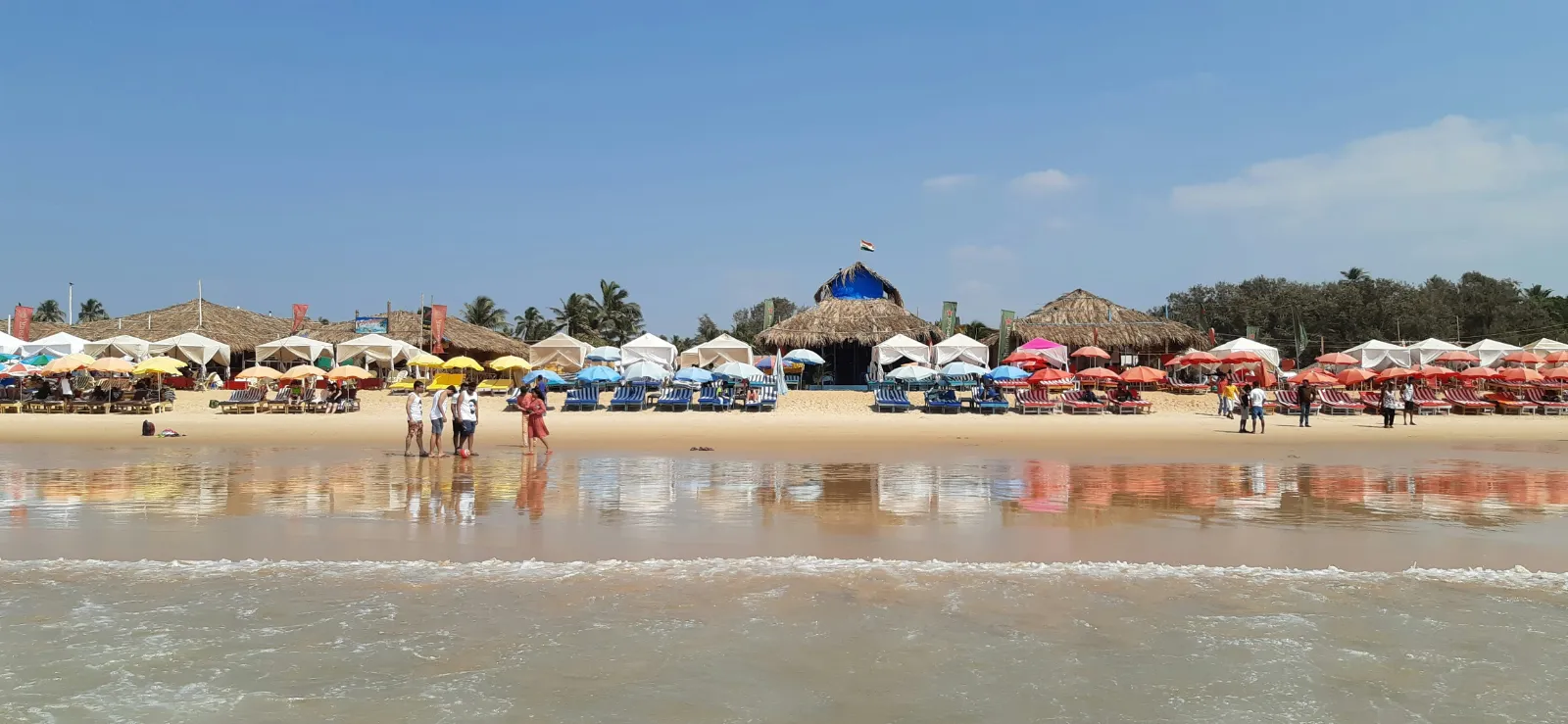
Colourful beach shacks and sunbeds lining the sand at Calangute Beach, Goa

Calangute sits in Bardez taluka, roughly 15 km from Panaji, and the sand runs continuously from Candolim in the south to Baga in the north. The Goa government describes the stretch from Calangute to Baga as lined with hotels, and that is exactly how it feels: there is almost no point on the beach where you are more than a short walk from food, a toilet, a cold drink or a parasailing operator.

That convenience is the reason people choose it. If it is your first trip to Goa, or you are travelling with older parents who want everything close by, Calangute removes most of the logistics. Groups of friends like it because the shacks are lively and the nightlife of Baga is a walk away.

The trade off is crowds. Calangute is heavily used by domestic tourists, especially on weekends, around Christmas and New Year and during Indian school holidays. Expect touts selling boat trips, plenty of noise and a steady stream of people along the waterline. If your picture of Goa is an empty beach, this is not it.

For swimming, the Goa government page warns that Calangute has a sudden drop and rising waves, and that weaker swimmers should take care. Calangute is one of the beaches where Drishti Marine has set up designated swim zones, and lifesavers reported rescues here as recently as March 2026. Swim between the flags, not off the shack you happen to be sitting at.

Calangute at a glanceDetails
FeelBusy, commercial, energetic, family and group friendly
Crowd levelVery high in peak season and on weekends
SwimmingIn marked swim zones only; sudden drop off in places
Water sportsWidely offered in season (parasailing, jet ski, banana boat)
Good forFirst timers, groups, families who want facilities on hand
Less good forHoneymooners after quiet, anyone who dislikes crowds

Is Calangute too crowded? For many people, yes, especially between Christmas and New Year. A simple fix is to stay in Calangute for convenience but walk south towards Candolim in the morning, when the beach is noticeably calmer, and save Calangute's busier central stretch for the evening.
Explore India tour packages
View all →

Are Baga, Anjuna and Vagator good for nightlife or families?

Baga, Anjuna and Vagator are North Goa's nightlife beaches, and they suit friends and couples who want an evening scene more than families with young children. Families can still enjoy them by day, especially Vagator's cliffs and Anjuna's market, but plan to sleep somewhere quieter if early nights matter.

Baga Beach

Yellow beach umbrellas and loungers on the sand at Baga Beach in North Goa

Baga is the northern continuation of Calangute, bounded at its northern end by Baga creek. By day it is a water sports beach, with operators lining the sand. After dark the action moves to the clubs and bars in the lanes just behind the beach, with Tito's Lane the best known name, and the area stays busy late into the night in season.

Baga is a fine choice for a group of friends in their twenties or thirties who want everything in walking distance. For families, the daytime beach is usable, but the noise, traffic and late crowds make it a less relaxing base. Note that Goa's pollution control board says music must stop after 10 pm under India's noise pollution rules, apart from a few notified days a year, although enforcement on the ground varies (Checked: 28 Oct 2026, Source: Goa State Pollution Control Board chairman, reported by The Goan, 21 Jan 2026).

Swimming at Baga works in the marked swim zones. Lifesavers have rescued people caught in rip currents at Baga as recently as March 2026, so it is not a beach where you should wander into the water anywhere you like.

Anjuna Beach

Palm trees leaning over the rocky shoreline at Anjuna Beach in North Goa

Anjuna is less about the sand and more about everything around it. The Goa government describes its fame from the 1960s and early 1970s "flower power" era and later trance parties, and it is still the home of the weekly Wednesday flea market, a long running bazaar of clothes, jewellery, handicrafts and food. Market days are busy; other days are calmer.

The beach itself is rocky in places, with dark rock shelves and small sandy patches. Drishti Marine has in the past not marked a swim zone at Anjuna because of the rocks, so treat it as a place to sit, eat and watch the sunset rather than to swim. Families with small children will find the rocks awkward; couples and friends usually love the cafe scene.

Vagator Beach

Old laterite walls of Chapora Fort above the sea near Vagator in North Goa

Vagator sits below Chapora Fort, a short way north of Anjuna, and is split by a headland into Big Vagator and Little Vagator, which runs into Ozran beach. Incredible India, the national tourism site, describes dramatic red cliffs, sea view bars at Little Vagator where people gather for sunset, and a less crowded scene than Baga and Calangute. The Goa government calls it the most photographed beach in Goa.

Vagator suits couples and anyone with a camera. The walk up to Chapora Fort for the view over the river is a classic late afternoon outing. The water can look calm, but local reporting lists Vagator among the beaches with recurring rip current zones, and rescues have been recorded there, so the same rule applies: swim only where lifesavers have flagged a zone.

QuestionBagaAnjunaVagator
NightlifeStrongest of the three; clubs and bars behind the beachCafe and bar scene, party historySunset bars on the cliffs
Daytime with kidsWorkable, but busy and noisyAwkward; rocky shoreGood for views and the fort walk; watch children near cliffs
SwimmingMarked swim zones; rip currents occurNot a swimming beachCalm on good days; known rip spots
Crowd levelVery highHigh, peaking on market dayMedium to high
Best forFriends, first time party tripsMarket lovers, cafe hoppersCouples, photographers

If you are travelling as a family and still want a taste of this coast, a sensible pattern is to stay further south (Candolim is the calmer neighbour of Calangute) and visit Anjuna on a Wednesday morning and Vagator for one sunset, then head back before the late crowds arrive.

Which quieter northern beaches are worth the trip, such as Morjim and Arambol?

Morjim and Arambol are the two quieter northern beaches most worth the extra drive. They sit across the Chapora river in Pernem taluka, the northernmost part of Goa, and both feel slower and more spacious than the Calangute and Baga strip. Ashwem and Mandrem lie between them and share the same relaxed character.

Morjim Beach

Fisherman silhouetted against the sunset sky on the wide flat sand of Morjim Beach, North Goa

Morjim is a wide, flat beach near the mouth of the Chapora river, with a lot of open sand and far fewer shacks than the busy north. Its most important feature is one most visitors never see: Morjim is one of Goa's Olive Ridley turtle nesting beaches. The Goa government notes that volunteers guard the nests and help hatchlings reach the sea, and in December 2025 The Goan reported the season's first nesting pit at Morjim, with 99 eggs.

Parts of the beach are protected nesting zones under the Goa Forest Department, marked with signboards. If you are staying nearby, keep lights low, do not use flash photography at night near nesting areas, and never touch eggs or hatchlings. Gomantak Times describes nesting as running roughly from October to April, with the season starting later in recent years and sometimes running into May, so check the signboards rather than assuming.

For couples, long stays and anyone who likes walking an uncrowded beach at sunrise, Morjim is one of the most rewarding stops in the north. Drishti Marine has created a designated swim zone at Morjim, and also at Ashwem, so swimming is possible in season between the flags.

Arambol Beach

Arambol Beach and its freshwater lake backed by green jungle in North Goa

Arambol, also called Harmal, is the northernmost of Goa's well known beaches and the closest thing the state still has to its old hippie coast. Gomantak Times calls it "the last bastion of hippies in the North", with yoga, mud baths, hill walks and a near spiritual feel on the sand at sunset. Music and drumming gatherings at sunset are part of Arambol's reputation.

A short walk from the main beach brings you to the Sweet Water Lake, a freshwater lake just inland from the sand, reached along a path lined with shops, cafes and restaurants. Near the hill, the Goa government notes a pool of yellow clay that visitors use as a mud bath. You cannot drive onto the beach itself; you walk down a slope from the village.

Arambol suits solo travellers, long stayers and remote workers, and Gomantak Times notes that many cafes cater to people working online. Accommodation is mostly homestays, apartments and a few boutique or mid range hotels rather than big resorts. Families can enjoy it by day, but it is not a resort beach.

Swimming needs care. Drishti Marine runs a swim zone at Arambol, but in March 2026 lifesavers rescued people caught in rip currents there, including three teenagers who entered a red flagged no swimming area. Stay within the flags. Adventure activities around Arambol and nearby Keri, such as paragliding, are licensed by the state and have been suspended at times after accidents, so ask locally what is operating.

Quiet north beachCharacterSwimmingWho it suits
MorjimWide and flat, turtle nesting zones, few shacksSwim zone in season; avoid nesting areasCouples, nature lovers, long stays
AshwemStylish shacks and cafes, calm feelSwim zone in season; rough days occurCouples wanting comfort with quiet
MandremQuiet, yoga retreats, river and sandLook for a lifesaver tower and flags before swimmingWellness, slow travel
ArambolBohemian, sunset music, Sweet Water LakeSwim zone in season; rip currents occurSolo travellers, remote workers, friends

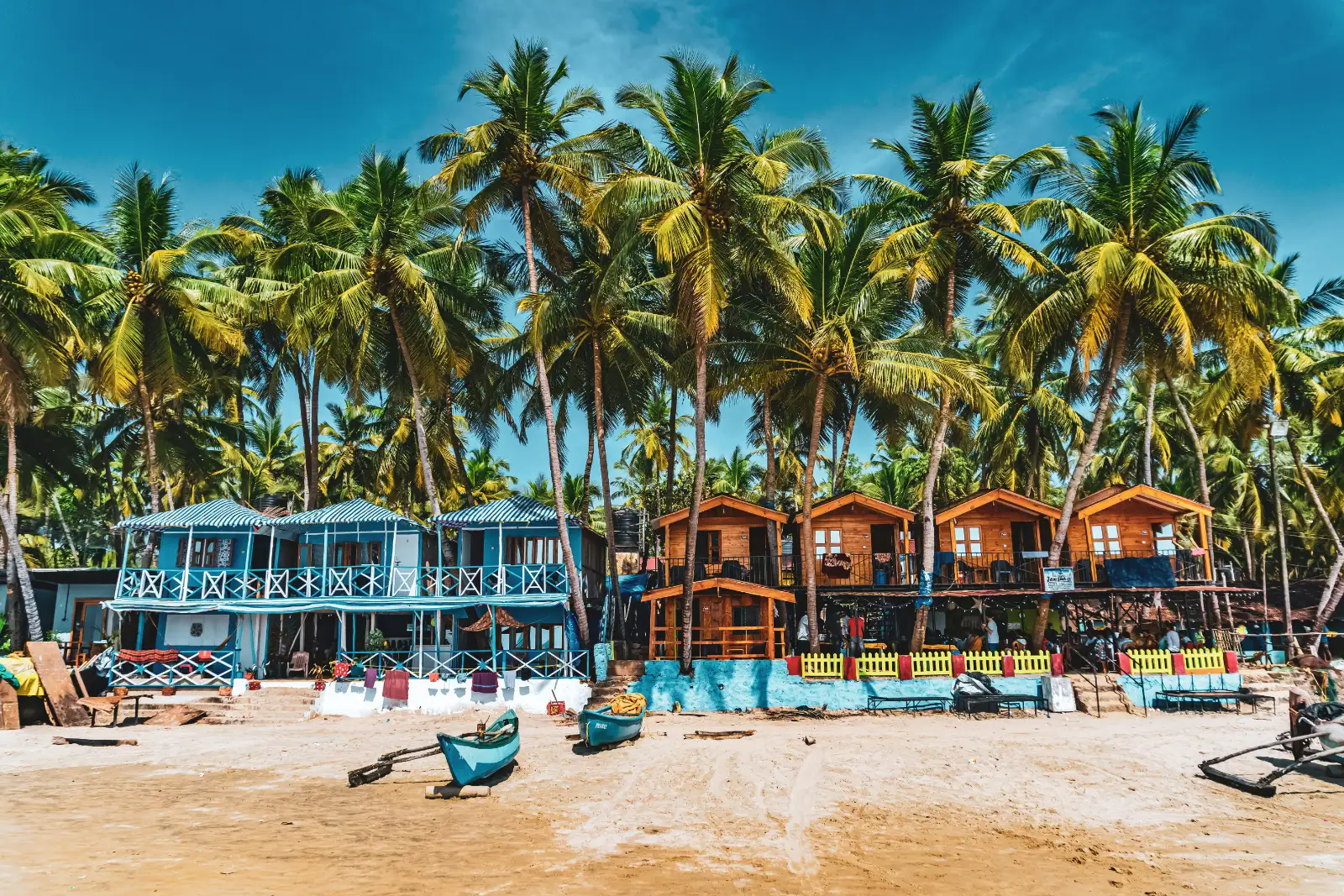
Palolem is popular because it combines the things most people picture when they think of a Goa beach: a sheltered crescent bay, soft sand, palm trees, colourful beach huts, gentle water on most days and enough cafes to stay interesting without the North Goa crowds. It is in Canacona in the far south, roughly 70 km from Panaji according to the Goa government.

Palolem Beach

Colourful beach huts beneath tall coconut palms on Palolem Beach, South Goa

Palolem is a crescent shaped beach about 1.6 km long, with rocky headlands at both ends, so you can see the whole bay from either end. The sea deepens gradually and is shallowest at the northern end, which is why it is often recommended for average swimmers and for families with children who want to paddle. The fishermen who work from the beach offer boat trips, including dolphin spotting, and kayaks are a common way to explore the bay.

From Palolem, boats run to small coves along the coast, the best known being Butterfly Beach, a little cove ringed by forest that is usually reached by a short boat ride from Palolem. Patnem, the next beach to the south, is a quieter alternative if Palolem feels busy.

Palolem is a strong choice for honeymooners and couples who want a pretty beach with good food and some life in the evening, and for families who want calmer water than the north. The Goa government page mentions Palolem's "Silent Noise" headphone parties, a local answer to the 10 pm limit on loud outdoor music; whether they are running depends on the season, so ask locally.

Two notes of caution. Palolem gets busy at Christmas and New Year, when the bay fills with day visitors. And while the water is usually gentle, Gomantak Times lists Palolem among the South Goa beaches with recurring rip current zones, so the flags still matter here.

Palolem at a glanceDetails
Shape and sizeCrescent bay, about 1.6 km, rocky headlands at each end
SwimmingUsually gentle; shallowest at the north end; recurring rip zones exist
Things on the waterKayaks, fishing boat trips, dolphin spotting
Crowd levelMedium most of the season, high at Christmas and New Year
Good forCouples, honeymooners, families, first visit to South Goa
Quieter neighboursPatnem to the south, Agonda to the north

Which quieter southern coves should you consider, such as Agonda, Cola and Benaulim?

If you want South Goa at its quietest, Agonda, Cola and Benaulim are the beaches to look at, with Colva as the busier, more traditional option close by. They are spread out along the coast, so pick one as your base rather than trying to stay on all of them.

Agonda Beach

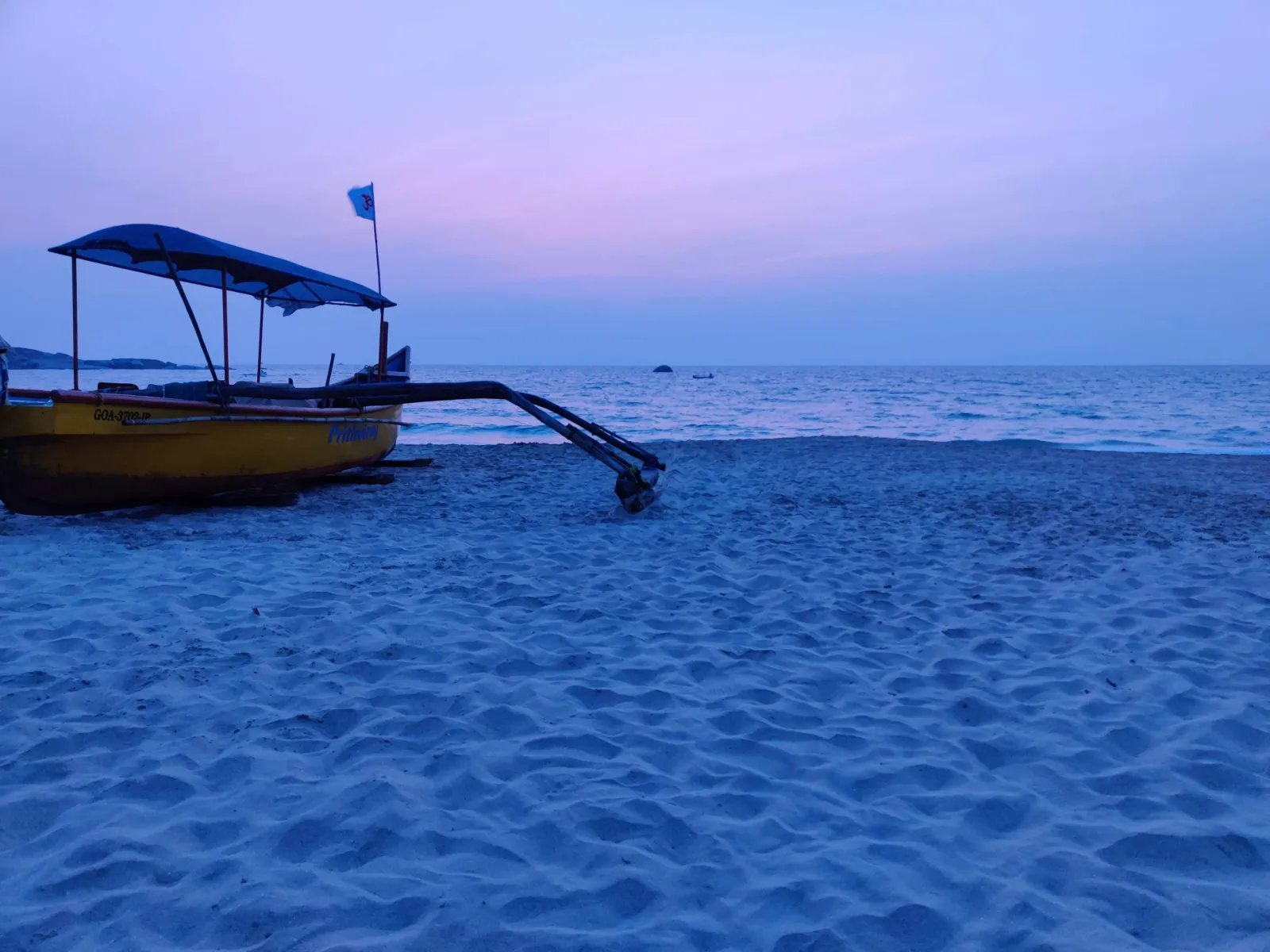
Traditional outrigger fishing boat resting on the sand at Agonda in South Goa

Agonda is a long, quiet beach a short drive north of Palolem. The Goa government describes it as a secluded 3 km cove, and Wikivoyage, which puts it roughly 10 km from Palolem, calls it quiet, natural and "not suitable for the party crowd". Shacks and huts line the back of the beach in season, but the pace is slow.

Agonda is also a turtle nesting beach, along with Galgibaga and Talpona further south, so you may see protected zones marked by the Forest Department and you will be asked to keep lights and noise down at night.

For swimming, both sources are cautious: the Goa government page says it is not safe to swim out too far, Wikivoyage suggests other beaches if calm water matters to you, and lifesavers reported rescuing swimmers caught by waves and strong currents at Agonda in March 2026. Paddle and wade near the shore in calm conditions, and only swim where a lifesaver has flagged a zone. Agonda is ideal for honeymooners, readers and slow travellers; families with strong swimming expectations may prefer Palolem.

Cola Beach

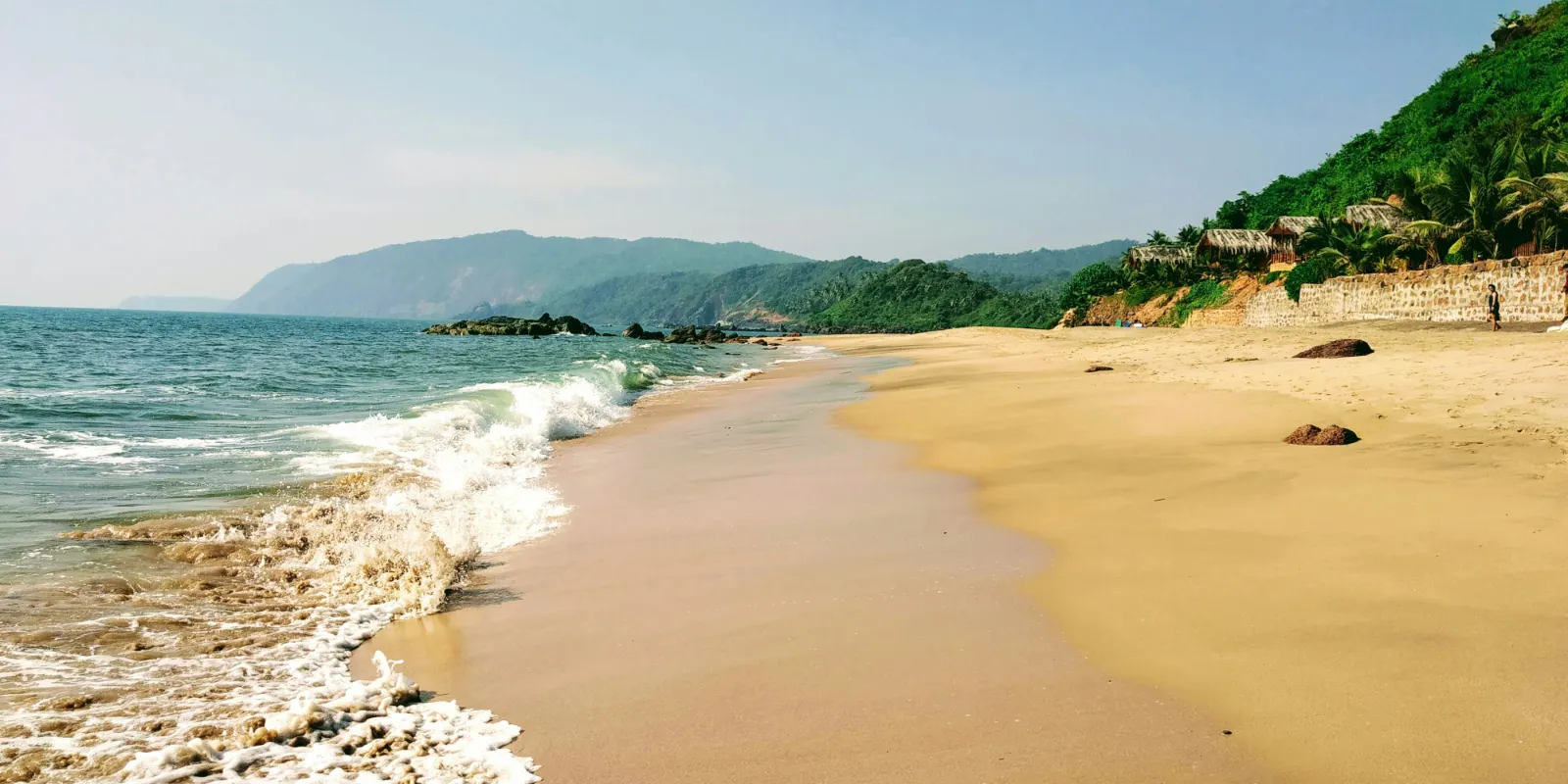
Golden sand and gentle surf below green wooded hills at Cola Beach in South Goa

Cola, also written Khola, is a small, remote beach in Canacona, roughly 10 km north of Agonda according to Wikivoyage. Its draw is a freshwater lagoon that sits right behind the sea, with small bays separated by rocks. Getting there involves a rough sand and stone track and a short walk down, which keeps numbers low.

Cola works best as a night or two of seclusion in a tented or hut stay, or as a day trip. It suits couples who want to feel far from everything. The lagoon is calmer than the open sea, but conditions at small coves can change quickly, and you should not assume a lifesaver is on duty at every small cove; if you do not see a tower or flags, do not swim in the sea.

Colva Beach

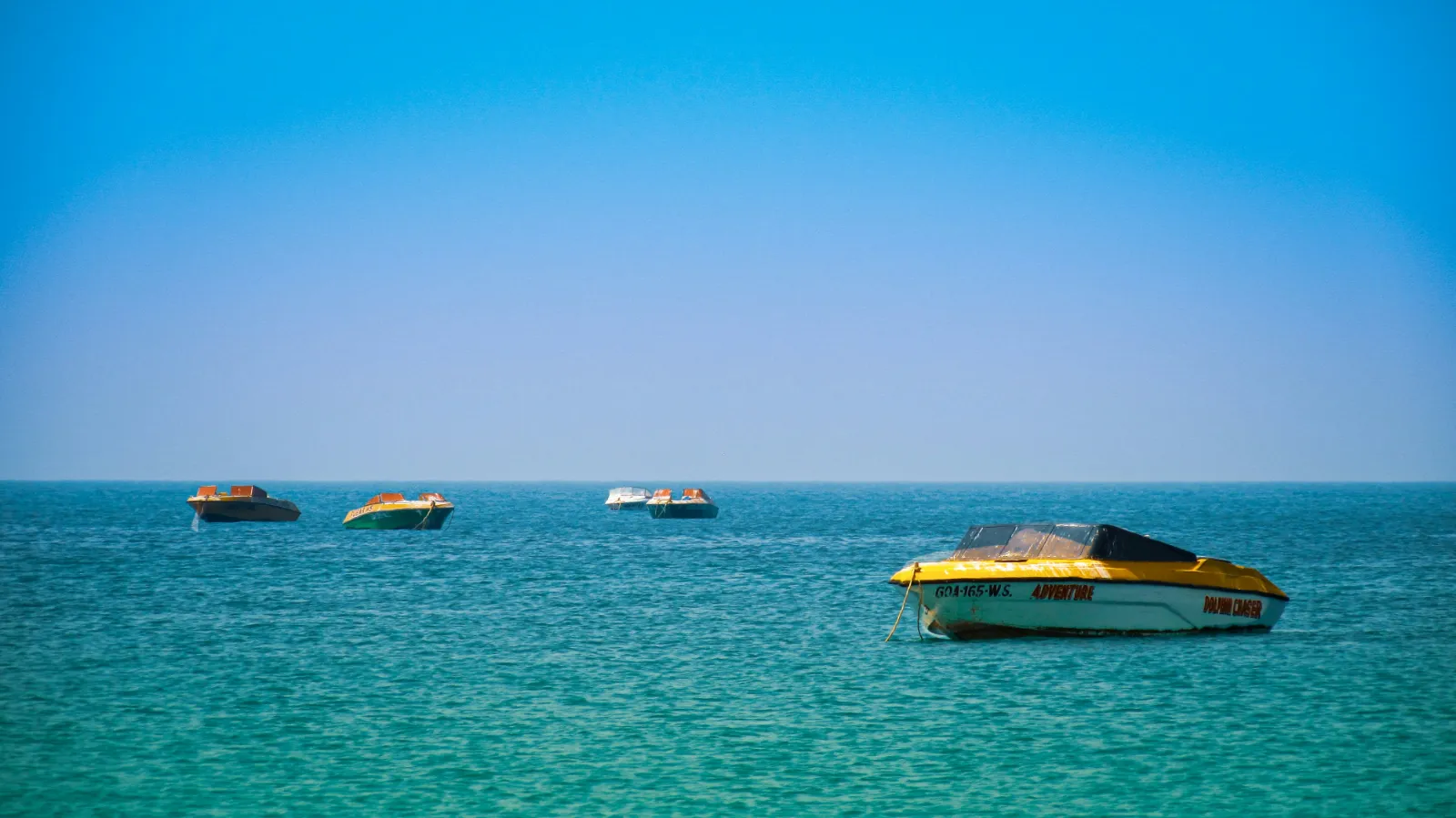
Small boats floating on calm turquoise water off Colva Beach in South Goa

Colva is the big, traditional beach of Salcete, close to the town of Margao. Rural Tourism of India describes the main beach as about 2.4 km of white sand within a longer coastline of around 25 km, lined with coconut palms, while the Goa government describes about 20 km of sand along this stretch. Either way, it is part of a very long, open sweep of coast.

Colva is popular with Indian families and day visitors, busy on weekends and holidays, with shacks, water sports and food stalls. The village is also home to the Church of Our Lady of Mercy, known for its statue of Menino Jesus. Colva has a Drishti Marine swim zone and a public announcement system for real time safety alerts, which makes it one of the better organised beaches for families who want to swim.

Benaulim Beach

Gentle waves rolling onto the quiet sand at Benaulim Beach in South Goa

Benaulim lies less than 2 km south of Colva, on the same long stretch of sand, but it feels like a different place: a fishing village with a wide, calmer beach and fewer crowds. The Goa government notes the local tradition of rosewood furniture and handicrafts and the Church of St John the Baptist on a hill nearby. The Goa government page also links Benaulim to the Hindu legend of Parashuram, whose arrow is said to have created Goa.

Benaulim suits families and couples who want South Goa's space with Colva's facilities in walking distance. Long beach walks between Colva and Benaulim at low tide are one of the simplest pleasures of this coast. Swim only where a lifesaver has set a zone.

Southern beachBusy or quietSwimmingStay typeBest for
AgondaQuietPaddle near shore; swimming far out not safeHuts, boutique staysHoneymooners, slow travel
ColaVery quietLagoon dips; sea only with lifesaver presentTents, hutsCouples, seclusion
ColvaBusyMarked swim zone; alerts systemHotels, guesthousesFamilies, local atmosphere
BenaulimQuiet to mediumWhere a zone is flaggedResorts, guesthousesFamilies, couples, beach walks

Which beach suits your kind of trip?

If you are still undecided, match the beach to the people you are travelling with. This is a shortcut within the beaches; the bigger North or South question sits in the Goa travel guide.

TravellerFirst choiceAlso considerProbably skip
HoneymoonersAgonda or PalolemCola, Morjim, Vagator for sunsetsBaga, central Calangute
CouplesPalolem or VagatorAshwem, BenaulimColva on holiday weekends
Families with young childrenPalolem (north end) or BenaulimColva, Candolim end of CalanguteAnjuna, Cola
Families with older parentsCalangute or Colva for facilitiesBenaulimCola (rough access)
Friends and groupsBaga or CalanguteAnjuna, Vagator, ArambolAgonda if you want nightlife
Solo travellersArambolPalolem, AnjunaIsolated coves after dark

For a honeymoon, Goa is one of several options within easy reach for Nepali couples, and our guide to honeymoon destinations from Nepal compares it with the island options further afield.

When is the best time for Goa's beaches?

The best time for Goa's beaches is November to February, when the weather is dry and warm, the sea is usually calmer, the shacks are fully open and lifesavers run swim zones along the coast. March to May is hot and humid but still workable. June to September is the southwest monsoon, when sea swimming is advised against and beach life largely shuts down.

Goa's beach year is shaped by two official calendars: the shack season and the monsoon. Under the state shack policy, beach shacks are temporary licensed structures. In June 2026 the Goa government extended the existing shack policy for the 2026 to 2027 season on the same terms, and said it aimed to grant permissions before 15 August so shacks are ready before 1 September; the usual closing date is 31 May, with a one time extension to 10 June in 2026, subject to weather (Checked: 28 Oct 2026, Source: The Goan, reporting the Tourism Minister, 9 June 2026). In practice, many shacks are fully running only by October or November, depending on the weather and the operator.

For the sea, Drishti Marine advises against entering the water through the monsoon months, usually described as June to September, and recent reporting has described its routine advisories as running from June to October. In June 2026 Drishti said swimming and coastal water sports are prohibited during the monsoon and placed red flags along beaches across Goa (Checked: 28 Oct 2026, Source: Drishti Marine advisory reported by The Goan and PTI, 13 and 14 June 2026). The Captain of Ports also declared a monsoon "foul season" for vessels from 21 May to 15 September 2026, which is one reason boat trips stop (Checked: 28 Oct 2026, Source: Herald Goa reporting the Captain of Ports Department).

There is no single fixed date when the sea reopens. Sources describe the monsoon restrictions differently, from June to August in older government practice to June to September or June to October in Drishti advisories, and in past years Drishti has reopened swim zones on dates ranging from early October to 1 November, depending on the sea. Rules for water sports in the monsoon were also under review by the Captain of Ports in mid 2026 (Checked: 28 Oct 2026, Source: Herald Goa; ThePrint, 14 July 2026; The Goan, 29 June 2026). In practice, the flags and the lifesaver on the beach decide whether you can swim on a given day.

MonthsBeach conditionsShacksSea swimmingCrowds
OctoberMonsoon ending; sea can still be rough early in the monthGoing up; not all openNo fixed reopening date; swim zones return as the sea settles; check flagsBuilding
November to FebruaryDry, warm, generally calmest seaFully openIn marked swim zonesHighest; peak at Christmas and New Year
March to MayHot and humid; rip currents still occurOpen, closing from late MayIn marked swim zonesThinning
June to SeptemberSouthwest monsoon, heavy rain, rough seaDismantledAdvised against; red flags; Drishti says water sports are prohibitedLow on beaches

Rules and dates in this table change. Checked: 28 Oct 2026, Source: Drishti Marine advisories and the Goa shack policy as reported in the Goa press; confirm with the lifesaver on the beach on the day.

Dashain, Tihar and the Goa beach season

For travellers from Nepal, the timing is convenient. Dashain and Tihar usually fall between late September and mid November, which lines up with the opening of Goa's beach season. A late October or November trip often gets drier weather, shacks opening and fewer crowds than December. Very early in the window, though, the sea can still be rough and some shacks may not be ready, so a Tihar trip in November is usually a safer bet for beach time than a Dashain trip in early October. Our guide to Dashain and Tihar holidays abroad covers how to plan around the festival break.

Christmas and New Year are Goa's busiest weeks, and both crowds and demand for rooms rise sharply. If your school holiday dates allow, early December or mid January gives you peak season weather with slightly more breathing room. For how Goa's weather compares with the rest of the country month by month, see our guide to the best time to visit India.

Is it safe to swim at Goa's beaches?

Yes, swimming at Goa's beaches is reasonably safe in the dry season if you swim only inside the lifeguard swim zones, in daylight, sober, and follow the flags. It is not safe to swim during the monsoon, outside marked zones, after sunset or after drinking.

Goa's beach lifesaving service is run by Drishti Marine, a state appointed agency. In June 2026 it said more than 450 trained lifesavers and beach marshals were deployed across 54 beaches, 30 in South Goa and 24 in North Goa, plus inland sites such as Mayem Lake and Dudhsagar; a July 2026 report put the figure at over 490 across 58 beaches (Checked: 28 Oct 2026, Source: The Goan and PTI, 13 and 14 June 2026; ThePrint, 14 July 2026). By April 2026, Drishti had created more than 100 swim zones along the coast.

What do the beach flags in Goa mean?

Lifesavers set the flags each morning based on sea conditions, so the safe area can move from one day to the next. The key flags are below.

FlagMeaningWhat to do
Red and yellow (paired flags)Designated swim zone watched by lifesaversSwim only between these flags
RedNo swimming: strong currents or rough seaDo not enter the water
Black and white chequeredWater sports areaWater sports stay between these flags; swim in the red and yellow zone instead
Red flags along the whole beach (monsoon)The sea is closed to swimmingStay out; in dry spells lifesavers may flag a small wading area, but swimming is still not advised

Checked: 28 Oct 2026, Source: Drishti Marine summer advisory reported by The Goan, 24 April 2026; Drishti beach guidelines published by Goa Tourism, which also say lifesavers watch the beaches from 7 am to sunset; Herald Goa on monsoon wading zones. One honest caveat: press reports have described the flag colours slightly differently over the years, and in some seasons yellow flags alone have been used for moderate conditions. If you are unsure what a flag means, ask the lifesaver at the tower before you go in.

Each swim zone is divided with moorings and signs, and The Goan reported in 2025 that zones are split into sections for families, men and women, with water sports not allowed inside them. Some beaches, including Baga, Colva and Bogmalo, also have public announcement systems for real time alerts.

Why rip currents catch visitors out

A rip current is a narrow channel of water flowing away from the shore. It often looks like the calmest patch of sea, which is exactly why people walk into it. Gomantak Times lists Harmal (Arambol), Vagator and Miramar in the north and Velsao, Majorda and Palolem in the south among beaches with recurring rip current zones. In a single weekend in March 2026, lifesavers rescued 18 people across Goa, including at Arambol, Ashwem, Baga, Calangute, Candolim, Utorda, Varca and Agonda, several of them from rip currents.

Many travellers from Nepal grew up far from the sea and have little experience of waves or currents, so it is worth being more careful, not less. If you feel yourself being pulled out, do not fight the current straight back to shore. Stay calm, float, raise an arm and shout for the lifesaver, or swim parallel to the beach until you are out of the pull, then come in.

Beach etiquette and safety tips

Goa enforces more on its beaches than many visitors expect. Open drinking on beaches is banned under the Goa Tourist Places (Protection and Maintenance) Act, and a 2019 amendment added penalties for cooking in the open, littering and breaking glass bottles; drinking is allowed inside licensed shacks, bars and restaurants. Driving vehicles on the beach is also an offence.

DoDo not
Swim only in flagged swim zones and in daylightEnter the sea after sunset; Drishti guidelines treat beaches as closed for swimming at night
Ask the lifesaver about today's conditionsSwim after drinking alcohol or with a medical condition
Watch children at all times, even in shallow waterClimb wet rocks or take selfies on cliff edges in surf
Drink inside licensed shacks or barsDrink in the open on the beach or leave bottles on the sand
Keep lights low near turtle nesting zonesUse flash or touch eggs and hatchlings
Cover up when walking from the beach into villages and churchesPhotograph fishing families or women without asking
Use sunscreen and shade between late morning and mid afternoonDive or jump from rocks into water of unknown depth

Keep valuables with you rather than on a sunbed, and be wary of touts selling boat trips or activities on the sand; book water sports with operators who have proper life jackets and a visible licence. Drishti also advises staying hydrated and keeping out of direct sun between noon and 3 pm in the hot months.

Before you go

Nepali citizens do not need a visa for India, and our post on whether Nepalis need a passport for India explains the ID that airlines and hotels ask for; travellers on other passports can check our India visa page. If you would rather have the beach, hotel and transfers arranged around one of the stretches above, you can compare our India tour packages.

Frequently asked questions

Which Goa beach is best for families?

For families, Palolem in South Goa is usually the best Goa beach, because its sheltered bay is shallowest at the northern end and generally gentle on calm days. Benaulim and Colva are good alternatives with space and facilities, and Calangute suits families who want everything close by. Always swim inside the lifeguard flags.

Which Goa beach is best for a honeymoon?

Agonda and Palolem in South Goa are the most popular Goa beaches for a honeymoon. Agonda is long, quiet and slow, while Palolem is prettier and livelier in the evenings. Cola suits couples who want real seclusion for a night or two, and Vagator in the north is lovely for sunsets.

Is Calangute Beach too crowded?

Calangute Beach in Goa is crowded for much of the year and very busy at weekends, Christmas and New Year. If you want convenience with less crowd, stay nearby and use the Candolim end in the mornings. If quiet sand is your priority, choose a beach such as Morjim, Agonda or Benaulim instead.

Is Palolem good for swimming?

Palolem is one of the better swimming beaches in Goa on calm dry season days, because the sea deepens gradually and the northern end is shallowest. It still has recurring rip current spots, so swim only between the lifeguard flags, in daylight, and stay out of the water when red flags are up.

Can you swim in Goa during the monsoon?

No. During the monsoon, roughly June to September and sometimes into October, Drishti Marine advises everyone to stay out of the sea in Goa, puts red flags on beaches and says sea swimming and coastal water sports are prohibited. Even paddling near the shore is discouraged because currents can pull people into deeper water.

Are there quiet beaches in Goa?

Yes, Goa has plenty of quiet beaches. In the north, Morjim, Ashwem and Mandrem are calm and spacious. In the south, Agonda, Benaulim and the small lagoon cove at Cola are quieter than Palolem or Colva. Quiet beaches may have fewer lifesavers, so check for a tower before swimming.

Which Goa beach has the best sunset?

Every Goa beach faces west over the Arabian Sea, so all of them have sunsets. The most loved sunset spots are the cliffs at Vagator below Chapora Fort, Arambol with its evening music, and the curve of Palolem bay. Anjuna's cliffside cafes are another popular place to watch the sun go down.

Is Baga Beach good at night?

Baga Beach is Goa's best known nightlife area, with clubs and bars in the lanes behind the beach busy late into the night in season. Goa's pollution control board says music must stop after 10 pm, though enforcement varies. Never swim at Baga after dark, as beaches are closed for swimming at night.

Do Goa beaches have lifeguards?

Yes. Goa's main beaches are patrolled by Drishti Marine, the state appointed lifesaving agency, which reported more than 450 lifesavers and marshals across 54 beaches in June 2026. They mark swim zones with flags in daylight hours. Small, remote coves may have no lifesaver, so do not swim there.

Is Arambol good for a relaxed stay?

Yes, Arambol is one of the best Goa beaches for a relaxed, longer stay, with yoga, cafes, homestays, sunset music and the nearby Sweet Water Lake. It suits solo travellers and remote workers. Rip currents do occur at Arambol, so swim only in the flagged zone.

Goa ko kun beach ma pariwar sanga jaanu ramro? (Which Goa beach is good to visit with family?)

Pariwar sanga jaane bhaye South Goa ko Palolem ra Benaulim ramro hunchha, kinabhane yaha bhid kam ra samudra prayah shanta hunchha (For a family trip, Palolem and Benaulim in South Goa are good choices, because they are less crowded and the sea is usually calmer). Sabai suvidha najikai chahiyo bhane Calangute ra Colva pani thik chhan (If you want all facilities nearby, Calangute and Colva also work). Lifeguard ko jhanda ko bichma matra paudi khelnus (Swim only between the lifeguard flags).

Tags
India
Share
G
Gomayu Team
Writer at Gomayu
Keep reading
Blog / India
Best Beaches in Goa: Calangute, Palolem and Quieter Coves
30 min read 28 Oct 2026
Aerial view of the crescent shaped Palolem Beach and its green hills in South Goa

Short answer: The best Goa beaches depend on the holiday you want. Calangute and Baga are the busiest, with water sports, shacks and nightlife close by. Anjuna and Vagator add cliffs, cafes and a party edge. Morjim and Arambol in the far north are slower and more bohemian. In the south, Palolem is the easy all rounder for couples and families, while Agonda, Cola and Benaulim are quieter. Swim only in lifeguard swim zones, stay out of the sea during the June to September monsoon, and come between November and February for the full shack season.

This guide goes beach by beach. For each one you get the feel of the place, how crowded it gets, what the water is usually like for swimming and who it tends to suit, so couples, honeymooners, friends and families can pick the right stretch of sand before they book a room. Everything about sea safety and seasons is checked against Goa government and Drishti Marine lifesaver sources, with dates beside anything that changes.

What this post does not do is repeat the bigger planning decisions. Whether to base yourself in North or South Goa, what to do away from the beach, and how to get to Goa are all covered in our complete Goa travel guide, and if Goa is one stop on a longer trip, start with the India travel guide for first time visitors.

Which are the best beaches in Goa?

Eleven beaches cover almost every kind of Goa holiday: Calangute, Baga, Anjuna, Vagator, Morjim and Arambol in the north, and Palolem, Agonda, Cola, Colva and Benaulim in the south. They are not interchangeable. A family that books Baga expecting a quiet sandcastle morning will be disappointed, and a group of friends that ends up in Agonda may wonder where everyone went.

Goa's whole coastline faces west onto the Arabian Sea, so every beach on this list has a sunset over water. The differences are in crowd levels, how much happens behind the sand, how the sea behaves and how far you are from everything else. If you are comparing Goa with Kerala, Gokarna or the Andaman Islands, our round up of the best beaches across India puts Goa in that wider picture.

The table below is a quick shortlist. Crowd levels describe the November to February peak season; swimming notes describe a normal dry season day and always depend on the flags on the day.

BeachAreaVibeCrowd level (peak)Swimming on a normal dry season dayBest for
CalanguteNorth (Bardez)Busy, commercial, lots of water sportsVery highPossible in marked swim zones; the bottom can drop suddenlyFirst timers, groups, families who want facilities
BagaNorth (Bardez)Shacks by day, clubs and bars by nightVery highPossible in marked swim zones; rip currents occurFriends, nightlife, water sports
AnjunaNorth (Bardez)Rocky, cafes, flea market, party historyHighLimited; rocky shore, not a swimming beachCafes, market day, sunset drinks
VagatorNorth (Bardez)Red cliffs, Chapora Fort, sunset barsMedium to highCalm on good days, but known rip spotsCouples, photographers, sunset seekers
MorjimNorth (Pernem)Wide, flat, quiet, turtle nestingLow to mediumSwim zone in season; respect nesting areasCouples, long stays, nature lovers
ArambolNorth (Pernem)Bohemian, yoga, music at sunsetMediumSwim zone in season; rip currents occurSolo travellers, long stays, remote workers
PalolemSouth (Canacona)Crescent bay, colourful huts, kayaksMedium to highGenerally gentle, shallowest at the north endCouples, honeymooners, families
AgondaSouth (Canacona)Long, quiet, low key, turtle nestingLowPaddling yes; swimming far out is not safeHoneymooners, readers, slow travellers
ColaSouth (Canacona)Hidden cove with a freshwater lagoonLowLagoon for a dip; sea depends on conditionsCouples, a night or two of seclusion
ColvaSouth (Salcete)Big, traditional, popular with Indian familiesHighPossible in marked swim zonesFamilies, easy access, local atmosphere
BenaulimSouth (Salcete)Fishing village, wide sand, calmer than ColvaLow to mediumPossible where lifeguards mark a zoneFamilies, couples, beach walks

Two things are worth knowing before you read on. First, Goa has an official beach lifesaving service, Drishti Marine, which marks swim zones with flags each day; it is covered in detail in the safety section at the end. Second, the shacks that give Goa's beaches their character are seasonal, temporary structures, so a beach in May or September looks very different from the same beach in December.

What is Calangute Beach like?

Calangute is Goa's busiest and best known beach: a long, wide stretch of sand in North Goa lined with shacks, sunbeds, water sports counters and hotels, crowded through the day for most of the year. The state government's own beach page calls it the "Queen of Beaches" and notes that it stays busy in peak and off season alike.

Calangute Beach

Colourful beach shacks and sunbeds lining the sand at Calangute Beach, Goa

Calangute sits in Bardez taluka, roughly 15 km from Panaji, and the sand runs continuously from Candolim in the south to Baga in the north. The Goa government describes the stretch from Calangute to Baga as lined with hotels, and that is exactly how it feels: there is almost no point on the beach where you are more than a short walk from food, a toilet, a cold drink or a parasailing operator.

That convenience is the reason people choose it. If it is your first trip to Goa, or you are travelling with older parents who want everything close by, Calangute removes most of the logistics. Groups of friends like it because the shacks are lively and the nightlife of Baga is a walk away.

The trade off is crowds. Calangute is heavily used by domestic tourists, especially on weekends, around Christmas and New Year and during Indian school holidays. Expect touts selling boat trips, plenty of noise and a steady stream of people along the waterline. If your picture of Goa is an empty beach, this is not it.

For swimming, the Goa government page warns that Calangute has a sudden drop and rising waves, and that weaker swimmers should take care. Calangute is one of the beaches where Drishti Marine has set up designated swim zones, and lifesavers reported rescues here as recently as March 2026. Swim between the flags, not off the shack you happen to be sitting at.

Calangute at a glanceDetails
FeelBusy, commercial, energetic, family and group friendly
Crowd levelVery high in peak season and on weekends
SwimmingIn marked swim zones only; sudden drop off in places
Water sportsWidely offered in season (parasailing, jet ski, banana boat)
Good forFirst timers, groups, families who want facilities on hand
Less good forHoneymooners after quiet, anyone who dislikes crowds

Is Calangute too crowded? For many people, yes, especially between Christmas and New Year. A simple fix is to stay in Calangute for convenience but walk south towards Candolim in the morning, when the beach is noticeably calmer, and save Calangute's busier central stretch for the evening.
Explore India tour packages
View all →

Are Baga, Anjuna and Vagator good for nightlife or families?

Baga, Anjuna and Vagator are North Goa's nightlife beaches, and they suit friends and couples who want an evening scene more than families with young children. Families can still enjoy them by day, especially Vagator's cliffs and Anjuna's market, but plan to sleep somewhere quieter if early nights matter.

Baga Beach
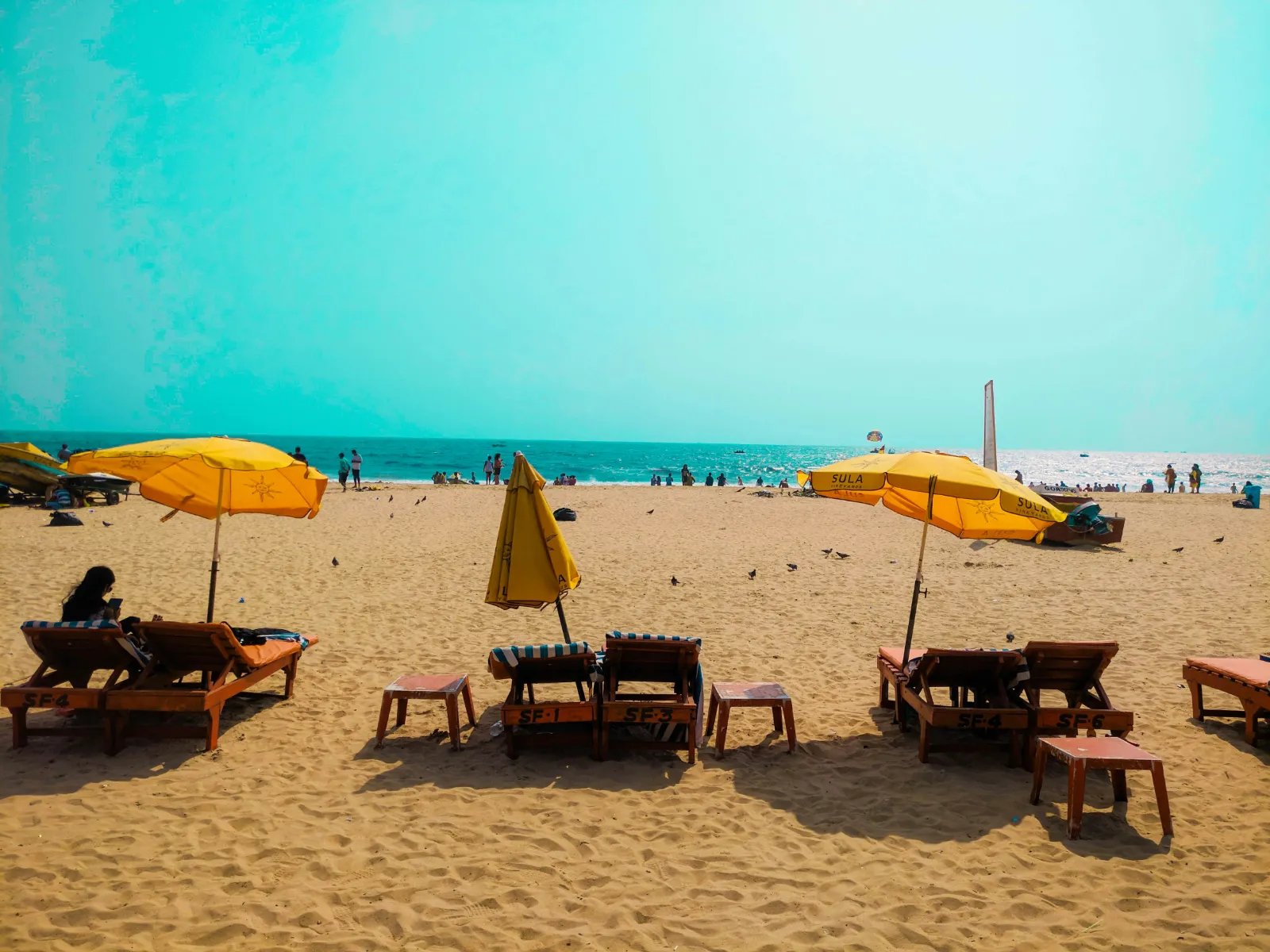
Yellow beach umbrellas and loungers on the sand at Baga Beach in North Goa

Baga is the northern continuation of Calangute, bounded at its northern end by Baga creek. By day it is a water sports beach, with operators lining the sand. After dark the action moves to the clubs and bars in the lanes just behind the beach, with Tito's Lane the best known name, and the area stays busy late into the night in season.

Baga is a fine choice for a group of friends in their twenties or thirties who want everything in walking distance. For families, the daytime beach is usable, but the noise, traffic and late crowds make it a less relaxing base. Note that Goa's pollution control board says music must stop after 10 pm under India's noise pollution rules, apart from a few notified days a year, although enforcement on the ground varies (Checked: 28 Oct 2026, Source: Goa State Pollution Control Board chairman, reported by The Goan, 21 Jan 2026).

Swimming at Baga works in the marked swim zones. Lifesavers have rescued people caught in rip currents at Baga as recently as March 2026, so it is not a beach where you should wander into the water anywhere you like.

Anjuna Beach
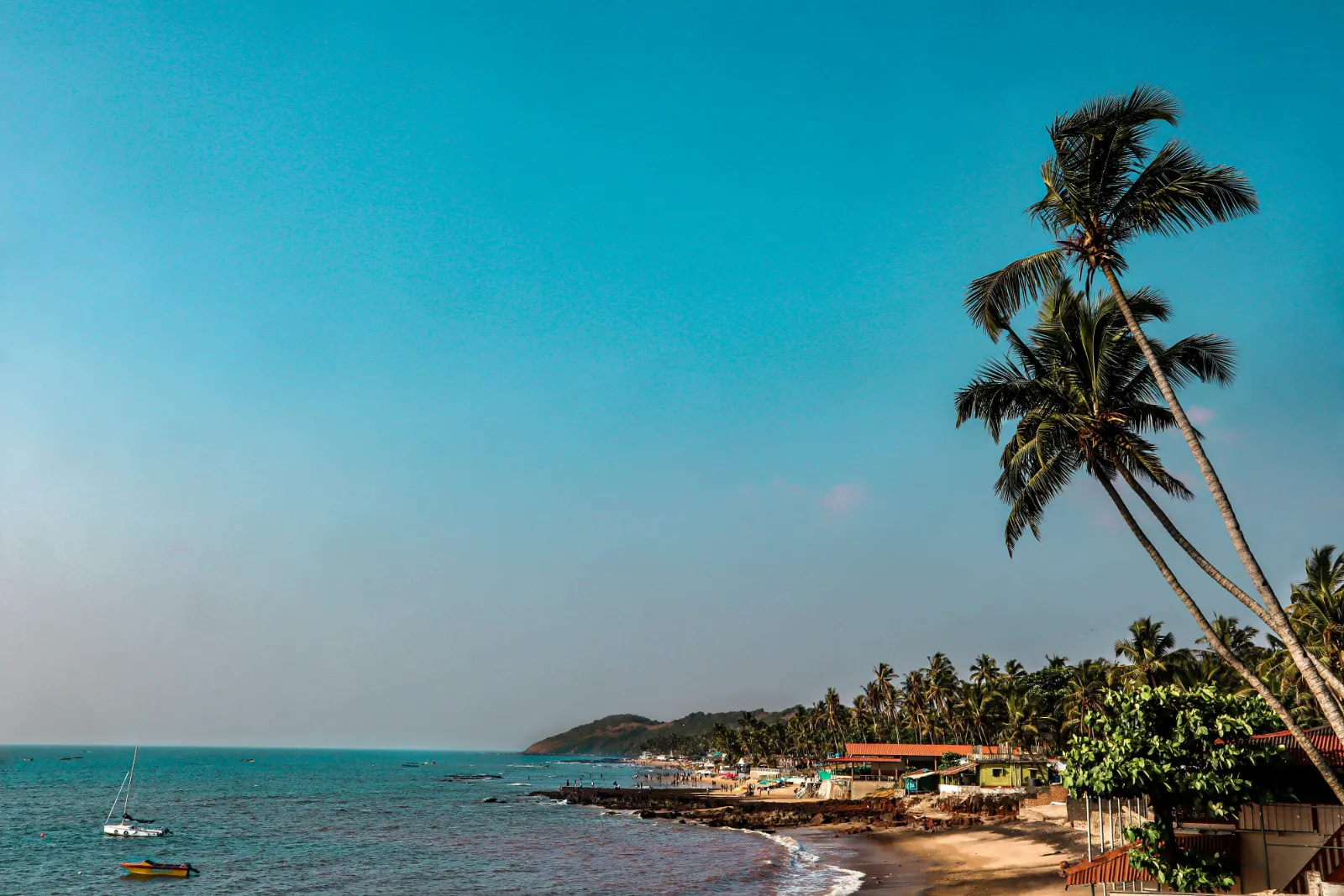
Palm trees leaning over the rocky shoreline at Anjuna Beach in North Goa

Anjuna is less about the sand and more about everything around it. The Goa government describes its fame from the 1960s and early 1970s "flower power" era and later trance parties, and it is still the home of the weekly Wednesday flea market, a long running bazaar of clothes, jewellery, handicrafts and food. Market days are busy; other days are calmer.

The beach itself is rocky in places, with dark rock shelves and small sandy patches. Drishti Marine has in the past not marked a swim zone at Anjuna because of the rocks, so treat it as a place to sit, eat and watch the sunset rather than to swim. Families with small children will find the rocks awkward; couples and friends usually love the cafe scene.

Vagator Beach
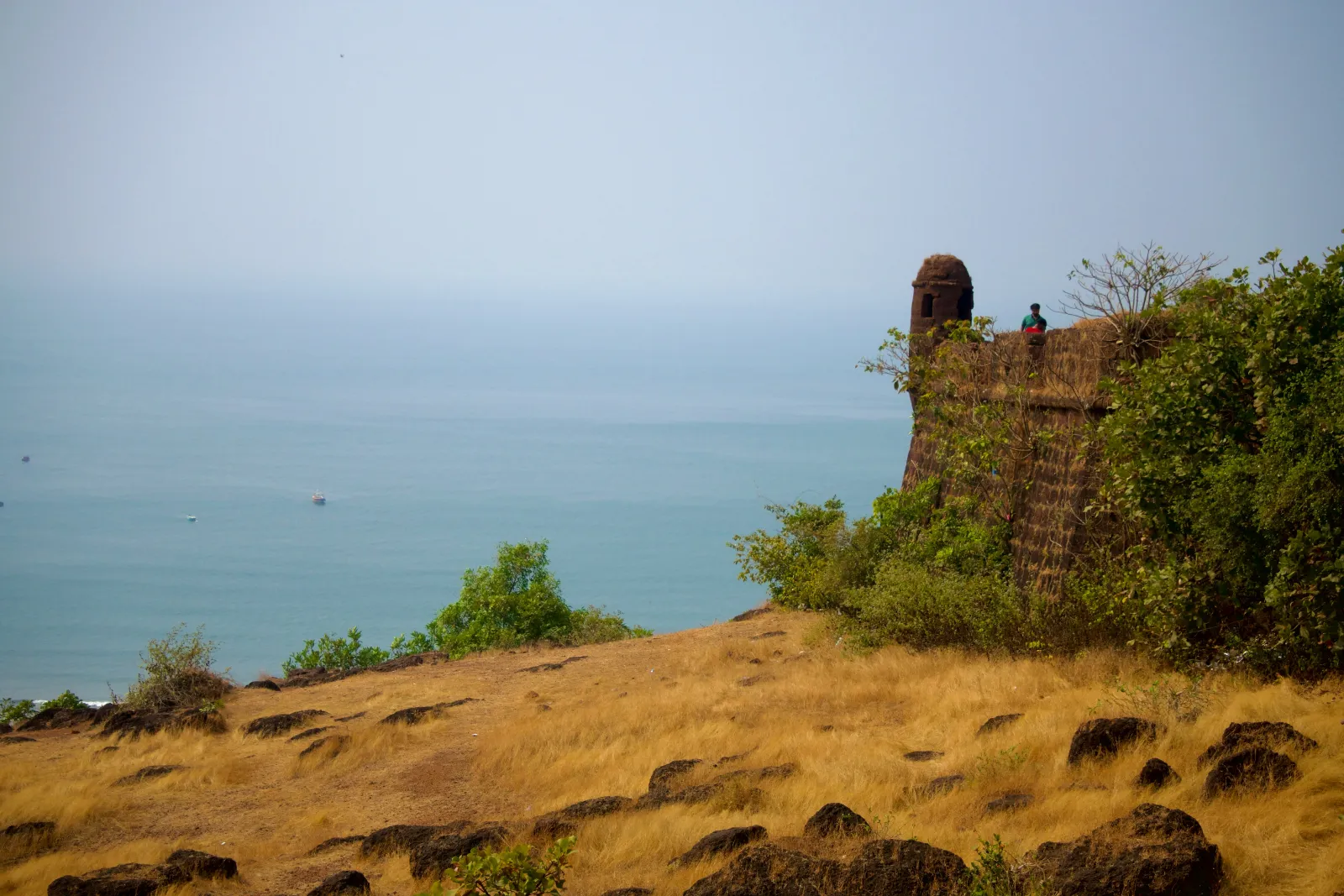
Old laterite walls of Chapora Fort above the sea near Vagator in North Goa

Vagator sits below Chapora Fort, a short way north of Anjuna, and is split by a headland into Big Vagator and Little Vagator, which runs into Ozran beach. Incredible India, the national tourism site, describes dramatic red cliffs, sea view bars at Little Vagator where people gather for sunset, and a less crowded scene than Baga and Calangute. The Goa government calls it the most photographed beach in Goa.

Vagator suits couples and anyone with a camera. The walk up to Chapora Fort for the view over the river is a classic late afternoon outing. The water can look calm, but local reporting lists Vagator among the beaches with recurring rip current zones, and rescues have been recorded there, so the same rule applies: swim only where lifesavers have flagged a zone.

QuestionBagaAnjunaVagator
NightlifeStrongest of the three; clubs and bars behind the beachCafe and bar scene, party historySunset bars on the cliffs
Daytime with kidsWorkable, but busy and noisyAwkward; rocky shoreGood for views and the fort walk; watch children near cliffs
SwimmingMarked swim zones; rip currents occurNot a swimming beachCalm on good days; known rip spots
Crowd levelVery highHigh, peaking on market dayMedium to high
Best forFriends, first time party tripsMarket lovers, cafe hoppersCouples, photographers

If you are travelling as a family and still want a taste of this coast, a sensible pattern is to stay further south (Candolim is the calmer neighbour of Calangute) and visit Anjuna on a Wednesday morning and Vagator for one sunset, then head back before the late crowds arrive.

Which quieter northern beaches are worth the trip, such as Morjim and Arambol?

Morjim and Arambol are the two quieter northern beaches most worth the extra drive. They sit across the Chapora river in Pernem taluka, the northernmost part of Goa, and both feel slower and more spacious than the Calangute and Baga strip. Ashwem and Mandrem lie between them and share the same relaxed character.

Morjim Beach
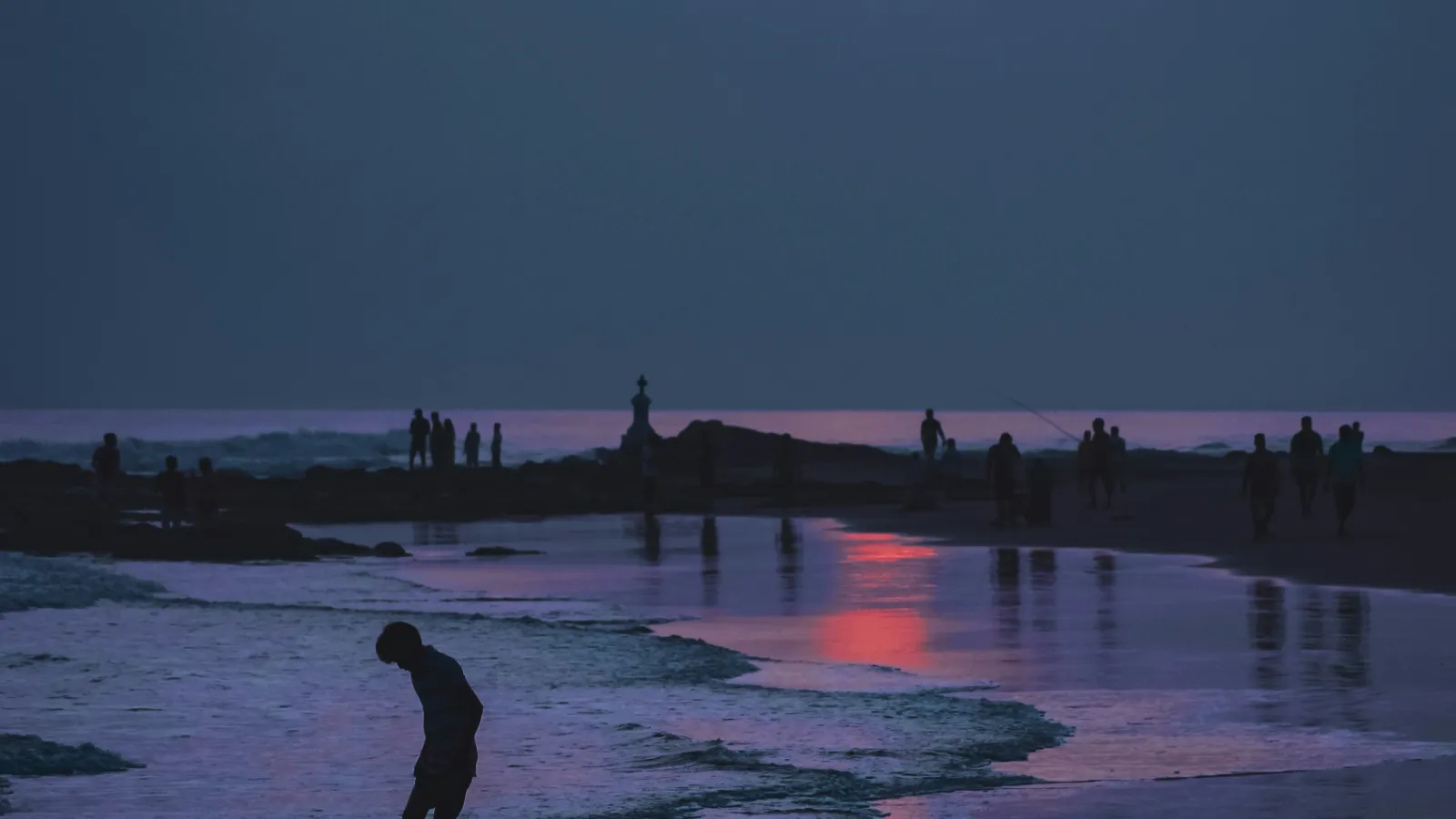
Fisherman silhouetted against the sunset sky on the wide flat sand of Morjim Beach, North Goa

Morjim is a wide, flat beach near the mouth of the Chapora river, with a lot of open sand and far fewer shacks than the busy north. Its most important feature is one most visitors never see: Morjim is one of Goa's Olive Ridley turtle nesting beaches. The Goa government notes that volunteers guard the nests and help hatchlings reach the sea, and in December 2025 The Goan reported the season's first nesting pit at Morjim, with 99 eggs.

Parts of the beach are protected nesting zones under the Goa Forest Department, marked with signboards. If you are staying nearby, keep lights low, do not use flash photography at night near nesting areas, and never touch eggs or hatchlings. Gomantak Times describes nesting as running roughly from October to April, with the season starting later in recent years and sometimes running into May, so check the signboards rather than assuming.

For couples, long stays and anyone who likes walking an uncrowded beach at sunrise, Morjim is one of the most rewarding stops in the north. Drishti Marine has created a designated swim zone at Morjim, and also at Ashwem, so swimming is possible in season between the flags.

Arambol Beach
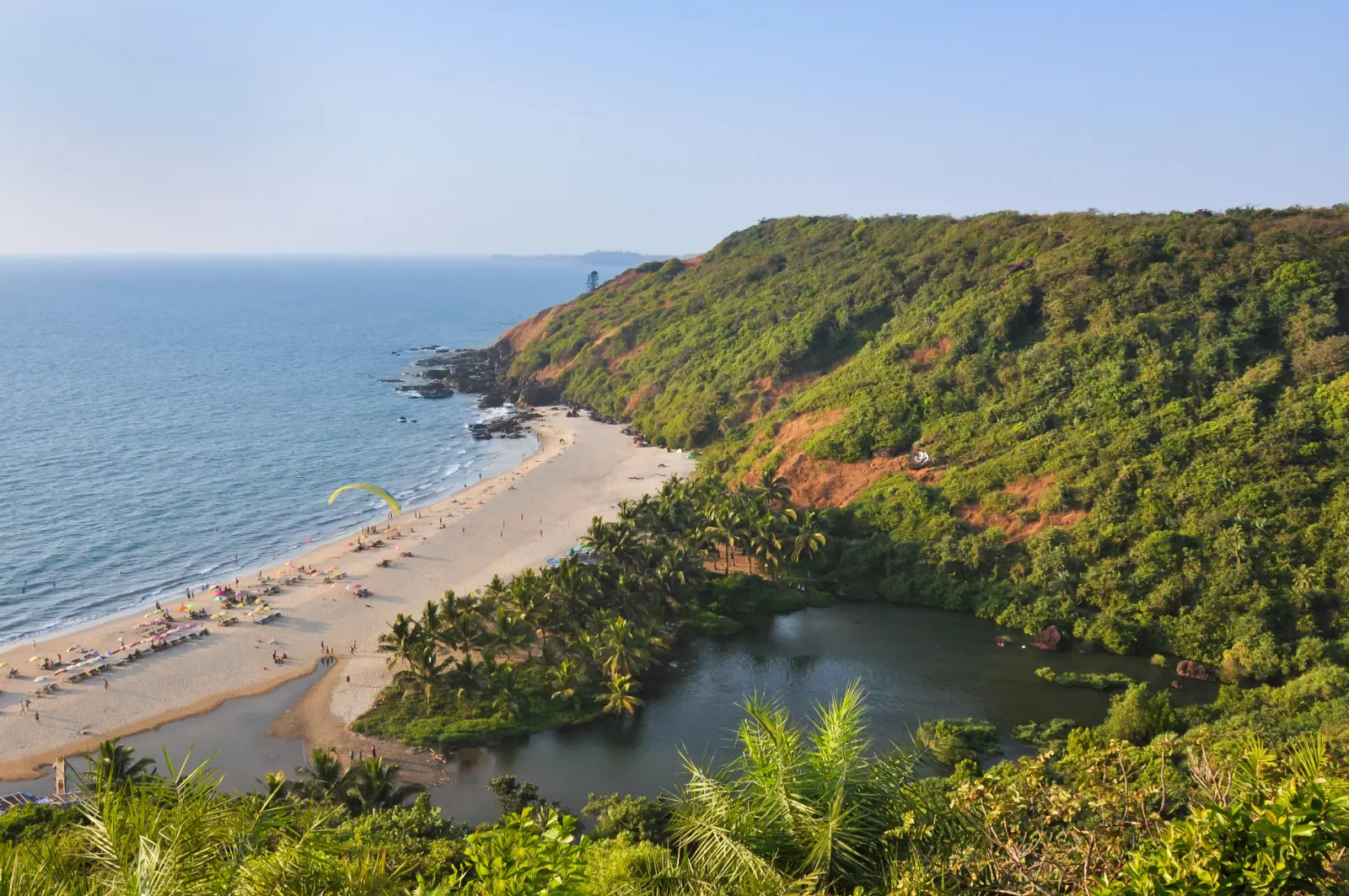
Arambol Beach and its freshwater lake backed by green jungle in North Goa

Arambol, also called Harmal, is the northernmost of Goa's well known beaches and the closest thing the state still has to its old hippie coast. Gomantak Times calls it "the last bastion of hippies in the North", with yoga, mud baths, hill walks and a near spiritual feel on the sand at sunset. Music and drumming gatherings at sunset are part of Arambol's reputation.

A short walk from the main beach brings you to the Sweet Water Lake, a freshwater lake just inland from the sand, reached along a path lined with shops, cafes and restaurants. Near the hill, the Goa government notes a pool of yellow clay that visitors use as a mud bath. You cannot drive onto the beach itself; you walk down a slope from the village.

Arambol suits solo travellers, long stayers and remote workers, and Gomantak Times notes that many cafes cater to people working online. Accommodation is mostly homestays, apartments and a few boutique or mid range hotels rather than big resorts. Families can enjoy it by day, but it is not a resort beach.

Swimming needs care. Drishti Marine runs a swim zone at Arambol, but in March 2026 lifesavers rescued people caught in rip currents there, including three teenagers who entered a red flagged no swimming area. Stay within the flags. Adventure activities around Arambol and nearby Keri, such as paragliding, are licensed by the state and have been suspended at times after accidents, so ask locally what is operating.

Quiet north beachCharacterSwimmingWho it suits
MorjimWide and flat, turtle nesting zones, few shacksSwim zone in season; avoid nesting areasCouples, nature lovers, long stays
AshwemStylish shacks and cafes, calm feelSwim zone in season; rough days occurCouples wanting comfort with quiet
MandremQuiet, yoga retreats, river and sandLook for a lifesaver tower and flags before swimmingWellness, slow travel
ArambolBohemian, sunset music, Sweet Water LakeSwim zone in season; rip currents occurSolo travellers, remote workers, friends

Palolem is popular because it combines the things most people picture when they think of a Goa beach: a sheltered crescent bay, soft sand, palm trees, colourful beach huts, gentle water on most days and enough cafes to stay interesting without the North Goa crowds. It is in Canacona in the far south, roughly 70 km from Panaji according to the Goa government.

Palolem Beach
Colourful beach huts beneath tall coconut palms on Palolem Beach, South Goa

Palolem is a crescent shaped beach about 1.6 km long, with rocky headlands at both ends, so you can see the whole bay from either end. The sea deepens gradually and is shallowest at the northern end, which is why it is often recommended for average swimmers and for families with children who want to paddle. The fishermen who work from the beach offer boat trips, including dolphin spotting, and kayaks are a common way to explore the bay.

From Palolem, boats run to small coves along the coast, the best known being Butterfly Beach, a little cove ringed by forest that is usually reached by a short boat ride from Palolem. Patnem, the next beach to the south, is a quieter alternative if Palolem feels busy.

Palolem is a strong choice for honeymooners and couples who want a pretty beach with good food and some life in the evening, and for families who want calmer water than the north. The Goa government page mentions Palolem's "Silent Noise" headphone parties, a local answer to the 10 pm limit on loud outdoor music; whether they are running depends on the season, so ask locally.

Two notes of caution. Palolem gets busy at Christmas and New Year, when the bay fills with day visitors. And while the water is usually gentle, Gomantak Times lists Palolem among the South Goa beaches with recurring rip current zones, so the flags still matter here.

Palolem at a glanceDetails
Shape and sizeCrescent bay, about 1.6 km, rocky headlands at each end
SwimmingUsually gentle; shallowest at the north end; recurring rip zones exist
Things on the waterKayaks, fishing boat trips, dolphin spotting
Crowd levelMedium most of the season, high at Christmas and New Year
Good forCouples, honeymooners, families, first visit to South Goa
Quieter neighboursPatnem to the south, Agonda to the north

Which quieter southern coves should you consider, such as Agonda, Cola and Benaulim?

If you want South Goa at its quietest, Agonda, Cola and Benaulim are the beaches to look at, with Colva as the busier, more traditional option close by. They are spread out along the coast, so pick one as your base rather than trying to stay on all of them.

Agonda Beach
Traditional outrigger fishing boat resting on the sand at Agonda in South Goa

Agonda is a long, quiet beach a short drive north of Palolem. The Goa government describes it as a secluded 3 km cove, and Wikivoyage, which puts it roughly 10 km from Palolem, calls it quiet, natural and "not suitable for the party crowd". Shacks and huts line the back of the beach in season, but the pace is slow.

Agonda is also a turtle nesting beach, along with Galgibaga and Talpona further south, so you may see protected zones marked by the Forest Department and you will be asked to keep lights and noise down at night.

For swimming, both sources are cautious: the Goa government page says it is not safe to swim out too far, Wikivoyage suggests other beaches if calm water matters to you, and lifesavers reported rescuing swimmers caught by waves and strong currents at Agonda in March 2026. Paddle and wade near the shore in calm conditions, and only swim where a lifesaver has flagged a zone. Agonda is ideal for honeymooners, readers and slow travellers; families with strong swimming expectations may prefer Palolem.

Cola Beach
Golden sand and gentle surf below green wooded hills at Cola Beach in South Goa

Cola, also written Khola, is a small, remote beach in Canacona, roughly 10 km north of Agonda according to Wikivoyage. Its draw is a freshwater lagoon that sits right behind the sea, with small bays separated by rocks. Getting there involves a rough sand and stone track and a short walk down, which keeps numbers low.

Cola works best as a night or two of seclusion in a tented or hut stay, or as a day trip. It suits couples who want to feel far from everything. The lagoon is calmer than the open sea, but conditions at small coves can change quickly, and you should not assume a lifesaver is on duty at every small cove; if you do not see a tower or flags, do not swim in the sea.

Colva Beach
Small boats floating on calm turquoise water off Colva Beach in South Goa

Colva is the big, traditional beach of Salcete, close to the town of Margao. Rural Tourism of India describes the main beach as about 2.4 km of white sand within a longer coastline of around 25 km, lined with coconut palms, while the Goa government describes about 20 km of sand along this stretch. Either way, it is part of a very long, open sweep of coast.

Colva is popular with Indian families and day visitors, busy on weekends and holidays, with shacks, water sports and food stalls. The village is also home to the Church of Our Lady of Mercy, known for its statue of Menino Jesus. Colva has a Drishti Marine swim zone and a public announcement system for real time safety alerts, which makes it one of the better organised beaches for families who want to swim.

Benaulim Beach
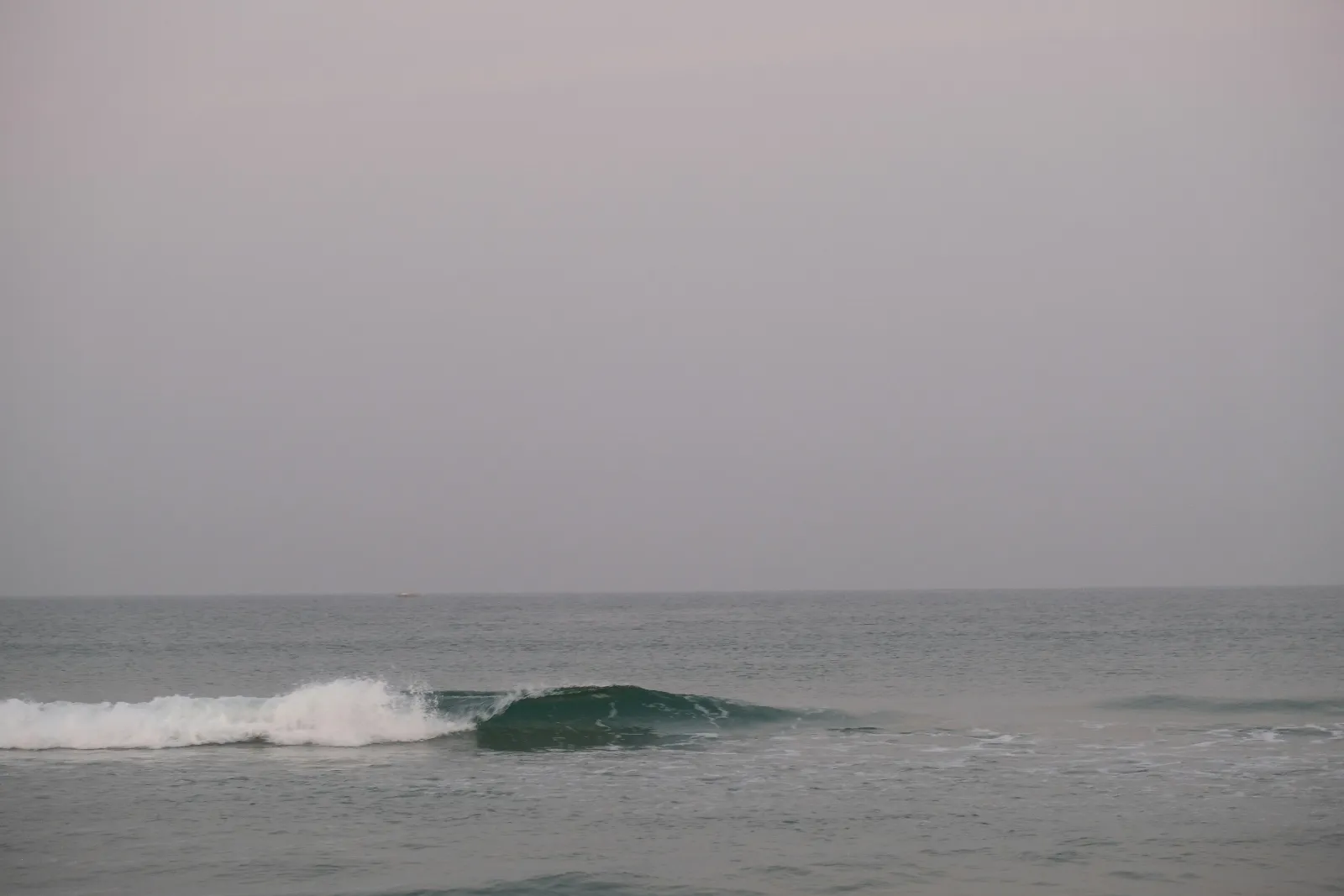
Gentle waves rolling onto the quiet sand at Benaulim Beach in South Goa

Benaulim lies less than 2 km south of Colva, on the same long stretch of sand, but it feels like a different place: a fishing village with a wide, calmer beach and fewer crowds. The Goa government notes the local tradition of rosewood furniture and handicrafts and the Church of St John the Baptist on a hill nearby. The Goa government page also links Benaulim to the Hindu legend of Parashuram, whose arrow is said to have created Goa.

Benaulim suits families and couples who want South Goa's space with Colva's facilities in walking distance. Long beach walks between Colva and Benaulim at low tide are one of the simplest pleasures of this coast. Swim only where a lifesaver has set a zone.

Southern beachBusy or quietSwimmingStay typeBest for
AgondaQuietPaddle near shore; swimming far out not safeHuts, boutique staysHoneymooners, slow travel
ColaVery quietLagoon dips; sea only with lifesaver presentTents, hutsCouples, seclusion
ColvaBusyMarked swim zone; alerts systemHotels, guesthousesFamilies, local atmosphere
BenaulimQuiet to mediumWhere a zone is flaggedResorts, guesthousesFamilies, couples, beach walks

Which beach suits your kind of trip?

If you are still undecided, match the beach to the people you are travelling with. This is a shortcut within the beaches; the bigger North or South question sits in the Goa travel guide.

TravellerFirst choiceAlso considerProbably skip
HoneymoonersAgonda or PalolemCola, Morjim, Vagator for sunsetsBaga, central Calangute
CouplesPalolem or VagatorAshwem, BenaulimColva on holiday weekends
Families with young childrenPalolem (north end) or BenaulimColva, Candolim end of CalanguteAnjuna, Cola
Families with older parentsCalangute or Colva for facilitiesBenaulimCola (rough access)
Friends and groupsBaga or CalanguteAnjuna, Vagator, ArambolAgonda if you want nightlife
Solo travellersArambolPalolem, AnjunaIsolated coves after dark

For a honeymoon, Goa is one of several options within easy reach for Nepali couples, and our guide to honeymoon destinations from Nepal compares it with the island options further afield.

When is the best time for Goa's beaches?

The best time for Goa's beaches is November to February, when the weather is dry and warm, the sea is usually calmer, the shacks are fully open and lifesavers run swim zones along the coast. March to May is hot and humid but still workable. June to September is the southwest monsoon, when sea swimming is advised against and beach life largely shuts down.

Goa's beach year is shaped by two official calendars: the shack season and the monsoon. Under the state shack policy, beach shacks are temporary licensed structures. In June 2026 the Goa government extended the existing shack policy for the 2026 to 2027 season on the same terms, and said it aimed to grant permissions before 15 August so shacks are ready before 1 September; the usual closing date is 31 May, with a one time extension to 10 June in 2026, subject to weather (Checked: 28 Oct 2026, Source: The Goan, reporting the Tourism Minister, 9 June 2026). In practice, many shacks are fully running only by October or November, depending on the weather and the operator.

For the sea, Drishti Marine advises against entering the water through the monsoon months, usually described as June to September, and recent reporting has described its routine advisories as running from June to October. In June 2026 Drishti said swimming and coastal water sports are prohibited during the monsoon and placed red flags along beaches across Goa (Checked: 28 Oct 2026, Source: Drishti Marine advisory reported by The Goan and PTI, 13 and 14 June 2026). The Captain of Ports also declared a monsoon "foul season" for vessels from 21 May to 15 September 2026, which is one reason boat trips stop (Checked: 28 Oct 2026, Source: Herald Goa reporting the Captain of Ports Department).

There is no single fixed date when the sea reopens. Sources describe the monsoon restrictions differently, from June to August in older government practice to June to September or June to October in Drishti advisories, and in past years Drishti has reopened swim zones on dates ranging from early October to 1 November, depending on the sea. Rules for water sports in the monsoon were also under review by the Captain of Ports in mid 2026 (Checked: 28 Oct 2026, Source: Herald Goa; ThePrint, 14 July 2026; The Goan, 29 June 2026). In practice, the flags and the lifesaver on the beach decide whether you can swim on a given day.

MonthsBeach conditionsShacksSea swimmingCrowds
OctoberMonsoon ending; sea can still be rough early in the monthGoing up; not all openNo fixed reopening date; swim zones return as the sea settles; check flagsBuilding
November to FebruaryDry, warm, generally calmest seaFully openIn marked swim zonesHighest; peak at Christmas and New Year
March to MayHot and humid; rip currents still occurOpen, closing from late MayIn marked swim zonesThinning
June to SeptemberSouthwest monsoon, heavy rain, rough seaDismantledAdvised against; red flags; Drishti says water sports are prohibitedLow on beaches

Rules and dates in this table change. Checked: 28 Oct 2026, Source: Drishti Marine advisories and the Goa shack policy as reported in the Goa press; confirm with the lifesaver on the beach on the day.

Dashain, Tihar and the Goa beach season

For travellers from Nepal, the timing is convenient. Dashain and Tihar usually fall between late September and mid November, which lines up with the opening of Goa's beach season. A late October or November trip often gets drier weather, shacks opening and fewer crowds than December. Very early in the window, though, the sea can still be rough and some shacks may not be ready, so a Tihar trip in November is usually a safer bet for beach time than a Dashain trip in early October. Our guide to Dashain and Tihar holidays abroad covers how to plan around the festival break.

Christmas and New Year are Goa's busiest weeks, and both crowds and demand for rooms rise sharply. If your school holiday dates allow, early December or mid January gives you peak season weather with slightly more breathing room. For how Goa's weather compares with the rest of the country month by month, see our guide to the best time to visit India.

Is it safe to swim at Goa's beaches?

Yes, swimming at Goa's beaches is reasonably safe in the dry season if you swim only inside the lifeguard swim zones, in daylight, sober, and follow the flags. It is not safe to swim during the monsoon, outside marked zones, after sunset or after drinking.

Goa's beach lifesaving service is run by Drishti Marine, a state appointed agency. In June 2026 it said more than 450 trained lifesavers and beach marshals were deployed across 54 beaches, 30 in South Goa and 24 in North Goa, plus inland sites such as Mayem Lake and Dudhsagar; a July 2026 report put the figure at over 490 across 58 beaches (Checked: 28 Oct 2026, Source: The Goan and PTI, 13 and 14 June 2026; ThePrint, 14 July 2026). By April 2026, Drishti had created more than 100 swim zones along the coast.

What do the beach flags in Goa mean?

Lifesavers set the flags each morning based on sea conditions, so the safe area can move from one day to the next. The key flags are below.

FlagMeaningWhat to do
Red and yellow (paired flags)Designated swim zone watched by lifesaversSwim only between these flags
RedNo swimming: strong currents or rough seaDo not enter the water
Black and white chequeredWater sports areaWater sports stay between these flags; swim in the red and yellow zone instead
Red flags along the whole beach (monsoon)The sea is closed to swimmingStay out; in dry spells lifesavers may flag a small wading area, but swimming is still not advised

Checked: 28 Oct 2026, Source: Drishti Marine summer advisory reported by The Goan, 24 April 2026; Drishti beach guidelines published by Goa Tourism, which also say lifesavers watch the beaches from 7 am to sunset; Herald Goa on monsoon wading zones. One honest caveat: press reports have described the flag colours slightly differently over the years, and in some seasons yellow flags alone have been used for moderate conditions. If you are unsure what a flag means, ask the lifesaver at the tower before you go in.

Each swim zone is divided with moorings and signs, and The Goan reported in 2025 that zones are split into sections for families, men and women, with water sports not allowed inside them. Some beaches, including Baga, Colva and Bogmalo, also have public announcement systems for real time alerts.

Why rip currents catch visitors out

A rip current is a narrow channel of water flowing away from the shore. It often looks like the calmest patch of sea, which is exactly why people walk into it. Gomantak Times lists Harmal (Arambol), Vagator and Miramar in the north and Velsao, Majorda and Palolem in the south among beaches with recurring rip current zones. In a single weekend in March 2026, lifesavers rescued 18 people across Goa, including at Arambol, Ashwem, Baga, Calangute, Candolim, Utorda, Varca and Agonda, several of them from rip currents.

Many travellers from Nepal grew up far from the sea and have little experience of waves or currents, so it is worth being more careful, not less. If you feel yourself being pulled out, do not fight the current straight back to shore. Stay calm, float, raise an arm and shout for the lifesaver, or swim parallel to the beach until you are out of the pull, then come in.

Beach etiquette and safety tips

Goa enforces more on its beaches than many visitors expect. Open drinking on beaches is banned under the Goa Tourist Places (Protection and Maintenance) Act, and a 2019 amendment added penalties for cooking in the open, littering and breaking glass bottles; drinking is allowed inside licensed shacks, bars and restaurants. Driving vehicles on the beach is also an offence.

DoDo not
Swim only in flagged swim zones and in daylightEnter the sea after sunset; Drishti guidelines treat beaches as closed for swimming at night
Ask the lifesaver about today's conditionsSwim after drinking alcohol or with a medical condition
Watch children at all times, even in shallow waterClimb wet rocks or take selfies on cliff edges in surf
Drink inside licensed shacks or barsDrink in the open on the beach or leave bottles on the sand
Keep lights low near turtle nesting zonesUse flash or touch eggs and hatchlings
Cover up when walking from the beach into villages and churchesPhotograph fishing families or women without asking
Use sunscreen and shade between late morning and mid afternoonDive or jump from rocks into water of unknown depth

Keep valuables with you rather than on a sunbed, and be wary of touts selling boat trips or activities on the sand; book water sports with operators who have proper life jackets and a visible licence. Drishti also advises staying hydrated and keeping out of direct sun between noon and 3 pm in the hot months.

Before you go

Nepali citizens do not need a visa for India, and our post on whether Nepalis need a passport for India explains the ID that airlines and hotels ask for; travellers on other passports can check our India visa page. If you would rather have the beach, hotel and transfers arranged around one of the stretches above, you can compare our India tour packages.

Frequently asked questions

Which Goa beach is best for families?

For families, Palolem in South Goa is usually the best Goa beach, because its sheltered bay is shallowest at the northern end and generally gentle on calm days. Benaulim and Colva are good alternatives with space and facilities, and Calangute suits families who want everything close by. Always swim inside the lifeguard flags.

Which Goa beach is best for a honeymoon?

Agonda and Palolem in South Goa are the most popular Goa beaches for a honeymoon. Agonda is long, quiet and slow, while Palolem is prettier and livelier in the evenings. Cola suits couples who want real seclusion for a night or two, and Vagator in the north is lovely for sunsets.

Is Calangute Beach too crowded?

Calangute Beach in Goa is crowded for much of the year and very busy at weekends, Christmas and New Year. If you want convenience with less crowd, stay nearby and use the Candolim end in the mornings. If quiet sand is your priority, choose a beach such as Morjim, Agonda or Benaulim instead.

Is Palolem good for swimming?

Palolem is one of the better swimming beaches in Goa on calm dry season days, because the sea deepens gradually and the northern end is shallowest. It still has recurring rip current spots, so swim only between the lifeguard flags, in daylight, and stay out of the water when red flags are up.

Can you swim in Goa during the monsoon?

No. During the monsoon, roughly June to September and sometimes into October, Drishti Marine advises everyone to stay out of the sea in Goa, puts red flags on beaches and says sea swimming and coastal water sports are prohibited. Even paddling near the shore is discouraged because currents can pull people into deeper water.

Are there quiet beaches in Goa?

Yes, Goa has plenty of quiet beaches. In the north, Morjim, Ashwem and Mandrem are calm and spacious. In the south, Agonda, Benaulim and the small lagoon cove at Cola are quieter than Palolem or Colva. Quiet beaches may have fewer lifesavers, so check for a tower before swimming.

Which Goa beach has the best sunset?

Every Goa beach faces west over the Arabian Sea, so all of them have sunsets. The most loved sunset spots are the cliffs at Vagator below Chapora Fort, Arambol with its evening music, and the curve of Palolem bay. Anjuna's cliffside cafes are another popular place to watch the sun go down.

Is Baga Beach good at night?

Baga Beach is Goa's best known nightlife area, with clubs and bars in the lanes behind the beach busy late into the night in season. Goa's pollution control board says music must stop after 10 pm, though enforcement varies. Never swim at Baga after dark, as beaches are closed for swimming at night.

Do Goa beaches have lifeguards?

Yes. Goa's main beaches are patrolled by Drishti Marine, the state appointed lifesaving agency, which reported more than 450 lifesavers and marshals across 54 beaches in June 2026. They mark swim zones with flags in daylight hours. Small, remote coves may have no lifesaver, so do not swim there.

Is Arambol good for a relaxed stay?

Yes, Arambol is one of the best Goa beaches for a relaxed, longer stay, with yoga, cafes, homestays, sunset music and the nearby Sweet Water Lake. It suits solo travellers and remote workers. Rip currents do occur at Arambol, so swim only in the flagged zone.

Goa ko kun beach ma pariwar sanga jaanu ramro? (Which Goa beach is good to visit with family?)

Pariwar sanga jaane bhaye South Goa ko Palolem ra Benaulim ramro hunchha, kinabhane yaha bhid kam ra samudra prayah shanta hunchha (For a family trip, Palolem and Benaulim in South Goa are good choices, because they are less crowded and the sea is usually calmer). Sabai suvidha najikai chahiyo bhane Calangute ra Colva pani thik chhan (If you want all facilities nearby, Calangute and Colva also work). Lifeguard ko jhanda ko bichma matra paudi khelnus (Swim only between the lifeguard flags).

Tags
India
Share
G
Gomayu Team
Writer at Gomayu
Keep reading