
























+977-9709047652
Explore by Country
See all 12 Thailand packages
Most popular pick
See all 12 Thailand packages
See all 8 Vietnam packages
Most popular pick
See all 8 Vietnam packages
See all 4 Indonesia (Bali) packages
Most popular pick
See all 4 Indonesia (Bali) packages
See all 3 Maldives packages
Most popular pick
See all 3 Maldives packages
See all 3 China packages
Most popular pick
See all 3 China packages
See all 2 Sri Lanka packages
Most popular pick
See all 2 Sri Lanka packages
See all 3 Malaysia packages
Most popular pick
See all 3 Malaysia packages
See all 2 Singapore packages
Most popular pick
See all 2 Singapore packages
See all 2 Kenya packages
Most popular pick
See all 2 Kenya packages
See all 4 India packages
Most popular pick
See all 4 India packages
Search Tours or Places
Blog / India

Char Dham Yatra: Complete Pilgrim's Guide

11 min read 27 Jul 2026

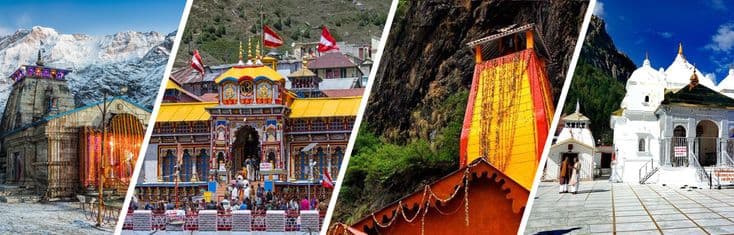
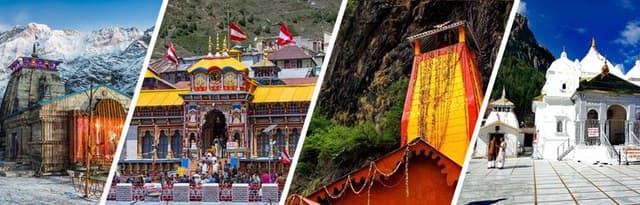
The Char Dham Yatra is a circuit of four Himalayan shrines in the Indian state of Uttarakhand: Yamunotri, Gangotri, Kedarnath and Badrinath. The temples sit high in the Garhwal Himalaya, they stay open only for about six months of the year, and reaching them takes a mix of long mountain driving and some walking. This guide covers what each dham is, the order pilgrims follow, when the temples open, how the mandatory registration works, and what the altitude really asks of you.

What the yatra is, and which Char Dham people mean

Two different pilgrimages share the same name, and this is where most confusion starts. The all India Char Dham, associated with the 8th century teacher Adi Shankaracharya, links four temples at the four corners of the country: Badrinath in the north, Dwarka in the west, Puri in the east and Rameswaram in the south.

The Uttarakhand circuit is the one people usually mean when they say Char Dham Yatra today. It is also called the Chota Char Dham. Badrinath appears in both lists, which is exactly why the two get mixed up. If someone is talking about temple opening dates, registration and Himalayan treks, they mean the Uttarakhand four.

Each of the four has its own character. Two of them, Yamunotri and Gangotri, sit at the sources of two rivers held sacred across the subcontinent. Kedarnath is a Shiva shrine and one of the twelve Jyotirlingas. Badrinath is a seat of Vishnu and one of the 108 Divya Desams.

Yamunotri, the first dham

Yamunotri stands at about 3,293 meters and is dedicated to the goddess Yamuna. Vehicles go as far as Janki Chatti, and from there the temple is roughly 5 to 6 kilometers of steady uphill walking. It is short compared with Kedarnath, but the gradient is real and most people feel it.

Beside the temple are thermal springs, the best known being Surya Kund, and the rock called Divya Shila where pilgrims offer prayers before entering. A long standing practice here is to tie rice and potatoes in a cloth, cook them in the hot spring water, and carry the food home as prasad. In winter the goddess is worshipped at Kharsali village lower down the valley.
Gangotri, the source of the Ganga

Gangotri sits at about 3,415 meters on the Bhagirathi river and is the easiest of the four to reach, because the road goes right up to the temple. There is no compulsory trek. That makes it a good early stop for older travelers and for anyone still getting used to the thin air.

The town is tiny and quiet outside darshan hours. The actual glacier source, Gaumukh, lies further upstream and is a separate multi day trek that needs its own permits, so it is not part of the standard yatra. Gangotri closes on Diwali each year and the goddess moves to Mukhba village near Harsil for the winter.

Kedarnath, the highest of the four

Kedarnath is the hardest dham and, for many, the one they came for. The temple stands at about 3,583 meters near the Mandakini river and is the highest of the twelve Jyotirlingas. There is no road to it. From Gaurikund the trek is roughly 16 to 17 kilometers uphill, which most walkers cover in one long day.

The path is paved and busy through the season, with rest points, tea stalls and medical posts along the way. Ponies, porters and palanquins are available for people who cannot walk the full distance, and helicopter shuttles run from helipads lower in the valley. In winter the deity is carried down to Ukhimath and worshipped there.

Badrinath, the last dham

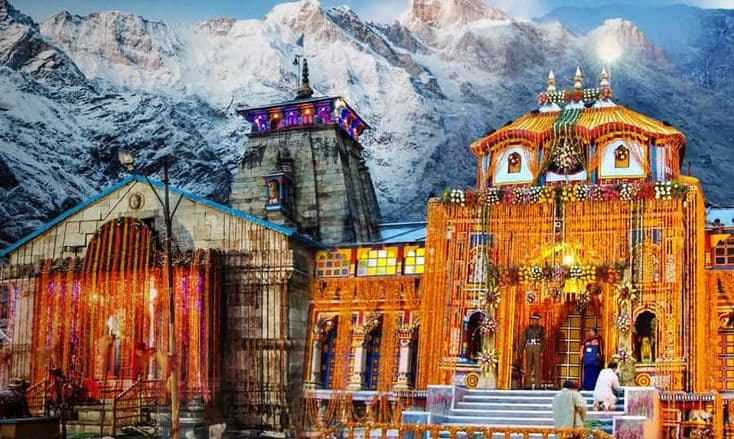
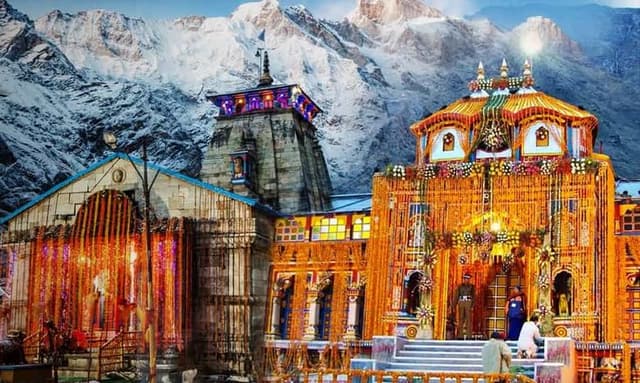
Badrinath is at about 3,100 meters on the Alaknanda river and, like Gangotri, is reached directly by road. The bright temple facade is the image most people recognize from the whole circuit. Below the steps is Tapt Kund, a sulphur hot spring that stays warm all year, where many bathe before darshan.

Badrinath is also the most comfortable base of the four, with the widest choice of accommodation. Mana village sits a few kilometers beyond the temple and is an easy add on for anyone with a spare half day. In winter the worship shifts to the Narasimha temple at Joshimath.

The four dhams at a glance, and why the order matters

DhamAltitudeTrekDedicated toNote
YamunotriAbout 3,293 mAbout 5 to 6 km from Janki ChattiGoddess YamunaHot springs at Surya Kund; steep but short climb
GangotriAbout 3,415 mNone, road reaches the templeGoddess GangaEasiest of the four; closes on Diwali
KedarnathAbout 3,583 mAbout 16 to 17 km from GaurikundShiva, as a JyotirlingaPony, palanquin and helicopter options exist
BadrinathAbout 3,100 mNone, road reaches the templeVishnu, as BadrinarayanTapt Kund hot spring below the temple

The traditional Char Dham Yatra route runs west to east: Yamunotri, then Gangotri, then Kedarnath, then Badrinath. This follows the clockwise direction of pradakshina, the respectful circling used in temple worship, and it also happens to be the sensible way to drive, since the valleys line up in that order from Haridwar and Rishikesh.

There is a practical benefit too. The sequence moves you gradually from the lowest and gentlest shrine to the highest and hardest, which gives the body a few days to adjust before Kedarnath.

When the temples open and close

The temples open in late April or early May and close in late October or November. Yamunotri and Gangotri open on Akshaya Tritiya, with Kedarnath and Badrinath following within a few days. Closing is tied to the festival calendar as well: Gangotri closes around Diwali, Yamunotri and Kedarnath around Bhai Dooj, and Badrinath a little later.

Exact dates are announced fresh every year by the temple committees, usually around Maha Shivratri and Basant Panchami, so always check the current season rather than assuming last year's dates repeat. In the 2026 season, for example, Yamunotri and Gangotri opened on 19 April, Kedarnath on 22 April and Badrinath on 23 April.

The best time for Char Dham Yatra is generally May and June, or September and October after the rains clear. July and August fall in the monsoon, when landslides, road blocks and washed out stretches are common on these valley roads. The yatra is not formally closed then, but travel is slow, plans change at short notice, and helicopter flights get cancelled for weather.

Char Dham registration, step by step

Registration is compulsory. Every pilgrim must register before starting the yatra, and vehicles must be registered too. This is the single rule people most often get wrong, usually because they read an old article. It is done through the Uttarakhand government's official Tourist Care Uttarakhand registration portal, which also has a mobile app, and it costs nothing.

  • Create an account on the portal or app and verify your mobile number.
  • Build your tour by entering start and end dates, the number of travelers, and which dhams you will visit on which dates.
  • Add identity details for each person. Aadhaar based verification is used, and a valid photo ID such as a passport, voter ID or driving license is needed. Keep a recent photograph handy.
  • Download the confirmation. You get a QR code, on a slip or a wristband, that is checked at points along the route.
  • Travel on the dates you registered for. Checkpoints verify this, and turning up on the wrong day can mean being held back.

Offline counters operate in Rishikesh, Haridwar and other towns along the route for anyone who cannot register online. Uttarakhand also runs health screening points and medical relief posts along the routes, backed by a real time health monitoring system, so expect a basic check at some stops.

How people travel the route

Almost everyone starts from Haridwar, Rishikesh or Dehradun and covers the circuit by road. The distances look modest on a map but the driving is slow, with switchbacks, single lane stretches and frequent stops. Six to eight hours on the road is a normal day here.

For the walking sections, ponies and porters are licensed and available at Janki Chatti and Gaurikund, and palanquins carried by four bearers are an option for those who cannot sit on a pony. For Kedarnath, helicopter shuttles fly from Sirsi, Phata and Guptkashi. Tickets are sold only through the official IRCTC Heli Yatra portal, no travel agent is authorized to sell them, and slots for popular dates disappear within minutes of opening. Anyone promising guaranteed helicopter seats outside that portal should be treated with suspicion.

Altitude, fitness and weather, honestly

All four shrines are above 3,000 meters, and Kedarnath involves a long climb on top of that. Altitude sickness is a genuine risk on this route, not a theoretical one, and every season brings reports of pilgrims falling seriously ill from mountain sickness and heart related causes.

Anyone over 50, or living with heart disease, high blood pressure, asthma or diabetes, should get a medical clearance before booking, and should not go if a doctor advises against it. Four to six weeks of light training beforehand, walking, stairs, easy cardio, makes a real difference. On the route itself, gain height slowly, drink water often, avoid alcohol, and stop and descend if you get a persistent headache, nausea or breathlessness.

Weather changes fast. Mornings can be sunny and afternoons cold and wet at the same spot, and nights near the temples are cold even in June.

What to pack

  • Warm layers, including a fleece or down jacket, thermals, gloves and a woolen cap.
  • A waterproof jacket or poncho, since rain arrives without warning.
  • Broken in walking shoes with grip, plus a light walking stick.
  • Personal medicines with prescriptions, basic first aid, and pain relief.
  • Printed registration confirmation and original photo ID for every traveler.
  • Power bank and torch, as electricity is unreliable at the higher stops.
  • Sunscreen and sunglasses, because ultraviolet exposure at altitude is strong.
  • Some cash, since card and network coverage thin out above the main towns.

How long it takes, shorter options, and planning notes

A full Char Dham itinerary needs roughly 10 to 12 days from Haridwar or Rishikesh, and squeezing it into less means driving all day and arriving tired at the hardest section. If you have less time, the shorter Do Dham Yatra pairs Kedarnath and Badrinath in about 6 to 7 days, and an Ek Dham trip covers a single shrine, most often Kedarnath, in around 4 days.

Book early. Accommodation near Kedarnath and Badrinath is limited, helicopter slots sell out immediately, and the May to June window fills months ahead. Fixing your registration dates first and then building travel around them saves a lot of trouble. If you want the route handled end to end, including registration support and the vehicle and hotel chain, our Char Dham Yatra package is built for exactly that, and you can pair it with other India tour packages if you are extending the trip.

Frequently asked questions about the Char Dham Yatra

Is registration mandatory for the Char Dham Yatra?

Yes. Every pilgrim must register before starting the yatra, and vehicles must be registered as well. Registration is done free of charge on the Uttarakhand government's Tourist Care portal or its app, and offline counters are available in Rishikesh, Haridwar and other towns along the route.

What is the difference between Char Dham and Chota Char Dham?

Chota Char Dham is the Uttarakhand circuit of Yamunotri, Gangotri, Kedarnath and Badrinath. The all India Char Dham is a separate, much larger circuit of Badrinath, Dwarka, Puri and Rameswaram. Badrinath belongs to both, which is why the two are often confused.

What is the best time for the Char Dham Yatra?

May and June, and then September and October, are the most reliable months. July and August fall in the monsoon, when landslides and road blockages are common on the Uttarakhand routes and helicopter flights are frequently cancelled. The temples stay closed from around Diwali until the following spring.

How difficult is the Kedarnath trek?

It is about 16 to 17 kilometers uphill from Gaurikund to a temple at roughly 3,583 meters, and most people take a full day. The path is paved and has rest and medical stops. Ponies, porters, palanquins and helicopter shuttles are available for those who cannot walk it.

Can I book Kedarnath helicopter tickets through an agent?

No. Helicopter shuttle tickets to Kedarnath are sold only on the official IRCTC Heli Yatra portal, and no travel agency is authorized to sell them. Flights operate from the Sirsi, Phata and Guptkashi helipads, and slots for popular dates are taken very quickly after booking opens.

Who should avoid the Char Dham Yatra?

Anyone whose doctor advises against high altitude travel should not go. People over 50 and those with heart disease, hypertension, asthma or diabetes should get a medical check before booking. All four shrines are above 3,000 meters, so altitude sickness is a real risk for unprepared travelers.

Tags
Char Dham YatraKedarnathBadrinathGangotriYamunotriUttarakhandPilgrimage ToursIndia Travel Guide
Share
G
Gomayu Team
Writer at Gomayu
Keep reading
Blog / India

Char Dham Yatra: Complete Pilgrim's Guide

11 min read 27 Jul 2026

The Char Dham Yatra is a circuit of four Himalayan shrines in the Indian state of Uttarakhand: Yamunotri, Gangotri, Kedarnath and Badrinath. The temples sit high in the Garhwal Himalaya, they stay open only for about six months of the year, and reaching them takes a mix of long mountain driving and some walking. This guide covers what each dham is, the order pilgrims follow, when the temples open, how the mandatory registration works, and what the altitude really asks of you.

What the yatra is, and which Char Dham people mean

Two different pilgrimages share the same name, and this is where most confusion starts. The all India Char Dham, associated with the 8th century teacher Adi Shankaracharya, links four temples at the four corners of the country: Badrinath in the north, Dwarka in the west, Puri in the east and Rameswaram in the south.

The Uttarakhand circuit is the one people usually mean when they say Char Dham Yatra today. It is also called the Chota Char Dham. Badrinath appears in both lists, which is exactly why the two get mixed up. If someone is talking about temple opening dates, registration and Himalayan treks, they mean the Uttarakhand four.

Each of the four has its own character. Two of them, Yamunotri and Gangotri, sit at the sources of two rivers held sacred across the subcontinent. Kedarnath is a Shiva shrine and one of the twelve Jyotirlingas. Badrinath is a seat of Vishnu and one of the 108 Divya Desams.

Yamunotri, the first dham

Yamunotri stands at about 3,293 meters and is dedicated to the goddess Yamuna. Vehicles go as far as Janki Chatti, and from there the temple is roughly 5 to 6 kilometers of steady uphill walking. It is short compared with Kedarnath, but the gradient is real and most people feel it.

Beside the temple are thermal springs, the best known being Surya Kund, and the rock called Divya Shila where pilgrims offer prayers before entering. A long standing practice here is to tie rice and potatoes in a cloth, cook them in the hot spring water, and carry the food home as prasad. In winter the goddess is worshipped at Kharsali village lower down the valley.

Gangotri, the source of the Ganga

Gangotri sits at about 3,415 meters on the Bhagirathi river and is the easiest of the four to reach, because the road goes right up to the temple. There is no compulsory trek. That makes it a good early stop for older travelers and for anyone still getting used to the thin air.

The town is tiny and quiet outside darshan hours. The actual glacier source, Gaumukh, lies further upstream and is a separate multi day trek that needs its own permits, so it is not part of the standard yatra. Gangotri closes on Diwali each year and the goddess moves to Mukhba village near Harsil for the winter.

Kedarnath, the highest of the four

Kedarnath is the hardest dham and, for many, the one they came for. The temple stands at about 3,583 meters near the Mandakini river and is the highest of the twelve Jyotirlingas. There is no road to it. From Gaurikund the trek is roughly 16 to 17 kilometers uphill, which most walkers cover in one long day.

The path is paved and busy through the season, with rest points, tea stalls and medical posts along the way. Ponies, porters and palanquins are available for people who cannot walk the full distance, and helicopter shuttles run from helipads lower in the valley. In winter the deity is carried down to Ukhimath and worshipped there.

Badrinath, the last dham

Badrinath is at about 3,100 meters on the Alaknanda river and, like Gangotri, is reached directly by road. The bright temple facade is the image most people recognize from the whole circuit. Below the steps is Tapt Kund, a sulphur hot spring that stays warm all year, where many bathe before darshan.

Badrinath is also the most comfortable base of the four, with the widest choice of accommodation. Mana village sits a few kilometers beyond the temple and is an easy add on for anyone with a spare half day. In winter the worship shifts to the Narasimha temple at Joshimath.

The four dhams at a glance, and why the order matters

DhamAltitudeTrekDedicated toNote
YamunotriAbout 3,293 mAbout 5 to 6 km from Janki ChattiGoddess YamunaHot springs at Surya Kund; steep but short climb
GangotriAbout 3,415 mNone, road reaches the templeGoddess GangaEasiest of the four; closes on Diwali
KedarnathAbout 3,583 mAbout 16 to 17 km from GaurikundShiva, as a JyotirlingaPony, palanquin and helicopter options exist
BadrinathAbout 3,100 mNone, road reaches the templeVishnu, as BadrinarayanTapt Kund hot spring below the temple

The traditional Char Dham Yatra route runs west to east: Yamunotri, then Gangotri, then Kedarnath, then Badrinath. This follows the clockwise direction of pradakshina, the respectful circling used in temple worship, and it also happens to be the sensible way to drive, since the valleys line up in that order from Haridwar and Rishikesh.

There is a practical benefit too. The sequence moves you gradually from the lowest and gentlest shrine to the highest and hardest, which gives the body a few days to adjust before Kedarnath.

When the temples open and close

The temples open in late April or early May and close in late October or November. Yamunotri and Gangotri open on Akshaya Tritiya, with Kedarnath and Badrinath following within a few days. Closing is tied to the festival calendar as well: Gangotri closes around Diwali, Yamunotri and Kedarnath around Bhai Dooj, and Badrinath a little later.

Exact dates are announced fresh every year by the temple committees, usually around Maha Shivratri and Basant Panchami, so always check the current season rather than assuming last year's dates repeat. In the 2026 season, for example, Yamunotri and Gangotri opened on 19 April, Kedarnath on 22 April and Badrinath on 23 April.

The best time for Char Dham Yatra is generally May and June, or September and October after the rains clear. July and August fall in the monsoon, when landslides, road blocks and washed out stretches are common on these valley roads. The yatra is not formally closed then, but travel is slow, plans change at short notice, and helicopter flights get cancelled for weather.

Char Dham registration, step by step

Registration is compulsory. Every pilgrim must register before starting the yatra, and vehicles must be registered too. This is the single rule people most often get wrong, usually because they read an old article. It is done through the Uttarakhand government's official Tourist Care Uttarakhand registration portal, which also has a mobile app, and it costs nothing.

  • Create an account on the portal or app and verify your mobile number.
  • Build your tour by entering start and end dates, the number of travelers, and which dhams you will visit on which dates.
  • Add identity details for each person. Aadhaar based verification is used, and a valid photo ID such as a passport, voter ID or driving license is needed. Keep a recent photograph handy.
  • Download the confirmation. You get a QR code, on a slip or a wristband, that is checked at points along the route.
  • Travel on the dates you registered for. Checkpoints verify this, and turning up on the wrong day can mean being held back.

Offline counters operate in Rishikesh, Haridwar and other towns along the route for anyone who cannot register online. Uttarakhand also runs health screening points and medical relief posts along the routes, backed by a real time health monitoring system, so expect a basic check at some stops.

How people travel the route

Almost everyone starts from Haridwar, Rishikesh or Dehradun and covers the circuit by road. The distances look modest on a map but the driving is slow, with switchbacks, single lane stretches and frequent stops. Six to eight hours on the road is a normal day here.

For the walking sections, ponies and porters are licensed and available at Janki Chatti and Gaurikund, and palanquins carried by four bearers are an option for those who cannot sit on a pony. For Kedarnath, helicopter shuttles fly from Sirsi, Phata and Guptkashi. Tickets are sold only through the official IRCTC Heli Yatra portal, no travel agent is authorized to sell them, and slots for popular dates disappear within minutes of opening. Anyone promising guaranteed helicopter seats outside that portal should be treated with suspicion.

Altitude, fitness and weather, honestly

All four shrines are above 3,000 meters, and Kedarnath involves a long climb on top of that. Altitude sickness is a genuine risk on this route, not a theoretical one, and every season brings reports of pilgrims falling seriously ill from mountain sickness and heart related causes.

Anyone over 50, or living with heart disease, high blood pressure, asthma or diabetes, should get a medical clearance before booking, and should not go if a doctor advises against it. Four to six weeks of light training beforehand, walking, stairs, easy cardio, makes a real difference. On the route itself, gain height slowly, drink water often, avoid alcohol, and stop and descend if you get a persistent headache, nausea or breathlessness.

Weather changes fast. Mornings can be sunny and afternoons cold and wet at the same spot, and nights near the temples are cold even in June.

What to pack

  • Warm layers, including a fleece or down jacket, thermals, gloves and a woolen cap.
  • A waterproof jacket or poncho, since rain arrives without warning.
  • Broken in walking shoes with grip, plus a light walking stick.
  • Personal medicines with prescriptions, basic first aid, and pain relief.
  • Printed registration confirmation and original photo ID for every traveler.
  • Power bank and torch, as electricity is unreliable at the higher stops.
  • Sunscreen and sunglasses, because ultraviolet exposure at altitude is strong.
  • Some cash, since card and network coverage thin out above the main towns.

How long it takes, shorter options, and planning notes

A full Char Dham itinerary needs roughly 10 to 12 days from Haridwar or Rishikesh, and squeezing it into less means driving all day and arriving tired at the hardest section. If you have less time, the shorter Do Dham Yatra pairs Kedarnath and Badrinath in about 6 to 7 days, and an Ek Dham trip covers a single shrine, most often Kedarnath, in around 4 days.

Book early. Accommodation near Kedarnath and Badrinath is limited, helicopter slots sell out immediately, and the May to June window fills months ahead. Fixing your registration dates first and then building travel around them saves a lot of trouble. If you want the route handled end to end, including registration support and the vehicle and hotel chain, our Char Dham Yatra package is built for exactly that, and you can pair it with other India tour packages if you are extending the trip.

Frequently asked questions about the Char Dham Yatra

Is registration mandatory for the Char Dham Yatra?

Yes. Every pilgrim must register before starting the yatra, and vehicles must be registered as well. Registration is done free of charge on the Uttarakhand government's Tourist Care portal or its app, and offline counters are available in Rishikesh, Haridwar and other towns along the route.

What is the difference between Char Dham and Chota Char Dham?

Chota Char Dham is the Uttarakhand circuit of Yamunotri, Gangotri, Kedarnath and Badrinath. The all India Char Dham is a separate, much larger circuit of Badrinath, Dwarka, Puri and Rameswaram. Badrinath belongs to both, which is why the two are often confused.

What is the best time for the Char Dham Yatra?

May and June, and then September and October, are the most reliable months. July and August fall in the monsoon, when landslides and road blockages are common on the Uttarakhand routes and helicopter flights are frequently cancelled. The temples stay closed from around Diwali until the following spring.

How difficult is the Kedarnath trek?

It is about 16 to 17 kilometers uphill from Gaurikund to a temple at roughly 3,583 meters, and most people take a full day. The path is paved and has rest and medical stops. Ponies, porters, palanquins and helicopter shuttles are available for those who cannot walk it.

Can I book Kedarnath helicopter tickets through an agent?

No. Helicopter shuttle tickets to Kedarnath are sold only on the official IRCTC Heli Yatra portal, and no travel agency is authorized to sell them. Flights operate from the Sirsi, Phata and Guptkashi helipads, and slots for popular dates are taken very quickly after booking opens.

Who should avoid the Char Dham Yatra?

Anyone whose doctor advises against high altitude travel should not go. People over 50 and those with heart disease, hypertension, asthma or diabetes should get a medical check before booking. All four shrines are above 3,000 meters, so altitude sickness is a real risk for unprepared travelers.

Tags
Char Dham YatraKedarnathBadrinathGangotriYamunotriUttarakhandPilgrimage ToursIndia Travel Guide
Share
G
Gomayu Team
Writer at Gomayu
Keep reading