












































+977-9768558250
Explore by Country
See all 22 Thailand packages
Most popular pick
See all 22 Thailand packages →
See all 11 Vietnam packages
Most popular pick
See all 11 Vietnam packages →
See all 10 Indonesia (Bali) packages
Most popular pick
See all 10 Indonesia (Bali) packages →
See all 7 Maldives packages
Most popular pick
See all 7 Maldives packages →
See all 10 China packages
Most popular pick
See all 10 China packages →
See all 13 Sri Lanka packages
Most popular pick
See all 13 Sri Lanka packages →
See all 9 Malaysia packages
Most popular pick
See all 9 Malaysia packages →
See all 8 Singapore packages
Most popular pick
See all 8 Singapore packages →
See all 2 Kenya packages
Most popular pick
See all 2 Kenya packages →
See all 16 India packages
Most popular pick
See all 16 India packages →
See all 3 Dubai packages
Most popular pick
See all 3 Dubai packages →
See all 7 Nepal packages
Most popular pick
See all 7 Nepal packages →
See all 6 Philippines packages
Most popular pick
See all 6 Philippines packages →
Search Tours or Places
Blog / India

Rishikesh Travel Guide: Ghats, Temples, Yoga and Rafting

34 min read 03 Nov 2026
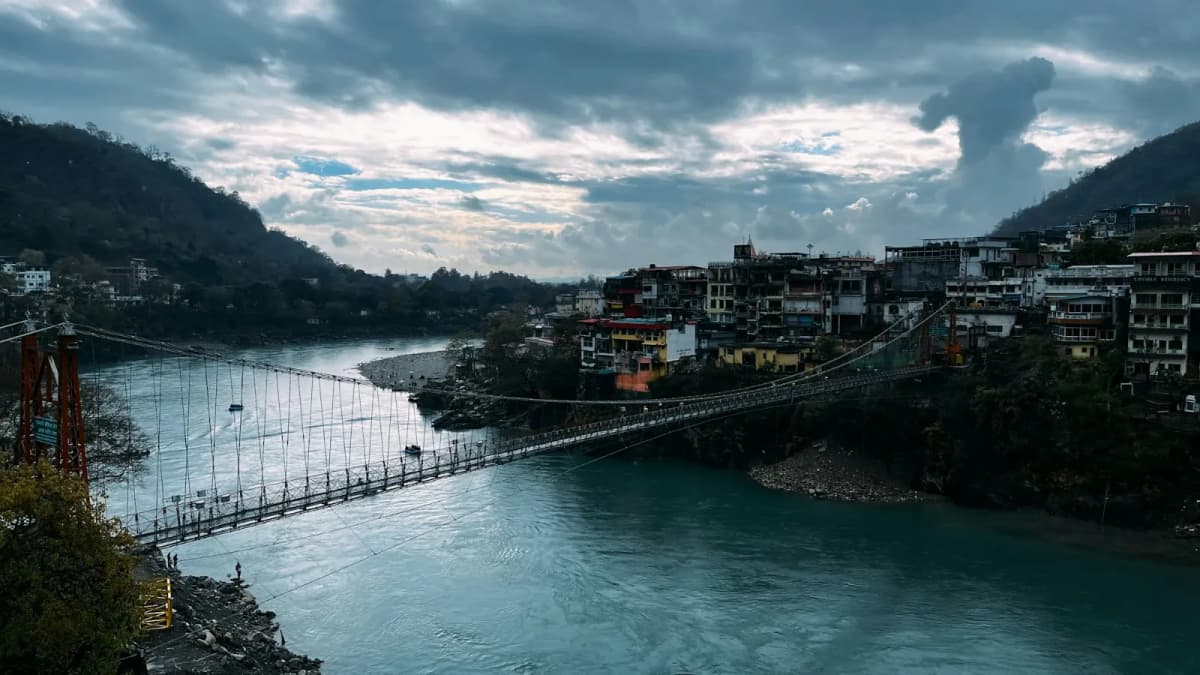
Suspension bridge over the turquoise Ganga at Rishikesh with riverside buildings and forested hills

Short answer: Rishikesh is a pilgrim and yoga town on the Ganga in Uttarakhand, India, where the river leaves the Himalayan foothills for the plains. Come for the evening Ganga aarti at Triveni Ghat or Parmarth Niketan, temples such as Neelkanth Mahadev, yoga and meditation in the Swargashram ashrams, white water rafting from late September to the end of June, and the start of the road to the Char Dham. Two things changed in 2026: Ram Jhula is shut for repairs, and the new Bajrang Setu beside the closed Lakshman Jhula is built but, as of late October 2026, still had no official opening date.

This guide is for three kinds of reader: Nepali Hindus and diaspora families planning a pilgrimage, yoga students choosing an ashram, and adventure travellers who want the river. We checked every rule that changes from season to season against an official source or a dated news report on 3 November 2026. Where a fact could not be confirmed, we have said so rather than guessing.

Why visit Rishikesh?

Rishikesh packs three very different trips into one small riverside town: a living Hindu pilgrimage, a world centre for yoga, and one of India's best known rafting rivers. Uttarakhand Tourism describes it as the "world capital of yoga and meditation", a holy town with pleasant weather through most of the year, a magnet for Beatles fans and the "gateway to the Garhwal Himalayas".

The town sits where the Ganga is still fast, cold and green. On the east bank, the Swargashram area is a cluster of ashrams that run yoga and spiritual courses. On the west bank, Muni Ki Reti and Tapovan hold cafes, guesthouses and rafting operators. Upstream, the river cuts through forested gorges at Shivpuri and Byasi, where most rafting trips begin.

Religious tradition gives the town its weight. Uttarakhand Tourism notes that Rishikesh is said to appear in the Skanda Purana and the Ramayana, and that Lord Rama and his brothers are said to have come here to do penance after the war with Ravana. For many Nepali families, a Rishikesh visit pairs naturally with Haridwar, Varanasi or a full Char Dham journey.

Rishikesh at a glanceDetailSource
StateUttarakhand, India; Rishikesh is a tehsil of Dehradun districtWikipedia
Average elevationAbout 340 metresWikipedia
Nearest airportJolly Grant Airport, Dehradun (DED), about 21 km awayUttarakhand Tourism
Railway stationsRishikesh and Yog Nagari Rishikesh (YNRK, opened January 2021)Wikipedia
Known forGanga aarti, ashrams, yoga, rafting, Beatles Ashram, start of the Char Dham roadUttarakhand Tourism
Big yoga eventInternational Yoga Festival at Parmarth Niketan, 9 to 15 March 2027International Yoga Festival
Food ruleTrade in meat, fish and eggs is banned inside municipal limits (upheld by India's Supreme Court in 2004)Supreme Court judgment
Time zoneIndia Standard Time (UTC+5:30), 15 minutes behind Nepal (UTC+5:45)Nepal Standard Time is UTC+5:45

If Rishikesh is one stop on a longer journey, our complete India travel guide covers the country as a whole, from money and SIM cards to safety and culture.

Who is Rishikesh best for?

  • Pilgrims and Hindu families: daily aarti, the Neelkanth Mahadev temple, Bharat Mandir, holy dips at Triveni Ghat and an easy link to Haridwar and the Char Dham.
  • Yoga and meditation students: ashram stays, drop in classes and longer courses, plus the March yoga festival.
  • Adventure travellers: rafting on graded stretches of the Ganga, kayaking, bungee jumping, a giant swing, a zipline and forest treks.
  • Music and history fans: the Beatles Ashram, where the band stayed in 1968.
  • Vegetarian travellers: a town where vegetarian food is the default, not the exception.

Which ghats and aartis should you see in Rishikesh?
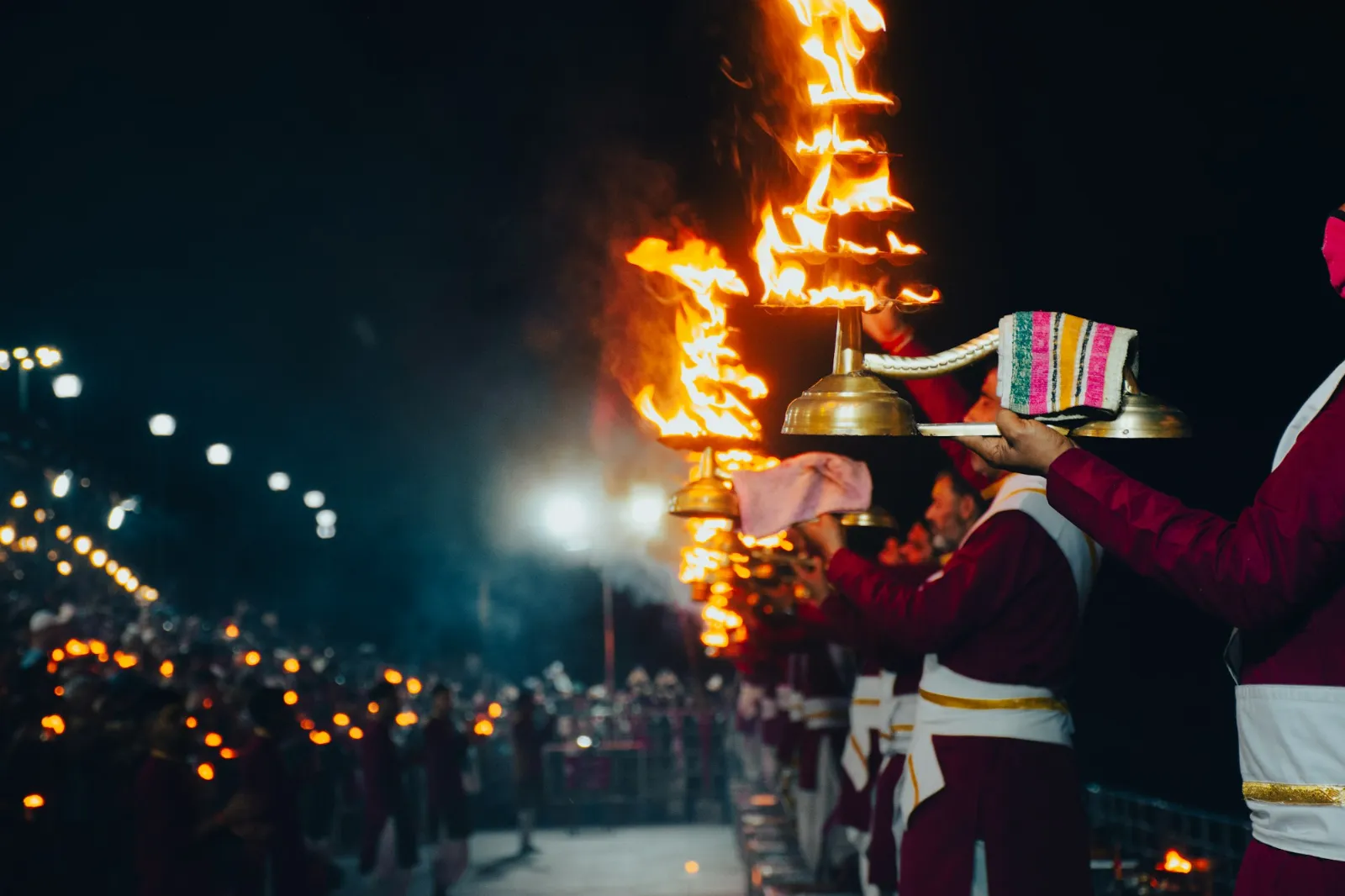
Priests raise flaming brass lamps during the evening Ganga aarti at Triveni Ghat, Rishikesh

The two aartis to see are the public ceremony at Triveni Ghat in the heart of town and the ashram aarti at Parmarth Niketan in Swargashram. Both happen every evening around sunset. Triveni feels like a town festival with towering lamps and big crowds; Parmarth is more devotional, with singing led by the ashram and a fire ritual (yagna) beforehand.

Triveni Ghat

Uttarakhand Tourism calls Triveni the best known bathing ghat in Rishikesh, where most pilgrims take a holy dip before visiting the town's temples. Its evening aarti is described as "a ceremony accompanied by lights, drums and chanting, with the entire ghat lit with flickering lamps". India's official tourism site, Incredible India, says the aarti lasts about 45 minutes and lists the ghat's aarti hours as 6pm to 7pm.

The name Triveni refers to the traditional belief that three sacred rivers, the Ganga, Yamuna and Saraswati, meet here. Geographically, the Yamuna joins the Ganga much further south at Prayagraj, so treat this as a matter of faith rather than a map reading.

Parmarth Niketan Ganga Aarti

Parmarth Niketan, one of the largest ashrams in Rishikesh, was established in 1942 by Swami Sukhdevanand Ji Maharaj, according to Uttarakhand Tourism. The ashram's own page says its sunset aarti "draws between hundreds and thousands of visitors each day from all cultures, all languages, all religions". It begins every day at sunset at Parmarth's Ganga Ghat, and the yagna begins at the ghat half an hour before the aarti. Parmarth does not publish a fixed clock time because sunset moves through the year; it asks visitors to check with reception for that day's timing.

If you cannot travel, Parmarth streams the aarti on its Facebook and YouTube channels, which many diaspora families use to join in from abroad.

Checked: 3 November 2026, source: Parmarth Niketan, Divine Ganga Aarti and Yagna and Incredible India, Triveni Ghat.

QuestionTriveni Ghat aartiParmarth Niketan aarti
WhereCentral Rishikesh, west bankParmarth Ganga Ghat, Swargashram, east bank
WhenEvery evening; listed as 6pm to 7pm by Incredible IndiaEvery day at sunset; yagna starts 30 minutes earlier; times vary by season
How longAbout 45 minutesNot stated; ask at reception
AtmospherePublic, lively, large lamps, drums and bellsAshram led, devotional singing, fire ritual, mixed international crowd
Who can attendEveryoneEveryone; the ashram says it is open to all religions
Getting there nowEasy from the bus stand and town centreRam Jhula is closed for repairs, so cross by Janki Setu (see bridges below)
Watch onlineNo official stream foundYes, on Parmarth's Facebook and YouTube

Har Ki Pauri in Haridwar

Many visitors also see the aarti at Har Ki Pauri in Haridwar, downstream. Uttarakhand Tourism describes it as being held at dusk every day "with towering lamps", temple bells, conch shells, chanting and hundreds of floating diyas. If you are travelling with elders who want to see both, plan separate evenings so nobody has to rush.

Ghat etiquette for first timers

  • Arrive at least 30 to 45 minutes early in the busy months to find a place to sit.
  • Remove shoes where others do, and keep them in a bag rather than on the steps.
  • Dress modestly; Parmarth's guidelines ask men and women to cover shoulders, midriff and calves.
  • Ask before photographing priests or families performing rituals.
  • The Ganga is fast and cold even when it looks calm. Bathe only at a recognised ghat, hold the chains or railings, and keep children within arm's reach.
Explore India tour packages
View all →

Which Rishikesh temples are worth visiting, including Neelkanth Mahadev?

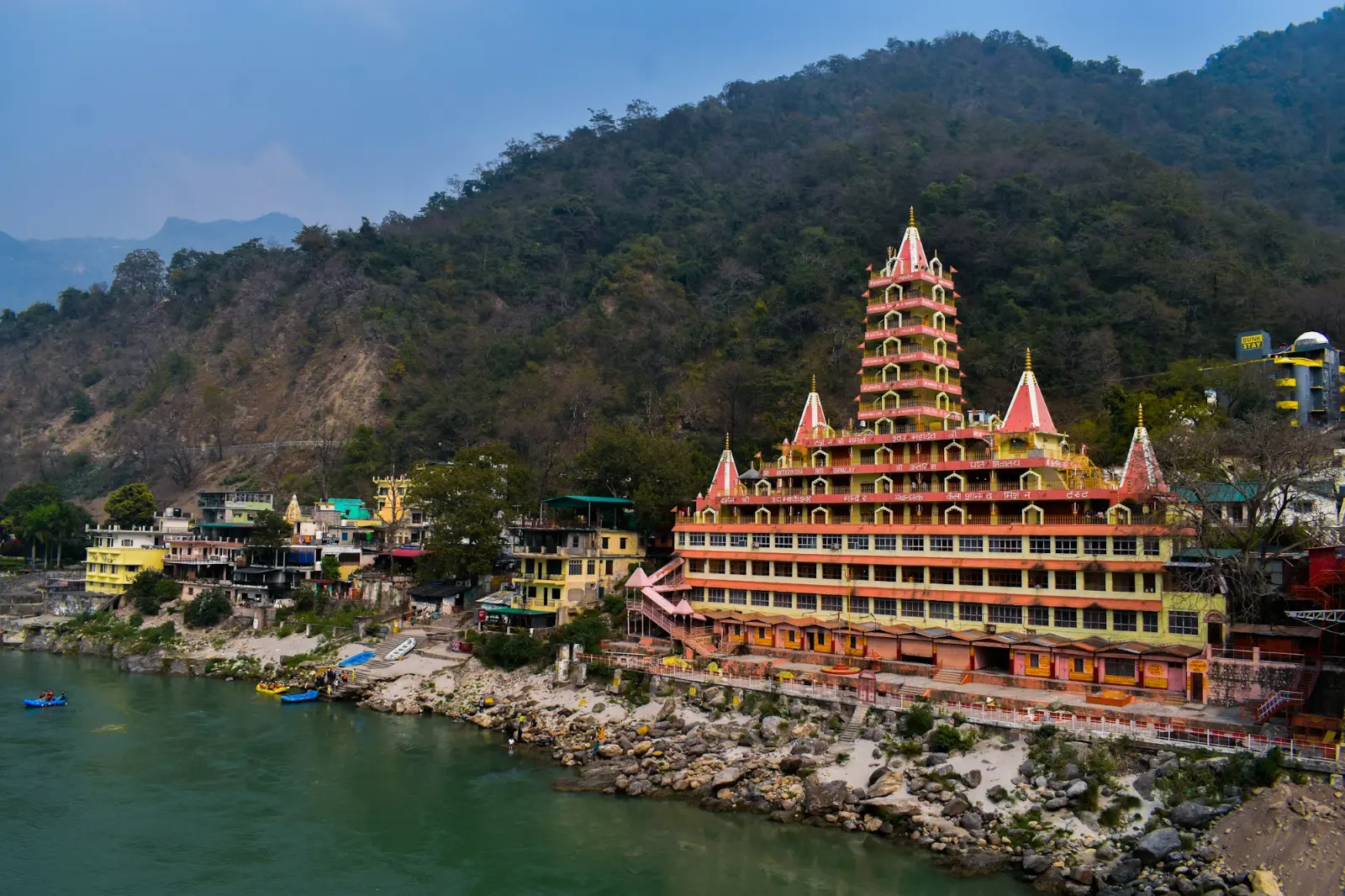
Tiered Trayambakeshwar temple rising above the Ganga riverbank near Lakshman Jhula in Rishikesh

The three temples most visitors prioritise are Neelkanth Mahadev in the forested hills above the river, the 13 floor Trayambakeshwar temple on the riverbank near Lakshman Jhula, and Bharat Mandir, one of the oldest shrines in town, near Triveni Ghat. Add Gita Bhawan and the Beatles Ashram if you have a spare morning.

Neelkanth Mahadev

Neelkanth Mahadev is a Shiva temple in Pauri Garhwal district. The Pauri district administration says it lies 32 km from Rishikesh by road via the barrage, or 22 km via Ram Jhula (the road on the Swargashram side), and there is also a 12 km trekking path through dense forest. The district gives its elevation as 926 metres, set between the Vishnukoot, Brahmakoot and Manikoot valleys where the Madhumati and Pankaja rivers meet.

The name means "blue throated". In the Samudra Manthan story, Shiva drank the poison that rose from the churning of the ocean, and his throat turned blue. Maha Shivaratri (February to March) and the Shravan month (July to August) are the busiest times, when kanwariya pilgrims walk to the temple in large numbers. Nepali devotees will recognise Shrawan as the same sacred month observed at Pashupatinath back home.

With Ram Jhula closed for repairs, the shorter route starts on the east bank, which you now reach by Janki Setu. If you hire a taxi or jeep, agree the return time before you set off, because the hill road is narrow and traffic builds on festival days.

Checked: 3 November 2026, source: District Pauri Garhwal, Neelkanth Mahadev Temple.

Trayambakeshwar temple

Incredible India describes Trayambakeshwar as a 13 floor temple on the banks of the Ganga, with a Shivalinga on the top floor and many deities on the floors below. It lists the temple as open 6am to 7pm with a break from 12pm to 2pm. The pink and orange tower is the landmark you see in almost every photo of the Lakshman Jhula area, and the climb to the top is worth it for the view over the river.

Bharat Mandir

Bharat Mandir, near Triveni Ghat, is dedicated to Lord Vishnu in the form of Hrishikesh Narayan. Uttarakhand Tourism says it is one of the oldest shrines in Rishikesh, said to have been founded by Adi Shankaracharya, with an idol carved from a single black Saligram stone. Incredible India lists its hours as 5am to 12pm and 4pm to 9pm, and Basant Panchami is its spring festival. Nepali visitors may find the Saligram connection especially meaningful, since these sacred stones are traditionally collected from the Kali Gandaki river in Nepal.

Other temples and sacred sites

  • Gita Bhawan: near Lakshman Jhula, with scenes from the Ramayana and Mahabharata painted on its walls and a branch of the Gita Press (Uttarakhand Tourism).
  • Kunjapuri: a hilltop shrine reached on a trek that Uttarakhand Tourism says offers views of snow covered peaks.
  • Swargashram ashrams: a cluster of ashrams on the east bank, many with temples and evening programmes open to visitors.

Beatles Ashram (Chaurasi Kutia)

The Beatles Ashram is the former ashram of Maharishi Mahesh Yogi in a forest patch in the Swargashram area. Incredible India says the band stayed from February to April 1968 and that the site is also called Chaurasi Kutia, the "sanctuary of 84 cottages", after its beehive shaped meditation huts. Uttarakhand Tourism says the band composed nearly 48 songs there, many of which appeared on the White Album. Today you walk among the ruins and the murals painted on the walls. Incredible India lists the opening hours as 10am to 4pm.

SiteDeity or themeWhereListed hoursTip
Neelkanth MahadevShivaHills of Pauri Garhwal, 22 km or 32 km by roadNot published by the district pageGo early; avoid Shivaratri and Shravan if you dislike crowds
TrayambakeshwarShiva, with many deities on 13 floorsRiverbank near Lakshman Jhula6am to 7pm, closed 12pm to 2pmClimb for the river view
Bharat MandirVishnu as Hrishikesh NarayanNear Triveni Ghat5am to 12pm and 4pm to 9pmCombine with the Triveni aarti
Gita BhawanEpic murals, Gita PressNear Lakshman JhulaNot listedGood for children who know the stories
Beatles Ashram1968 meditation retreat ruinsForest edge, Swargashram10am to 4pmMorning light is softer for photos

Checked: 3 November 2026, source: Incredible India, Trayambakeshwar Temple, Bharat Mandir and Beatles Ashram. Temple hours change on festival days; confirm locally.

Which bridges can you cross in Rishikesh right now?

As of 3 November 2026, Janki Setu is the main crossing between the two banks in town. Ram Jhula has been closed to all movement, including pedestrians, since 25 July 2026 for repairs, the historic Lakshman Jhula has been shut since July 2019, and the new Bajrang Setu beside it is built but still had no official opening date in late October 2026. This matters because older guides still tell you to walk across Ram Jhula to reach Parmarth Niketan and Swargashram.

Lakshman Jhula

Uttarakhand Tourism describes Lakshman Jhula as a 137 metre suspension bridge built in 1939, 21 metres above the river, at the spot where Lakshmana is said to have crossed the Ganga on jute ropes. In July 2019 an expert team recommended "the immediate closure of the bridge to all traffic" because its parts were near failure, and the bridge was shut (reported by The Wire, 13 July 2019). We found no official notice of it reopening.

Bajrang Setu

Bajrang Setu is the new 132 metre bridge built beside Lakshman Jhula, with glass walkways on both sides of a central deck. Reports this year have been mixed: Amar Ujala reported in May 2026 that people had started crossing it before any inauguration, and some national outlets described it as open in August. However, on 21 October 2026 Amar Ujala quoted the Public Works Department's executive engineer as saying that no date had yet been fixed for opening the bridge officially to the public, and that the operating rules for the glass walkways were still not settled. We found no government notice of an official opening, so ask locally on the day whether it is open, and to whom.

Ram Jhula

Amar Ujala reported that the Public Works Department in Narendra Nagar stopped all movement on Ram Jhula from 25 July 2026, including pedestrians, to replace 20 piers and 440 suspender wires. The department first said the bridge would reopen by December 2026, but on 18 September 2026 the paper reported that the completion deadline had been moved to February 2027, with officials still trying to finish sooner. On 12 October 2026 it reported the work in its final stage, with the aim of finishing before the Haridwar Kumbh, after which two wheelers would again be allowed. Until it reopens, plan your Parmarth and Swargashram visits via Janki Setu.

Janki Setu

Janki Setu opened in November 2020 and links the Parmarth Niketan area with Kailash Ashram. It was built as Rishikesh's first three lane bridge, with a central lane for pedestrians and a separate lane for two wheelers (Wikipedia). Amar Ujala reported in May 2026 that, with Lakshman Jhula shut, local two wheeler riders were detouring via Ram Jhula and Janki Setu; with Ram Jhula now closed too, Janki Setu carries that traffic.

BridgeStatus on 3 November 2026Who can use itSource
Lakshman JhulaClosed since July 2019NobodyThe Wire, 2019; no reopening notice found
Bajrang SetuBuilt; no official opening date as of 21 October 2026Unclear; ask locally on the dayAmar Ujala, 21 May and 21 October 2026
Ram JhulaClosed for repairs since 25 July 2026; deadline moved to February 2027Nobody until reopeningAmar Ujala, 26 July, 18 September and 12 October 2026
Janki SetuOpenPedestrians in the centre lane; two wheelers in their own laneWikipedia, Amar Ujala, May 2026

Checked: 3 November 2026, source: Amar Ujala, Ram Jhula closure, Amar Ujala, deadline extended, Amar Ujala, repair progress, Amar Ujala, Bajrang Setu in May, Amar Ujala, Bajrang Setu opening and The Wire, Lakshman Jhula. Bridge status can change at short notice; ask your hotel on arrival.

Is Rishikesh good for yoga and meditation?

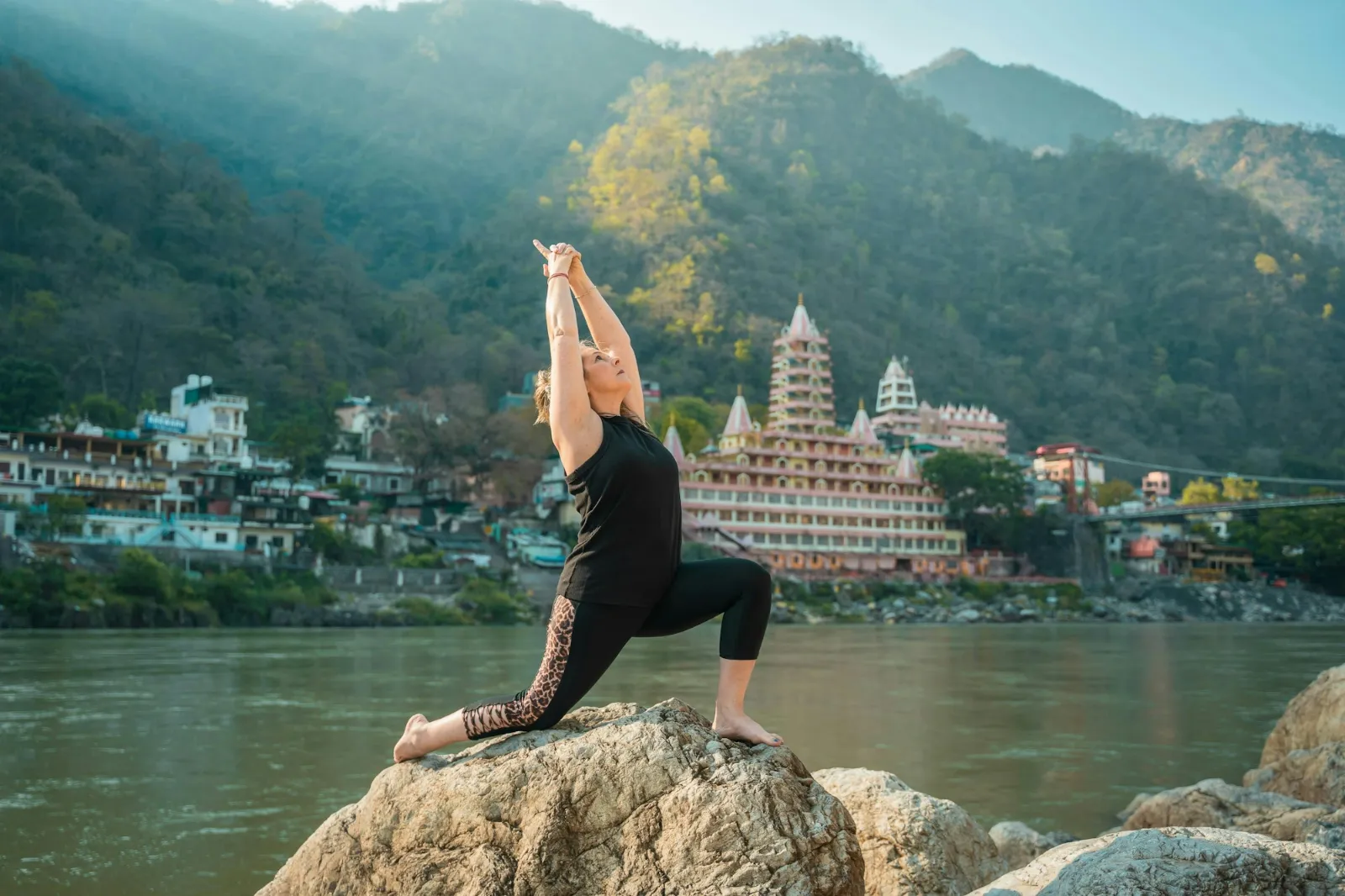
Woman holding a low lunge yoga pose on a Ganga riverside rock in Rishikesh

Yes. Rishikesh is the classic place in India to study yoga, with ashrams that host residential students, centres that run drop in classes, and an International Yoga Festival every March. Uttarakhand Tourism calls it "the yoga capital of the world", and Wikipedia notes the festival has been held each March since 1999. The next edition runs from 9 to 15 March 2027 at Parmarth Niketan.

Most ashrams and schools cluster in two areas. Swargashram, on the east bank, is the traditional ashram quarter. Tapovan and the Lakshman Jhula area, on the west bank, have more independent studios, cafes and guesthouses, and a younger international crowd.

Ashram stay or yoga school?

OptionBest forWhat to expect
Ashram stayPilgrims, meditation, families, older travellersDaily routine, aarti, satsang, simple vegetarian food, strict house rules
Residential yoga courseStudents who want structured teaching over weeksFixed timetable, set curriculum, dorm or private rooms; check what certification is offered and who awards it
Drop in classesShort stays, rafting groups, couplesOne or two classes a day at studios or hotels; no long commitment
Festival weekExperienced practitioners who want many teachers in one placePacked schedule and crowds; book rooms early

What ashram life asks of you

Parmarth Niketan's published guidelines give a clear picture of what most traditional ashrams expect. Its stay is meant for pilgrims "who are here to devote themselves to sadhana, meditation, seva and satsang", and all residents are expected to join the evening Ganga aarti. Its rules include:

  • Clothing that covers shoulders, midriff and calves for men and women; yoga students are expected to wear white.
  • Shoes off before entering buildings or sacred places.
  • No smoking, alcohol or drugs, and no eggs or other non vegetarian food; the ashram also recommends avoiding onion and garlic.
  • No playing cards, no loud radios or television, and no pets.
  • Silence is appreciated from 10pm to 6am.
  • Donations should go to the office against a receipt, not to individuals.

Parmarth also warns that it "never requests payment for accommodations via phone or WhatsApp". If someone claiming to be from an ashram asks you to pay that way, treat it as a likely fraud and book only through the ashram's own website or office.

Checked: 3 November 2026, source: Parmarth Niketan, Ashram Guidelines and International Yoga Festival 2027.

How to choose a yoga course

  • Ask who teaches: the named lead teacher, how long they have taught, and whether classes are in English, Hindi or both.
  • Ask what you get: daily hours, the balance of asana, pranayama, philosophy and meditation, and whether meals and rooms are included.
  • Ask about certification: if you need a teaching credential, confirm which body recognises it before you pay anything.
  • Read recent reviews: look for comments from the last few months, not years.
  • Pay safely: use the school's official website or pay on arrival; avoid transfers to personal accounts.

When can you go river rafting in Rishikesh?

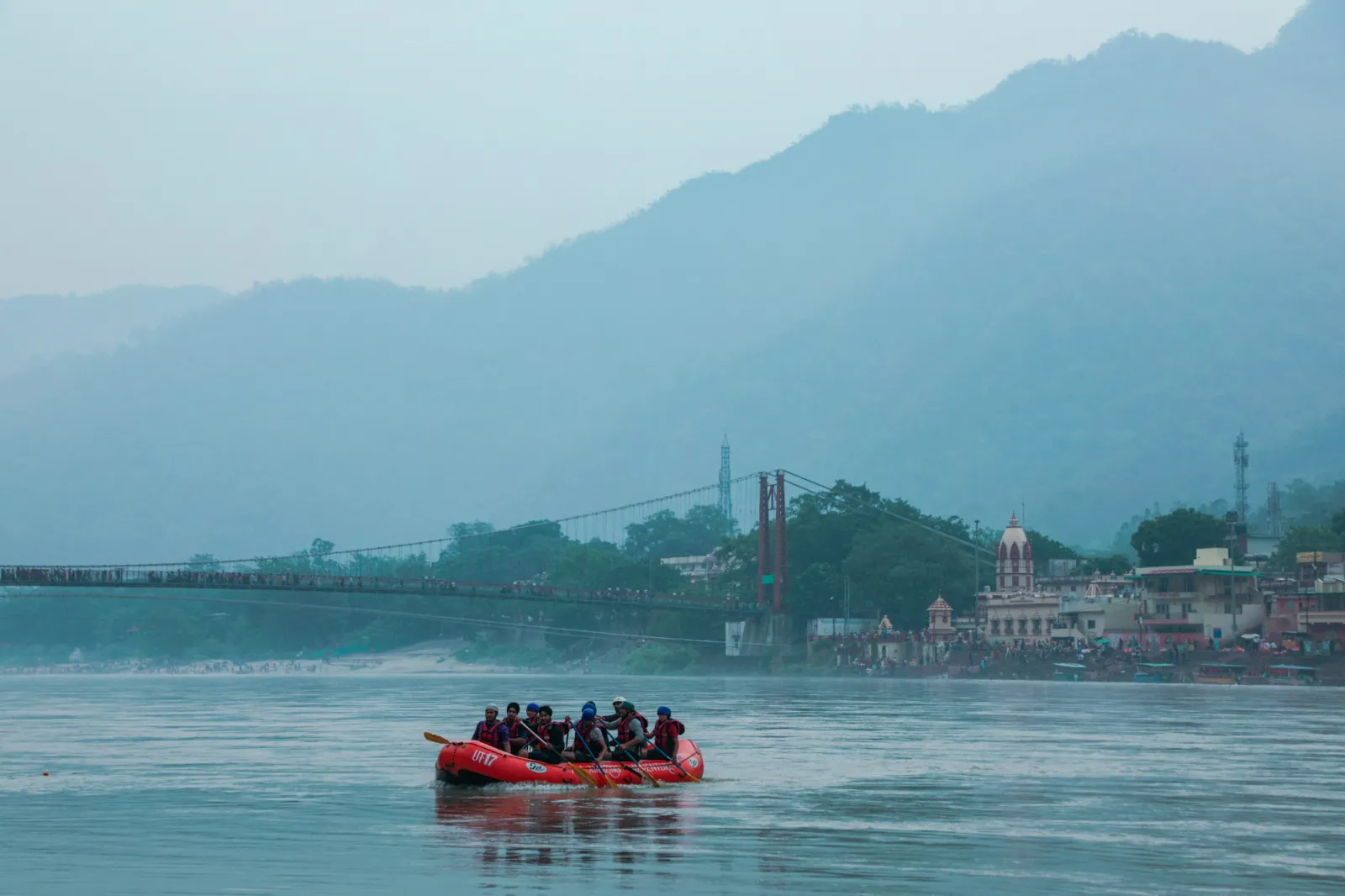
Group of rafters in helmets paddling a red raft on the Ganga at Rishikesh

Rishikesh river rafting runs from about late September to the end of June and stops each year for the monsoon. Uttarakhand Tourism names September to June as the best months for rafting. In 2026 the last trips ran on 30 June, and the 2026 to 2027 season was launched at Shivpuri on 23 September at an event organised by the state tourism board, with commercial trips from 24 September.

The monsoon closure is about safety: the Ganga rises fast and carries debris when the rains arrive. The reopening date is not fixed in advance. Each year the tourism department, forest department and district administration inspect the river and permit rafting when the water level is suitable. In 2025, for example, rafting in the Muni Ki Reti area resumed on 27 September after a joint inspection on 24 September.

PeriodRafting statusWhat it means for you
Late September to NovemberSeason reopens after river inspectionsStrong post monsoon flow, green hills; coincides with Dashain and Tihar holidays
December to FebruaryOpenCold water and cool mornings; pack a warm layer for after the trip
March to JuneOpenWarmer water and the busiest weekends; book ahead around school holidays
July to late SeptemberClosed for the monsoon (in 2026, from 1 July until 24 September)No commercial rafting; plan the ghats, temples and yoga instead

Checked: 3 November 2026, source: ETV Bharat, 2026 to 2027 season launch, Amar Ujala, monsoon closure, News Arena India, 2025 reopening and Uttarakhand Tourism, Rishikesh. We found no official closing or reopening notice published online; the dates above come from dated news reports.

Which rafting stretch should you choose?

Trips are named after where they start, and you finish downstream near Rishikesh. Shorter stretches suit first timers and families; longer ones add more rapids and more time on the water. Different sources measure the same stretch to different end points, so the distances below are approximate.

StretchApproximate lengthSource
BrahmpuriAbout 6 kmNavbharat Live, September 2026
Golf CourseAbout 8 kmNavbharat Live, September 2026
Shivpuri to Lakshman JhulaAround 11 km; Shivpuri itself is 19 km from RishikeshUttarakhand Tourism
Shivpuri (to Rishikesh beaches)About 18 kmNavbharat Live, September 2026
Marine DriveAbout 24 kmNavbharat Live, September 2026
Kodiyal to Ram Jhula or Neem Beach35 km, the longest common runAmar Ujala, July 2026

Uttarakhand Tourism calls the Shivpuri to Lakshman Jhula run "the commonest rafting stretch". Byasi, 30 km from Rishikesh, is another rafting and water sports base with riverside camps.

Rafting safety rules for the 2026 to 2027 season

Rafting in the state is governed by the Uttarakhand River Rafting and Kayaking Rules, 2014. For the 2026 to 2027 season, reports from the reopening list these requirements:

  • Helmets are mandatory for rafting and kayaking.
  • Certified life jackets must be worn.
  • Rafts must not carry more people than their rated capacity.
  • About 700 rafting guides are to be trained in phases in wilderness first aid and CPR.
  • Registered rafting firms received temporary permission at the season launch under the 2014 rules.

Two tourists died during the 2024 to 2025 season, which is why officials stressed quality checks on life jackets when rafting resumed in 2025. Choose a licensed operator, listen to the safety briefing, and tell the guide honestly if you cannot swim. Minimum age and health conditions vary by stretch and operator; ask before you book rather than relying on a website. Our guide to travel insurance for trips from Nepal explains how to check whether adventure activities such as rafting are covered.

Can beginners raft in Rishikesh?

Yes. The short Brahmpuri and Golf Course runs are the usual choice for first timers, and each raft is led by a guide who steers and calls the strokes. Expect to get wet, and keep your helmet and life jacket on for the whole trip. Uttarakhand Tourism notes that operators offer trips "for every grade of rafting", so say clearly that you are a beginner when you book.

Other adventures near Rishikesh

  • Bungee jumping: at Mohanchatti, from a maximum height of 83 metres (Uttarakhand Tourism).
  • Giant swing: also listed at 83 metres, claimed as the highest in India.
  • Zipline: a ride that Uttarakhand Tourism says reaches speeds of up to 160 km per hour.
  • Treks: the Waterfall Trek on well marked paths, and the Kunjapuri trek for Himalayan views.
  • Kayaking and rock climbing: offered by private operators; ask about instructor experience.

Is Rishikesh the gateway to Char Dham?

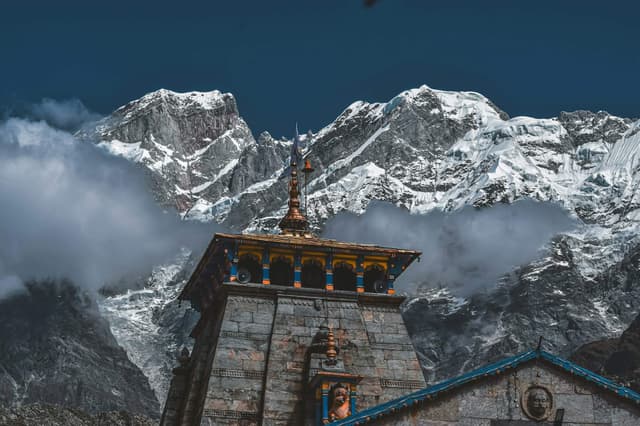
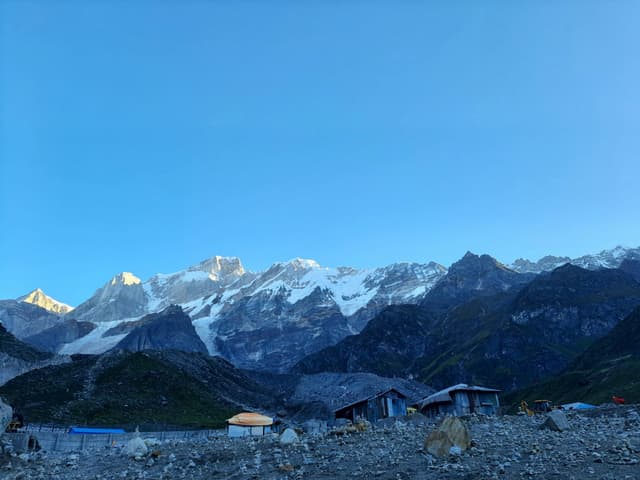
Yes. Rishikesh is a traditional starting point for the Char Dham Yatra to Yamunotri, Gangotri, Kedarnath and Badrinath, and it sits on the highway that runs north to Badrinath. Many pilgrims spend a night or two here for a holy dip and the aarti before heading into the mountains, and Haridwar and Dehradun serve as alternative bases.

Every Char Dham pilgrim must register with the Uttarakhand government before starting. Registration is done on the state's Tourist Care registration portal or its app, and our live guide notes that offline counters operate in Rishikesh and Haridwar for anyone who cannot register online. Our Char Dham Yatra guide for pilgrims explains the traditional order of the four shrines, registration, health checks and how long the circuit takes from Rishikesh.

ShrineDeityUsual orderNote for pilgrims starting in Rishikesh
YamunotriGoddess YamunaFirstWalking section to the shrine
GangotriGoddess GangaSecondRoad reaches close to the temple
KedarnathShivaThirdLong trek or helicopter; highest and hardest stop
BadrinathVishnuFourthOn the highway that starts through Rishikesh

The four temples close for winter each year, usually around Diwali and Bhai Dooj, with Badrinath closing a little later. Exact dates are announced each autumn by the temple committees, so check them before you plan a late season trip.

A railway is also coming. The Rishikesh to Karnaprayag line will run 126 km from Yog Nagari Rishikesh station through 12 planned stations, including Devprayag and Srinagar. It is still under construction, with completion now expected in December 2028, so for now the Char Dham journey is entirely by road or helicopter.

Checked: 3 November 2026, source: Uttarakhand Tourist Care registration portal (linked above) and Wikipedia, Rishikesh to Karnaprayag line.

How do you get to Rishikesh from Nepal or Delhi?

From Kathmandu, most travellers fly to Delhi, then continue to Rishikesh by a domestic flight to Dehradun, by train, or by road. From far western Nepal, the overland route crosses at Banbasa, opposite Mahendranagar in Kanchanpur district, and continues by bus or taxi through Uttarakhand.

Documents: Nepali citizens can check the ID to carry in our guide on whether Nepalis need a passport for India. Travellers of other nationalities should check the Indian visa rules for their passport on our India visa page before booking.

Kathmandu to Delhi

The nonstop Kathmandu to Delhi flight takes about 1 hour 30 minutes to 2 hours, and our Kathmandu to Delhi flight guide covers airlines, terminals and baggage. From Delhi you have three onward choices.

RouteHow it worksGood forSource
Delhi to Dehradun by airDaily flights from Delhi to Jolly Grant Airport (DED); taxis to Rishikesh, about 21 kmElders, short trips, Char Dham startsUttarakhand Tourism
Delhi to Rishikesh by railTrains to Rishikesh or Yog Nagari Rishikesh, or to Haridwar and onward by roadBudget travellers, families with luggageUttarakhand Tourism, Wikipedia
Delhi to Rishikesh by roadRegular and luxury buses from Delhi ISBT Kashmiri Gate; Rishikesh is about 240 km from Delhi's international airportGroups, flexible timingUttarakhand Tourism, Wikipedia
Far western Nepal via BanbasaCross from Mahendranagar to Banbasa; buses from Banbasa to Dehradun and Haridwar; a rail line from Banbasa through Bareilly towards DelhiKanchanpur, Kailali and Dadeldhura residentsWikipedia, Gomayu border guide

Jolly Grant Airport is a domestic airport with no international flights, so travellers from Kathmandu connect in Delhi. Uttarakhand Tourism says taxis to Rishikesh are easily available at the airport. For train bookings in India, our guide on getting around India by train, bus and air explains IRCTC, booking windows and how to choose between modes.

From Mahendranagar via the Banbasa border

Banbasa is in Champawat district of Uttarakhand, about 5 km from the Nepal border across from Mahendranagar, and about 10 km from Tanakpur. Nepali and Indian citizens use the open border there, while travellers of other nationalities must go through the official checkpoint. Direct buses run from Banbasa to Dehradun and Haridwar, among other cities, and a rail line connects Banbasa through Bareilly towards Delhi.

Be ready for the river. Four wheeled vehicles are stopped on the Banbasa bridge over the Mahakali when the flow rises: in September 2026, car and jeep traffic at the Gaddachauki and Banbasa crossing was halted for nine days after the flow passed 100,000 cusecs. If you are travelling in the monsoon, check the crossing status the day before. We have not given journey times because they depend on the bus or train and on traffic; ask the operator for the current schedule.

Checked: 3 November 2026, source: Uttarakhand Tourism, How to Reach Rishikesh (linked above), Wikipedia, Banbasa and Kantipur, Gaddachauki and Banbasa crossing.

Getting around Rishikesh itself

  • On foot: the riverside lanes between the ghats, ashrams and bridges are best walked.
  • Shared autos and e rickshaws: link the bus stand, Triveni Ghat, Tapovan and the bridges.
  • Taxis and jeeps: for Neelkanth Mahadev, Shivpuri, the airport and Haridwar.
  • Two wheelers: allowed on Janki Setu, not on Ram Jhula while it is closed; check locally before taking one towards Bajrang Setu.

Which local rules should visitors to Rishikesh know?

The rules that catch visitors out are about food, alcohol, dress and behaviour at sacred places. Meat, fish and eggs cannot be sold inside Rishikesh's municipal limits, the town has long been described as a dry area, and ashrams and temples expect modest clothing. None of this is hard to follow once you know it.

Meat, fish and eggs

Rishikesh's municipal bye laws ban public trade in non vegetarian food, including meat, fish and eggs, within municipal limits. In Om Prakash and Others v State of U.P. and Others, decided on 9 March 2004, India's Supreme Court upheld the bye law, holding that the geographical situation and culture of these pilgrim towns justify the restriction. The judgment notes that Haridwar and Muni Ki Reti have similar restrictions, from 1956 and 1976 respectively, and that trade outside the municipal limits was not affected.

In practice, menus in town are vegetarian, and many restaurants and ashram kitchens also cook without onion and garlic. For Nepali families who keep a vegetarian diet on pilgrimage, this makes Rishikesh one of the easiest places in India to eat. If you want a wider view of the cuisine, our guide on what to eat in India covers regional dishes and food safety.

Checked: 3 November 2026, source: Supreme Court of India, Om Prakash v State of U.P. (2004), via Indian Kanoon.

Alcohol

Rishikesh is generally described as a dry area. When the Uttarakhand government announced a liquor ban at the Char Dham and several other religious sites in November 2019, news reports said that "Haridwar and Rishikesh are already dry areas of the state". We could not find a current state excise notice online that names Rishikesh specifically, so the safe course is simple: do not expect to buy alcohol in town, do not carry or drink it at ghats, temples or ashrams, and remember that ashrams such as Parmarth prohibit all intoxicants on their premises.

Checked: 3 November 2026, source: News Bharati, Uttarakhand liquor ban at religious places (2019) and the Parmarth Niketan guidelines linked above.

Dress, behaviour and other rules

TopicWhat to doWhy
ClothingCover shoulders, midriff and knees or calves at temples, ghats and ashramsParmarth's published dress code; similar expectations across sacred sites
ShoesRemove before entering temples, ashram buildings and some ghat areasCustom at sacred places
Satellite phonesDo not bring one into IndiaBanned under Government of India guidelines, as Parmarth reminds foreign visitors
River safetyBathe only at recognised ghats, hold the chains, never swim aloneThe Ganga is fast and cold even in the dry months
BridgesUse Janki Setu; ask locally whether Bajrang Setu is officially open; obey any closure barriersRam Jhula and Lakshman Jhula are closed
PhotosAsk before photographing rituals, sadhus or familiesCourtesy, and some ashrams limit photography in halls
PaymentsBook ashram rooms only through official channelsParmarth warns of fraudsters asking for payment by phone or WhatsApp

Is Rishikesh safe?

Rishikesh is a well visited, family friendly town, and the main risks are ordinary ones: the river, road traffic on the hill routes, crowds on festival days and occasional overcharging. Solo women travel here often, especially for yoga, and the usual precautions apply: stay in well reviewed places, avoid isolated riverbanks and forest paths after dark, use registered taxis at night, and choose established studios over private one to one sessions with strangers. Our guide is India safe for travellers sets out what government advisories say, including advice for solo women.

How should you plan your Rishikesh trip?

Plan around three things: the season (for rafting and weather), the festival calendar (for crowds), and the bridge situation (for getting between the banks). Most visitors find two to three nights enough for the aartis, the main temples and one rafting trip, while yoga students often stay for weeks. If Rishikesh is part of a longer India trip, our guide on how many days to spend in India helps you balance it with other regions.

When is the best time to visit Rishikesh?

MonthsConditionsBest forWatch out for
October to NovemberPost monsoon, clear and green; rafting season under wayDashain and Tihar holiday trips from Nepal, rafting, aartiHoliday crowds from Delhi and Nepal
December to FebruaryCool to cold, especially mornings and eveningsYoga, ashram stays, quieter templesCold river water; the first big Kumbh bathing dates start in January 2027
March to AprilWarming days, spring festivalsInternational Yoga Festival (9 to 15 March 2027), Maha Shivaratri at NeelkanthHaridwar Kumbh crowds spill into Rishikesh in early 2027
May to JuneHot in the valleyRafting before the monsoon closure, Char Dham startsPeak domestic holiday traffic; rafting stops on 30 June
July to SeptemberMonsoon rain; heaviest in July and AugustShravan pilgrimage, lush sceneryRafting closed, Kanwar Yatra crowds, landslides on hill roads, high water at Banbasa

For Nepali travellers, the Dashain and Tihar holidays fall in the post monsoon window, which is a good time for Rishikesh: the river is open for rafting, the air is clear and the evenings are pleasant for the aarti. Our guide to the best time to visit India compares seasons across the country if you are combining Rishikesh with other regions.

Haridwar Kumbh 2027: dates that will affect Rishikesh

Haridwar's Ardh Kumbh runs from January to April 2027, and Rishikesh, just upstream, will be busier than usual on and around the main bathing days. The mela administration announced ten bathing dates in April 2026. The three Amrit Snan days are likely to be the busiest.

Date (2027)Bathing festival
14 JanuaryMakar Sankranti
6 FebruaryMauni Amavasya
11 FebruaryBasant Panchami
20 FebruaryMagh Purnima
6 MarchMaha Shivaratri (Amrit Snan)
8 MarchPhalguna Amavasya (Amrit Snan)
7 AprilNav Samvatsar
14 AprilMesh Sankranti (Amrit Snan)
15 AprilBathing day (name not given in the announcement)
20 AprilChaitra Purnima

Note that the March Amrit Snan days fall the same week as the International Yoga Festival. If you are coming for the festival, book rooms early and expect heavy traffic between Haridwar and Rishikesh.

Checked: 3 November 2026, source: PTI via The Week, Ardh Kumbh bathing dates.

Where to stay in Rishikesh

  • Swargashram: ashram quarter on the east bank; quiet, devotional and close to Parmarth. Reach it by Janki Setu while Ram Jhula is shut.
  • Tapovan and the Lakshman Jhula area: yoga studios, cafes and guesthouses, close to Bajrang Setu and Trayambakeshwar.
  • Muni Ki Reti: on the west bank near Janki Setu, convenient for rafting pick ups.
  • Central Rishikesh: near Triveni Ghat and the bus stand; practical for pilgrims and early starts to the Char Dham.
  • Riverside camps: upstream at Shivpuri and Byasi for rafting groups.

Money and practical notes for Nepali travellers

  • India uses the Indian rupee (INR). Nepali travellers usually carry INR and cards; Nepal Rastra Bank's 2026 rules on carrying INR notes are explained in our guide to the foreign currency limit from Nepal.
  • India is 15 minutes behind Nepal, so set your phone clock before your Parmarth or rafting pick up time.
  • Pack modest clothing in light layers, a warm top for winter evenings and the river, and sandals that slip off easily at temples.
  • Carry a small torch for the ghats after the aarti, when lanes can be dark.

What else to combine with Rishikesh

Rishikesh fits naturally with Haridwar for a two town pilgrimage, with the Char Dham for a full Himalayan yatra, or with Varanasi for a Ganga journey from the mountains to the plains; our guide to things to do in Varanasi covers its ghats and aarti. For a wider shortlist, see our round up of the best places to visit in India, and if you want ideas beyond temples and rivers, our list of things to do in India has more. Organised trips that include Rishikesh are listed under India tour packages.

Frequently asked questions

Is Lakshman Jhula open to walk across?

No. Lakshman Jhula in Rishikesh has been closed to all traffic since July 2019, after an expert team said its parts were close to failure, and we found no notice of it reopening. The new Bajrang Setu beside it is built, but on 21 October 2026 officials said no date had been fixed for its official opening. Janki Setu remains the dependable crossing, so check locally on arrival, as bridge rules can change.

Is Ram Jhula open in Rishikesh?

Not at the moment. Ram Jhula has been fully closed, including to pedestrians, since 25 July 2026 while the Public Works Department replaces piers and suspender wires. The first target was December 2026, but in September 2026 the deadline was moved to February 2027, and in October the work was reported in its final stage. Until it reopens, use Janki Setu to reach Parmarth Niketan and Swargashram.

What time is the Ganga Aarti at Parmarth Niketan?

The Parmarth Niketan Ganga Aarti in Rishikesh begins every day at sunset at the ashram's Ganga Ghat, with the yagna starting half an hour earlier. Because sunset changes through the year, the ashram does not publish a fixed time and asks visitors to check with reception on the day. Arrive early in busy months to find a seat on the steps.

When is rafting closed in Rishikesh?

Rafting in Rishikesh closes each year for the monsoon, usually from the start of July. In 2026 the last trips ran on 30 June, and the 2026 to 2027 season reopened in late September, with commercial trips from 24 September. The reopening date depends on water levels and river inspections and is set each year by the authorities, so it can move by days or weeks.

Is alcohol allowed in Rishikesh?

Rishikesh is generally described as a dry area, and reports on Uttarakhand's 2019 liquor ban at religious sites said Haridwar and Rishikesh were already dry areas. We could not find a current excise notice naming the town, so assume you cannot buy alcohol there. Do not drink at ghats, temples or ashrams; ashrams such as Parmarth Niketan prohibit all intoxicants on their premises.

How far is Neelkanth Mahadev from Rishikesh?

The Pauri Garhwal district administration says Neelkanth Mahadev is 32 km from Rishikesh by road via the barrage, or 22 km via the Ram Jhula side road, with a 12 km forest trekking path as another option. The temple stands at 926 metres. With Ram Jhula closed, reach the shorter east bank road by crossing Janki Setu.

Is Rishikesh safe for solo women?

Many women travel to Rishikesh alone, especially for yoga, and the town is generally relaxed and pilgrim focused. Take normal precautions: stay in well reviewed guesthouses or ashrams, avoid isolated riverbanks and forest trails after dark, use registered taxis at night, and choose established yoga schools. Read the current government advisories for India before you go.

Which is the nearest airport to Rishikesh?

The nearest airport to Rishikesh is Jolly Grant Airport in Dehradun (DED), about 21 km away according to Uttarakhand Tourism. It is a domestic airport with daily flights from Delhi, and taxis and prepaid taxis wait outside. Travellers from Kathmandu fly to Delhi first and then connect, or continue from Delhi by train or road.

Is Rishikesh good in winter?

Yes, Rishikesh is pleasant in winter for yoga, ashram stays and temple visits, with fewer crowds than spring or the summer holidays. Mornings and evenings are cold and the river is icy, so pack warm layers. Rafting stays open through winter. In 2027, the Haridwar Kumbh bathing days from mid January will make some weekends much busier.

Can beginners go rafting in Rishikesh?

Yes. Beginners in Rishikesh usually choose short stretches such as Brahmpuri, about 6 km, or Golf Course, about 8 km. Each raft is led by a guide, and helmets and certified life jackets are mandatory for the 2026 to 2027 season. Tell the operator you are a first timer and whether you can swim, and ask about age and health limits before booking.

How do I reach Rishikesh from Mahendranagar?

From Mahendranagar in Kanchanpur, cross into India at Banbasa, about 5 km from the border. Nepali citizens use the open border there; carry valid photo ID. Direct buses run from Banbasa to Haridwar and Dehradun, and from either town you continue to Rishikesh by bus or taxi. In the monsoon, cars can be stopped on the Banbasa bridge when the Mahakali runs high, so check the crossing first.

Tags
India
Share
G
Gomayu Team
Writer at Gomayu
Keep reading
Blog / India
Rishikesh Travel Guide: Ghats, Temples, Yoga and Rafting
34 min read 03 Nov 2026
Suspension bridge over the turquoise Ganga at Rishikesh with riverside buildings and forested hills

Short answer: Rishikesh is a pilgrim and yoga town on the Ganga in Uttarakhand, India, where the river leaves the Himalayan foothills for the plains. Come for the evening Ganga aarti at Triveni Ghat or Parmarth Niketan, temples such as Neelkanth Mahadev, yoga and meditation in the Swargashram ashrams, white water rafting from late September to the end of June, and the start of the road to the Char Dham. Two things changed in 2026: Ram Jhula is shut for repairs, and the new Bajrang Setu beside the closed Lakshman Jhula is built but, as of late October 2026, still had no official opening date.

This guide is for three kinds of reader: Nepali Hindus and diaspora families planning a pilgrimage, yoga students choosing an ashram, and adventure travellers who want the river. We checked every rule that changes from season to season against an official source or a dated news report on 3 November 2026. Where a fact could not be confirmed, we have said so rather than guessing.

Why visit Rishikesh?

Rishikesh packs three very different trips into one small riverside town: a living Hindu pilgrimage, a world centre for yoga, and one of India's best known rafting rivers. Uttarakhand Tourism describes it as the "world capital of yoga and meditation", a holy town with pleasant weather through most of the year, a magnet for Beatles fans and the "gateway to the Garhwal Himalayas".

The town sits where the Ganga is still fast, cold and green. On the east bank, the Swargashram area is a cluster of ashrams that run yoga and spiritual courses. On the west bank, Muni Ki Reti and Tapovan hold cafes, guesthouses and rafting operators. Upstream, the river cuts through forested gorges at Shivpuri and Byasi, where most rafting trips begin.

Religious tradition gives the town its weight. Uttarakhand Tourism notes that Rishikesh is said to appear in the Skanda Purana and the Ramayana, and that Lord Rama and his brothers are said to have come here to do penance after the war with Ravana. For many Nepali families, a Rishikesh visit pairs naturally with Haridwar, Varanasi or a full Char Dham journey.

Rishikesh at a glanceDetailSource
StateUttarakhand, India; Rishikesh is a tehsil of Dehradun districtWikipedia
Average elevationAbout 340 metresWikipedia
Nearest airportJolly Grant Airport, Dehradun (DED), about 21 km awayUttarakhand Tourism
Railway stationsRishikesh and Yog Nagari Rishikesh (YNRK, opened January 2021)Wikipedia
Known forGanga aarti, ashrams, yoga, rafting, Beatles Ashram, start of the Char Dham roadUttarakhand Tourism
Big yoga eventInternational Yoga Festival at Parmarth Niketan, 9 to 15 March 2027International Yoga Festival
Food ruleTrade in meat, fish and eggs is banned inside municipal limits (upheld by India's Supreme Court in 2004)Supreme Court judgment
Time zoneIndia Standard Time (UTC+5:30), 15 minutes behind Nepal (UTC+5:45)Nepal Standard Time is UTC+5:45

If Rishikesh is one stop on a longer journey, our complete India travel guide covers the country as a whole, from money and SIM cards to safety and culture.

Who is Rishikesh best for?

  • Pilgrims and Hindu families: daily aarti, the Neelkanth Mahadev temple, Bharat Mandir, holy dips at Triveni Ghat and an easy link to Haridwar and the Char Dham.
  • Yoga and meditation students: ashram stays, drop in classes and longer courses, plus the March yoga festival.
  • Adventure travellers: rafting on graded stretches of the Ganga, kayaking, bungee jumping, a giant swing, a zipline and forest treks.
  • Music and history fans: the Beatles Ashram, where the band stayed in 1968.
  • Vegetarian travellers: a town where vegetarian food is the default, not the exception.

Which ghats and aartis should you see in Rishikesh?

Priests raise flaming brass lamps during the evening Ganga aarti at Triveni Ghat, Rishikesh

The two aartis to see are the public ceremony at Triveni Ghat in the heart of town and the ashram aarti at Parmarth Niketan in Swargashram. Both happen every evening around sunset. Triveni feels like a town festival with towering lamps and big crowds; Parmarth is more devotional, with singing led by the ashram and a fire ritual (yagna) beforehand.

Triveni Ghat

Uttarakhand Tourism calls Triveni the best known bathing ghat in Rishikesh, where most pilgrims take a holy dip before visiting the town's temples. Its evening aarti is described as "a ceremony accompanied by lights, drums and chanting, with the entire ghat lit with flickering lamps". India's official tourism site, Incredible India, says the aarti lasts about 45 minutes and lists the ghat's aarti hours as 6pm to 7pm.

The name Triveni refers to the traditional belief that three sacred rivers, the Ganga, Yamuna and Saraswati, meet here. Geographically, the Yamuna joins the Ganga much further south at Prayagraj, so treat this as a matter of faith rather than a map reading.

Parmarth Niketan Ganga Aarti

Parmarth Niketan, one of the largest ashrams in Rishikesh, was established in 1942 by Swami Sukhdevanand Ji Maharaj, according to Uttarakhand Tourism. The ashram's own page says its sunset aarti "draws between hundreds and thousands of visitors each day from all cultures, all languages, all religions". It begins every day at sunset at Parmarth's Ganga Ghat, and the yagna begins at the ghat half an hour before the aarti. Parmarth does not publish a fixed clock time because sunset moves through the year; it asks visitors to check with reception for that day's timing.

If you cannot travel, Parmarth streams the aarti on its Facebook and YouTube channels, which many diaspora families use to join in from abroad.

Checked: 3 November 2026, source: Parmarth Niketan, Divine Ganga Aarti and Yagna and Incredible India, Triveni Ghat.

QuestionTriveni Ghat aartiParmarth Niketan aarti
WhereCentral Rishikesh, west bankParmarth Ganga Ghat, Swargashram, east bank
WhenEvery evening; listed as 6pm to 7pm by Incredible IndiaEvery day at sunset; yagna starts 30 minutes earlier; times vary by season
How longAbout 45 minutesNot stated; ask at reception
AtmospherePublic, lively, large lamps, drums and bellsAshram led, devotional singing, fire ritual, mixed international crowd
Who can attendEveryoneEveryone; the ashram says it is open to all religions
Getting there nowEasy from the bus stand and town centreRam Jhula is closed for repairs, so cross by Janki Setu (see bridges below)
Watch onlineNo official stream foundYes, on Parmarth's Facebook and YouTube

Har Ki Pauri in Haridwar

Many visitors also see the aarti at Har Ki Pauri in Haridwar, downstream. Uttarakhand Tourism describes it as being held at dusk every day "with towering lamps", temple bells, conch shells, chanting and hundreds of floating diyas. If you are travelling with elders who want to see both, plan separate evenings so nobody has to rush.

Ghat etiquette for first timers

  • Arrive at least 30 to 45 minutes early in the busy months to find a place to sit.
  • Remove shoes where others do, and keep them in a bag rather than on the steps.
  • Dress modestly; Parmarth's guidelines ask men and women to cover shoulders, midriff and calves.
  • Ask before photographing priests or families performing rituals.
  • The Ganga is fast and cold even when it looks calm. Bathe only at a recognised ghat, hold the chains or railings, and keep children within arm's reach.
Explore India tour packages
View all →

Which Rishikesh temples are worth visiting, including Neelkanth Mahadev?
Tiered Trayambakeshwar temple rising above the Ganga riverbank near Lakshman Jhula in Rishikesh

The three temples most visitors prioritise are Neelkanth Mahadev in the forested hills above the river, the 13 floor Trayambakeshwar temple on the riverbank near Lakshman Jhula, and Bharat Mandir, one of the oldest shrines in town, near Triveni Ghat. Add Gita Bhawan and the Beatles Ashram if you have a spare morning.

Neelkanth Mahadev

Neelkanth Mahadev is a Shiva temple in Pauri Garhwal district. The Pauri district administration says it lies 32 km from Rishikesh by road via the barrage, or 22 km via Ram Jhula (the road on the Swargashram side), and there is also a 12 km trekking path through dense forest. The district gives its elevation as 926 metres, set between the Vishnukoot, Brahmakoot and Manikoot valleys where the Madhumati and Pankaja rivers meet.

The name means "blue throated". In the Samudra Manthan story, Shiva drank the poison that rose from the churning of the ocean, and his throat turned blue. Maha Shivaratri (February to March) and the Shravan month (July to August) are the busiest times, when kanwariya pilgrims walk to the temple in large numbers. Nepali devotees will recognise Shrawan as the same sacred month observed at Pashupatinath back home.

With Ram Jhula closed for repairs, the shorter route starts on the east bank, which you now reach by Janki Setu. If you hire a taxi or jeep, agree the return time before you set off, because the hill road is narrow and traffic builds on festival days.

Checked: 3 November 2026, source: District Pauri Garhwal, Neelkanth Mahadev Temple.

Trayambakeshwar temple

Incredible India describes Trayambakeshwar as a 13 floor temple on the banks of the Ganga, with a Shivalinga on the top floor and many deities on the floors below. It lists the temple as open 6am to 7pm with a break from 12pm to 2pm. The pink and orange tower is the landmark you see in almost every photo of the Lakshman Jhula area, and the climb to the top is worth it for the view over the river.

Bharat Mandir

Bharat Mandir, near Triveni Ghat, is dedicated to Lord Vishnu in the form of Hrishikesh Narayan. Uttarakhand Tourism says it is one of the oldest shrines in Rishikesh, said to have been founded by Adi Shankaracharya, with an idol carved from a single black Saligram stone. Incredible India lists its hours as 5am to 12pm and 4pm to 9pm, and Basant Panchami is its spring festival. Nepali visitors may find the Saligram connection especially meaningful, since these sacred stones are traditionally collected from the Kali Gandaki river in Nepal.

Other temples and sacred sites

  • Gita Bhawan: near Lakshman Jhula, with scenes from the Ramayana and Mahabharata painted on its walls and a branch of the Gita Press (Uttarakhand Tourism).
  • Kunjapuri: a hilltop shrine reached on a trek that Uttarakhand Tourism says offers views of snow covered peaks.
  • Swargashram ashrams: a cluster of ashrams on the east bank, many with temples and evening programmes open to visitors.

Beatles Ashram (Chaurasi Kutia)

The Beatles Ashram is the former ashram of Maharishi Mahesh Yogi in a forest patch in the Swargashram area. Incredible India says the band stayed from February to April 1968 and that the site is also called Chaurasi Kutia, the "sanctuary of 84 cottages", after its beehive shaped meditation huts. Uttarakhand Tourism says the band composed nearly 48 songs there, many of which appeared on the White Album. Today you walk among the ruins and the murals painted on the walls. Incredible India lists the opening hours as 10am to 4pm.

SiteDeity or themeWhereListed hoursTip
Neelkanth MahadevShivaHills of Pauri Garhwal, 22 km or 32 km by roadNot published by the district pageGo early; avoid Shivaratri and Shravan if you dislike crowds
TrayambakeshwarShiva, with many deities on 13 floorsRiverbank near Lakshman Jhula6am to 7pm, closed 12pm to 2pmClimb for the river view
Bharat MandirVishnu as Hrishikesh NarayanNear Triveni Ghat5am to 12pm and 4pm to 9pmCombine with the Triveni aarti
Gita BhawanEpic murals, Gita PressNear Lakshman JhulaNot listedGood for children who know the stories
Beatles Ashram1968 meditation retreat ruinsForest edge, Swargashram10am to 4pmMorning light is softer for photos

Checked: 3 November 2026, source: Incredible India, Trayambakeshwar Temple, Bharat Mandir and Beatles Ashram. Temple hours change on festival days; confirm locally.

Which bridges can you cross in Rishikesh right now?

As of 3 November 2026, Janki Setu is the main crossing between the two banks in town. Ram Jhula has been closed to all movement, including pedestrians, since 25 July 2026 for repairs, the historic Lakshman Jhula has been shut since July 2019, and the new Bajrang Setu beside it is built but still had no official opening date in late October 2026. This matters because older guides still tell you to walk across Ram Jhula to reach Parmarth Niketan and Swargashram.

Lakshman Jhula

Uttarakhand Tourism describes Lakshman Jhula as a 137 metre suspension bridge built in 1939, 21 metres above the river, at the spot where Lakshmana is said to have crossed the Ganga on jute ropes. In July 2019 an expert team recommended "the immediate closure of the bridge to all traffic" because its parts were near failure, and the bridge was shut (reported by The Wire, 13 July 2019). We found no official notice of it reopening.

Bajrang Setu

Bajrang Setu is the new 132 metre bridge built beside Lakshman Jhula, with glass walkways on both sides of a central deck. Reports this year have been mixed: Amar Ujala reported in May 2026 that people had started crossing it before any inauguration, and some national outlets described it as open in August. However, on 21 October 2026 Amar Ujala quoted the Public Works Department's executive engineer as saying that no date had yet been fixed for opening the bridge officially to the public, and that the operating rules for the glass walkways were still not settled. We found no government notice of an official opening, so ask locally on the day whether it is open, and to whom.

Ram Jhula

Amar Ujala reported that the Public Works Department in Narendra Nagar stopped all movement on Ram Jhula from 25 July 2026, including pedestrians, to replace 20 piers and 440 suspender wires. The department first said the bridge would reopen by December 2026, but on 18 September 2026 the paper reported that the completion deadline had been moved to February 2027, with officials still trying to finish sooner. On 12 October 2026 it reported the work in its final stage, with the aim of finishing before the Haridwar Kumbh, after which two wheelers would again be allowed. Until it reopens, plan your Parmarth and Swargashram visits via Janki Setu.

Janki Setu

Janki Setu opened in November 2020 and links the Parmarth Niketan area with Kailash Ashram. It was built as Rishikesh's first three lane bridge, with a central lane for pedestrians and a separate lane for two wheelers (Wikipedia). Amar Ujala reported in May 2026 that, with Lakshman Jhula shut, local two wheeler riders were detouring via Ram Jhula and Janki Setu; with Ram Jhula now closed too, Janki Setu carries that traffic.

BridgeStatus on 3 November 2026Who can use itSource
Lakshman JhulaClosed since July 2019NobodyThe Wire, 2019; no reopening notice found
Bajrang SetuBuilt; no official opening date as of 21 October 2026Unclear; ask locally on the dayAmar Ujala, 21 May and 21 October 2026
Ram JhulaClosed for repairs since 25 July 2026; deadline moved to February 2027Nobody until reopeningAmar Ujala, 26 July, 18 September and 12 October 2026
Janki SetuOpenPedestrians in the centre lane; two wheelers in their own laneWikipedia, Amar Ujala, May 2026

Checked: 3 November 2026, source: Amar Ujala, Ram Jhula closure, Amar Ujala, deadline extended, Amar Ujala, repair progress, Amar Ujala, Bajrang Setu in May, Amar Ujala, Bajrang Setu opening and The Wire, Lakshman Jhula. Bridge status can change at short notice; ask your hotel on arrival.

Is Rishikesh good for yoga and meditation?
Woman holding a low lunge yoga pose on a Ganga riverside rock in Rishikesh

Yes. Rishikesh is the classic place in India to study yoga, with ashrams that host residential students, centres that run drop in classes, and an International Yoga Festival every March. Uttarakhand Tourism calls it "the yoga capital of the world", and Wikipedia notes the festival has been held each March since 1999. The next edition runs from 9 to 15 March 2027 at Parmarth Niketan.

Most ashrams and schools cluster in two areas. Swargashram, on the east bank, is the traditional ashram quarter. Tapovan and the Lakshman Jhula area, on the west bank, have more independent studios, cafes and guesthouses, and a younger international crowd.

Ashram stay or yoga school?

OptionBest forWhat to expect
Ashram stayPilgrims, meditation, families, older travellersDaily routine, aarti, satsang, simple vegetarian food, strict house rules
Residential yoga courseStudents who want structured teaching over weeksFixed timetable, set curriculum, dorm or private rooms; check what certification is offered and who awards it
Drop in classesShort stays, rafting groups, couplesOne or two classes a day at studios or hotels; no long commitment
Festival weekExperienced practitioners who want many teachers in one placePacked schedule and crowds; book rooms early

What ashram life asks of you

Parmarth Niketan's published guidelines give a clear picture of what most traditional ashrams expect. Its stay is meant for pilgrims "who are here to devote themselves to sadhana, meditation, seva and satsang", and all residents are expected to join the evening Ganga aarti. Its rules include:

  • Clothing that covers shoulders, midriff and calves for men and women; yoga students are expected to wear white.
  • Shoes off before entering buildings or sacred places.
  • No smoking, alcohol or drugs, and no eggs or other non vegetarian food; the ashram also recommends avoiding onion and garlic.
  • No playing cards, no loud radios or television, and no pets.
  • Silence is appreciated from 10pm to 6am.
  • Donations should go to the office against a receipt, not to individuals.

Parmarth also warns that it "never requests payment for accommodations via phone or WhatsApp". If someone claiming to be from an ashram asks you to pay that way, treat it as a likely fraud and book only through the ashram's own website or office.

Checked: 3 November 2026, source: Parmarth Niketan, Ashram Guidelines and International Yoga Festival 2027.

How to choose a yoga course

  • Ask who teaches: the named lead teacher, how long they have taught, and whether classes are in English, Hindi or both.
  • Ask what you get: daily hours, the balance of asana, pranayama, philosophy and meditation, and whether meals and rooms are included.
  • Ask about certification: if you need a teaching credential, confirm which body recognises it before you pay anything.
  • Read recent reviews: look for comments from the last few months, not years.
  • Pay safely: use the school's official website or pay on arrival; avoid transfers to personal accounts.

When can you go river rafting in Rishikesh?
Group of rafters in helmets paddling a red raft on the Ganga at Rishikesh

Rishikesh river rafting runs from about late September to the end of June and stops each year for the monsoon. Uttarakhand Tourism names September to June as the best months for rafting. In 2026 the last trips ran on 30 June, and the 2026 to 2027 season was launched at Shivpuri on 23 September at an event organised by the state tourism board, with commercial trips from 24 September.

The monsoon closure is about safety: the Ganga rises fast and carries debris when the rains arrive. The reopening date is not fixed in advance. Each year the tourism department, forest department and district administration inspect the river and permit rafting when the water level is suitable. In 2025, for example, rafting in the Muni Ki Reti area resumed on 27 September after a joint inspection on 24 September.

PeriodRafting statusWhat it means for you
Late September to NovemberSeason reopens after river inspectionsStrong post monsoon flow, green hills; coincides with Dashain and Tihar holidays
December to FebruaryOpenCold water and cool mornings; pack a warm layer for after the trip
March to JuneOpenWarmer water and the busiest weekends; book ahead around school holidays
July to late SeptemberClosed for the monsoon (in 2026, from 1 July until 24 September)No commercial rafting; plan the ghats, temples and yoga instead

Checked: 3 November 2026, source: ETV Bharat, 2026 to 2027 season launch, Amar Ujala, monsoon closure, News Arena India, 2025 reopening and Uttarakhand Tourism, Rishikesh. We found no official closing or reopening notice published online; the dates above come from dated news reports.

Which rafting stretch should you choose?

Trips are named after where they start, and you finish downstream near Rishikesh. Shorter stretches suit first timers and families; longer ones add more rapids and more time on the water. Different sources measure the same stretch to different end points, so the distances below are approximate.

StretchApproximate lengthSource
BrahmpuriAbout 6 kmNavbharat Live, September 2026
Golf CourseAbout 8 kmNavbharat Live, September 2026
Shivpuri to Lakshman JhulaAround 11 km; Shivpuri itself is 19 km from RishikeshUttarakhand Tourism
Shivpuri (to Rishikesh beaches)About 18 kmNavbharat Live, September 2026
Marine DriveAbout 24 kmNavbharat Live, September 2026
Kodiyal to Ram Jhula or Neem Beach35 km, the longest common runAmar Ujala, July 2026

Uttarakhand Tourism calls the Shivpuri to Lakshman Jhula run "the commonest rafting stretch". Byasi, 30 km from Rishikesh, is another rafting and water sports base with riverside camps.

Rafting safety rules for the 2026 to 2027 season

Rafting in the state is governed by the Uttarakhand River Rafting and Kayaking Rules, 2014. For the 2026 to 2027 season, reports from the reopening list these requirements:

  • Helmets are mandatory for rafting and kayaking.
  • Certified life jackets must be worn.
  • Rafts must not carry more people than their rated capacity.
  • About 700 rafting guides are to be trained in phases in wilderness first aid and CPR.
  • Registered rafting firms received temporary permission at the season launch under the 2014 rules.

Two tourists died during the 2024 to 2025 season, which is why officials stressed quality checks on life jackets when rafting resumed in 2025. Choose a licensed operator, listen to the safety briefing, and tell the guide honestly if you cannot swim. Minimum age and health conditions vary by stretch and operator; ask before you book rather than relying on a website. Our guide to travel insurance for trips from Nepal explains how to check whether adventure activities such as rafting are covered.

Can beginners raft in Rishikesh?

Yes. The short Brahmpuri and Golf Course runs are the usual choice for first timers, and each raft is led by a guide who steers and calls the strokes. Expect to get wet, and keep your helmet and life jacket on for the whole trip. Uttarakhand Tourism notes that operators offer trips "for every grade of rafting", so say clearly that you are a beginner when you book.

Other adventures near Rishikesh

  • Bungee jumping: at Mohanchatti, from a maximum height of 83 metres (Uttarakhand Tourism).
  • Giant swing: also listed at 83 metres, claimed as the highest in India.
  • Zipline: a ride that Uttarakhand Tourism says reaches speeds of up to 160 km per hour.
  • Treks: the Waterfall Trek on well marked paths, and the Kunjapuri trek for Himalayan views.
  • Kayaking and rock climbing: offered by private operators; ask about instructor experience.

Is Rishikesh the gateway to Char Dham?

Yes. Rishikesh is a traditional starting point for the Char Dham Yatra to Yamunotri, Gangotri, Kedarnath and Badrinath, and it sits on the highway that runs north to Badrinath. Many pilgrims spend a night or two here for a holy dip and the aarti before heading into the mountains, and Haridwar and Dehradun serve as alternative bases.

Every Char Dham pilgrim must register with the Uttarakhand government before starting. Registration is done on the state's Tourist Care registration portal or its app, and our live guide notes that offline counters operate in Rishikesh and Haridwar for anyone who cannot register online. Our Char Dham Yatra guide for pilgrims explains the traditional order of the four shrines, registration, health checks and how long the circuit takes from Rishikesh.

ShrineDeityUsual orderNote for pilgrims starting in Rishikesh
YamunotriGoddess YamunaFirstWalking section to the shrine
GangotriGoddess GangaSecondRoad reaches close to the temple
KedarnathShivaThirdLong trek or helicopter; highest and hardest stop
BadrinathVishnuFourthOn the highway that starts through Rishikesh

The four temples close for winter each year, usually around Diwali and Bhai Dooj, with Badrinath closing a little later. Exact dates are announced each autumn by the temple committees, so check them before you plan a late season trip.

A railway is also coming. The Rishikesh to Karnaprayag line will run 126 km from Yog Nagari Rishikesh station through 12 planned stations, including Devprayag and Srinagar. It is still under construction, with completion now expected in December 2028, so for now the Char Dham journey is entirely by road or helicopter.

Checked: 3 November 2026, source: Uttarakhand Tourist Care registration portal (linked above) and Wikipedia, Rishikesh to Karnaprayag line.

How do you get to Rishikesh from Nepal or Delhi?

From Kathmandu, most travellers fly to Delhi, then continue to Rishikesh by a domestic flight to Dehradun, by train, or by road. From far western Nepal, the overland route crosses at Banbasa, opposite Mahendranagar in Kanchanpur district, and continues by bus or taxi through Uttarakhand.

Documents: Nepali citizens can check the ID to carry in our guide on whether Nepalis need a passport for India. Travellers of other nationalities should check the Indian visa rules for their passport on our India visa page before booking.

Kathmandu to Delhi

The nonstop Kathmandu to Delhi flight takes about 1 hour 30 minutes to 2 hours, and our Kathmandu to Delhi flight guide covers airlines, terminals and baggage. From Delhi you have three onward choices.

RouteHow it worksGood forSource
Delhi to Dehradun by airDaily flights from Delhi to Jolly Grant Airport (DED); taxis to Rishikesh, about 21 kmElders, short trips, Char Dham startsUttarakhand Tourism
Delhi to Rishikesh by railTrains to Rishikesh or Yog Nagari Rishikesh, or to Haridwar and onward by roadBudget travellers, families with luggageUttarakhand Tourism, Wikipedia
Delhi to Rishikesh by roadRegular and luxury buses from Delhi ISBT Kashmiri Gate; Rishikesh is about 240 km from Delhi's international airportGroups, flexible timingUttarakhand Tourism, Wikipedia
Far western Nepal via BanbasaCross from Mahendranagar to Banbasa; buses from Banbasa to Dehradun and Haridwar; a rail line from Banbasa through Bareilly towards DelhiKanchanpur, Kailali and Dadeldhura residentsWikipedia, Gomayu border guide

Jolly Grant Airport is a domestic airport with no international flights, so travellers from Kathmandu connect in Delhi. Uttarakhand Tourism says taxis to Rishikesh are easily available at the airport. For train bookings in India, our guide on getting around India by train, bus and air explains IRCTC, booking windows and how to choose between modes.

From Mahendranagar via the Banbasa border

Banbasa is in Champawat district of Uttarakhand, about 5 km from the Nepal border across from Mahendranagar, and about 10 km from Tanakpur. Nepali and Indian citizens use the open border there, while travellers of other nationalities must go through the official checkpoint. Direct buses run from Banbasa to Dehradun and Haridwar, among other cities, and a rail line connects Banbasa through Bareilly towards Delhi.

Be ready for the river. Four wheeled vehicles are stopped on the Banbasa bridge over the Mahakali when the flow rises: in September 2026, car and jeep traffic at the Gaddachauki and Banbasa crossing was halted for nine days after the flow passed 100,000 cusecs. If you are travelling in the monsoon, check the crossing status the day before. We have not given journey times because they depend on the bus or train and on traffic; ask the operator for the current schedule.

Checked: 3 November 2026, source: Uttarakhand Tourism, How to Reach Rishikesh (linked above), Wikipedia, Banbasa and Kantipur, Gaddachauki and Banbasa crossing.

Getting around Rishikesh itself

  • On foot: the riverside lanes between the ghats, ashrams and bridges are best walked.
  • Shared autos and e rickshaws: link the bus stand, Triveni Ghat, Tapovan and the bridges.
  • Taxis and jeeps: for Neelkanth Mahadev, Shivpuri, the airport and Haridwar.
  • Two wheelers: allowed on Janki Setu, not on Ram Jhula while it is closed; check locally before taking one towards Bajrang Setu.

Which local rules should visitors to Rishikesh know?

The rules that catch visitors out are about food, alcohol, dress and behaviour at sacred places. Meat, fish and eggs cannot be sold inside Rishikesh's municipal limits, the town has long been described as a dry area, and ashrams and temples expect modest clothing. None of this is hard to follow once you know it.

Meat, fish and eggs

Rishikesh's municipal bye laws ban public trade in non vegetarian food, including meat, fish and eggs, within municipal limits. In Om Prakash and Others v State of U.P. and Others, decided on 9 March 2004, India's Supreme Court upheld the bye law, holding that the geographical situation and culture of these pilgrim towns justify the restriction. The judgment notes that Haridwar and Muni Ki Reti have similar restrictions, from 1956 and 1976 respectively, and that trade outside the municipal limits was not affected.

In practice, menus in town are vegetarian, and many restaurants and ashram kitchens also cook without onion and garlic. For Nepali families who keep a vegetarian diet on pilgrimage, this makes Rishikesh one of the easiest places in India to eat. If you want a wider view of the cuisine, our guide on what to eat in India covers regional dishes and food safety.

Checked: 3 November 2026, source: Supreme Court of India, Om Prakash v State of U.P. (2004), via Indian Kanoon.

Alcohol

Rishikesh is generally described as a dry area. When the Uttarakhand government announced a liquor ban at the Char Dham and several other religious sites in November 2019, news reports said that "Haridwar and Rishikesh are already dry areas of the state". We could not find a current state excise notice online that names Rishikesh specifically, so the safe course is simple: do not expect to buy alcohol in town, do not carry or drink it at ghats, temples or ashrams, and remember that ashrams such as Parmarth prohibit all intoxicants on their premises.

Checked: 3 November 2026, source: News Bharati, Uttarakhand liquor ban at religious places (2019) and the Parmarth Niketan guidelines linked above.

Dress, behaviour and other rules

TopicWhat to doWhy
ClothingCover shoulders, midriff and knees or calves at temples, ghats and ashramsParmarth's published dress code; similar expectations across sacred sites
ShoesRemove before entering temples, ashram buildings and some ghat areasCustom at sacred places
Satellite phonesDo not bring one into IndiaBanned under Government of India guidelines, as Parmarth reminds foreign visitors
River safetyBathe only at recognised ghats, hold the chains, never swim aloneThe Ganga is fast and cold even in the dry months
BridgesUse Janki Setu; ask locally whether Bajrang Setu is officially open; obey any closure barriersRam Jhula and Lakshman Jhula are closed
PhotosAsk before photographing rituals, sadhus or familiesCourtesy, and some ashrams limit photography in halls
PaymentsBook ashram rooms only through official channelsParmarth warns of fraudsters asking for payment by phone or WhatsApp

Is Rishikesh safe?

Rishikesh is a well visited, family friendly town, and the main risks are ordinary ones: the river, road traffic on the hill routes, crowds on festival days and occasional overcharging. Solo women travel here often, especially for yoga, and the usual precautions apply: stay in well reviewed places, avoid isolated riverbanks and forest paths after dark, use registered taxis at night, and choose established studios over private one to one sessions with strangers. Our guide is India safe for travellers sets out what government advisories say, including advice for solo women.

How should you plan your Rishikesh trip?

Plan around three things: the season (for rafting and weather), the festival calendar (for crowds), and the bridge situation (for getting between the banks). Most visitors find two to three nights enough for the aartis, the main temples and one rafting trip, while yoga students often stay for weeks. If Rishikesh is part of a longer India trip, our guide on how many days to spend in India helps you balance it with other regions.

When is the best time to visit Rishikesh?

MonthsConditionsBest forWatch out for
October to NovemberPost monsoon, clear and green; rafting season under wayDashain and Tihar holiday trips from Nepal, rafting, aartiHoliday crowds from Delhi and Nepal
December to FebruaryCool to cold, especially mornings and eveningsYoga, ashram stays, quieter templesCold river water; the first big Kumbh bathing dates start in January 2027
March to AprilWarming days, spring festivalsInternational Yoga Festival (9 to 15 March 2027), Maha Shivaratri at NeelkanthHaridwar Kumbh crowds spill into Rishikesh in early 2027
May to JuneHot in the valleyRafting before the monsoon closure, Char Dham startsPeak domestic holiday traffic; rafting stops on 30 June
July to SeptemberMonsoon rain; heaviest in July and AugustShravan pilgrimage, lush sceneryRafting closed, Kanwar Yatra crowds, landslides on hill roads, high water at Banbasa

For Nepali travellers, the Dashain and Tihar holidays fall in the post monsoon window, which is a good time for Rishikesh: the river is open for rafting, the air is clear and the evenings are pleasant for the aarti. Our guide to the best time to visit India compares seasons across the country if you are combining Rishikesh with other regions.

Haridwar Kumbh 2027: dates that will affect Rishikesh

Haridwar's Ardh Kumbh runs from January to April 2027, and Rishikesh, just upstream, will be busier than usual on and around the main bathing days. The mela administration announced ten bathing dates in April 2026. The three Amrit Snan days are likely to be the busiest.

Date (2027)Bathing festival
14 JanuaryMakar Sankranti
6 FebruaryMauni Amavasya
11 FebruaryBasant Panchami
20 FebruaryMagh Purnima
6 MarchMaha Shivaratri (Amrit Snan)
8 MarchPhalguna Amavasya (Amrit Snan)
7 AprilNav Samvatsar
14 AprilMesh Sankranti (Amrit Snan)
15 AprilBathing day (name not given in the announcement)
20 AprilChaitra Purnima

Note that the March Amrit Snan days fall the same week as the International Yoga Festival. If you are coming for the festival, book rooms early and expect heavy traffic between Haridwar and Rishikesh.

Checked: 3 November 2026, source: PTI via The Week, Ardh Kumbh bathing dates.

Where to stay in Rishikesh

  • Swargashram: ashram quarter on the east bank; quiet, devotional and close to Parmarth. Reach it by Janki Setu while Ram Jhula is shut.
  • Tapovan and the Lakshman Jhula area: yoga studios, cafes and guesthouses, close to Bajrang Setu and Trayambakeshwar.
  • Muni Ki Reti: on the west bank near Janki Setu, convenient for rafting pick ups.
  • Central Rishikesh: near Triveni Ghat and the bus stand; practical for pilgrims and early starts to the Char Dham.
  • Riverside camps: upstream at Shivpuri and Byasi for rafting groups.

Money and practical notes for Nepali travellers

  • India uses the Indian rupee (INR). Nepali travellers usually carry INR and cards; Nepal Rastra Bank's 2026 rules on carrying INR notes are explained in our guide to the foreign currency limit from Nepal.
  • India is 15 minutes behind Nepal, so set your phone clock before your Parmarth or rafting pick up time.
  • Pack modest clothing in light layers, a warm top for winter evenings and the river, and sandals that slip off easily at temples.
  • Carry a small torch for the ghats after the aarti, when lanes can be dark.

What else to combine with Rishikesh

Rishikesh fits naturally with Haridwar for a two town pilgrimage, with the Char Dham for a full Himalayan yatra, or with Varanasi for a Ganga journey from the mountains to the plains; our guide to things to do in Varanasi covers its ghats and aarti. For a wider shortlist, see our round up of the best places to visit in India, and if you want ideas beyond temples and rivers, our list of things to do in India has more. Organised trips that include Rishikesh are listed under India tour packages.

Frequently asked questions

Is Lakshman Jhula open to walk across?

No. Lakshman Jhula in Rishikesh has been closed to all traffic since July 2019, after an expert team said its parts were close to failure, and we found no notice of it reopening. The new Bajrang Setu beside it is built, but on 21 October 2026 officials said no date had been fixed for its official opening. Janki Setu remains the dependable crossing, so check locally on arrival, as bridge rules can change.

Is Ram Jhula open in Rishikesh?

Not at the moment. Ram Jhula has been fully closed, including to pedestrians, since 25 July 2026 while the Public Works Department replaces piers and suspender wires. The first target was December 2026, but in September 2026 the deadline was moved to February 2027, and in October the work was reported in its final stage. Until it reopens, use Janki Setu to reach Parmarth Niketan and Swargashram.

What time is the Ganga Aarti at Parmarth Niketan?

The Parmarth Niketan Ganga Aarti in Rishikesh begins every day at sunset at the ashram's Ganga Ghat, with the yagna starting half an hour earlier. Because sunset changes through the year, the ashram does not publish a fixed time and asks visitors to check with reception on the day. Arrive early in busy months to find a seat on the steps.

When is rafting closed in Rishikesh?

Rafting in Rishikesh closes each year for the monsoon, usually from the start of July. In 2026 the last trips ran on 30 June, and the 2026 to 2027 season reopened in late September, with commercial trips from 24 September. The reopening date depends on water levels and river inspections and is set each year by the authorities, so it can move by days or weeks.

Is alcohol allowed in Rishikesh?

Rishikesh is generally described as a dry area, and reports on Uttarakhand's 2019 liquor ban at religious sites said Haridwar and Rishikesh were already dry areas. We could not find a current excise notice naming the town, so assume you cannot buy alcohol there. Do not drink at ghats, temples or ashrams; ashrams such as Parmarth Niketan prohibit all intoxicants on their premises.

How far is Neelkanth Mahadev from Rishikesh?

The Pauri Garhwal district administration says Neelkanth Mahadev is 32 km from Rishikesh by road via the barrage, or 22 km via the Ram Jhula side road, with a 12 km forest trekking path as another option. The temple stands at 926 metres. With Ram Jhula closed, reach the shorter east bank road by crossing Janki Setu.

Is Rishikesh safe for solo women?

Many women travel to Rishikesh alone, especially for yoga, and the town is generally relaxed and pilgrim focused. Take normal precautions: stay in well reviewed guesthouses or ashrams, avoid isolated riverbanks and forest trails after dark, use registered taxis at night, and choose established yoga schools. Read the current government advisories for India before you go.

Which is the nearest airport to Rishikesh?

The nearest airport to Rishikesh is Jolly Grant Airport in Dehradun (DED), about 21 km away according to Uttarakhand Tourism. It is a domestic airport with daily flights from Delhi, and taxis and prepaid taxis wait outside. Travellers from Kathmandu fly to Delhi first and then connect, or continue from Delhi by train or road.

Is Rishikesh good in winter?

Yes, Rishikesh is pleasant in winter for yoga, ashram stays and temple visits, with fewer crowds than spring or the summer holidays. Mornings and evenings are cold and the river is icy, so pack warm layers. Rafting stays open through winter. In 2027, the Haridwar Kumbh bathing days from mid January will make some weekends much busier.

Can beginners go rafting in Rishikesh?

Yes. Beginners in Rishikesh usually choose short stretches such as Brahmpuri, about 6 km, or Golf Course, about 8 km. Each raft is led by a guide, and helmets and certified life jackets are mandatory for the 2026 to 2027 season. Tell the operator you are a first timer and whether you can swim, and ask about age and health limits before booking.

How do I reach Rishikesh from Mahendranagar?

From Mahendranagar in Kanchanpur, cross into India at Banbasa, about 5 km from the border. Nepali citizens use the open border there; carry valid photo ID. Direct buses run from Banbasa to Haridwar and Dehradun, and from either town you continue to Rishikesh by bus or taxi. In the monsoon, cars can be stopped on the Banbasa bridge when the Mahakali runs high, so check the crossing first.

Tags
India
Share
G
Gomayu Team
Writer at Gomayu
Keep reading