






















































Short answer: The best way to get around India is to mix modes: Indian Railways for most intercity trips (about 69,000 route km and more than 13,000 passenger trains a day), domestic flights with IndiGo, Air India, Air India Express or Akasa Air when a train would take over 12 hours, and a car with driver for touring a region such as Rajasthan or Kerala. In cities, use the metro (21 cities had one by mid-2026) and ride-hailing apps such as Uber, Ola, Rapido and Namma Yatri. Book trains on IRCTC up to 60 days ahead, or up to 365 days ahead through the Foreign Tourist quota if you hold a foreign passport.
What are the main ways to travel around India?
Trains, domestic flights, buses and a hired car with driver cover intercity travel, while metros, ride-hailing apps, auto-rickshaws and ferries handle local journeys. Most travellers use three or four of these on a single trip.
| Mode | Best for | Typical booking channel | Watch out for |
|---|---|---|---|
| Train | Routes of 3 to 16 hours, overnight journeys, scenery | IRCTC website or app, station counters | Popular trains sell out on the first booking day |
| Domestic flight | Long hops such as Delhi to Kochi or Mumbai to Guwahati | Airline websites and apps, online agencies | Airport transfers and security add 2 to 3 hours |
| Car with driver | Regional circuits, day trips, families and small groups | Local operators, hotels, aggregator apps | Minimum daily kilometre billing, tolls and permits |
| Bus | Hill stations and towns without rail links | State transport portals, RedBus, AbhiBus | Long night journeys on mountain roads |
| Metro | Crossing big cities without traffic | Token, smart card or QR ticket in the operator app | Rush-hour crowding |
| Ride-hailing and autos | Short city hops and airport runs | Uber, Ola, Rapido, Namma Yatri, InDrive | Surge pricing in rain and at peak hours |
| Ferry | Andaman islands, Kerala backwaters, Mumbai to Alibaug | Operator sites, jetty counters | Monsoon suspensions and rough seas |
Our India itinerary ideas show how these modes fit together.
How big is Indian Railways and why is it worth using?
Indian Railways is one of the largest railway networks in the world and reaches almost every city a visitor is likely to see, so it is usually the backbone of an India trip. It is cheap, safe in the reserved classes and a genuine cultural experience.
- Route length: about 69,181 km, with roughly 135,000 km of track (as of March 2024).
- Stations: about 7,460.
- Traffic: an average of 13,198 passenger trains a day and about 6.9 billion passenger journeys in 2023 to 2024.
- Electrification: about 99.6% of the broad-gauge network was electrified by mid-2026.
- Vande Bharat: 162 Vande Bharat services (roughly 80 train pairs) were running as of July 2026, according to the Railways Minister.
The trade-off is speed: outside premium services, long-distance averages are often 50 to 75 km/h. Trains shine overnight, when you save a hotel night, and on 3 to 8 hour corridors where flying is barely quicker door to door.
Which train class should you book in India?
For most travellers, 2A or 3A are the sweet spot on overnight trains, and CC or EC on daytime express trains. Sleeper class (SL) and second sitting (2S) are very cheap but crowded and not air-conditioned.
| Code | Class name | Layout | What you get | Good for |
|---|---|---|---|---|
| 1A | AC First Class | Lockable cabins of 2 or 4 berths | Most privacy, bedding supplied, few coaches per train | Couples and anyone wanting a door that closes |
| 2A | AC 2 Tier | Open bays of 4 berths plus 2 side berths, with curtains | Bedding supplied, more headroom than 3A, calmer atmosphere | First overnight train, solo travellers |
| 3A | AC 3 Tier | Bays of 6 berths plus 2 side berths | Bedding supplied, good value, busier than 2A | Budget-conscious comfort |
| 3E | AC 3 Tier Economy | Like 3A with an extra side berth, slightly tighter | Air-conditioning at a lower fare than 3A | Travellers happy with less space |
| SL | Sleeper | Non-AC, 3 tier berths, open windows | No bedding, fans only, very cheap, can be crowded | Short hops, seasoned budget travellers |
| CC | AC Chair Car | Reclining seats, 3 plus 2 across | Meals often included on Shatabdi and Vande Bharat | Daytime journeys of 2 to 8 hours |
| EC | Executive Chair Car | Wider seats, 2 plus 2 across | More legroom, better catering, quieter coach | Premium day trains such as Delhi to Agra |
| 2S | Second Sitting | Non-AC bench seats | Cheapest reserved seat, basic and busy | Short daytime hops only |
Lower berths double as daytime seats, side berths along the corridor are shorter, and upper berths give the most privacy because nobody sits on them by day.
How do you book train tickets in India?
Book on the official IRCTC website or its Rail Connect app, which are the only official online channels for reserved tickets, or at a station reservation counter. General reservations open 60 days before the journey date, not counting the day of travel.
The 60-day advance reservation period
Indian Railways cut the advance reservation period from 120 days to 60 days with effect from 1 November 2024, as confirmed in the official Ministry of Railways announcement. The 365-day limit for foreign tourists was left unchanged, and a few daytime trains such as the Taj Express and Gomti Express keep shorter windows. Bookings open at 8am India time.
Opening-day and Aadhaar rules
Two recent changes affect anyone booking online without an Indian Aadhaar identity number:
- Tatkal: since July 2025, online Tatkal (last-minute quota) bookings require an IRCTC account authenticated with Aadhaar, and from 15 July 2025 an Aadhaar-based OTP became mandatory for online Tatkal. Tatkal booked at counters or through agents also needs an OTP sent to the passenger's mobile number.
- First booking day: from 12 January 2026, only Aadhaar-verified IRCTC users can book general reserved tickets online on the day a train opens for booking (8am to midnight). Other users can book online from the second day, and counter bookings with valid ID are unaffected.
The practical implication for most international visitors, who cannot get an Aadhaar number, is that online Tatkal is effectively unavailable and the most competitive first-day window is closed to you online. The Foreign Tourist quota, a counter booking or simply booking early are the realistic workarounds. Check IRCTC notices before booking, as these rules keep evolving.
Registering with an international mobile number
- Create an IRCTC account, set your country to your own nationality and enter your mobile number with its country code.
- Verify your email address and phone number with the one-time codes IRCTC sends. For non-Indian numbers, IRCTC has charged a small one-time verification fee (reported at ₹100 plus GST as of 2026).
- Pay with an international card. Some cards are declined by Indian payment gateways, so have a backup card or a friend in India who can pay if needed.
The Foreign Tourist quota
The Foreign Tourist (FT) quota is a small allocation of seats on popular trains for holders of foreign passports. According to IRCTC's own terms, it can be booked up to 365 days ahead, payment is by international debit or credit card only, a service charge applies and fares are higher than the general quota. You must carry your original passport with a valid visa on board, as ticket checkers can charge heavy penalties if the document is missing. Agents cannot book FT quota seats, and major stations such as New Delhi have an International Tourist Bureau for in-person bookings.
Waitlist and RAC explained
| Status | What it means | Can you board? |
|---|---|---|
| CNF (confirmed) | You have a seat or berth, shown with coach and number | Yes |
| RAC (reservation against cancellation) | You share a side lower berth with another passenger until a full berth frees up | Yes |
| WL (waitlist, e.g. GNWL, PQWL, RLWL) | You move up only as others cancel; general quota waitlists clear most often | Only if it becomes RAC or CNF when the chart is made |
| Fully waitlisted e-ticket after charting | Automatically cancelled and refunded | No, you are not allowed in reserved coaches |
The first reservation chart is now prepared well before departure (at least eight hours ahead since mid-2025, with some 2026 reports citing 10 hours; it was four hours before that), so you usually know your final status the evening before for most morning trains. A low general-quota waitlist booked weeks ahead often clears; a high one on a festival weekend rarely does.
Which premium and scenic trains are worth taking?
Vande Bharat, Shatabdi and Rajdhani trains are the fastest and most comfortable scheduled services, and Gatimaan Express is a quick option from Delhi to Agra. For scenery, the three UNESCO-listed mountain railways are highlights in their own right.
| Service | Type | Classes | What to expect |
|---|---|---|---|
| Vande Bharat Express | Daytime semi-high-speed chair car | CC, EC | Automatic doors, meals usually included, maximum permissible speed 130 to 160 km/h depending on section |
| Vande Bharat Sleeper | Overnight sleeper | 1A, 2A, 3A | First service launched January 2026 between Howrah (Kolkata) and Kamakhya (Guwahati), about 14 hours; more routes planned |
| Rajdhani Express | Overnight trains linking Delhi with state capitals | 1A, 2A, 3A | Meals included, few stops, reliable choice for long distances |
| Shatabdi Express | Daytime intercity | CC, EC | Classic choice for Delhi to Jaipur, Chandigarh or Dehradun |
| Tejas Express | Premium day trains, some run by IRCTC | CC, EC | Modern coaches on routes such as Mumbai to Ahmedabad |
| Gatimaan Express | Delhi (Hazrat Nizamuddin) to Agra and Jhansi | CC, EC | Runs six days a week; speed capped at 130 km/h since 2024 pending safety upgrades |
| Namo Bharat (RRTS) | Regional rapid transit, Delhi to Meerut | Standard and premium coach | 82 km corridor fully open since February 2026; Delhi to Meerut Modipuram in about an hour at up to 160 km/h |
Toy trains and heritage lines
| Railway | Route | Length and gauge | UNESCO listing | Tip |
|---|---|---|---|---|
| Darjeeling Himalayan Railway | New Jalpaiguri to Darjeeling | About 88 km, 610 mm narrow gauge | 1999 | Most visitors take the short Darjeeling to Ghum joyride, often steam-hauled |
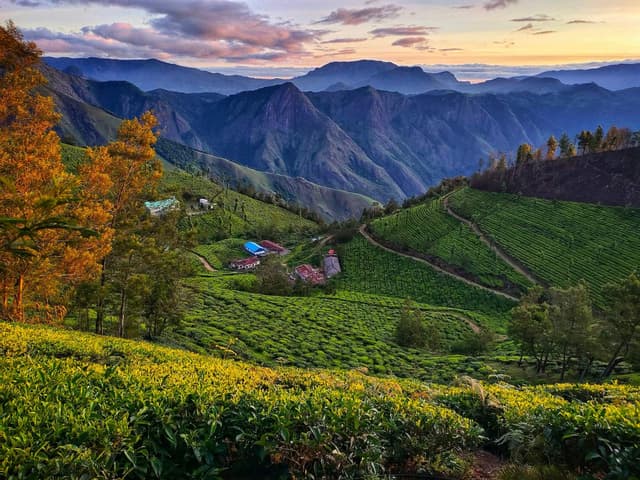
| Nilgiri Mountain Railway | Mettupalayam to Ooty | About 46 km, metre gauge with rack section | 2005 | Uphill takes about 4 hours 50 minutes, with steep rack-assisted gradients |
| Kalka-Shimla Railway | Kalka to Shimla | About 97 km, 762 mm narrow gauge | 2008 | More than 100 tunnels; pair with a Shatabdi from Delhi to Kalka |
These Mountain Railways of India have limited seats and sell out in school holidays, so book them as soon as your dates are fixed. Services are sometimes suspended after landslides in the monsoon.
Luxury trains
The Maharajas' Express, Palace on Wheels, Deccan Odyssey and Golden Chariot run all-inclusive, roughly week-long journeys, mainly in the cooler months; check each operator's current calendar.
When should you fly instead of taking the train?
Fly when the train takes more than about 12 hours or when you are short of days; take the train for routes under about 8 hours where city-centre stations beat airport transfers. India's domestic market is dominated by a few airlines and fares rise sharply close to departure and at festival times.
| Airline | Type | Domestic share (June 2026, DGCA data) | Notes |
|---|---|---|---|
| IndiGo | Low-cost, largest network | 66.3% | Most routes and frequencies; also some business-class seats on selected routes |
| Air India group (Air India and Air India Express) | Full-service plus low-cost arm | 23.9% combined | Air India for full service and international connections; Air India Express for budget routes |
| Akasa Air | Low-cost | 6.4% | Growing network from Mumbai, Bengaluru and new airports |
| SpiceJet | Low-cost | 1.9% | Smaller schedule than in the past; check reliability on your route |
Regional flights and the UDAN scheme
The UDAN regional connectivity scheme, launched in 2016, had operationalised 679 routes and connected 95 airports, heliports and water aerodromes by July 2026, carrying more than 16.8 million passengers. A modified UDAN phase approved in July 2026 runs to 2036 and aims to add 100 airports and 200 helipads. These small-aircraft links are more weather-dependent and more likely to be cancelled.
New airports near Mumbai and Delhi
- Navi Mumbai International Airport (NMI): began commercial flights on 25 December 2025, served by IndiGo, Air India Express, Akasa Air and others, with its first international route (Abu Dhabi) from July 2026.
- Noida International Airport (DXN) at Jewar: started commercial operations on 15 June 2026 with IndiGo as launch carrier. It lies about 72 km from Delhi's Indira Gandhi International Airport, so check which airport your ticket uses before booking a hotel or transfer.
Low-cost carriers usually allow 7 kg of cabin baggage and 15 kg checked on domestic economy fares, and you must show your passport at the terminal door.
How long do popular routes take by train, plane and road?
On short corridors the fastest train usually beats flying door to door, while for routes over about 800 km flying wins. The times below are typical scheduled journey times as of 2026 and exclude airport or station transfers.
| Route | Fastest regular train | Flight time | By road | Best pick |
|---|---|---|---|---|
| Delhi to Agra | About 1 hour 40 minutes to 2 hours (Gatimaan, Vande Bharat) | No practical flight | About 3.5 to 4 hours via Yamuna Expressway | Train |
| Delhi to Jaipur | About 4.5 hours (Shatabdi or Vande Bharat) | About 1 hour | About 4.5 to 5.5 hours | Train or car |
| Mumbai to Goa (Madgaon) | About 7 hours 45 minutes by Vande Bharat, about 10 hours in the monsoon timetable | About 1 hour 15 minutes | About 10 to 12 hours | Flight, or train for Konkan coast views |
| Delhi to Varanasi | About 8 hours by Vande Bharat, 12 to 14 hours overnight | About 1 hour 30 minutes | About 12 to 13 hours | Overnight train or flight |
| Kolkata to Darjeeling | About 7.5 hours to New Jalpaiguri by Vande Bharat, then about 3 hours by road | About 1 hour to Bagdogra, then about 3 hours by road | About 13 to 15 hours | Flight or day train plus road |
The Delhi, Agra and Jaipur triangle is the classic case where trains and road trips beat flying; our Golden Triangle guide covers the order and timing of each leg.
Are buses a good way to travel in India?
Buses are useful where trains do not run, particularly in the Himalaya, the Western Ghats and rural Rajasthan, and overnight AC sleeper coaches can replace a hotel night. Comfort and safety vary far more than on trains, so choose operators carefully.
- State transport corporations: every state runs its own network, for example HRTC in Himachal Pradesh, RSRTC in Rajasthan, MSRTC in Maharashtra and KSRTC in both Karnataka and Kerala. Their AC Volvo services are often the most reliable choice on routes such as Delhi to Manali.
- Private operators: sell through RedBus, AbhiBus and similar platforms. Read recent reviews, check the bus type (seater, semi-sleeper or sleeper) and note the exact boarding point, which may be a roadside stop rather than a bus station.
In the hills, prefer daytime buses, especially in the monsoon.
How does hiring a car with driver work in India?
A car with driver is the most popular way to tour a region, especially for two to four people, because you control the pace and the driver handles traffic, parking and navigation. Prices are usually quoted per kilometre with a daily minimum.
| Cost element | Typical norm as of 2026 |
|---|---|
| Hatchback or sedan rate | About ₹9 to ₹17 per km depending on car and operator |
| SUV such as Innova Crysta | About ₹18 to ₹22 per km |
| Minimum daily distance | Most operators bill at least 250 to 300 km per day on outstation trips |
| Driver allowance | Around ₹300 to ₹400 per day for food and lodging, sometimes more per night |
| Tolls and parking | Charged at actual cost; tolls are collected by FASTag |
| State entry permits | Charged when a tourist-registered car crosses a state border, often a few hundred rupees per state |
| One-way trips | Often billed close to double the distance because the driver must return |
Agree in writing whether the quote includes tolls, permits, parking, driver allowance and taxes, and the daily driving hours. Most good hotels provide driver dormitories, and a tip at the end of a multi-day tour is customary.
FASTag and tolls
Toll plazas on National Highways use FASTag, an RFID sticker linked to a prepaid wallet; cash lanes charge a penalty. Hired cars already have one. Owners of private cars can buy a FASTag annual pass (₹3,075 for 2026 to 2027, valid for one year or 200 toll crossings on National Highways and Expressways), which is relevant only if you are driving an Indian-registered private car for a long period.
Can you drive yourself in India?
Yes, with an International Driving Permit (IDP) and your home licence you can legally drive in India for up to a year, but most visitors should not. India drives on the left and road conditions are demanding even for experienced drivers.
- Documents: carry your national licence, an IDP issued in your home country, your passport and the rental contract.
- Speed limits: cars are typically limited to 100 km/h on divided highways and 120 km/h on expressways, though states and cities set lower local limits.
- Road safety: India's road transport ministry recorded 480,583 road accidents and 172,890 deaths in 2023, about 474 deaths a day. Two-wheelers were involved in 44.8% of deaths and pedestrians made up 20.4%.
Self-drive and scooter hire make most sense in quieter places such as Goa and Pondicherry; helmets are compulsory for rider and pillion. Read more on road risks and other precautions in our guide to whether India is safe for travellers.
How do you get around Indian cities?
In big cities, combine the metro with ride-hailing apps; in smaller towns, auto-rickshaws and cycle-rickshaws do most of the work. Prepaid taxi counters at airports and major stations give fixed fares and avoid touts.
Metro networks
As of 30 June 2026, India had 21 operational metro systems in 21 cities, with about 1,072 km of line and 863 stations. The largest are listed below.
| City | System | Operational length | Stations | Useful for visitors |
|---|---|---|---|---|
| Delhi NCR | Delhi Metro | About 348 km | 271 | Airport Express to New Delhi, Old Delhi, Qutub Minar, Gurugram |
| Bengaluru | Namma Metro | About 96 km | 85 | Avoiding some of India's worst traffic |
| Mumbai | Mumbai Metro | About 91 km | 77 | Underground Line 3 links the airport area with south Mumbai |
| Kolkata | Kolkata Metro | About 73 km | 58 | India's oldest metro, including the under-river Howrah link |
| Ahmedabad | Ahmedabad Metro | About 68 km | 54 | Old city and riverfront |
| Hyderabad | Hyderabad Metro | About 67 km | 59 | Crossing between old and new Hyderabad |
| Chennai | Chennai Metro | About 54 km | 41 | Airport to Central station and city centre |
Other cities with metro lines include Pune, Kochi, Jaipur, Lucknow, Nagpur, Kanpur, Agra, Bhopal, Indore and Meerut. The Delhi Metro reserves the first coach of each train for women.
Ride-hailing and local options
| Option | Where it works | How it works | Tip |
|---|---|---|---|
| Uber | Most large and mid-sized cities | Cars, autos and motorbikes; international cards often accepted | Easiest for first-time visitors |
| Ola | Nationwide | Cars and autos, cash or digital payment | Often needs an Indian number to register |
| Rapido | Most cities | Bike taxis, autos and cabs, frequently cheapest | Bike taxis are quick but only for light luggage |
| Namma Yatri | Bengaluru, Chennai, Kochi and other southern cities | Driver-friendly app with direct payment to drivers | Good for autos in Bengaluru |
| InDrive | Many cities | You propose a fare and drivers accept or counter | Useful when surge pricing is high |
| Bharat Taxi | Selected cities, expanding | Cooperative, driver-owned platform launched in 2026 | Worth comparing fares where available |
| Auto-rickshaw (street hail) | Everywhere | Meter or negotiated fare | Agree the price before you get in |
| Prepaid taxi | Airports and major stations | Pay at the counter, hand the slip to the driver | Use official counters inside the terminal |
If a driver says your hotel is closed or offers a shop detour, politely insist on your destination.
Where can you travel by ferry or boat in India?
Boats are essential in the Andaman Islands and part of the experience in Kerala and around Mumbai. Expect monsoon disruption on open-sea routes from roughly June to September.
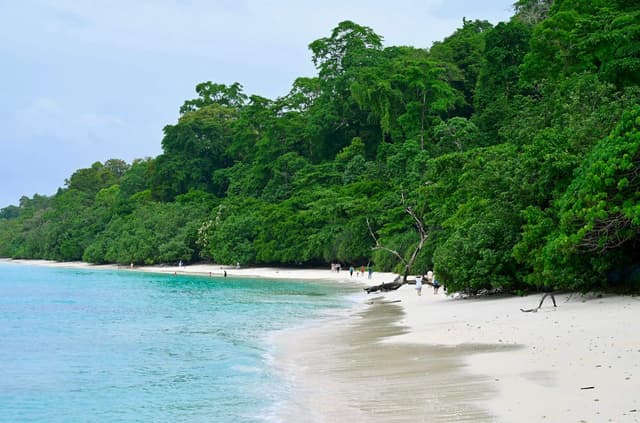
- Andaman Islands: private catamarans run by Makruzz, Nautika, Green Ocean and ITT Majestic link Port Blair with Swaraj Dweep (Havelock) in about 90 minutes on fast vessels and continue to Shaheed Dweep (Neil). Government ferries are cheaper but slower and sell out. Book return legs early so you are not stranded before your flight out.
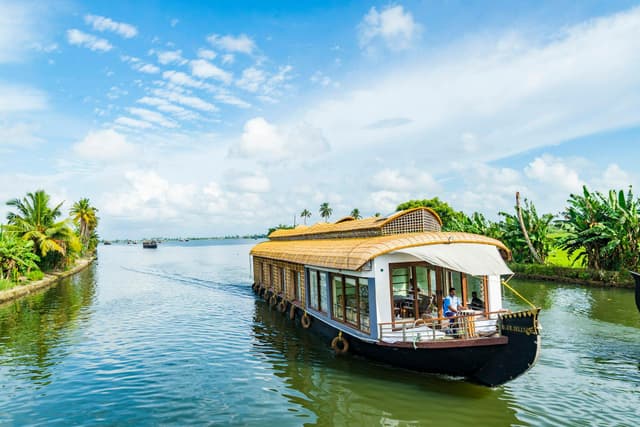
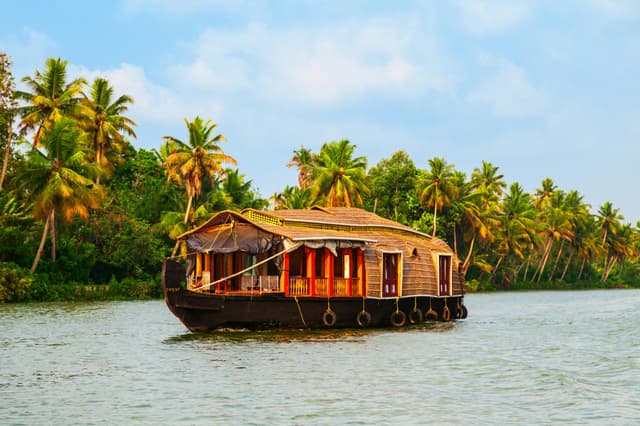
- Kerala backwaters: the State Water Transport Department runs cheap public ferries, for example between Alappuzha and Kottayam, which are a budget alternative to a private houseboat. See our Kerala travel guide for houseboat routes and seasons.
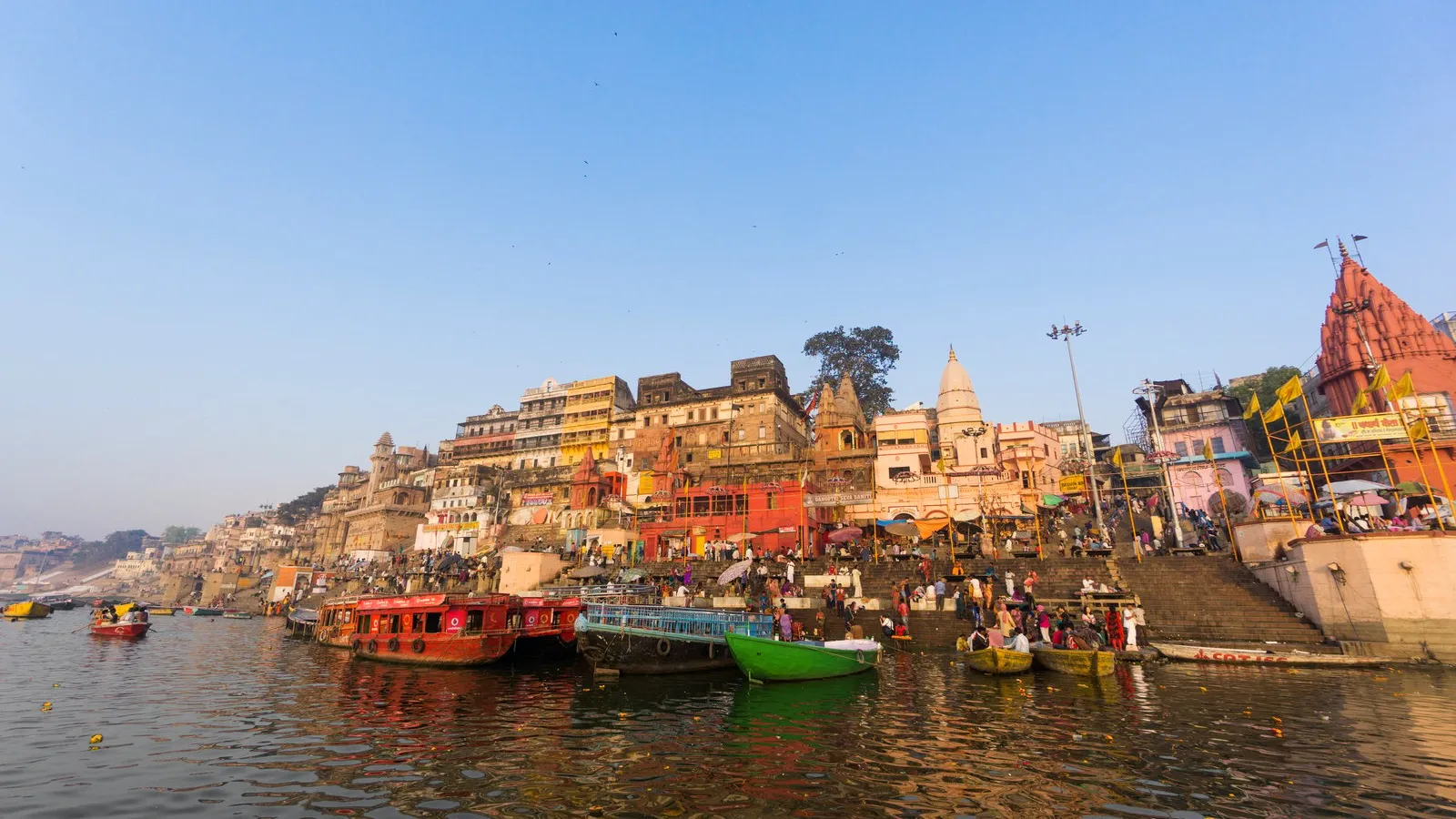
- Mumbai to Mandwa (for Alibaug): catamarans from the Gateway of India take about an hour, and the M2M Ro-Ro ferry from Ferry Wharf (Bhaucha Dhakka) carries cars. Catamarans are often suspended in the monsoon, while the Ro-Ro generally keeps running.
Which apps help you get around India?
A handful of apps handle almost everything: IRCTC for tickets, a train-tracking app for live running status, one or two ride-hailing apps, and maps. Download them and register before you arrive, because some verification steps need a working phone number.
| App | Use | Notes |
|---|---|---|
| IRCTC Rail Connect | Reserved train tickets and cancellations | The official booking app for reserved tickets |
| RailOne | Indian Railways all-in-one app | Launched in July 2025 for PNR status, unreserved tickets, train status and complaints |
| Where is my Train, ixigo, ConfirmTkt | Live running status, platform numbers, waitlist predictions | Where is my Train works offline using mobile network data |
| Uber, Ola, Rapido, Namma Yatri | City rides | Keep two installed to compare fares |
| RedBus, AbhiBus | Intercity bus tickets | Check operator ratings and boarding points |
| UPI One World | Prepaid UPI wallet for foreign visitors | Lets you pay by QR code like residents; check eligibility and limits before you travel |
A local SIM or eSIM helps, since OTPs and alerts arrive by SMS. For a sense of how transport fits into daily budgets, see our breakdown of how expensive India is.
What practical tips help avoid delays and problems?
Build slack into your plans, especially in winter and during festivals, and keep your passport, tickets and phone charged and within reach. Most transport problems in India come from delays and crowding rather than danger.
Weather and seasons
- Fog season (roughly December to February): dense fog across the northern plains delays trains by several hours and disrupts early flights at Delhi, Lucknow, Varanasi and Amritsar. Avoid tight onward connections and consider daytime trains.
- Monsoon (roughly June to September): the Konkan Railway runs a slower monsoon timetable, hill roads suffer landslides and some ferries stop. Our guide to the best time to visit India explains regional weather month by month.
Festivals and holidays
Diwali, Chhath, Holi, Durga Puja, the Christmas to New Year period and summer school holidays fill trains and push fares up sharply. If your trip overlaps, book the moment reservations open and expect more crowded stations.
Safety for solo and female travellers
- Choose 2A or 1A on overnight trains; upper berths offer more privacy.
- Use women-only metro coaches where available and app-based cabs rather than street taxis at night.
- Save India's national emergency number 112 and the railway helpline 139, which also accepts security complaints.
Luggage and station know-how
- A wheeled bag with a small lockable daypack works best; carry a chain and padlock to secure bags under a berth.
- Official porters (coolies) wear red shirts and a numbered brass badge; agree the rate before they lift anything.
- Arrive 30 minutes early for trains and check the platform on the station boards or an app, as platforms change.
- Most stations have cloakrooms for left luggage if you need to store bags for a day trip.
For more on combining regions, the complete India travel guide is a good next read, and for examples of how trains, flights and road legs can be combined into one route, see these India tour packages.
Frequently asked questions
What is the best way to get around India?
For most trips, a mix works best. Use trains for intercity journeys of up to about 10 hours, domestic flights for longer hops such as Delhi to Kerala or the North East, and a car with driver for touring a region at your own pace. In big cities, the metro and ride-hailing apps are the quickest and simplest options, while auto-rickshaws handle short trips in smaller towns.
How far ahead can you book trains in India?
General reservations open 60 days before the journey date, a rule in place since 1 November 2024, with bookings opening at 8am India time. Holders of foreign passports can use the Foreign Tourist quota, which opens up to 365 days ahead on many popular trains. Tatkal, a last-minute quota, opens one day before travel at 10am for AC classes and 11am for non-AC classes.
Can foreign visitors book Tatkal train tickets?
Online Tatkal booking has required an Aadhaar-authenticated IRCTC account since July 2025, and Aadhaar is an Indian identity number that most visitors cannot obtain. In practice, travellers without Aadhaar should rely on booking early, the Foreign Tourist quota, or a station counter, where an OTP is sent to the passenger's mobile. Rules have changed several times, so check current IRCTC notices before you travel.
What does RAC or WL mean on an Indian train ticket?
RAC means reservation against cancellation: you can board and will share a side lower berth until a full berth frees up. WL means waitlisted: you move up as others cancel. If an online ticket is still fully waitlisted when the reservation chart is prepared, it is cancelled automatically and refunded, and you may not travel in reserved coaches on it.
Which train class is best for an overnight journey?
AC 2 Tier (2A) is the best balance of comfort, privacy and price for most travellers, with curtains, bedding and four berths per bay plus two side berths. AC First (1A) adds a lockable cabin for more money, while AC 3 Tier (3A) is cheaper and busier but still comfortable. Sleeper class is very cheap but non-AC, has no bedding and can be crowded.
Is it cheaper to fly or take the train in India?
Trains are almost always cheaper, especially in 3A or chair car, and an overnight train also saves a hotel night. Flights can be good value when booked several weeks ahead on busy routes, but fares climb steeply close to departure and at festival times. Remember to add airport transfer costs and time when comparing a flight with a city-centre train.
How much does a car with driver cost in India?
As of 2026, most outstation operators charge roughly ₹9 to ₹17 per km for a hatchback or sedan and about ₹18 to ₹22 per km for a larger SUV, with a minimum of 250 to 300 km billed per day. Driver allowance, tolls, parking and state permits are usually extra, so confirm in writing exactly what your quote includes before you set off.
Can tourists drive themselves in India?
Yes. With a valid home licence and an International Driving Permit you can generally drive in India for up to a year. However, traffic is chaotic, India drives on the left and the road death toll is high, at more than 170,000 deaths in 2023. Most visitors hire a car with a local driver instead, and self-drive or scooter rental is best kept to quieter areas such as Goa.
Which Indian cities have a metro?
As of mid-2026, 21 Indian cities had operational metro systems totalling about 1,072 km. The largest are Delhi, Bengaluru, Mumbai, Kolkata, Ahmedabad, Hyderabad and Chennai, and cities such as Pune, Kochi, Jaipur, Lucknow, Agra and Indore also have lines. Metros are clean, cheap and air-conditioned, and most sell QR code tickets through their official apps.
Do Uber and Ola work in India?
Yes. Uber and Ola operate in most large and mid-sized cities, alongside Rapido for bike taxis and autos, Namma Yatri in several southern cities and InDrive, where you propose a fare. Uber usually accepts international cards, while some apps need an Indian mobile number to register. Apps avoid haggling and record your route, which is useful late at night.
How bad are train delays in winter?
From roughly December to February, dense fog across the northern plains can delay long-distance trains by several hours and disrupt early morning flights at Delhi and nearby airports. Build a buffer into your plans, avoid tight connections to international flights, and track your train on a live running status app such as Where is my Train so you can time your arrival at the station.
Is it safe for women to travel alone on Indian transport?
Many women travel solo around India without problems by taking sensible precautions. Choose AC 2 Tier or First Class on overnight trains, use women-only metro coaches where available, and prefer app-based cabs with trip sharing at night. Save the national emergency number 112 and the railway helpline 139, and try to arrive in new places during daylight hours.
'/%3E%3C/svg%3E)