

















Short answer: The best things to do in Varanasi are to walk the ghats from Assi to Manikarnika, watch the evening Ganga Aarti at Dashashwamedh Ghat, take a sunrise boat ride on the Ganges, pray at Kashi Vishwanath and the Nepali Temple at Lalita Ghat, and spend half a day at Sarnath, where the Buddha gave his first sermon. From Nepal, Varanasi is a short flight from Kathmandu or a long day overland through the Sonauli border, which makes it one of the easiest Indian pilgrim cities for Nepali families to reach.
Varanasi, also called Kashi and Banaras, sits on the west bank of the Ganga in Uttar Pradesh. For Hindus it is the city of Shiva and one of the holiest places to live, pray and die. For Buddhists, Sarnath on its edge is one of the four great sites the Buddha himself named. For everyone else it is one of the most intense, photogenic and humbling cities in Asia. This guide covers what to see and do, how to time the aarti and the boat ride, what to respect at the burning ghats, and exactly how to get there from Kathmandu or the Nepal border. If you are planning a wider trip, start with our complete India travel guide and come back here for the Varanasi detail.
Checked: 9 Oct 2026. Buddha Air is operating Kathmandu to Varanasi flights on Mondays, Wednesdays and Fridays (Buddha Air route page and flight tracker records for August to October 2026). The Sarnath Archaeological Museum is closed on Fridays (Incredible India, Ministry of Tourism). Dev Deepawali 2026 falls on Tuesday 24 November. Aarti start times shift with sunset, so confirm locally on the day. Schedules and rules change: always recheck with the airline or official site before you travel.
Why is Varanasi special for Hindu and Buddhist travellers?
Varanasi is special because it is both the holiest city of Shiva for Hindus and, through Sarnath, the place where Buddhism began as a teaching. Few cities anywhere carry that much meaning for two faiths within ten kilometres of each other.
For Hindus, Kashi is one of the seven sacred cities (Sapta Puri) and home to Kashi Vishwanath, one of the twelve Jyotirlingas of Shiva. The belief that dying in Kashi brings moksha, release from the cycle of rebirth, is why the cremation fires at Manikarnika Ghat never go out and why many elderly pilgrims come here to spend their last years. Bathing in the Ganga at dawn, offering a diya to the river at dusk and taking darshan of Vishwanath are the three acts most pilgrims hope to complete.
For Buddhists, Sarnath is where Siddhartha Gautama, after his enlightenment at Bodh Gaya, gave his first sermon to five former companions. That moment is known as the First Turning of the Wheel of Dharma. Sarnath is one of the four places the Buddha named in the Mahaparinibbana Sutta as worth a pilgrimage, alongside Lumbini (his birthplace in Nepal), Bodh Gaya and Kushinagar. That gives Nepali Buddhists a natural pilgrim circuit: Lumbini, then Kushinagar and Sarnath, all reachable through the Sonauli border.
For Nepal there is a third, very personal connection. Kings of Nepal lived and built here: the Nepali Temple at Lalita Ghat, a wooden pagoda modelled on Pashupatinath, was begun by King Rana Bahadur Shah during his exile in Varanasi and is owned by the Government of Nepal today. Walking into it from the crowded ghats feels like stepping into Kathmandu Durbar Square.
| Fact | Varanasi at a glance |
|---|---|
| Other names | Kashi, Banaras (Benares) |
| State | Uttar Pradesh, India |
| River | Ganga (Ganges), city on the west bank |
| Key Hindu site | Shri Kashi Vishwanath Temple, a Jyotirlinga of Shiva |
| Key Buddhist site | Sarnath, about 8 to 10 km north east of the old city |
| Airport | Lal Bahadur Shastri International Airport (VNS), Babatpur, about 26 km north west of the centre |
| Main railway stations | Varanasi Junction (BSB), Banaras (BSBS), Pt. Deen Dayal Upadhyaya Junction (DDU) across the river |
| Nearest Nepal border crossing | Sonauli (Belahiya, Bhairahawa on the Nepal side) via Gorakhpur |
| Currency | Indian rupee (INR); Nepali travellers can carry INR within Nepal Rastra Bank limits |
| Best months | October to March |
Varanasi is a sub-hub within our wider list of the best places to visit in India; if you are weighing it against Rajasthan's forts and desert cities, the beaches of Goa or the backwaters of Kerala, that guide compares them side by side.
Which ghats should you see in Varanasi?
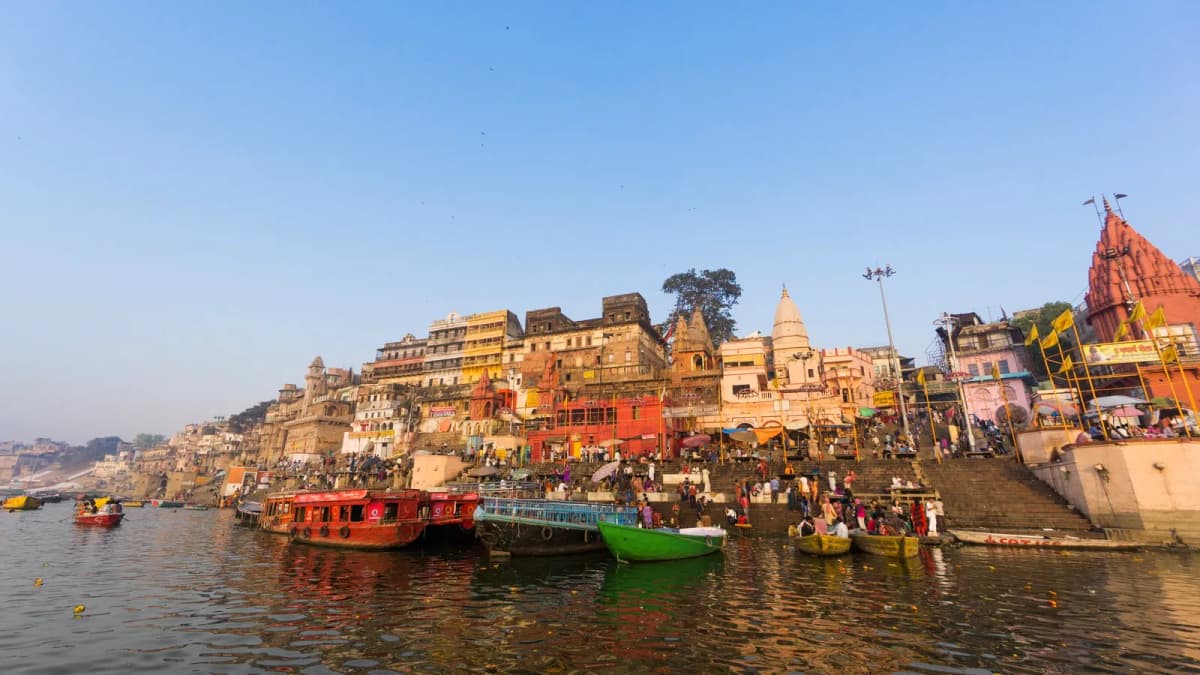
The ghats you should not miss are Dashashwamedh for the evening aarti, Assi for the morning aarti, Manikarnika and Harishchandra for the cremation rituals (seen respectfully), and Lalita Ghat for the Nepali Temple. Varanasi has more than 80 ghats, the stone steps that run down to the river along roughly six to seven kilometres of riverfront, and you can walk most of them in one long morning when the river is not in flood.
Each ghat has its own story, owner family or patron, and mood. Some are for bathing, some for ceremony, some for laundry and cricket, and two are for the dead. The table below covers the essential ones, from south to north.
| Ghat | What it is known for | Best time | Etiquette and tips |
|---|---|---|---|
| Assi Ghat | Southernmost major ghat, at the meeting of the Assi stream and the Ganga; morning aarti and the Subah-e-Banaras programme of music and yoga | Before sunrise | Good base for first-timers: wider, calmer, plenty of cafes and guesthouses behind it |
| Tulsi Ghat | Linked to the poet-saint Tulsidas, who is said to have written part of the Ramcharitmanas here | Morning | Quiet; a short walk north of Assi |
| Harishchandra Ghat | One of the two cremation ghats, named after the truthful King Harishchandra; has an electric crematorium as well as pyres | Any time, briefly | No photos of cremations or mourners; keep distance and stay quiet |
| Kedar Ghat | Kedareshwar Shiva temple, popular with South Indian and Bengali pilgrims; bright painted steps | Morning | Remove shoes before the temple |
| Chet Singh and Darbhanga Ghats | Fort-like and palace facades, among the most photographed buildings on the river | Sunrise from a boat | Best seen from the water |
| Dashashwamedh Ghat | The main ghat, where Brahma is said to have performed a ten-horse sacrifice; the famous evening Ganga Aarti | Evening | Arrive at least an hour early for a step or a boat; watch your phone and wallet in the crowd |
| Man Mandir Ghat | Rajput palace built by Raja Man Singh, with an 18th century observatory (Jantar Mantar) added later | Daytime | Next to Dashashwamedh; easy add-on |
| Lalita Ghat | Nepali Temple (Samrajeshwar Pashupatinath Mahadev), a Newar-style wooden pagoda owned by the Government of Nepal; Lalita Gauri temple | Late morning | Dress modestly; a calm, shaded courtyard after the busy ghats |
| Manikarnika Ghat | The main cremation ghat, where pyres burn day and night | Any time, briefly | Strictly no photography of the cremations; ignore anyone who demands money for "wood" or a "hospice donation" |
| Scindia Ghat | A Shiva temple partly sunk into the river, tilted by the weight of the ghat | Morning | Just north of Manikarnika |
| Panchganga Ghat | Believed meeting point of five rivers; Alamgir Mosque above | Morning | Steep steps; wear good footwear |
Dashashwamedh Ghat
Dashashwamedh Ghat is the beating heart of Varanasi and the place most visitors come back to. In the daytime it is a crush of pilgrims, flower sellers, barbers, priests under bamboo umbrellas and boatmen calling out rides. In the evening it becomes the stage for the most famous Ganga Aarti in India. It is also the easiest ghat to reach by road, so it is where taxis and e-rickshaws from the airport usually drop you.
Assi Ghat
Assi Ghat is the gentlest introduction to the river. The steps are broad, the crowds lighter, and the morning programme known as Subah-e-Banaras combines the dawn aarti with classical music and yoga. Many families and older pilgrims prefer to stay near Assi and take a boat north to Dashashwamedh in the evening, which avoids pushing through the narrow lanes after dark.
Manikarnika and Harishchandra Ghats
Manikarnika and Harishchandra are the cremation ghats, and seeing them is part of understanding Varanasi. The rule is simple: you may watch quietly from a respectful distance, but you must not photograph the cremations, the bodies or the grieving families. Many visitors find it moving rather than disturbing. Be aware of a long-running hustle near Manikarnika where a "guide" explains the rituals and then demands a large donation for wood for the poor. Decline politely and walk on; you are under no obligation.
Lalita Ghat and the Nepali Temple
Lalita Ghat is the ghat every Nepali visitor should make time for. The Nepali Temple, formally Shri Samrajeshwar Pashupatinath Mahadev Mandir, stands about 100 metres from Manikarnika Ghat. King Rana Bahadur Shah began it while living in exile in Varanasi from about 1800 to 1804, and it was completed in 1843 under his successors. It is built in Newar pagoda style from terracotta, stone and termite-resistant wood, as a replica of Pashupatinath in Kathmandu, and its carved struts have earned it the nickname "Mini Khajuraho". The temple complex is owned by the Government of Nepal. For a Nepali family, offering prayers here and then at Kashi Vishwanath is a meaningful pairing: Pashupatinath and Vishwanath, Kathmandu and Kashi.
How do you watch the Ganga Aarti at Dashashwamedh Ghat?
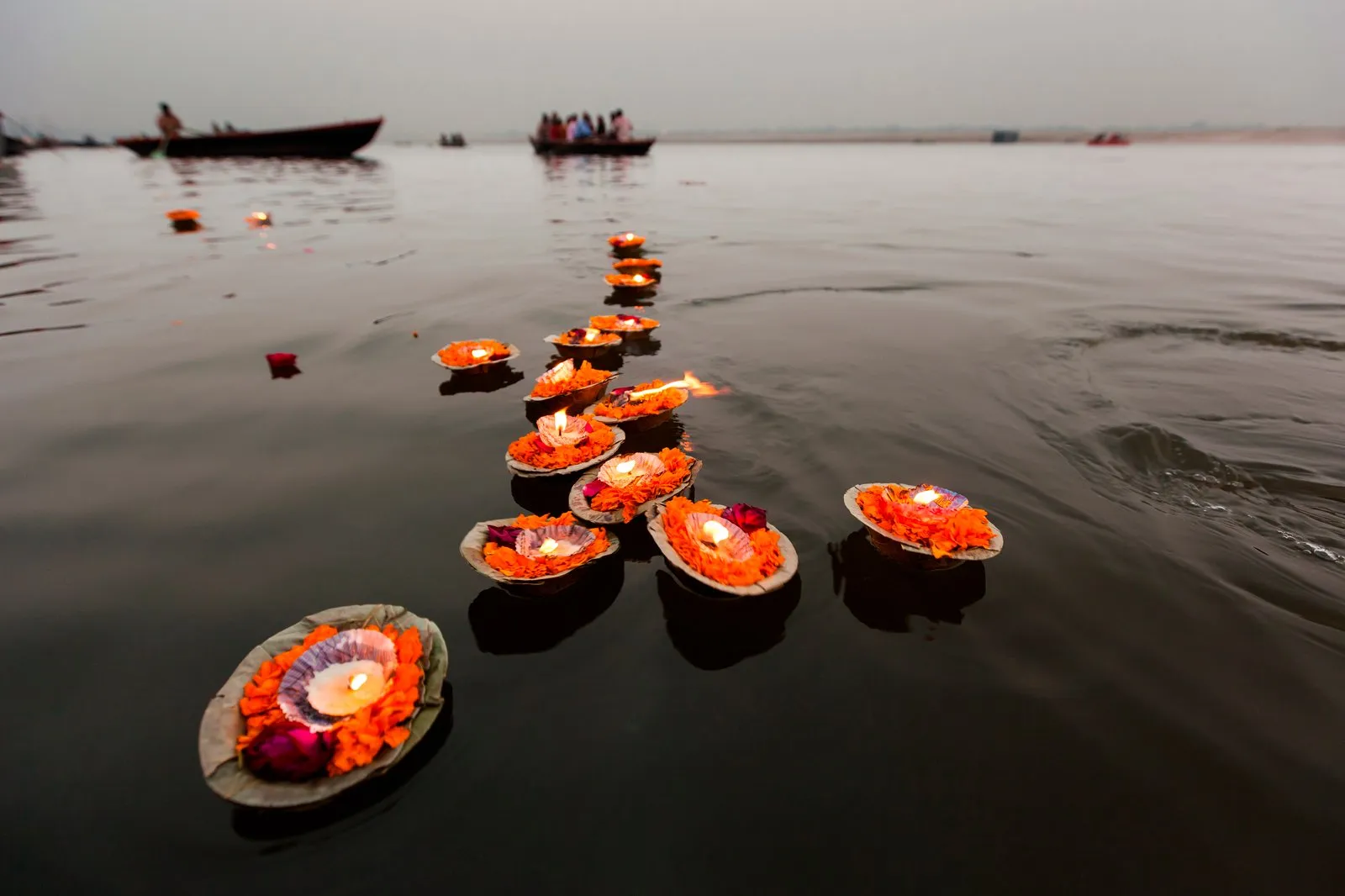
To watch the Ganga Aarti well, get to Dashashwamedh Ghat 45 to 60 minutes before it starts and either claim a seat on the steps facing the priests or watch from a boat moored just off the ghat. The evening aarti begins around sunset, roughly 5:45 to 6:00 pm in the cooler months and around 6:45 to 7:00 pm in summer, and lasts about 45 minutes.
The evening ceremony at Dashashwamedh is organised by Ganga Seva Nidhi, a trust that began the daily aarti in its present form in 1991. A row of young priests in matching robes stand on wooden platforms and move in unison, raising multi-tiered brass lamps, incense, conch shells, yak-tail fans and flowers to the river while bells ring and bhajans play. There is a second aarti at the neighbouring Rajendra Prasad Ghat at the same time, which is useful when Dashashwamedh is packed.
| Aarti | Where | Approximate start | Who it suits |
|---|---|---|---|
| Morning aarti (Subah-e-Banaras) | Assi Ghat | Around 5:00 to 5:30 am, before sunrise | Early risers, photographers, families wanting a calm experience |
| Evening Ganga Aarti | Dashashwamedh Ghat (Ganga Seva Nidhi) | Around 5:45 to 6:00 pm in October to March; around 6:45 to 7:00 pm in April to September | First-time visitors; the classic, most theatrical aarti |
| Evening aarti | Rajendra Prasad Ghat (next to Dashashwamedh) | Same time as Dashashwamedh | Anyone who arrives late and finds Dashashwamedh full |
| Evening aarti | Assi Ghat | Around sunset | Travellers staying in the south who want a smaller crowd |
Times above are approximate and move with sunset and season. Local reports in late 2025 recorded the winter evening start being brought forward to 6:00 pm, while other listings give 5:45 pm, so treat any single figure as a guide and ask your hotel on the day.
Steps or boat: which is better?
The steps give you sound, smell and the faces of the priests up close. A boat gives you the full width of the stage, the lamps reflected in the water and an easier exit afterwards. For elderly parents, a boat is often kinder: no pushing through crowds, a seat for the whole ceremony, and a ride back to a ghat near your hotel. Boats fill early on festival days, so fix one in the afternoon. If you want to buy a diya to float on the river, flower-and-lamp sellers on the steps sell them.
Practical tips for the aarti
- Keep your phone in a front pocket and your bag zipped; the crowd is dense.
- Photography of the aarti itself is generally accepted, but do not use flash in people's faces and do not climb onto the priests' platforms.
- Carry a light shawl from November to February; the riverside gets cold after dark.
- Agree the boat price and the return ghat before you step in.
- During the monsoon flood, the aarti may be moved up the steps or onto rooftops, and boats may not be allowed out.
Is a sunrise boat ride on the Ganges worth it?
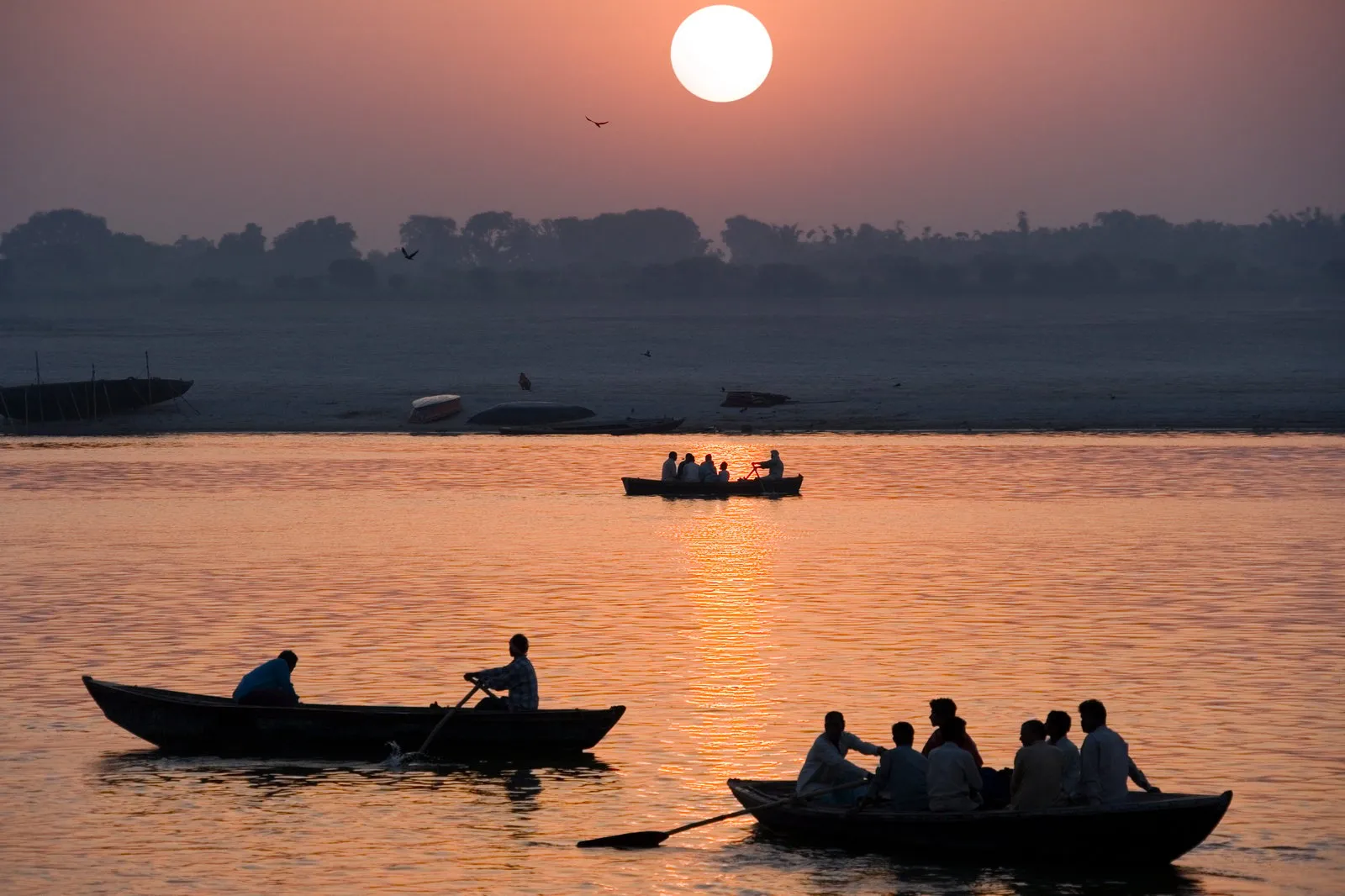
Yes, a sunrise boat ride on the Ganges is worth it, and for many visitors it is the single best hour of the trip. In the soft early light you see the whole curve of the ghats at once: bathers, priests, yoga groups, washermen and smoke from the cremation ghats, without the noise and crush of the lanes.
Most rides start from Dashashwamedh or Assi and run north past Darbhanga, Man Mandir, Lalita and Manikarnika, then turn back. Hand-rowed wooden boats are quieter and slower; motor boats cover more distance and suit larger groups. A sunrise ride usually lasts one to two hours. Meet the boatman before first light so you are on the water as the sun clears the far bank.
| Boat option | When | What you see | Good for |
|---|---|---|---|
| Sunrise rowing boat | Dawn, about 1 to 2 hours | Ghats in golden light, morning bathing and prayer | Couples, photographers, anyone wanting calm |
| Sunrise motor boat | Dawn, about 1 to 1.5 hours | A longer stretch of riverfront, Assi to Panchganga | Families and larger groups |
| Evening aarti boat | 45 to 90 minutes around sunset | Ganga Aarti from the water, floating diyas | Elderly travellers, first-timers |
| Dev Deepawali boat | Evening of Kartik Purnima (24 Nov 2026) | Ghats lit end to end with lamps | Festival travellers; book well ahead |
A few honest cautions. Boatmen will set prices by how much they think you will pay, so agree the price, the route and the duration before you sit down. Life jackets should be available; ask for them, especially with children. On the water, keep your camera pointed away from the cremation ghats as you pass. When the river is in flood, usually from July to September, local authorities often restrict or suspend boat operations, so do not plan a monsoon trip around a boat ride.
What can you see at Sarnath?
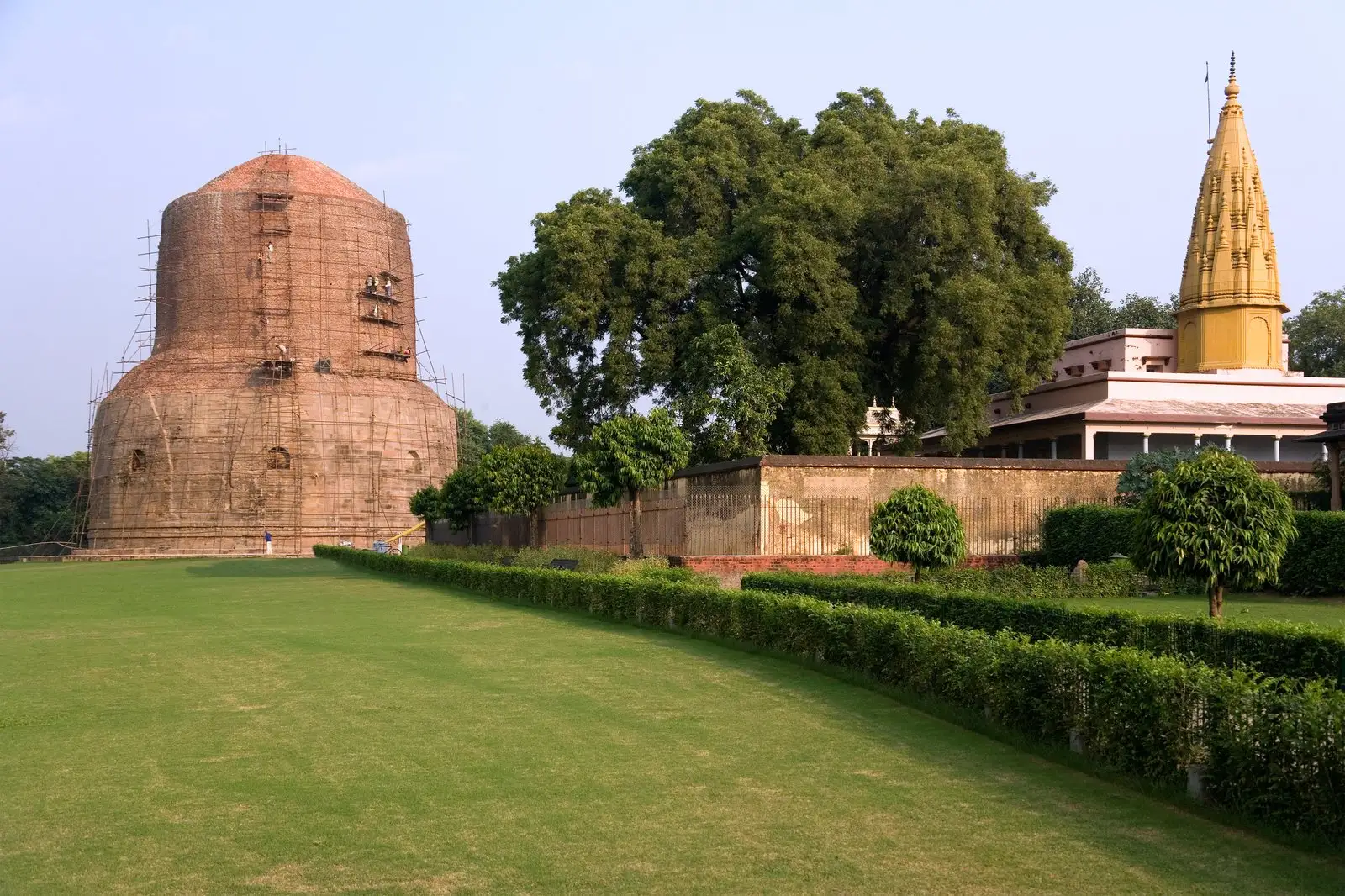
At Sarnath you can see the Dhamek Stupa, which marks the spot of the Buddha's first sermon, the ruins of ancient monasteries in the Deer Park, the stump of Emperor Ashoka's pillar, the modern Mulagandha Kuti Vihara temple, and the Sarnath Archaeological Museum, home of the original Lion Capital of Ashoka that became India's national emblem. Sarnath is about 8 to 10 km north east of the old city, around 30 to 45 minutes by road, and is best seen in a half day.
| Site | What it is | Why it matters |
|---|---|---|
| Dhamek Stupa | Massive cylindrical brick and stone stupa, about 39 m high, with carved stone bands | Marks where the Buddha is believed to have taught his first five disciples |
| Deer Park (Isipatana, Mrigadava) | Excavated monastery ruins and gardens around the stupa | The setting of the first sermon; gives Sarnath its name, "Lord of the Deer" |
| Ashoka Pillar | Broken base of the pillar raised by Emperor Ashoka around 250 BCE | Its lion capital is now in the museum |
| Chaukhandi Stupa | Brick stupa topped by an octagonal tower added by Akbar in 1588 | Marks where the Buddha met his first disciples again; about 800 m before the Deer Park |
| Mulagandha Kuti Vihara | Modern temple built by the Maha Bodhi Society, opened in 1931, with murals of the Buddha's life | Active place of worship; relics are displayed on special occasions |
| Sarnath Archaeological Museum | Archaeological Survey of India museum | Holds the Lion Capital of Ashoka and outstanding Buddhist and Hindu sculpture |
| International monasteries | Thai, Tibetan, Japanese, Sri Lankan and other temples | Show how Buddhism spread across Asia |
Sarnath Archaeological Museum: what to know before you go
The Sarnath Archaeological Museum is open from 10:00 am to 5:00 pm and closed on Fridays (Checked: 9 Oct 2026, Incredible India, Ministry of Tourism). This catches many visitors out, so do not plan your Sarnath half day for a Friday if the museum is on your list. Inside, the star is the polished sandstone Lion Capital of Ashoka, four lions back to back above a wheel, which survived a fall from its pillar and is now India's state emblem. Other galleries hold the colossal red sandstone Bodhisattva dedicated by the monk Bala, many seated and standing Buddha images, and Hindu sculptures from Shiva, Surya and Saraswati to a giant Andhakasuravadha. Bags and phones may need to be left in a cloakroom; ask at the entrance.
How to plan a Sarnath half day
Go in the morning, when the Deer Park is quieter and cooler. Start at Chaukhandi Stupa on the approach road, continue to the Deer Park and Dhamek Stupa, step into Mulagandha Kuti Vihara, then finish at the museum before lunch. If you are travelling as a Buddhist pilgrim from Nepal, Sarnath pairs naturally with Lumbini and Kushinagar on one overland circuit through the Sonauli border.
Which temples should you visit beyond Kashi Vishwanath?
Beyond Kashi Vishwanath, the temples most pilgrims visit are Kaal Bhairav, Sankat Mochan Hanuman, Durga Temple (Durga Kund), Tulsi Manas Mandir, Annapurna Devi, Vishalakshi and the New Vishwanath Temple at Banaras Hindu University, plus the Nepali Temple at Lalita Ghat for Nepali visitors. Most can be covered in one long day by auto-rickshaw.
Kashi Vishwanath itself comes first for nearly every Hindu visitor. The Shri Kashi Vishwanath temple trust states that the temple opens from 3:00 am to 11:00 pm, with Mangala Aarti from 3:00 to 4:00 am (report by 2:30 am at Gate No. 1), that free lockers are available, and that electronic and non-electronic gadgets, even pens, are not allowed inside (Checked: 9 Oct 2026, shrikashivishwanath.org FAQ). There is no formal dress code, but devotees are asked to wear decent clothes. Leave phones and bags at your hotel or in a locker before you queue.
| Temple | Deity and significance | Location | Tip |
|---|---|---|---|
| Shri Kashi Vishwanath | Shiva, one of the twelve Jyotirlingas | Vishwanath Gali, linked to the river by the Kashi Vishwanath Dham corridor | No phones or gadgets inside; use the free lockers |
| Kaal Bhairav | Fierce form of Shiva, called the "kotwal" (guardian) of Kashi | Bhaironath, north of Vishwanath | Many pilgrims visit before Vishwanath to "ask permission" to stay in Kashi |
| Annapurna Devi | Goddess of food and nourishment | Near Kashi Vishwanath | Easy to combine with Vishwanath darshan |
| Vishalakshi | Shakti Peetha of the goddess | Near Mir Ghat | Important for Shakta pilgrims |
| Sankat Mochan Hanuman | Hanuman, linked to the Tulsidas tradition | Near BHU, south Varanasi | Tuesdays and Saturdays are very busy |
| Durga Temple (Durga Kund) | Durga; red-painted 18th century temple beside a tank | South Varanasi, near Sankat Mochan | Very crowded during Navaratri, which overlaps with Dashain |
| Tulsi Manas Mandir | Rama; walls engraved with verses of the Ramcharitmanas | Next to Durga Temple | White marble, calm, good with children |
| New Vishwanath Temple | Shiva; tall white temple on the BHU campus | Banaras Hindu University | Open to all faiths; wide, uncrowded campus |
| Nepali Temple | Pashupatinath form of Shiva, Newar pagoda | Lalita Ghat | Owned by the Government of Nepal; a must for Nepali families |
Beyond temples: Ramnagar Fort, BHU and the old lanes
Across the river, Ramnagar Fort is the 18th century seat of the Maharaja of Benares and has a museum of vintage cars, palanquins, arms and clocks. Banaras Hindu University, one of the largest residential universities in Asia, is worth a visit for its green campus, the New Vishwanath Temple and the Bharat Kala Bhavan museum. Back in the old city, simply wandering the galis (lanes) behind the ghats, past cows, shrines, silk shops and lassi stalls, is one of the classic things to do in Varanasi. Banarasi silk saris and brocade are the signature buy; visit a weaving workshop if you can, and take your time before you pay.
How to dress and behave at temples
- Cover shoulders and knees; a kurta, sari, salwar or long trousers is ideal for men and women alike.
- Remove shoes before entering; many temples have shoe stands.
- Do not touch priests' offerings or step over them; walk around shrines clockwise.
- Rules on who may enter inner sanctums, and on photography, vary by temple; follow local signs and staff instructions.
- Avoid leather belts and bags where signs ask you to.
How do you get to Varanasi from Nepal?
You get to Varanasi from Nepal either by a direct Buddha Air flight from Kathmandu, which takes about 50 minutes, or overland through the Sonauli border near Bhairahawa, then by road or train via Gorakhpur, which takes most of a day. A third option is to fly with a change in Delhi or another Indian city, which is longer but useful when direct seats are full.
For Nepali citizens, no visa is needed for India; carry a valid Nepali passport or citizenship certificate, which the Embassy of Nepal in New Delhi lists as the documents for air travel to India, and confirm current ID rules with the Embassy of India in Kathmandu before you go. Travellers on other passports should check the Indian entry rules for their passport.
| Route | How it works | Approximate time | Best for |
|---|---|---|---|
| Direct flight Kathmandu (KTM) to Varanasi (VNS) | Buddha Air, three flights a week (Mondays, Wednesdays and Fridays as of October 2026), morning departure | About 50 minutes in the air; allow about an hour from Babatpur airport to the ghats | Elderly parents, short trips, anyone short of time |
| Flight with a connection | Kathmandu to Delhi (or another Indian hub), then a domestic flight to Varanasi | Typically half a day or more, depending on the connection | Days when direct flights do not operate |
| Sonauli border, then road | Cross at Belahiya (Bhairahawa) to Sonauli, taxi or bus to Gorakhpur, then on to Varanasi | Sonauli to Gorakhpur about 2 to 3 hours; Gorakhpur to Varanasi about 4 to 6 hours by car; roughly 7 to 9 hours door to door | Families with a car and driver, Lumbini and Kushinagar circuits |
| Sonauli border, then rail | Road to Gorakhpur Junction, then Indian Railways train to Varanasi | Train about 5 to 7 hours, plus 2 to 3 hours to reach Gorakhpur | Budget travellers, groups, overnight sleepers |
| Fly to Bhairahawa, then overland | Domestic flight Kathmandu to Gautam Buddha International Airport (Bhairahawa), then cross at Sonauli | Short flight, then the same road or rail times as above | Skipping the long Kathmandu to Bhairahawa drive |
Flying from Kathmandu to Varanasi
Buddha Air is the airline we could confirm operating the direct Kathmandu to Varanasi route as of 9 October 2026. Its route page lists three flights a week with a flight time of about 50 minutes, and flight tracker records for August, September and early October 2026 show the Kathmandu departure running on Mondays, Wednesdays and Fridays in the morning. Buddha Air suspended this route during the Covid pandemic and announced its return in 2022, which is a reminder that schedules on small international routes change. Seats sell out around Dashain, Tihar, Shivaratri and Dev Deepawali, so book early, and recheck the schedule on buddhaair.com before you plan the rest of the trip. For a wider view of where you can fly non-stop, see our list of direct flights from Kathmandu.
Winter fog in north India can delay early flights and trains from about December to January. Leave a buffer day if you have a connecting flight or a tight return. If this is your first time flying abroad from Kathmandu, our first-time flight tips walk you through check-in, immigration and boarding.
Going overland through Sonauli
The Sonauli route is the classic pilgrim road. From Kathmandu or Pokhara you reach Bhairahawa, cross at the Belahiya to Sonauli checkpoint, and continue to Gorakhpur, the nearest large Indian city with good rail links. From Gorakhpur, the road to Varanasi is about 4 to 6 hours by car depending on traffic, and trains take about 5 to 7 hours. Many families hire a car and driver for the whole circuit so they can stop at Kushinagar, where the Buddha passed into parinirvana, or at Gorakhnath Temple in Gorakhpur on the way. Start early: the border, the town traffic in Gorakhpur and the final approach into Varanasi all slow down after midday.
Once you are in India, our guide on getting around India by train, flight and road explains booking Indian Railways tickets, choosing classes and using ride-hailing apps in cities like Varanasi.
Getting around inside Varanasi
The old city is a maze of lanes too narrow for cars, so plan on walking, e-rickshaws and cycle-rickshaws near the ghats, and app cabs or auto-rickshaws for longer hops to Sarnath, BHU or the airport. Traffic is often stopped near Godowlia crossing and Dashashwamedh in the evening, so the last stretch to the aarti is usually on foot. Staying close to the river, between Assi and Dashashwamedh, saves a great deal of time. Ride-hailing and map apps work well here; see our pick of the best travel apps to install before you leave.
What should you eat in Varanasi?
In Varanasi you should eat kachori sabzi and jalebi for breakfast, a thick lassi in a clay cup, tamatar chaat, malaiyo in winter, and finish with a Banarasi paan. The city is largely vegetarian near the ghats and temples, which suits most pilgrims from Nepal.
| Dish | What it is | When to try |
|---|---|---|
| Kachori sabzi | Fried stuffed bread with spicy potato curry | Breakfast |
| Jalebi | Hot, syrupy fried spirals | Breakfast, with kachori |
| Lassi | Thick yoghurt drink, often topped with malai, served in a kulhad (clay cup) | Any time; very welcome in the heat |
| Tamatar chaat | Spiced mashed tomato chaat, a Banaras speciality | Evening snack |
| Malaiyo | Airy saffron milk foam, set by the winter dew | Winter mornings only, roughly November to February |
| Baati chokha | Roasted wheat balls with mashed spiced vegetables | Lunch |
| Chena dahi vada | Soft paneer dumplings in sweet yoghurt | Snack |
| Thandai | Chilled milk with nuts and spices | Summer and Holi |
| Banarasi paan | Betel leaf parcel with sweet or plain fillings | After dinner |
A few food tips: drink sealed bottled or filtered water, choose busy stalls where food is cooked fresh in front of you, and go easy on street food for the first day if you are not used to Indian spice levels. Many Nepali travellers find north Indian food very familiar, but the oil and sweetness are heavier than home cooking. For a fuller picture of regional dishes, read our guide to what to eat in India.
When is the best time to visit Varanasi?
The best time to visit Varanasi is from October to March, when days are warm and dry, the river is calm enough for boat rides and the big festivals fall. For Nepali travellers, the Dashain and Tihar holidays in October and November line up neatly with Navaratri, Diwali and Dev Deepawali in Varanasi, which makes this the most popular, and the most crowded, time to go.
| Season | Months | What to expect | Who it suits |
|---|---|---|---|
| Autumn festival season | October to November | Pleasant days, cooler nights, Navaratri, Diwali, Chhath and Dev Deepawali | Pilgrims, festival lovers, Dashain and Tihar holidaymakers |
| Winter | December to February | Cool to cold, especially at dawn; fog can delay flights and trains; malaiyo season | Sightseeing, boat rides, Sarnath walks |
| Spring | March | Warming up; Holi colours in the lanes | Culture travellers, photographers |
| Summer | April to June | Very hot, often above 40 C in May and June; early mornings are the only comfortable time outdoors | Short visits, budget travellers who can handle heat |
| Monsoon | July to September | Humid, heavy rain; the Ganga rises over the lower ghats; boats often restricted | Shravan pilgrims (Shiva devotees) who accept the conditions |
Festival dates that matter in 2026
The table below puts the key Nepal and Varanasi dates for the rest of 2026 side by side, so you can see where the holidays overlap. Hindu festival dates follow the lunar calendar and can differ by a day between Nepal and India; confirm with a local panchang.
| Festival | 2026 date | What happens in Varanasi |
|---|---|---|
| Ghatasthapana (start of Dashain) and Navaratri | 11 October | Nine nights of Durga worship; Durga Temple and pandals very busy |
| Vijaya Dashami (Dashain tika in Nepal) | 21 October in Nepal (Dussehra in India may fall a day earlier) | Dussehra celebrations, including the famous Ramnagar Ramlila across the river |
| Laxmi Puja (Tihar) and Diwali | 8 November | Lamps and fireworks across the city and ghats |
| Bhai Tika (Tihar) | 10 November | Bhai Dooj in Varanasi falls around the same time |
| Chhath | 15 November | Thousands of devotees offer arghya to the setting and rising sun from the ghats |
| Dev Deepawali (Kartik Purnima) | Tuesday 24 November | Every ghat from Ravidas to Raj Ghat lit with lamps; huge crowds and boat demand |
Dev Deepawali, the "Diwali of the gods", is the most spectacular night of the Varanasi year. It falls on Kartik Purnima, about 15 days after Diwali, and on that evening more than a million earthen lamps are lit along the steps of the ghats. If you want to see it from a boat, book months ahead; hotels near the river also fill early and many set minimum stays. For more ideas on travelling over the festival break, see our guide to Dashain and Tihar holidays abroad, and for month-by-month weather across the country, our best time to visit India guide.
How many days do you need in Varanasi?
Two full days is the comfortable minimum in Varanasi: one for the ghats, a boat ride and the evening aarti, and one for Kashi Vishwanath, other temples and Sarnath. Three days lets you slow down, repeat the sunrise boat ride and explore the lanes, BHU and Ramnagar Fort. For a sample route that includes north India, see our India itinerary ideas. If you are adding Varanasi to a longer India trip, our guide on how many days you need in India helps you balance it with other regions.
Is Varanasi safe, and how should you behave at the ghats?
Varanasi is generally safe for visitors, including solo travellers and families, as long as you take normal city precautions: watch your belongings in crowds, avoid empty lanes and ghats late at night, and be firm with touts. The main problems visitors report are petty theft at the aarti, overcharging and pushy "guides", not violent crime.
| Do | Do not |
|---|---|
| Dress modestly, covering shoulders and knees | Photograph cremations, bodies or mourners at Manikarnika or Harishchandra |
| Agree boat and rickshaw prices before you start | Accept unsolicited "free" guiding that ends in a donation demand |
| Ask before photographing sadhus and pilgrims | Pay sadhus for posed photos unless you are happy to |
| Carry small notes and coins for offerings | Walk deserted ghats alone late at night |
| Keep valuables in a front pocket in crowds | Swim in the river; currents are strong and the water is not clean |
| Use registered taxis or app cabs from the airport and station | Let anyone take you to a "government" silk shop you did not ask for |
Women travelling alone should expect stares in crowded areas and may want to join a group boat ride or a guided walk for the evening aarti. Staying in a well-reviewed guesthouse near Assi or Dashashwamedh, with staff who can arrange boats and transport, removes most of the friction. If you are budgeting, our guide on whether India is expensive sets realistic expectations. For the bigger picture, read our honest guide on whether India is safe for travellers.
How do you plan a Varanasi trip?
The simplest way to plan a Varanasi trip is to fix your travel dates around the festival or season you want, decide between the direct flight and the Sonauli overland route, and then book a stay close to the river so the ghats, the aarti and the boat rides are all within walking distance.
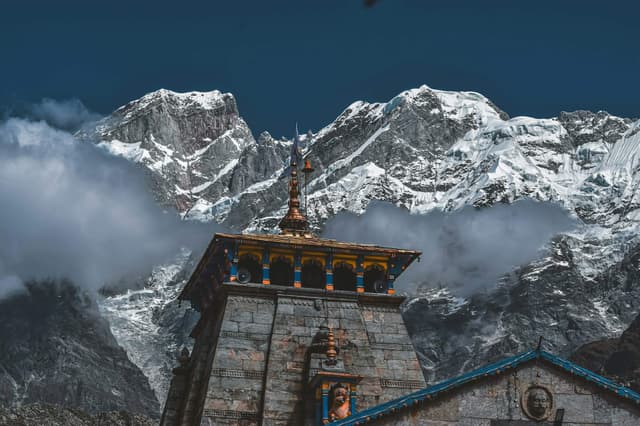
Varanasi combines well with other journeys. Pilgrims often pair it with Prayagraj, Bodh Gaya or Ayodhya, while Buddhists link Lumbini, Kushinagar and Sarnath. Families who want the Himalayan shrines in summer can look at our Char Dham Yatra guide for Yamunotri, Gangotri, Kedarnath and Badrinath, and travellers who want forts and palaces can add the Golden Triangle of Delhi, Agra and Jaipur. If you are new to the country, our list of things to do in India is a good place to start, and our guide to foreign currency limits from Nepal explains how much Indian rupee cash you can carry.
If you would like to see how Varanasi fits into a wider route, our India tour packages page shows the trips that include it. Before you leave, run through our pre-trip checklist, and if you want to understand overall budgets, our guide to India trip costs from Nepal explains what drives the total.
Frequently asked questions
What time is the Ganga Aarti in Varanasi?
The evening Ganga Aarti at Dashashwamedh Ghat in Varanasi starts around sunset: roughly 5:45 to 6:00 pm from October to March and about 6:45 to 7:00 pm from April to September. It lasts about 45 minutes. The morning aarti at Assi Ghat begins before sunrise. Times shift with the season, so confirm locally on the day.
Is Varanasi safe for solo travellers?
Varanasi is generally safe for solo travellers who take normal precautions. Watch your phone and wallet in aarti crowds, avoid deserted ghats and lanes late at night, agree prices before boat or rickshaw rides, and decline unsolicited guides. Women travelling alone often prefer a guesthouse near Assi or Dashashwamedh and a group boat for the evening.
Can you take photos at Manikarnika Ghat?
No, you should not photograph cremations, bodies or grieving families at Manikarnika Ghat in Varanasi, and the same applies at Harishchandra Ghat. Watching quietly from a respectful distance is accepted. Keep your camera away even from a boat, and ignore anyone near the ghat who asks for money for "wood" or a "hospice".
Is there a direct flight from Kathmandu to Varanasi?
Yes. Buddha Air operates a direct Kathmandu to Varanasi flight of about 50 minutes, three times a week, on Mondays, Wednesdays and Fridays as of October 2026, with a morning departure from Kathmandu. Schedules on this route have changed before, so check buddhaair.com before booking, and book early for Dashain, Tihar and Dev Deepawali.
How long is the road journey from Sonauli to Varanasi?
The road journey from Sonauli to Varanasi usually takes about 7 to 9 hours by car: around 2 to 3 hours from Sonauli to Gorakhpur, then 4 to 6 hours from Gorakhpur to Varanasi depending on traffic. By train from Gorakhpur, allow about 5 to 7 hours. Start early in the morning, and leave extra time in winter fog.
Where is the Nepali Temple in Varanasi?
The Nepali Temple in Varanasi stands at Lalita Ghat, about 100 metres from Manikarnika Ghat. Formally called Shri Samrajeshwar Pashupatinath Mahadev Mandir, it is a Newar-style wooden pagoda modelled on Pashupatinath, begun by King Rana Bahadur Shah around 1800 and completed in 1843. The Government of Nepal owns the temple complex.
When is Dev Deepawali 2026?
Dev Deepawali 2026 in Varanasi falls on Tuesday 24 November, the full moon of Kartik (Kartik Purnima), about 15 days after Diwali. More than a million lamps are lit along the ghats that evening. Boats and riverside hotels sell out months ahead, so book early if you want to see Dev Deepawali from the water.
How far is Sarnath from Varanasi?
Sarnath is about 8 to 10 km north east of central Varanasi, roughly 30 to 45 minutes by auto-rickshaw or taxi depending on traffic. Half a day is enough for the Dhamek Stupa, Deer Park, Mulagandha Kuti Vihara and the museum. Remember that the Sarnath Archaeological Museum is closed on Fridays.
What should I wear to temples in Varanasi?
Wear modest clothes that cover your shoulders and knees when visiting temples in Varanasi; a kurta, sari, salwar kameez or long trousers is ideal. Shoes come off before entry. Kashi Vishwanath has no formal dress code but asks for decent clothing, and phones, gadgets and even pens are not allowed inside, so use the free lockers.
Do Nepali citizens need a visa to visit Varanasi?
No. Nepali citizens do not need a visa to visit Varanasi or anywhere else in India. Carry a valid Nepali passport or citizenship certificate, especially when flying, and confirm current ID rules with the Embassy of India in Kathmandu. Travellers holding other passports should check the Indian entry rules for their passport before planning a Varanasi trip.
Varanasi jana passport chahinchha?
Nepali nagarikko lagi Varanasi jana visa chahindaina. Hawai jahajbata jada Nepali passport wa nagariktako praman patra chahinchha; sadak marg bata pani yi madhye euta aaphnai saath rakhnus. Jana aghi Bharatiya Rajdutavas Kathmandu ko pachhillo niyam herna nabirsanus.
'/%3E%3C/svg%3E)