












































Short answer: Kashi Vishwanath Temple in Varanasi, Uttar Pradesh, is one of the twelve Jyotirlingas of Shiva and the most important temple in the city Hindus call Kashi. General darshan needs no ticket: you leave your phone, bag and even your pen in a locker, join the queue through one of the Dham gates; the wait can be short on a quiet weekday and several hours on Mondays and festival days. The temple opens for Mangala Aarti before dawn and closes at 11:00 pm, and aarti places and Sugam (queue-free) darshan are booked through the official Shri Kashi Vishwanath Temple Trust website, its app or the help desk. Shravan Mondays, Mahashivratri and New Year bring the heaviest crowds, when special forms of darshan are often suspended.
For Nepali pilgrims, Kashi has a special pull. Many families who pray at Pashupatinath in Kathmandu want to complete the pair with darshan of Baba Vishwanath, and Varanasi is less than an hour's flight from Kathmandu. A short walk from the Dham's river side stands the Nepali Temple at Lalita Ghat, a wooden pagoda modelled on Pashupatinath and begun by a king of Nepal. This guide explains how darshan actually works today, with the trust's own rules and timings, so you, your parents or your grandparents can plan with fewer surprises. For the rest of the city, from the ghats to Sarnath, see our guide to things to do in Varanasi.
Rules at a glance. Checked: 27 Oct 2026, Source: Shri Kashi Vishwanath Temple Trust official site (shrikashivishwanath.org: Important Notices page, FAQ document and Sugam Darshan terms). The temple opens at 2:45 am for Mangala Aarti and closes at 11:00 pm after Shayan Aarti. Mobile phones, smart watches, electronic keys, cameras, recording glasses and other gadgets are not allowed inside the temple premises; the trust's FAQ also lists pens. Lockers exist but are limited. There is no formal dress code, but devotees are asked to wear decent clothes. A valid ticket is mandatory for Mangala Aarti, and the ticket terms ask every devotee to carry an identity card with it. Timings can change on Purnima, during eclipses and on special occasions, so check the notices page before you go.
What is Kashi Vishwanath Temple and why is it important?
Kashi Vishwanath Temple is the Shiva temple at the heart of Varanasi, enshrining the Jyotirlinga of Shiva as Vishwanath or Vishweshwara, the "Lord of the Universe". It stands on the western bank of the Ganga in the old city, and for Hindus it is among the holiest places on earth. The Shri Kashi Vishwanath Temple Trust notes a long-held tradition that the merit of visiting all the other Jyotirlingas comes to a devotee through a single darshan at Kashi.
Varanasi itself is often described as one of the world's oldest living cities. It is one of the seven sacred cities of Hinduism (the Sapta Puri), and the belief that dying in Kashi brings moksha is why so many elderly pilgrims come here to spend their last years. Kashi Vishwanath is the spiritual centre of that belief. Great saints and teachers, from Adi Shankaracharya and Goswami Tulsidas to Swami Vivekananda and Guru Nanak, are remembered as having visited.
A short history of the temple
The temple has been destroyed and rebuilt several times over the centuries. The present structure was built in 1780 by Maharani Ahilyabai Holkar of Indore, and the new Dham honours her with a large mural in its Benaras Gallery. The trust records the main later additions:
| Year | What happened | Source |
|---|---|---|
| 1780 | Present temple built by Maharani Ahilyabai Holkar of Indore | Shri Kashi Vishwanath Temple Trust |
| 1785 | A Naubatkhana (drum house) built in front of the temple | Shri Kashi Vishwanath Temple Trust |
| 1839 | Two of the temple's three domes covered with gold donated by Maharaja Ranjit Singh of Punjab; the trust notes the temple is also known as the Golden Temple | Shri Kashi Vishwanath Temple Trust |
| 28 January 1983 | Temple management taken over by the Government of Uttar Pradesh and entrusted to a trust | Shri Kashi Vishwanath Temple Trust |
| 8 March 2019 | Foundation stone laid for Shri Kashi Vishwanath Dham | PM India (pmindia.gov.in) |
| 13 December 2021 | Phase 1 of Shri Kashi Vishwanath Dham inaugurated | PM India (pmindia.gov.in) |
India's Ministry of Tourism describes the main shrine as quadrangular, surrounded by smaller shrines, with a golden spire close to 15.5 metres tall. The Jyotirlinga itself sits in the sanctum on a silver altar. The Gyanvapi mosque stands next to the temple complex, and the site has been the subject of legal proceedings in Indian courts, which this guide does not cover. Security is tight across the whole Dham area, so as a visitor simply follow the instructions of security staff.
Kashi among the twelve Jyotirlingas
A Jyotirlinga is a shrine where Shiva is worshipped as a column of light. Many pilgrims, in India and Nepal alike, try to visit all twelve over a lifetime. If you are building your own Jyotirlinga journey, this list shows where each one is. Kedarnath is part of the Uttarakhand circuit described in our Char Dham Yatra guide.
| Jyotirlinga | Indian state | Note for planners |
|---|---|---|
| Somnath | Gujarat | Traditionally counted first |
| Mallikarjuna (Srisailam) | Andhra Pradesh | Hill temple in the Nallamala forest |
| Mahakaleshwar (Ujjain) | Madhya Pradesh | Famous for its Bhasma Aarti |
| Omkareshwar | Madhya Pradesh | On an island in the Narmada; pairs with Ujjain |
| Kedarnath | Uttarakhand | Highest Jyotirlinga; open only about six months a year |
| Bhimashankar | Maharashtra | In the Sahyadri hills near Pune |
| Kashi Vishwanath | Uttar Pradesh | Closest to Nepal; short flight from Kathmandu |
| Trimbakeshwar | Maharashtra | Near Nashik, source of the Godavari |
| Vaidyanath (Baidyanath) | Jharkhand (Deoghar) | At Deoghar; extremely busy during Shravan |
| Nageshwar | Gujarat | Near Dwarka |
| Rameshwaram | Tamil Nadu | Also one of the all-India Char Dham |
| Grishneshwar | Maharashtra | Near the Ellora caves |
Pashupatinath and Kashi: a paired pilgrimage for Nepali families
For many Nepali Hindus, Kashi and Pashupatinath belong together. Pashupatinath is the guardian deity of Nepal and sits inside the Kathmandu Valley World Heritage Site; Kashi Vishwanath is the Lord of the city where liberation is promised. Grandparents who have prayed at Pashupati all their lives often ask to see Baba Vishwanath "at least once", and it is common for families to plan the trip around a parent's birthday, a pilgrimage vow or the cool months after Dashain and Tihar.
The link is not only spiritual. King Rana Bahadur Shah of Nepal lived in Varanasi in exile in the early 1800s and began a Pashupatinath temple at Lalita Ghat, a Newar-style wooden pagoda that the Government of Nepal still owns today. It sits a short walk from the Dham's river side, so you can easily pray at both on the same morning. We cover it in more detail in the nearby temples section below.
What are the Kashi Vishwanath temple timings?
The Kashi Vishwanath temple opens at 2:45 am for Mangala Aarti and closes at 11:00 pm after Shayan Aarti, according to the trust's current notices page. General darshan runs through most of the day, pausing during each aarti. The trust also notes that 4:00 am to 5:00 am is set aside for local devotees.
| Activity | Timing (Indian Standard Time) | Entry note |
|---|---|---|
| Temple opens | 2:45 am | For Mangala Aarti ticket holders |
| Mangala Aarti | 2:45 am to 3:45 am | Valid ticket and identity card mandatory; use the entry gate printed on your ticket |
| Local devotees' slot | 4:00 am to 5:00 am | As stated on the trust's notices page |
| Mid-Day Bhog Aarti | 11:30 am to 12:30 pm | Entry from any gate |
| Sapta Rishi Aarti | 7:00 pm to 8:15 pm | Entry from any gate |
| Shringar Bhog Aarti | 9:00 pm to 10:15 pm | Entry from any gate |
| Shayan Aarti and closing | Temple closes 11:00 pm | Shayan Aarti is the last ritual before closing |
Checked: 27 Oct 2026, Source: Shri Kashi Vishwanath Temple Trust, Important Notices page. The trust's older FAQ document gives slightly different times (Mangala Aarti 3:00 am to 4:00 am with reporting at 2:30 am, Bhog Aarti 11:15 am to 12:20 pm, and general darshan windows of 4:00 am to 11:00 am, 12:20 pm to 7:00 pm and 8:30 pm to 9:00 pm). The Mangala Aarti booking page itself says the aarti begins between 3:00 am and 4:00 am with entry from 2:30 am to 3:00 am. Treat the notices page and the time printed on your ticket as the final word, and arrive well before the reporting time.
A small tip for travellers from Nepal: India runs 15 minutes behind Nepal. A 2:45 am Mangala Aarti in Varanasi is 3:00 am Nepal time, so check that your phone has switched to Indian time before you set an alarm.

How do you get darshan at Kashi Vishwanath?
You get general darshan at Kashi Vishwanath by depositing your phone and bag, entering the Dham through one of its gates, passing security and joining the queue to the sanctum. No ticket is needed for general darshan. On an ordinary weekday the wait can be short; on Mondays, festival days and holiday weekends it can stretch for hours.
- Leave what you can at your hotel. Phones, smart watches, electronic car keys, cameras and even pens are not allowed inside. Lockers exist but the trust says they are limited, so the less you carry, the faster you move.
- Reach the Dham on foot or by rickshaw. The area from Godowlia to Maidagin is a no-vehicle zone, so taxis stop short and you walk the final stretch through the lanes. The trust notes that e-kart services are available for differently-abled devotees.
- Choose your gate. Gate No. 4 is the main entrance, and the trust's help desk is near it. Mangala Aarti ticket holders use the gate printed on their ticket. See the gates section below.
- Pass security. Expect a body check and a bag check. Anything on the prohibited list is turned back here.
- Join the queue. Queues are separated by barricades. Keep your group together, and keep elderly parents hydrated before you join, especially in summer.
- Darshan in the sanctum. On the busiest days darshan is "jhanki" (viewing from outside the sanctum doorway) and you will be moved along quickly. On quieter days touch darshan may be allowed; see below.
- Prasad and the Dham. After darshan, take time to walk the corridor, visit the smaller shrines and look out over the Ganga from the river side.
| Darshan option | How it works | Booking | Good for |
|---|---|---|---|
| General darshan | Join the public queue through any open gate | No ticket needed | Most visitors on ordinary days |
| Sugam Darshan | A trust Shastri escorts you for darshan without joining the queue; the trust says a locker and prasad are included | Online, trust app or help desk; same-day booking only at the help desk counter | Elderly parents, people with disabilities, travellers short on time |
| Aarti attendance | A booked place at one of the four daily aartis; the Mangala Aarti booking page assigns seating areas such as "South LED" and "North LED", so part of what you see may be on screens | Online, trust app or help desk; no cancellation | Devotees who want to attend an aarti at the temple |
| Rudrabhishek and other puja | Puja performed by trust Shastris (1, 5 or 11 Shastri, Laghu Rudra, Maha Rudra) | Online, trust app or help desk | Families with a vow or a special occasion |
| Live darshan | Live video feed of the sanctum on the trust website | No booking | Relatives at home in Nepal or abroad |
Checked: 27 Oct 2026, Source: Shri Kashi Vishwanath Temple Trust website (puja list, Sugam Darshan terms, FAQ). Prices are set and changed by the trust, so we do not list them here; the booking page shows the current amount.
What is sparsh darshan, and when is it suspended?
Sparsh darshan means touching the Jyotirlinga. It is the most intimate form of darshan, and it is the first thing the temple administration restricts when crowds build up. In recent years it has been suspended during Shravan, around Mahashivratri and for the New Year rush. In late December 2025, for example, the administration suspended VIP, protocol and sparsh darshan until further orders, leaving only jhanki darshan (Aaj Tak, 25 Dec 2025). The trust's Sugam Darshan terms also state clearly that a Sugam ticket is not valid for sparsh darshan. If touching the lingam matters to your family, plan for a quiet weekday outside festival season and ask at the help desk on arrival.
How do you book Mangala Aarti or other special darshan?
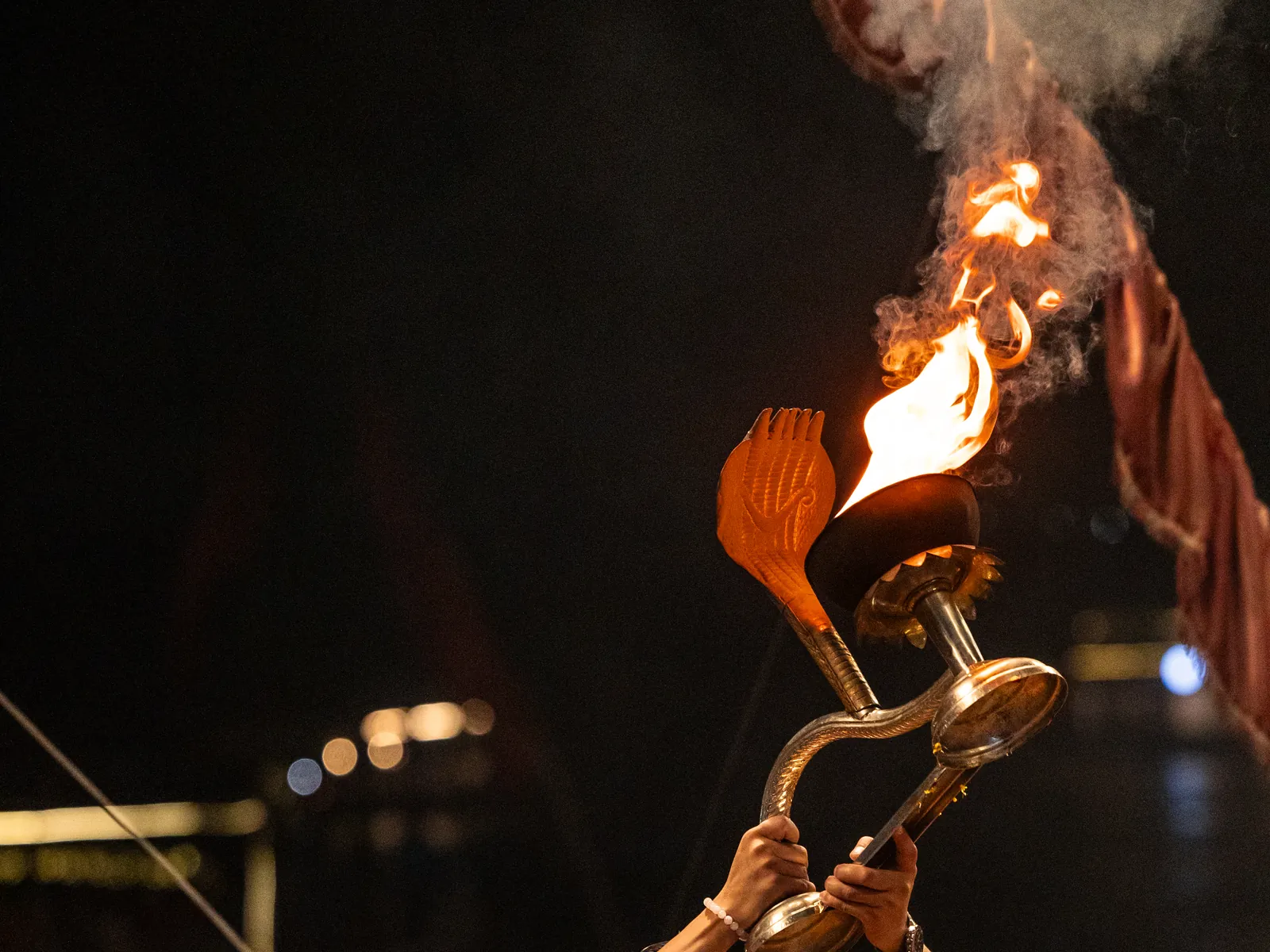
You book Mangala Aarti, the other aartis and Sugam Darshan through the official Shri Kashi Vishwanath Temple Trust website (shrikashivishwanath.org), the trust's official Android or iOS app, or in person at the help desk. The trust lists no phone booking for Sugam Darshan, and bookings cannot be cancelled or moved to another date, so choose your date carefully.
| Booking | Where to book | Key rules from the trust |
|---|---|---|
| Mangala Aarti | shrikashivishwanath.org, trust app, help desk | General booking opens daily at 11:00 am (IST) for the next 30 days; Tatkal booking opens daily at 11:00 am for the next day. The booking page lists entry by Gate No. 1 (Dhundi Raj Ganesh) for General and Gate 4B for Tatkal. Valid ticket and identity card mandatory; no cancellation or rescheduling |
| Mid-Day Bhog Aarti | Website, app, help desk | Entry from any gate; no cancellation |
| Sapta Rishi Aarti | Website, app, help desk | Performed by seven priests of different gotras; entry from any gate |
| Shringar Bhog Aarti | Website, app, help desk | Entry from any gate; no cancellation |
| Sugam Darshan | Website, app, help desk; same day only at the help desk counter | Not allowed during aarti or on special days; children under 12 need no ticket; not valid for sparsh darshan; carry a printed copy |
| Rudrabhishek | Website, app, help desk | Held between about 4:00 am and 6:00 pm; Shastri dakshina included in the booking; milk bought separately inside the premises |
Checked: 27 Oct 2026, Source: Shri Kashi Vishwanath Temple Trust (puja list, aarti and Sugam Darshan booking pages and terms, FAQ, refund and cancellation policy).
Tips for booking Mangala Aarti
- Book as soon as your dates are fixed. General Mangala Aarti booking opens 30 days ahead at 11:00 am Indian time, and places are limited; when we checked on 27 Oct 2026, General places showed none available for the next month, while Tatkal places for the next day are released daily at 11:00 am. Popular dates go first, especially Mondays, Shravan and the Kartik month. During Shravan the trust opens booking in advance and can block certain dates entirely; in 2026 it announced that booking would not be available on 24 August.
- Print the ticket. The trust asks devotees to present a valid ticket at the gate and, for Sugam Darshan, to carry a hard copy. Your phone will be in a locker, so paper matters.
- Stay close. The ticket terms give an entry window from 2:30 am to 3:00 am. A hotel inside the old city or near Dashashwamedh Ghat makes this far easier than a hotel near the airport or cantonment.
- Sleep early, eat light. Older parents manage the early start better with an early dinner and a short rest in the afternoon after.
- No refunds. The trust treats aarti booking amounts as a donation, so they cannot be refunded or rescheduled.
Booking as a Nepali citizen or foreign passport holder
The trust's online booking asks for basic personal details. Since 1 May 2026 the trust has been rolling out an app-based darshan system in phases, and news reports say devotees booking Sugam Darshan or special puja must give basic details including Aadhaar information (ETV Bharat, 2 May 2026). Most Nepali visitors do not have an Aadhaar number, so the online form may not work for you.
For foreign passport holders, the trust publishes a separate "Foreign Tourist Ticket Booking Process" handled only at the trust's help desk head office near Shahpuri Mall in Bansphatak: you show your passport there, the desk keeps photocopies of the passport and visa for security, and a darshan ticket is issued. The page does not mention Nepal. Nepali citizens travelling from Nepal need no Indian visa, so the request for a visa copy does not fit you neatly, and we could not find any published trust rule on which route Nepali citizens should use. Our honest advice: carry your Nepali passport or citizenship certificate, go to the help desk a day before your planned aarti, and ask them which route applies to Nepali citizens. Rules here are changing in 2026, and the desk is the only place that can give you a firm answer.
Which items are not allowed inside Kashi Vishwanath?
Mobile phones and all electronic gadgets are not allowed inside Kashi Vishwanath, including smart watches, electronic car keys, cameras and recording glasses, and the trust's FAQ adds non-electronic items such as pens. Security checks at the gates turn these back, so deposit them in a locker or leave them at your hotel.
| Item | Allowed inside? | What to do |
|---|---|---|
| Mobile phone | No | Leave at hotel or in a locker |
| Smart watch or fitness band | No (electronic watches are named) | Leave at hotel |
| Electronic car or hotel key | No | Hand to a family member waiting outside or use a locker |
| Camera, recording glasses, other recording devices | No | Leave at hotel |
| Pen | No (listed in the trust FAQ) | Leave at hotel |
| Bags and luggage | Discouraged; lockers are limited | Come with empty hands where possible |
| Plastic lota (water vessel) | Banned during Shravan 2026, declared a no-plastic period | Use a metal vessel or buy offerings at the Dham |
| Offerings such as flowers and milk | Follow staff instructions on the day; for Rudrabhishek, the trust says milk is available inside the premises | Buy offerings inside rather than carrying containers through security |
Checked: 27 Oct 2026, Sources: Shri Kashi Vishwanath Temple Trust notices page and FAQ; Patrika, 28 July 2026 (Shravan 2026 plastic ban).
Are lockers available?
Yes. The trust's FAQ lists lockers at Mandir Chowk, at the three Yatri Suvidha Kendras (YSK-1, YSK-2 and YSK-3) and at the help desk, and states that they are offered at no charge. The newer notices page adds a warning that locker space is limited and asks devotees to leave unnecessary luggage at home or at the hotel. On peak days, lockers can be withdrawn altogether: during Shravan 2025 news reports said the free baggage counters would not run, and in 2024 there was no locker facility inside the temple on Shravan Mondays. On a busy day, the safest plan is to walk in with nothing but your ticket, a little cash and some ID.
A practical family tip: one person can wait outside the Dham with everyone's phones and shoes while the others go in, then swap. It costs time, but it is far less stressful than hunting for a locker in a crowd.
What is the dress code for Kashi Vishwanath?
Kashi Vishwanath has no formal dress code for general darshan, but the trust asks devotees to wear decent clothes. In practice, that means shoulders and knees covered, clothing you are comfortable sitting and standing in for a long queue, and footwear you can remove easily.
| Visitor | Comfortable and respectful choice | Avoid |
|---|---|---|
| Men | Kurta pyjama, dhoti kurta, or long trousers with a shirt | Shorts, sleeveless vests |
| Women | Sari, kurta suruwal (salwar kameez), or a long skirt or trousers with a covering top | Short skirts, shorts, very sheer fabrics |
| Children | Light, covered clothing | Anything that needs constant adjusting in a crush |
| Winter (December to January) | Warm shawl, socks you can keep on after removing shoes | Heavy coats with many metal parts that slow security |
You will see stories online about a strict dress code for touching the lingam. Proposals have been discussed over the years, but the trust's published FAQ says there is no dress code for darshan, only advice to dress decently. If you are hoping for sparsh darshan on a quiet day, traditional clothing (dhoti kurta for men, sari for women) is the safe choice. Checked: 27 Oct 2026, Source: Shri Kashi Vishwanath Temple Trust FAQ.
Which gate should you use to enter Kashi Vishwanath Dham?
Most visitors enter Kashi Vishwanath Dham through Gate No. 4, the main entrance, with the trust's help desk nearby, while Mangala Aarti ticket holders use the gate printed on their ticket: Gate No. 1 for General bookings and Gate 4B for Tatkal, according to the booking page. For the other aartis, the trust says you can enter from any gate. On festival days the police and trust may open or close routes at short notice.
| Gate or entry route | Side | What to know |
|---|---|---|
| Gate No. 4 (main entrance, Nandu Phariya route) | Lane side | Help desk nearby; e-rickshaws for elderly and differently-abled devotees have dropped here during Shravan |
| Gate 4B | Lane side | Listed on the booking page for Tatkal Mangala Aarti entry; also named as a direct entry route in Shravan 2026 |
| Gate No. 1 | Sources differ | The booking page labels it Dhundi Raj Ganesh and uses it for General Mangala Aarti entry, while the trust FAQ describes entering from the Ganga ghat by Gate No. 1 (ghat side entry 6:00 am to 9:00 pm); follow your ticket and staff on the day |
| Gate No. 2 (Saraswati Dwar) | Lane side | Used as an entry route on crowded days |
| Dhundhiraj Dwar | Lane side | Near the Dhundhiraj Ganesh shrine |
| Silko Gali route | Lane side | Lane entry used during Shravan crowd plans |
| Ganga Dwar and Lalita Ghat route | River side | May be closed or restricted when the Ganga runs high |
Checked: 27 Oct 2026, Sources: Shri Kashi Vishwanath Temple Trust FAQ and notices page; The Week, 6 July 2025; Patrika, 28 July 2026. Gate names in the lanes are not always signposted in English, so when in doubt ask a police officer or a trust volunteer for "Gate number chaar" or "Ganga Dwar".
During the monsoon, the trust warns that entry and exit through Ganga Dwar may be restricted because of the river's flow. If you have planned a sunrise bath at the ghats followed by darshan from the river side, keep a lane-side gate as your backup.
When is the best time to visit Kashi Vishwanath and avoid long queues?
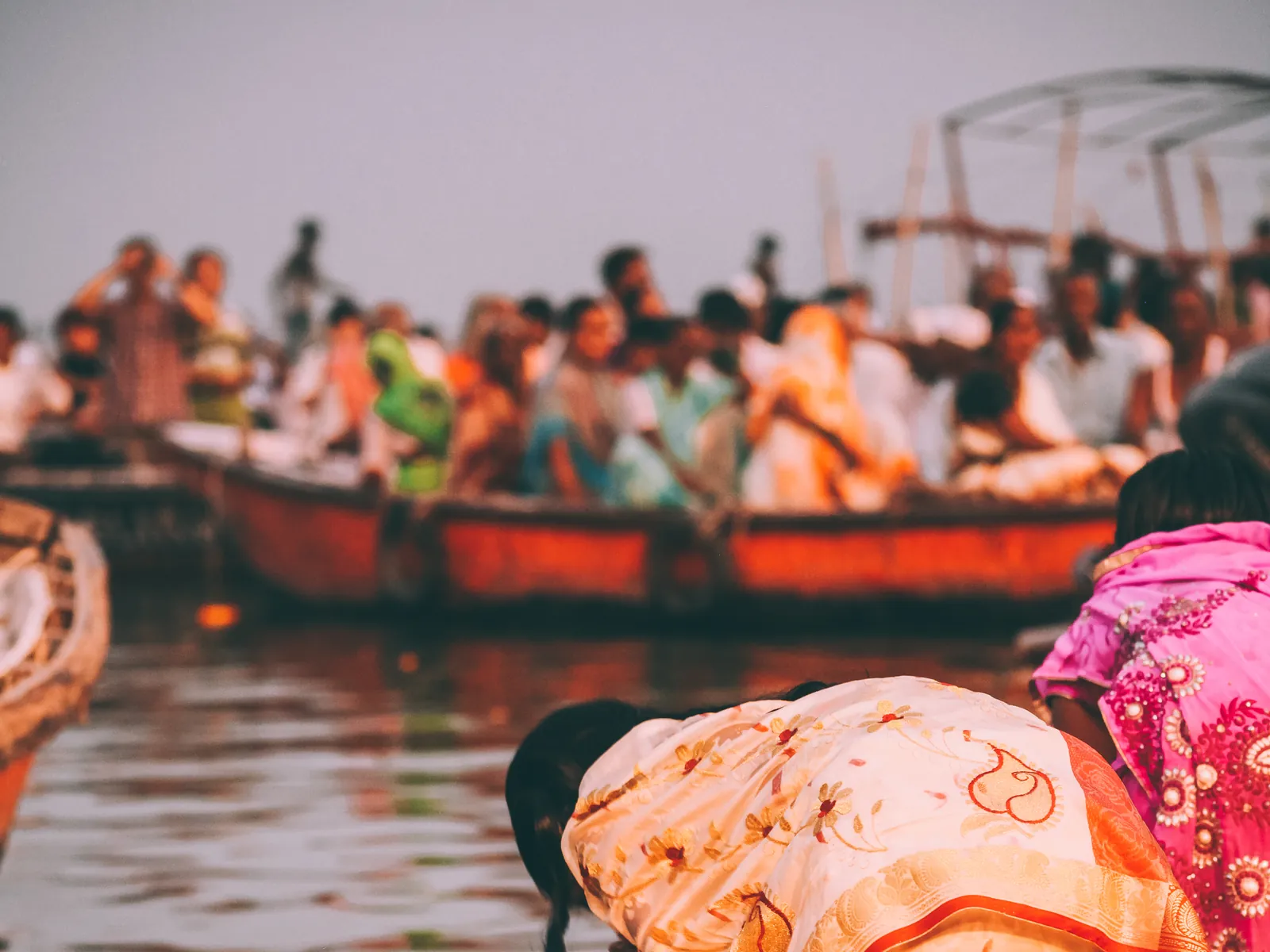
The best time to visit Kashi Vishwanath for comfortable weather is October to March, and the best time to avoid queues is an ordinary weekday morning after the local devotees' slot, outside Mondays and festival dates. Mondays are sacred to Shiva and always busier. Shravan, Mahashivratri, Dev Deepawali and the New Year holidays bring the biggest crowds of the year.
| Period | Crowd level | Weather and notes |
|---|---|---|
| October to November | Moderate to very high on festival days | Pleasant days; Kartik month is festive. Dev Deepawali falls on Kartik Purnima; our Varanasi guide gives Tuesday 24 November 2026, so confirm it in a panchang. |
| December to January | High, especially Christmas to New Year | Cold mornings and fog can delay flights and trains; VIP, protocol and sparsh darshan were suspended for the 2025 to 2026 New Year rush |
| February to March | Very high around Mahashivratri and Rangbhari Ekadashi | Mahashivratri 2027 falls on Saturday 6 March (Hindu calendar sources) |
| April to June | Lower, except holidays | Very hot; Incredible India lists May temperatures from about 21 to 45 degrees Celsius. Go early morning or late evening. |
| July to August (Shravan) | Extreme, especially Shravan Mondays | Shravan 2027 runs from 19 July to 17 August on the North Indian calendar; Mondays fall on 19 and 26 July and 2, 9 and 16 August. Kanwar pilgrims, no-vehicle zones and suspended passes. |
| September | Moderate | Humid; the Ganga can still be high and Ganga Dwar restricted |
Checked: 27 Oct 2026, Sources: Drik Panchang (Shravan 2027 dates), Dekho Panchang and Muhuratam (Mahashivratri 2027), Incredible India (weather), Aaj Tak 25 Dec 2025 (New Year restrictions). Festival dates follow the Hindu lunar calendar, so confirm them in your family's patro or panchang before booking.
How big are the Shravan crowds?
Very big. Ahead of Shravan 2026, the temple's executive officer said about one crore (ten million) devotees could visit during the month (Patrika, 28 July 2026). On Shravan Mondays, queues can stretch through the lanes for several hours, daily passes have been cancelled (All India Radio News, July 2024), protocol darshan has been fully stopped (The Week, July 2025), and lockers may not be available. If you are travelling with elderly parents, avoid Shravan Mondays entirely unless the pilgrimage specifically requires that day. If it does, start before dawn, carry water and glucose, and follow the trust's live updates.
Timing tips for Nepali travellers
- Dashain and Tihar. The long Dashain and Tihar holidays are when many Nepali families travel, and they overlap with Navaratri and Diwali in India, so Varanasi is busy too. The weeks just after Tihar, before Dev Deepawali, are often a good balance. Our guide to holidays abroad during Dashain and Tihar covers how to plan around the festival rush.
- Weekdays over weekends. Weekends and Indian public holidays tend to be busier, and Mondays are Shiva's day, so a Tuesday to Thursday visit is usually a better bet.
- Go early. An early-morning queue on a weekday, after the 4:00 am to 5:00 am local devotees' slot, is cooler and calmer for older parents than the middle of the day.
- Evening Sapta Rishi Aarti. If Mangala Aarti is too early for your parents, the 7:00 pm Sapta Rishi Aarti is a beautiful and easier alternative.
For India-wide season advice beyond Varanasi, see our guide to the best time to visit India.
What is the Kashi Vishwanath Dham corridor?
The Kashi Vishwanath Dham corridor is the large redeveloped temple complex that links Kashi Vishwanath Temple directly to the Ganga ghats. Phase 1 was inaugurated on 13 December 2021. According to the Government of India, the temple premises grew from about 3,000 square feet to about 5 lakh (500,000) square feet, with 23 buildings in phase 1 and space for 50,000 to 75,000 devotees in the temple and its premises.
Before the Dham, pilgrims reached the temple only through narrow, crowded lanes. Now you can bathe in the Ganga at Jalasen, Manikarnika or Lalita Ghat and walk straight up into the temple complex. More than 40 old temples were rediscovered and restored during the work, according to PM India and Incredible India.
| Feature | What it is | Why it matters to pilgrims |
|---|---|---|
| Ganga Dwar and river access | Direct route from the ghats into the Dham | Bathe, collect Gangajal and go straight to darshan (subject to river levels) |
| Mandir Chowk | The open courtyard around the main temple | Lockers (per the trust FAQ) and space to gather your group |
| Yatri Suvidha Kendras (facilitation centres) | Resting areas and luggage storage | Lockers and a place for elders to sit |
| Bhogshala | Hall where devotees take prasad together | Seats about 150 people at a time |
| Mumukshu Bhawan | Building for those who come to Kashi seeking moksha | About 100 steps from Manikarnika |
| Vedic Kendra, City Museum, Viewing Gallery | Cultural and learning spaces | Good for older children and curious visitors |
| Ramps and escalators | Step-free access in parts of the Dham | Helps elderly and differently-abled devotees |
| Aarogya Kendra and help desks | First aid and medical assistance | Medical points at five locations on crowded days |
Checked: 27 Oct 2026, Sources: PM India (pmindia.gov.in), New India Samachar (PIB), Incredible India, Shri Kashi Vishwanath Temple Trust notices page.
Incredible India also notes a stone sculpture of Bharat Mata in the Dham. One more story many visitors have not heard: an 18th century idol of Goddess Annapurna, taken out of India around 1913, was returned from the MacKenzie Art Gallery in Canada in 2021 and brought back to Kashi Vishwanath.
The trust also runs two guest houses linked to the temple, Ganga Darshan (Gangadarshanam) near Dashashwamedh Ghat and Southern Grand Kashi inside the corridor, and a Prasadam restaurant at Ganga Darshan serves vegetarian thali without onion or garlic. These are useful for strict vegetarian grandparents; for more on eating well across the country, see our guide to what to eat in India.
Is Kashi Vishwanath easy for elderly and disabled pilgrims?
Kashi Vishwanath is much easier for elderly and disabled pilgrims than it was before the Dham, but it still involves walking through lanes, security queues and standing. The Dham has ramps and escalators, the trust offers Sugam Darshan with a Shastri escort, and e-karts or e-rickshaws have been provided for differently-abled devotees in the no-vehicle zone. The trust's Sugam Darshan terms also state that it does not charge differently-abled devotees for darshan.
- Book Sugam Darshan for parents who cannot stand long. The trust designed it for devotees with time constraints and for divyang devotees who cannot wait in a queue. Remember it is not allowed during aartis or on special days.
- Use the e-kart. Godowlia to Maidagin is a no-vehicle zone. The trust says e-kart services are available for differently-abled devotees, and during Shravan 2025 e-rickshaws ran from Maidagin and Godowlia to Gate No. 4.
- Medical help is on site. Aarogya Kendra provides first aid, and on crowded days medical points run at five locations inside the Dham.
- Lost someone? Report it at the help desk. On festival days, lost and found points operate at five locations, and the Dham is covered by CCTV.
- Carry medicines and ID outside your bag. A small pouch with tablets, a written note of any condition and a photo ID is easier than a bag that may not be allowed in.
Varanasi's old city can be overwhelming, so plan short days and rest between outings. Our guide on safety in India covers crowds, scams and health basics, and travel insurance with medical cover is worth arranging before you leave Nepal; see travel insurance from Nepal.
Can visitors of other faiths enter Kashi Vishwanath?
The Shri Kashi Vishwanath Temple Trust publishes a "Foreign Tourist Ticket Booking Process" for devotees holding foreign passports, issued at its help desk head office after passport verification, which shows that visitors from abroad do take darshan. We could not find any published trust rule that restricts entry by religion. What is expected of everyone is the same: respectful dress, no phones or cameras, patience in the queue and quiet in the sanctum. Rules at Indian temples can change, so check the trust's notices page and ask at the help desk if you are unsure.
Which nearby temples should pilgrims also visit?
The temples most pilgrims combine with Kashi Vishwanath are Kaal Bhairav, Annapurna Devi, Vishalakshi, Sankat Mochan Hanuman and Durga Kund, and for Nepali families the Nepali Temple at Lalita Ghat. Kaal Bhairav, Annapurna and Vishalakshi are close to the Dham and can be covered on foot; Sankat Mochan and Durga Kund are in south Varanasi and need a rickshaw.
| Temple | Deity and significance | Location | Pilgrim tip |
|---|---|---|---|
| Kaal Bhairav | Fierce form of Shiva, called the kotwal (guardian) of Kashi | Bhaironath, north of Vishwanath | Many pilgrims visit first to "ask permission" to stay in Kashi |
| Annapurna Devi | Goddess of food and nourishment | Next to the Vishwanath area | Easy to combine on the same walk as Vishwanath darshan |
| Vishalakshi | Shakti Peetha of the goddess | Near Mir Ghat | Important for Shakta devotees |
| Dhundhiraj Ganesh | Ganesh shrine in the lanes near the temple | Near the Dhundhiraj gate | A natural first stop before entering |
| Nepali Temple (Samrajeshwar Pashupatinath) | Pashupatinath form of Shiva in a Newar-style wooden pagoda | Lalita Ghat, about 100 metres from Manikarnika | Owned by the Government of Nepal; a must for Nepali families |
| Sankat Mochan Hanuman | Hanuman, linked to the Tulsidas tradition | Near Banaras Hindu University, south Varanasi | Tuesdays and Saturdays are very busy |
| Durga Kund | Durga, in an 18th century red temple beside a tank | South Varanasi, near Sankat Mochan | Very crowded in Navaratri, which overlaps with Dashain |
| New Vishwanath Temple (BHU) | Shiva, in a tall white temple | Banaras Hindu University campus | Open to all faiths; calm and spacious, good with children |
The Nepali Temple at Lalita Ghat
The Nepali Temple, formally Shri Samrajeshwar Pashupatinath Mahadev Mandir and also called the Kathwala (wooden) Mandir, is a piece of Kathmandu on the banks of the Ganga. King Rana Bahadur Shah began it during his exile in Varanasi in the early 1800s, and it was completed later under his successors; sources differ on the exact completion date, with 1843 often given. The temple is built mostly of carved wood, with terracotta and stone, in the Newar pagoda style, and its carvings have earned it the nickname "Mini Khajuraho". The temple, Lalita Ghat and a dharamshala are owned by the Government of Nepal.
Because the Dham's river side opens towards Lalita Ghat, a lovely morning for Nepali families is a Ganga bath or boat ride, prayers at the Nepali Temple, and then darshan at Kashi Vishwanath. Walking from the familiar carved roofs of a Nepali pagoda into the gold of Vishwanath is a moment many older visitors remember. The temple's main festivals include Mahashivratri and Nag Panchami.
How should Nepali pilgrims plan a Kashi Vishwanath trip?
Nepali pilgrims can reach Kashi Vishwanath by a direct flight from Kathmandu to Varanasi of about 50 minutes, or overland through the Sonauli border near Bhairahawa and then by road or train via Gorakhpur, which takes most of a day. Nepali citizens travelling to India from Nepal need no passport or visa, but must carry a government document that proves Nepali nationality; for flights, that means a passport or a citizenship certificate. See our India visa guidance for current entry notes.
| Route from Nepal | Typical journey | Notes |
|---|---|---|
| Fly Kathmandu to Varanasi direct | About 50 minutes | Buddha Air operates the route, three times a week on Mondays, Wednesdays and Fridays as of October 2026; schedules have changed before |
| Fly via Delhi or another Indian city | Most of a day with the connection | Useful when direct seats are full in festival season |
| Overland via Sonauli (Bhairahawa) | Most of a day from the border | Sonauli to Gorakhpur, then on to Varanasi; leave extra time for winter fog |
Checked: 27 Oct 2026, Sources: Buddha Air route page (about 50 minutes, three flights a week); FlightStats records showing Buddha Air flight 161 operating Kathmandu to Varanasi in October 2026; Gomayu's Varanasi guide checked 9 Oct 2026. Our list of direct flights from Kathmandu covers the other nonstop routes out of Tribhuvan International Airport.
Once you land, the trust gives these distances from the temple to the city's main arrival points:
| Arrival point | Distance to the temple (trust figure) |
|---|---|
| Varanasi City railway station | About 2 km |
| Manduadih (Banaras) railway station | About 4 km |
| Varanasi Junction (Cantt) railway station | About 6 km |
| Mughalsarai (Pt. Deen Dayal Upadhyaya Junction) | About 17 km |
| Lal Bahadur Shastri International Airport (Babatpur) | About 22 km (trust figure; other sources quote slightly more by road) |
Source: Shri Kashi Vishwanath Temple Trust, How To Reach page, checked 27 Oct 2026. Road time from the airport depends heavily on traffic and the no-vehicle zone around the temple, so allow generous time on your arrival day. For autos, e-rickshaws, trains and app cabs, see our guide on how to get around India.
A simple planning checklist
- Decide on your darshan type first. General darshan, Sugam Darshan, an aarti or a Rudrabhishek. This decides where you should stay and how early you need to wake up.
- Book aarti and Sugam Darshan on the trust site, app or help desk only. The Week reported in 2025 that devotees were warned against brokers promising special darshan. Book through official channels.
- Stay near the old city. Hotels around Godowlia, Dashashwamedh Ghat or the trust's own guest houses make early aartis realistic.
- Allow at least two nights. One morning for darshan, one evening for the Ganga Aarti at Dashashwamedh Ghat, and a spare slot in case crowds or weather upset the plan.
- Pack light for temple days. Cash in small notes, photo ID, a printed ticket, a shawl and slip-on shoes.
- Tell relatives about the live darshan. Family members back in Nepal can follow the trust's live darshan online while you are in the queue.
Varanasi pairs naturally with Sarnath, Bodh Gaya, Prayagraj or Ayodhya for a longer pilgrimage, or with Delhi, Agra and Rajasthan for a first trip to India. Our complete India travel guide covers the big picture, and our round-up of the best places to visit in India helps you decide what to add. If you would like the flights, hotels near the Dham and transfers arranged together, browse our India tour packages.
Frequently asked questions
What are the Kashi Vishwanath temple timings?
Kashi Vishwanath temple opens at 2:45 am for Mangala Aarti and closes at 11:00 pm after Shayan Aarti, according to the trust's notices page (checked 27 Oct 2026). Bhog Aarti is around 11:30 am to 12:30 pm, Sapta Rishi Aarti 7:00 to 8:15 pm and Shringar Bhog Aarti 9:00 to 10:15 pm. Timings change on Purnima, eclipses and festivals.
Are mobile phones allowed inside Kashi Vishwanath?
No. Mobile phones are not allowed inside Kashi Vishwanath temple premises or the sanctum. The trust also bans smart watches, electronic keys, cameras, recording glasses and other gadgets, and its FAQ lists pens too. Leave them at your hotel or in a locker before you join the queue, because security at the gates will turn you back.
How do I book the Mangala Aarti at Kashi Vishwanath?
You book Kashi Vishwanath Mangala Aarti on the official trust website shrikashivishwanath.org, the trust's Android or iOS app, or at the help desk. A valid ticket and an identity card are mandatory, General booking opens 30 days ahead at 11:00 am Indian time, bookings cannot be cancelled or moved, and you should carry a printed copy to the gate. Nepali and foreign visitors should confirm the right booking route at the help desk.
Is there a dress code for Kashi Vishwanath?
Kashi Vishwanath has no formal dress code for darshan, but the temple trust asks devotees to wear decent clothes. Cover shoulders and knees, choose clothing comfortable for a long queue, and wear shoes you can remove easily. Traditional dress such as a sari or dhoti kurta is the safest choice if you hope for touch darshan.
How long are queues at Kashi Vishwanath on Shravan Mondays?
Queues at Kashi Vishwanath on Shravan Mondays can stretch for several hours, and the temple expected about one crore devotees across Shravan 2026. Daily passes and protocol darshan have been cancelled on those days, and lockers may not run. Start before dawn, carry water, and avoid Shravan Mondays with elderly parents unless the day is essential.
Can visitors of other faiths enter Kashi Vishwanath?
The Shri Kashi Vishwanath Temple Trust runs a darshan ticket process for foreign passport holders at its help desk head office, and we found no published trust rule restricting entry by religion. Every visitor is expected to dress modestly, leave phones and cameras outside and behave respectfully. Check the trust's notices page or ask at the help desk if unsure.
Are lockers available near Kashi Vishwanath temple?
Yes. The Kashi Vishwanath trust lists lockers at Mandir Chowk, the three Yatri Suvidha Kendras and the help desk, offered at no charge. Its notices page warns that locker space is limited, and on peak days such as Shravan Mondays lockers may not operate at all. Arriving with no phone or bag is the easiest plan.
Which gate is best for entry to Kashi Vishwanath?
Gate No. 4 is the main entrance to Kashi Vishwanath Dham and has the help desk nearby. Mangala Aarti ticket holders use the gate printed on their ticket (Gate No. 1 for General, Gate 4B for Tatkal, per the booking page), and other aartis allow entry from any gate. River-side entry may be restricted when the Ganga is high, so keep a city gate as backup.
Is there special access for elderly or disabled visitors at Kashi Vishwanath?
Yes. Kashi Vishwanath Dham has ramps and escalators, and the trust's Sugam Darshan, with a Shastri escort and no queue, is designed for divyang devotees and people short on time. The trust says e-karts are available for differently-abled devotees in the no-vehicle zone. Sugam Darshan is not offered during aartis or on special days.
How far is Kashi Vishwanath from Dashashwamedh Ghat?
Kashi Vishwanath is a short walk from Dashashwamedh Ghat, well under a kilometre through the Godowlia and Vishwanath Gali area. The area is a no-vehicle zone, so you walk or take an e-rickshaw where allowed. Many pilgrims watch the evening Ganga Aarti at Dashashwamedh and take darshan the next morning.
Nepalbata Kashi Vishwanath darshan garna ke ke chahinchha?
Nepali nagarikko lagi Bharat jana visa chahindaina, tara passport wa nagariktako praman patra saathma rakhnus. Mobile, ghadi, pen ra jhola mandir bhitra lana paindaina, hotelmai chhodnus. Mangala Aarti ko ticket trust ko website, app wa help desk bata matra kinnus. (English: Nepali citizens need no visa but should carry ID; leave phones and bags behind and book aarti only through official trust channels.)