+977-9768558250
Explore by Country
See all 22 Thailand packages
Most popular pick
See all 22 Thailand packages →
See all 11 Vietnam packages
Most popular pick
See all 11 Vietnam packages →
See all 10 Indonesia (Bali) packages
Most popular pick
See all 10 Indonesia (Bali) packages →
See all 7 Maldives packages
Most popular pick
See all 7 Maldives packages →
See all 10 China packages
Most popular pick
See all 10 China packages →
See all 13 Sri Lanka packages
Most popular pick
See all 13 Sri Lanka packages →
See all 9 Malaysia packages
Most popular pick
See all 9 Malaysia packages →
See all 8 Singapore packages
Most popular pick
See all 8 Singapore packages →
See all 2 Kenya packages
Most popular pick
See all 2 Kenya packages →
See all 16 India packages
Most popular pick
See all 16 India packages →
See all 3 Dubai packages
Most popular pick
See all 3 Dubai packages →
See all 7 Nepal packages
Most popular pick
See all 7 Nepal packages →
See all 6 Philippines packages
Most popular pick
See all 6 Philippines packages →
Search Tours or Places
Blog / Sri Lanka

Sigiriya Lion Rock: How to Climb Sri Lanka's Rock Fortress

27 min read 27 Oct 2026
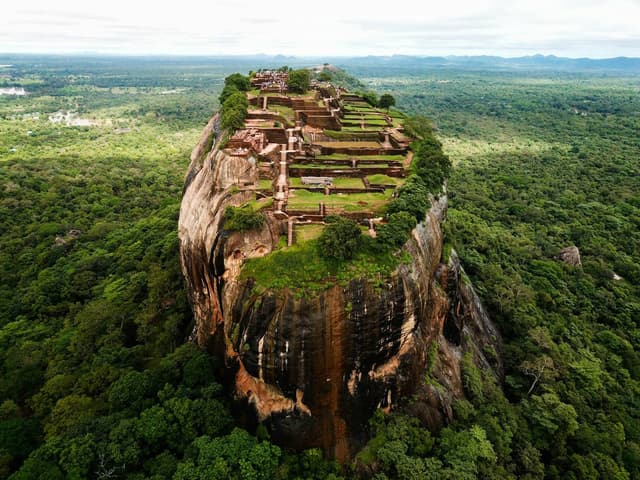
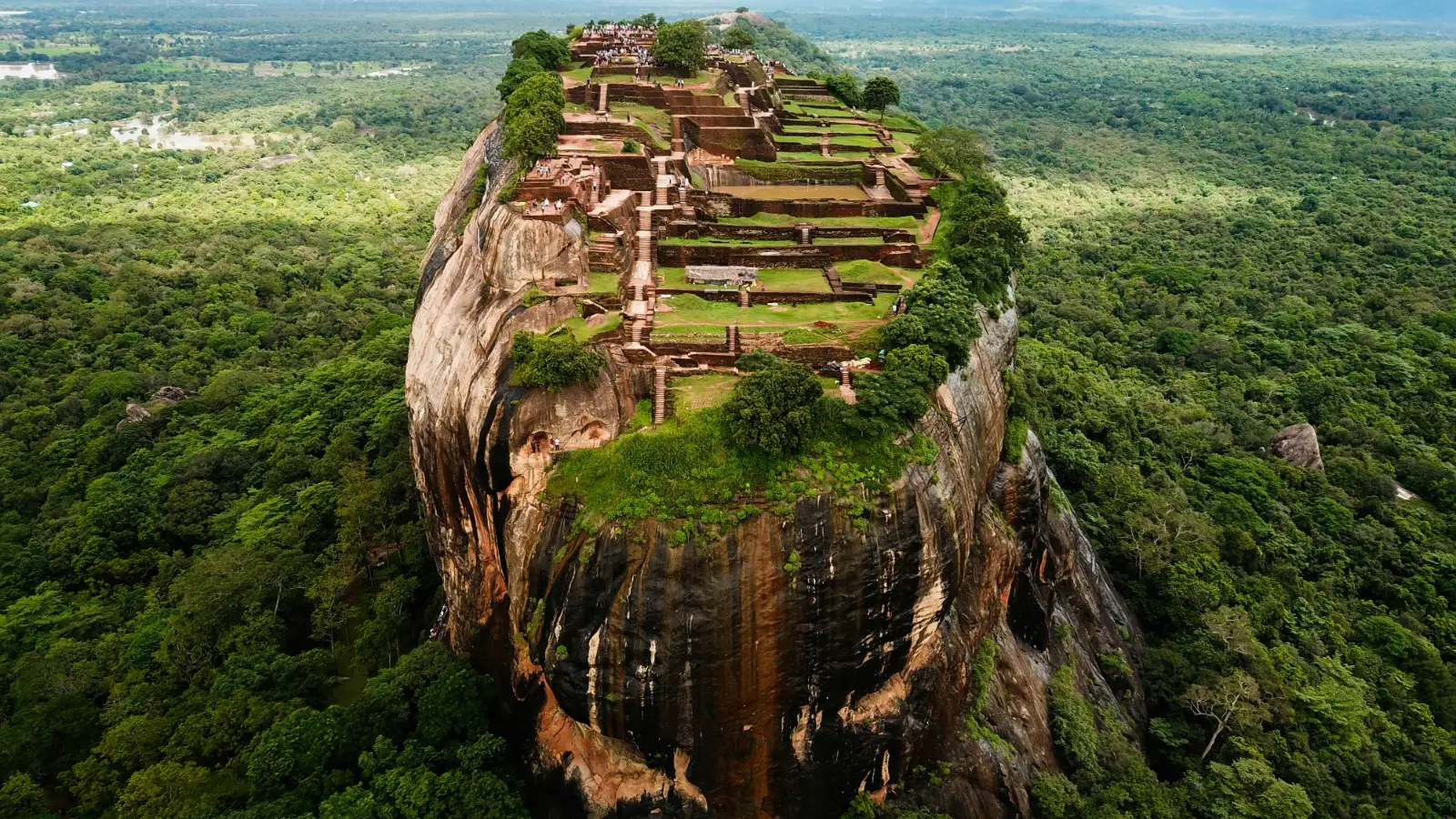
Aerial view of Sigiriya Lion Rock fortress rising above dense green forest in central Sri Lanka

Short answer: Sigiriya Lion Rock is a fifth century royal citadel built on top of a granite rock that rises about 180 metres above the forests of central Sri Lanka. You climb it on roughly 1,200 steps (sources quote anything from about 1,200 to 1,300, and no official count is published), which takes most reasonably fit people 30 to 90 minutes up and a total of two and a half to three and a half hours for the full site. Go as soon as the gates open at 7 am, carry water, keep quiet near the wasp nests, and pair it with the Dambulla Cave Temple, about 20 km away, on the same day. Checked: 27 Oct 2026, Central Cultural Fund heritage tickets page.

Sigiriya is the image most people carry of Sri Lanka: a sheer, flat-topped rock standing alone above the jungle, with a pair of giant stone lion paws guarding the last staircase to the summit. It is also one of the busiest sights on the island, which means the difference between a great visit and a sweaty, crowded one comes down to timing, fitness and a little preparation.

This guide walks you through the climb stage by stage, from the water gardens at the base to the palace ruins on top. It explains how hard the climb really is (including for elderly parents and young children), when to go to beat the heat and the crowds, whether nearby Pidurangala Rock is the better viewpoint, and how to fit the Dambulla Cave Temple into the same day. Ticket prices are not included because they change; check the official ticket page before you travel. For the wider picture of the country, start with our complete Sri Lanka travel guide.

Sigiriya at a glanceDetails
What it isRuined royal citadel and gardens on and around a granite rock, built under King Kassapa I
LocationMatale District, Central Province, in the Cultural Triangle of central Sri Lanka
Height of the rockAbout 180 m high, per UNESCO
UNESCO World Heritage statusInscribed in 1982 as the Ancient City of Sigiriya
Opening hours7:00 am to 5:00 pm daily, per the Central Cultural Fund. Checked: 27 Oct 2026, ccf.gov.lk
StepsAbout 1,200; published figures range from about 1,200 to 1,300
Time needed30 to 90 minutes to the summit; 2.5 to 3.5 hours for the whole site
TicketsSold at the site and online through the Central Cultural Fund; check the current price there
Nearest big sightDambulla Cave Temple, about 20 km away

What is Sigiriya Lion Rock?

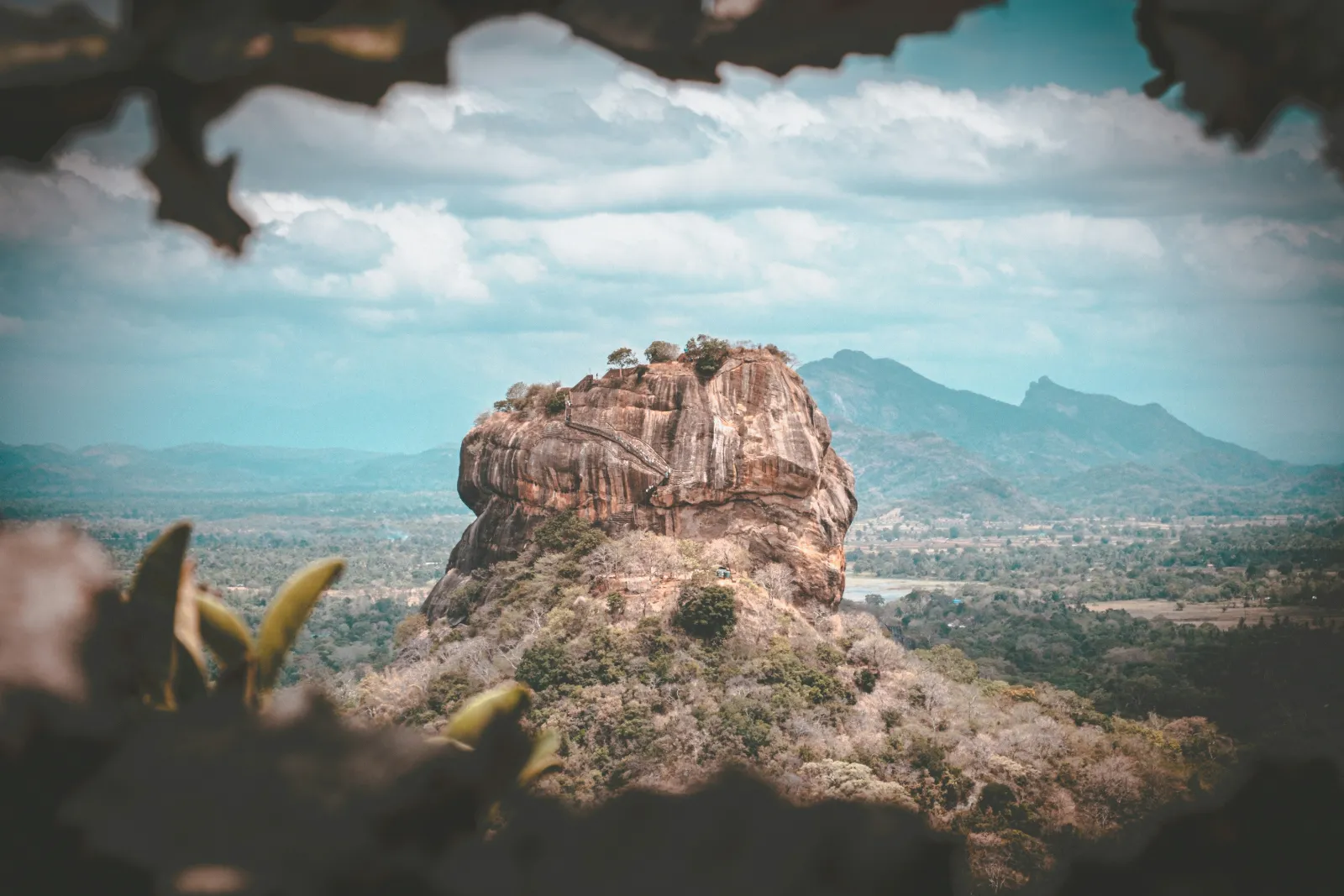
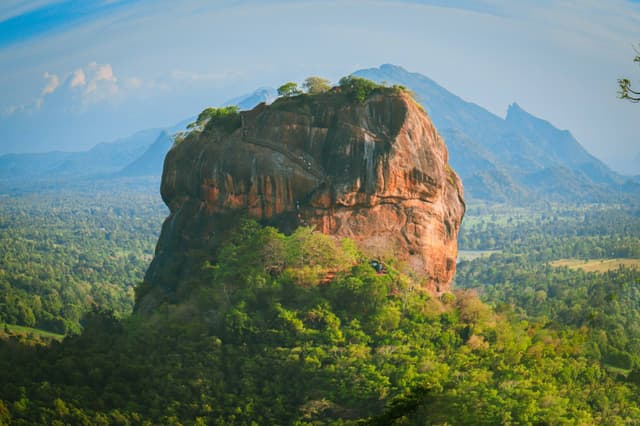
Sigiriya Lion Rock standing above green jungle with distant hills in central Sri Lanka

Sigiriya Lion Rock is the ruined capital of King Kassapa I, who ruled Sri Lanka from 477 to 495 CE and built his palace on the summit of a massive granite rock in the central plains. UNESCO describes the site as the "Lion's Rock", reached through galleries and staircases that emerged from the mouth of a gigantic lion made of brick and plaster. Only the lion's paws survive today, but they still frame the final staircase and give the rock its popular name.

The story behind Sigiriya is part of its pull. Kassapa took the throne after the death of his father, King Dhatusena, and UNESCO calls him the "parricidal" king. Fearing his half brother Moggallana, he moved the capital from Anuradhapura to this rock, a near impregnable position. After Kassapa's defeat, the site lost its role as a capital. Today you see the remains of that short but ambitious reign: symmetrical water gardens, boulder gardens, terraces, painted rock pockets, a polished wall covered in ancient verses, and the foundations of the summit palace.

The name Sigiriya comes from the Sinhala for Lion Rock, and you will see both names, along with "Sigiriya Rock Fortress", used for the same place. Locally it is pronounced roughly "see-gee-ree-ya".

Is Sigiriya a UNESCO World Heritage Site?

Yes. The Ancient City of Sigiriya was inscribed on the UNESCO World Heritage List in 1982 under cultural criteria (ii), (iii) and (iv). The Rangiri Dambulla Cave Temple, which you can visit on the same day, followed in 1991. Both sit inside the area travellers call the Cultural Triangle, which also holds Anuradhapura, Polonnaruwa and Kandy. Our guide to the top things to do in Sri Lanka covers the other heritage sites in the region.

SiteUNESCO inscriptionWhat it protects
Ancient City of Sigiriya1982Kassapa I's fortified capital, gardens and summit palace
Rangiri Dambulla Cave Temple1991Five cave shrines with about 2,100 square metres of murals and 157 statues

Source: UNESCO World Heritage Centre listings 202 and 561. Checked: 27 Oct 2026.

What is inside the Sigiriya complex besides the rock?

Many visitors only think about the summit, but a good share of Sigiriya is at ground level. The main entrance leads through the western precinct, with its long, symmetrical water gardens, moats and fountains. Beyond them, the boulder gardens wind between huge natural rocks, some with drip ledges and traces of paint from the monks who lived here before and after the royal period. A site museum near the entrance gives useful background. The Central Cultural Fund lists it as opening at 8:00 am, an hour after the rock, so most early climbers visit it after the descent. Checked: 27 Oct 2026, ccf.gov.lk.

How hard is the Sigiriya climb?

The Sigiriya climb is moderately hard: a steady stair climb of roughly 1,200 steps with some steep, exposed metal staircases near the top, done in tropical heat. Most people with average fitness reach the summit in 30 to 90 minutes, including stops. There is no lift or cable car, and the only way to the top is on foot.

The step count is the most quoted and least consistent fact about Sigiriya. Travel writers and guides give figures from about 1,200 to around 1,300, and some simply say "more than 1,200". We could not find an official count from the Central Cultural Fund, so treat "about 1,200" as a fair guide rather than an exact number. What matters more than the exact figure is the pattern: the first stretch through the gardens is gentle, the middle section through the boulder gardens is shaded with short flights, and the final stretch from the Lion's Paw to the summit is the steepest and most exposed.

Heat is the real challenge. Long-term averages put daytime highs around Sigiriya at about 28 to 32°C through the year, and the rock face reflects heat back at you. There is no shop on the rock itself, so buy water before you go through the entrance and carry more than you think you need.

Who is climbingWhat to expectPractical advice
Fit adults30 to 45 minutes to the top at a steady paceStill start early; the heat slows everyone down
Average fitness45 to 90 minutes with restsUse the shaded boulder garden and Lion's Paw terrace as rest stops
Older travellersPossible for many, but slow; the top section is steep with handrailsDecide at the Lion's Paw terrace whether to continue
ChildrenUsually fine from school age with an adult holding hands on the steep stairsAvoid carrying toddlers on the final staircases
People with vertigoThe open spiral stair to the frescoes and the final metal stairs can feel exposedLook at the step in front, not down; turn back if uncomfortable
Knee or heart conditionsLong, steep descent is often harder than the climbAsk your doctor before travel; consider Dambulla and the gardens instead

Is Sigiriya suitable for elderly parents and young children?

Sigiriya can work for elderly parents if they walk comfortably for a couple of hours and manage stairs at home, but it is not a gentle walk. A common family plan is to climb together to the Lion's Paw terrace, a large flat area with shade and seating, and let anyone who is tired wait there while the rest go to the summit. The gardens, museum and boulder area are all worthwhile on their own, so nobody needs to feel they have missed the visit.

For families from Nepal travelling with grandparents, the advice we give is simple: do Sigiriya on a morning with nothing else strenuous planned, keep the Dambulla visit for the afternoon only if everyone still has energy, and build a slow day afterwards. Our Sri Lanka with family guide has more ideas for pacing a trip around children and older travellers.
Explore Sri Lanka tour packages
View all →

What will you see on the way up?

Aerial view of the brick palace ruins and terraces on the flat summit of Sigiriya rock

On the way up Sigiriya you pass through the water gardens, the boulder gardens, a spiral staircase to the painted frescoes, the Mirror Wall, the Lion's Paw terrace and finally the palace ruins on the summit. Each stage is distinct, and knowing the order helps you pace yourself and choose where to rest.

StageWhat you seeEffortShade
1. Entrance and water gardensMoats, symmetrical pools, fountains and terraces leading straight to the rockEasy, mostly flatLittle
2. Boulder gardensPaths and stairs between giant boulders, old cave shelters and terracesModerate, short flightsGood
3. Spiral staircase and frescoesPainted female figures in a sheltered pocket on the rock faceModerate, narrow spiral stairSheltered
4. Mirror WallA long, once polished wall with ancient graffiti versesEasy gallery walkPartial
5. Lion's Paw terraceThe giant brick lion paws at the foot of the final climbEasy to reach, good rest stopSome
6. Final ascent and summitSteep metal stairs, then palace foundations, a rock-cut pool and wide viewsHardest sectionVery little

The water gardens

The water gardens are your first sight after the entrance and show how much planning went into Kassapa's capital. Pools, channels and moats run in a straight line towards the rock, laid out with a symmetry that is still easy to read today. Walk the central path slowly; it is the best spot for the classic straight-on photograph of the rock.

The boulder gardens

Past the water gardens, the path climbs through the boulder gardens, where huge natural rocks form arches and shelters. Look out for the overhang known as the Cobra Hood Cave, named for its shape. This is the most shaded part of the climb and a sensible place for a water break.

The spiral staircase and the Sigiriya frescoes

Partway up the rock face, a narrow spiral staircase leads to a sheltered pocket where the famous Sigiriya frescoes survive. These paintings of richly dressed women, often called the Sigiriya maidens or damsels, are the best known ancient paintings in Sri Lanka. Only a small number of the many figures that once covered the rock face still survive. Staff usually ask visitors not to photograph the frescoes; follow the signs on the day, as rules here are set to protect the paint.

The Mirror Wall

Beyond the frescoes, the path runs along the Mirror Wall, a long wall said to have been polished so highly that the king could see his reflection. Its surface is covered in graffiti verses scratched by visitors more than a thousand years ago, many of them responding to the painted women. Adding anything to the wall today is strictly forbidden, and guards watch closely.

The Lion's Paw terrace

The Lion's Paw terrace is the large platform where the giant brick paws of the lion gateway still stand. In Kassapa's time a whole lion head and body framed the staircase; today the paws alone are enough to make most people stop and take photographs. This is also where you decide whether to continue: the climb from here to the summit is the steepest part, on metal stairs fixed to the rock face.

The summit

At the top of Sigiriya you find the foundations of the royal palace, terraces stepping down the sides of the rock, and a large rock-cut pool. The real reward is the view: green forest and tanks in every direction, with Pidurangala Rock close by to the north. There is very little shade on the summit, so a hat and sunscreen matter. Allow 30 to 60 minutes to walk around before you start the descent, which follows a partly different path on the way down.

Are there wasps at Sigiriya?

Yes. Wild wasps and hornets nest on the rock face, mainly near the upper sections, and they have attacked visitors on several occasions. Sri Lankan news reports describe attacks in 2012, 2016 and August 2024, when 22 foreign tourists were taken to hospital after part of a nest collapsed in high winds and the Central Cultural Fund temporarily closed the site. Attacks are infrequent, but the risk is real.

The practice on site is straightforward. Signs at the entrance and along the path ask visitors to climb quietly, because noise is one of the known triggers. When nests are disturbed, staff and police have closed the upper sections or the whole rock until it is safe; in July 2012 the Central Cultural Fund for a time required foreign visitors to wear protective jackets beyond the Lion's Paw. If you arrive on a day when access is restricted, follow staff instructions and do not try to push past.

  • Keep your voice down and avoid shouting, music or drone noise on the rock.
  • Do not swat at wasps or hornets that come close; move calmly along the path.
  • If staff signal a problem, follow their directions immediately.
  • Anyone with a known allergy to stings should carry their prescribed medication and tell their travel companions.

Sources: Daily Mirror (July 2012), Daily FT (May 2016), Newsfirst (August 2024). Checked: 27 Oct 2026.

What is the best time of day to climb?

Straight path through the Sigiriya gardens leading toward the rock fortress under blue sky

The best time of day to climb Sigiriya is right at opening time, 7 am, when the air is coolest and before the large tour groups arrive. The second best window is the last couple of hours before the ticket counters close at 5 pm, when the light softens and the day-trip crowd thins. Late morning and early afternoon are the hottest and busiest times.

Sigiriya itself does not open for sunrise. If you want a sunrise view of the rock, that is what Pidurangala is for (see the next section). The Central Cultural Fund lists both the site and its ticket counters as open 7:00 am to 5:00 pm daily; some guides quote a slightly later closing time for the site itself, so plan to be through the gate well before 5 pm if you go late. Checked: 27 Oct 2026, ccf.gov.lk.

Time slotHeatCrowdsVerdict
7:00 to 8:30 amCoolest of the dayA queue at opening, then thinning on the rockBest overall
8:30 to 10:30 amWarming fastTour buses and day trippers arrivingGood if you missed the opening
10:30 am to 2:30 pmHottest, rock reflects heatBusiest, queues on the narrow stairsAvoid if you can
2:30 to 5:00 pmEasingThinning, but afternoon showers are common in the wet monthsGood second choice

Weekends and Sri Lankan public holidays, including the monthly full moon Poya days, can bring more domestic visitors. If you have a choice, a weekday morning is usually the calmest.

What is the best season to visit Sigiriya?

The driest stretch around Sigiriya is roughly January to March and again June to September. Rainfall rises sharply from October to December, when the area gets the bulk of its rain. Temperatures stay warm all year, so "best" is mostly about rain and clear views rather than heat.

MonthsTypical max (°C)Average rainWhat it means for the climb
January to March28 to 32About 84 to 109 mm a month, 5 to 6 rainy daysClear, settled; peak season, so arrive at opening
April to May32About 97 to 169 mm, with April the wetter monthHottest stretch, with inter-monsoon thunderstorms
June to September31About 55 to 99 mm, 8 to 9 rainy daysFairly dry and hot; can be windy
October to December28 to 30About 258 to 298 mm, 13 to 15 rainy daysWettest months; climb early, expect showers, wet steps

Long-term averages for Sigiriya from Weather2Travel. Checked: 27 Oct 2026. Actual weather in any one year can differ.

Tip for travellers from Nepal: Dashain and Tihar holidays usually fall in October or November, which are the wettest months around Sigiriya. That does not rule out a great visit. Mornings are often clearer than afternoons, so plan the climb for opening time, keep the afternoon flexible for Dambulla (which is mostly indoors under rock), and wear shoes with good grip because wet stone and metal stairs are slippery. If your dates are flexible, a January to March trip is the most reliable. Our guide to the best time to visit Sri Lanka compares every region month by month.

Is Pidurangala a better viewpoint?

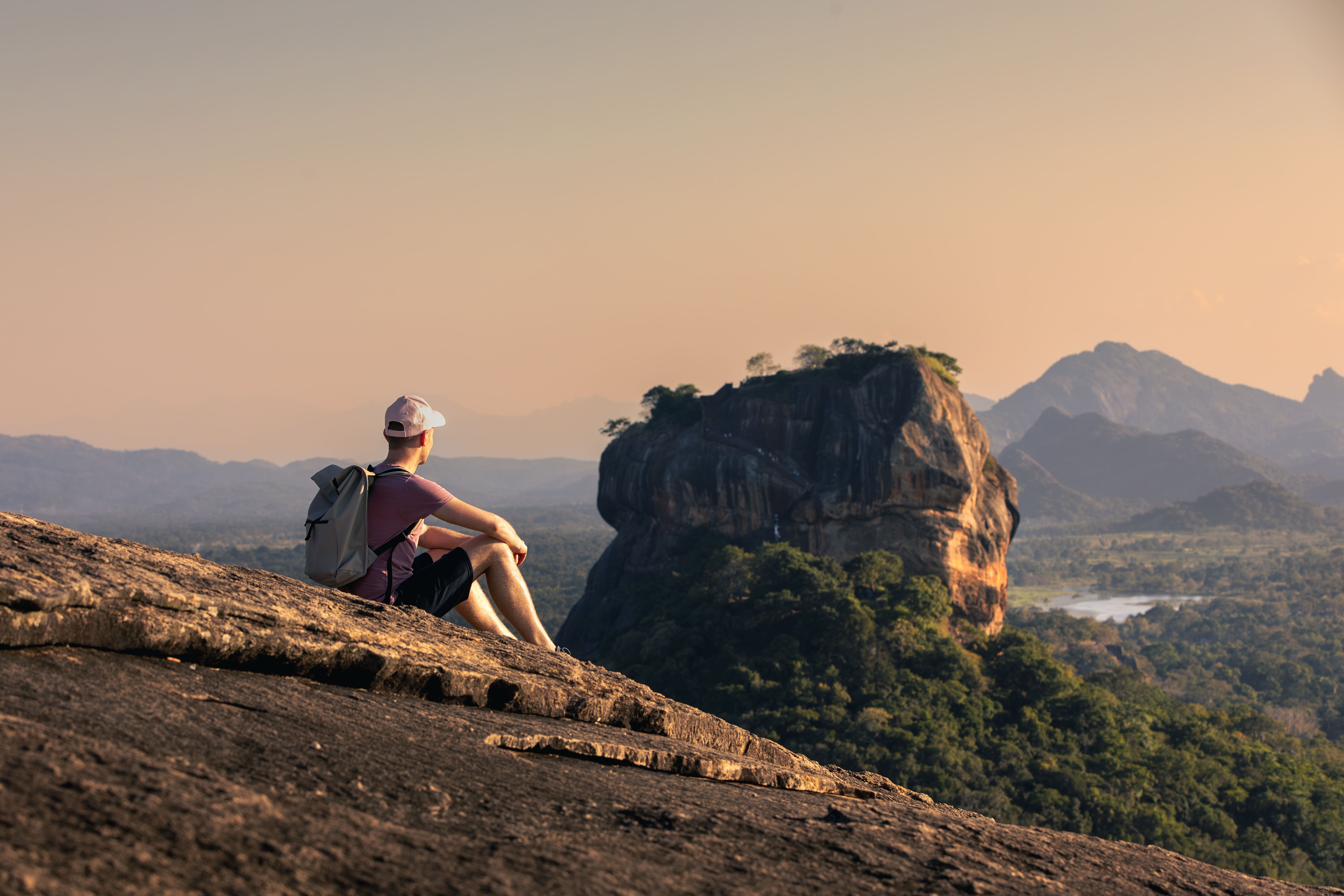
Sigiriya Lion Rock seen across the forest from a neighbouring rocky hilltop viewpoint

Pidurangala Rock is the better viewpoint if you want a photograph of Sigiriya itself, a sunrise, or a quieter, shorter hike. Sigiriya is the better choice if you want the history: the frescoes, the Mirror Wall, the Lion's Paw and the palace ruins exist only there. Many travellers do both, Pidurangala at sunrise or sunset and Sigiriya at opening time on another day.

Pidurangala is a separate rock just north of Sigiriya, home to a Buddhist temple at its base and a large reclining Buddha in a cave shelter near the top. The path starts at the temple, where you must cover your shoulders and knees and remove your shoes for the temple area; travellers report this is strictly enforced. Above the reclining Buddha, the last section is a scramble over boulders, so shoes with grip are better than sandals. Most people take about 30 minutes to reach the top, or 45 minutes to an hour at an easy pace.

FactorSigiriya Lion RockPidurangala Rock
Main rewardHistory: frescoes, Mirror Wall, Lion's Paw, palaceThe view of Sigiriya and the surrounding forest
Sunrise possibleNo, opens at 7 amYes, travellers report early opening; check locally
Time to the top30 to 90 minutesAbout 30 minutes to an hour
Type of climbBuilt steps and metal staircases with handrailsRough path, then a boulder scramble at the end
CrowdsBusy, especially mid-morningQuieter, but busy at sunrise and sunset
Dress rulesNo special code for the rockShoulders and knees covered at the temple; shoes off in the temple area
EntryCentral Cultural Fund ticket, at the counter or onlineSeparate entrance through the temple at its base; not covered by the Sigiriya ticket
Best forFirst-time visitors, history loversPhotographers, sunrise seekers, those short on time

If you hike Pidurangala in the dark for sunrise, carry a torch, stay on the path and go with a companion. The last boulder section needs care; nobody should risk an injury for a photograph. Elderly travellers and young children are usually better off doing Sigiriya's gardens and lower terraces than the Pidurangala scramble.

How do you combine Sigiriya with Dambulla Cave Temple?

Sigiriya and the Dambulla Cave Temple combine easily in one day because they are only about 20 km apart, roughly half an hour by road. The usual plan is Sigiriya at 7 am, a late breakfast or early lunch, then Dambulla in the afternoon, when the cool cave interiors are a welcome break from the heat.

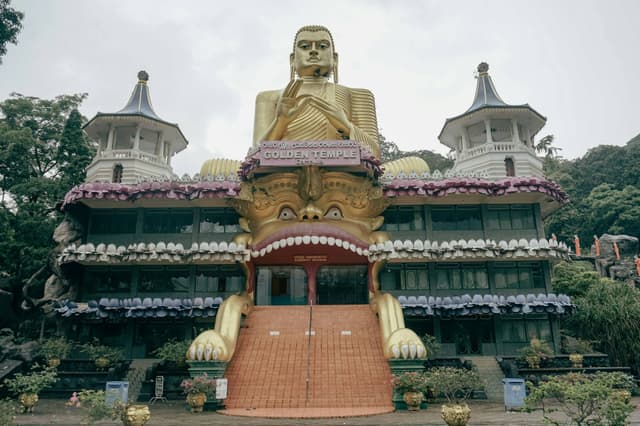
The Rangiri Dambulla Cave Temple, also called the Golden Temple of Dambulla, is an active Buddhist monastery set in a granite outcrop above Dambulla town. UNESCO records five cave shrines with about 2,100 square metres of mural paintings and 157 statues, and notes that the caves have been used by Buddhist monks since the third century BCE. It has been a pilgrimage site for more than two thousand years, and for Buddhist and Hindu travellers from Nepal it often feels like a natural companion to visiting Lumbini or Swayambhu at home: a living place of worship, not a museum.

The approach from the ticket office climbs a stone path and steps up the rock for around 20 to 30 minutes. Travellers' estimates for the number of steps vary widely, from a few hundred upwards, so allow time and take it slowly in the heat. Buy your ticket at the office near the main road entrance before you climb; there is no ticket counter at the top. A large modern golden Buddha sits on the building at the base of the hill, which is separate from the ancient caves above.

What are the Dambulla Cave Temple dress rules and hours?

At Dambulla Cave Temple, cover your shoulders and knees, remove your shoes and hats before entering the caves, and never pose for photographs with your back to a Buddha statue. These rules apply to men and women alike. The Central Cultural Fund lists Dambulla's hours as 7:00 am to 5:00 pm daily. Some travellers report the caves staying open later than the ticket counter, but plan around the 5 pm time because you must buy your ticket at the bottom before climbing. Checked: 27 Oct 2026, ccf.gov.lk.

Rule at Dambulla Cave TempleWhat to do
Shoulders and kneesCover both; carry a shawl, long skirt, trousers or a sarong
ShoesRemove before the cave area; leave them at the shoe counter near the entrance
HatsTake off before entering
Hot groundBring socks; the rock terrace can be very hot by midday
PhotographsDo not stand or pose with your back to a Buddha statue; do not photograph people praying
BehaviourSpeak quietly, do not point your feet at statues, do not touch the murals

The UK government's travel advice for Sri Lanka is blunt about why this matters: disrespecting Buddhist images is a serious offence that can lead to arrest, and visible tattoos of the Buddha can lead to refused entry or deportation. Source: GOV.UK Sri Lanka travel advice. Checked: 27 Oct 2026. Our dos and don'ts in Sri Lanka covers the wider etiquette.

How should you order a Sigiriya and Dambulla day?

TimePlanWhy
6:45 amArrive at the Sigiriya entrance with water and a hatBe near the front of the queue at opening
7:00 to 10:00 amGardens, climb, summit and descentCoolest part of the day
10:00 to 10:30 amSite museum (listed as opening at 8 am)Shaded, good background
Late morningRest, brunch and fluidsAvoid the midday heat on the rock
AfternoonDrive about 30 minutes to Dambulla, climb to the cavesCool caves, softer light, before 5 pm closing

If someone in your group finds the Sigiriya climb tiring, swap the order: Dambulla is still a climb, but shorter. Those with less time can also stay in Dambulla town, which has more transport connections than the village of Sigiriya.

How do you get to Sigiriya?

Sigiriya is in the centre of Sri Lanka, about 167 km by road from Colombo and about 89 km from Kandy. Most visitors arrive by private car with a driver, which takes roughly 2.5 to 4.5 hours from Colombo or Bandaranaike International Airport (CMB), depending on traffic, and about 2.5 hours from Kandy. Public buses and trains also work, but need a change and a final tuk-tuk ride.

Travellers from Nepal usually fly from Kathmandu to Bandaranaike International Airport (CMB), north of Colombo, and drive inland from there. SriLankan Airlines is the only non-stop carrier on the route, with a scheduled flight time of about 3 hours 35 minutes, and Sri Lanka is 15 minutes behind Nepal. The airport is on the northern side of Colombo, so you can head straight to the Cultural Triangle without entering the city. Flight routes and connections from Kathmandu change by season; our page on direct flights from Kathmandu lists the current non-stop routes. Before you fly, check the Sri Lanka Electronic Travel Authorization (ETA) requirement on the official site, eta.gov.lk, and read our Sri Lanka visa guidance.

FromRoad distanceBy carBy public transport
Colombo cityAbout 167 kmAbout 2.5 to 4.5 hours, depending on trafficBus about 5.5 hours to Inamaluwa Junction, then about 10 km by tuk-tuk; or train to Habarana, then about 15 km by road
Bandaranaike International Airport (CMB)Usually a little less than from Colombo city, as the airport lies north of the cityAllow about 2.5 to 4 hoursNo direct service; easiest by private car
KandyAbout 89 kmAbout 2.5 hoursBus to Dambulla about 2.5 hours, then local bus about 30 minutes
DambullaAbout 20 kmAbout 30 minutesLocal buses, usually at least twice an hour
HabaranaAbout 15 kmAbout 25 minutesTuk-tuk or taxi from the station

Distances and times are indicative journey planner figures from GeckoRoutes and similar sources, not quotes. Checked: 27 Oct 2026. Traffic, road works and pickup points change them.

Should you stay in Sigiriya or day trip?

Staying one or two nights in or near Sigiriya is the easiest way to be at the gate by 7 am. Day trips from Colombo mean a very early start and a long drive back in the dark, and wild elephants are known to move around the area after dusk, so local advice is to be off the roads near the site by nightfall. Kandy works as a base if you are comfortable with a 2.5 hour drive each way. For transport options across the island, including private drivers, trains and buses, see how to get around Sri Lanka.

What should you pack and know before you climb?

Pack for heat, stairs and a temple visit on the same day: water, sun protection, grippy shoes and something to cover your shoulders and knees. There are no refreshment stalls on the rock, so stock up before the entrance.

ItemWhy you need it
At least 1 litre of water per personNo shops on the rock, and the climb is hot
Hat, sunglasses, sunscreenSummit and upper stairs have almost no shade
Comfortable shoes with gripStone and metal steps; slippery after rain
Light shawl or sarongCovers shoulders and knees at Dambulla and Pidurangala
SocksFor hot rock at Dambulla, where shoes come off
Small umbrella or rain jacketOctober to December showers; also shade on the summit
SnacksEnergy for the climb; do not feed the monkeys
Personal medicinesIncluding any prescribed allergy medication for stings
Passport copy and ticketFor entry checks and online bookings

Tickets, guides and drones

Sigiriya tickets are sold at the counter and online through the Central Cultural Fund. Prices are set for foreign visitors and change from time to time, so check the official page before you go rather than relying on figures in older blogs. Licensed guides wait near the entrance; a good guide brings the frescoes and the Mirror Wall verses to life, so agree on the length of the tour before you start. Professional filming and drone flying need prior written approval from the Central Cultural Fund, according to its ticket page.

Food, money and safety near Sigiriya

Sigiriya village and Dambulla have simple restaurants and guesthouse kitchens serving rice and curry, roti and fruit, with plenty of vegetarian dishes for Nepali travellers who avoid meat. Dhal curry, vegetable curries and coconut sambol are easy to find; ask for "less spicy" if needed. Our guide to what to eat in Sri Lanka explains the dishes. Sri Lanka uses the Sri Lankan rupee (LKR); carry some cash for small shops, tuk-tuks and shoe counters, as card acceptance in villages varies. The area is generally safe for visitors; the main risks are heat, slippery steps, wasps and the monkeys, which will grab food bags. Read our Sri Lanka safety guide and make sure your travel insurance from Nepal covers sightseeing activities and medical care abroad.

How does Sigiriya fit into a Sri Lanka trip?

Sigiriya fits best at the start of a classic Sri Lanka loop: fly into Colombo, head north to the Cultural Triangle for Sigiriya, Dambulla and Polonnaruwa, continue to Kandy and the hill country around Ella, and finish on the south coast. Allow at least two nights in the Sigiriya area so you can climb at opening time without rushing.

The Sigiriya area also suits short add-ons. Minneriya and Kaudulla national parks are close by and known for elephant gatherings in the dry months, which our Sri Lanka safari guide covers in detail. Polonnaruwa's ancient city is within easy driving distance for a second heritage day. For the full list of regions, see the best places to visit in Sri Lanka, and for route ideas by trip length, our Sri Lanka itinerary guide.

If you would rather have the hotels, driver and timings arranged around an early Sigiriya climb and an unhurried Dambulla afternoon, browse our Sri Lanka tour packages.

Frequently asked questions

How long does it take to climb Sigiriya?

Most people reach the top of Sigiriya in 30 to 90 minutes, depending on fitness, heat and crowds. Allow 2.5 to 3.5 hours for the whole visit, including the water gardens, frescoes, Mirror Wall, Lion's Paw terrace, summit and the descent. Starting at the 7 am opening keeps the climb cooler and quicker.

How many steps are there at Sigiriya?

Sigiriya has roughly 1,200 steps, but sources disagree, with published figures from about 1,200 to 1,300 and no official count from the site managers that we could find. The steps are a mix of stone stairs and steep metal staircases, with the hardest stretch between the Lion's Paw and the summit.

Is Sigiriya hard for elderly people?

Sigiriya is manageable for many older travellers who walk regularly and handle stairs, but it is steep, hot and has exposed metal stairs near the top. A good plan is to climb slowly to the Lion's Paw terrace and decide there. Anyone with heart, knee or balance problems should check with a doctor first.

What is the best time to climb Sigiriya?

The best time to climb Sigiriya is at opening, 7 am, before the heat and the tour groups. Late afternoon before the 5 pm counter closing is the next best window. By season, January to March is the most settled, while October to December is the wettest period around Sigiriya.

Is Pidurangala better than Sigiriya?

Pidurangala is better for views of Sigiriya, sunrise and a shorter hike, while Sigiriya is better for history, with its frescoes, Mirror Wall, Lion's Paw and palace ruins. Pidurangala ends in a boulder scramble and requires covered shoulders and knees at its temple. Many travellers in Sri Lanka do both on different days.

What is at the top of Sigiriya?

The summit of Sigiriya holds the foundations of King Kassapa I's fifth century palace, terraced platforms, a large rock-cut pool and panoramic views over forest, lakes and Pidurangala Rock. There is little shade on top, so bring a hat and water, and allow 30 to 60 minutes to explore before descending.

Are there wasps at Sigiriya?

Yes, wasps and hornets nest on Sigiriya's rock face, and attacks have occasionally led to temporary closures, including a reported incident in August 2024. Signs ask visitors to stay quiet because noise disturbs the nests. Do not swat at them, follow staff instructions, and carry prescribed allergy medicine if you react to stings.

How far is Sigiriya from Colombo?

Sigiriya is about 167 km by road from Colombo, which usually takes 2.5 to 4.5 hours by car depending on traffic. From Bandaranaike International Airport (CMB) the drive is similar, at about 2.5 to 4 hours. Public transport takes longer, with a bus or train followed by a tuk-tuk for the final stretch.

What should I wear to Dambulla Cave Temple?

At Dambulla Cave Temple, wear clothes that cover your shoulders and knees, and be ready to remove your shoes and hat before entering the caves. Socks help on the hot rock. Do not pose for photographs with your back to a Buddha statue, as Sri Lanka treats disrespect to Buddhist images seriously.

Can I visit Sigiriya and Dambulla on the same day?

Yes, Sigiriya and the Dambulla Cave Temple are about 20 km apart, roughly 30 minutes by road, so one day covers both. Climb Sigiriya at 7 am, rest through the midday heat, and visit Dambulla in the afternoon, arriving well before its 5 pm closing time listed by the Central Cultural Fund.

Sigiriya chadna garo cha?

Sigiriya chadna alik garo cha, tara normal fitness bhaeko manche le sajilai chadna sakchha. Lagbhag 1,200 bhanda badhi khudkila chhan, mathi pugna 30 dekhi 90 minet lagchha. Bihana 7 baje gate khulne bittikai chadhnus, pani bokera jaanus, ra budha baa aama lai Lion's Paw samma lagera tyahi bata nirnaya garnus. (English: Sigiriya is moderately hard but doable for people of normal fitness; about 1,200 steps, 30 to 90 minutes up; start at 7 am, carry water, and let elderly parents decide at the Lion's Paw.)

Tags
Sri Lanka
Share
G
Gomayu Team
Writer at Gomayu
Keep reading
Blog / Sri Lanka
Sigiriya Lion Rock: How to Climb Sri Lanka's Rock Fortress
27 min read 27 Oct 2026
Aerial view of Sigiriya Lion Rock fortress rising above dense green forest in central Sri Lanka

Short answer: Sigiriya Lion Rock is a fifth century royal citadel built on top of a granite rock that rises about 180 metres above the forests of central Sri Lanka. You climb it on roughly 1,200 steps (sources quote anything from about 1,200 to 1,300, and no official count is published), which takes most reasonably fit people 30 to 90 minutes up and a total of two and a half to three and a half hours for the full site. Go as soon as the gates open at 7 am, carry water, keep quiet near the wasp nests, and pair it with the Dambulla Cave Temple, about 20 km away, on the same day. Checked: 27 Oct 2026, Central Cultural Fund heritage tickets page.

Sigiriya is the image most people carry of Sri Lanka: a sheer, flat-topped rock standing alone above the jungle, with a pair of giant stone lion paws guarding the last staircase to the summit. It is also one of the busiest sights on the island, which means the difference between a great visit and a sweaty, crowded one comes down to timing, fitness and a little preparation.

This guide walks you through the climb stage by stage, from the water gardens at the base to the palace ruins on top. It explains how hard the climb really is (including for elderly parents and young children), when to go to beat the heat and the crowds, whether nearby Pidurangala Rock is the better viewpoint, and how to fit the Dambulla Cave Temple into the same day. Ticket prices are not included because they change; check the official ticket page before you travel. For the wider picture of the country, start with our complete Sri Lanka travel guide.

Sigiriya at a glanceDetails
What it isRuined royal citadel and gardens on and around a granite rock, built under King Kassapa I
LocationMatale District, Central Province, in the Cultural Triangle of central Sri Lanka
Height of the rockAbout 180 m high, per UNESCO
UNESCO World Heritage statusInscribed in 1982 as the Ancient City of Sigiriya
Opening hours7:00 am to 5:00 pm daily, per the Central Cultural Fund. Checked: 27 Oct 2026, ccf.gov.lk
StepsAbout 1,200; published figures range from about 1,200 to 1,300
Time needed30 to 90 minutes to the summit; 2.5 to 3.5 hours for the whole site
TicketsSold at the site and online through the Central Cultural Fund; check the current price there
Nearest big sightDambulla Cave Temple, about 20 km away

What is Sigiriya Lion Rock?

Sigiriya Lion Rock standing above green jungle with distant hills in central Sri Lanka

Sigiriya Lion Rock is the ruined capital of King Kassapa I, who ruled Sri Lanka from 477 to 495 CE and built his palace on the summit of a massive granite rock in the central plains. UNESCO describes the site as the "Lion's Rock", reached through galleries and staircases that emerged from the mouth of a gigantic lion made of brick and plaster. Only the lion's paws survive today, but they still frame the final staircase and give the rock its popular name.

The story behind Sigiriya is part of its pull. Kassapa took the throne after the death of his father, King Dhatusena, and UNESCO calls him the "parricidal" king. Fearing his half brother Moggallana, he moved the capital from Anuradhapura to this rock, a near impregnable position. After Kassapa's defeat, the site lost its role as a capital. Today you see the remains of that short but ambitious reign: symmetrical water gardens, boulder gardens, terraces, painted rock pockets, a polished wall covered in ancient verses, and the foundations of the summit palace.

The name Sigiriya comes from the Sinhala for Lion Rock, and you will see both names, along with "Sigiriya Rock Fortress", used for the same place. Locally it is pronounced roughly "see-gee-ree-ya".

Is Sigiriya a UNESCO World Heritage Site?

Yes. The Ancient City of Sigiriya was inscribed on the UNESCO World Heritage List in 1982 under cultural criteria (ii), (iii) and (iv). The Rangiri Dambulla Cave Temple, which you can visit on the same day, followed in 1991. Both sit inside the area travellers call the Cultural Triangle, which also holds Anuradhapura, Polonnaruwa and Kandy. Our guide to the top things to do in Sri Lanka covers the other heritage sites in the region.

SiteUNESCO inscriptionWhat it protects
Ancient City of Sigiriya1982Kassapa I's fortified capital, gardens and summit palace
Rangiri Dambulla Cave Temple1991Five cave shrines with about 2,100 square metres of murals and 157 statues

Source: UNESCO World Heritage Centre listings 202 and 561. Checked: 27 Oct 2026.

What is inside the Sigiriya complex besides the rock?

Many visitors only think about the summit, but a good share of Sigiriya is at ground level. The main entrance leads through the western precinct, with its long, symmetrical water gardens, moats and fountains. Beyond them, the boulder gardens wind between huge natural rocks, some with drip ledges and traces of paint from the monks who lived here before and after the royal period. A site museum near the entrance gives useful background. The Central Cultural Fund lists it as opening at 8:00 am, an hour after the rock, so most early climbers visit it after the descent. Checked: 27 Oct 2026, ccf.gov.lk.

How hard is the Sigiriya climb?

The Sigiriya climb is moderately hard: a steady stair climb of roughly 1,200 steps with some steep, exposed metal staircases near the top, done in tropical heat. Most people with average fitness reach the summit in 30 to 90 minutes, including stops. There is no lift or cable car, and the only way to the top is on foot.

The step count is the most quoted and least consistent fact about Sigiriya. Travel writers and guides give figures from about 1,200 to around 1,300, and some simply say "more than 1,200". We could not find an official count from the Central Cultural Fund, so treat "about 1,200" as a fair guide rather than an exact number. What matters more than the exact figure is the pattern: the first stretch through the gardens is gentle, the middle section through the boulder gardens is shaded with short flights, and the final stretch from the Lion's Paw to the summit is the steepest and most exposed.

Heat is the real challenge. Long-term averages put daytime highs around Sigiriya at about 28 to 32°C through the year, and the rock face reflects heat back at you. There is no shop on the rock itself, so buy water before you go through the entrance and carry more than you think you need.

Who is climbingWhat to expectPractical advice
Fit adults30 to 45 minutes to the top at a steady paceStill start early; the heat slows everyone down
Average fitness45 to 90 minutes with restsUse the shaded boulder garden and Lion's Paw terrace as rest stops
Older travellersPossible for many, but slow; the top section is steep with handrailsDecide at the Lion's Paw terrace whether to continue
ChildrenUsually fine from school age with an adult holding hands on the steep stairsAvoid carrying toddlers on the final staircases
People with vertigoThe open spiral stair to the frescoes and the final metal stairs can feel exposedLook at the step in front, not down; turn back if uncomfortable
Knee or heart conditionsLong, steep descent is often harder than the climbAsk your doctor before travel; consider Dambulla and the gardens instead

Is Sigiriya suitable for elderly parents and young children?

Sigiriya can work for elderly parents if they walk comfortably for a couple of hours and manage stairs at home, but it is not a gentle walk. A common family plan is to climb together to the Lion's Paw terrace, a large flat area with shade and seating, and let anyone who is tired wait there while the rest go to the summit. The gardens, museum and boulder area are all worthwhile on their own, so nobody needs to feel they have missed the visit.

For families from Nepal travelling with grandparents, the advice we give is simple: do Sigiriya on a morning with nothing else strenuous planned, keep the Dambulla visit for the afternoon only if everyone still has energy, and build a slow day afterwards. Our Sri Lanka with family guide has more ideas for pacing a trip around children and older travellers.
Explore Sri Lanka tour packages
View all →

What will you see on the way up?
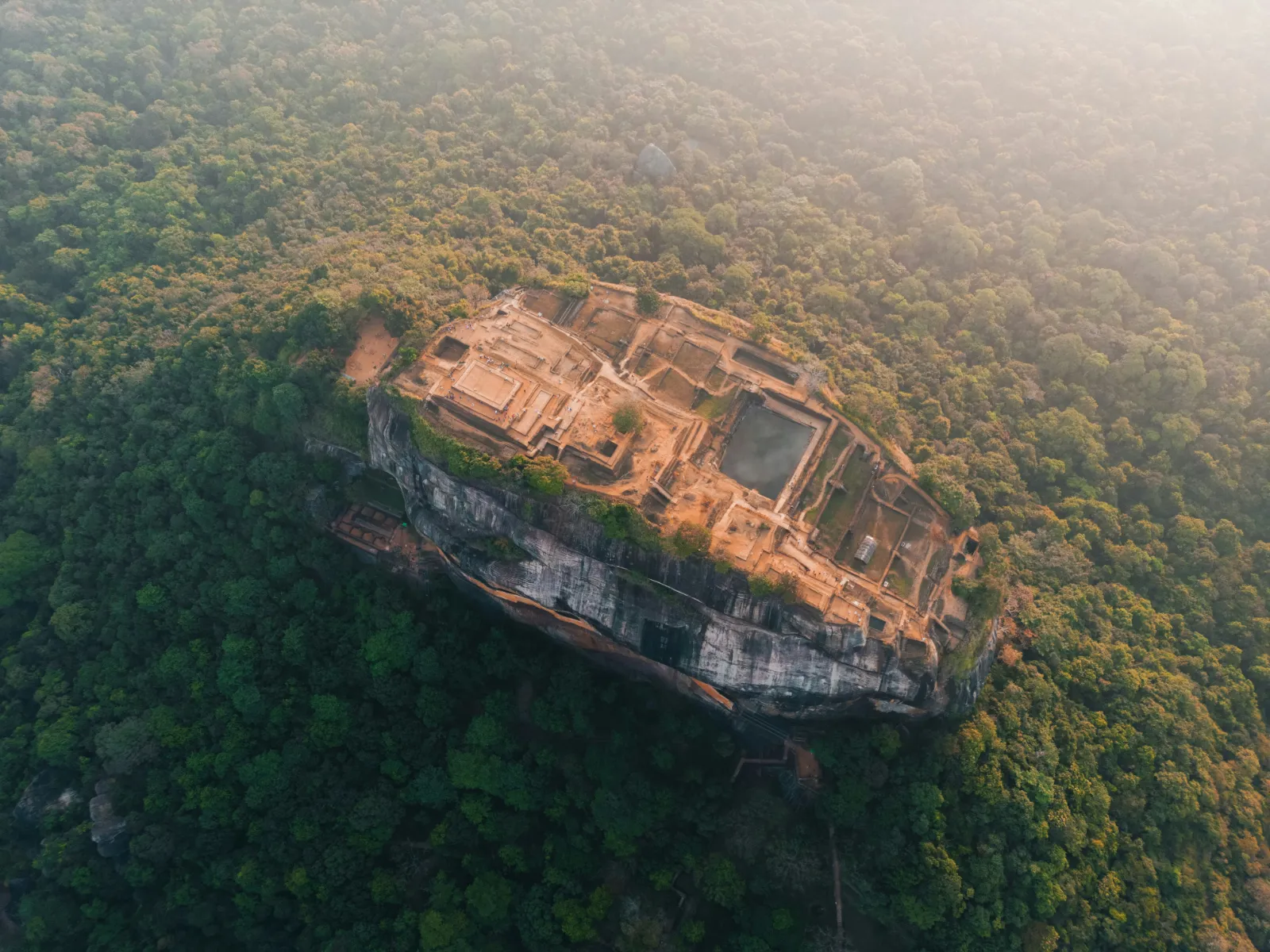
Aerial view of the brick palace ruins and terraces on the flat summit of Sigiriya rock

On the way up Sigiriya you pass through the water gardens, the boulder gardens, a spiral staircase to the painted frescoes, the Mirror Wall, the Lion's Paw terrace and finally the palace ruins on the summit. Each stage is distinct, and knowing the order helps you pace yourself and choose where to rest.

StageWhat you seeEffortShade
1. Entrance and water gardensMoats, symmetrical pools, fountains and terraces leading straight to the rockEasy, mostly flatLittle
2. Boulder gardensPaths and stairs between giant boulders, old cave shelters and terracesModerate, short flightsGood
3. Spiral staircase and frescoesPainted female figures in a sheltered pocket on the rock faceModerate, narrow spiral stairSheltered
4. Mirror WallA long, once polished wall with ancient graffiti versesEasy gallery walkPartial
5. Lion's Paw terraceThe giant brick lion paws at the foot of the final climbEasy to reach, good rest stopSome
6. Final ascent and summitSteep metal stairs, then palace foundations, a rock-cut pool and wide viewsHardest sectionVery little

The water gardens

The water gardens are your first sight after the entrance and show how much planning went into Kassapa's capital. Pools, channels and moats run in a straight line towards the rock, laid out with a symmetry that is still easy to read today. Walk the central path slowly; it is the best spot for the classic straight-on photograph of the rock.

The boulder gardens

Past the water gardens, the path climbs through the boulder gardens, where huge natural rocks form arches and shelters. Look out for the overhang known as the Cobra Hood Cave, named for its shape. This is the most shaded part of the climb and a sensible place for a water break.

The spiral staircase and the Sigiriya frescoes

Partway up the rock face, a narrow spiral staircase leads to a sheltered pocket where the famous Sigiriya frescoes survive. These paintings of richly dressed women, often called the Sigiriya maidens or damsels, are the best known ancient paintings in Sri Lanka. Only a small number of the many figures that once covered the rock face still survive. Staff usually ask visitors not to photograph the frescoes; follow the signs on the day, as rules here are set to protect the paint.

The Mirror Wall

Beyond the frescoes, the path runs along the Mirror Wall, a long wall said to have been polished so highly that the king could see his reflection. Its surface is covered in graffiti verses scratched by visitors more than a thousand years ago, many of them responding to the painted women. Adding anything to the wall today is strictly forbidden, and guards watch closely.

The Lion's Paw terrace

The Lion's Paw terrace is the large platform where the giant brick paws of the lion gateway still stand. In Kassapa's time a whole lion head and body framed the staircase; today the paws alone are enough to make most people stop and take photographs. This is also where you decide whether to continue: the climb from here to the summit is the steepest part, on metal stairs fixed to the rock face.

The summit

At the top of Sigiriya you find the foundations of the royal palace, terraces stepping down the sides of the rock, and a large rock-cut pool. The real reward is the view: green forest and tanks in every direction, with Pidurangala Rock close by to the north. There is very little shade on the summit, so a hat and sunscreen matter. Allow 30 to 60 minutes to walk around before you start the descent, which follows a partly different path on the way down.

Are there wasps at Sigiriya?

Yes. Wild wasps and hornets nest on the rock face, mainly near the upper sections, and they have attacked visitors on several occasions. Sri Lankan news reports describe attacks in 2012, 2016 and August 2024, when 22 foreign tourists were taken to hospital after part of a nest collapsed in high winds and the Central Cultural Fund temporarily closed the site. Attacks are infrequent, but the risk is real.

The practice on site is straightforward. Signs at the entrance and along the path ask visitors to climb quietly, because noise is one of the known triggers. When nests are disturbed, staff and police have closed the upper sections or the whole rock until it is safe; in July 2012 the Central Cultural Fund for a time required foreign visitors to wear protective jackets beyond the Lion's Paw. If you arrive on a day when access is restricted, follow staff instructions and do not try to push past.

  • Keep your voice down and avoid shouting, music or drone noise on the rock.
  • Do not swat at wasps or hornets that come close; move calmly along the path.
  • If staff signal a problem, follow their directions immediately.
  • Anyone with a known allergy to stings should carry their prescribed medication and tell their travel companions.

Sources: Daily Mirror (July 2012), Daily FT (May 2016), Newsfirst (August 2024). Checked: 27 Oct 2026.

What is the best time of day to climb?
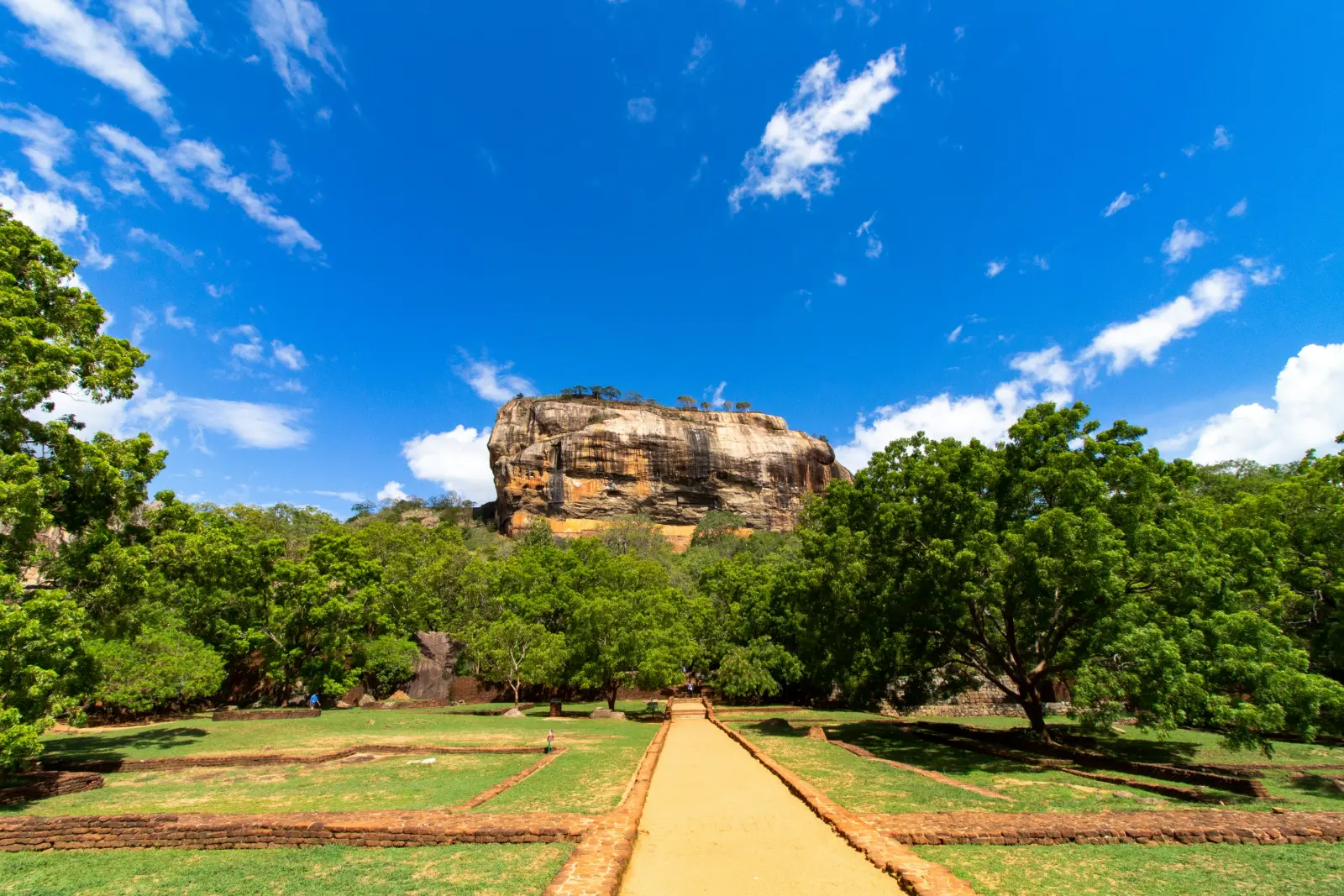
Straight path through the Sigiriya gardens leading toward the rock fortress under blue sky

The best time of day to climb Sigiriya is right at opening time, 7 am, when the air is coolest and before the large tour groups arrive. The second best window is the last couple of hours before the ticket counters close at 5 pm, when the light softens and the day-trip crowd thins. Late morning and early afternoon are the hottest and busiest times.

Sigiriya itself does not open for sunrise. If you want a sunrise view of the rock, that is what Pidurangala is for (see the next section). The Central Cultural Fund lists both the site and its ticket counters as open 7:00 am to 5:00 pm daily; some guides quote a slightly later closing time for the site itself, so plan to be through the gate well before 5 pm if you go late. Checked: 27 Oct 2026, ccf.gov.lk.

Time slotHeatCrowdsVerdict
7:00 to 8:30 amCoolest of the dayA queue at opening, then thinning on the rockBest overall
8:30 to 10:30 amWarming fastTour buses and day trippers arrivingGood if you missed the opening
10:30 am to 2:30 pmHottest, rock reflects heatBusiest, queues on the narrow stairsAvoid if you can
2:30 to 5:00 pmEasingThinning, but afternoon showers are common in the wet monthsGood second choice

Weekends and Sri Lankan public holidays, including the monthly full moon Poya days, can bring more domestic visitors. If you have a choice, a weekday morning is usually the calmest.

What is the best season to visit Sigiriya?

The driest stretch around Sigiriya is roughly January to March and again June to September. Rainfall rises sharply from October to December, when the area gets the bulk of its rain. Temperatures stay warm all year, so "best" is mostly about rain and clear views rather than heat.

MonthsTypical max (°C)Average rainWhat it means for the climb
January to March28 to 32About 84 to 109 mm a month, 5 to 6 rainy daysClear, settled; peak season, so arrive at opening
April to May32About 97 to 169 mm, with April the wetter monthHottest stretch, with inter-monsoon thunderstorms
June to September31About 55 to 99 mm, 8 to 9 rainy daysFairly dry and hot; can be windy
October to December28 to 30About 258 to 298 mm, 13 to 15 rainy daysWettest months; climb early, expect showers, wet steps

Long-term averages for Sigiriya from Weather2Travel. Checked: 27 Oct 2026. Actual weather in any one year can differ.

Tip for travellers from Nepal: Dashain and Tihar holidays usually fall in October or November, which are the wettest months around Sigiriya. That does not rule out a great visit. Mornings are often clearer than afternoons, so plan the climb for opening time, keep the afternoon flexible for Dambulla (which is mostly indoors under rock), and wear shoes with good grip because wet stone and metal stairs are slippery. If your dates are flexible, a January to March trip is the most reliable. Our guide to the best time to visit Sri Lanka compares every region month by month.

Is Pidurangala a better viewpoint?
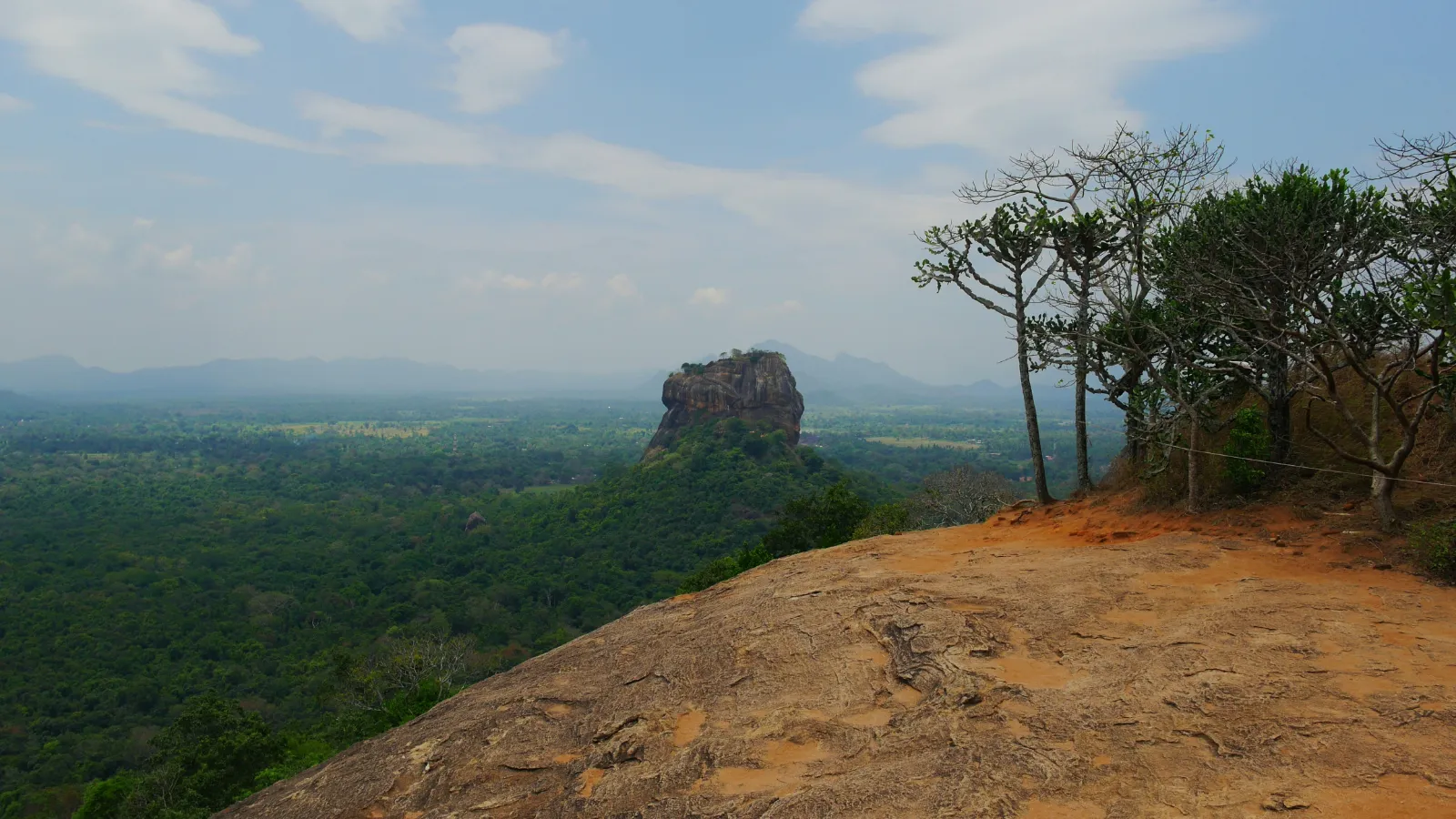
Sigiriya Lion Rock seen across the forest from a neighbouring rocky hilltop viewpoint

Pidurangala Rock is the better viewpoint if you want a photograph of Sigiriya itself, a sunrise, or a quieter, shorter hike. Sigiriya is the better choice if you want the history: the frescoes, the Mirror Wall, the Lion's Paw and the palace ruins exist only there. Many travellers do both, Pidurangala at sunrise or sunset and Sigiriya at opening time on another day.

Pidurangala is a separate rock just north of Sigiriya, home to a Buddhist temple at its base and a large reclining Buddha in a cave shelter near the top. The path starts at the temple, where you must cover your shoulders and knees and remove your shoes for the temple area; travellers report this is strictly enforced. Above the reclining Buddha, the last section is a scramble over boulders, so shoes with grip are better than sandals. Most people take about 30 minutes to reach the top, or 45 minutes to an hour at an easy pace.

FactorSigiriya Lion RockPidurangala Rock
Main rewardHistory: frescoes, Mirror Wall, Lion's Paw, palaceThe view of Sigiriya and the surrounding forest
Sunrise possibleNo, opens at 7 amYes, travellers report early opening; check locally
Time to the top30 to 90 minutesAbout 30 minutes to an hour
Type of climbBuilt steps and metal staircases with handrailsRough path, then a boulder scramble at the end
CrowdsBusy, especially mid-morningQuieter, but busy at sunrise and sunset
Dress rulesNo special code for the rockShoulders and knees covered at the temple; shoes off in the temple area
EntryCentral Cultural Fund ticket, at the counter or onlineSeparate entrance through the temple at its base; not covered by the Sigiriya ticket
Best forFirst-time visitors, history loversPhotographers, sunrise seekers, those short on time

If you hike Pidurangala in the dark for sunrise, carry a torch, stay on the path and go with a companion. The last boulder section needs care; nobody should risk an injury for a photograph. Elderly travellers and young children are usually better off doing Sigiriya's gardens and lower terraces than the Pidurangala scramble.

How do you combine Sigiriya with Dambulla Cave Temple?

Sigiriya and the Dambulla Cave Temple combine easily in one day because they are only about 20 km apart, roughly half an hour by road. The usual plan is Sigiriya at 7 am, a late breakfast or early lunch, then Dambulla in the afternoon, when the cool cave interiors are a welcome break from the heat.

The Rangiri Dambulla Cave Temple, also called the Golden Temple of Dambulla, is an active Buddhist monastery set in a granite outcrop above Dambulla town. UNESCO records five cave shrines with about 2,100 square metres of mural paintings and 157 statues, and notes that the caves have been used by Buddhist monks since the third century BCE. It has been a pilgrimage site for more than two thousand years, and for Buddhist and Hindu travellers from Nepal it often feels like a natural companion to visiting Lumbini or Swayambhu at home: a living place of worship, not a museum.

The approach from the ticket office climbs a stone path and steps up the rock for around 20 to 30 minutes. Travellers' estimates for the number of steps vary widely, from a few hundred upwards, so allow time and take it slowly in the heat. Buy your ticket at the office near the main road entrance before you climb; there is no ticket counter at the top. A large modern golden Buddha sits on the building at the base of the hill, which is separate from the ancient caves above.

What are the Dambulla Cave Temple dress rules and hours?

At Dambulla Cave Temple, cover your shoulders and knees, remove your shoes and hats before entering the caves, and never pose for photographs with your back to a Buddha statue. These rules apply to men and women alike. The Central Cultural Fund lists Dambulla's hours as 7:00 am to 5:00 pm daily. Some travellers report the caves staying open later than the ticket counter, but plan around the 5 pm time because you must buy your ticket at the bottom before climbing. Checked: 27 Oct 2026, ccf.gov.lk.

Rule at Dambulla Cave TempleWhat to do
Shoulders and kneesCover both; carry a shawl, long skirt, trousers or a sarong
ShoesRemove before the cave area; leave them at the shoe counter near the entrance
HatsTake off before entering
Hot groundBring socks; the rock terrace can be very hot by midday
PhotographsDo not stand or pose with your back to a Buddha statue; do not photograph people praying
BehaviourSpeak quietly, do not point your feet at statues, do not touch the murals

The UK government's travel advice for Sri Lanka is blunt about why this matters: disrespecting Buddhist images is a serious offence that can lead to arrest, and visible tattoos of the Buddha can lead to refused entry or deportation. Source: GOV.UK Sri Lanka travel advice. Checked: 27 Oct 2026. Our dos and don'ts in Sri Lanka covers the wider etiquette.

How should you order a Sigiriya and Dambulla day?

TimePlanWhy
6:45 amArrive at the Sigiriya entrance with water and a hatBe near the front of the queue at opening
7:00 to 10:00 amGardens, climb, summit and descentCoolest part of the day
10:00 to 10:30 amSite museum (listed as opening at 8 am)Shaded, good background
Late morningRest, brunch and fluidsAvoid the midday heat on the rock
AfternoonDrive about 30 minutes to Dambulla, climb to the cavesCool caves, softer light, before 5 pm closing

If someone in your group finds the Sigiriya climb tiring, swap the order: Dambulla is still a climb, but shorter. Those with less time can also stay in Dambulla town, which has more transport connections than the village of Sigiriya.

How do you get to Sigiriya?

Sigiriya is in the centre of Sri Lanka, about 167 km by road from Colombo and about 89 km from Kandy. Most visitors arrive by private car with a driver, which takes roughly 2.5 to 4.5 hours from Colombo or Bandaranaike International Airport (CMB), depending on traffic, and about 2.5 hours from Kandy. Public buses and trains also work, but need a change and a final tuk-tuk ride.

Travellers from Nepal usually fly from Kathmandu to Bandaranaike International Airport (CMB), north of Colombo, and drive inland from there. SriLankan Airlines is the only non-stop carrier on the route, with a scheduled flight time of about 3 hours 35 minutes, and Sri Lanka is 15 minutes behind Nepal. The airport is on the northern side of Colombo, so you can head straight to the Cultural Triangle without entering the city. Flight routes and connections from Kathmandu change by season; our page on direct flights from Kathmandu lists the current non-stop routes. Before you fly, check the Sri Lanka Electronic Travel Authorization (ETA) requirement on the official site, eta.gov.lk, and read our Sri Lanka visa guidance.

FromRoad distanceBy carBy public transport
Colombo cityAbout 167 kmAbout 2.5 to 4.5 hours, depending on trafficBus about 5.5 hours to Inamaluwa Junction, then about 10 km by tuk-tuk; or train to Habarana, then about 15 km by road
Bandaranaike International Airport (CMB)Usually a little less than from Colombo city, as the airport lies north of the cityAllow about 2.5 to 4 hoursNo direct service; easiest by private car
KandyAbout 89 kmAbout 2.5 hoursBus to Dambulla about 2.5 hours, then local bus about 30 minutes
DambullaAbout 20 kmAbout 30 minutesLocal buses, usually at least twice an hour
HabaranaAbout 15 kmAbout 25 minutesTuk-tuk or taxi from the station

Distances and times are indicative journey planner figures from GeckoRoutes and similar sources, not quotes. Checked: 27 Oct 2026. Traffic, road works and pickup points change them.

Should you stay in Sigiriya or day trip?

Staying one or two nights in or near Sigiriya is the easiest way to be at the gate by 7 am. Day trips from Colombo mean a very early start and a long drive back in the dark, and wild elephants are known to move around the area after dusk, so local advice is to be off the roads near the site by nightfall. Kandy works as a base if you are comfortable with a 2.5 hour drive each way. For transport options across the island, including private drivers, trains and buses, see how to get around Sri Lanka.

What should you pack and know before you climb?

Pack for heat, stairs and a temple visit on the same day: water, sun protection, grippy shoes and something to cover your shoulders and knees. There are no refreshment stalls on the rock, so stock up before the entrance.

ItemWhy you need it
At least 1 litre of water per personNo shops on the rock, and the climb is hot
Hat, sunglasses, sunscreenSummit and upper stairs have almost no shade
Comfortable shoes with gripStone and metal steps; slippery after rain
Light shawl or sarongCovers shoulders and knees at Dambulla and Pidurangala
SocksFor hot rock at Dambulla, where shoes come off
Small umbrella or rain jacketOctober to December showers; also shade on the summit
SnacksEnergy for the climb; do not feed the monkeys
Personal medicinesIncluding any prescribed allergy medication for stings
Passport copy and ticketFor entry checks and online bookings

Tickets, guides and drones

Sigiriya tickets are sold at the counter and online through the Central Cultural Fund. Prices are set for foreign visitors and change from time to time, so check the official page before you go rather than relying on figures in older blogs. Licensed guides wait near the entrance; a good guide brings the frescoes and the Mirror Wall verses to life, so agree on the length of the tour before you start. Professional filming and drone flying need prior written approval from the Central Cultural Fund, according to its ticket page.

Food, money and safety near Sigiriya

Sigiriya village and Dambulla have simple restaurants and guesthouse kitchens serving rice and curry, roti and fruit, with plenty of vegetarian dishes for Nepali travellers who avoid meat. Dhal curry, vegetable curries and coconut sambol are easy to find; ask for "less spicy" if needed. Our guide to what to eat in Sri Lanka explains the dishes. Sri Lanka uses the Sri Lankan rupee (LKR); carry some cash for small shops, tuk-tuks and shoe counters, as card acceptance in villages varies. The area is generally safe for visitors; the main risks are heat, slippery steps, wasps and the monkeys, which will grab food bags. Read our Sri Lanka safety guide and make sure your travel insurance from Nepal covers sightseeing activities and medical care abroad.

How does Sigiriya fit into a Sri Lanka trip?

Sigiriya fits best at the start of a classic Sri Lanka loop: fly into Colombo, head north to the Cultural Triangle for Sigiriya, Dambulla and Polonnaruwa, continue to Kandy and the hill country around Ella, and finish on the south coast. Allow at least two nights in the Sigiriya area so you can climb at opening time without rushing.

The Sigiriya area also suits short add-ons. Minneriya and Kaudulla national parks are close by and known for elephant gatherings in the dry months, which our Sri Lanka safari guide covers in detail. Polonnaruwa's ancient city is within easy driving distance for a second heritage day. For the full list of regions, see the best places to visit in Sri Lanka, and for route ideas by trip length, our Sri Lanka itinerary guide.

If you would rather have the hotels, driver and timings arranged around an early Sigiriya climb and an unhurried Dambulla afternoon, browse our Sri Lanka tour packages.

Frequently asked questions

How long does it take to climb Sigiriya?

Most people reach the top of Sigiriya in 30 to 90 minutes, depending on fitness, heat and crowds. Allow 2.5 to 3.5 hours for the whole visit, including the water gardens, frescoes, Mirror Wall, Lion's Paw terrace, summit and the descent. Starting at the 7 am opening keeps the climb cooler and quicker.

How many steps are there at Sigiriya?

Sigiriya has roughly 1,200 steps, but sources disagree, with published figures from about 1,200 to 1,300 and no official count from the site managers that we could find. The steps are a mix of stone stairs and steep metal staircases, with the hardest stretch between the Lion's Paw and the summit.

Is Sigiriya hard for elderly people?

Sigiriya is manageable for many older travellers who walk regularly and handle stairs, but it is steep, hot and has exposed metal stairs near the top. A good plan is to climb slowly to the Lion's Paw terrace and decide there. Anyone with heart, knee or balance problems should check with a doctor first.

What is the best time to climb Sigiriya?

The best time to climb Sigiriya is at opening, 7 am, before the heat and the tour groups. Late afternoon before the 5 pm counter closing is the next best window. By season, January to March is the most settled, while October to December is the wettest period around Sigiriya.

Is Pidurangala better than Sigiriya?

Pidurangala is better for views of Sigiriya, sunrise and a shorter hike, while Sigiriya is better for history, with its frescoes, Mirror Wall, Lion's Paw and palace ruins. Pidurangala ends in a boulder scramble and requires covered shoulders and knees at its temple. Many travellers in Sri Lanka do both on different days.

What is at the top of Sigiriya?

The summit of Sigiriya holds the foundations of King Kassapa I's fifth century palace, terraced platforms, a large rock-cut pool and panoramic views over forest, lakes and Pidurangala Rock. There is little shade on top, so bring a hat and water, and allow 30 to 60 minutes to explore before descending.

Are there wasps at Sigiriya?

Yes, wasps and hornets nest on Sigiriya's rock face, and attacks have occasionally led to temporary closures, including a reported incident in August 2024. Signs ask visitors to stay quiet because noise disturbs the nests. Do not swat at them, follow staff instructions, and carry prescribed allergy medicine if you react to stings.

How far is Sigiriya from Colombo?

Sigiriya is about 167 km by road from Colombo, which usually takes 2.5 to 4.5 hours by car depending on traffic. From Bandaranaike International Airport (CMB) the drive is similar, at about 2.5 to 4 hours. Public transport takes longer, with a bus or train followed by a tuk-tuk for the final stretch.

What should I wear to Dambulla Cave Temple?

At Dambulla Cave Temple, wear clothes that cover your shoulders and knees, and be ready to remove your shoes and hat before entering the caves. Socks help on the hot rock. Do not pose for photographs with your back to a Buddha statue, as Sri Lanka treats disrespect to Buddhist images seriously.

Can I visit Sigiriya and Dambulla on the same day?

Yes, Sigiriya and the Dambulla Cave Temple are about 20 km apart, roughly 30 minutes by road, so one day covers both. Climb Sigiriya at 7 am, rest through the midday heat, and visit Dambulla in the afternoon, arriving well before its 5 pm closing time listed by the Central Cultural Fund.

Sigiriya chadna garo cha?

Sigiriya chadna alik garo cha, tara normal fitness bhaeko manche le sajilai chadna sakchha. Lagbhag 1,200 bhanda badhi khudkila chhan, mathi pugna 30 dekhi 90 minet lagchha. Bihana 7 baje gate khulne bittikai chadhnus, pani bokera jaanus, ra budha baa aama lai Lion's Paw samma lagera tyahi bata nirnaya garnus. (English: Sigiriya is moderately hard but doable for people of normal fitness; about 1,200 steps, 30 to 90 minutes up; start at 7 am, carry water, and let elderly parents decide at the Lion's Paw.)
Tags
Sri Lanka
Share
G
Gomayu Team
Writer at Gomayu
Keep reading